

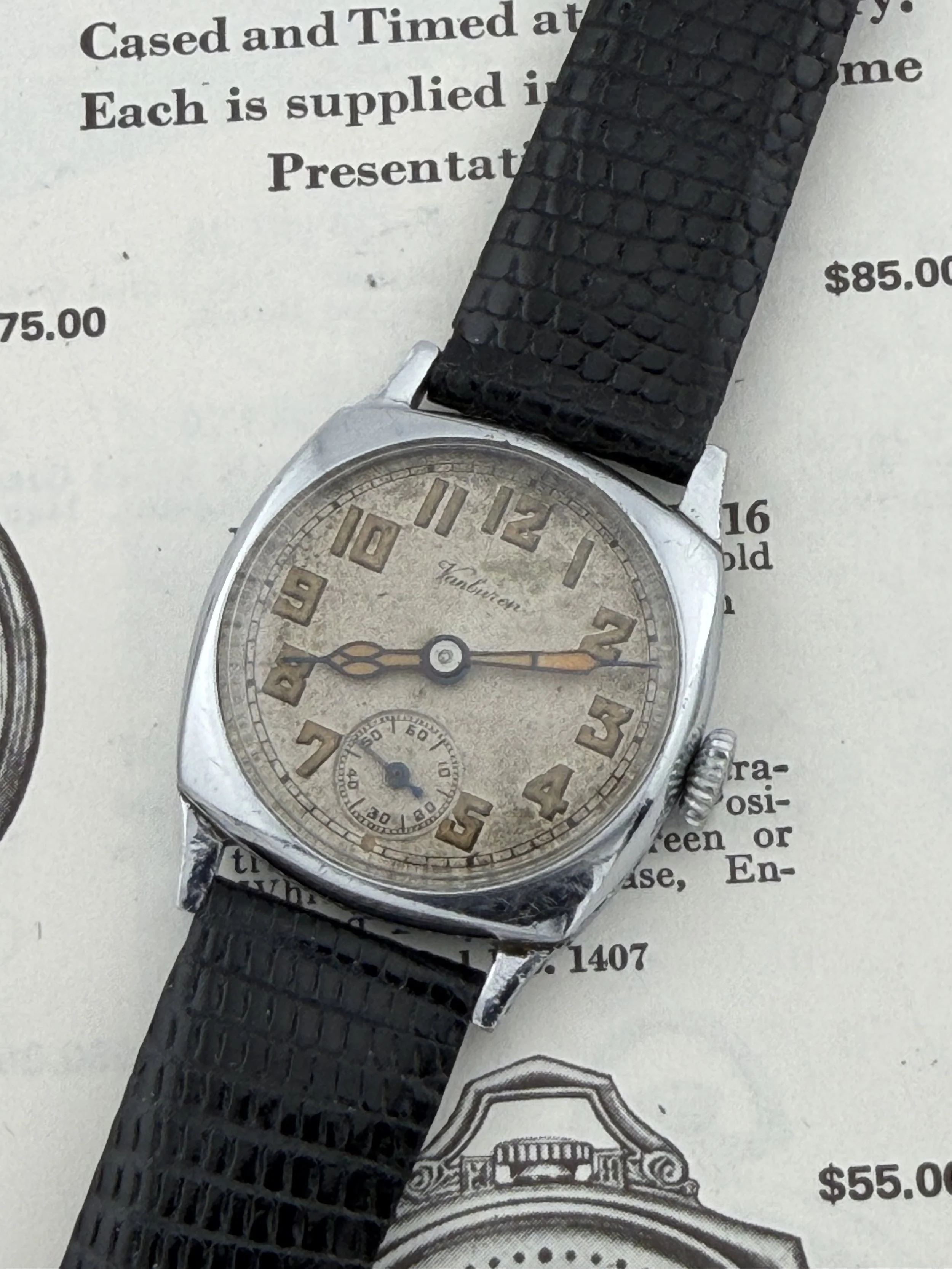
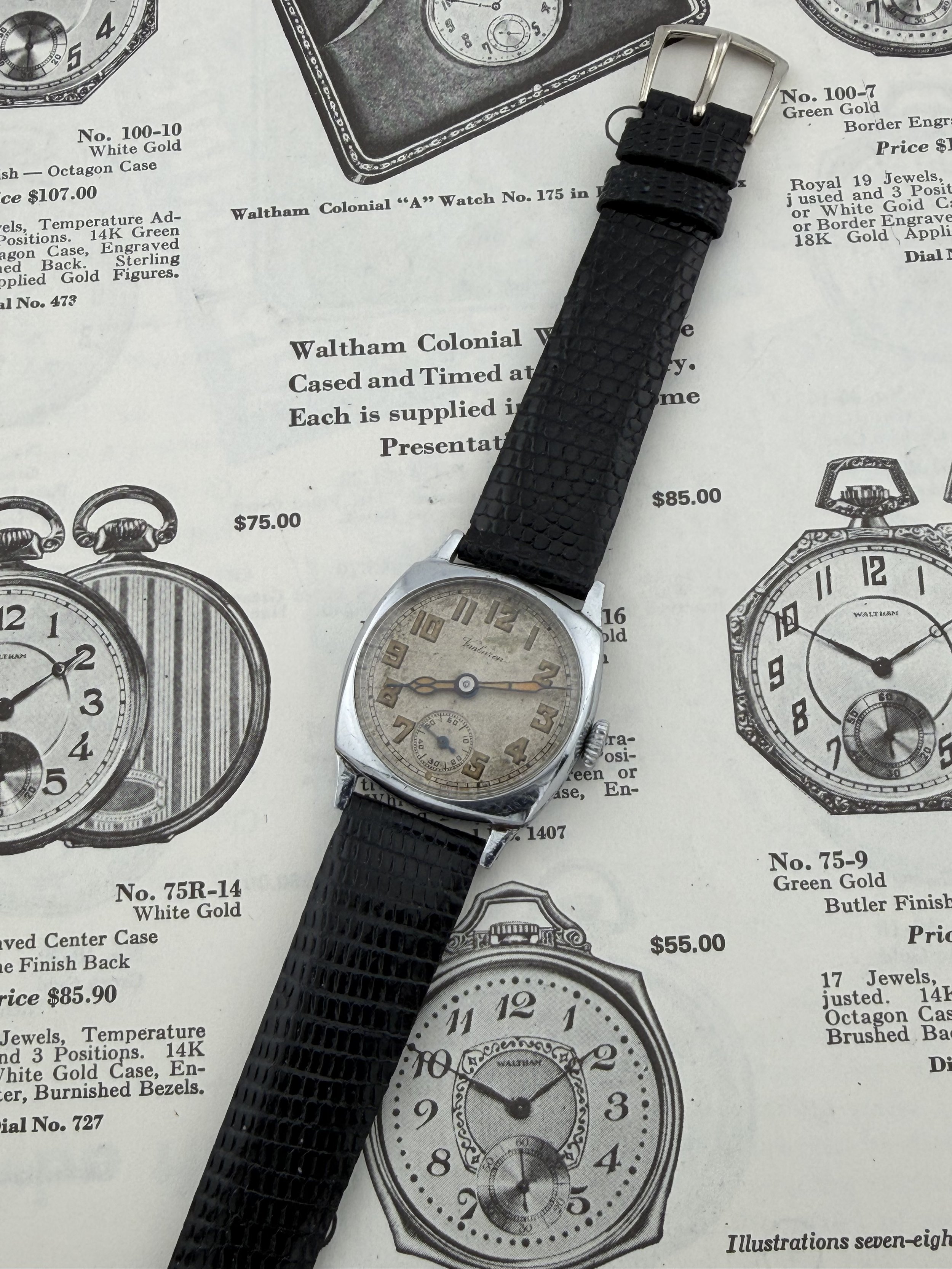
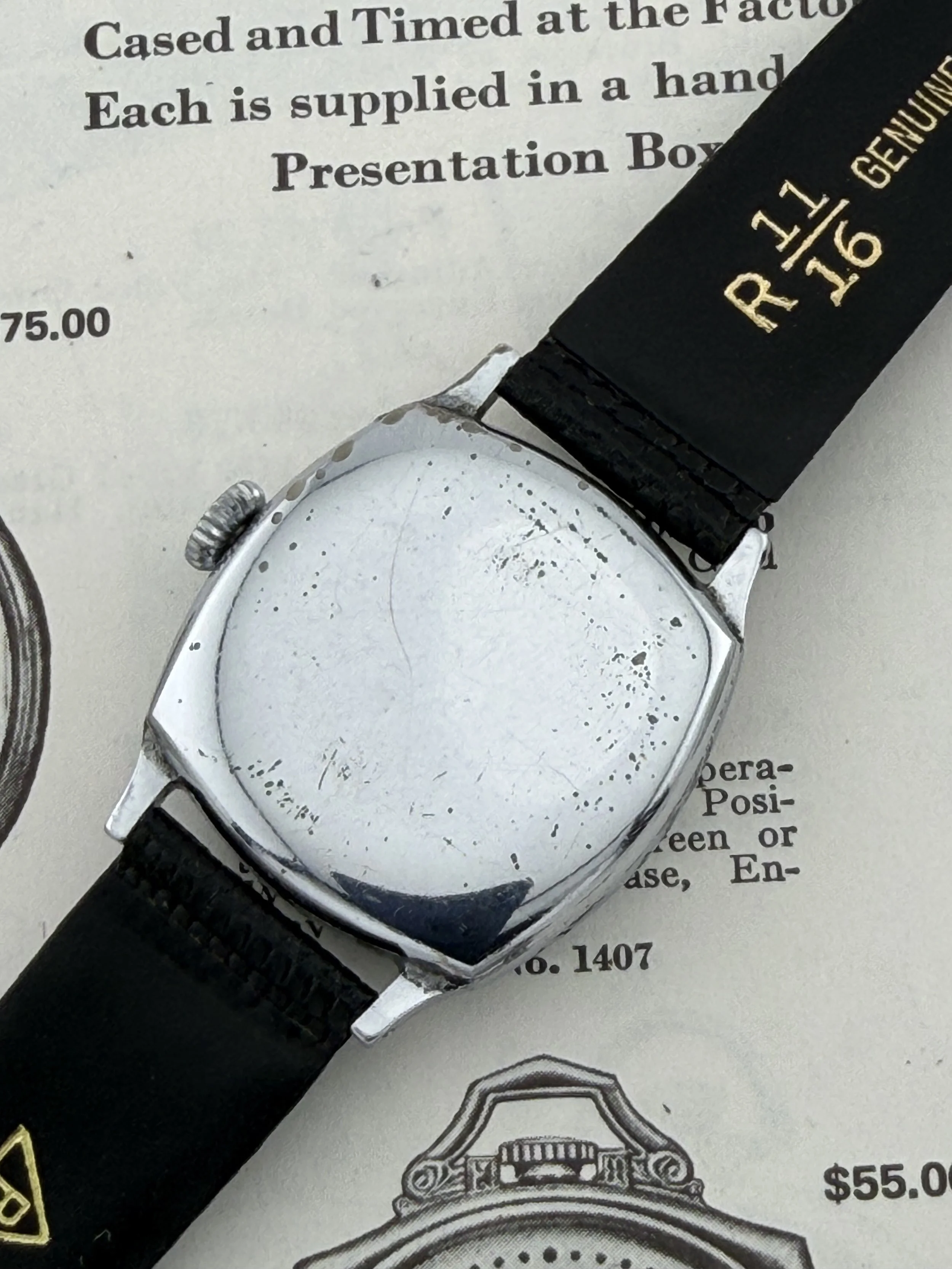
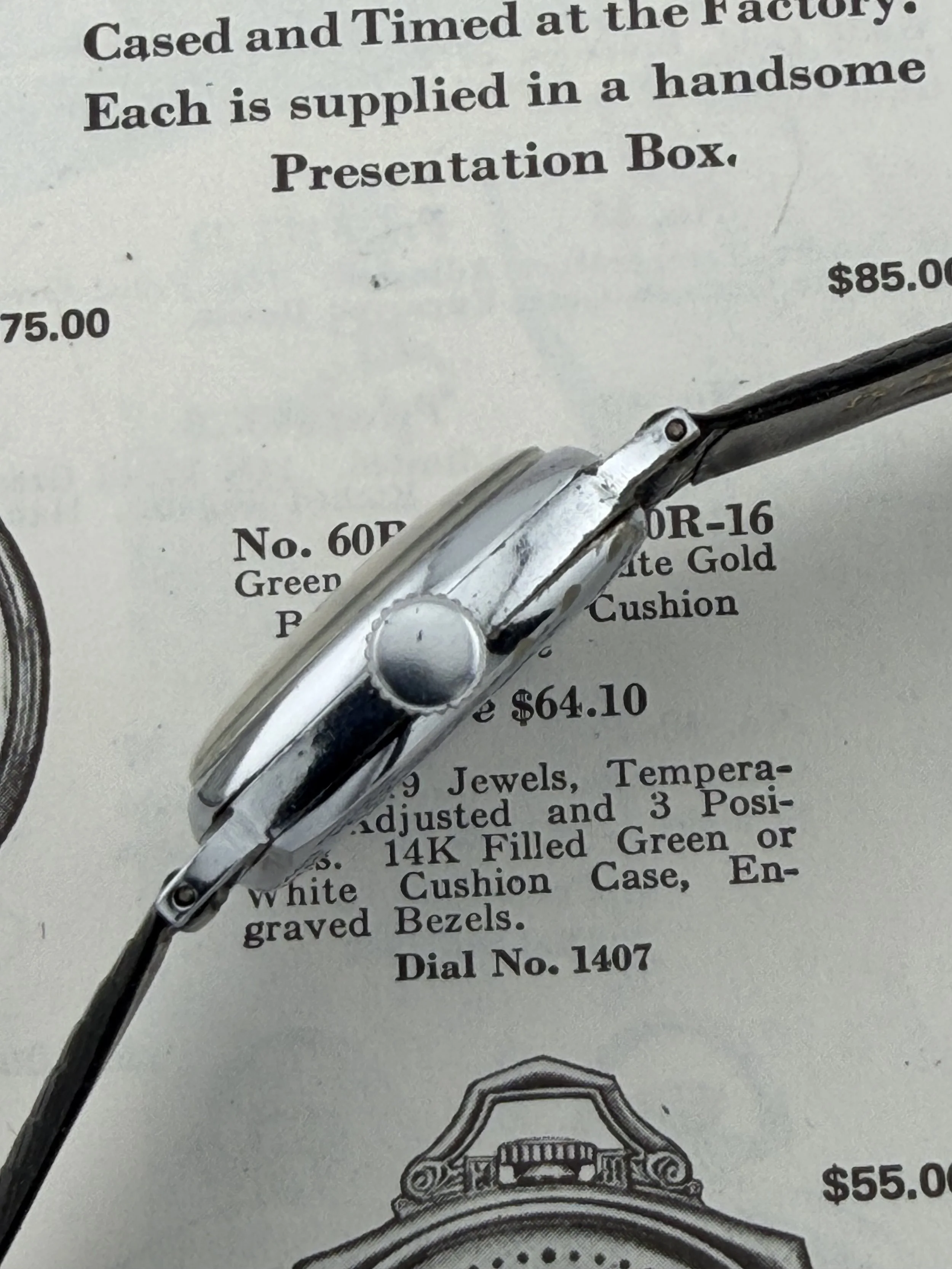
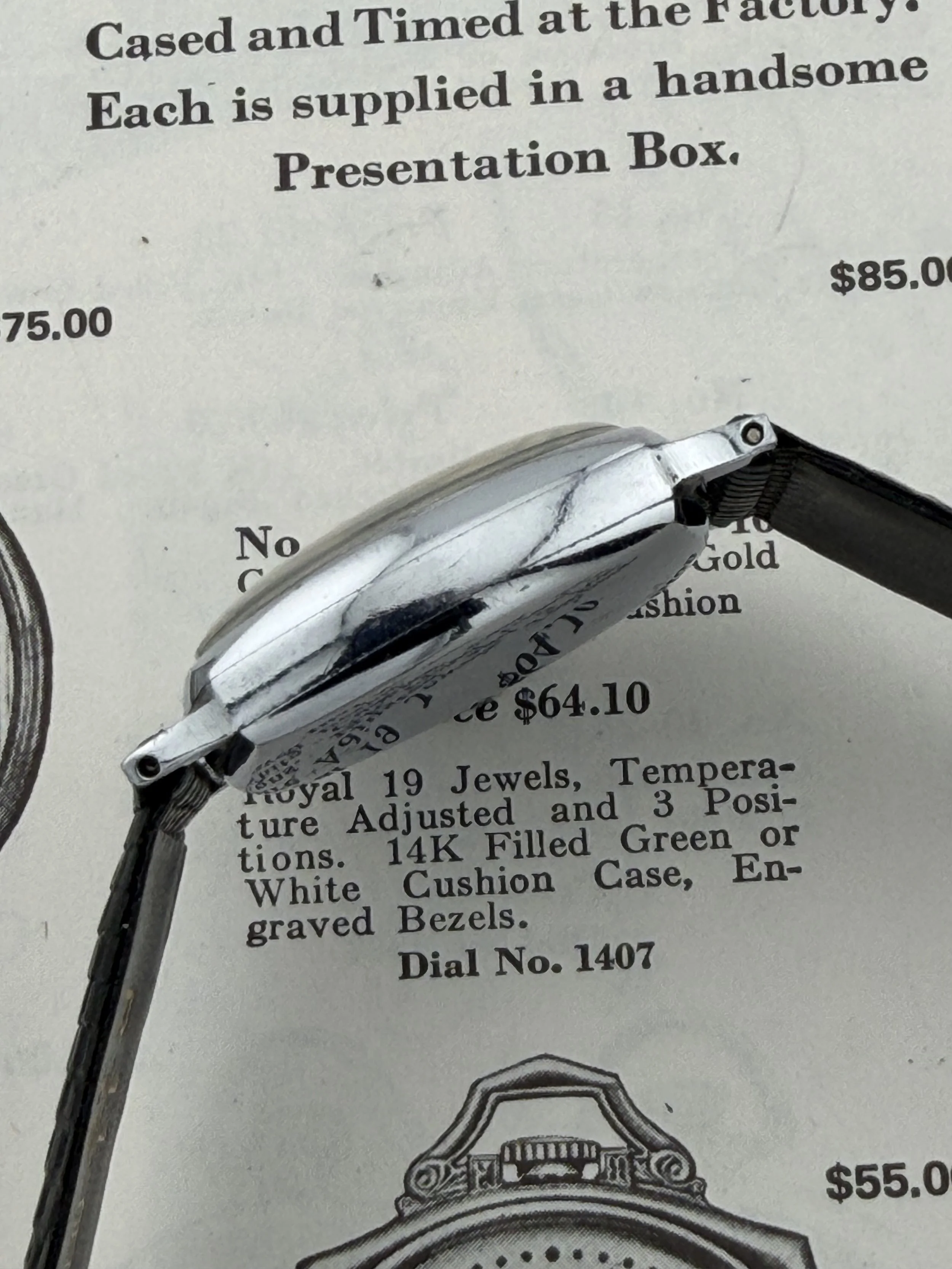
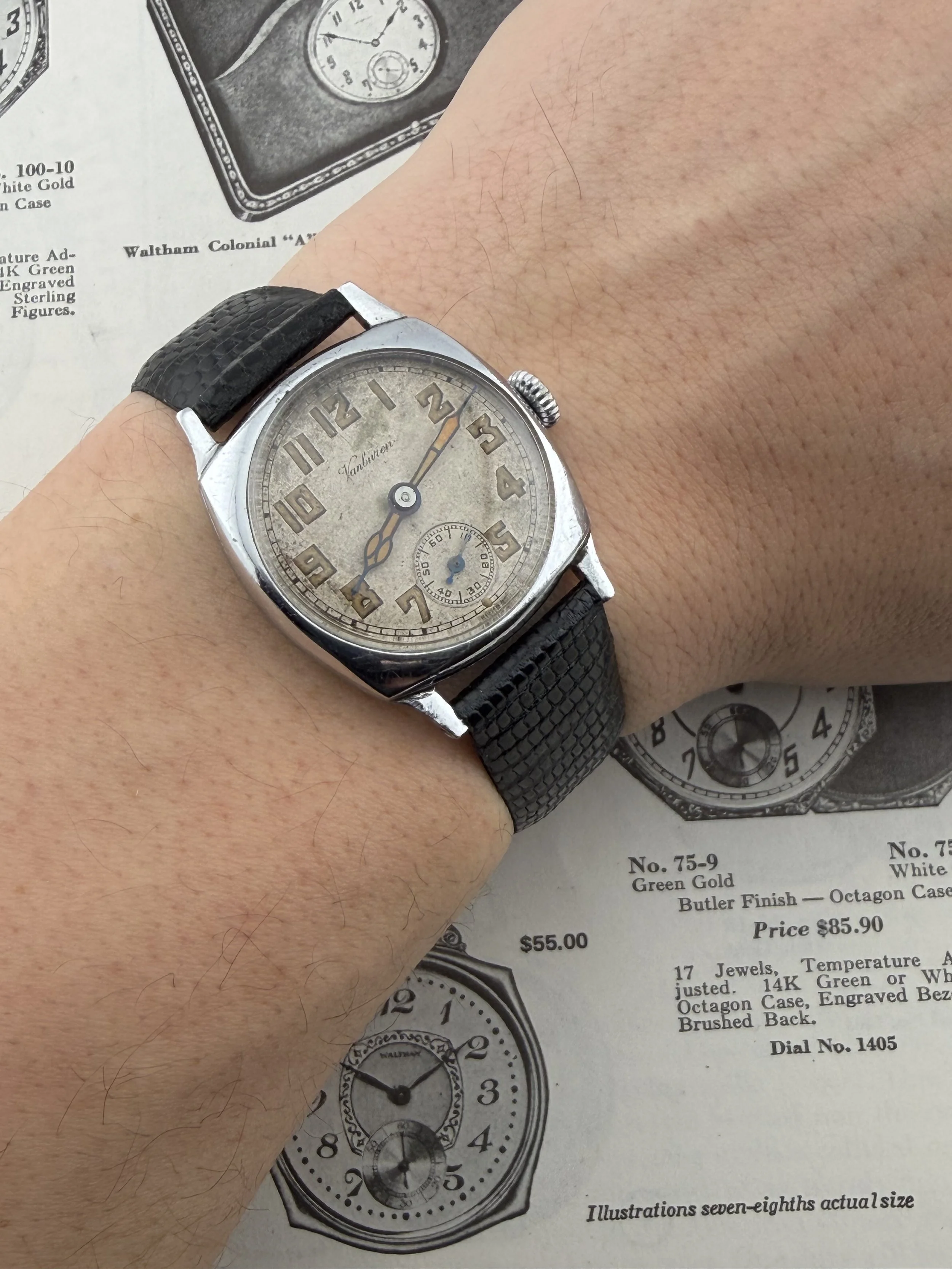
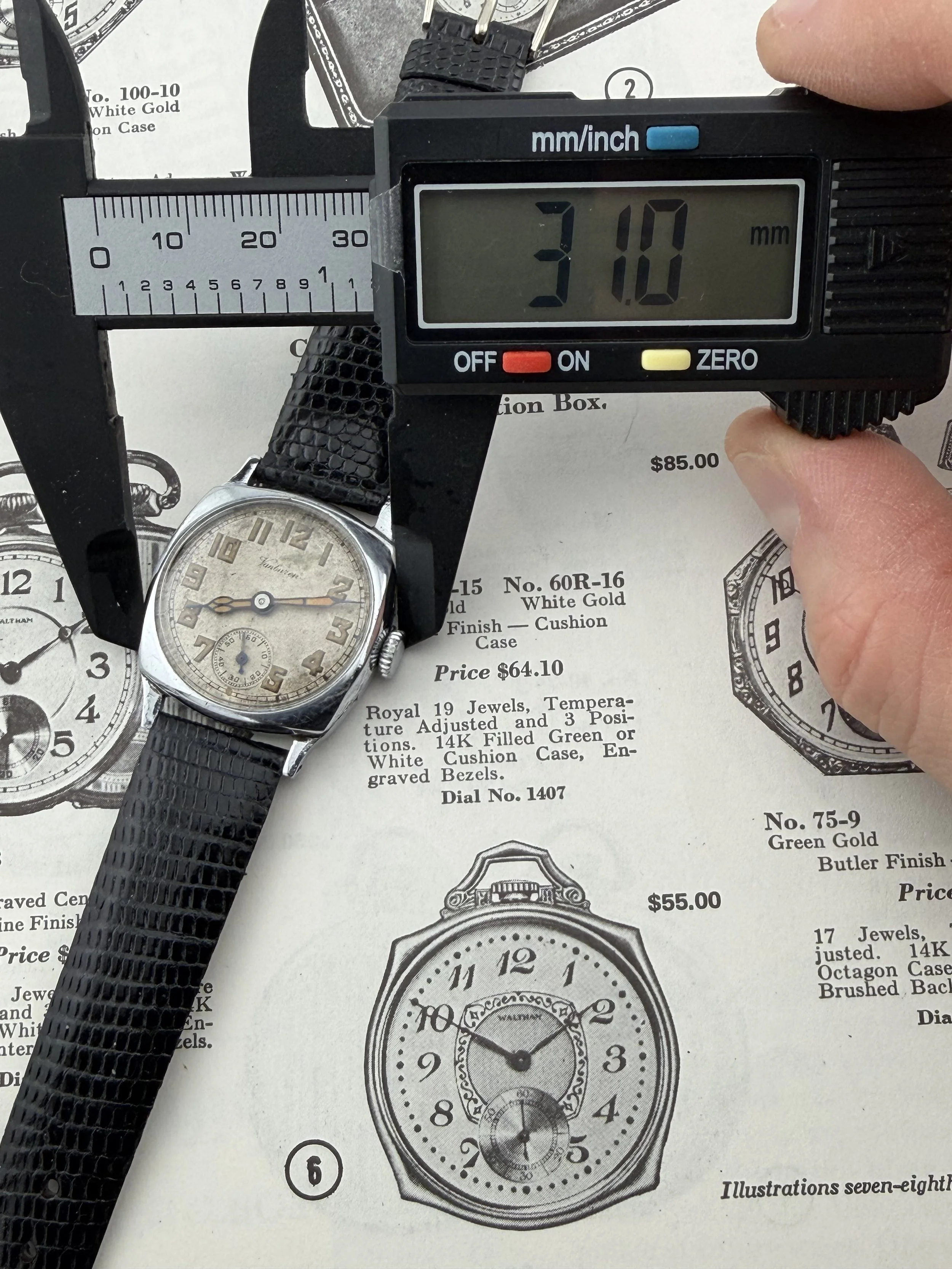
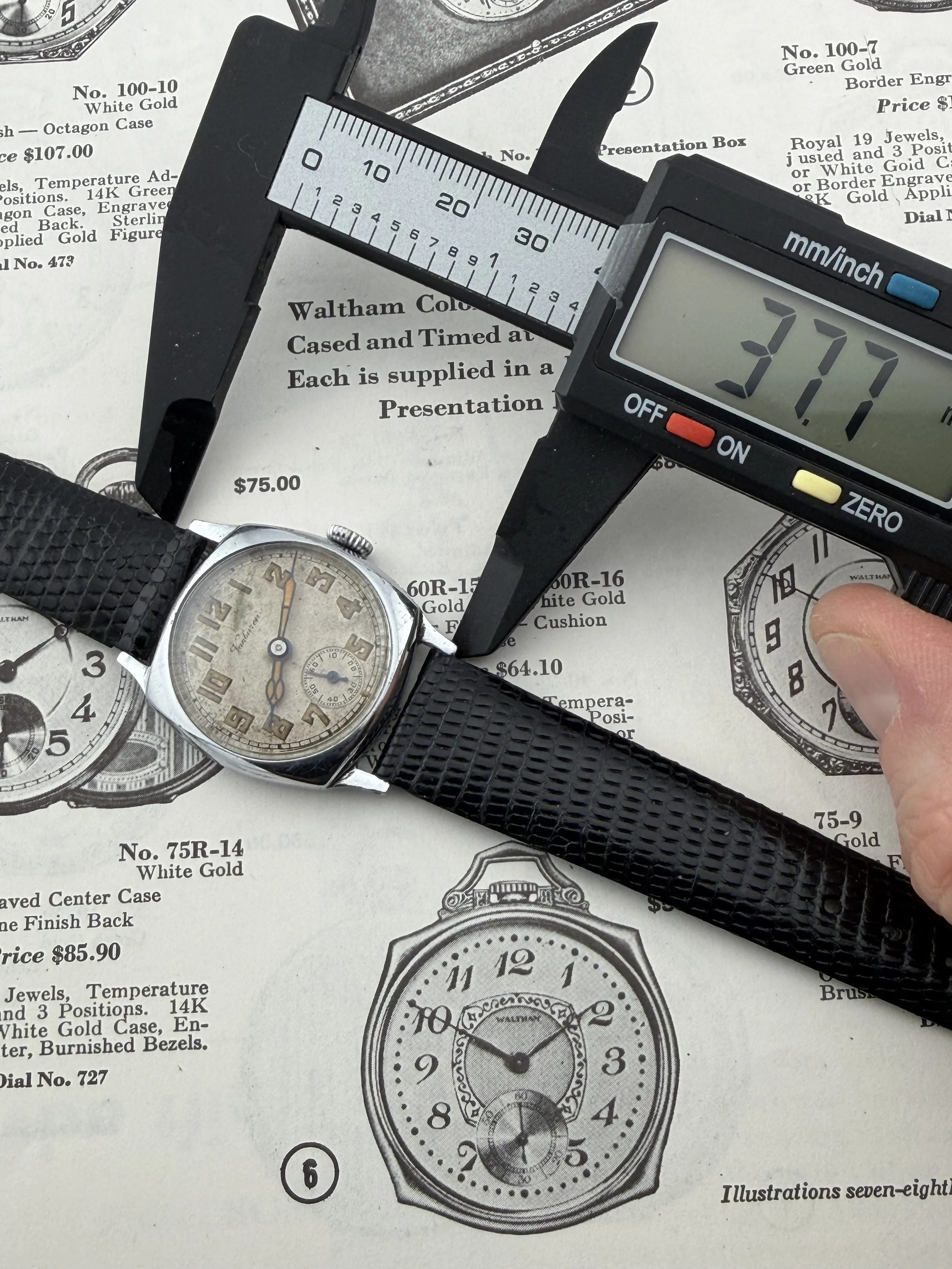
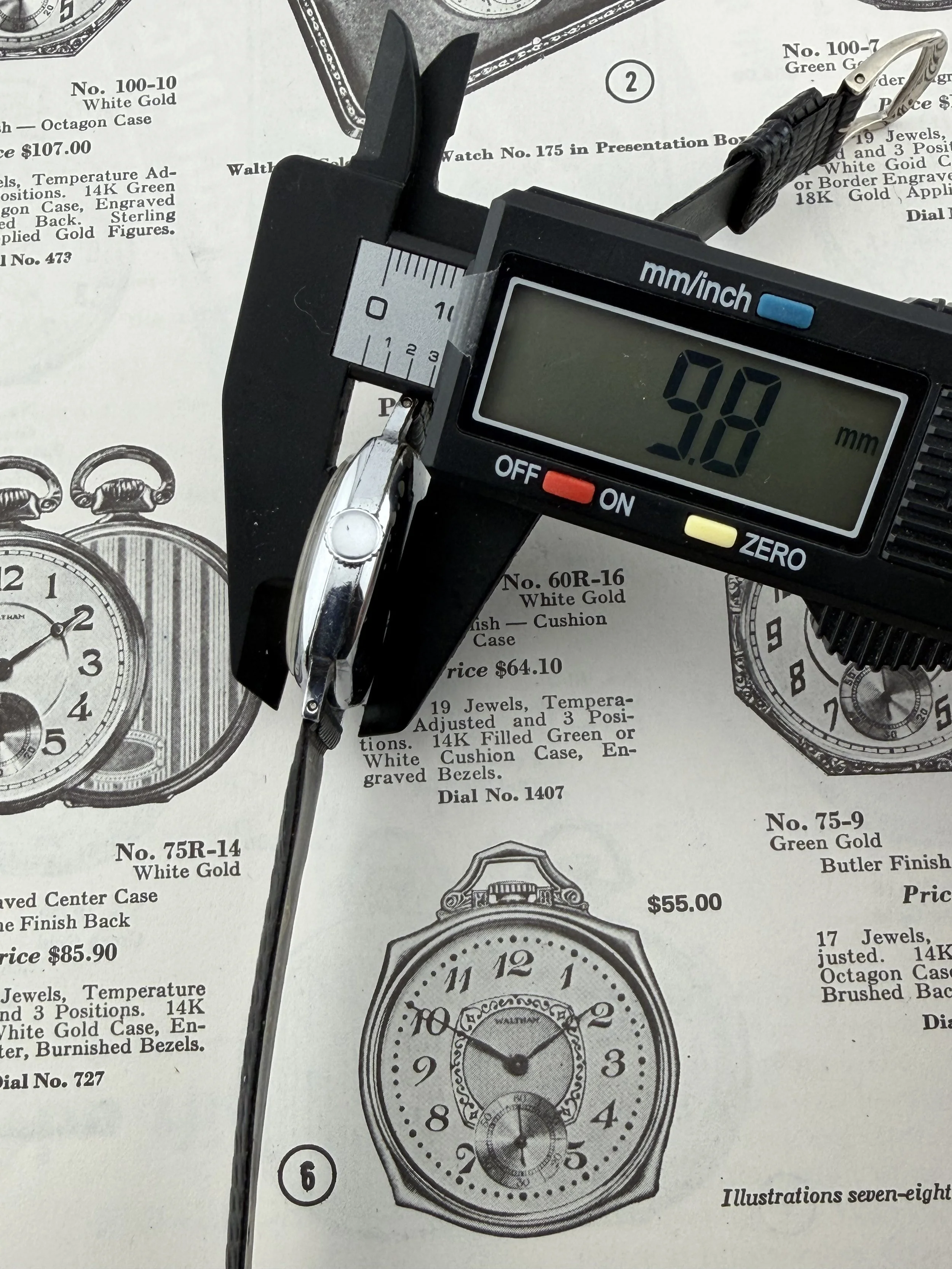
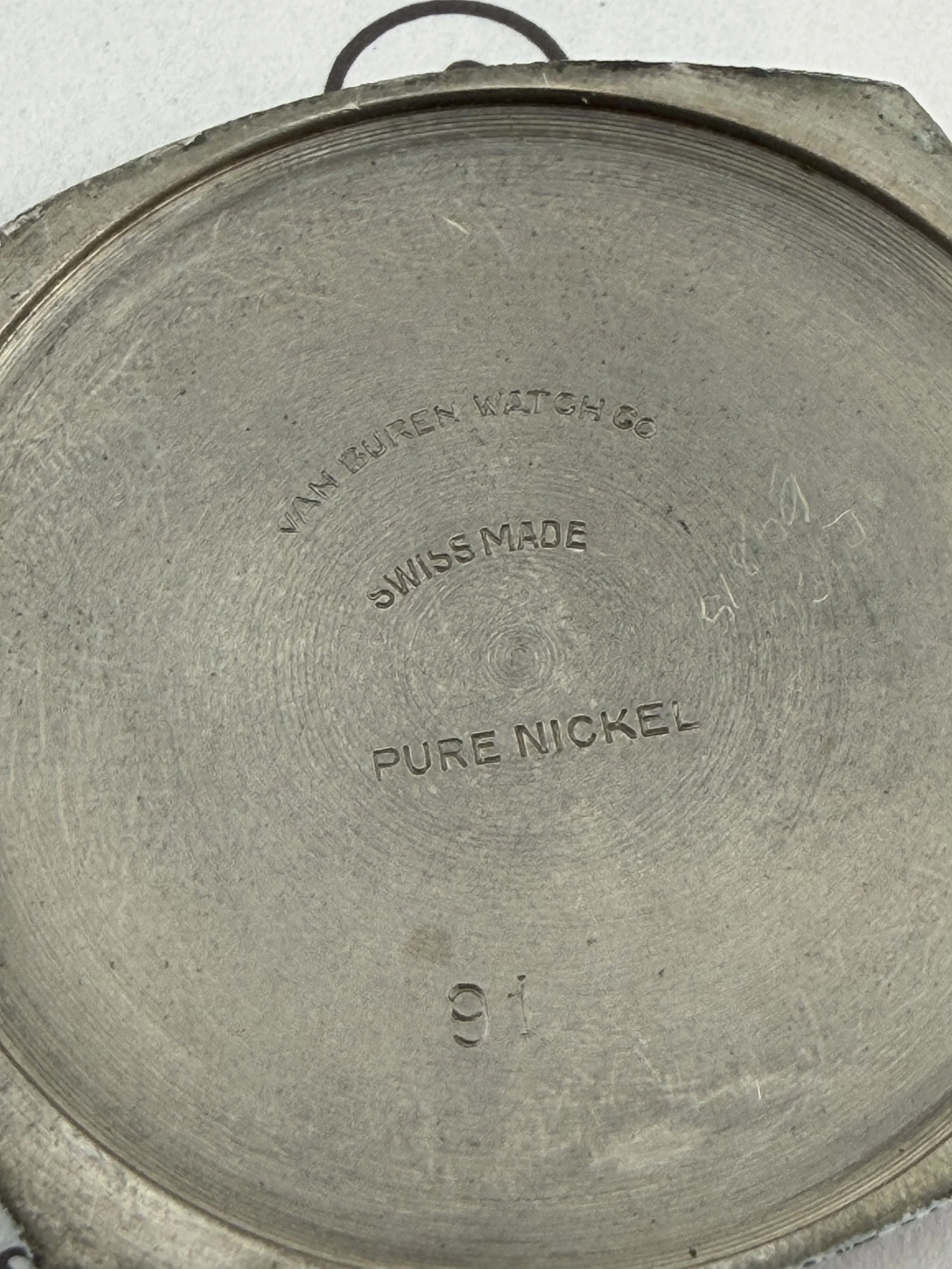
This 1920s Van Buren wristwatch captures a fascinating moment in horological history, when wristwatches were rapidly replacing pocket watches as the everyday timekeeping tool. The engraved white gold filled cushion case reflects the decorative style of the era, while the railroad track minute ring and elegant blued steel Breguet-style hands add both precision and visual sophistication. The dial shows honest aging and patina that tells the story of over a century of timekeeping.
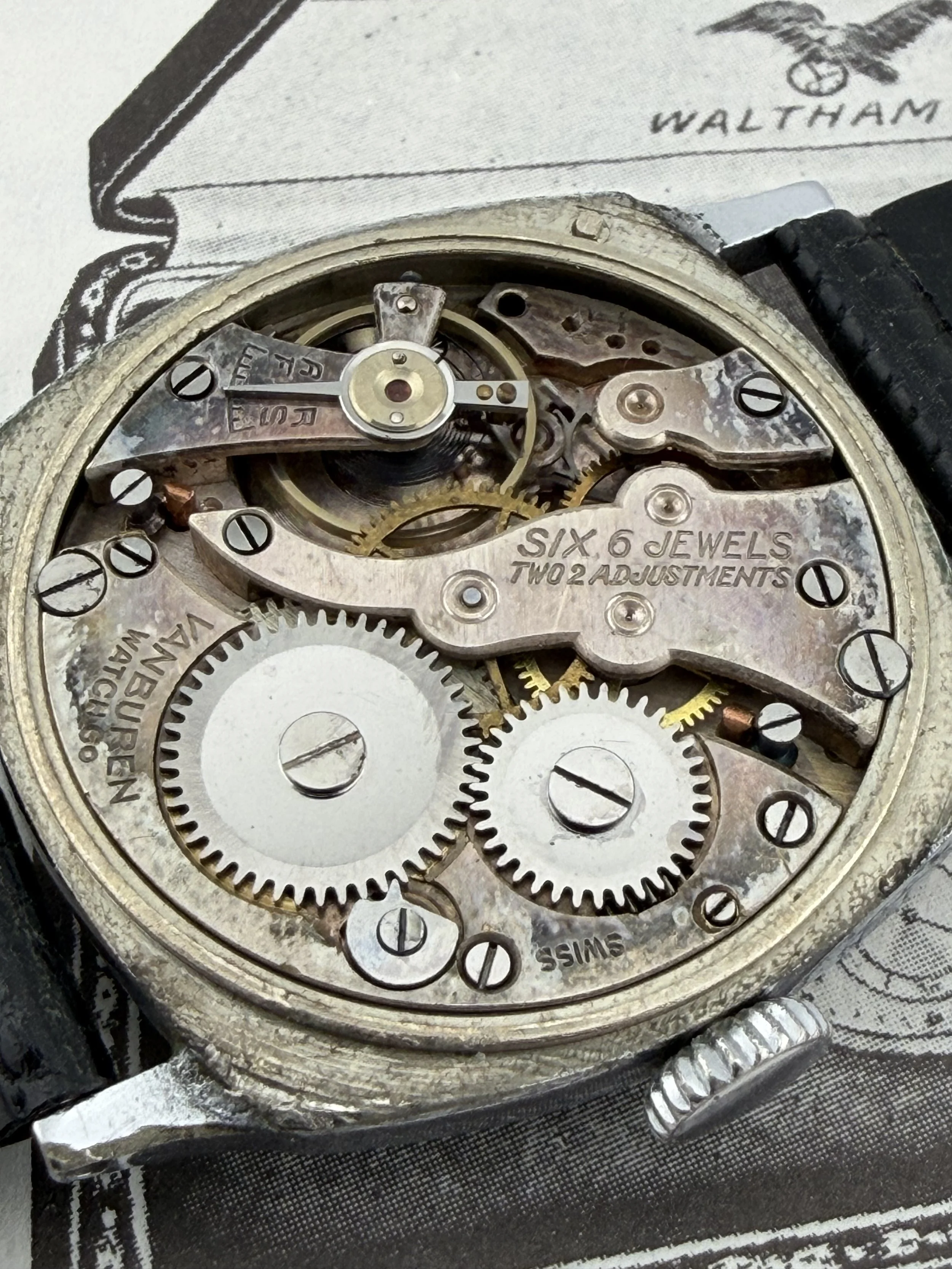
Inside is a quality Swiss mechanical movement, typical of the period when companies were transitioning proven pocket watch engineering into smaller wristwatch formats. The watch runs well by vintage standards and represents the durability and practicality that made early wristwatches so appealing to a new generation of wearers.
The Van Buren name is closely associated with the broader Buren watchmaking tradition. Buren was established in the Swiss town of Büren an der Aare in the late 19th century and built its reputation producing reliable pocket watches before moving into wristwatches as the market evolved. The company continued operating through the early and mid 20th century and was eventually acquired by Hamilton in the 1960s, reflecting its importance in Swiss industrial watchmaking.
Watches like this exist because of the massive shift that happened around World War I. Before the early 1900s, pocket watches dominated men’s timekeeping. But during the war, soldiers found wristwatches far more practical in combat situations. These early “trench watches” bridged the gap between pocket watches and modern wristwatches and helped normalize wristwatches for everyday use. By the 1920s, wristwatches had become the new standard.
This 1920s Van Buren is a perfect representation of that transition era, blending pocket watch heritage with emerging wristwatch design. With its engraved case, classic railroad dial layout, and elegant blued steel hands, it is both a piece of horological history and a striking vintage wearable today.
This 1920s Van Buren wristwatch captures a fascinating moment in horological history, when wristwatches were rapidly replacing pocket watches as the everyday timekeeping tool. The engraved white gold filled cushion case reflects the decorative style of the era, while the railroad track minute ring and elegant blued steel Breguet-style hands add both precision and visual sophistication. The dial shows honest aging and patina that tells the story of over a century of timekeeping.
Inside is a quality Swiss mechanical movement, typical of the period when companies were transitioning proven pocket watch engineering into smaller wristwatch formats. The watch runs well by vintage standards and represents the durability and practicality that made early wristwatches so appealing to a new generation of wearers.
The Van Buren name is closely associated with the broader Buren watchmaking tradition. Buren was established in the Swiss town of Büren an der Aare in the late 19th century and built its reputation producing reliable pocket watches before moving into wristwatches as the market evolved. The company continued operating through the early and mid 20th century and was eventually acquired by Hamilton in the 1960s, reflecting its importance in Swiss industrial watchmaking.
Watches like this exist because of the massive shift that happened around World War I. Before the early 1900s, pocket watches dominated men’s timekeeping. But during the war, soldiers found wristwatches far more practical in combat situations. These early “trench watches” bridged the gap between pocket watches and modern wristwatches and helped normalize wristwatches for everyday use. By the 1920s, wristwatches had become the new standard.
This 1920s Van Buren is a perfect representation of that transition era, blending pocket watch heritage with emerging wristwatch design. With its engraved case, classic railroad dial layout, and elegant blued steel hands, it is both a piece of horological history and a striking vintage wearable today.