

This vintage Bertmar Triple Date Calendar is a charming example of the complicated yet accessible Swiss watches that became popular in the years following World War II. While Bertmar was not a true manufacturer, it represents the era of private-label and distributor brands that imported quality Swiss movements and cases, then sold them through North American jewelers. These watches allowed consumers to enjoy sophisticated complications at a fraction of the cost of prestigious brands such as Omega, Universal Genève, and Movado.
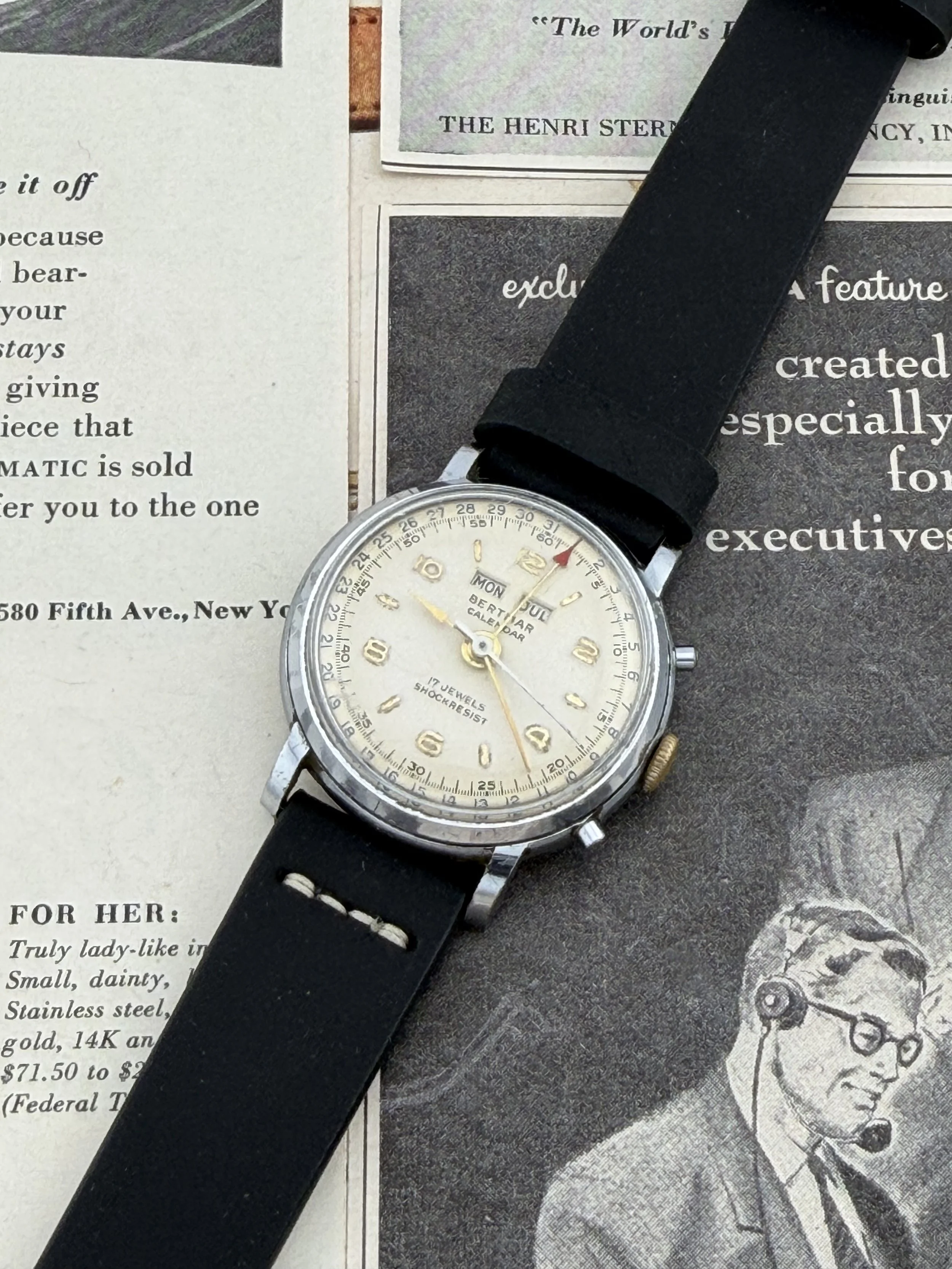
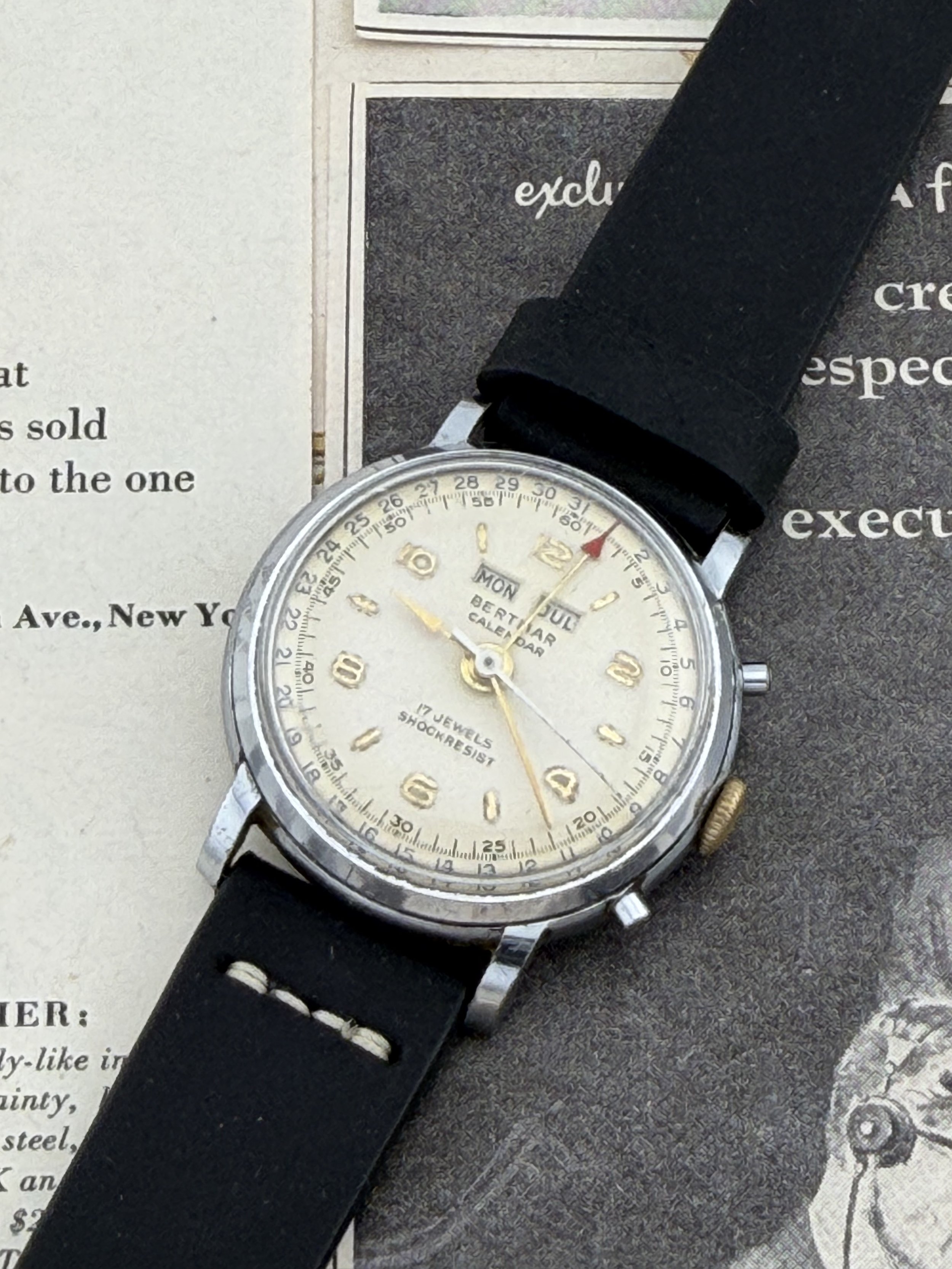
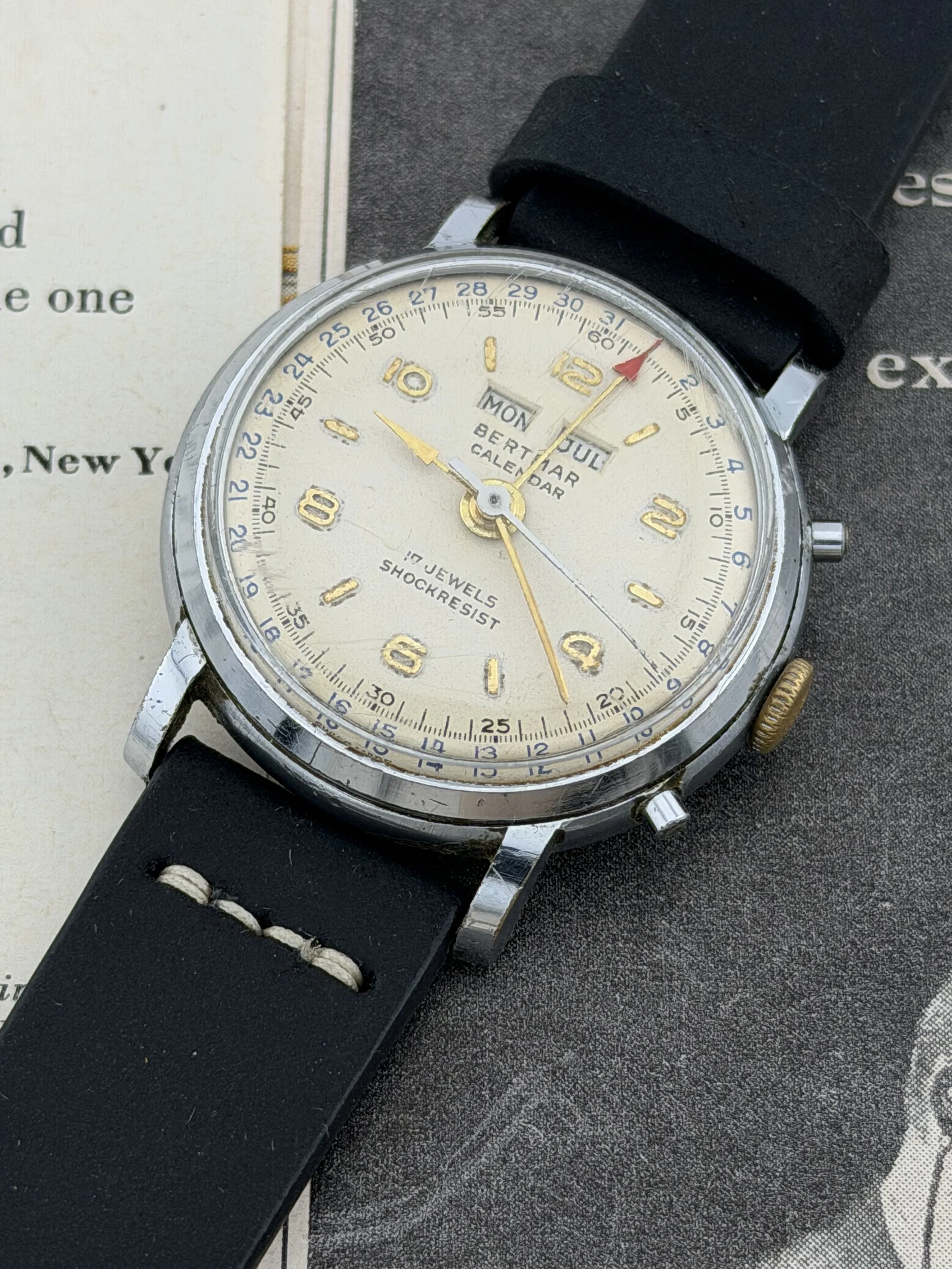
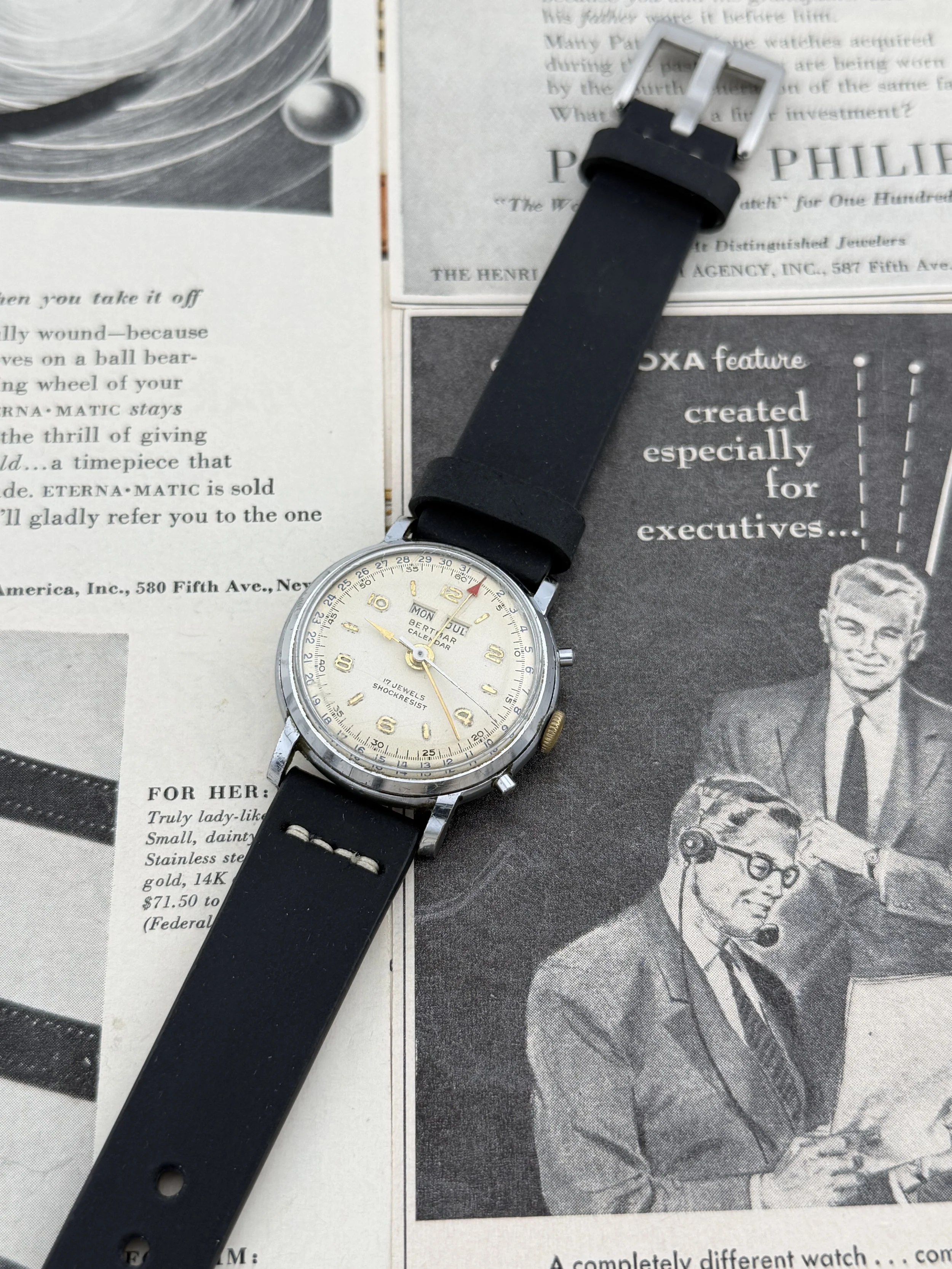
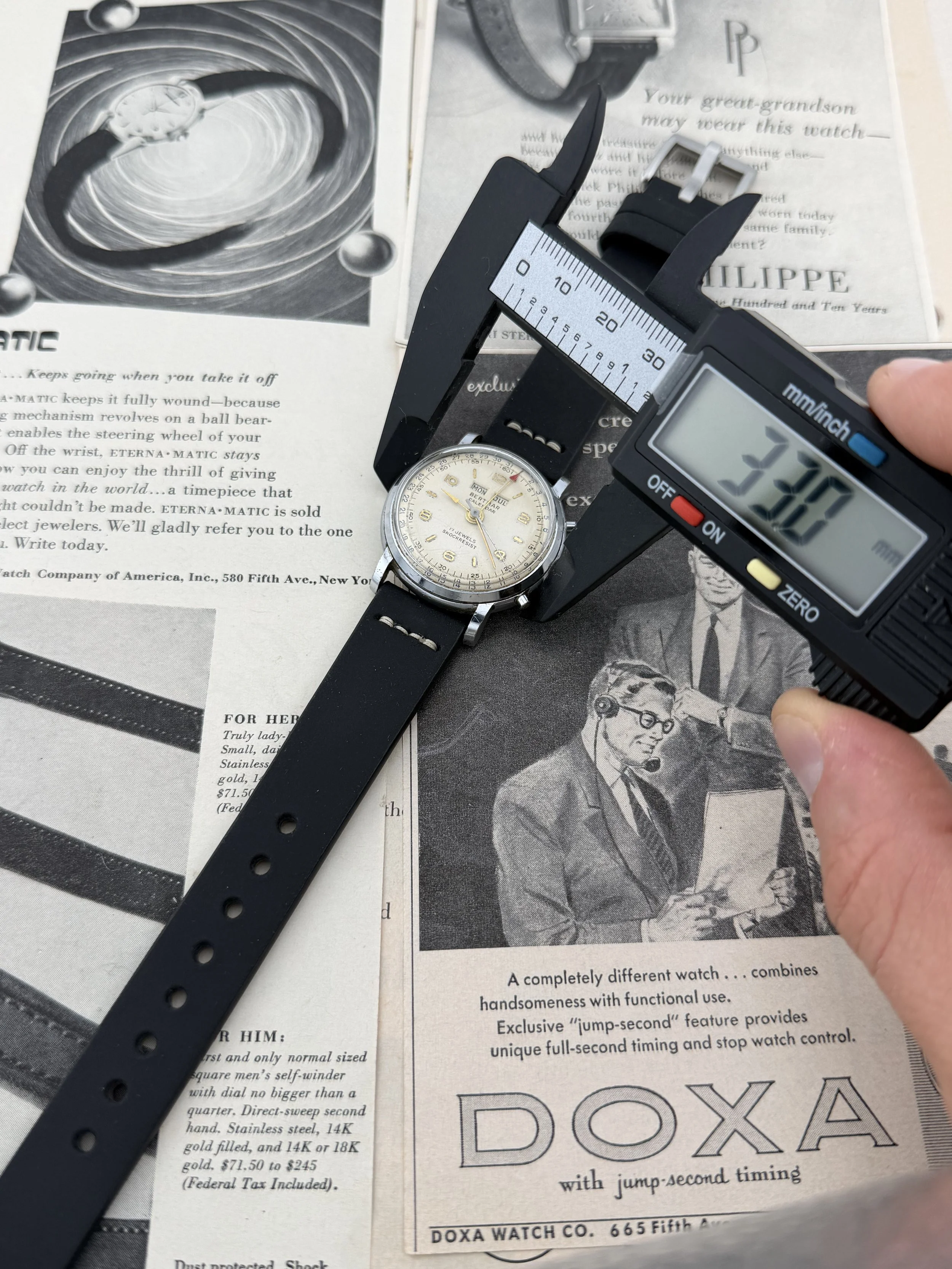
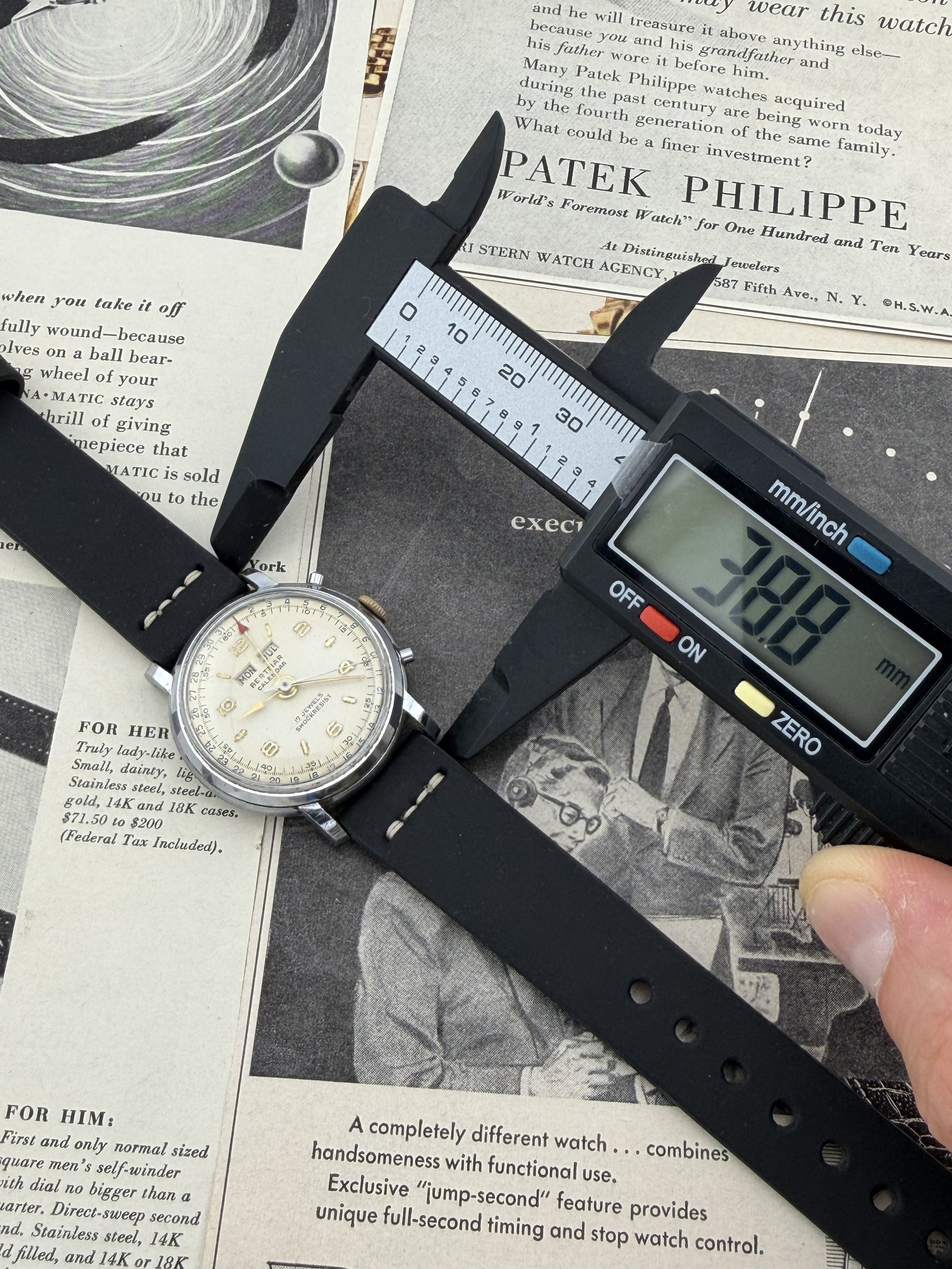
The most distinctive feature of this watch is its complete calendar complication, commonly known as a triple-date. The dial displays the day of the week and month through twin windows at 12 o’clock, while the date is indicated by a red arrow-tipped pointer hand that travels around the outer 1–31 chapter ring. Unlike a perpetual calendar, the mechanism does not automatically account for shorter months and requires manual adjustment several times throughout the year.
The dial has the elegant design language associated with late 1940s and early 1950s Swiss dress watches. The warm cream dial shows natural aging and patina that reinforces its originality, complemented by applied gold-tone hour markers, dauphine-style hands, a central seconds hand, and the striking red date pointer that adds both functionality and visual contrast.
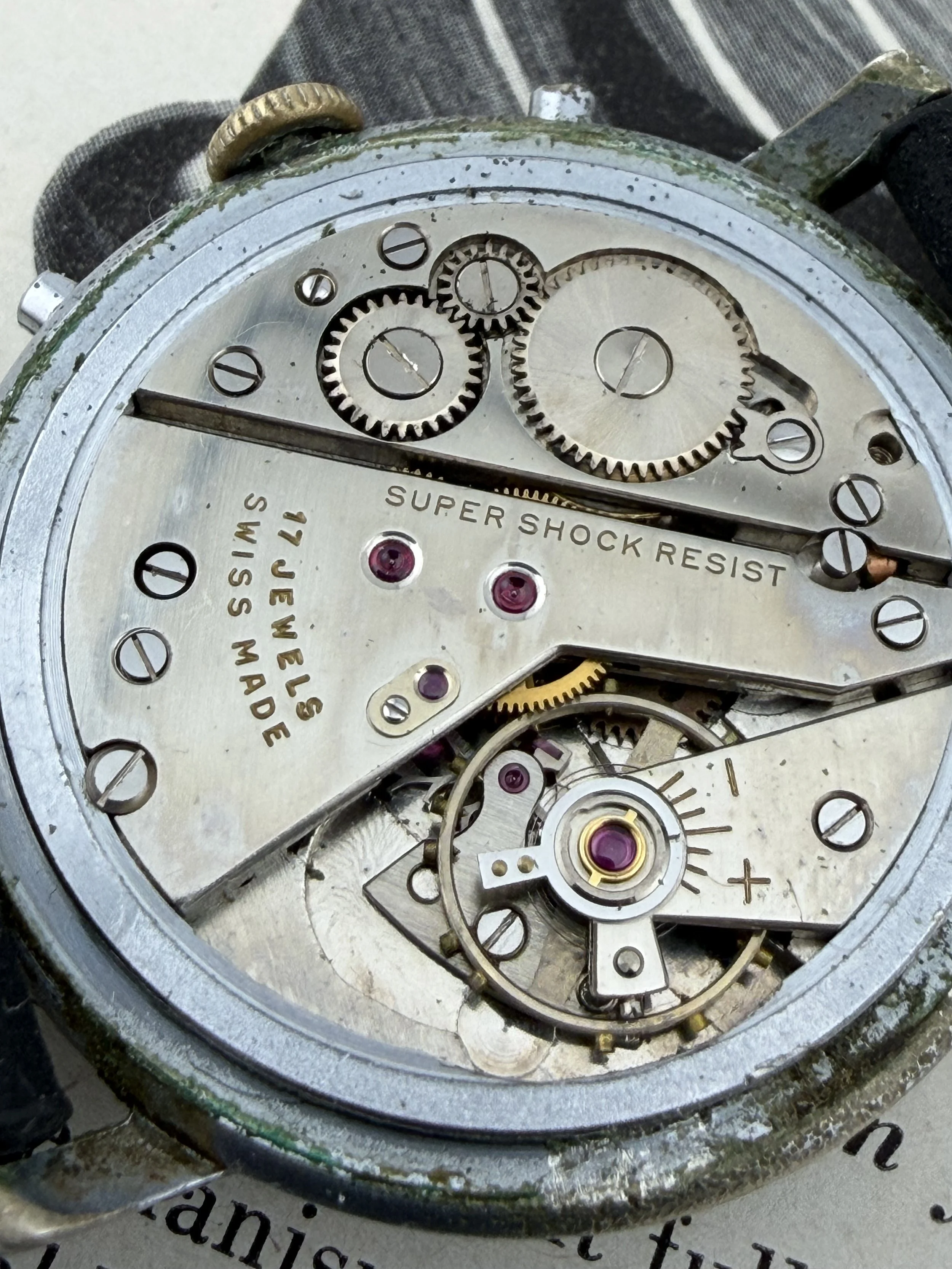
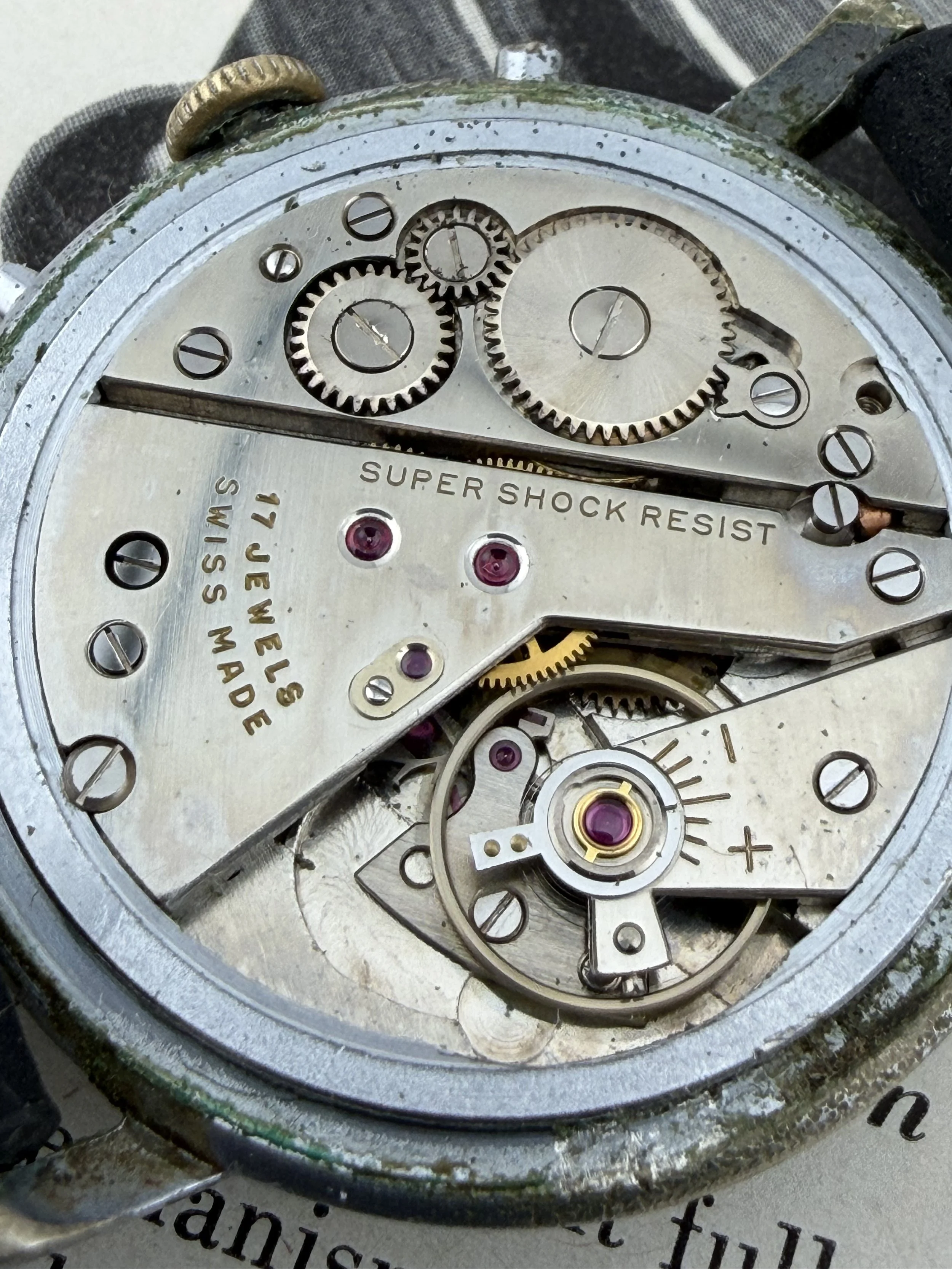
Inside is a Swiss-made 17-jewel manual-wind movement marked “Super Shock Resist.” Although the movement is signed only with its jewel count and shock-resistance designation, it was likely supplied by one of the major Swiss ébauche manufacturers of the period, such as FHF (Fontainemelon) or A. Schild (AS). Watches of this style typically used a reliable hand-wound base movement combined with an additional calendar mechanism mounted on top, allowing smaller brands to offer complex calendar displays without developing their own movements.
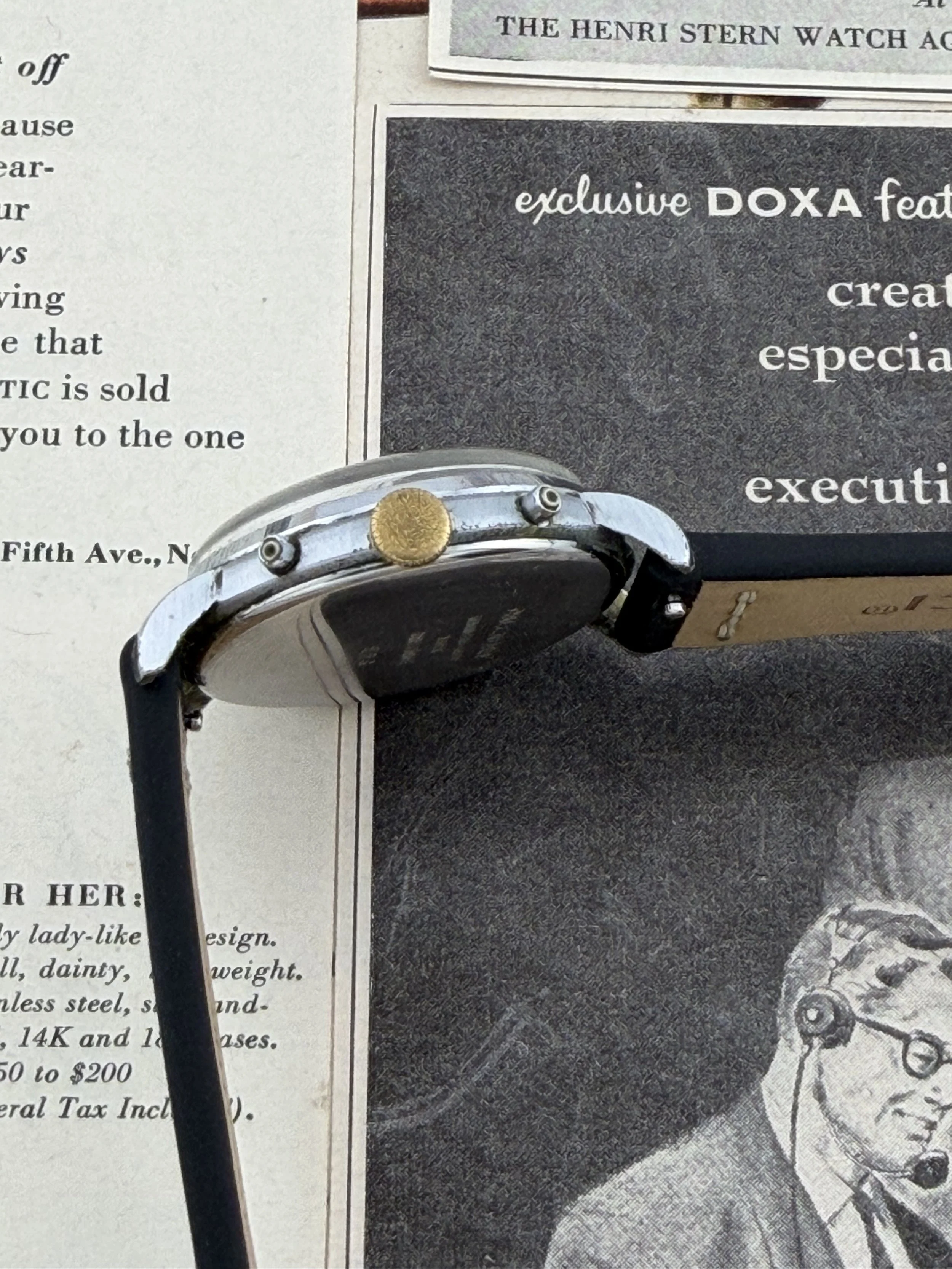
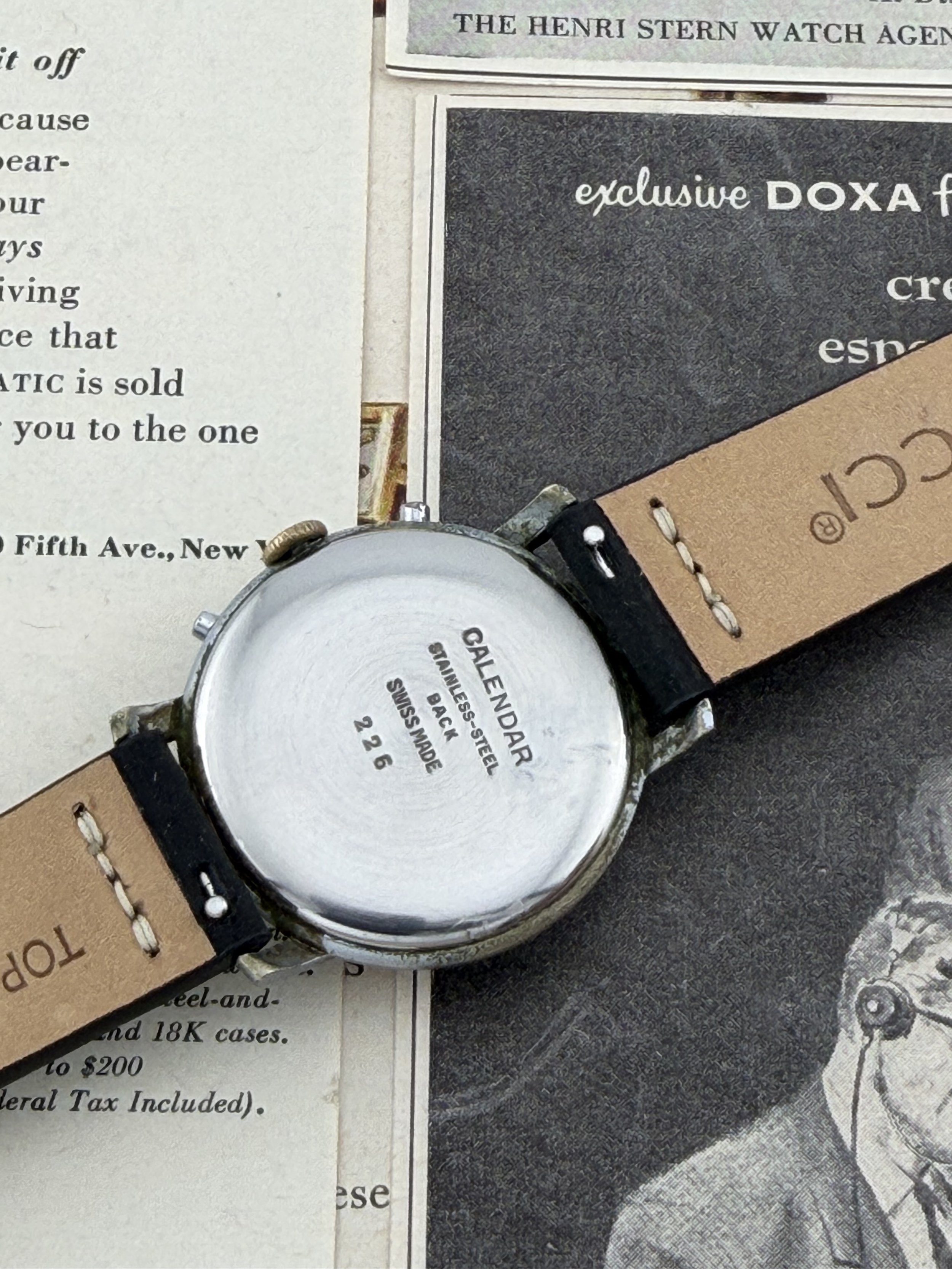
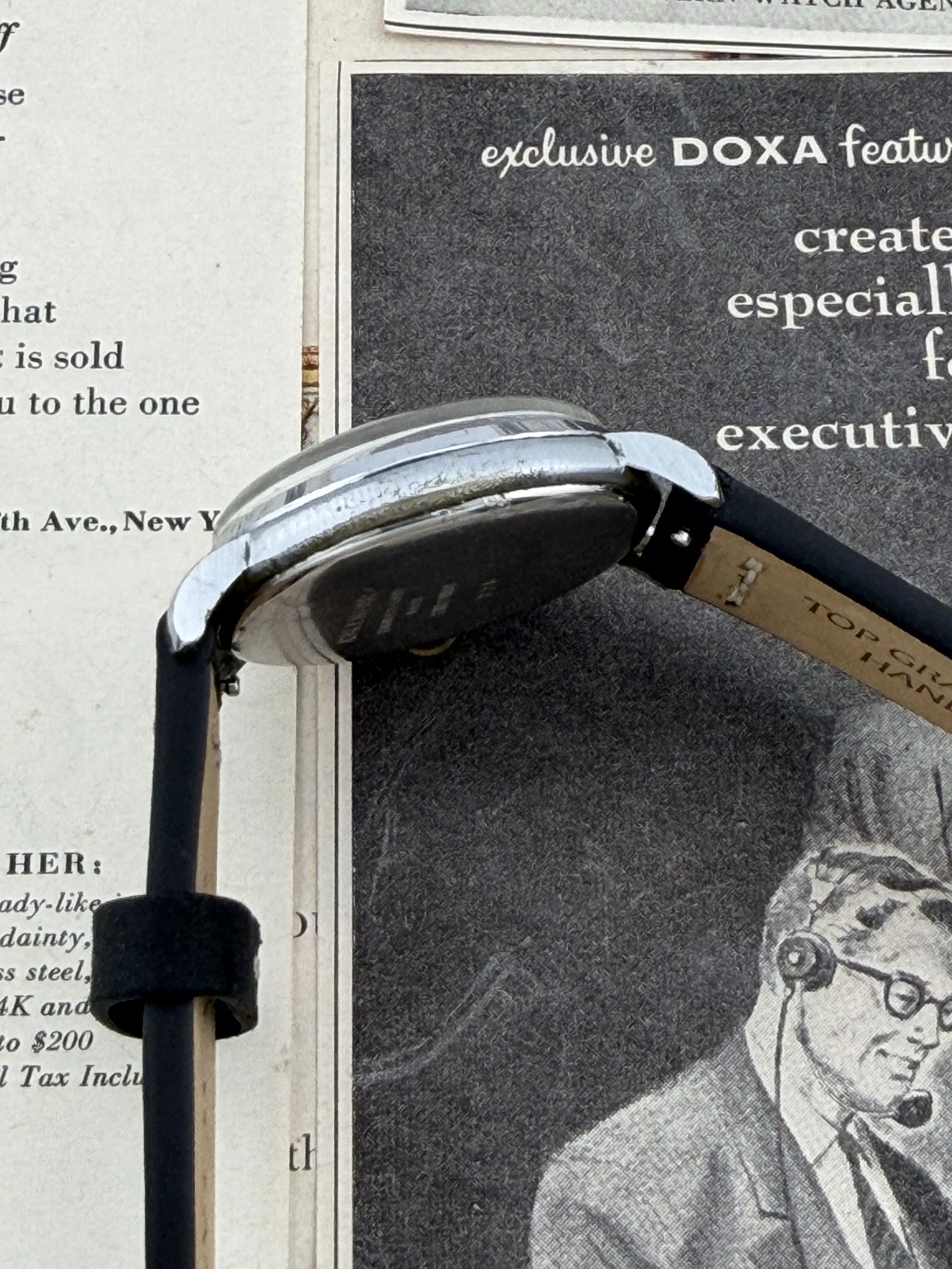
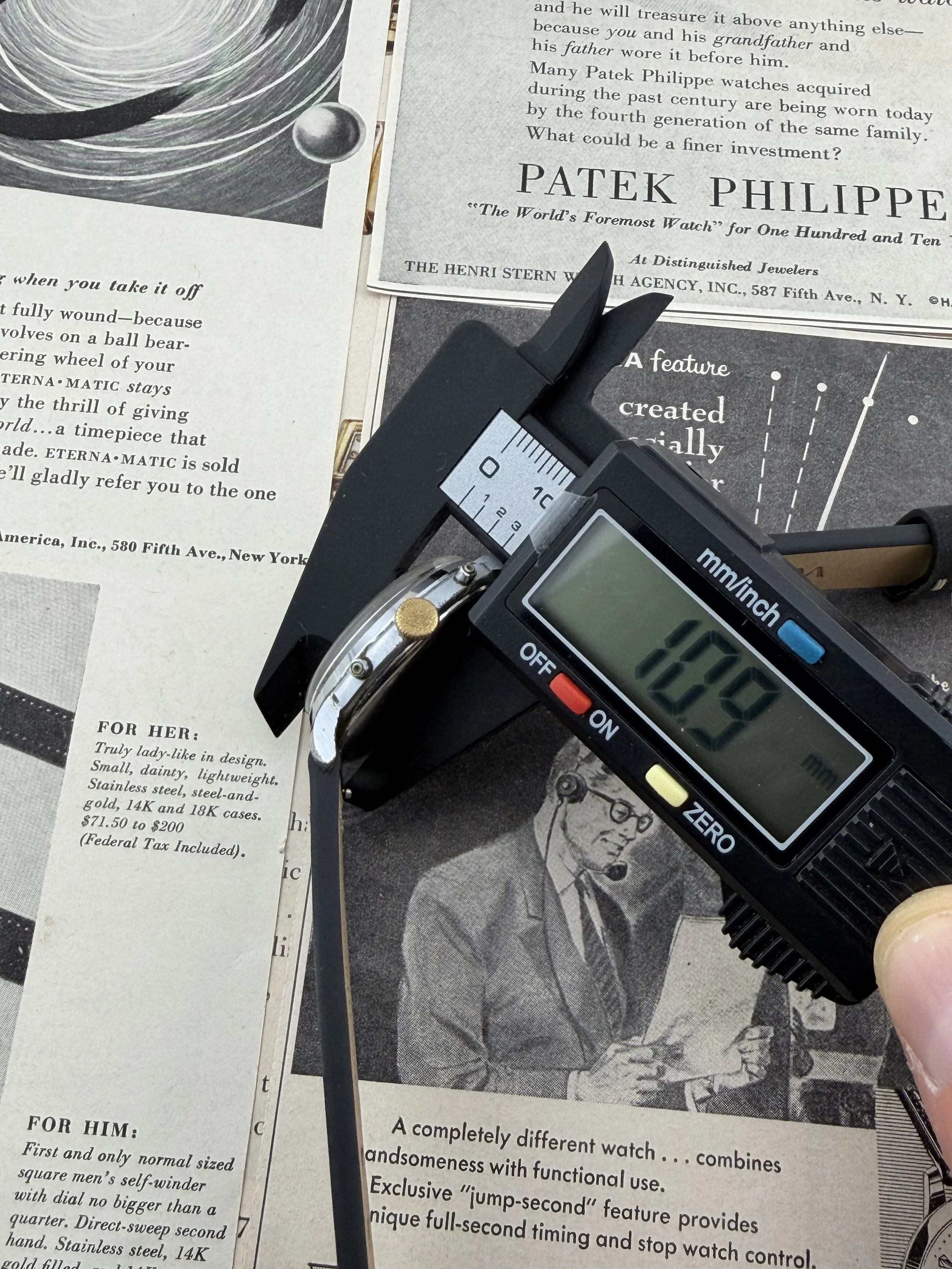
The case is a chromed base-metal construction with a stainless steel back, a common configuration for affordable complicated watches of the era. Visible wear and corrosion around the edges are consistent with decades of use and are typical for chrome-plated cases from this period. The acrylic crystal, gold-tone crown, and small calendar corrector pushers further reinforce the watch’s authentic mid-century character.
During the 1940s and 1950s, triple-date watches represented one of the most visually impressive complications available to everyday buyers. Inspired by much more expensive calendar watches from prestigious Swiss manufacturers, they brought the fascination of mechanical calendars to a wider audience and became an iconic style of the postwar period.
With its classic triple-date layout, red pointer date hand, 17-jewel Swiss movement, and untouched vintage dial, this Bertmar captures the elegance and mechanical ingenuity of mid-century Swiss watchmaking. Though not a luxury brand, it remains a highly appealing collector’s piece because of its complex calendar display, period styling, and connection to the golden age of mechanical wristwatches.
This vintage Bertmar Triple Date Calendar is a charming example of the complicated yet accessible Swiss watches that became popular in the years following World War II. While Bertmar was not a true manufacturer, it represents the era of private-label and distributor brands that imported quality Swiss movements and cases, then sold them through North American jewelers. These watches allowed consumers to enjoy sophisticated complications at a fraction of the cost of prestigious brands such as Omega, Universal Genève, and Movado.
The most distinctive feature of this watch is its complete calendar complication, commonly known as a triple-date. The dial displays the day of the week and month through twin windows at 12 o’clock, while the date is indicated by a red arrow-tipped pointer hand that travels around the outer 1–31 chapter ring. Unlike a perpetual calendar, the mechanism does not automatically account for shorter months and requires manual adjustment several times throughout the year.
The dial has the elegant design language associated with late 1940s and early 1950s Swiss dress watches. The warm cream dial shows natural aging and patina that reinforces its originality, complemented by applied gold-tone hour markers, dauphine-style hands, a central seconds hand, and the striking red date pointer that adds both functionality and visual contrast.
Inside is a Swiss-made 17-jewel manual-wind movement marked “Super Shock Resist.” Although the movement is signed only with its jewel count and shock-resistance designation, it was likely supplied by one of the major Swiss ébauche manufacturers of the period, such as FHF (Fontainemelon) or A. Schild (AS). Watches of this style typically used a reliable hand-wound base movement combined with an additional calendar mechanism mounted on top, allowing smaller brands to offer complex calendar displays without developing their own movements.
The case is a chromed base-metal construction with a stainless steel back, a common configuration for affordable complicated watches of the era. Visible wear and corrosion around the edges are consistent with decades of use and are typical for chrome-plated cases from this period. The acrylic crystal, gold-tone crown, and small calendar corrector pushers further reinforce the watch’s authentic mid-century character.
During the 1940s and 1950s, triple-date watches represented one of the most visually impressive complications available to everyday buyers. Inspired by much more expensive calendar watches from prestigious Swiss manufacturers, they brought the fascination of mechanical calendars to a wider audience and became an iconic style of the postwar period.
With its classic triple-date layout, red pointer date hand, 17-jewel Swiss movement, and untouched vintage dial, this Bertmar captures the elegance and mechanical ingenuity of mid-century Swiss watchmaking. Though not a luxury brand, it remains a highly appealing collector’s piece because of its complex calendar display, period styling, and connection to the golden age of mechanical wristwatches.