

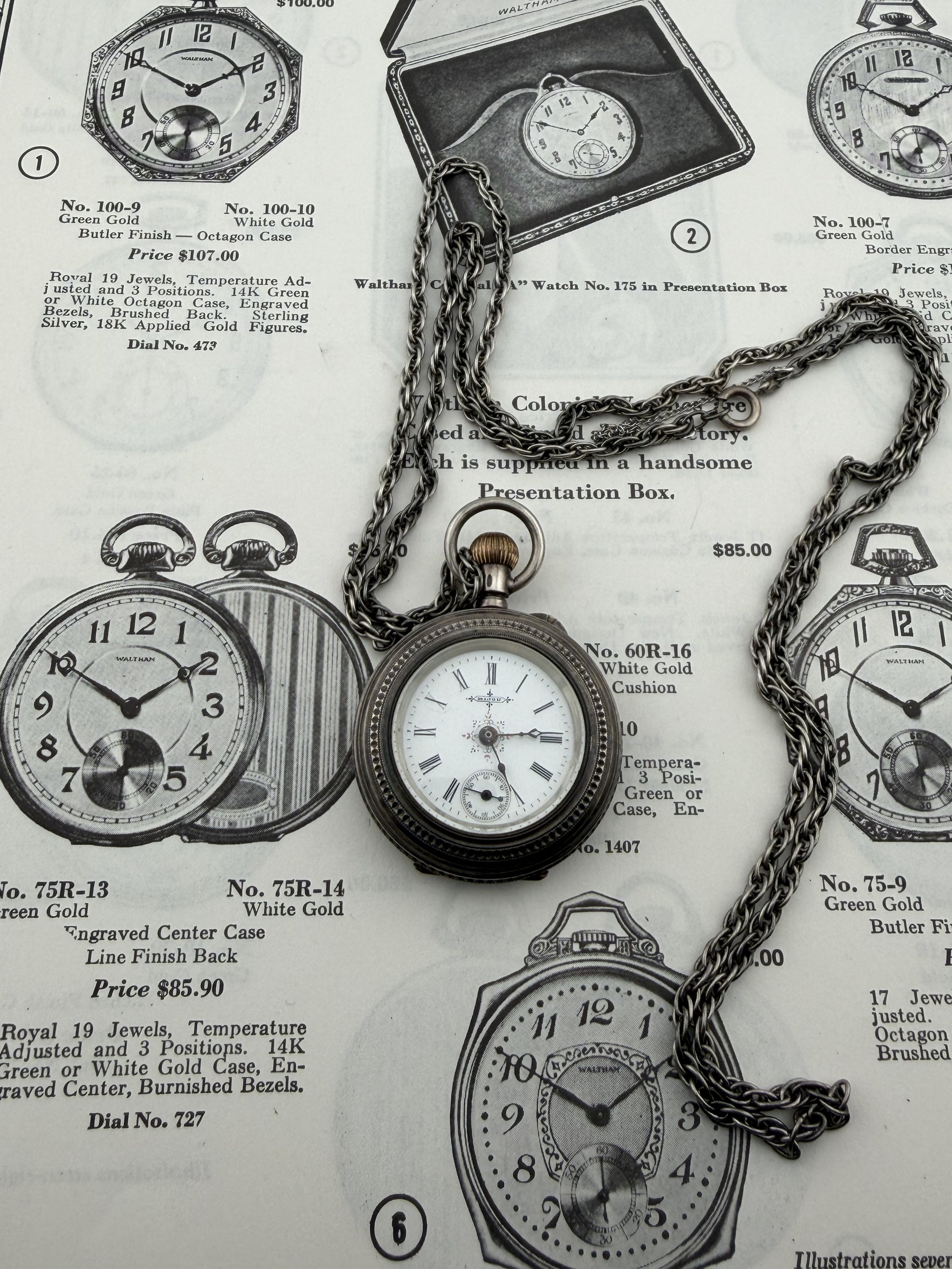
This vintage Bijou pocket watch is a charming and authentic example of the Swiss export watch industry at the turn of the 20th century — a period when reliable, beautifully crafted pocket watches became an essential part of everyday life.
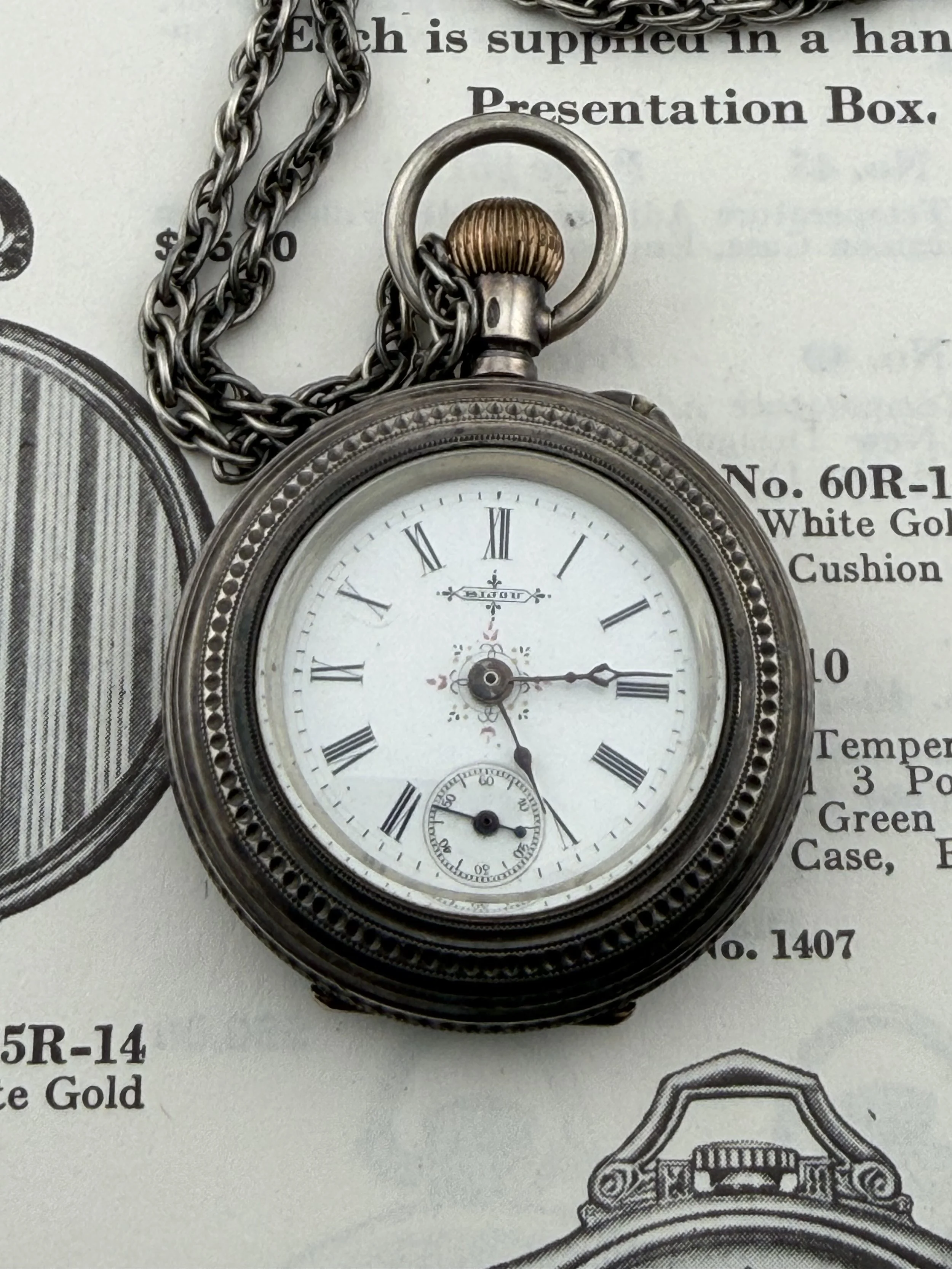
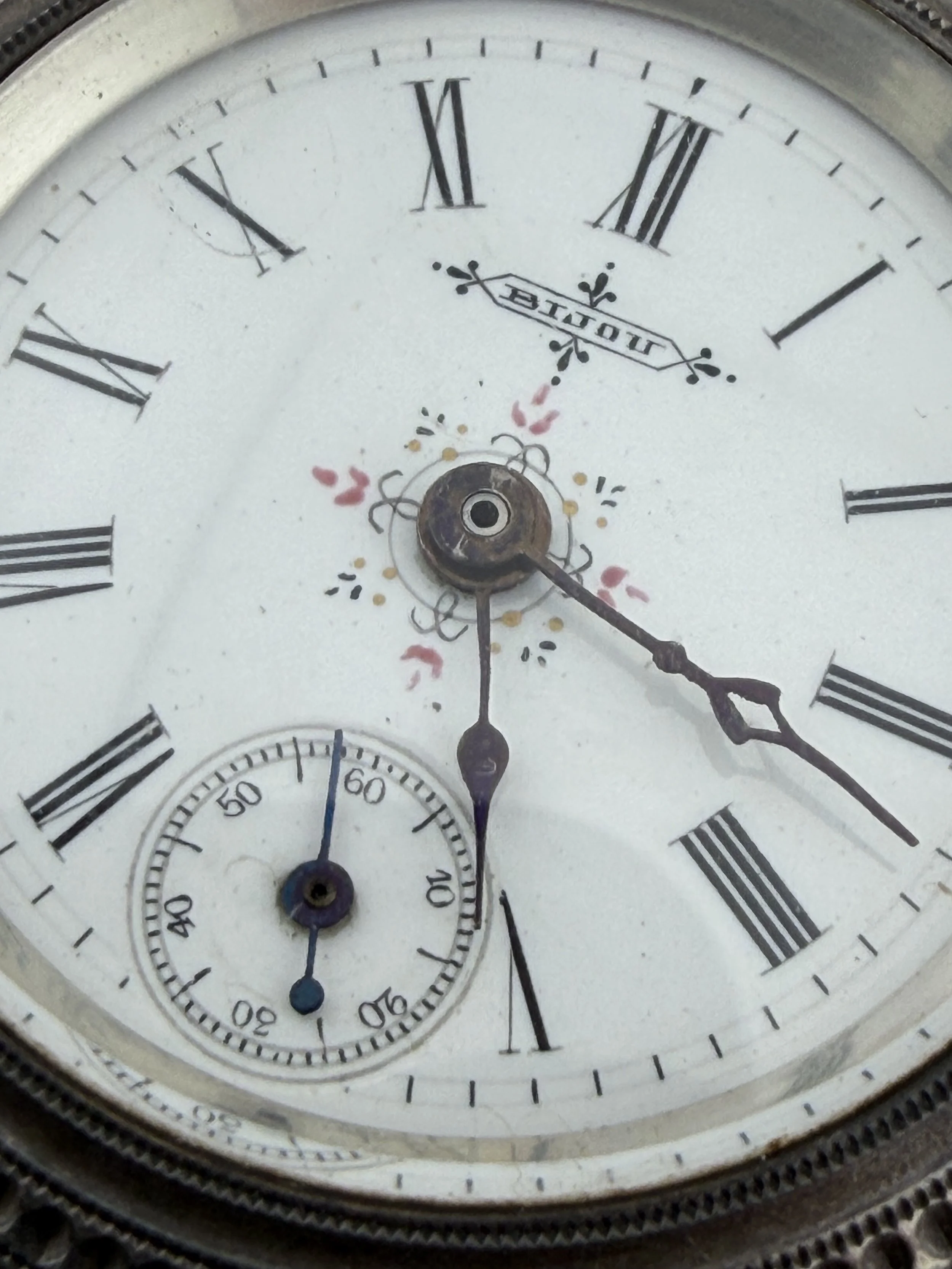
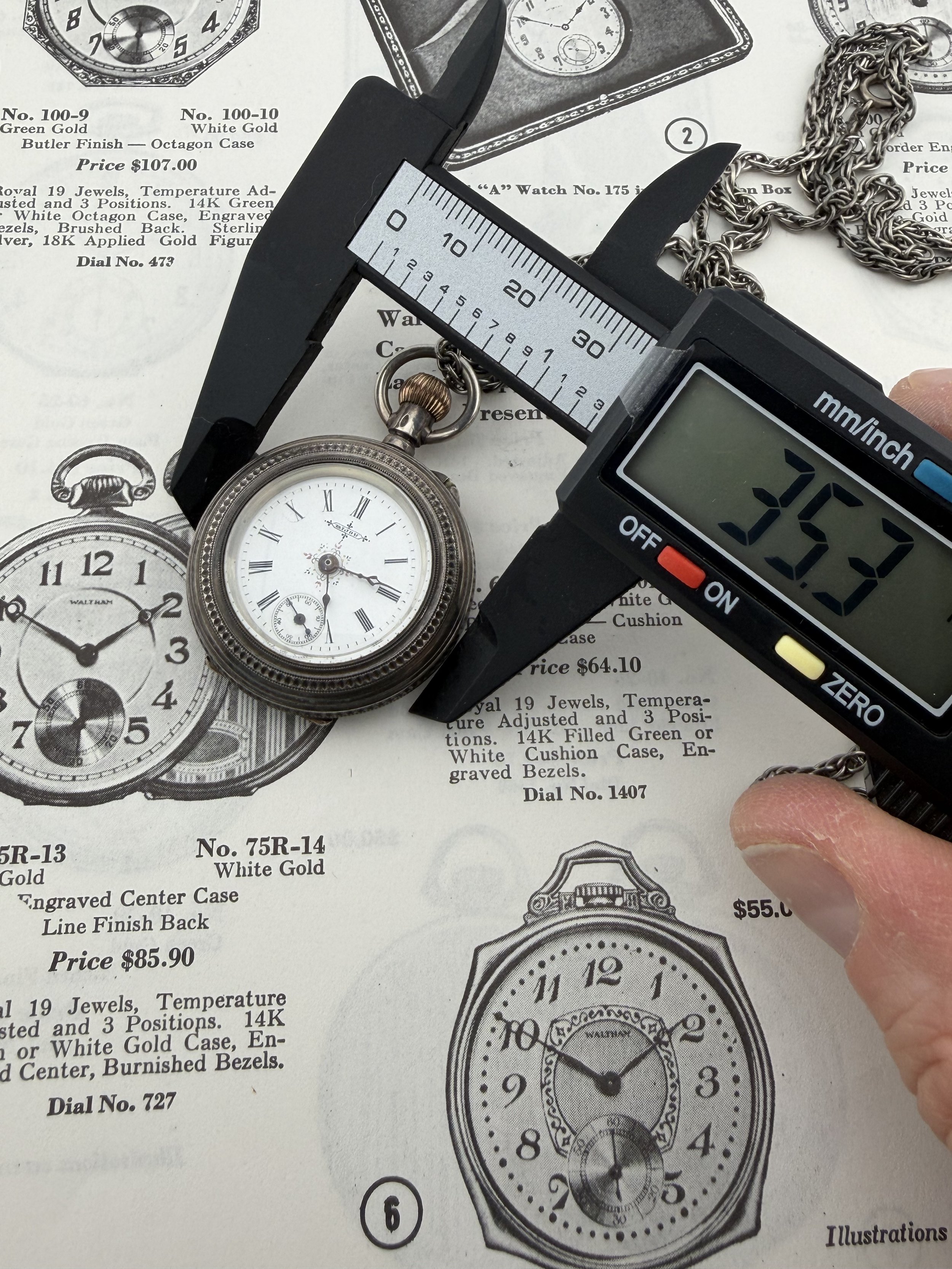
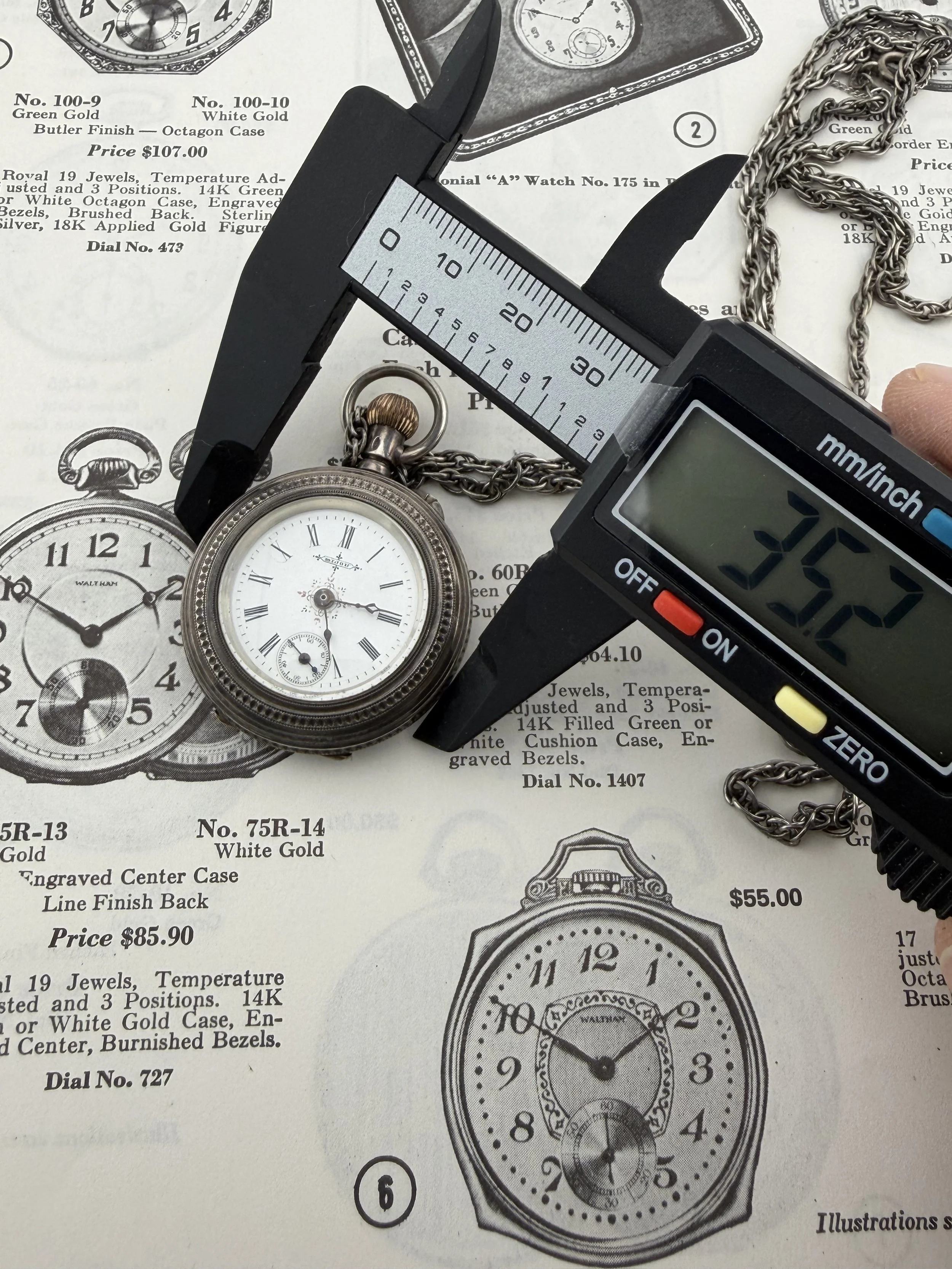
Dating approximately from 1890 to 1910, the watch features a classic white enamel dial with black Roman numerals, an outer minute track, and a recessed sub-seconds register at 6 o’clock. Elegant blued steel hands provide a refined contrast, showcasing the traditional heat-treated finishing methods prized during the era.
The dial layout and subtle decorative center details reflect the understated sophistication favored by gentlemen and professionals of the time — practical, elegant, and highly legible.
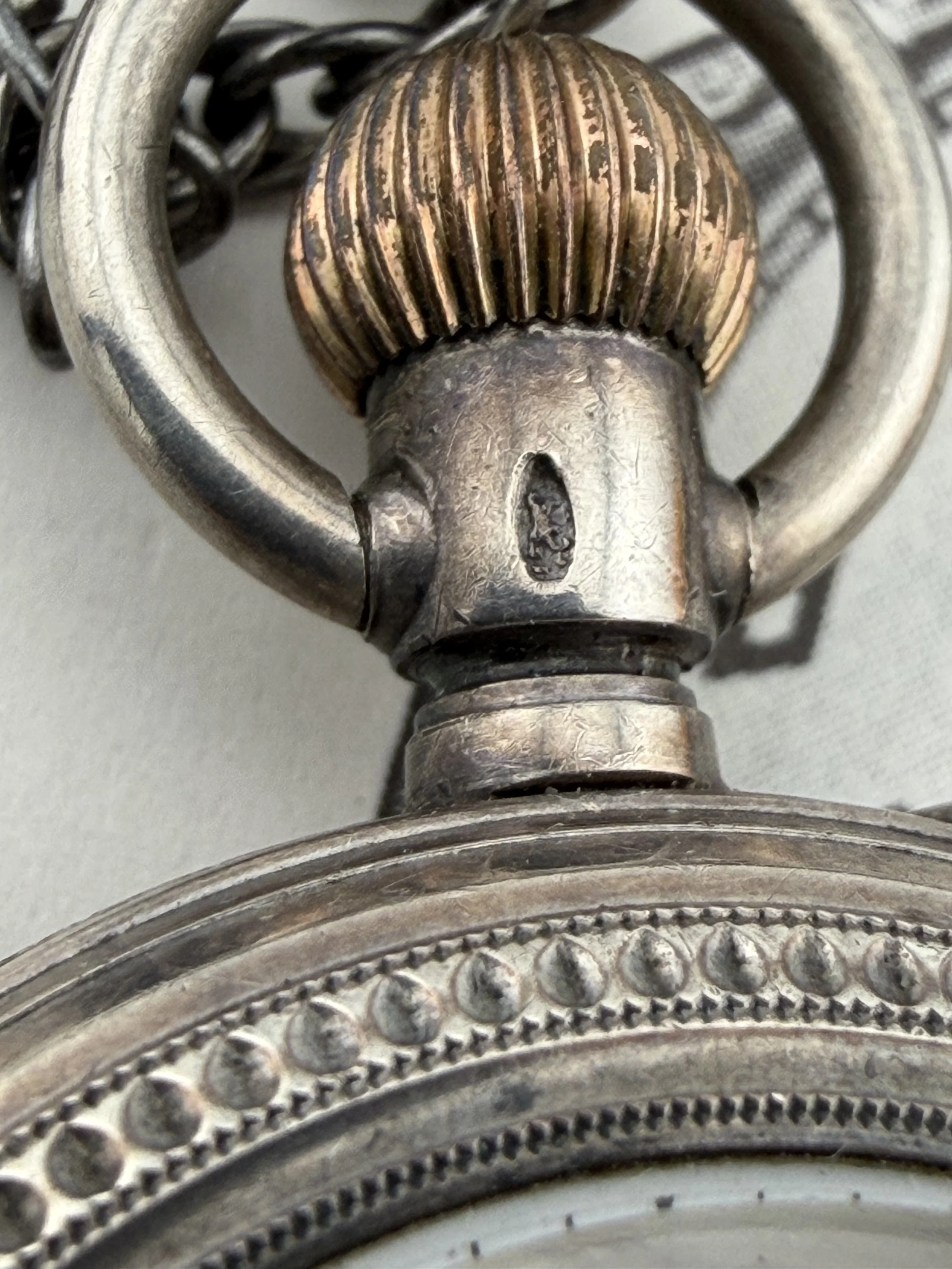
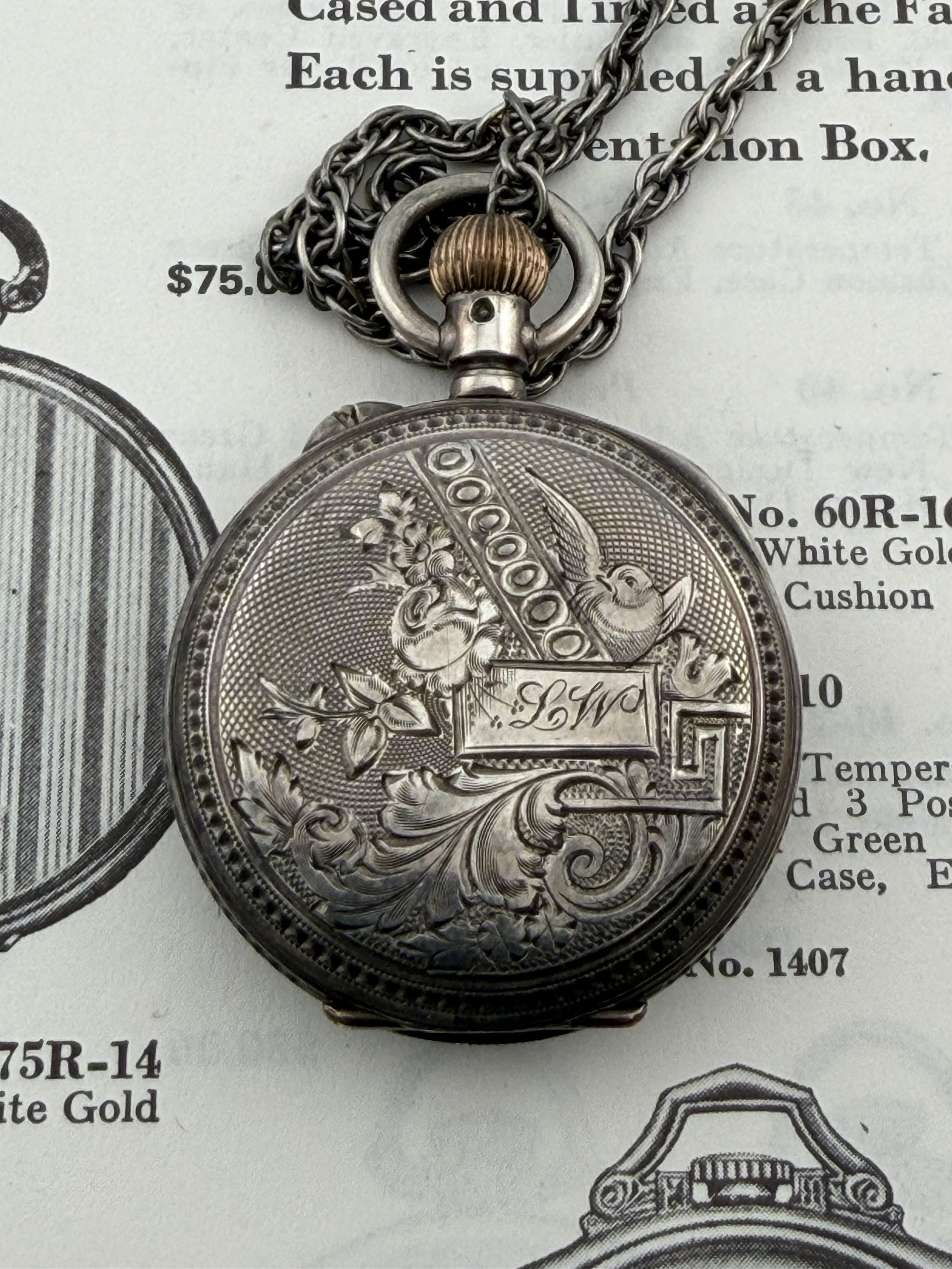
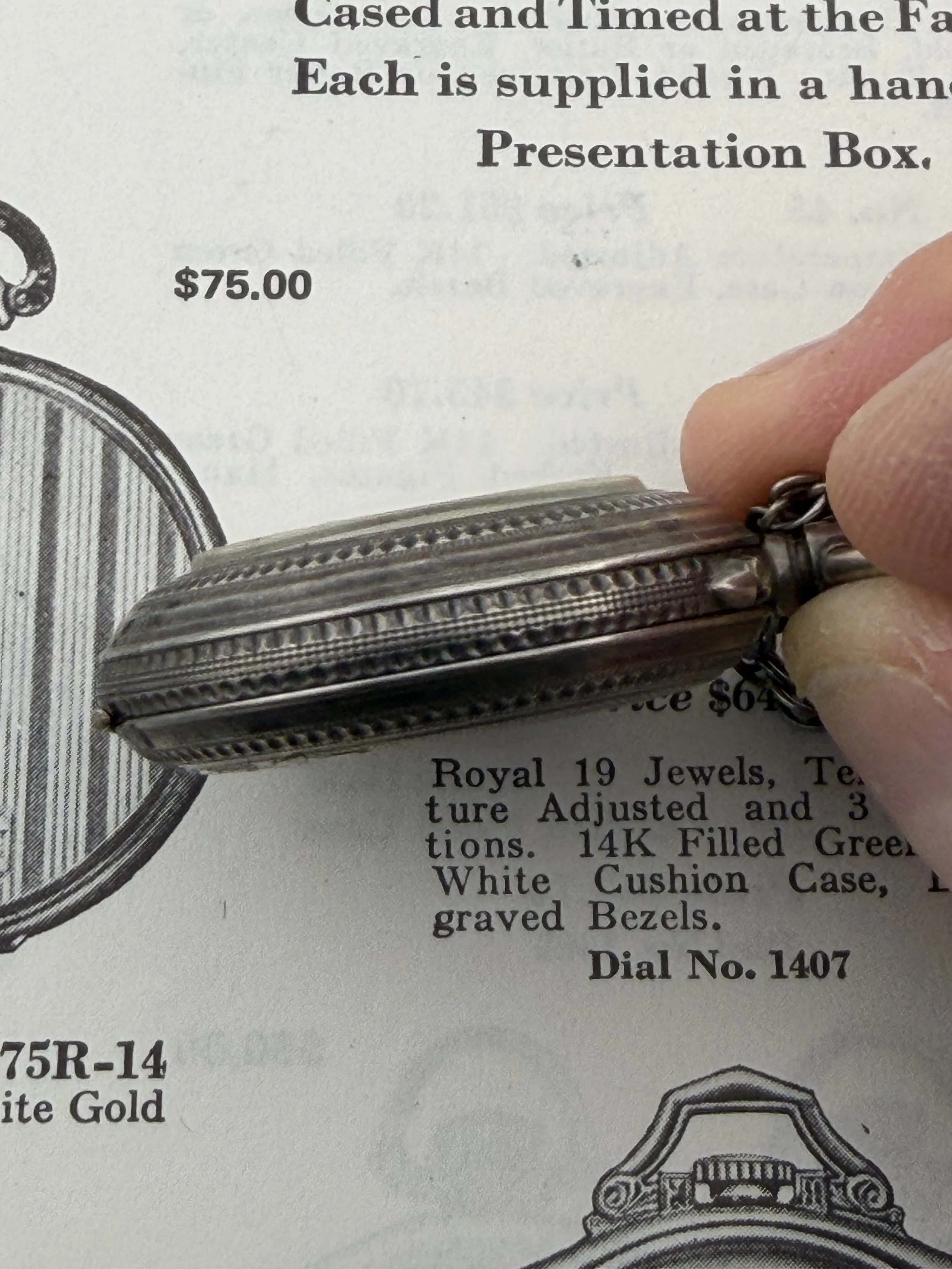
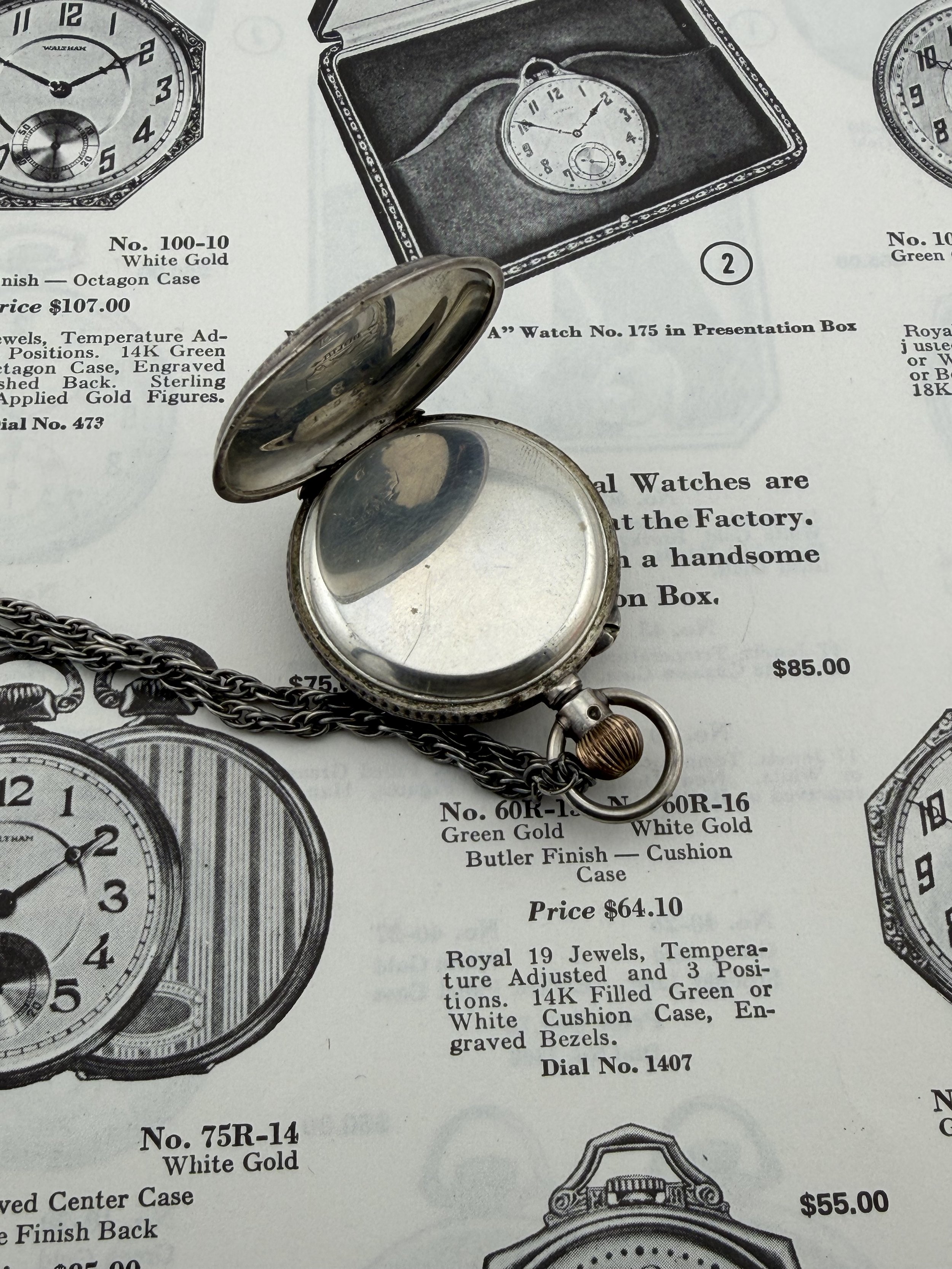
Housed in a solid silver case, the watch carries the warmth and character that only precious metal develops over more than a century of careful use. The beautifully worn surfaces, coin-edge bezel, and ribbed onion-style crown are all classic features of late Victorian and Edwardian pocket watch design. The pendant construction also suggests a traditional pin-set or lever-set mechanism, common among quality Swiss watches of the period.
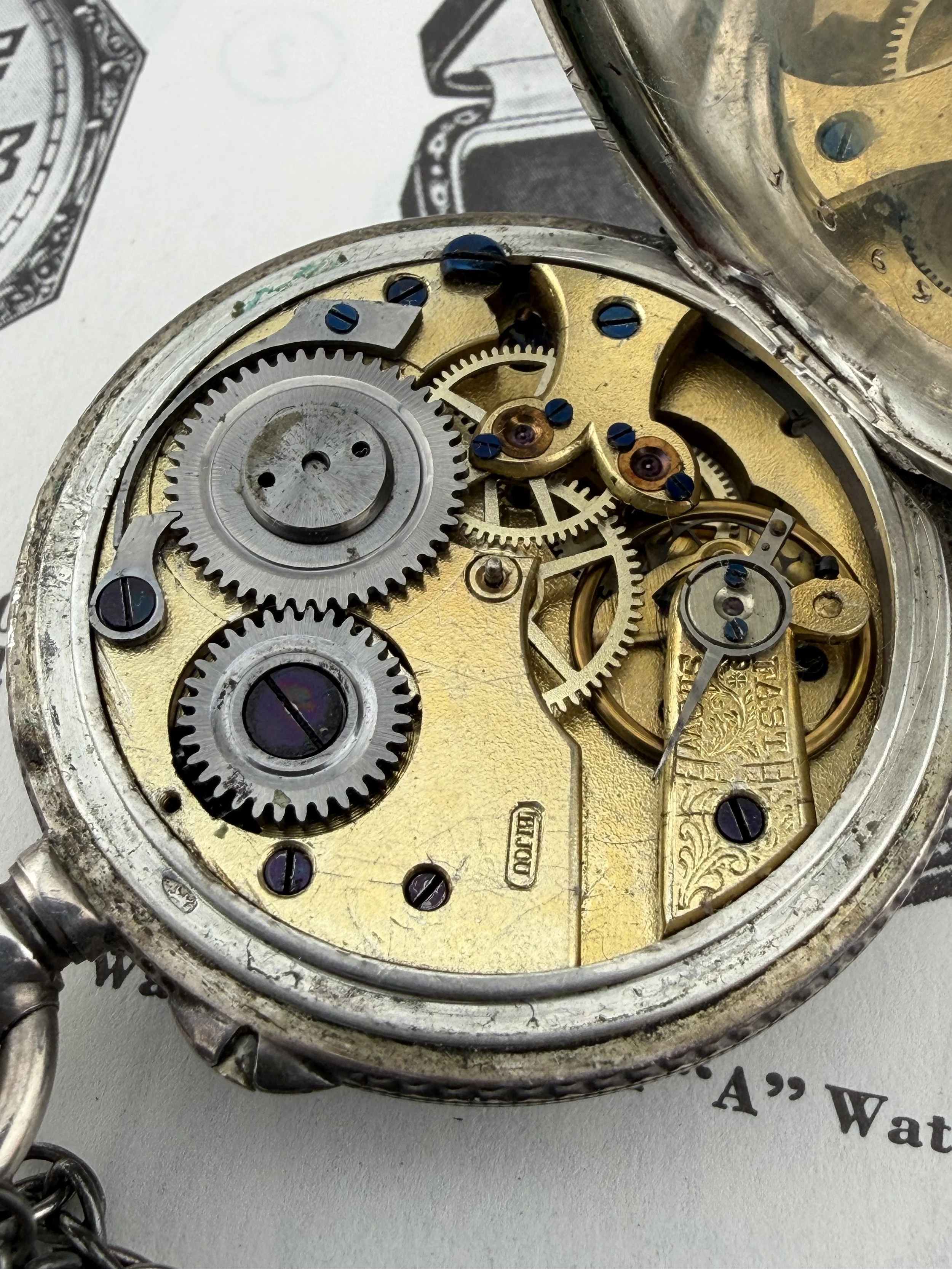
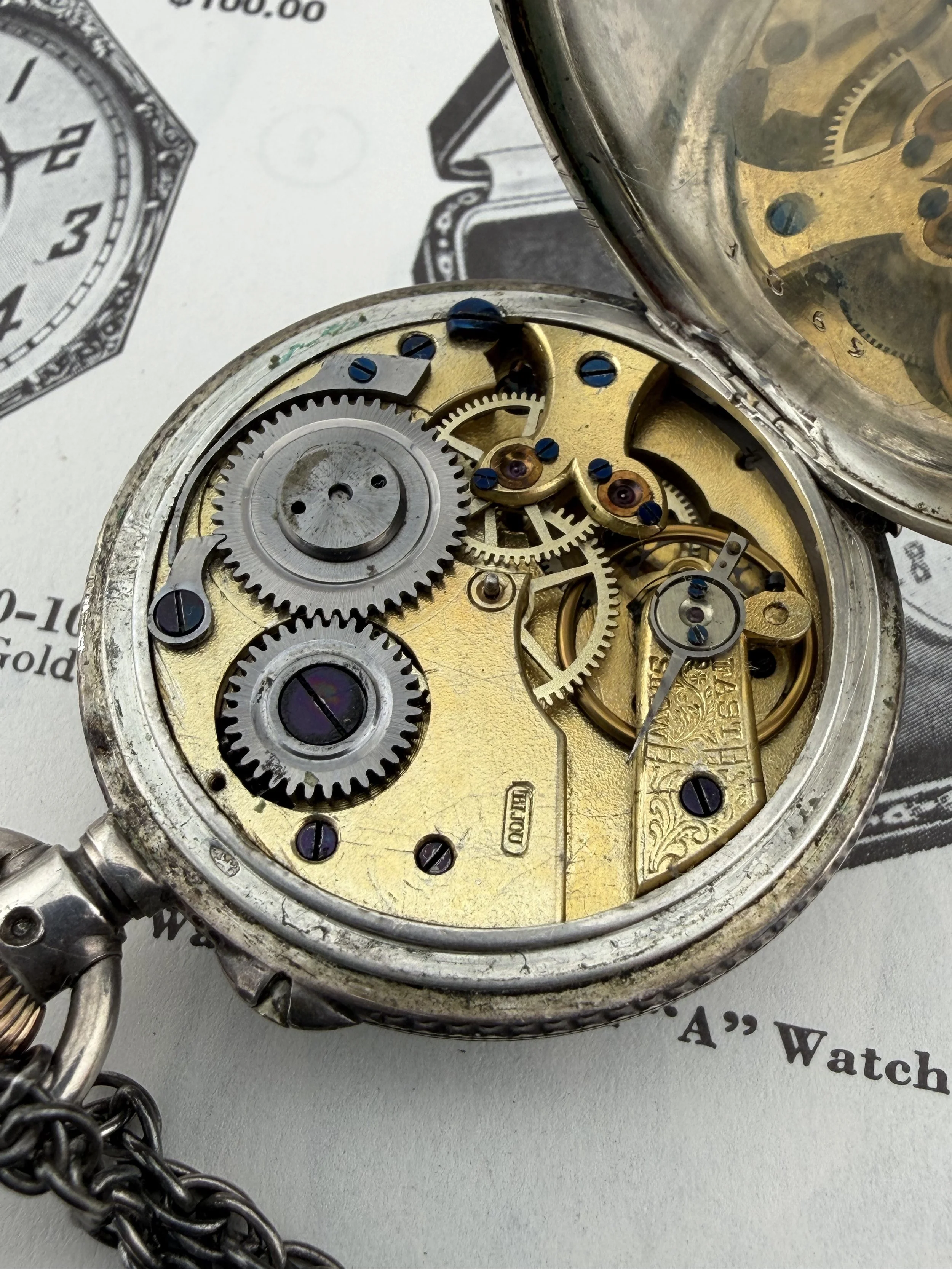
Inside, the gilt-finished Swiss movement features engraved bridges, blued screws, visible gear train work, and a traditional bar or three-quarter plate layout. Likely jeweled in the 7 to 11 jewel range, the movement was built to provide dependable daily performance rather than elite chronometer precision — the perfect mid-grade gentleman’s watch of its day.
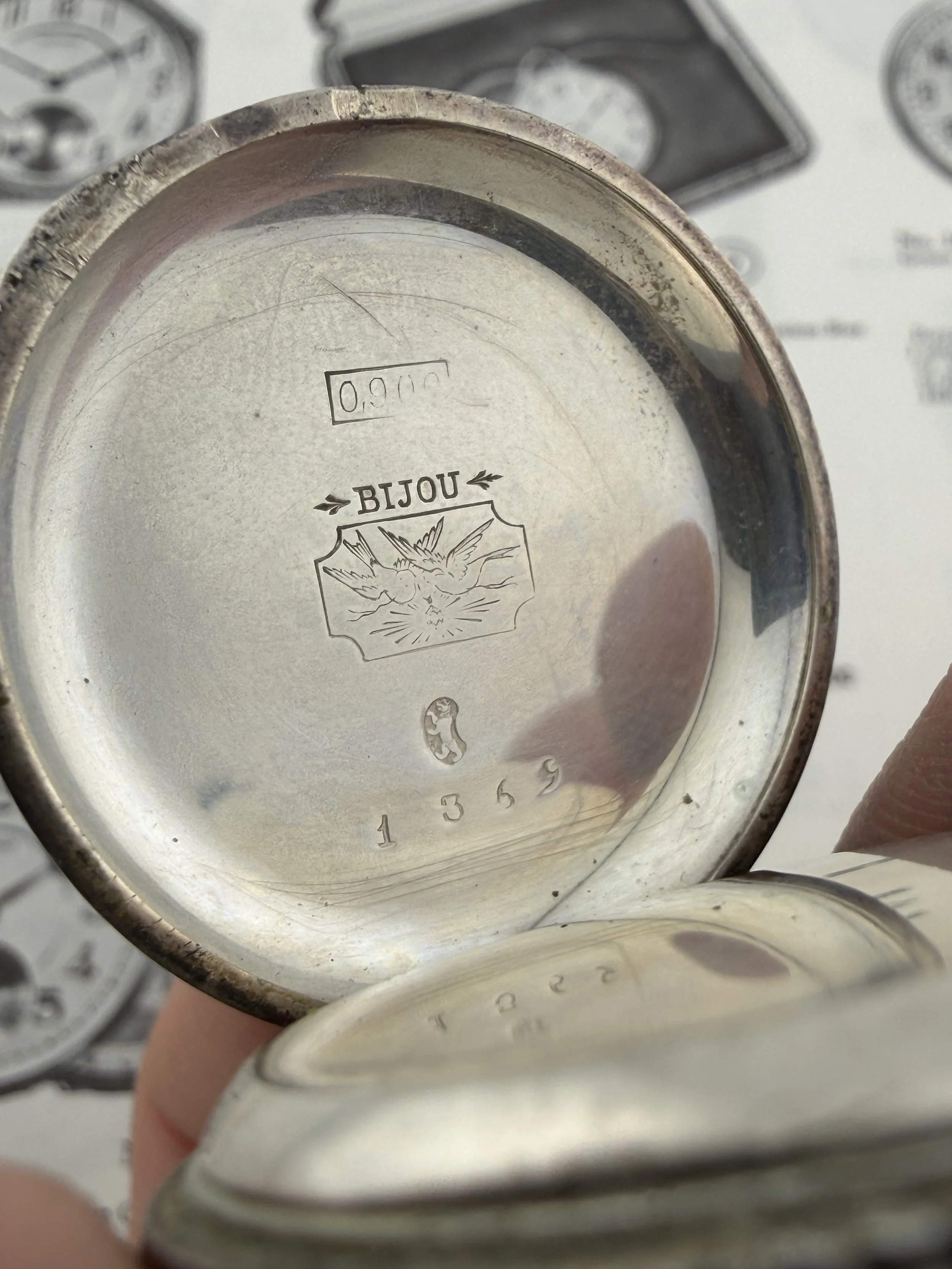
The “Bijou” name itself is rooted in the Swiss export trade. Rather than representing a single famous manufacture, Bijou was a trade name used on Swiss-made watches sold internationally through jewellers and retailers. The word “bijou,” French for “jewel” or “small elegant object,” reflected the aspirational yet accessible nature of these watches.
Watches like this would have accompanied clerks, merchants, tradesmen, and professionals through daily life — carried in waistcoat pockets and relied upon as both practical tools and personal possessions.
Today, pieces like this are appreciated not for prestige branding alone, but for their craftsmanship, mechanical beauty, enamel dials, and honest antique character.
A wonderfully preserved silver-cased Bijou, this watch offers over a century of history, traditional Swiss watchmaking, and timeless old-world charm.
This vintage Bijou pocket watch is a charming and authentic example of the Swiss export watch industry at the turn of the 20th century — a period when reliable, beautifully crafted pocket watches became an essential part of everyday life.
Dating approximately from 1890 to 1910, the watch features a classic white enamel dial with black Roman numerals, an outer minute track, and a recessed sub-seconds register at 6 o’clock. Elegant blued steel hands provide a refined contrast, showcasing the traditional heat-treated finishing methods prized during the era.
The dial layout and subtle decorative center details reflect the understated sophistication favored by gentlemen and professionals of the time — practical, elegant, and highly legible.
Housed in a solid silver case, the watch carries the warmth and character that only precious metal develops over more than a century of careful use. The beautifully worn surfaces, coin-edge bezel, and ribbed onion-style crown are all classic features of late Victorian and Edwardian pocket watch design. The pendant construction also suggests a traditional pin-set or lever-set mechanism, common among quality Swiss watches of the period.
Inside, the gilt-finished Swiss movement features engraved bridges, blued screws, visible gear train work, and a traditional bar or three-quarter plate layout. Likely jeweled in the 7 to 11 jewel range, the movement was built to provide dependable daily performance rather than elite chronometer precision — the perfect mid-grade gentleman’s watch of its day.
The “Bijou” name itself is rooted in the Swiss export trade. Rather than representing a single famous manufacture, Bijou was a trade name used on Swiss-made watches sold internationally through jewellers and retailers. The word “bijou,” French for “jewel” or “small elegant object,” reflected the aspirational yet accessible nature of these watches.
Watches like this would have accompanied clerks, merchants, tradesmen, and professionals through daily life — carried in waistcoat pockets and relied upon as both practical tools and personal possessions.
Today, pieces like this are appreciated not for prestige branding alone, but for their craftsmanship, mechanical beauty, enamel dials, and honest antique character.
A wonderfully preserved silver-cased Bijou, this watch offers over a century of history, traditional Swiss watchmaking, and timeless old-world charm.