

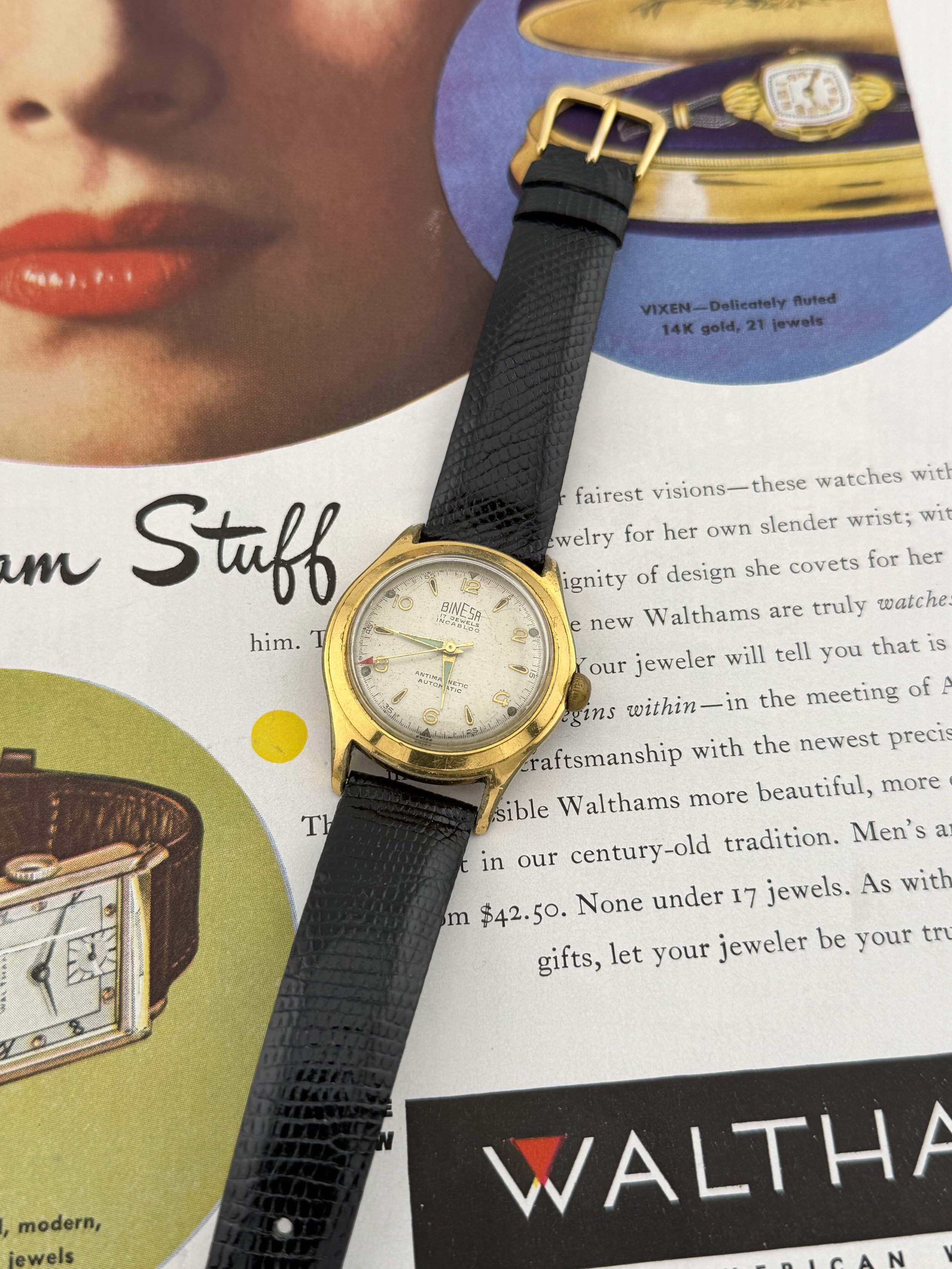
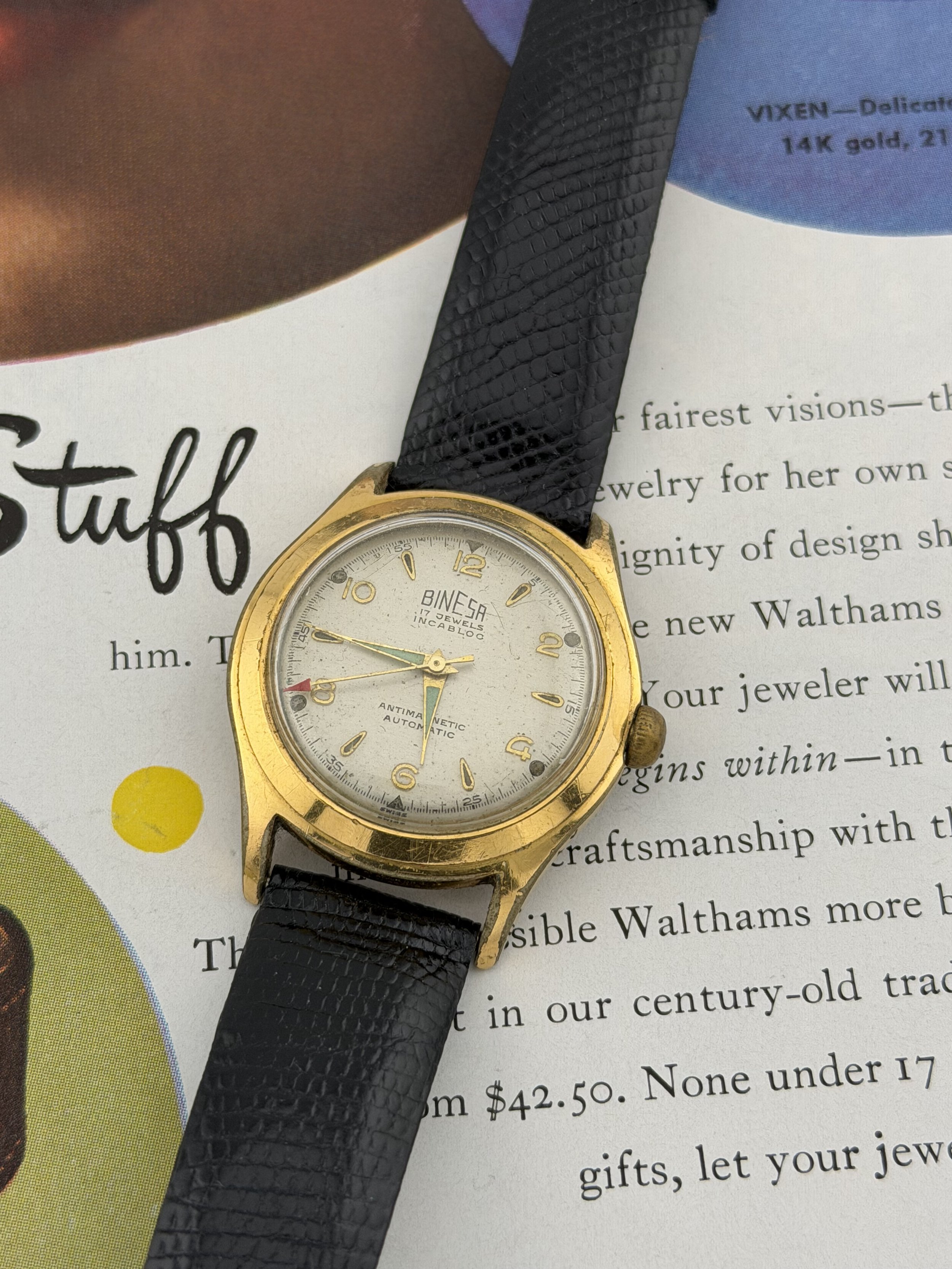
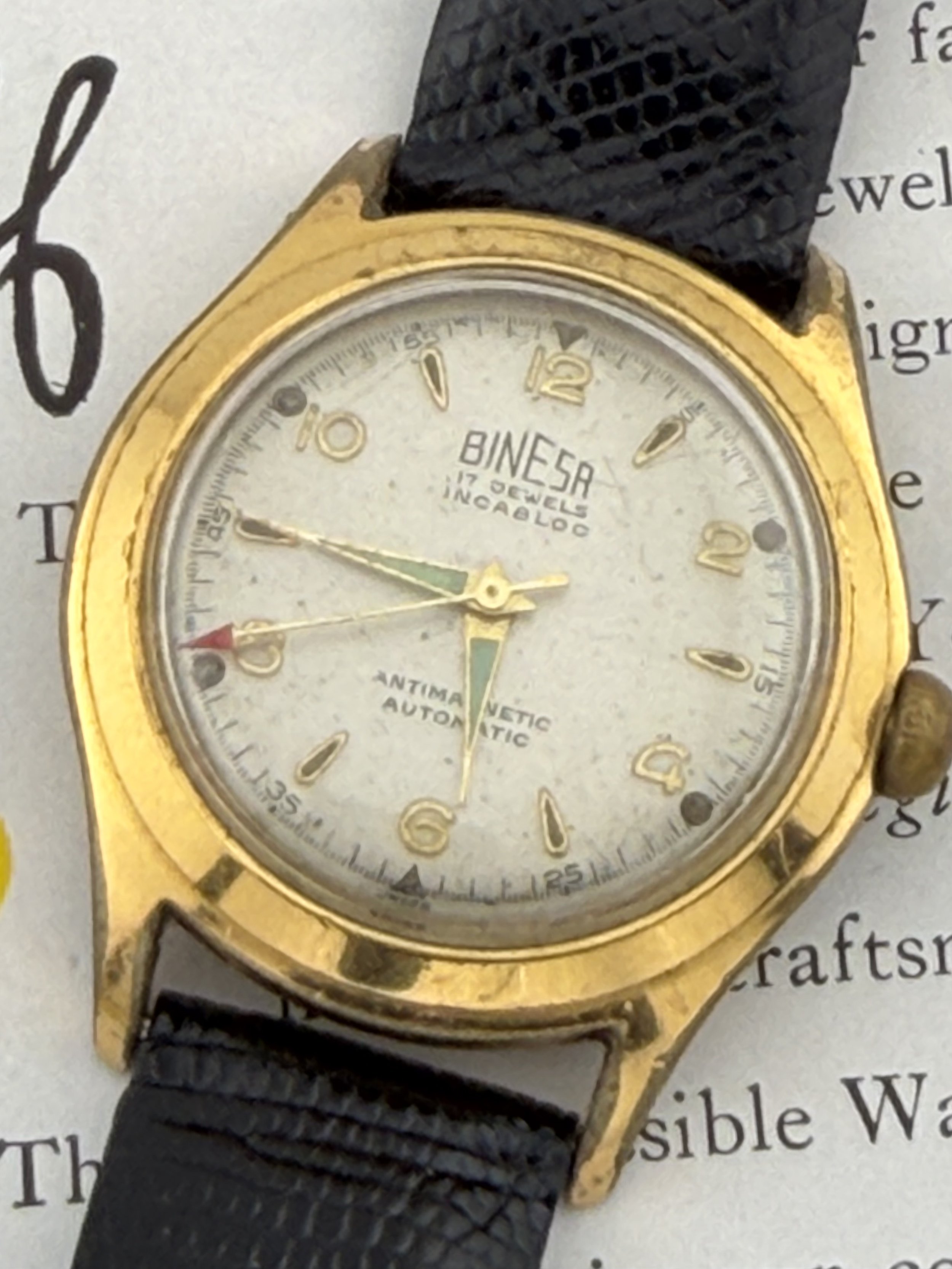
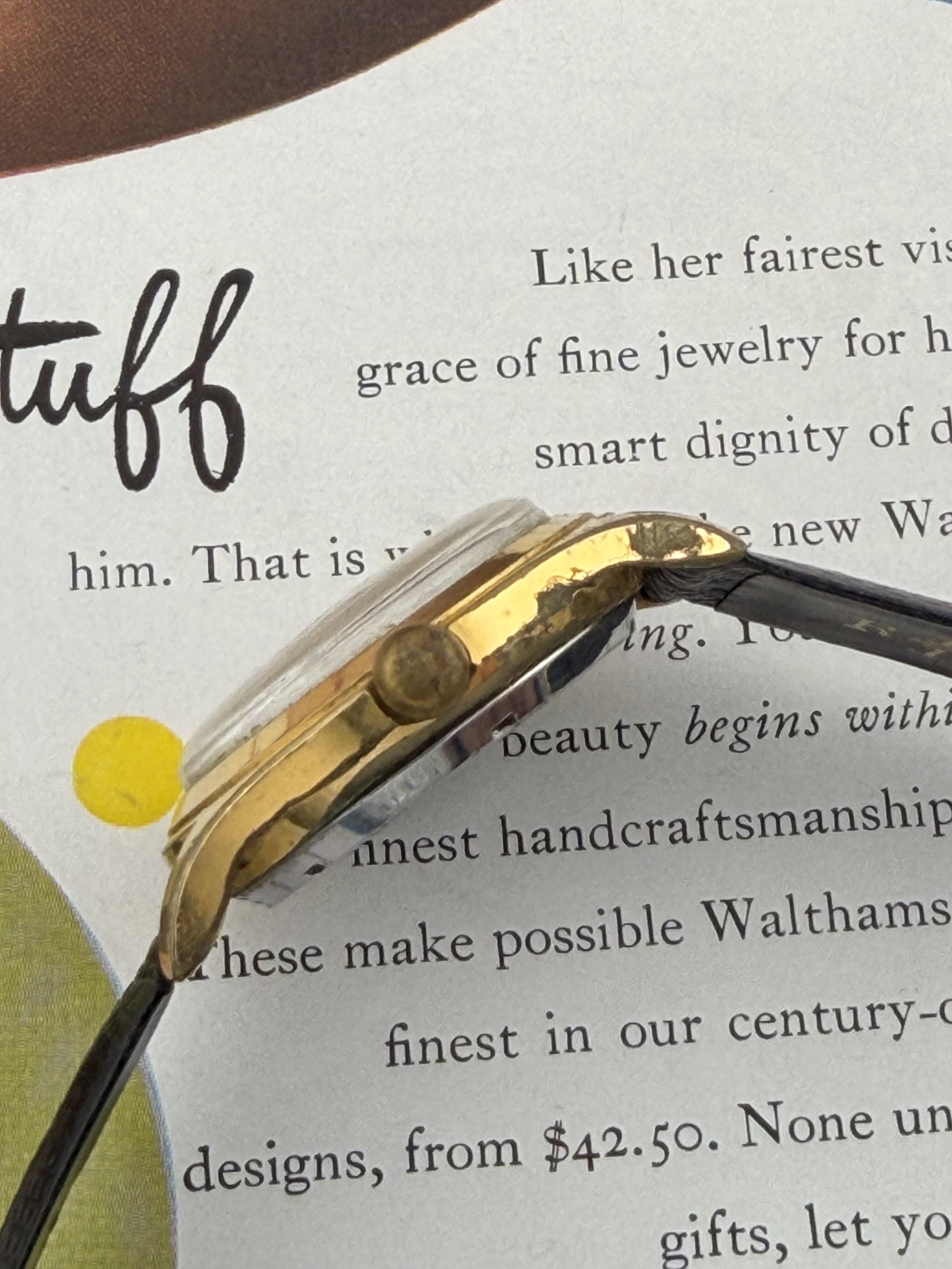
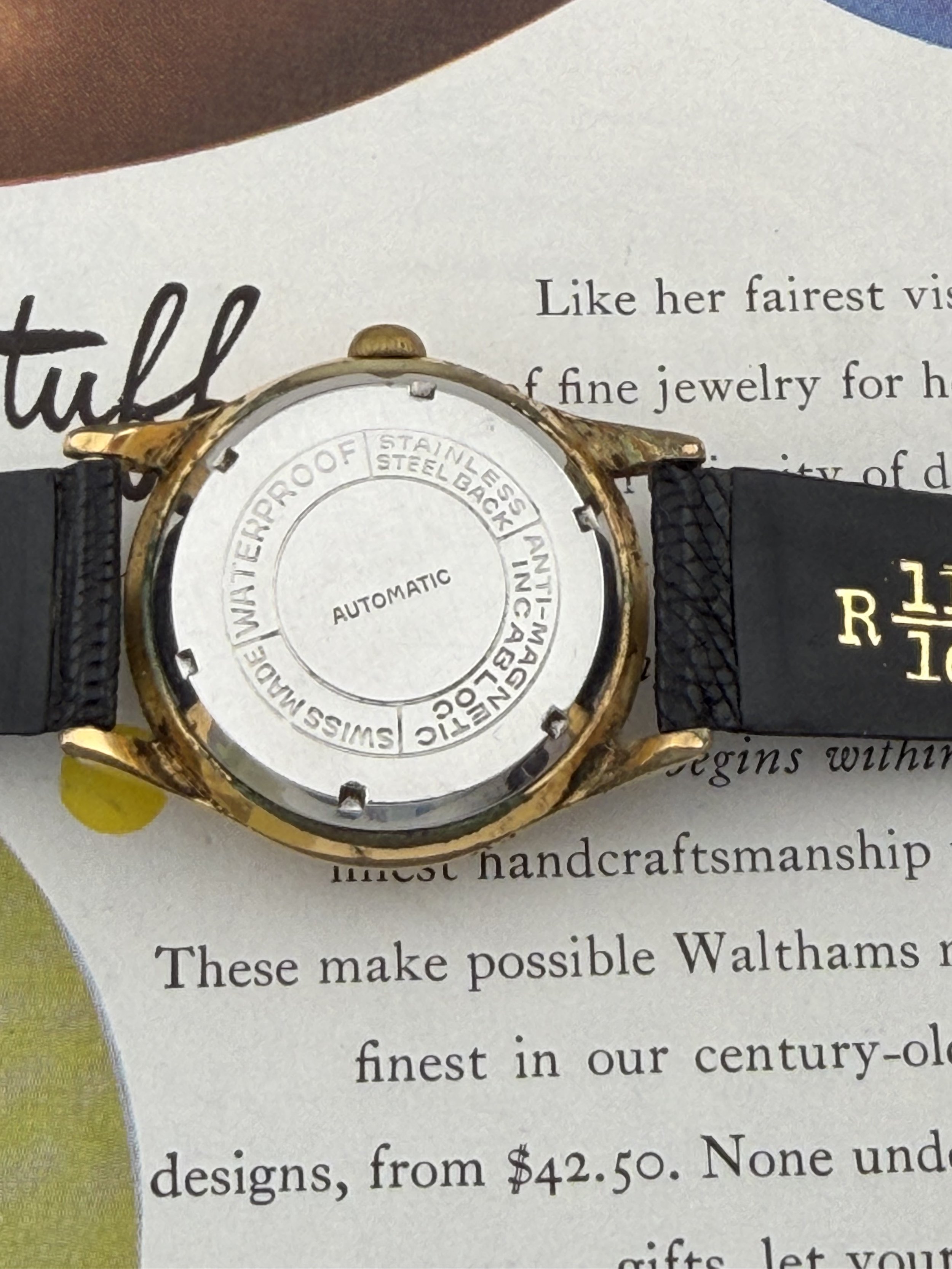
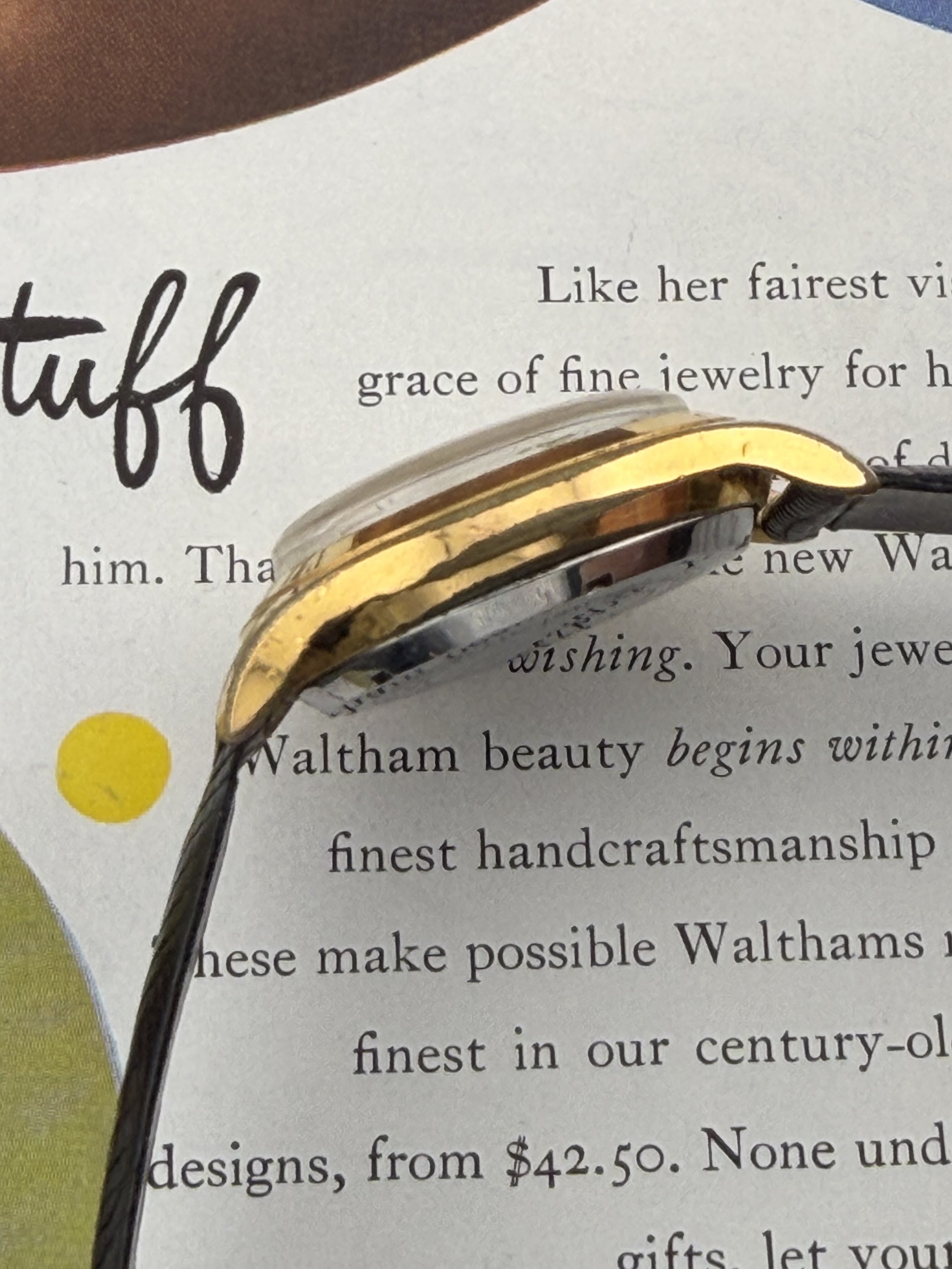
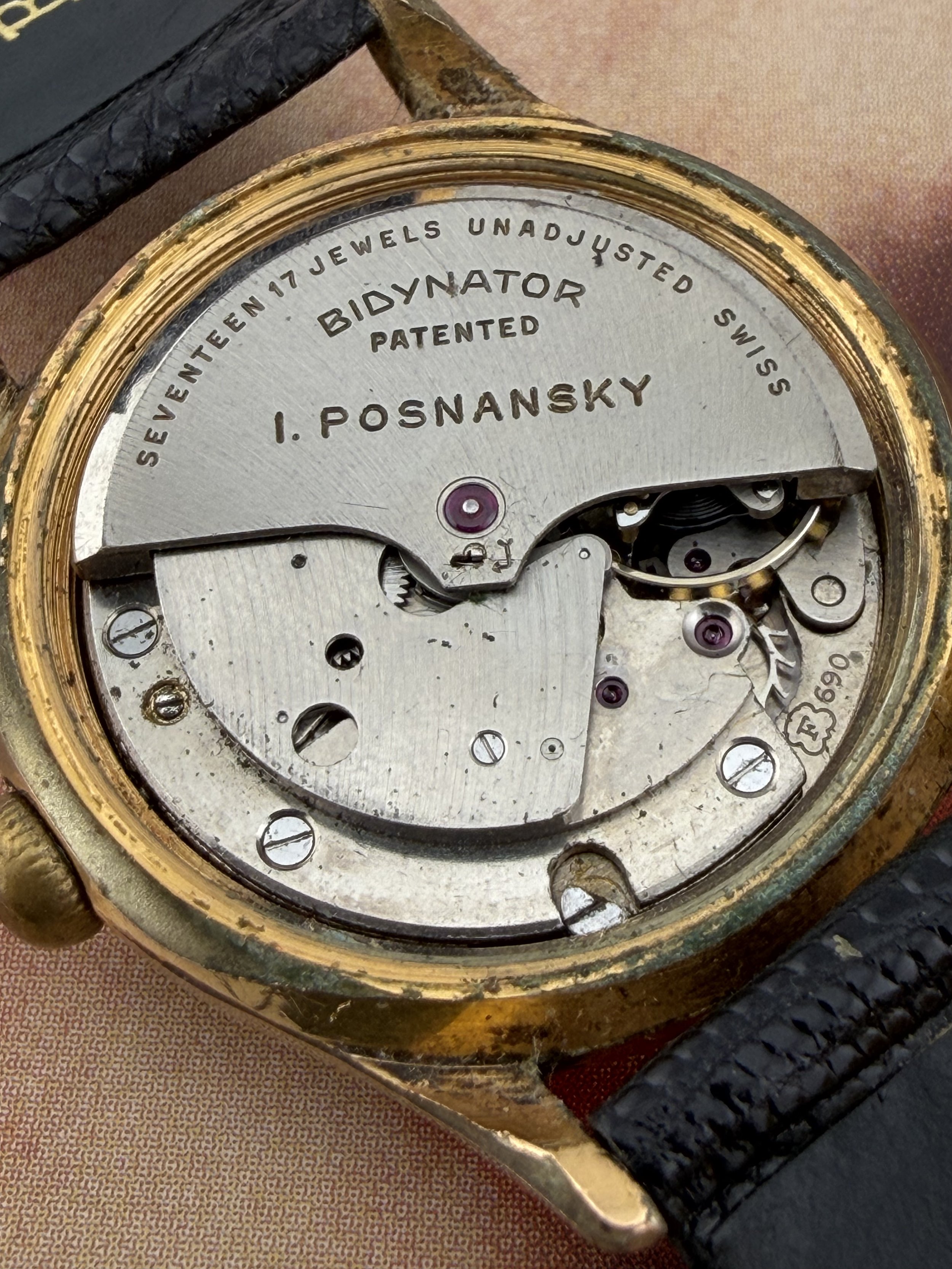
A fascinating example of early automatic watchmaking, this vintage Binesa combines classic post-war styling with one of the more historically significant automatic movements of the period. Beneath its understated appearance is the Felsa Calibre 690 Bidynator, an innovative movement that helped establish the bidirectional rotor-winding system used in modern automatic watches.
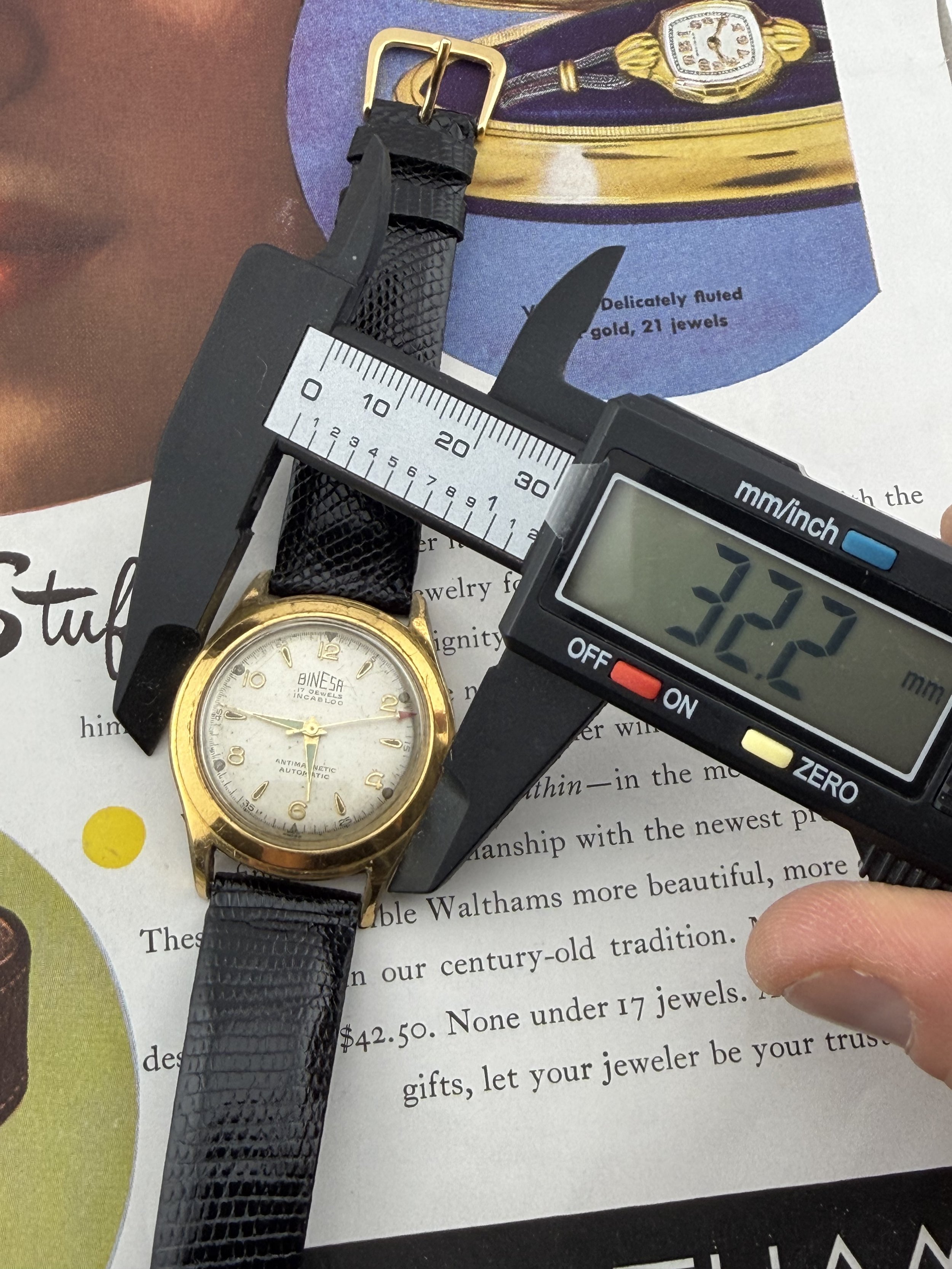
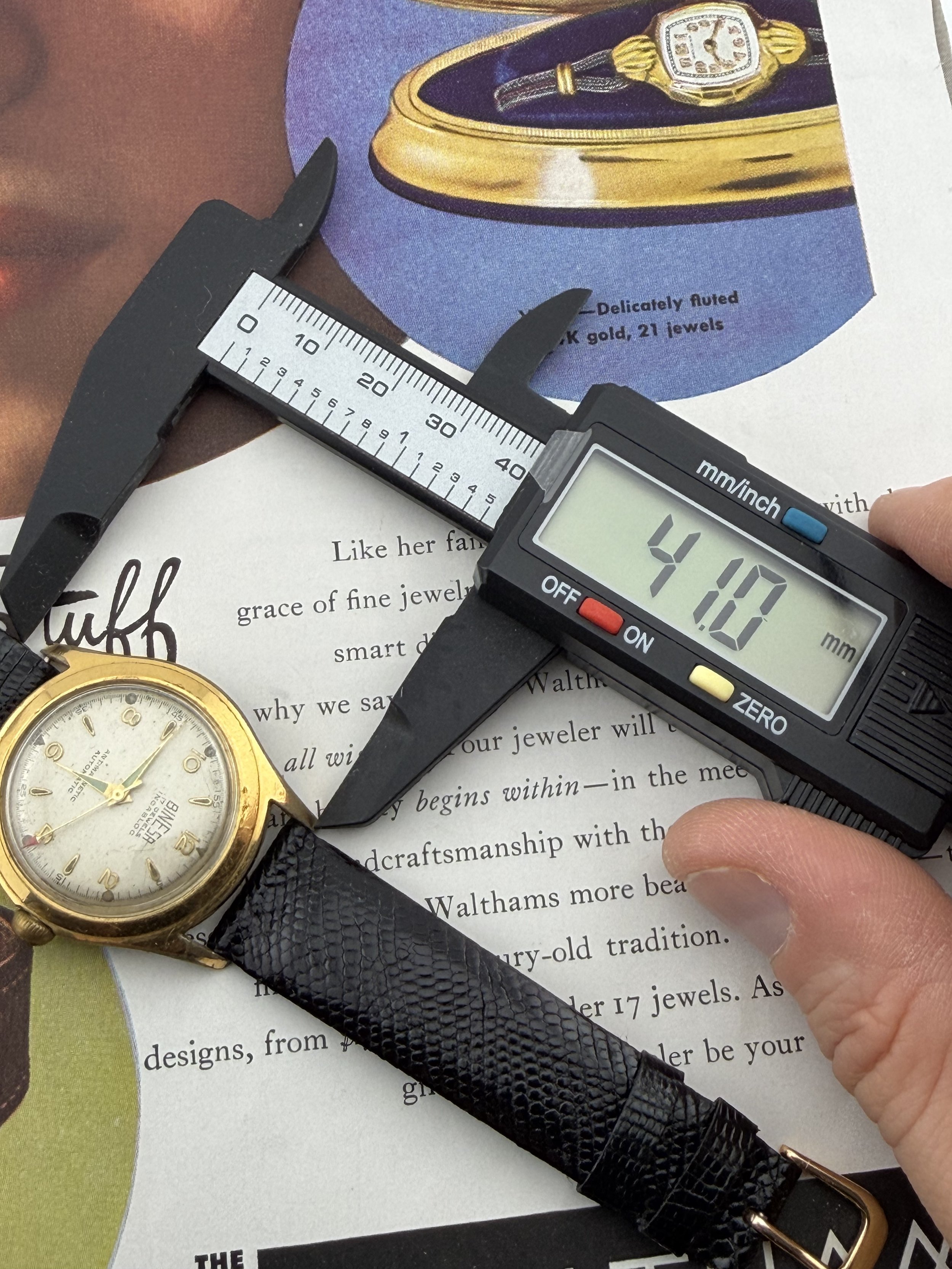
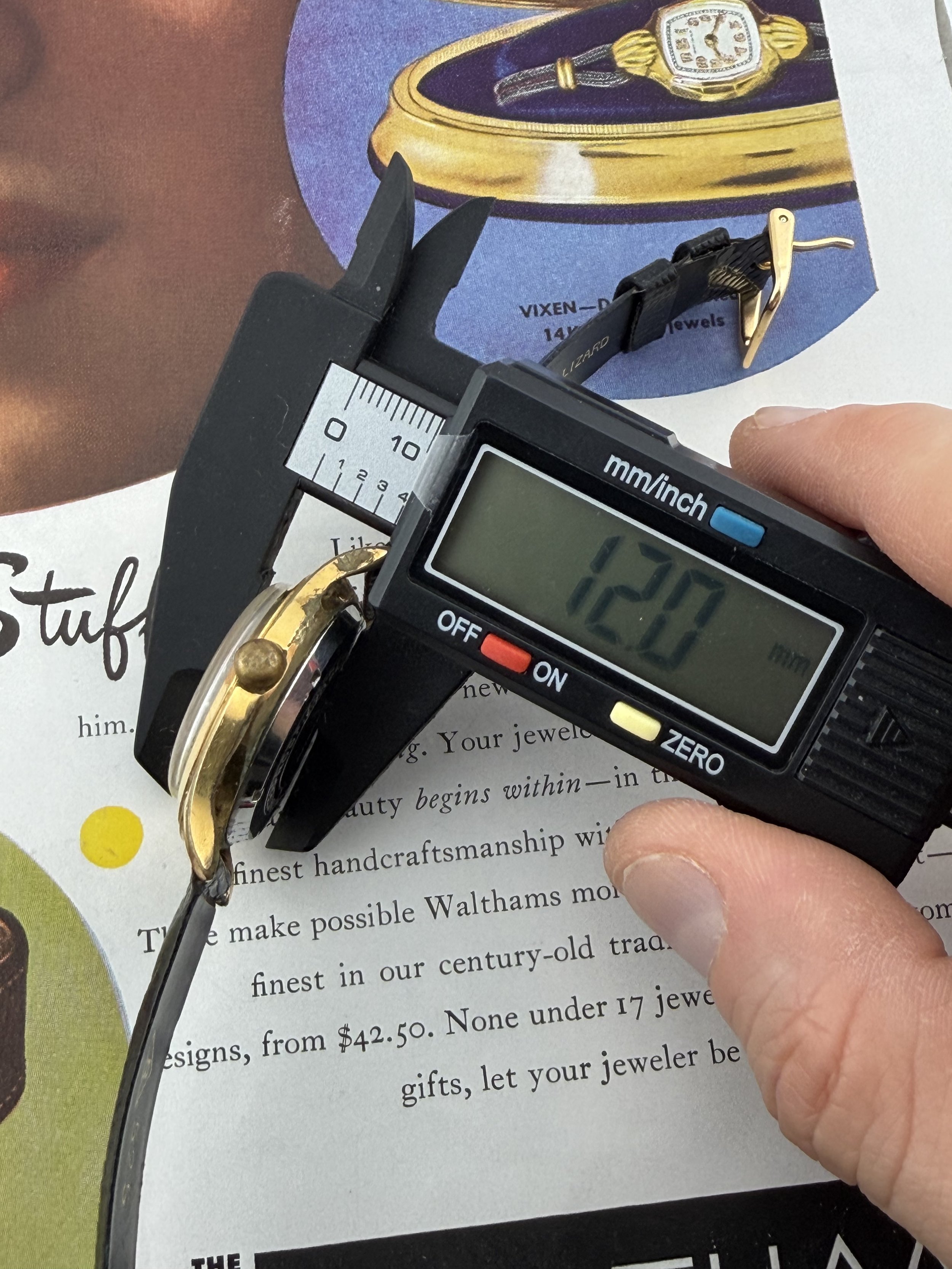
Measuring 32.2mm across, with a 41.0mm lug-to-lug and 12.0mm thickness, the watch has classic late-1940s proportions. The gold-plated bezel and mid-case are paired with a screw-down stainless steel caseback, stamped Automatic, Waterproof, Stainless Steel Back, Anti-Magnetic, Incabloc and Swiss Made. The combination gives the watch an appealing balance of traditional dress styling and practical everyday construction.
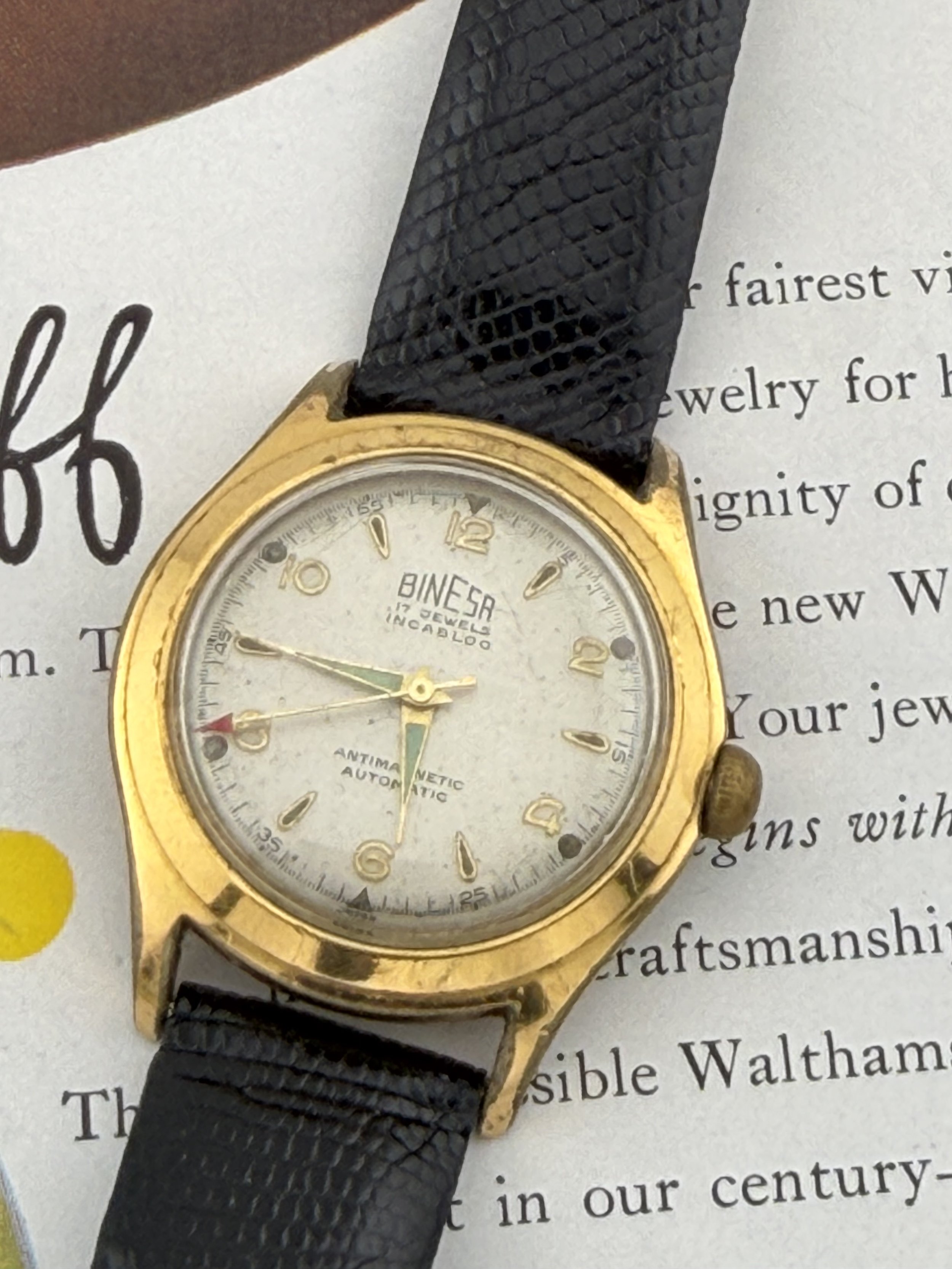
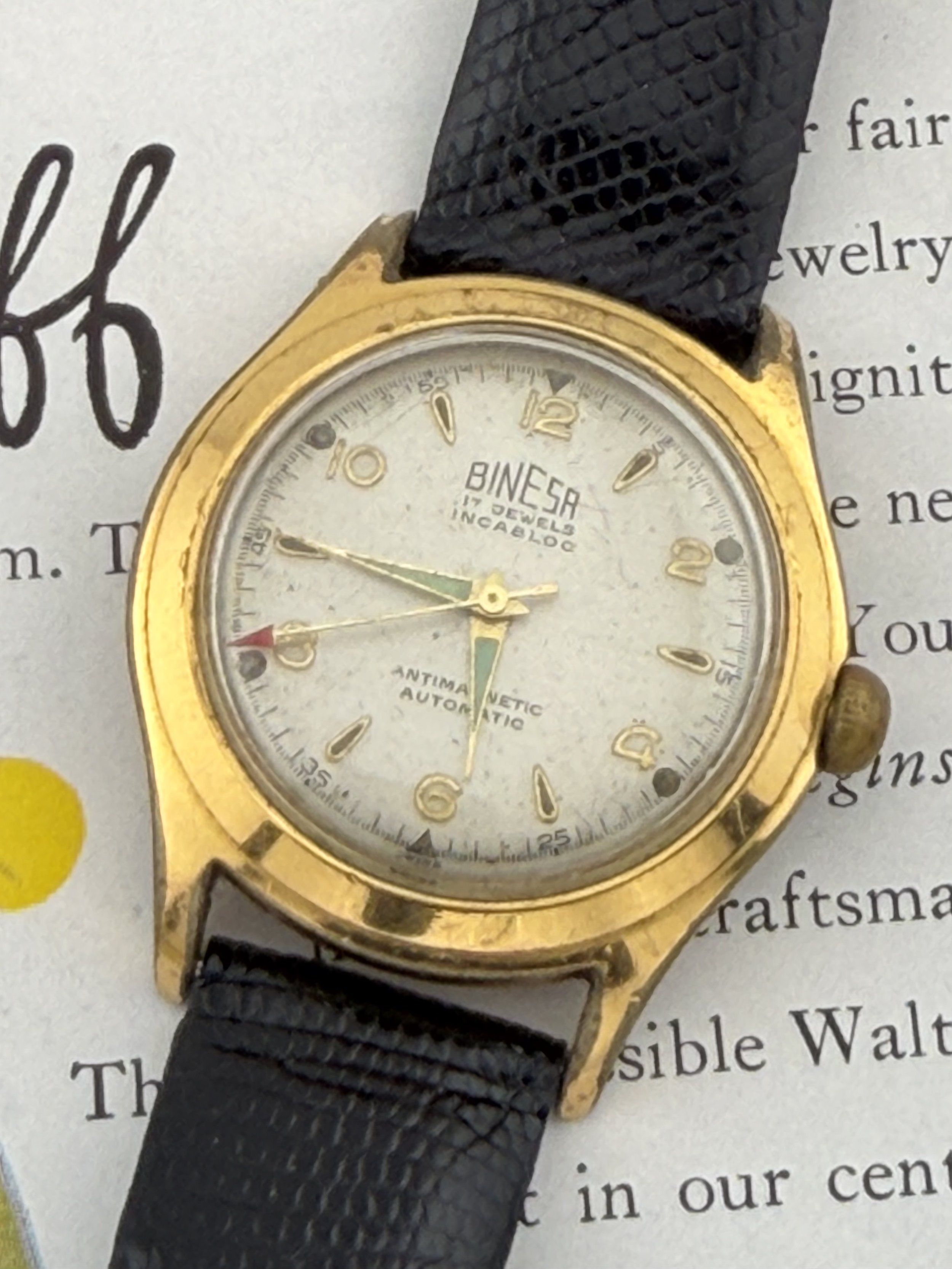
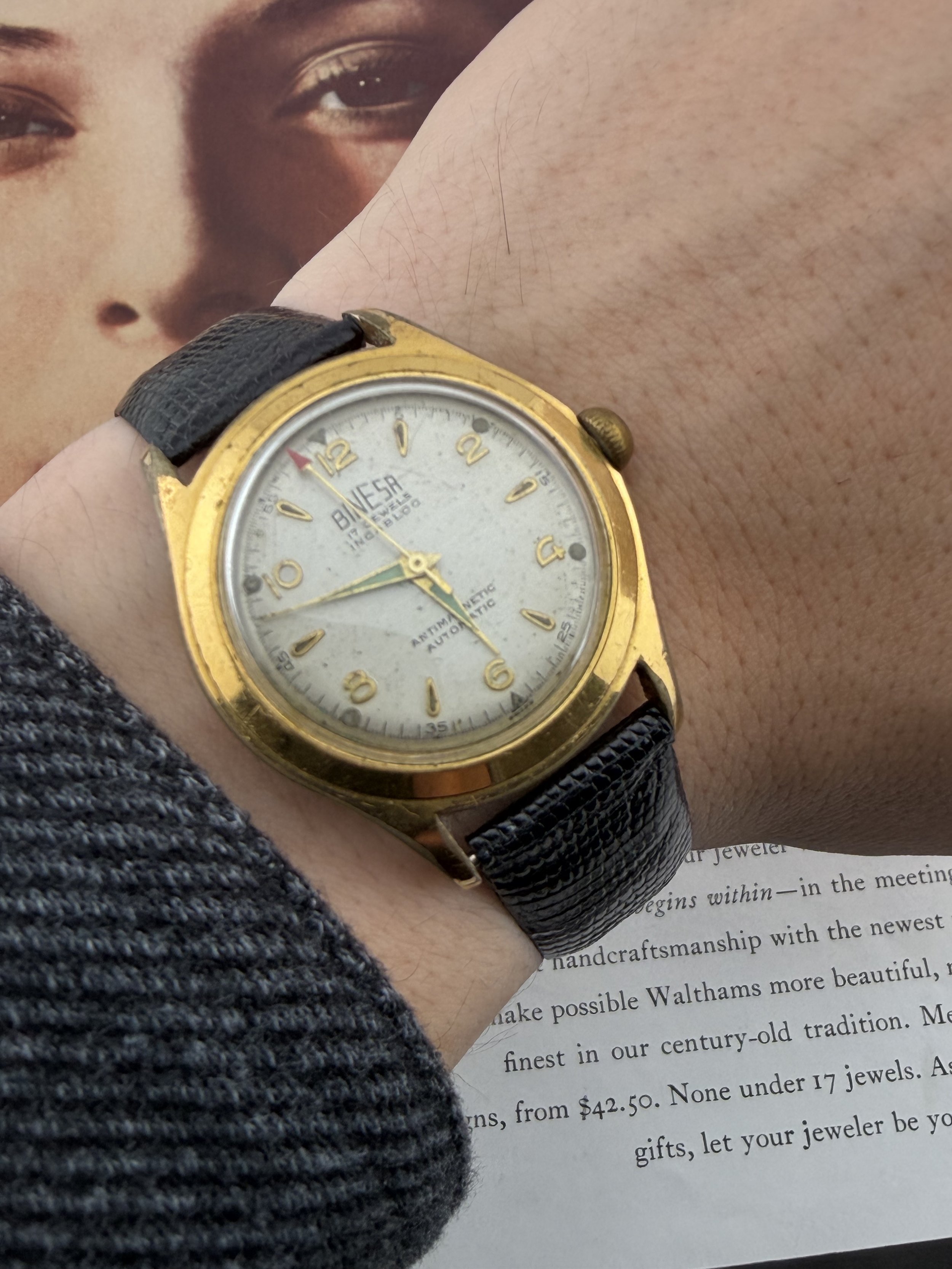
The off-white dial features an outer five-minute track, alternating applied gold-tone Arabic numerals and triangular dagger markers, with luminous plots at the hour positions. Original-style gold-tone alpha/Dauphine hands retain aged green luminous infill, while a red-tipped central seconds hand adds a subtle splash of colour. The Binesa signature is accompanied by the 17 Jewels and Incabloc markings, with Antimagnetic and Automatic appearing below the centre.
Inside is the celebrated Felsa Calibre 690 Bidynator, a 17-jewel automatic movement operating at 18,000 beats per hour. Introduced during the 1940s, the Bidynator was among the pioneering automatic systems to wind the mainspring through rotor movement in both directions. This bidirectional winding arrangement was an important development in automatic watchmaking and helped influence the technology used in generations of subsequent movements. The calibre also features Incabloc shock protection and an approximate 43–44-hour power reserve.
An additional detail is the inscription I. Posnansky on the oscillating rotor, pointing to an importer or distributor connection in the North American market. Binesa was a smaller Swiss watch brand, and this connection offers an interesting glimpse into how Swiss manufacturers and North American distributors worked together during the post-war period.
The late 1940s and early 1950s were an important era for automatic wristwatches, as manufacturers worked to make self-winding technology more practical and accessible. The Felsa Bidynator represents one of the significant steps in that evolution, making this modestly branded Binesa considerably more interesting beneath the dial than its name alone might suggest.
A wonderful piece of early automatic watchmaking, combining an attractive vintage dial, classic gold-tone case and historically important Felsa movement. An excellent addition for collectors who appreciate the mechanical innovations that helped shape the modern wristwatch.