


This vintage Brichot chronograph is an exceptionally rare and fascinating example of mid-century Swiss chronograph history, blending unmistakable Heuer-Leonidas design language with the intriguing world of private-label export watches.
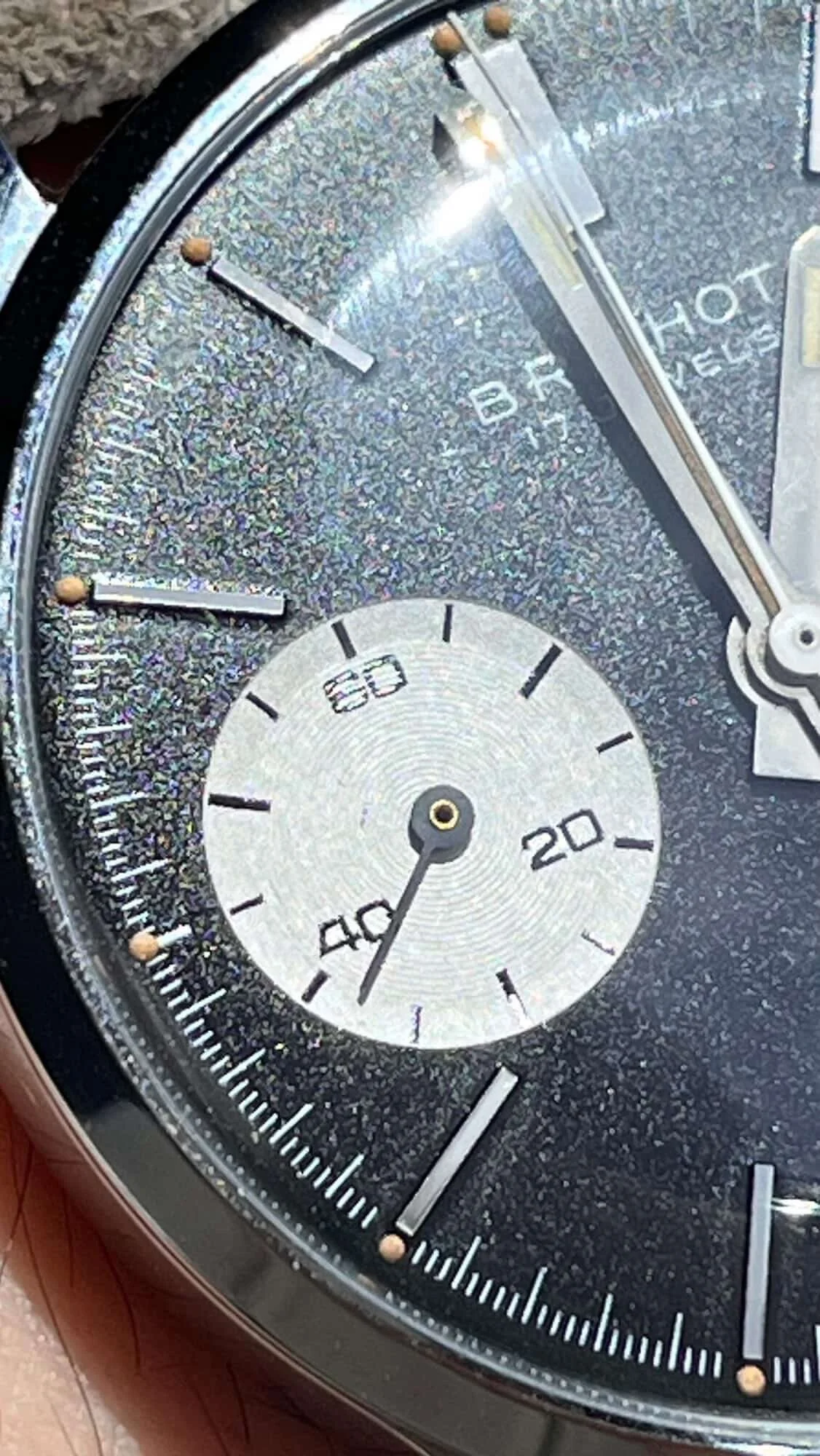
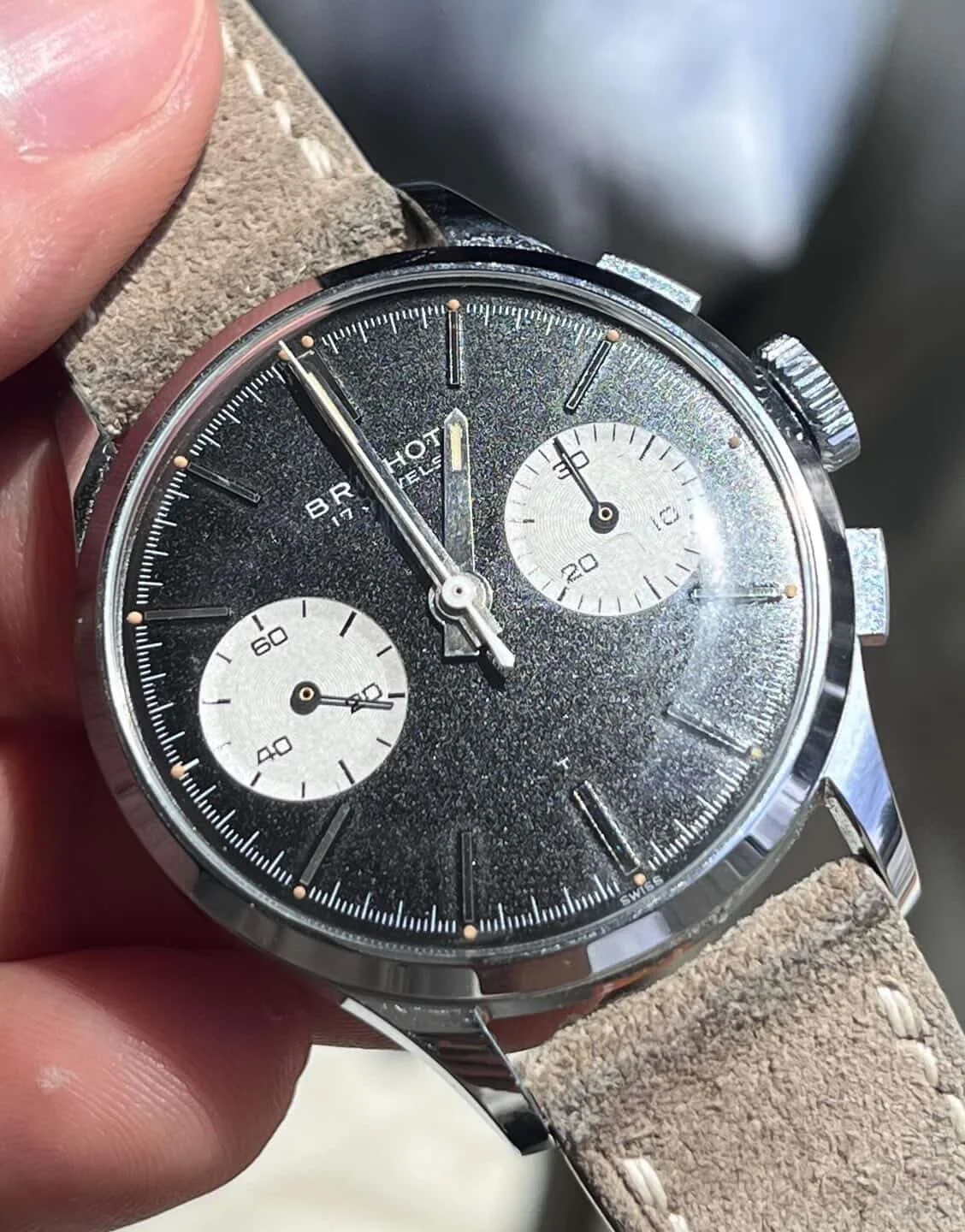
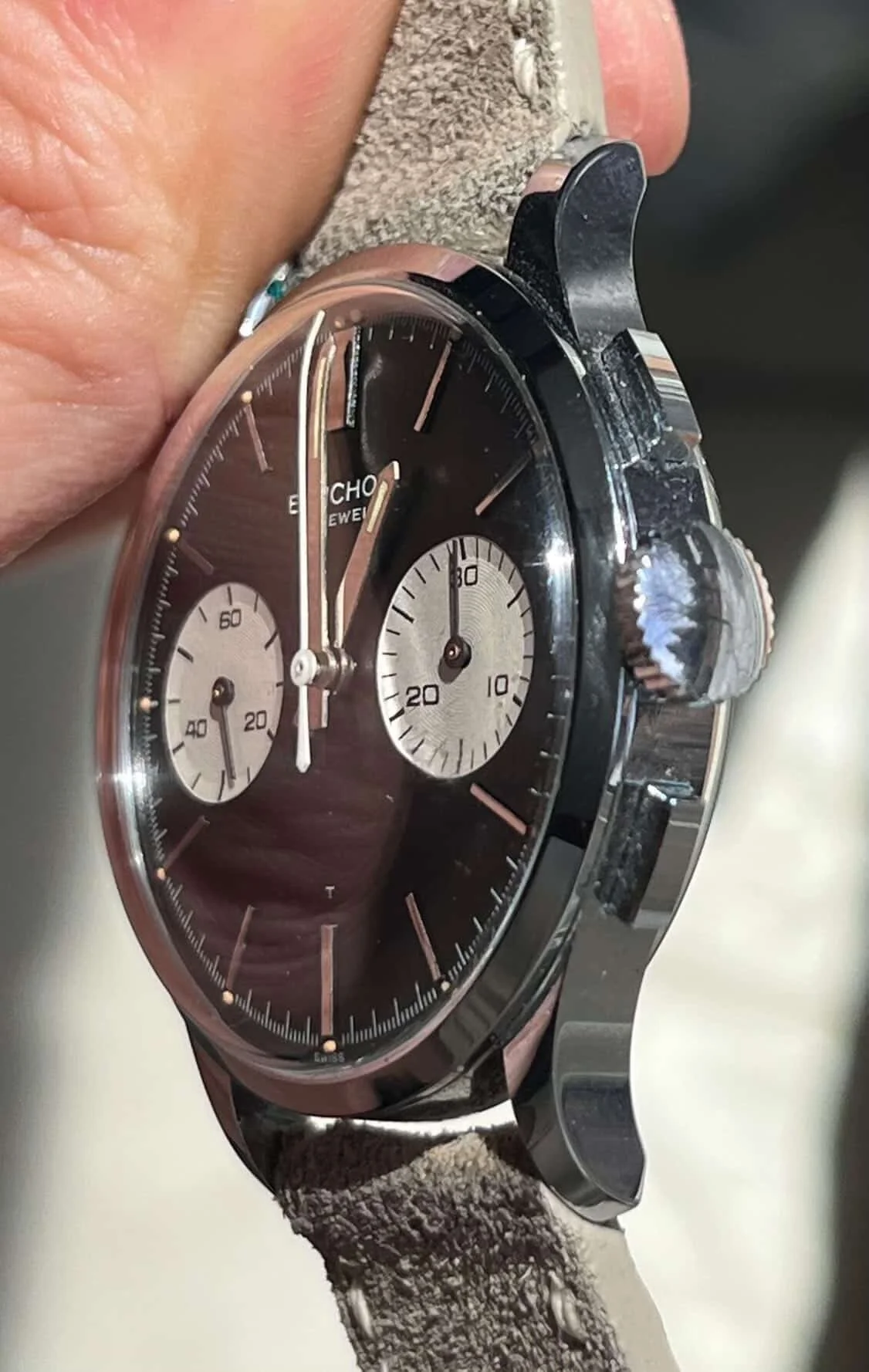
At first glance, the watch immediately captures attention with its striking reverse panda dial configuration, a glossy black dial contrasted by bright silver subdials, one of the most desirable chronograph aesthetics ever produced. Combined with its thin polished case, flat rectangular pushers, and beautifully balanced two-register layout, the watch delivers the same visual energy that made early Heuer chronographs legendary among collectors.
While the dial is signed “Brichot,” the movement tells the true story.
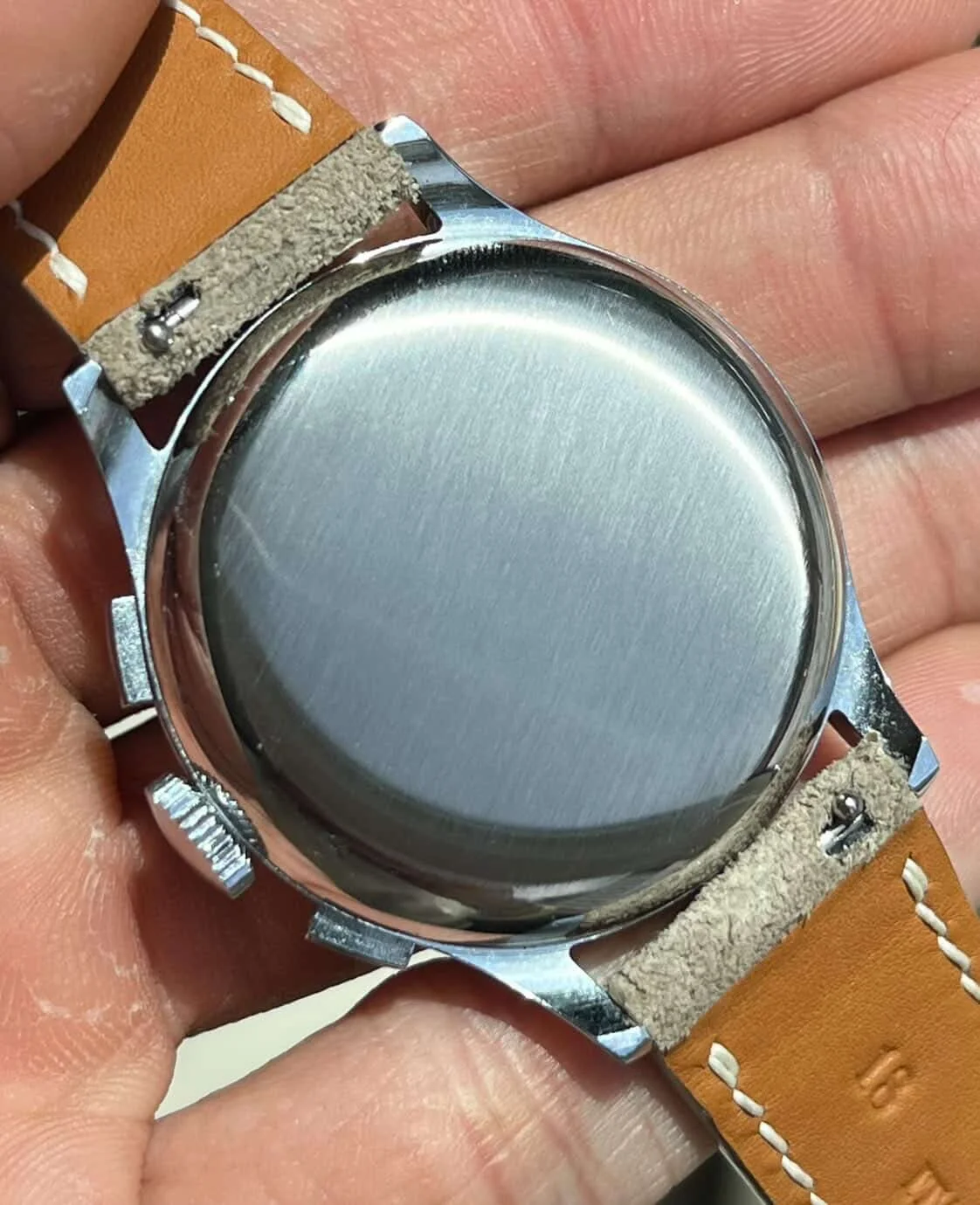
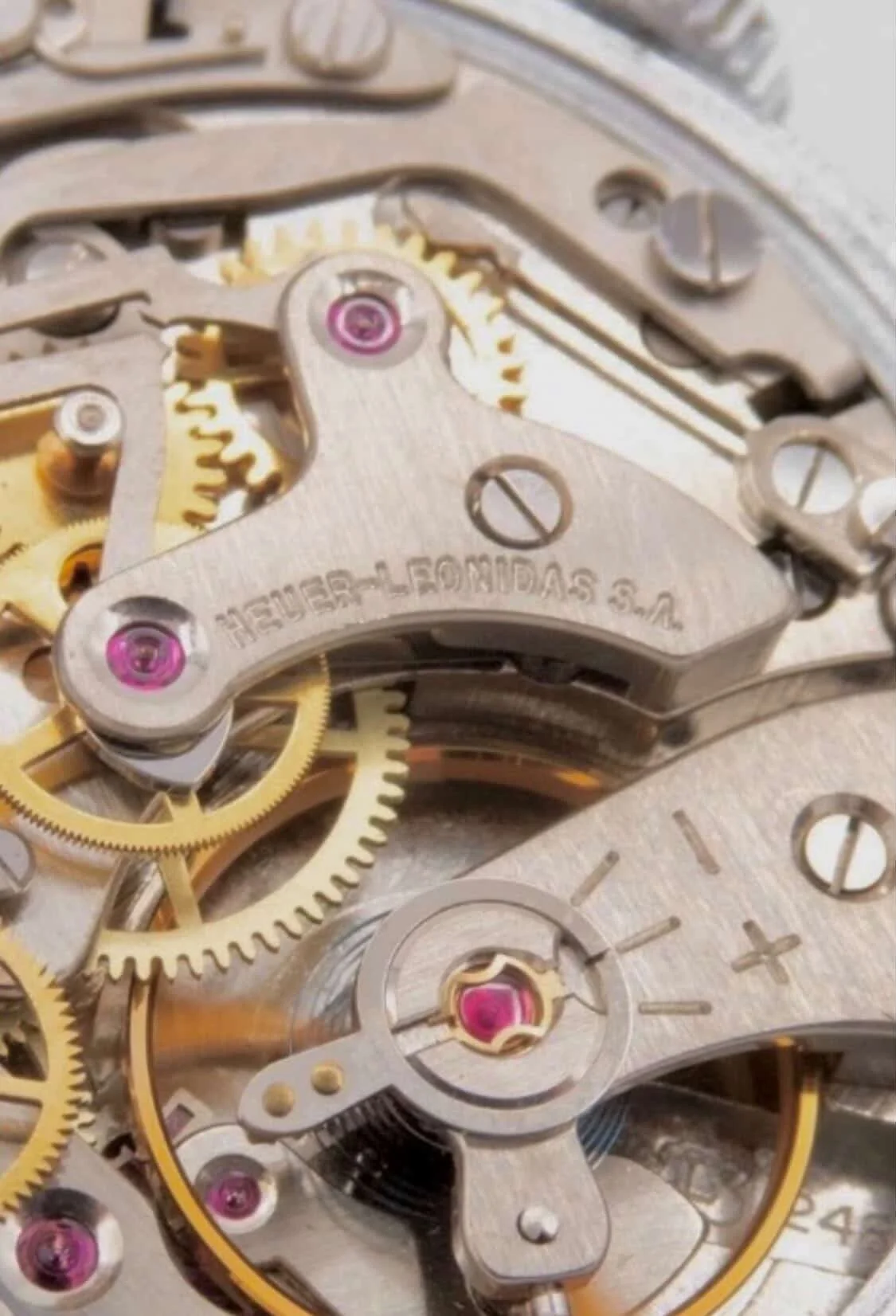
Inside is a manually wound chronograph caliber signed by Heuer-Leonidas S.A., confirming the watch’s direct connection to one of the most important names in vintage chronograph history. During the 1950s through 1960s, Swiss manufacturers often produced watches under alternate export or private-label names to navigate international tariff structures and regional distribution agreements.
Heuer famously used names such as Clebar for the North American market, while Brichot appears to have been a far rarer and lesser-documented export designation. Watches like this therefore occupy a unique place in collecting — essentially authentic Heuer-Leonidas chronographs hidden behind obscure dial signatures.
Powering the watch is the respected Landeron 248 chronograph movement, one of the most successful cam-switched chronograph calibers of the era. Produced by Landeron, the 248 became known for its reliability, serviceability, and smooth operation.
Unlike column-wheel chronographs such as the Valjoux 72, the Landeron system used a cam-operated switching mechanism, helping make chronograph watches more accessible while still delivering excellent mechanical performance. Its distinctive pusher operation — with the top pusher controlling start and stop functions and the lower pusher performing reset duties, became a defining trait of the movement family.
The visible movement architecture, chronograph levers, and signed Heuer-Leonidas bridges reinforce the authenticity and historical significance of the piece.
The dial itself remains highly attractive, featuring applied hour markers with luminous plots, broad baton-style hands, and perfectly proportioned subdial spacing characteristic of classic Landeron chronographs. The overall design strongly reflects the transitional Heuer-Leonidas period following the companies’ merger in 1964, when styling cues and case construction from both brands began blending together.
Today, watches like this are increasingly appreciated by collectors who value rarity, historical nuance, and under-the-radar connections to major Swiss houses. Unlike heavily documented mainstream Heuer references, Brichot chronographs remain elusive, making surviving original examples especially compelling.
A rare and visually striking chronograph with genuine Heuer-Leonidas lineage, this Brichot represents an exciting hidden corner of vintage Swiss collecting — offering iconic reverse panda styling, respected chronograph mechanics, and authentic motorsport-era charm in one remarkable package.
This vintage Brichot chronograph is an exceptionally rare and fascinating example of mid-century Swiss chronograph history, blending unmistakable Heuer-Leonidas design language with the intriguing world of private-label export watches.
At first glance, the watch immediately captures attention with its striking reverse panda dial configuration, a glossy black dial contrasted by bright silver subdials, one of the most desirable chronograph aesthetics ever produced. Combined with its thin polished case, flat rectangular pushers, and beautifully balanced two-register layout, the watch delivers the same visual energy that made early Heuer chronographs legendary among collectors.
While the dial is signed “Brichot,” the movement tells the true story.
Inside is a manually wound chronograph caliber signed by Heuer-Leonidas S.A., confirming the watch’s direct connection to one of the most important names in vintage chronograph history. During the 1950s through 1960s, Swiss manufacturers often produced watches under alternate export or private-label names to navigate international tariff structures and regional distribution agreements.
Heuer famously used names such as Clebar for the North American market, while Brichot appears to have been a far rarer and lesser-documented export designation. Watches like this therefore occupy a unique place in collecting — essentially authentic Heuer-Leonidas chronographs hidden behind obscure dial signatures.
Powering the watch is the respected Landeron 248 chronograph movement, one of the most successful cam-switched chronograph calibers of the era. Produced by Landeron, the 248 became known for its reliability, serviceability, and smooth operation.
Unlike column-wheel chronographs such as the Valjoux 72, the Landeron system used a cam-operated switching mechanism, helping make chronograph watches more accessible while still delivering excellent mechanical performance. Its distinctive pusher operation — with the top pusher controlling start and stop functions and the lower pusher performing reset duties, became a defining trait of the movement family.
The visible movement architecture, chronograph levers, and signed Heuer-Leonidas bridges reinforce the authenticity and historical significance of the piece.
The dial itself remains highly attractive, featuring applied hour markers with luminous plots, broad baton-style hands, and perfectly proportioned subdial spacing characteristic of classic Landeron chronographs. The overall design strongly reflects the transitional Heuer-Leonidas period following the companies’ merger in 1964, when styling cues and case construction from both brands began blending together.
Today, watches like this are increasingly appreciated by collectors who value rarity, historical nuance, and under-the-radar connections to major Swiss houses. Unlike heavily documented mainstream Heuer references, Brichot chronographs remain elusive, making surviving original examples especially compelling.
A rare and visually striking chronograph with genuine Heuer-Leonidas lineage, this Brichot represents an exciting hidden corner of vintage Swiss collecting — offering iconic reverse panda styling, respected chronograph mechanics, and authentic motorsport-era charm in one remarkable package.