

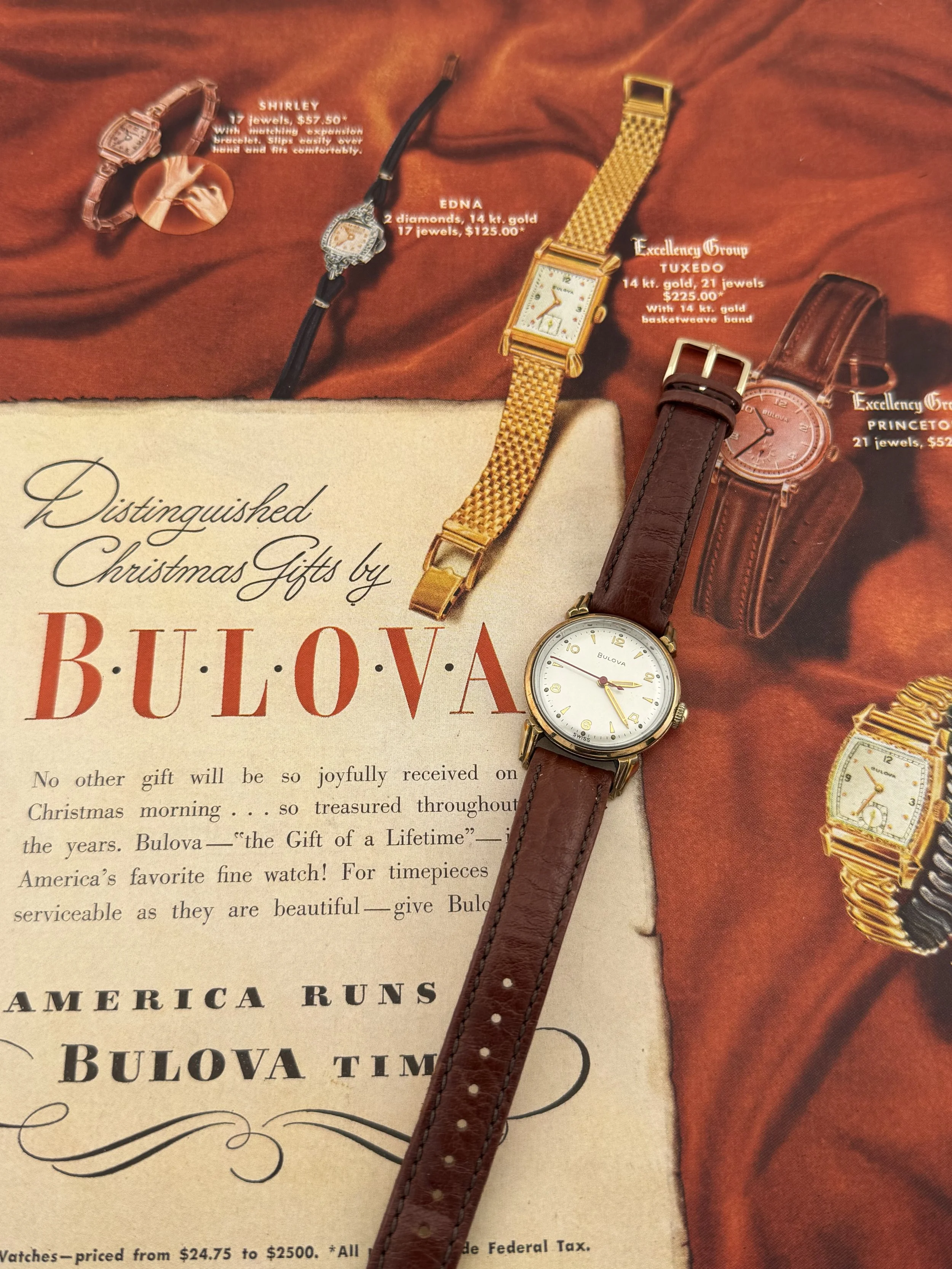
Bulova | Art Deco Dress Watch | 17 Jewels | Gold-Filled Case | Stepped Lugs | Red Sweep Seconds | Bulova-Signed Crown | Swiss Movement | Circa 1950s
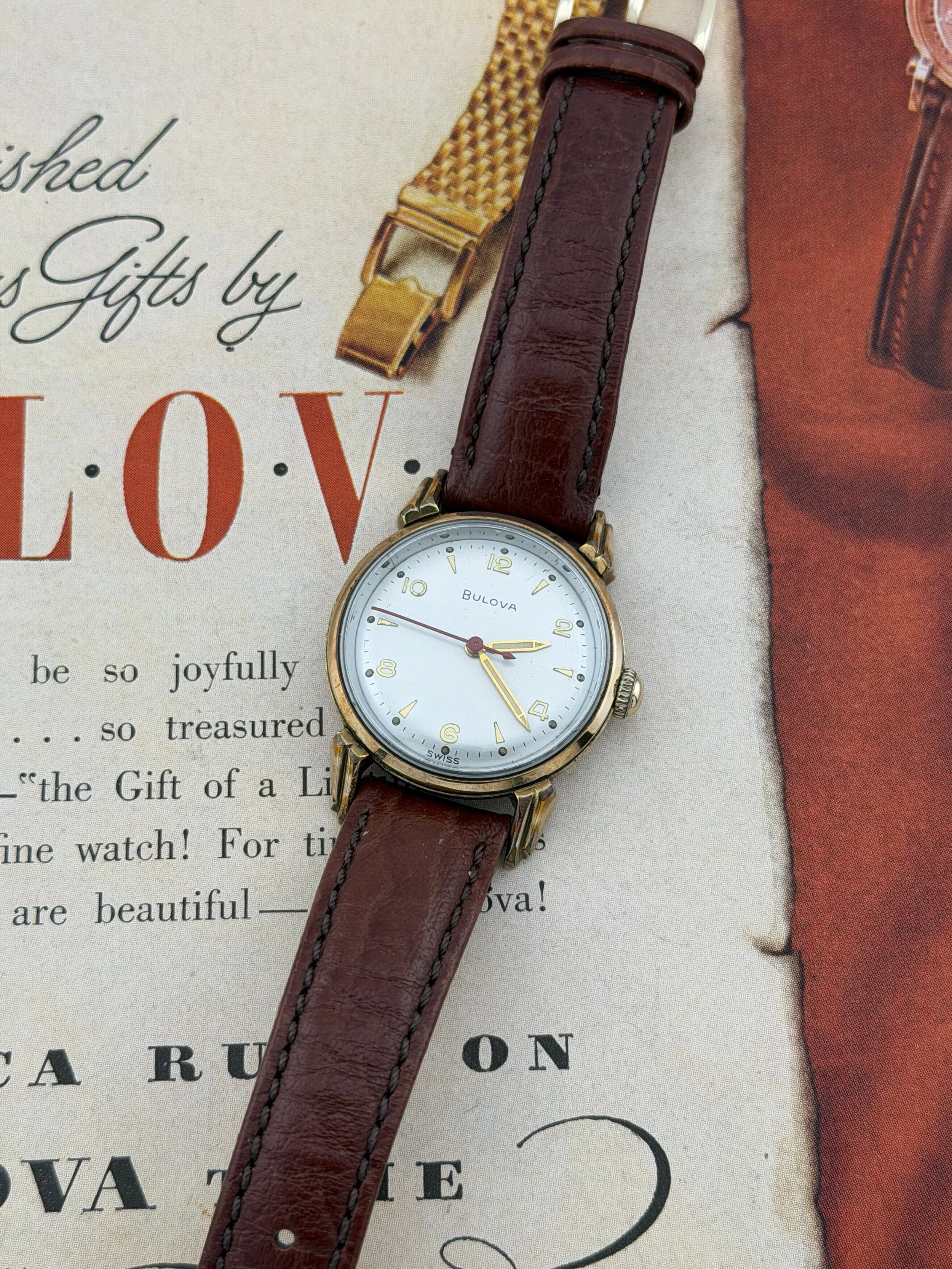
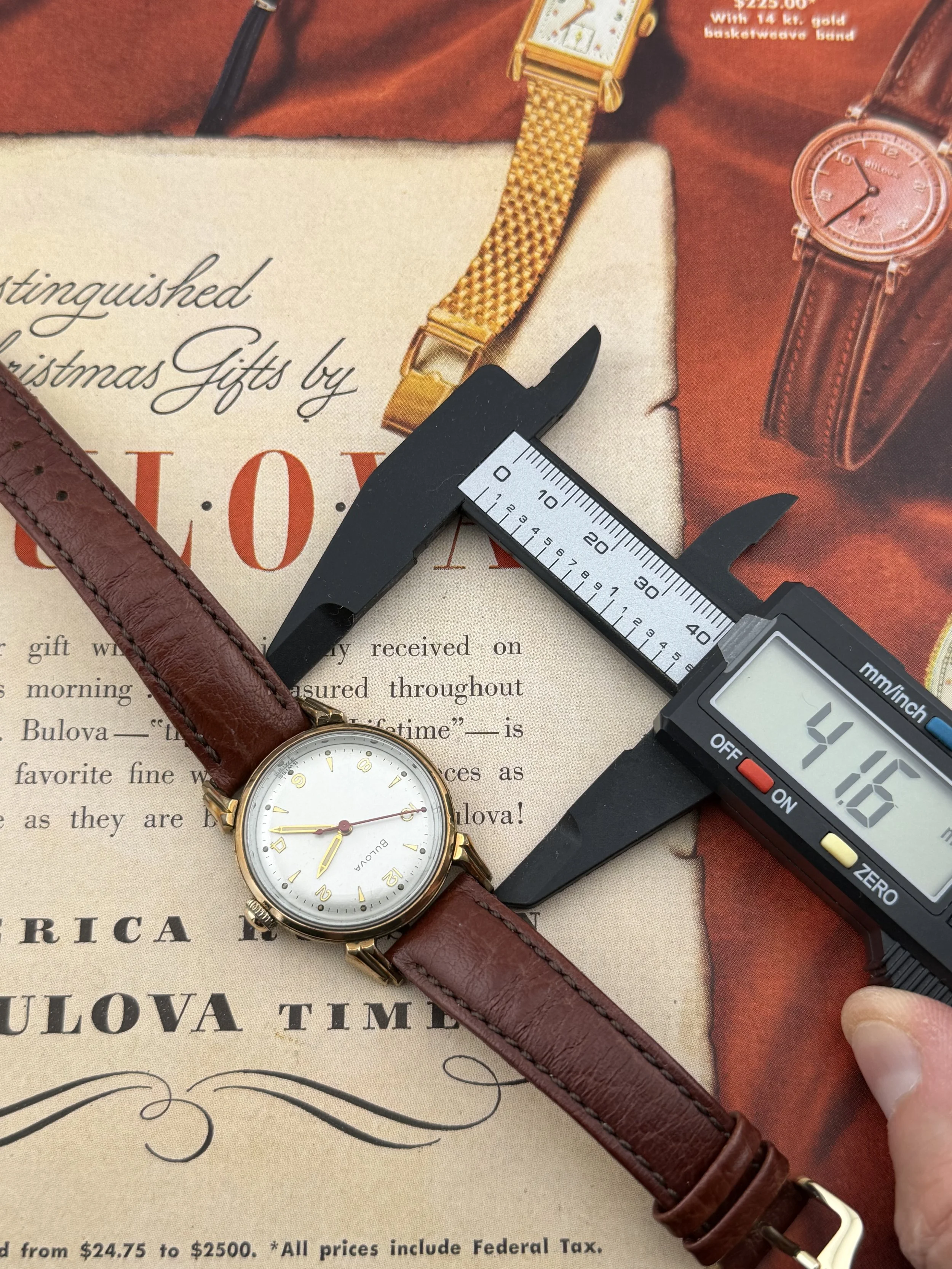
This striking Bulova is a wonderful example of mid-century American watch design with unmistakable Art Deco influence. Its stepped gold-filled case, sculptural lugs, clean silvered dial, applied gold markers, and vivid red sweeping seconds hand give it an incredible amount of personality without becoming overly ornate.
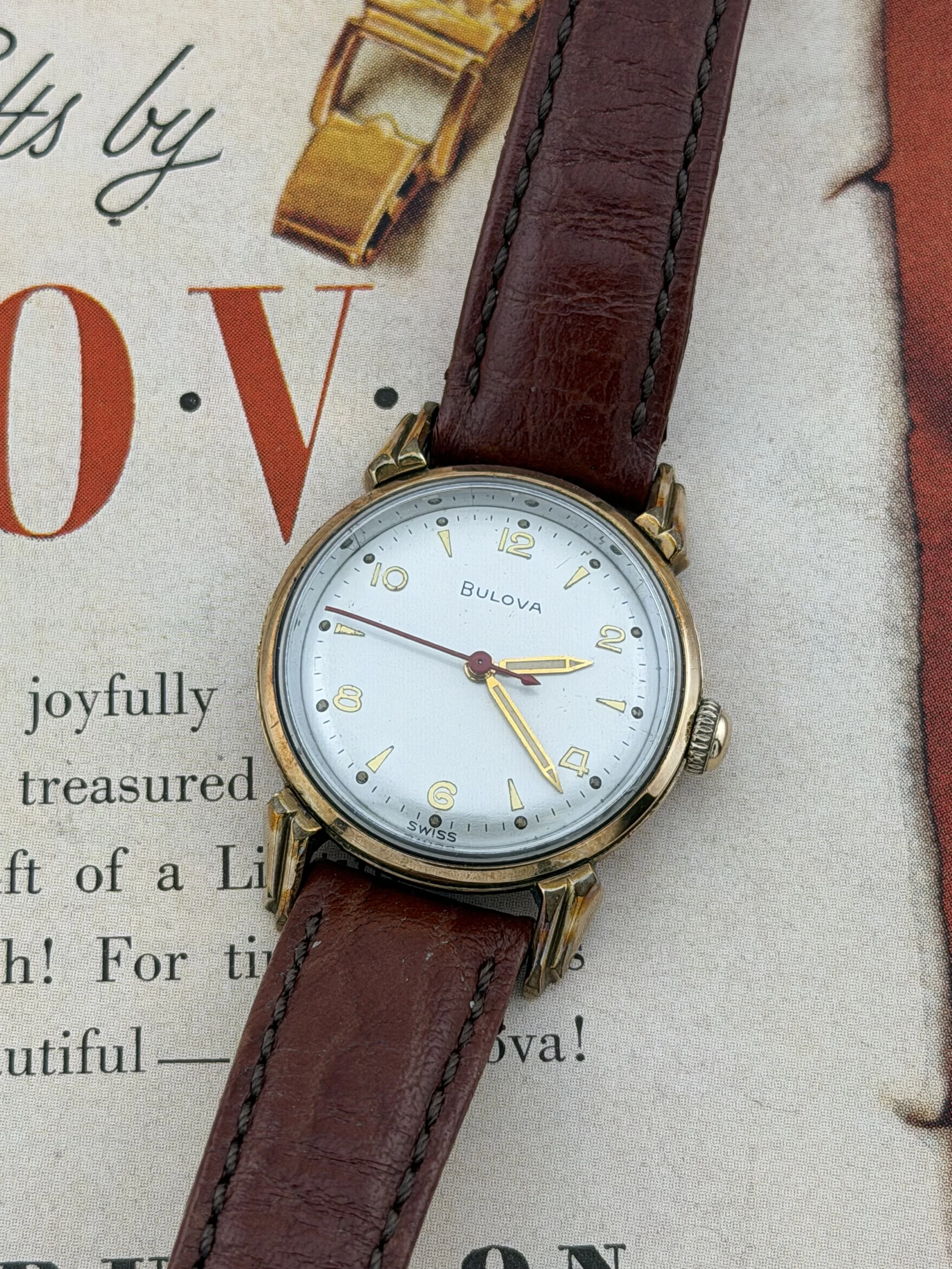
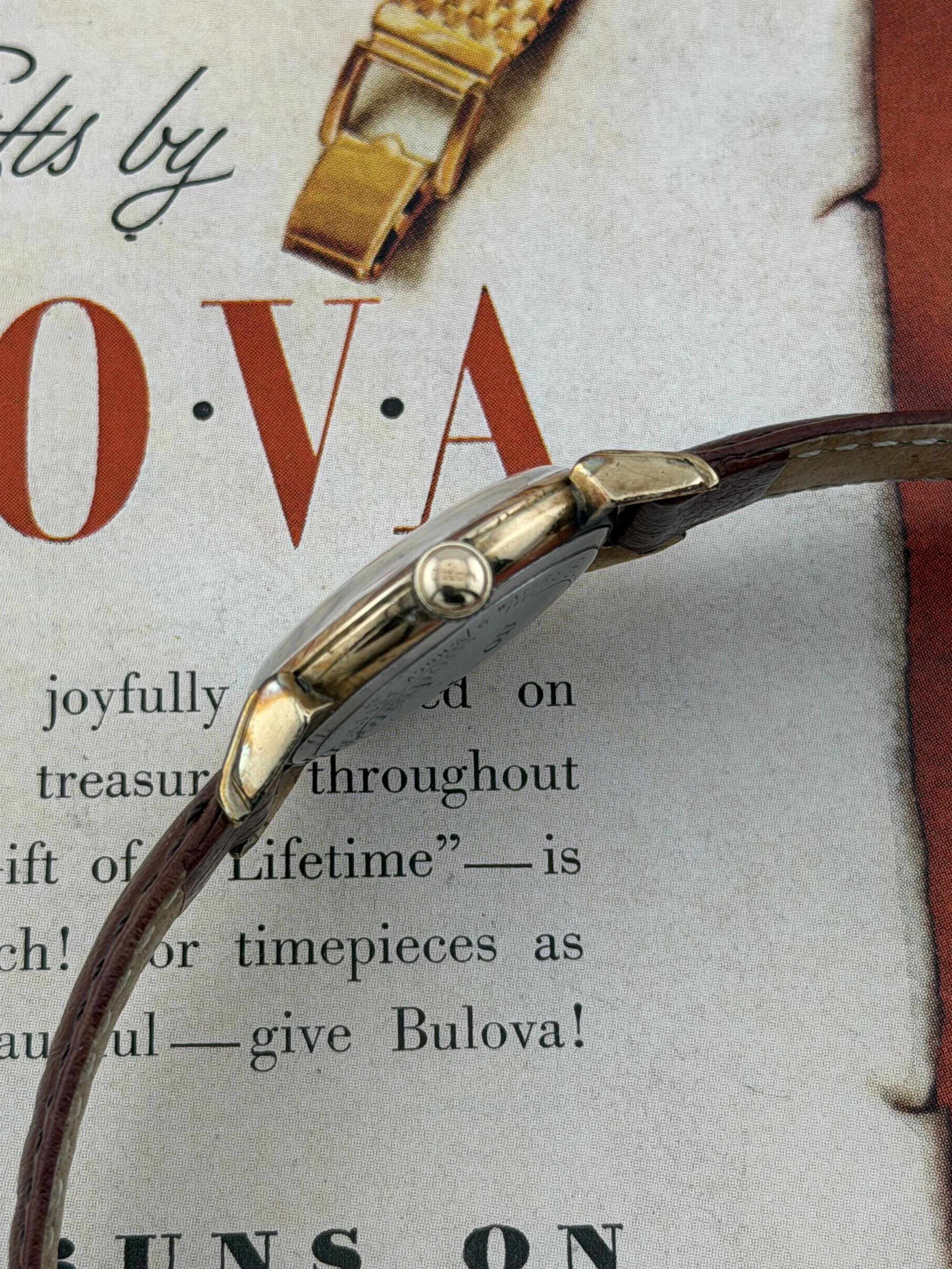
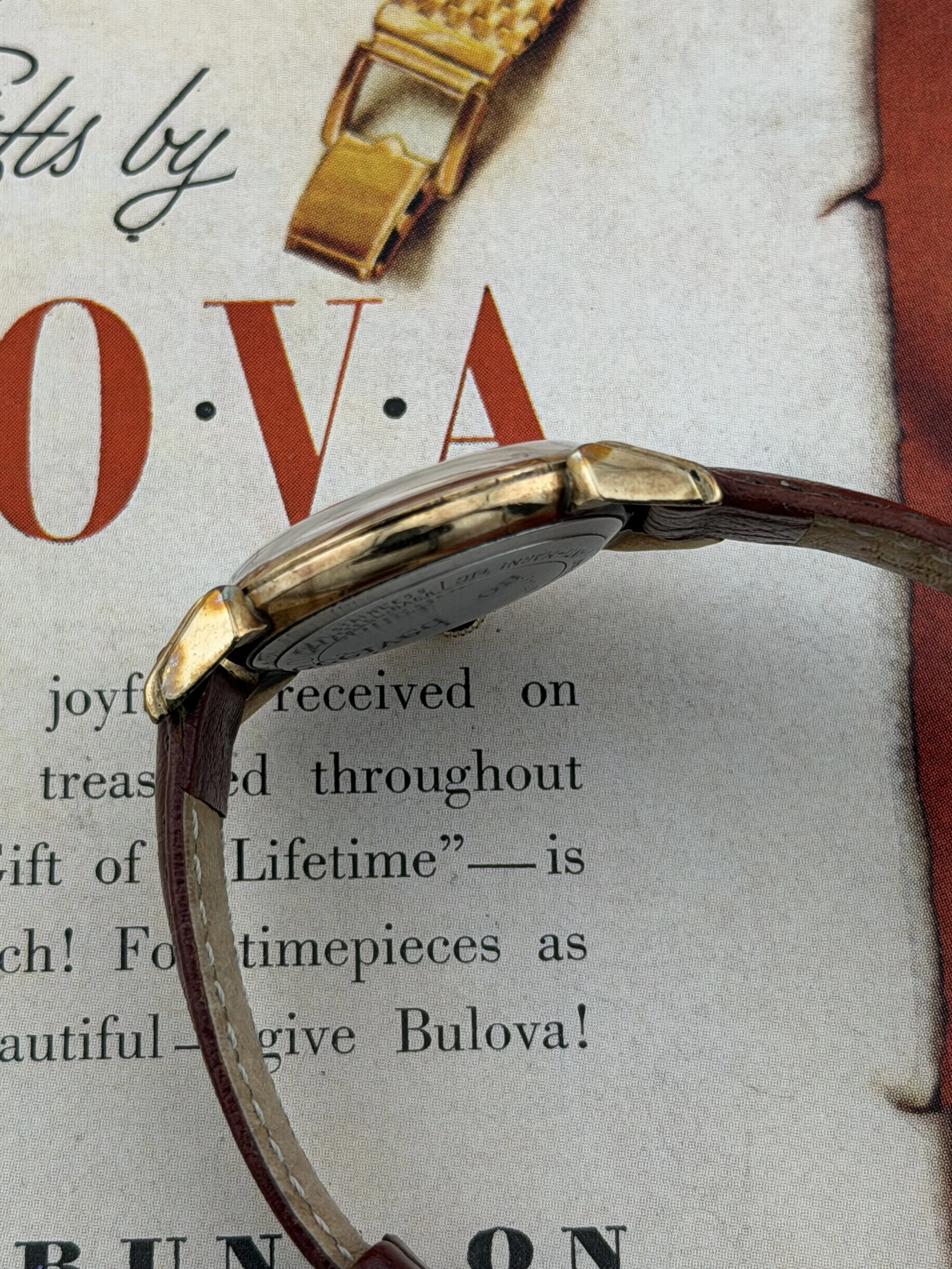
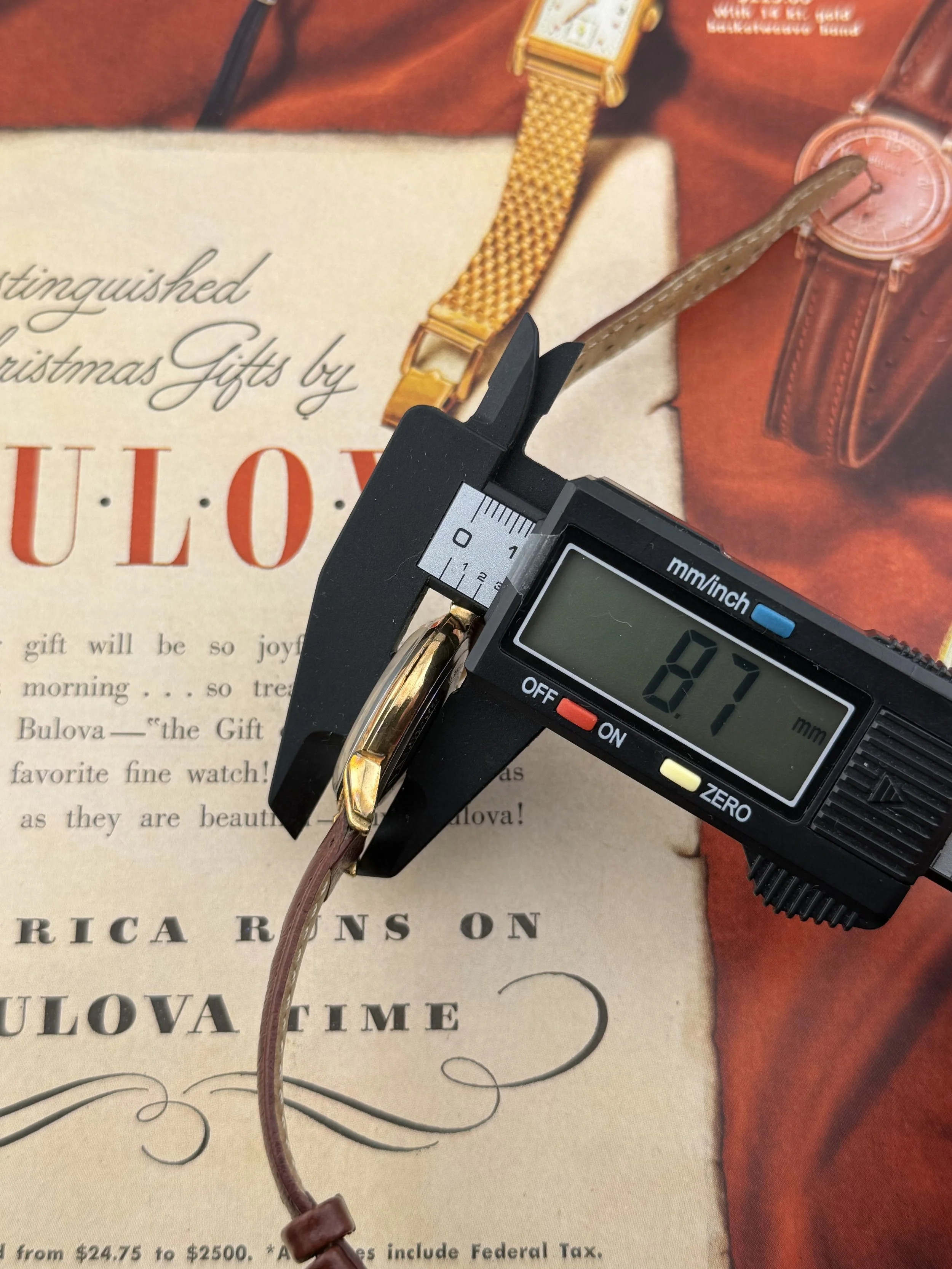
The stepped lugs are perhaps the most distinctive feature of the case. Rather than simply extending straight from the case, they rise and taper outward in a sculptural, almost architectural fashion. Combined with the warm gold-filled finish, they give the watch a wonderfully dynamic silhouette that looks every bit as good from the side as it does from above.
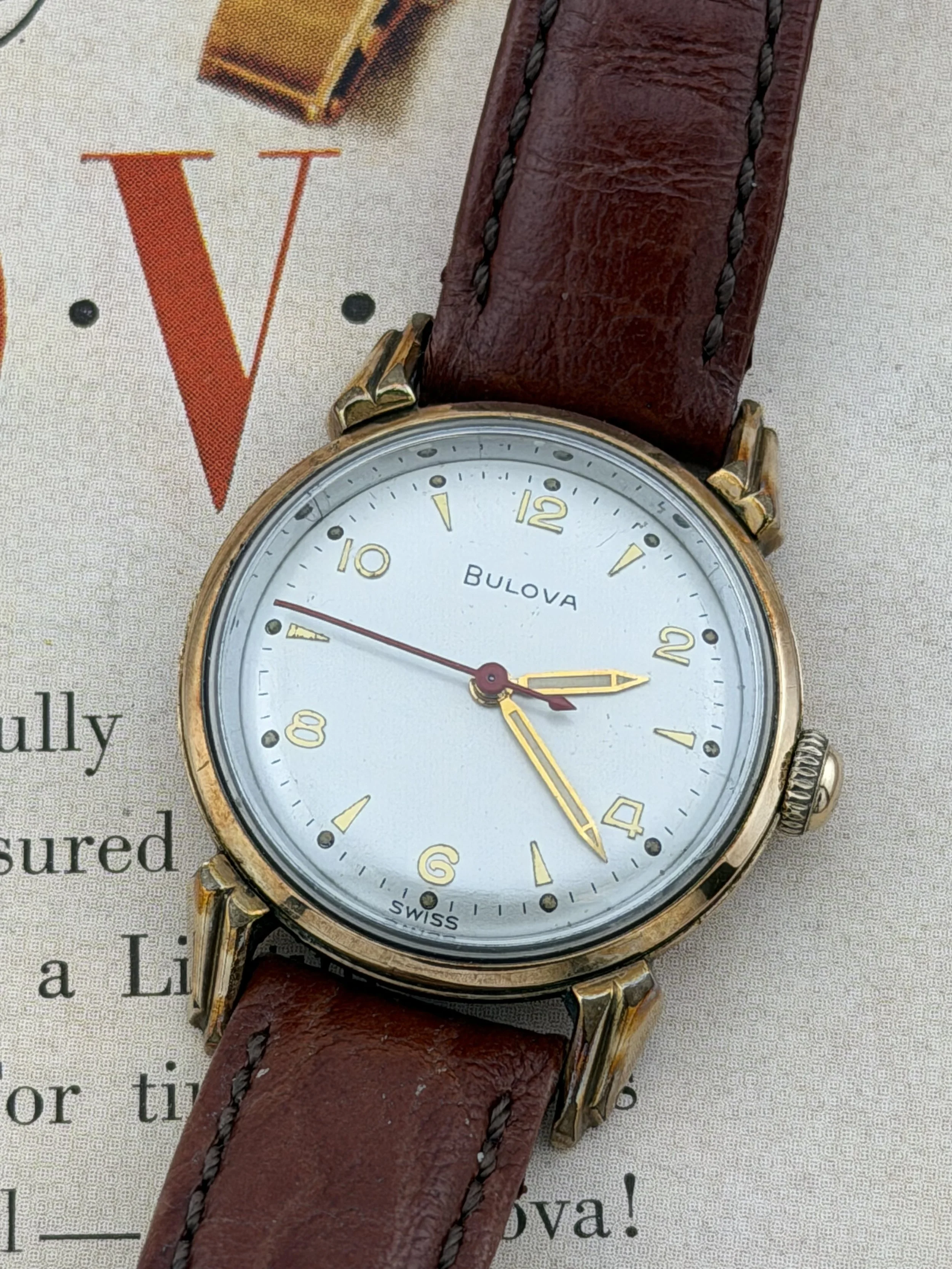
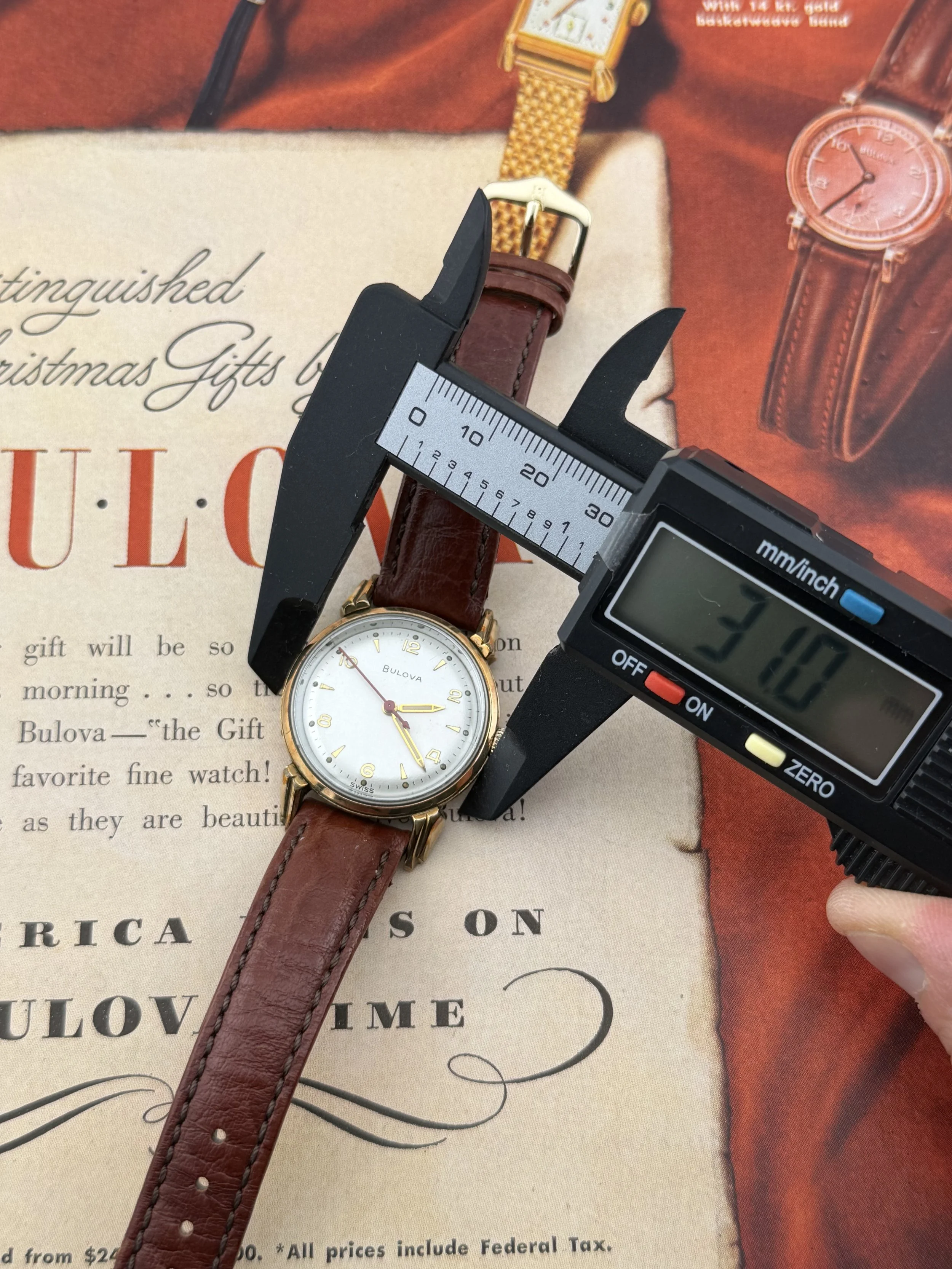
The dial is exceptionally clean and balanced. Applied gold numerals and markers catch the light against the pale dial, while the slender outer minute track keeps the design crisp and highly legible. The gold-tone hands are equally elegant, with luminous detailing that adds a practical touch to an otherwise refined dress watch.
And then there is that red central seconds hand.
It adds just the right amount of colour to the dial and gives the watch a surprisingly energetic personality. As the seconds hand sweeps around the dial, it is a small but wonderful reminder that beneath the elegant exterior is a fully mechanical timekeeper.
The original Bulova-signed crown is another excellent detail. Signed crowns are an important part of a vintage watch's character and help preserve the connection between the case, movement, and original manufacturer.
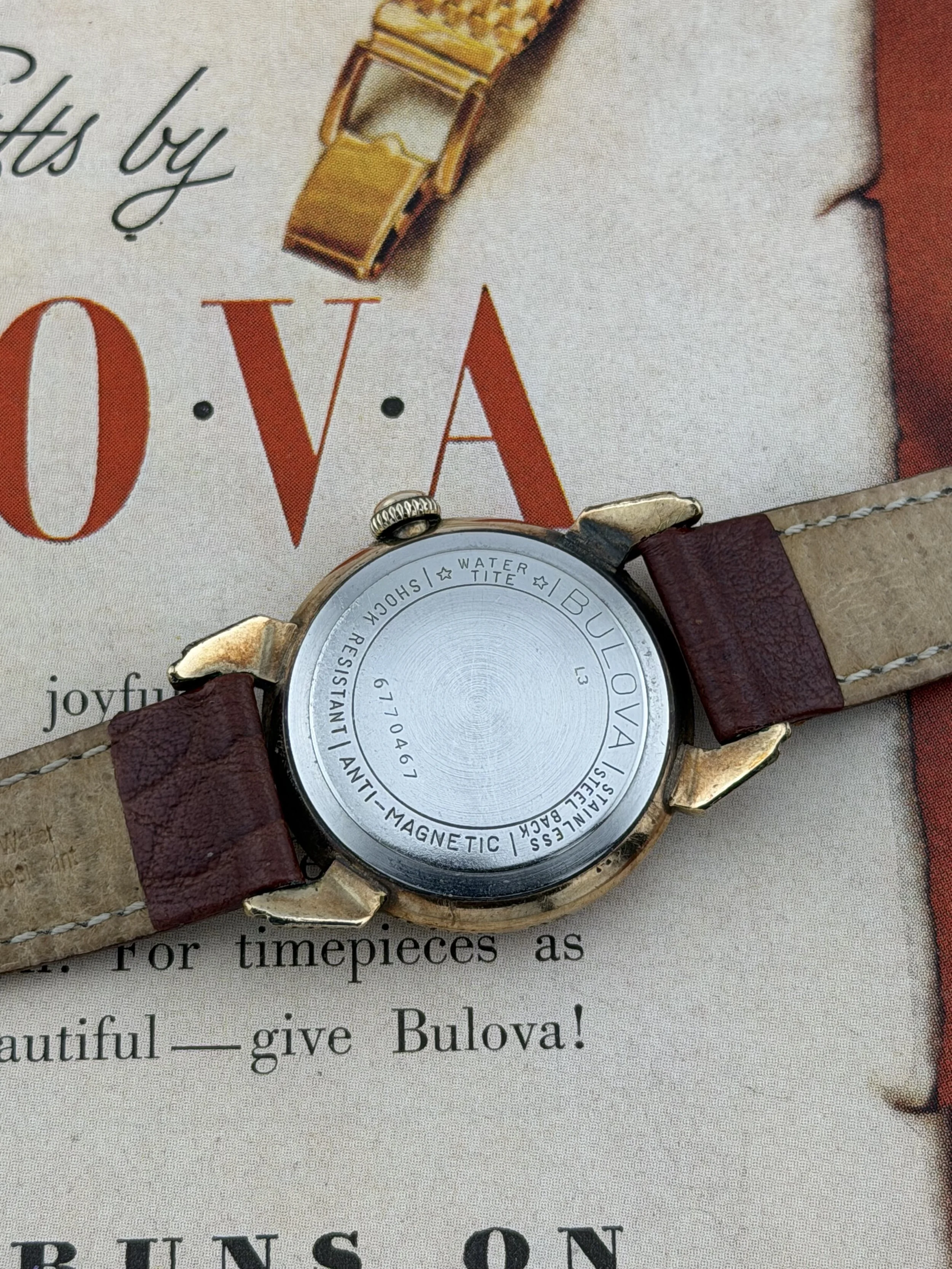
Inside is a Bulova Watch Co. 17-jewel Swiss mechanical movement, visible in the photographs. The movement is marked 11AC, placing this watch within Bulova's mid-century family of Swiss-made mechanical calibres. The 11AC was a manual-winding 17-jewel movement used by Bulova during the 1950s and is known for its straightforward, robust construction and traditional Swiss lever architecture.
The movement is particularly attractive to look at in person. The broad bridges, large winding wheels, exposed ruby jewels and traditional balance assembly are classic examples of the mechanical watchmaking of the period. There is no rotor or electronic component—just a traditional hand-wound mechanism doing exactly what it was designed to do.
The 17 jewels serve as low-friction bearings at critical points throughout the movement, helping reduce wear between the moving components. This was an important part of the evolution from simpler early wristwatch mechanisms toward the increasingly refined mechanical watches that dominated the middle decades of the twentieth century.
The Bulova Story
Bulova is one of the great names in American watchmaking. Founded in New York in 1875, the company built its reputation by combining innovative manufacturing, strong American design, and increasingly sophisticated Swiss mechanical production.
By the middle of the twentieth century, Bulova had become one of America's most recognizable watch brands. Its watches were marketed as quality timepieces for everyday Americans, while its Swiss production allowed the company to take advantage of Switzerland's expertise in mechanical movement manufacturing.
That American-Swiss connection is part of what makes vintage Bulova so fascinating. Examples from this era can carry New York case markings alongside Swiss-made mechanical movements, representing a genuinely international watchmaking operation. Contemporary examples with Bulova cases and Swiss 17-jewel movements show exactly this combination.
This particular watch also fits beautifully into Bulova's broader mid-century design language. The company produced everything from restrained round dress watches to highly architectural rectangular and stepped designs, carrying elements of the Art Deco aesthetic well into the post-war era.
And this watch really captures that transition.
It has the geometric architecture of Art Deco, but the cleaner proportions and restrained dial design of the 1950s. The result is something that feels neither overly formal nor excessively decorative. It is elegant, but it has character.
There is also something wonderfully authentic about the condition of the case and dial. Rather than looking like a modern reproduction of a vintage design, this is a watch that has actually lived through the decades. The gold-filled surfaces, original dial, sculptural lugs and mechanical movement all tell the story of a watch that was made to be worn.
The result is a beautifully balanced vintage Bulova: warm gold case, crisp dial, applied markers, luminous hands, that fantastic red sweep seconds hand, and a genuine 17-jewel Swiss mechanical movement underneath.
A dynamic Art Deco-inspired Bulova with an exceptionally charismatic dial—classic enough for a dress watch, but with enough personality to stand out on the wrist.
This striking Bulova is a wonderful example of mid-century American watch design with unmistakable Art Deco influence. Its stepped gold-filled case, sculptural lugs, clean silvered dial, applied gold markers, and vivid red sweeping seconds hand give it an incredible amount of personality without becoming overly ornate.
The stepped lugs are perhaps the most distinctive feature of the case. Rather than simply extending straight from the case, they rise and taper outward in a sculptural, almost architectural fashion. Combined with the warm gold-filled finish, they give the watch a wonderfully dynamic silhouette that looks every bit as good from the side as it does from above.
The dial is exceptionally clean and balanced. Applied gold numerals and markers catch the light against the pale dial, while the slender outer minute track keeps the design crisp and highly legible. The gold-tone hands are equally elegant, with luminous detailing that adds a practical touch to an otherwise refined dress watch.
And then there is that red central seconds hand.
It adds just the right amount of colour to the dial and gives the watch a surprisingly energetic personality. As the seconds hand sweeps around the dial, it is a small but wonderful reminder that beneath the elegant exterior is a fully mechanical timekeeper.
The original Bulova-signed crown is another excellent detail. Signed crowns are an important part of a vintage watch's character and help preserve the connection between the case, movement, and original manufacturer.
Inside is a Bulova Watch Co. 17-jewel Swiss mechanical movement, visible in the photographs. The movement is marked 11AC, placing this watch within Bulova's mid-century family of Swiss-made mechanical calibres. The 11AC was a manual-winding 17-jewel movement used by Bulova during the 1950s and is known for its straightforward, robust construction and traditional Swiss lever architecture.
The movement is particularly attractive to look at in person. The broad bridges, large winding wheels, exposed ruby jewels and traditional balance assembly are classic examples of the mechanical watchmaking of the period. There is no rotor or electronic component—just a traditional hand-wound mechanism doing exactly what it was designed to do.
The 17 jewels serve as low-friction bearings at critical points throughout the movement, helping reduce wear between the moving components. This was an important part of the evolution from simpler early wristwatch mechanisms toward the increasingly refined mechanical watches that dominated the middle decades of the twentieth century.
The Bulova Story
Bulova is one of the great names in American watchmaking. Founded in New York in 1875, the company built its reputation by combining innovative manufacturing, strong American design, and increasingly sophisticated Swiss mechanical production.
By the middle of the twentieth century, Bulova had become one of America's most recognizable watch brands. Its watches were marketed as quality timepieces for everyday Americans, while its Swiss production allowed the company to take advantage of Switzerland's expertise in mechanical movement manufacturing.
That American-Swiss connection is part of what makes vintage Bulova so fascinating. Examples from this era can carry New York case markings alongside Swiss-made mechanical movements, representing a genuinely international watchmaking operation. Contemporary examples with Bulova cases and Swiss 17-jewel movements show exactly this combination.
This particular watch also fits beautifully into Bulova's broader mid-century design language. The company produced everything from restrained round dress watches to highly architectural rectangular and stepped designs, carrying elements of the Art Deco aesthetic well into the post-war era.
And this watch really captures that transition.
It has the geometric architecture of Art Deco, but the cleaner proportions and restrained dial design of the 1950s. The result is something that feels neither overly formal nor excessively decorative. It is elegant, but it has character.
There is also something wonderfully authentic about the condition of the case and dial. Rather than looking like a modern reproduction of a vintage design, this is a watch that has actually lived through the decades. The gold-filled surfaces, original dial, sculptural lugs and mechanical movement all tell the story of a watch that was made to be worn.
The result is a beautifully balanced vintage Bulova: warm gold case, crisp dial, applied markers, luminous hands, that fantastic red sweep seconds hand, and a genuine 17-jewel Swiss mechanical movement underneath.
A dynamic Art Deco-inspired Bulova with an exceptionally charismatic dial—classic enough for a dress watch, but with enough personality to stand out on the wrist.