

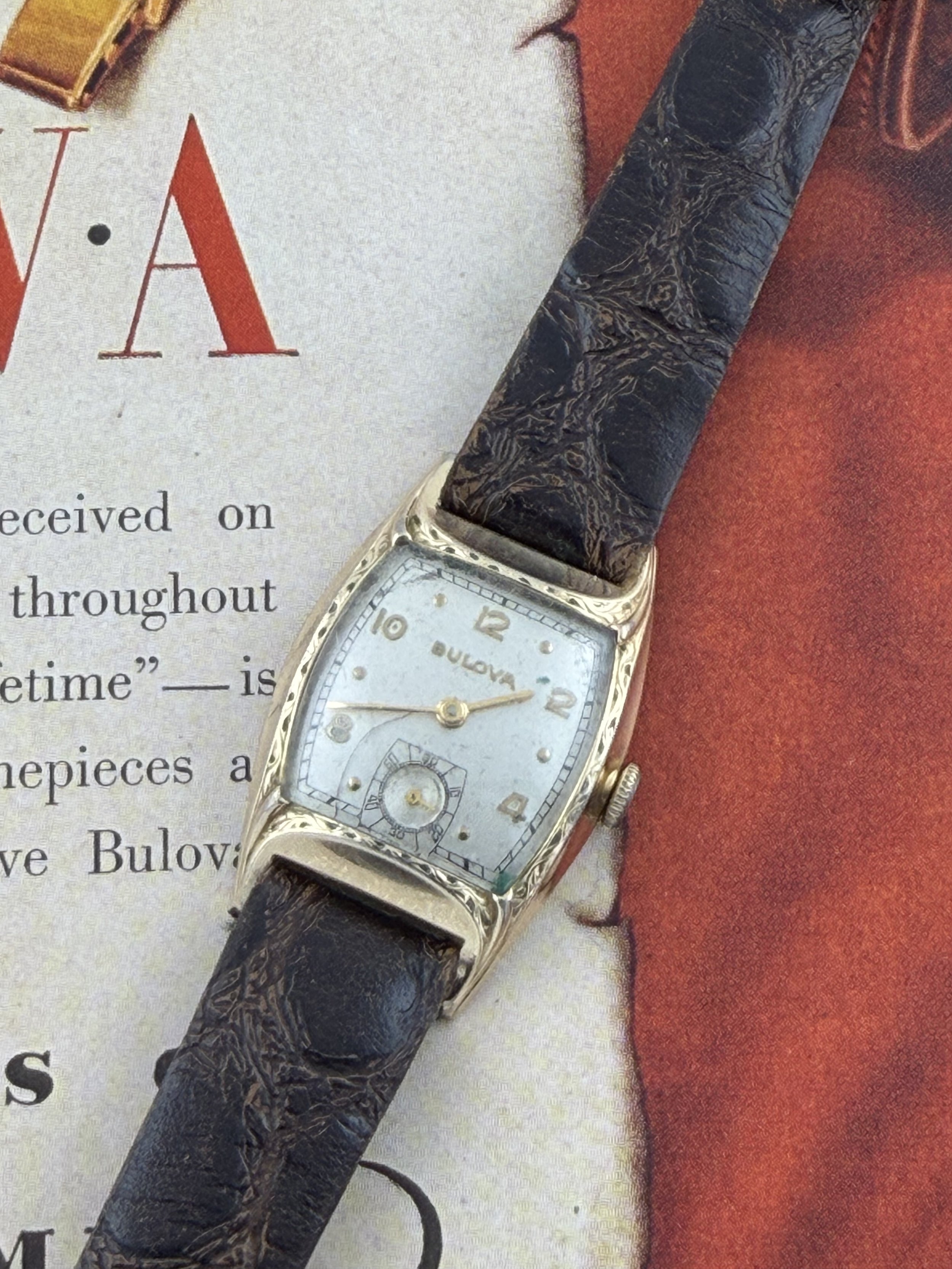
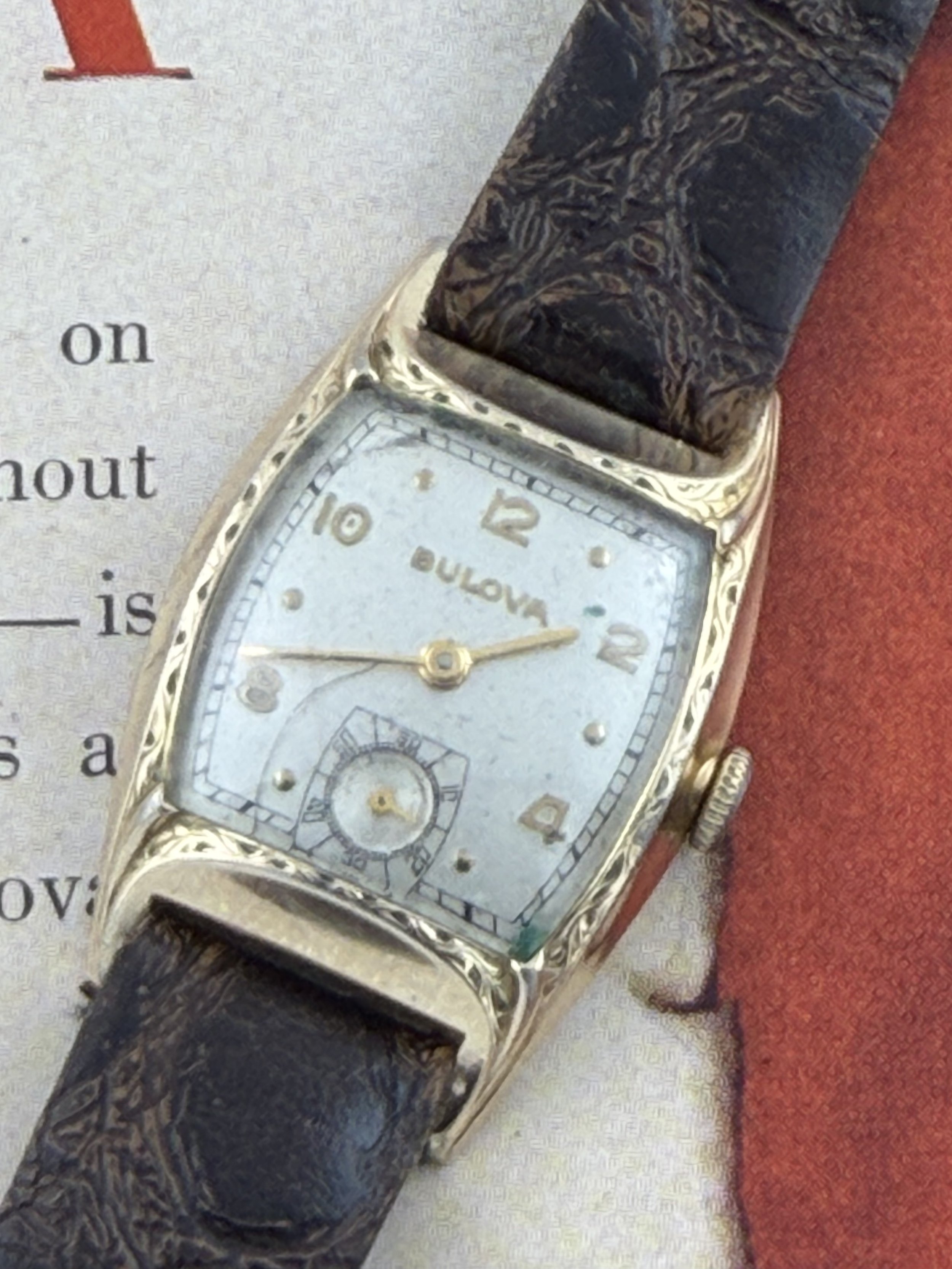
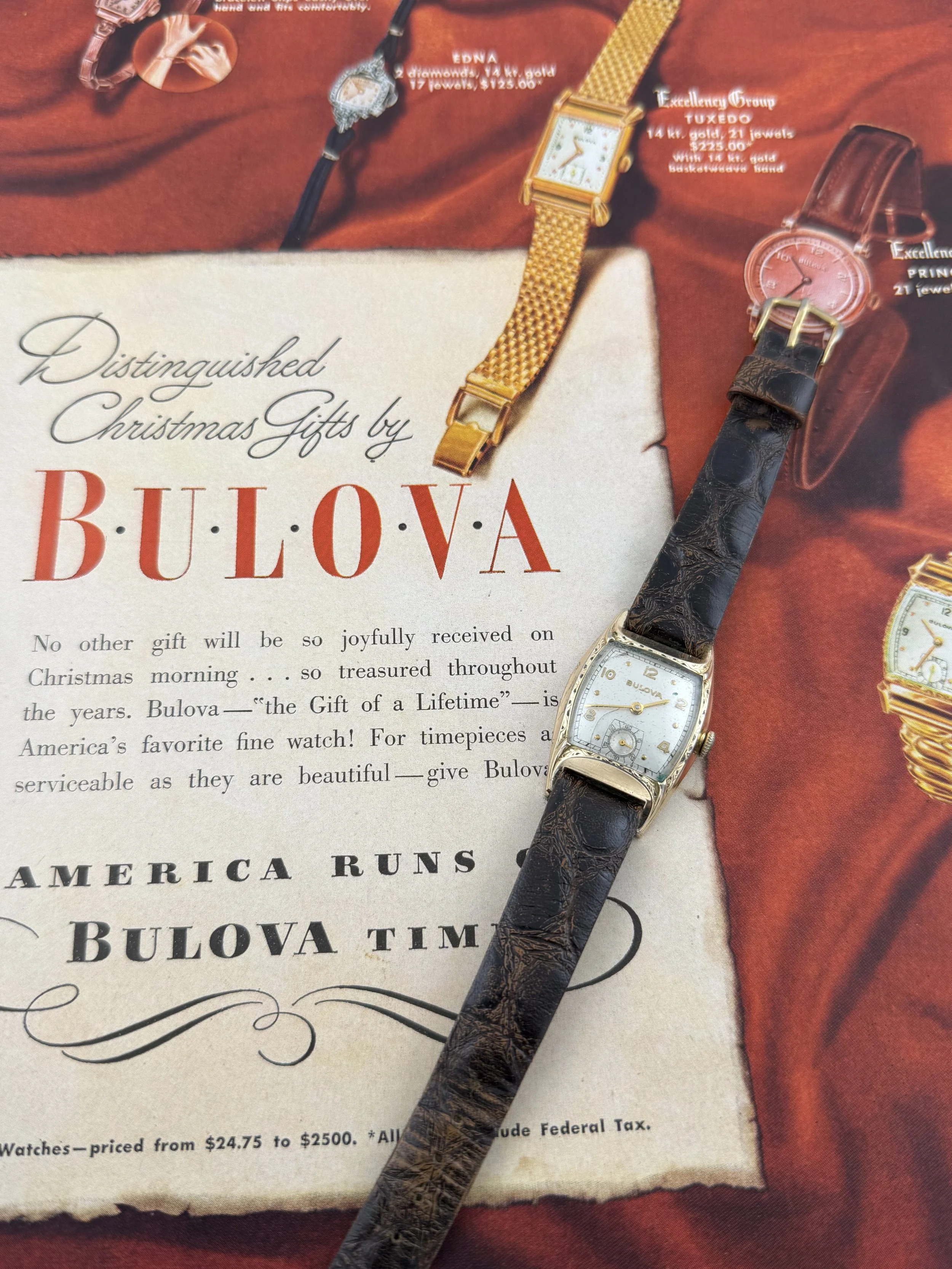
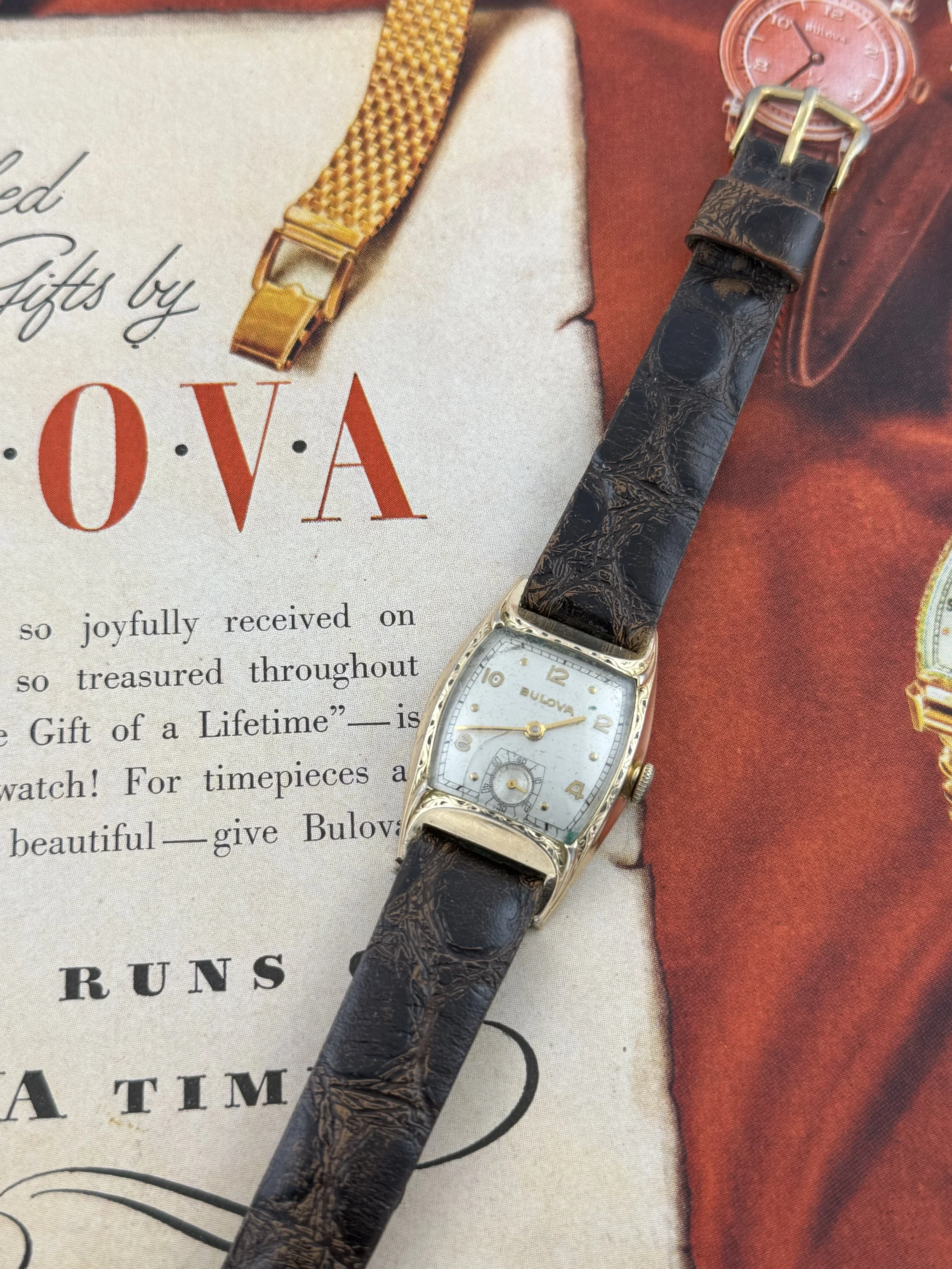
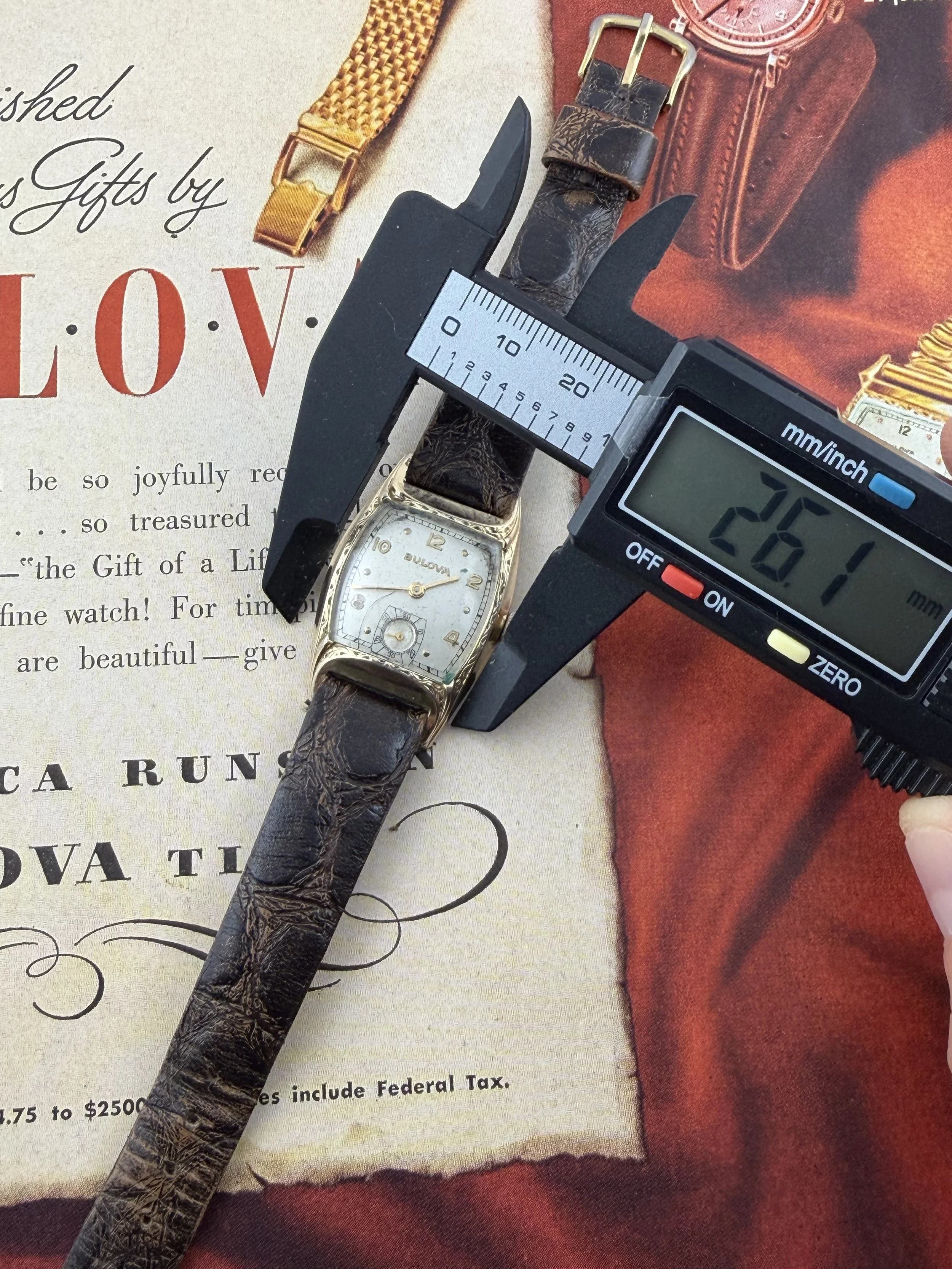
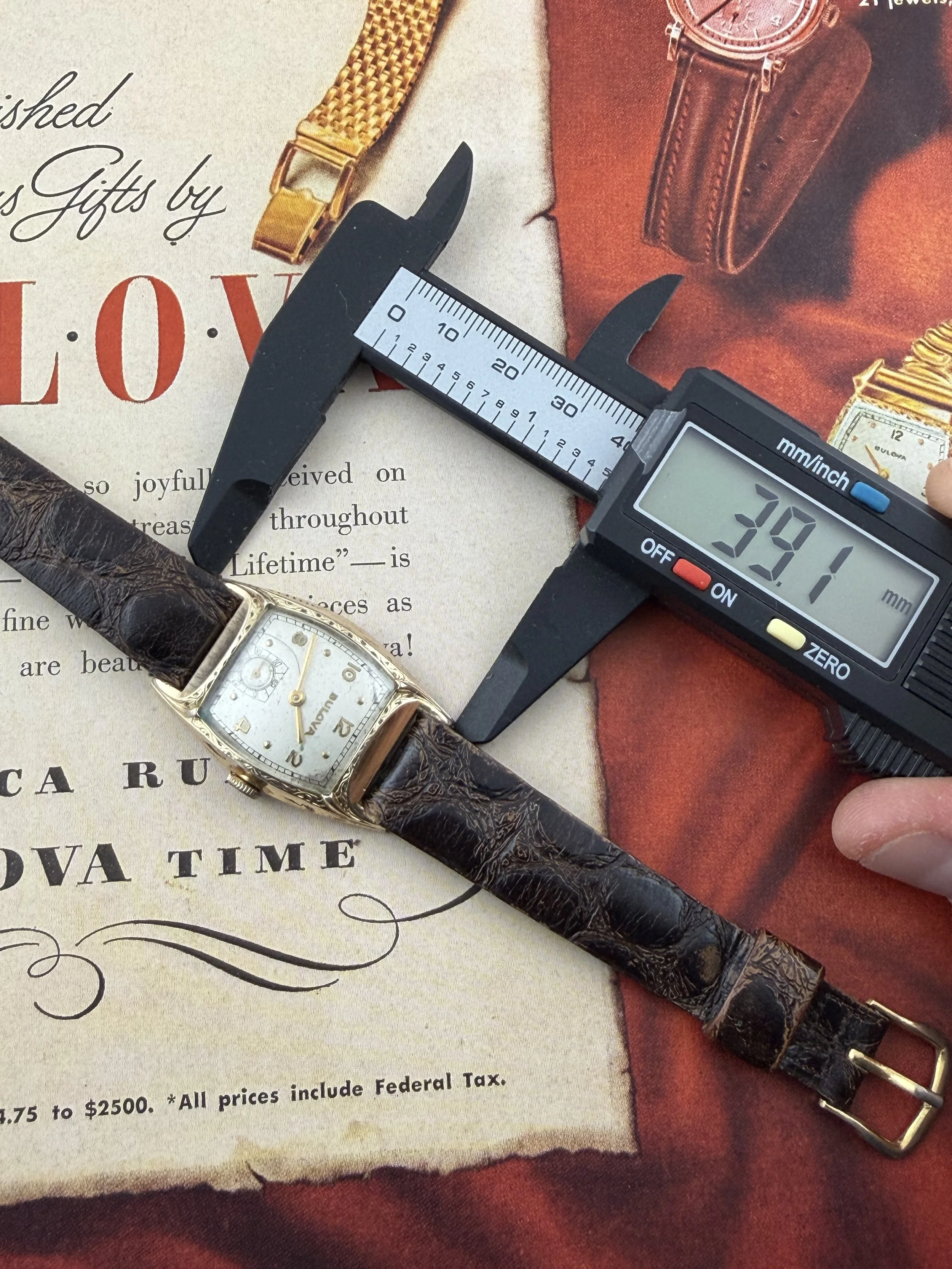
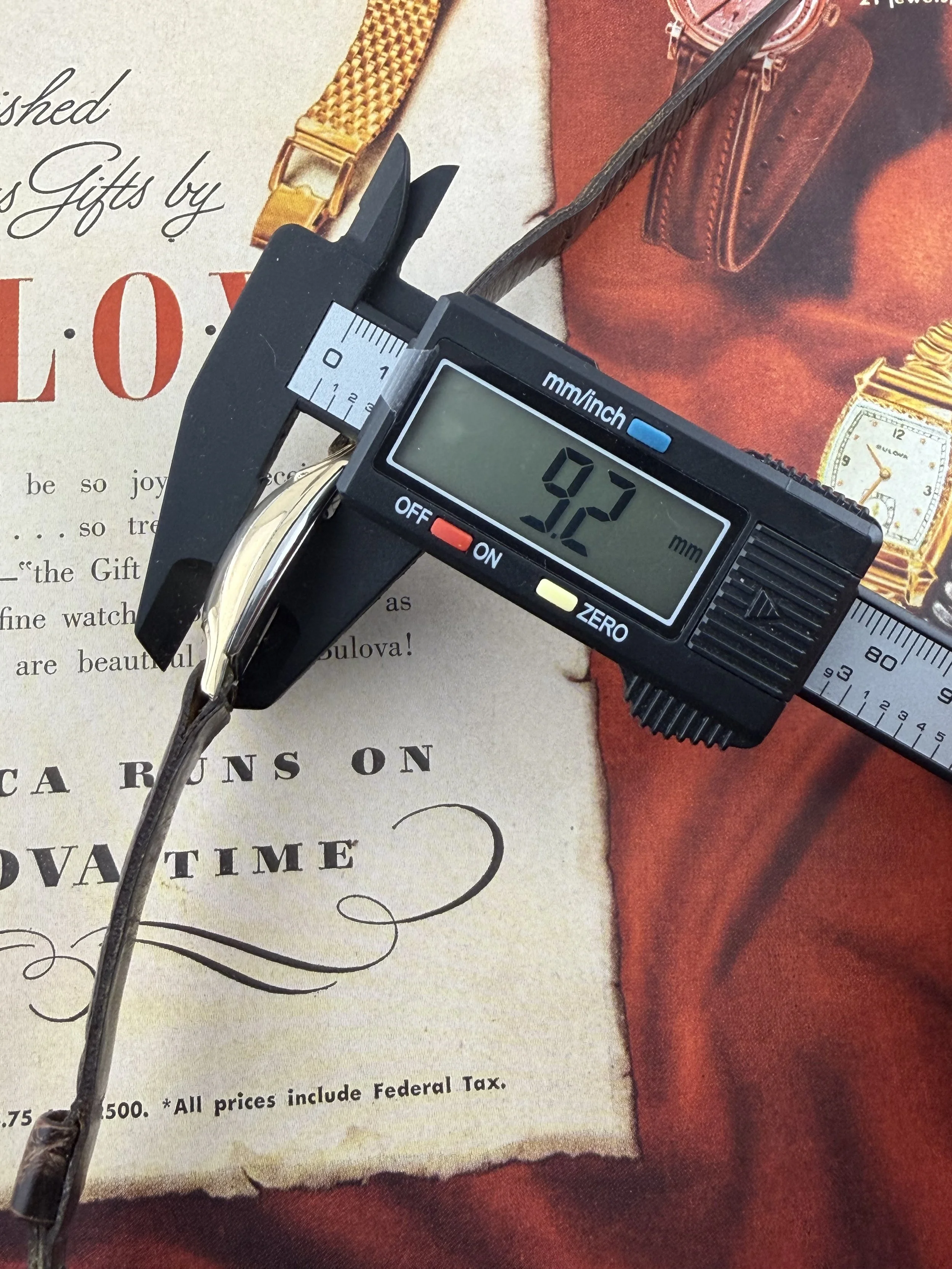
This stunning vintage Bulova is a superb example of the classic Art Deco tank watch. With its rectangular gold-filled case, beautifully engraved decoration, elegant sub-seconds dial, and crisp railway-track minute chapter, it captures everything that makes early twentieth-century wristwatches so compelling.
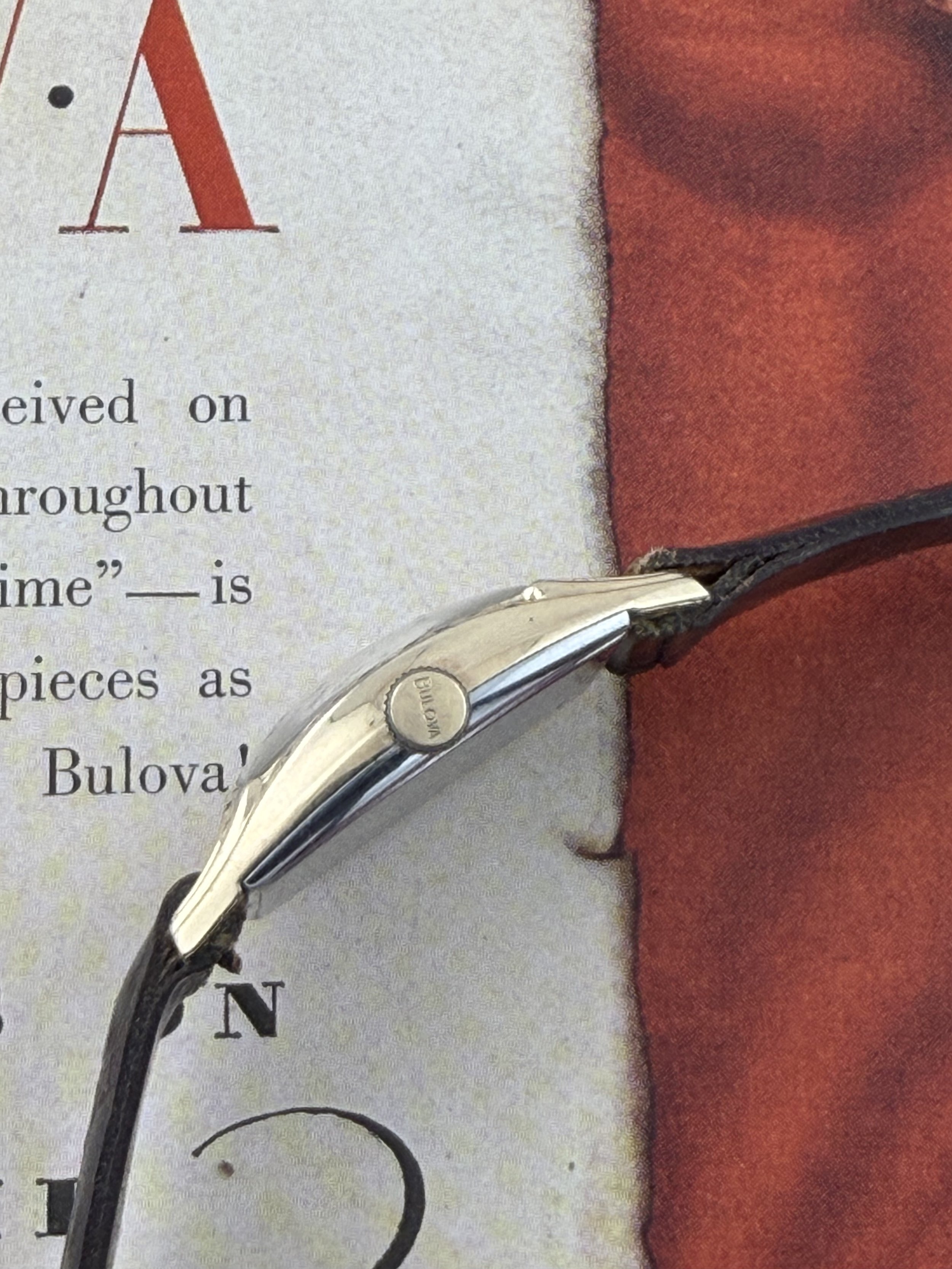
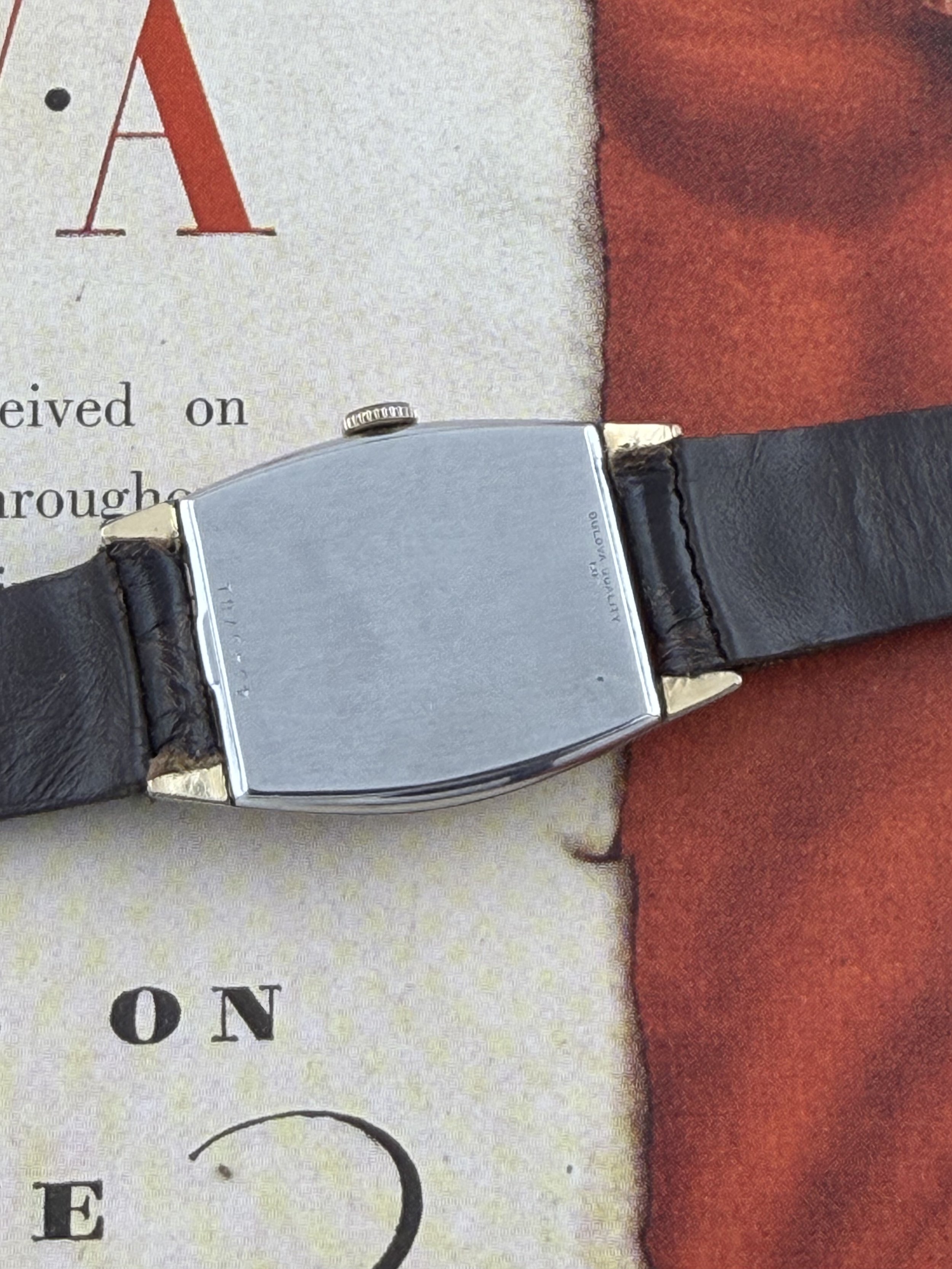
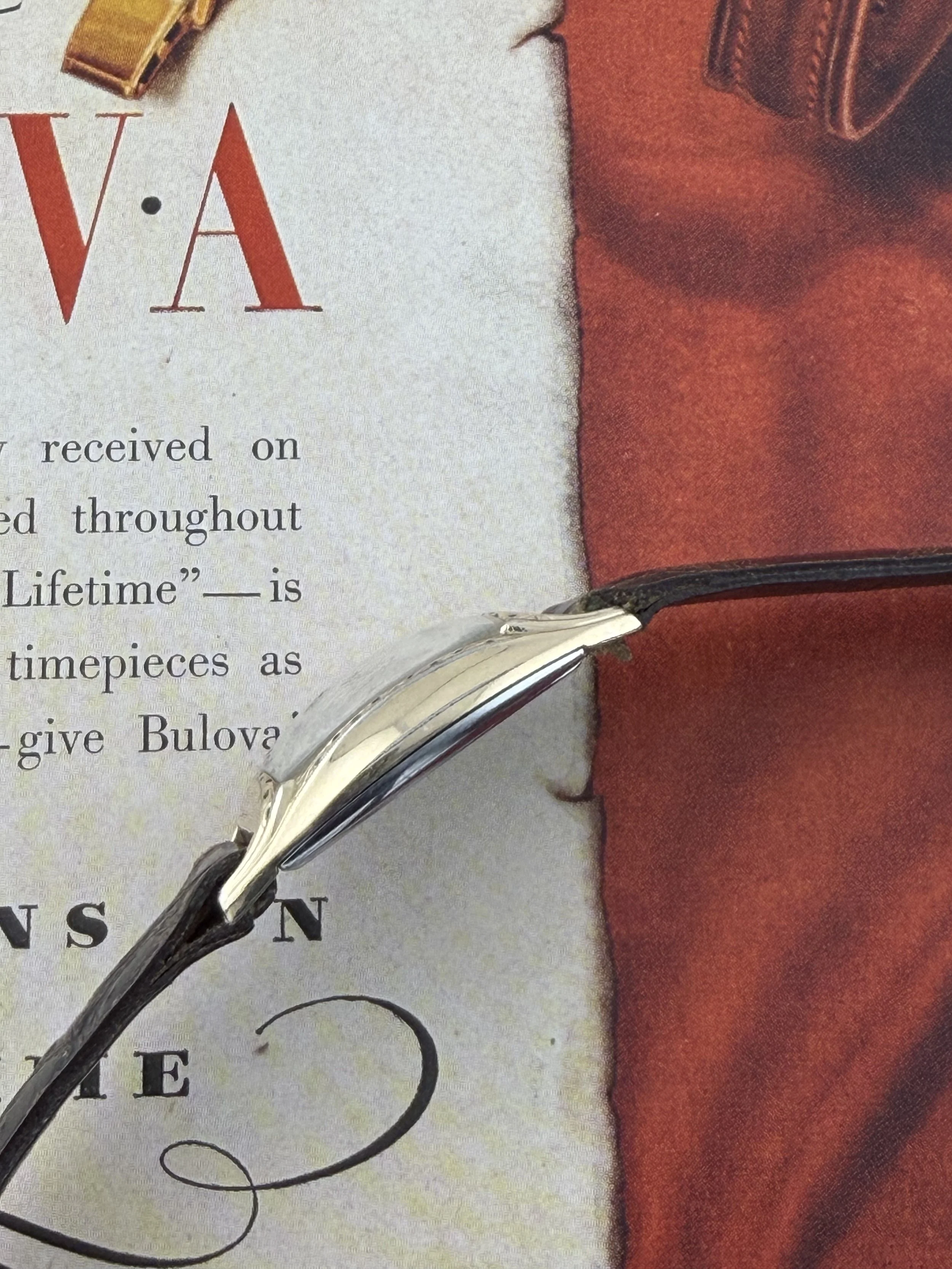
The case is the immediate star of the watch. Its strong rectangular form embodies the geometric language of the Art Deco period, while the engraved gold-filled surfaces add a level of decorative richness that gives the watch an unmistakably elegant presence. The combination of architectural lines and intricate engraving creates a wonderful contrast between structure and ornament.
The dial is equally beautiful. A clean railway-track minute scale runs around the outer edge, providing a precise graphic border that emphasizes the rectangular shape of the watch. At six o'clock, the small seconds register adds both visual balance and mechanical character, giving the dial the classic layout associated with many of the finest watches of the period.
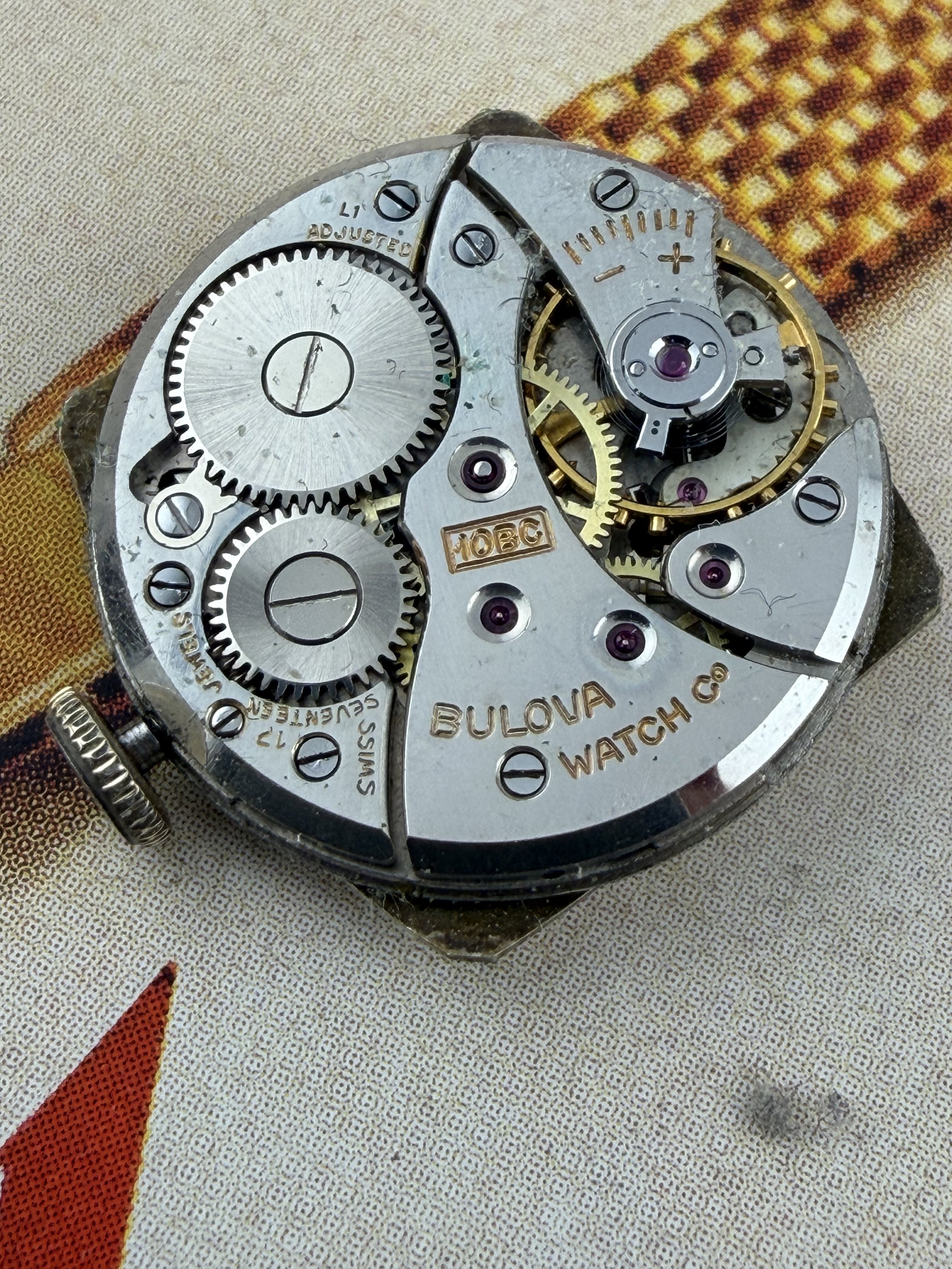
Inside is Bulova's 17-jewel 10BC movement, a classic American-made calibre from the company's important early wristwatch era. The 10BC was part of Bulova's extensive family of manually wound movements used during the Art Deco period, when the company was rapidly establishing itself as one of the most important watch manufacturers in the United States.
The movement reflects the changing nature of watchmaking during the early twentieth century. As wristwatches became increasingly popular, manufacturers began developing smaller, purpose-built movements that could provide reliable timekeeping in the compact cases demanded by the new fashion. The 10BC represents this transition beautifully: a properly engineered mechanical movement housed within a watch designed around the distinctive geometric forms of the Art Deco age.
The 17-jewel configuration is another indication of the movement's quality and sophistication. Jewelled bearings were used to reduce friction and wear at key points within the mechanism, helping improve both durability and long-term performance. For a watch of this period, a 17-jewel movement represents a well-equipped and serious mechanical calibre.
Bulova's history is an important part of the appeal. Founded in New York in 1875 by Joseph Bulova, the company grew from a small jewellery business into one of America's most significant watch manufacturers. During the early twentieth century, Bulova became particularly well known for combining modern manufacturing methods with strong design and aggressive advertising, helping make wristwatches accessible and desirable to a growing American market.
The Art Deco period was a transformative moment for wristwatch design. Following the First World War, wristwatches rapidly replaced pocket watches as the preferred timepiece for everyday use. By the 1920s and 1930s, watchmakers were experimenting with rectangular cases, stepped profiles, engraved surfaces, and bold geometric decoration. The tank watch became one of the defining forms of this period, offering a completely different aesthetic from the traditional round watch.
This Bulova is a wonderful example of that design revolution. The rectangular case gives it a strong architectural presence, while the engraved gold-filled surfaces soften the geometry with intricate decorative detail. The sub-seconds dial and railway-track chapter add the precision and visual balance that make these early Art Deco watches so endlessly appealing.
There is something particularly special about the proportions of a vintage tank watch. Designed to sit elegantly across the wrist rather than simply follow the shape of a round case, the rectangular form gives the watch a sense of refinement and individuality. Nearly a century later, the design still feels remarkably sophisticated.
This is a true Art Deco wristwatch stunner. With its beautifully engraved gold-filled case, classic railway-track dial, elegant sub-seconds register, and 17-jewel Bulova 10BC movement, it is a wonderful example of American watchmaking during one of the most important periods in the history of the wristwatch.
For collectors who appreciate early American watches, geometric Art Deco design, and the craftsmanship of vintage mechanical movements, this Bulova offers an extraordinary combination of beauty, history, and character. A spectacular little tank watch with the kind of presence that makes it impossible to overlook.
This stunning vintage Bulova is a superb example of the classic Art Deco tank watch. With its rectangular gold-filled case, beautifully engraved decoration, elegant sub-seconds dial, and crisp railway-track minute chapter, it captures everything that makes early twentieth-century wristwatches so compelling.
The case is the immediate star of the watch. Its strong rectangular form embodies the geometric language of the Art Deco period, while the engraved gold-filled surfaces add a level of decorative richness that gives the watch an unmistakably elegant presence. The combination of architectural lines and intricate engraving creates a wonderful contrast between structure and ornament.
The dial is equally beautiful. A clean railway-track minute scale runs around the outer edge, providing a precise graphic border that emphasizes the rectangular shape of the watch. At six o'clock, the small seconds register adds both visual balance and mechanical character, giving the dial the classic layout associated with many of the finest watches of the period.
Inside is Bulova's 17-jewel 10BC movement, a classic American-made calibre from the company's important early wristwatch era. The 10BC was part of Bulova's extensive family of manually wound movements used during the Art Deco period, when the company was rapidly establishing itself as one of the most important watch manufacturers in the United States.
The movement reflects the changing nature of watchmaking during the early twentieth century. As wristwatches became increasingly popular, manufacturers began developing smaller, purpose-built movements that could provide reliable timekeeping in the compact cases demanded by the new fashion. The 10BC represents this transition beautifully: a properly engineered mechanical movement housed within a watch designed around the distinctive geometric forms of the Art Deco age.
The 17-jewel configuration is another indication of the movement's quality and sophistication. Jewelled bearings were used to reduce friction and wear at key points within the mechanism, helping improve both durability and long-term performance. For a watch of this period, a 17-jewel movement represents a well-equipped and serious mechanical calibre.
Bulova's history is an important part of the appeal. Founded in New York in 1875 by Joseph Bulova, the company grew from a small jewellery business into one of America's most significant watch manufacturers. During the early twentieth century, Bulova became particularly well known for combining modern manufacturing methods with strong design and aggressive advertising, helping make wristwatches accessible and desirable to a growing American market.
The Art Deco period was a transformative moment for wristwatch design. Following the First World War, wristwatches rapidly replaced pocket watches as the preferred timepiece for everyday use. By the 1920s and 1930s, watchmakers were experimenting with rectangular cases, stepped profiles, engraved surfaces, and bold geometric decoration. The tank watch became one of the defining forms of this period, offering a completely different aesthetic from the traditional round watch.
This Bulova is a wonderful example of that design revolution. The rectangular case gives it a strong architectural presence, while the engraved gold-filled surfaces soften the geometry with intricate decorative detail. The sub-seconds dial and railway-track chapter add the precision and visual balance that make these early Art Deco watches so endlessly appealing.
There is something particularly special about the proportions of a vintage tank watch. Designed to sit elegantly across the wrist rather than simply follow the shape of a round case, the rectangular form gives the watch a sense of refinement and individuality. Nearly a century later, the design still feels remarkably sophisticated.
This is a true Art Deco wristwatch stunner. With its beautifully engraved gold-filled case, classic railway-track dial, elegant sub-seconds register, and 17-jewel Bulova 10BC movement, it is a wonderful example of American watchmaking during one of the most important periods in the history of the wristwatch.
For collectors who appreciate early American watches, geometric Art Deco design, and the craftsmanship of vintage mechanical movements, this Bulova offers an extraordinary combination of beauty, history, and character. A spectacular little tank watch with the kind of presence that makes it impossible to overlook.