

Bulova | Art Deco Tank Watch | 17 Jewels | Calibre 11AC | Sub-Seconds | Gold-Filled Case | Circa 1950s
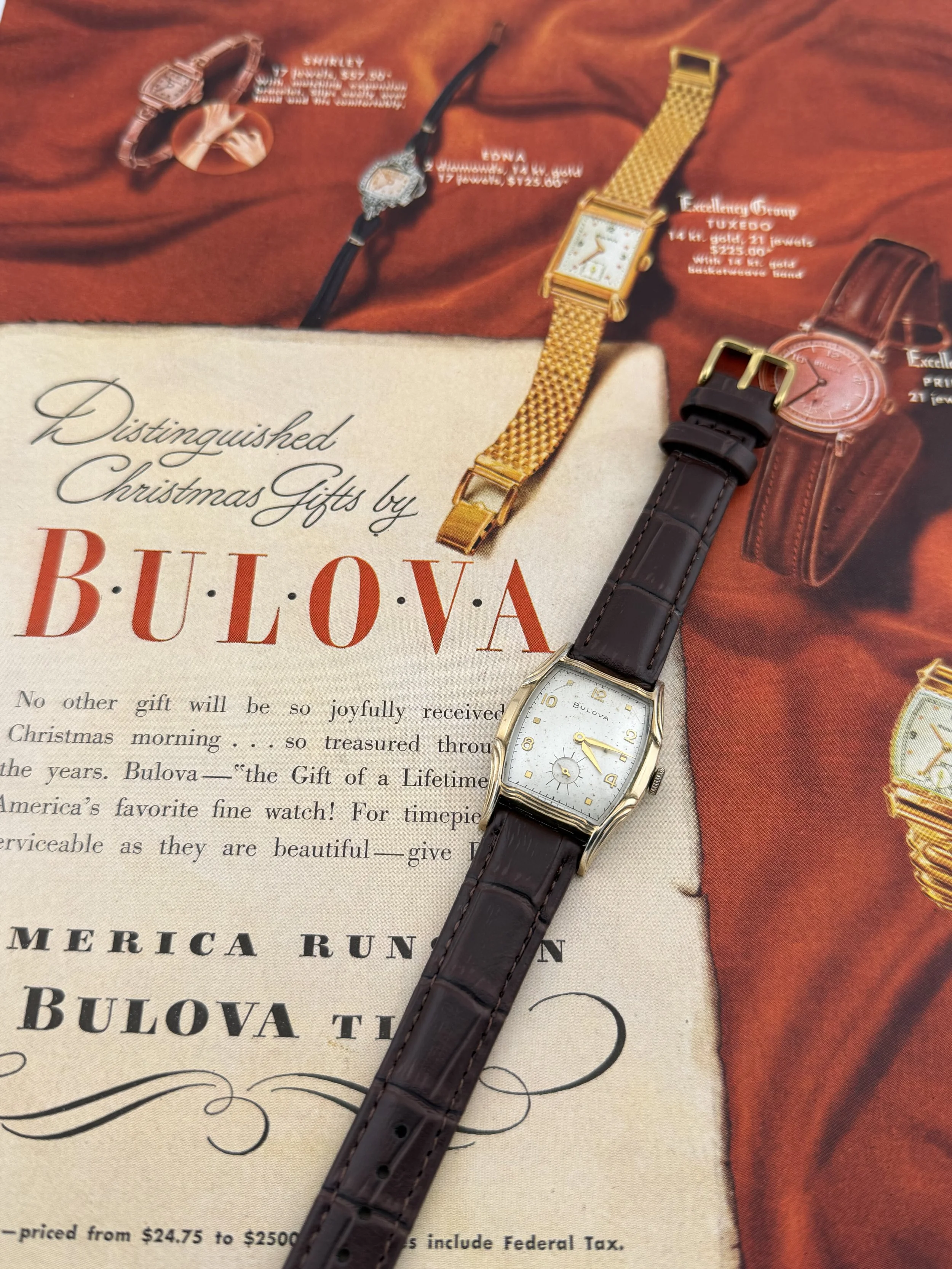
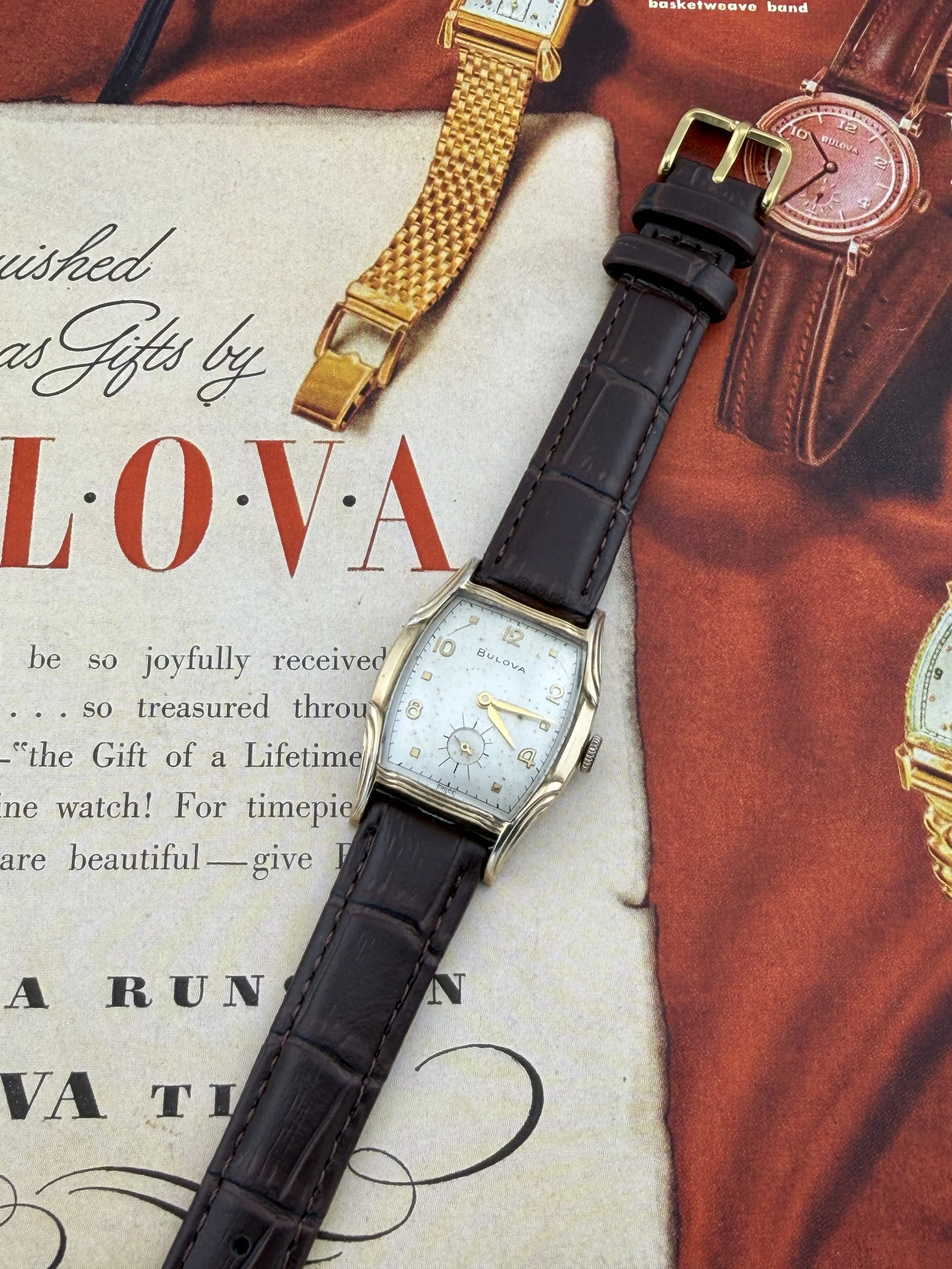
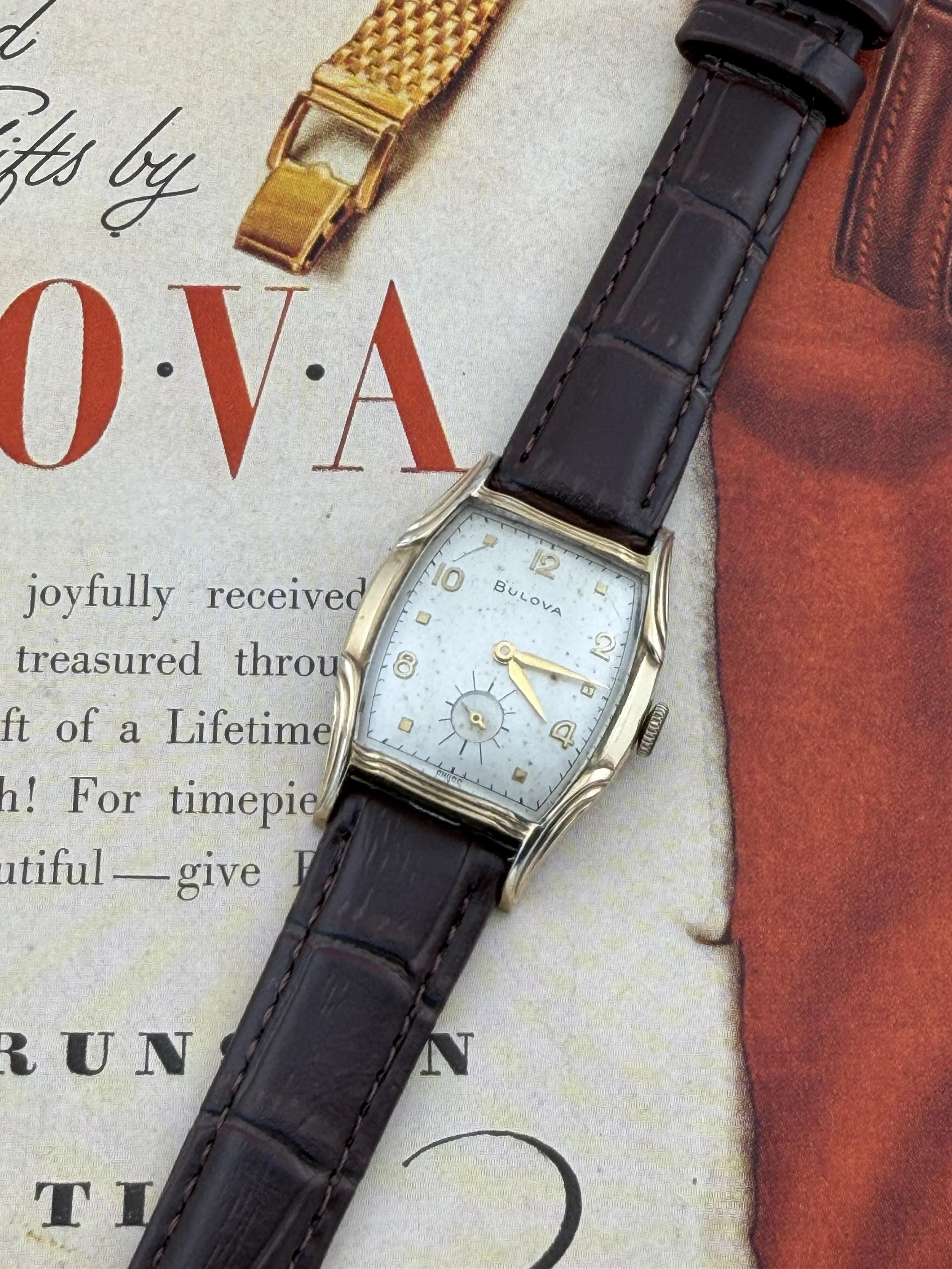
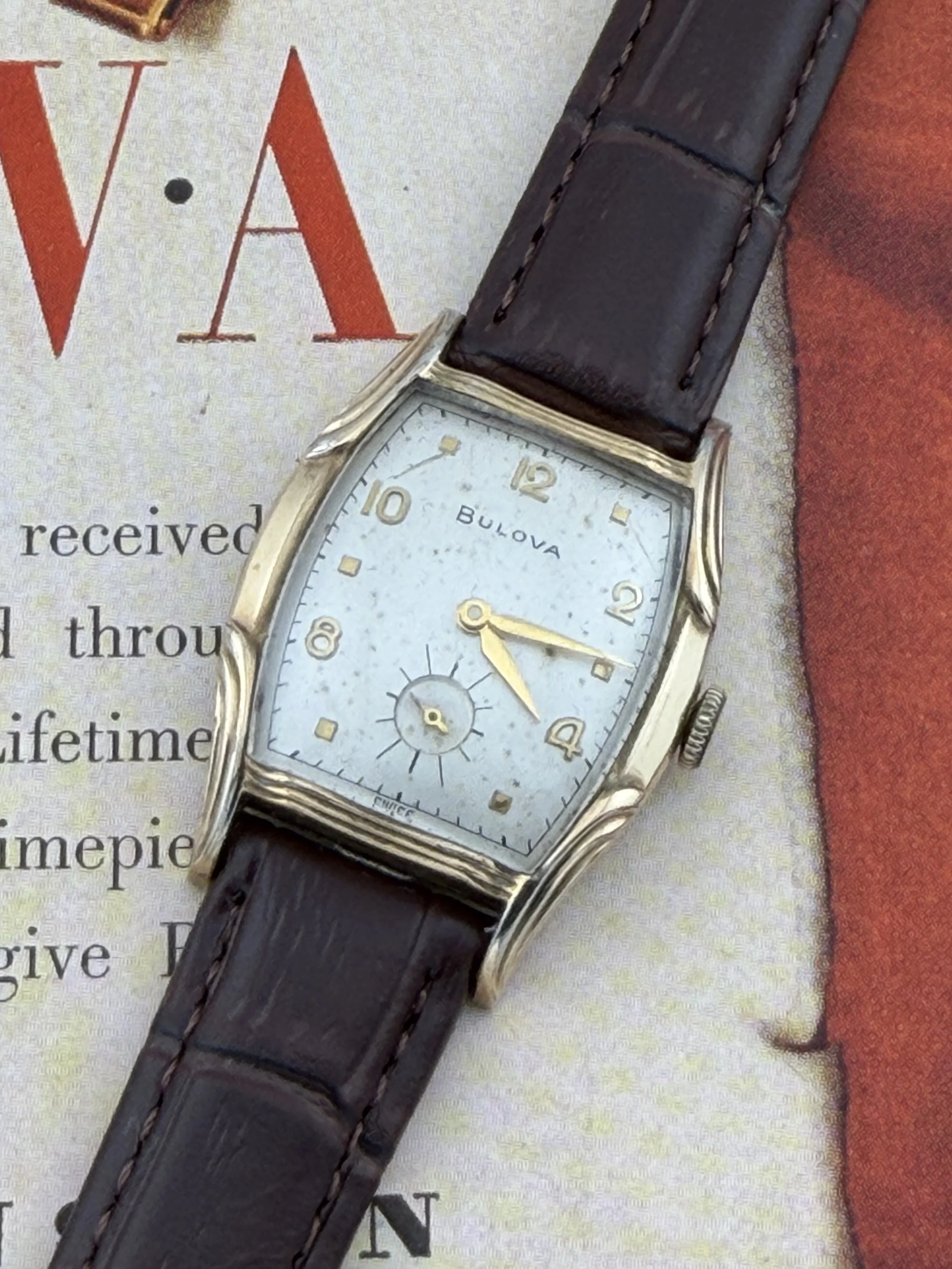
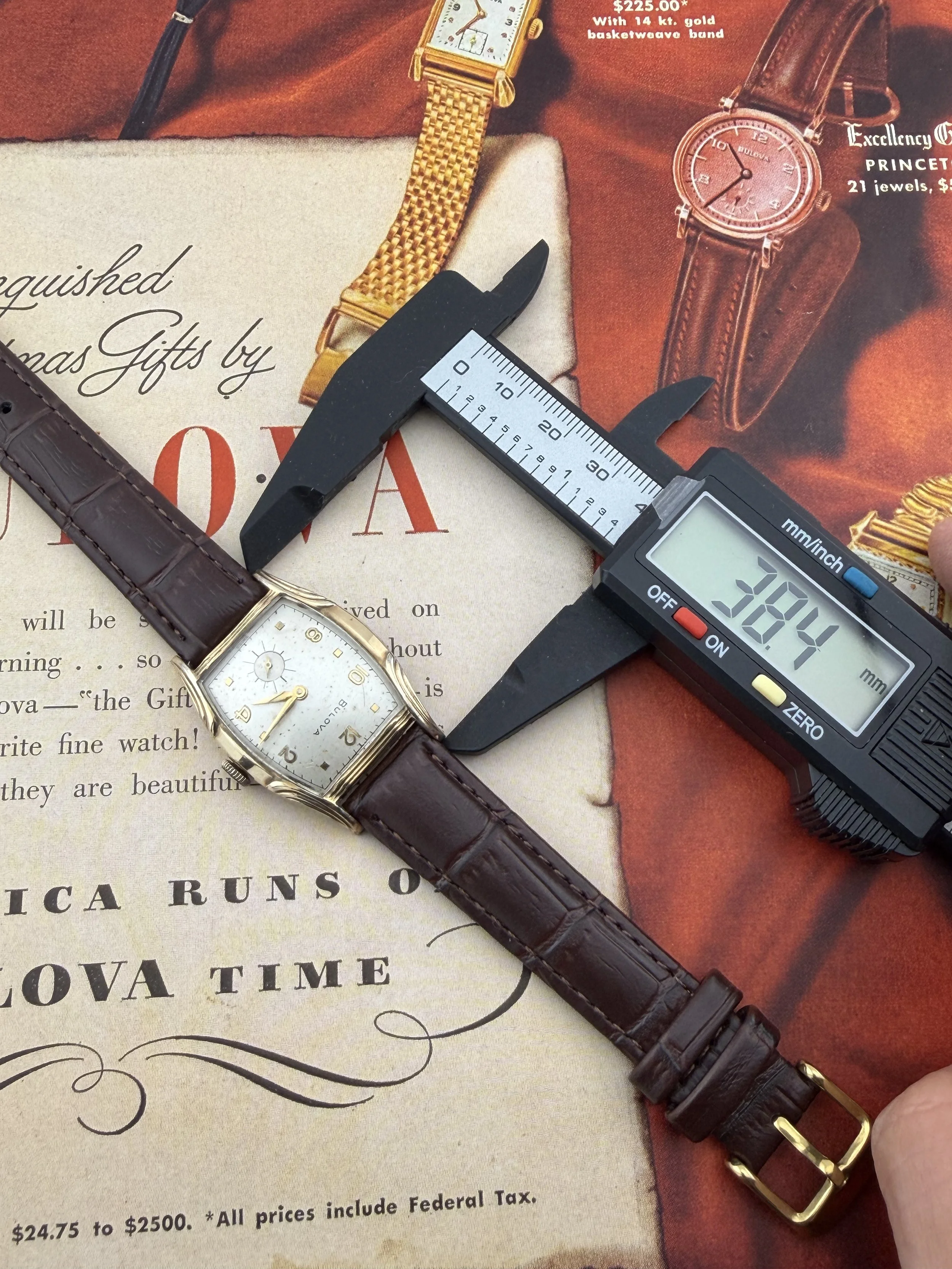
This beautiful Bulova is a fantastic example of the company's ability to combine American design with Swiss mechanical watchmaking. With its elegant stepped tank-style case, warm gold-filled finish, applied gold numerals, dedicated sub-seconds register, and original Bulova-signed crown, it has all the hallmarks of a classic vintage dress watch while wearing with surprisingly modern proportions.
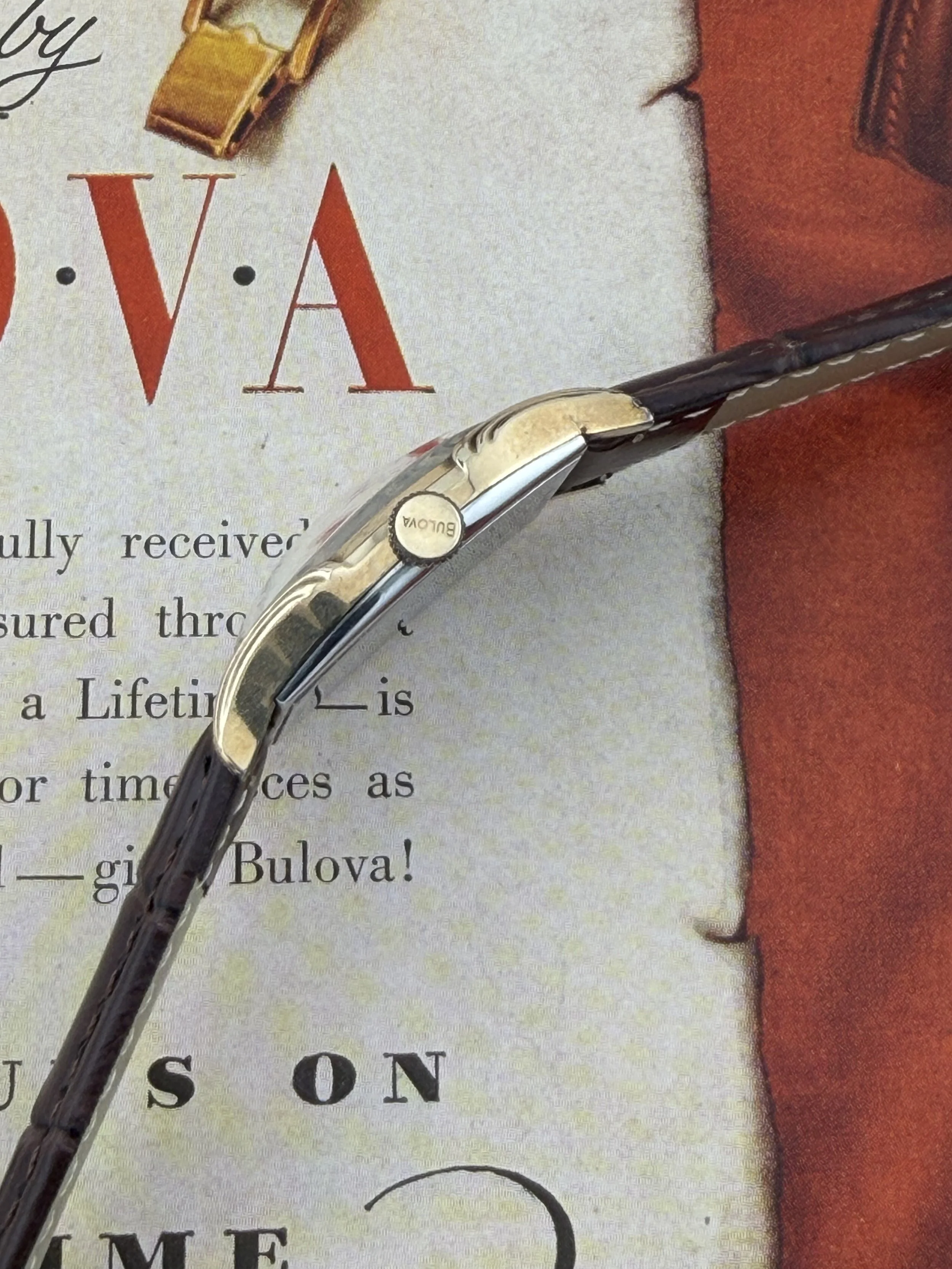
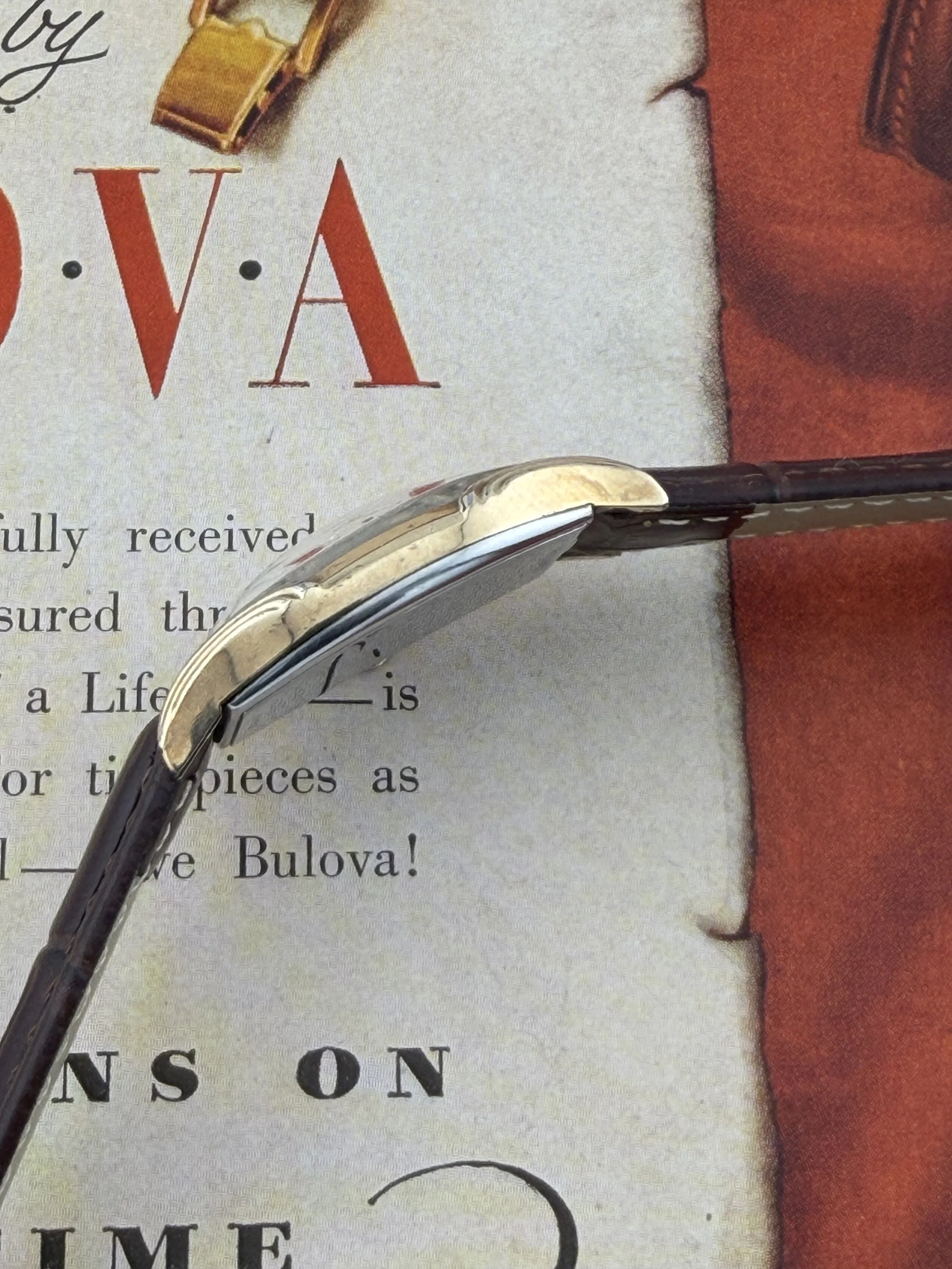
The stepped case is what immediately gives this watch its presence. Strong geometric lines run around the rectangular case, creating the architectural appearance associated with Art Deco design. The raised and recessed surfaces catch the light beautifully, giving the gold-filled case considerably more visual depth than a conventional flat tank watch.
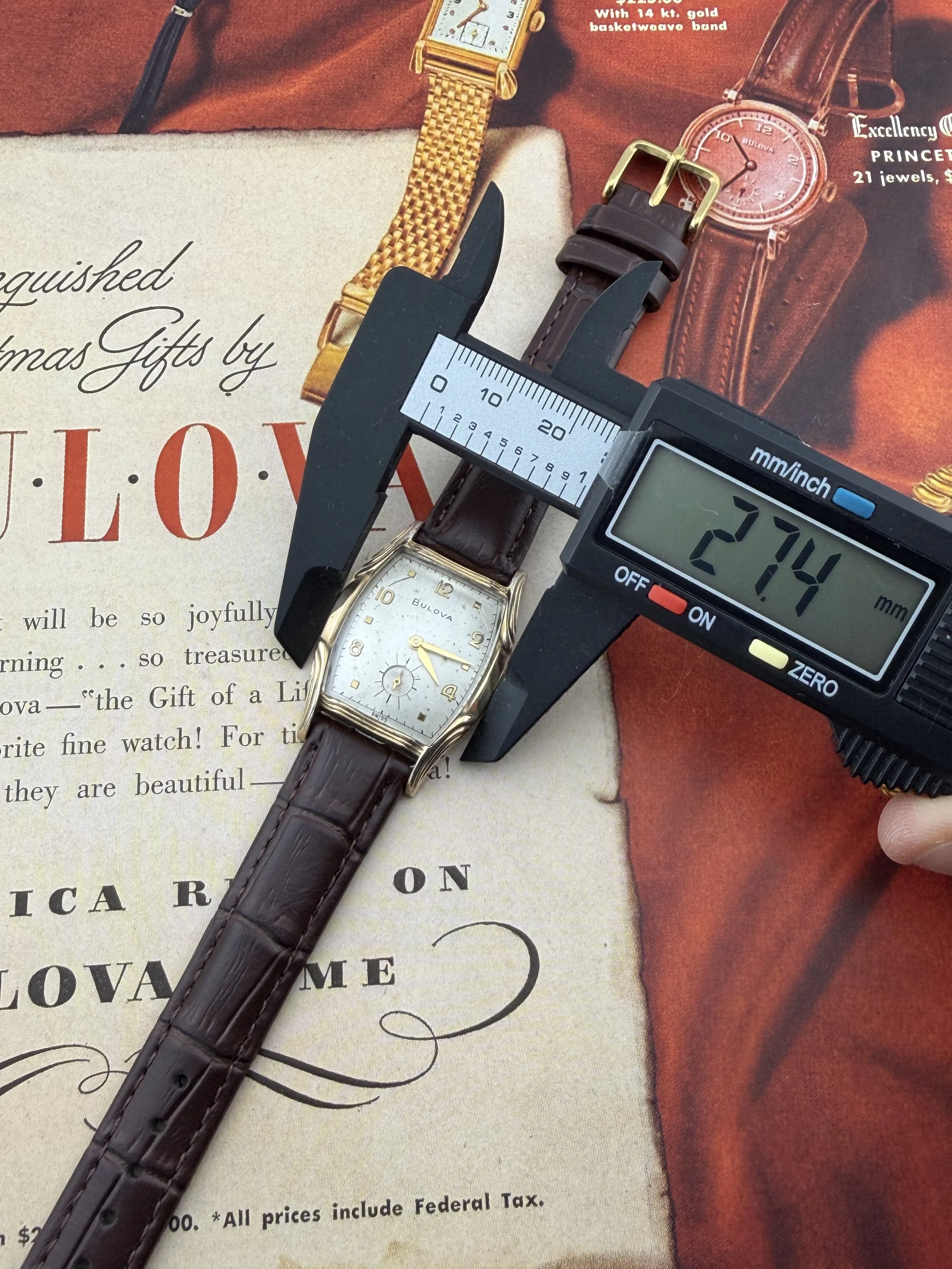
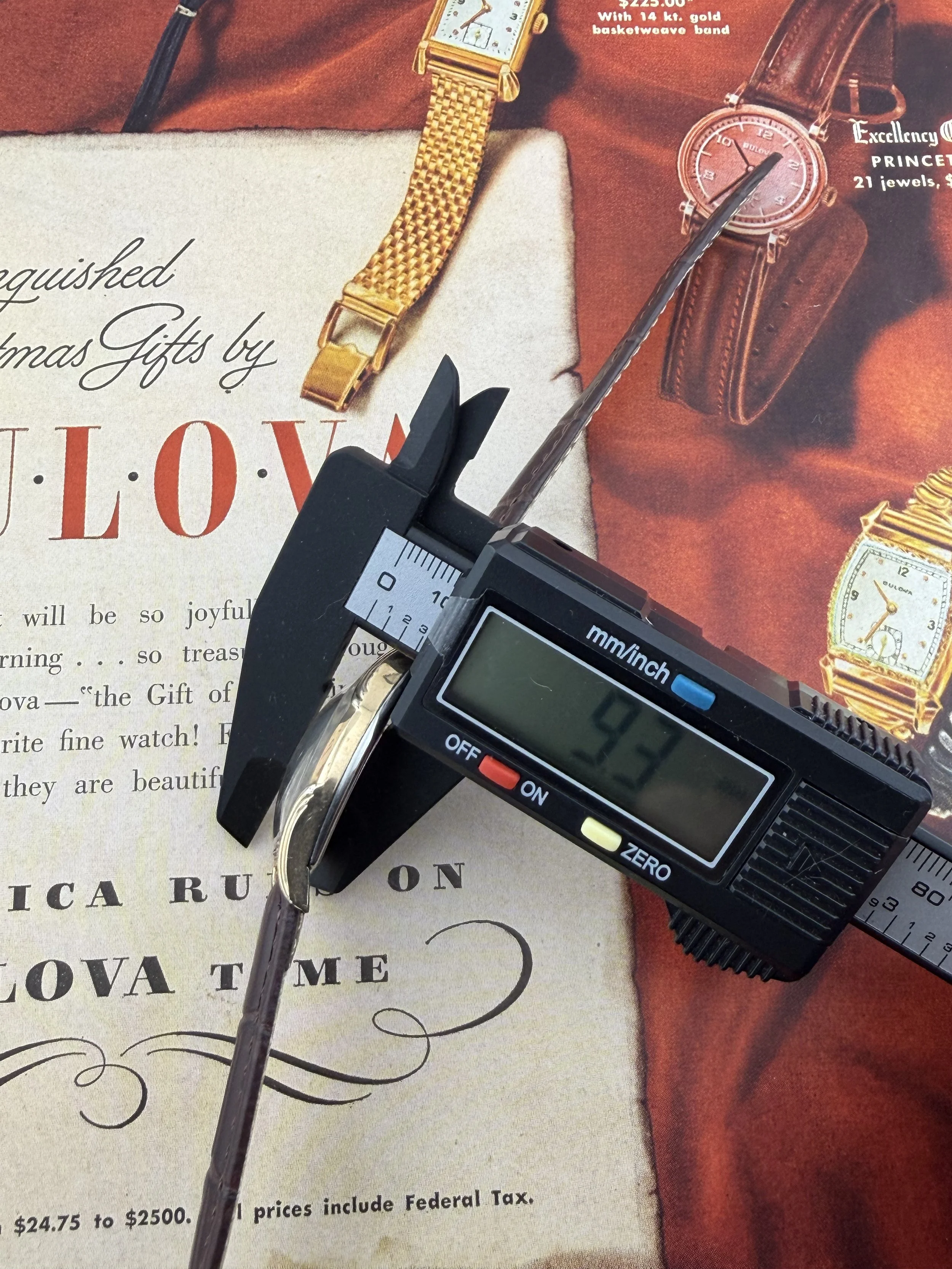
And despite being a vintage tank, the proportions feel remarkably modern. The rectangular case provides plenty of wrist presence without needing to be oversized, making this the kind of watch that looks equally at home with a suit or dressed down on a modern leather strap.
The dial continues the Art Deco-inspired theme. Applied gold numerals and markers rise from the dial surface, giving the watch depth and warmth, while the small sub-seconds register at six o'clock provides the perfect counterpoint to the main time display. It is a wonderfully balanced layout—formal, symmetrical, and unmistakably mechanical.
The original Bulova-signed crown is another excellent detail. Signed crowns are an important part of a vintage watch's originality, and this one adds another piece of Bulova identity to the case.
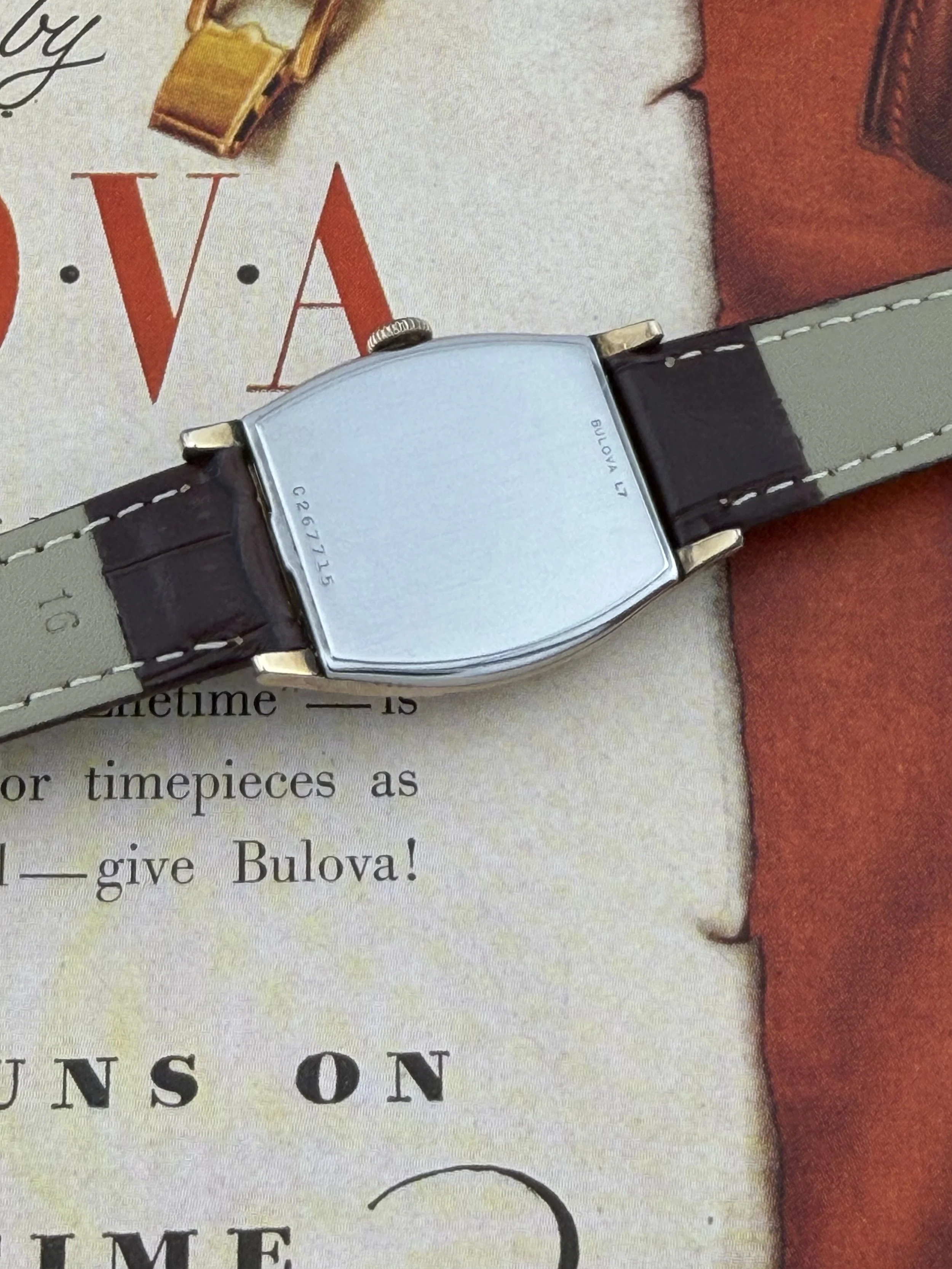
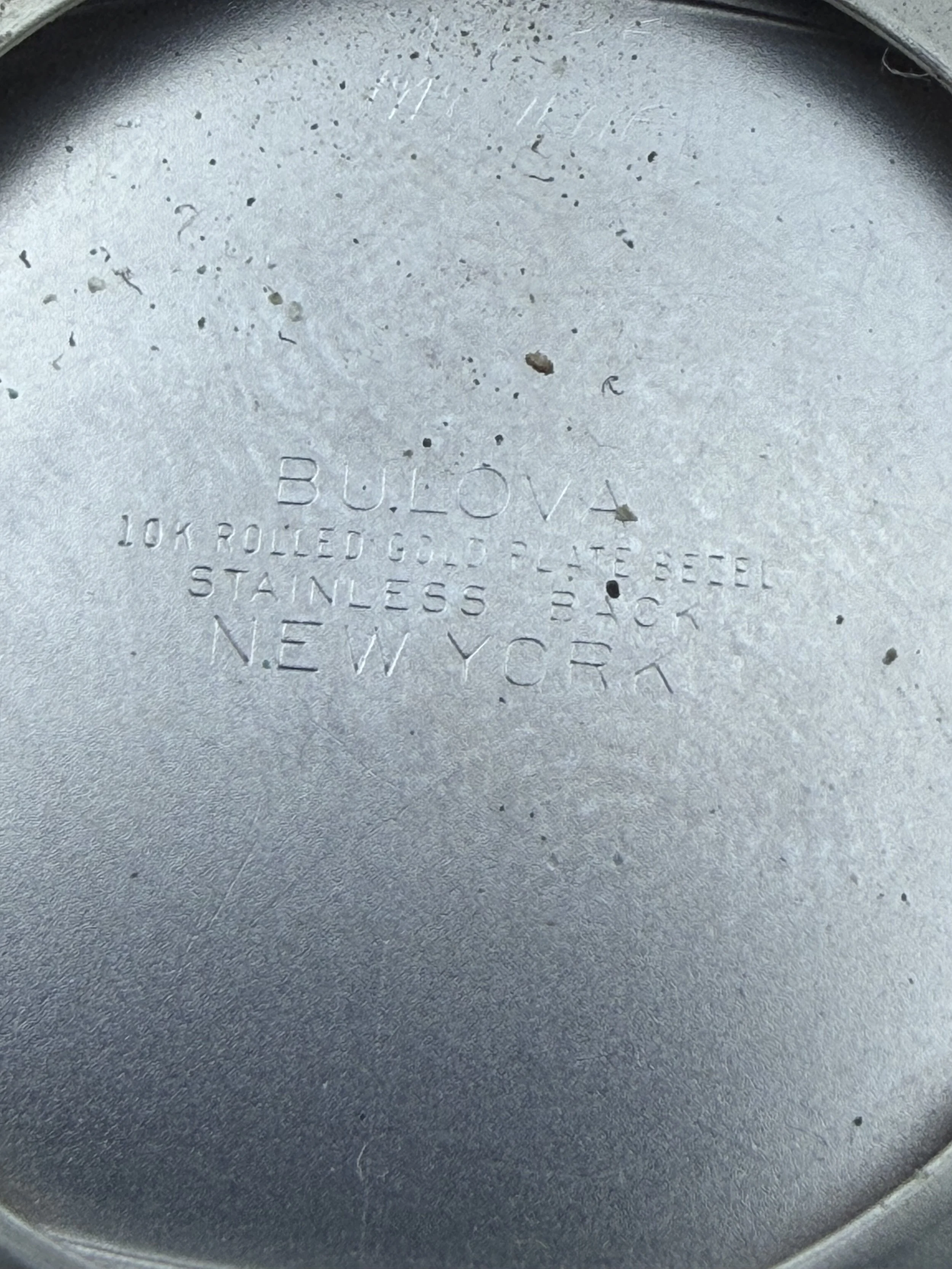
The caseback provides an especially interesting clue to the watch's construction. It is marked Bulova, along with 10K rolled gold plate and stainless steel back, and carries the New York designation. This is a wonderful illustration of Bulova's American-Swiss identity: an American company with deep New York roots utilizing Swiss mechanical expertise to produce watches for the North American market.
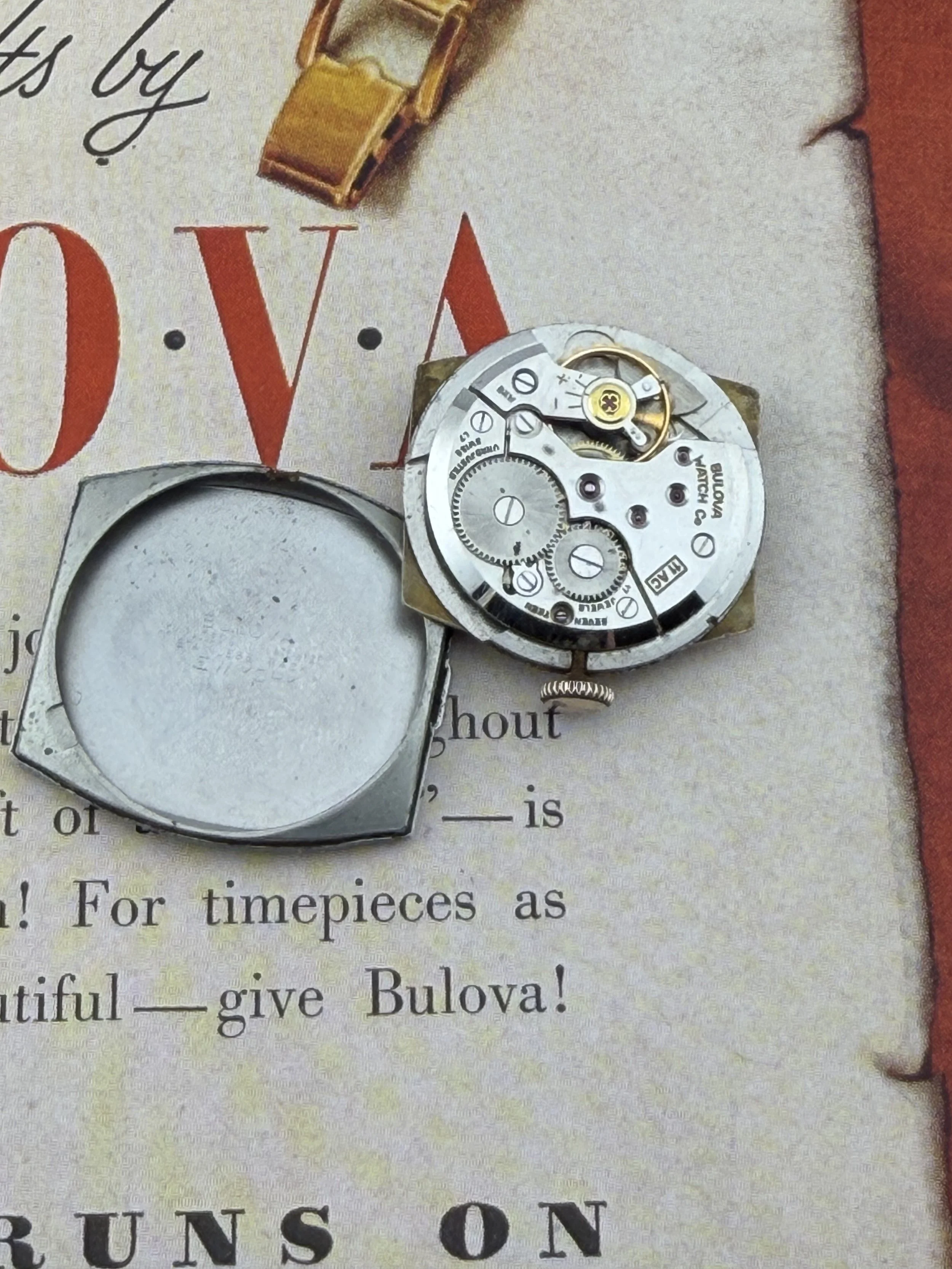
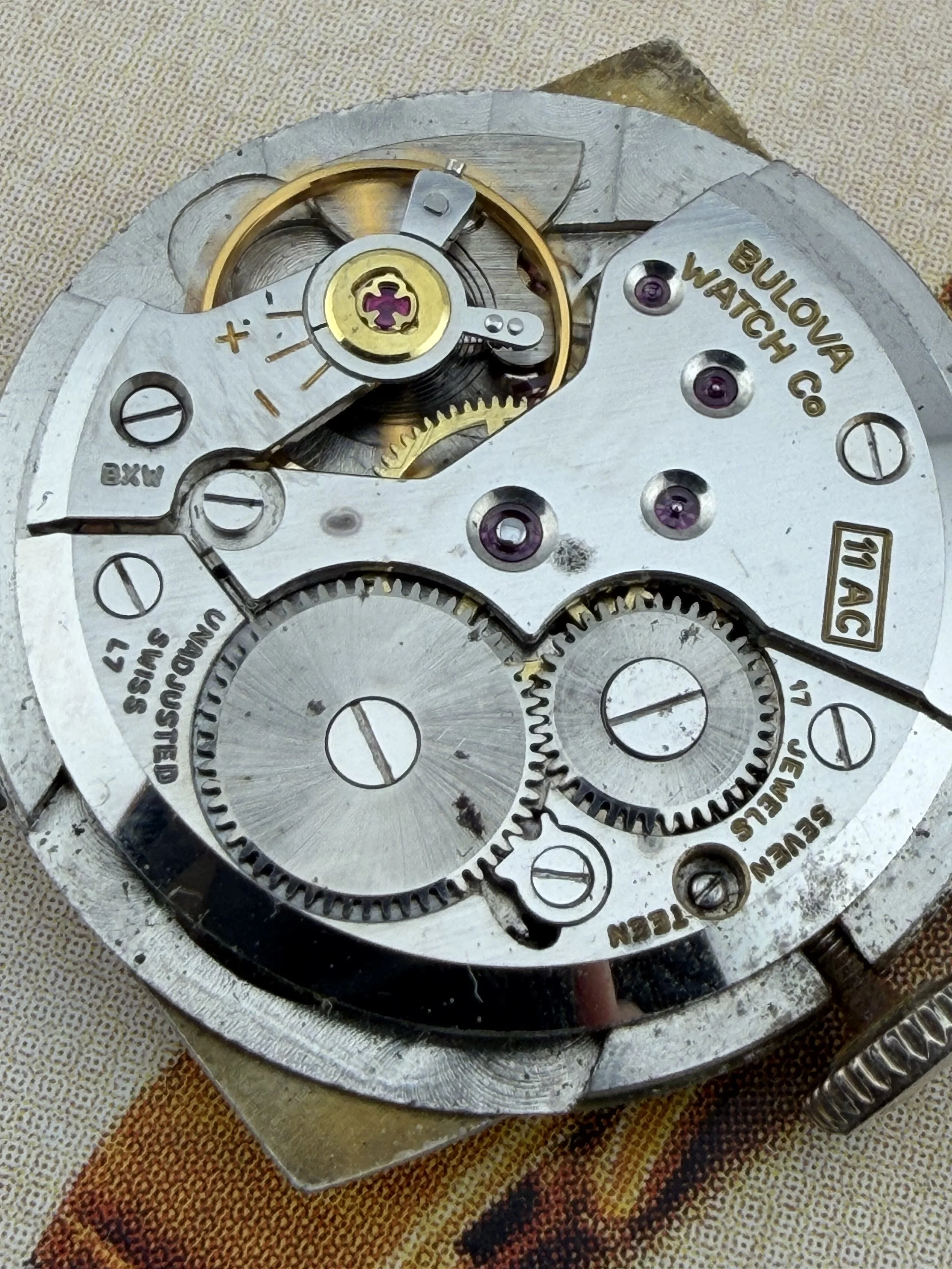
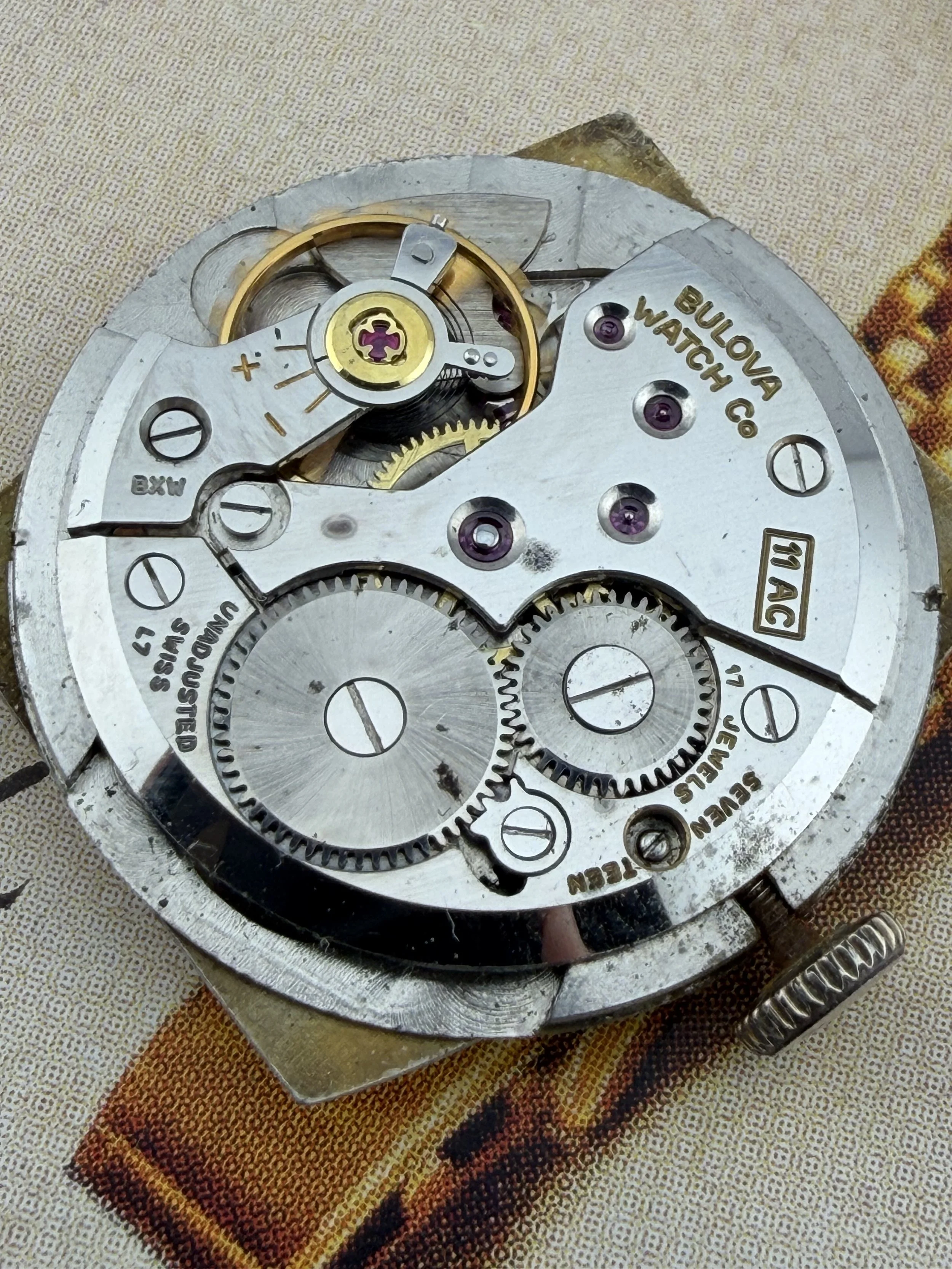
Inside is the Bulova Calibre 11AC, a Swiss-made 17-jewel manual-winding movement dating to the mid-1950s. The 11AC is a particularly appropriate movement for this watch because it was specifically produced as a manual-winding calibre with small seconds, matching the layout of the dial perfectly.
The 11AC is an 11½-ligne movement with a diameter of approximately 26 mm and operates at 18,000 vibrations per hour. It was produced beginning in 1955, with examples of the calibre appearing through the late 1950s. Its published specifications include 17 jewels, a traditional Swiss lever escapement, and a power reserve of approximately 45 hours.
The movement also uses Kif-Flector shock protection, another excellent period feature. This system was designed to help protect the delicate balance staff from shocks, making the movement more resilient to the knocks and bumps of everyday wear. The movement markings visible here—including Bulova Watch Co., Swiss, 17 Jewels, and the 11AC designation—are consistent with documented Bulova 11AC examples.
There is something particularly satisfying about the 11AC's architecture. It is beautifully straightforward: large winding wheels, traditional bridges, visible ruby jewels, a mechanical balance, and a dedicated small-seconds train. There is no automation or electronics hiding the mechanism—the wearer supplies the energy by winding the crown, and the movement does the rest.
The 17 jewels serve as low-friction bearings at critical points throughout the mechanism, helping reduce wear as the wheels and pivots turn. For a watch from this period, it represents a well-equipped and properly engineered mechanical movement rather than a basic pin-lever mechanism.
Bulova's American-Swiss Story
Bulova makes this watch particularly interesting because its history crosses the Atlantic.
Founded in New York in 1875, Bulova became one of America's most important watch companies. At the same time, the company developed a major Swiss manufacturing presence, allowing it to combine American marketing and design with Switzerland's expertise in precision mechanical movements.
That relationship is reflected beautifully in this watch. “New York” on the case, “Bulova Watch Co.” on the movement, and “Swiss” on the calibre tell a story that is much more complicated—and much more interesting—than simply calling it an American or Swiss watch.
By the 1950s, Bulova was producing an enormous variety of mechanical watches for the American market, from conservative dress watches to highly distinctive Art Deco-influenced designs. The 11AC was part of this Swiss movement family, introduced in 1955 and used in manual-winding watches with small seconds.
What makes this particular example special is the way all of those elements come together. The stepped tank case provides the Art Deco character, the gold-filled construction gives it warmth, the applied numerals add refinement, the sub-seconds display emphasizes its mechanical nature, and the Bulova 11AC provides a genuine Swiss mechanical engine underneath.
For collectors who appreciate vintage Bulova, American-Swiss watchmaking, and Art Deco-inspired tank designs, this is a wonderful piece. It offers the visual language of a much more expensive vintage dress watch while retaining the approachable character that made Bulova so successful.
A beautifully proportioned vintage tank with Art Deco DNA, a genuine Swiss 17-jewel Bulova movement, original signed crown, New York caseback, and enough wrist presence to feel completely at home today.
This beautiful Bulova is a fantastic example of the company's ability to combine American design with Swiss mechanical watchmaking. With its elegant stepped tank-style case, warm gold-filled finish, applied gold numerals, dedicated sub-seconds register, and original Bulova-signed crown, it has all the hallmarks of a classic vintage dress watch while wearing with surprisingly modern proportions.
The stepped case is what immediately gives this watch its presence. Strong geometric lines run around the rectangular case, creating the architectural appearance associated with Art Deco design. The raised and recessed surfaces catch the light beautifully, giving the gold-filled case considerably more visual depth than a conventional flat tank watch.
And despite being a vintage tank, the proportions feel remarkably modern. The rectangular case provides plenty of wrist presence without needing to be oversized, making this the kind of watch that looks equally at home with a suit or dressed down on a modern leather strap.
The dial continues the Art Deco-inspired theme. Applied gold numerals and markers rise from the dial surface, giving the watch depth and warmth, while the small sub-seconds register at six o'clock provides the perfect counterpoint to the main time display. It is a wonderfully balanced layout—formal, symmetrical, and unmistakably mechanical.
The original Bulova-signed crown is another excellent detail. Signed crowns are an important part of a vintage watch's originality, and this one adds another piece of Bulova identity to the case.
The caseback provides an especially interesting clue to the watch's construction. It is marked Bulova, along with 10K rolled gold plate and stainless steel back, and carries the New York designation. This is a wonderful illustration of Bulova's American-Swiss identity: an American company with deep New York roots utilizing Swiss mechanical expertise to produce watches for the North American market.
Inside is the Bulova Calibre 11AC, a Swiss-made 17-jewel manual-winding movement dating to the mid-1950s. The 11AC is a particularly appropriate movement for this watch because it was specifically produced as a manual-winding calibre with small seconds, matching the layout of the dial perfectly.
The 11AC is an 11½-ligne movement with a diameter of approximately 26 mm and operates at 18,000 vibrations per hour. It was produced beginning in 1955, with examples of the calibre appearing through the late 1950s. Its published specifications include 17 jewels, a traditional Swiss lever escapement, and a power reserve of approximately 45 hours.
The movement also uses Kif-Flector shock protection, another excellent period feature. This system was designed to help protect the delicate balance staff from shocks, making the movement more resilient to the knocks and bumps of everyday wear. The movement markings visible here—including Bulova Watch Co., Swiss, 17 Jewels, and the 11AC designation—are consistent with documented Bulova 11AC examples.
There is something particularly satisfying about the 11AC's architecture. It is beautifully straightforward: large winding wheels, traditional bridges, visible ruby jewels, a mechanical balance, and a dedicated small-seconds train. There is no automation or electronics hiding the mechanism—the wearer supplies the energy by winding the crown, and the movement does the rest.
The 17 jewels serve as low-friction bearings at critical points throughout the mechanism, helping reduce wear as the wheels and pivots turn. For a watch from this period, it represents a well-equipped and properly engineered mechanical movement rather than a basic pin-lever mechanism.
Bulova's American-Swiss Story
Bulova makes this watch particularly interesting because its history crosses the Atlantic.
Founded in New York in 1875, Bulova became one of America's most important watch companies. At the same time, the company developed a major Swiss manufacturing presence, allowing it to combine American marketing and design with Switzerland's expertise in precision mechanical movements.
That relationship is reflected beautifully in this watch. “New York” on the case, “Bulova Watch Co.” on the movement, and “Swiss” on the calibre tell a story that is much more complicated—and much more interesting—than simply calling it an American or Swiss watch.
By the 1950s, Bulova was producing an enormous variety of mechanical watches for the American market, from conservative dress watches to highly distinctive Art Deco-influenced designs. The 11AC was part of this Swiss movement family, introduced in 1955 and used in manual-winding watches with small seconds.
What makes this particular example special is the way all of those elements come together. The stepped tank case provides the Art Deco character, the gold-filled construction gives it warmth, the applied numerals add refinement, the sub-seconds display emphasizes its mechanical nature, and the Bulova 11AC provides a genuine Swiss mechanical engine underneath.
For collectors who appreciate vintage Bulova, American-Swiss watchmaking, and Art Deco-inspired tank designs, this is a wonderful piece. It offers the visual language of a much more expensive vintage dress watch while retaining the approachable character that made Bulova so successful.
A beautifully proportioned vintage tank with Art Deco DNA, a genuine Swiss 17-jewel Bulova movement, original signed crown, New York caseback, and enough wrist presence to feel completely at home today.