

Bulova has been part of American watchmaking history since 1875, when Joseph Bulova opened a small jewellery shop in New York City. Over the following decades, the company became one of America’s most recognizable watchmakers, combining Swiss mechanical watchmaking with distinctly American design and marketing.
This watch comes from one of the most interesting periods in Bulova’s history. During the 1920s and 1930s, Bulova embraced the Art Deco aesthetic, producing watches with geometric cases, bold numerals and strong architectural lines. Rectangular and tonneau-shaped watches became particularly fashionable during this era, part of the broader trend often referred to by collectors as the “tank” style — a form inspired by the geometric design language of early 20th-century wristwatches and famously popularized by Cartier.
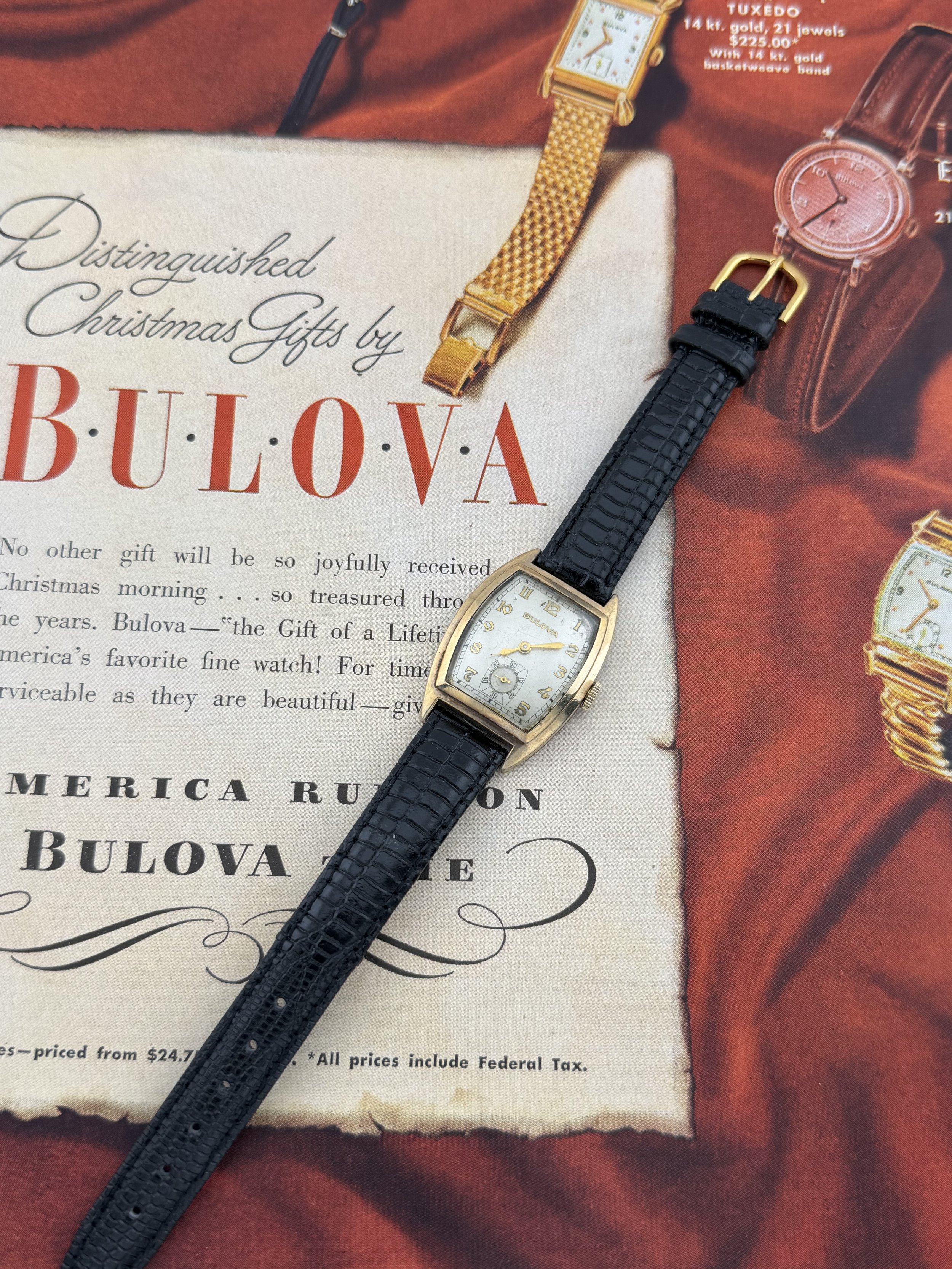
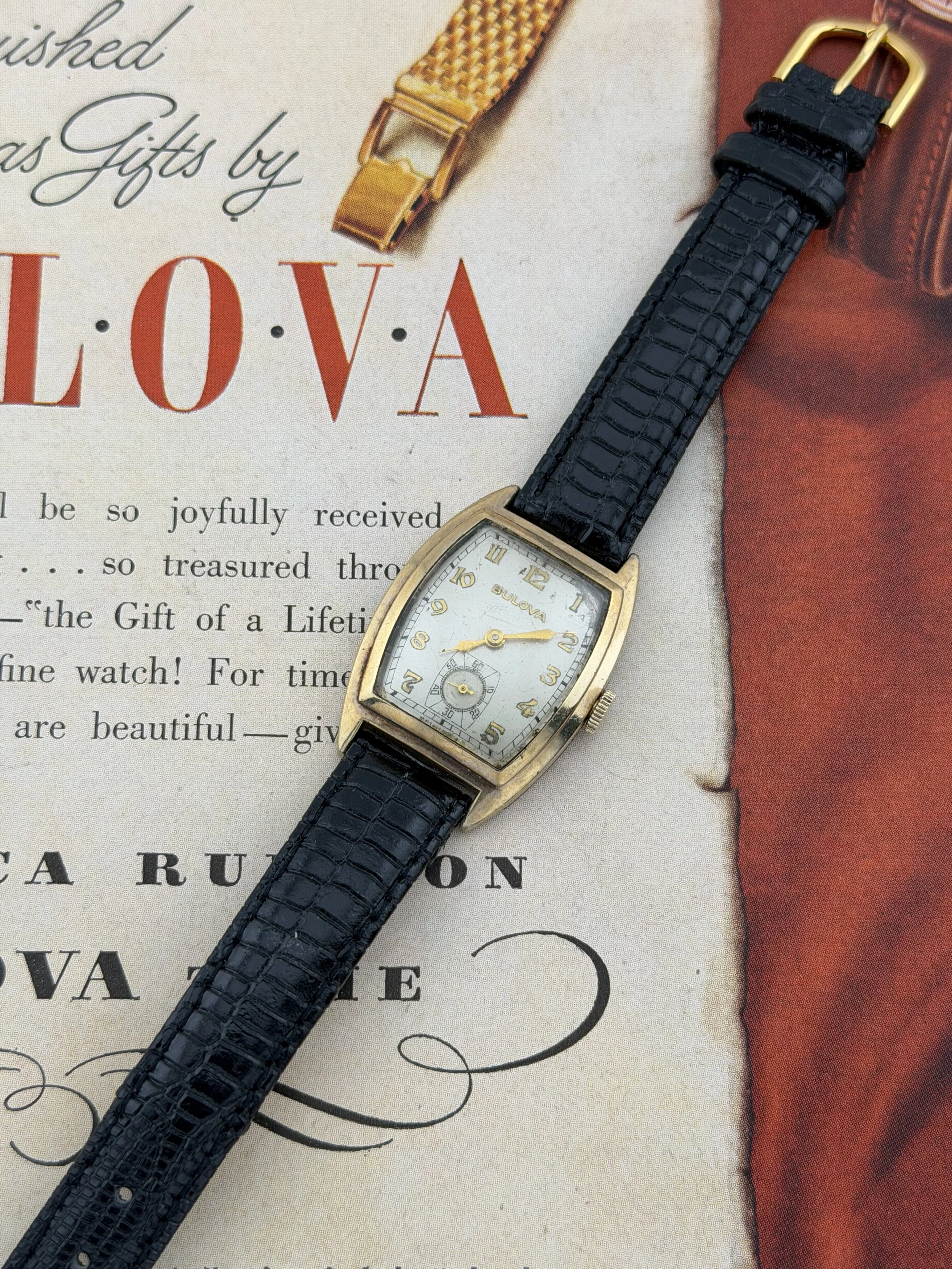
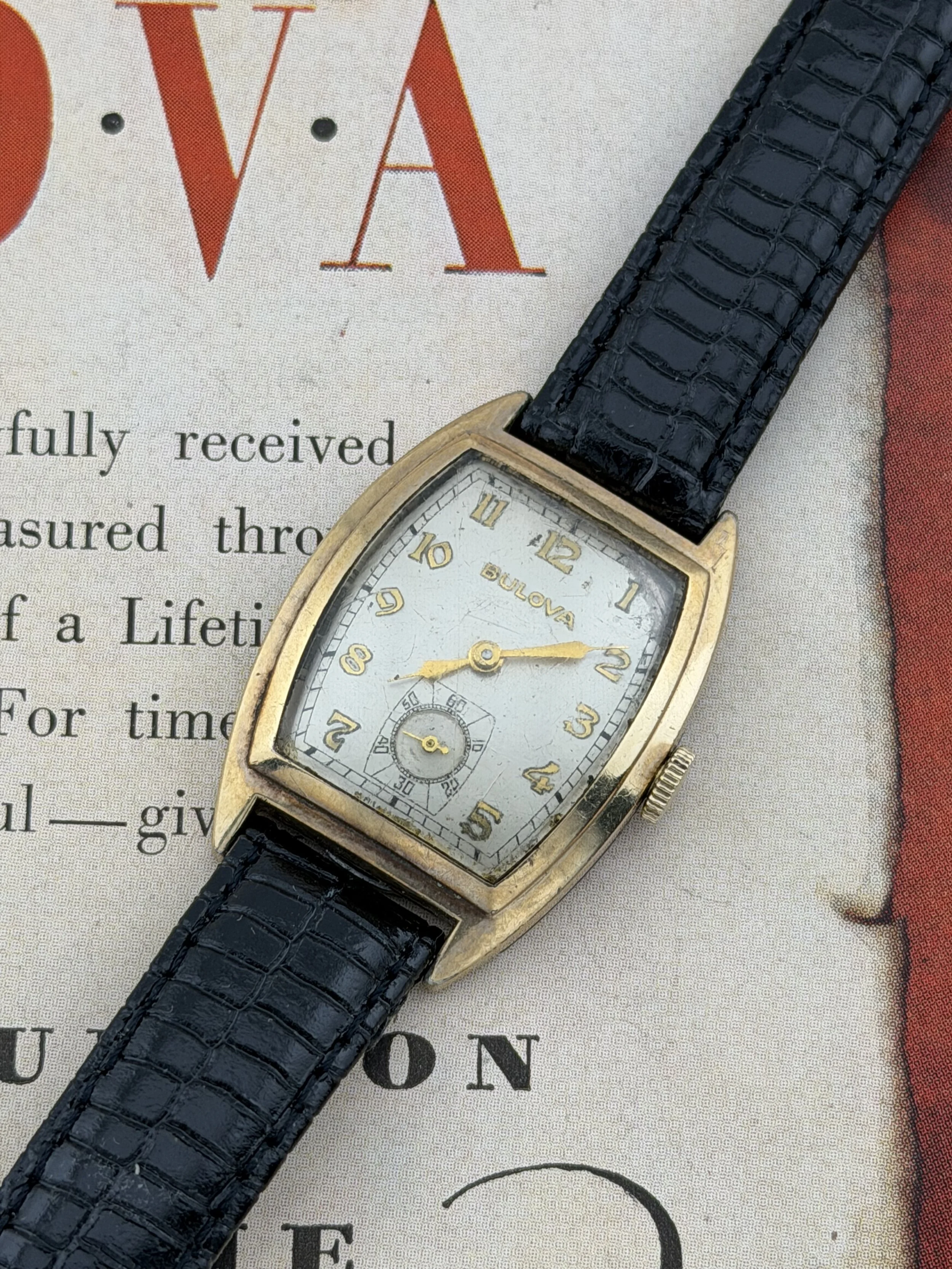
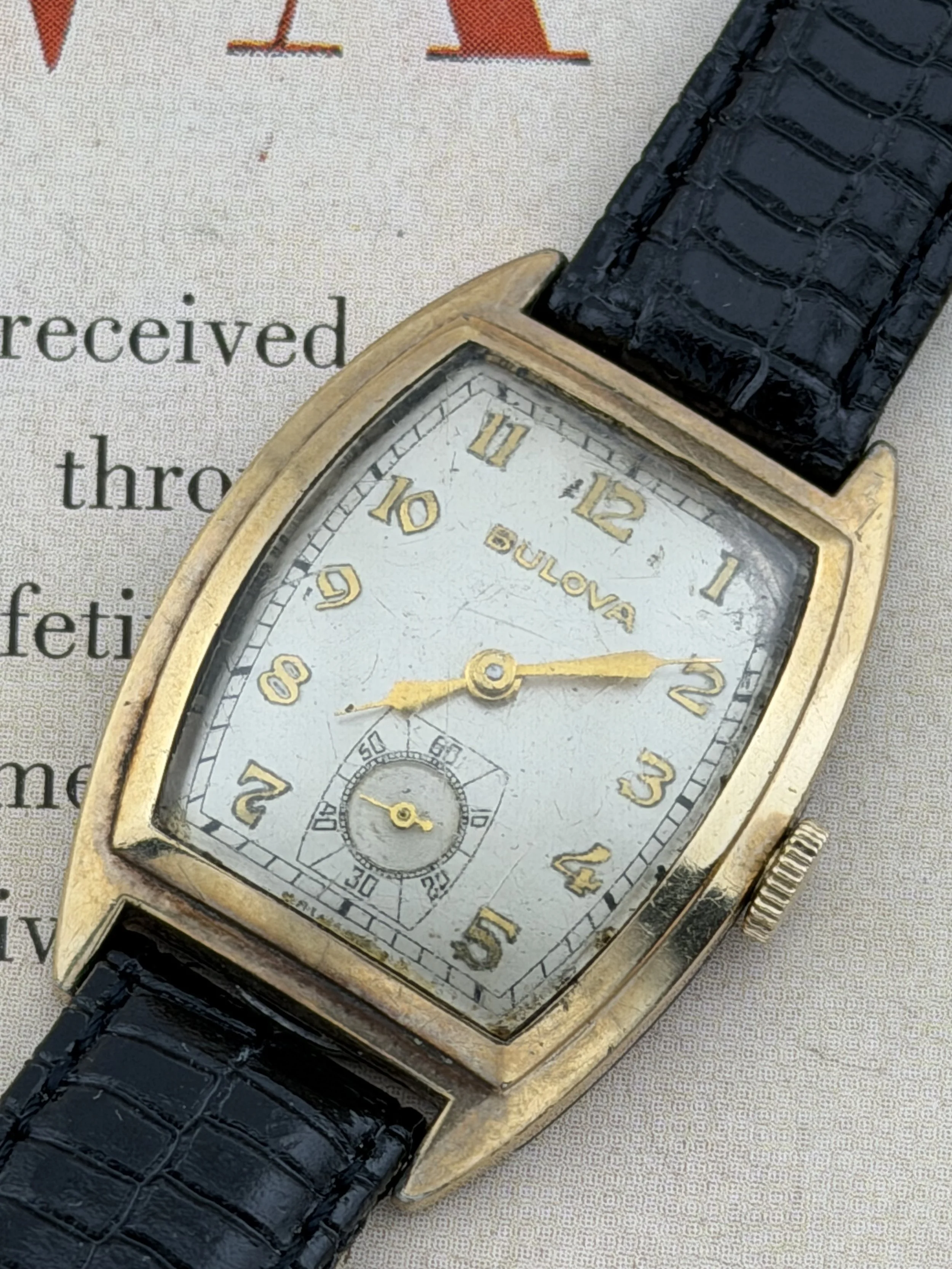
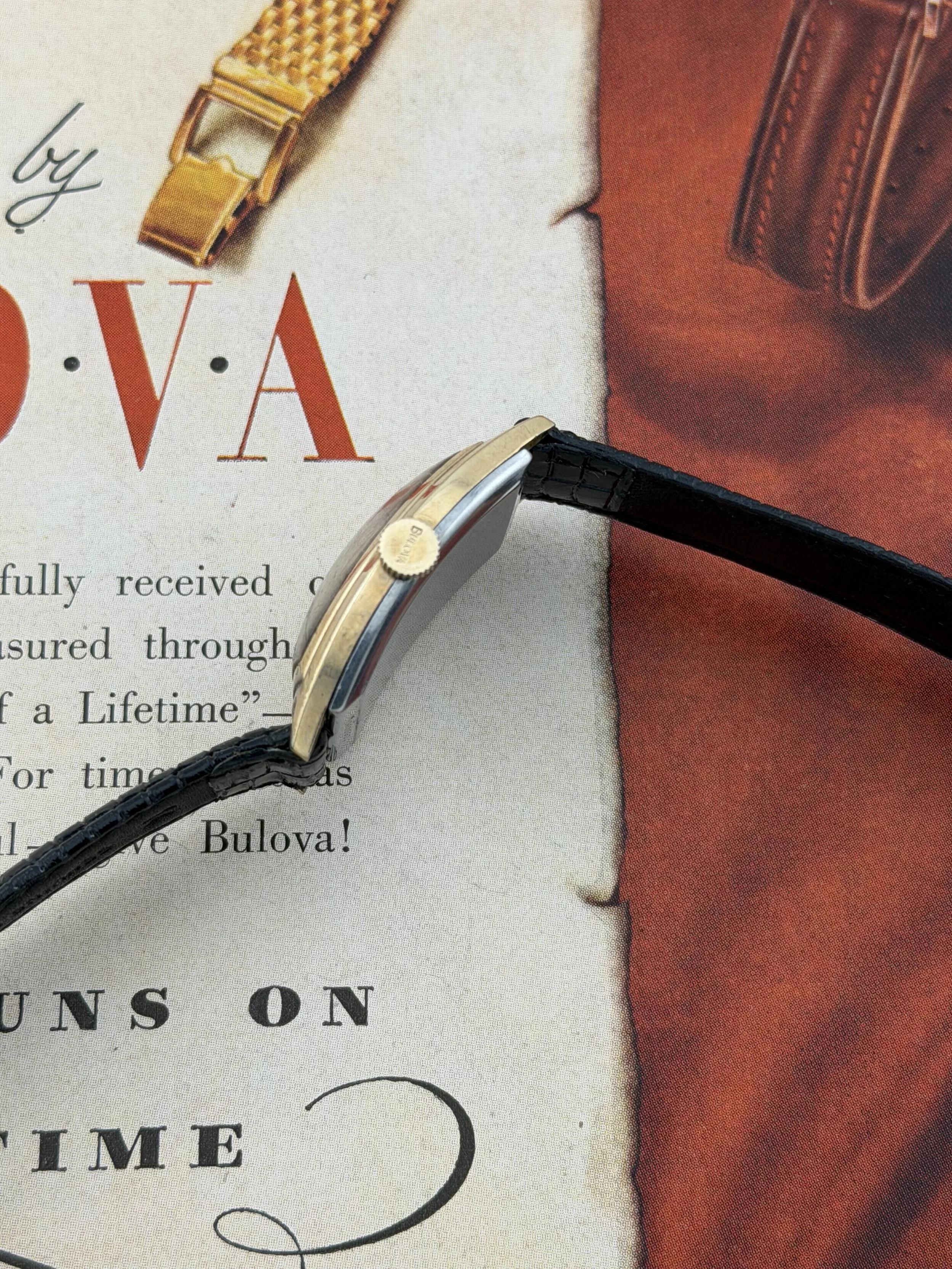
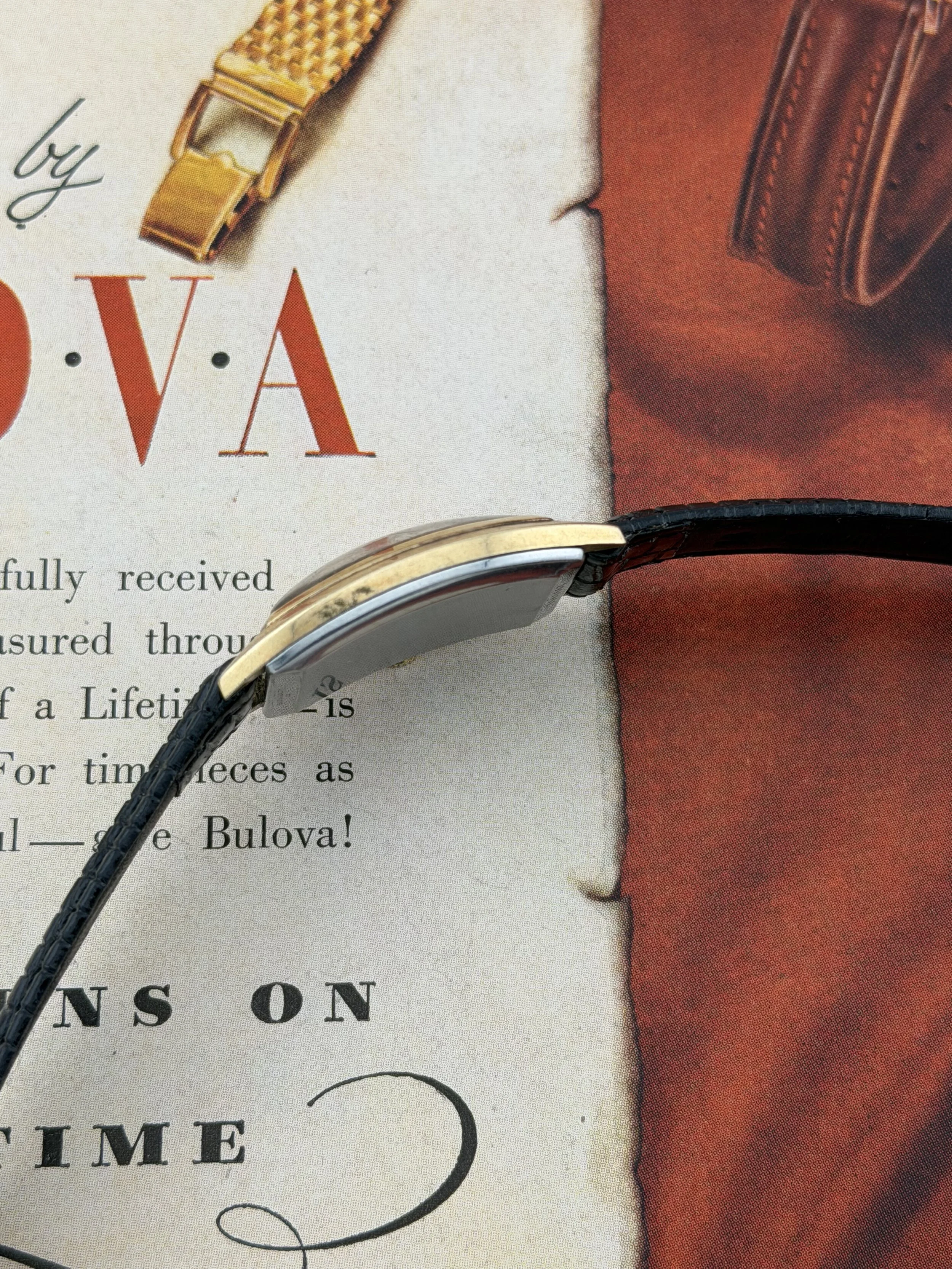
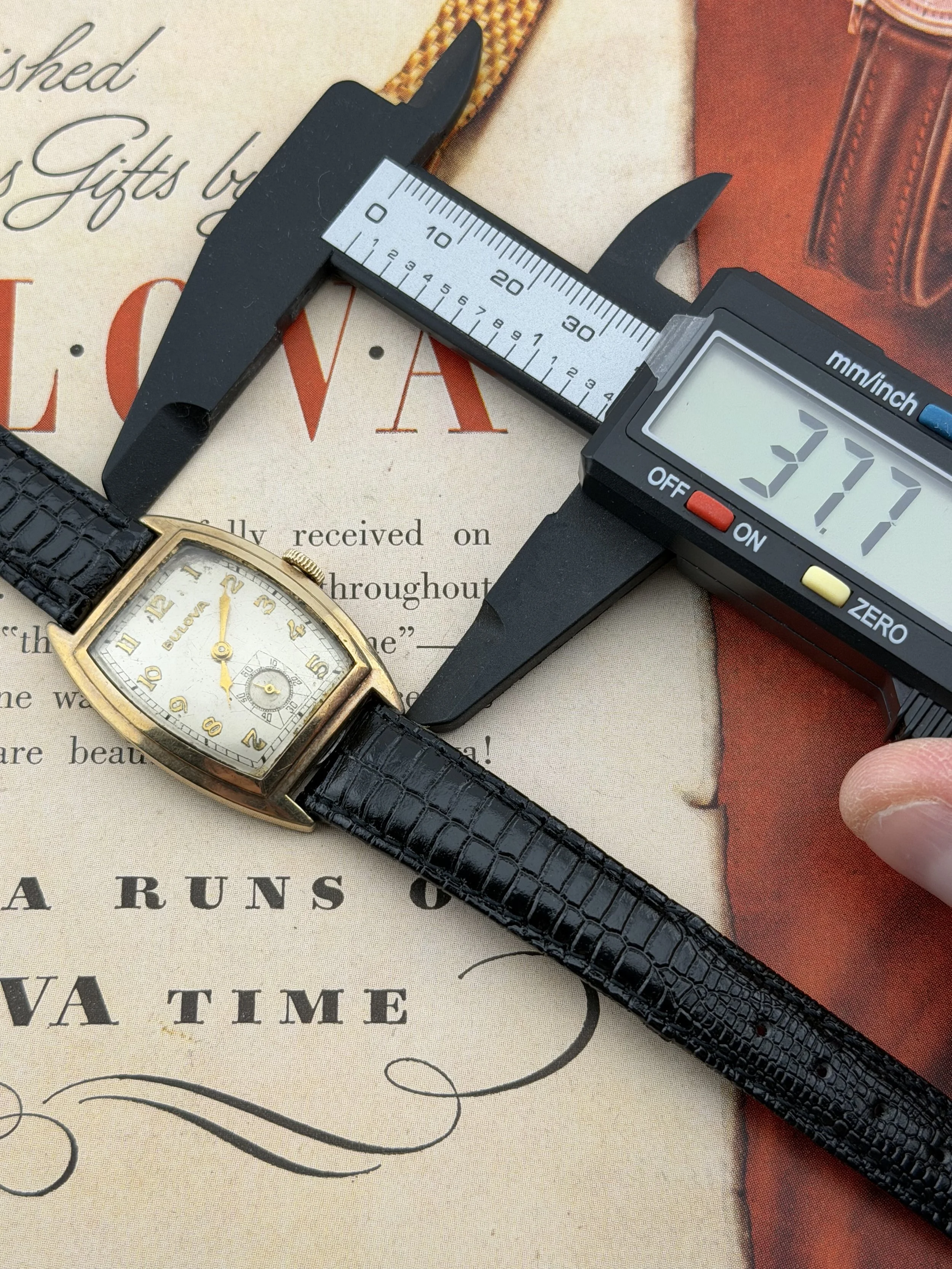
By the 1940s, the tank-inspired shape remained popular, but designs had become a little softer and more elegant. This Bulova is a wonderful example of that evolution. Its curved tonneau case, extended lugs, raised gold-tone Arabic numerals and small-seconds dial give it that unmistakable 1940s dress-watch character.
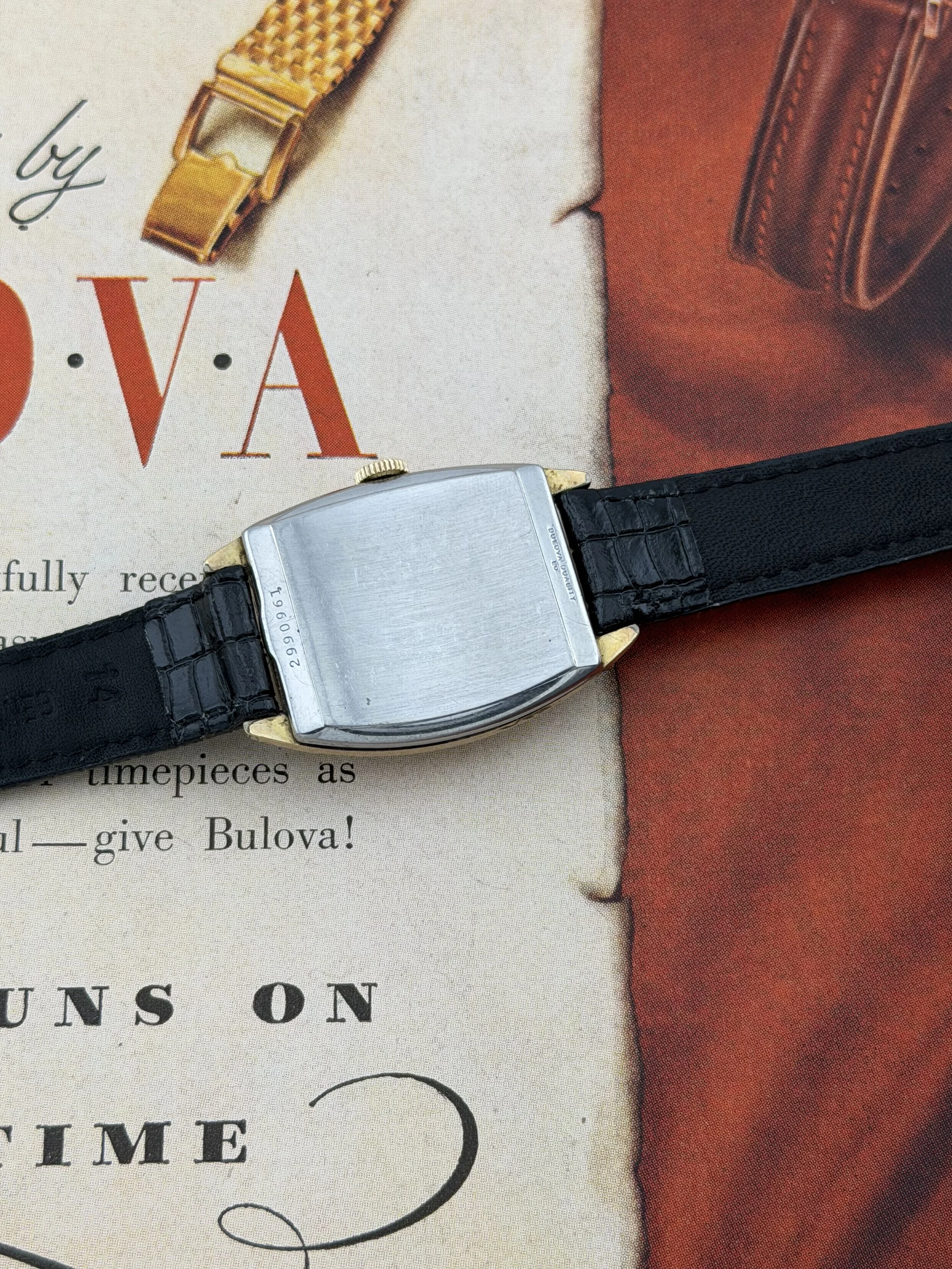
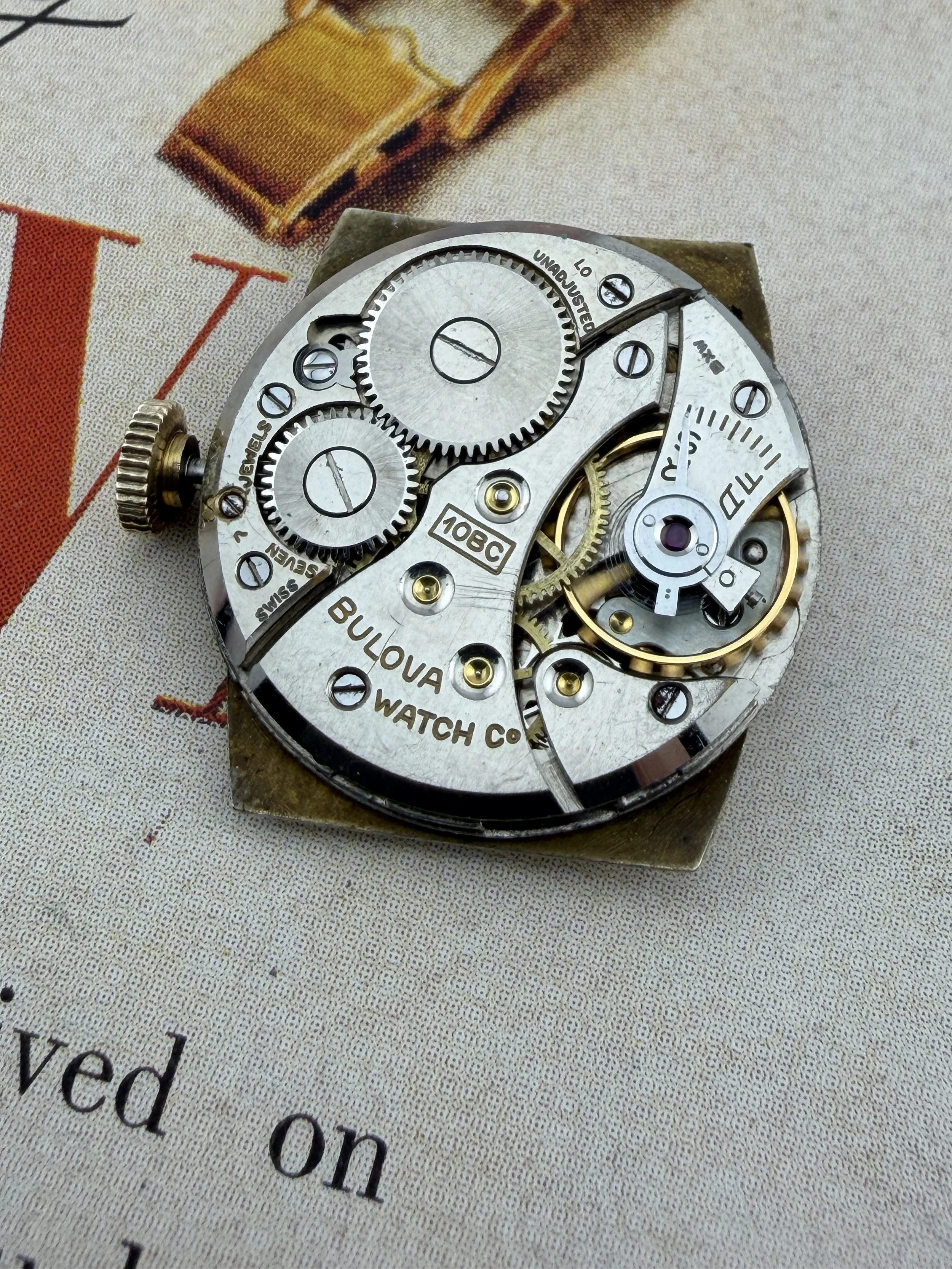
Inside is a Bulova 10BC, 17-jewel Swiss manual-wind movement. The 10BC was produced in a number of configurations during the 1940s and early 1950s, making it a distinctly appropriate movement for a watch of this period.
The 1940s were also an important period for Bulova beyond civilian wristwatches. During the Second World War, the company contributed precision timepieces and other equipment to the American war effort. In 1941, Bulova also made advertising history by broadcasting what is widely recognized as the first television commercial, introducing the famous phrase, “America runs on Bulova time.”
So while this may look like a simple vintage dress watch, it comes from a fascinating moment in horological history, when Art Deco was giving way to the more restrained elegance of the postwar era, and Bulova was establishing itself as one of America's great watch brands.
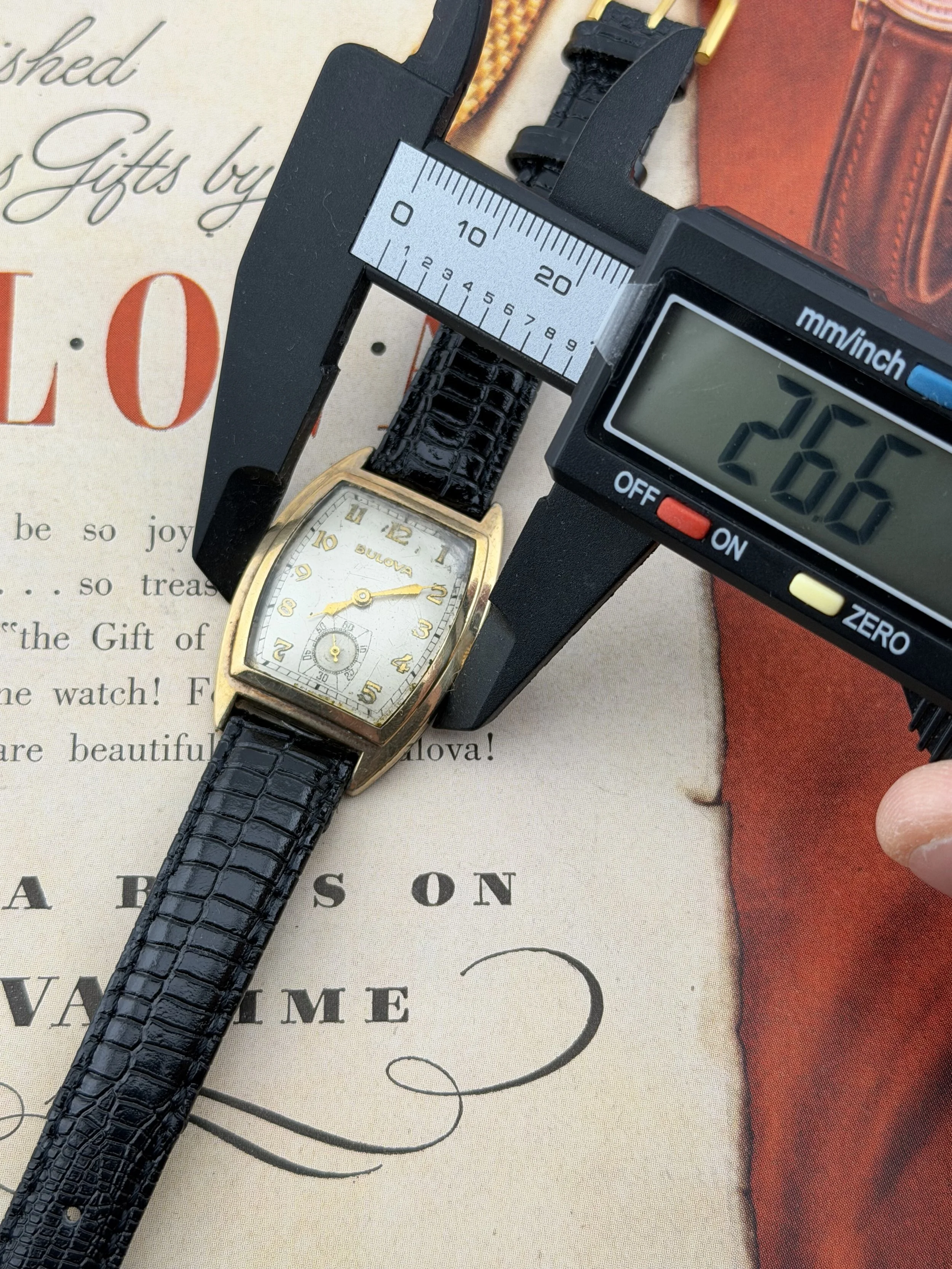
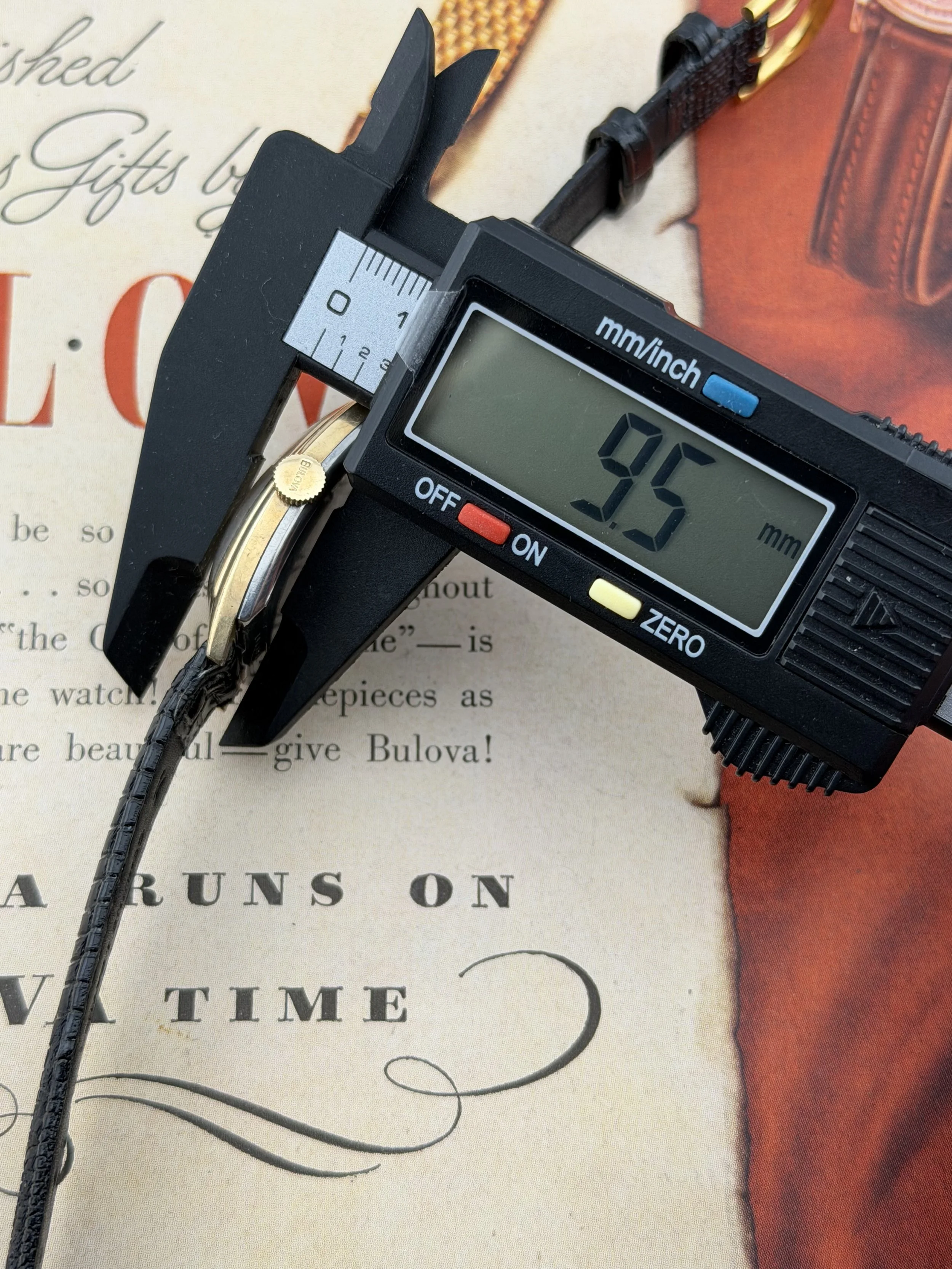
With its compact 37.7mm x 26.6mm tonneau case, beautifully aged dial and classic black leather strap, this is a particularly charming example of the vintage tank-style dress watch.
Bulova has been part of American watchmaking history since 1875, when Joseph Bulova opened a small jewellery shop in New York City. Over the following decades, the company became one of America’s most recognizable watchmakers, combining Swiss mechanical watchmaking with distinctly American design and marketing.
This watch comes from one of the most interesting periods in Bulova’s history. During the 1920s and 1930s, Bulova embraced the Art Deco aesthetic, producing watches with geometric cases, bold numerals and strong architectural lines. Rectangular and tonneau-shaped watches became particularly fashionable during this era, part of the broader trend often referred to by collectors as the “tank” style — a form inspired by the geometric design language of early 20th-century wristwatches and famously popularized by Cartier.
By the 1940s, the tank-inspired shape remained popular, but designs had become a little softer and more elegant. This Bulova is a wonderful example of that evolution. Its curved tonneau case, extended lugs, raised gold-tone Arabic numerals and small-seconds dial give it that unmistakable 1940s dress-watch character.
Inside is a Bulova 10BC, 17-jewel Swiss manual-wind movement. The 10BC was produced in a number of configurations during the 1940s and early 1950s, making it a distinctly appropriate movement for a watch of this period.
The 1940s were also an important period for Bulova beyond civilian wristwatches. During the Second World War, the company contributed precision timepieces and other equipment to the American war effort. In 1941, Bulova also made advertising history by broadcasting what is widely recognized as the first television commercial, introducing the famous phrase, “America runs on Bulova time.”
So while this may look like a simple vintage dress watch, it comes from a fascinating moment in horological history, when Art Deco was giving way to the more restrained elegance of the postwar era, and Bulova was establishing itself as one of America's great watch brands.
With its compact 37.7mm x 26.6mm tonneau case, beautifully aged dial and classic black leather strap, this is a particularly charming example of the vintage tank-style dress watch.