

This vintage Bulova Wrist Alarm is an excellent example of the early era of mechanical alarm wristwatches, a fascinating period when manufacturers were finding new ways to add practical complications to everyday watches. Produced during the late 1940s through the 1950s, these models brought the functionality of an alarm clock to the wrist years before electronic alarms became common.
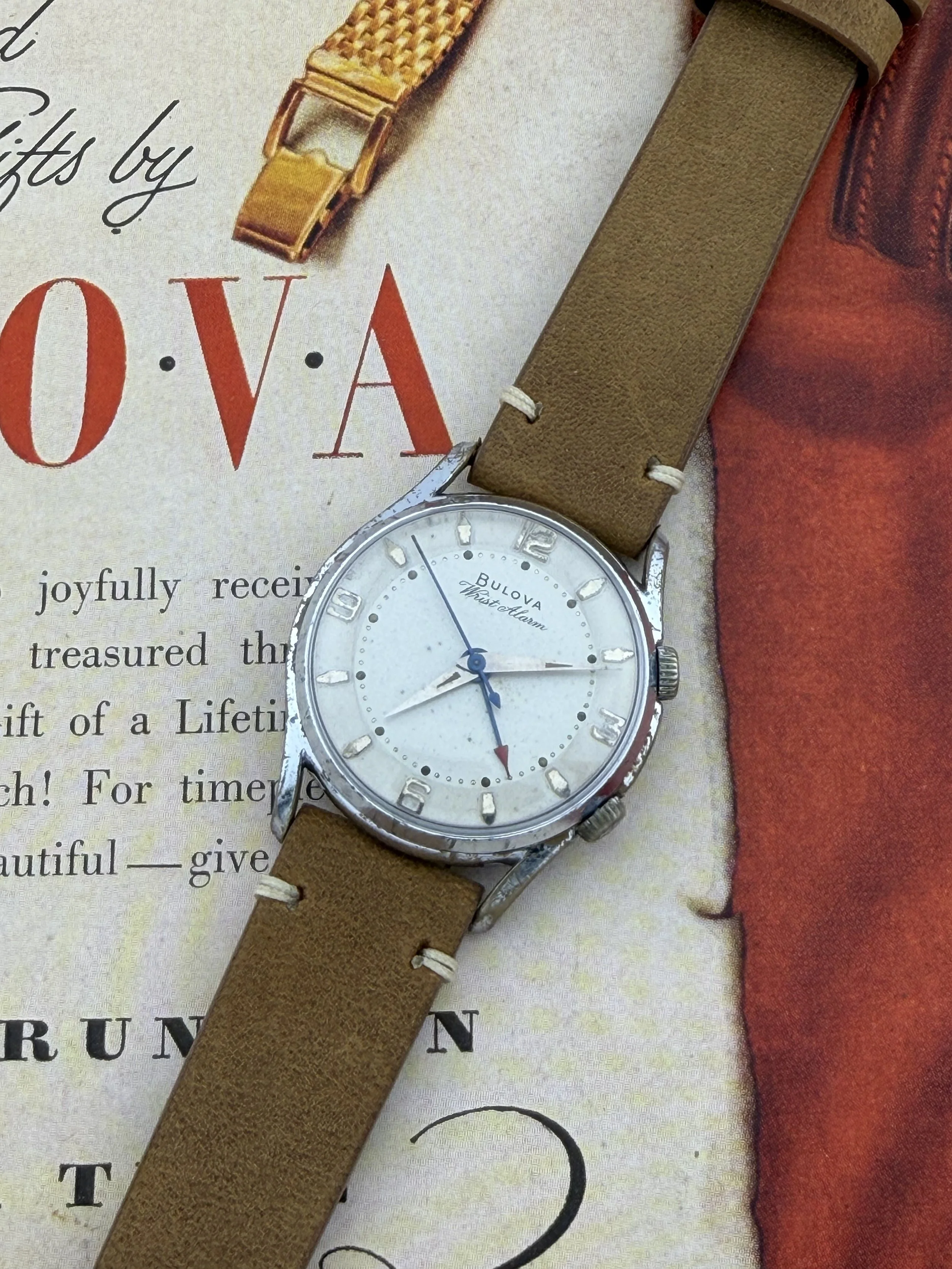
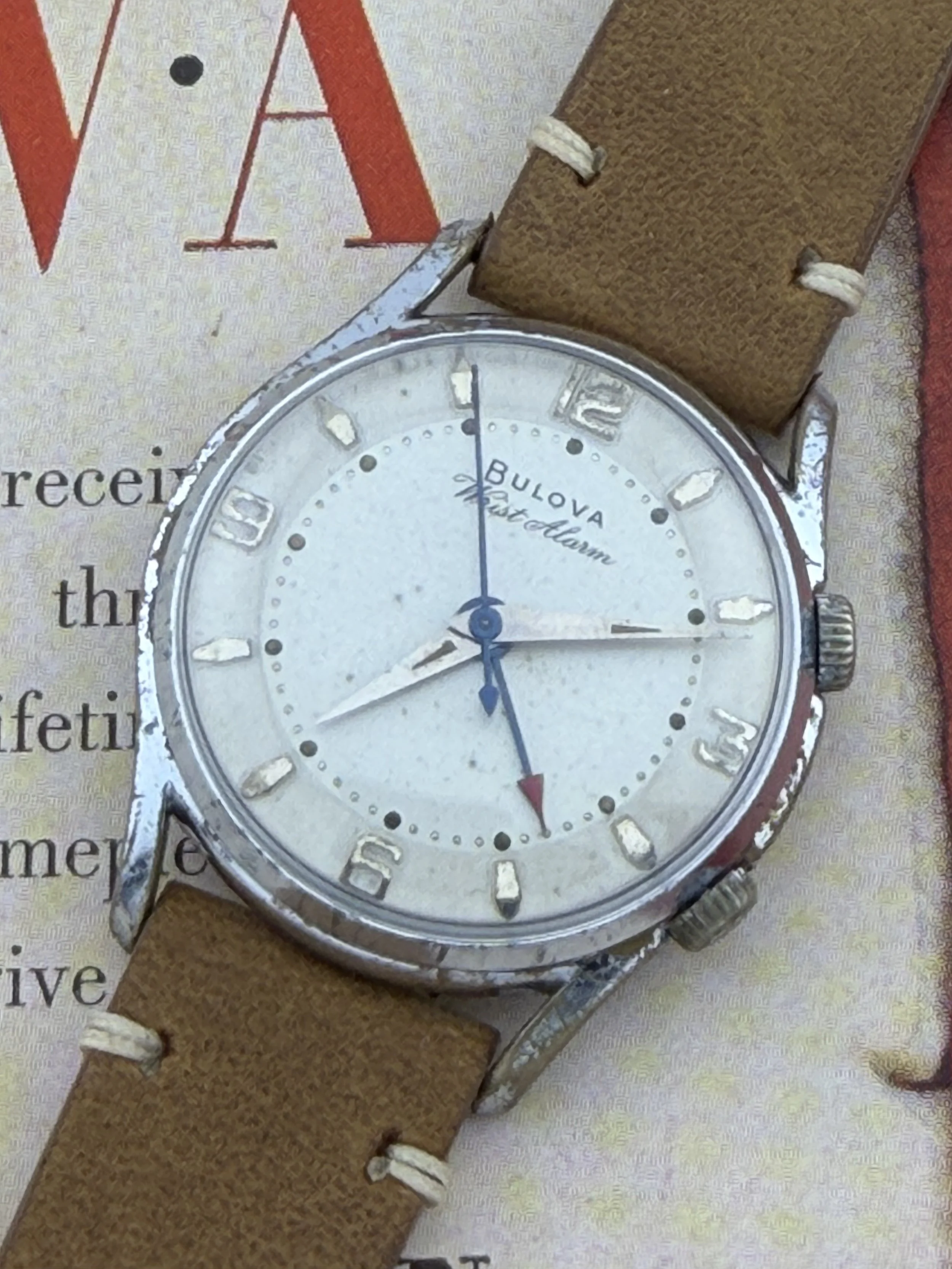
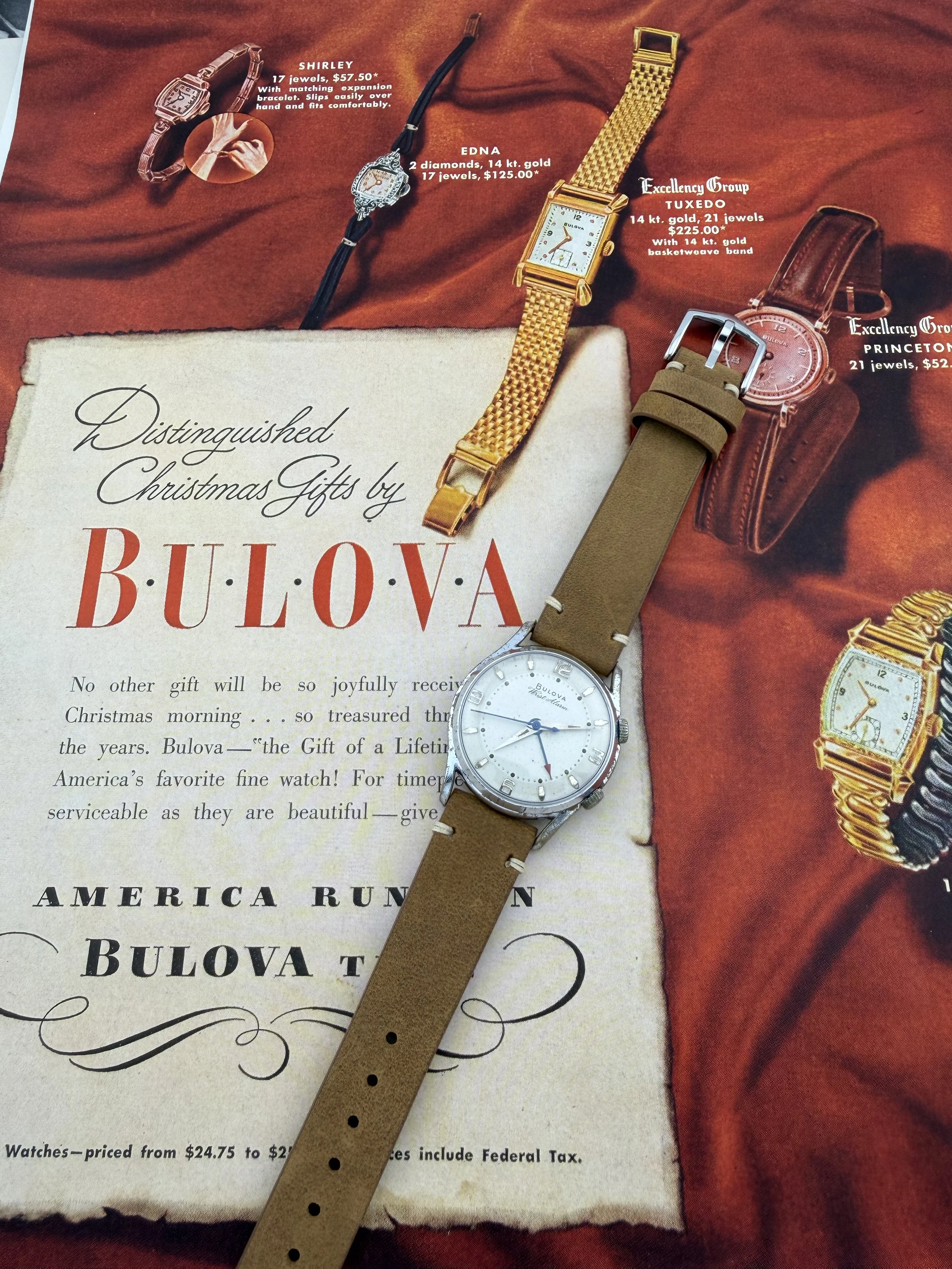
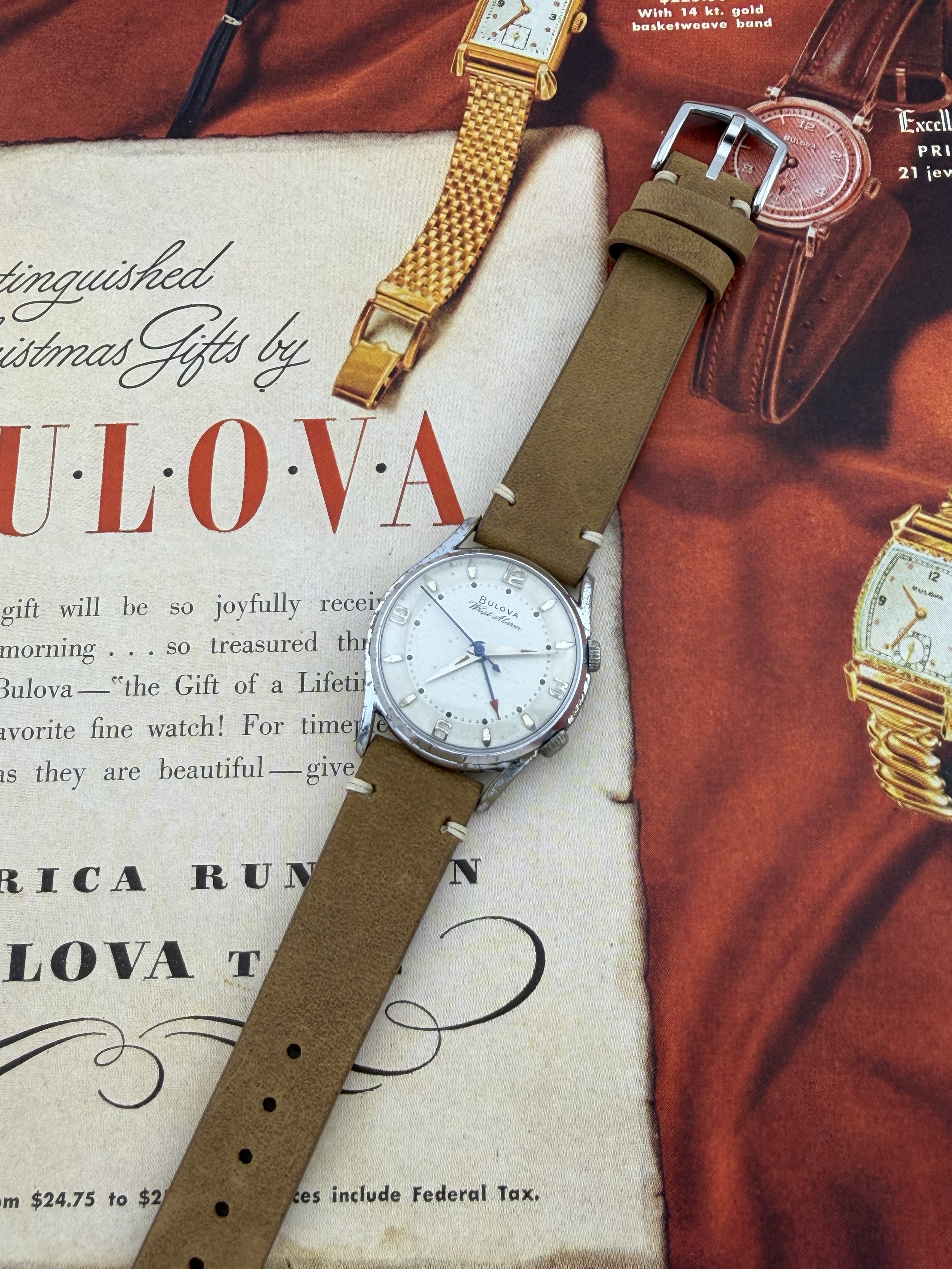
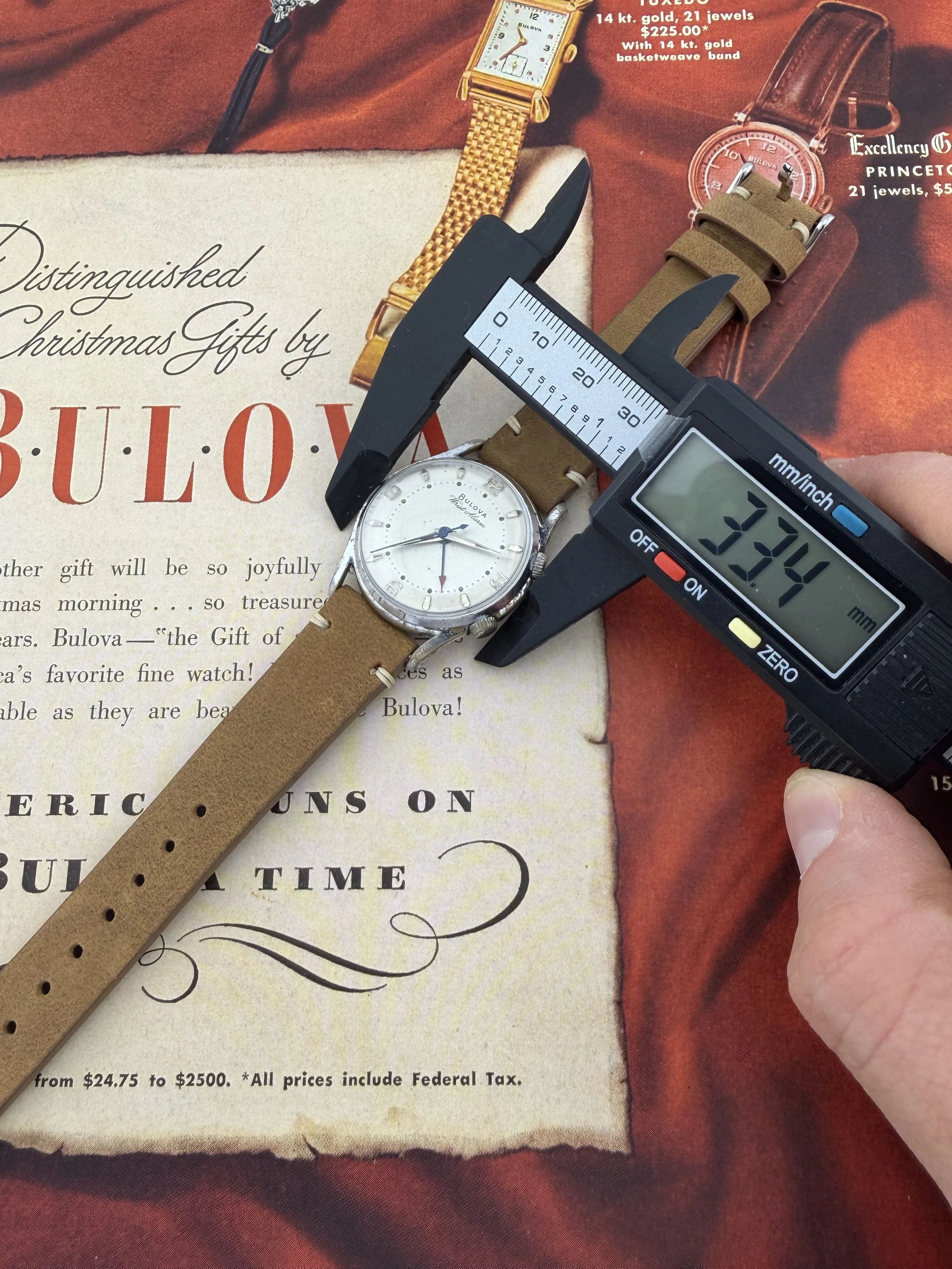
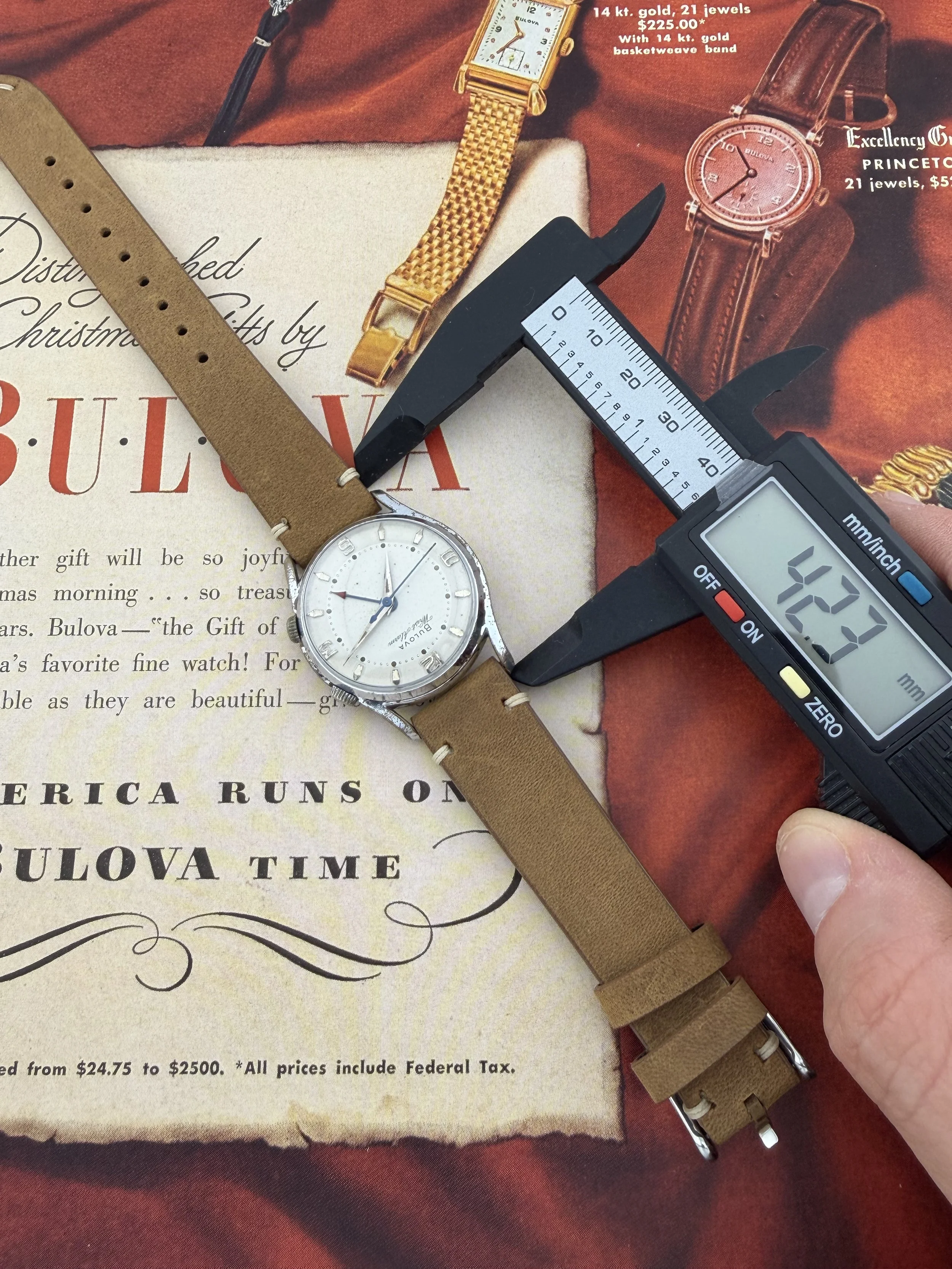
The dial is clearly signed “Bulova Wrist Alarm” and features a classic mid-century design with applied Arabic numerals at the cardinal positions, luminous accents, and elegant dauphine-style hands. The most distinctive feature is the central alarm-setting hand, often finished in blue with a red arrow tip, which points to the time at which the alarm will sound.
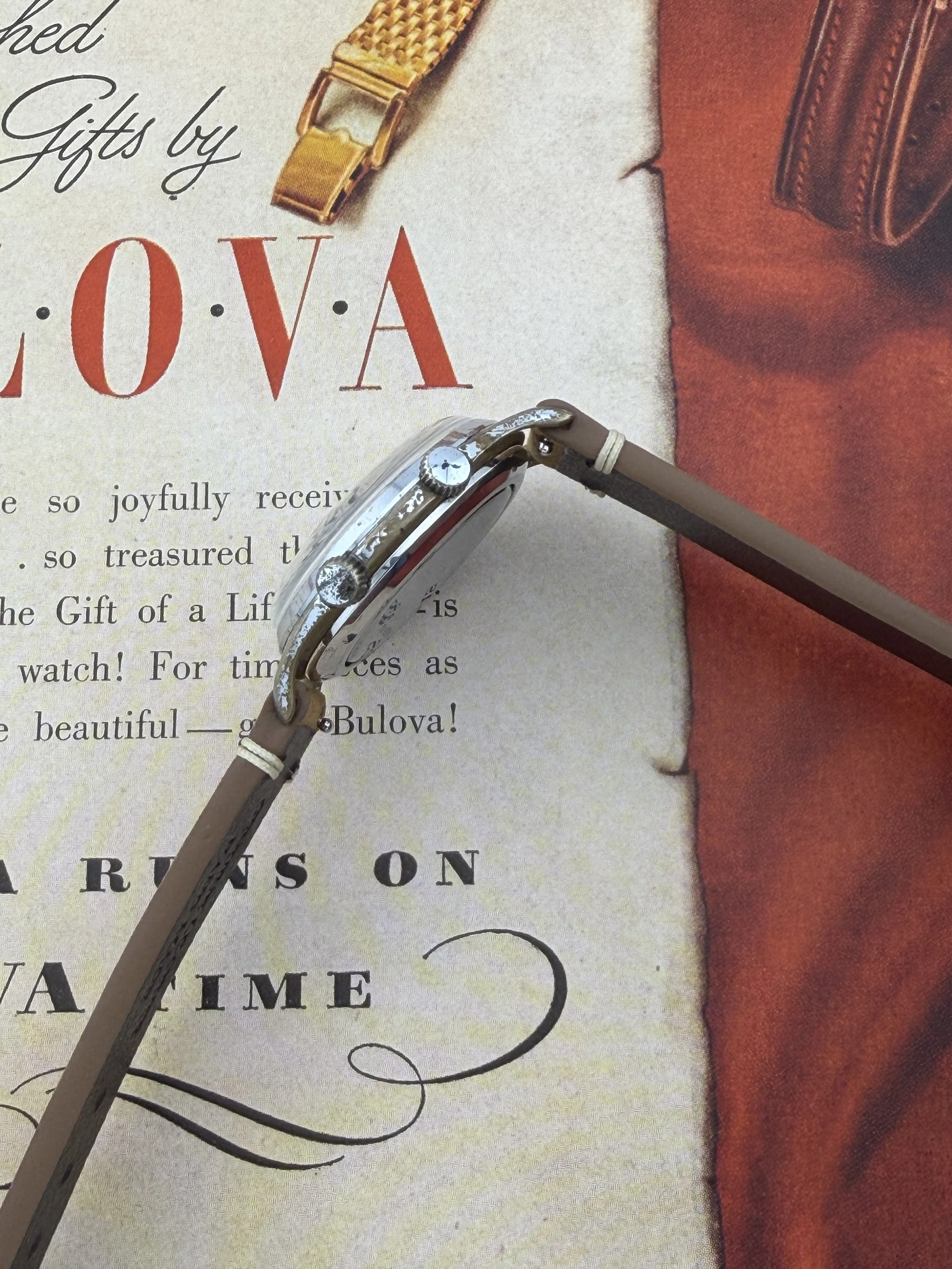
Unlike a standard three-hand watch, the Bulova Wrist Alarm contains a separate mechanical alarm mechanism. The watch uses two crowns: one crown is used to set and wind the timekeeping movement, while the other controls the alarm function and sets the desired alarm time. When the hands reach the chosen moment, a small internal hammer rapidly strikes a metal resonating surface, creating the characteristic buzzing vibration associated with vintage mechanical alarm watches.
While Bulova was a major American watch company, many of its mid-century mechanical alarm watches utilized high-quality Swiss movements, commonly based on proven alarm calibers such as those produced by A. Schild. This combination of American branding and Swiss mechanical expertise reflects the close relationship between North American watch companies and Swiss manufacturers during the post-war era.
Founded in New York in 1875 by Joseph Bulova, the company became one of the most important names in American watchmaking and marketing. Bulova was known for embracing technological innovation, from early radio advertising to precision electronic watches later in the twentieth century. Its mechanical alarm models represent an earlier chapter of that innovative spirit, competing in a market made famous by legendary watches such as the Vulcain Cricket.
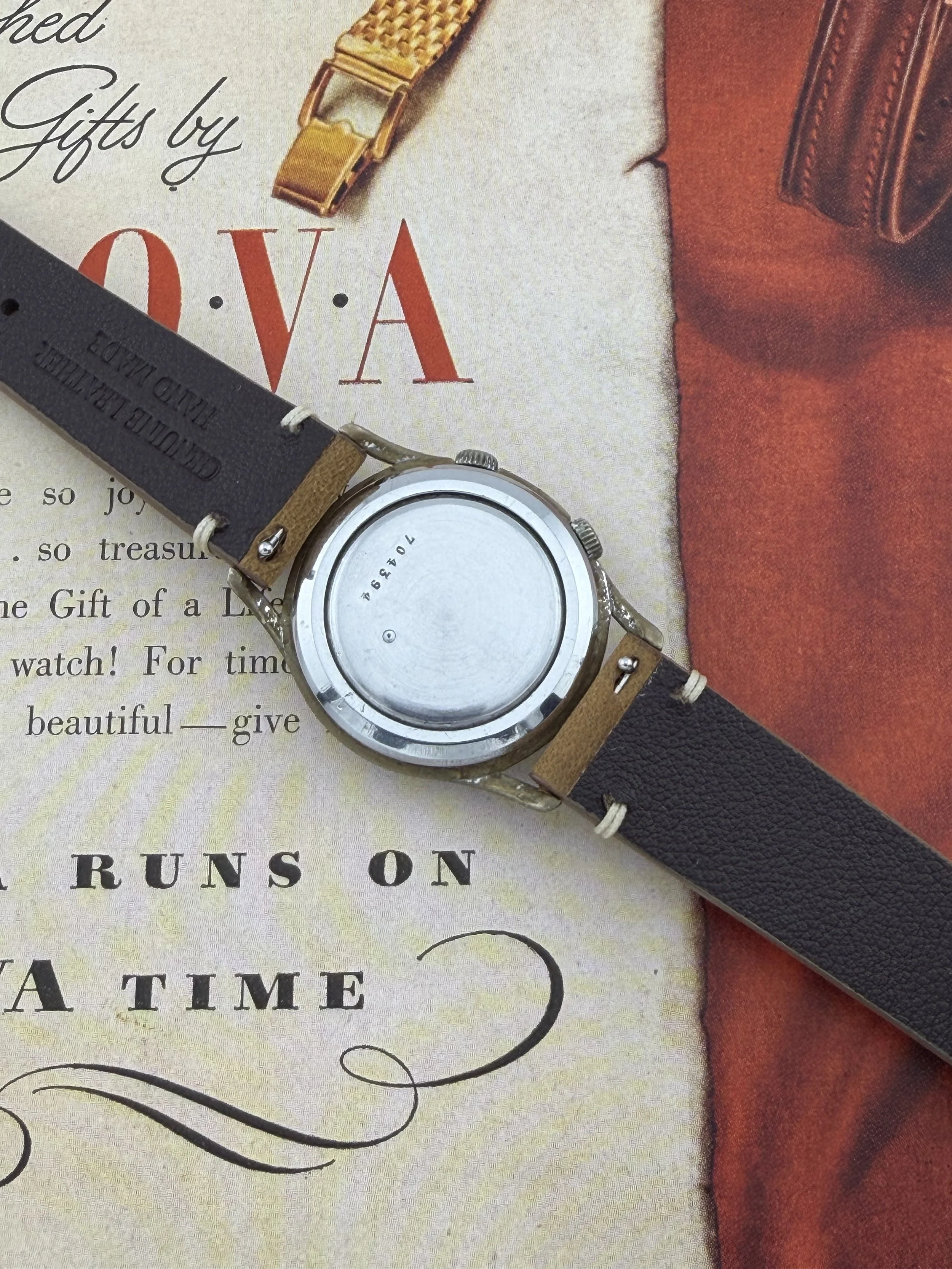
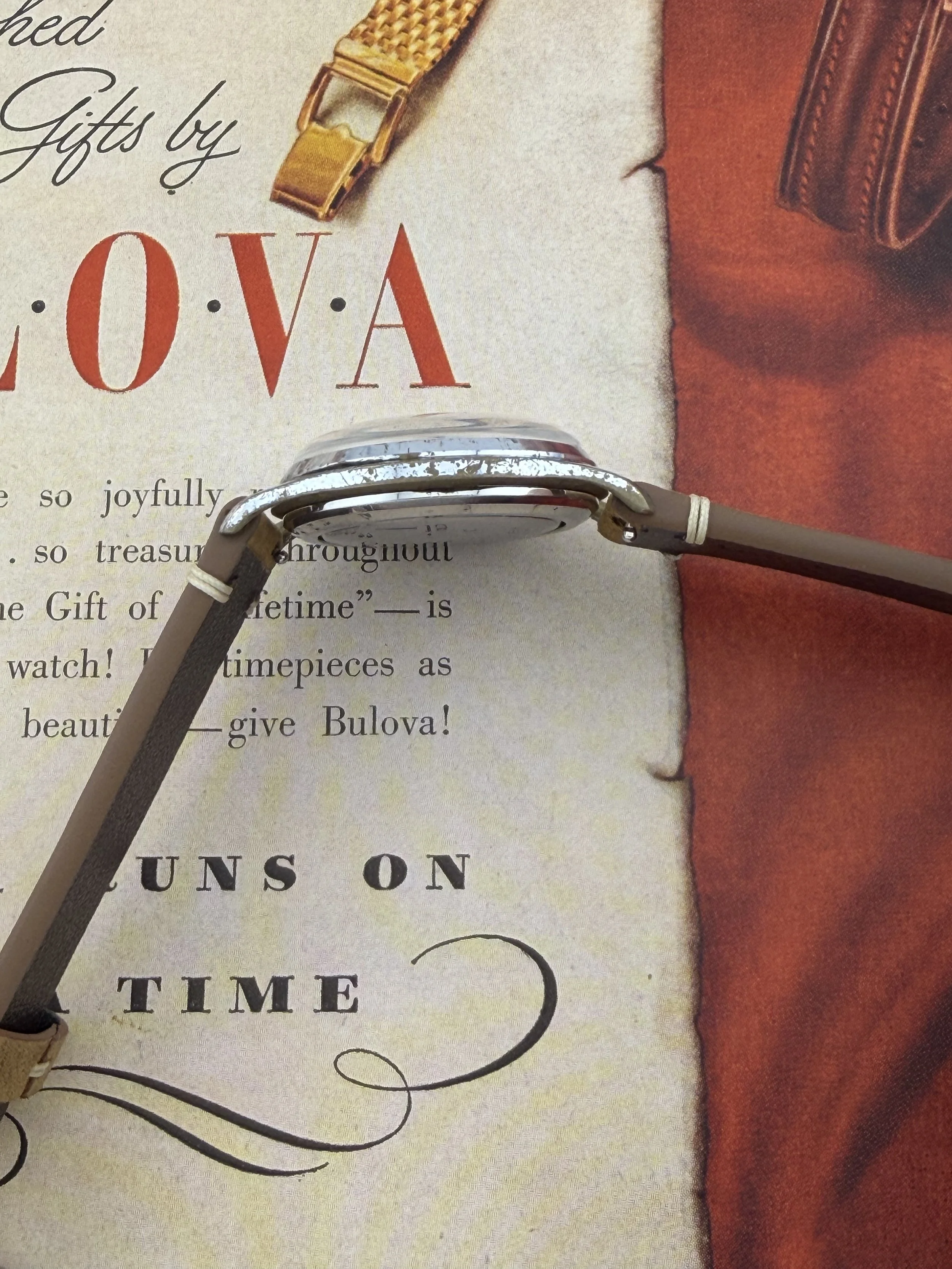
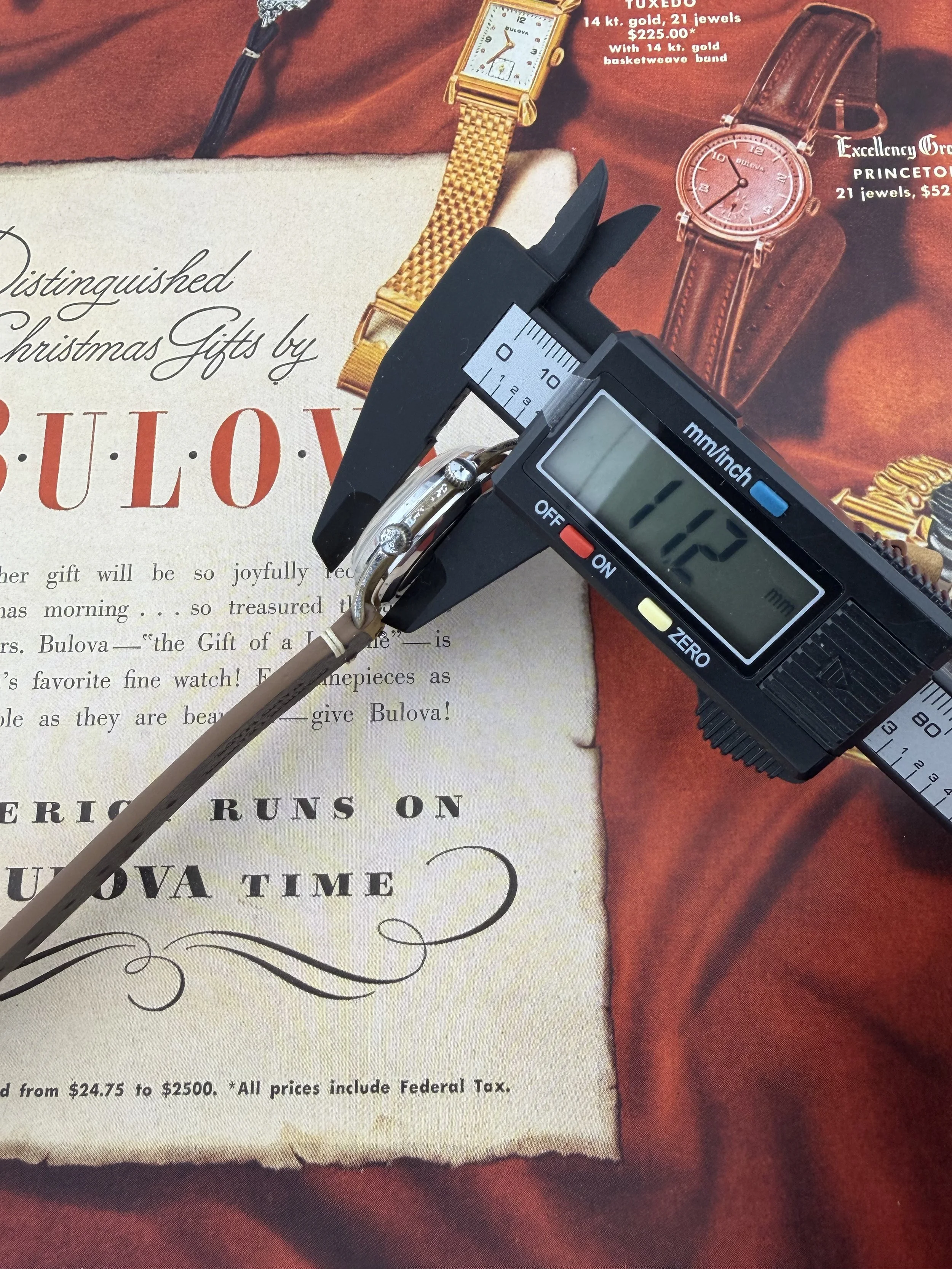
The case exhibits honest wear consistent with its age, including visible plating loss, pitting, and decades of use around the bezel and lugs. The dial shows noticeable aging and spotting, but retains its original printing and vintage character. The hands, including the distinctive alarm hand, appear correct for the period, and the watch is fitted with a later replacement strap.
Mechanical alarm wristwatches remain highly collectible because of their additional complexity and their place in the evolution of functional wristwatch design. Combining a respected American brand, a Swiss mechanical alarm movement, and a charming mid-century aesthetic, this Bulova Wrist Alarm is a wonderful representation of the innovative post-war period in watchmaking.
This vintage Bulova Wrist Alarm is an excellent example of the early era of mechanical alarm wristwatches, a fascinating period when manufacturers were finding new ways to add practical complications to everyday watches. Produced during the late 1940s through the 1950s, these models brought the functionality of an alarm clock to the wrist years before electronic alarms became common.
The dial is clearly signed “Bulova Wrist Alarm” and features a classic mid-century design with applied Arabic numerals at the cardinal positions, luminous accents, and elegant dauphine-style hands. The most distinctive feature is the central alarm-setting hand, often finished in blue with a red arrow tip, which points to the time at which the alarm will sound.
Unlike a standard three-hand watch, the Bulova Wrist Alarm contains a separate mechanical alarm mechanism. The watch uses two crowns: one crown is used to set and wind the timekeeping movement, while the other controls the alarm function and sets the desired alarm time. When the hands reach the chosen moment, a small internal hammer rapidly strikes a metal resonating surface, creating the characteristic buzzing vibration associated with vintage mechanical alarm watches.
While Bulova was a major American watch company, many of its mid-century mechanical alarm watches utilized high-quality Swiss movements, commonly based on proven alarm calibers such as those produced by A. Schild. This combination of American branding and Swiss mechanical expertise reflects the close relationship between North American watch companies and Swiss manufacturers during the post-war era.
Founded in New York in 1875 by Joseph Bulova, the company became one of the most important names in American watchmaking and marketing. Bulova was known for embracing technological innovation, from early radio advertising to precision electronic watches later in the twentieth century. Its mechanical alarm models represent an earlier chapter of that innovative spirit, competing in a market made famous by legendary watches such as the Vulcain Cricket.
The case exhibits honest wear consistent with its age, including visible plating loss, pitting, and decades of use around the bezel and lugs. The dial shows noticeable aging and spotting, but retains its original printing and vintage character. The hands, including the distinctive alarm hand, appear correct for the period, and the watch is fitted with a later replacement strap.
Mechanical alarm wristwatches remain highly collectible because of their additional complexity and their place in the evolution of functional wristwatch design. Combining a respected American brand, a Swiss mechanical alarm movement, and a charming mid-century aesthetic, this Bulova Wrist Alarm is a wonderful representation of the innovative post-war period in watchmaking.