

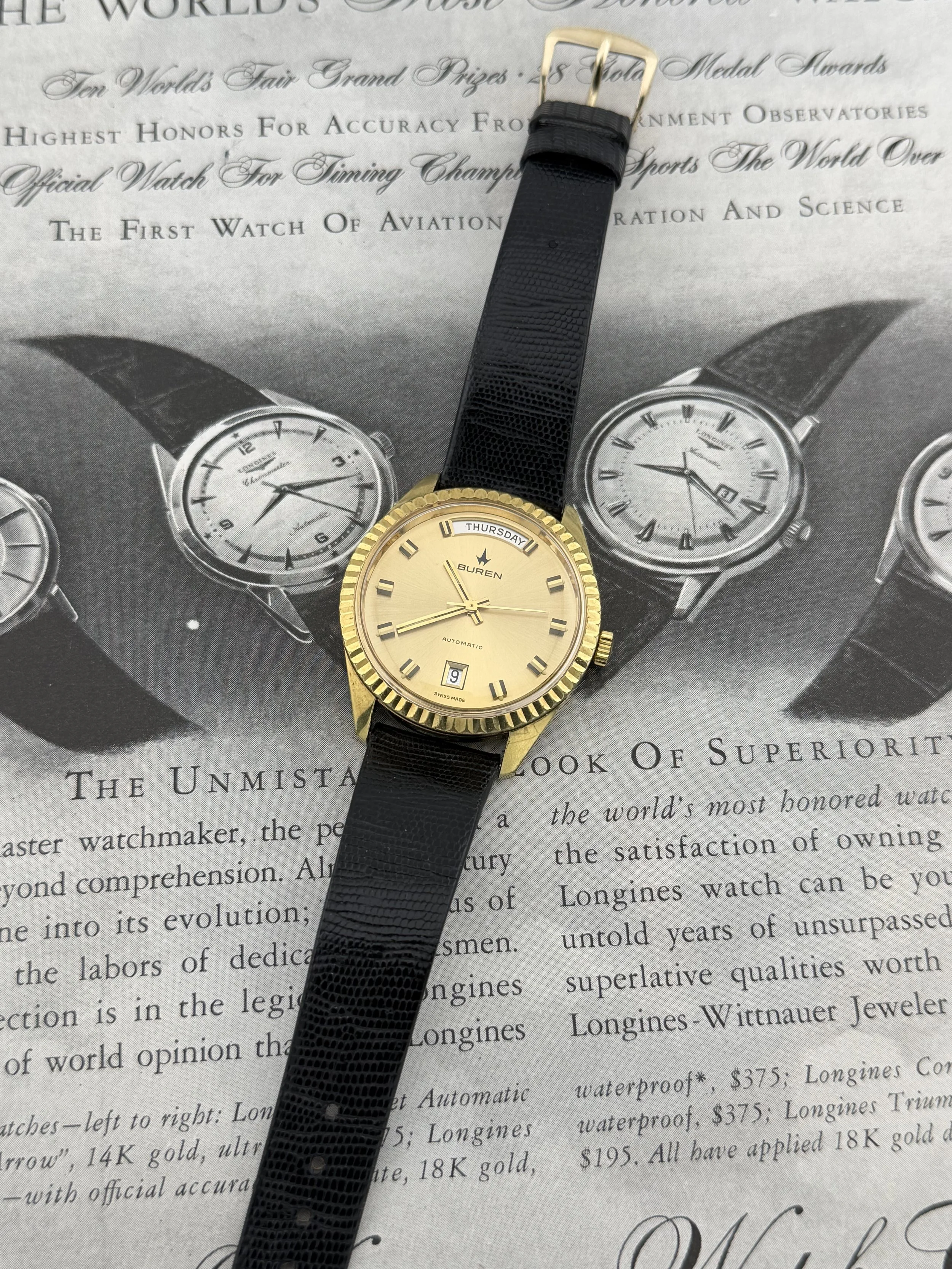
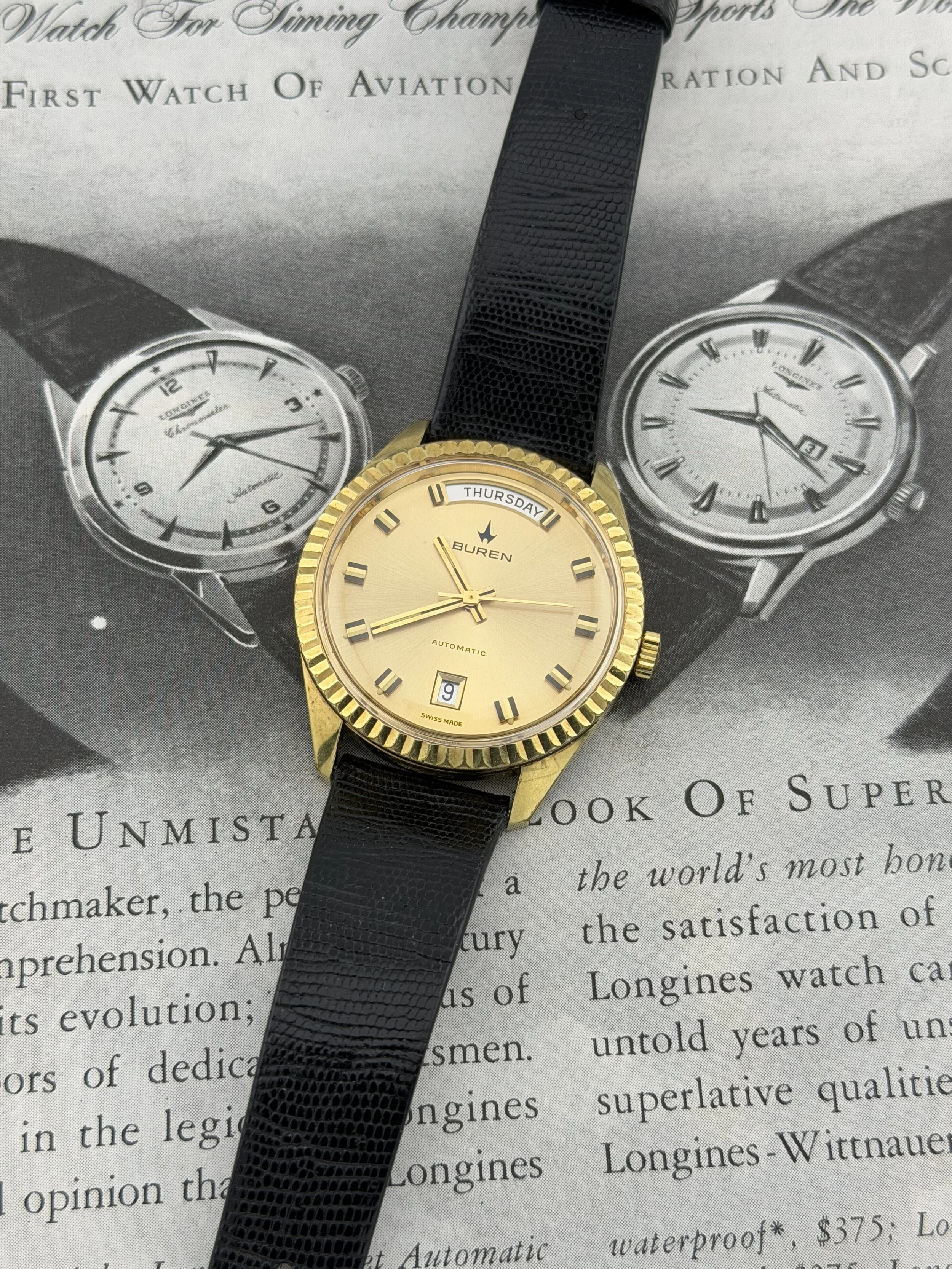
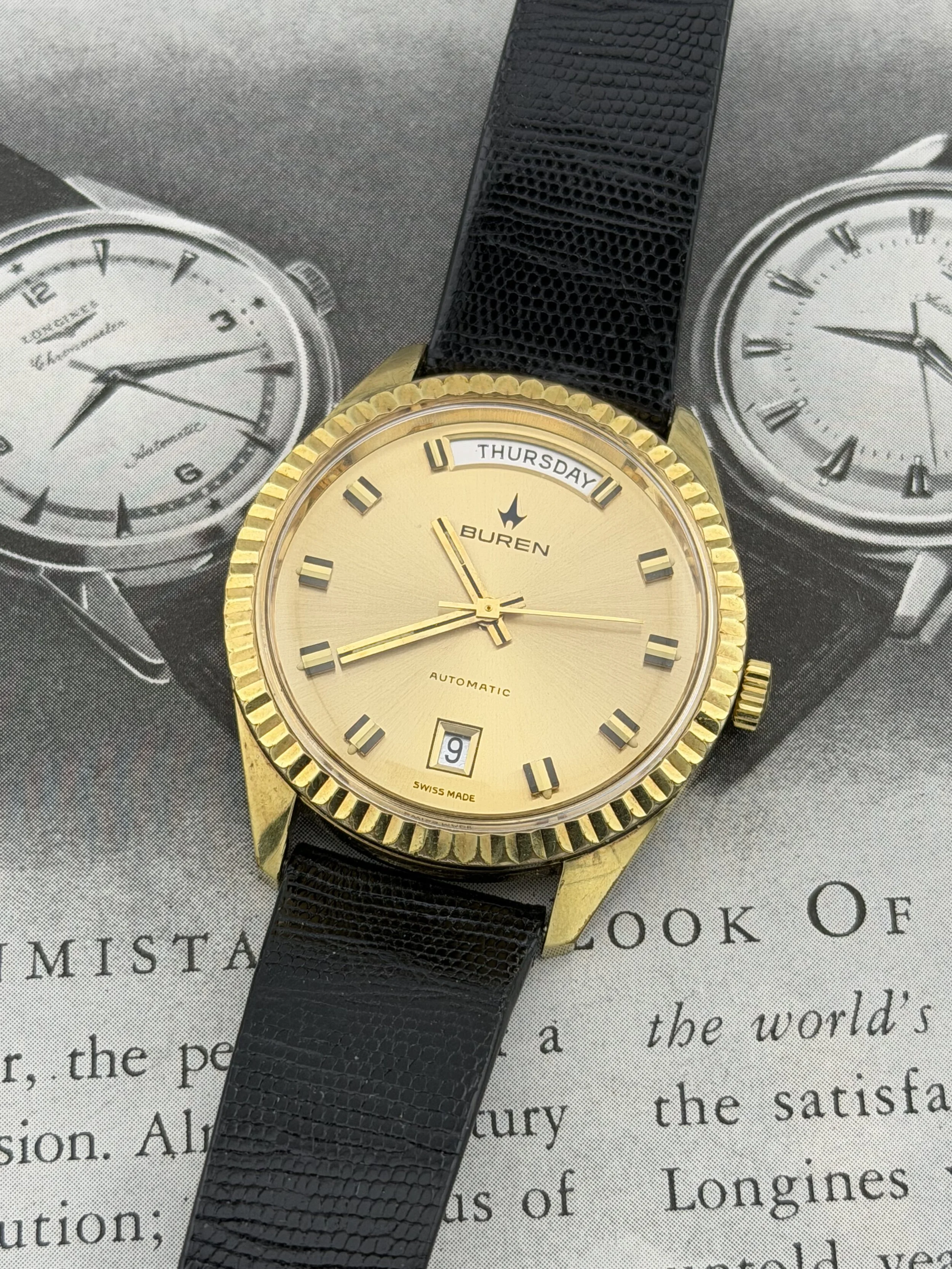
A fantastic example of Buren's elegant and technically interesting Swiss watchmaking, combining a beautiful period design with a useful day/date complication.
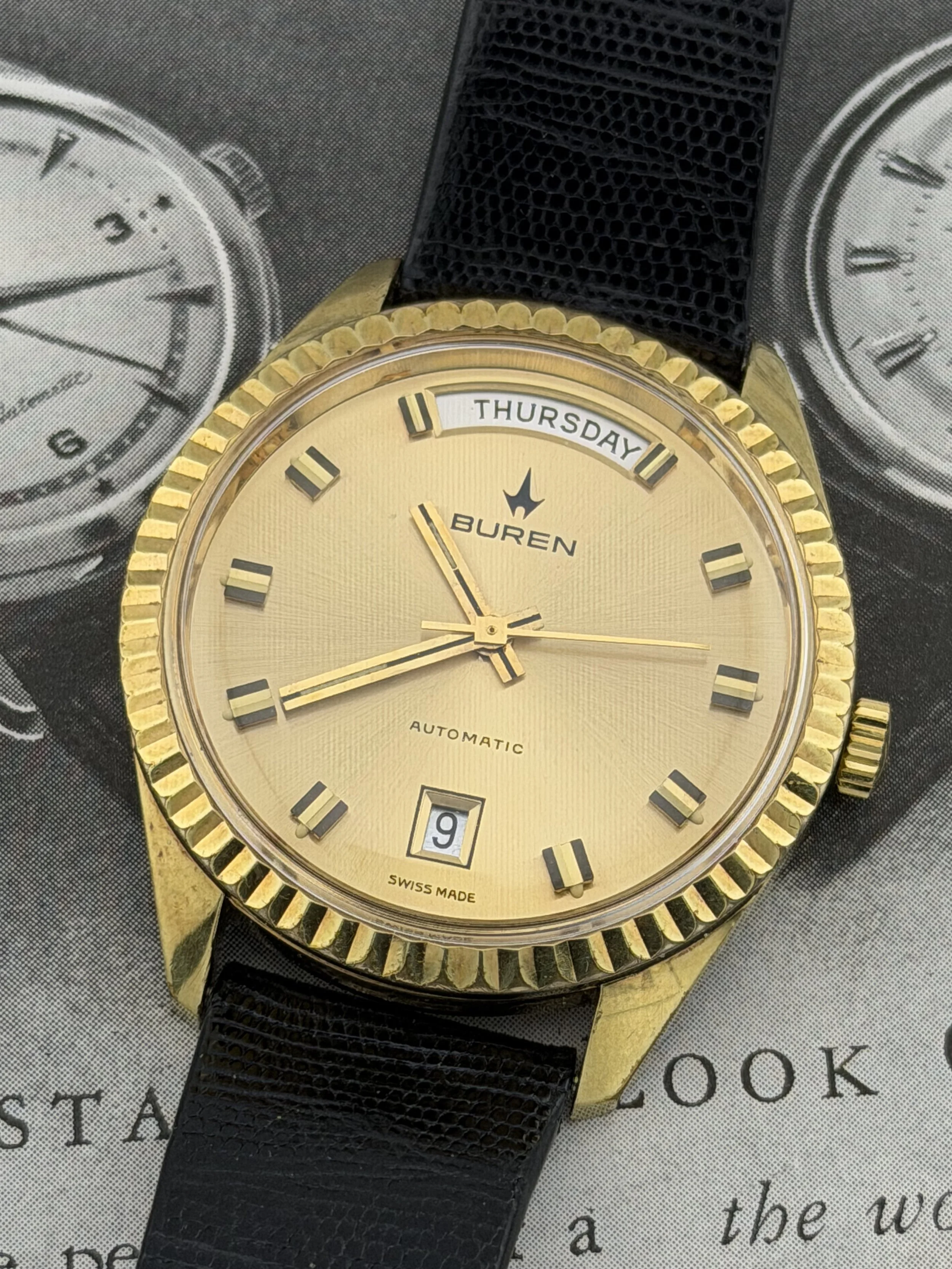
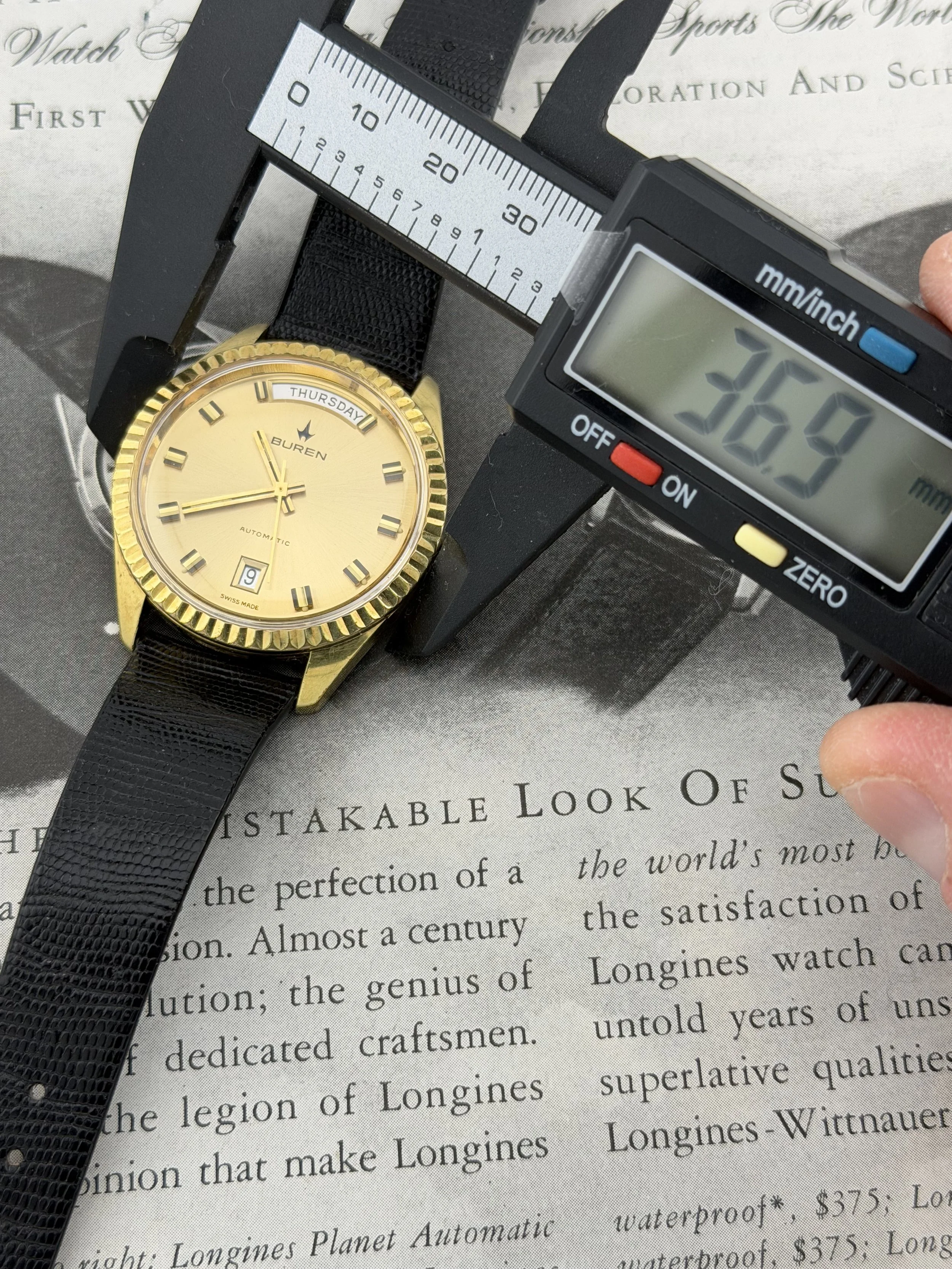
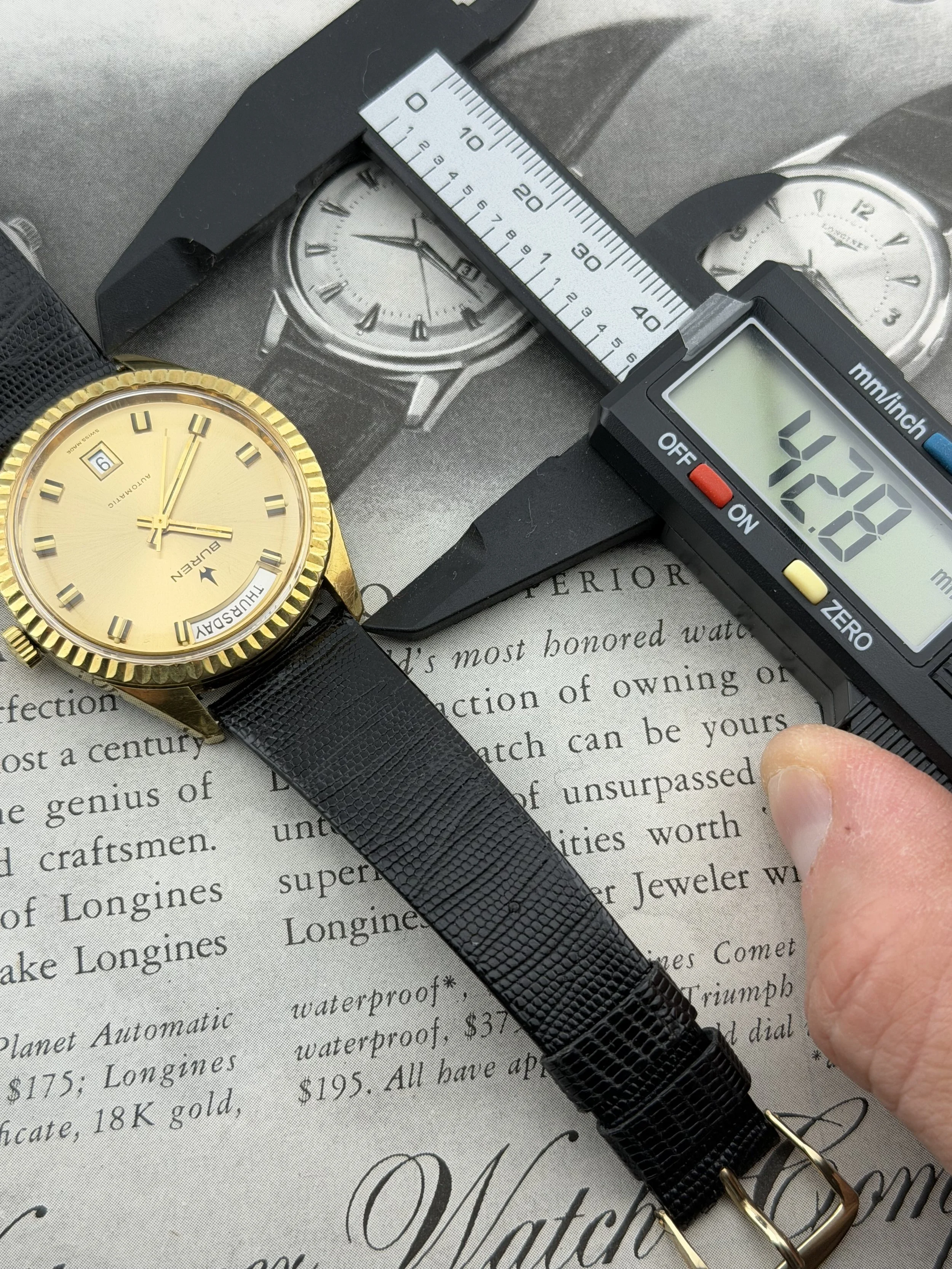
This Buren features a wonderfully reflective gold-tone dial with a fine textured finish that catches the light beautifully. The applied gold-tone hour markers, matching hands and contrasting black details give the dial a sophisticated look, while the day display at 12 o'clock and date at 6 o'clock create an unusually balanced layout.
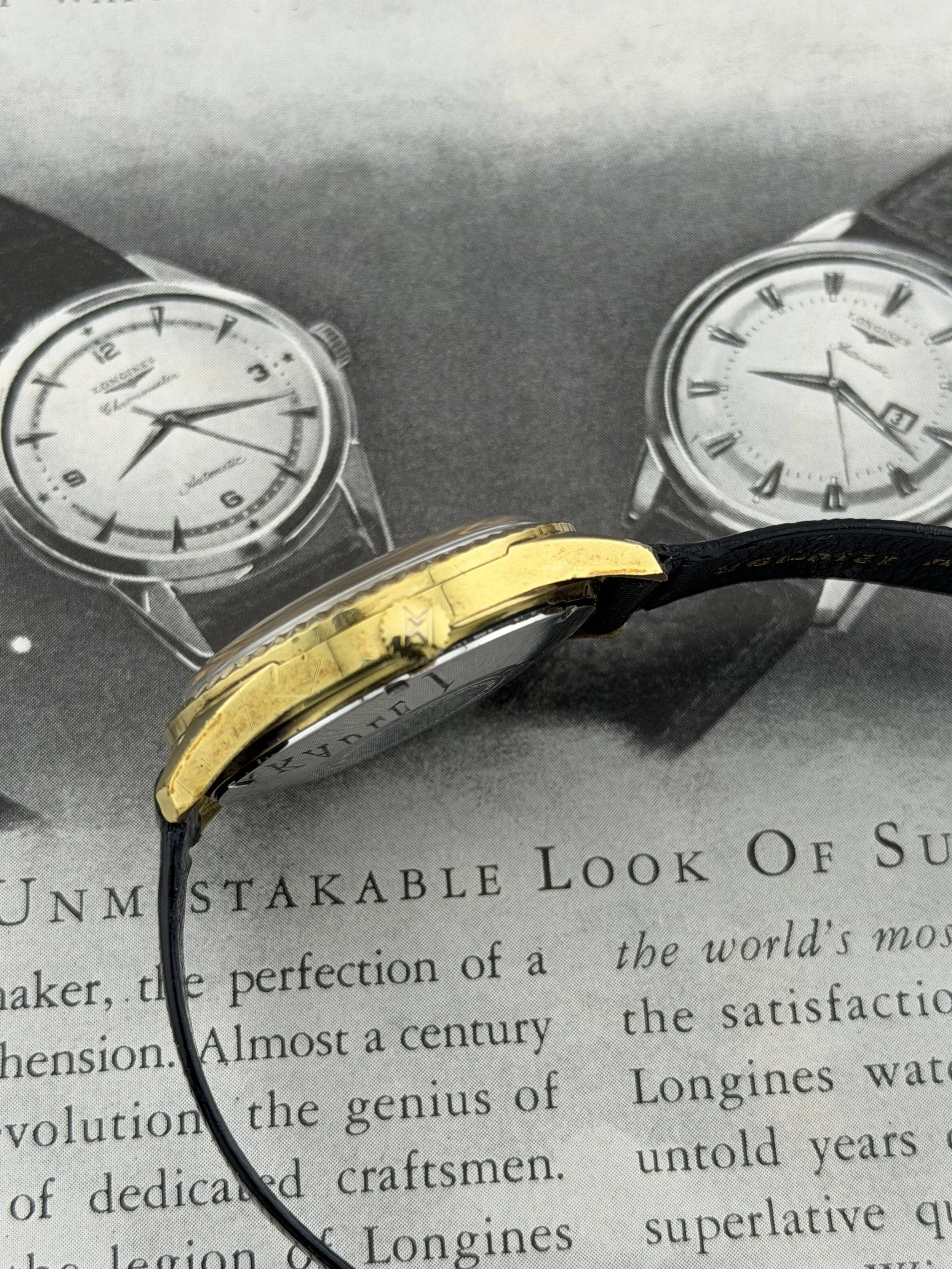
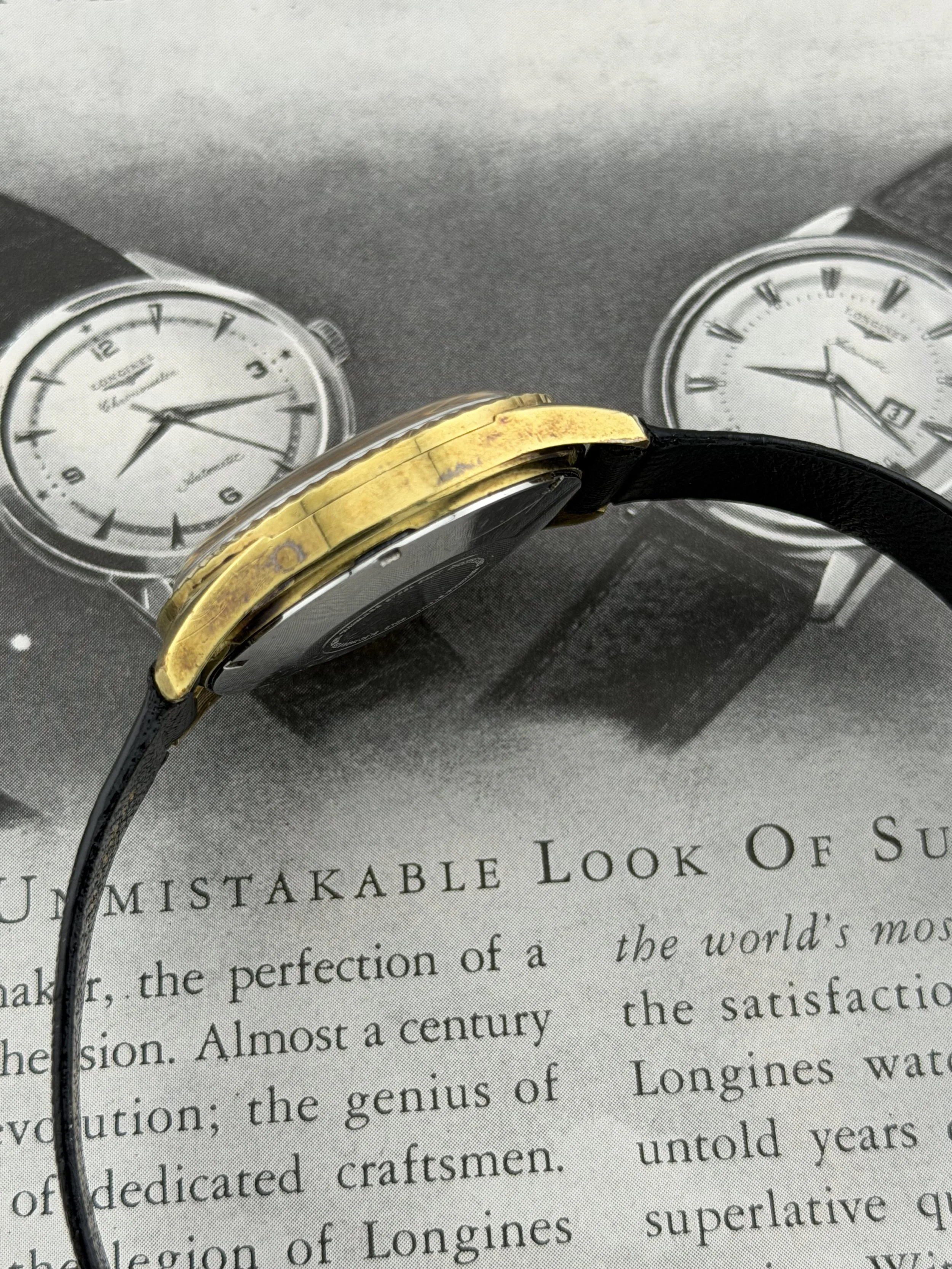
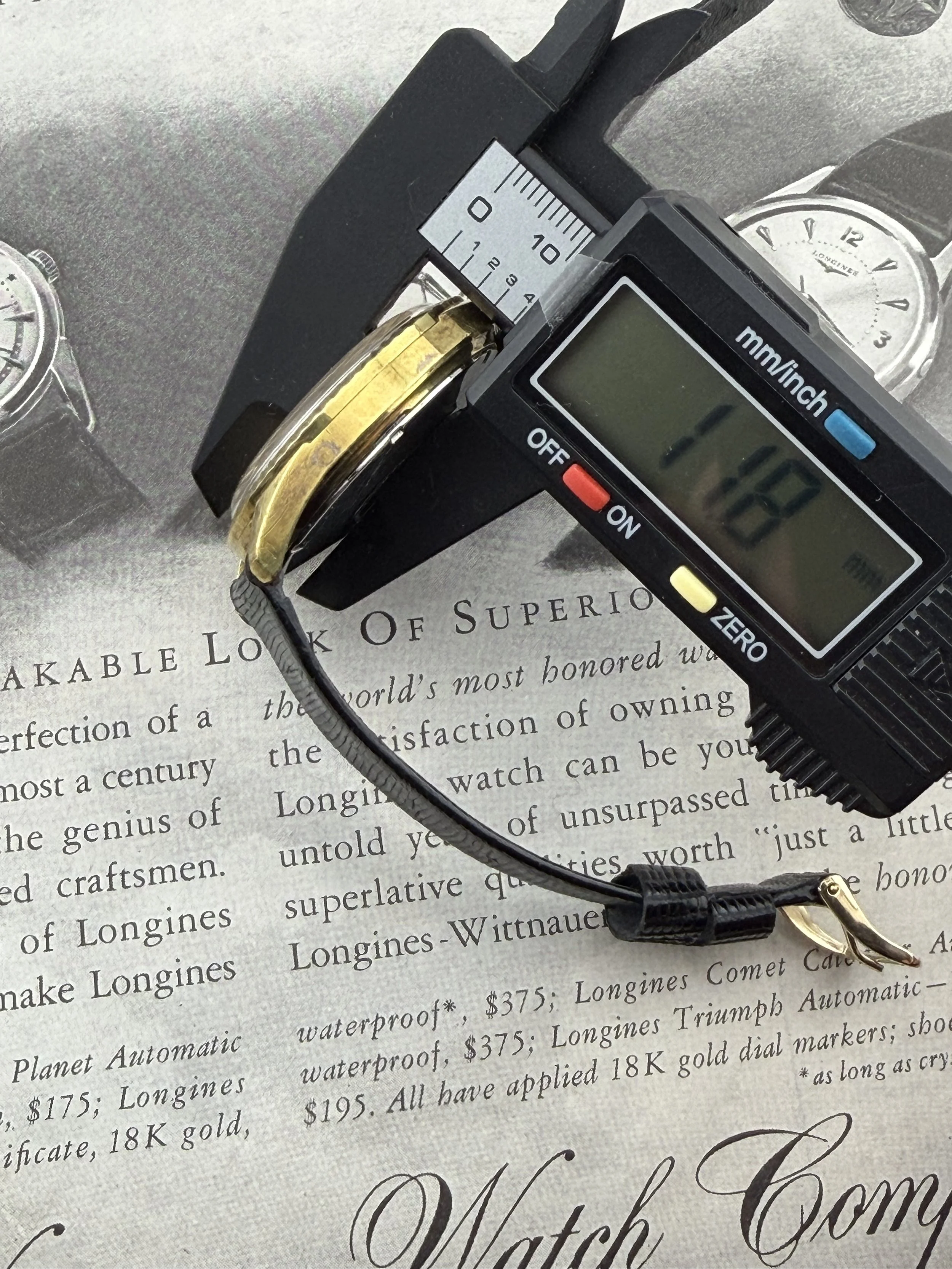
Adding to the character is the beautifully executed fluted bezel, which gives the watch a touch of luxury and allows the case to catch the light from every angle. The combination of the warm gold dial, fluted bezel and clean case design gives this piece a distinctly 1960s dress-watch aesthetic, while still having enough visual presence to work beautifully on the wrist today.
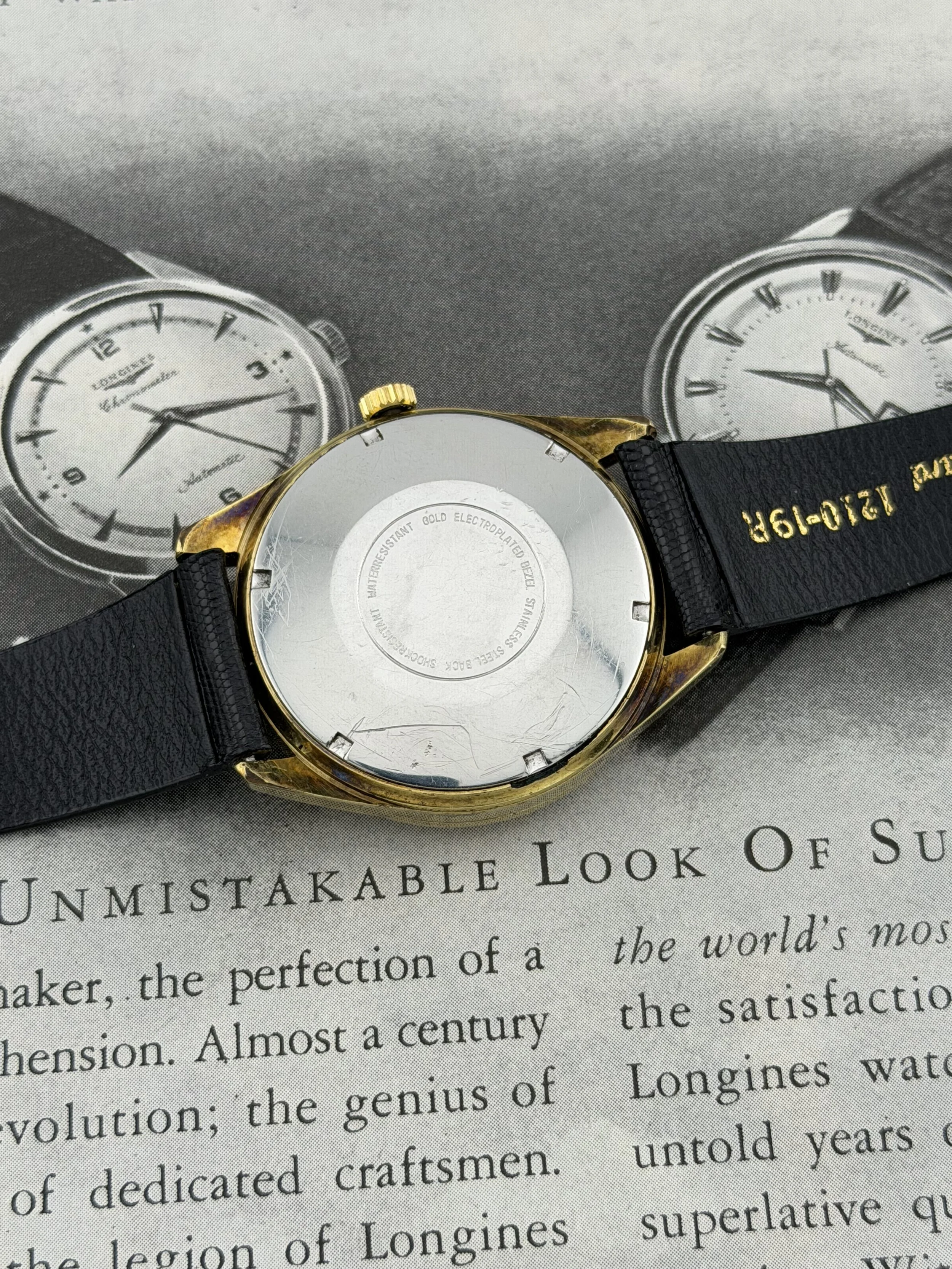
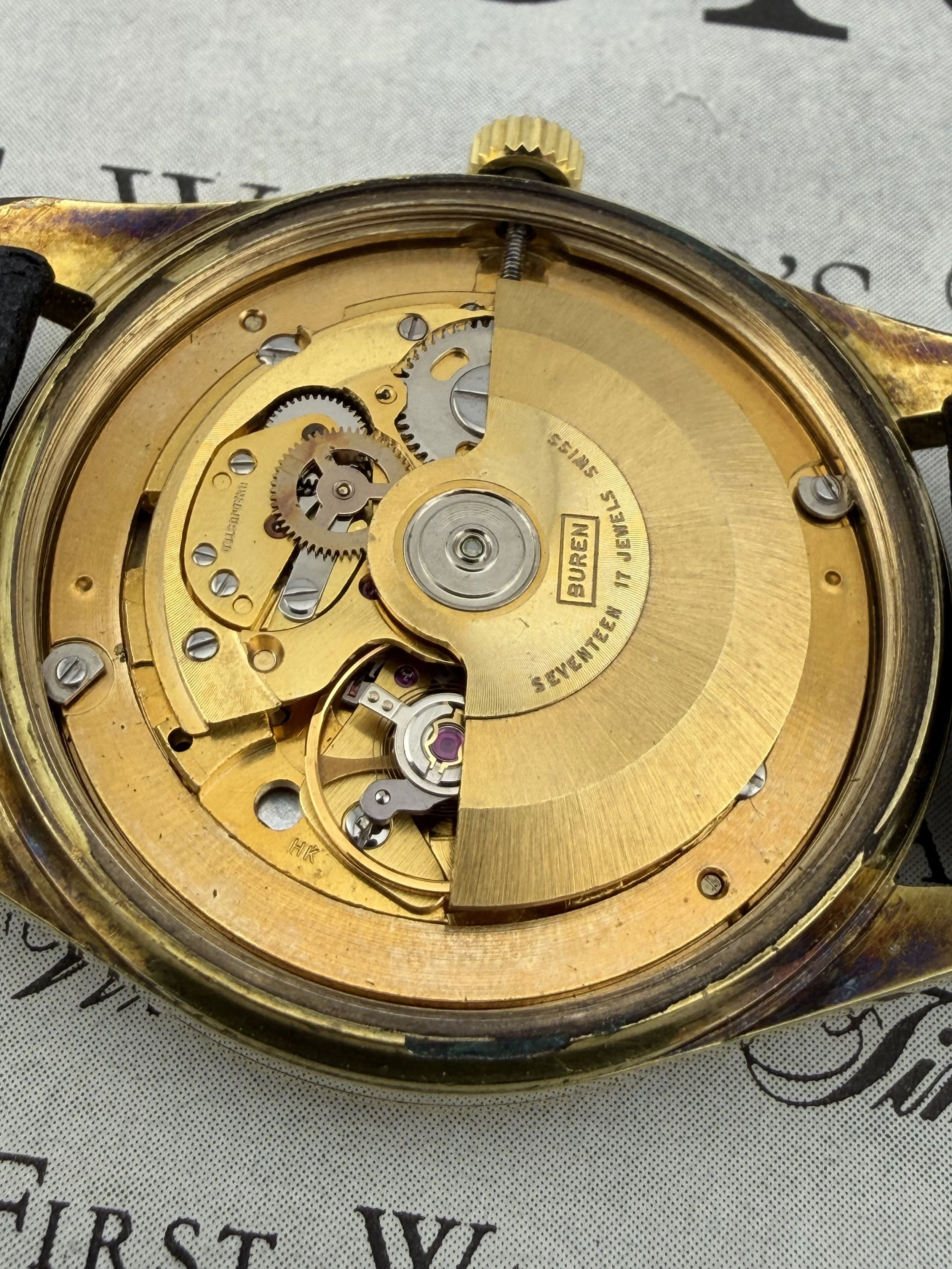
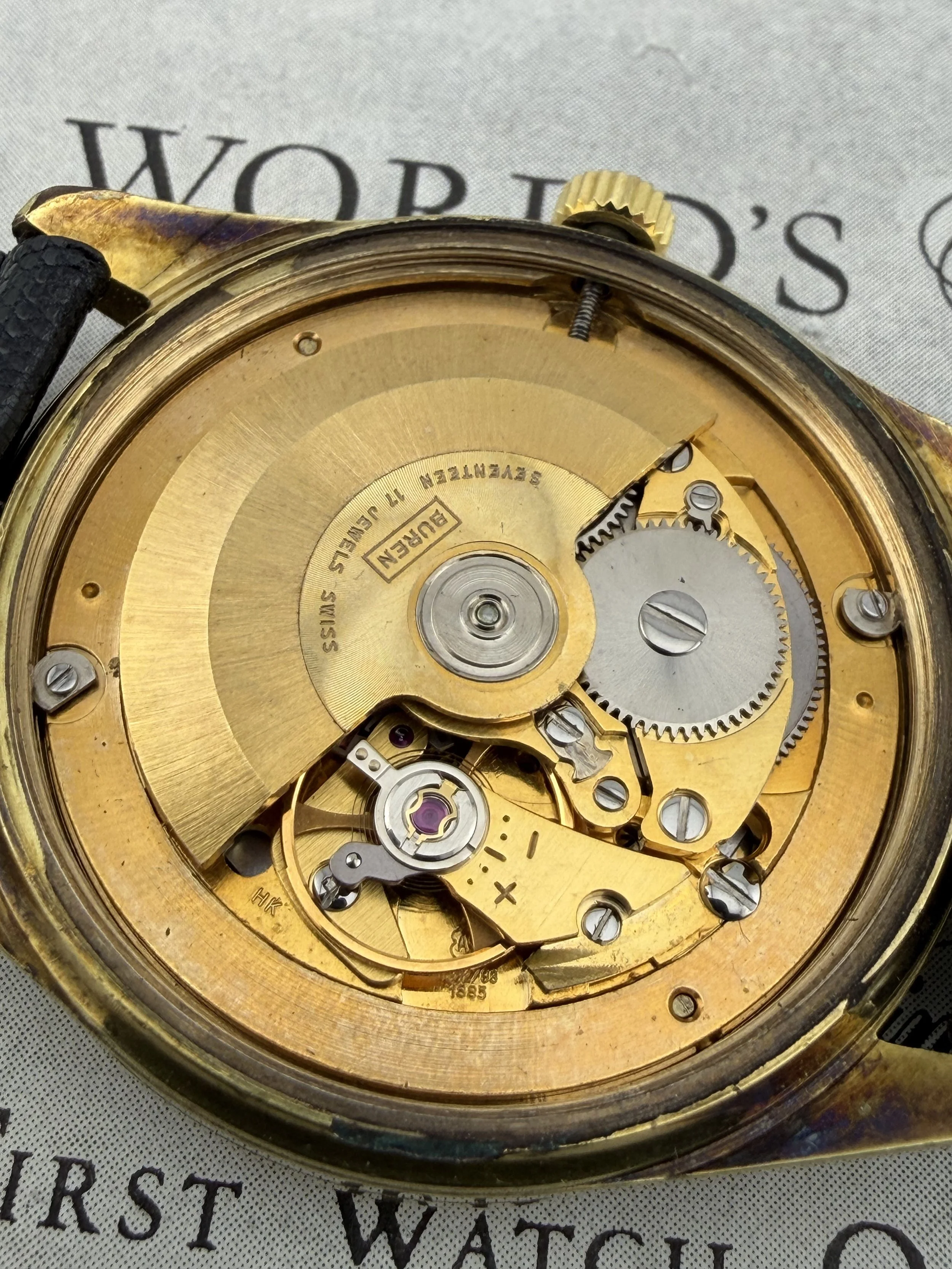
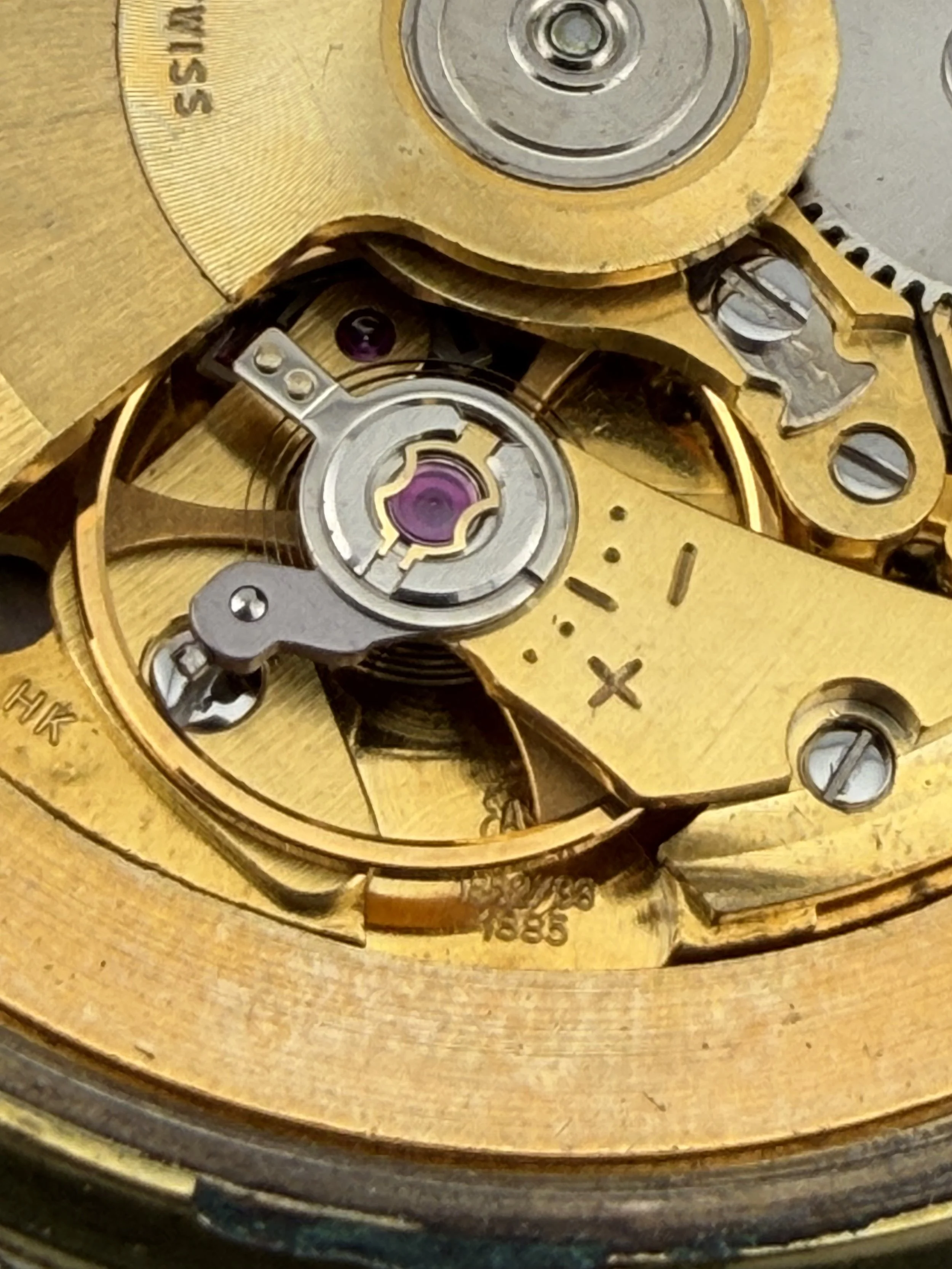
Inside is a Swiss-made Buren 17-jewel automatic movement with a conventional full-size oscillating rotor. The movement belongs to Buren's automatic movement family of the period and is a wonderful example of the company's approach to producing technically sophisticated yet practical automatic watches.
Buren was particularly respected for its automatic movements, and the company would become famous for its innovative micro-rotor technology, which allowed the winding rotor to sit within the plane of the movement and helped Buren produce exceptionally thin automatic watches.
Founded in 1898 in Büren an der Aare, Switzerland, Buren became an important name in Swiss mechanical watchmaking. The company developed a reputation for producing innovative movements, particularly during the 1950s and 1960s.
Buren's most famous achievement was its development of the micro-rotor automatic movement, patented in the 1950s. This technology eventually became one of the foundations of the company's legacy and helped establish Buren as a specialist in thin automatic movements.
In 1966, Hamilton acquired Buren, bringing the company's movement expertise into the Hamilton organization. Buren's technology would later play a major role in the development of the famous Hamilton-Buren automatic chronograph, better known as Calibre 11, one of the earliest commercially successful automatic chronograph movements.
So while Buren may not have the immediate name recognition of Omega or Longines, it has a genuinely important place in the history of Swiss mechanical watchmaking.
This is what makes this particular example so appealing.
The golden, highly reflective dial changes dramatically depending on the light, while the vertically textured surface adds depth without becoming overly flashy. The applied markers and hands provide a wonderful period-correct contrast, and the day/date arrangement gives the watch a distinctive personality.
The fluted bezel is the finishing touch. It adds just enough visual luxury without overwhelming the dial, creating a watch that feels somewhere between a traditional Swiss dress watch and the increasingly bold designs that emerged during the 1960s.
It's an excellent example of the kind of under-the-radar Swiss watch that rewards collectors who look beyond the obvious names.
A beautiful 1960s Buren automatic with a 17-jewel Swiss movement, day/date complication, reflective gold dial and striking fluted bezel — sophisticated, unusual and full of vintage character.
A fantastic example of Buren's elegant and technically interesting Swiss watchmaking, combining a beautiful period design with a useful day/date complication.
This Buren features a wonderfully reflective gold-tone dial with a fine textured finish that catches the light beautifully. The applied gold-tone hour markers, matching hands and contrasting black details give the dial a sophisticated look, while the day display at 12 o'clock and date at 6 o'clock create an unusually balanced layout.
Adding to the character is the beautifully executed fluted bezel, which gives the watch a touch of luxury and allows the case to catch the light from every angle. The combination of the warm gold dial, fluted bezel and clean case design gives this piece a distinctly 1960s dress-watch aesthetic, while still having enough visual presence to work beautifully on the wrist today.
Inside is a Swiss-made Buren 17-jewel automatic movement with a conventional full-size oscillating rotor. The movement belongs to Buren's automatic movement family of the period and is a wonderful example of the company's approach to producing technically sophisticated yet practical automatic watches.
Buren was particularly respected for its automatic movements, and the company would become famous for its innovative micro-rotor technology, which allowed the winding rotor to sit within the plane of the movement and helped Buren produce exceptionally thin automatic watches.
Founded in 1898 in Büren an der Aare, Switzerland, Buren became an important name in Swiss mechanical watchmaking. The company developed a reputation for producing innovative movements, particularly during the 1950s and 1960s.
Buren's most famous achievement was its development of the micro-rotor automatic movement, patented in the 1950s. This technology eventually became one of the foundations of the company's legacy and helped establish Buren as a specialist in thin automatic movements.
In 1966, Hamilton acquired Buren, bringing the company's movement expertise into the Hamilton organization. Buren's technology would later play a major role in the development of the famous Hamilton-Buren automatic chronograph, better known as Calibre 11, one of the earliest commercially successful automatic chronograph movements.
So while Buren may not have the immediate name recognition of Omega or Longines, it has a genuinely important place in the history of Swiss mechanical watchmaking.
This is what makes this particular example so appealing.
The golden, highly reflective dial changes dramatically depending on the light, while the vertically textured surface adds depth without becoming overly flashy. The applied markers and hands provide a wonderful period-correct contrast, and the day/date arrangement gives the watch a distinctive personality.
The fluted bezel is the finishing touch. It adds just enough visual luxury without overwhelming the dial, creating a watch that feels somewhere between a traditional Swiss dress watch and the increasingly bold designs that emerged during the 1960s.
It's an excellent example of the kind of under-the-radar Swiss watch that rewards collectors who look beyond the obvious names.
A beautiful 1960s Buren automatic with a 17-jewel Swiss movement, day/date complication, reflective gold dial and striking fluted bezel — sophisticated, unusual and full of vintage character.