

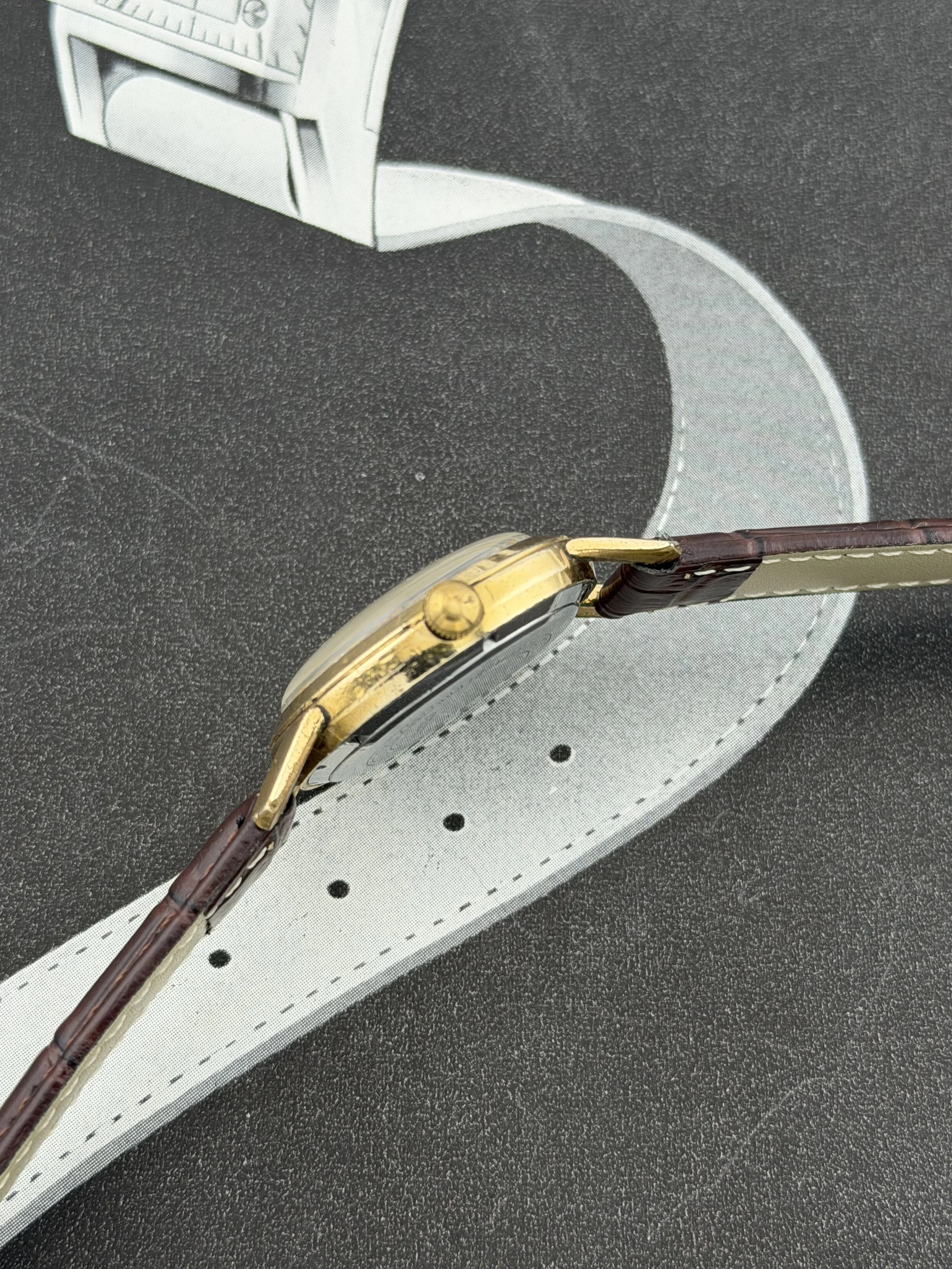
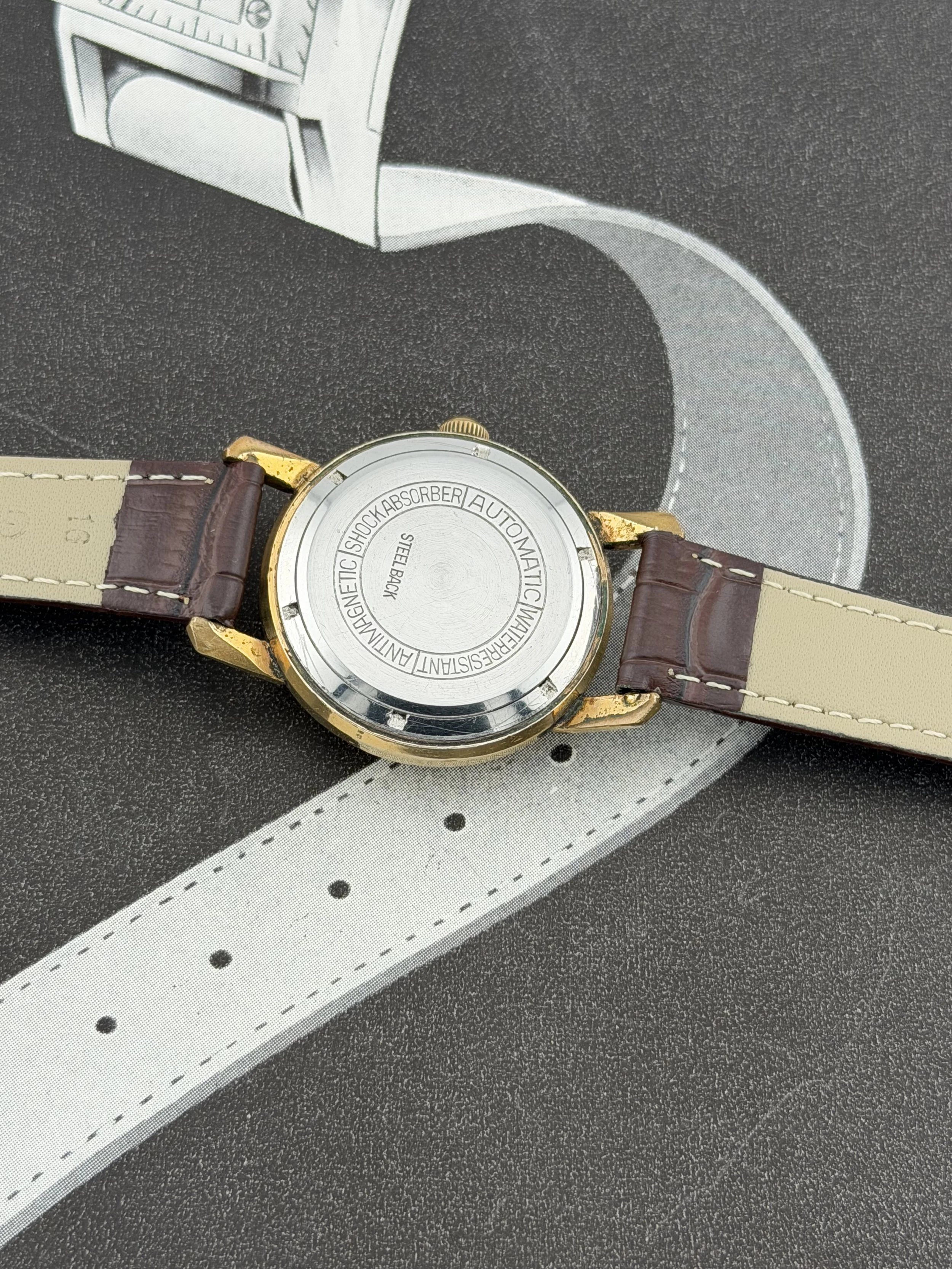
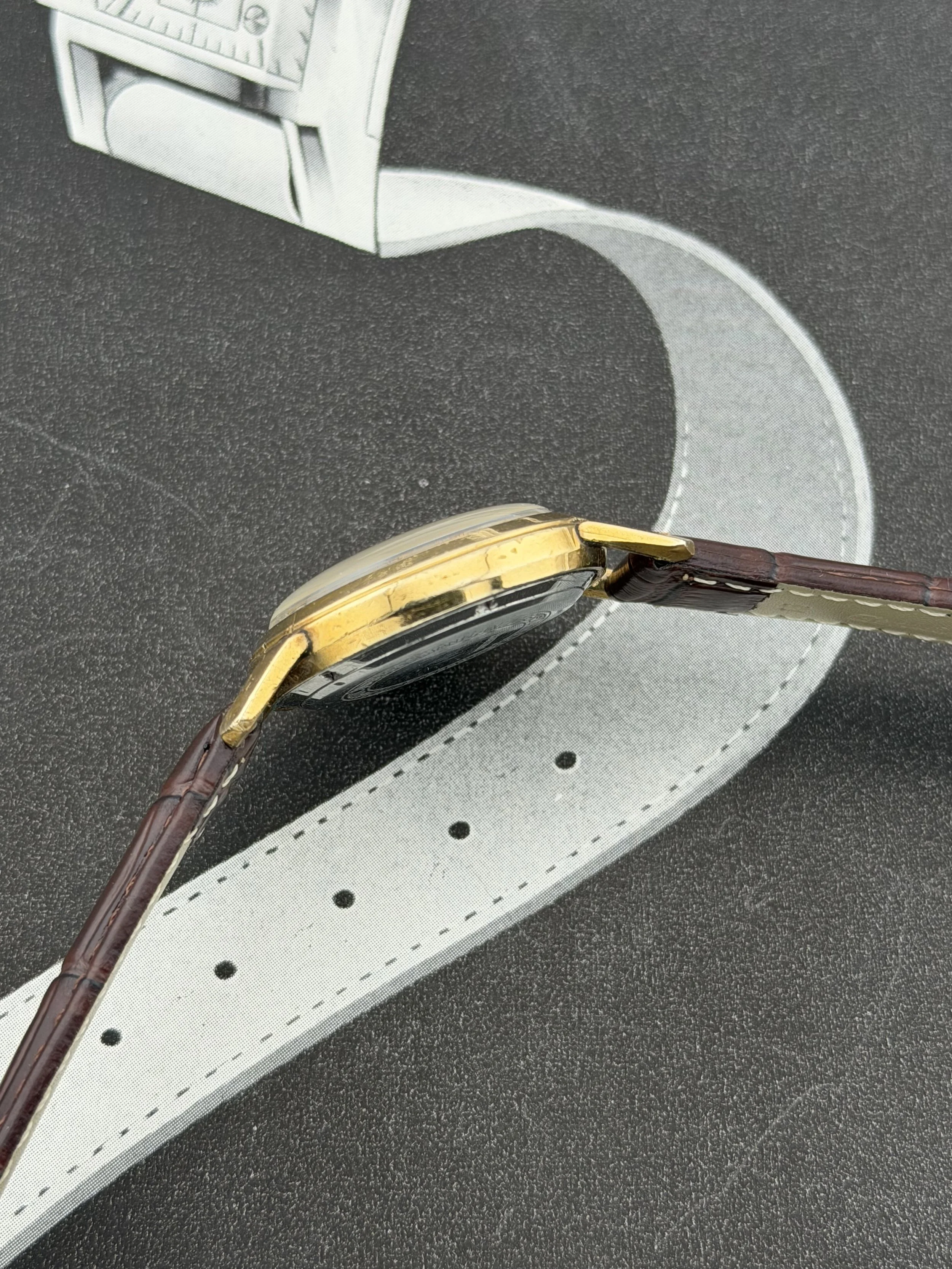
Buren Grand Prix | Rotowind Automatic | Power Reserve | 21 Jewels | Gold-Filled Case | Swiss Made | Circa 1950s
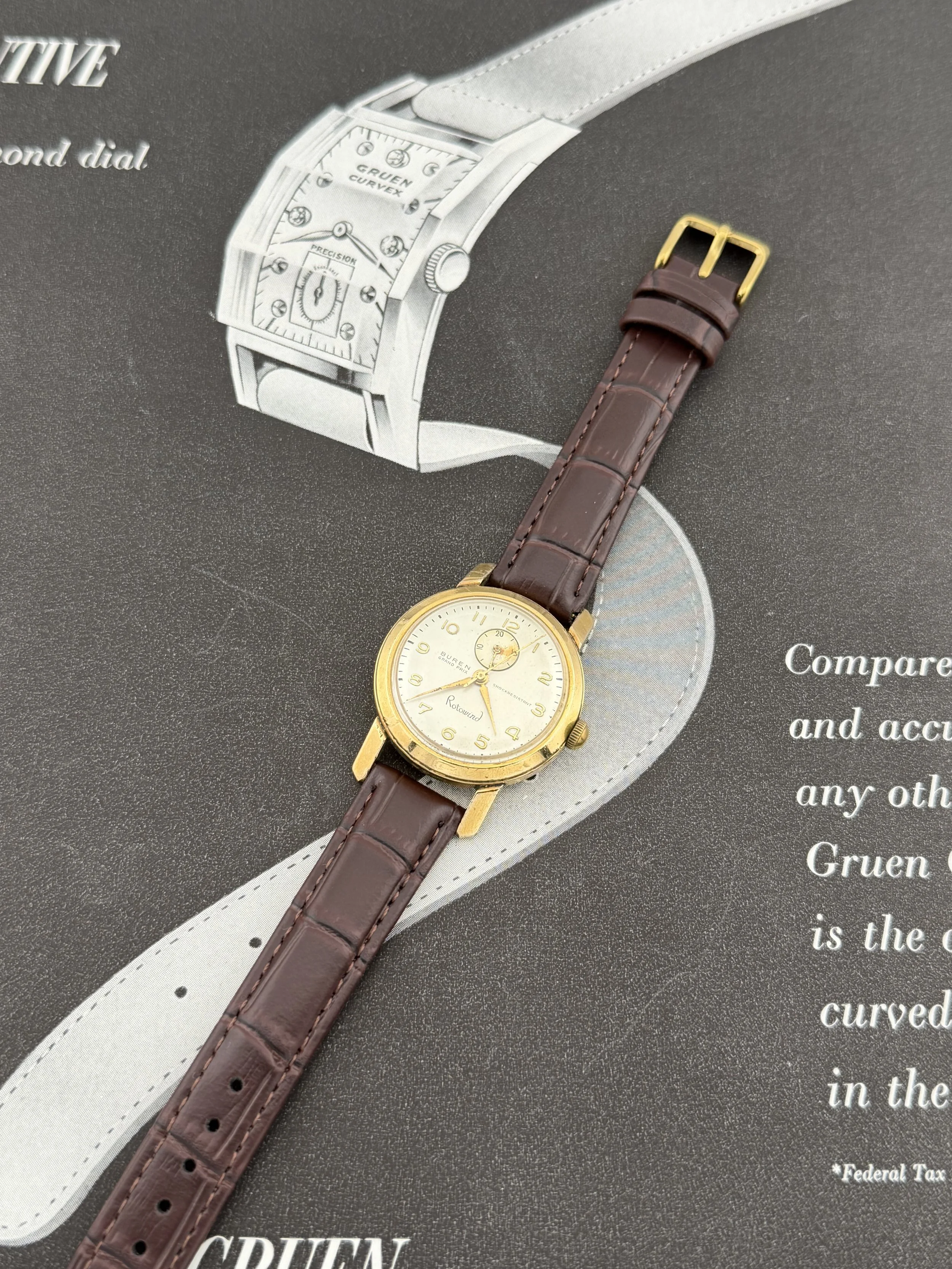
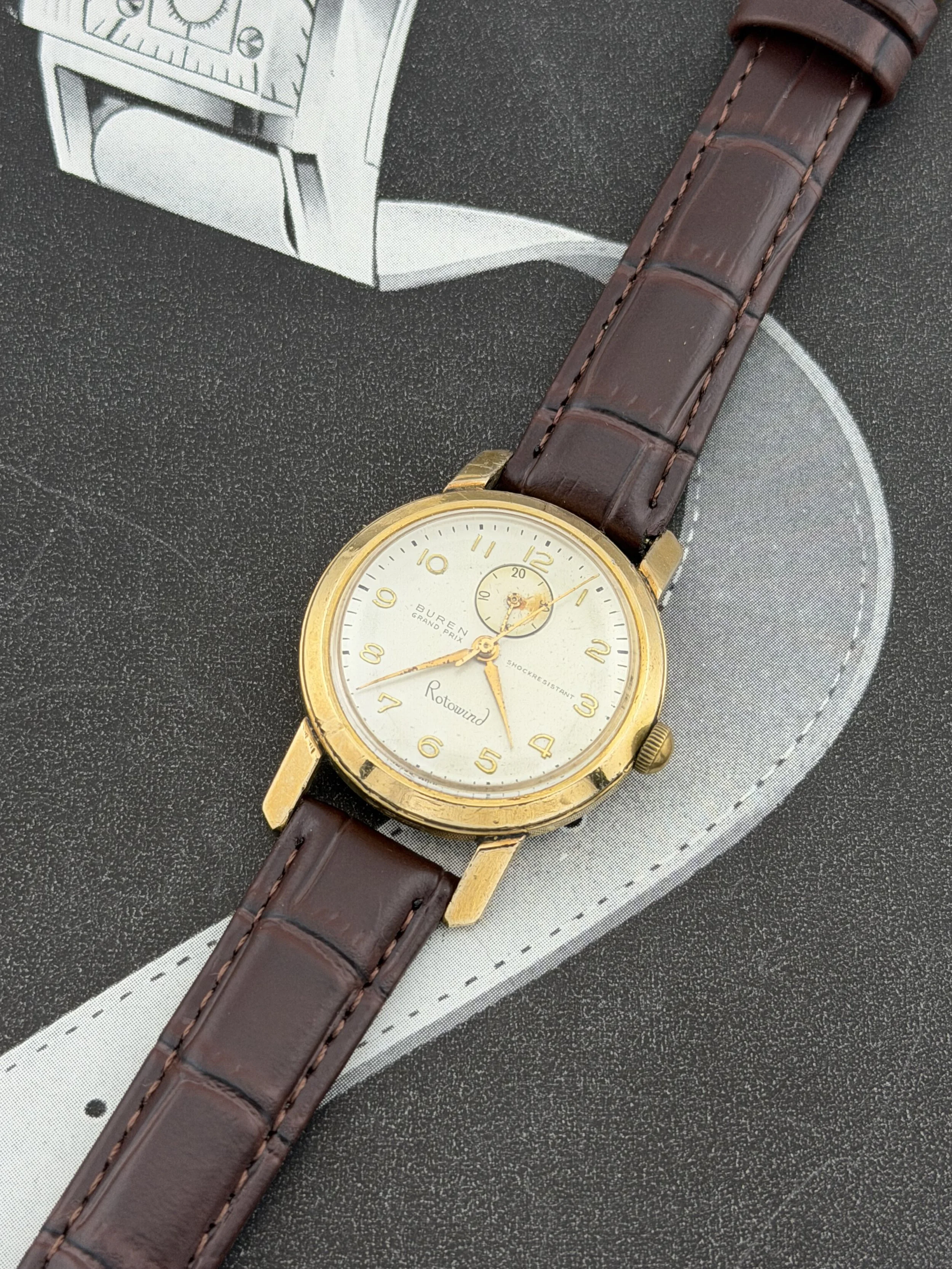
This beautiful Buren Grand Prix Rotowind is a wonderful example of one of Buren's most interesting early automatic watches, and a particularly charming piece of mid-century Swiss watchmaking.
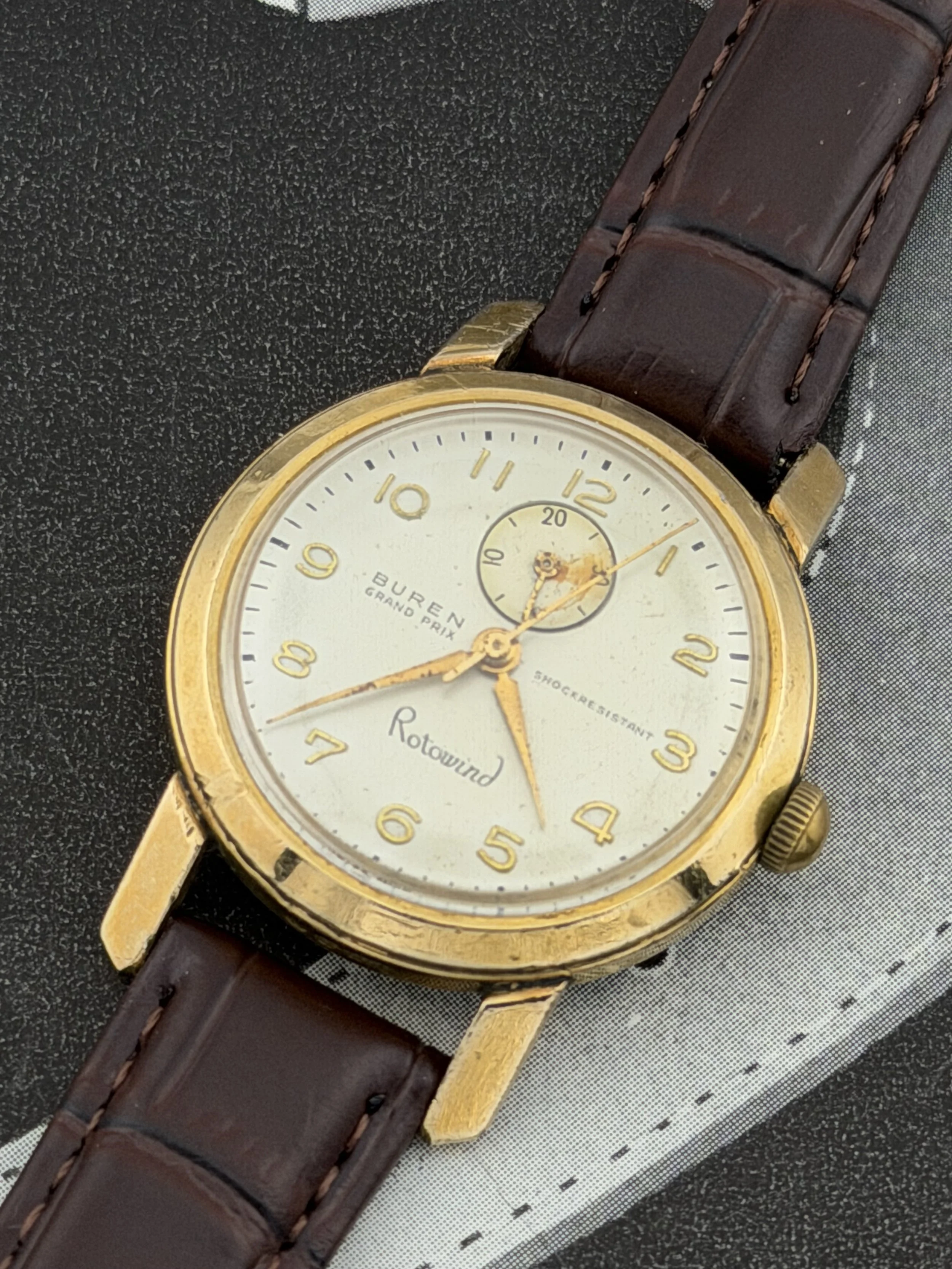
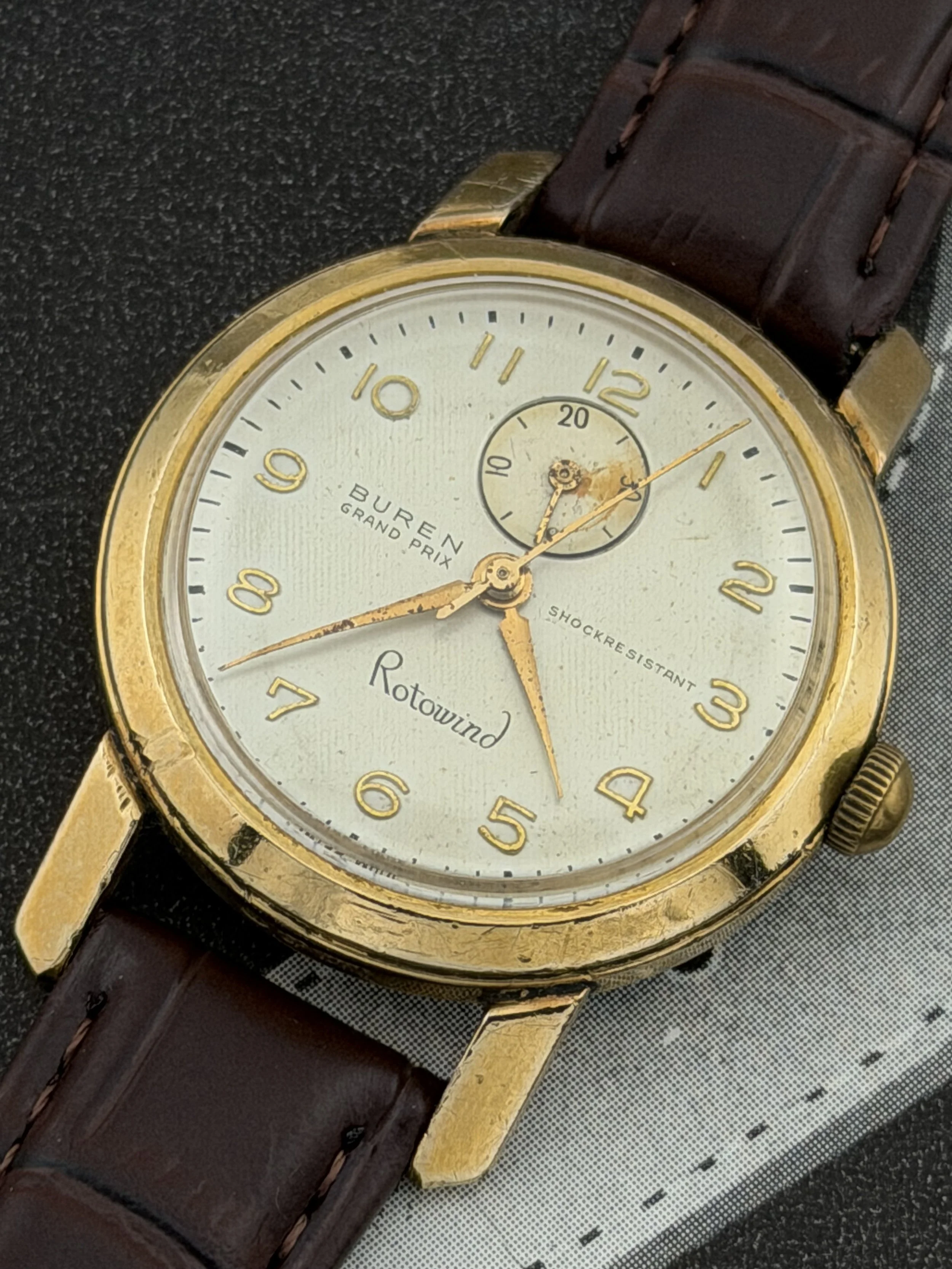
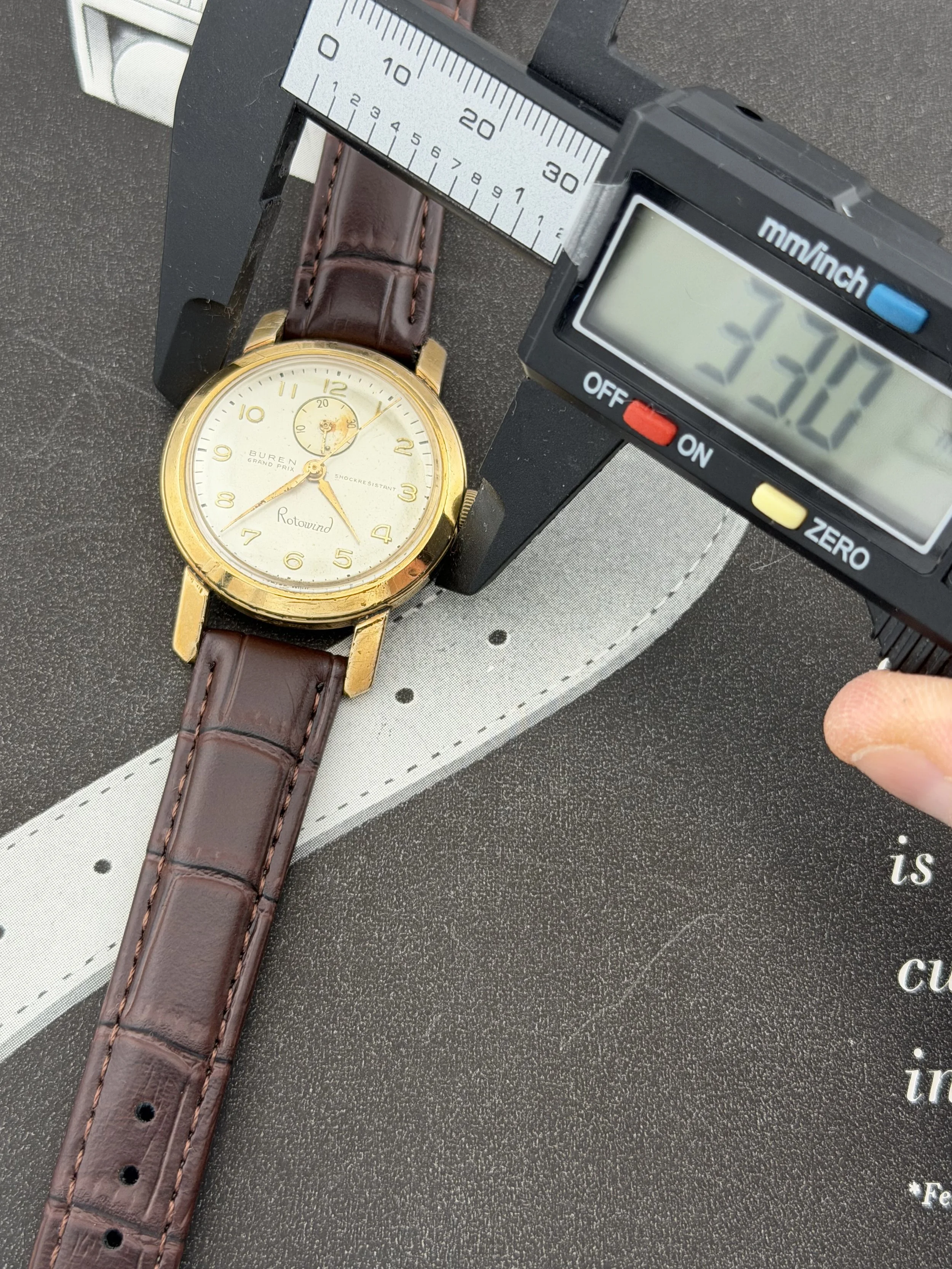
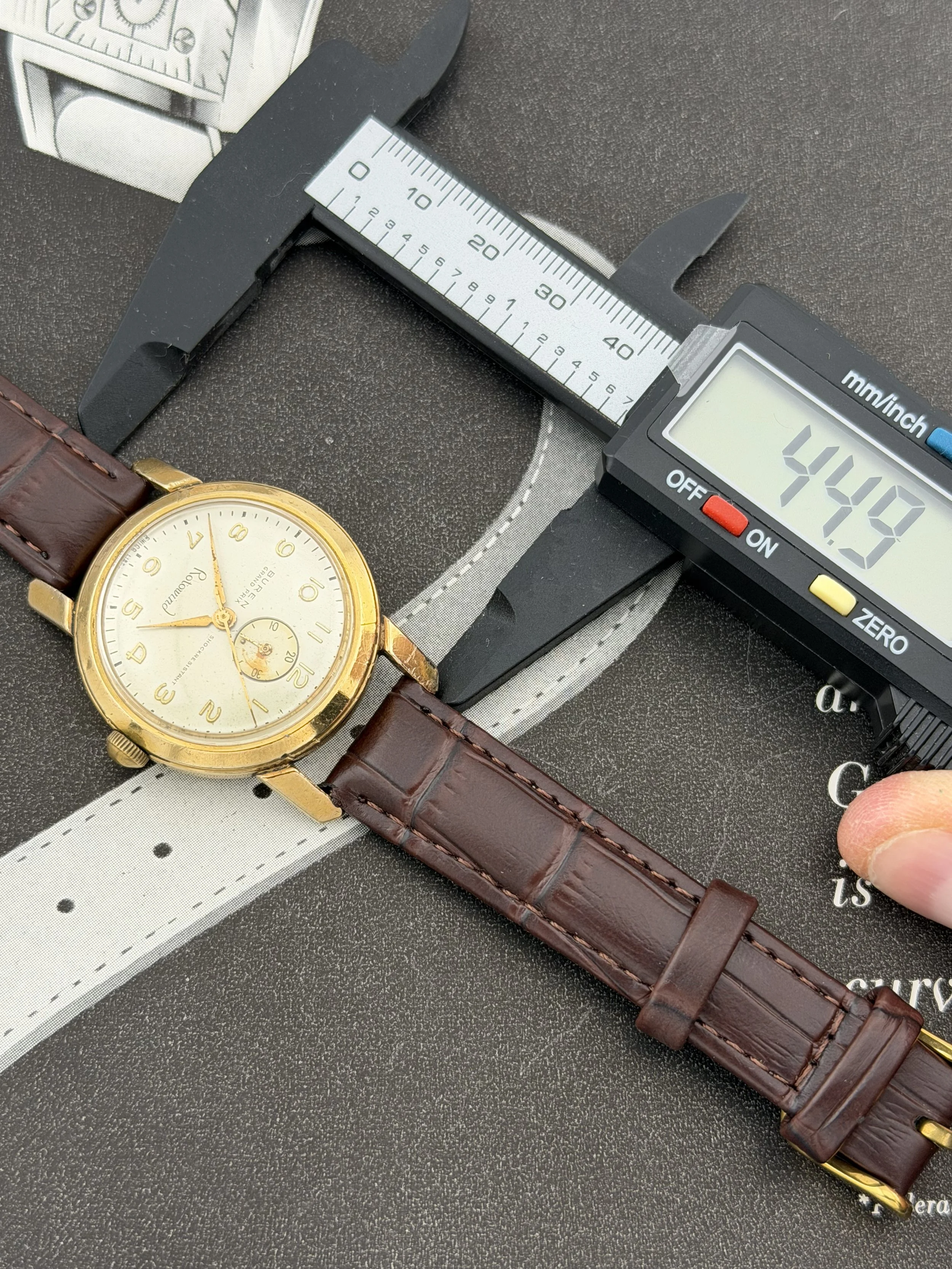
At first glance, it is an elegant vintage dress watch, with its warm gold-filled case, applied gold Arabic numerals, traditional dauphine-style hands, and beautifully balanced round case. But the real story is hiding in the dial: at 12 o'clock is a power-reserve indicator, giving the watch a surprisingly sophisticated complication for its era.
The power-reserve display is one of the defining characteristics of the Buren Rotowind. Rather than simply telling you the time, the indicator provides a visual representation of how much energy remains stored in the mainspring. It is a genuinely useful complication—and one that gives this watch considerably more character than a conventional three-hand automatic.
Buren introduced the Rotowind in 1953, and the calibre was offered in several configurations, including versions with a power-reserve indicator and different seconds arrangements. The Rotowind was produced for a relatively short period before Buren moved toward its revolutionary micro-rotor automatic movements later in the decade.
The Movement
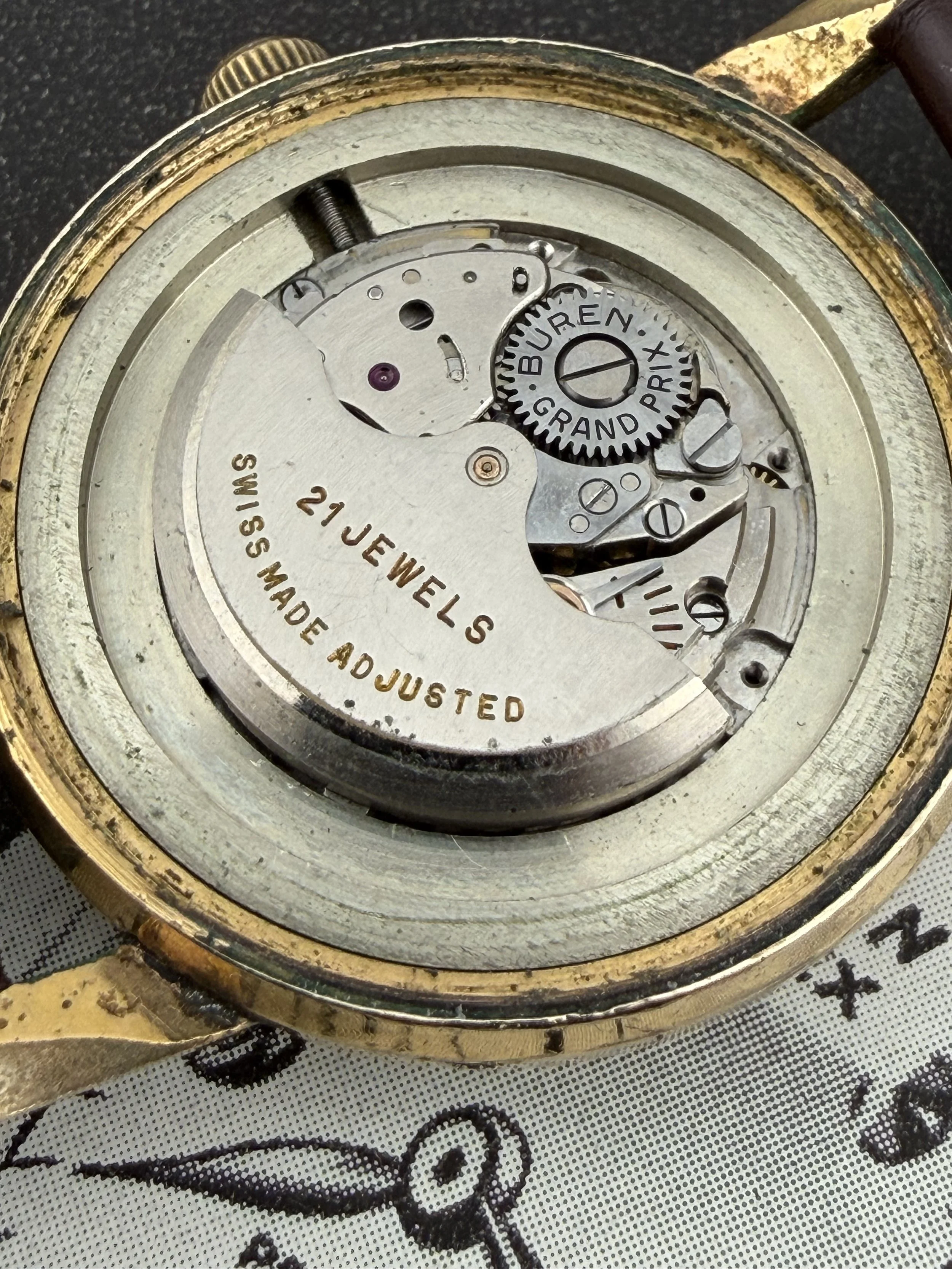
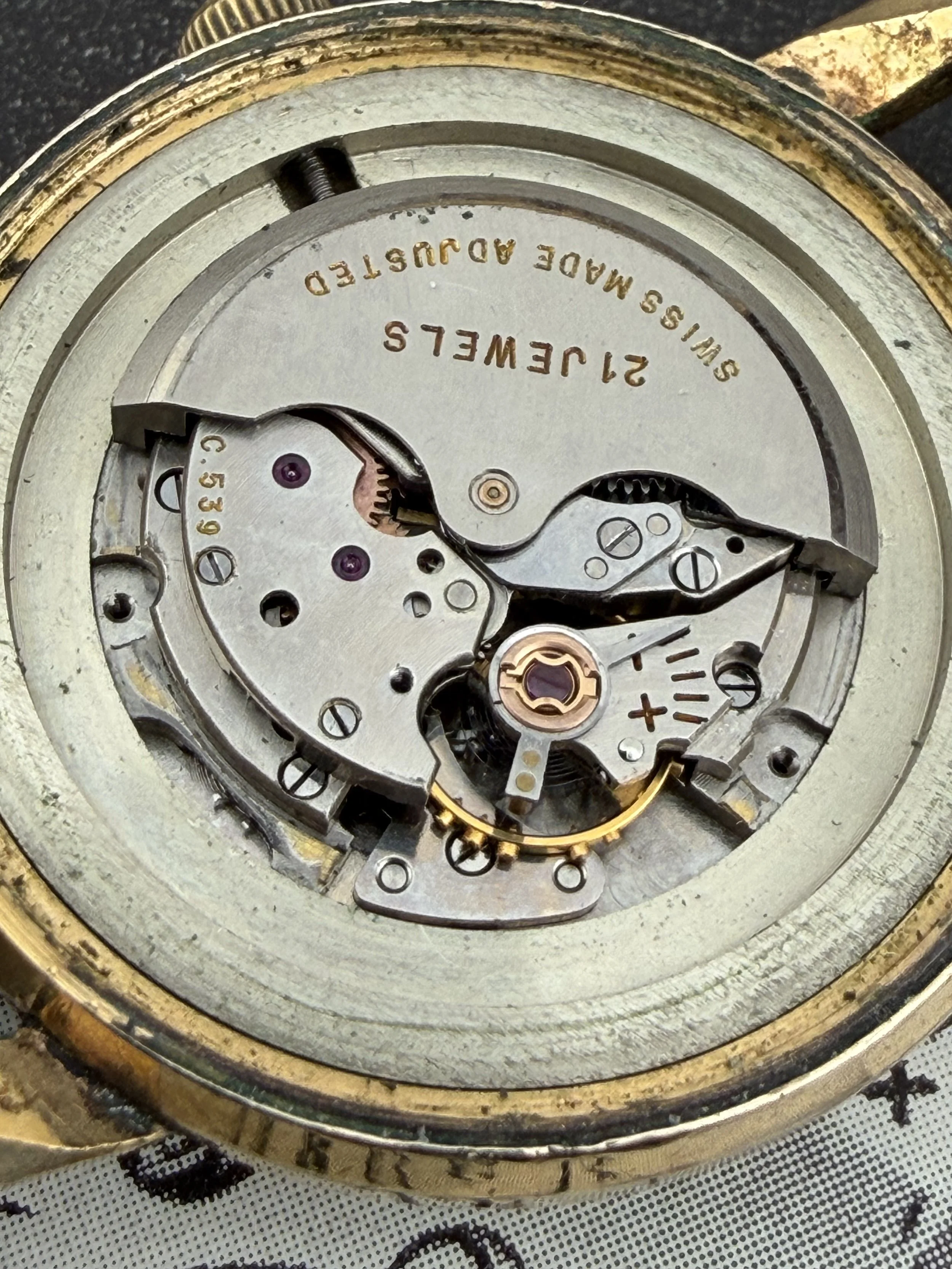
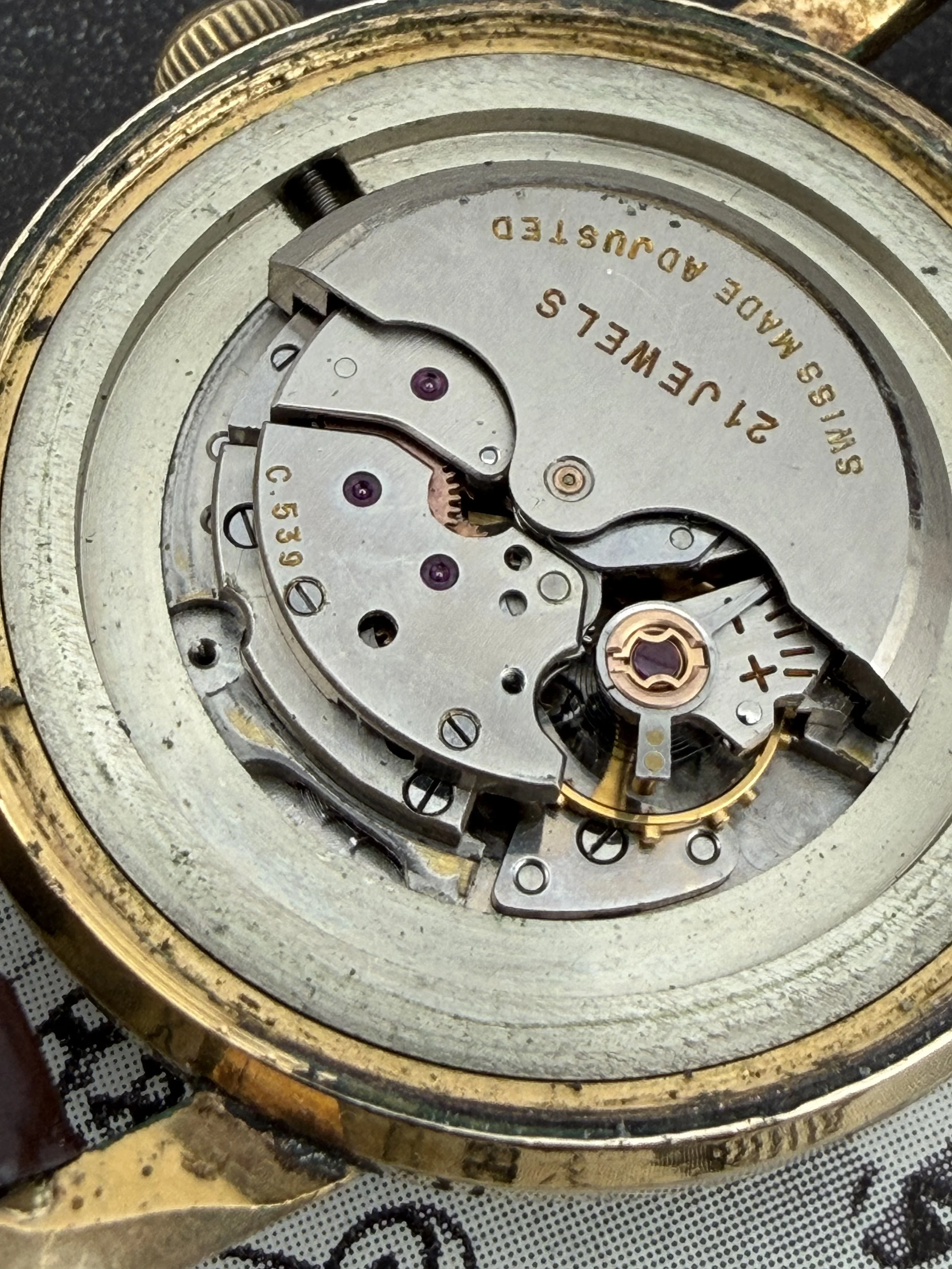
Inside this watch is the Buren Rotowind calibre C539, a Swiss-made automatic movement. The movement photographs show the characteristic Buren automatic architecture, including the oscillating winding system and beautifully machined bridges.
The movement is marked 21 JEWELS in the photographs, and the C539 designation is visible on the movement. The Rotowind family was part of Buren's first major generation of conventional automatic movements, following the company's earlier bumper-style automatic calibre 525 introduced in 1945.
The Rotowind was particularly notable because Buren designed it around a large mainspring barrel capable of storing a substantial amount of energy. Contemporary Buren literature described the movement as being capable of roughly 40 hours of running time, with the power-reserve indication allowing the wearer to see that stored energy at a glance.
There is also an interesting technical story behind the Rotowind. Buren was already deeply interested in solving one of the biggest challenges facing automatic watches: how to efficiently convert the wearer's movement into winding energy while keeping the watch compact.
That research would ultimately lead Buren to one of the most important innovations in twentieth-century automatic watchmaking.
Buren and the Micro-Rotor Revolution
In 1954, Buren patented its revolutionary micro-rotor system. Instead of placing a large automatic rotor on top of the movement, Buren integrated a small oscillating weight directly into the plane of the movement.
The result was dramatically thinner automatic watches.
Buren introduced its Super Slender movements beginning in 1957, with the calibre 1000 measuring only about 4.2 mm thick. Later developments would produce the even thinner Intra-Matic movements. Buren's micro-rotor technology was so significant that the company eventually licensed its patents to other manufacturers.
This makes the Rotowind particularly interesting historically. It represents the generation immediately before Buren changed automatic watchmaking.
It is the bridge between conventional full-rotor automatic watches and the revolutionary micro-rotor era.
The Buren Grand Prix
The Grand Prix name is also deeply associated with Buren's history. Buren was a Swiss manufacturer based in Büren an der Aare, and the company developed a reputation for producing its own mechanical movements rather than simply assembling purchased ébauches.
The company had a particularly interesting history with military watches as well. During the Second World War, Buren was among the Swiss manufacturers contracted to produce robust watches for British military use, making the Grand Prix name familiar to collectors of military and vintage Swiss watches.
After the war, Buren increasingly focused on technical innovation, especially automatic winding and ultra-thin movements.
That makes a watch like this more than simply another vintage Swiss automatic.
It represents Buren at an important moment of experimentation and development.
The watch's gold-filled case gives it a warm, elegant appearance, while the dial is remarkably restrained. The applied gold numerals provide depth and catch the light beautifully, and the power-reserve display adds a subtle technical element without overwhelming the design.
I particularly like the combination of the traditional dress-watch styling and the Rotowind complication. From across the room, it looks like a classic 1950s Swiss dress watch. Look closer, and you discover an automatic movement with an integrated power-reserve display from a company that was about to revolutionize the way automatic movements were constructed.
Buren would eventually be acquired by Hamilton, and the company later became an important part of the development of the Chrono-Matic calibre 11, the world's first commercially introduced automatic chronograph movement, alongside Hamilton, Breitling, Heuer-Leonidas and Dubois-Depraz in 1969.
So there is a remarkable technical lineage behind this relatively understated watch:
Buren → Rotowind → Micro-Rotor → Chrono-Matic.
That is what makes Buren so fascinating to collectors. The company may not have the name recognition of Omega or Longines, but its contribution to automatic watchmaking was enormously important.
This Grand Prix Rotowind captures the company right in the middle of that story—a handsome, wearable vintage watch with a genuine mechanical complication and a movement that represents an important chapter in the development of the modern automatic wristwatch.
Elegant on the outside, technically fascinating underneath, and powered by one of Buren's most important early automatic movements—this is a vintage Swiss watch with a seriously interesting story.
This beautiful Buren Grand Prix Rotowind is a wonderful example of one of Buren's most interesting early automatic watches, and a particularly charming piece of mid-century Swiss watchmaking.
At first glance, it is an elegant vintage dress watch, with its warm gold-filled case, applied gold Arabic numerals, traditional dauphine-style hands, and beautifully balanced round case. But the real story is hiding in the dial: at 12 o'clock is a power-reserve indicator, giving the watch a surprisingly sophisticated complication for its era.
The power-reserve display is one of the defining characteristics of the Buren Rotowind. Rather than simply telling you the time, the indicator provides a visual representation of how much energy remains stored in the mainspring. It is a genuinely useful complication—and one that gives this watch considerably more character than a conventional three-hand automatic.
Buren introduced the Rotowind in 1953, and the calibre was offered in several configurations, including versions with a power-reserve indicator and different seconds arrangements. The Rotowind was produced for a relatively short period before Buren moved toward its revolutionary micro-rotor automatic movements later in the decade.
The Movement
Inside this watch is the Buren Rotowind calibre C539, a Swiss-made automatic movement. The movement photographs show the characteristic Buren automatic architecture, including the oscillating winding system and beautifully machined bridges.
The movement is marked 21 JEWELS in the photographs, and the C539 designation is visible on the movement. The Rotowind family was part of Buren's first major generation of conventional automatic movements, following the company's earlier bumper-style automatic calibre 525 introduced in 1945.
The Rotowind was particularly notable because Buren designed it around a large mainspring barrel capable of storing a substantial amount of energy. Contemporary Buren literature described the movement as being capable of roughly 40 hours of running time, with the power-reserve indication allowing the wearer to see that stored energy at a glance.
There is also an interesting technical story behind the Rotowind. Buren was already deeply interested in solving one of the biggest challenges facing automatic watches: how to efficiently convert the wearer's movement into winding energy while keeping the watch compact.
That research would ultimately lead Buren to one of the most important innovations in twentieth-century automatic watchmaking.
Buren and the Micro-Rotor Revolution
In 1954, Buren patented its revolutionary micro-rotor system. Instead of placing a large automatic rotor on top of the movement, Buren integrated a small oscillating weight directly into the plane of the movement.
The result was dramatically thinner automatic watches.
Buren introduced its Super Slender movements beginning in 1957, with the calibre 1000 measuring only about 4.2 mm thick. Later developments would produce the even thinner Intra-Matic movements. Buren's micro-rotor technology was so significant that the company eventually licensed its patents to other manufacturers.
This makes the Rotowind particularly interesting historically. It represents the generation immediately before Buren changed automatic watchmaking.
It is the bridge between conventional full-rotor automatic watches and the revolutionary micro-rotor era.
The Buren Grand Prix
The Grand Prix name is also deeply associated with Buren's history. Buren was a Swiss manufacturer based in Büren an der Aare, and the company developed a reputation for producing its own mechanical movements rather than simply assembling purchased ébauches.
The company had a particularly interesting history with military watches as well. During the Second World War, Buren was among the Swiss manufacturers contracted to produce robust watches for British military use, making the Grand Prix name familiar to collectors of military and vintage Swiss watches.
After the war, Buren increasingly focused on technical innovation, especially automatic winding and ultra-thin movements.
That makes a watch like this more than simply another vintage Swiss automatic.
It represents Buren at an important moment of experimentation and development.
The watch's gold-filled case gives it a warm, elegant appearance, while the dial is remarkably restrained. The applied gold numerals provide depth and catch the light beautifully, and the power-reserve display adds a subtle technical element without overwhelming the design.
I particularly like the combination of the traditional dress-watch styling and the Rotowind complication. From across the room, it looks like a classic 1950s Swiss dress watch. Look closer, and you discover an automatic movement with an integrated power-reserve display from a company that was about to revolutionize the way automatic movements were constructed.
Buren would eventually be acquired by Hamilton, and the company later became an important part of the development of the Chrono-Matic calibre 11, the world's first commercially introduced automatic chronograph movement, alongside Hamilton, Breitling, Heuer-Leonidas and Dubois-Depraz in 1969.
So there is a remarkable technical lineage behind this relatively understated watch:
Buren → Rotowind → Micro-Rotor → Chrono-Matic.
That is what makes Buren so fascinating to collectors. The company may not have the name recognition of Omega or Longines, but its contribution to automatic watchmaking was enormously important.
This Grand Prix Rotowind captures the company right in the middle of that story—a handsome, wearable vintage watch with a genuine mechanical complication and a movement that represents an important chapter in the development of the modern automatic wristwatch.
Elegant on the outside, technically fascinating underneath, and powered by one of Buren's most important early automatic movements—this is a vintage Swiss watch with a seriously interesting story.