

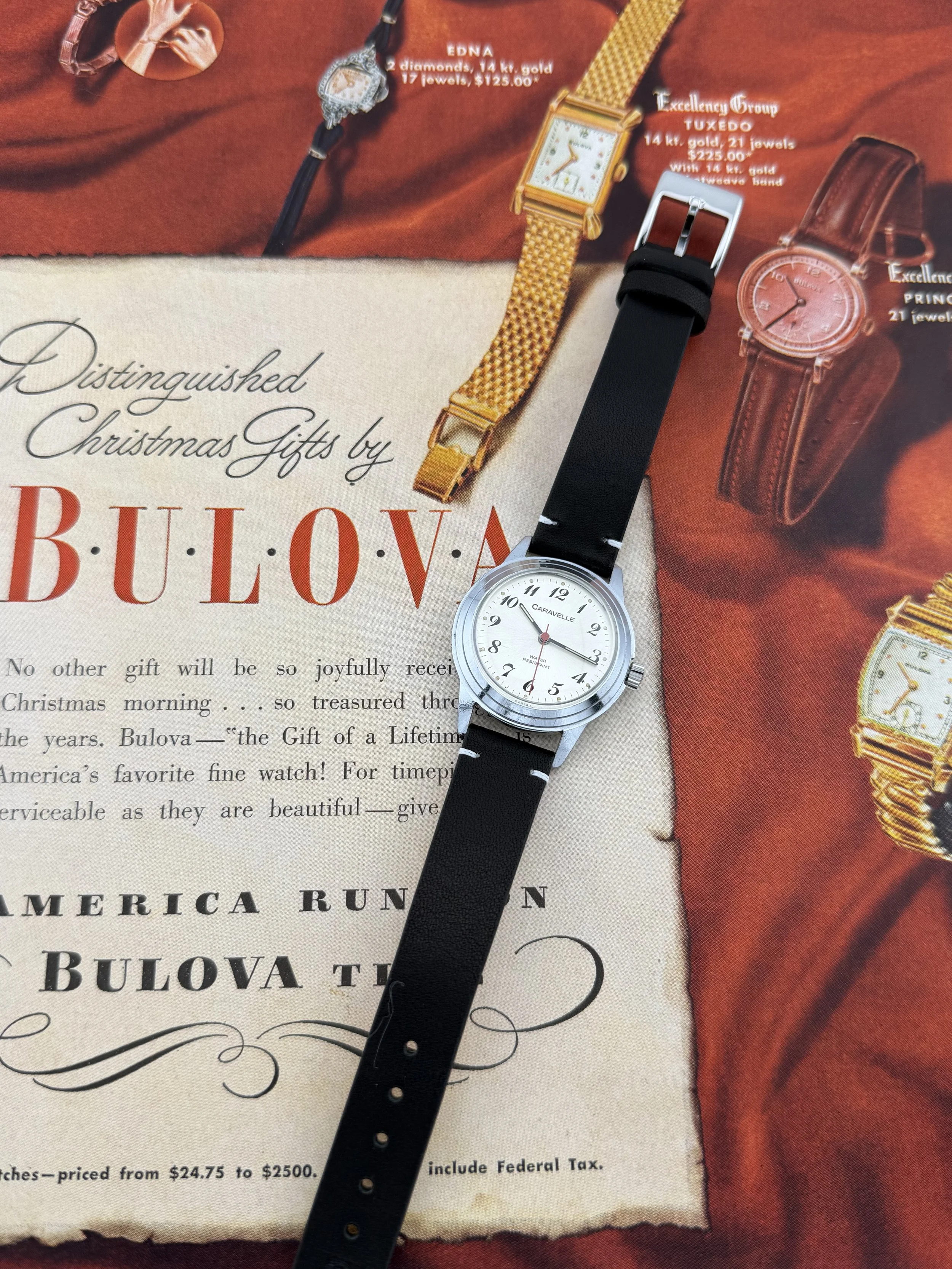
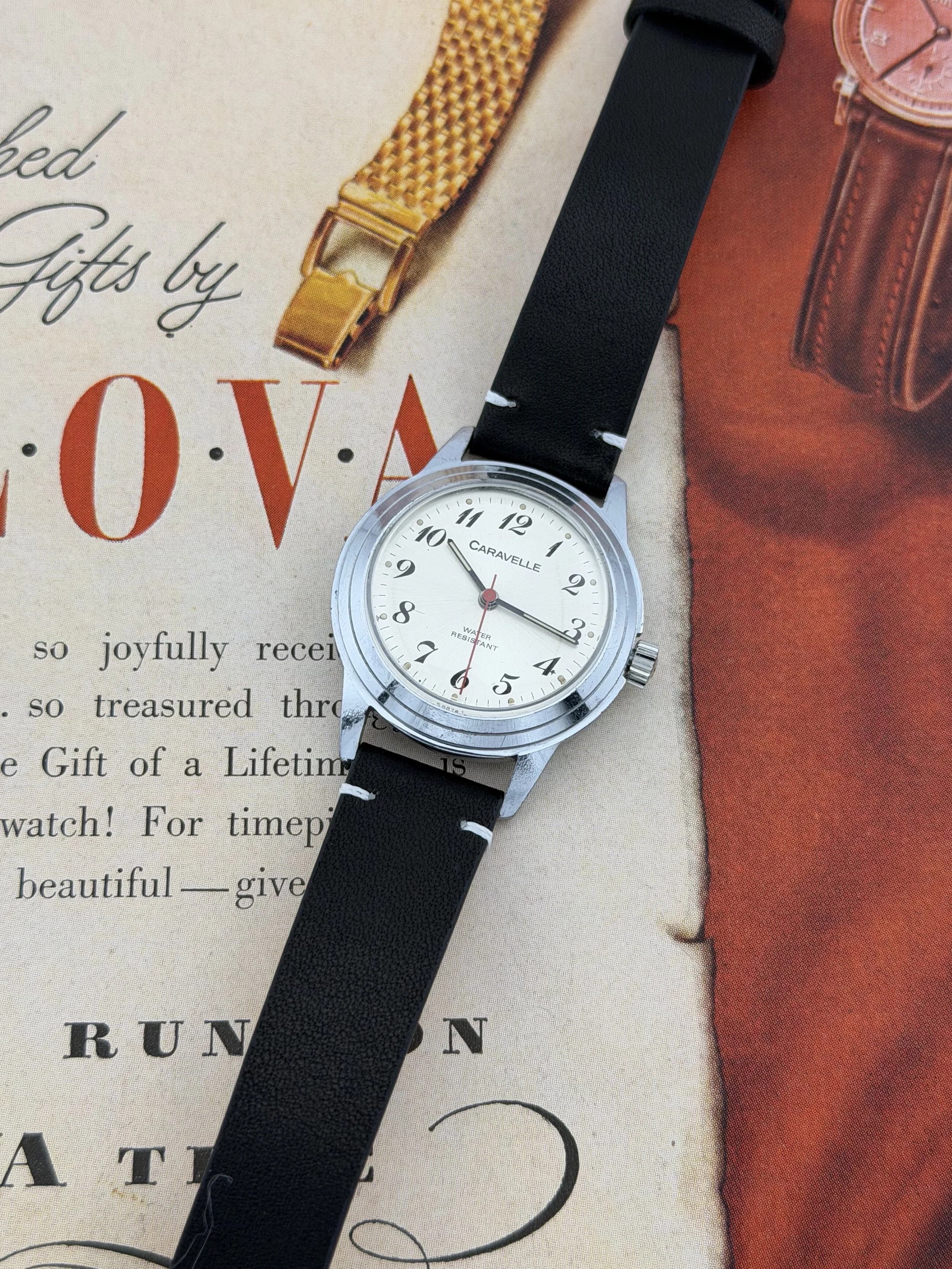
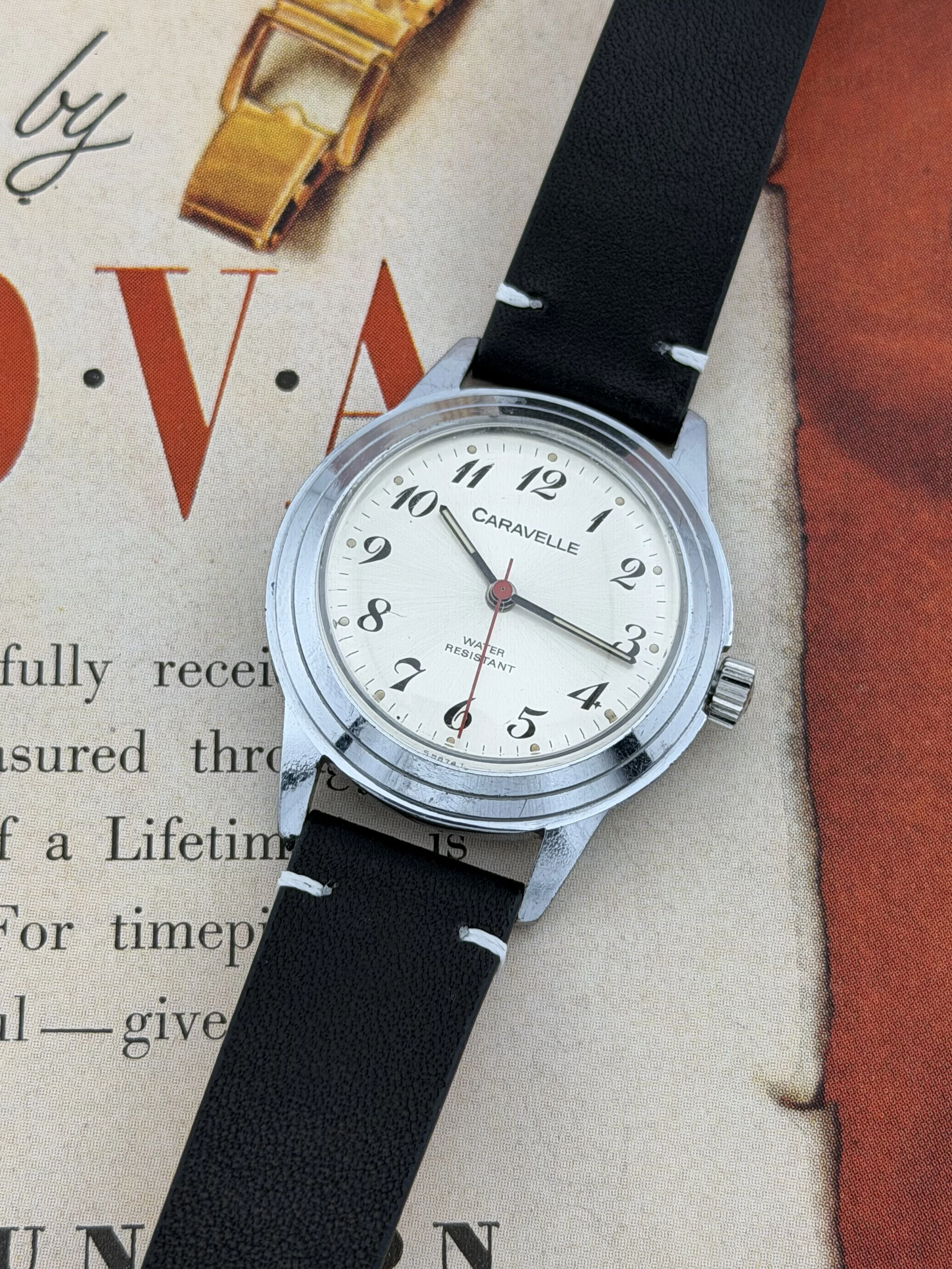
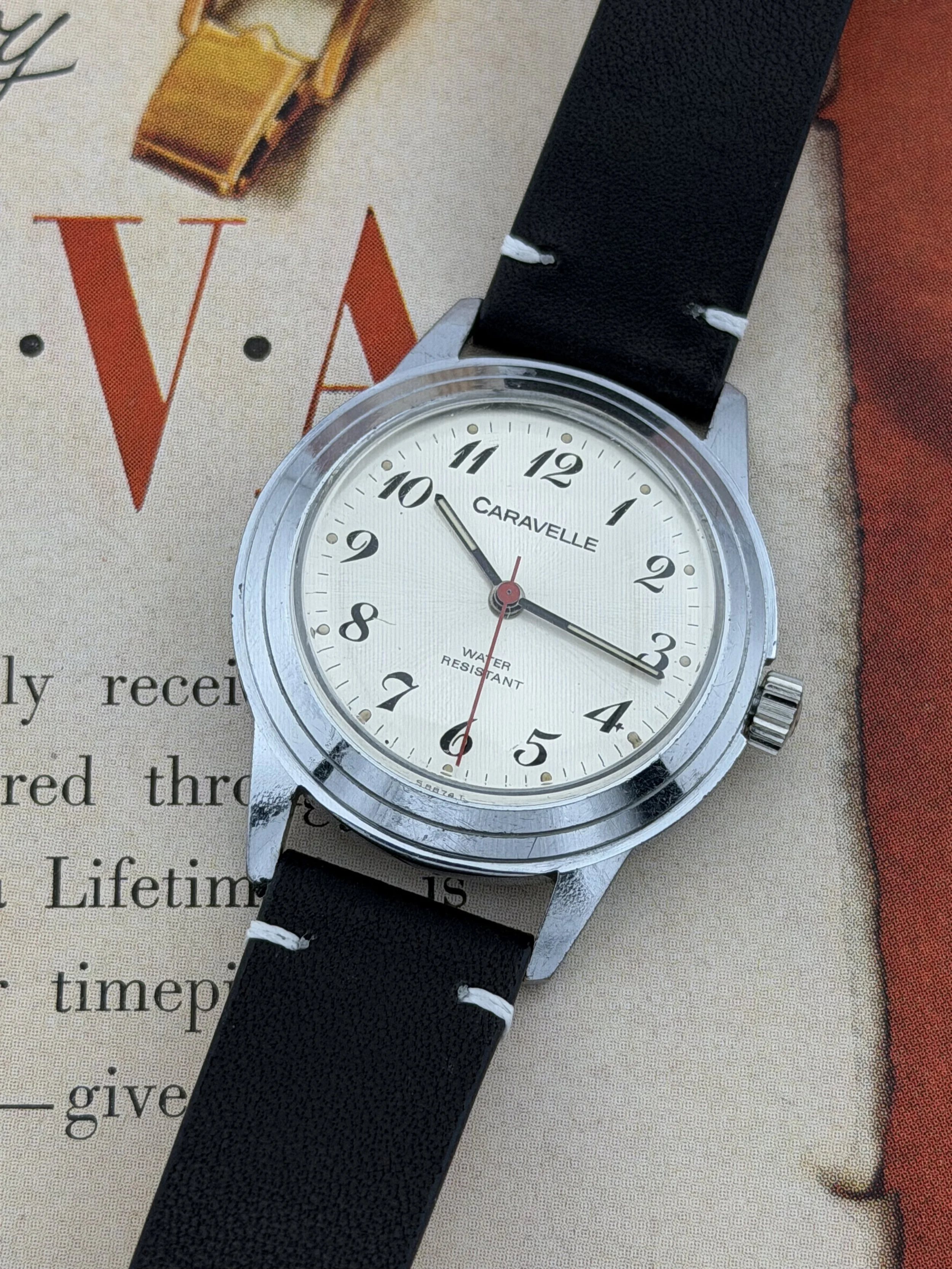
Caravelle by Bulova | 17 Jewels | Stepped Steel Case | Red Seconds Hand | Water Resistant | Swiss Mechanical Movement | Circa 1960s
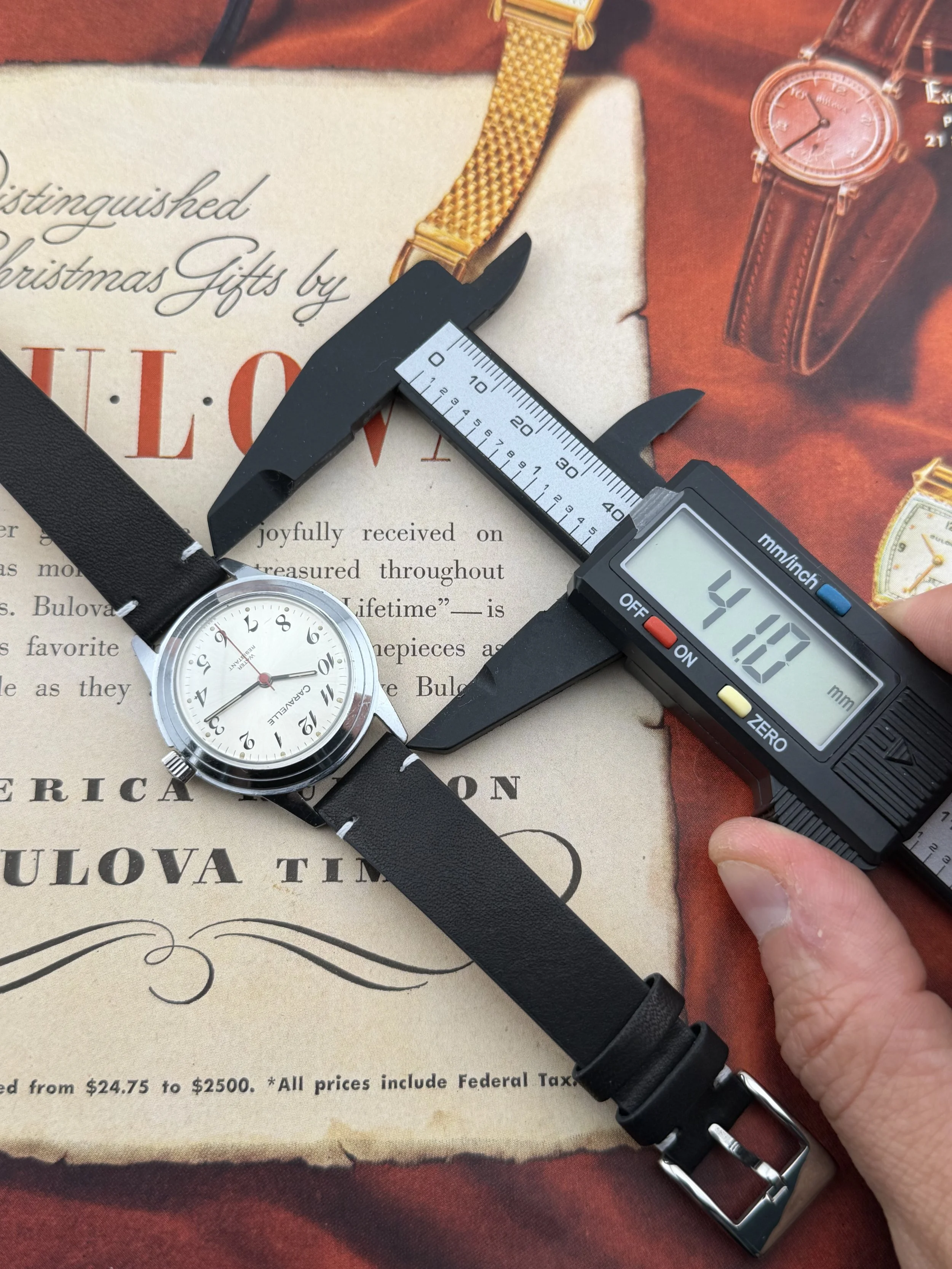
This fantastic vintage Caravelle by Bulova is a wonderful example of the affordable mechanical watches that helped make quality watchmaking accessible to a much wider audience during the 1960s. With its beautifully stepped stainless steel case, crisp white dial, oversized Arabic numerals, red seconds hand, and 17-jewel mechanical movement, it has a fantastic mid-century character that feels both classic and surprisingly modern.
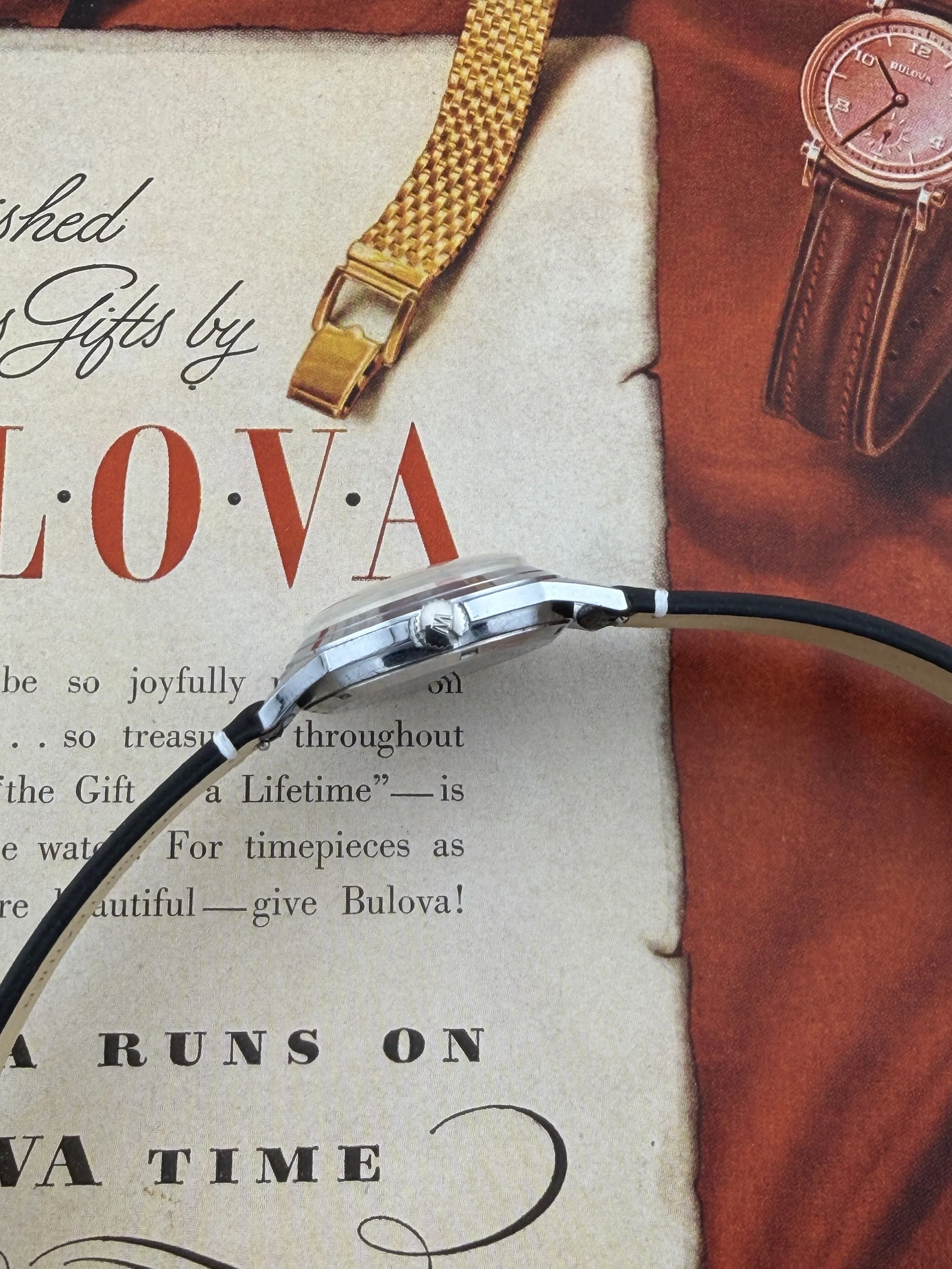
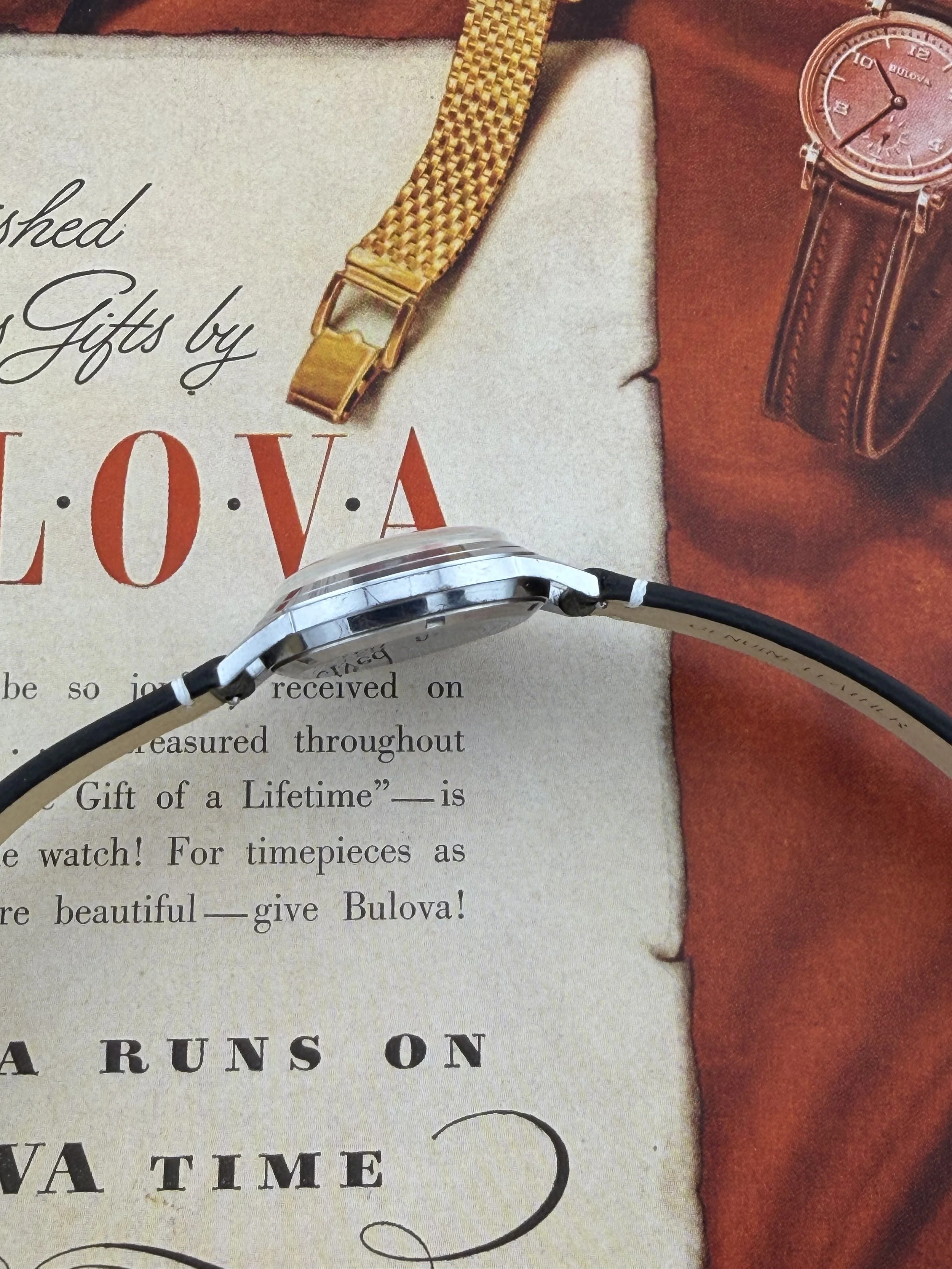
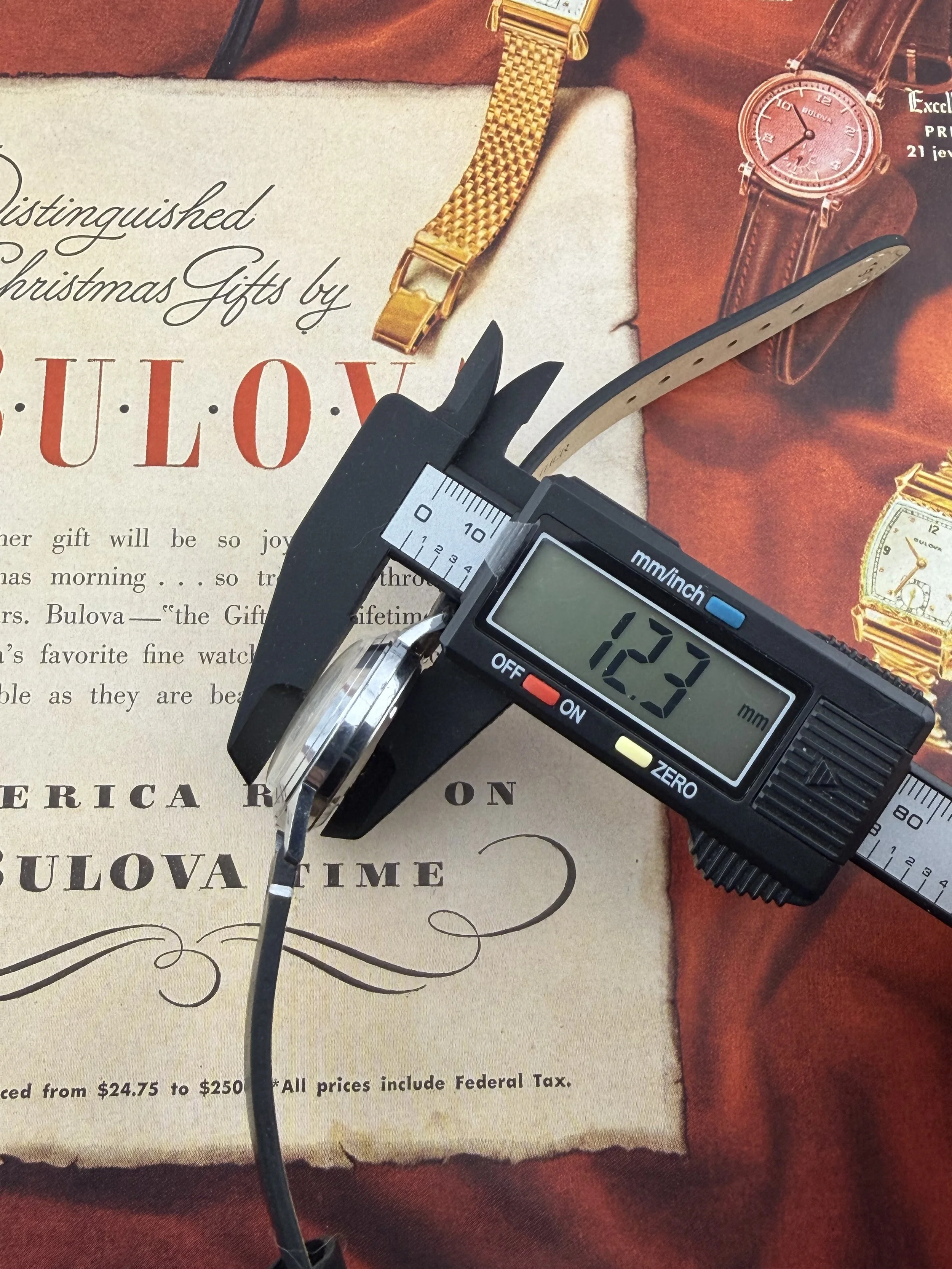
The stepped steel case is one of the watch's defining features. Rather than using a simple rounded case profile, the stepped construction creates several distinct levels around the bezel, giving the watch considerably more visual depth. The polished surfaces catch the light beautifully and give the watch a more substantial presence than its relatively restrained proportions might suggest.
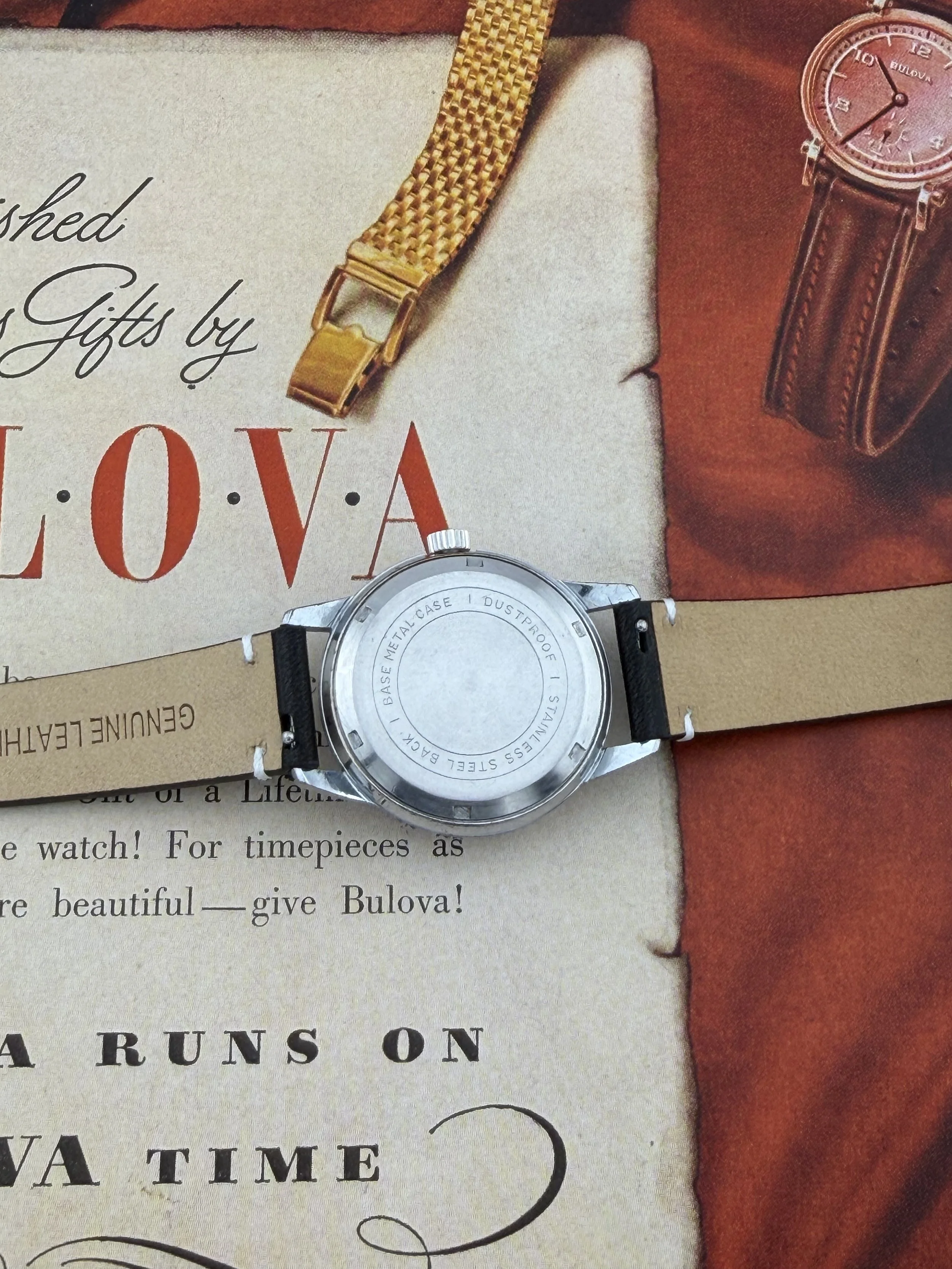
The case also has that unmistakable vintage tool-watch quality. It is practical, straightforward, and designed to be worn. Combined with the dial's Water Resistant designation, the watch reflects the growing demand during the post-war period for mechanical watches that could withstand everyday life rather than being reserved solely for formal occasions.
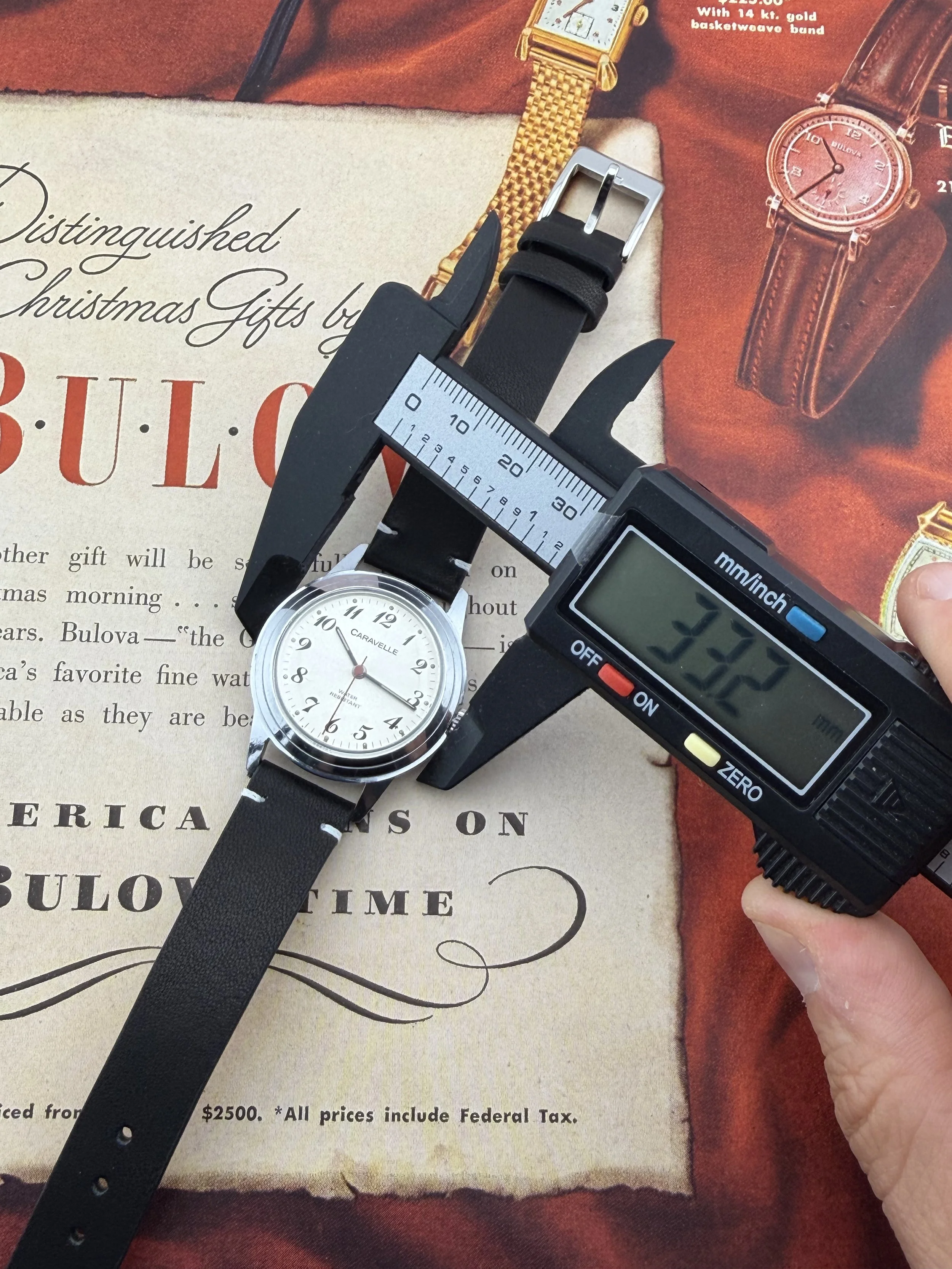
The dial is wonderfully clean and highly legible. Large black Arabic numerals dominate the surface, with a fine minute track running around the perimeter. The typography has a distinctly mid-century character, giving the watch an almost instrument-like appearance while still retaining the elegance expected from a classic dress watch.
And then there is the red seconds hand.
That single flash of colour completely changes the personality of the watch. Sweeping across the pale dial, the red hand provides a wonderful contrast to the black numerals and silver-toned case. It is exactly the kind of small design detail that makes vintage watches so enjoyable—subtle, functional, but instantly recognizable.
The applied hour markers and small contrasting minute dots add another layer of depth to the dial. Rather than being completely flat, the dial has several levels of visual information, allowing it to remain extremely legible without becoming boring.
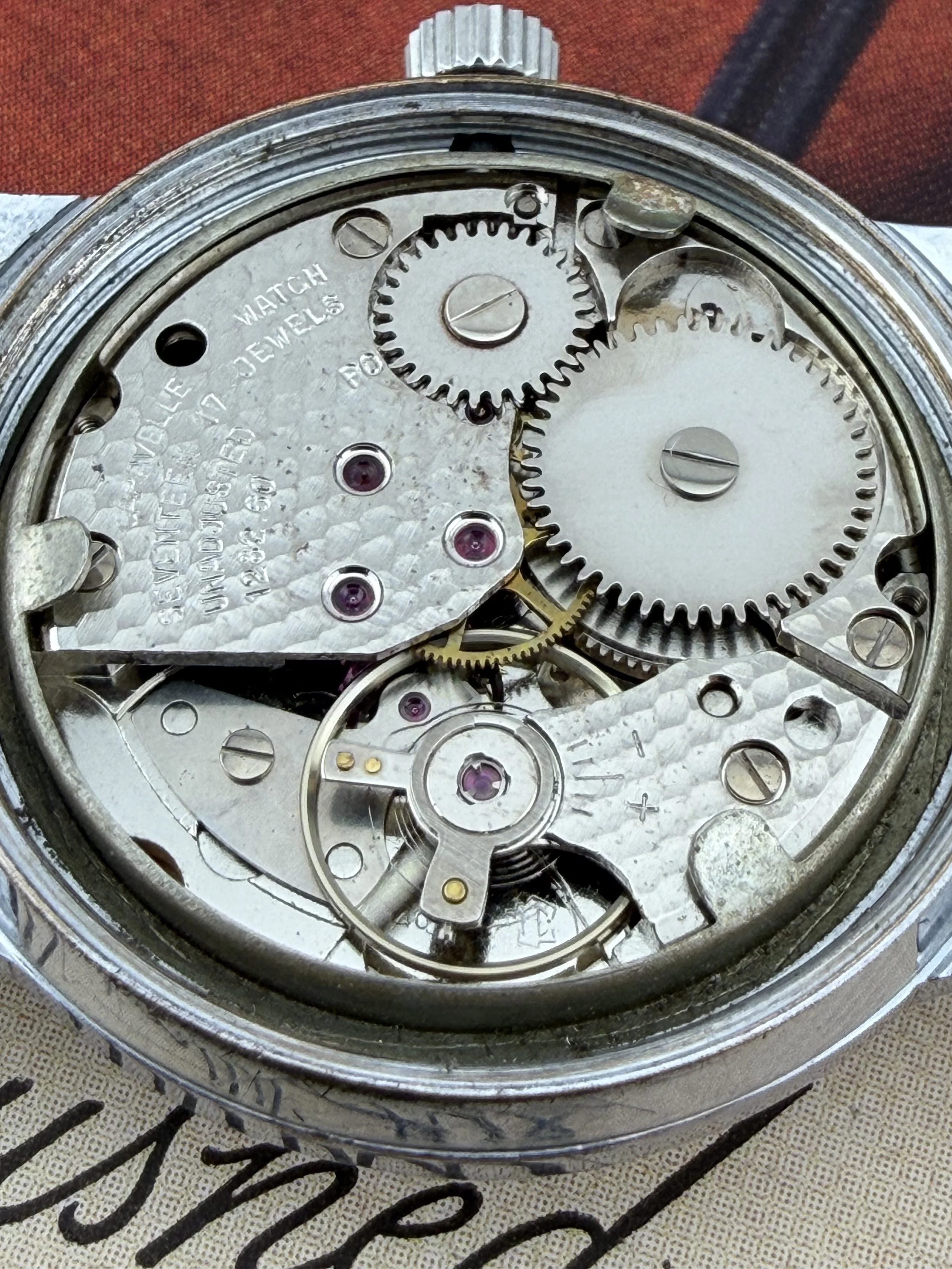
Inside is a 17-jewel mechanical movement, visibly marked Caravelle Watch Co., Seventeen 17 Jewels, and Unadjusted. The movement is a traditional manually wound Swiss mechanical calibre, with a straightforward architecture designed around reliability and serviceability.
The movement itself is particularly charming to examine. The large winding wheels, exposed gear train, jeweled pivots, balance assembly, and traditional regulator are all reminders that this watch predates the electronic revolution that would soon transform the industry. Every movement of the seconds hand is ultimately being produced by a mainspring, gears, and a mechanical oscillator.
The 17-jewel configuration was a well-established standard for quality mechanical watches of the period. Jewels were used as low-friction bearings at critical points throughout the mechanism, reducing friction and wear while helping the movement operate reliably over many years.
The Caravelle Story
What makes this watch even more interesting is the name on the dial.
Caravelle was introduced by Bulova in 1962 as a more affordable line of jeweled watches, positioned to bring mechanical watchmaking to consumers who wanted something more sophisticated than the inexpensive jewel-less watches dominating the budget market. Bulova deliberately placed Caravelle at an accessible price point, with early watches retailing for roughly $10.95 to $29.95.
The strategy worked extraordinarily well. By 1968, Caravelle had become the largest-selling jeweled-movement watch line in the United States, an incredible achievement for a brand that had existed for only six years.
This was happening at a fascinating moment in Bulova's history. In the same year that Caravelle was launched, Bulova was also introducing the revolutionary Accutron, the tuning-fork watch that would change the course of electronic timekeeping. While Accutron represented the technological future, Caravelle continued to offer traditional mechanical watchmaking at an accessible price.
That makes a watch like this a fascinating snapshot of the period. On one side of the Bulova empire was the futuristic Accutron; on the other was Caravelle, continuing the centuries-old tradition of springs, gears, jewels, and mechanical regulation.
Caravelle was never intended to compete directly with Omega or Rolex. Its entire purpose was different: make a good mechanical watch affordable. That philosophy is precisely why these watches are so enjoyable today. They give collectors the opportunity to experience genuine mid-century mechanical watchmaking without paying the premium associated with the major Swiss luxury houses.
The design of this example is particularly successful because it sits right between dress watch and everyday watch. The stepped steel case gives it architectural sophistication, while the bold numerals, water-resistant construction, and red seconds hand give it enough personality to be worn casually.
There is also something wonderfully representative about the movement being marked “Unadjusted.” This was not pretending to be a chronometer or competing with Bulova's highest-end precision watches. It was an honest, practical mechanical movement built to do its job reliably and economically.
For collectors, that honesty is part of the appeal.
This is a watch from an extraordinary period in American and Swiss horological history—a time when mechanical watches were still everywhere, but the industry was already standing on the edge of the electronic revolution.
For anyone looking for an affordable vintage watch with real character, this Caravelle is a fantastic choice. The stepped stainless steel case, clean oversized Arabic numerals, red seconds hand, water-resistant construction, 17-jewel mechanical movement, and fascinating connection to Bulova's Caravelle experiment make it far more than just another vintage three-hander.
A wonderfully wearable piece of the 1960s—and a great reminder that you don't need a famous name on the dial to own a watch with a fascinating story.
This fantastic vintage Caravelle by Bulova is a wonderful example of the affordable mechanical watches that helped make quality watchmaking accessible to a much wider audience during the 1960s. With its beautifully stepped stainless steel case, crisp white dial, oversized Arabic numerals, red seconds hand, and 17-jewel mechanical movement, it has a fantastic mid-century character that feels both classic and surprisingly modern.
The stepped steel case is one of the watch's defining features. Rather than using a simple rounded case profile, the stepped construction creates several distinct levels around the bezel, giving the watch considerably more visual depth. The polished surfaces catch the light beautifully and give the watch a more substantial presence than its relatively restrained proportions might suggest.
The case also has that unmistakable vintage tool-watch quality. It is practical, straightforward, and designed to be worn. Combined with the dial's Water Resistant designation, the watch reflects the growing demand during the post-war period for mechanical watches that could withstand everyday life rather than being reserved solely for formal occasions.
The dial is wonderfully clean and highly legible. Large black Arabic numerals dominate the surface, with a fine minute track running around the perimeter. The typography has a distinctly mid-century character, giving the watch an almost instrument-like appearance while still retaining the elegance expected from a classic dress watch.
And then there is the red seconds hand.
That single flash of colour completely changes the personality of the watch. Sweeping across the pale dial, the red hand provides a wonderful contrast to the black numerals and silver-toned case. It is exactly the kind of small design detail that makes vintage watches so enjoyable—subtle, functional, but instantly recognizable.
The applied hour markers and small contrasting minute dots add another layer of depth to the dial. Rather than being completely flat, the dial has several levels of visual information, allowing it to remain extremely legible without becoming boring.
Inside is a 17-jewel mechanical movement, visibly marked Caravelle Watch Co., Seventeen 17 Jewels, and Unadjusted. The movement is a traditional manually wound Swiss mechanical calibre, with a straightforward architecture designed around reliability and serviceability.
The movement itself is particularly charming to examine. The large winding wheels, exposed gear train, jeweled pivots, balance assembly, and traditional regulator are all reminders that this watch predates the electronic revolution that would soon transform the industry. Every movement of the seconds hand is ultimately being produced by a mainspring, gears, and a mechanical oscillator.
The 17-jewel configuration was a well-established standard for quality mechanical watches of the period. Jewels were used as low-friction bearings at critical points throughout the mechanism, reducing friction and wear while helping the movement operate reliably over many years.
The Caravelle Story
What makes this watch even more interesting is the name on the dial.
Caravelle was introduced by Bulova in 1962 as a more affordable line of jeweled watches, positioned to bring mechanical watchmaking to consumers who wanted something more sophisticated than the inexpensive jewel-less watches dominating the budget market. Bulova deliberately placed Caravelle at an accessible price point, with early watches retailing for roughly $10.95 to $29.95.
The strategy worked extraordinarily well. By 1968, Caravelle had become the largest-selling jeweled-movement watch line in the United States, an incredible achievement for a brand that had existed for only six years.
This was happening at a fascinating moment in Bulova's history. In the same year that Caravelle was launched, Bulova was also introducing the revolutionary Accutron, the tuning-fork watch that would change the course of electronic timekeeping. While Accutron represented the technological future, Caravelle continued to offer traditional mechanical watchmaking at an accessible price.
That makes a watch like this a fascinating snapshot of the period. On one side of the Bulova empire was the futuristic Accutron; on the other was Caravelle, continuing the centuries-old tradition of springs, gears, jewels, and mechanical regulation.
Caravelle was never intended to compete directly with Omega or Rolex. Its entire purpose was different: make a good mechanical watch affordable. That philosophy is precisely why these watches are so enjoyable today. They give collectors the opportunity to experience genuine mid-century mechanical watchmaking without paying the premium associated with the major Swiss luxury houses.
The design of this example is particularly successful because it sits right between dress watch and everyday watch. The stepped steel case gives it architectural sophistication, while the bold numerals, water-resistant construction, and red seconds hand give it enough personality to be worn casually.
There is also something wonderfully representative about the movement being marked “Unadjusted.” This was not pretending to be a chronometer or competing with Bulova's highest-end precision watches. It was an honest, practical mechanical movement built to do its job reliably and economically.
For collectors, that honesty is part of the appeal.
This is a watch from an extraordinary period in American and Swiss horological history—a time when mechanical watches were still everywhere, but the industry was already standing on the edge of the electronic revolution.
For anyone looking for an affordable vintage watch with real character, this Caravelle is a fantastic choice. The stepped stainless steel case, clean oversized Arabic numerals, red seconds hand, water-resistant construction, 17-jewel mechanical movement, and fascinating connection to Bulova's Caravelle experiment make it far more than just another vintage three-hander.
A wonderfully wearable piece of the 1960s—and a great reminder that you don't need a famous name on the dial to own a watch with a fascinating story.