

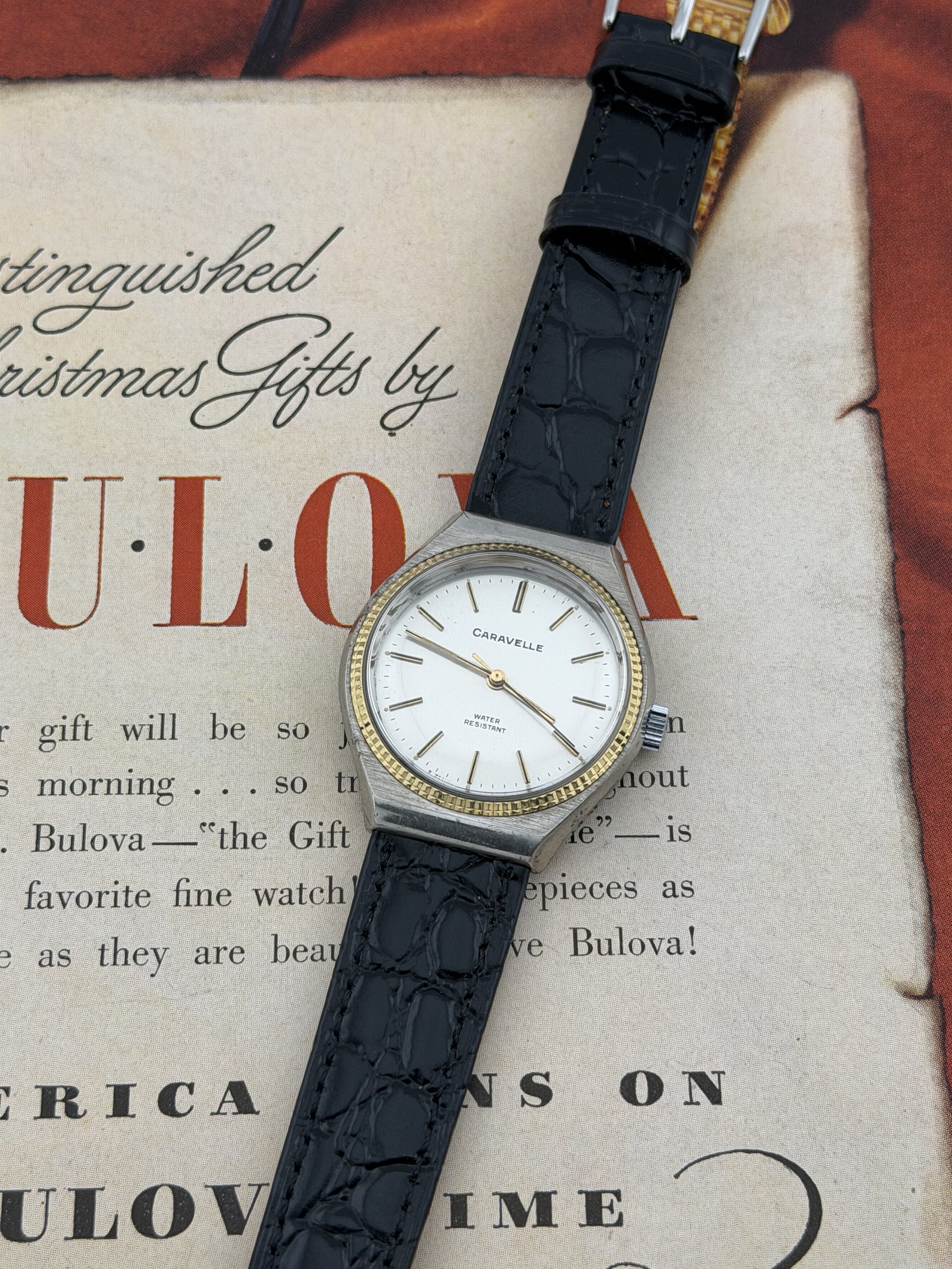

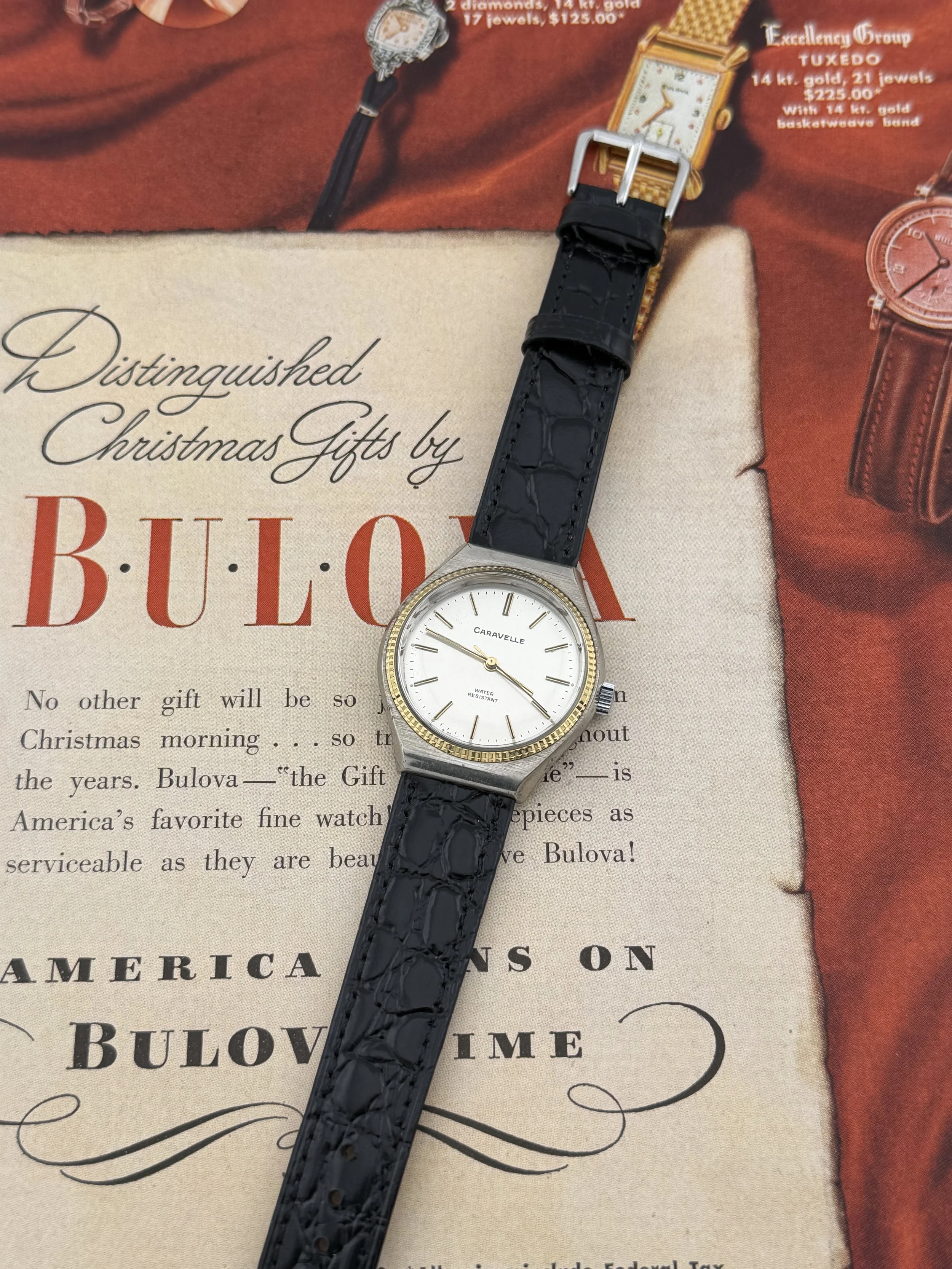




This attractive vintage Caravelle by Bulova is a great example of the clean, refined designs produced by the brand toward the end of the mechanical-watch era. Founded by Bulova in 1962, Caravelle was created to offer stylish and dependable watches at a more accessible price point.
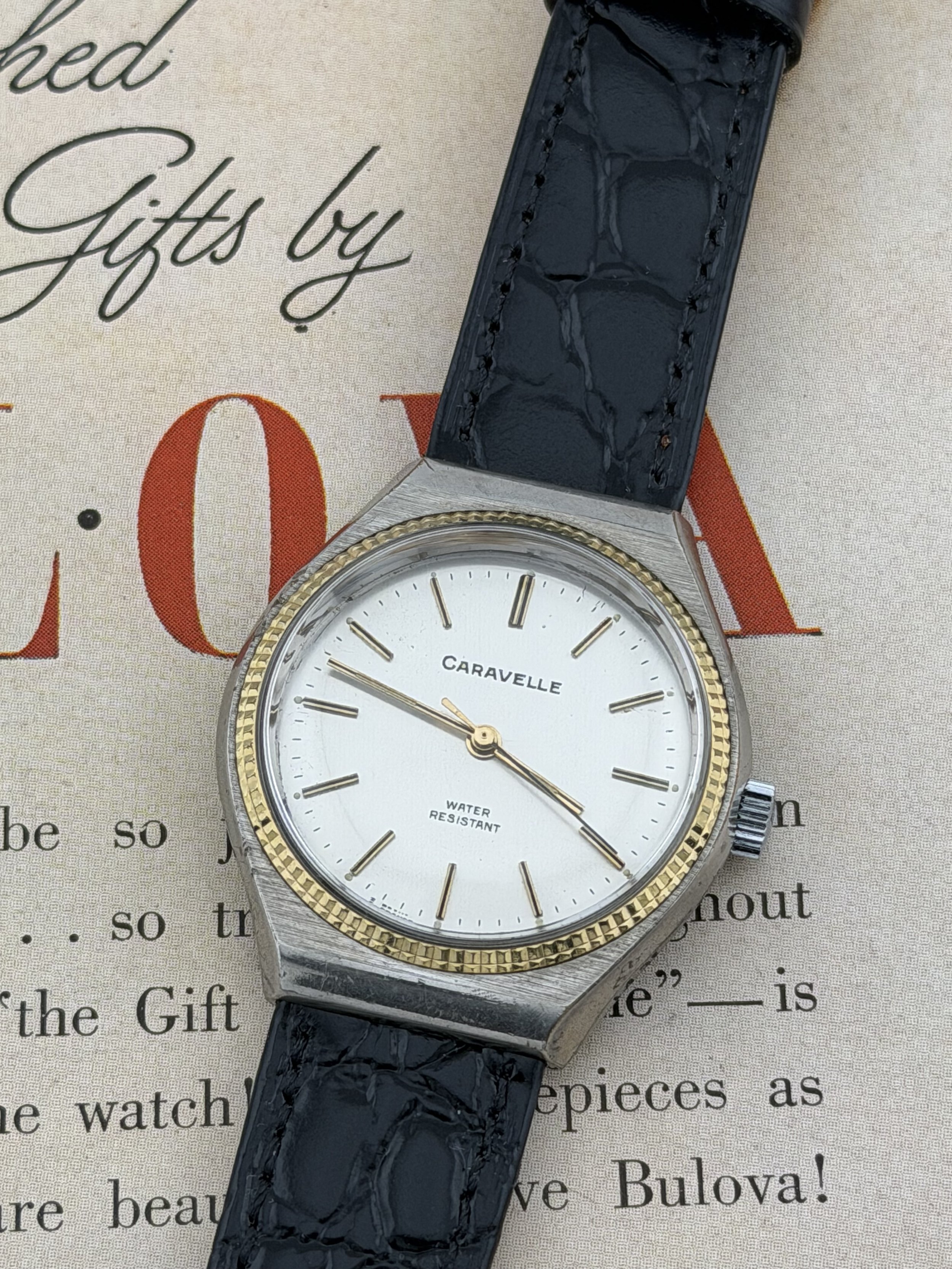
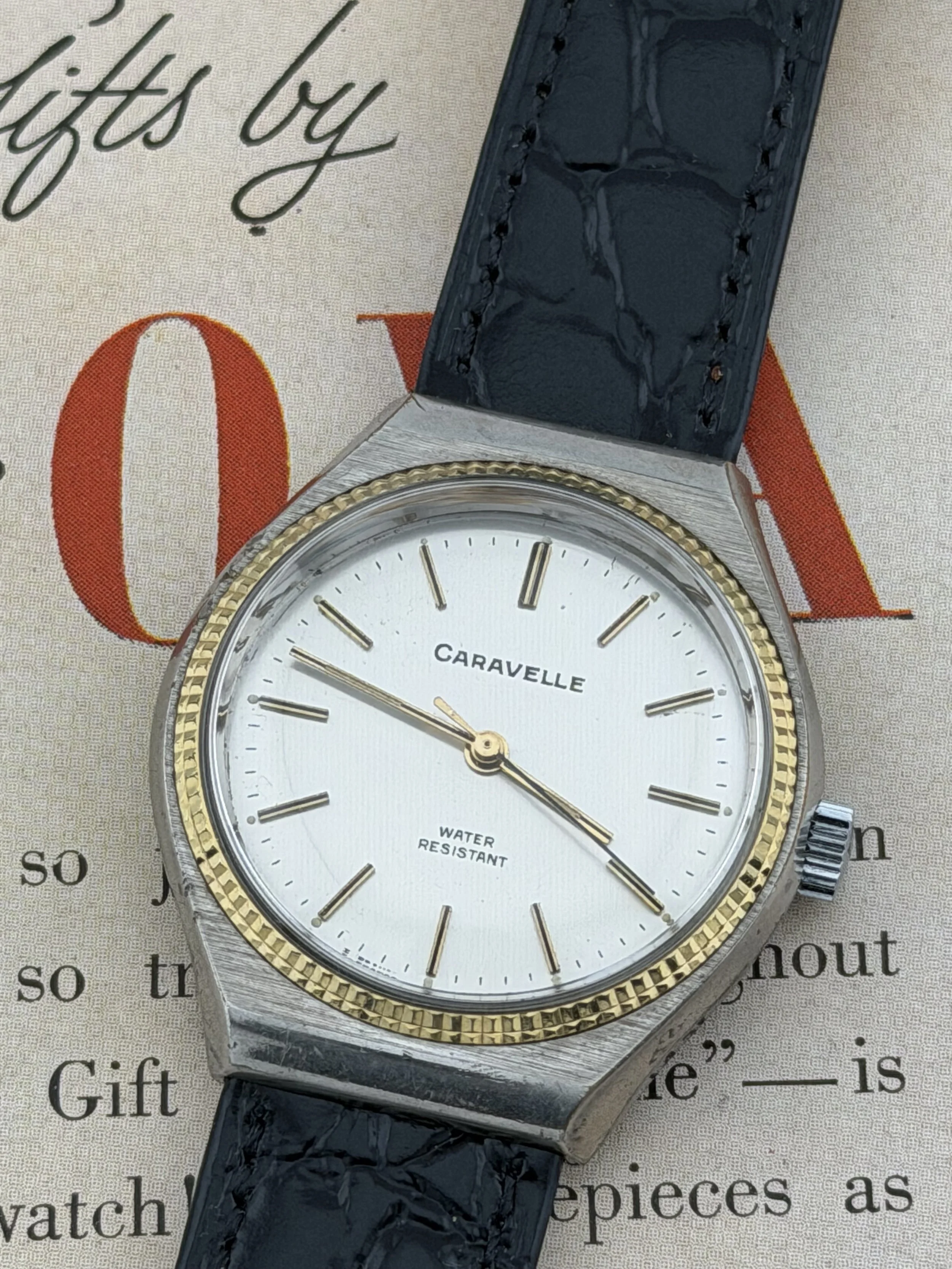
The watch features a beautifully understated silver sunburst dial with simple stick hour markers and slim hands. The minimalist dial is contrasted by a distinctive gold-tone fluted bezel, giving the watch a dressier appearance while retaining the clean lines of its late-1970s design.
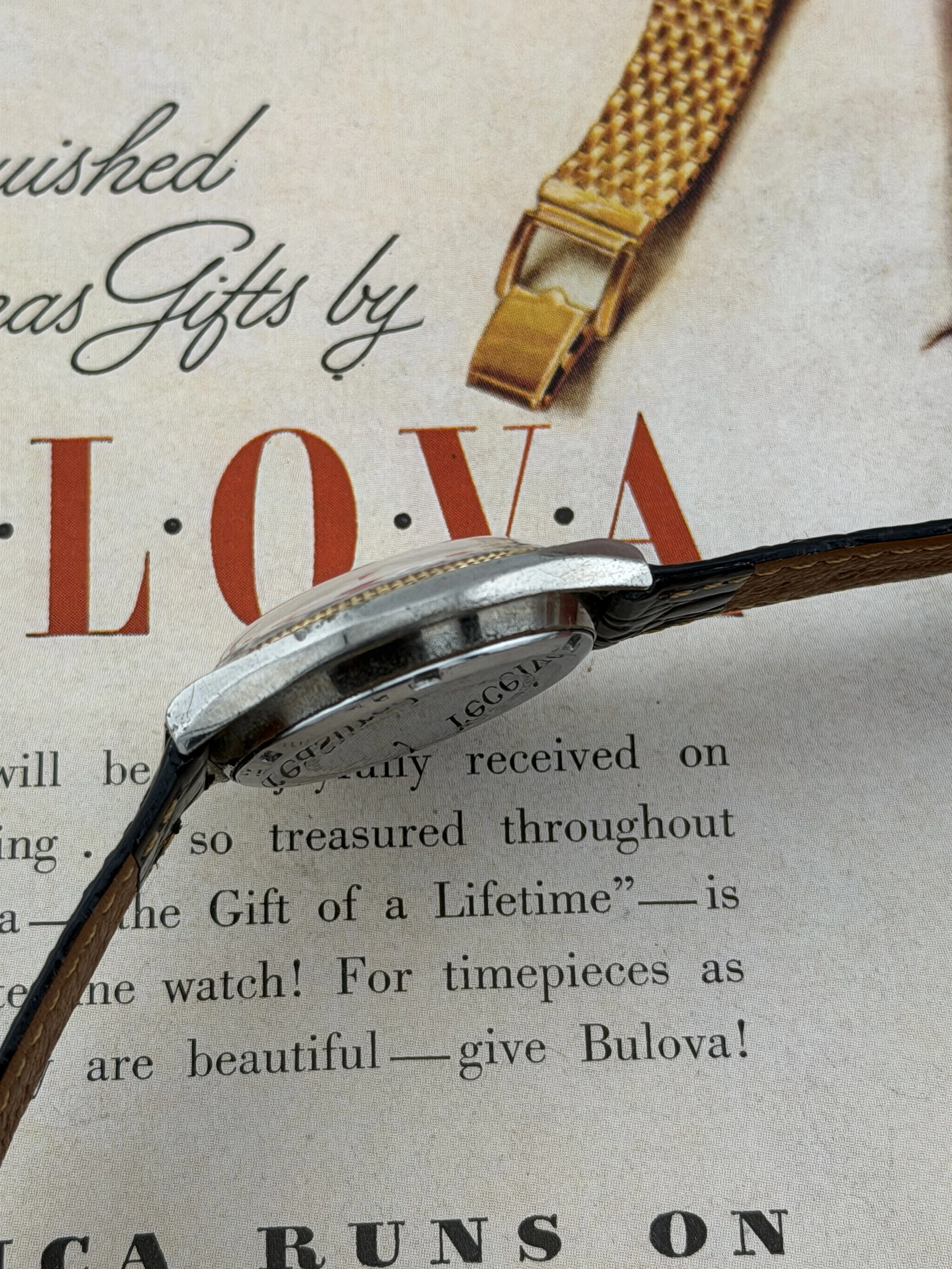
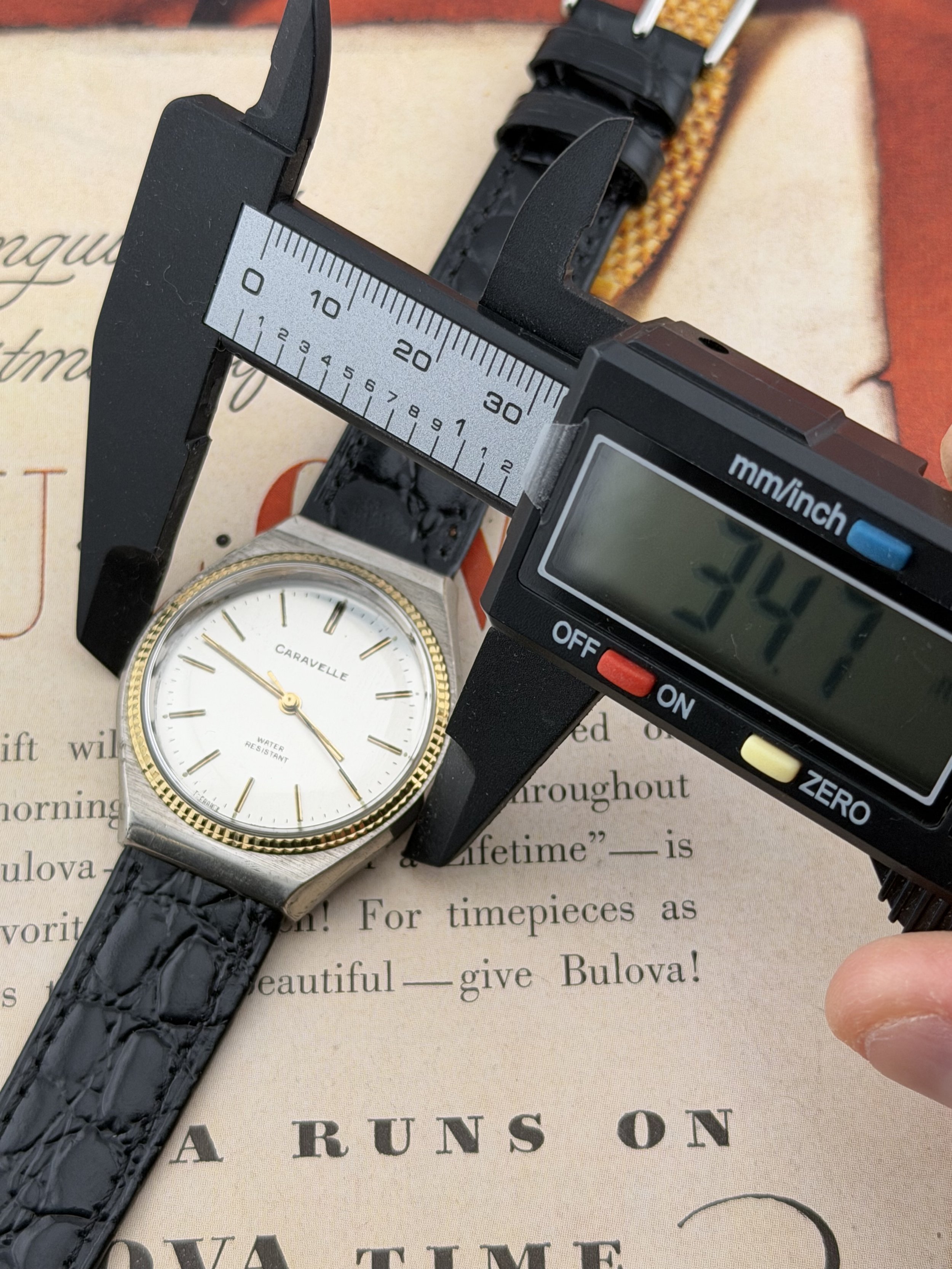
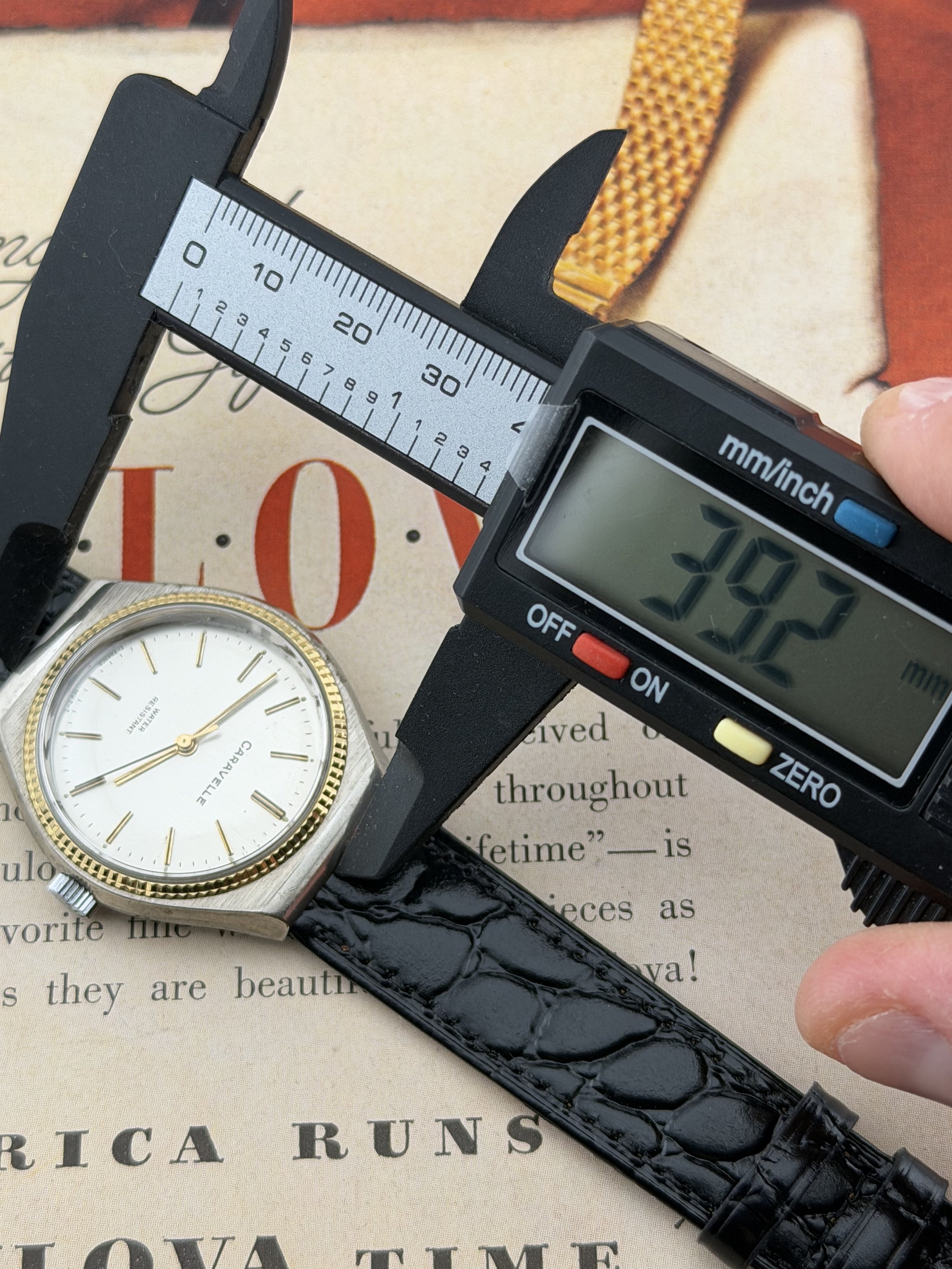
At approximately 34.7mm across, with a 39.2mm lug-to-lug and roughly 11.7mm thick including the crystal, it is a very wearable vintage size. The integrated-style steel case gives it a surprisingly modern appearance on the wrist.
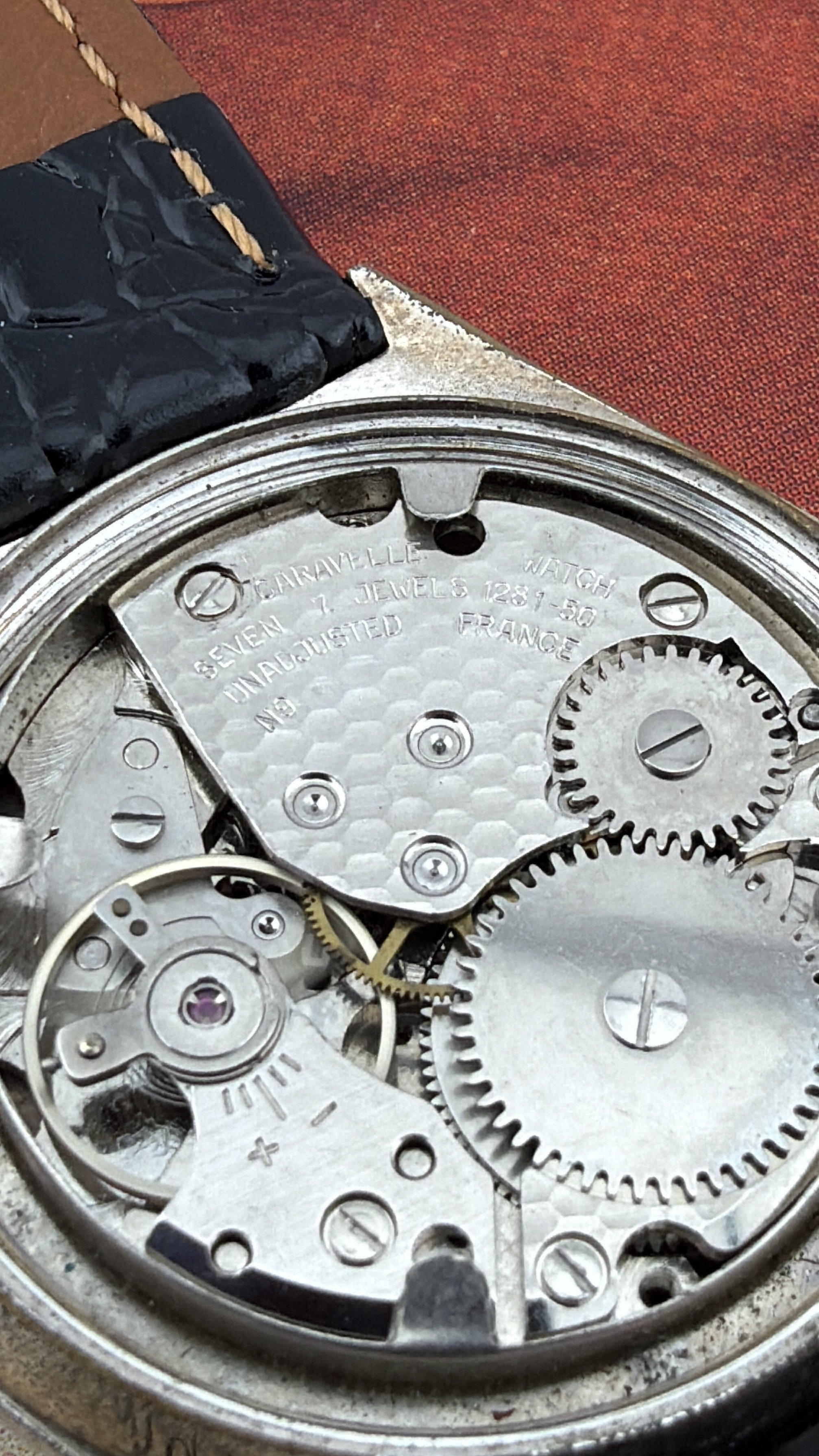
Inside is the 7-jewel Caravelle Caliber 1281-30, a manually wound mechanical movement marked France. The movement features attractive perlage decoration, with circular finishing visible across the movement plate. While the 7-jewel specification is simpler than the 17- or 21-jewel movements found in higher-grade watches, it represents the straightforward and affordable mechanical engineering that Caravelle was built around.
The caseback is particularly interesting, marked “HONG KONG / R-306 / BULOVA,” showing the international production behind these late-1970s Caravelle watches. By this period, Bulova was increasingly using global manufacturing and assembly networks as the traditional mechanical-watch industry faced growing competition from quartz technology.
The N9 date code corresponds to 1979, placing this watch right at the end of the great mechanical-watch era and just as the quartz revolution was dramatically changing the industry.
The combination of the silver sunburst dial, gold-tone fluted bezel, steel case and black crocodile-grain leather strap gives this Caravelle a surprisingly sophisticated appearance.
A great example of late-1970s Caravelle design: affordable mechanical watchmaking, Bulova heritage, international production, and a wonderfully clean vintage aesthetic.
This attractive vintage Caravelle by Bulova is a great example of the clean, refined designs produced by the brand toward the end of the mechanical-watch era. Founded by Bulova in 1962, Caravelle was created to offer stylish and dependable watches at a more accessible price point.
The watch features a beautifully understated silver sunburst dial with simple stick hour markers and slim hands. The minimalist dial is contrasted by a distinctive gold-tone fluted bezel, giving the watch a dressier appearance while retaining the clean lines of its late-1970s design.
At approximately 34.7mm across, with a 39.2mm lug-to-lug and roughly 11.7mm thick including the crystal, it is a very wearable vintage size. The integrated-style steel case gives it a surprisingly modern appearance on the wrist.
Inside is the 7-jewel Caravelle Caliber 1281-30, a manually wound mechanical movement marked France. The movement features attractive perlage decoration, with circular finishing visible across the movement plate. While the 7-jewel specification is simpler than the 17- or 21-jewel movements found in higher-grade watches, it represents the straightforward and affordable mechanical engineering that Caravelle was built around.
The caseback is particularly interesting, marked “HONG KONG / R-306 / BULOVA,” showing the international production behind these late-1970s Caravelle watches. By this period, Bulova was increasingly using global manufacturing and assembly networks as the traditional mechanical-watch industry faced growing competition from quartz technology.
The N9 date code corresponds to 1979, placing this watch right at the end of the great mechanical-watch era and just as the quartz revolution was dramatically changing the industry.
The combination of the silver sunburst dial, gold-tone fluted bezel, steel case and black crocodile-grain leather strap gives this Caravelle a surprisingly sophisticated appearance.
A great example of late-1970s Caravelle design: affordable mechanical watchmaking, Bulova heritage, international production, and a wonderfully clean vintage aesthetic.