

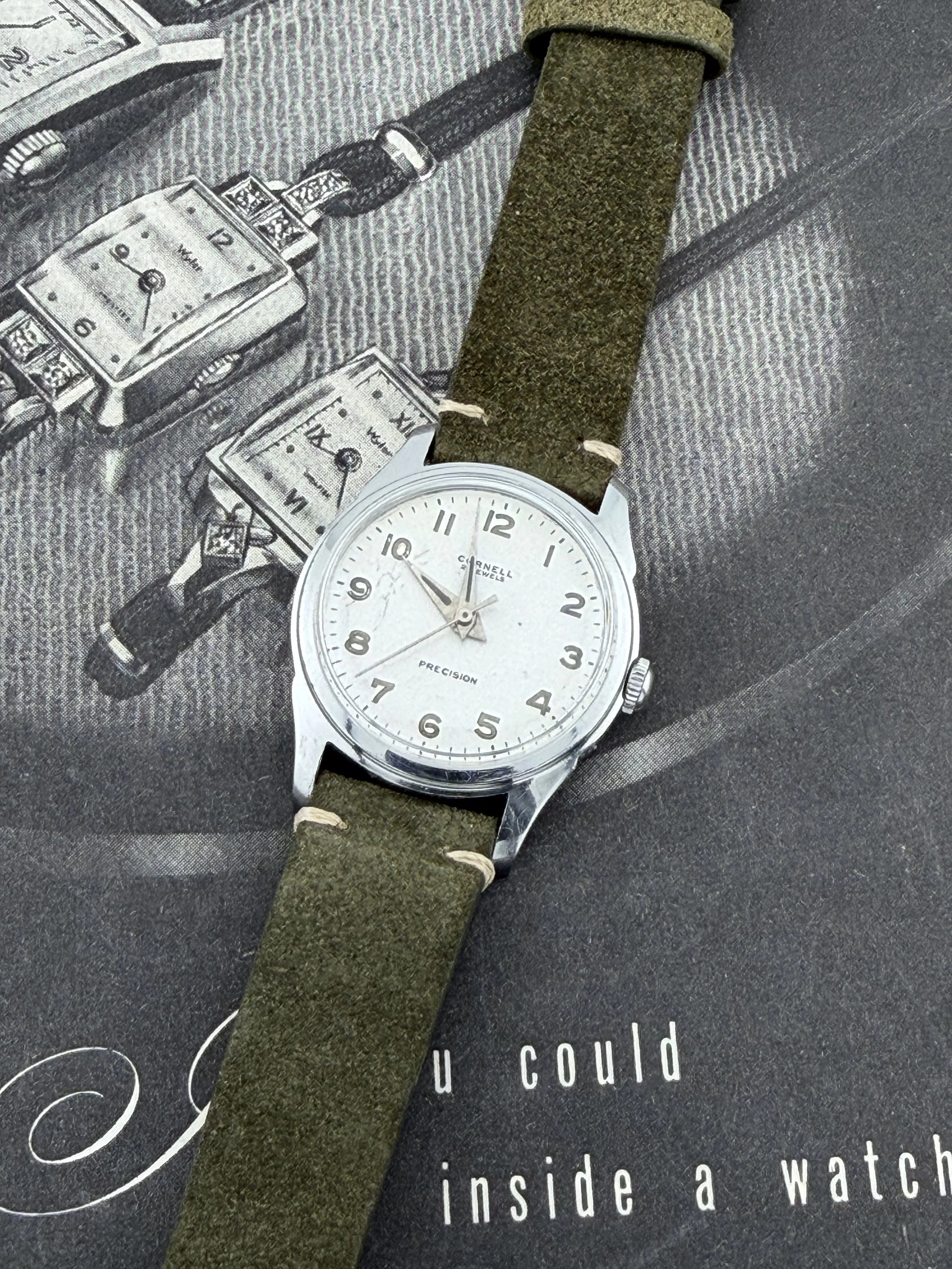
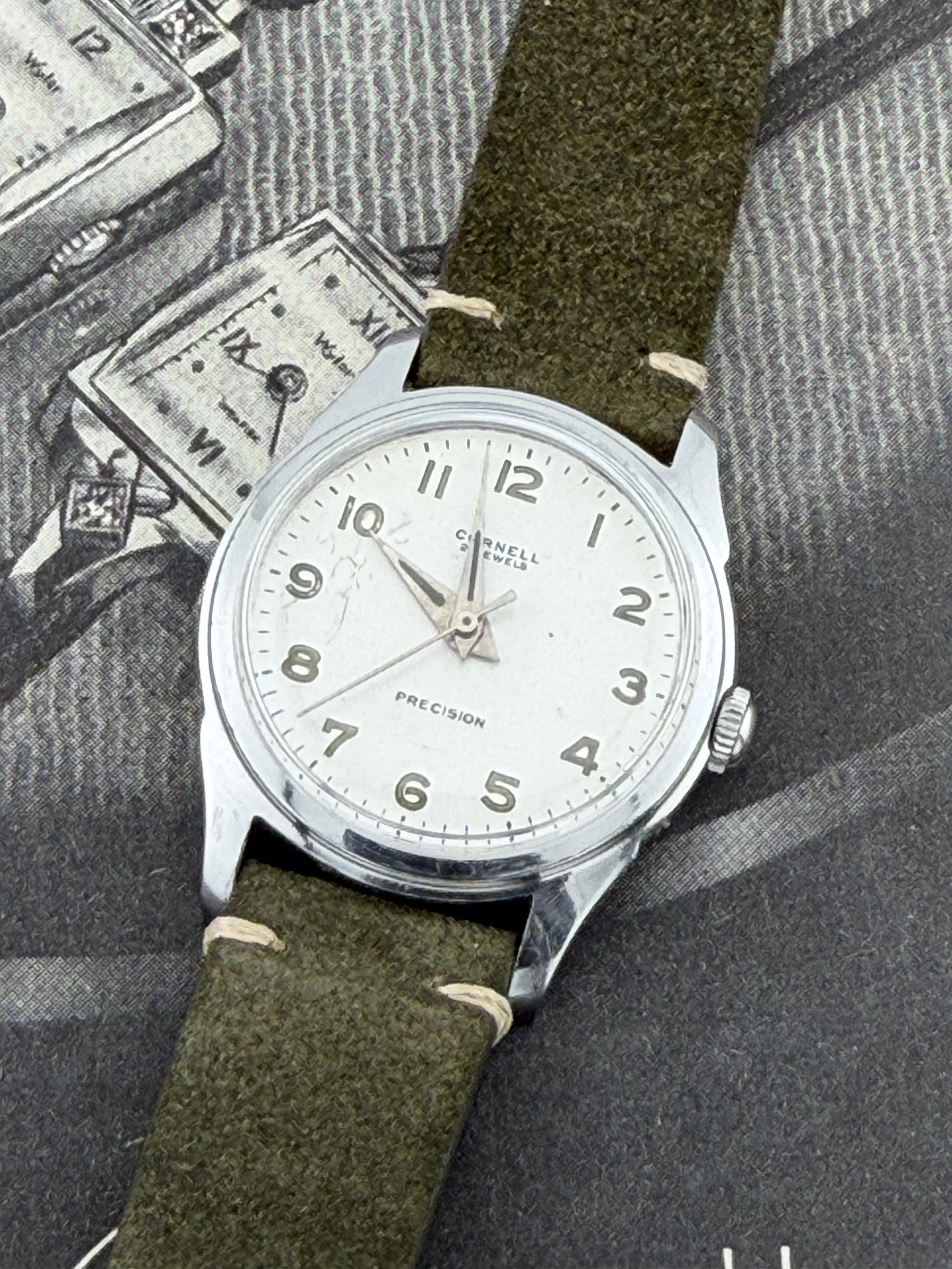
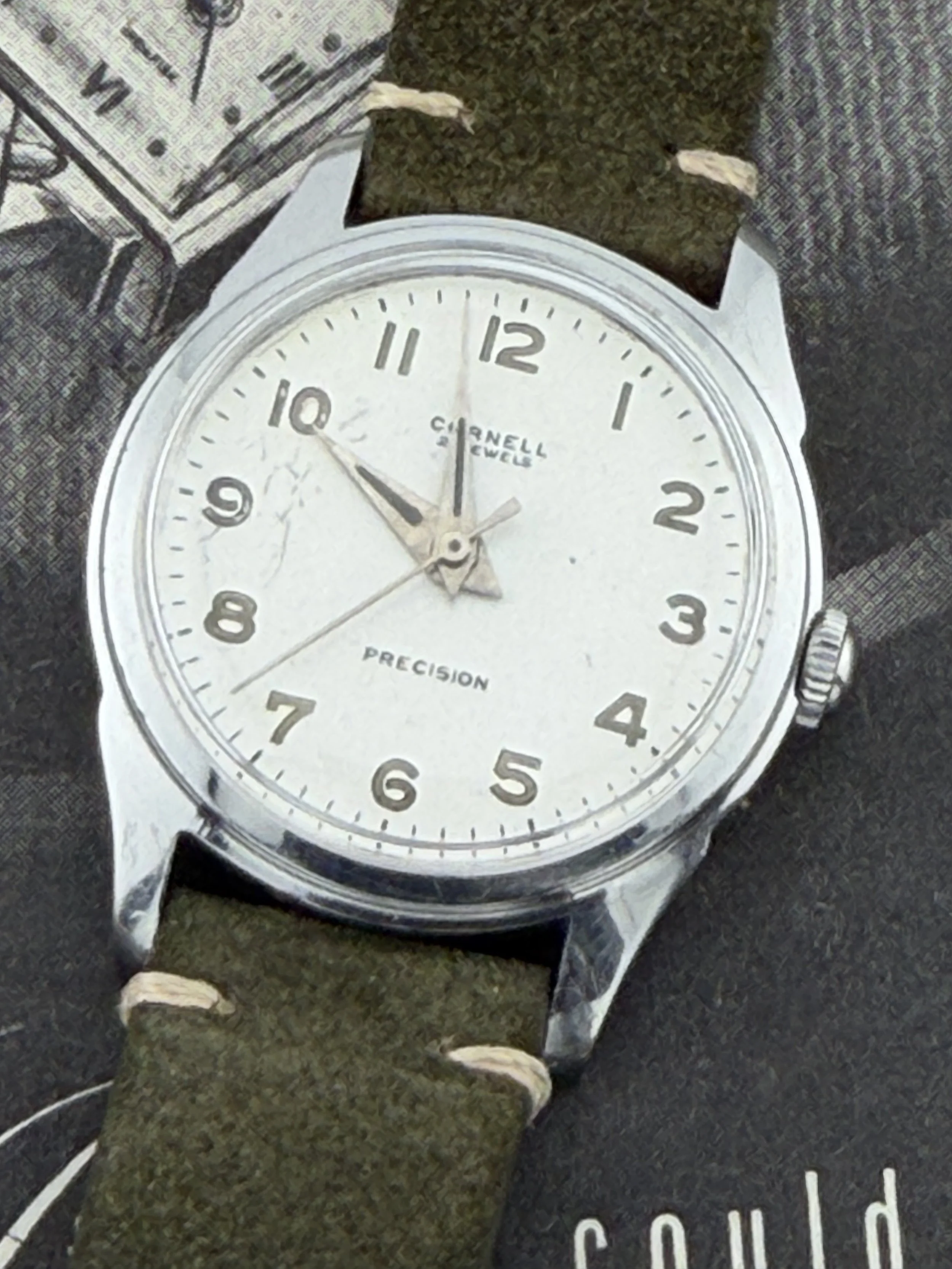
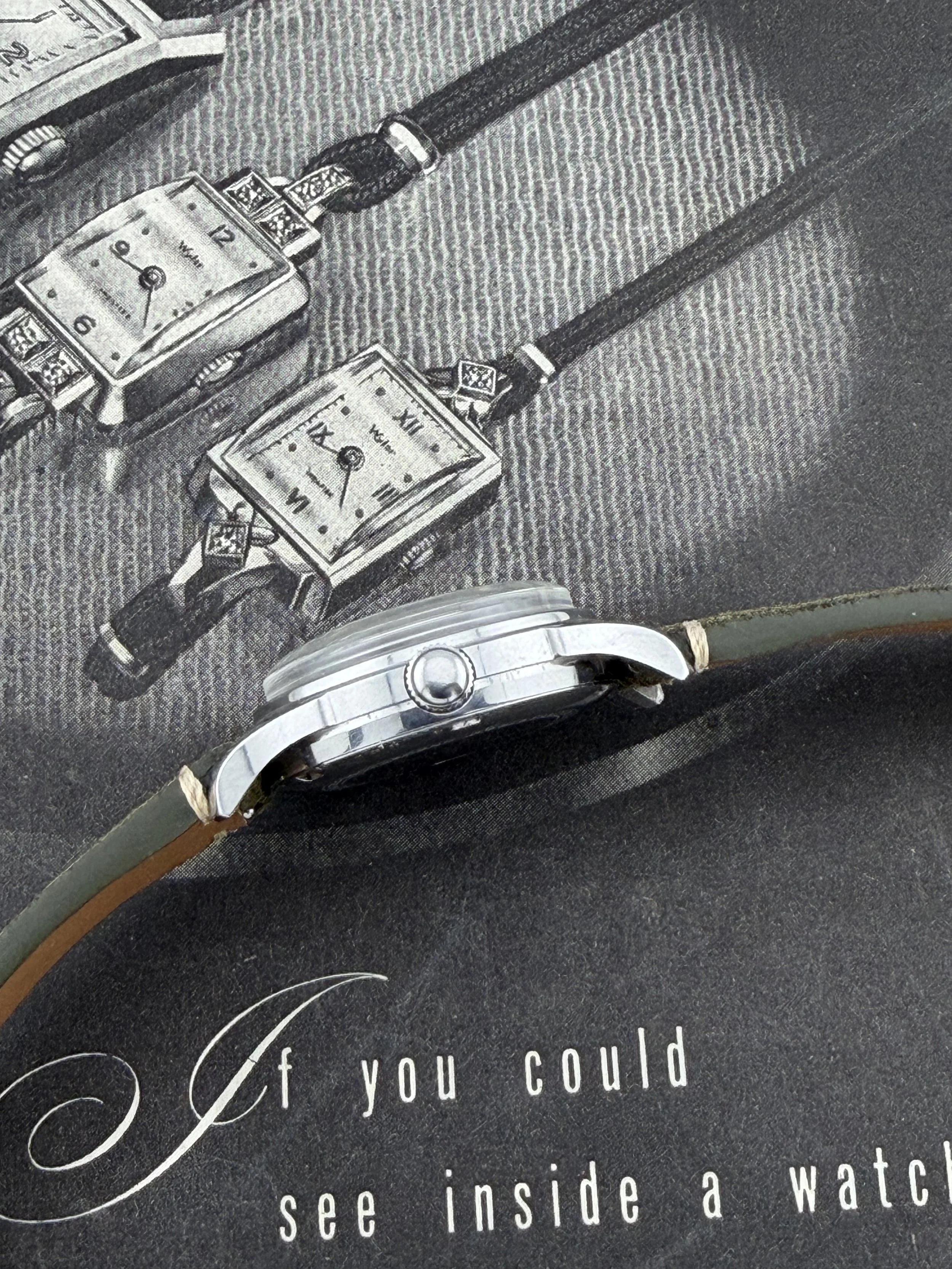
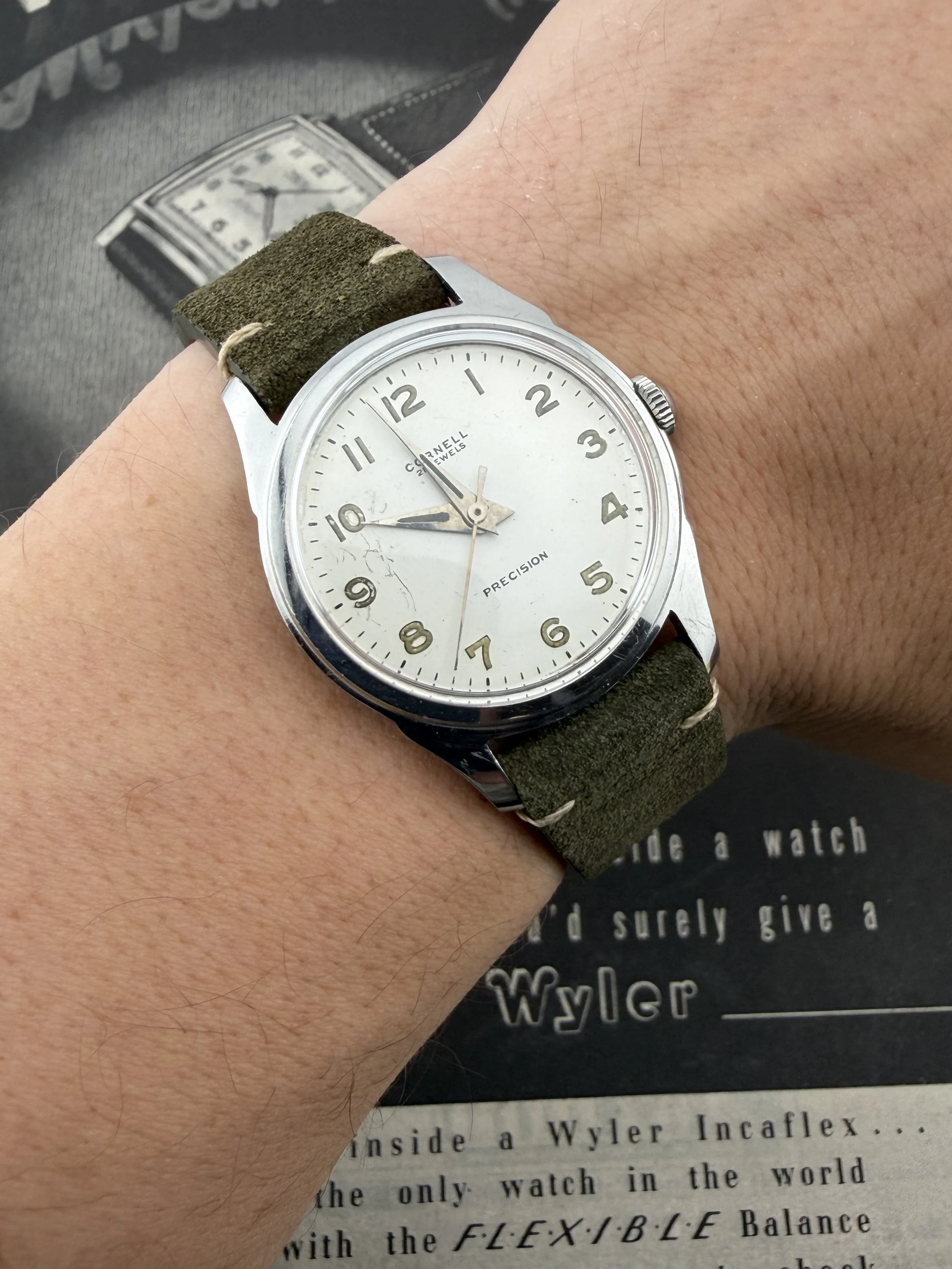
This handsome Cornell Precision is an interesting example of a mid-century Swiss mechanical watch carrying a name with much deeper roots in American watchmaking. Dating approximately to the 1950s or 1960s, it combines the compact proportions and practical construction of a vintage field-style watch with the distinctive Cornell name on its dial.
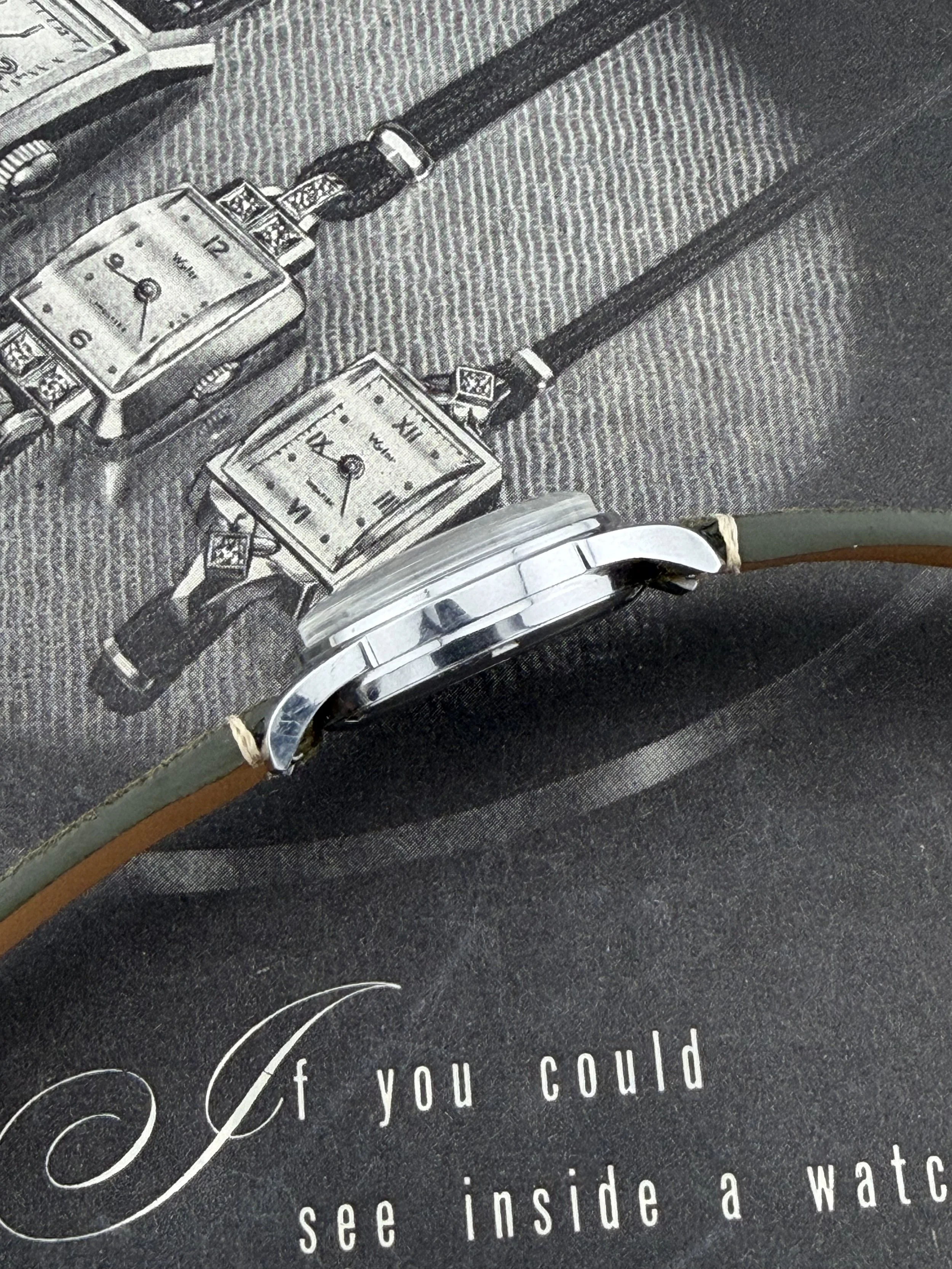
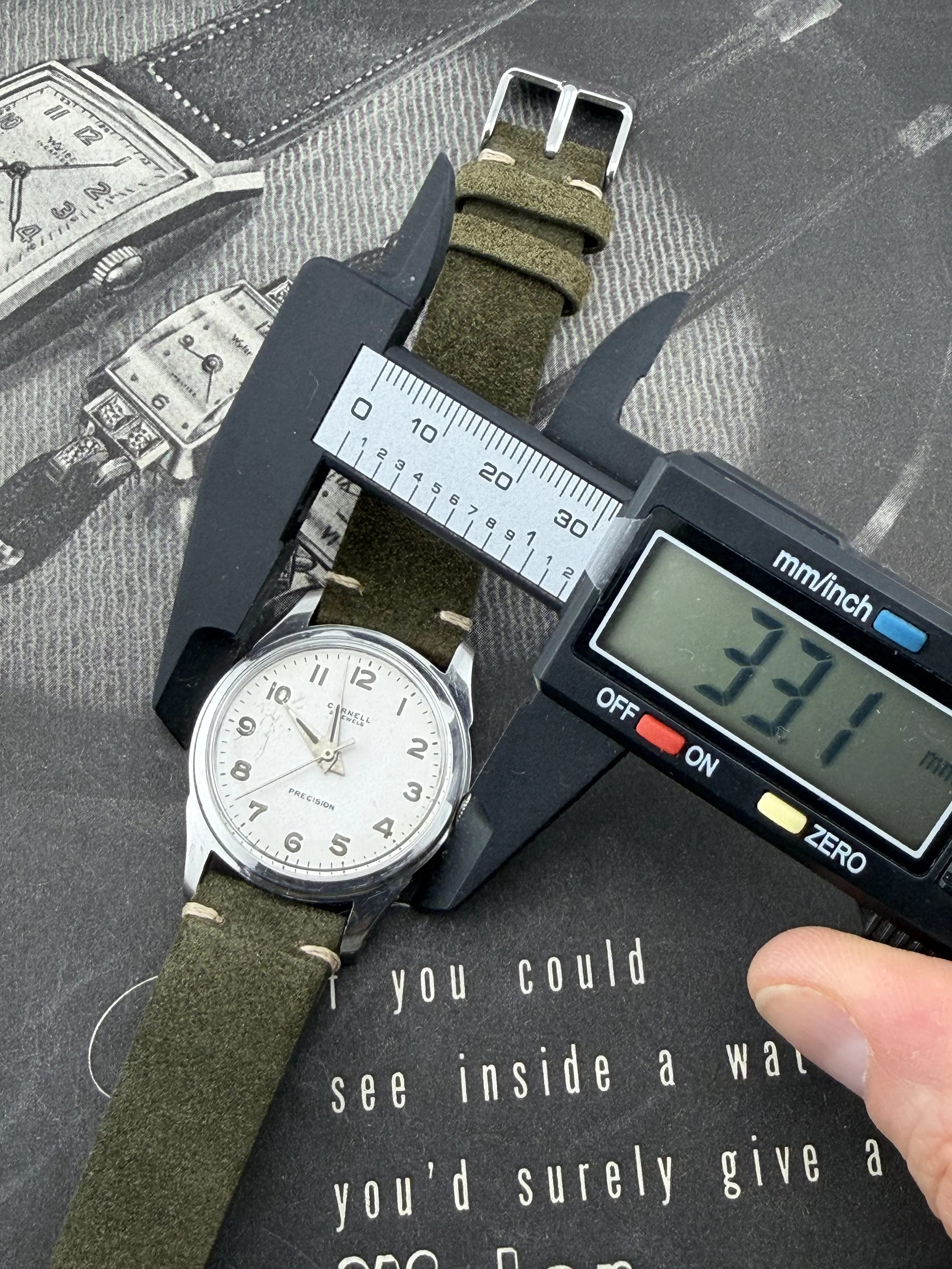
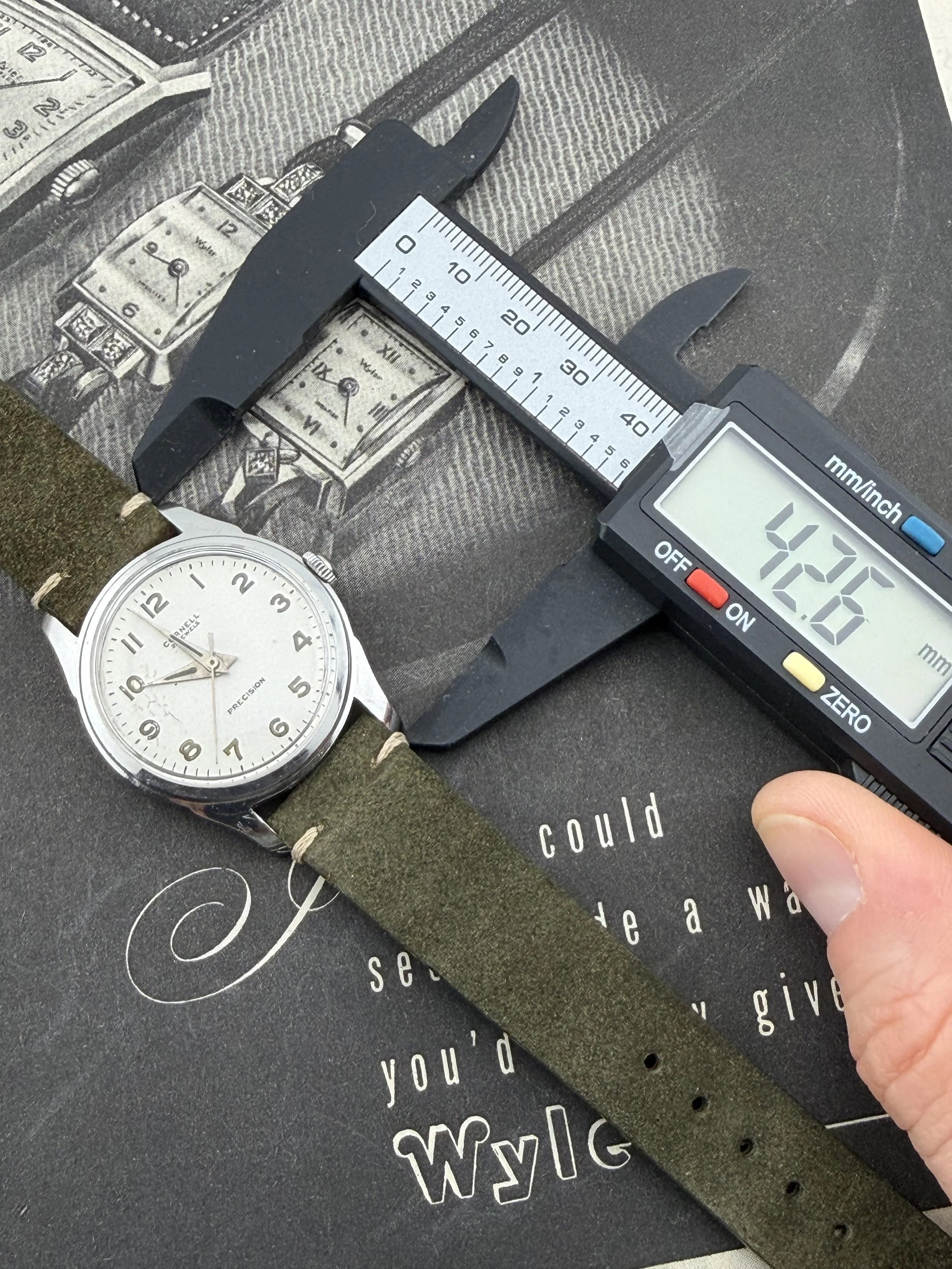
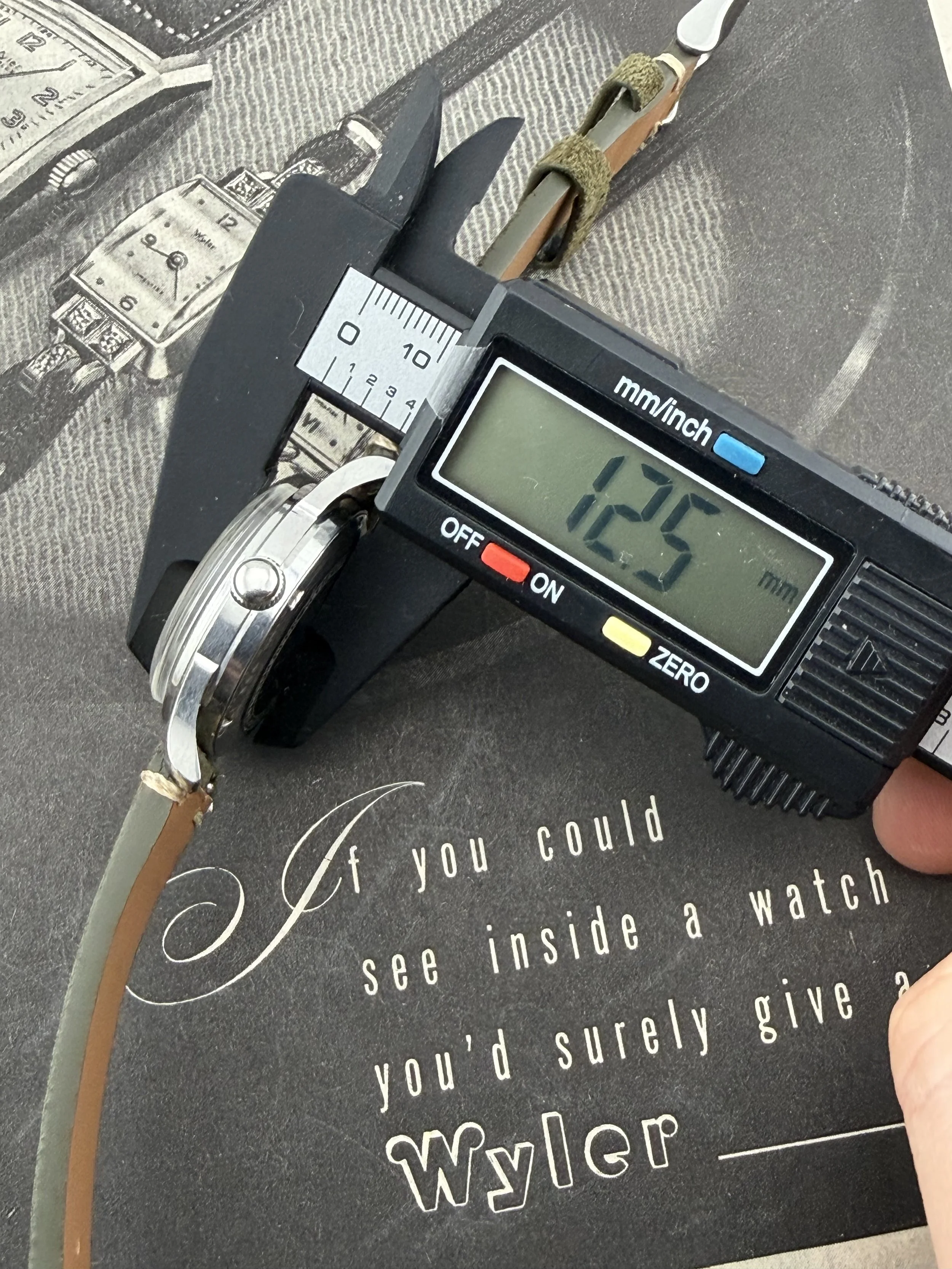
Measuring approximately 33.1mm in diameter and 42.6mm lug-to-lug, the watch has classic mid-century proportions. The compact case gives it a wonderfully wearable presence, while the practical design reflects an era when mechanical wristwatches were built to withstand considerably more everyday use than their dress-watch appearance might suggest.
The dial is clean and purposeful, with CORNELL prominently displayed beneath 12 o'clock and 17 JEWELS clearly marked below. The lower portion is signed PRECISION, adding to the watch's period technical character. Rather than relying on excessive decoration, the design puts the emphasis on legibility and mechanical reliability.
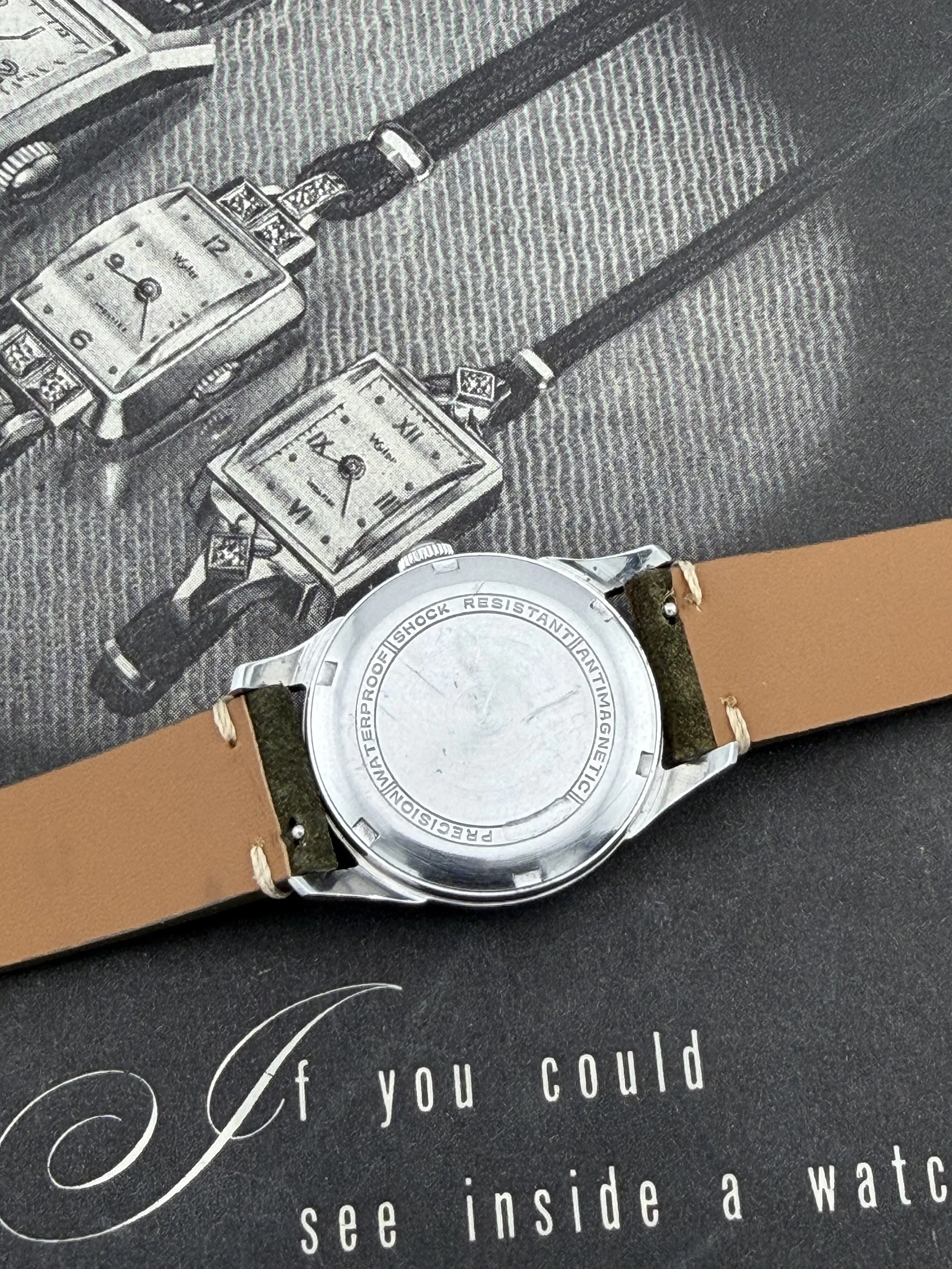
The caseback reinforces that practical character, carrying period markings for Waterproof, Shock Resistant, and Antimagnetic construction. These were important selling points during the mid-century mechanical era, when manufacturers increasingly emphasized the ability of a wristwatch to withstand the shocks, moisture, and magnetic fields encountered in everyday life.
Inside is a 17-jewel Swiss manual-wind mechanical movement, consistent with the robust hand-wound movements commonly used by independent and private-label watch companies during this period. The 17-jewel configuration provided jeweled bearings at the movement's critical points of friction, while the Precision designation on the dial reflects the period's emphasis on accurate and dependable mechanical timekeeping.
The Cornell name itself has a fascinating American connection. The original Cornell Watch Company was founded in Chicago in 1870 by Paul Cornell and produced American pocket watches during the height of the country's 19th-century watchmaking industry. That original company was relatively short-lived, closing in the late 1870s after the Great Chicago Fire and the financial difficulties of the period. The Cornell name later appeared on Swiss-made watches, as with this example, reflecting the very different landscape of watch production that emerged by the middle of the 20th century.
This Cornell therefore offers an interesting glimpse into the evolution of watchmaking itself—from the great American pocket-watch manufacturers of the 19th century to the Swiss ébauche-based industry that dominated mechanical wristwatch production a century later. Compact, practical, and distinctly mid-century, it is a charming vintage mechanical watch with an unexpectedly interesting name behind it.