

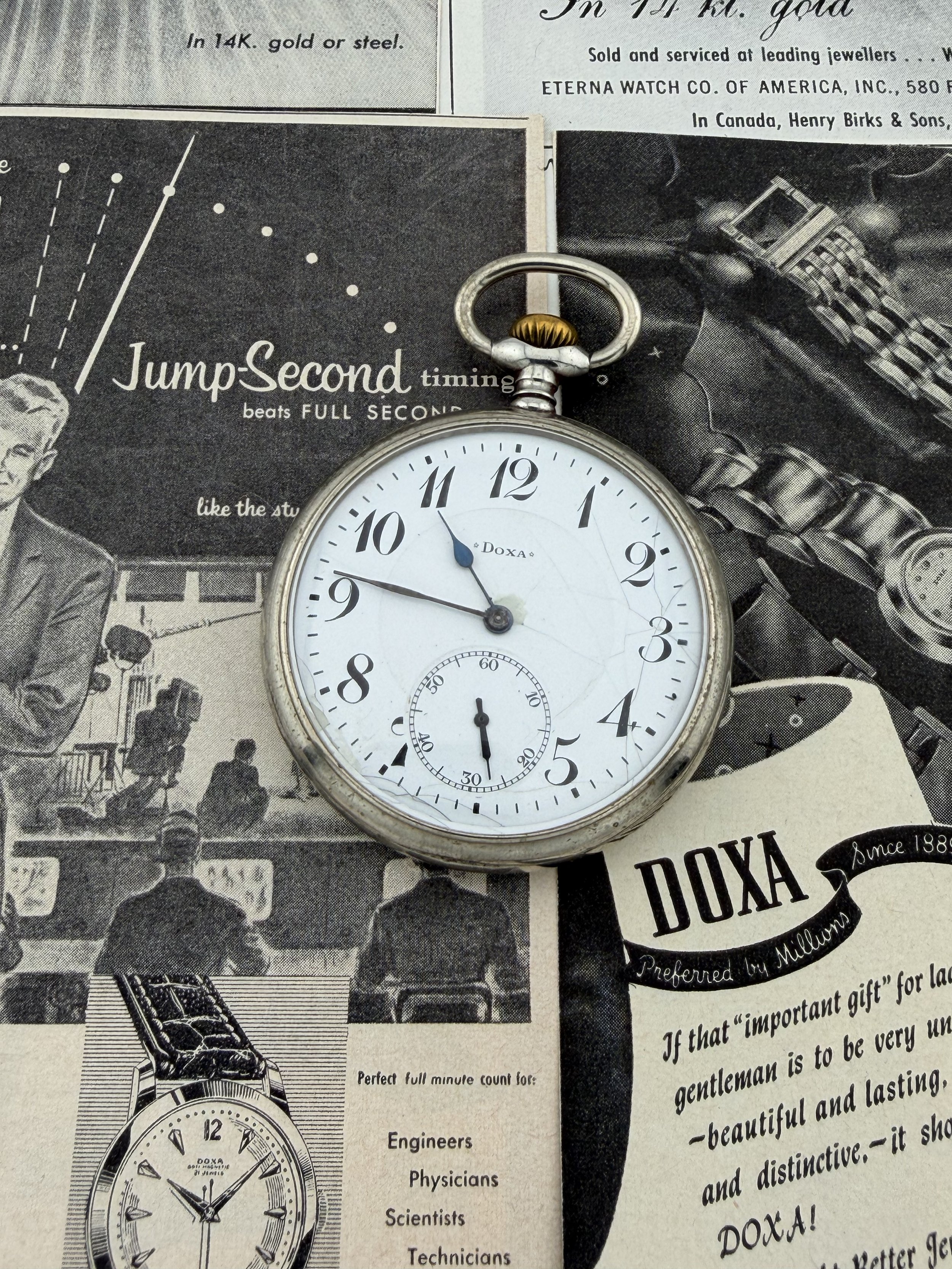
A remarkable early Doxa pocket watch dating to the early 1910s, this open-face example captures the character of Doxa during the company’s formative exhibition-award era. The watch combines an elegant porcelain enamel dial and traditional Breguet-style numerals with a rugged Argentan case, while the engraved inner dust cover provides an exceptional connection to Doxa’s early international reputation.
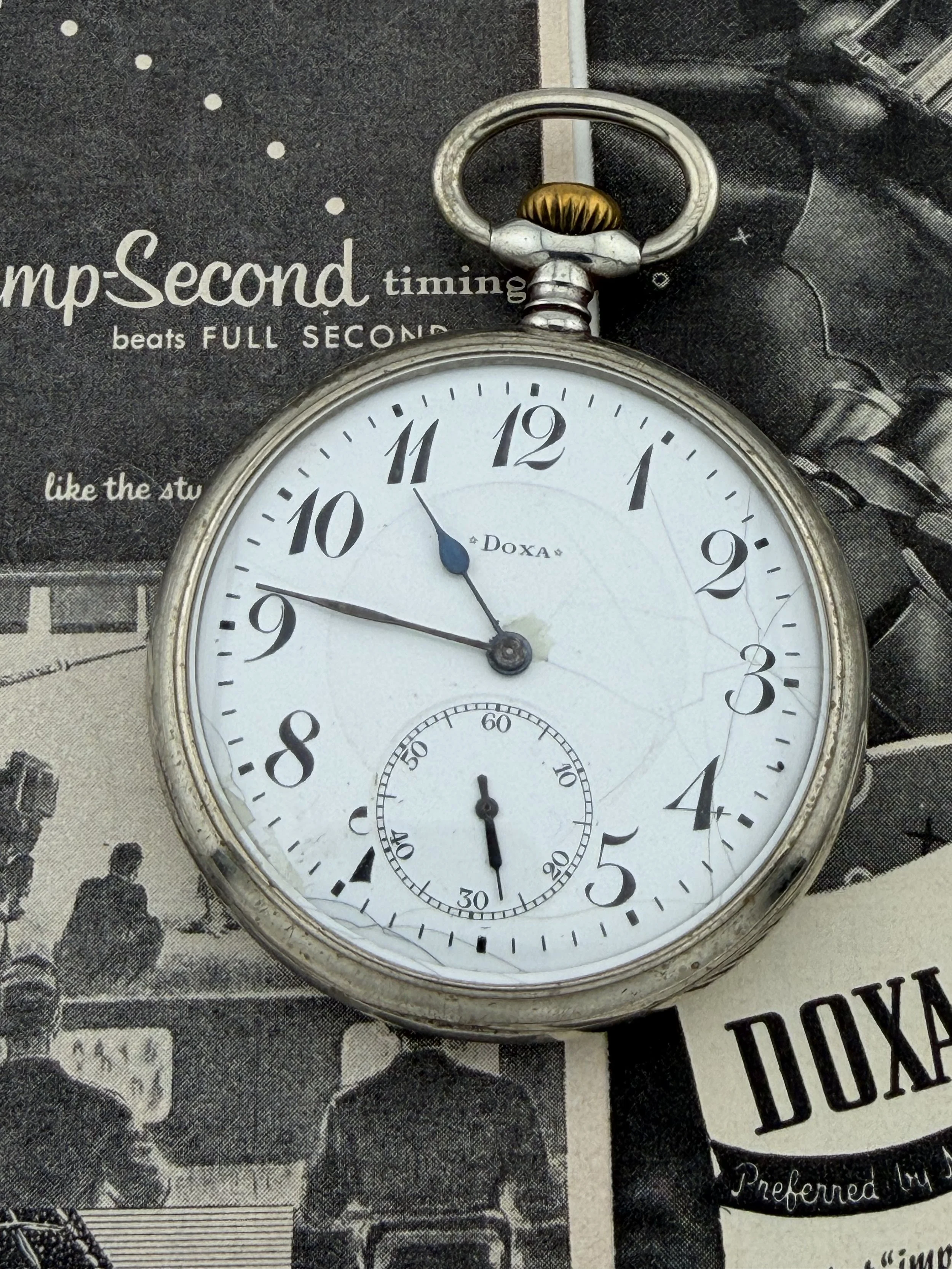
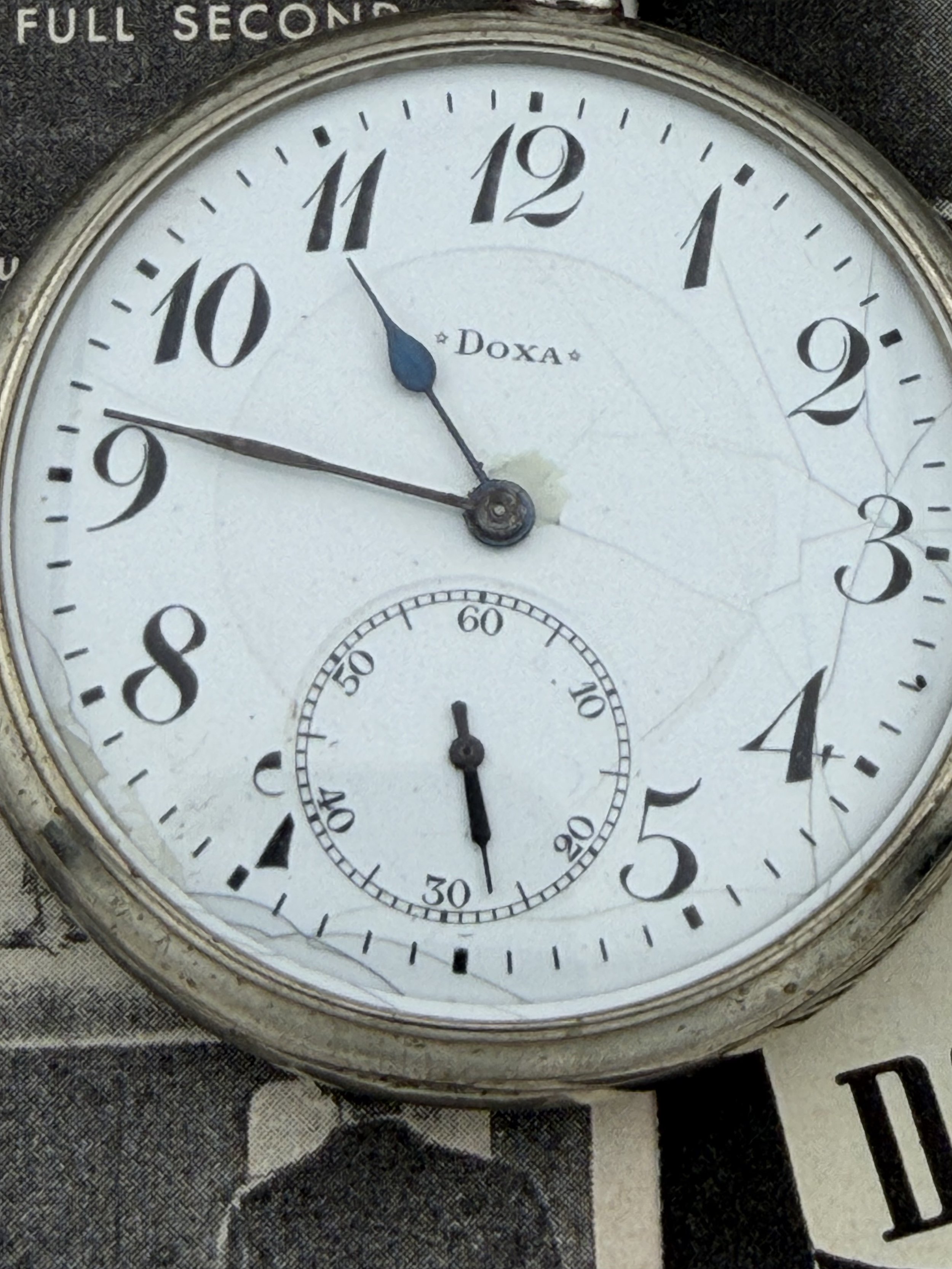
The white porcelain dial features large stylized Arabic numerals, a precise railway-style minute track and beautifully preserved blued steel poire hands. The subsidiary seconds register sits at 6 o’clock, giving the dial the classic proportions associated with early 20th-century Swiss pocket watches. The enamel has developed significant spiderweb cracking across the dial, along with a small area of enamel loss around the centre arbor. These imperfections are part of the watch’s history and give it an unmistakably authentic antique character.
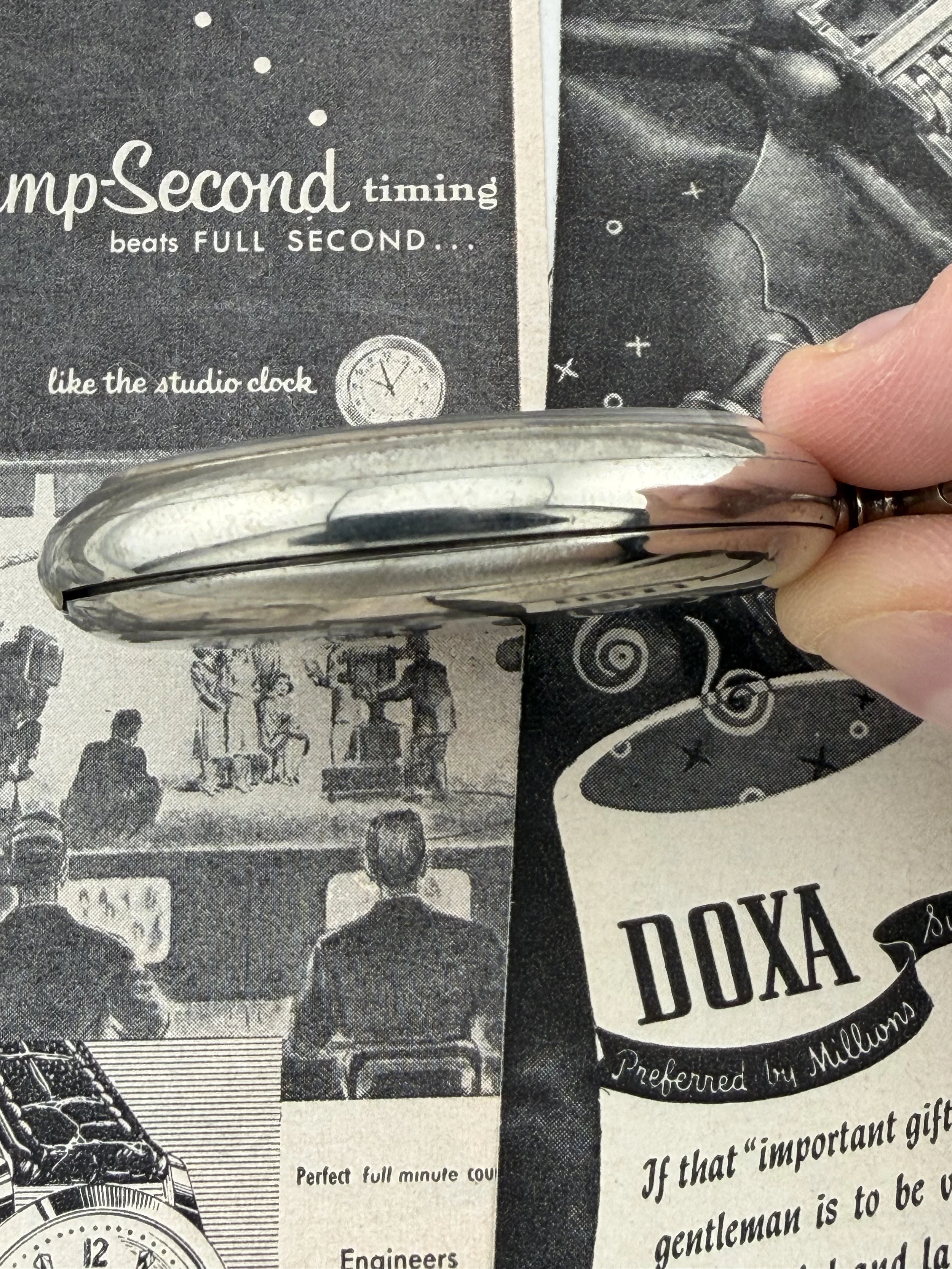
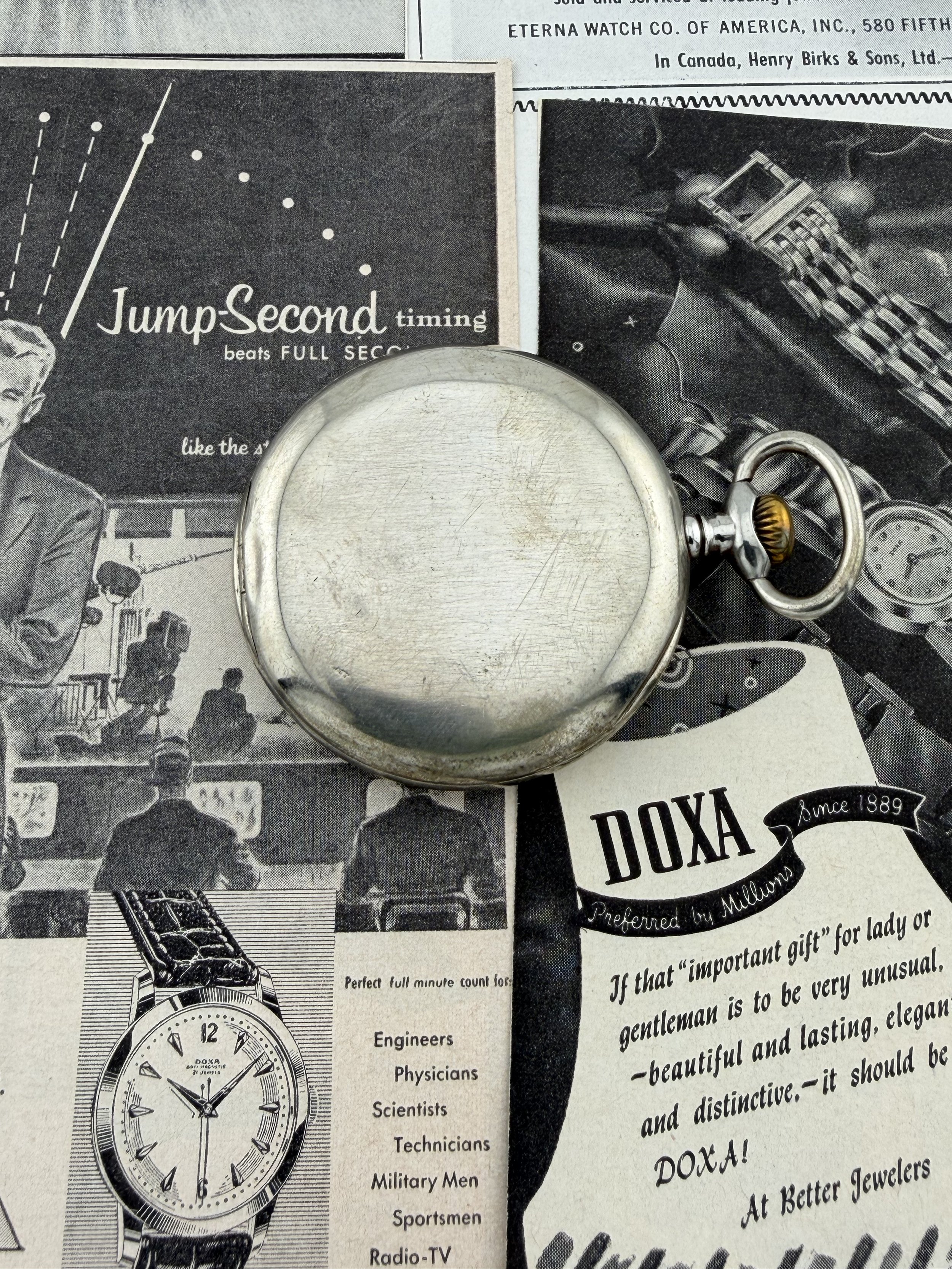
The case is constructed from Argentan, a historical nickel-based alloy sometimes referred to as German silver. Durable and resistant to the flaking associated with plated cases, Argentan was widely used for practical Swiss timepieces of the period. The contrasting gold-toned onion crown and substantial bow add to its unmistakable early-20th-century appearance.
Inside, the movement is a traditional Swiss lever-escapement calibre with frosted plates and Doxa markings. The movement architecture and finishing are wonderfully representative of the period, with the large balance bridge and exposed mechanical construction offering a fascinating glimpse into Swiss watchmaking before the wristwatch became dominant.
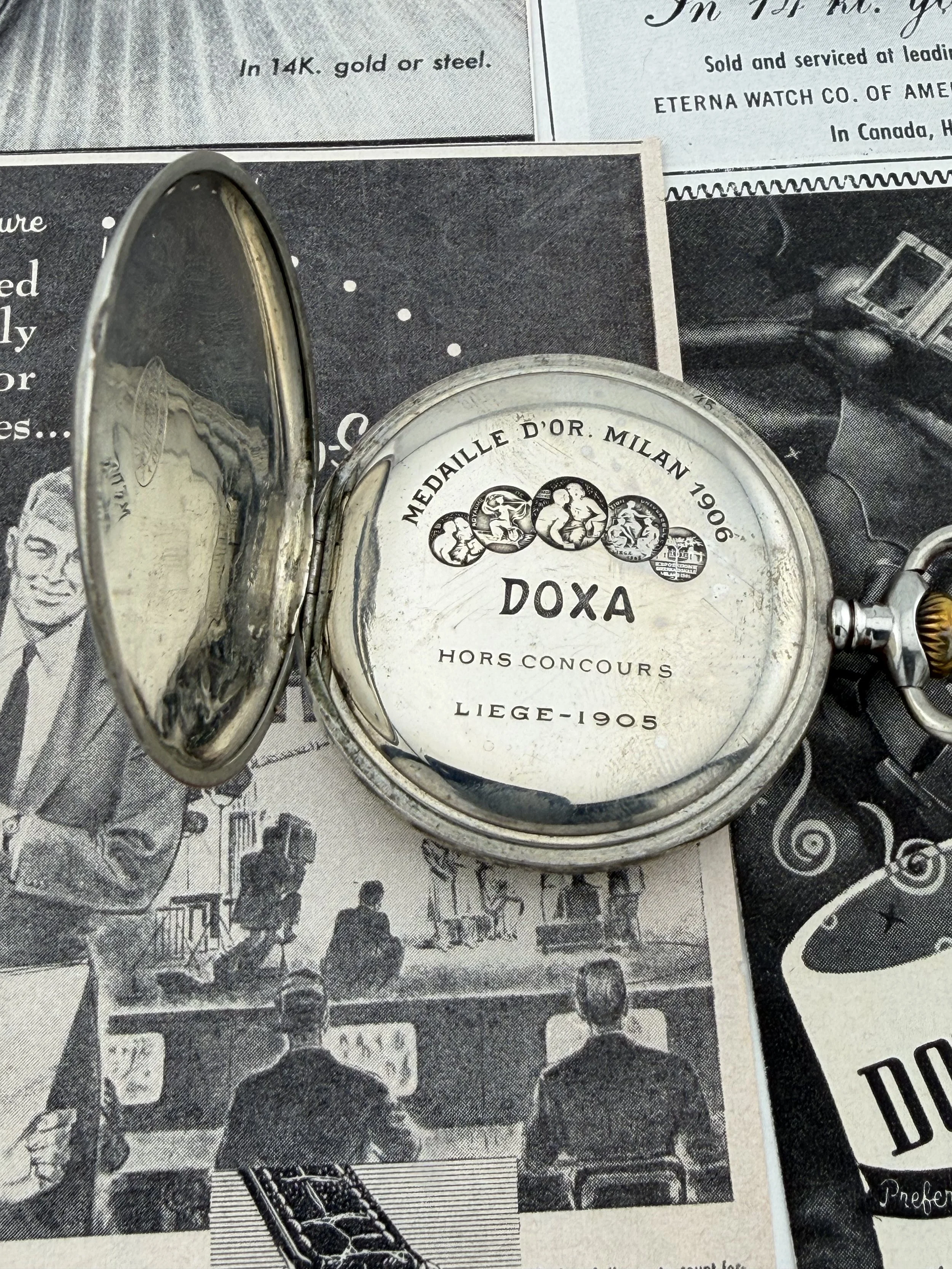
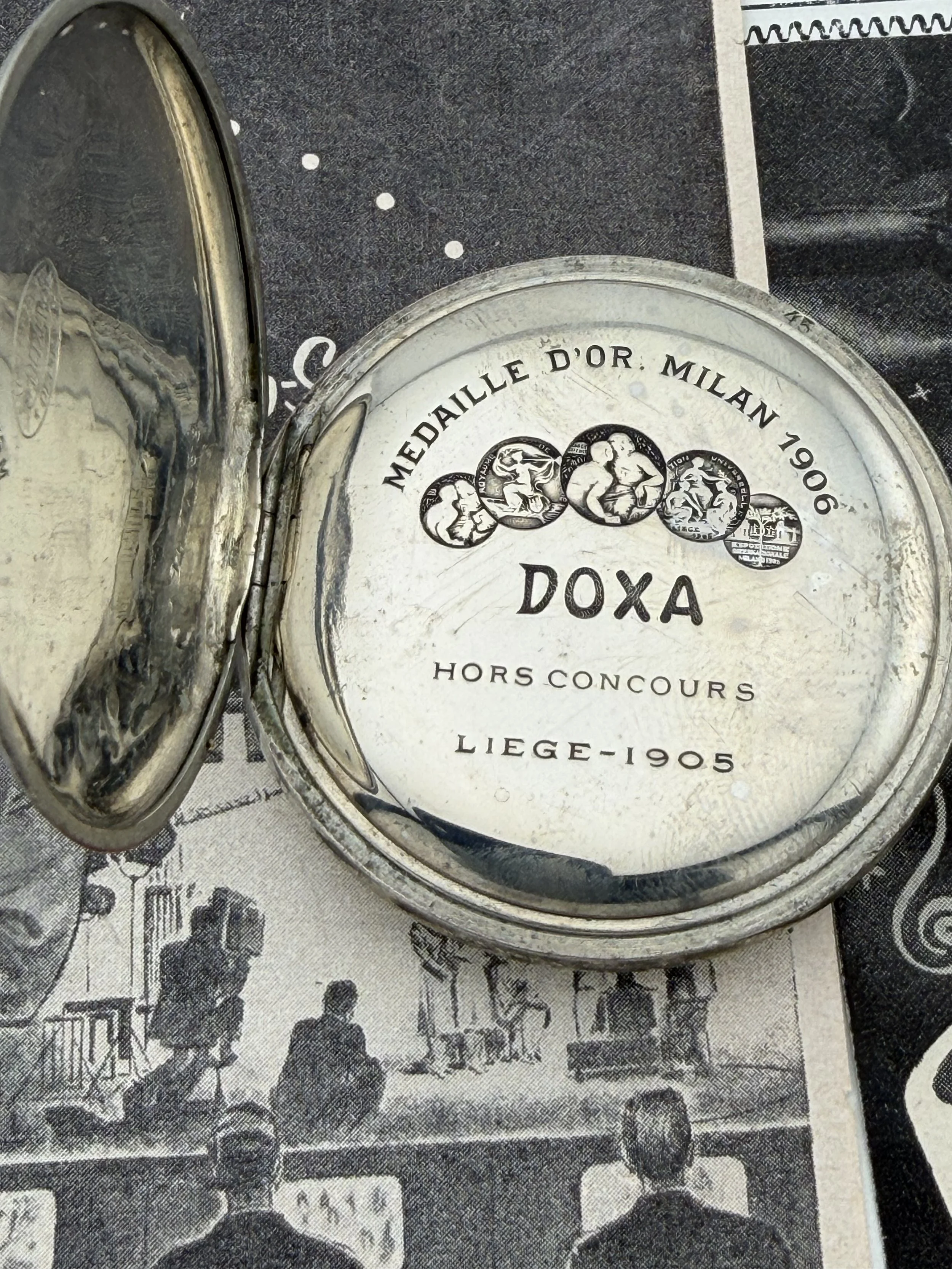
Perhaps the most compelling feature is the engraved inner dust cover. It proudly records “Medaille D’Or. Milan 1906” and “Hors Concours Liège 1905,” commemorating Doxa’s important exhibition achievements at the beginning of the 20th century. The outer case is additionally stamped “Metal Argentan Depose” with serial number 107038, further reinforcing its period construction.
Doxa was founded in Le Locle in 1889 by Georges Ducommun and quickly established a reputation for technically capable and well-finished watches. More than a century later, this pocket watch remains a wonderful piece of that early history—an elegant Swiss timekeeper with genuine exhibition-era provenance, beautiful period details and plenty of honest antique character.
A remarkable early Doxa pocket watch dating to the early 1910s, this open-face example captures the character of Doxa during the company’s formative exhibition-award era. The watch combines an elegant porcelain enamel dial and traditional Breguet-style numerals with a rugged Argentan case, while the engraved inner dust cover provides an exceptional connection to Doxa’s early international reputation.
The white porcelain dial features large stylized Arabic numerals, a precise railway-style minute track and beautifully preserved blued steel poire hands. The subsidiary seconds register sits at 6 o’clock, giving the dial the classic proportions associated with early 20th-century Swiss pocket watches. The enamel has developed significant spiderweb cracking across the dial, along with a small area of enamel loss around the centre arbor. These imperfections are part of the watch’s history and give it an unmistakably authentic antique character.
The case is constructed from Argentan, a historical nickel-based alloy sometimes referred to as German silver. Durable and resistant to the flaking associated with plated cases, Argentan was widely used for practical Swiss timepieces of the period. The contrasting gold-toned onion crown and substantial bow add to its unmistakable early-20th-century appearance.
Inside, the movement is a traditional Swiss lever-escapement calibre with frosted plates and Doxa markings. The movement architecture and finishing are wonderfully representative of the period, with the large balance bridge and exposed mechanical construction offering a fascinating glimpse into Swiss watchmaking before the wristwatch became dominant.
Perhaps the most compelling feature is the engraved inner dust cover. It proudly records “Medaille D’Or. Milan 1906” and “Hors Concours Liège 1905,” commemorating Doxa’s important exhibition achievements at the beginning of the 20th century. The outer case is additionally stamped “Metal Argentan Depose” with serial number 107038, further reinforcing its period construction.
Doxa was founded in Le Locle in 1889 by Georges Ducommun and quickly established a reputation for technically capable and well-finished watches. More than a century later, this pocket watch remains a wonderful piece of that early history—an elegant Swiss timekeeper with genuine exhibition-era provenance, beautiful period details and plenty of honest antique character.