

Eloga Military-Style Swiss Wristwatch | 17 Jewels | Incabloc | Antimagnetic | Steel Case | Red Seconds Hand | Circa 1940s–1950s
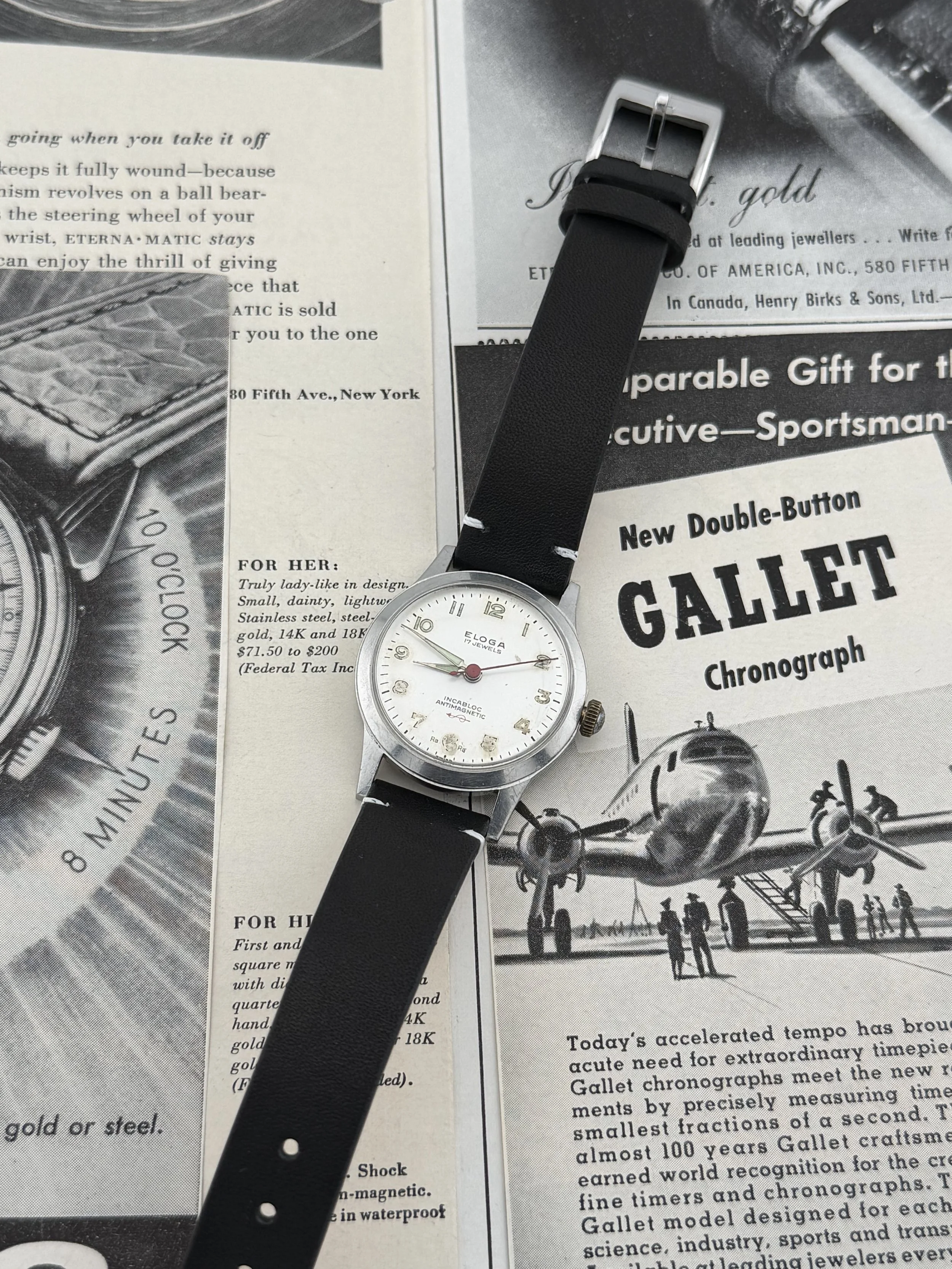
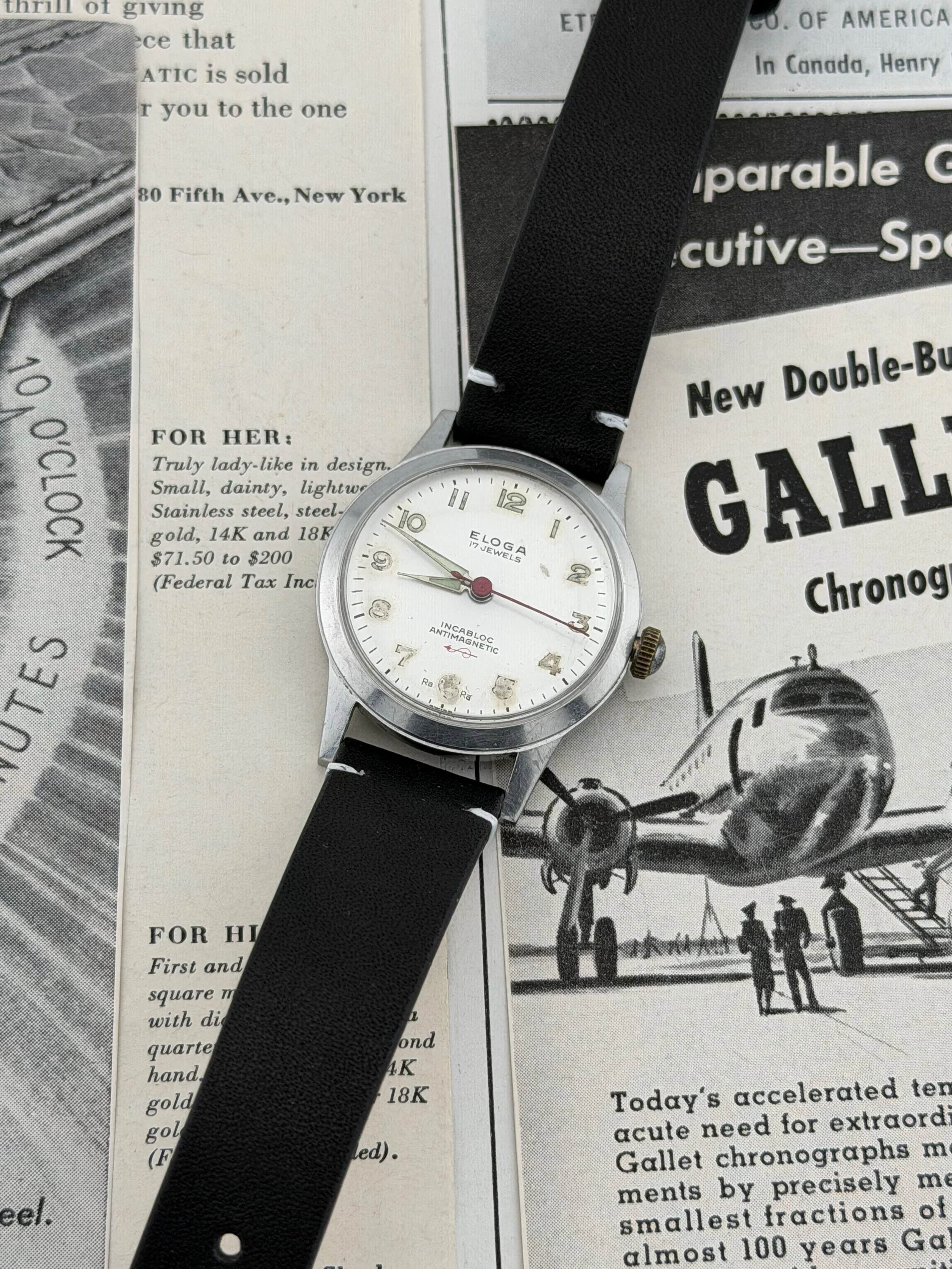
This fantastic vintage Eloga is a wonderful example of the rugged, highly legible military-style watches produced during the golden age of Swiss mechanical watchmaking. With its clean white dial, bold Arabic numerals, distinctive red seconds hand, steel case, Incabloc shock protection, and antimagnetic construction, it has all the qualities that make vintage field watches so appealing.
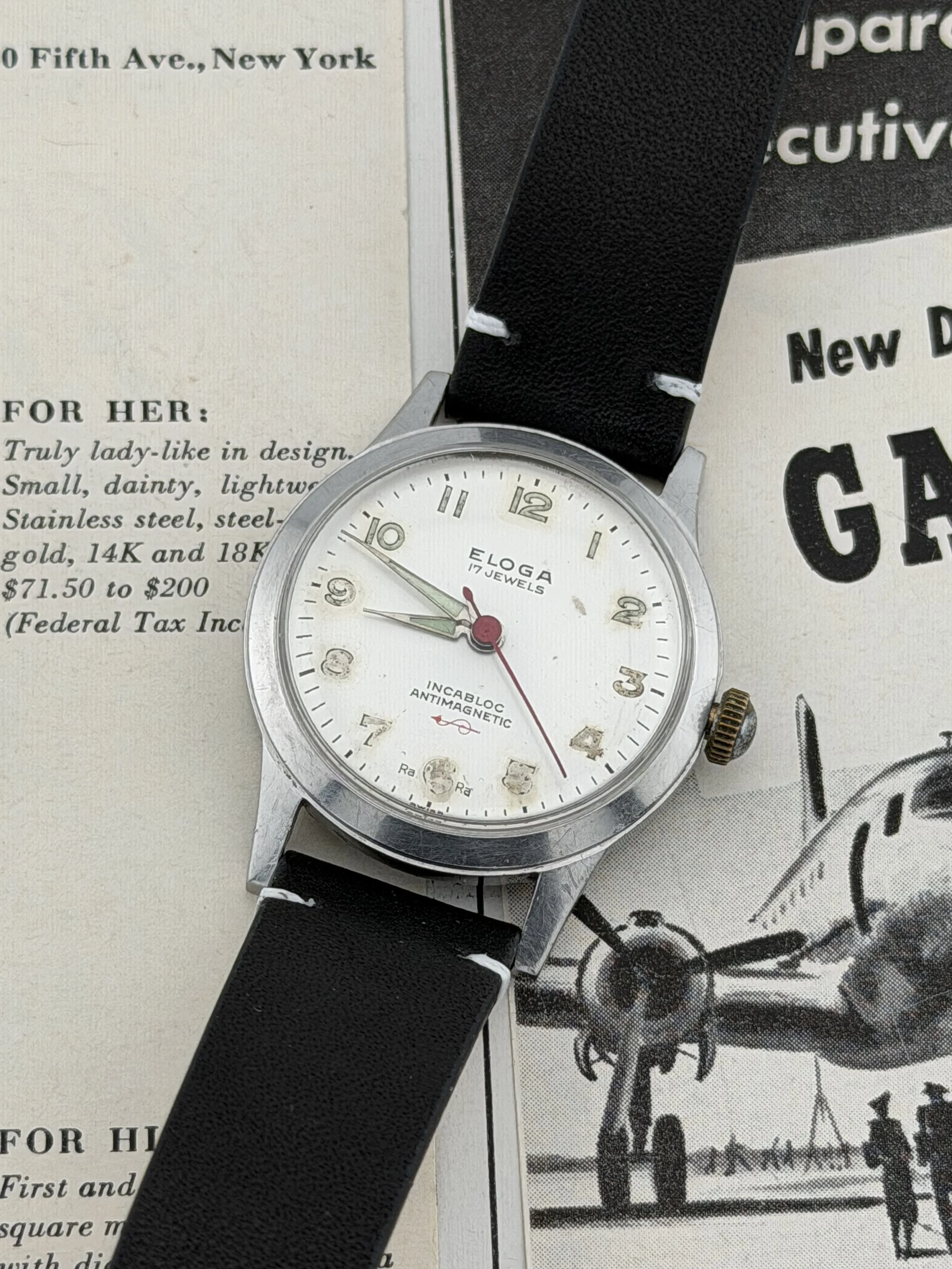
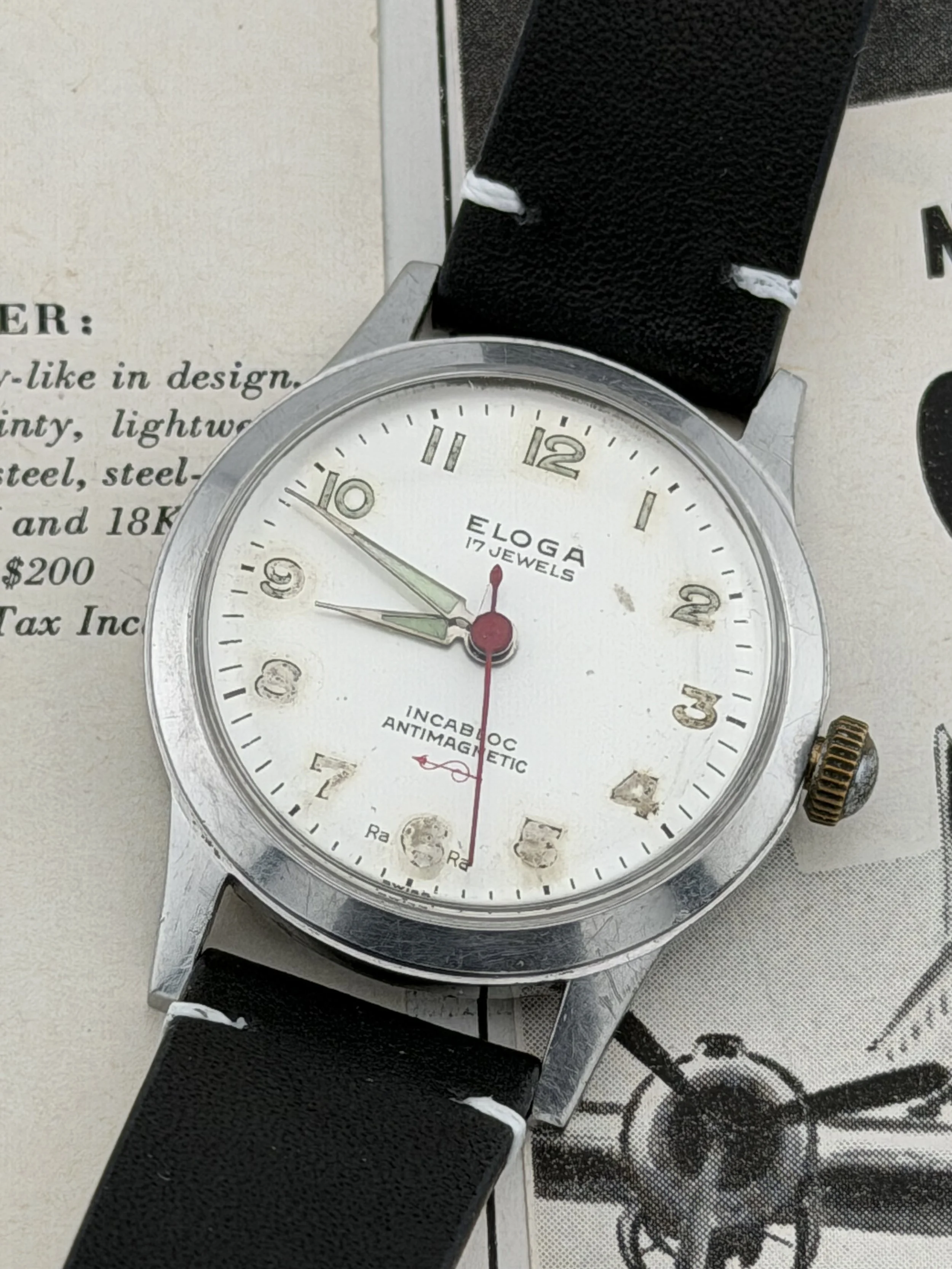
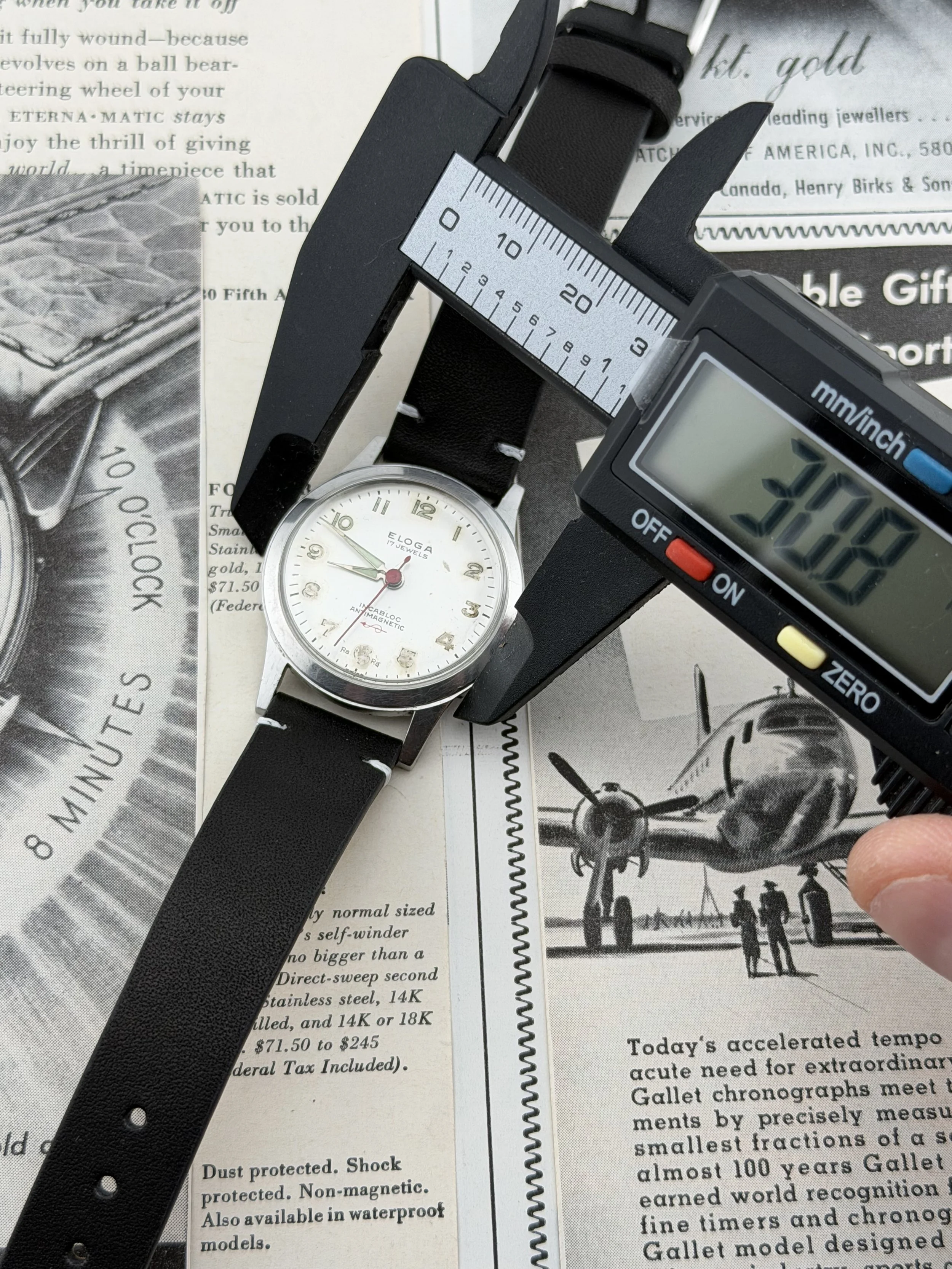
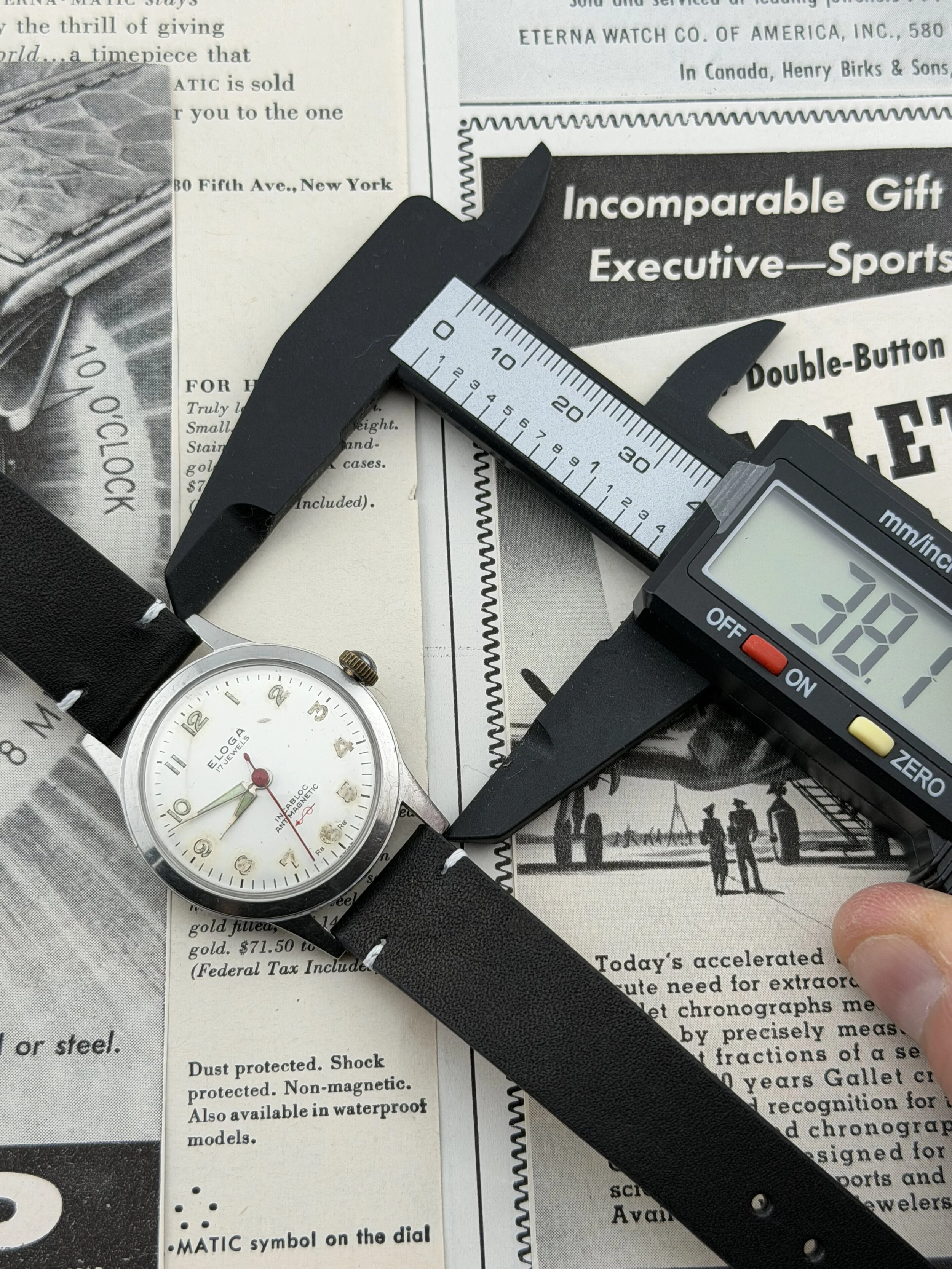
The dial is wonderfully utilitarian. Large Arabic numerals provide immediate legibility, while the finely printed outer minute track gives the watch an unmistakably instrument-like appearance. The applied-style numerals add subtle dimension to the dial, while the broad hands are designed to make reading the time quick and effortless.
The red seconds hand is perhaps the most distinctive feature. Sweeping across the pale dial in vivid contrast, it adds an unexpected flash of colour to an otherwise restrained military-inspired design. It is a small detail, but one that gives this Eloga considerably more personality than a conventional field watch.
The dial is also prominently marked Incabloc and Antimagnetic, advertising two important pieces of mechanical technology for the period. Incabloc shock protection was designed to protect the delicate balance staff from impacts, making mechanical watches more durable in everyday use. Antimagnetic construction, meanwhile, helped protect the movement from the increasingly common magnetic fields produced by electrical equipment, motors, radios, and other technology.
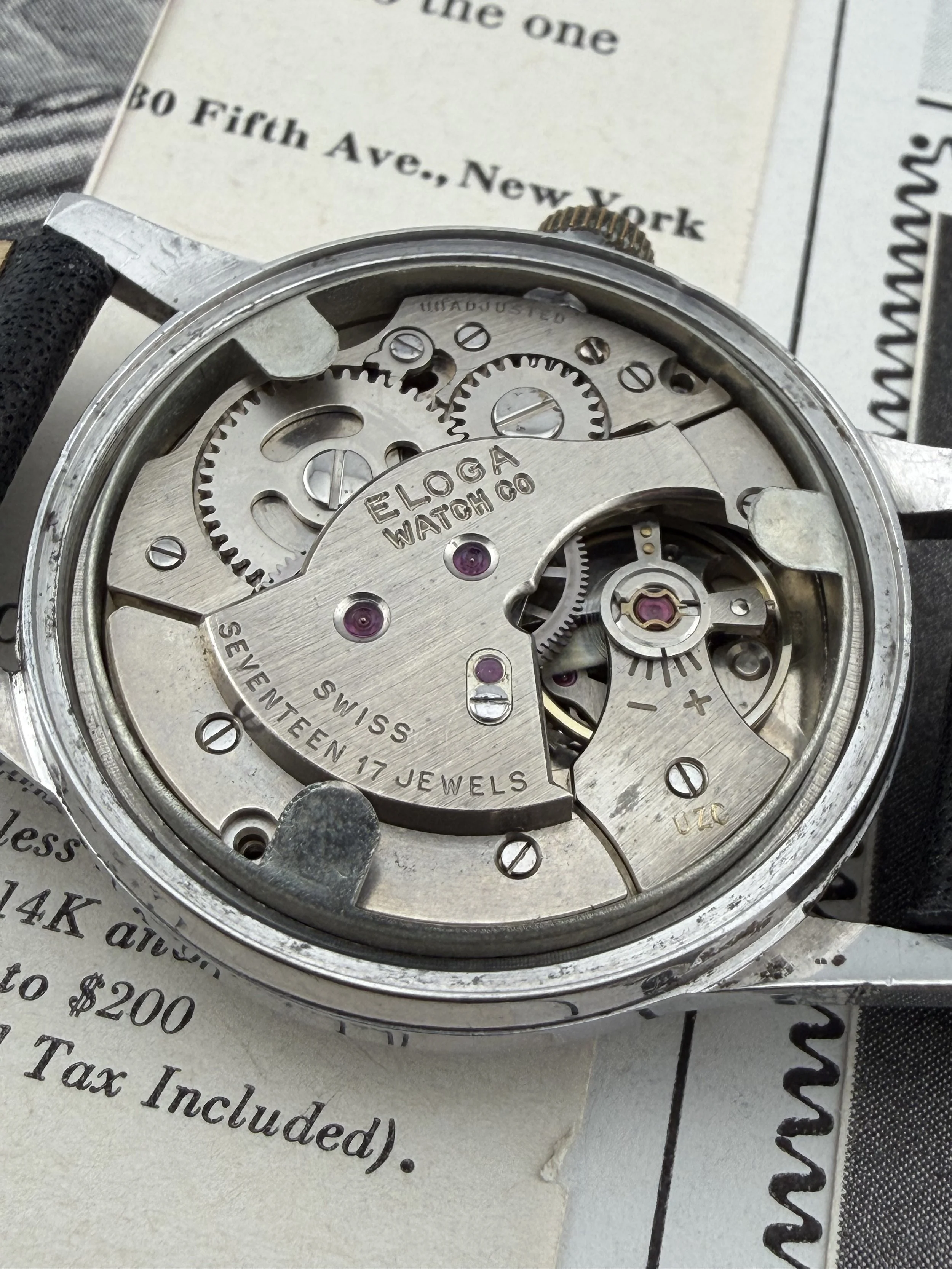
Inside is a Swiss 17-jewel manually wound mechanical movement, clearly signed Eloga Watch Co. and marked Swiss — Seventeen 17 Jewels. The movement has a traditional, straightforward architecture, with the jewelled bearings providing reduced friction at critical points throughout the mechanism.
The movement's appearance is particularly charming. Its simple bridges, exposed gear train, jewel settings, and traditional regulator make it immediately recognizable as a mechanical instrument from the era. There is no unnecessary decoration—the focus is on functionality, serviceability, and reliable timekeeping.
The 17-jewel configuration is typical of the period's quality mechanical wristwatches. Jewels were used at key pivot points throughout the movement to reduce friction and wear, helping the mechanism operate smoothly over many years. Combined with Incabloc protection, the movement was designed to withstand considerably more than the delicate appearance of its components might suggest.
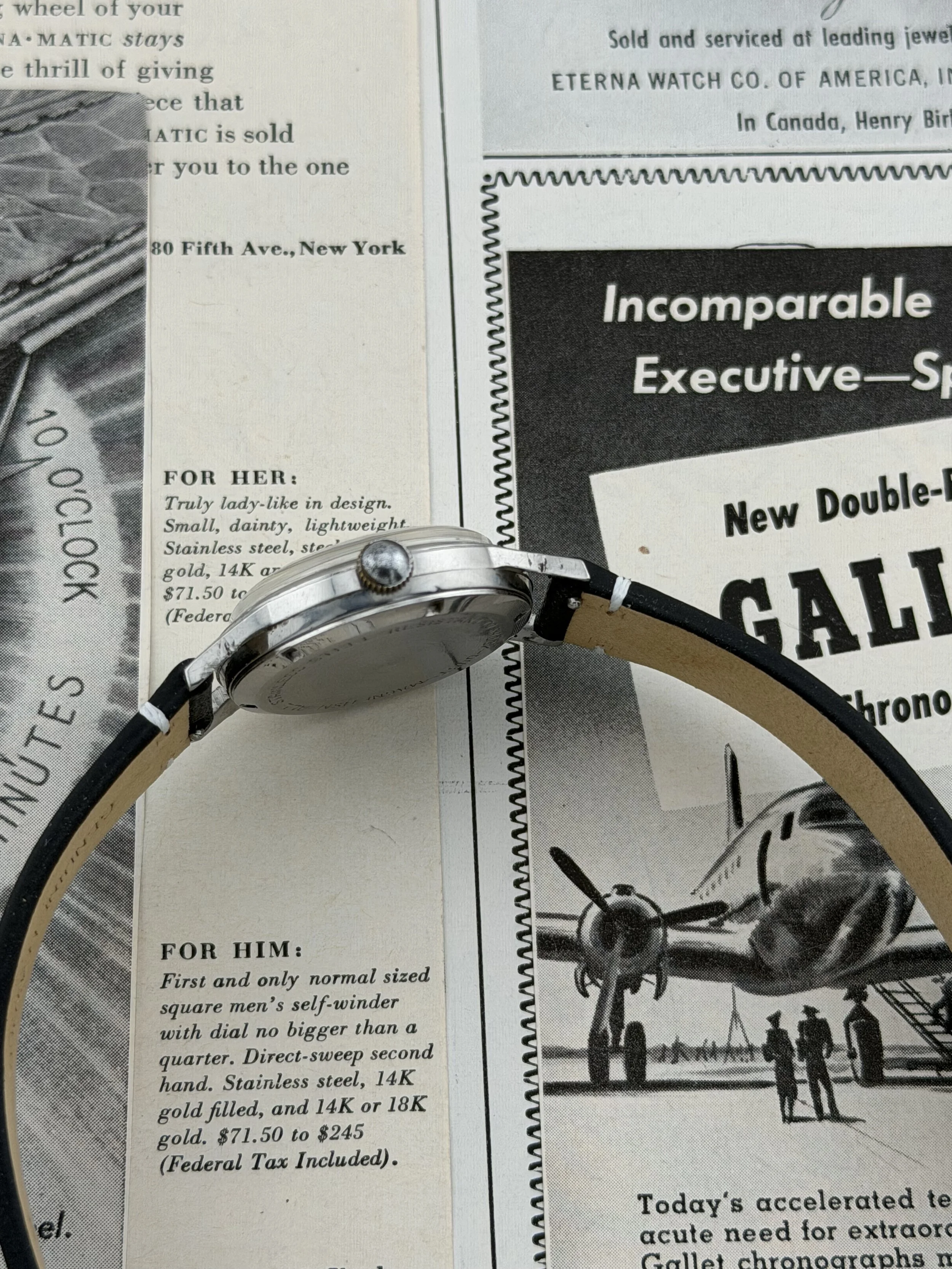
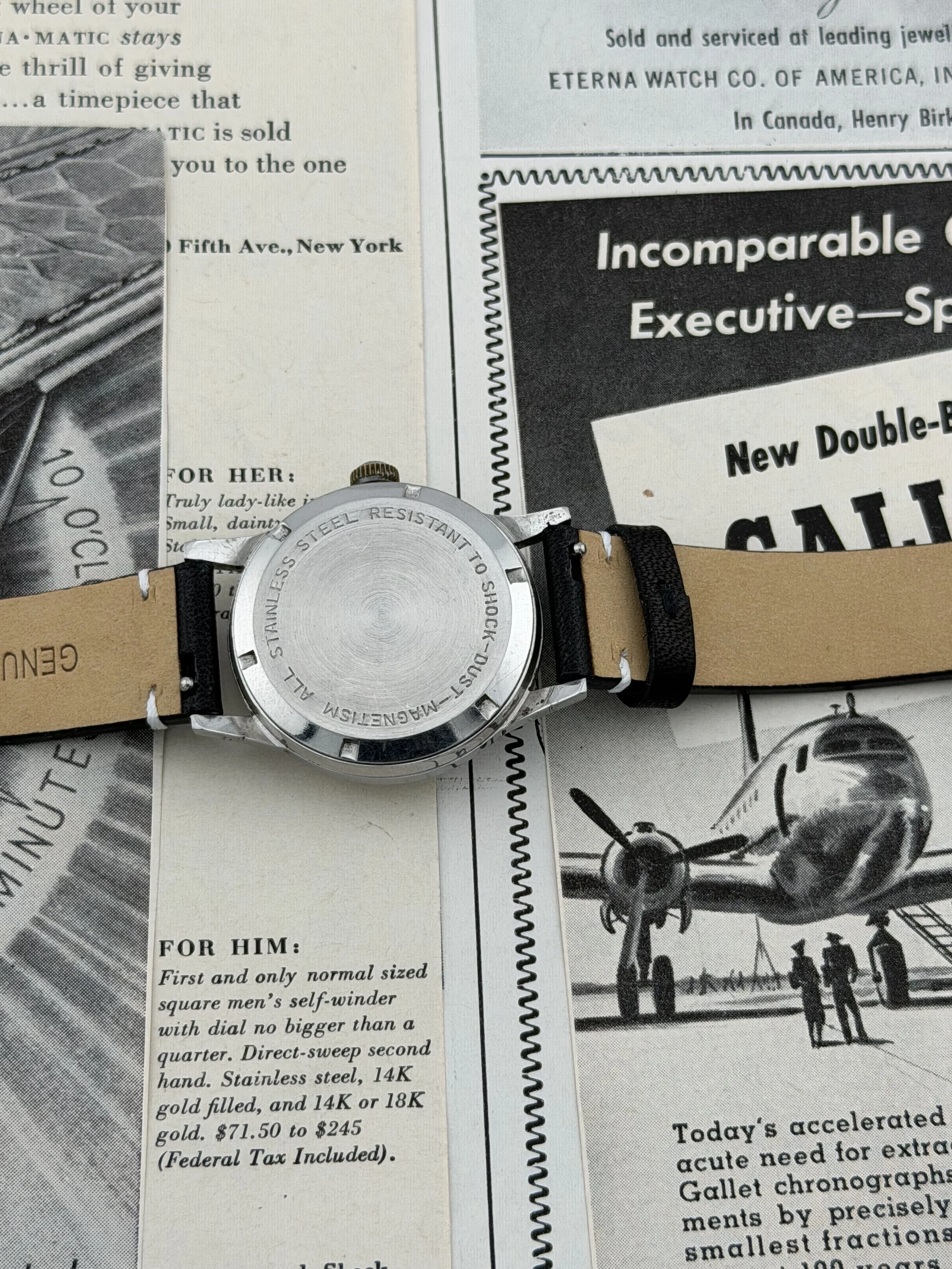
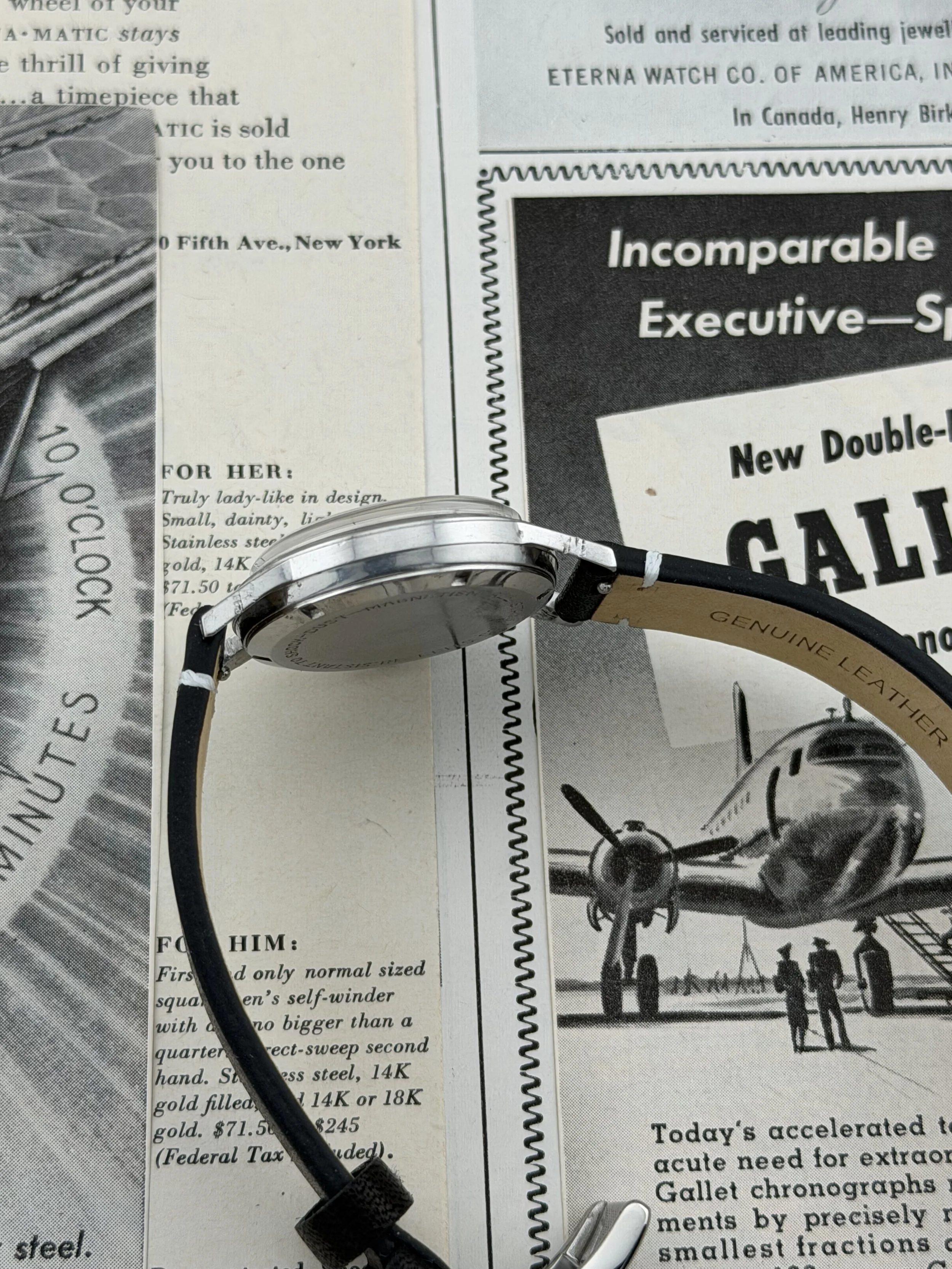
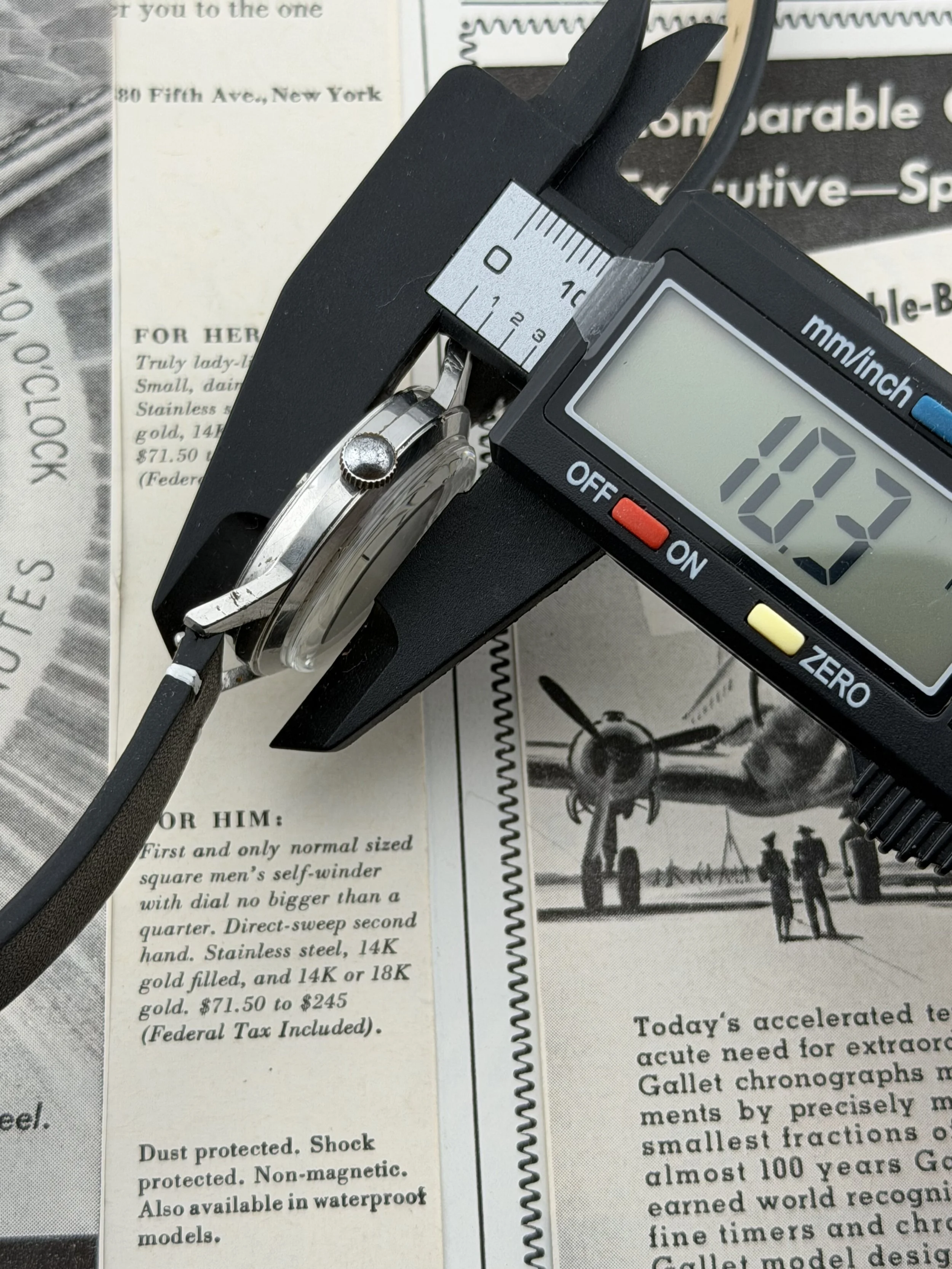
The steel case perfectly complements the movement and dial. Strong, practical, and understated, it reinforces the watch's field-watch character. Rather than being designed as jewellery, this is a watch that looks like it was made to be worn, used, and relied upon.
The military influence is unmistakable. During the 1940s and 1950s, military requirements had an enormous impact on wristwatch design. Clear Arabic numerals, precise minute tracks, highly legible hands, durable cases, and reliable mechanical movements became essential characteristics of watches intended for practical use. Those same principles quickly influenced civilian watches, creating the military-inspired field-watch designs collectors continue to seek today.
It is important to distinguish military style from military issue. Nothing visible here establishes that this particular Eloga was officially issued to military personnel. Instead, it belongs to the much broader family of civilian Swiss watches that adopted the highly functional design language associated with military and field watches.
Eloga itself represents the fascinating world of smaller Swiss watch companies that flourished during this period. Brands like Eloga were part of the enormous Swiss horological ecosystem that supplied watches to international markets, often combining locally produced cases, dials, and reliable Swiss mechanical movements into attractive and affordable timepieces.
That accessibility is part of what makes watches like this so rewarding today. You get the mechanical character, design language, and engineering of the period without the premium attached to the famous military-watch names.
What makes this Eloga particularly appealing is its honesty. The watch doesn't rely on elaborate complications or precious materials. Instead, it succeeds through clarity, durability, and thoughtful mechanical engineering. The clean dial, bold numerals, red seconds hand, steel case, Incabloc protection, and antimagnetic construction all work together to create a remarkably cohesive vintage instrument.
For collectors who appreciate military-inspired watches, overlooked Swiss brands, and affordable mechanical timepieces with genuine character, this Eloga is a fantastic example. With its Swiss 17-jewel movement, Eloga Watch Co. signature, Incabloc shock protection, antimagnetic construction, steel case, and striking red seconds hand, it captures the practical spirit of mid-century field watches beautifully.
A wonderfully honest Swiss mechanical watch from an era when legibility, durability, and reliability mattered above everything else.
This fantastic vintage Eloga is a wonderful example of the rugged, highly legible military-style watches produced during the golden age of Swiss mechanical watchmaking. With its clean white dial, bold Arabic numerals, distinctive red seconds hand, steel case, Incabloc shock protection, and antimagnetic construction, it has all the qualities that make vintage field watches so appealing.
The dial is wonderfully utilitarian. Large Arabic numerals provide immediate legibility, while the finely printed outer minute track gives the watch an unmistakably instrument-like appearance. The applied-style numerals add subtle dimension to the dial, while the broad hands are designed to make reading the time quick and effortless.
The red seconds hand is perhaps the most distinctive feature. Sweeping across the pale dial in vivid contrast, it adds an unexpected flash of colour to an otherwise restrained military-inspired design. It is a small detail, but one that gives this Eloga considerably more personality than a conventional field watch.
The dial is also prominently marked Incabloc and Antimagnetic, advertising two important pieces of mechanical technology for the period. Incabloc shock protection was designed to protect the delicate balance staff from impacts, making mechanical watches more durable in everyday use. Antimagnetic construction, meanwhile, helped protect the movement from the increasingly common magnetic fields produced by electrical equipment, motors, radios, and other technology.
Inside is a Swiss 17-jewel manually wound mechanical movement, clearly signed Eloga Watch Co. and marked Swiss — Seventeen 17 Jewels. The movement has a traditional, straightforward architecture, with the jewelled bearings providing reduced friction at critical points throughout the mechanism.
The movement's appearance is particularly charming. Its simple bridges, exposed gear train, jewel settings, and traditional regulator make it immediately recognizable as a mechanical instrument from the era. There is no unnecessary decoration—the focus is on functionality, serviceability, and reliable timekeeping.
The 17-jewel configuration is typical of the period's quality mechanical wristwatches. Jewels were used at key pivot points throughout the movement to reduce friction and wear, helping the mechanism operate smoothly over many years. Combined with Incabloc protection, the movement was designed to withstand considerably more than the delicate appearance of its components might suggest.
The steel case perfectly complements the movement and dial. Strong, practical, and understated, it reinforces the watch's field-watch character. Rather than being designed as jewellery, this is a watch that looks like it was made to be worn, used, and relied upon.
The military influence is unmistakable. During the 1940s and 1950s, military requirements had an enormous impact on wristwatch design. Clear Arabic numerals, precise minute tracks, highly legible hands, durable cases, and reliable mechanical movements became essential characteristics of watches intended for practical use. Those same principles quickly influenced civilian watches, creating the military-inspired field-watch designs collectors continue to seek today.
It is important to distinguish military style from military issue. Nothing visible here establishes that this particular Eloga was officially issued to military personnel. Instead, it belongs to the much broader family of civilian Swiss watches that adopted the highly functional design language associated with military and field watches.
Eloga itself represents the fascinating world of smaller Swiss watch companies that flourished during this period. Brands like Eloga were part of the enormous Swiss horological ecosystem that supplied watches to international markets, often combining locally produced cases, dials, and reliable Swiss mechanical movements into attractive and affordable timepieces.
That accessibility is part of what makes watches like this so rewarding today. You get the mechanical character, design language, and engineering of the period without the premium attached to the famous military-watch names.
What makes this Eloga particularly appealing is its honesty. The watch doesn't rely on elaborate complications or precious materials. Instead, it succeeds through clarity, durability, and thoughtful mechanical engineering. The clean dial, bold numerals, red seconds hand, steel case, Incabloc protection, and antimagnetic construction all work together to create a remarkably cohesive vintage instrument.
For collectors who appreciate military-inspired watches, overlooked Swiss brands, and affordable mechanical timepieces with genuine character, this Eloga is a fantastic example. With its Swiss 17-jewel movement, Eloga Watch Co. signature, Incabloc shock protection, antimagnetic construction, steel case, and striking red seconds hand, it captures the practical spirit of mid-century field watches beautifully.
A wonderfully honest Swiss mechanical watch from an era when legibility, durability, and reliability mattered above everything else.