

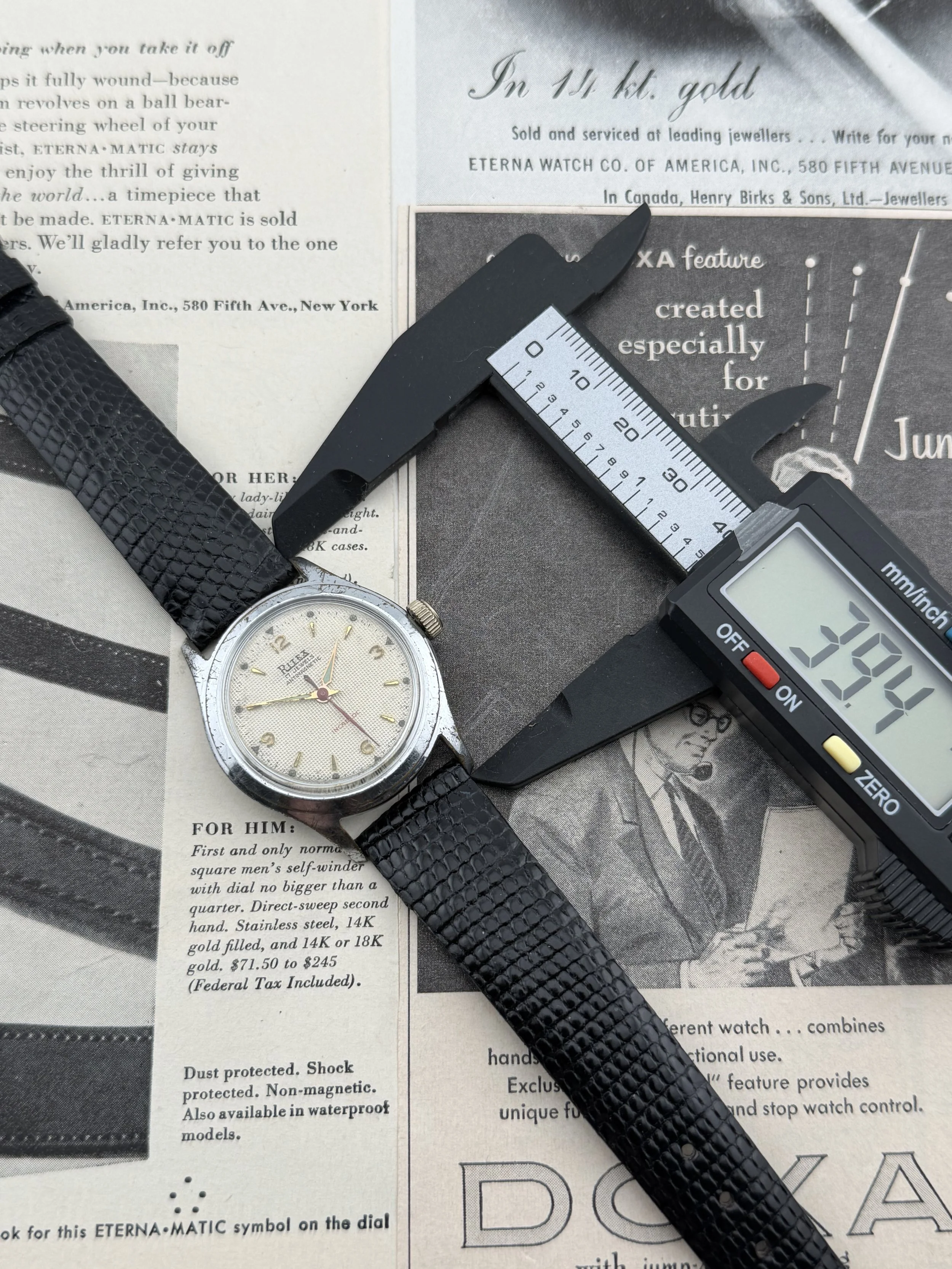
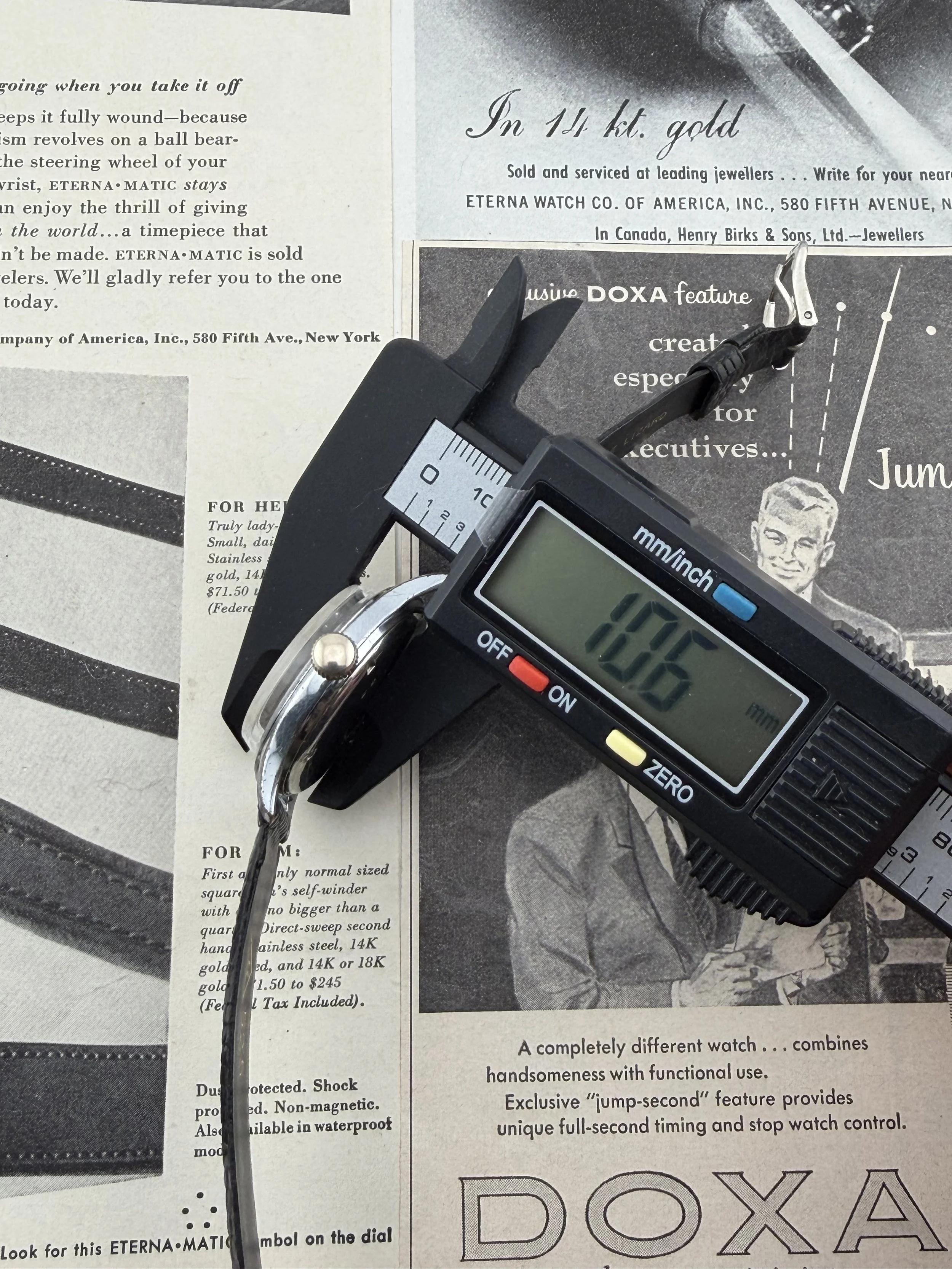
Ritex | Vintage Swiss Dress Watch | 17 Jewels | Antimagnetic | Textured Dial | Applied Gold Numerals | Steel Case | Circa 1950s–1960s
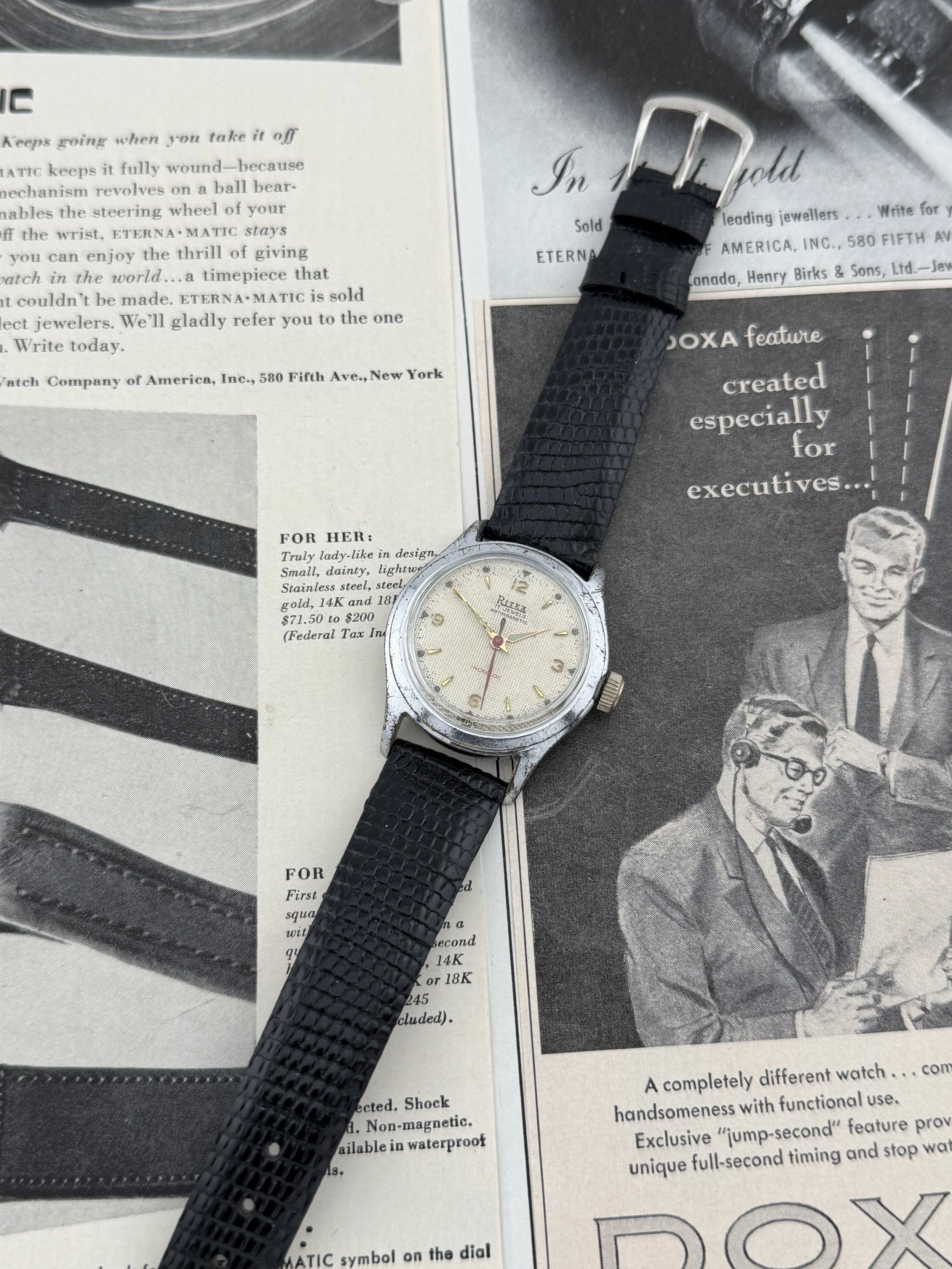
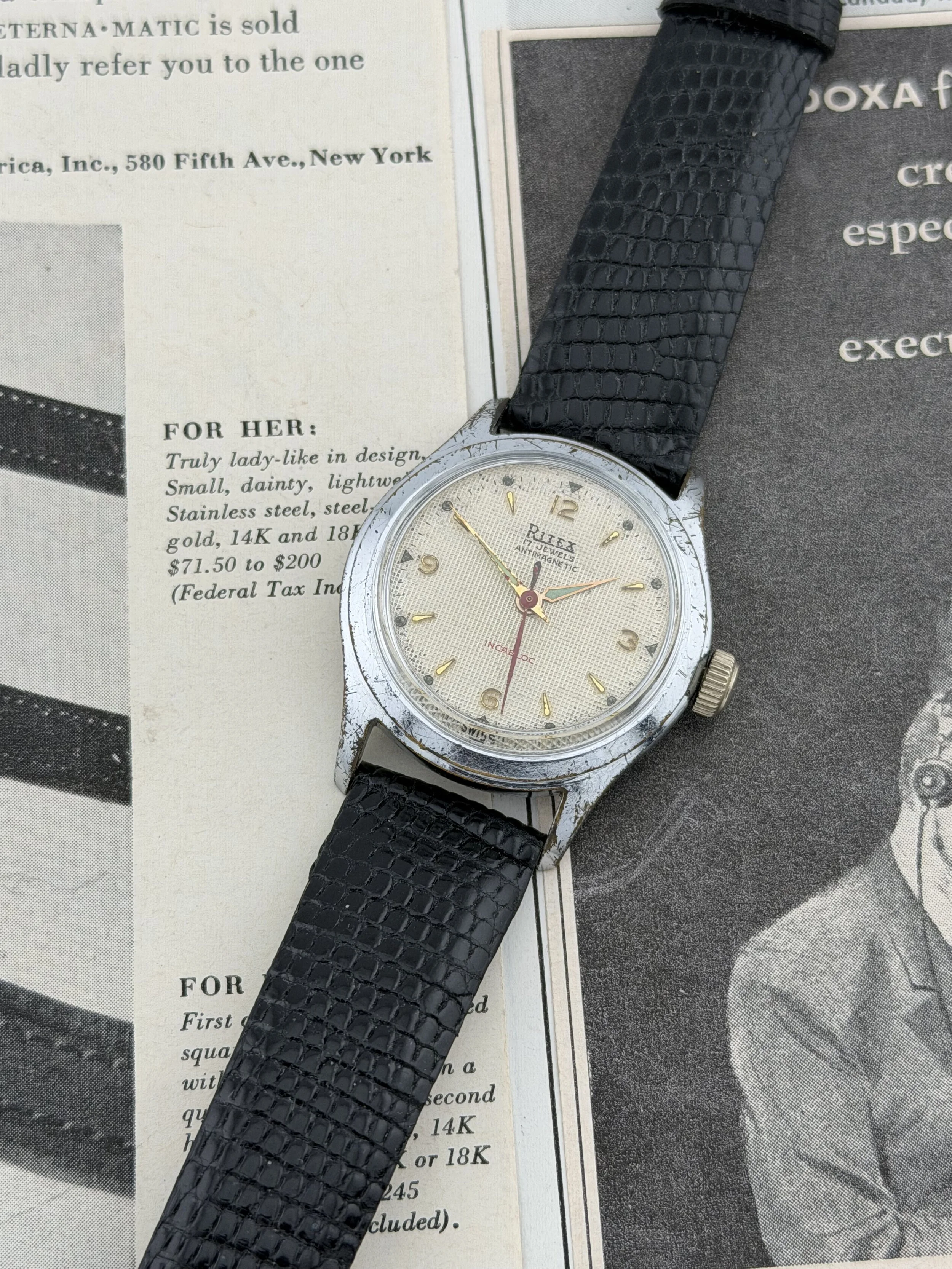
This striking vintage Ritex is a wonderful example of the character and individuality found throughout the golden age of Swiss mechanical watchmaking. Featuring a beautifully textured dial, applied gold numerals, a vivid red seconds hand, stainless steel case, and a 17-jewel antimagnetic mechanical movement, it is a classic mid-century watch with considerably more personality than its modest name might suggest.
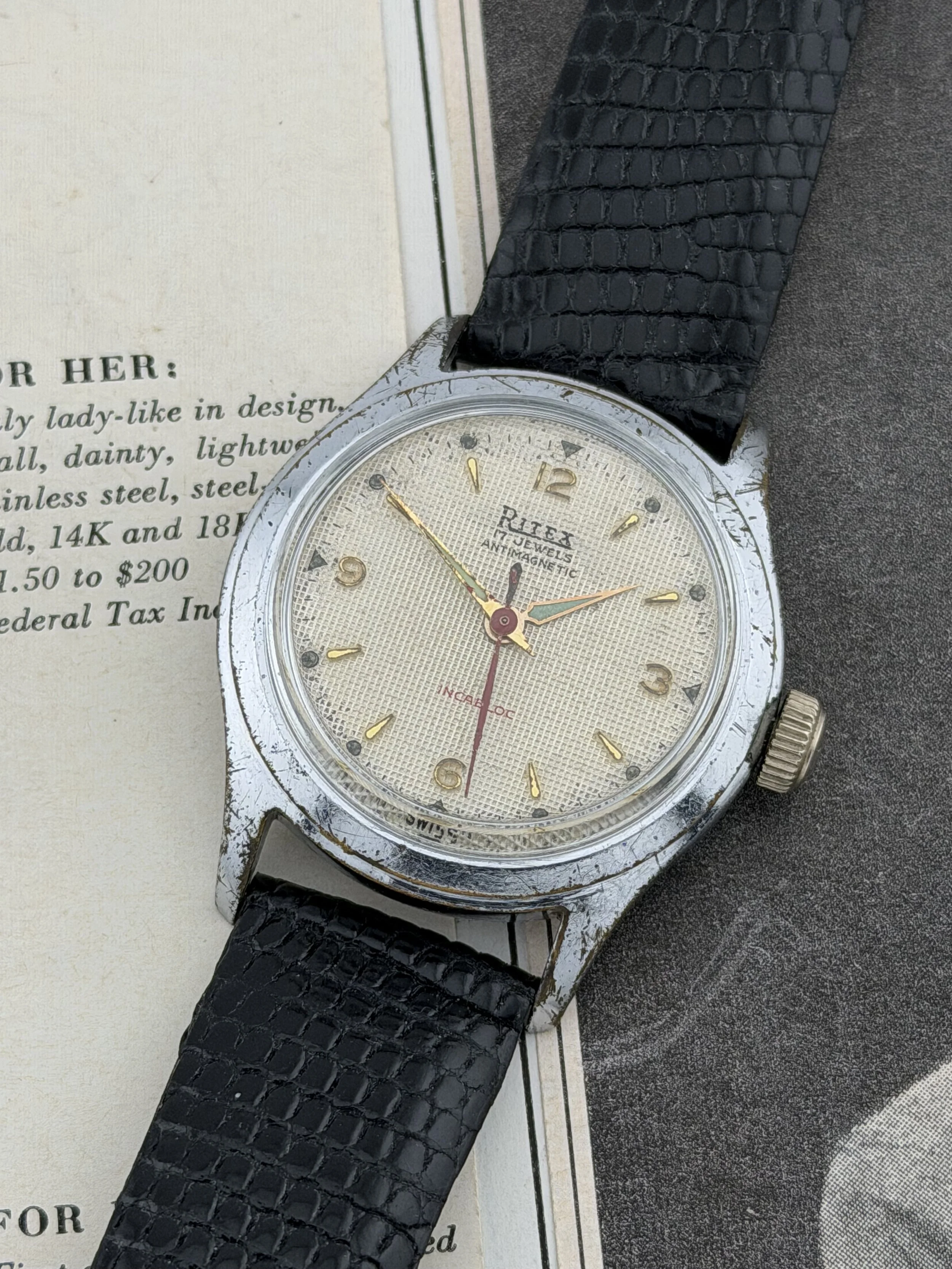
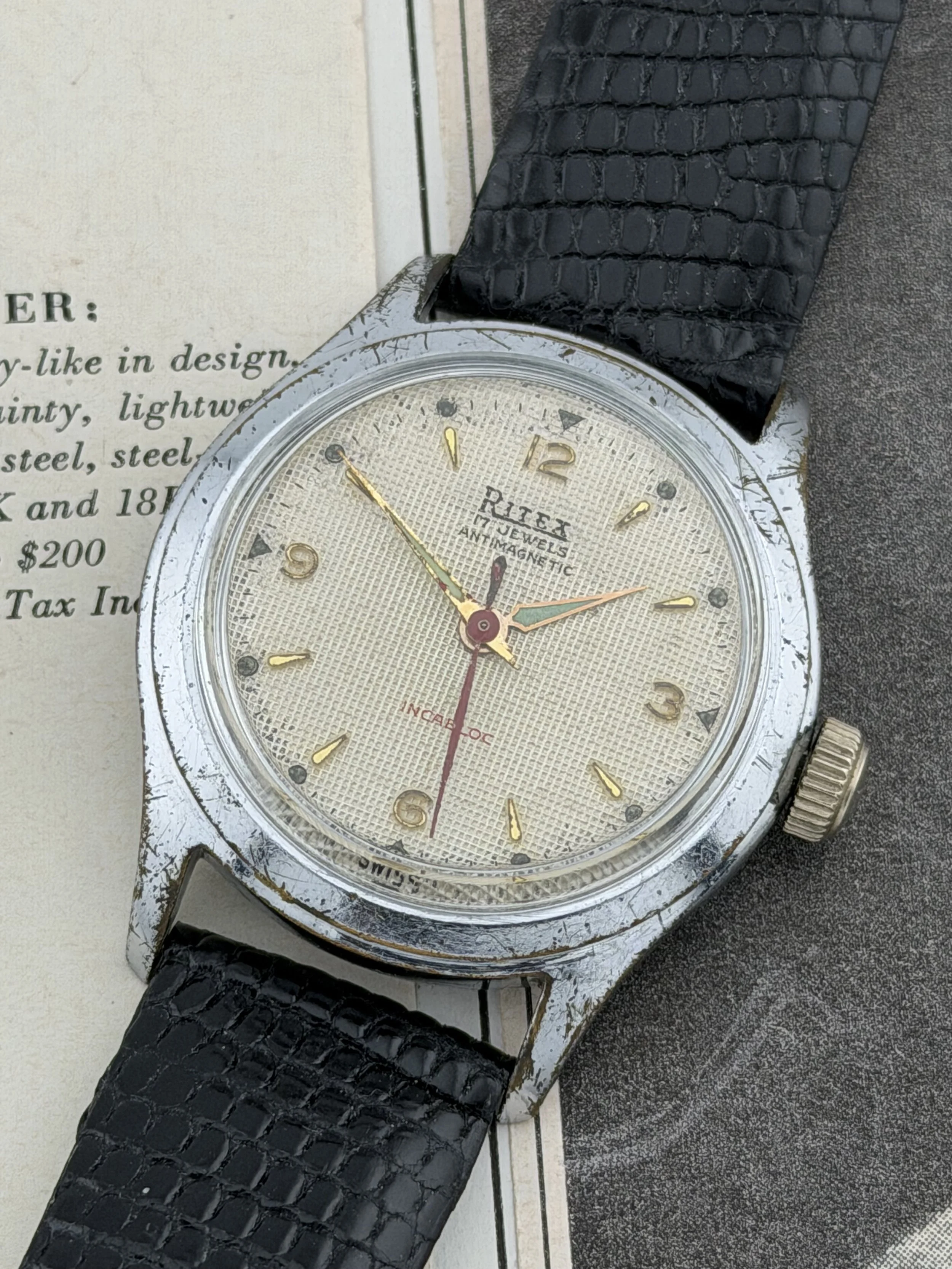
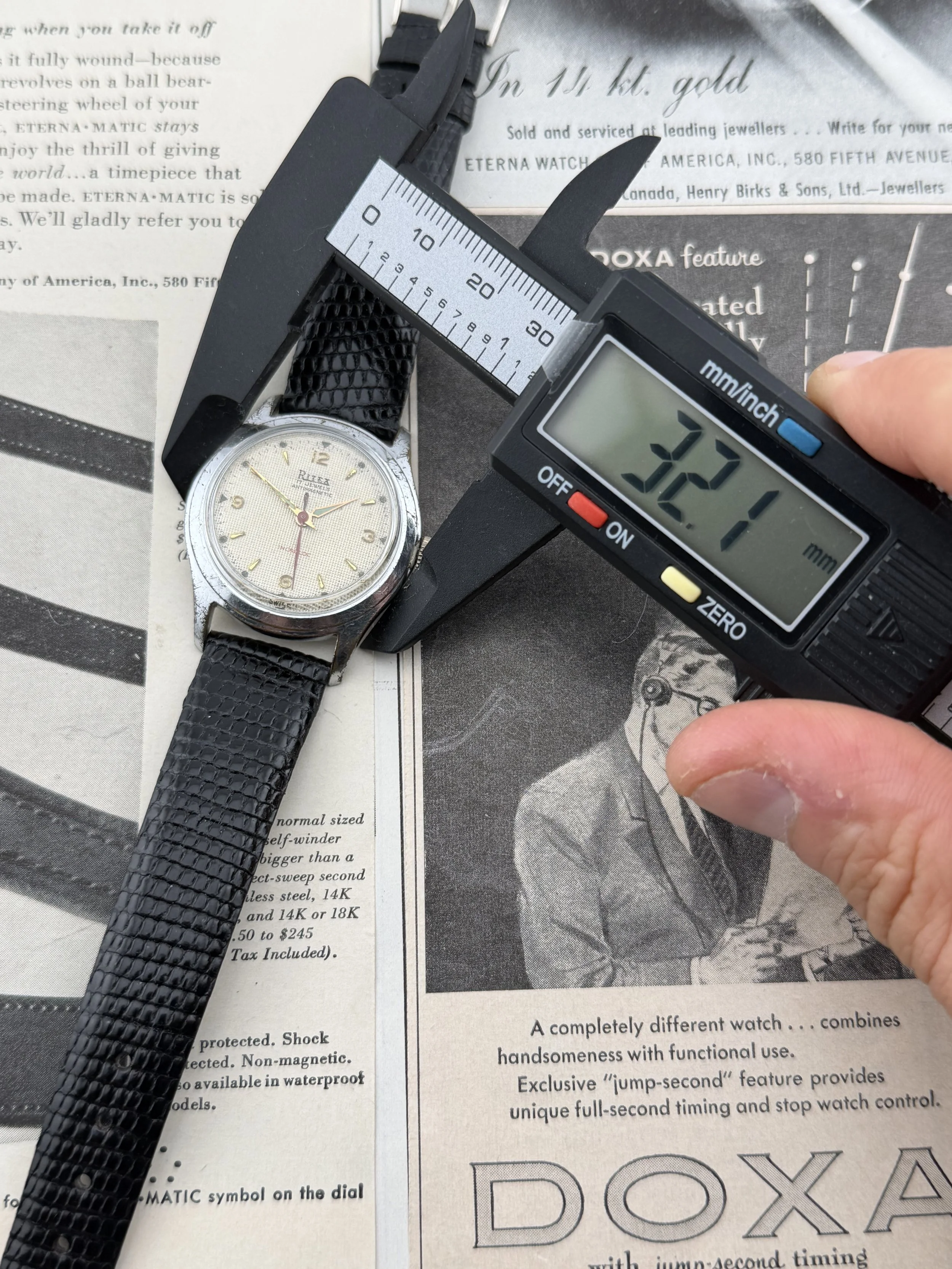
The dial is what immediately sets this watch apart. Its finely textured surface gives the otherwise restrained design a wonderful sense of depth, creating a subtle pattern that becomes increasingly apparent as the light moves across the dial. It is an excellent example of the creative dial treatments that became popular during the mid-century period, when manufacturers were finding ways to add visual interest without relying on excessive decoration.
The applied gold numerals are beautifully dimensional. Raised above the textured dial, they catch the light and provide a warm contrast against the cooler steel case. The combination of the textured surface and polished gold markers gives the watch a surprisingly sophisticated appearance.
Then there is the red seconds hand—a fantastic little detail that completely changes the personality of the watch. Sweeping around the dial in vivid contrast to the gold numerals, it adds a touch of sportiness and gives the watch an unmistakable mid-century flair. It is exactly the kind of small design decision that makes an otherwise classic vintage watch memorable.
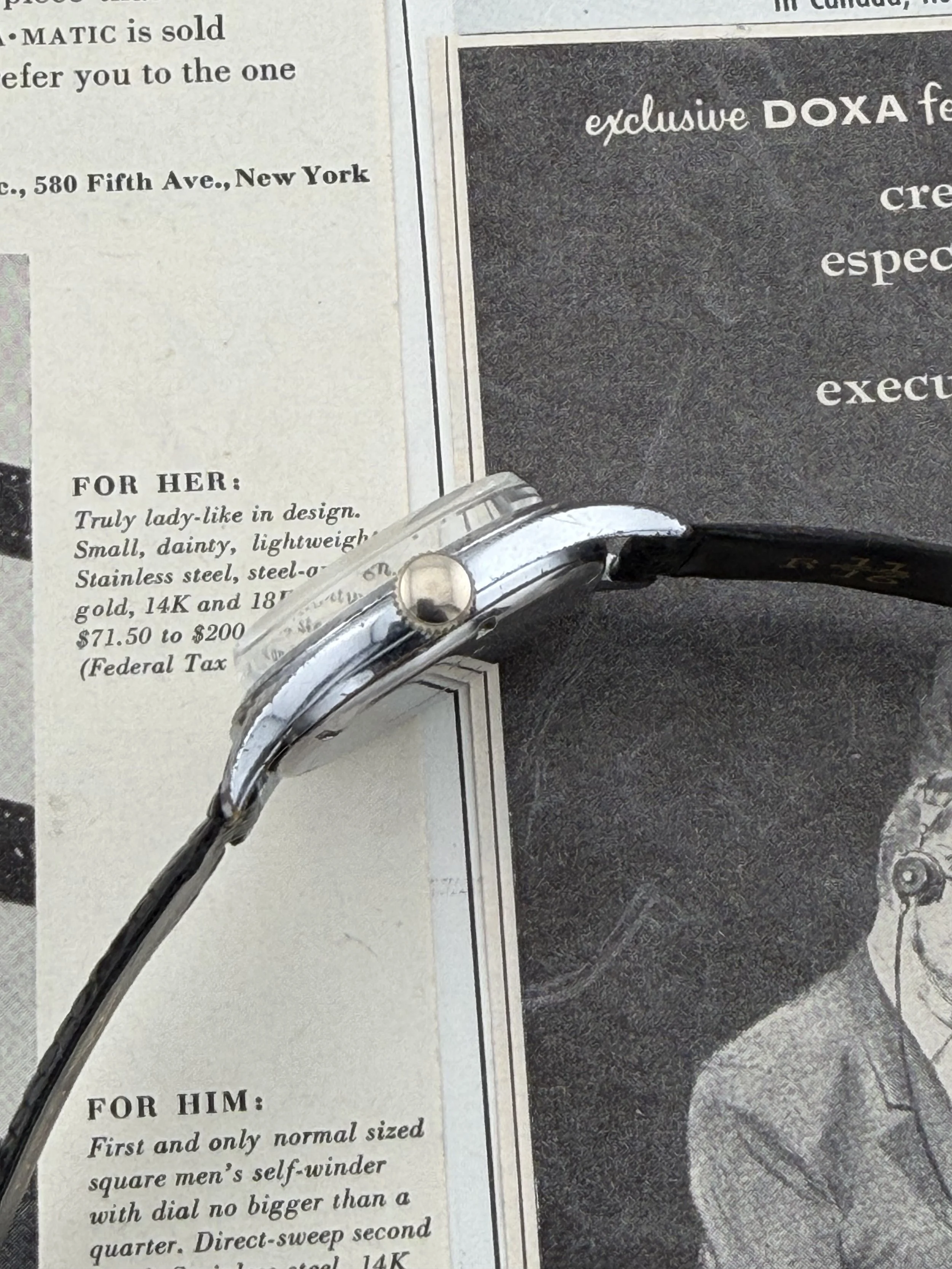
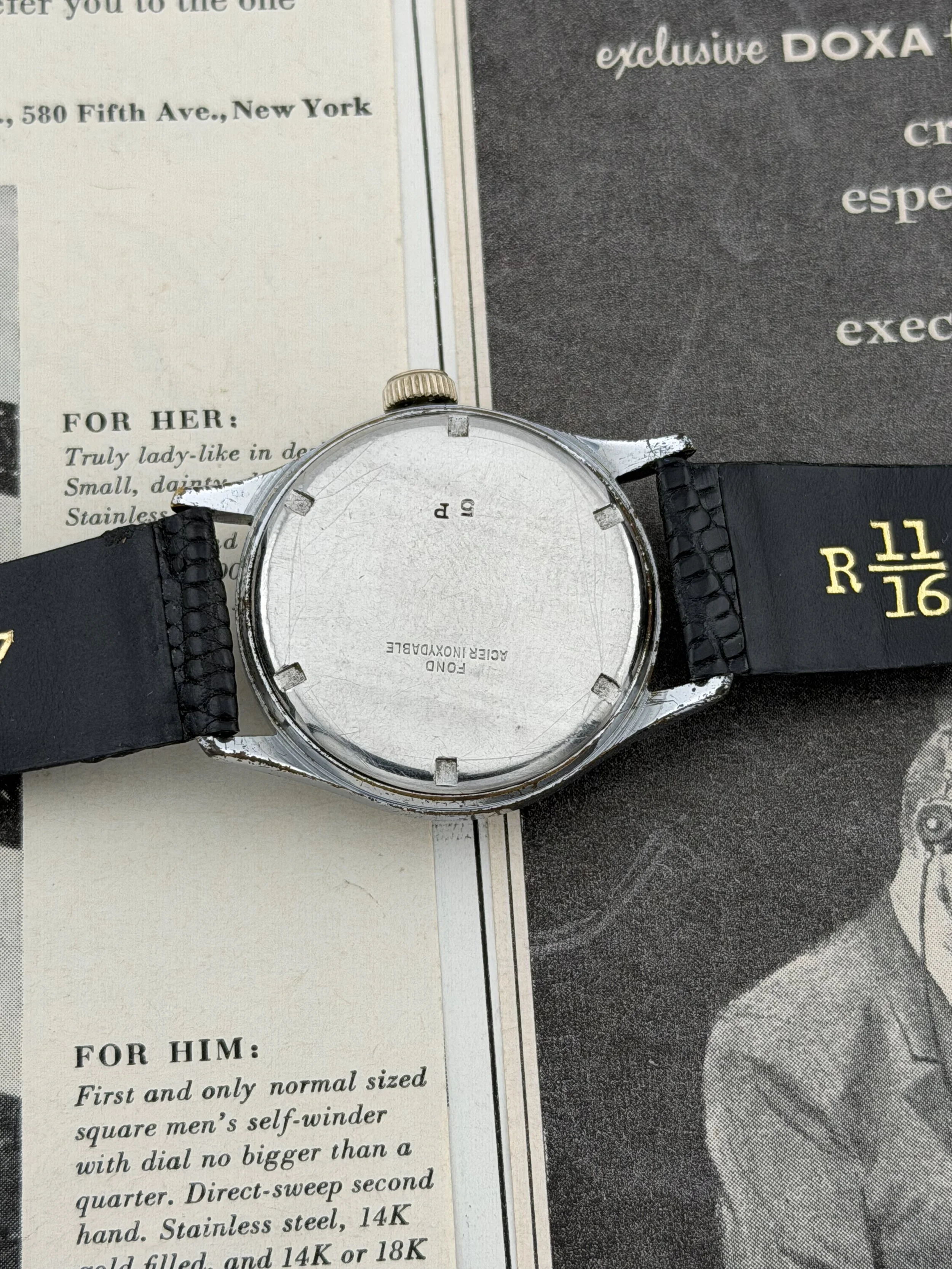
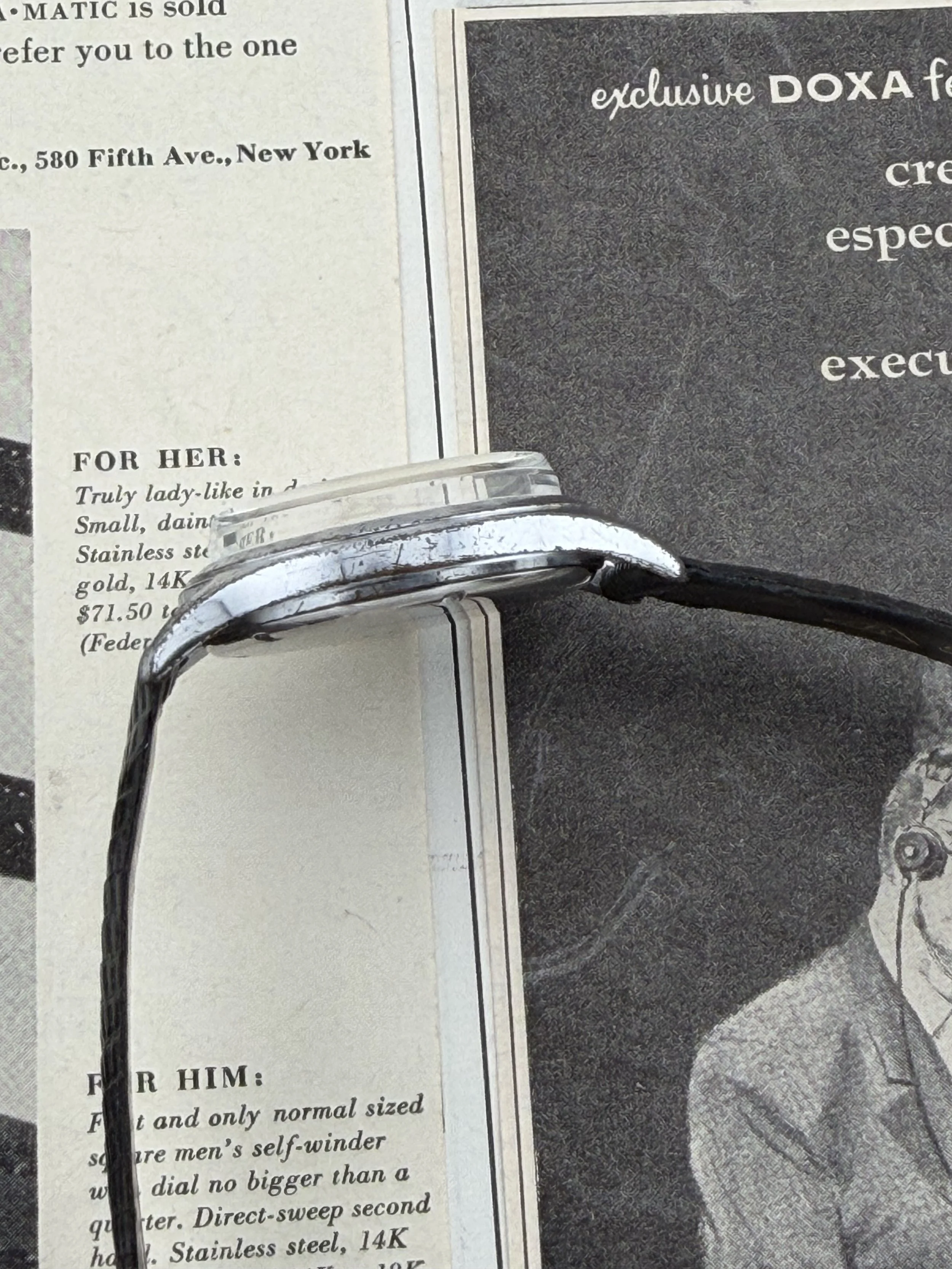
The steel case provides the perfect foundation for the dial. Practical and durable, it reflects the growing popularity of stainless steel watches during the post-war period. Unlike a precious-metal dress watch, this is a timepiece that was meant to be worn, offering elegance without sacrificing everyday practicality.
Inside is a Swiss 17-jewel manually wound mechanical movement, marked Seventeen 17 Jewels and associated with the Azhar Watch Co. The movement is a wonderfully straightforward example of traditional Swiss mechanical engineering, with visible jewel bearings, a conventional gear train, and a classic regulator assembly.
The 17-jewel configuration represents the standard of a well-equipped mechanical wristwatch during this period. Jewels were used as low-friction bearings at key points throughout the movement, helping reduce wear and allowing the mechanism to operate smoothly over decades of use.
The movement is also marked antimagnetic, an important feature in mid-century watchmaking. As everyday life became increasingly surrounded by electrical devices, motors, radios, and other sources of magnetic fields, Swiss manufacturers increasingly emphasized protection against magnetism. A mechanical movement could be significantly affected by magnetization, so antimagnetic construction was a practical feature rather than simply a marketing flourish.
The Azhar Watch Co. signature on the movement adds another fascinating layer to this watch's history. Like so many vintage Swiss watches, the Ritex belongs to a period when the industry was built around a vast network of specialized manufacturers. Movements could be produced by one company, cases by another, and complete watches marketed under yet another name. This interconnected system allowed smaller brands to offer genuine Swiss mechanical watchmaking to markets around the world.
Ritex itself represents the enormous number of independent and lesser-known Swiss names that populated the watch industry during the middle of the twentieth century. While names such as Omega, Longines, and Rolex dominate modern collecting, thousands of smaller brands produced watches with distinctive designs and perfectly respectable mechanical movements. These watches are increasingly appreciated today precisely because they offer something different from the mainstream.
The design of this Ritex is quintessentially mid-century. The clean case, textured dial, applied gold numerals, and red seconds hand create a wonderful combination of restraint and personality. It is sophisticated enough to wear as a dress watch but distinctive enough to stand out among the sea of conventional vintage three-hand watches.
There is also something particularly appealing about the honesty of a watch like this. It isn't trying to be a luxury watch from a famous manufacturer. Instead, it represents the enormous ecosystem of Swiss watchmaking that allowed mechanical watches to become accessible to ordinary people around the world.
What makes this particular example special is the dial. The textured surface gives the watch an almost fabric-like appearance, while the applied gold numerals provide depth and the red seconds hand injects just the right amount of colour. Together, these details create a watch that is understated at first glance but increasingly interesting the longer you look at it.
For collectors who appreciate overlooked Swiss brands, unusual vintage dials, and mechanical watches with genuine character, this Ritex is a wonderful example. With its 17-jewel Swiss movement, antimagnetic construction, Azhar Watch Co. movement, textured dial, applied gold numerals, red seconds hand, and steel case, it captures the creativity and practicality of mid-century watchmaking beautifully.
A classic Swiss mechanical watch with a wonderfully unconventional dial—and exactly the kind of affordable vintage piece that makes collecting so rewarding.
This striking vintage Ritex is a wonderful example of the character and individuality found throughout the golden age of Swiss mechanical watchmaking. Featuring a beautifully textured dial, applied gold numerals, a vivid red seconds hand, stainless steel case, and a 17-jewel antimagnetic mechanical movement, it is a classic mid-century watch with considerably more personality than its modest name might suggest.
The dial is what immediately sets this watch apart. Its finely textured surface gives the otherwise restrained design a wonderful sense of depth, creating a subtle pattern that becomes increasingly apparent as the light moves across the dial. It is an excellent example of the creative dial treatments that became popular during the mid-century period, when manufacturers were finding ways to add visual interest without relying on excessive decoration.
The applied gold numerals are beautifully dimensional. Raised above the textured dial, they catch the light and provide a warm contrast against the cooler steel case. The combination of the textured surface and polished gold markers gives the watch a surprisingly sophisticated appearance.
Then there is the red seconds hand—a fantastic little detail that completely changes the personality of the watch. Sweeping around the dial in vivid contrast to the gold numerals, it adds a touch of sportiness and gives the watch an unmistakable mid-century flair. It is exactly the kind of small design decision that makes an otherwise classic vintage watch memorable.
The steel case provides the perfect foundation for the dial. Practical and durable, it reflects the growing popularity of stainless steel watches during the post-war period. Unlike a precious-metal dress watch, this is a timepiece that was meant to be worn, offering elegance without sacrificing everyday practicality.
Inside is a Swiss 17-jewel manually wound mechanical movement, marked Seventeen 17 Jewels and associated with the Azhar Watch Co. The movement is a wonderfully straightforward example of traditional Swiss mechanical engineering, with visible jewel bearings, a conventional gear train, and a classic regulator assembly.
The 17-jewel configuration represents the standard of a well-equipped mechanical wristwatch during this period. Jewels were used as low-friction bearings at key points throughout the movement, helping reduce wear and allowing the mechanism to operate smoothly over decades of use.
The movement is also marked antimagnetic, an important feature in mid-century watchmaking. As everyday life became increasingly surrounded by electrical devices, motors, radios, and other sources of magnetic fields, Swiss manufacturers increasingly emphasized protection against magnetism. A mechanical movement could be significantly affected by magnetization, so antimagnetic construction was a practical feature rather than simply a marketing flourish.
The Azhar Watch Co. signature on the movement adds another fascinating layer to this watch's history. Like so many vintage Swiss watches, the Ritex belongs to a period when the industry was built around a vast network of specialized manufacturers. Movements could be produced by one company, cases by another, and complete watches marketed under yet another name. This interconnected system allowed smaller brands to offer genuine Swiss mechanical watchmaking to markets around the world.
Ritex itself represents the enormous number of independent and lesser-known Swiss names that populated the watch industry during the middle of the twentieth century. While names such as Omega, Longines, and Rolex dominate modern collecting, thousands of smaller brands produced watches with distinctive designs and perfectly respectable mechanical movements. These watches are increasingly appreciated today precisely because they offer something different from the mainstream.
The design of this Ritex is quintessentially mid-century. The clean case, textured dial, applied gold numerals, and red seconds hand create a wonderful combination of restraint and personality. It is sophisticated enough to wear as a dress watch but distinctive enough to stand out among the sea of conventional vintage three-hand watches.
There is also something particularly appealing about the honesty of a watch like this. It isn't trying to be a luxury watch from a famous manufacturer. Instead, it represents the enormous ecosystem of Swiss watchmaking that allowed mechanical watches to become accessible to ordinary people around the world.
What makes this particular example special is the dial. The textured surface gives the watch an almost fabric-like appearance, while the applied gold numerals provide depth and the red seconds hand injects just the right amount of colour. Together, these details create a watch that is understated at first glance but increasingly interesting the longer you look at it.
For collectors who appreciate overlooked Swiss brands, unusual vintage dials, and mechanical watches with genuine character, this Ritex is a wonderful example. With its 17-jewel Swiss movement, antimagnetic construction, Azhar Watch Co. movement, textured dial, applied gold numerals, red seconds hand, and steel case, it captures the creativity and practicality of mid-century watchmaking beautifully.
A classic Swiss mechanical watch with a wonderfully unconventional dial—and exactly the kind of affordable vintage piece that makes collecting so rewarding.