

This vintage Fulton Super Automatic is a fascinating example of the postwar Swiss automatic watch boom, combining a North American retail brand with a technically advanced Swiss movement. The Fulton trademark was registered by Mount Vernon Watch Co., Inc. of New York City in 1936, with the company continuing to register watch names into the mid-1950s. Like many American importers of the period, Mount Vernon sourced quality Swiss movements and sold them under exclusive house brands for the North American market.
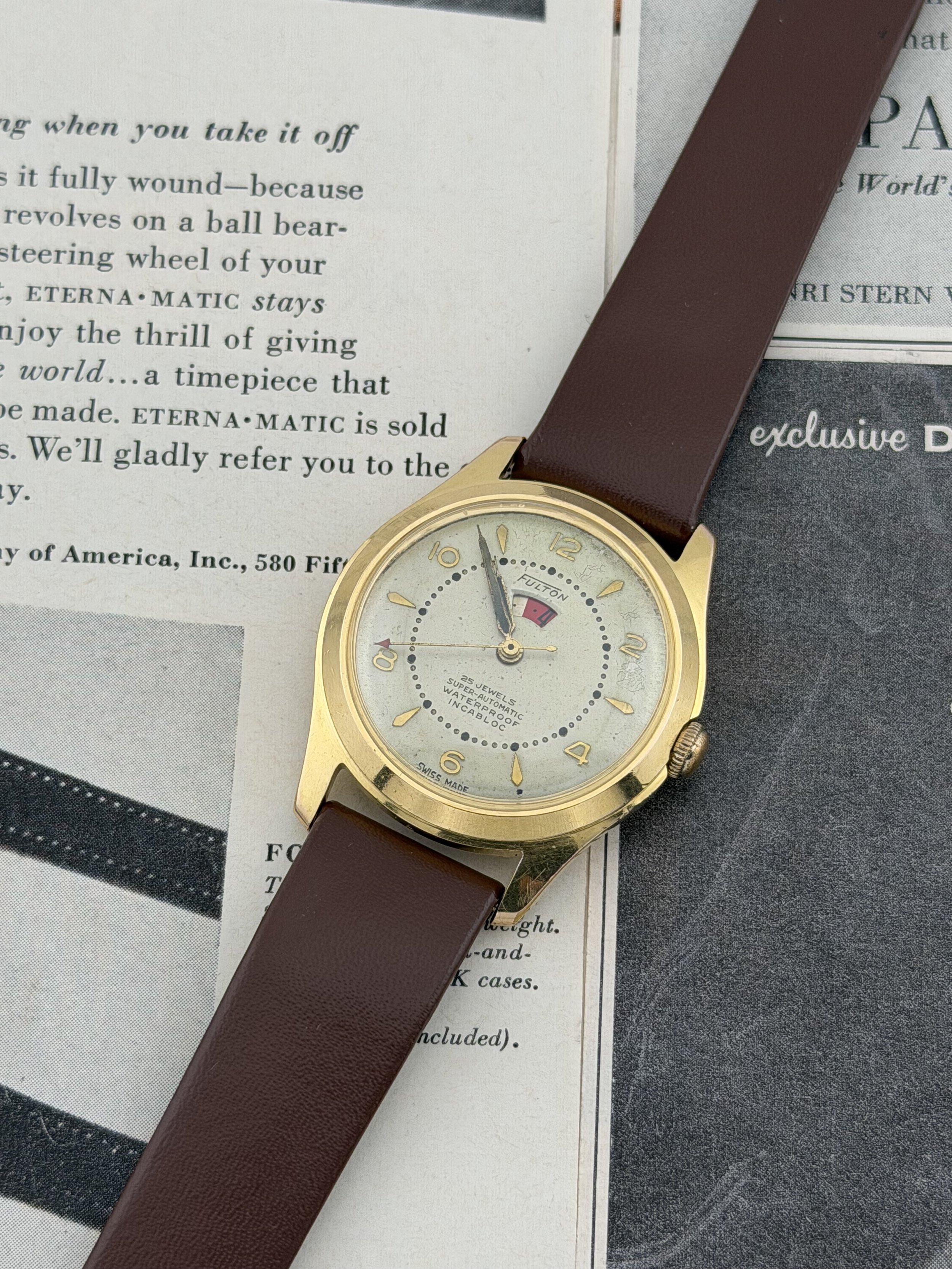
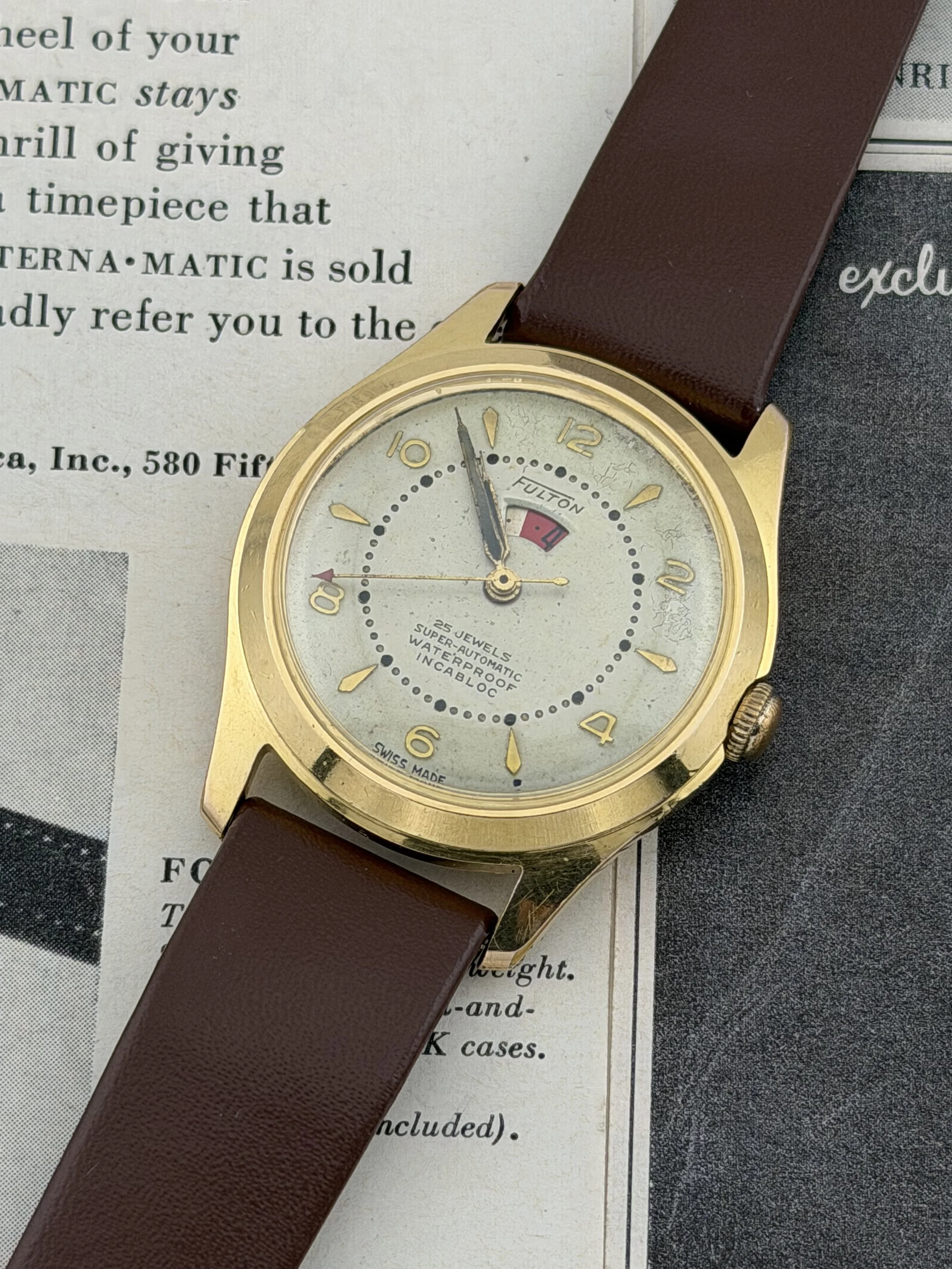
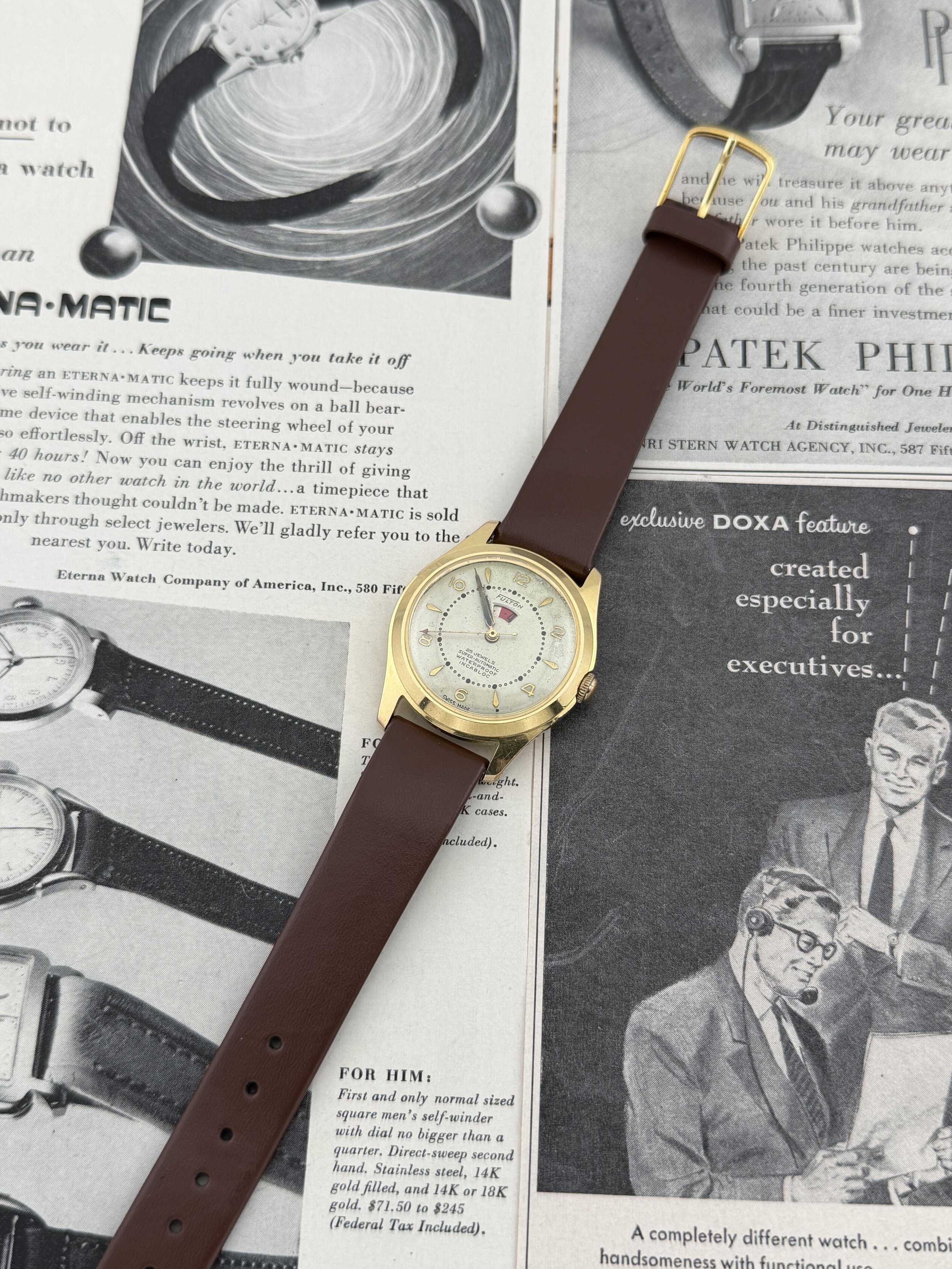
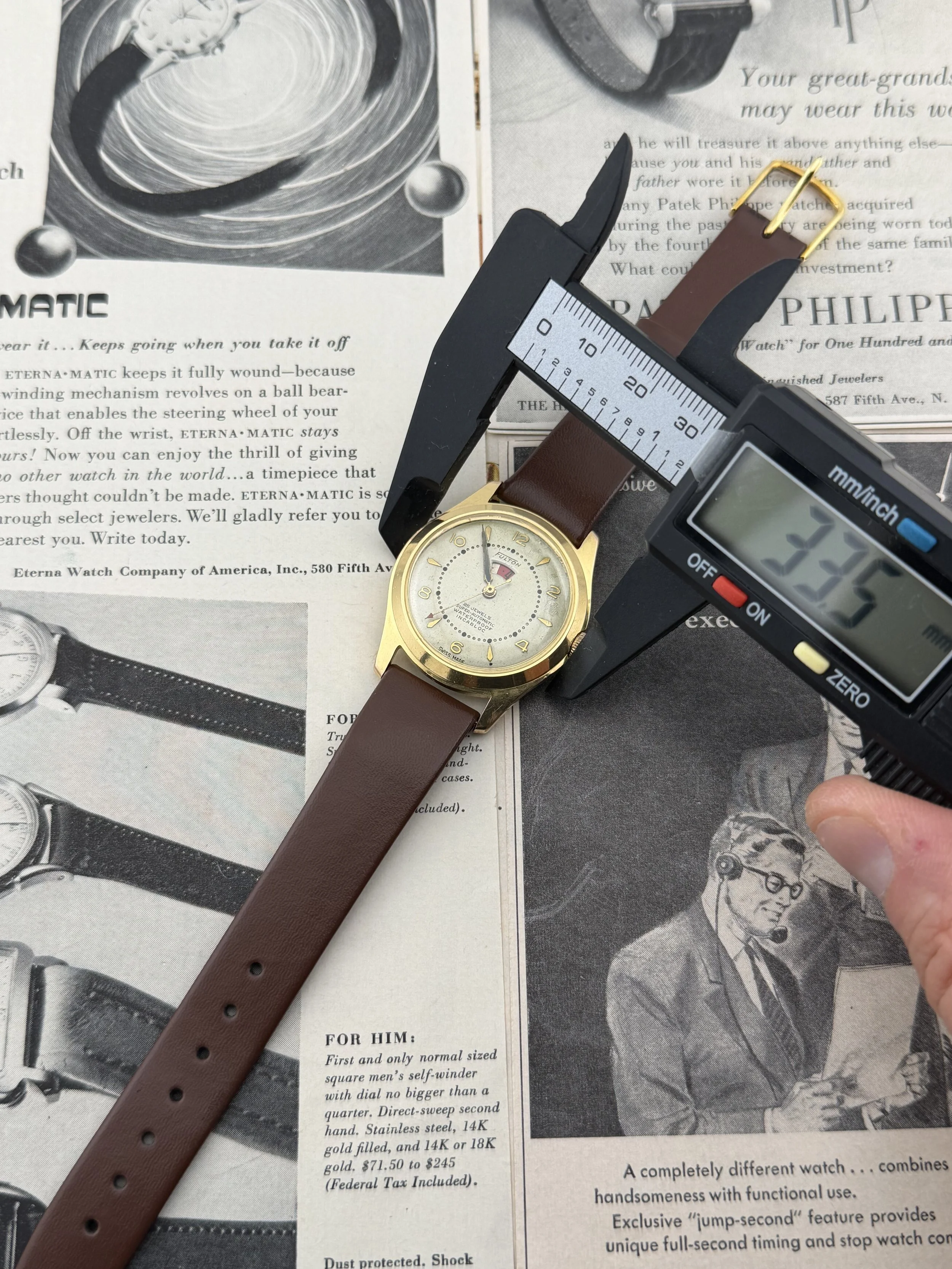
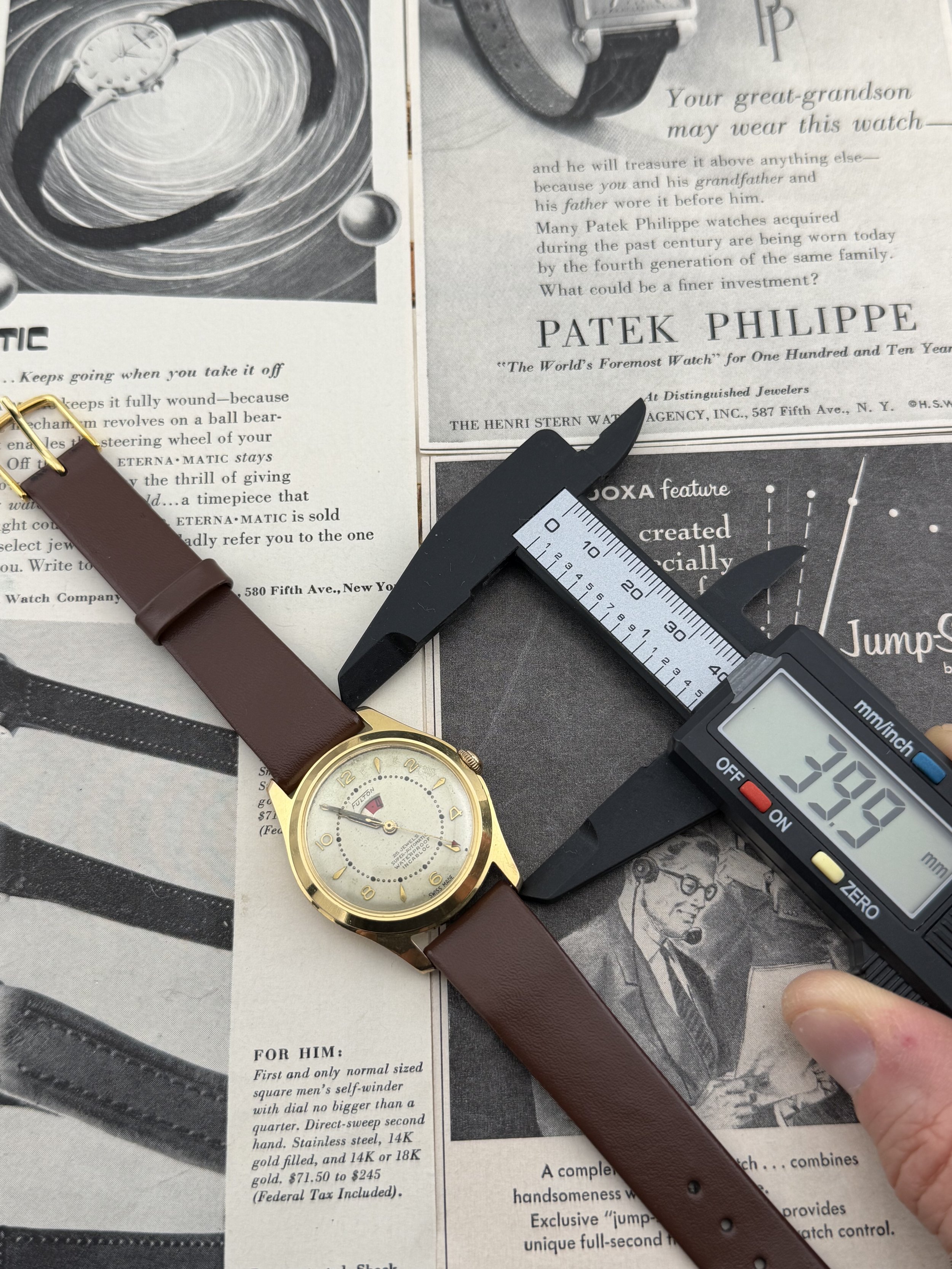
The dial captures the bold styling of the late 1950s with a beautiful combination of practical features and distinctive design details. It features applied hour markers with mixed Arabic numerals, a red-tipped central seconds hand, and a striking red-and-black roulette date display positioned unusually around the 1:30–2 o’clock position. The dial is proudly marked “25 Jewels,” “Super Automatic,” “Waterproof,” and “Incabloc,” highlighting the premium specifications that manufacturers emphasized during this era.
One of the most intriguing features of this watch is its power reserve indicator, which displays the amount of energy remaining in the mainspring. As the automatic movement winds through normal wrist motion, the indicator advances to show the available power reserve, giving the wearer a visual indication of how much running time remains before the watch stops. This was a sophisticated and relatively uncommon complication for a 1950s automatic watch, adding both practicality and mechanical appeal.
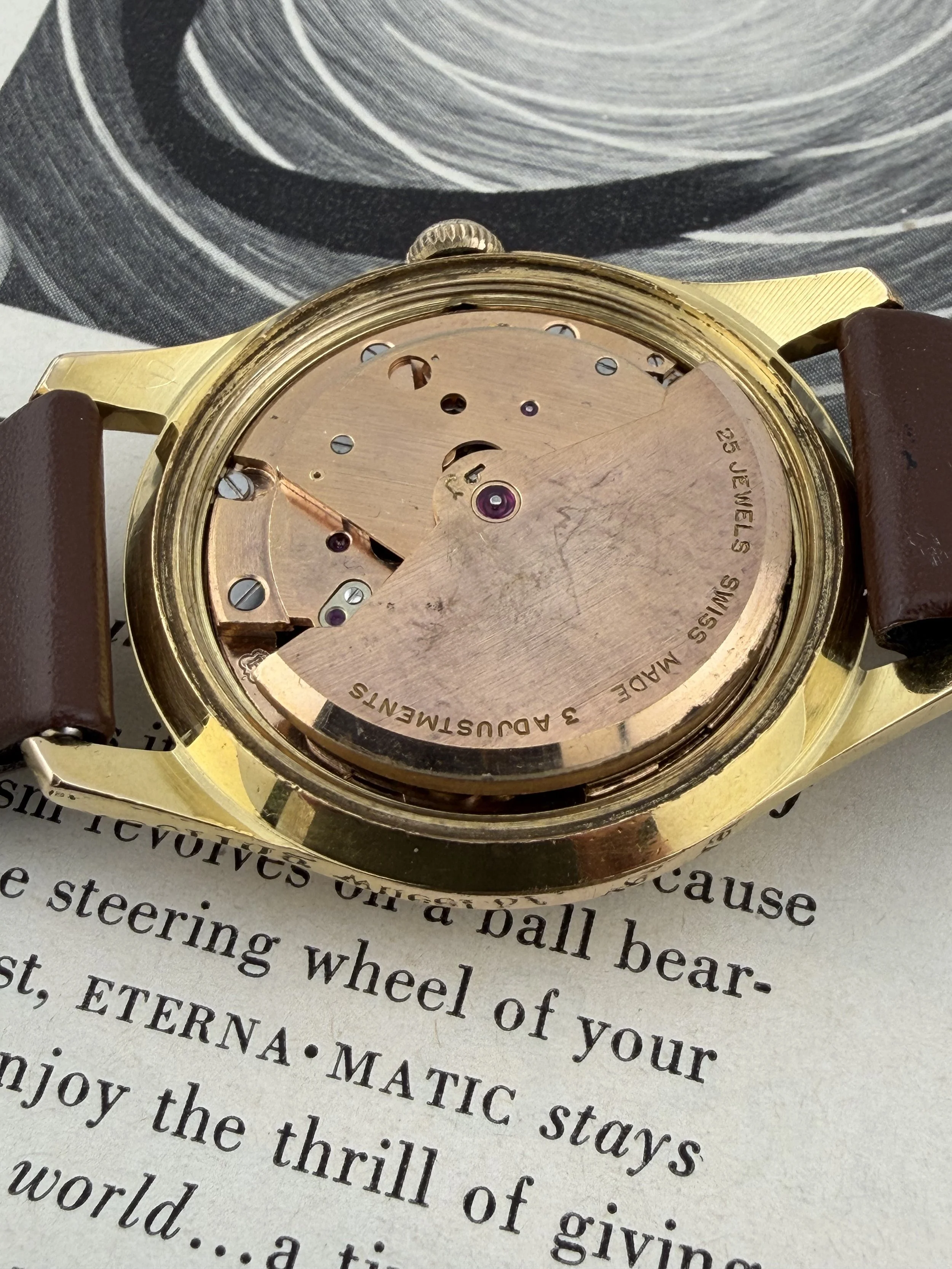
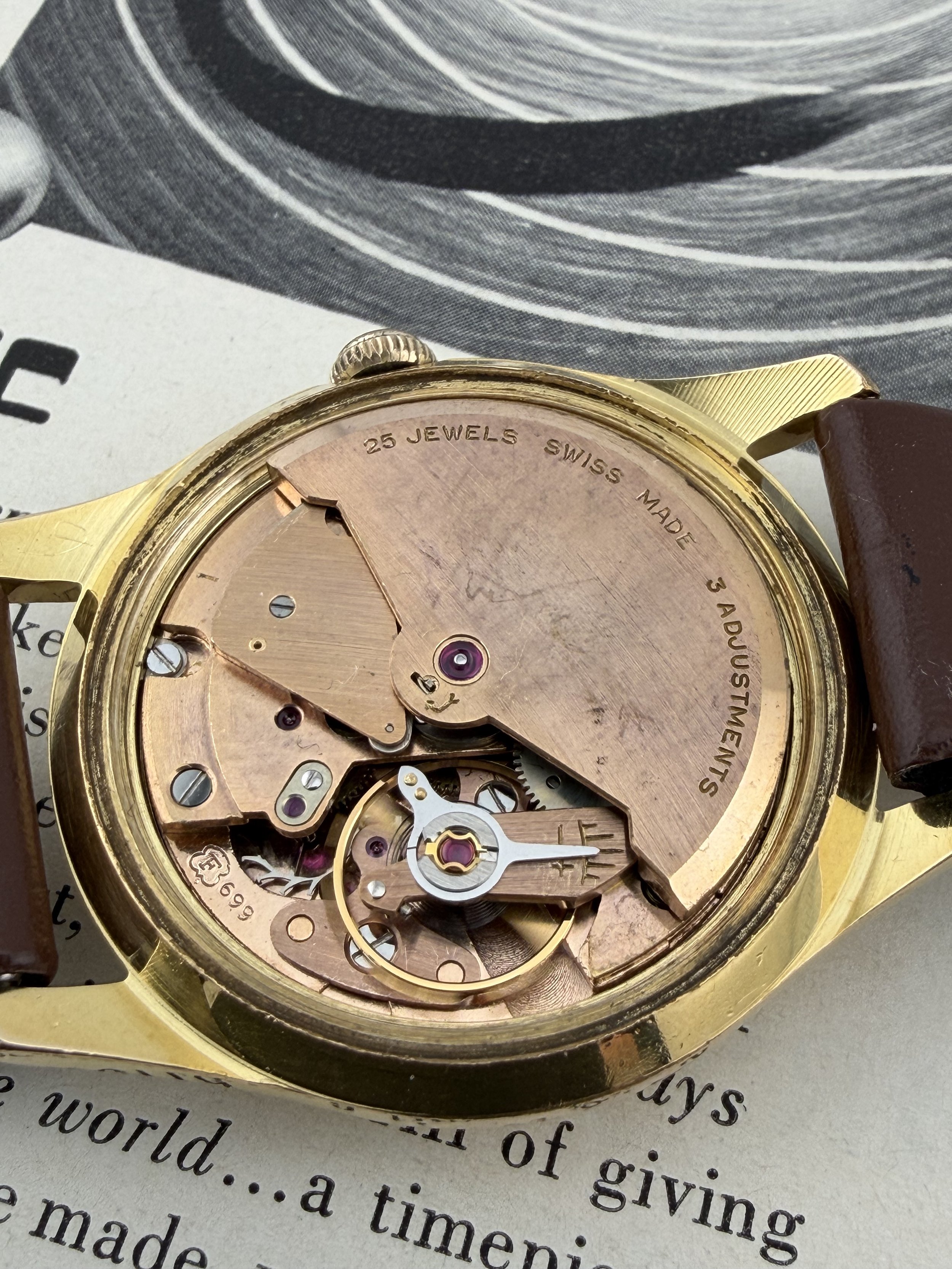
Inside is the true highlight: the Felsa Calibre 699 “Permutator,” a highly regarded Swiss automatic movement from one of the pioneers of self-winding technology. Felsa was responsible for the groundbreaking Bidynator system, among the earliest successful bidirectional automatic winding mechanisms, and the Calibre 699 represented a more advanced development of that engineering.
The movement features a full 360-degree rotor, 25 jewels, Incabloc shock protection, and three adjustments, placing it above many ordinary Swiss automatics of its era. Its copper-colored finishing, robust construction, and integrated power reserve mechanism demonstrate a level of mechanical sophistication rarely found in private-label watches.
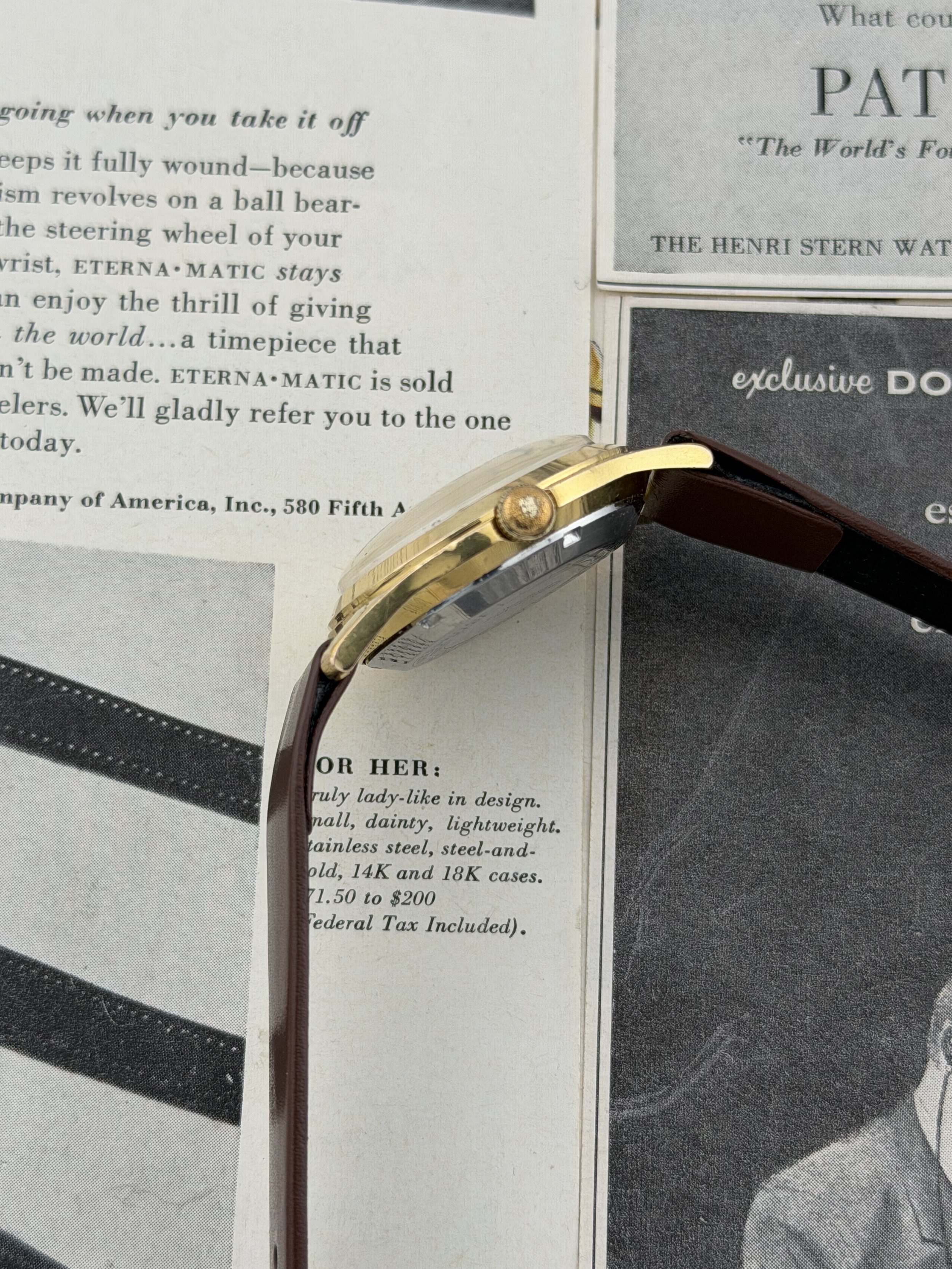
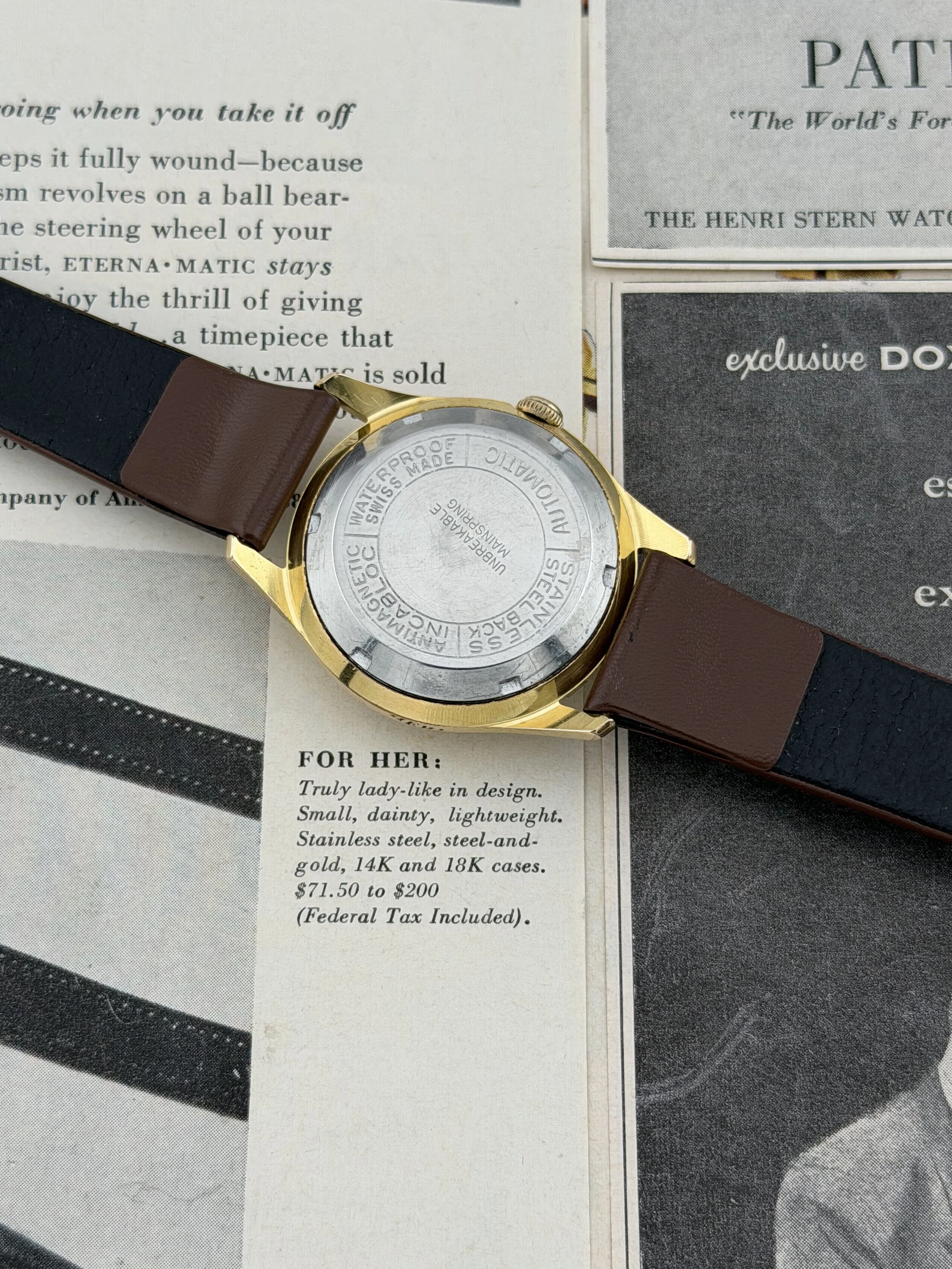
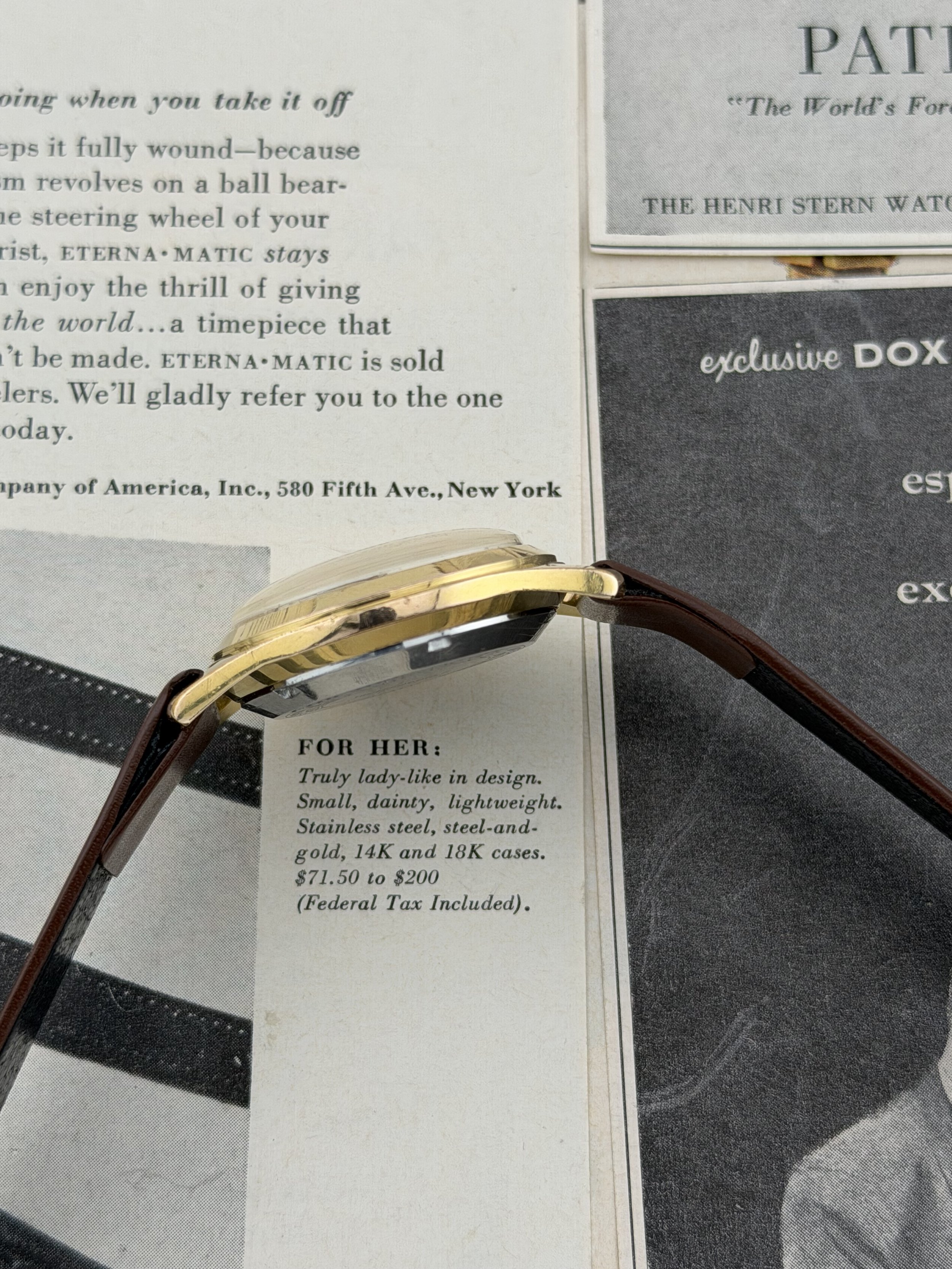
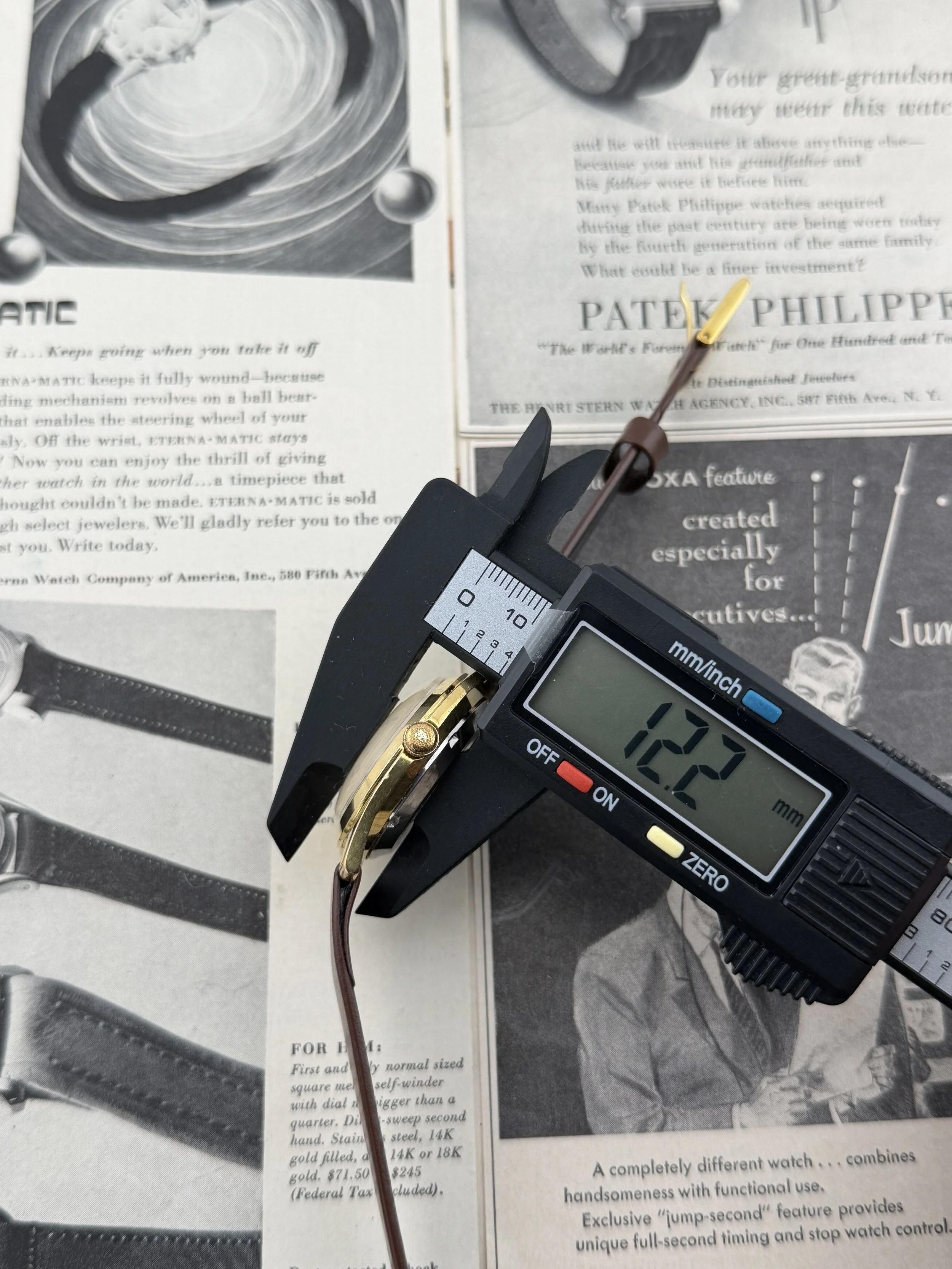
The case is 10K gold-filled with a stainless steel caseback, a common premium construction for watches intended for the North American market. This combination offered the appearance and durability of gold on the exterior while utilizing stainless steel against the wrist for improved resistance to corrosion and daily wear. The substantial lugs and larger late-1950s proportions give the watch a strong wrist presence compared with many earlier dress watches.
The original dial displays honest aging and patina consistent with its age, enhancing the watch’s vintage character while preserving the sharp printing, unusual date layout, and period-correct details that make it especially appealing to collectors.
Although Fulton was not a movement manufacturer, watches such as this represent an important chapter in North American horological history, when companies like Mount Vernon Watch Co. imported innovative Swiss technology and offered it under domestic brand names.
With its uncommon Felsa 699 Permutator movement, power reserve display, 25-jewel specification, roulette date wheel, and 10K gold-filled construction, this Fulton stands well above the typical private-label automatic. It is a mechanically sophisticated and historically interesting timepiece that reflects a remarkable period of innovation and collaboration between Swiss manufacturers and North American watch companies.
This vintage Fulton Super Automatic is a fascinating example of the postwar Swiss automatic watch boom, combining a North American retail brand with a technically advanced Swiss movement. The Fulton trademark was registered by Mount Vernon Watch Co., Inc. of New York City in 1936, with the company continuing to register watch names into the mid-1950s. Like many American importers of the period, Mount Vernon sourced quality Swiss movements and sold them under exclusive house brands for the North American market.
The dial captures the bold styling of the late 1950s with a beautiful combination of practical features and distinctive design details. It features applied hour markers with mixed Arabic numerals, a red-tipped central seconds hand, and a striking red-and-black roulette date display positioned unusually around the 1:30–2 o’clock position. The dial is proudly marked “25 Jewels,” “Super Automatic,” “Waterproof,” and “Incabloc,” highlighting the premium specifications that manufacturers emphasized during this era.
One of the most intriguing features of this watch is its power reserve indicator, which displays the amount of energy remaining in the mainspring. As the automatic movement winds through normal wrist motion, the indicator advances to show the available power reserve, giving the wearer a visual indication of how much running time remains before the watch stops. This was a sophisticated and relatively uncommon complication for a 1950s automatic watch, adding both practicality and mechanical appeal.
Inside is the true highlight: the Felsa Calibre 699 “Permutator,” a highly regarded Swiss automatic movement from one of the pioneers of self-winding technology. Felsa was responsible for the groundbreaking Bidynator system, among the earliest successful bidirectional automatic winding mechanisms, and the Calibre 699 represented a more advanced development of that engineering.
The movement features a full 360-degree rotor, 25 jewels, Incabloc shock protection, and three adjustments, placing it above many ordinary Swiss automatics of its era. Its copper-colored finishing, robust construction, and integrated power reserve mechanism demonstrate a level of mechanical sophistication rarely found in private-label watches.
The case is 10K gold-filled with a stainless steel caseback, a common premium construction for watches intended for the North American market. This combination offered the appearance and durability of gold on the exterior while utilizing stainless steel against the wrist for improved resistance to corrosion and daily wear. The substantial lugs and larger late-1950s proportions give the watch a strong wrist presence compared with many earlier dress watches.
The original dial displays honest aging and patina consistent with its age, enhancing the watch’s vintage character while preserving the sharp printing, unusual date layout, and period-correct details that make it especially appealing to collectors.
Although Fulton was not a movement manufacturer, watches such as this represent an important chapter in North American horological history, when companies like Mount Vernon Watch Co. imported innovative Swiss technology and offered it under domestic brand names.
With its uncommon Felsa 699 Permutator movement, power reserve display, 25-jewel specification, roulette date wheel, and 10K gold-filled construction, this Fulton stands well above the typical private-label automatic. It is a mechanically sophisticated and historically interesting timepiece that reflects a remarkable period of innovation and collaboration between Swiss manufacturers and North American watch companies.