

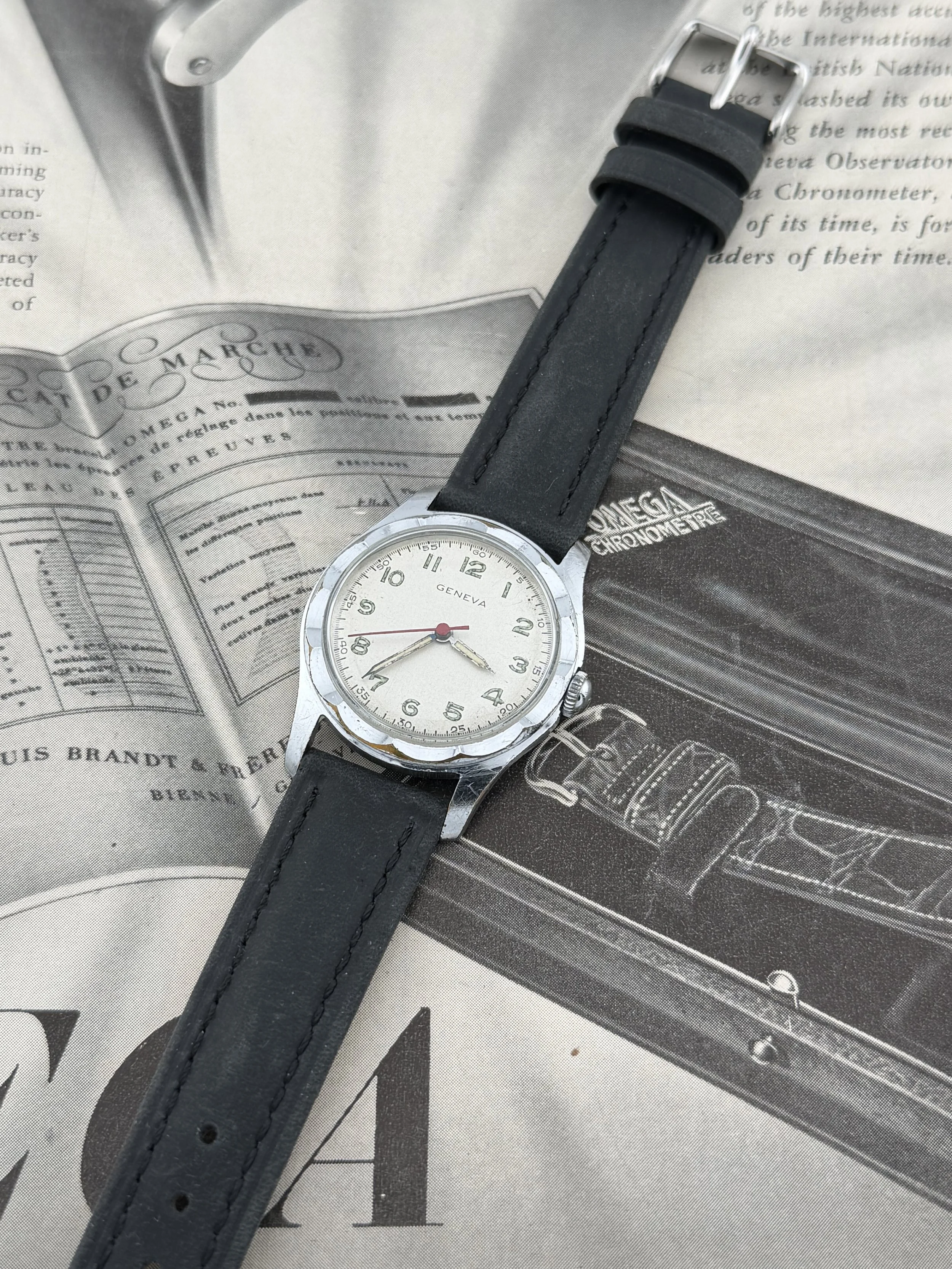
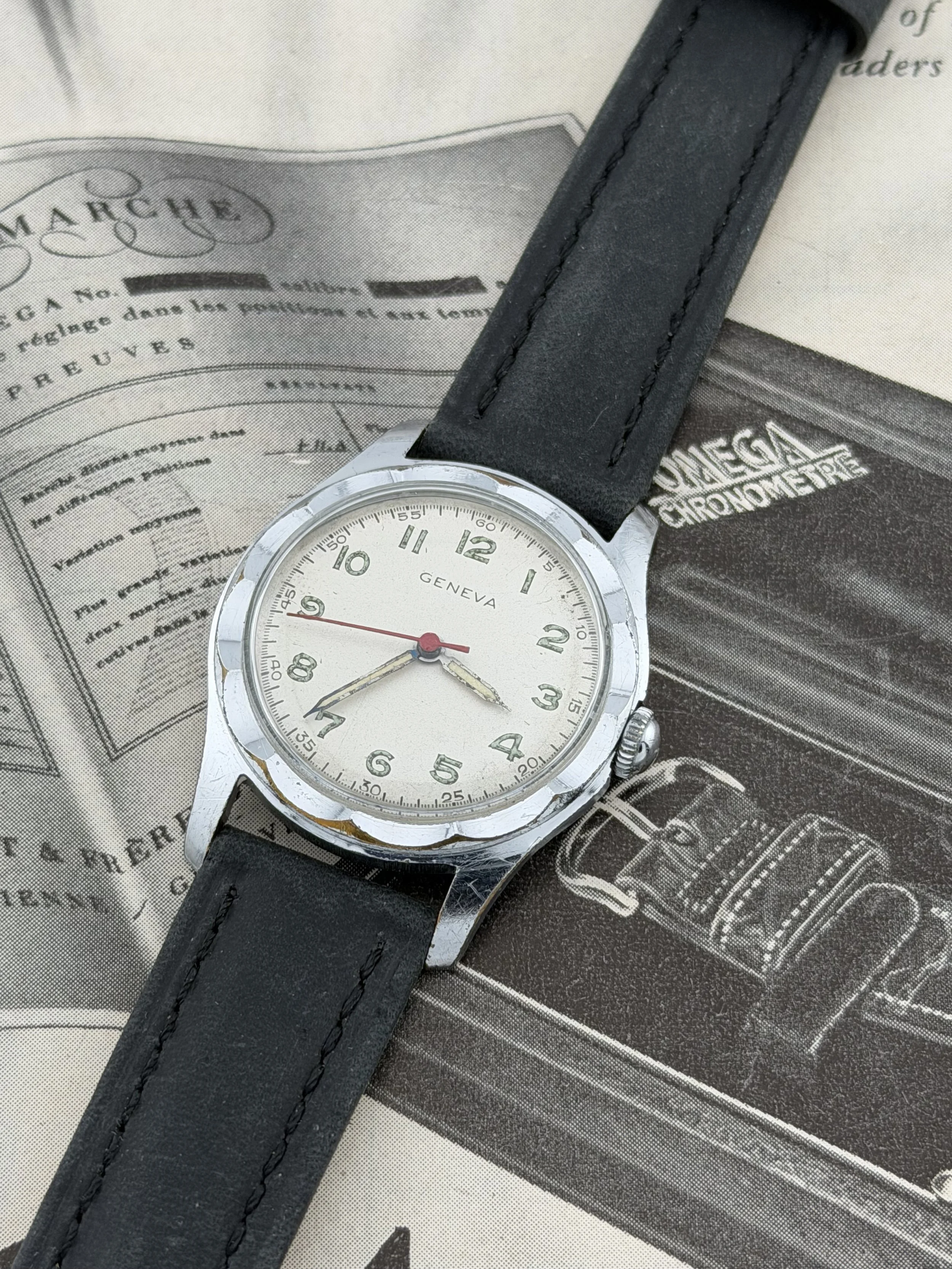
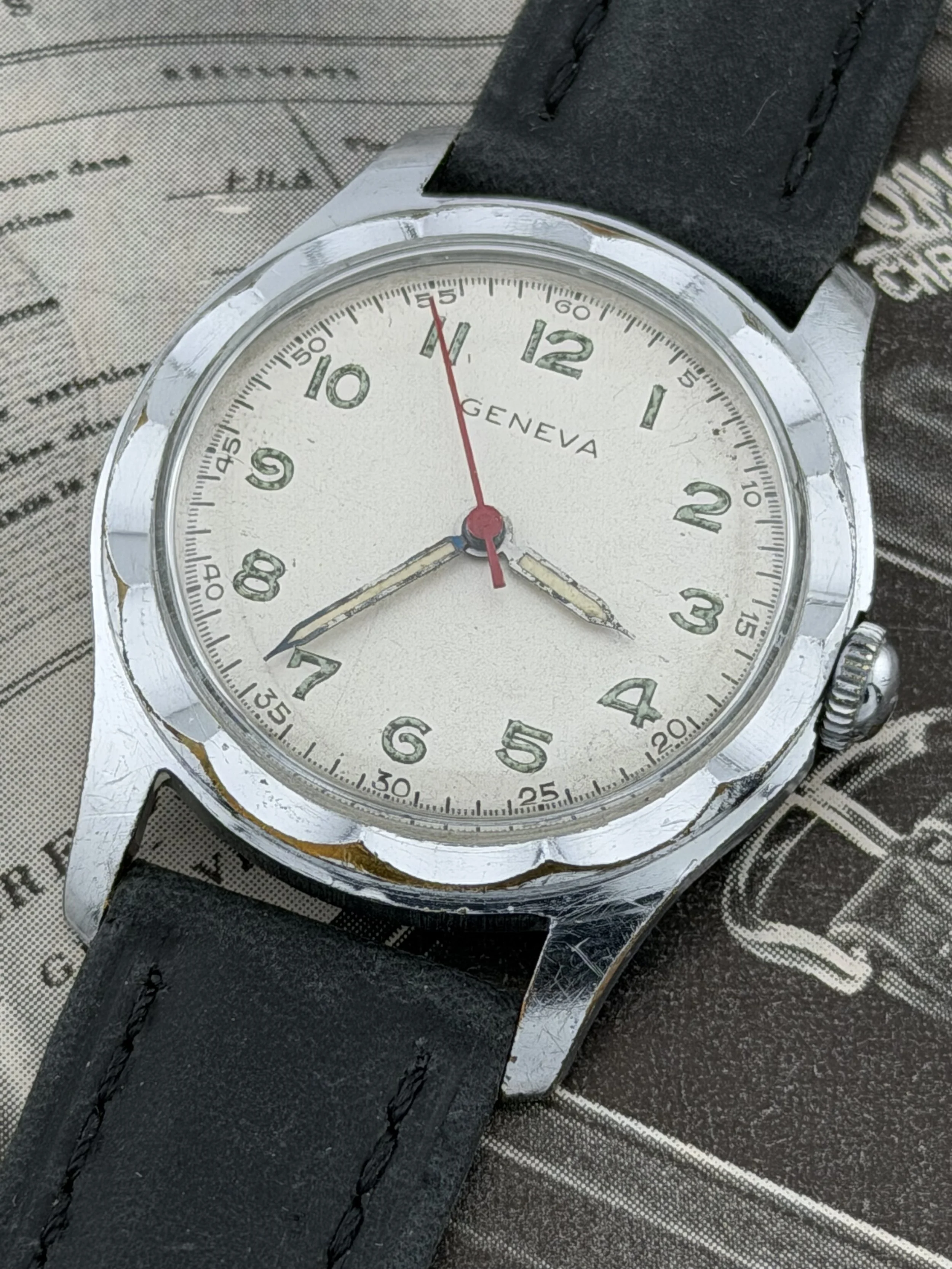
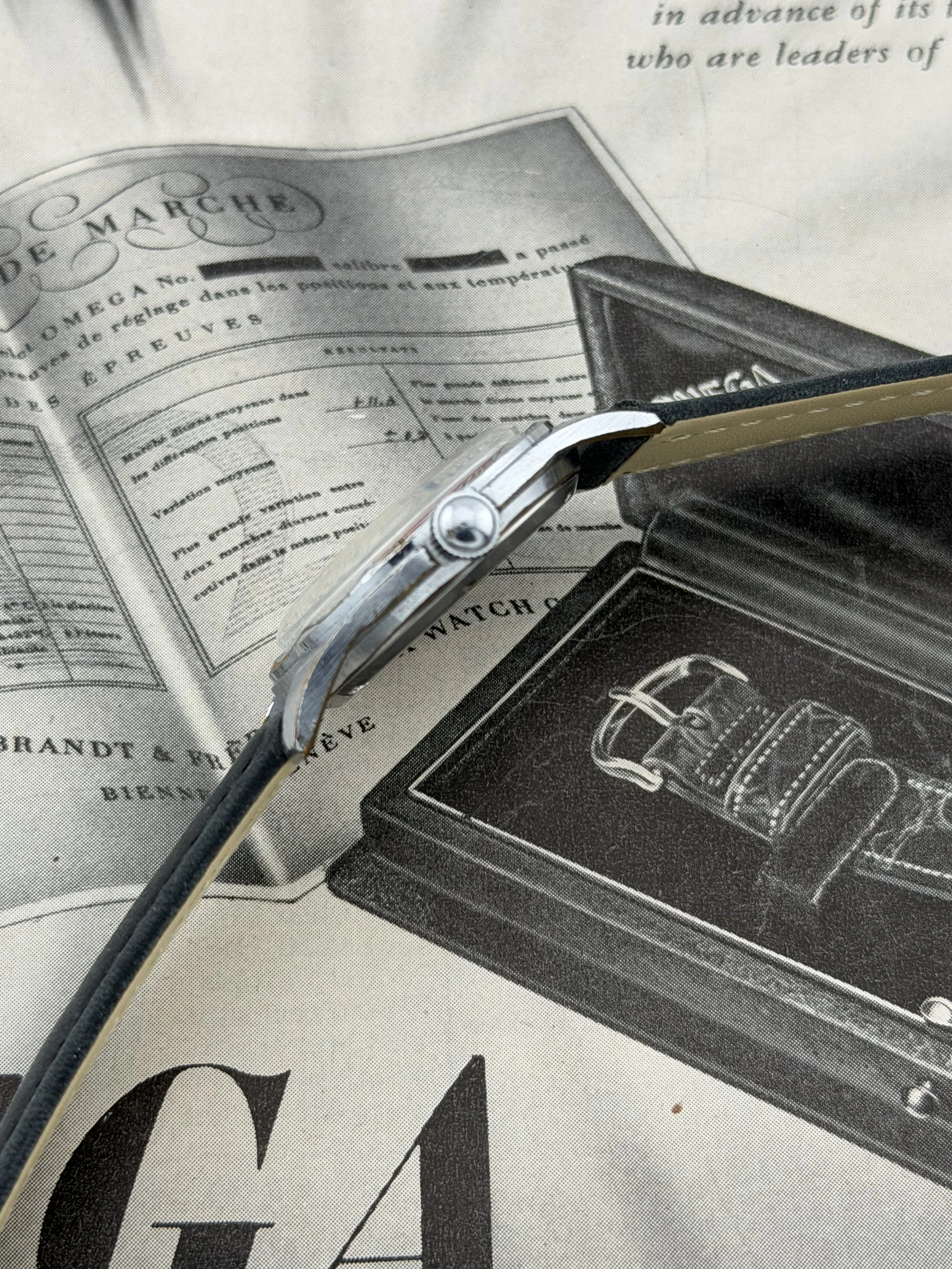
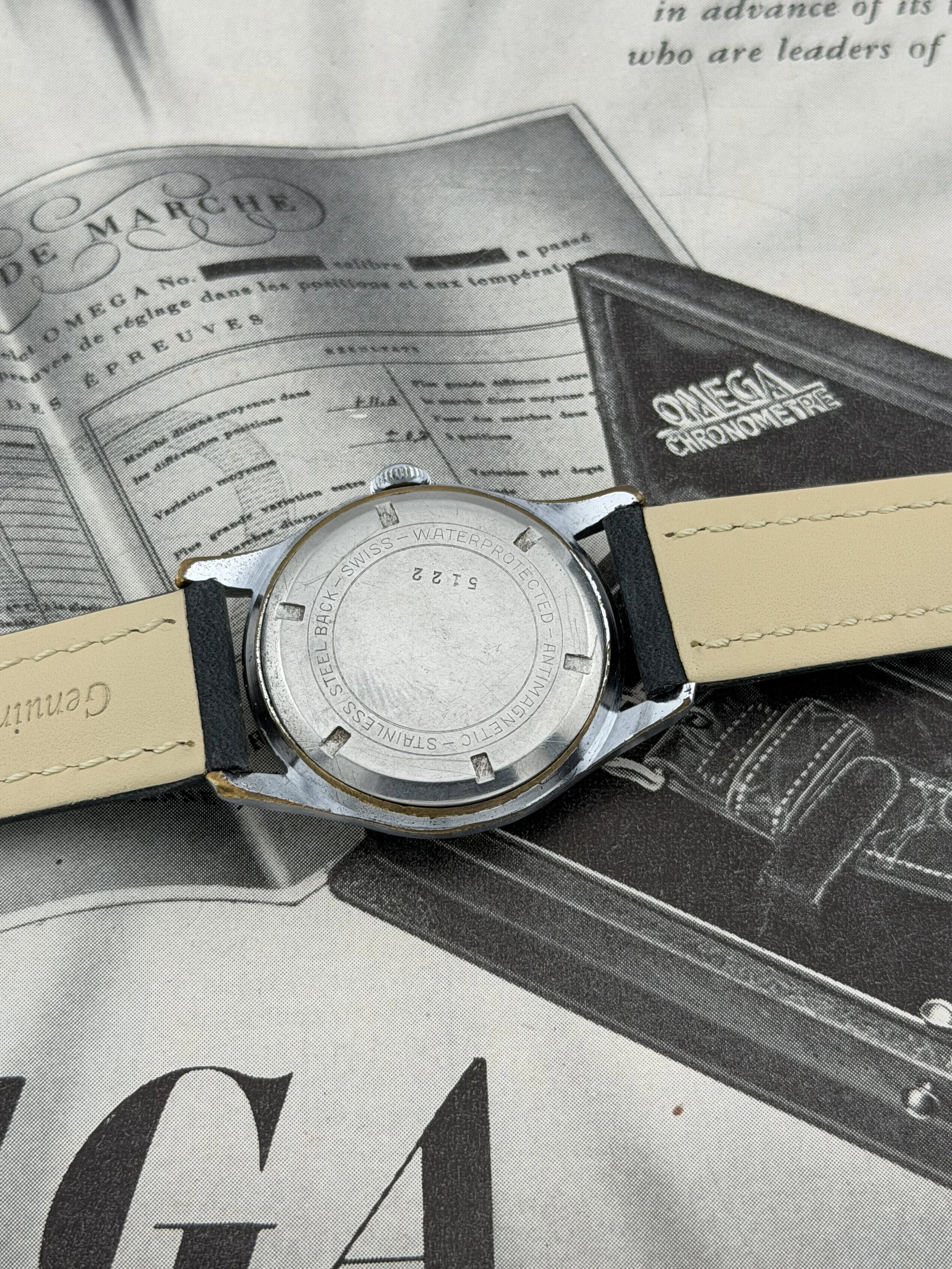
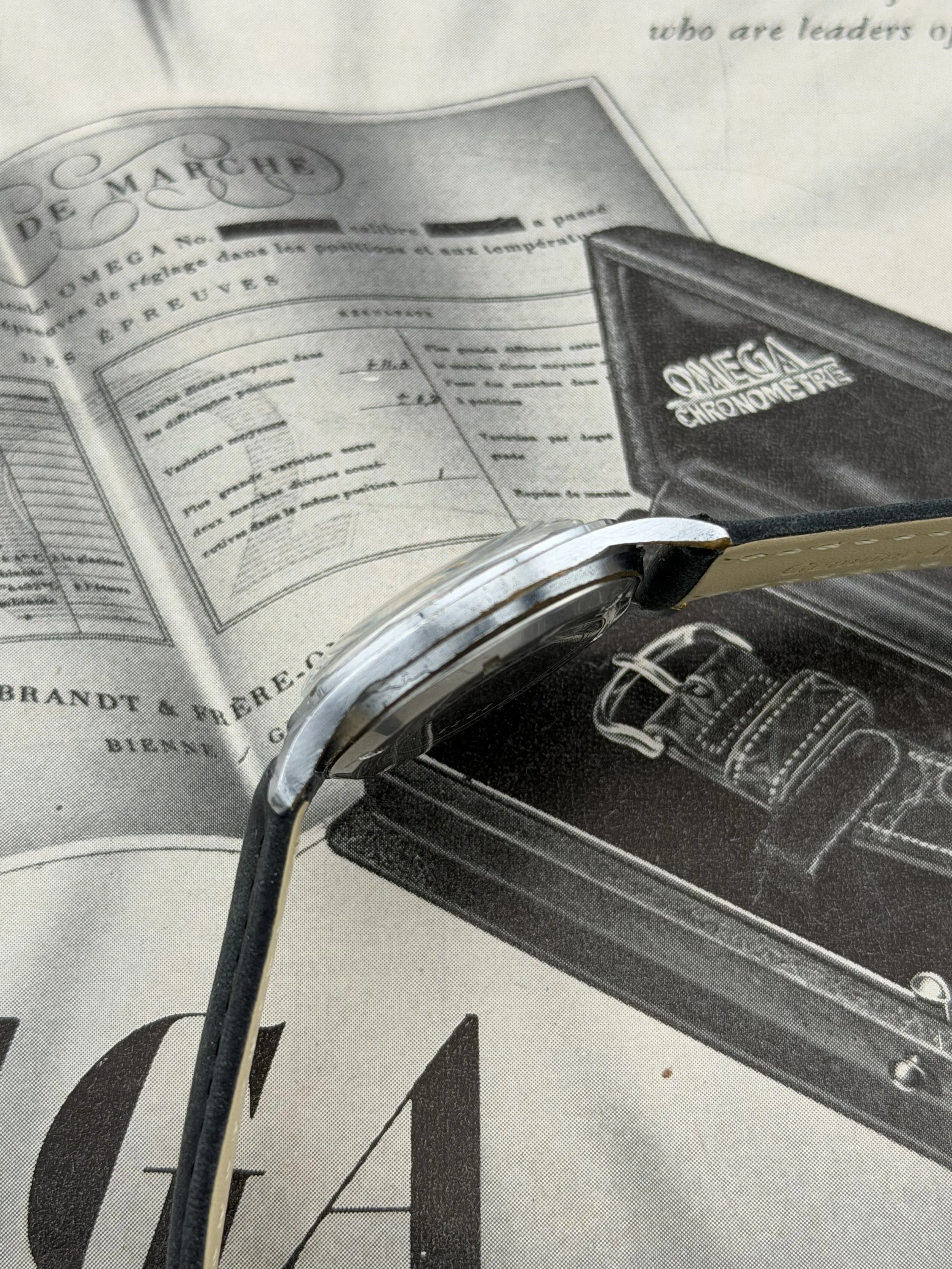
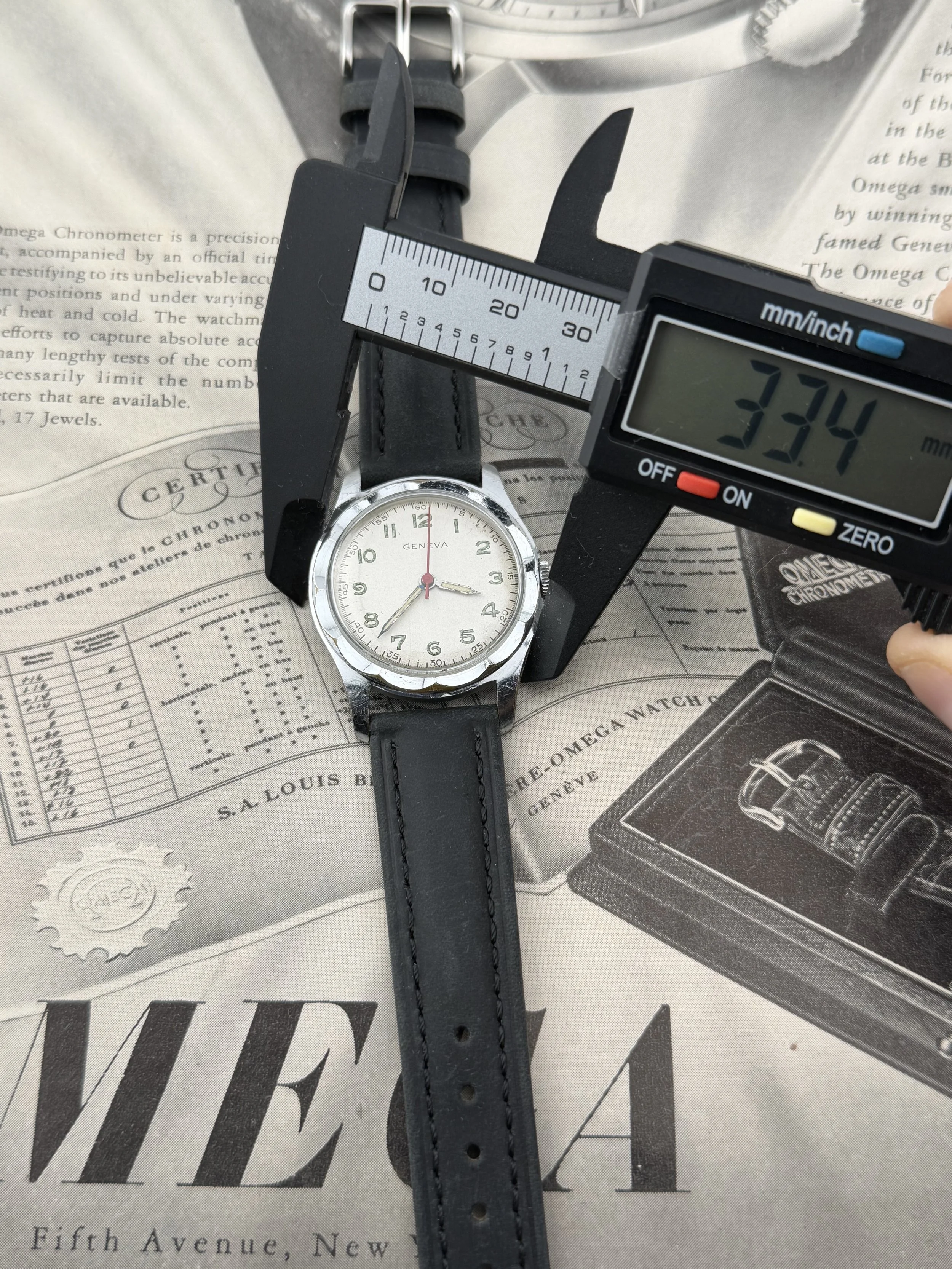
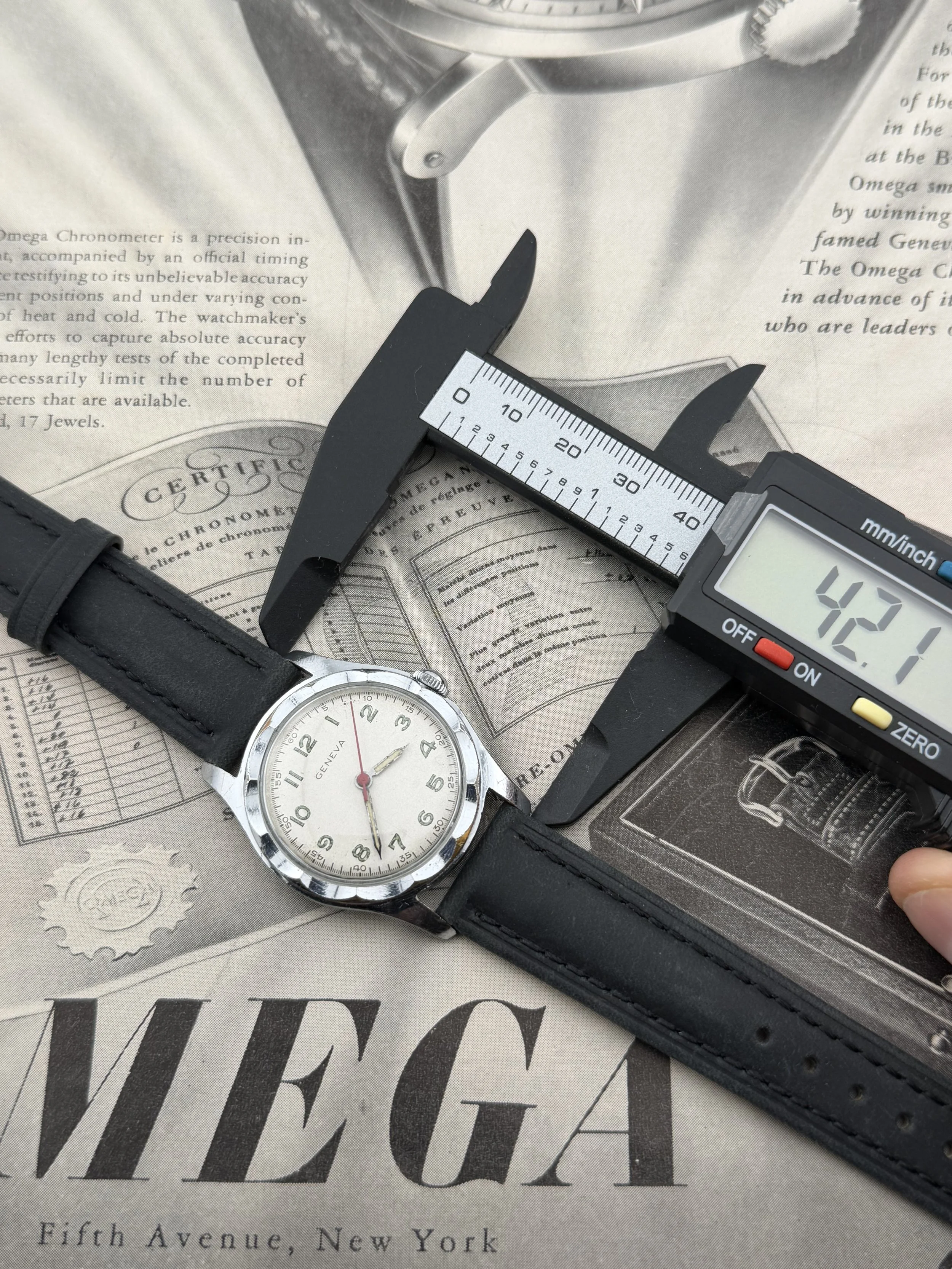
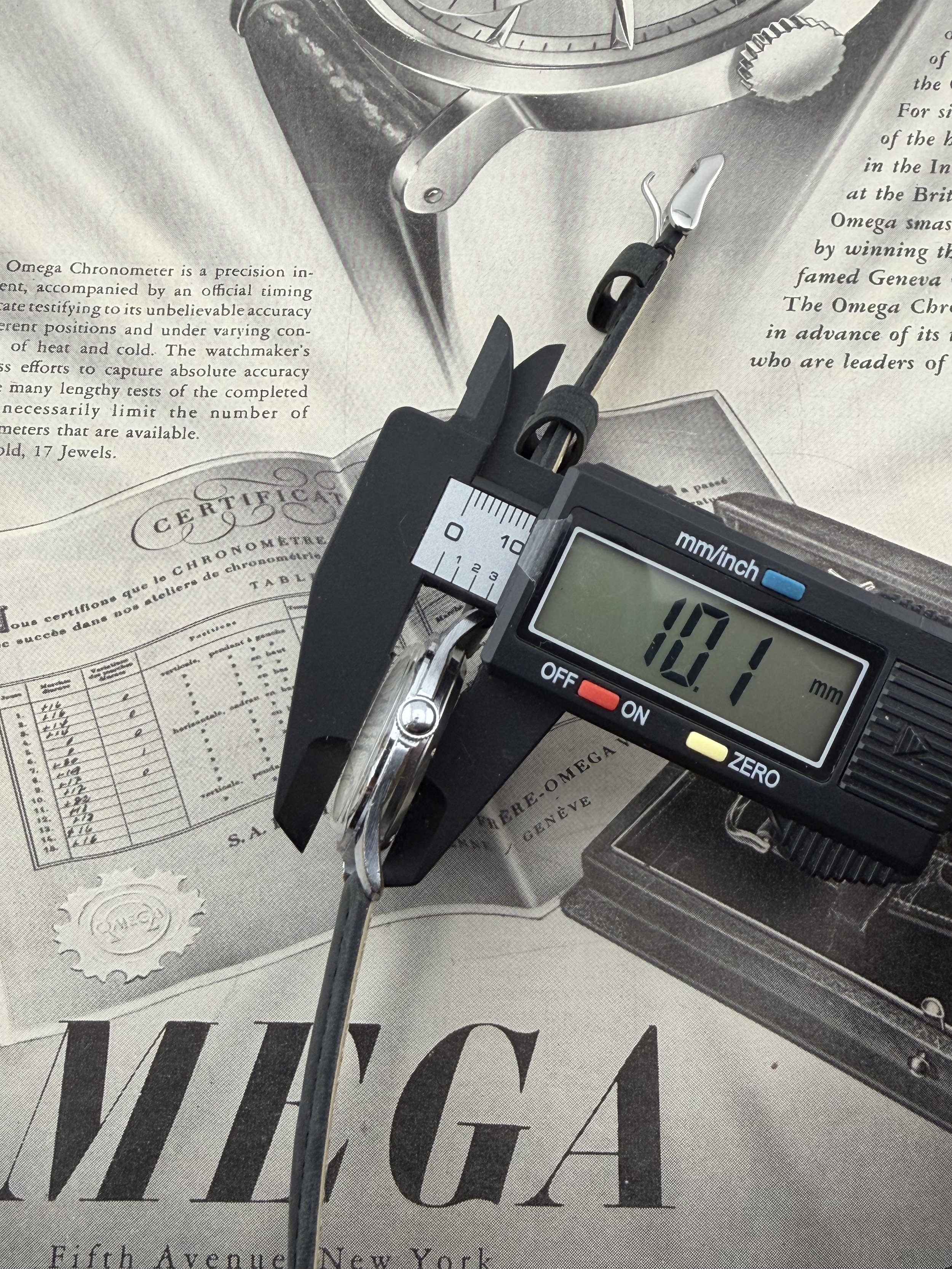
This is a particularly charming vintage Swiss piece, and the details are what make it stand out. The first thing that catches your eye is the unusual fluted bezel. Rather than the conventional smooth or stepped bezel you see on many watches from the period, this one has a pronounced, almost architectural shape that gives the case considerably more character.
The dial is equally distinctive. The large painted Arabic numerals have developed a lovely aged patina, while the bright red central seconds hand adds a surprisingly sporty touch to what would otherwise be a fairly conservative mid-century design. The seconds hand sweeps from the centre rather than sitting in a subsidiary register, giving the watch a much more contemporary appearance for its era.
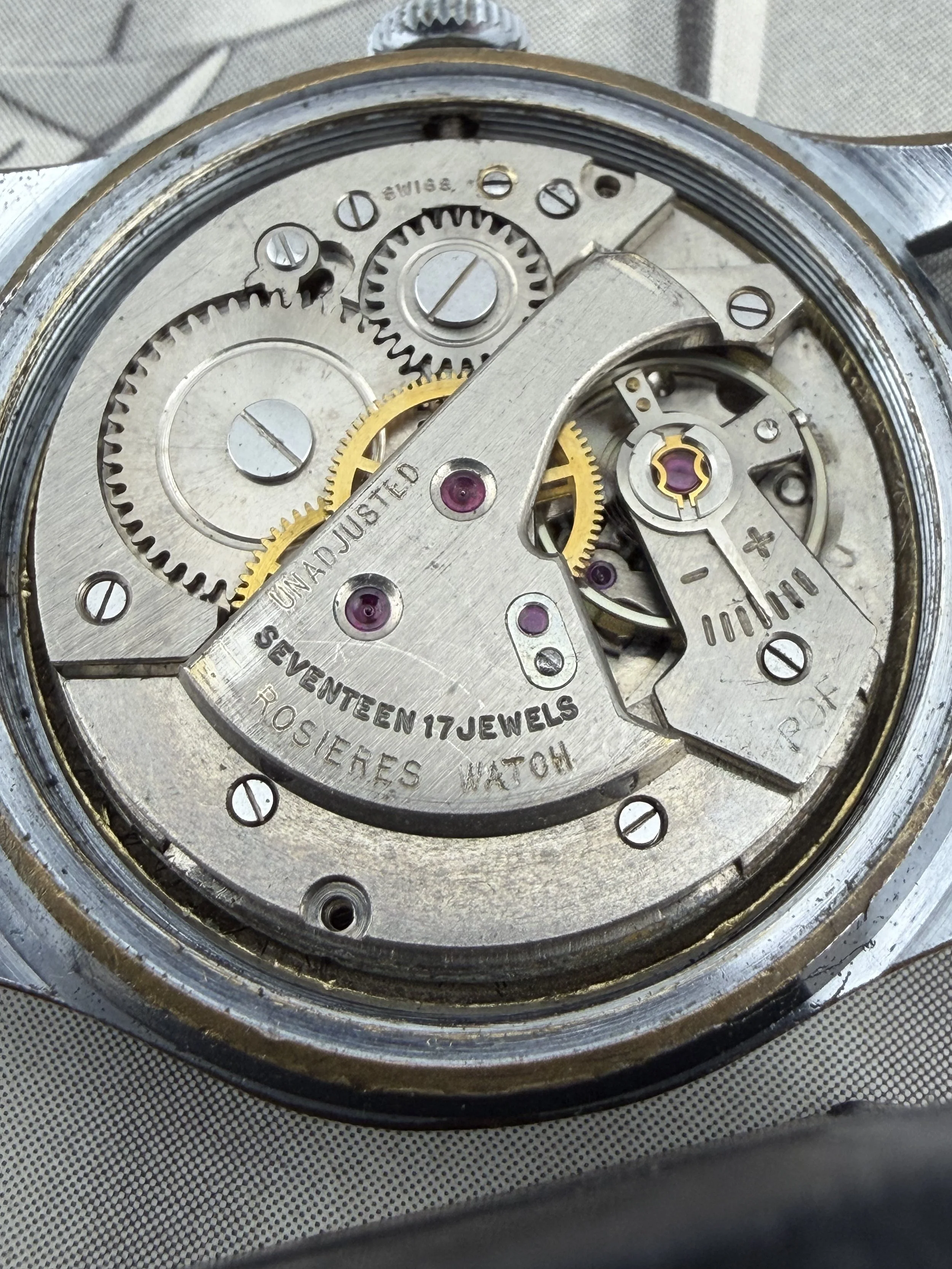
Inside is a 17-jewel Swiss mechanical movement, marked Seventeen 17 Jewels, Unadjusted, Rosieres Watch. The movement is a conventional Swiss lever design, with a jewelled balance and shock protection. Seventeen jewels was a very common specification for a good-quality Swiss mechanical watch of this period: enough jewelling to reduce friction at the important bearing points without the movement being positioned as an expensive high-grade or chronometer-calibre piece.
The movement is also a great reminder of just how enormous the Swiss watch industry once was. Names like Rosieres and Geneva aren't necessarily household names today, but watches like this were part of the enormous network of Swiss manufacturers, assemblers, importers and private-label brands producing watches for markets around the world. The same basic Swiss manufacturing ecosystem supplied movements and watches to countless smaller names alongside the famous brands.
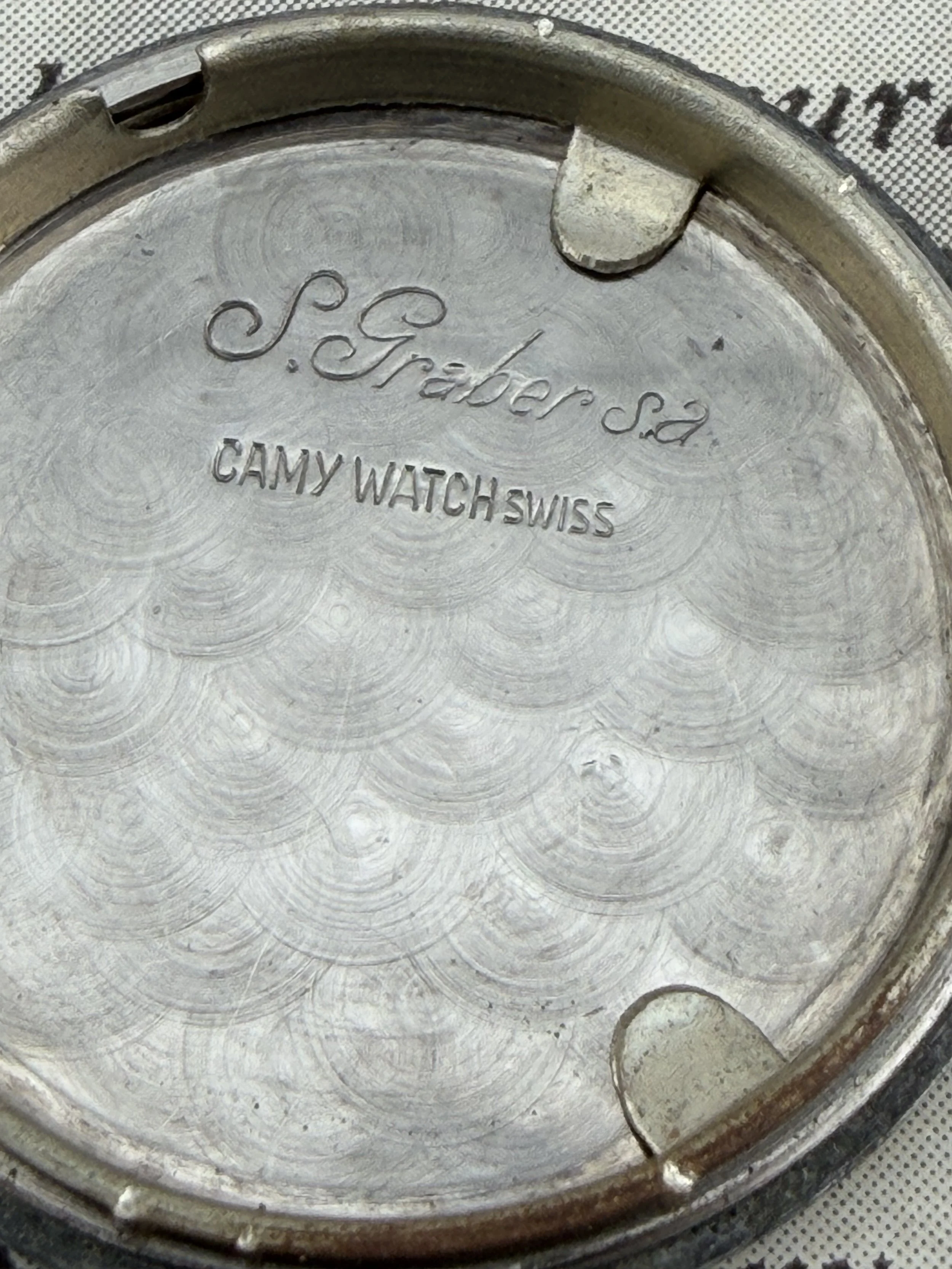
There is also something particularly interesting about the "Geneva" name on the dial. It doesn't automatically mean that this was made by a company called Geneva in the same sense that an Omega or Longines was manufactured by its namesake. "Geneva" was widely used in the Swiss watch trade as a geographical and marketing designation, and numerous watches bearing the name were produced by smaller firms or sold under retailer/private-label names. In other words, this is exactly the sort of watch where the movement and case markings tell more of the story than the dial name alone.
And that is what makes these obscure Swiss watches so much fun to collect. You're not just buying a watch with a famous name on it—you are getting a little piece of the huge mid-century Swiss watchmaking ecosystem, when mechanical watches were everyday objects and there were seemingly endless brands competing for a place on someone's wrist.
The red sweep hand, unusual fluted bezel, aged Arabic numerals and 17-jewel Swiss movement give this one considerably more personality than its humble branding might suggest.
This is a particularly charming vintage Swiss piece, and the details are what make it stand out. The first thing that catches your eye is the unusual fluted bezel. Rather than the conventional smooth or stepped bezel you see on many watches from the period, this one has a pronounced, almost architectural shape that gives the case considerably more character.
The dial is equally distinctive. The large painted Arabic numerals have developed a lovely aged patina, while the bright red central seconds hand adds a surprisingly sporty touch to what would otherwise be a fairly conservative mid-century design. The seconds hand sweeps from the centre rather than sitting in a subsidiary register, giving the watch a much more contemporary appearance for its era.
Inside is a 17-jewel Swiss mechanical movement, marked Seventeen 17 Jewels, Unadjusted, Rosieres Watch. The movement is a conventional Swiss lever design, with a jewelled balance and shock protection. Seventeen jewels was a very common specification for a good-quality Swiss mechanical watch of this period: enough jewelling to reduce friction at the important bearing points without the movement being positioned as an expensive high-grade or chronometer-calibre piece.
The movement is also a great reminder of just how enormous the Swiss watch industry once was. Names like Rosieres and Geneva aren't necessarily household names today, but watches like this were part of the enormous network of Swiss manufacturers, assemblers, importers and private-label brands producing watches for markets around the world. The same basic Swiss manufacturing ecosystem supplied movements and watches to countless smaller names alongside the famous brands.
There is also something particularly interesting about the "Geneva" name on the dial. It doesn't automatically mean that this was made by a company called Geneva in the same sense that an Omega or Longines was manufactured by its namesake. "Geneva" was widely used in the Swiss watch trade as a geographical and marketing designation, and numerous watches bearing the name were produced by smaller firms or sold under retailer/private-label names. In other words, this is exactly the sort of watch where the movement and case markings tell more of the story than the dial name alone.
And that is what makes these obscure Swiss watches so much fun to collect. You're not just buying a watch with a famous name on it—you are getting a little piece of the huge mid-century Swiss watchmaking ecosystem, when mechanical watches were everyday objects and there were seemingly endless brands competing for a place on someone's wrist.
The red sweep hand, unusual fluted bezel, aged Arabic numerals and 17-jewel Swiss movement give this one considerably more personality than its humble branding might suggest.