

Graham Military-Style Swiss Wristwatch | 17 Jewels | E. Langer Movement | Steel Case | Red Seconds Hand | Antimagnetic | Circa 1940s–1950s
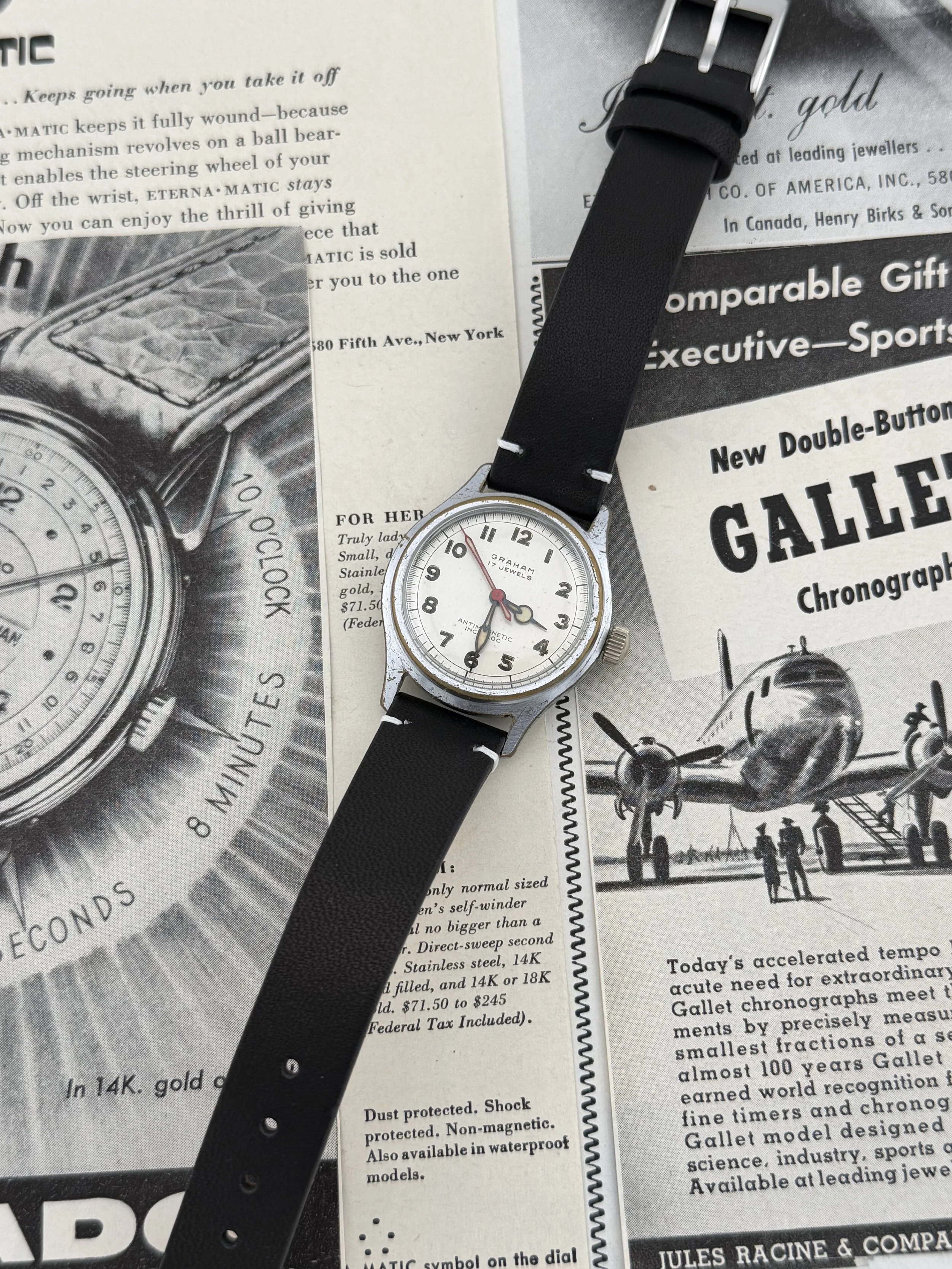
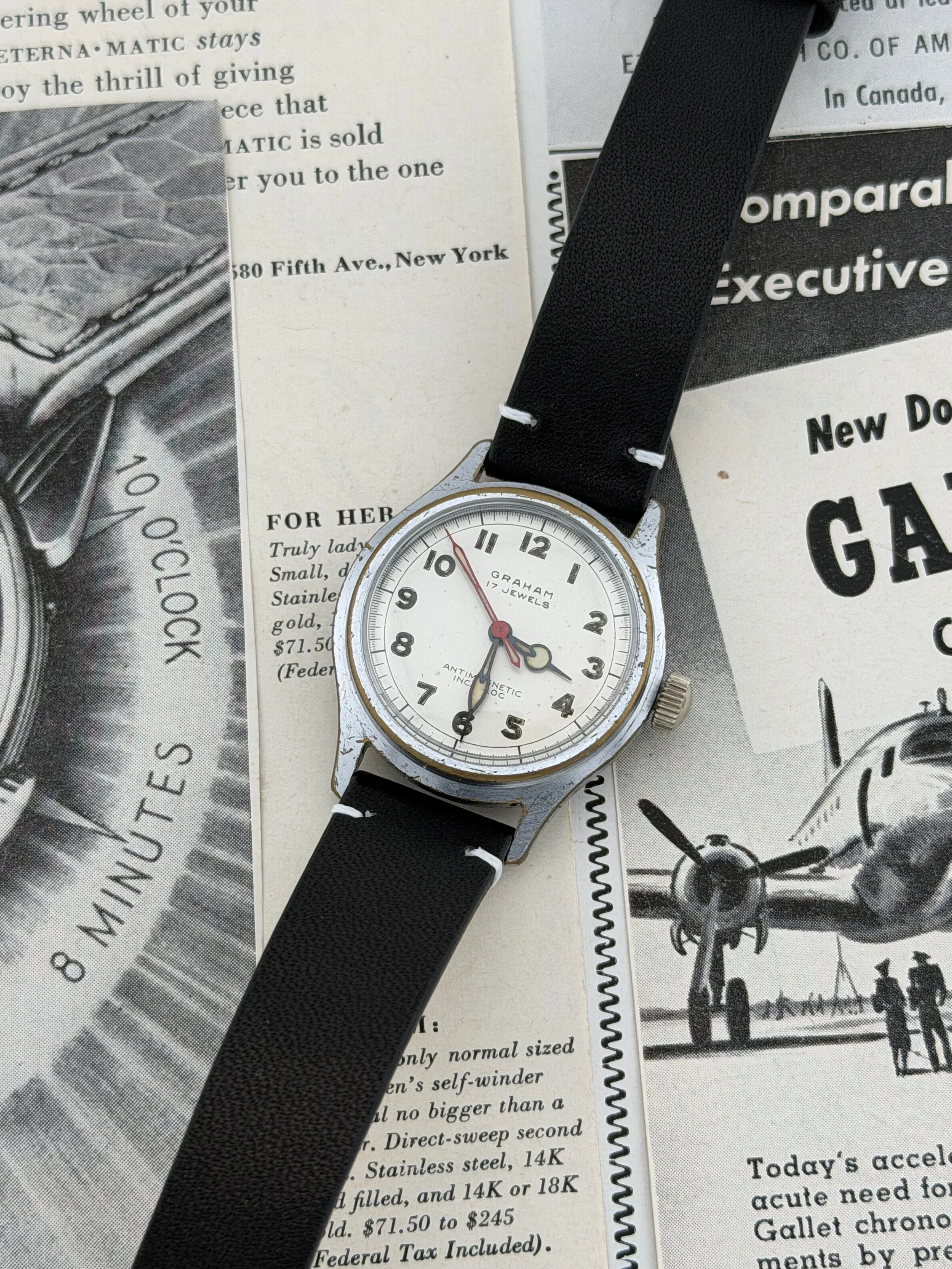
This fantastic vintage Graham is a wonderful example of the rugged, highly legible wristwatches that emerged during the golden age of Swiss mechanical watchmaking. With its bold Arabic numerals, luminous-style hands, red seconds hand, antimagnetic construction, and substantial steel case, it has the unmistakable character of a military-inspired field watch while retaining the charm and individuality of a smaller Swiss brand.
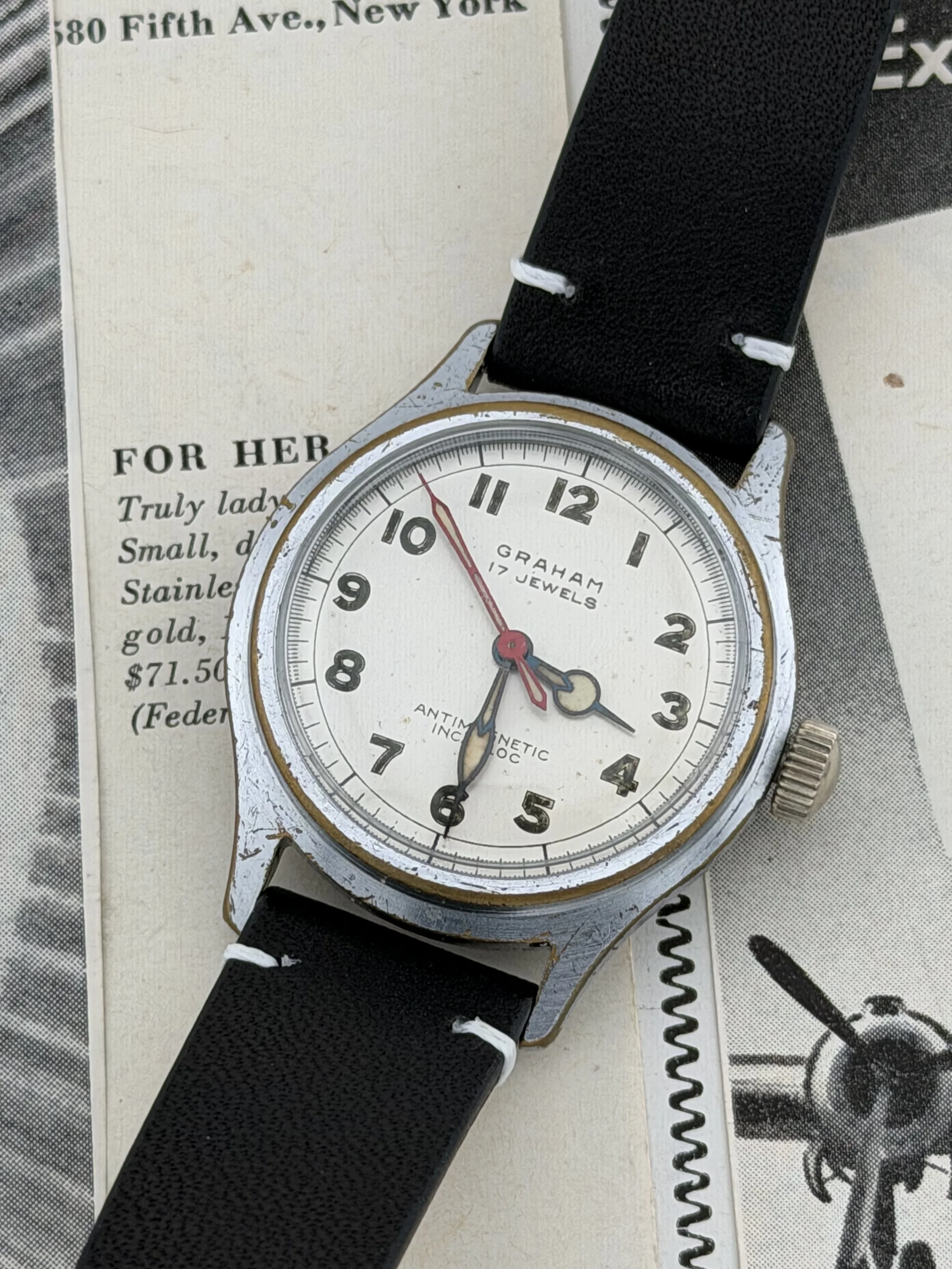
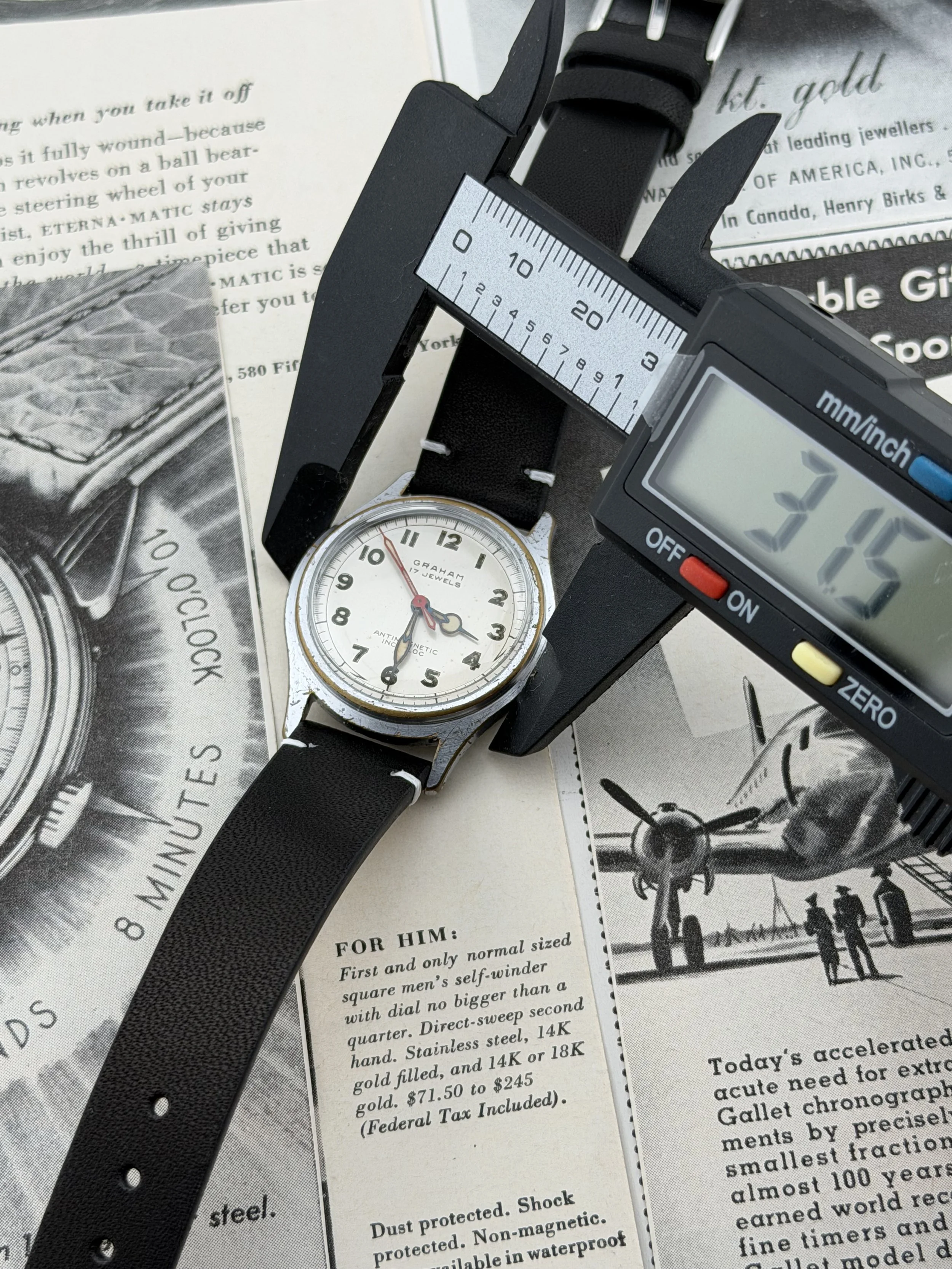
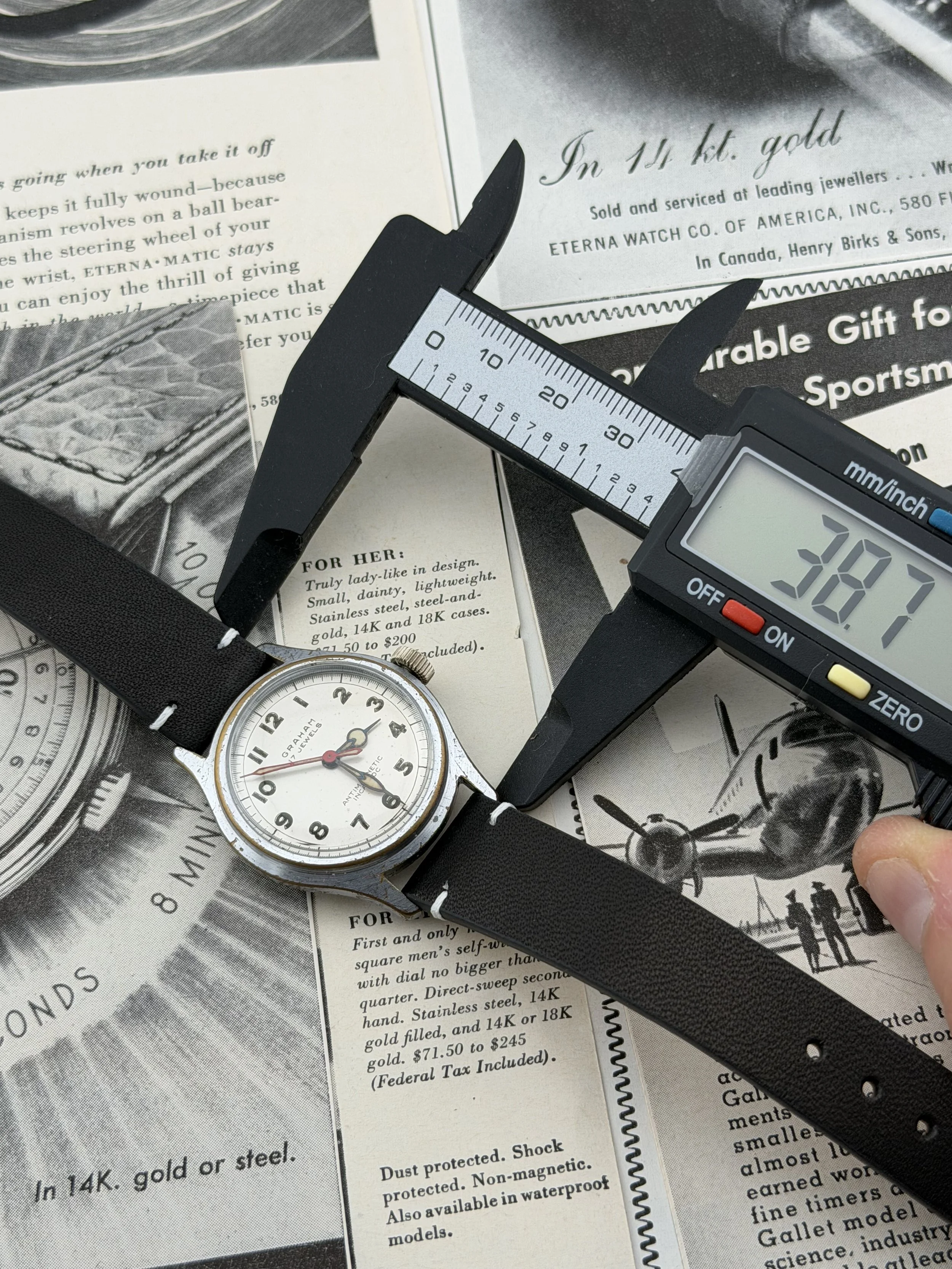
The dial is immediately striking. Large black Arabic numerals provide excellent legibility, while the fine outer minute track gives the watch a precise, instrument-like appearance. The oversized numerals and clean layout are characteristic of the military-influenced designs of the period, when readability was considered far more important than decorative excess.
The red seconds hand is perhaps the watch's most memorable detail. Sweeping around the dial in vivid contrast to the black numerals and pale dial, it adds an unexpected flash of colour to an otherwise highly utilitarian design. It gives the watch a personality that separates it from the countless conventional field watches of the era.
The hands themselves are equally interesting, with their broad, highly legible forms designed to make reading the time quick and effortless. Combined with the bold numerals and minute track, the entire dial feels like an instrument rather than simply a piece of jewellery.
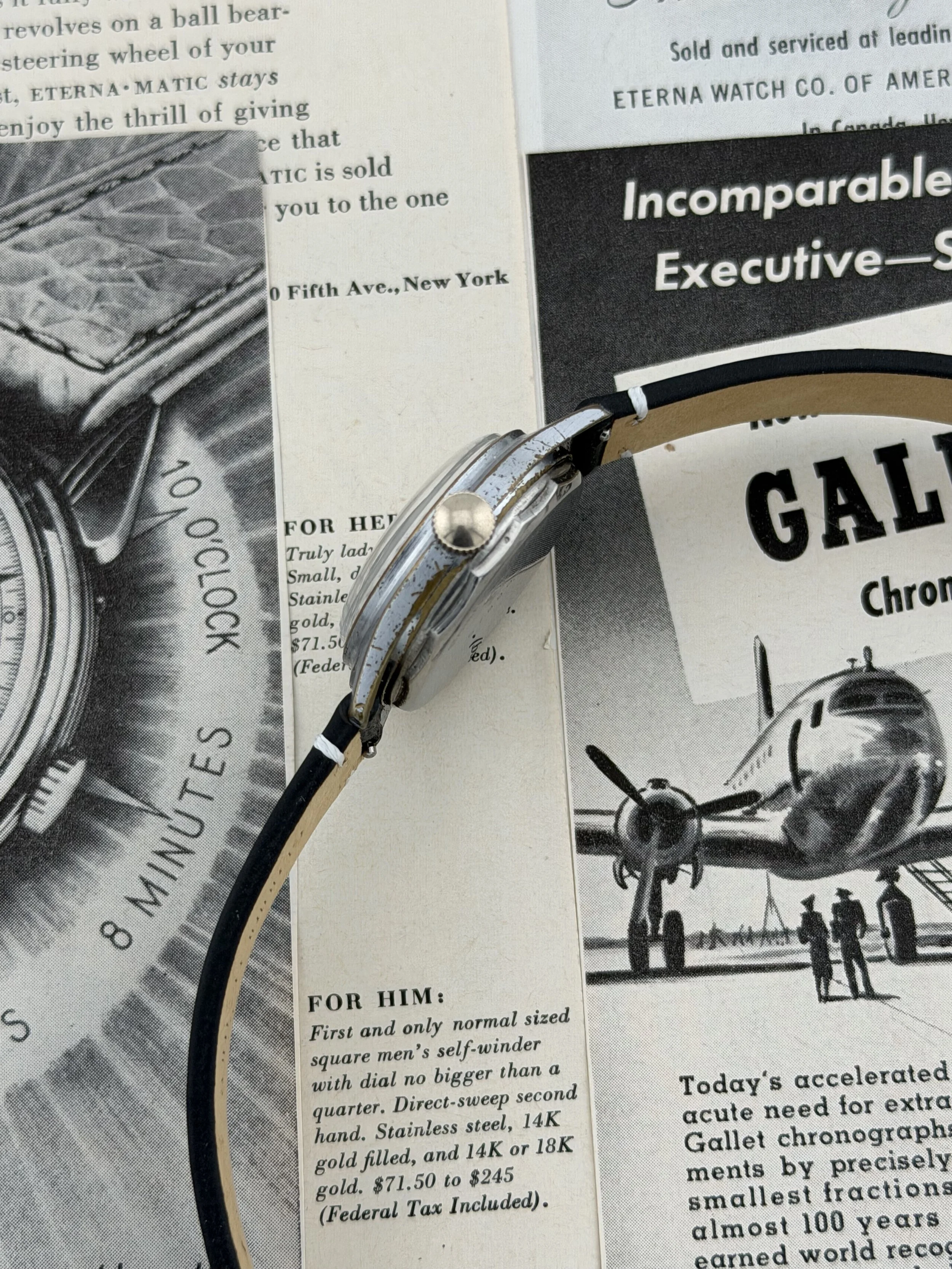
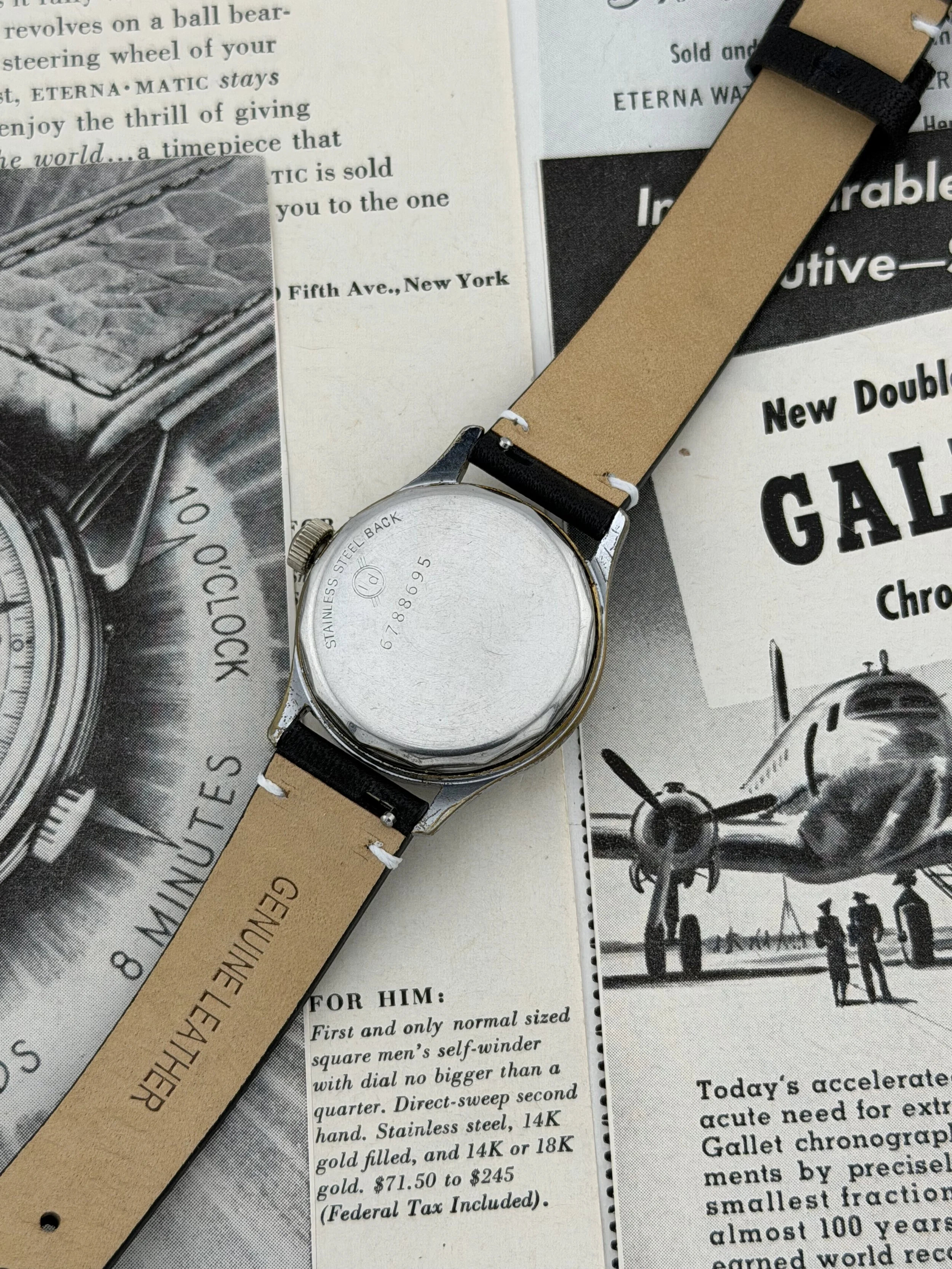
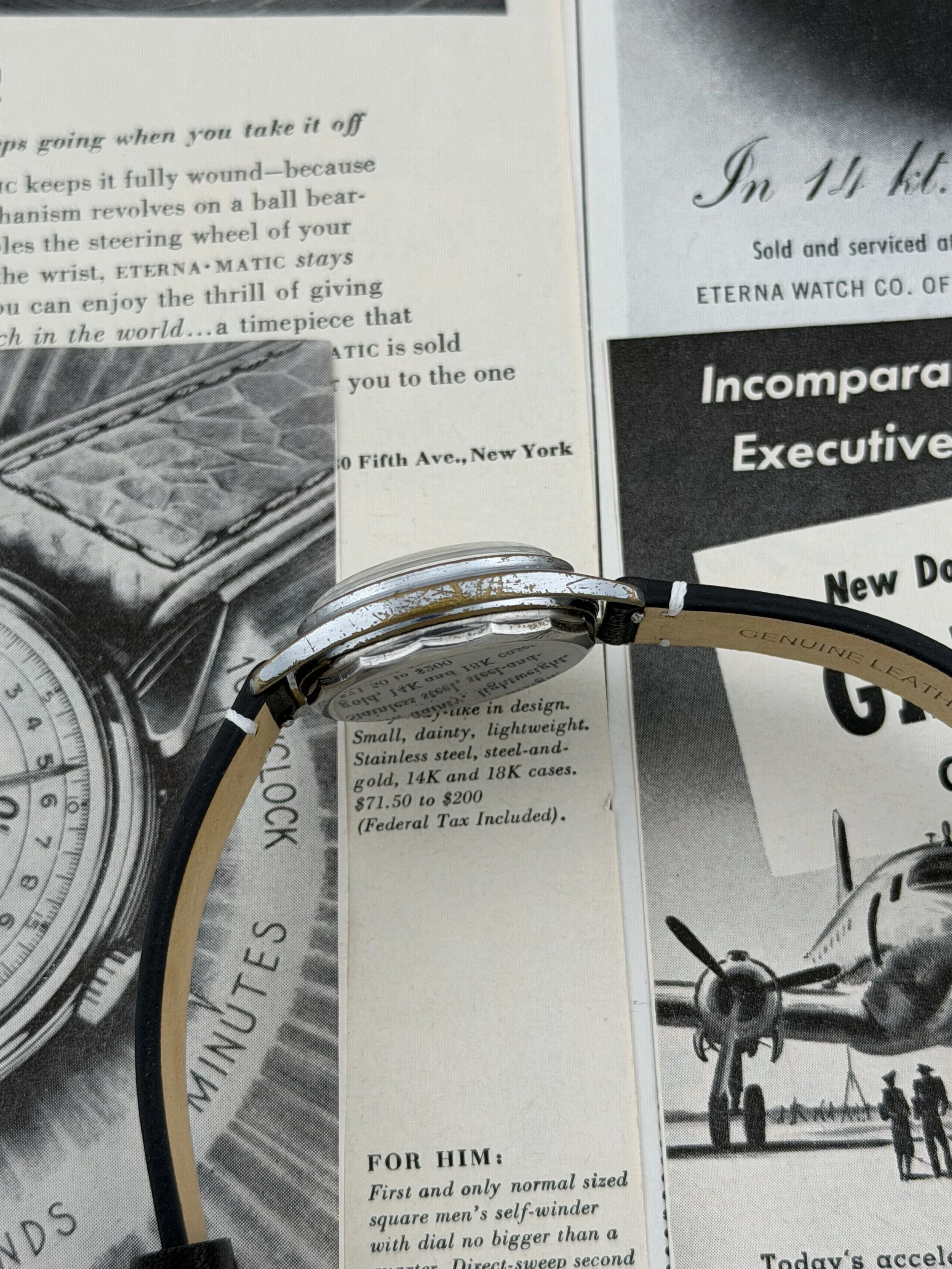
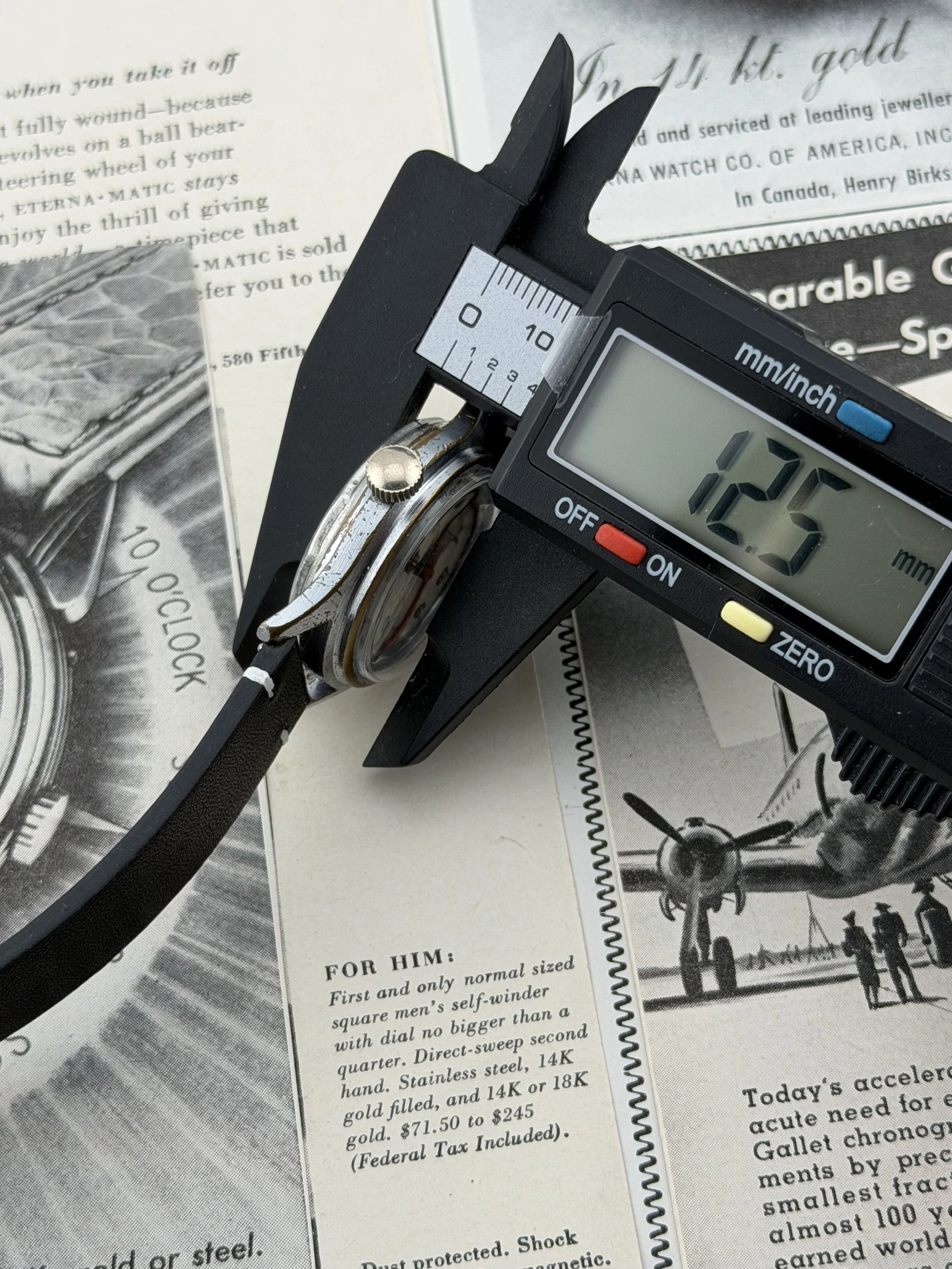
The steel case has clearly lived a life of its own. Rather than being polished back to perfection, the case retains visible signs of age and use, including wear to the exterior surfaces and edges. For a watch of this type, that history feels entirely appropriate. Every mark represents another chapter in its life, and the honest wear gives the watch an authenticity that a pristine replacement case could never replicate.
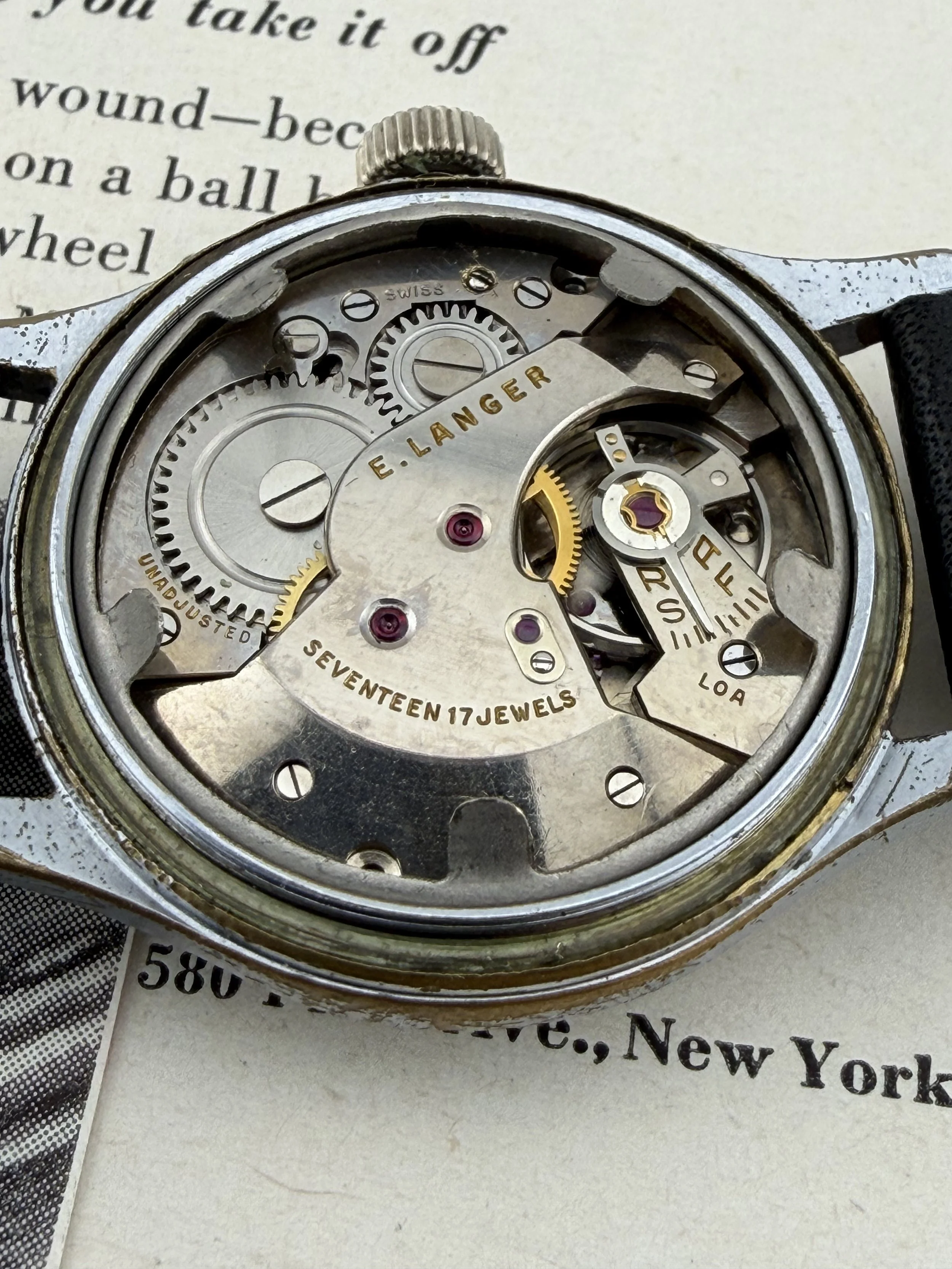
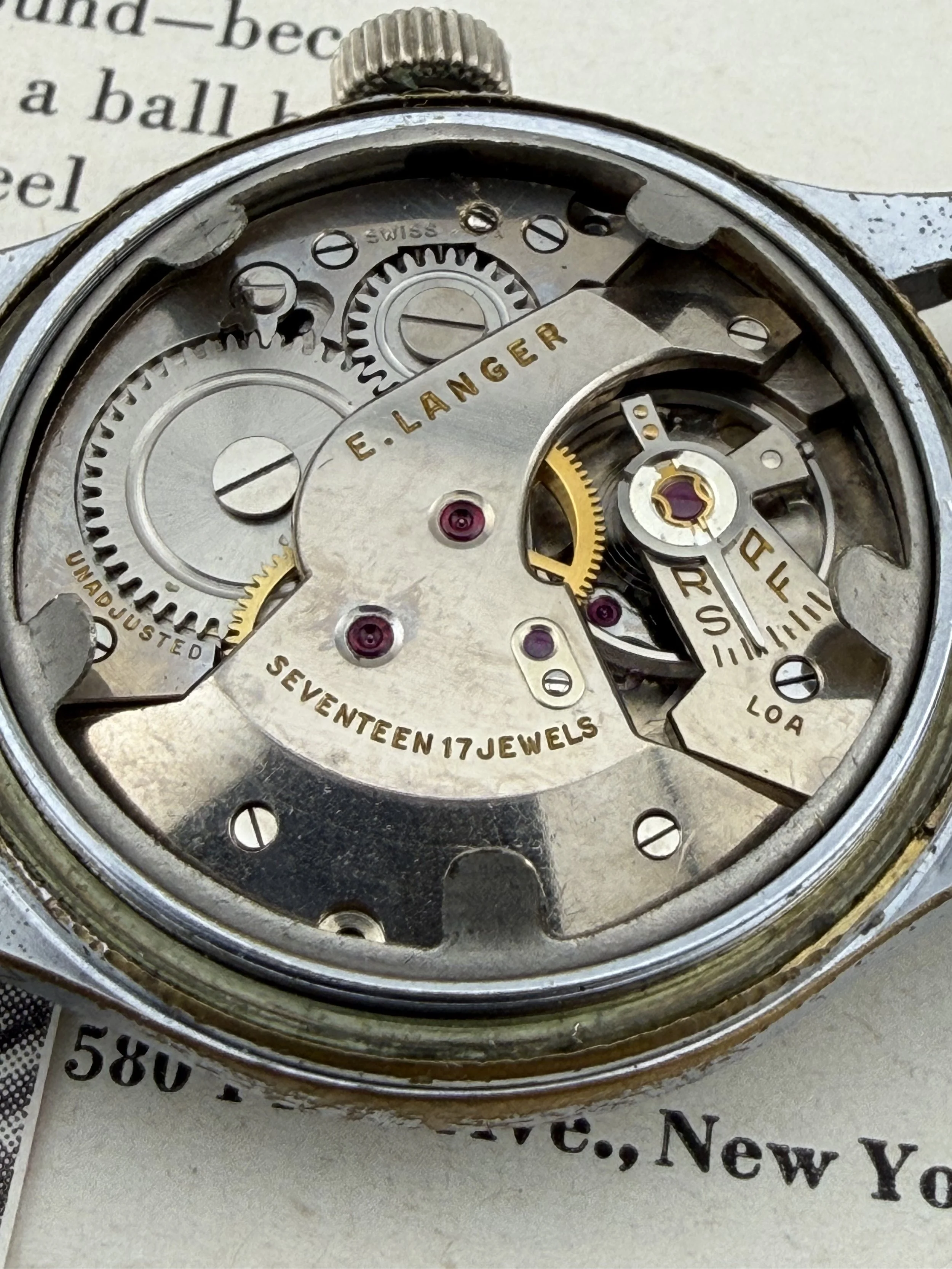
Inside is a 17-jewel Swiss mechanical movement signed E. Langer, with the movement marked “Seventeen 17 Jewels” and Swiss. The movement is a traditional manually wound calibre, relying entirely on the stored energy of its mainspring to power the watch.
The 17-jewel configuration represents the classic mechanical architecture of the period. Jewels were used as low-friction bearings at critical points within the movement, reducing wear and helping the mechanism operate smoothly over time. The movement's straightforward construction also reflects the practical philosophy behind watches of this era: make them reliable, serviceable, and capable of being repaired rather than replaced.
The movement is also marked antimagnetic, an important technical feature during the period. As watches increasingly encountered electrical equipment, radios, motors, and other sources of magnetic fields, Swiss manufacturers worked to protect mechanical movements against magnetic interference. Antimagnetic construction was therefore an important selling point for watches intended for active, everyday use.
The E. Langer marking visible on the movement adds another fascinating layer to the watch's history. Rather than being a modern, highly decorated luxury calibre, it represents the enormous network of specialist Swiss movement manufacturers that supplied mechanical movements to countless watch brands during the twentieth century. These lesser-known makers produced the mechanical engines that powered much of the world's watches, even when their names never appeared prominently on the dial.
Graham itself is an interesting name in the vintage watch world. Watches carrying the Graham name appeared across different periods and markets, and examples like this reflect the broader world of Swiss-made watches sold under independent and lesser-known brand names. They were part of an industry in which specialist manufacturers could combine Swiss movements, cases, and distinctive dial designs to create watches for an international audience.
The military influence of this watch is particularly strong. During the 1930s, 1940s, and 1950s, military requirements had an enormous impact on wristwatch design. Large numerals, clear minute tracks, durable cases, luminous hands, and simple mechanical movements became hallmarks of watches designed for practical timekeeping. Those same principles quickly found their way into civilian watches, creating the field-watch aesthetic that collectors still love today.
This Graham captures that aesthetic beautifully. It doesn't attempt to imitate a modern luxury sports watch. Instead, it looks exactly like what it is: a mechanical instrument from another era, built around clarity, durability, and straightforward engineering.
And perhaps that is its greatest appeal. The watch shows its age. The steel case carries the marks of decades of use, the dial has developed the character expected from a watch of this period, and the red seconds hand provides the little flash of personality that makes it memorable.
For collectors who appreciate military-style watches, overlooked Swiss brands, and honest vintage character, this Graham is a wonderful piece. With its 17-jewel E. Langer movement, antimagnetic construction, steel case, bold military-style dial, and unmistakable red seconds hand, it offers exactly the kind of mechanical history that makes vintage collecting so rewarding.
A genuine vintage survivor with scars, character, and a dial that still means business.
This fantastic vintage Graham is a wonderful example of the rugged, highly legible wristwatches that emerged during the golden age of Swiss mechanical watchmaking. With its bold Arabic numerals, luminous-style hands, red seconds hand, antimagnetic construction, and substantial steel case, it has the unmistakable character of a military-inspired field watch while retaining the charm and individuality of a smaller Swiss brand.
The dial is immediately striking. Large black Arabic numerals provide excellent legibility, while the fine outer minute track gives the watch a precise, instrument-like appearance. The oversized numerals and clean layout are characteristic of the military-influenced designs of the period, when readability was considered far more important than decorative excess.
The red seconds hand is perhaps the watch's most memorable detail. Sweeping around the dial in vivid contrast to the black numerals and pale dial, it adds an unexpected flash of colour to an otherwise highly utilitarian design. It gives the watch a personality that separates it from the countless conventional field watches of the era.
The hands themselves are equally interesting, with their broad, highly legible forms designed to make reading the time quick and effortless. Combined with the bold numerals and minute track, the entire dial feels like an instrument rather than simply a piece of jewellery.
The steel case has clearly lived a life of its own. Rather than being polished back to perfection, the case retains visible signs of age and use, including wear to the exterior surfaces and edges. For a watch of this type, that history feels entirely appropriate. Every mark represents another chapter in its life, and the honest wear gives the watch an authenticity that a pristine replacement case could never replicate.
Inside is a 17-jewel Swiss mechanical movement signed E. Langer, with the movement marked “Seventeen 17 Jewels” and Swiss. The movement is a traditional manually wound calibre, relying entirely on the stored energy of its mainspring to power the watch.
The 17-jewel configuration represents the classic mechanical architecture of the period. Jewels were used as low-friction bearings at critical points within the movement, reducing wear and helping the mechanism operate smoothly over time. The movement's straightforward construction also reflects the practical philosophy behind watches of this era: make them reliable, serviceable, and capable of being repaired rather than replaced.
The movement is also marked antimagnetic, an important technical feature during the period. As watches increasingly encountered electrical equipment, radios, motors, and other sources of magnetic fields, Swiss manufacturers worked to protect mechanical movements against magnetic interference. Antimagnetic construction was therefore an important selling point for watches intended for active, everyday use.
The E. Langer marking visible on the movement adds another fascinating layer to the watch's history. Rather than being a modern, highly decorated luxury calibre, it represents the enormous network of specialist Swiss movement manufacturers that supplied mechanical movements to countless watch brands during the twentieth century. These lesser-known makers produced the mechanical engines that powered much of the world's watches, even when their names never appeared prominently on the dial.
Graham itself is an interesting name in the vintage watch world. Watches carrying the Graham name appeared across different periods and markets, and examples like this reflect the broader world of Swiss-made watches sold under independent and lesser-known brand names. They were part of an industry in which specialist manufacturers could combine Swiss movements, cases, and distinctive dial designs to create watches for an international audience.
The military influence of this watch is particularly strong. During the 1930s, 1940s, and 1950s, military requirements had an enormous impact on wristwatch design. Large numerals, clear minute tracks, durable cases, luminous hands, and simple mechanical movements became hallmarks of watches designed for practical timekeeping. Those same principles quickly found their way into civilian watches, creating the field-watch aesthetic that collectors still love today.
This Graham captures that aesthetic beautifully. It doesn't attempt to imitate a modern luxury sports watch. Instead, it looks exactly like what it is: a mechanical instrument from another era, built around clarity, durability, and straightforward engineering.
And perhaps that is its greatest appeal. The watch shows its age. The steel case carries the marks of decades of use, the dial has developed the character expected from a watch of this period, and the red seconds hand provides the little flash of personality that makes it memorable.
For collectors who appreciate military-style watches, overlooked Swiss brands, and honest vintage character, this Graham is a wonderful piece. With its 17-jewel E. Langer movement, antimagnetic construction, steel case, bold military-style dial, and unmistakable red seconds hand, it offers exactly the kind of mechanical history that makes vintage collecting so rewarding.
A genuine vintage survivor with scars, character, and a dial that still means business.