

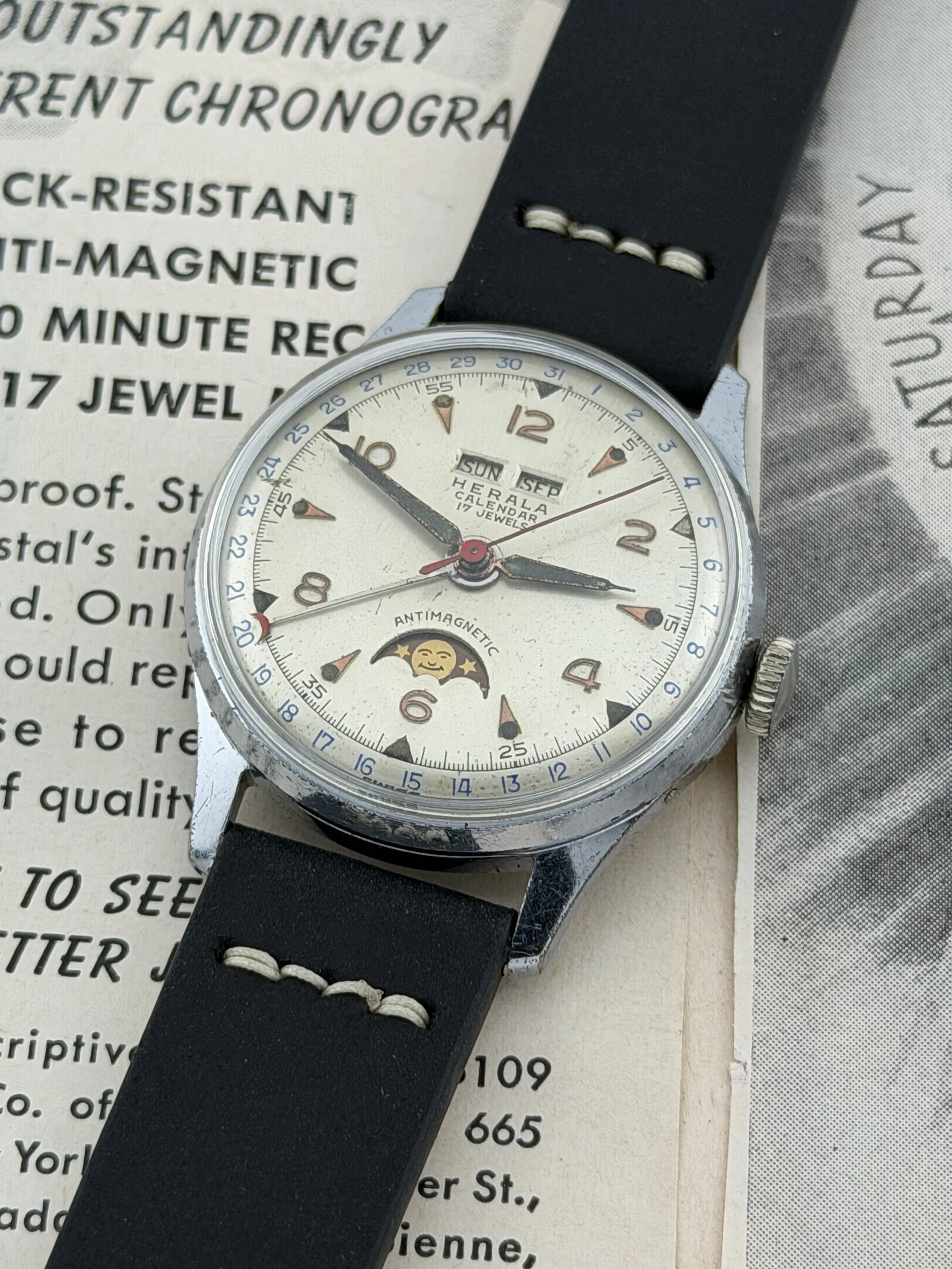
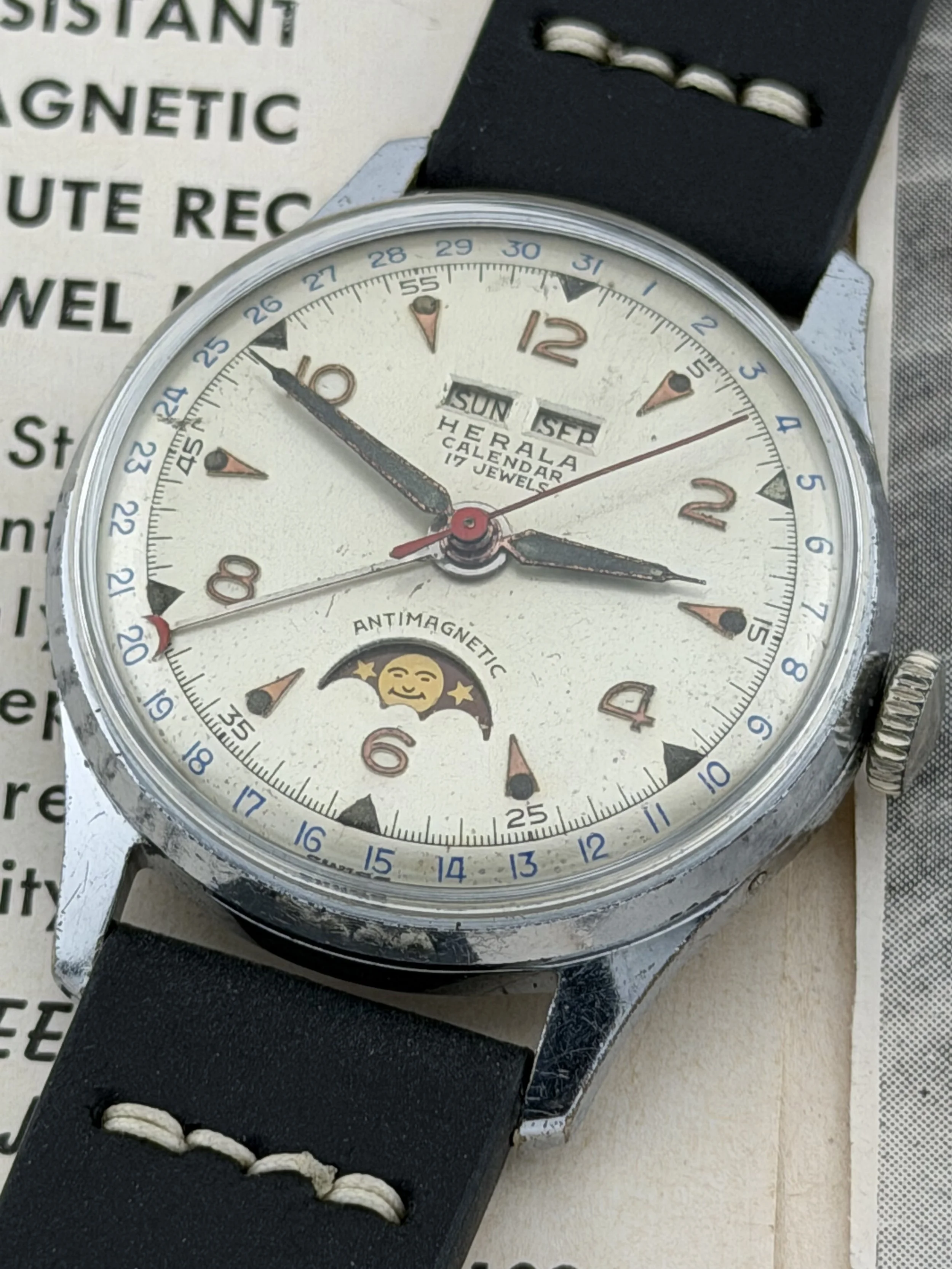
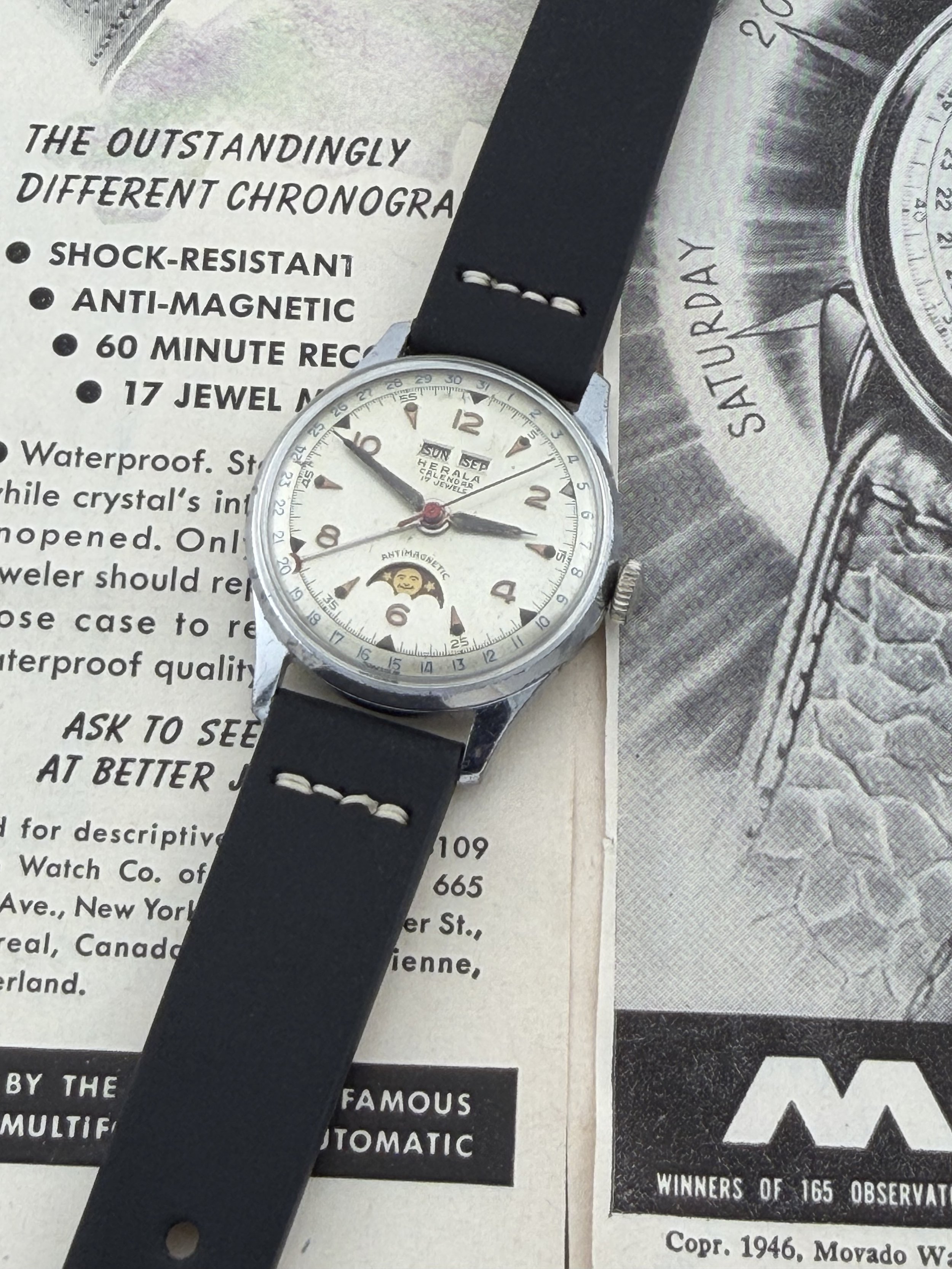
This is a charming and unusually complicated example of a 1950s Herala Triple Calendar Moonphase, packing an impressive number of functions into a compact 32.6mm case. Herala is one of the lesser-known Swiss names of the period, making watches like this a fascinating glimpse into the enormous variety of smaller Swiss manufacturers producing mechanical watches during the post-war era.
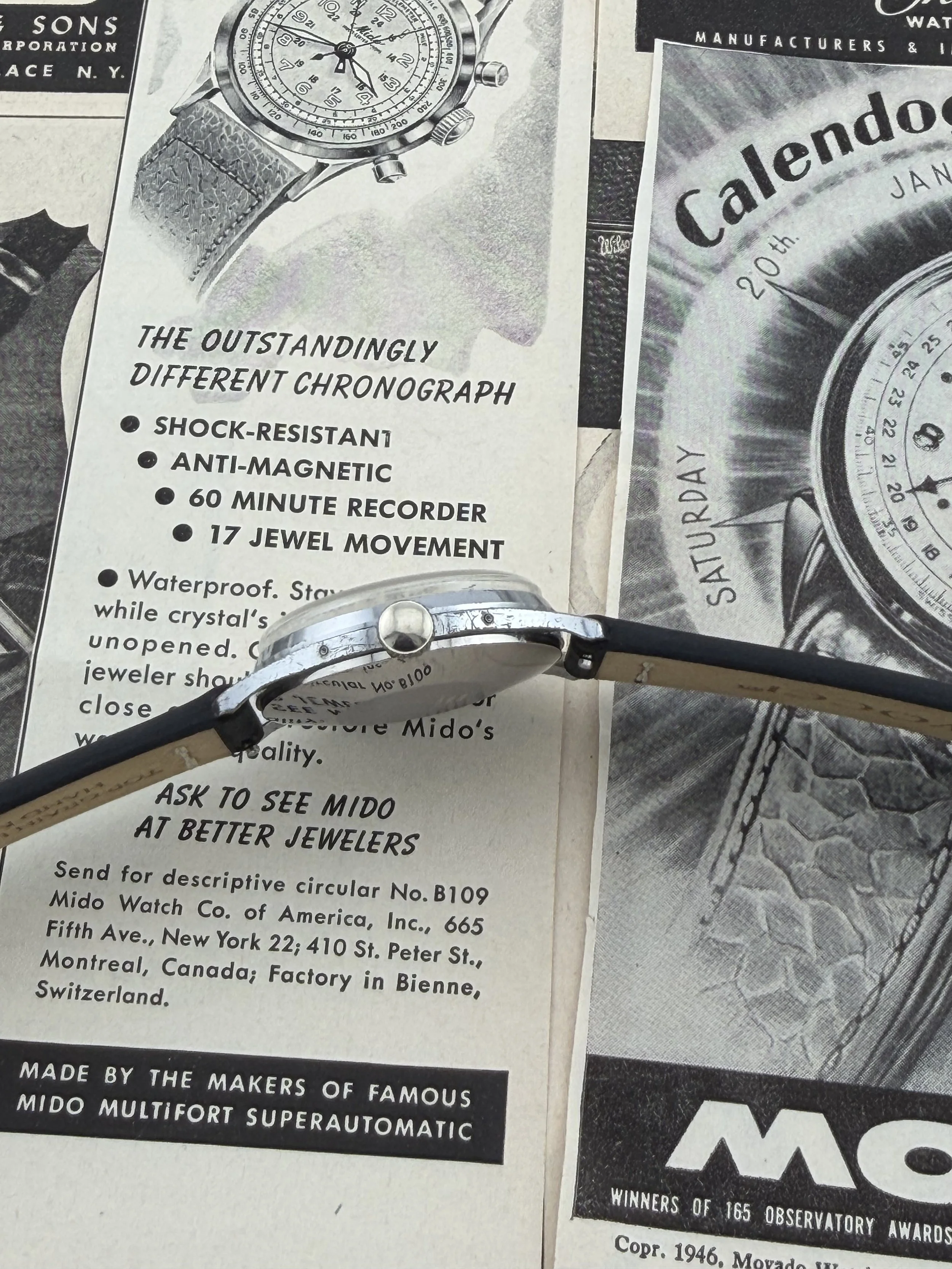
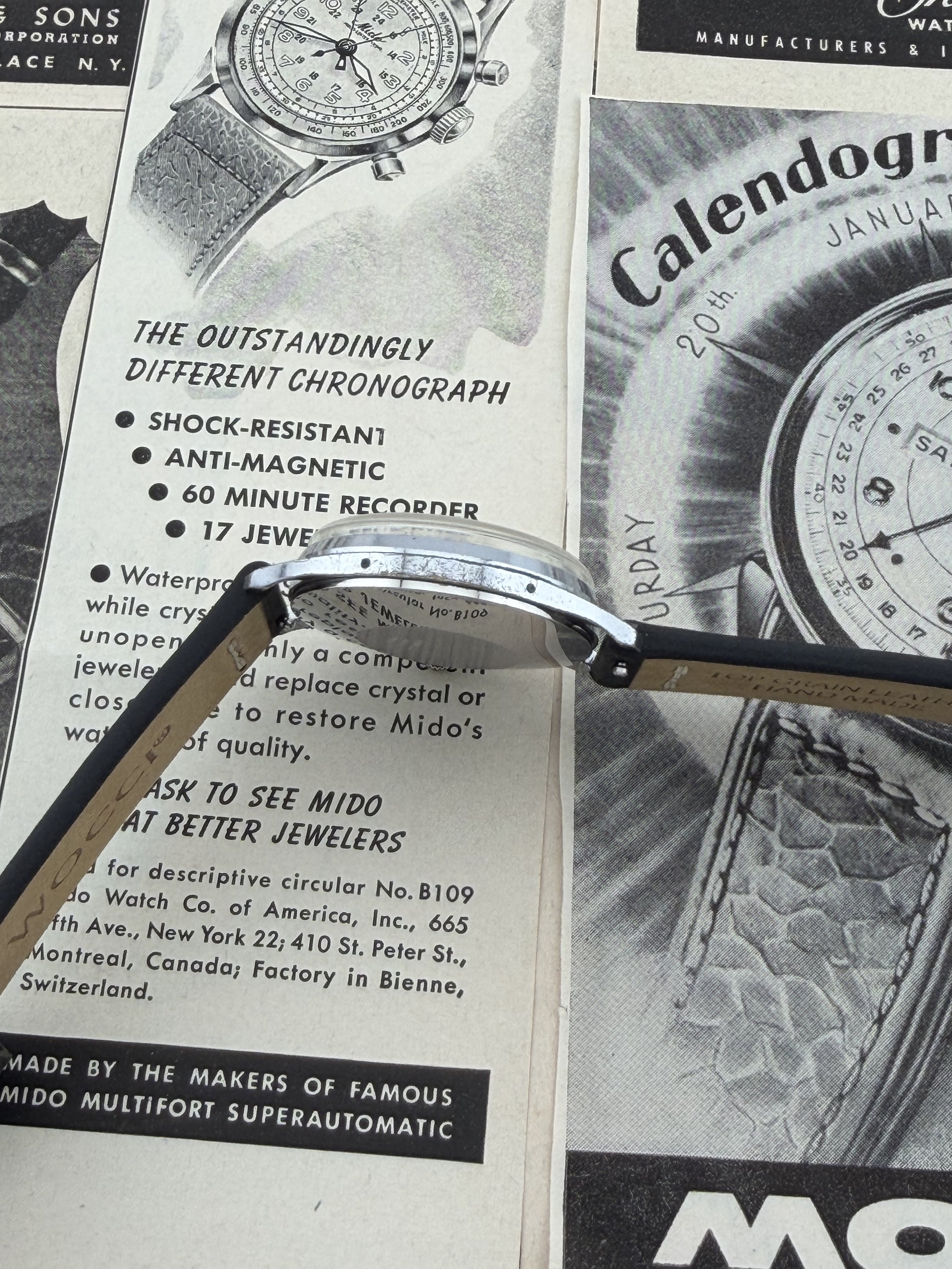
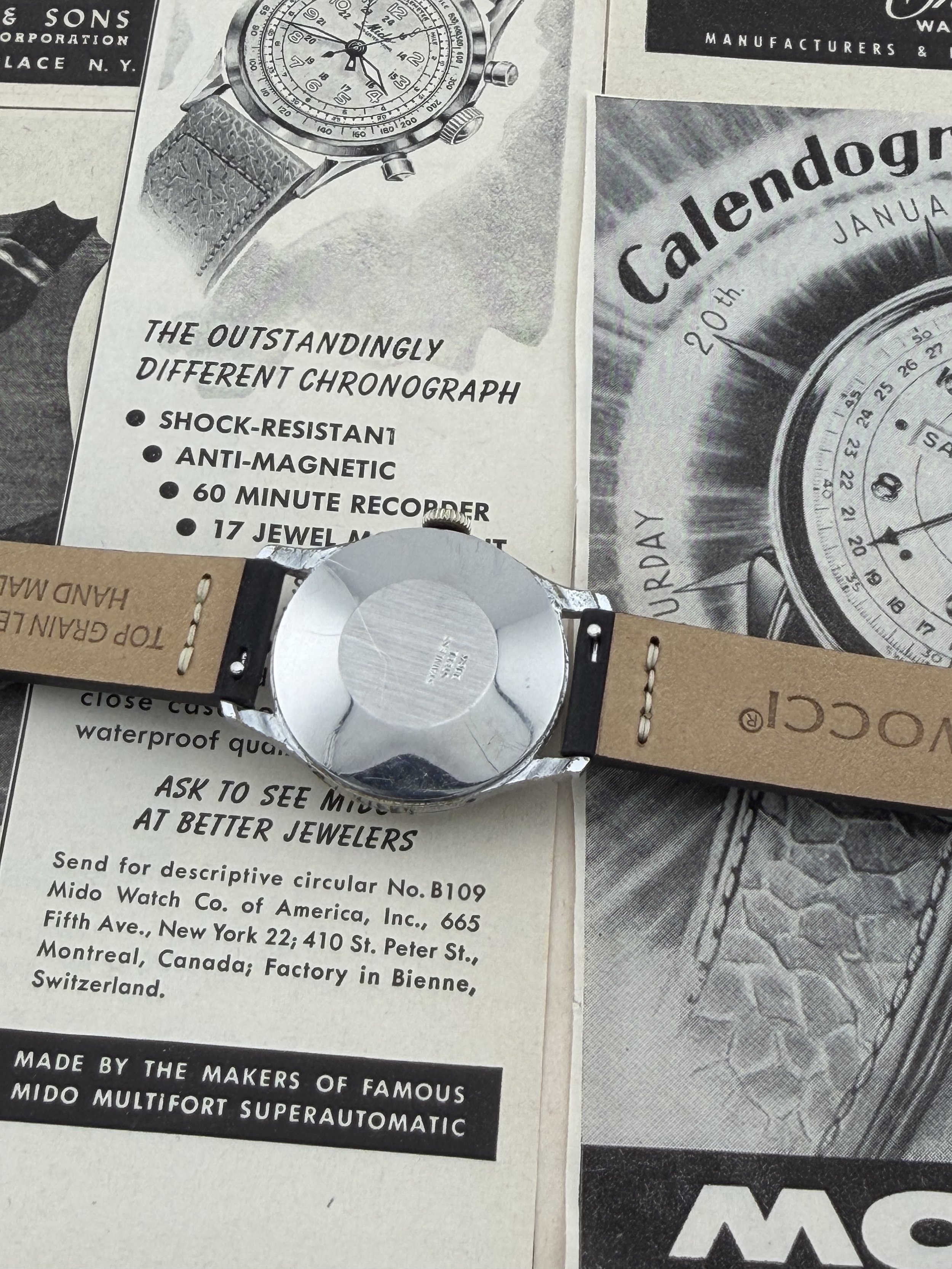
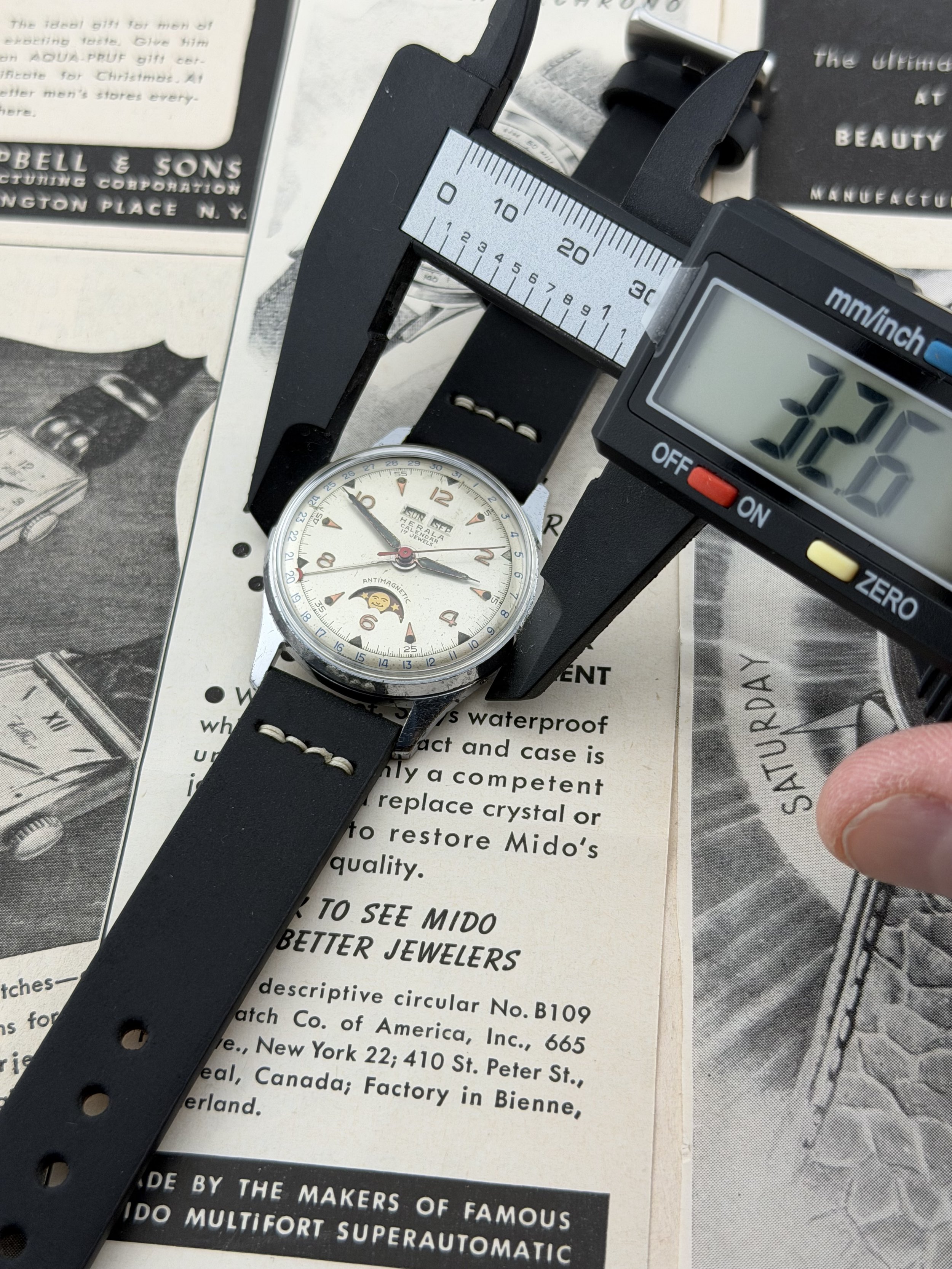
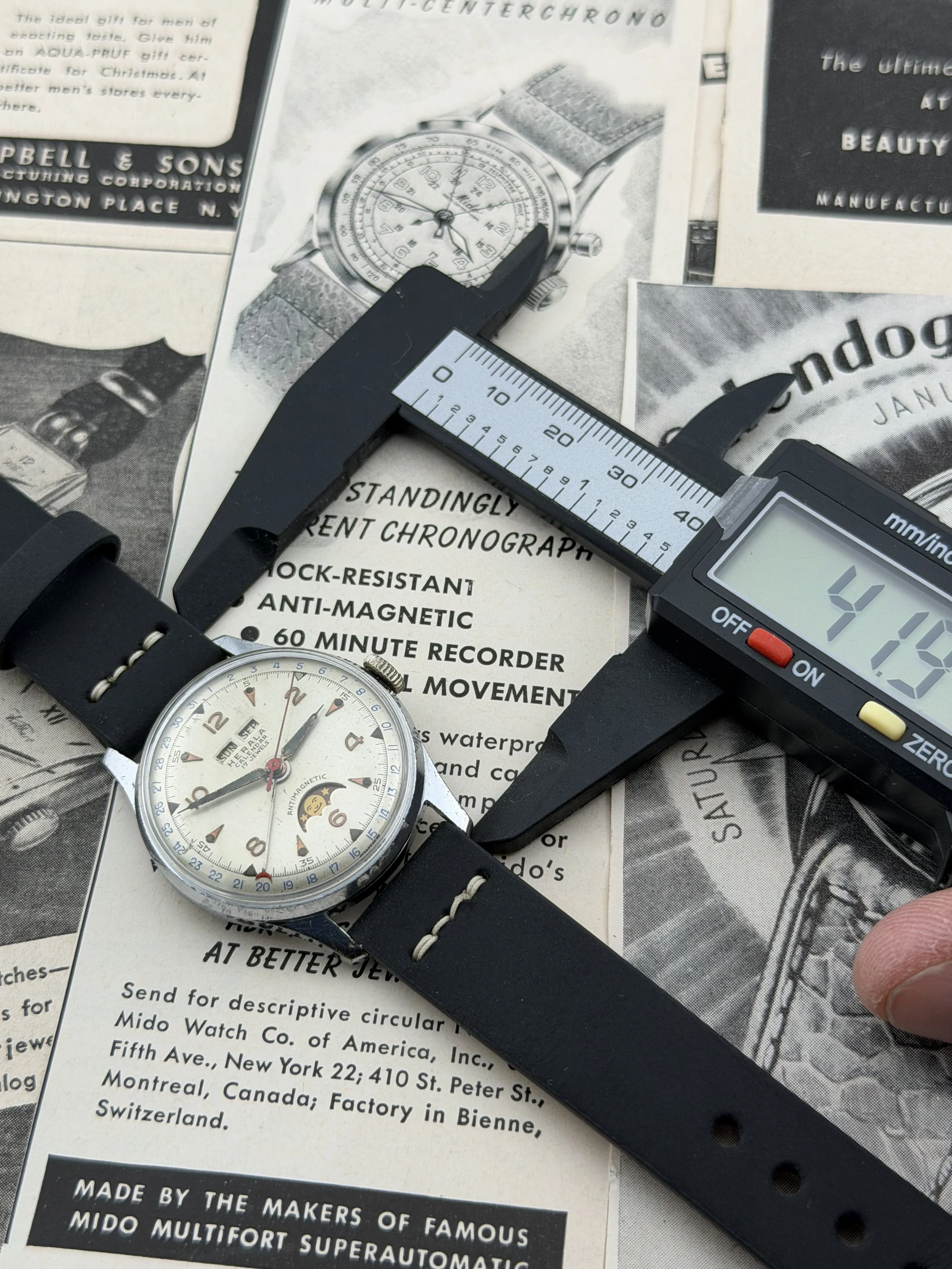
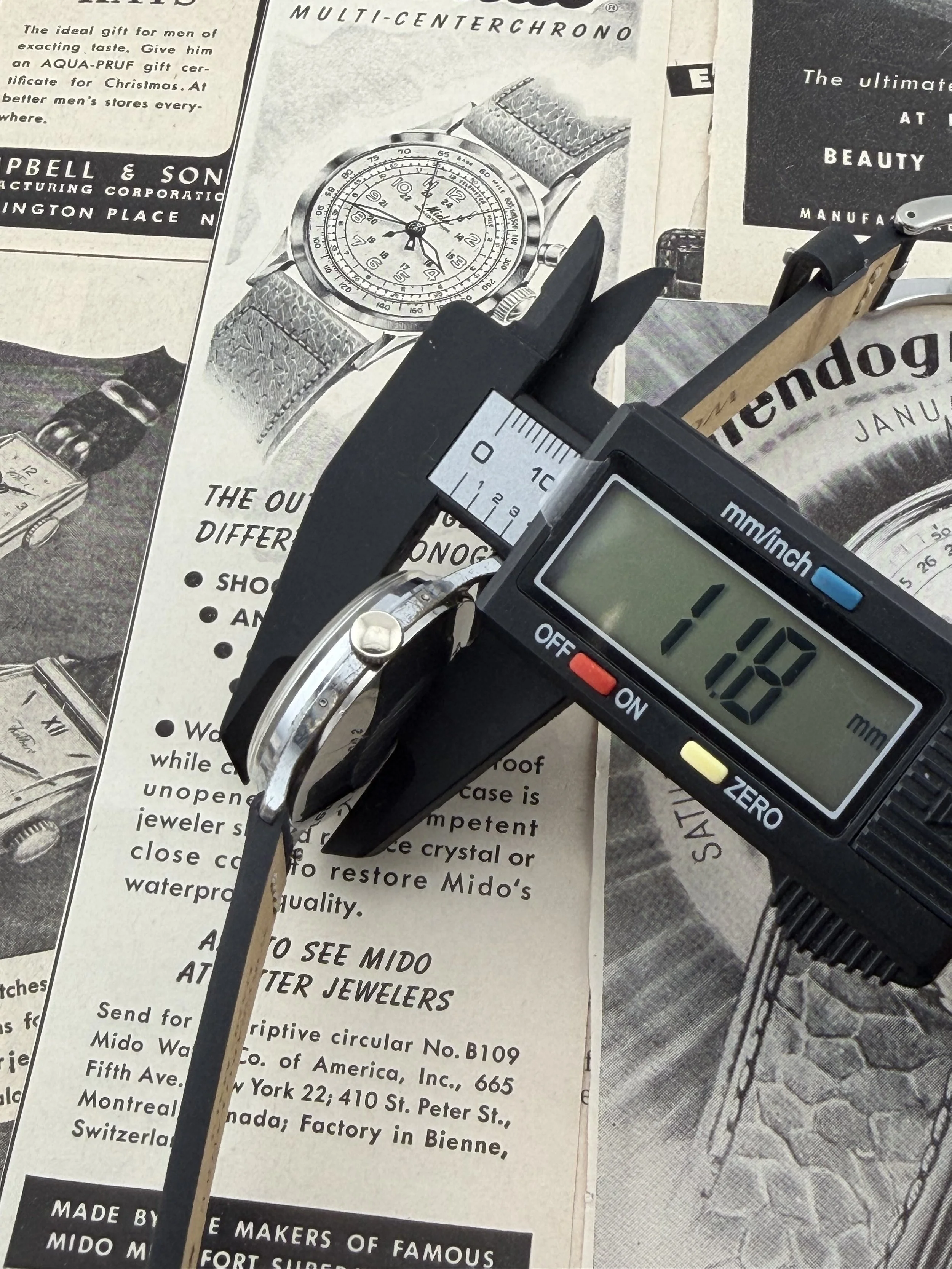
The proportions are wonderfully typical of the period, measuring 32.6mm across, 41.9mm lug-to-lug and approximately 11.8mm thick including the heavily domed acrylic crystal. The chrome-plated base-metal case shows honest age and some loss around the lugs, while the stainless steel snap caseback remains nicely intact. The combination gives the watch exactly the kind of character you'd expect from a well-loved mid-century timepiece.
The dial is the real star. It features day and month apertures beneath 12 o'clock, a peripheral 1–31 date scale tracked by the central red-tipped hand, and a wonderfully illustrated moonphase display at 6 o'clock featuring the classic smiling moon and stars. The cream dial has developed attractive natural aging, with copper-toned Arabic numerals and geometric markers adding to its distinctly 1950s appearance.
Inside is the particularly interesting 17-jewel Felsa Bidynator automatic movement. Herala examples with this calendar configuration are documented with the Felsa 693, one of Felsa's notable Bidynator movements. The Bidynator system was an important development in automatic watchmaking, using a bidirectional winding system to efficiently wind the mainspring as the rotor moves in either direction. Comparable Felsa 693 calendar watches from the period combine the same day, month, pointer-date and moonphase arrangement.
The Felsa Bidynator family is particularly interesting historically because it represents some of the earliest practical bidirectional automatic winding systems, predating the modern automatic mechanisms that would become commonplace later in the century.
With its full calendar, moonphase, Bidynator automatic movement, illustrated dial and honest 1950s wear, this is exactly the sort of obscure and mechanically interesting vintage watch that makes collecting smaller Swiss brands so rewarding. It's an affordable piece of mid-century horological history with an enormous amount going on beneath that charming dial.
This is a charming and unusually complicated example of a 1950s Herala Triple Calendar Moonphase, packing an impressive number of functions into a compact 32.6mm case. Herala is one of the lesser-known Swiss names of the period, making watches like this a fascinating glimpse into the enormous variety of smaller Swiss manufacturers producing mechanical watches during the post-war era.
The proportions are wonderfully typical of the period, measuring 32.6mm across, 41.9mm lug-to-lug and approximately 11.8mm thick including the heavily domed acrylic crystal. The chrome-plated base-metal case shows honest age and some loss around the lugs, while the stainless steel snap caseback remains nicely intact. The combination gives the watch exactly the kind of character you'd expect from a well-loved mid-century timepiece.
The dial is the real star. It features day and month apertures beneath 12 o'clock, a peripheral 1–31 date scale tracked by the central red-tipped hand, and a wonderfully illustrated moonphase display at 6 o'clock featuring the classic smiling moon and stars. The cream dial has developed attractive natural aging, with copper-toned Arabic numerals and geometric markers adding to its distinctly 1950s appearance.
Inside is the particularly interesting 17-jewel Felsa Bidynator automatic movement. Herala examples with this calendar configuration are documented with the Felsa 693, one of Felsa's notable Bidynator movements. The Bidynator system was an important development in automatic watchmaking, using a bidirectional winding system to efficiently wind the mainspring as the rotor moves in either direction. Comparable Felsa 693 calendar watches from the period combine the same day, month, pointer-date and moonphase arrangement.
The Felsa Bidynator family is particularly interesting historically because it represents some of the earliest practical bidirectional automatic winding systems, predating the modern automatic mechanisms that would become commonplace later in the century.
With its full calendar, moonphase, Bidynator automatic movement, illustrated dial and honest 1950s wear, this is exactly the sort of obscure and mechanically interesting vintage watch that makes collecting smaller Swiss brands so rewarding. It's an affordable piece of mid-century horological history with an enormous amount going on beneath that charming dial.