


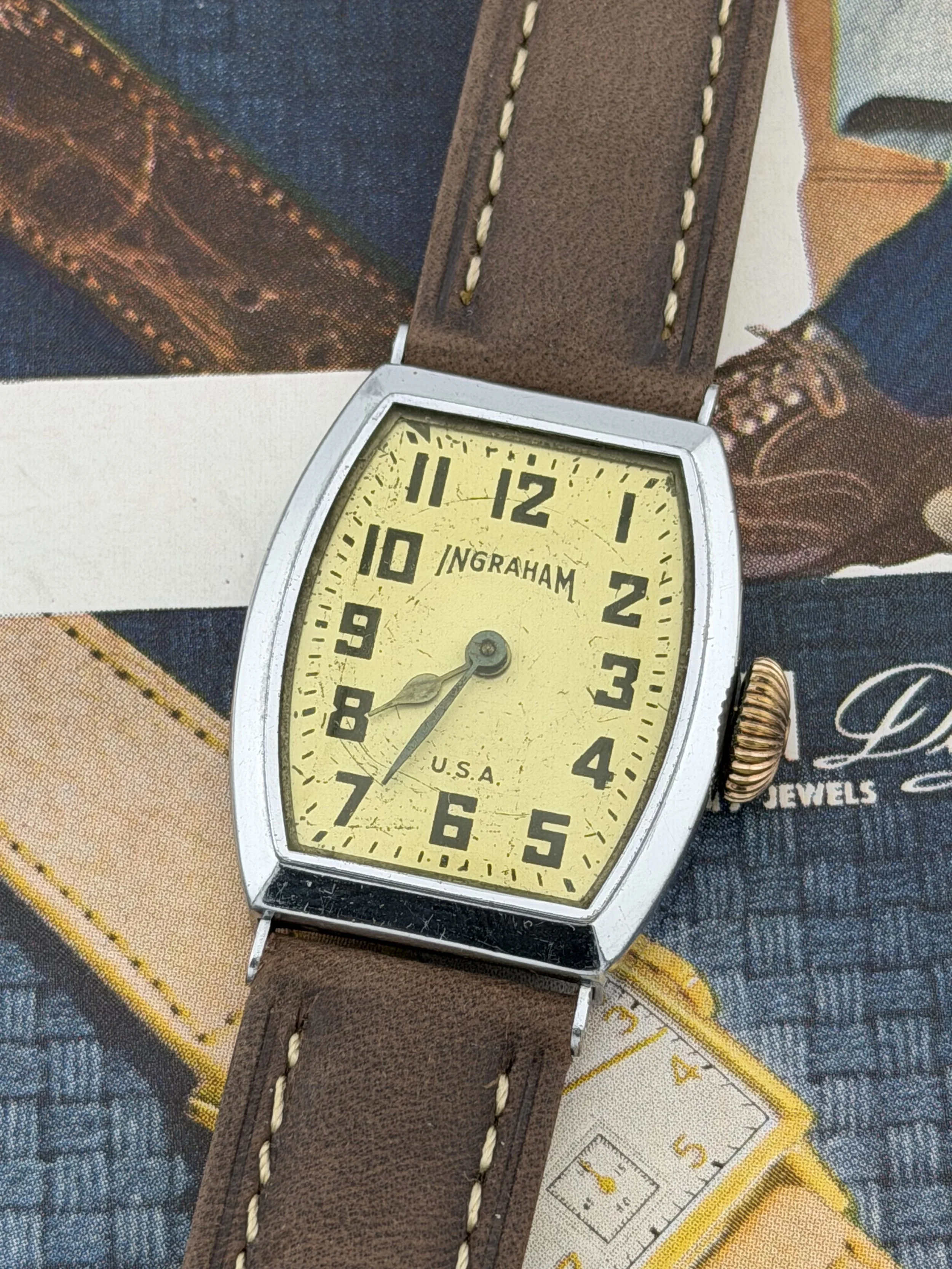
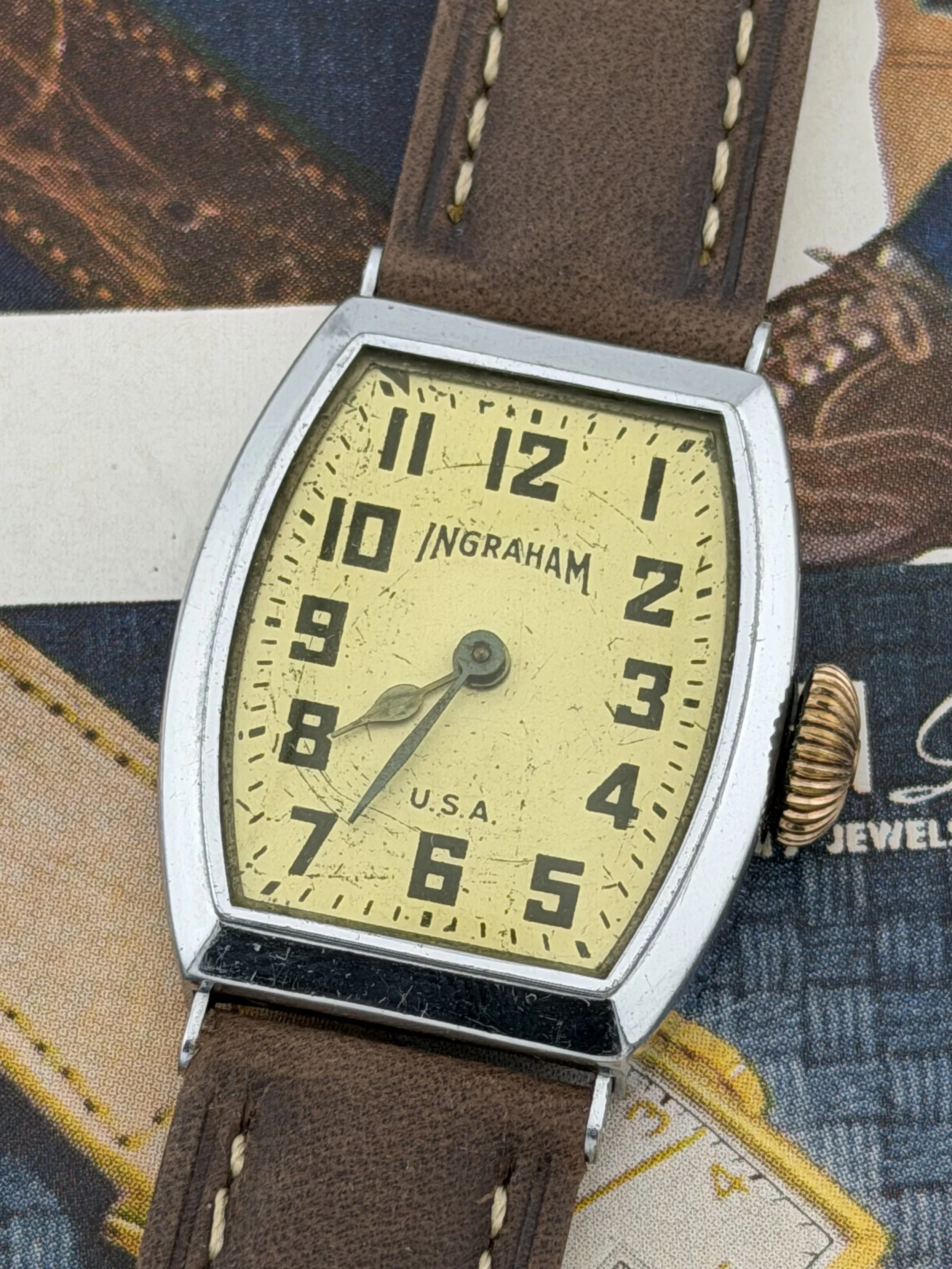
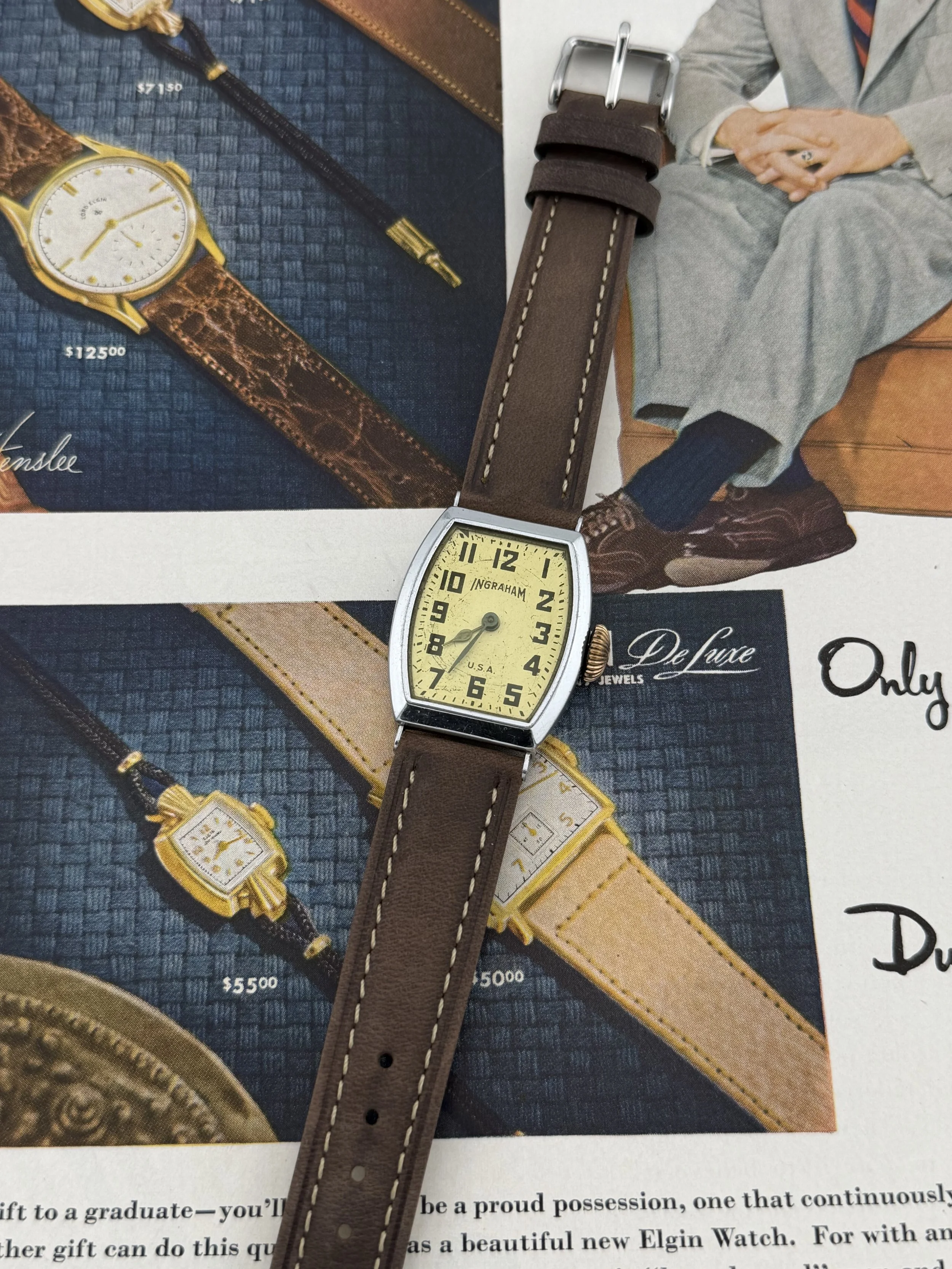
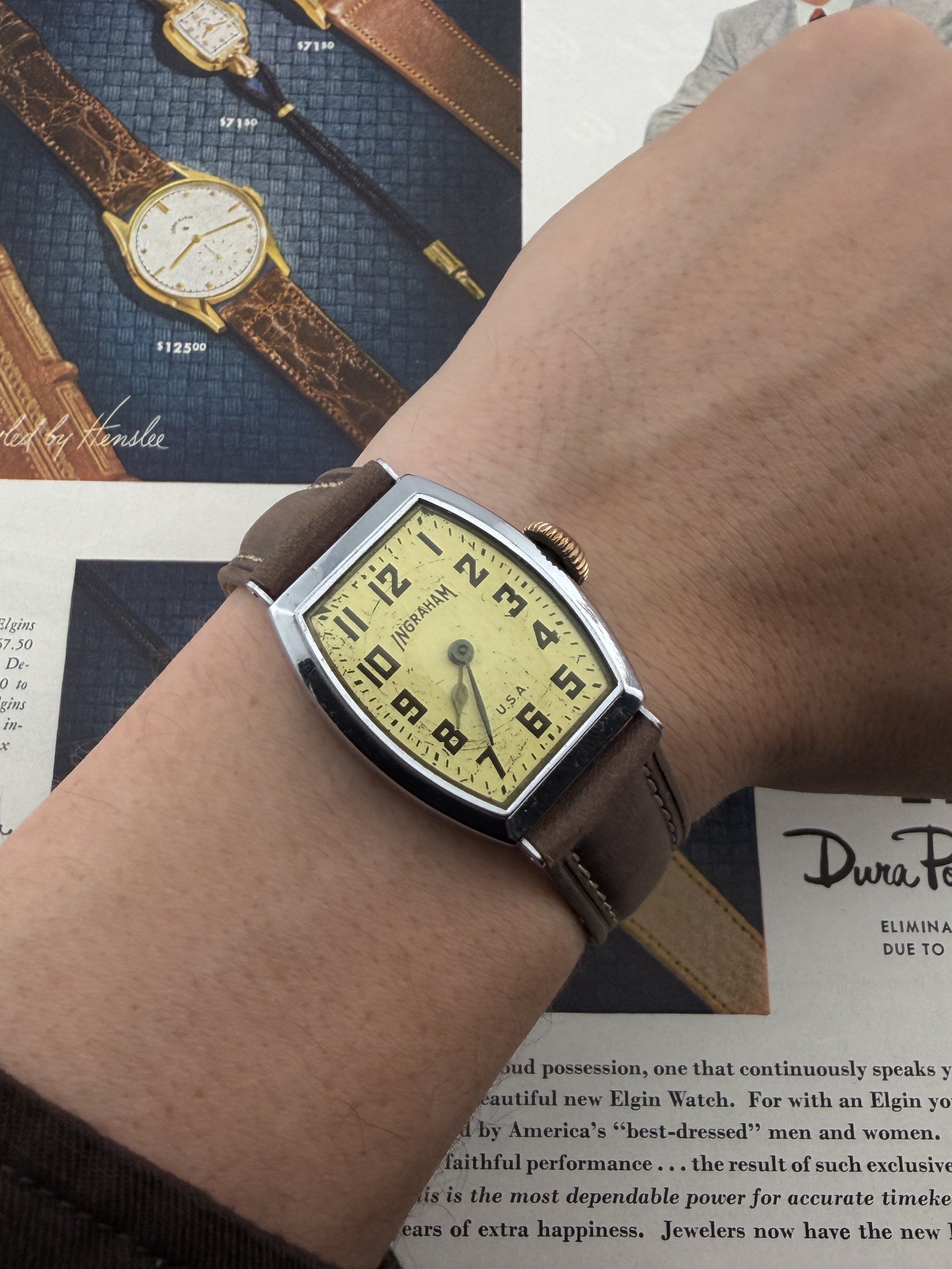
This fascinating Ingraham is a wonderful example of the affordable American watches produced during the Great Depression. Manufactured by The E. Ingraham Company of Bristol, Connecticut, it represents a very different side of vintage watchmaking from the Swiss-jewelled pieces of the same era.
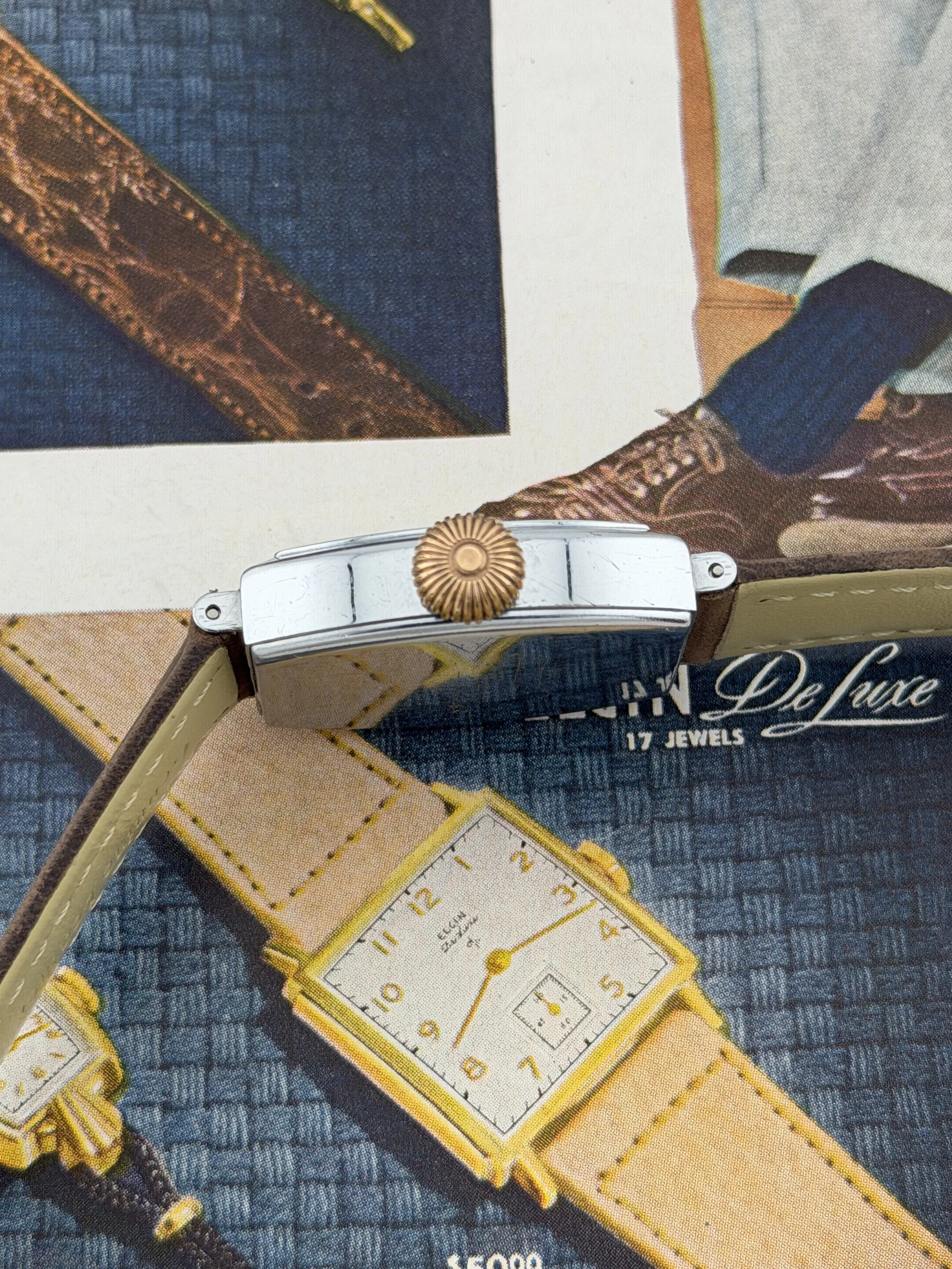
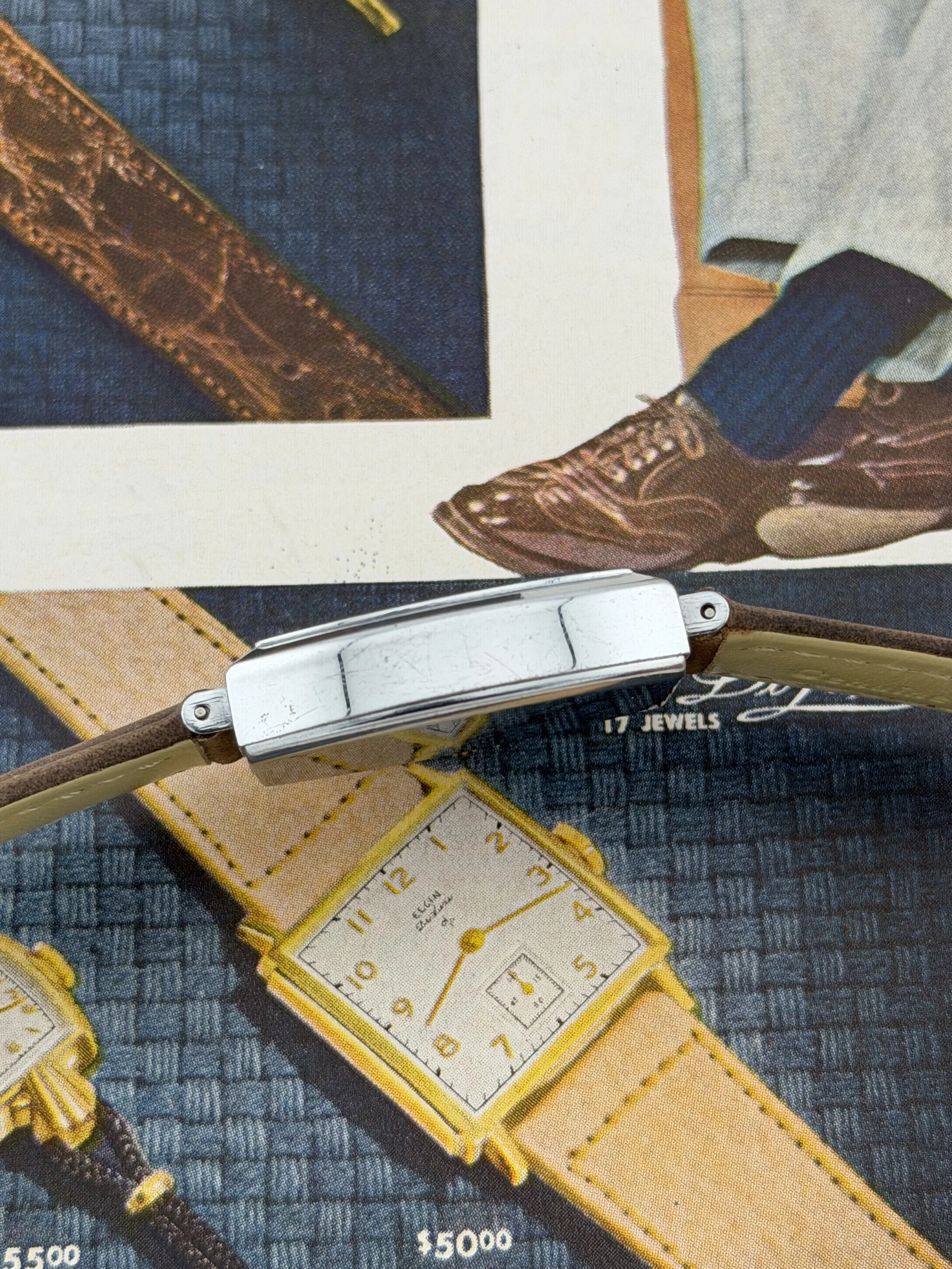
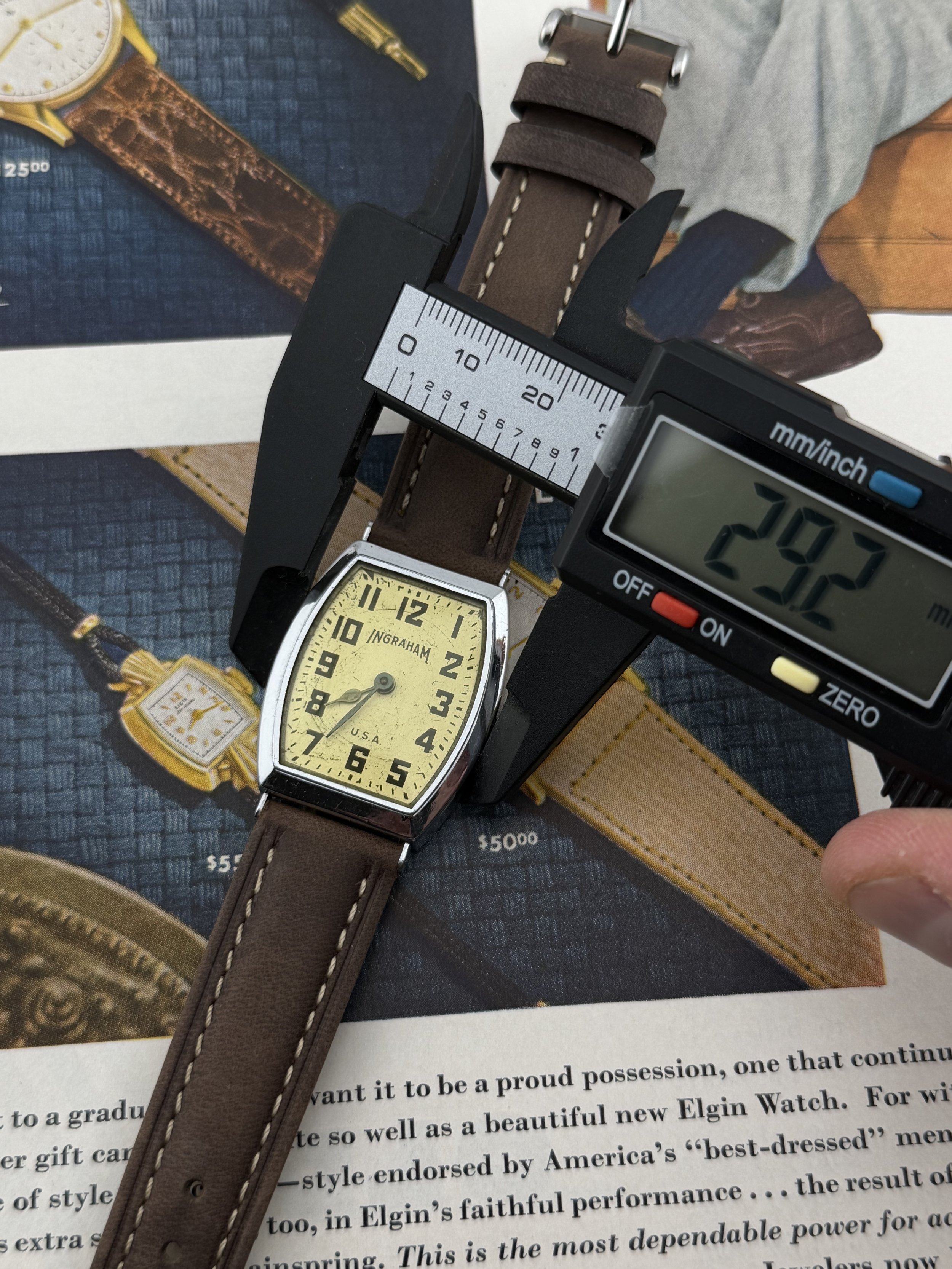
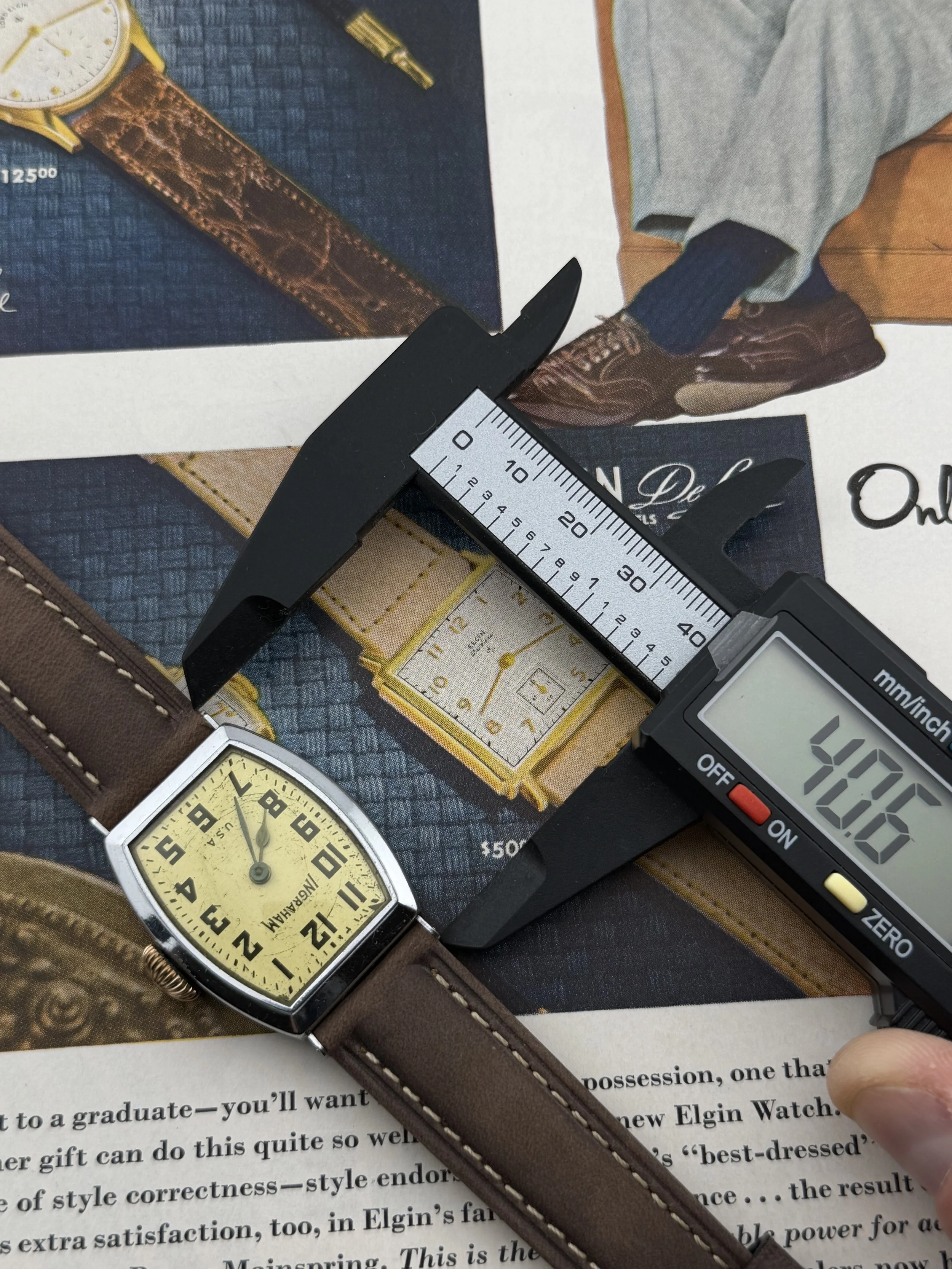
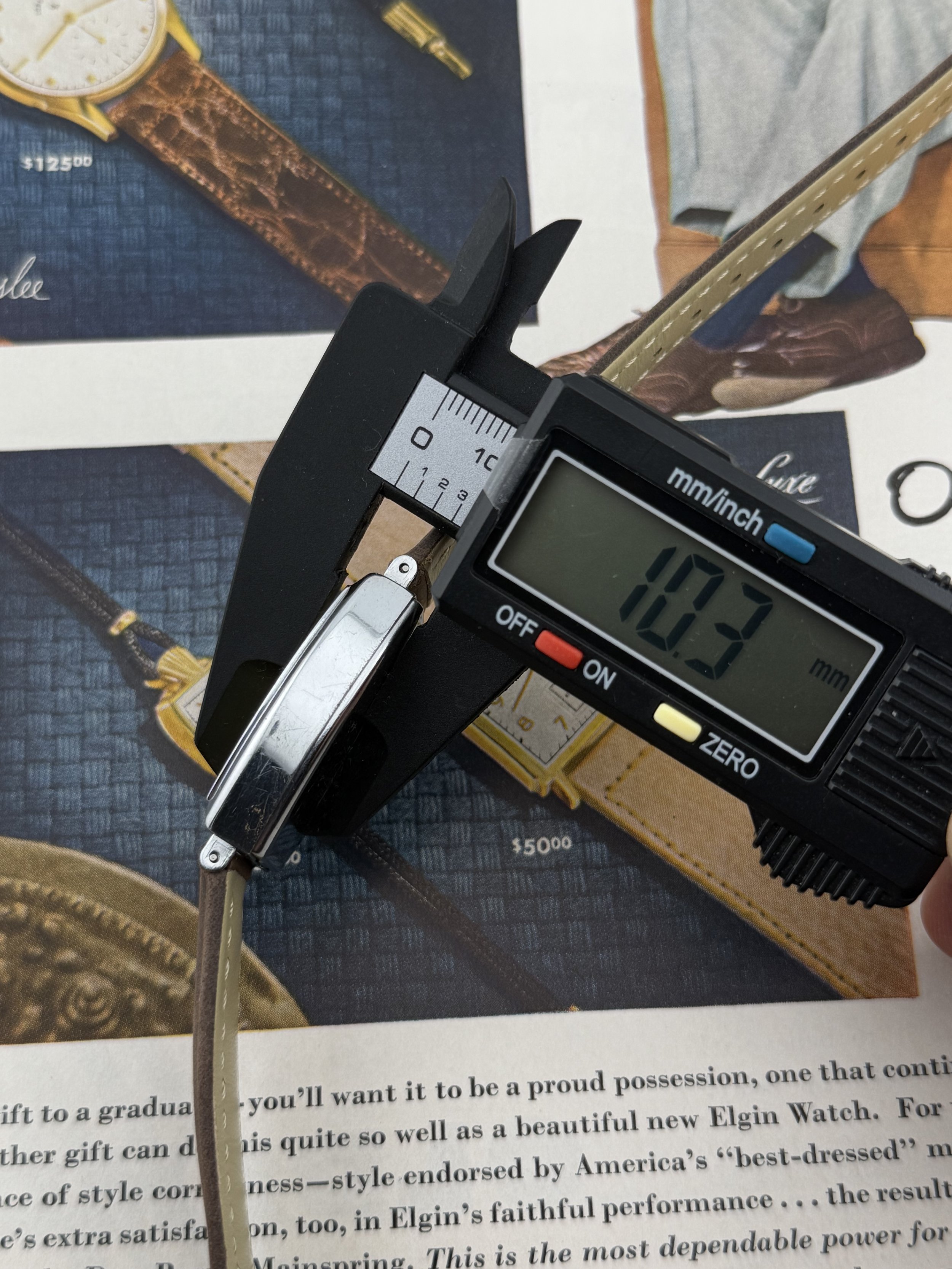
The 29.2mm tonneau-shaped case measures 40.6mm lug-to-lug and 10.3mm thick, with curved sides and a deep bezel giving it the distinctive barrel-shaped profile associated with late-1920s and 1930s Art Deco watches. The oversized gold-tone onion crown is another wonderful period detail, making the watch easy to wind while echoing the large crowns found on pocket watches.
The heavily aged dial has developed a wonderful warm patina, with bold Art Deco-style Arabic numerals and an outer railroad-style minute track. Dark green cathedral-style hands add considerably to its character, while INGRAHAM and U.S.A. proudly identify its American origin.
Inside is a completely different approach to mechanical watchmaking than the Swiss 17-jewel movements of the same period. This Ingraham uses a pin-lever movement, an inexpensive and practical design that replaced jeweled bearings with hardened steel pins. The result was a simple, robust movement that could be manufactured economically and brought mechanical timekeeping within reach of a much broader section of the population.
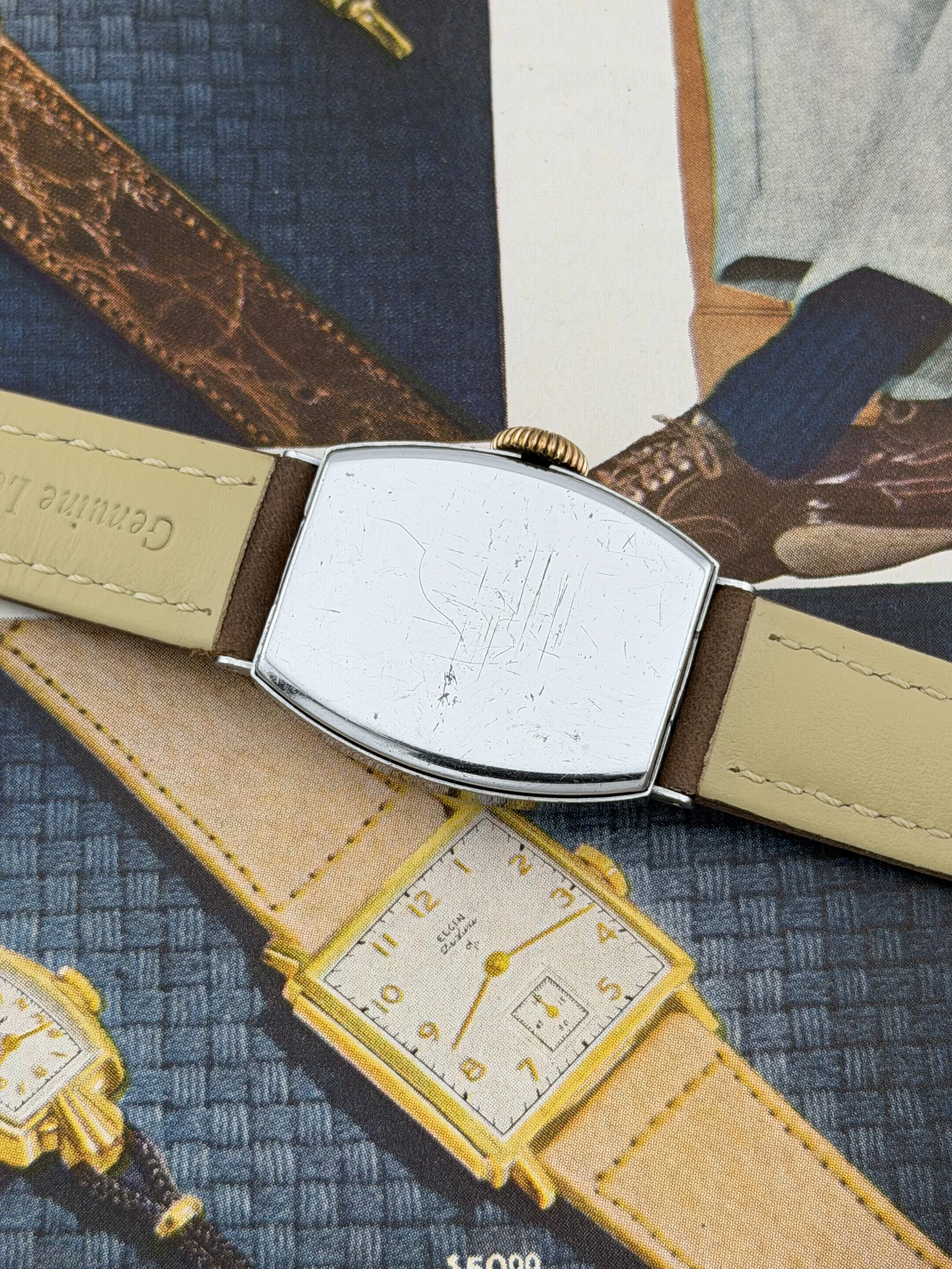
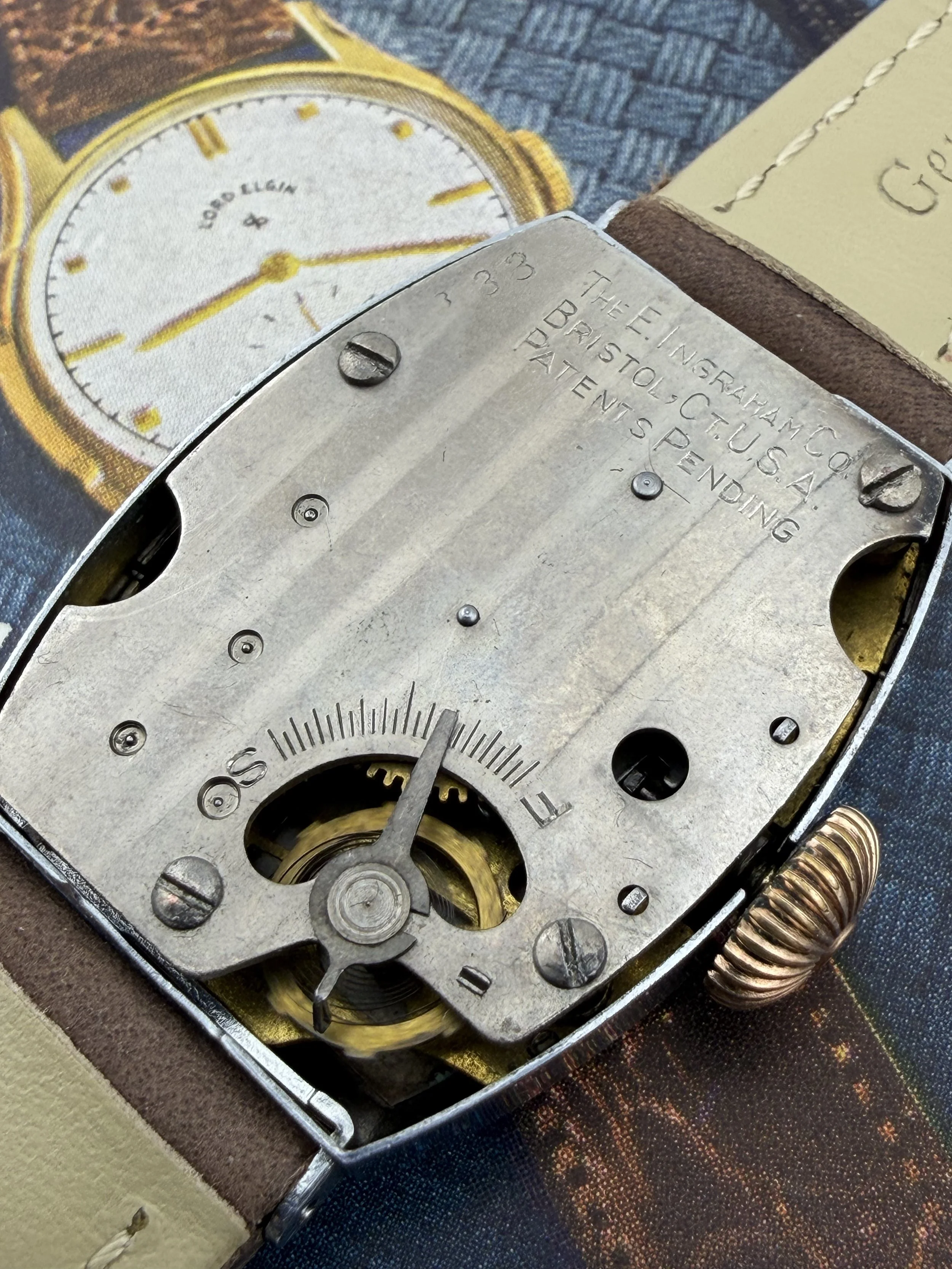
Another fascinating feature is the construction itself: the movement's rear plate doubles as the exterior case back, eliminating the need for a separate case-back component and further reducing manufacturing costs. The movement is stamped “THE E. INGRAHAM CO. / BRISTOL, CONN. U.S.A.” along with “PATENTS PENDING.” The 3 33 marking is consistent with a possible March 1933 production date.
The exposed regulator is another charming piece of period engineering, with its S / F (Slow / Fast) markings allowing the rate of the movement to be adjusted. It is wonderfully straightforward compared with the finely finished movements found in more expensive watches of the period.
The E. Ingraham Company was an important American watch manufacturer, particularly known for producing affordable watches for the mass market. During the Depression era, inexpensive pin-lever watches such as this played an important role in making personal timekeeping accessible to ordinary Americans.
This isn't a watch that tries to disguise its humble origins—and that's exactly what makes it interesting. A genuine piece of Depression-era American watchmaking, with a beautifully aged Art Deco case, original character, and an ingenious low-cost mechanical movement.
This fascinating Ingraham is a wonderful example of the affordable American watches produced during the Great Depression. Manufactured by The E. Ingraham Company of Bristol, Connecticut, it represents a very different side of vintage watchmaking from the Swiss-jewelled pieces of the same era.
The 29.2mm tonneau-shaped case measures 40.6mm lug-to-lug and 10.3mm thick, with curved sides and a deep bezel giving it the distinctive barrel-shaped profile associated with late-1920s and 1930s Art Deco watches. The oversized gold-tone onion crown is another wonderful period detail, making the watch easy to wind while echoing the large crowns found on pocket watches.
The heavily aged dial has developed a wonderful warm patina, with bold Art Deco-style Arabic numerals and an outer railroad-style minute track. Dark green cathedral-style hands add considerably to its character, while INGRAHAM and U.S.A. proudly identify its American origin.
Inside is a completely different approach to mechanical watchmaking than the Swiss 17-jewel movements of the same period. This Ingraham uses a pin-lever movement, an inexpensive and practical design that replaced jeweled bearings with hardened steel pins. The result was a simple, robust movement that could be manufactured economically and brought mechanical timekeeping within reach of a much broader section of the population.
Another fascinating feature is the construction itself: the movement's rear plate doubles as the exterior case back, eliminating the need for a separate case-back component and further reducing manufacturing costs. The movement is stamped “THE E. INGRAHAM CO. / BRISTOL, CONN. U.S.A.” along with “PATENTS PENDING.” The 3 33 marking is consistent with a possible March 1933 production date.
The exposed regulator is another charming piece of period engineering, with its S / F (Slow / Fast) markings allowing the rate of the movement to be adjusted. It is wonderfully straightforward compared with the finely finished movements found in more expensive watches of the period.
The E. Ingraham Company was an important American watch manufacturer, particularly known for producing affordable watches for the mass market. During the Depression era, inexpensive pin-lever watches such as this played an important role in making personal timekeeping accessible to ordinary Americans.
This isn't a watch that tries to disguise its humble origins—and that's exactly what makes it interesting. A genuine piece of Depression-era American watchmaking, with a beautifully aged Art Deco case, original character, and an ingenious low-cost mechanical movement.