

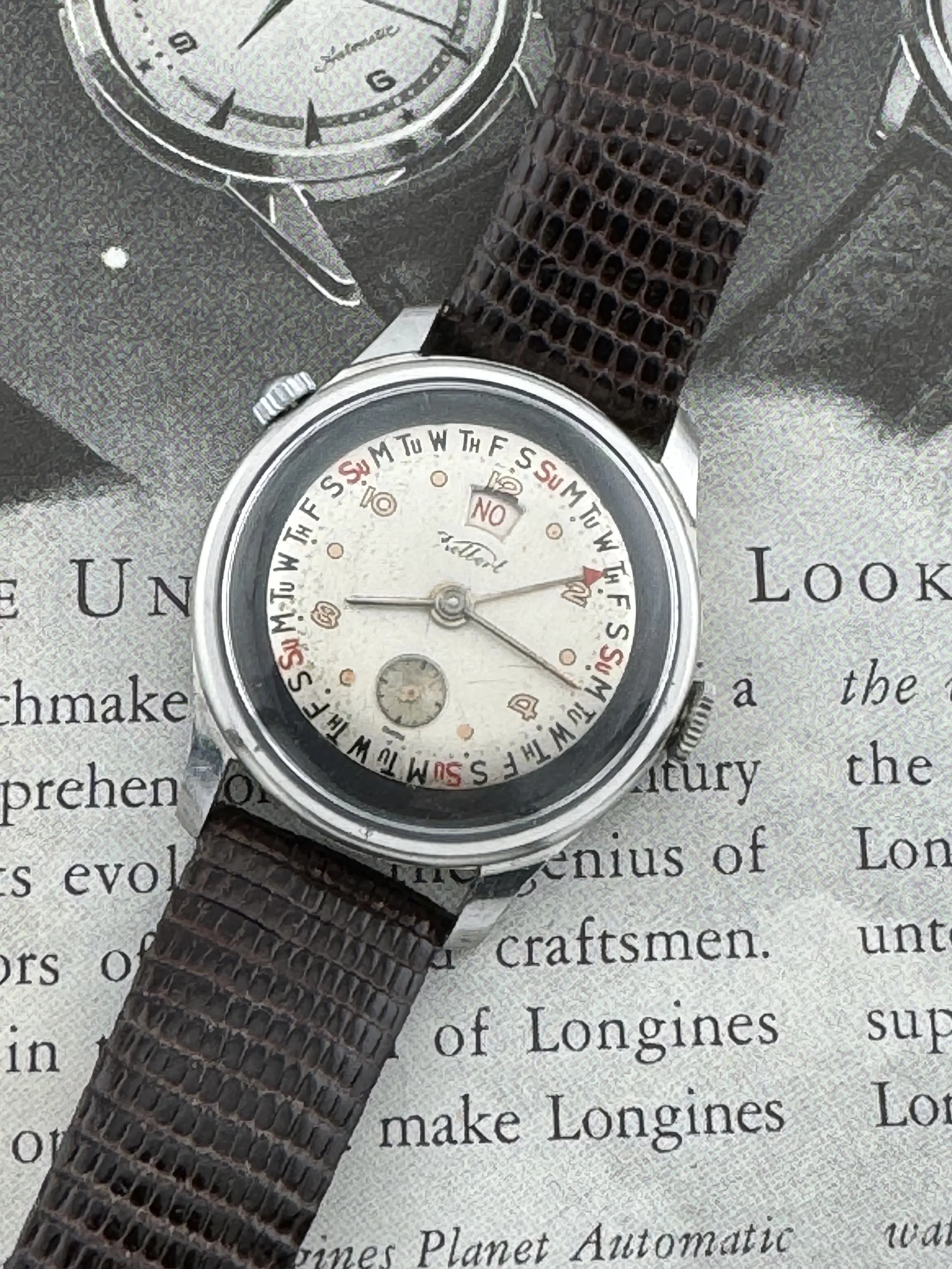
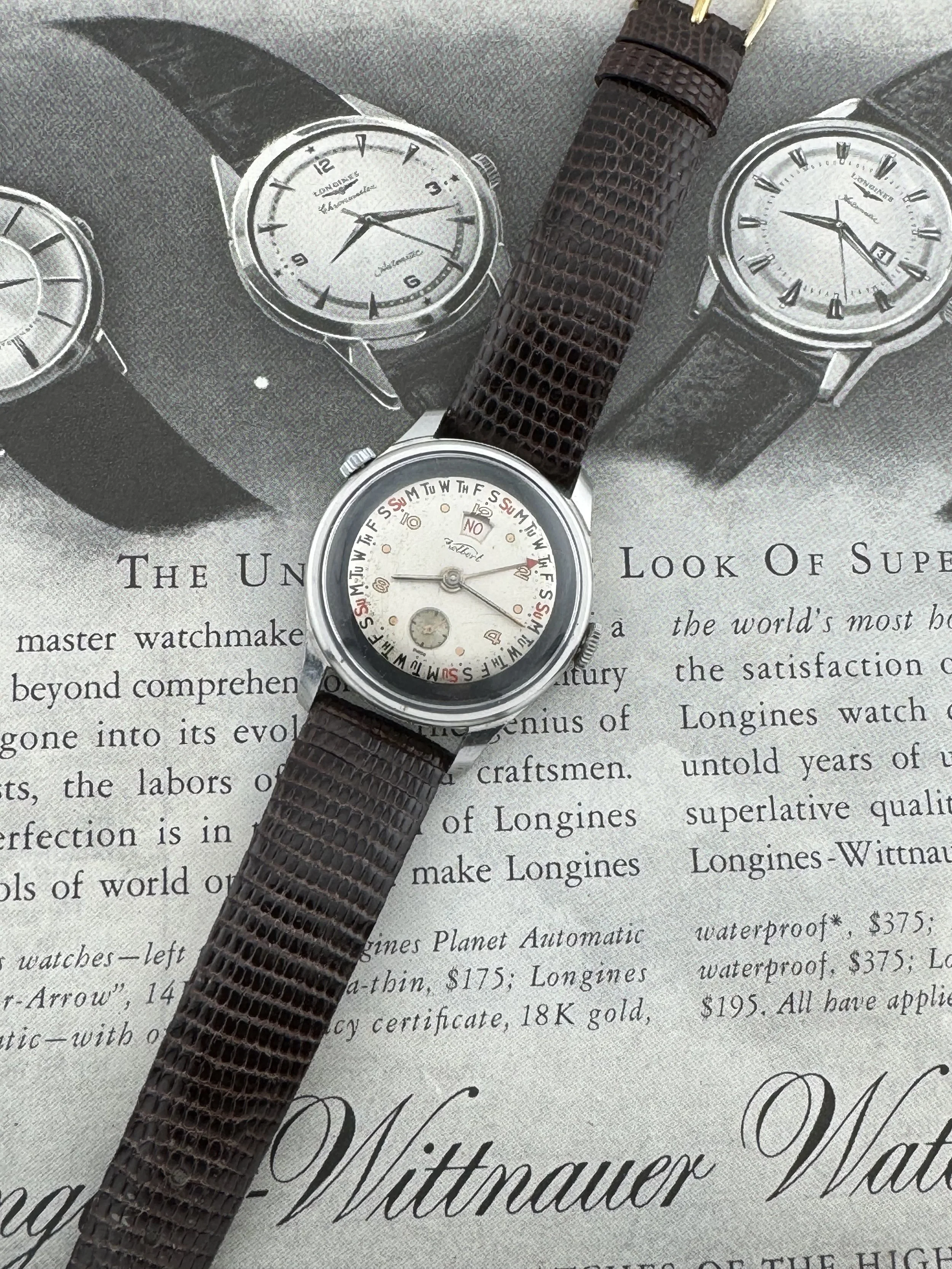
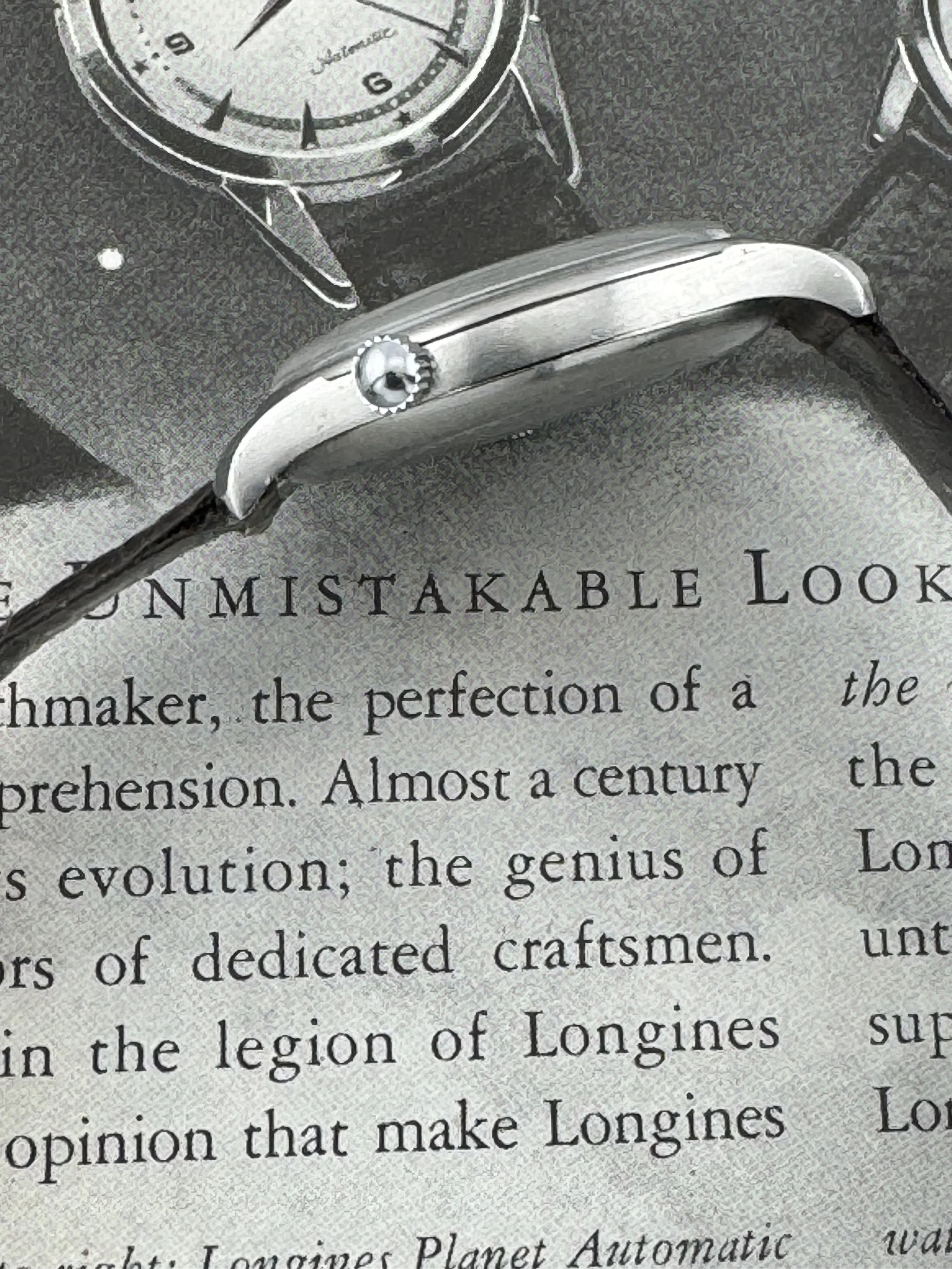
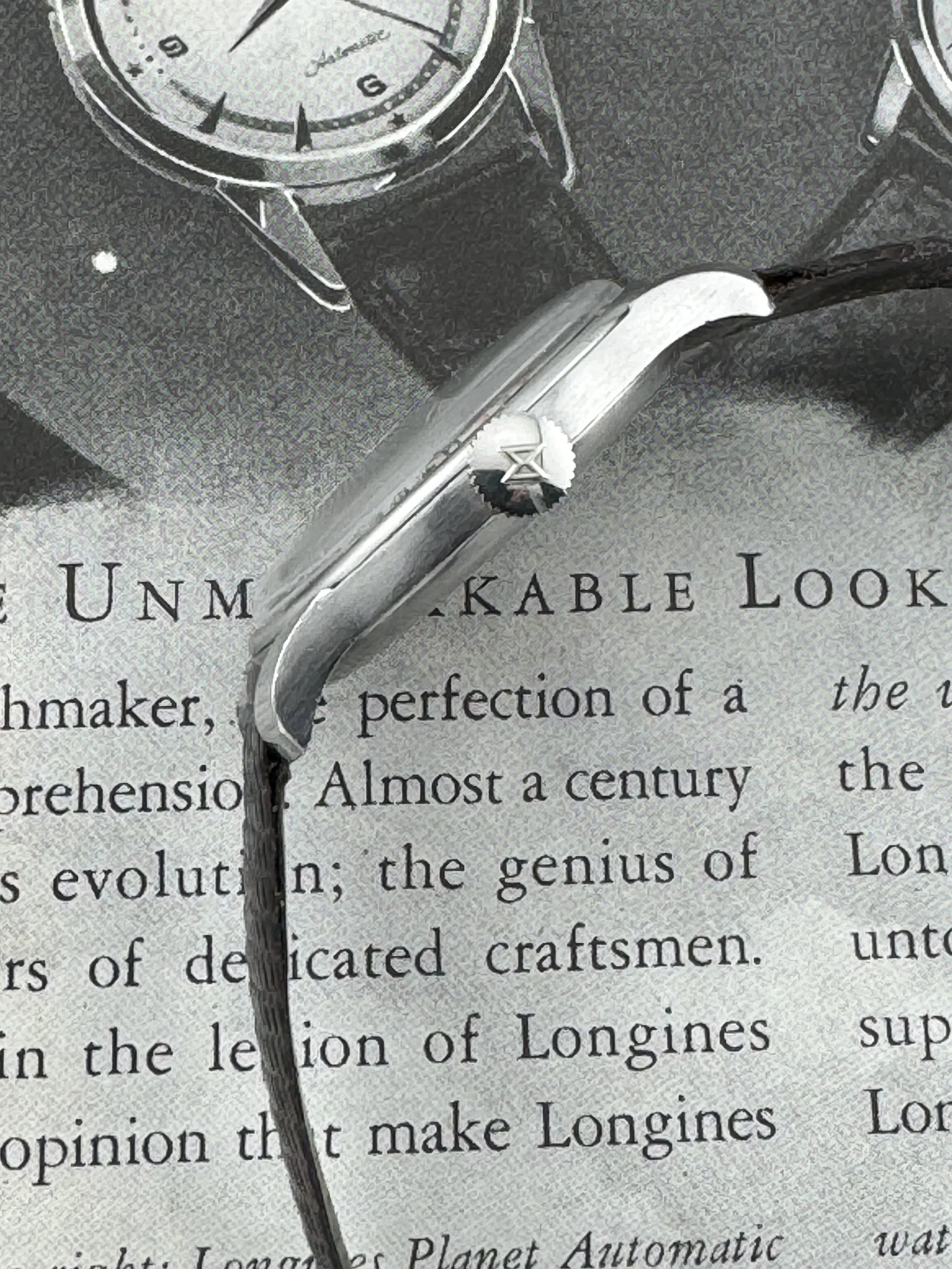
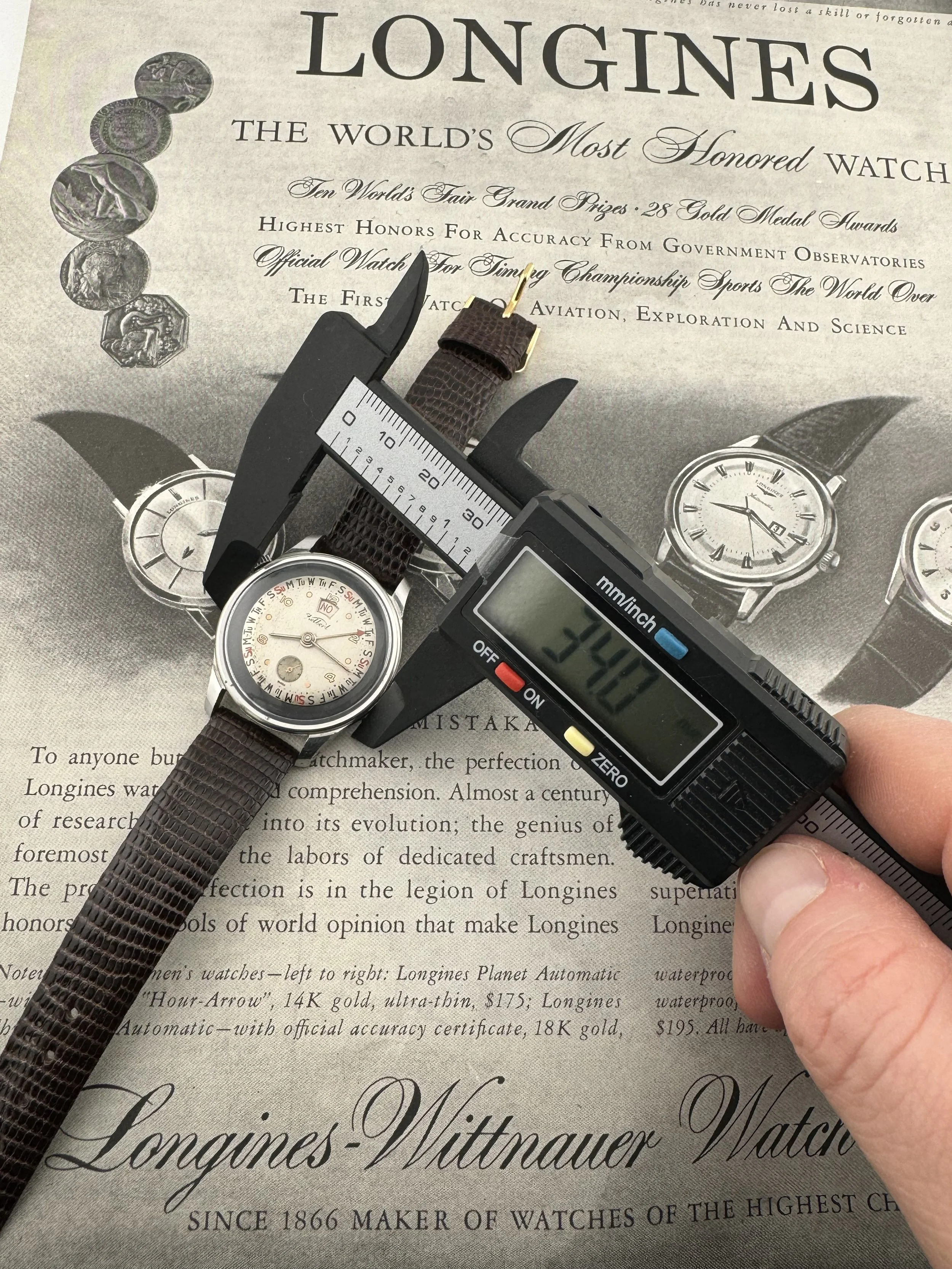
This vintage Kelbert twin-crown calendar watch is a wonderful example of mid-century Swiss ingenuity, combining practical complications with clean, purposeful design. The twin-crown layout immediately sets it apart, giving the watch a distinctive, tool-like presence on the wrist while also serving an important functional role.
One crown is used for winding and setting the time, while the second crown independently adjusts the calendar function. This setup was commonly used before the widespread adoption of quick-set date mechanisms, allowing the date to be advanced safely and precisely without disturbing the timekeeping. It’s a charming and mechanically honest solution that highlights the thoughtful engineering of the era.
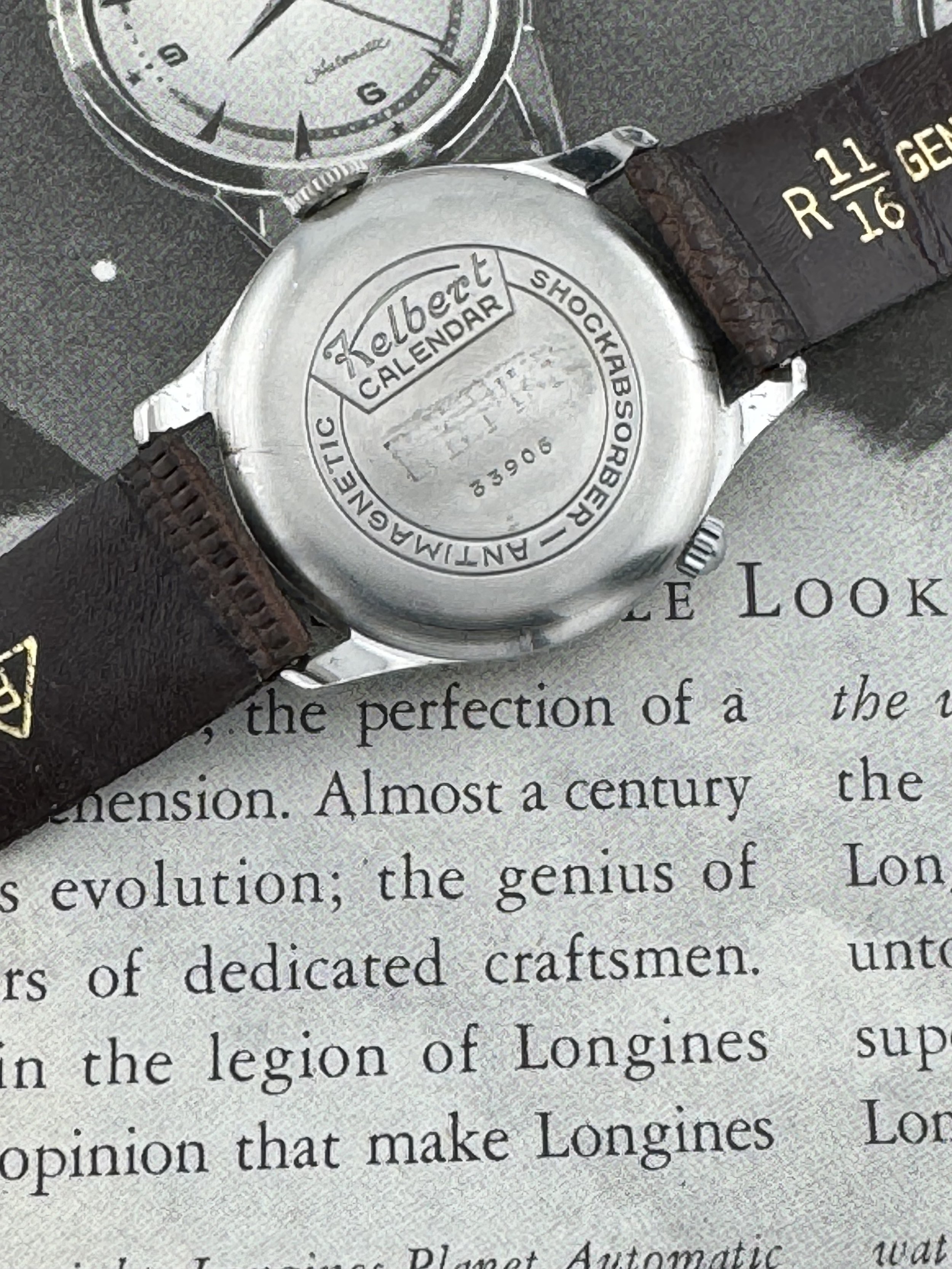
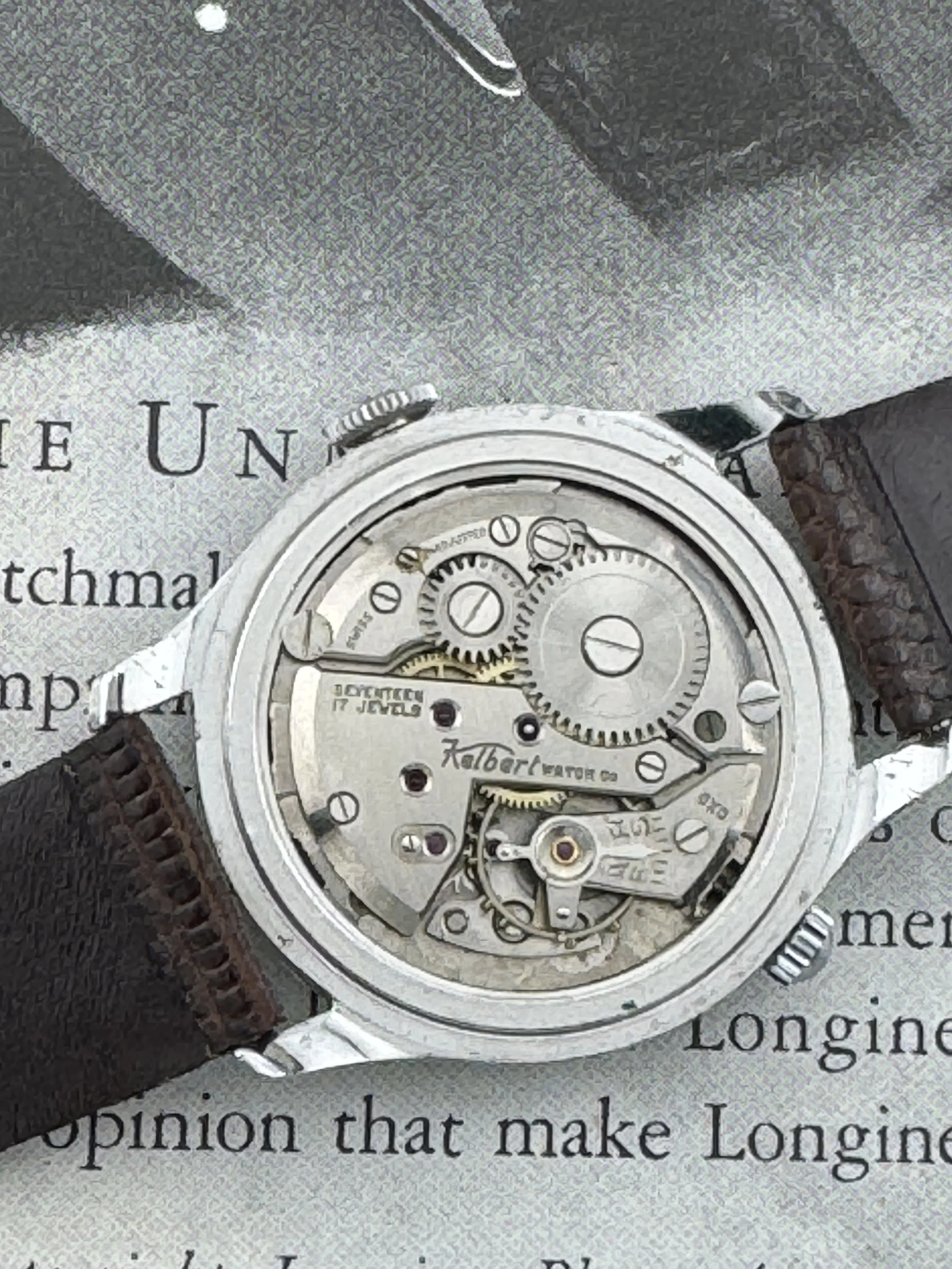
Inside is a 17-jewel Swiss manual-wind movement, built to deliver reliable everyday performance. The movement is marked antimagnetic, a desirable feature in the mid-20th century when watches were increasingly exposed to magnetic fields from radios, appliances, and industrial environments. This added protection helped maintain accuracy and longevity, an important selling point at the time.
Kelbert was one of many smaller Swiss brands operating during the golden age of Swiss watchmaking. Brands like Kelbert often focused on value, pairing solid Swiss movements with functional designs and useful complications. While they may not have had the global marketing reach of larger houses, they produced well-made watches that were intended to be worn daily and trusted for years.
Calendar watches like this were prized for their practicality, and the twin-crown system adds both visual interest and mechanical character. Today, that combination makes pieces like this especially appealing to collectors who enjoy vintage watches with real functionality and a bit of technical flair.
With its distinctive twin-crown design, antimagnetic 17-jewel movement, and classic Swiss calendar complication, this Kelbert offers excellent vintage character and everyday usability, a thoughtful, well-engineered watch from a fascinating period in horological history.
This vintage Kelbert twin-crown calendar watch is a wonderful example of mid-century Swiss ingenuity, combining practical complications with clean, purposeful design. The twin-crown layout immediately sets it apart, giving the watch a distinctive, tool-like presence on the wrist while also serving an important functional role.
One crown is used for winding and setting the time, while the second crown independently adjusts the calendar function. This setup was commonly used before the widespread adoption of quick-set date mechanisms, allowing the date to be advanced safely and precisely without disturbing the timekeeping. It’s a charming and mechanically honest solution that highlights the thoughtful engineering of the era.
Inside is a 17-jewel Swiss manual-wind movement, built to deliver reliable everyday performance. The movement is marked antimagnetic, a desirable feature in the mid-20th century when watches were increasingly exposed to magnetic fields from radios, appliances, and industrial environments. This added protection helped maintain accuracy and longevity, an important selling point at the time.
Kelbert was one of many smaller Swiss brands operating during the golden age of Swiss watchmaking. Brands like Kelbert often focused on value, pairing solid Swiss movements with functional designs and useful complications. While they may not have had the global marketing reach of larger houses, they produced well-made watches that were intended to be worn daily and trusted for years.
Calendar watches like this were prized for their practicality, and the twin-crown system adds both visual interest and mechanical character. Today, that combination makes pieces like this especially appealing to collectors who enjoy vintage watches with real functionality and a bit of technical flair.
With its distinctive twin-crown design, antimagnetic 17-jewel movement, and classic Swiss calendar complication, this Kelbert offers excellent vintage character and everyday usability, a thoughtful, well-engineered watch from a fascinating period in horological history.