

Kingston | Clarion-Style Alarm Watch | Steel Case | Circa 1950s–1960s
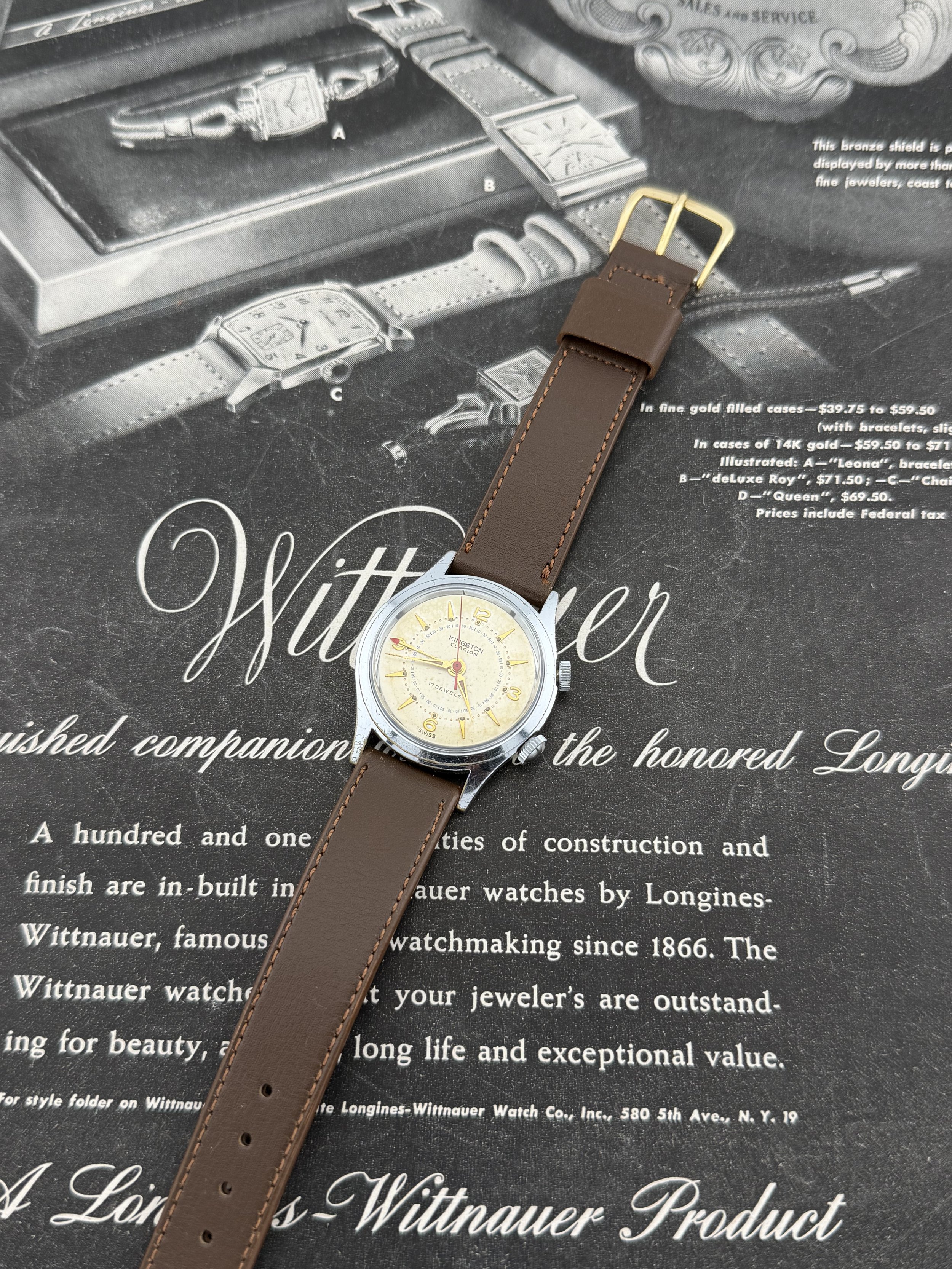
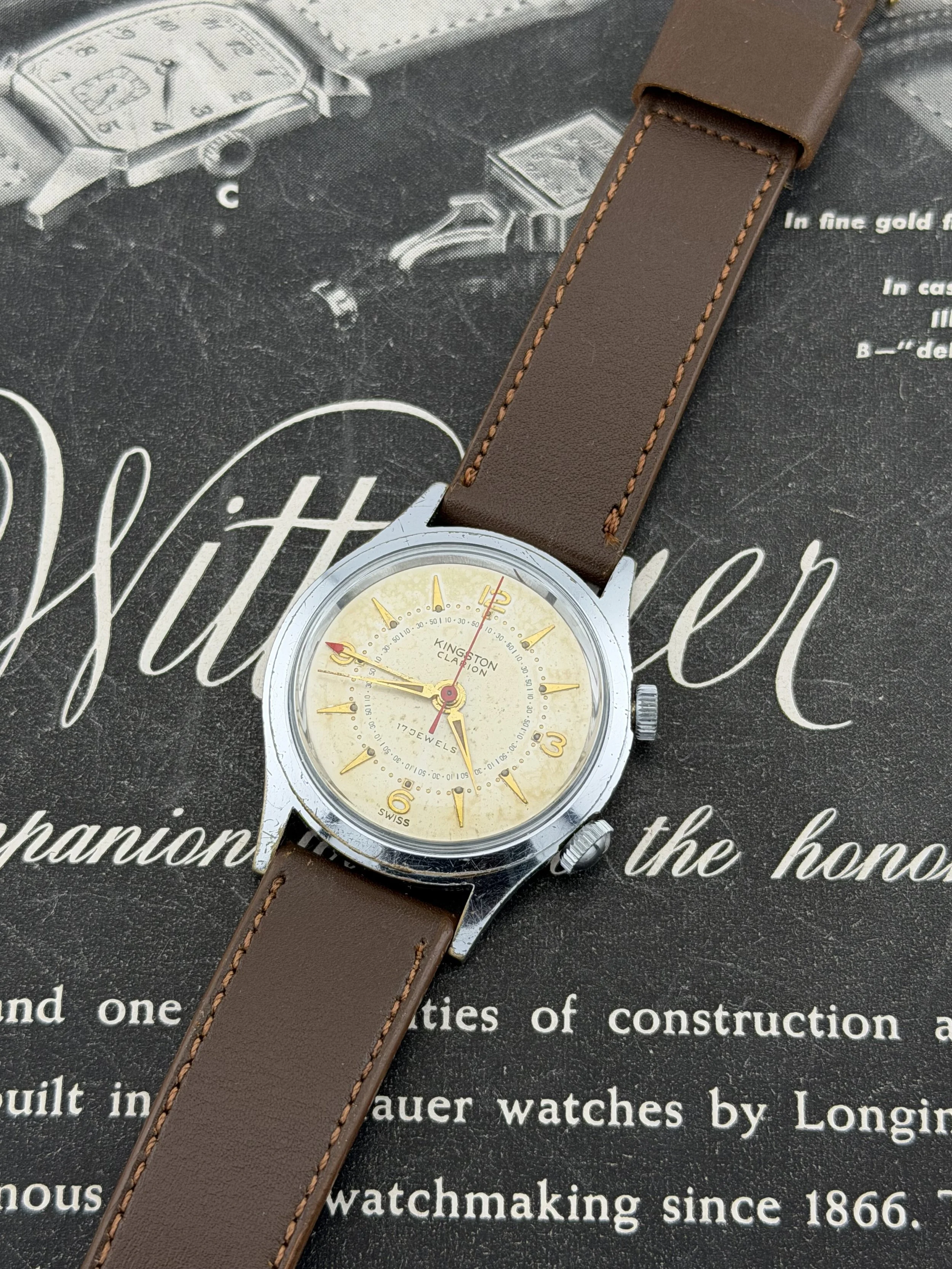
This wonderfully unusual Kingston alarm watch is a fascinating example of one of the most entertaining complications in vintage watchmaking. With its steel case, dramatic red alarm hand, red seconds hand, applied indices, and distinctive blue inner alarm track, it is a watch that combines classic mid-century design with a genuinely useful mechanical function.
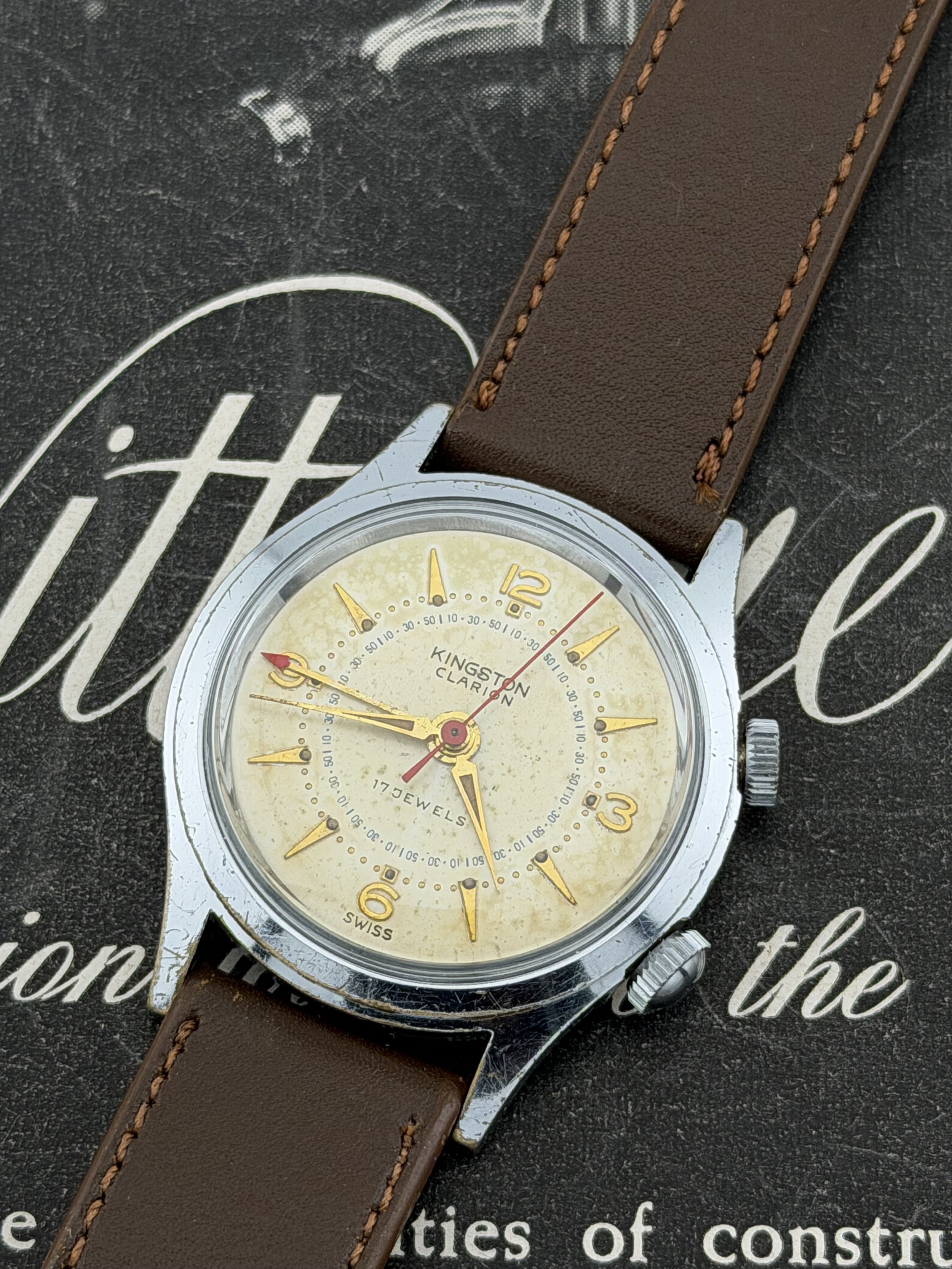
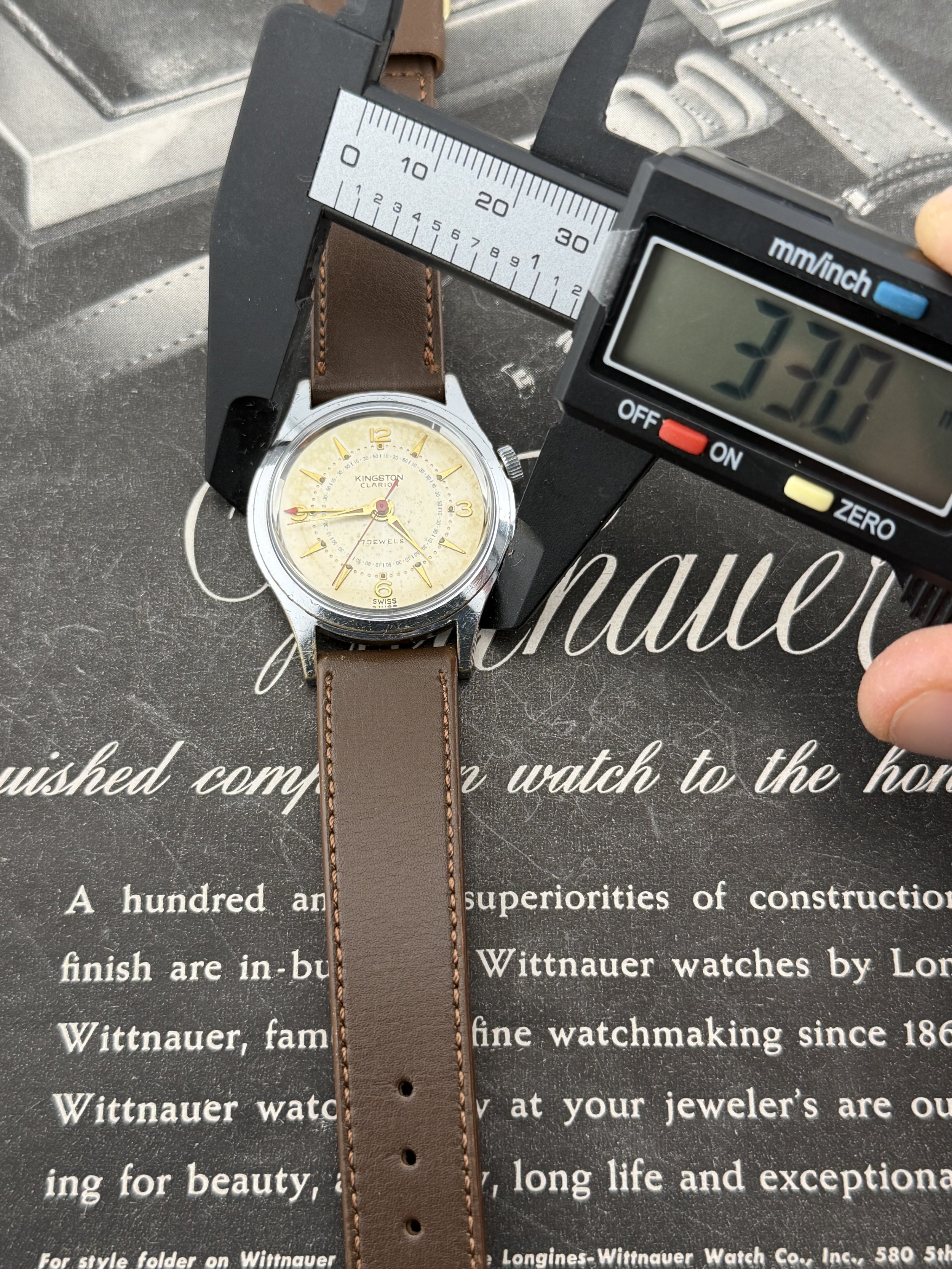
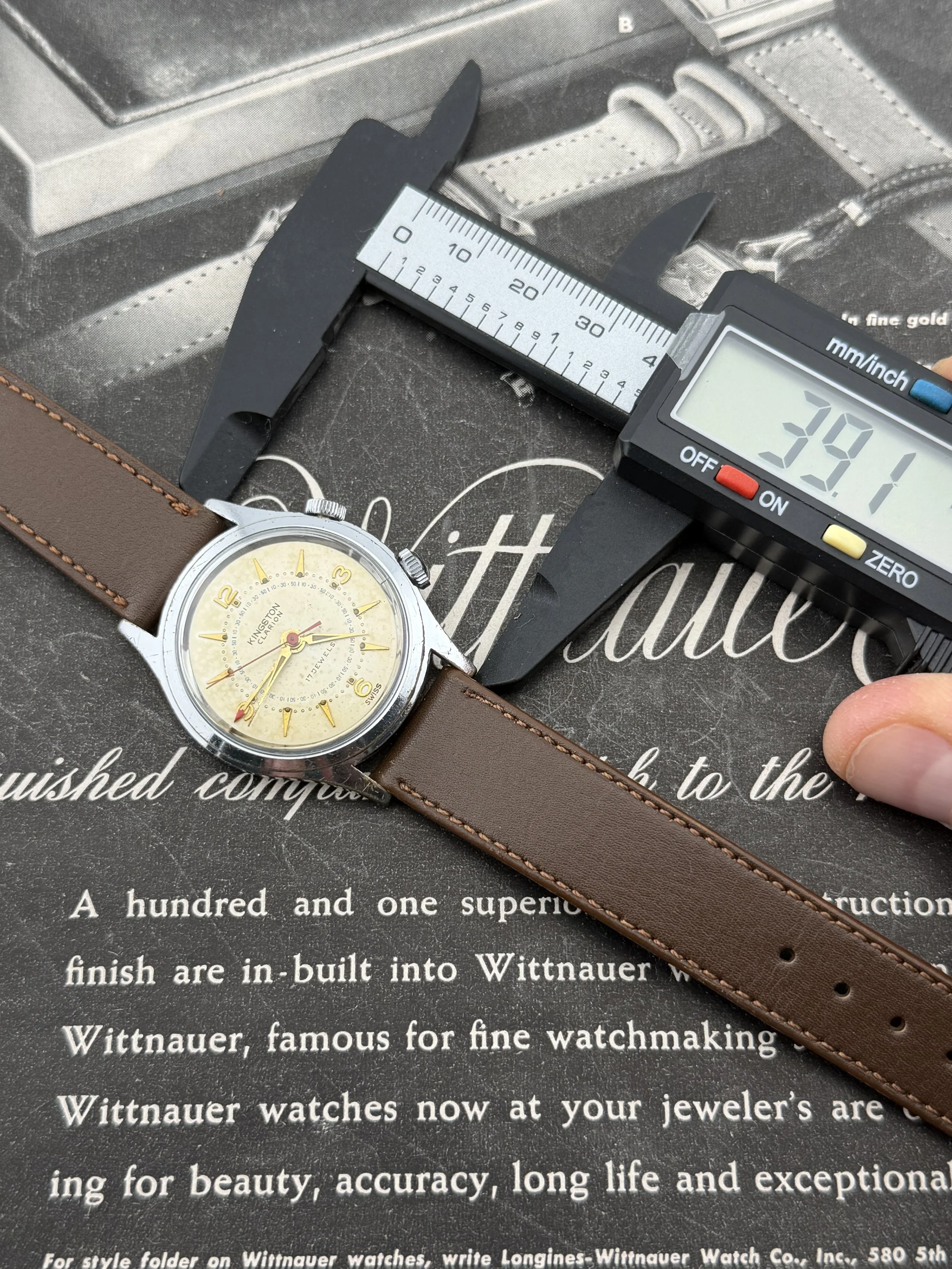
The dial is immediately striking. The applied indices give the watch a strong three-dimensional quality, catching the light and adding depth to the otherwise clean design. The contrasting red hands provide an instant visual distinction between the watch's two separate functions, while the blue inner alarm track gives the dial a second layer of information without making it feel overly complicated.
The red alarm hand is the defining feature. Unlike a conventional watch, this hand is used to set the time at which the mechanical alarm will sound. By rotating the alarm hand to the desired time, the wearer could set the watch to provide an audible reminder—a beautifully simple idea made possible entirely through mechanical engineering.
The red seconds hand serves as an effective visual counterpart, creating a deliberate relationship between the two red hands while allowing the wearer to distinguish the alarm-setting function from the regular timekeeping function. The result is a dial that is not only attractive but genuinely purposeful.
The blue inner alarm track is another particularly charming detail. It provides the numerical scale used to read and set the alarm, giving the dial a second time scale within the main time display. This layered arrangement is one of the visual signatures of vintage alarm watches and gives the watch an unmistakable mid-century character.
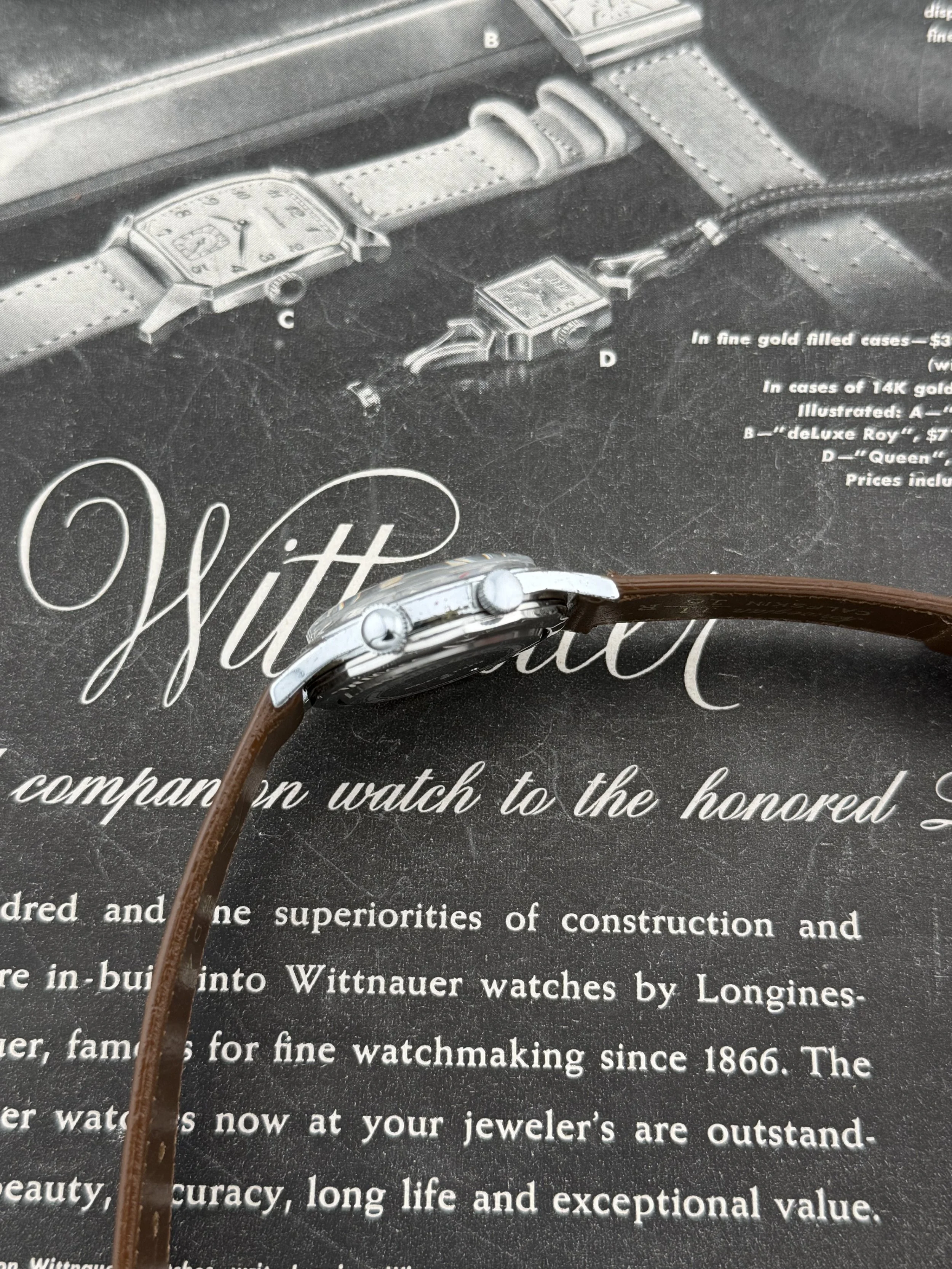
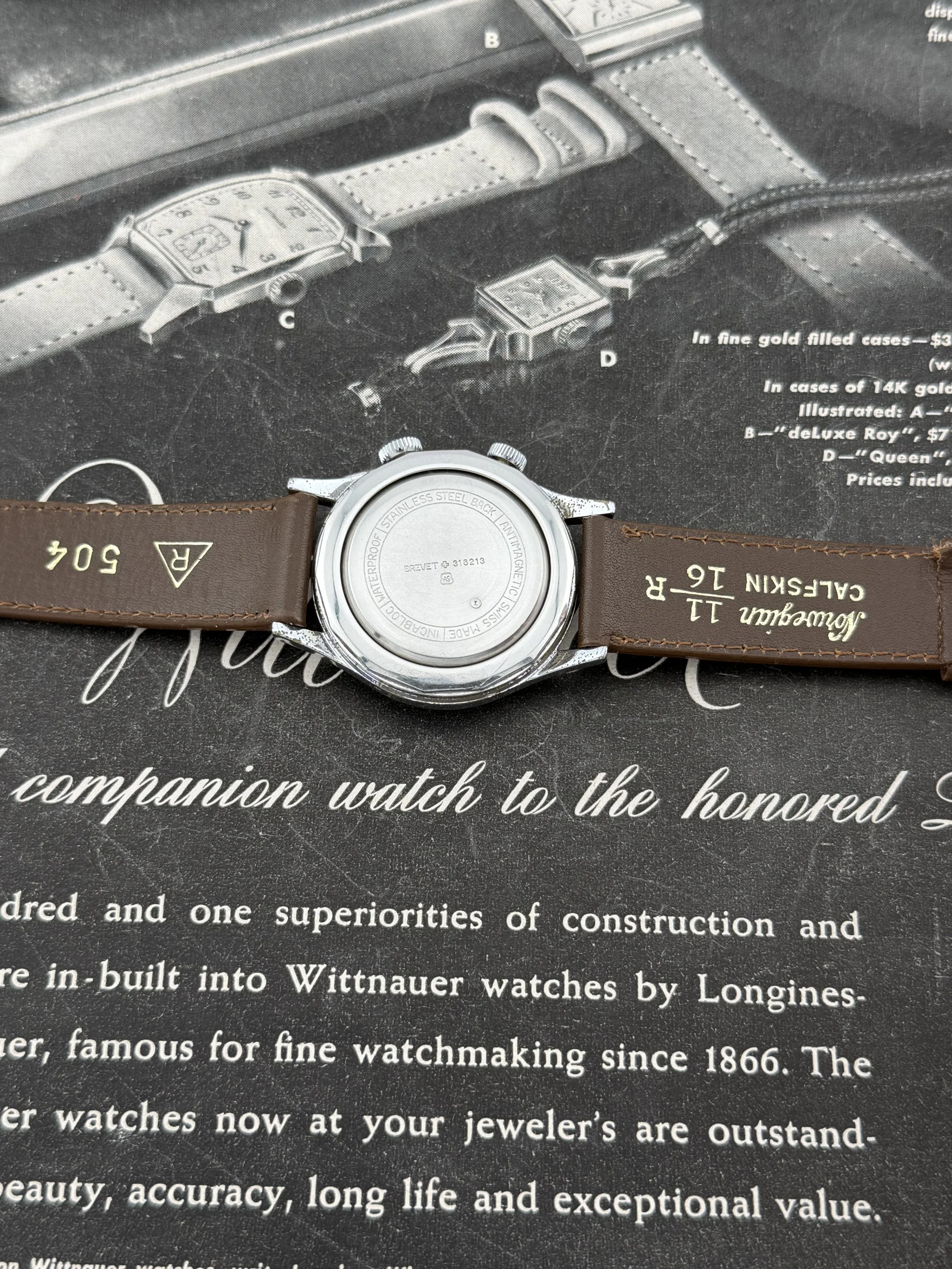
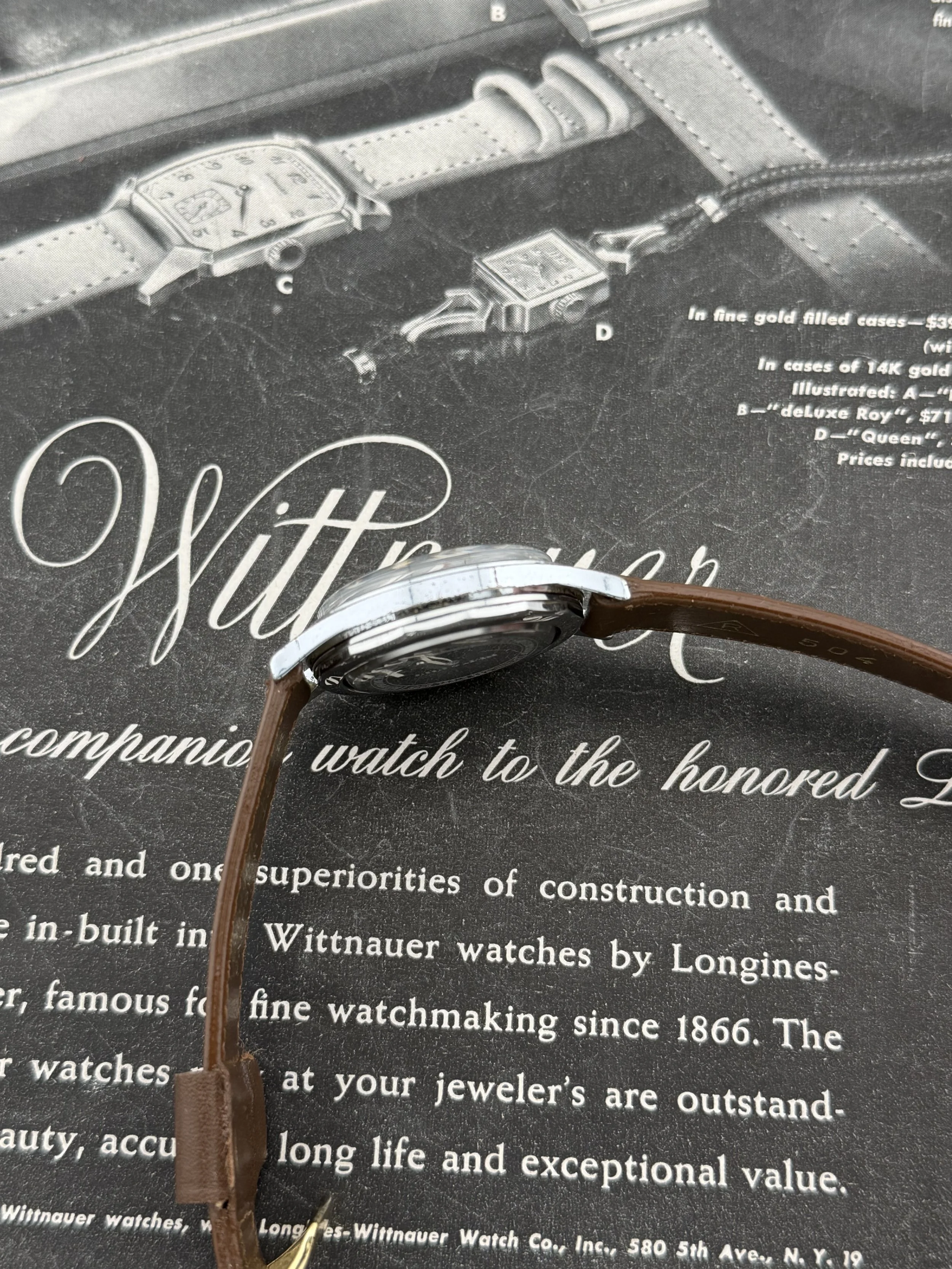
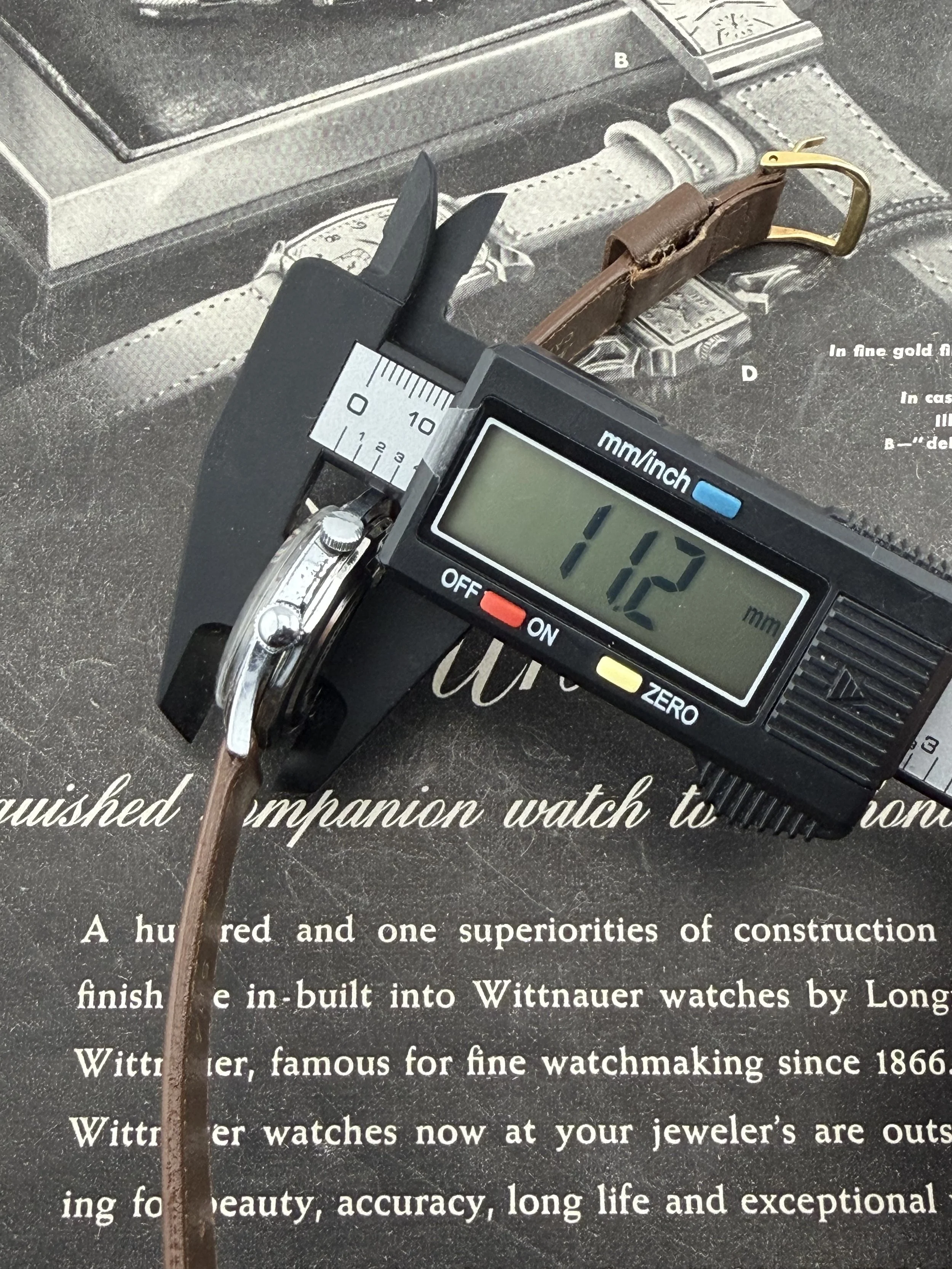
The steel case adds to the watch's practical nature. Unlike a purely decorative dress watch, this is an instrument designed around a function. The case is sturdy, wearable, and perfectly suited to the idea of a mechanical alarm watch as an everyday companion.
The alarm watch is truly a fascinating piece of horological history. Before electronic alarms, quartz watches, smartphones, and digital reminders, a mechanical watch could provide its owner with an audible alert using nothing more than springs, gears, and a tiny hammer mechanism.
That is what makes these watches so captivating. The alarm function is completely mechanical. A separate mainspring is wound to store the energy required to power the alarm, and when the appointed time arrives, the mechanism releases that energy to create a ringing or buzzing sound. It is a wonderfully tangible complication—one that allows the wearer to hear the mechanical movement at work.
During the mid-twentieth century, mechanical alarm watches became increasingly popular as practical personal tools. They could be used as reminders for appointments, wake-up calls, travel, cooking, work, or any other moment when a person needed a discreet mechanical alert. In an age before electronic devices were everywhere, this was an incredibly useful feature.
Today, the mechanical alarm watch has almost entirely disappeared from everyday life. Smartphones have made alarms essentially effortless, while quartz and digital technology have replaced most of the mechanical alarm watches that once occupied the wrists and bedside tables of millions of people.
That makes vintage alarm watches particularly special. They represent a fascinating moment in the history of technology, when mechanical ingenuity was used to solve problems that we now take for granted. The function is simple, but the engineering required to make it work inside a wristwatch is genuinely impressive.
The Kingston's design has a wonderful Clarion-style character, with its bold alarm markings, contrasting colours, and clear separation between the regular timekeeping display and the alarm function. The combination of red, blue, and metallic tones gives the watch a strong visual identity that is both practical and highly collectible.
What makes this watch especially appealing is that the complication is not hidden. The alarm function is immediately visible on the dial. The red alarm hand and blue inner track tell the story of the watch before it is even opened, while the separate alarm mechanism gives the watch a completely different personality from a conventional mechanical timepiece.
This is a wonderful example of a lost form of watchmaking. The mechanical alarm watch was once a practical piece of everyday technology, but today it has become a fascinating reminder of a time when even the simplest daily reminder required a beautifully engineered mechanical solution.
For collectors who appreciate unusual complications, mid-century design, and watches with genuine mechanical personality, this Kingston is an exceptionally fun piece. A steel case, dramatic applied indices, red alarm and seconds hands, a blue alarm track, and a mechanical alarm function combine to create a vintage watch that is not only stylish but genuinely fascinating.
A wonderfully unusual survivor from the age of mechanical ingenuity—and a reminder that, once upon a time, your watch could actually wake you up.
This wonderfully unusual Kingston alarm watch is a fascinating example of one of the most entertaining complications in vintage watchmaking. With its steel case, dramatic red alarm hand, red seconds hand, applied indices, and distinctive blue inner alarm track, it is a watch that combines classic mid-century design with a genuinely useful mechanical function.
The dial is immediately striking. The applied indices give the watch a strong three-dimensional quality, catching the light and adding depth to the otherwise clean design. The contrasting red hands provide an instant visual distinction between the watch's two separate functions, while the blue inner alarm track gives the dial a second layer of information without making it feel overly complicated.
The red alarm hand is the defining feature. Unlike a conventional watch, this hand is used to set the time at which the mechanical alarm will sound. By rotating the alarm hand to the desired time, the wearer could set the watch to provide an audible reminder—a beautifully simple idea made possible entirely through mechanical engineering.
The red seconds hand serves as an effective visual counterpart, creating a deliberate relationship between the two red hands while allowing the wearer to distinguish the alarm-setting function from the regular timekeeping function. The result is a dial that is not only attractive but genuinely purposeful.
The blue inner alarm track is another particularly charming detail. It provides the numerical scale used to read and set the alarm, giving the dial a second time scale within the main time display. This layered arrangement is one of the visual signatures of vintage alarm watches and gives the watch an unmistakable mid-century character.
The steel case adds to the watch's practical nature. Unlike a purely decorative dress watch, this is an instrument designed around a function. The case is sturdy, wearable, and perfectly suited to the idea of a mechanical alarm watch as an everyday companion.
The alarm watch is truly a fascinating piece of horological history. Before electronic alarms, quartz watches, smartphones, and digital reminders, a mechanical watch could provide its owner with an audible alert using nothing more than springs, gears, and a tiny hammer mechanism.
That is what makes these watches so captivating. The alarm function is completely mechanical. A separate mainspring is wound to store the energy required to power the alarm, and when the appointed time arrives, the mechanism releases that energy to create a ringing or buzzing sound. It is a wonderfully tangible complication—one that allows the wearer to hear the mechanical movement at work.
During the mid-twentieth century, mechanical alarm watches became increasingly popular as practical personal tools. They could be used as reminders for appointments, wake-up calls, travel, cooking, work, or any other moment when a person needed a discreet mechanical alert. In an age before electronic devices were everywhere, this was an incredibly useful feature.
Today, the mechanical alarm watch has almost entirely disappeared from everyday life. Smartphones have made alarms essentially effortless, while quartz and digital technology have replaced most of the mechanical alarm watches that once occupied the wrists and bedside tables of millions of people.
That makes vintage alarm watches particularly special. They represent a fascinating moment in the history of technology, when mechanical ingenuity was used to solve problems that we now take for granted. The function is simple, but the engineering required to make it work inside a wristwatch is genuinely impressive.
The Kingston's design has a wonderful Clarion-style character, with its bold alarm markings, contrasting colours, and clear separation between the regular timekeeping display and the alarm function. The combination of red, blue, and metallic tones gives the watch a strong visual identity that is both practical and highly collectible.
What makes this watch especially appealing is that the complication is not hidden. The alarm function is immediately visible on the dial. The red alarm hand and blue inner track tell the story of the watch before it is even opened, while the separate alarm mechanism gives the watch a completely different personality from a conventional mechanical timepiece.
This is a wonderful example of a lost form of watchmaking. The mechanical alarm watch was once a practical piece of everyday technology, but today it has become a fascinating reminder of a time when even the simplest daily reminder required a beautifully engineered mechanical solution.
For collectors who appreciate unusual complications, mid-century design, and watches with genuine mechanical personality, this Kingston is an exceptionally fun piece. A steel case, dramatic applied indices, red alarm and seconds hands, a blue alarm track, and a mechanical alarm function combine to create a vintage watch that is not only stylish but genuinely fascinating.
A wonderfully unusual survivor from the age of mechanical ingenuity—and a reminder that, once upon a time, your watch could actually wake you up.