

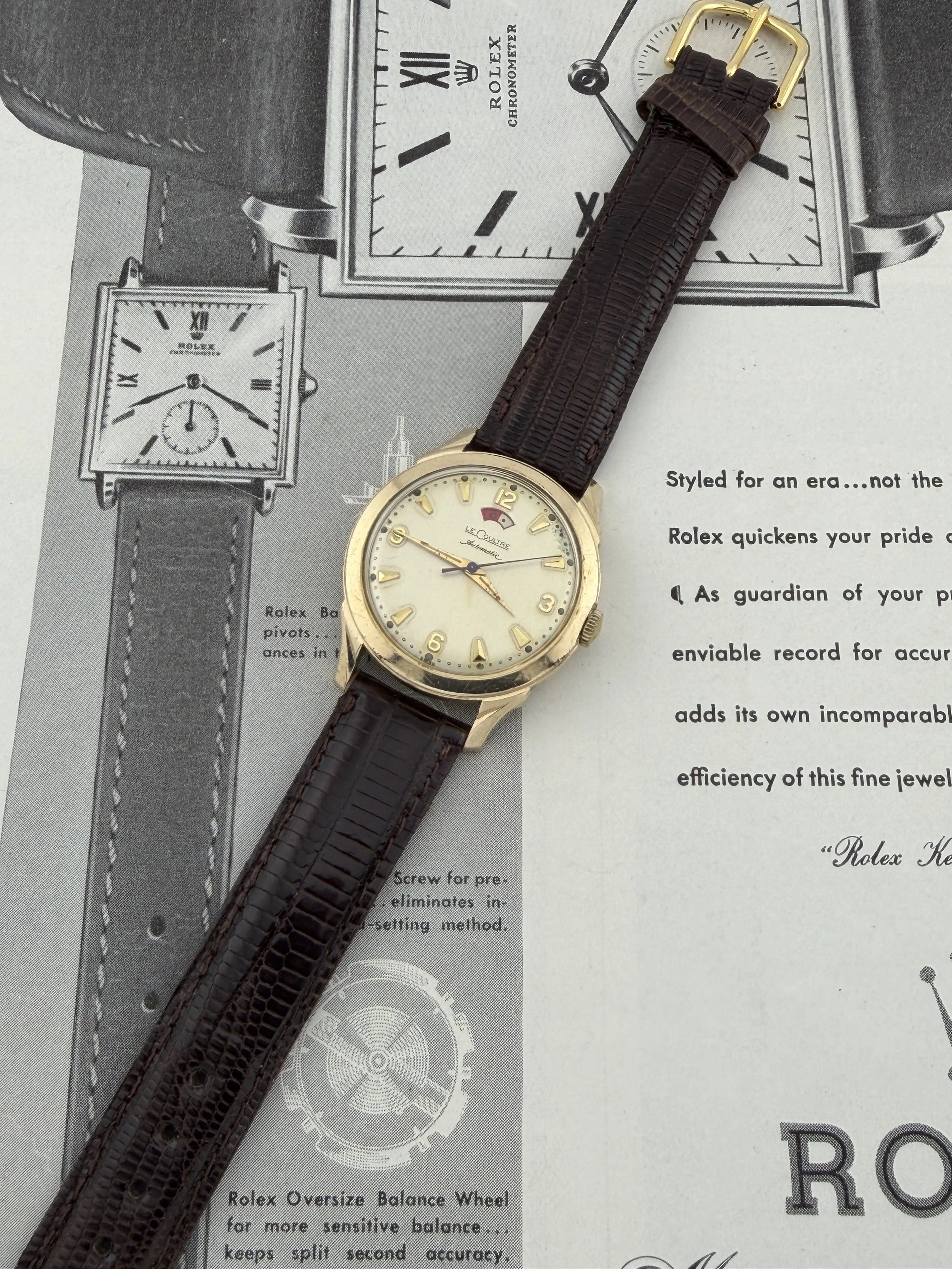
This vintage LeCoultre Powermatic is a fascinating example of postwar Swiss innovation, combining early automatic winding technology with one of the most useful complications of the era: a power reserve indicator. Produced during the 1950s and sold in North America under the LeCoultre name, this watch showcases the technical ingenuity that helped establish Jaeger-LeCoultre as one of the most respected manufacturers in the history of horology.
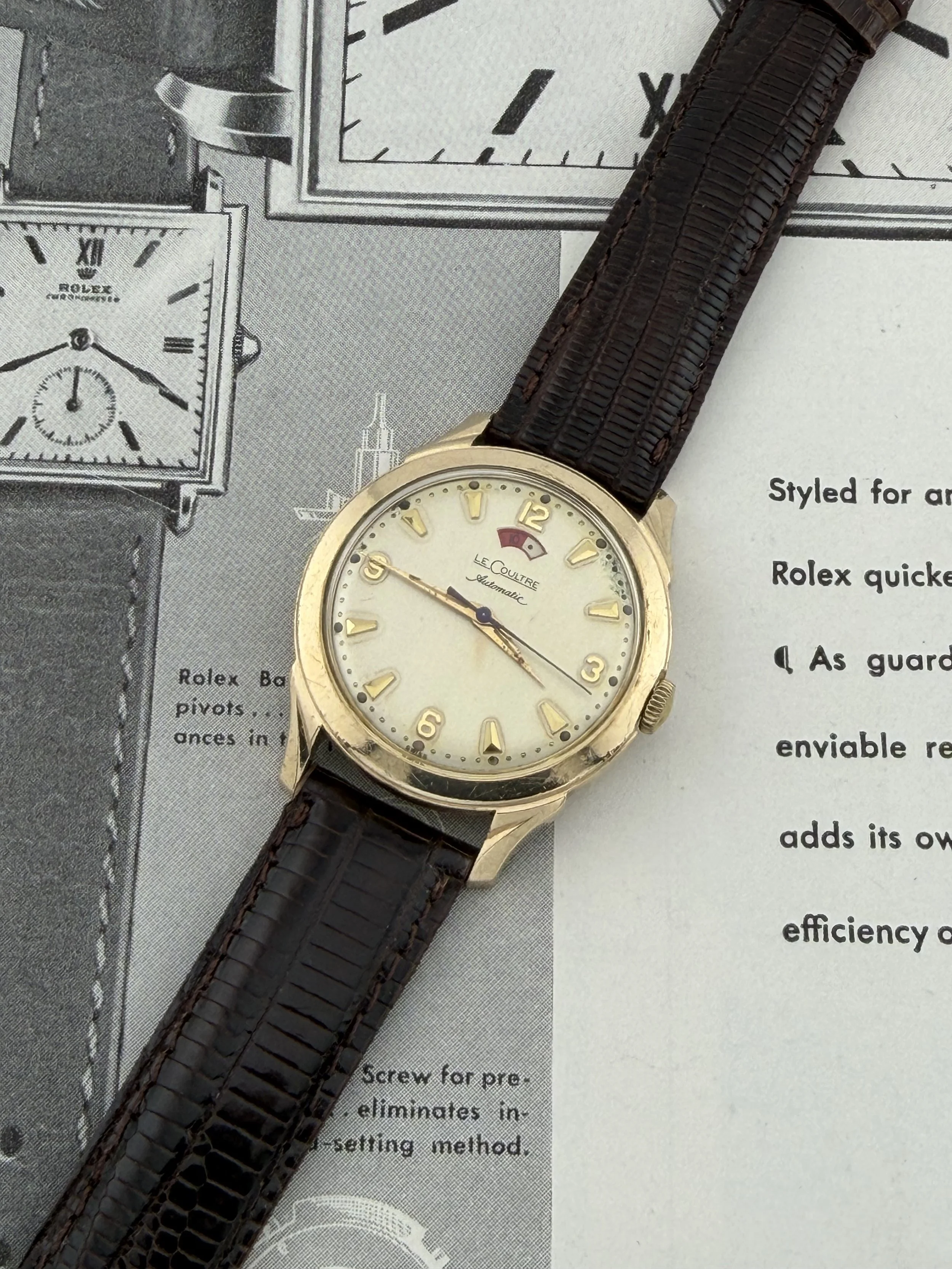
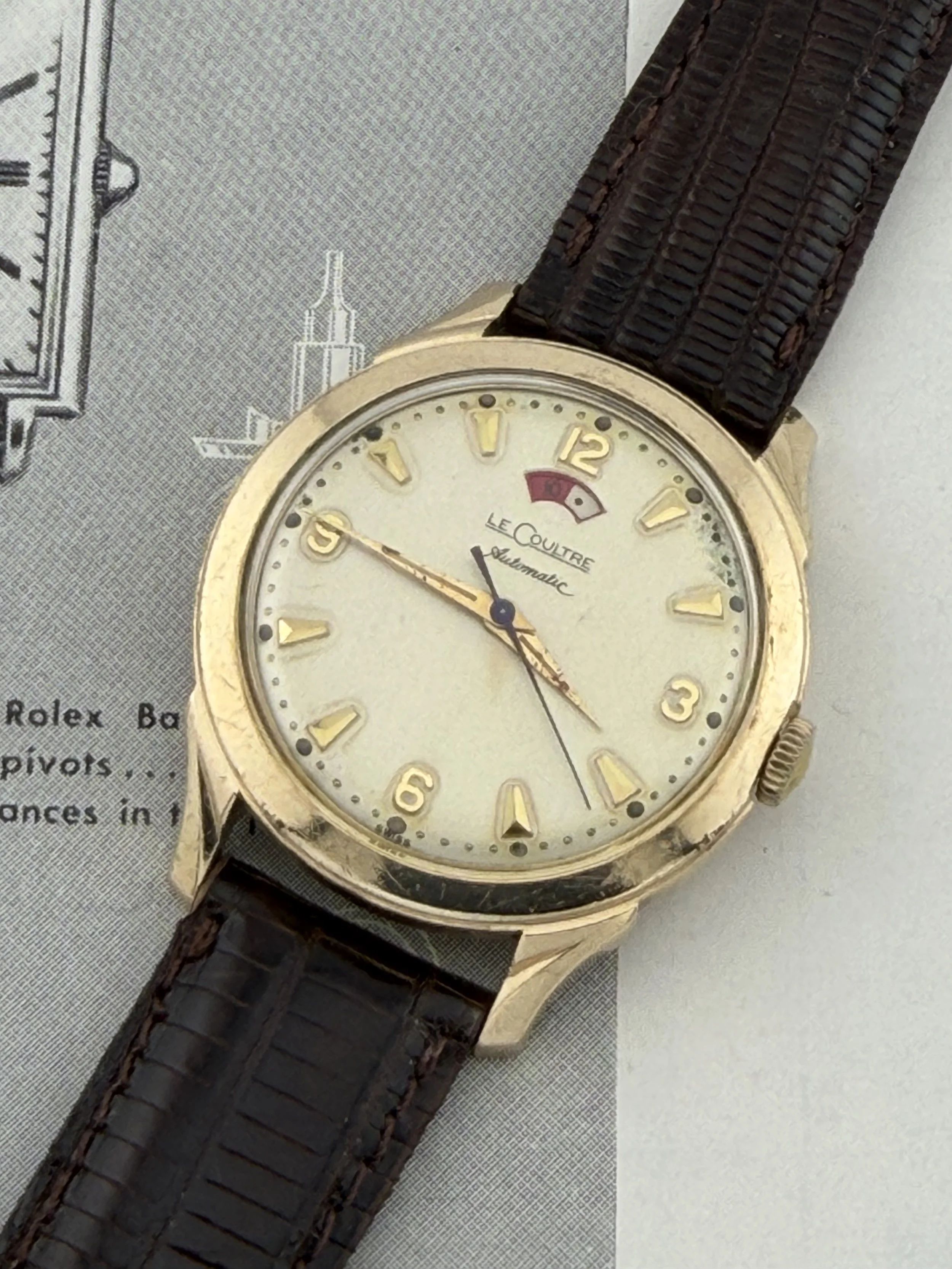
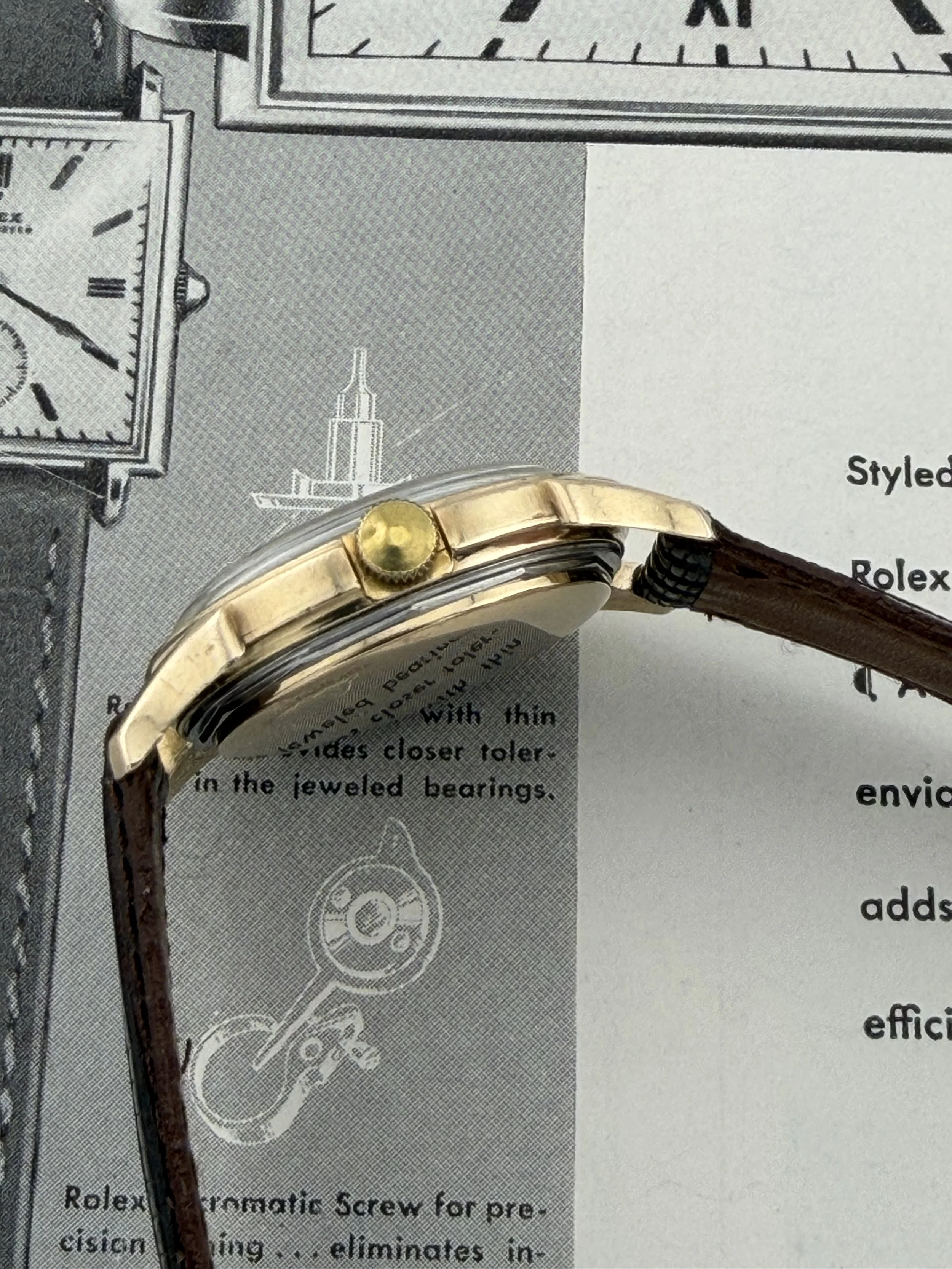
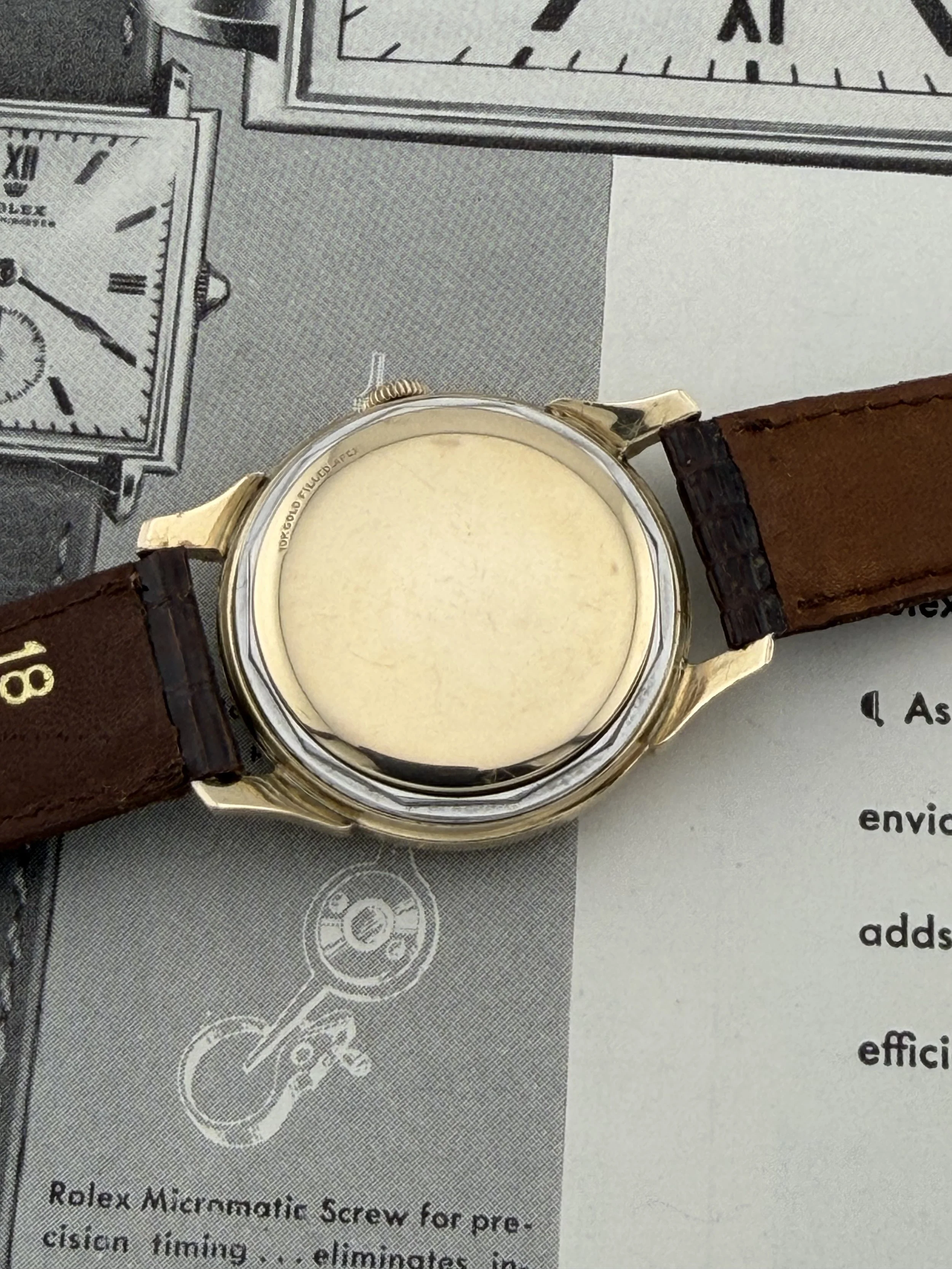
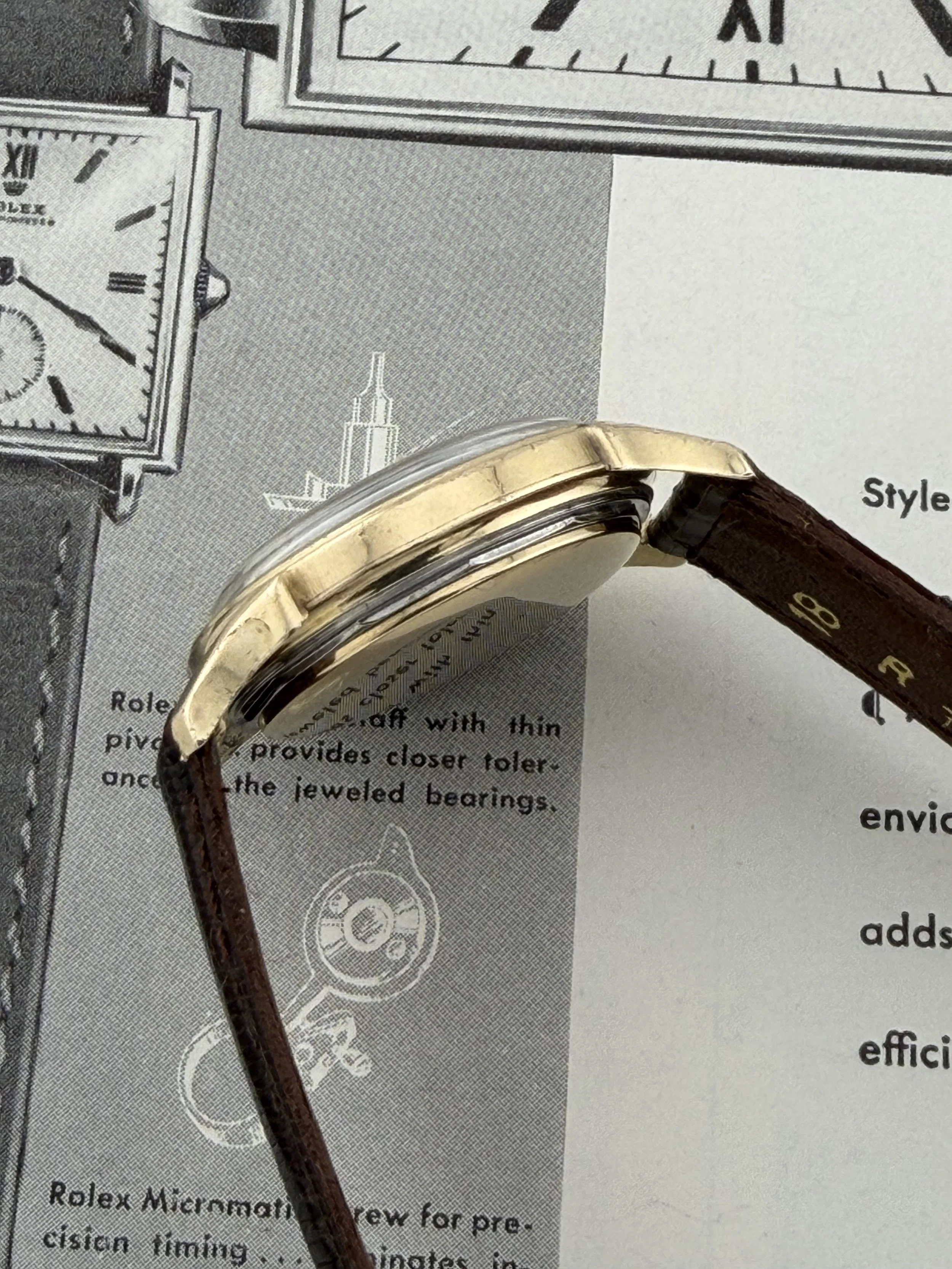
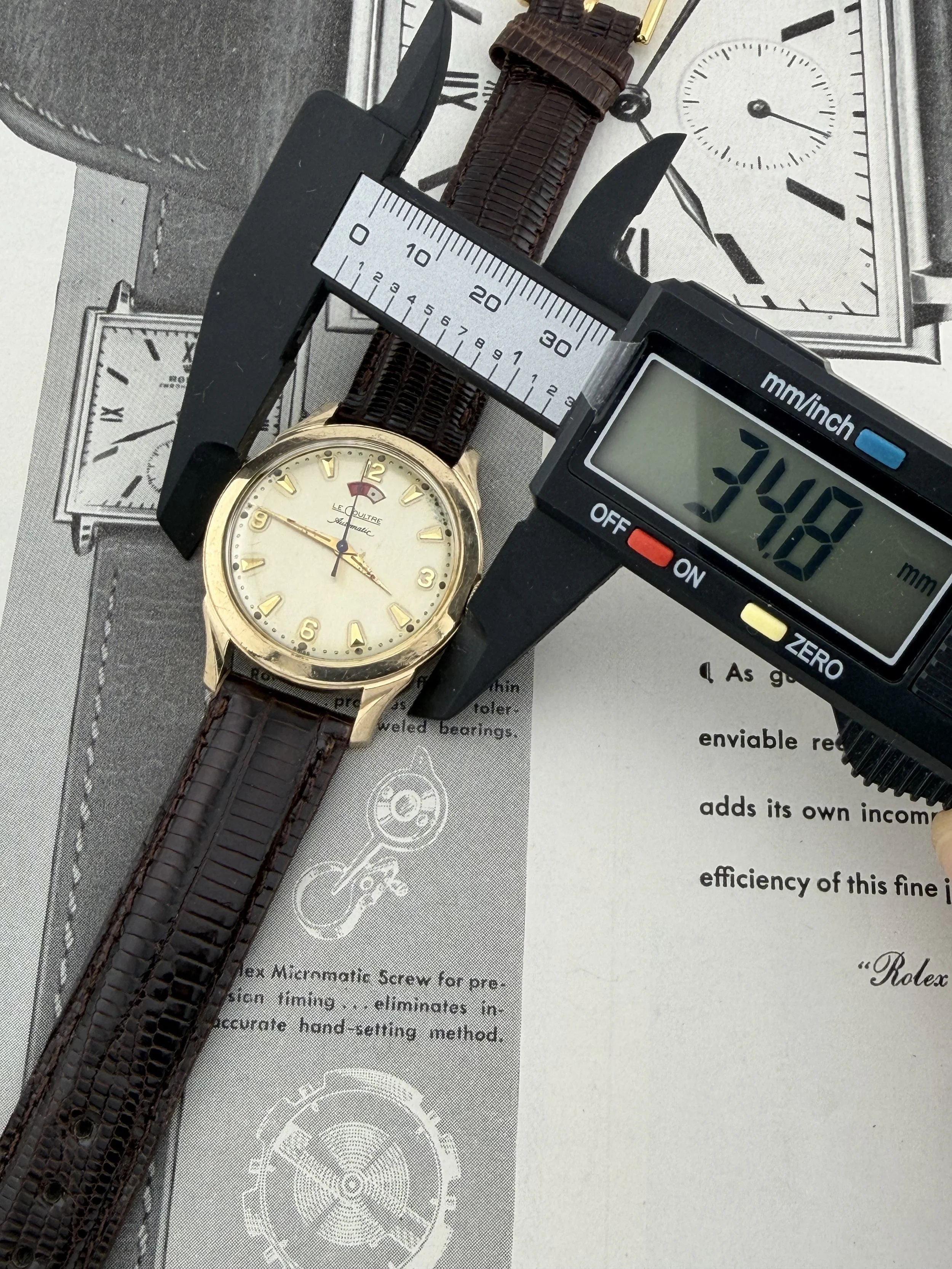
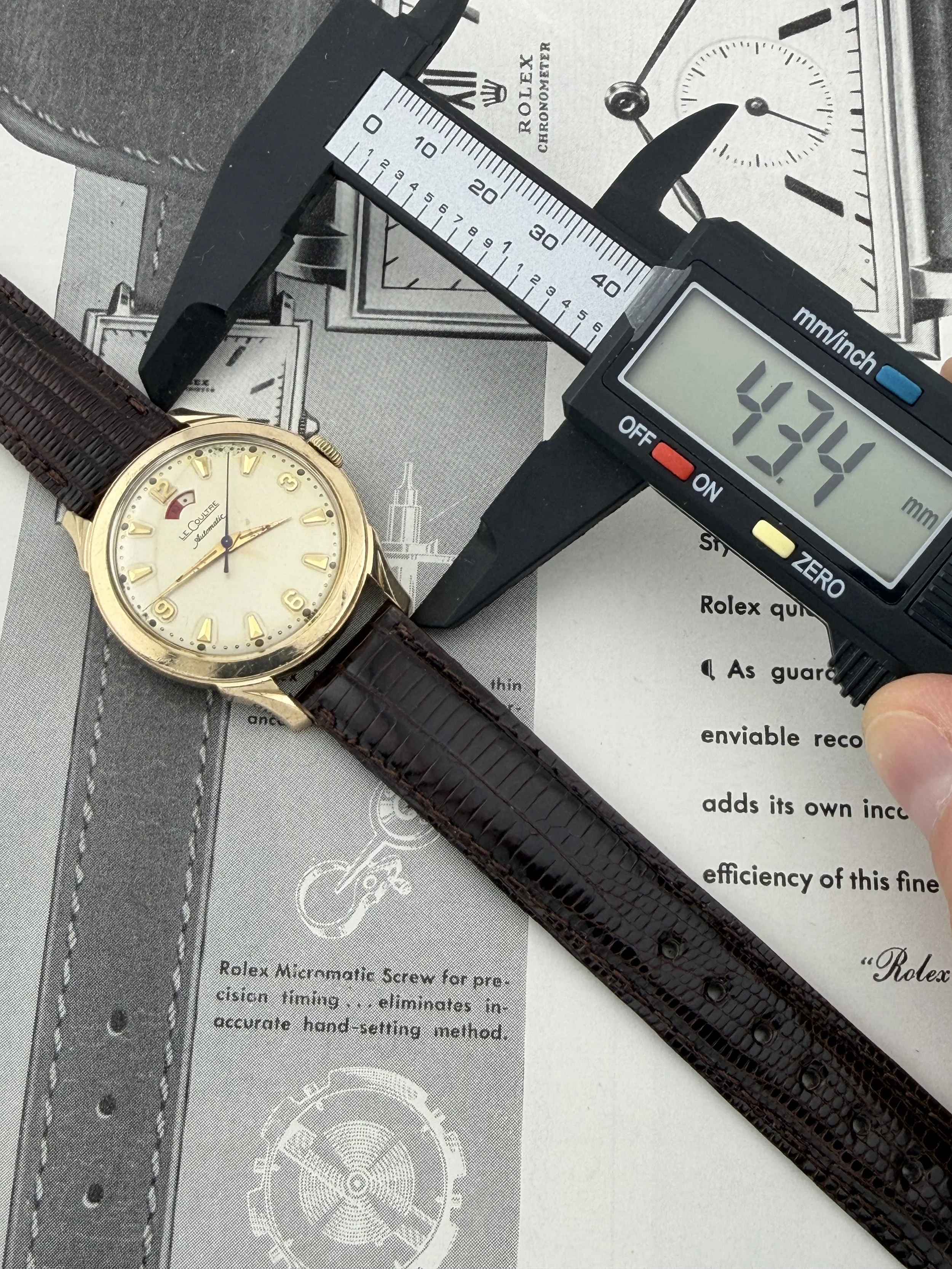
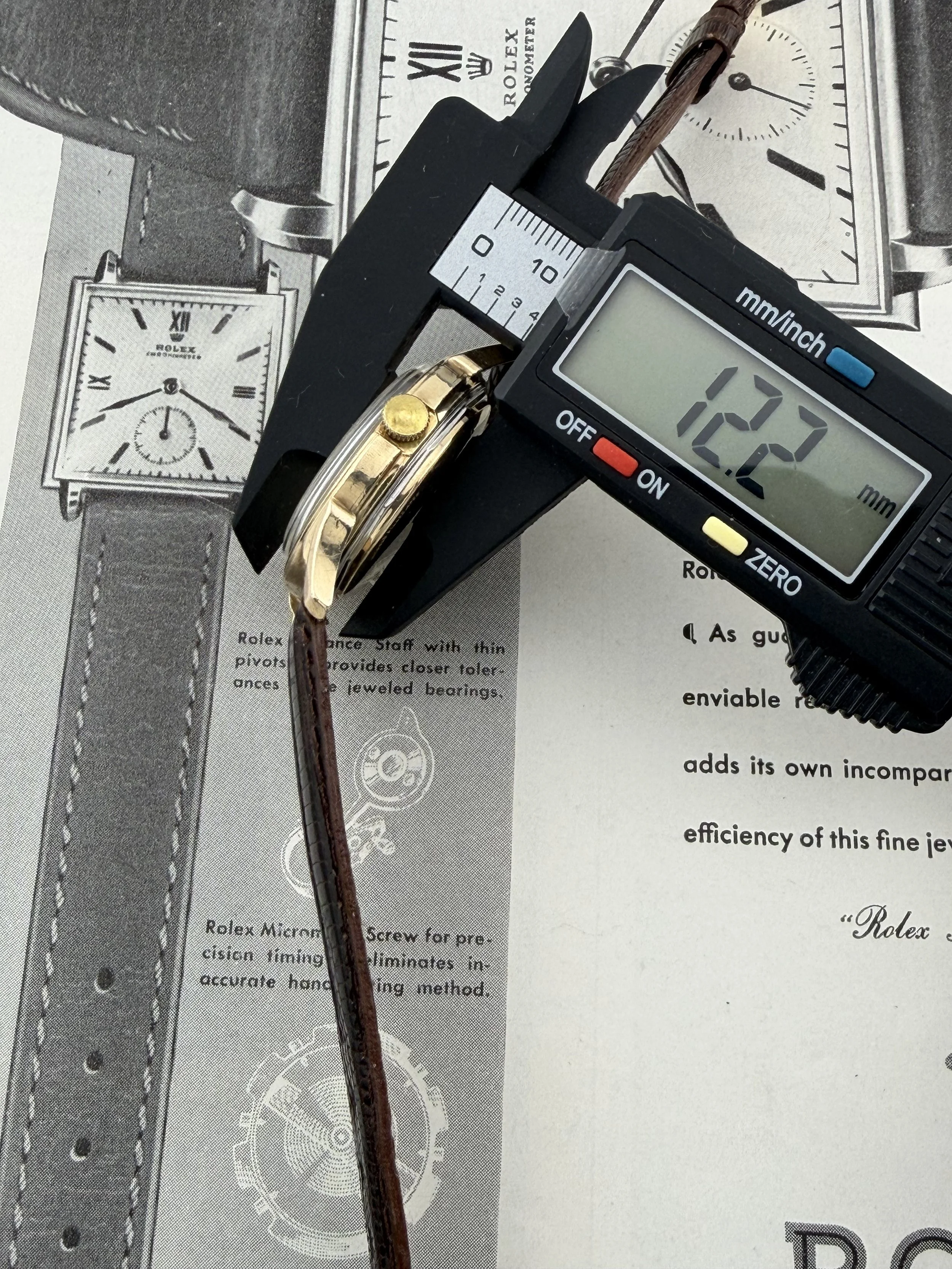
The watch is housed in an attractive 10k gold-filled case measuring approximately 34mm in diameter, a classic size for the period that wears elegantly while remaining true to its mid-century origins. The warm champagne-colored dial features applied gold-tone Arabic numerals and baton hour markers, complemented by elegant dauphine hands and a beautifully balanced layout.
Most distinctive is the power reserve display positioned beneath 12 o'clock, highlighted by a red sector that visually indicates the amount of energy stored in the mainspring. While commonplace on some modern luxury watches, a power reserve indicator was a sophisticated and relatively uncommon feature during the 1950s, adding both functionality and visual interest to the watch. It allowed the wearer to monitor the remaining running time of the movement, making it one of the most practical complications available during the era.
Powering the watch is the LeCoultre Caliber 481 automatic movement, an early "bumper" automatic design and one of the most important stages in the evolution of self-winding watches. Unlike modern automatic movements that utilize a rotor capable of rotating a full 360 degrees, bumper automatics employ a weighted rotor that swings through a limited arc before gently contacting spring buffers at either end of its travel. Wearers can often feel this unique motion on the wrist, providing a direct connection to the mechanical operation occurring inside the watch.
Jaeger-LeCoultre was among the pioneers of automatic watch technology during the late 1940s and 1950s, producing highly refined movements that balanced reliability, efficiency, and technical sophistication. The addition of a power reserve mechanism made watches such as this significantly more complex than standard time-only models, reflecting the company's reputation for innovation and mechanical excellence.
Founded in 1833 in Switzerland's Vallée de Joux, Jaeger-LeCoultre earned the nickname "the watchmaker's watchmaker" through its development of exceptional movements and complications. Throughout the twentieth century, the company supplied movements to many of the world's most prestigious watch brands while simultaneously producing its own highly respected timepieces. Vintage LeCoultre watches from this period offer collectors direct access to that remarkable heritage.
The case displays honest wear consistent with age and use, while the dial has developed attractive patina that reinforces its originality and vintage character. The watch is fitted with a newer dark brown leather strap, replacing the original but complementing the warm tones of the case and dial beautifully.
Combining a genuine manufacture movement, early automatic winding technology, and a rarely seen power reserve complication, this LeCoultre Powermatic represents an important chapter in the history of mechanical watchmaking. It is a watch that offers not only beautiful vintage styling, but also a tangible connection to one of the most innovative periods in Swiss horology.
This vintage LeCoultre Powermatic is a fascinating example of postwar Swiss innovation, combining early automatic winding technology with one of the most useful complications of the era: a power reserve indicator. Produced during the 1950s and sold in North America under the LeCoultre name, this watch showcases the technical ingenuity that helped establish Jaeger-LeCoultre as one of the most respected manufacturers in the history of horology.
The watch is housed in an attractive 10k gold-filled case measuring approximately 34mm in diameter, a classic size for the period that wears elegantly while remaining true to its mid-century origins. The warm champagne-colored dial features applied gold-tone Arabic numerals and baton hour markers, complemented by elegant dauphine hands and a beautifully balanced layout.
Most distinctive is the power reserve display positioned beneath 12 o'clock, highlighted by a red sector that visually indicates the amount of energy stored in the mainspring. While commonplace on some modern luxury watches, a power reserve indicator was a sophisticated and relatively uncommon feature during the 1950s, adding both functionality and visual interest to the watch. It allowed the wearer to monitor the remaining running time of the movement, making it one of the most practical complications available during the era.
Powering the watch is the LeCoultre Caliber 481 automatic movement, an early "bumper" automatic design and one of the most important stages in the evolution of self-winding watches. Unlike modern automatic movements that utilize a rotor capable of rotating a full 360 degrees, bumper automatics employ a weighted rotor that swings through a limited arc before gently contacting spring buffers at either end of its travel. Wearers can often feel this unique motion on the wrist, providing a direct connection to the mechanical operation occurring inside the watch.
Jaeger-LeCoultre was among the pioneers of automatic watch technology during the late 1940s and 1950s, producing highly refined movements that balanced reliability, efficiency, and technical sophistication. The addition of a power reserve mechanism made watches such as this significantly more complex than standard time-only models, reflecting the company's reputation for innovation and mechanical excellence.
Founded in 1833 in Switzerland's Vallée de Joux, Jaeger-LeCoultre earned the nickname "the watchmaker's watchmaker" through its development of exceptional movements and complications. Throughout the twentieth century, the company supplied movements to many of the world's most prestigious watch brands while simultaneously producing its own highly respected timepieces. Vintage LeCoultre watches from this period offer collectors direct access to that remarkable heritage.
The case displays honest wear consistent with age and use, while the dial has developed attractive patina that reinforces its originality and vintage character. The watch is fitted with a newer dark brown leather strap, replacing the original but complementing the warm tones of the case and dial beautifully.
Combining a genuine manufacture movement, early automatic winding technology, and a rarely seen power reserve complication, this LeCoultre Powermatic represents an important chapter in the history of mechanical watchmaking. It is a watch that offers not only beautiful vintage styling, but also a tangible connection to one of the most innovative periods in Swiss horology.