

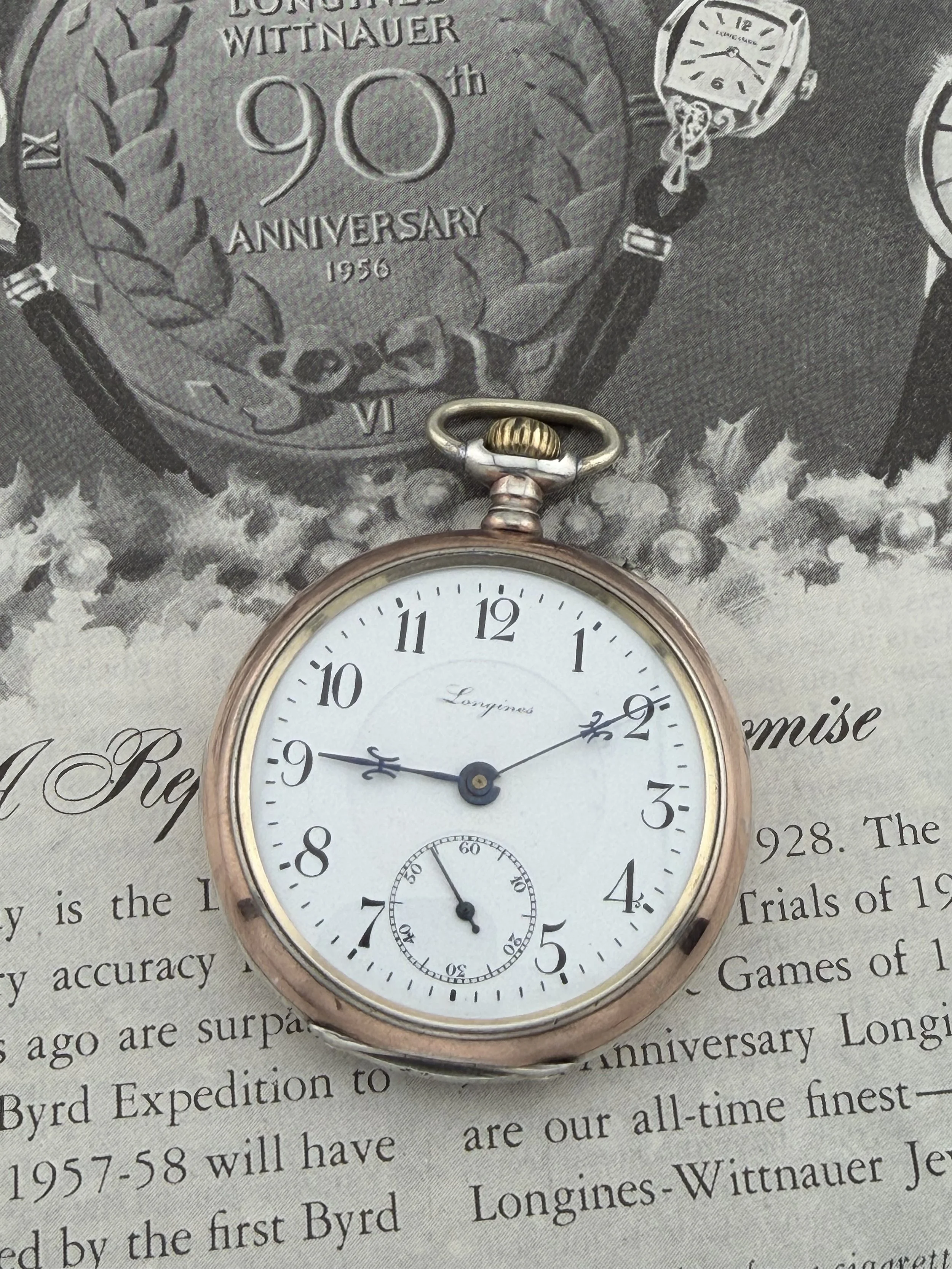
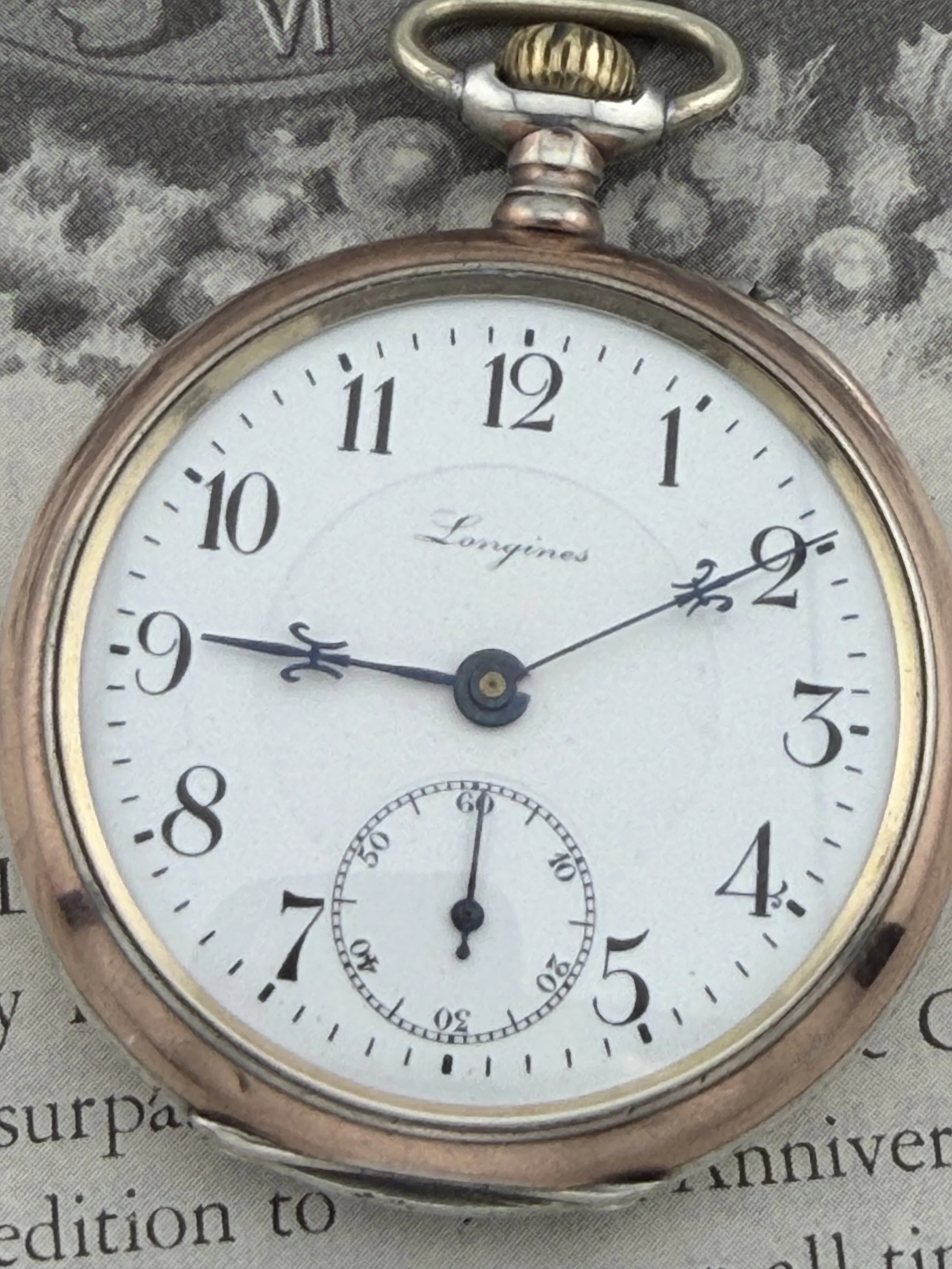
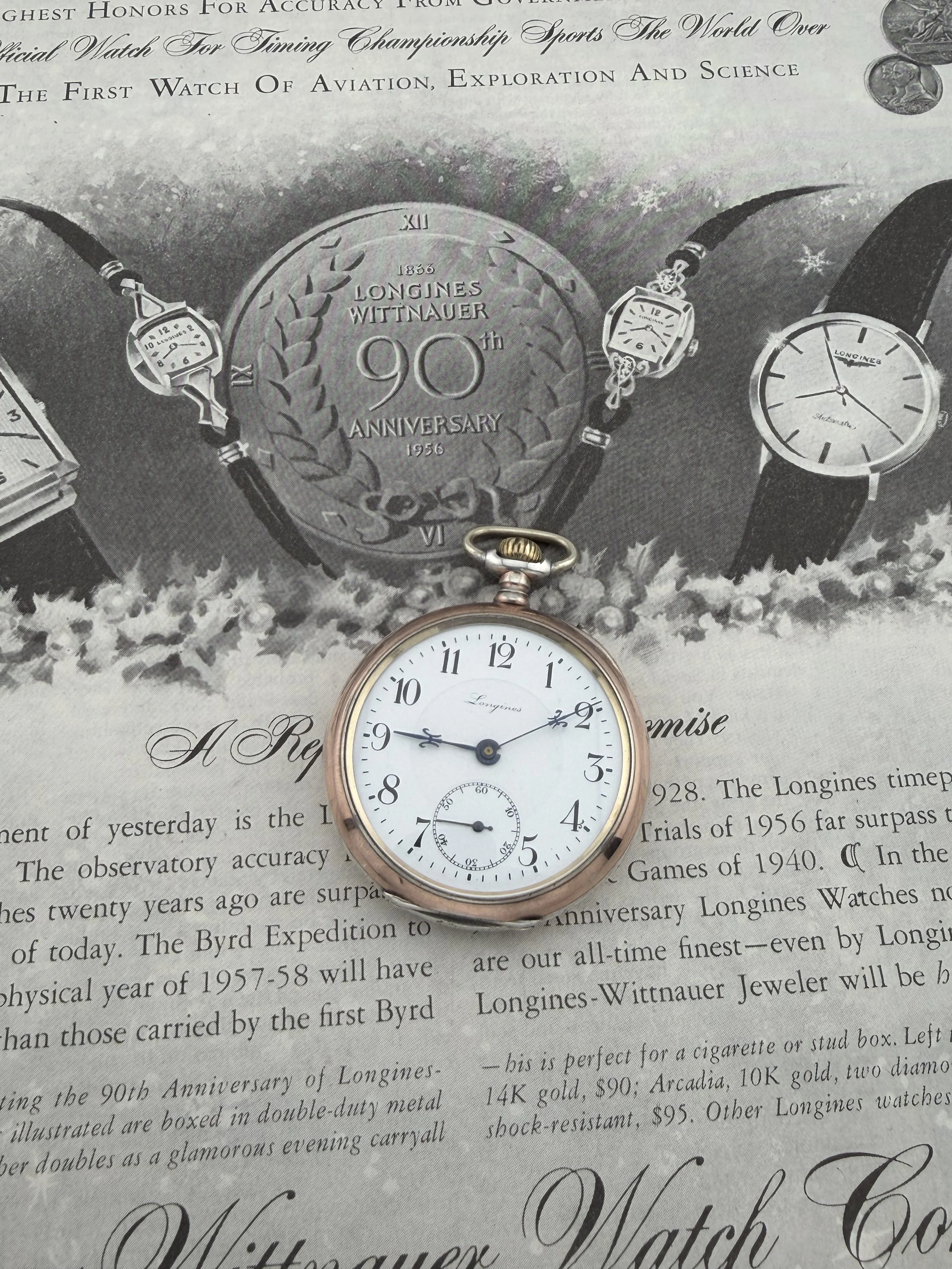
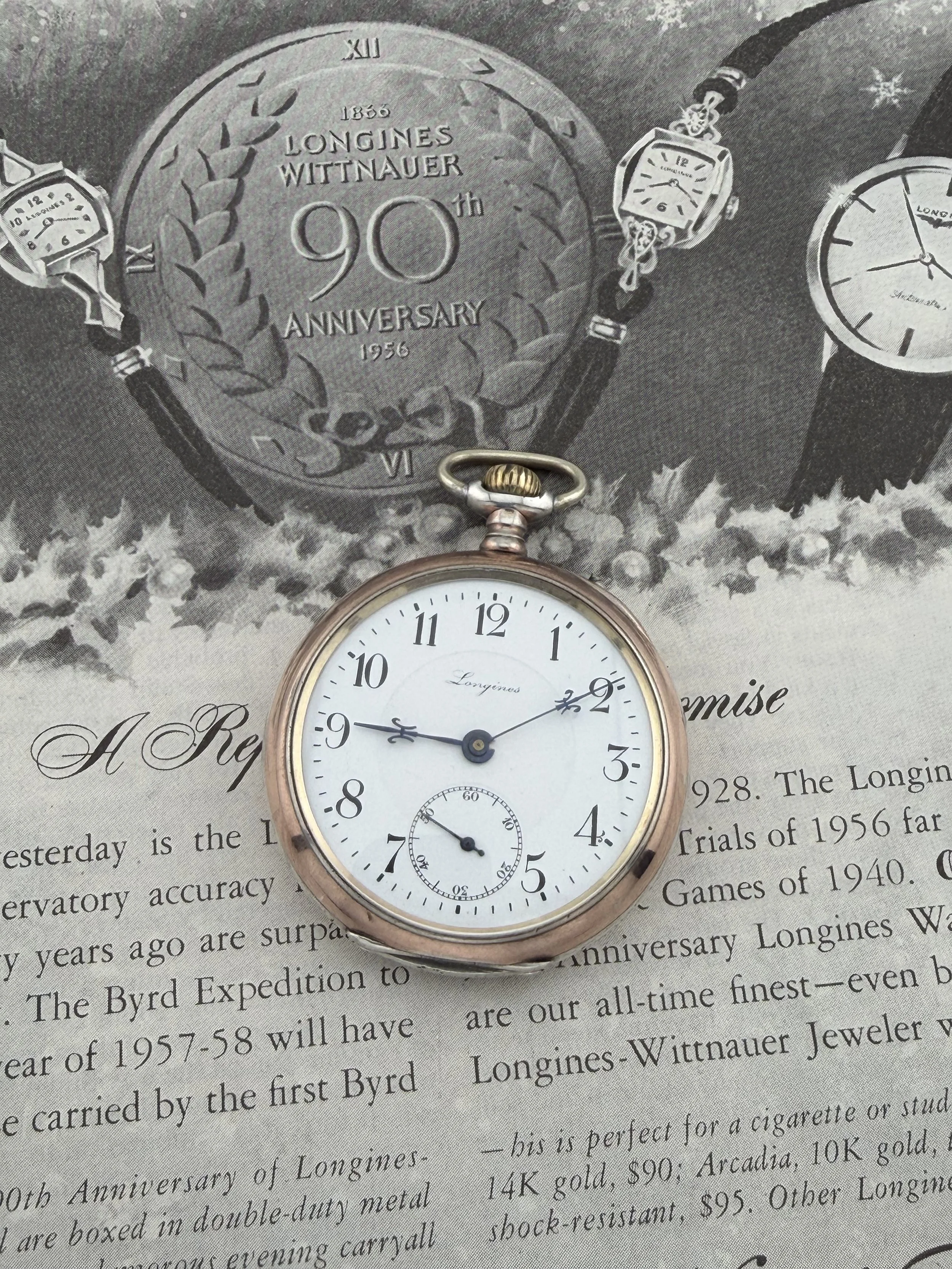
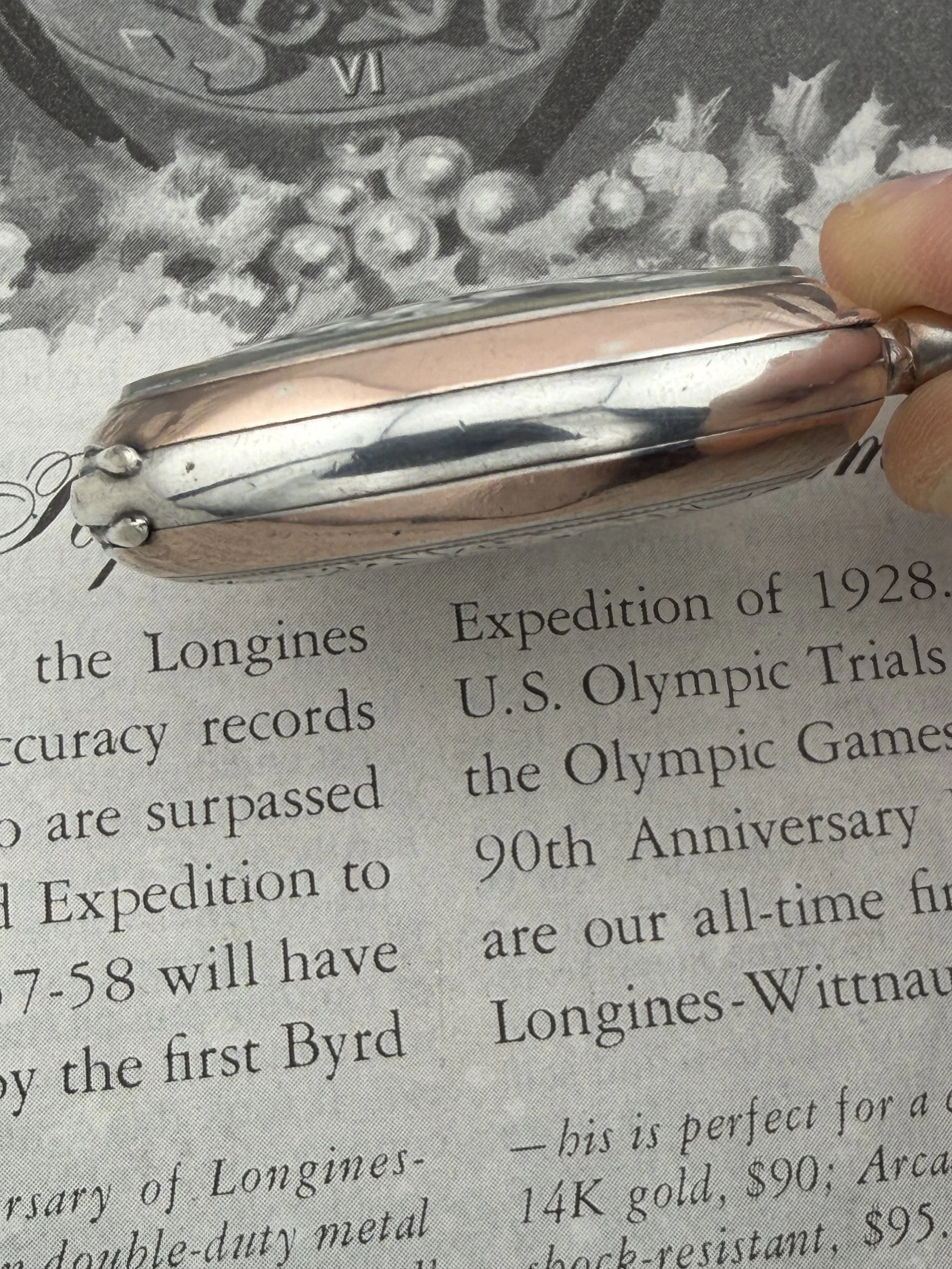
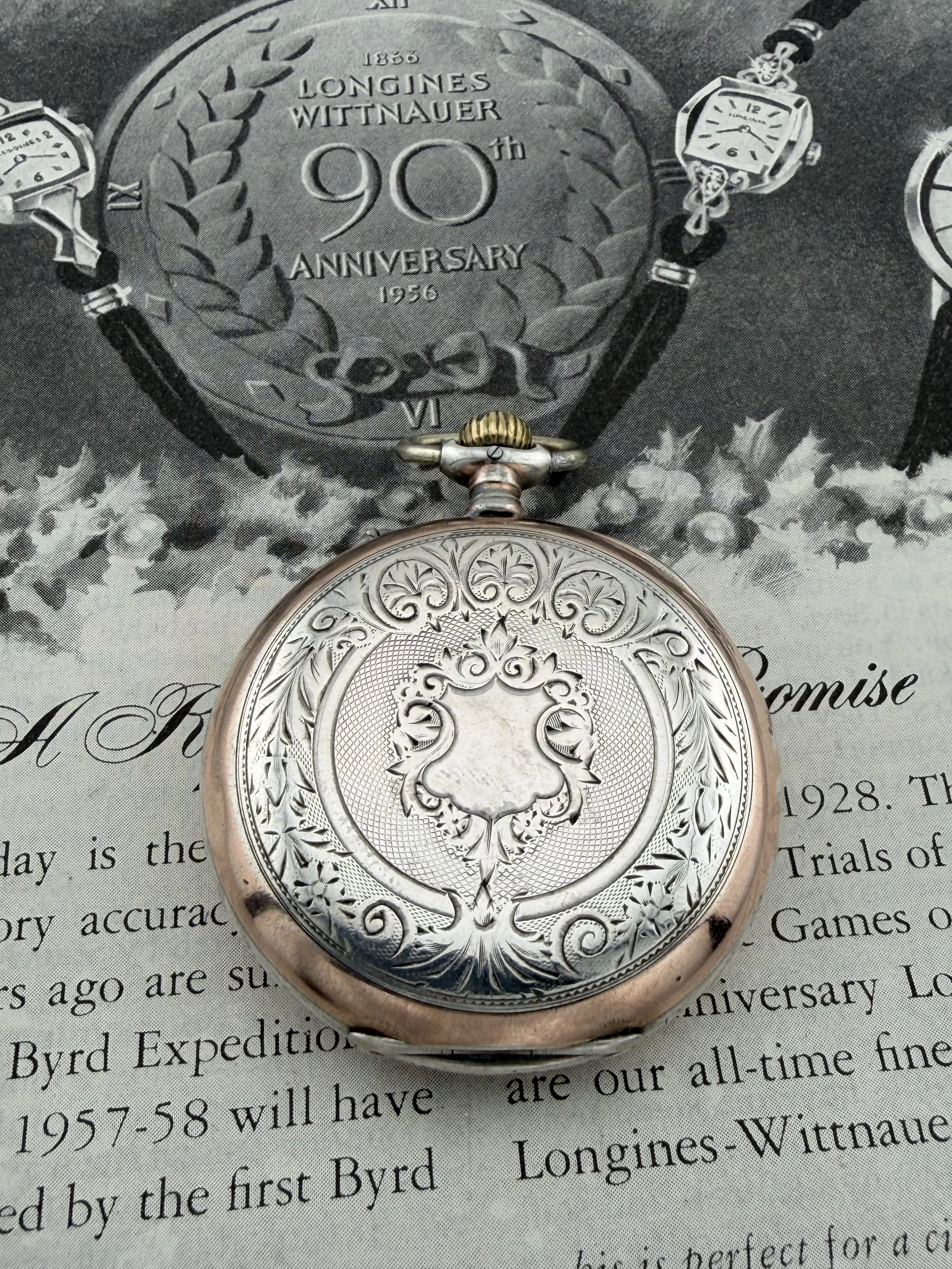
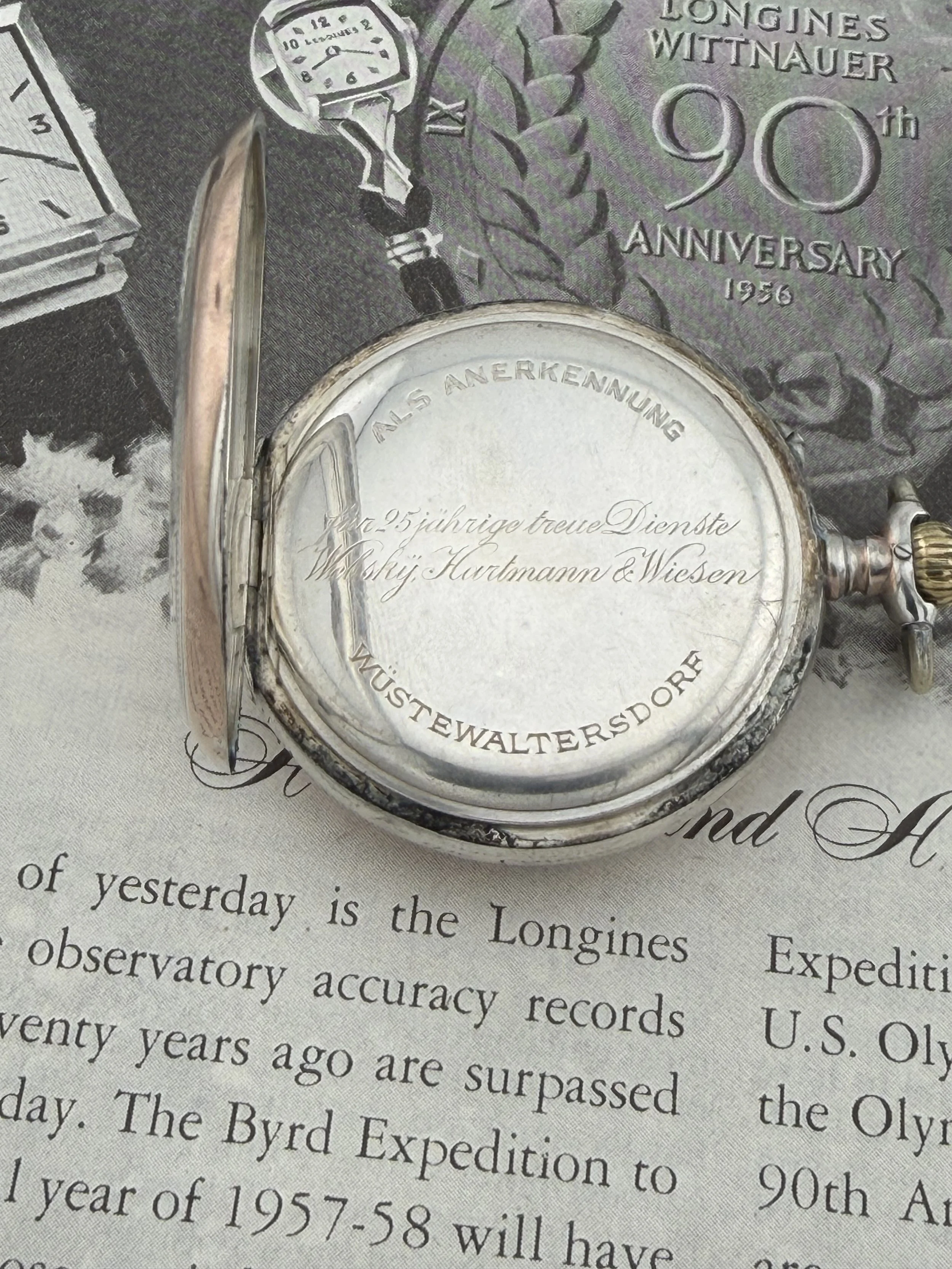
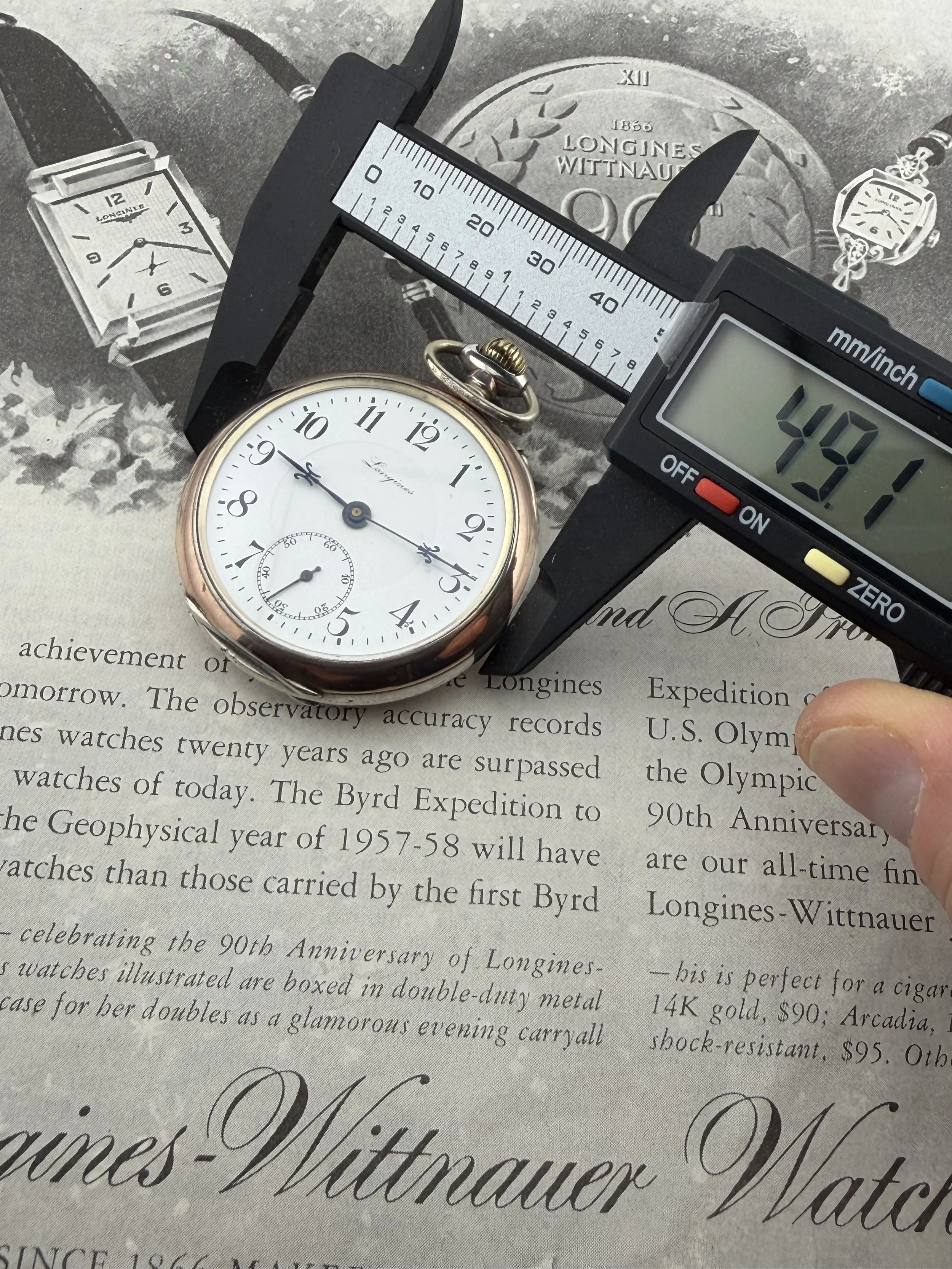
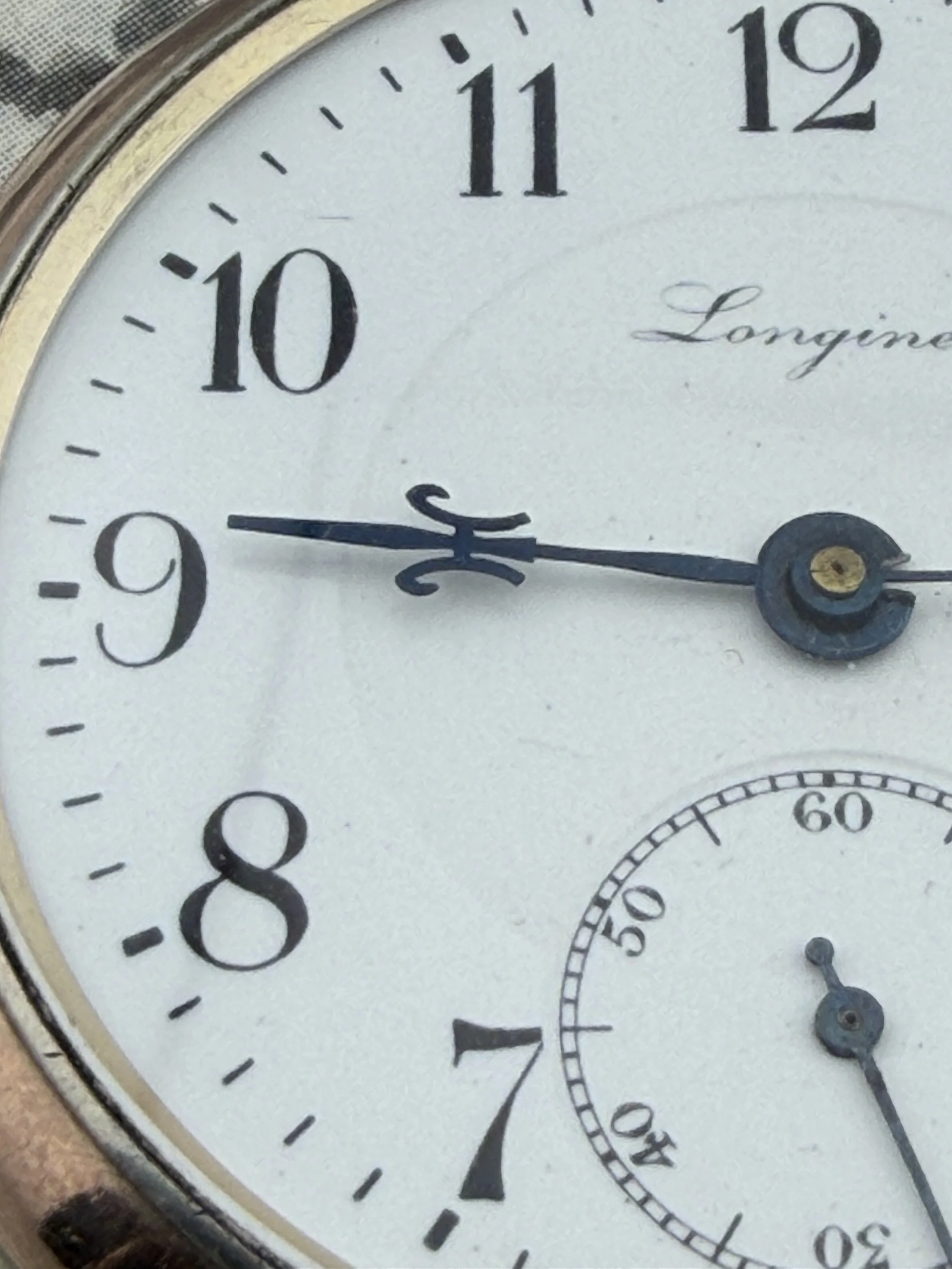
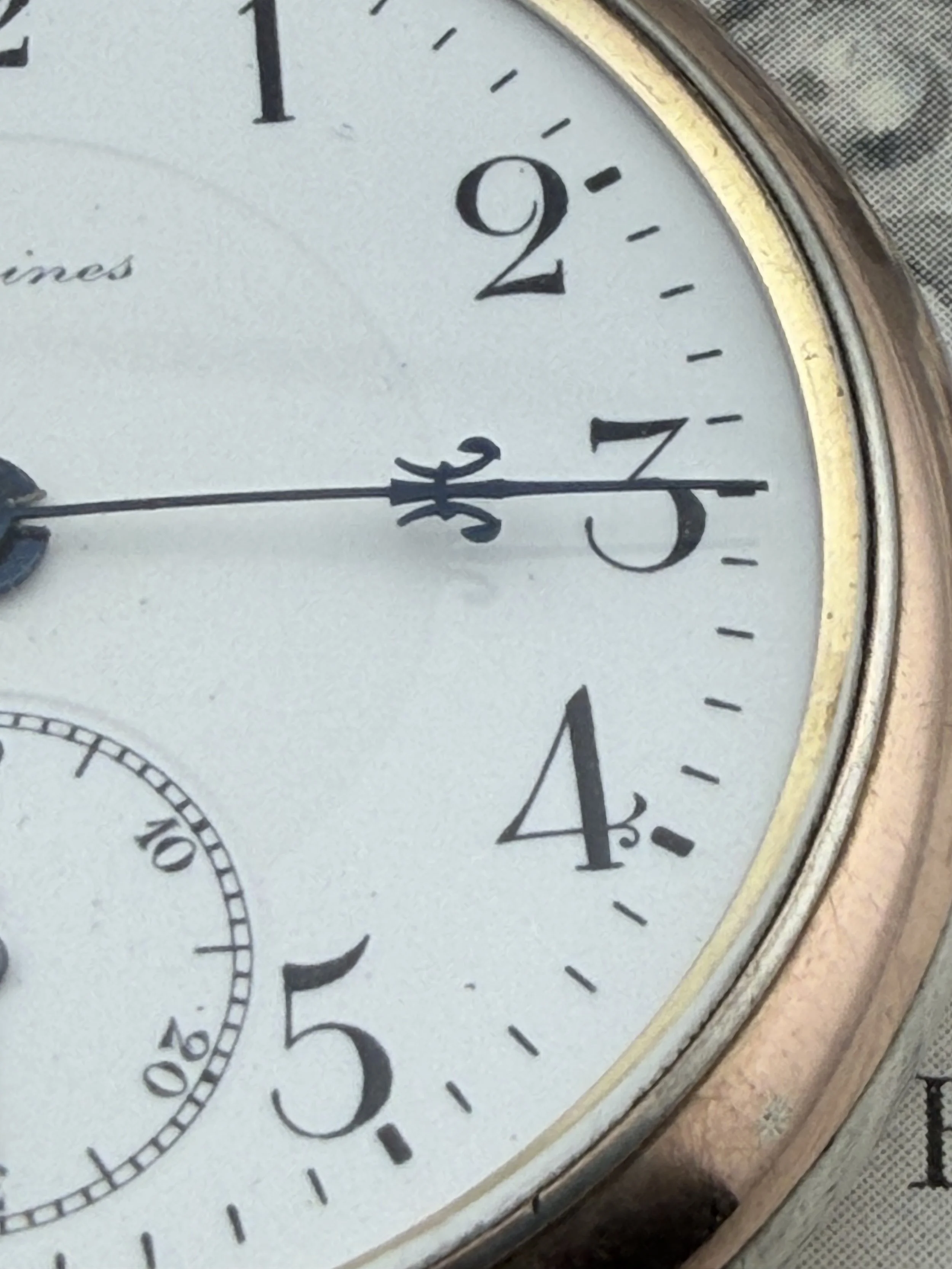
A wonderful piece of early 20th-century horological history, this Longines pocket watch combines traditional Swiss movement construction with an interesting German-made silver case. Particularly noteworthy is the presentation engraving commemorating 25 years of faithful service, giving this watch a personal history that extends well beyond its function as a timekeeper.
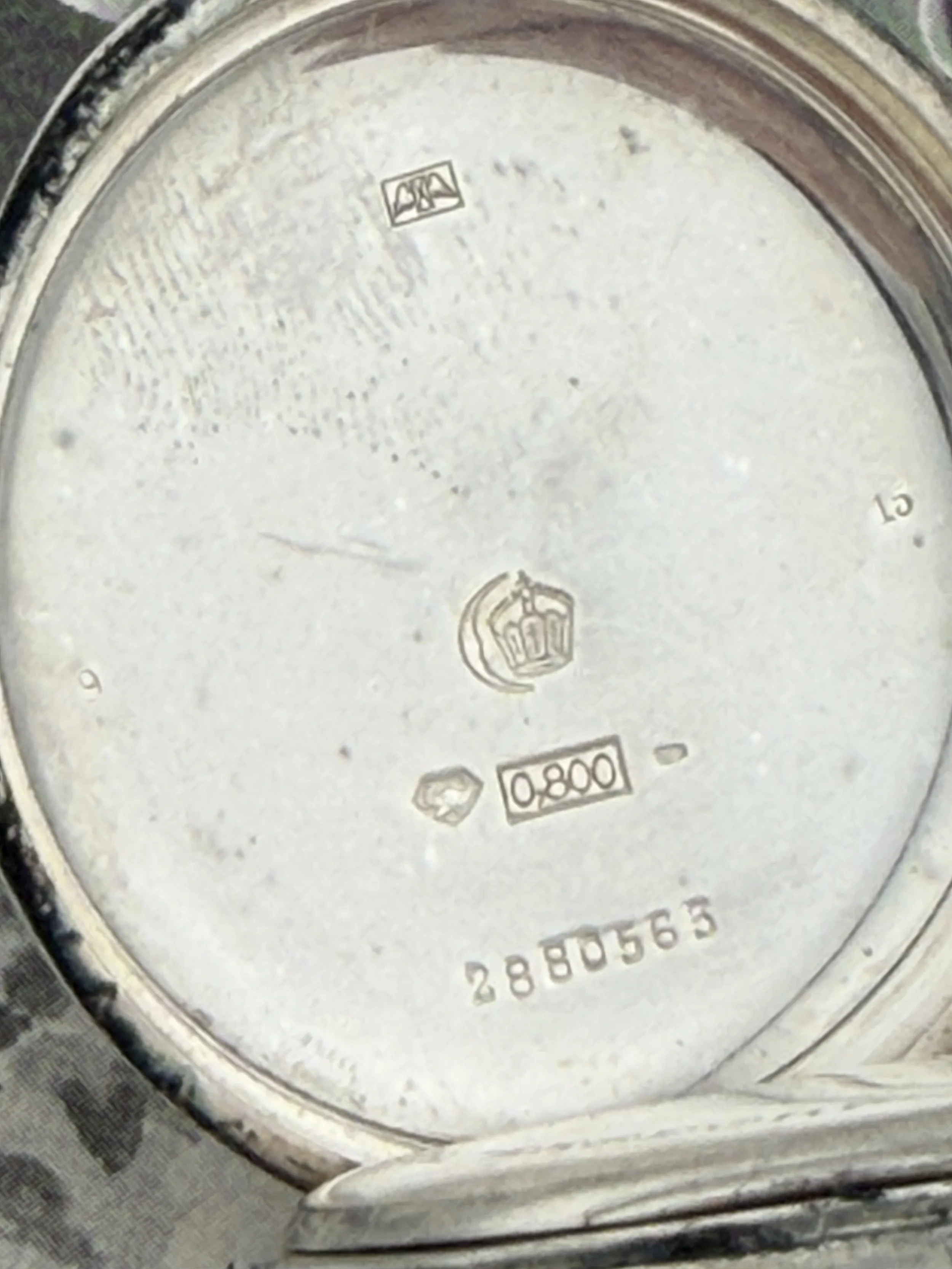
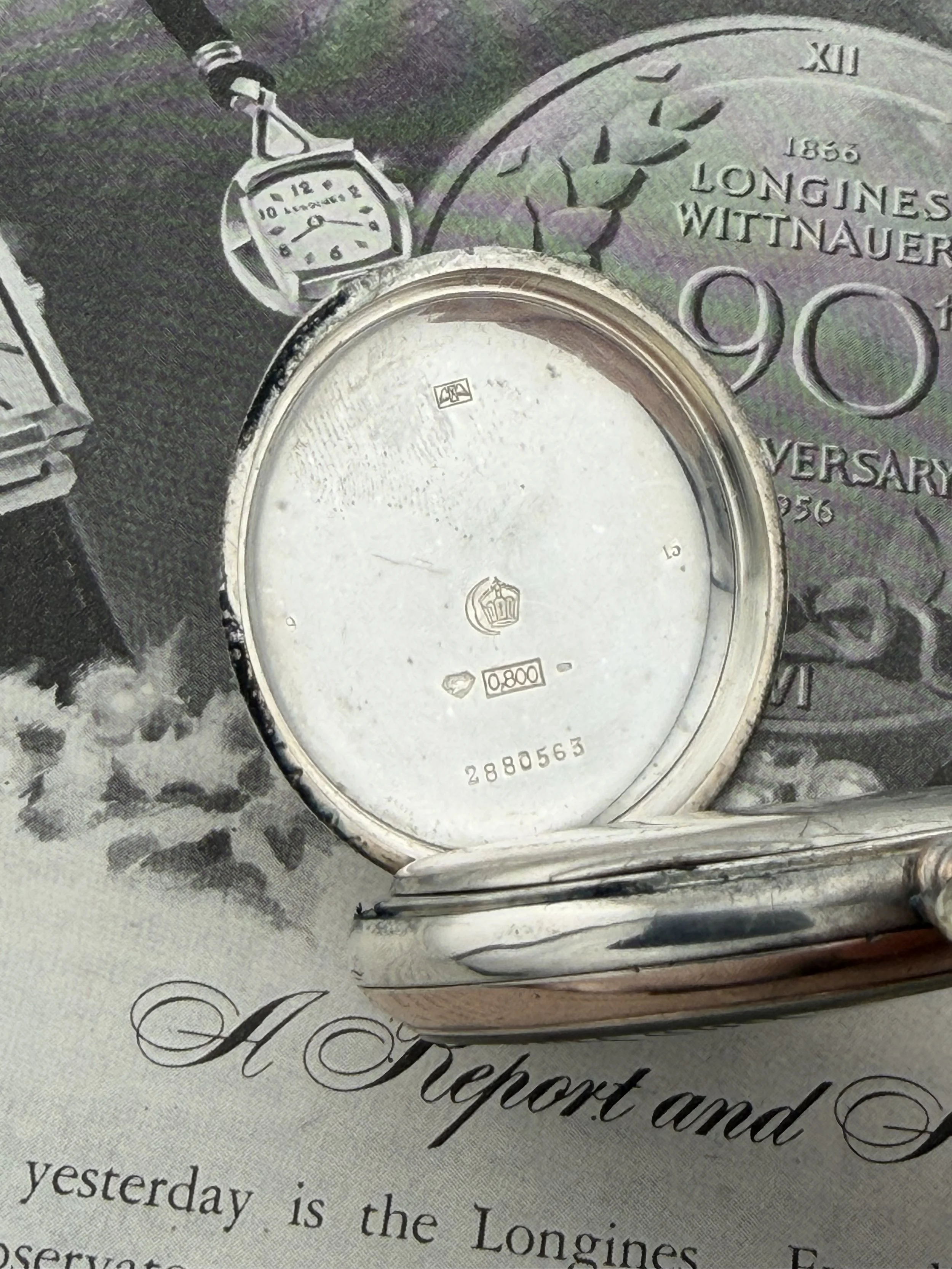
The substantial case measures approximately 49.1mm across and is marked 0.800, indicating a silver fineness of 800 parts per thousand. The interior carries the distinctive German crescent moon and crown hallmark, a national silver mark introduced in 1888. These marks distinguish the case from the more familiar Swiss and British silver hallmarks and point to its German-market origins. The case also carries the number 2880563.
The presentation engraving is perhaps the most compelling detail. The inscription reads Für 25 jährige treue Dienste, translating to “For 25 years of faithful service.” The recipient appears to be Willy Hartmann, with Wüstewaltersdorf identified as the location. Situated in the historic German region of Silesia, Wüstewaltersdorf is now known as Walim, Poland. The engraving suggests this watch was presented in recognition of a quarter-century of employment, making it a tangible reminder of an individual's working life in the early 1900s.
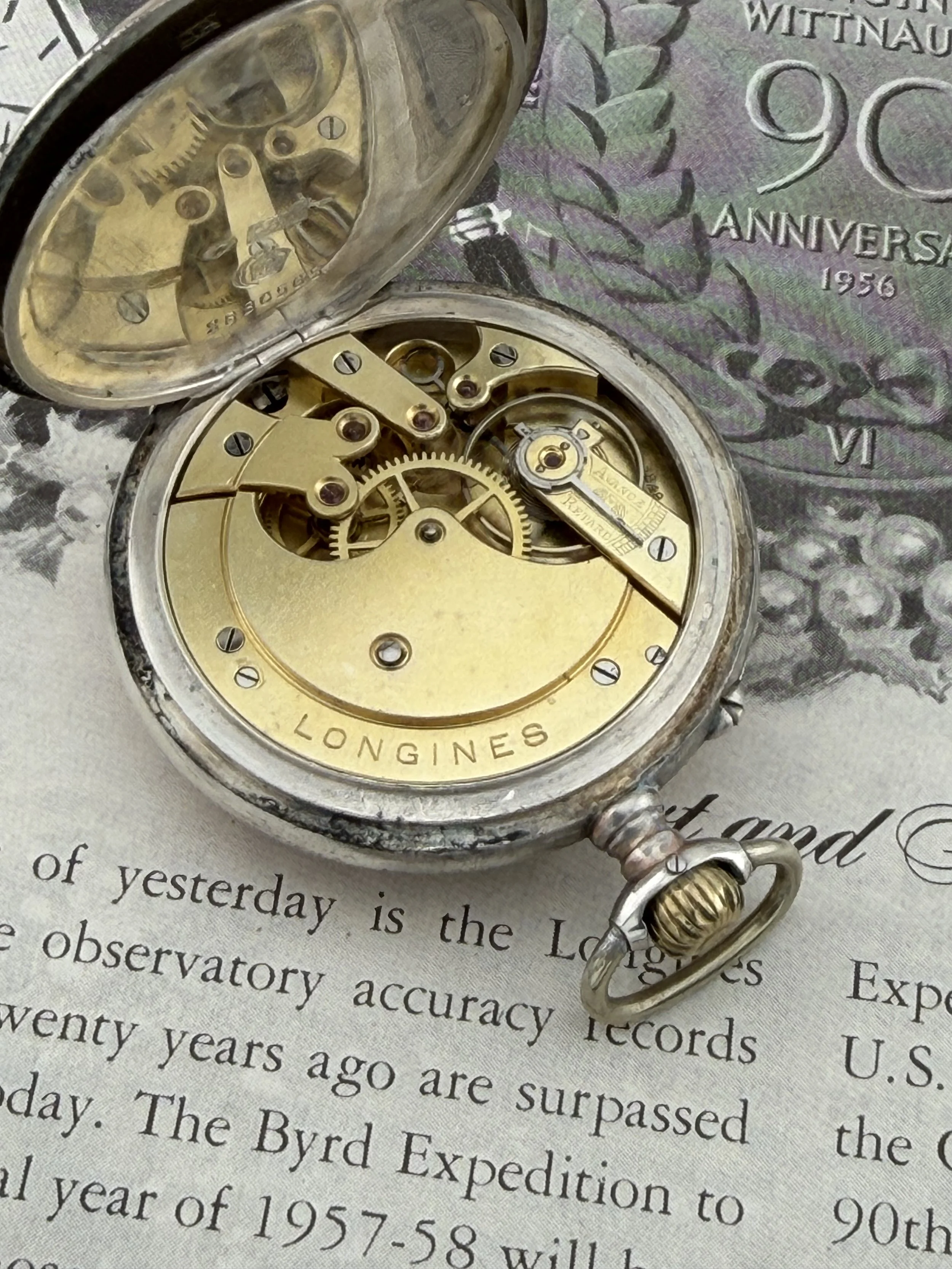
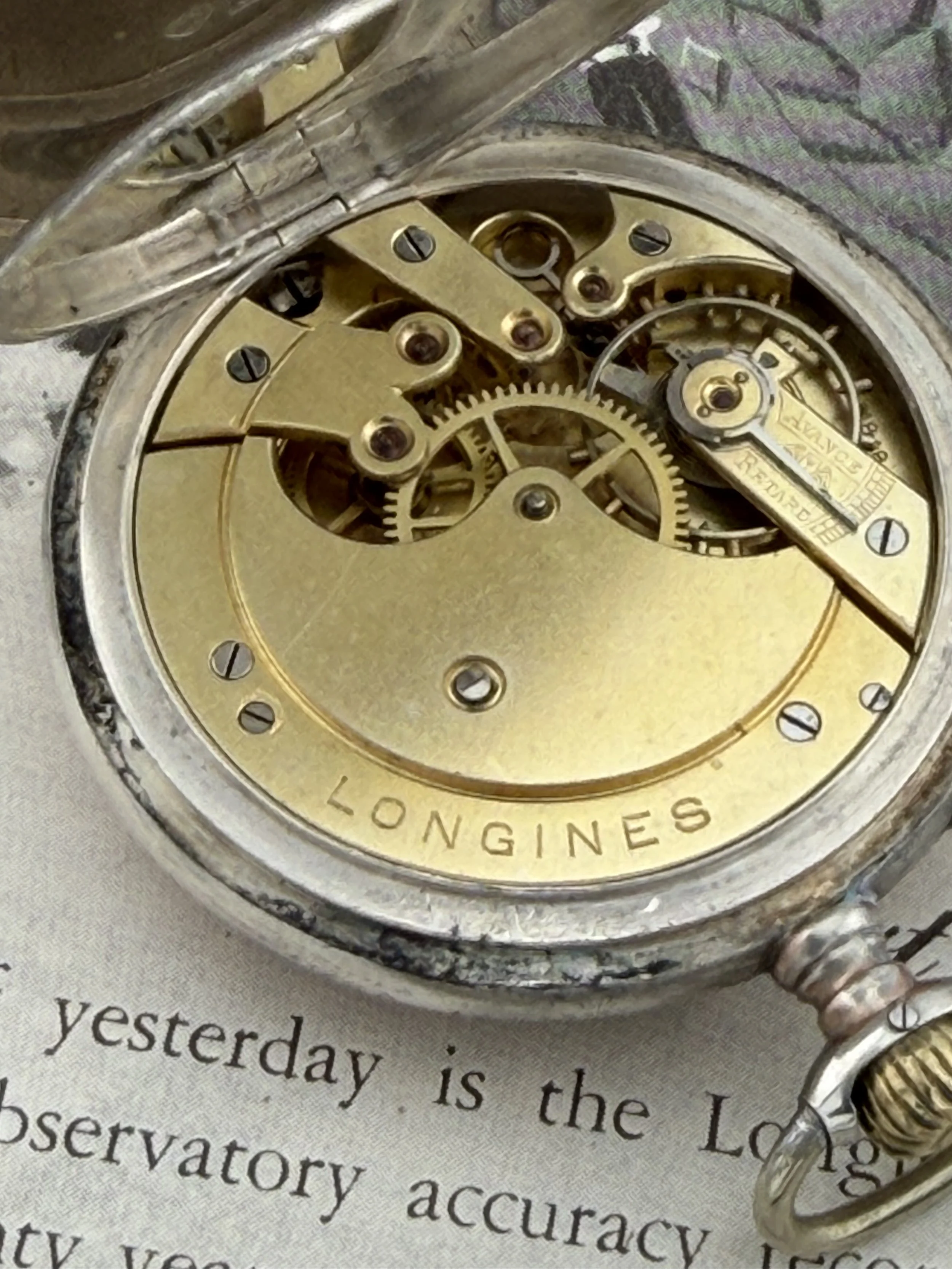
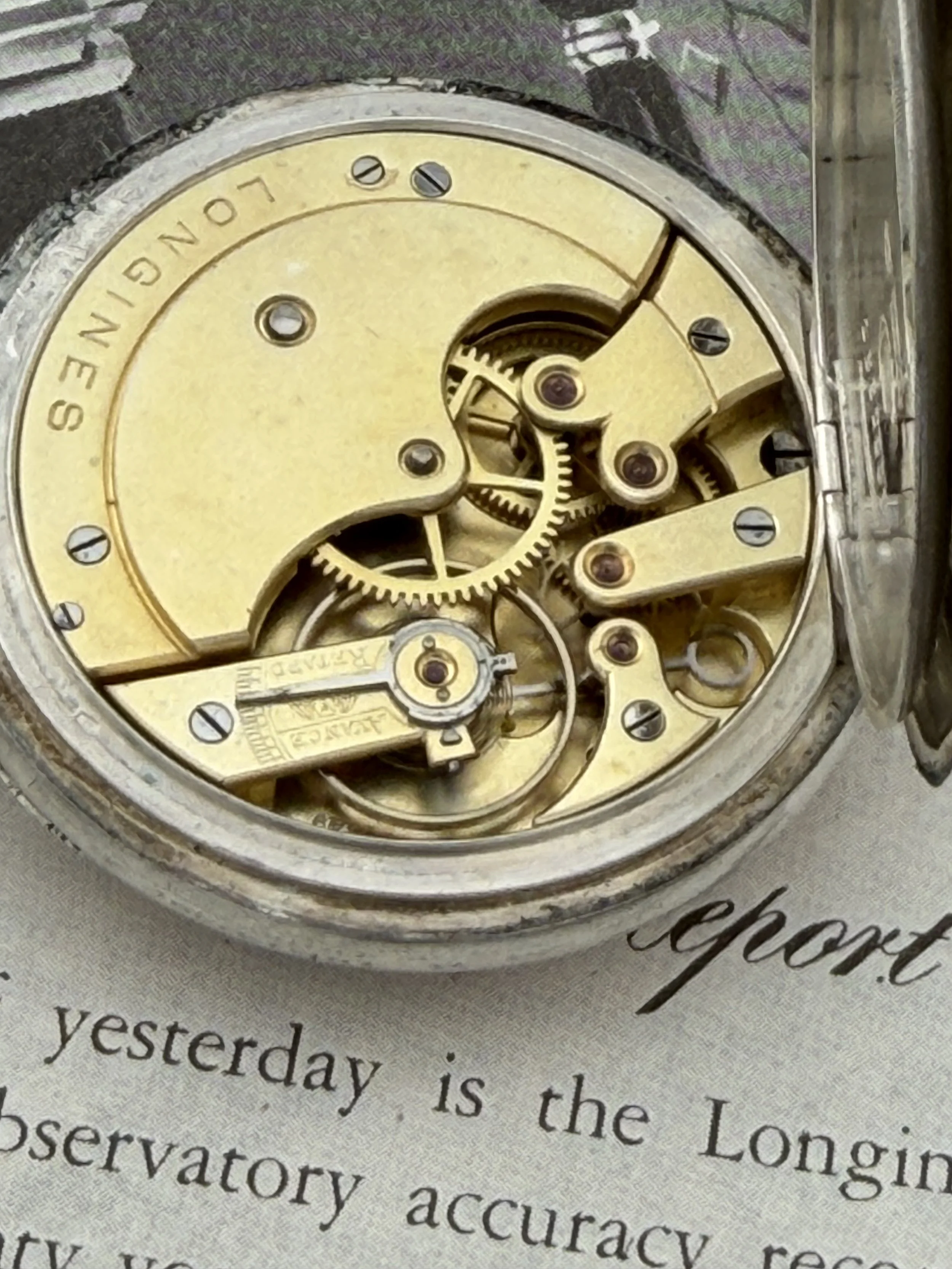
Inside is a traditional Longines gilt-finished manual-wind movement, featuring three-quarter plate construction, a Swiss lever escapement and a subsidiary seconds display. The regulator is marked A/R, short for Avance/Retard, indicating fast and slow adjustment. Signed by Longines, the movement is a fine example of the company's established Swiss watchmaking traditions.
Longines was already a respected name in precision timekeeping by the turn of the 20th century. Founded in Saint-Imier, Switzerland, in 1832, the company developed a reputation for reliable movements and precision instruments, producing watches for both everyday use and professional applications.
The combination of a Swiss Longines movement, German-hallmarked 800 silver case and engraved long-service presentation makes this a particularly appealing cross-border piece of horological history. Rather than simply being an antique pocket watch, it carries a small piece of someone's personal story, preserved over more than a century.