

The skin diver is one of the most fun chapters in vintage watch history. In the 1950s and 60s, recreational scuba diving exploded in popularity, helped along by military diving, underwater exploration, Jacques Cousteau, and the growing popularity of diving as a leisure activity. Watches with the look of professional dive watches suddenly became enormously fashionable.
A skin diver was essentially the everyman's dive watch. Unlike the thick, purpose-built professional dive watches made for military and commercial use, skin divers were generally slimmer, simpler and more affordable. They typically featured a rotating timing bezel, strong luminous markers, a screw-down or otherwise water-resistant case, and a sporty design intended for recreational diving and swimming.
And then there was the inevitable next step: watches that looked like skin divers without necessarily being capable of diving at all.
That's where this Lucerne gets interesting.
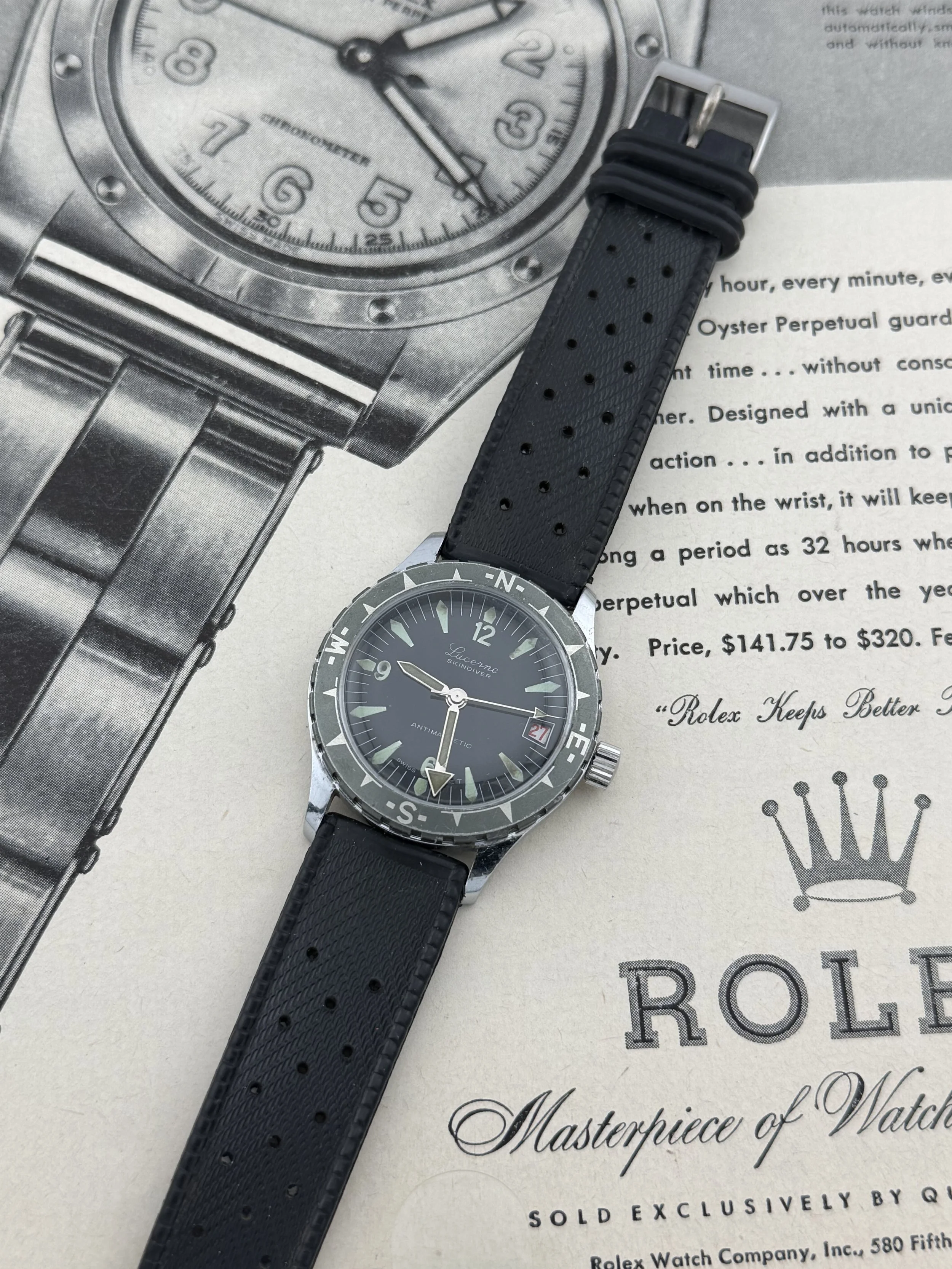
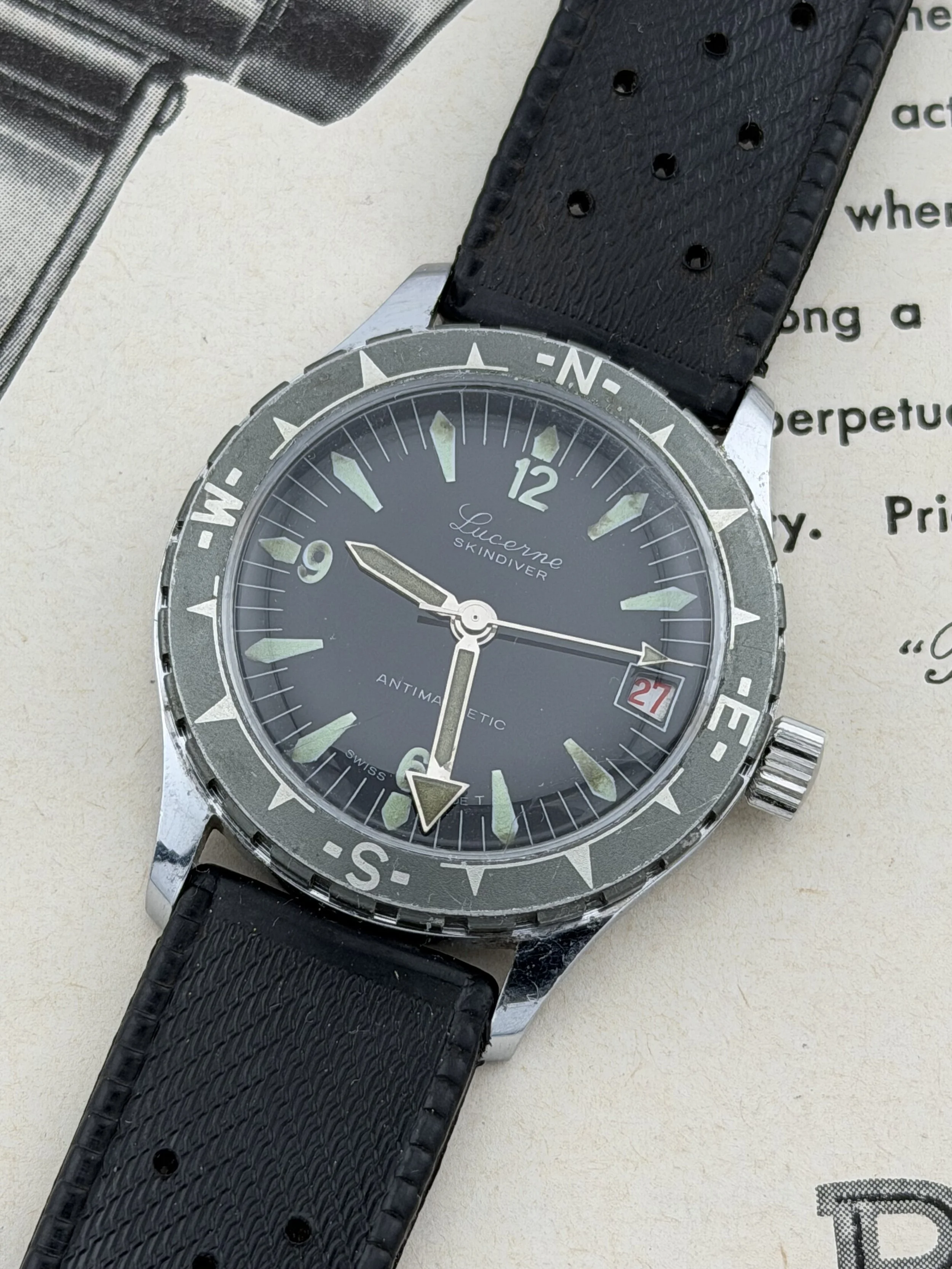
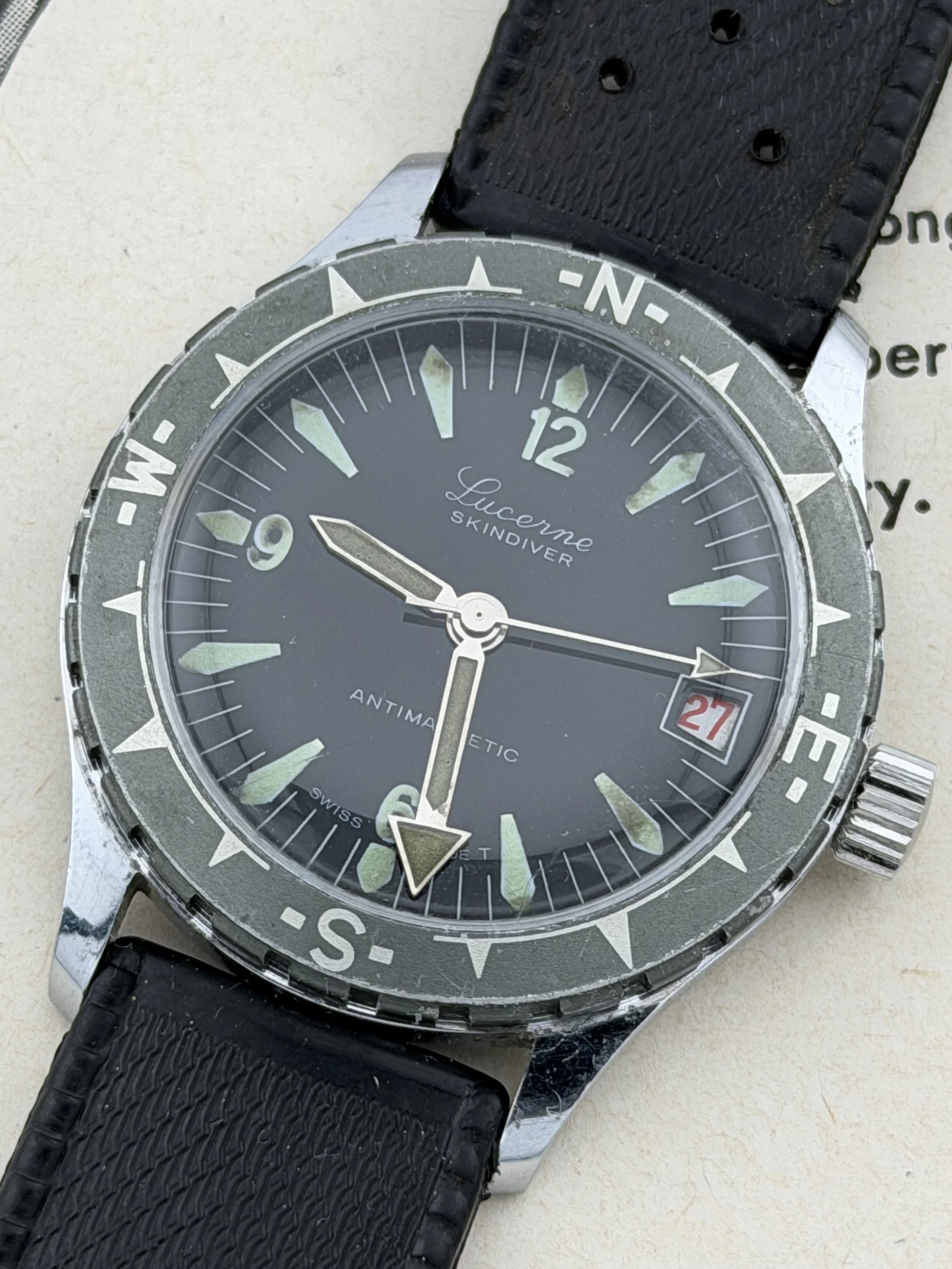
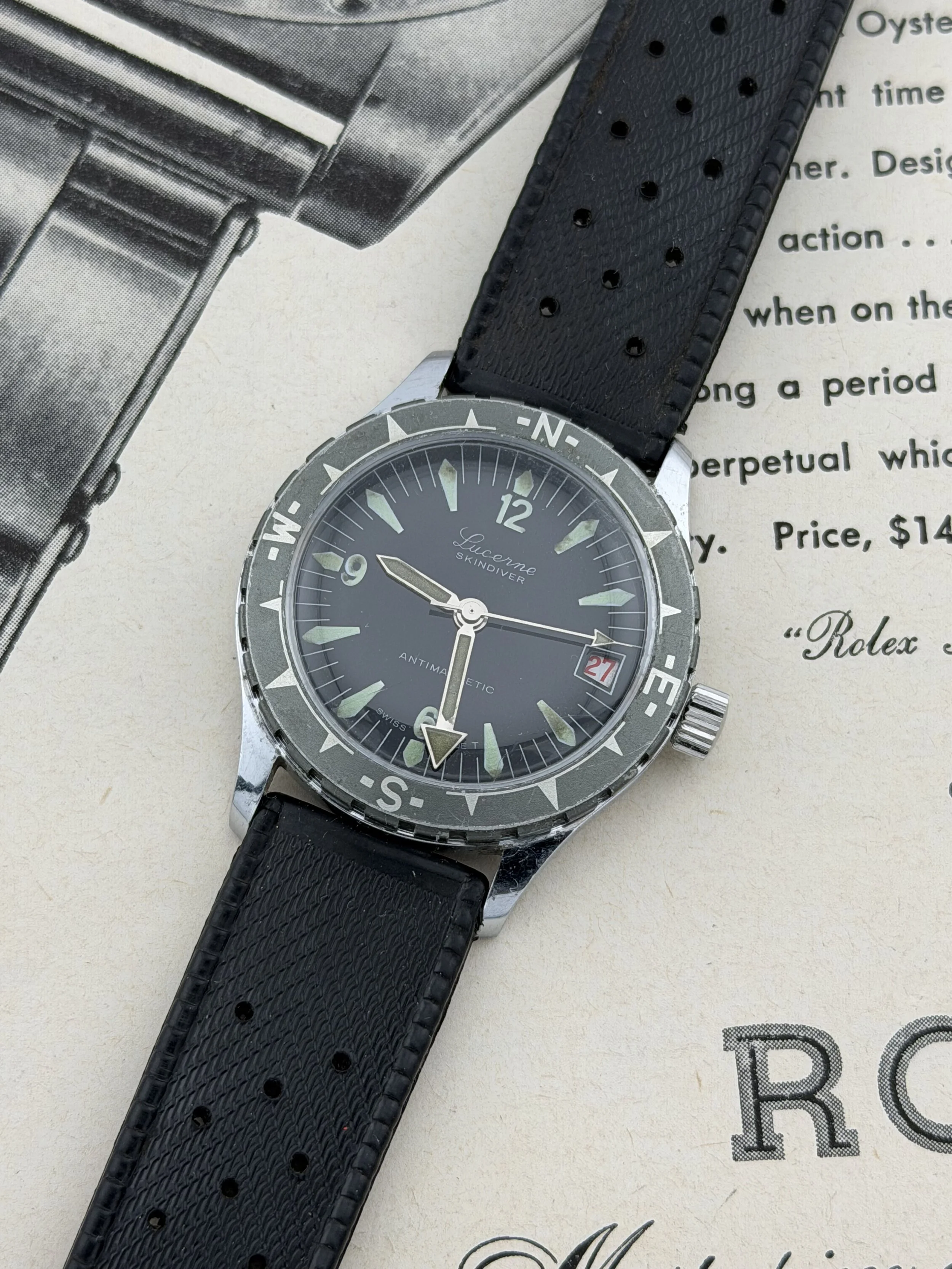
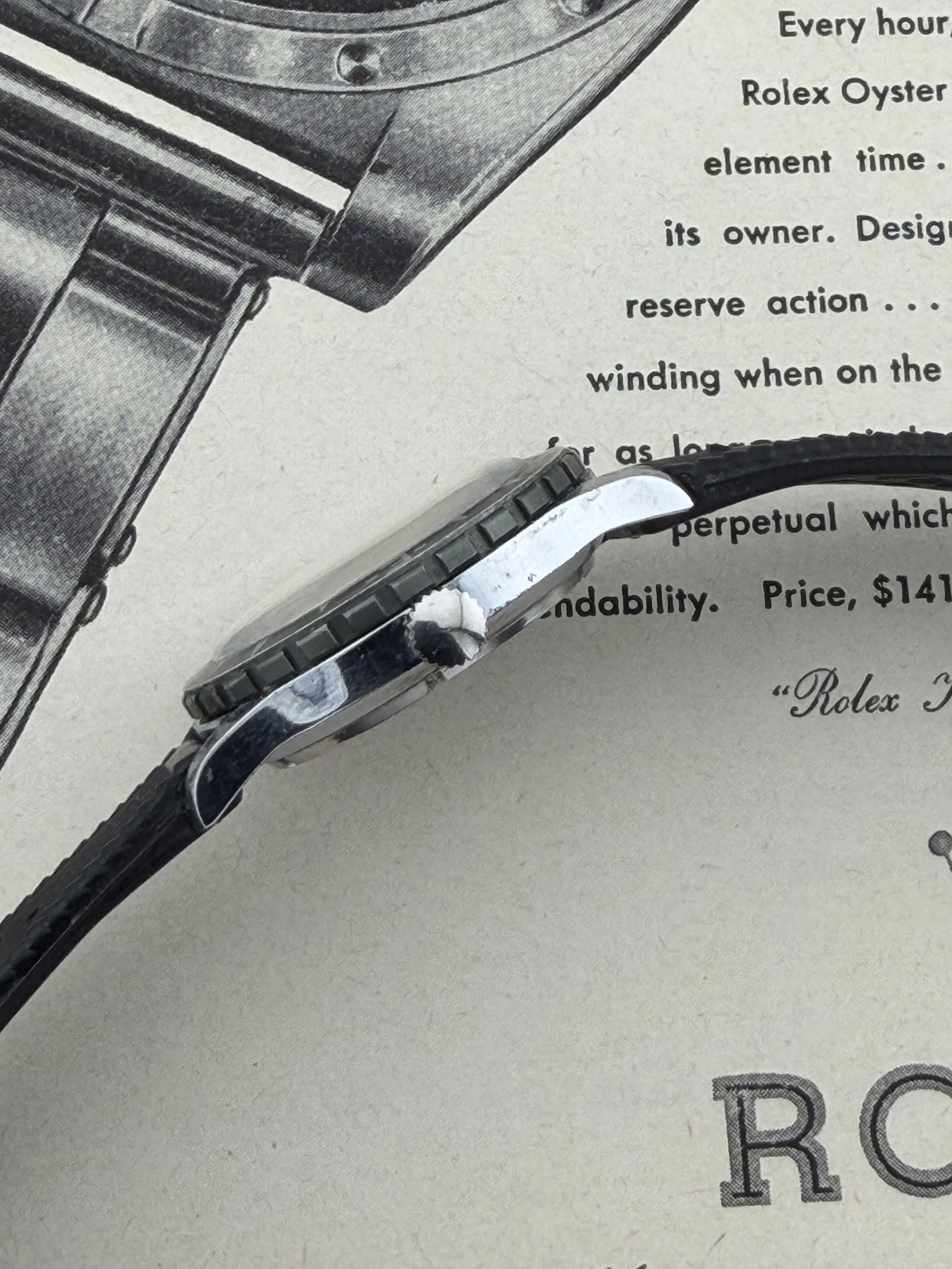
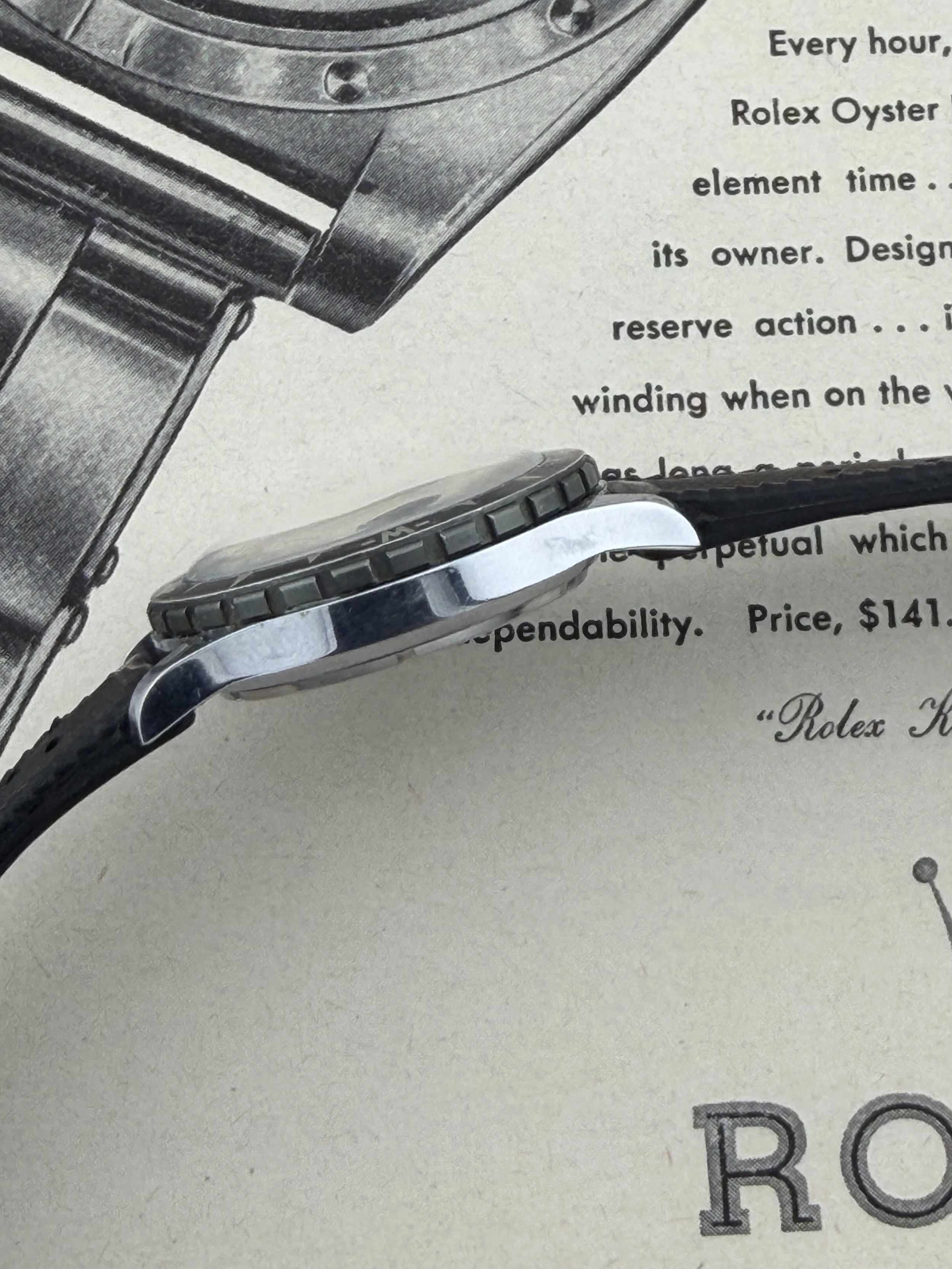
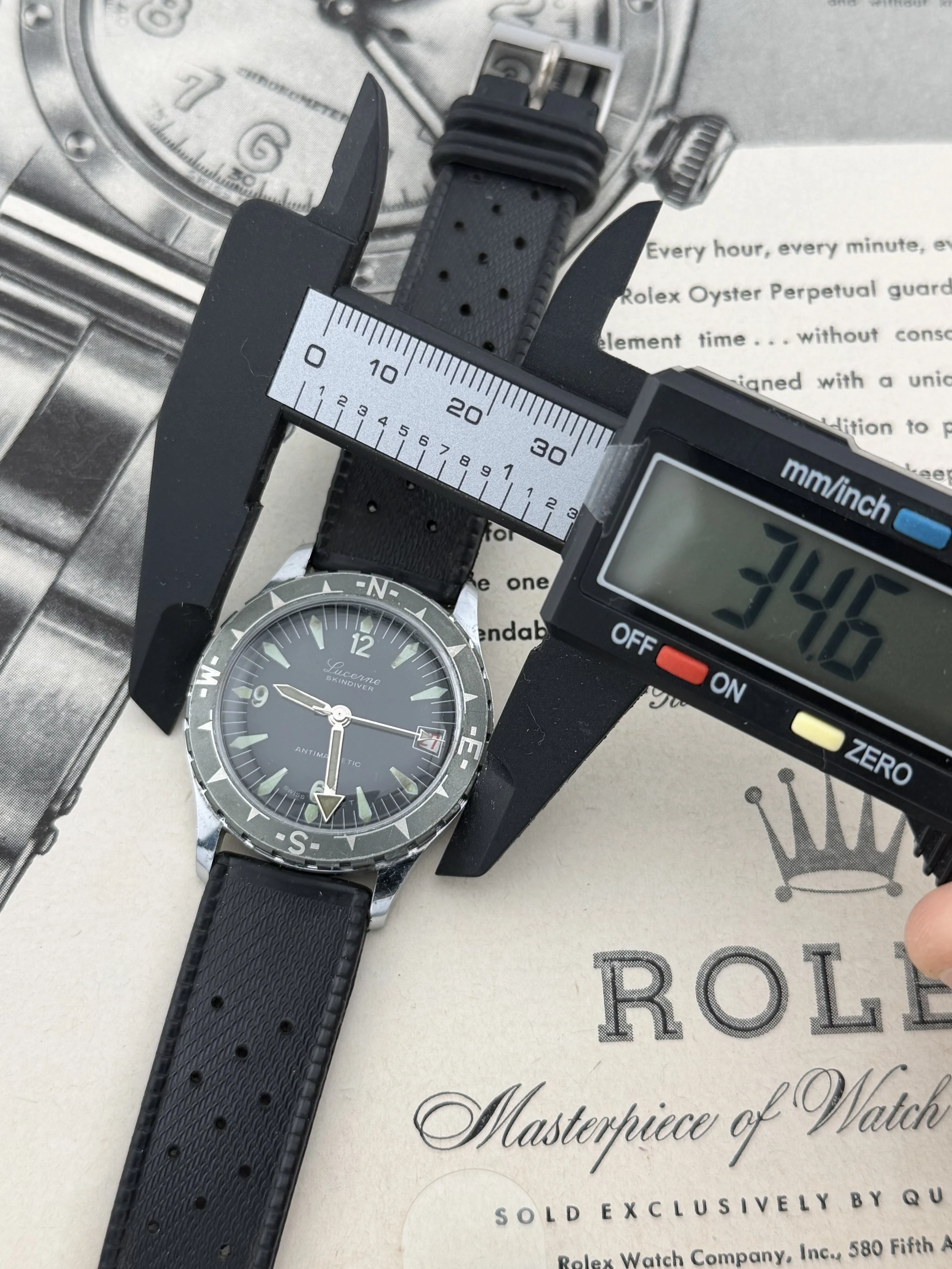
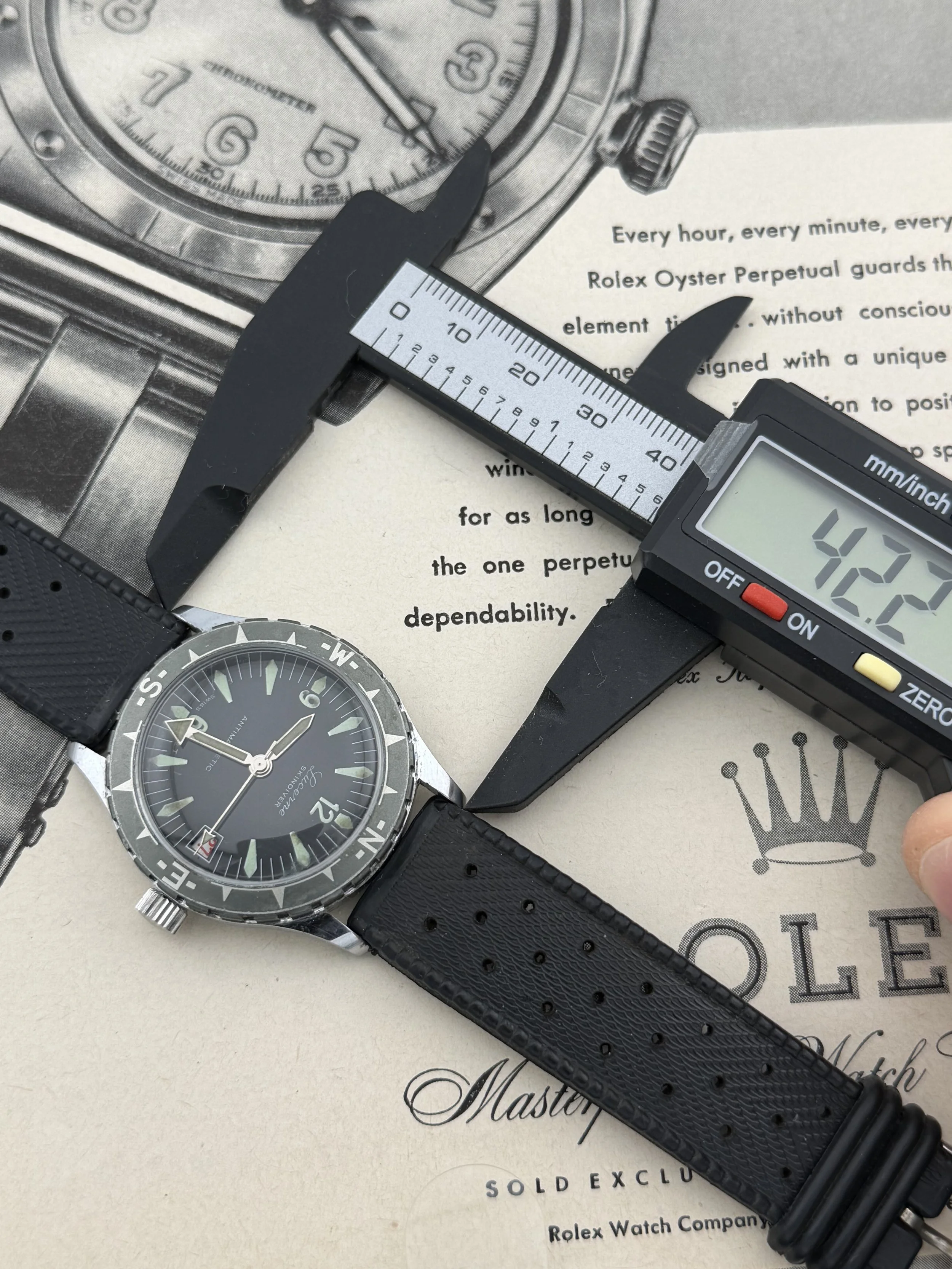
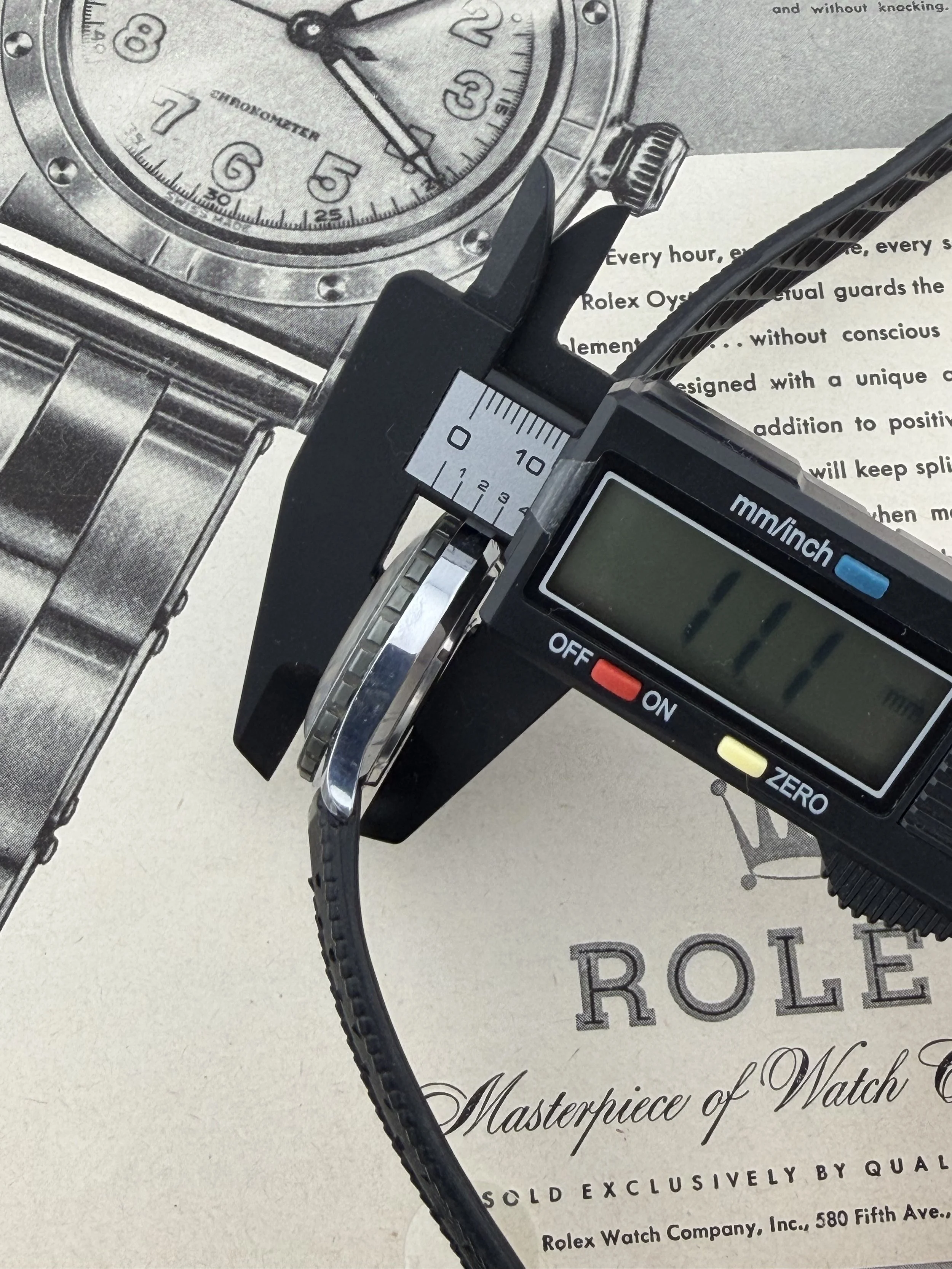
This watch captures the visual language of the skin diver perfectly. You've got the broad luminous hands, oversized luminous hour markers, bold Arabic numerals, a date window and, most importantly, that fantastic cool gray diver-style bezel. But the bezel on this particular watch is fixed rather than rotating, so it shouldn't be treated as a functional dive timer. It's a diver-inspired watch rather than a true dive watch.
That distinction is actually part of the charm. During the 1960s and 70s, the skin-diver aesthetic spread far beyond dedicated dive-watch manufacturers. Smaller Swiss companies and private-label brands could offer customers the adventurous appearance of a dive watch at a much lower price. You could get the look without buying an expensive professional instrument.
Lucerne is one of those names you'll encounter frequently when digging into affordable vintage Swiss watches. Rather than being a major manufacture on the level of Omega, Longines or Tissot, Lucerne watches were part of the enormous ecosystem of smaller Swiss brands and retailers producing and selling watches during the mid-century period.
That's one reason watches like this are interesting: they're a snapshot of the massive Swiss watch industry beneath the famous names. Hundreds of smaller brands put Swiss-made movements into watches that were sold around the world, often through jewelry stores, department stores and importers.
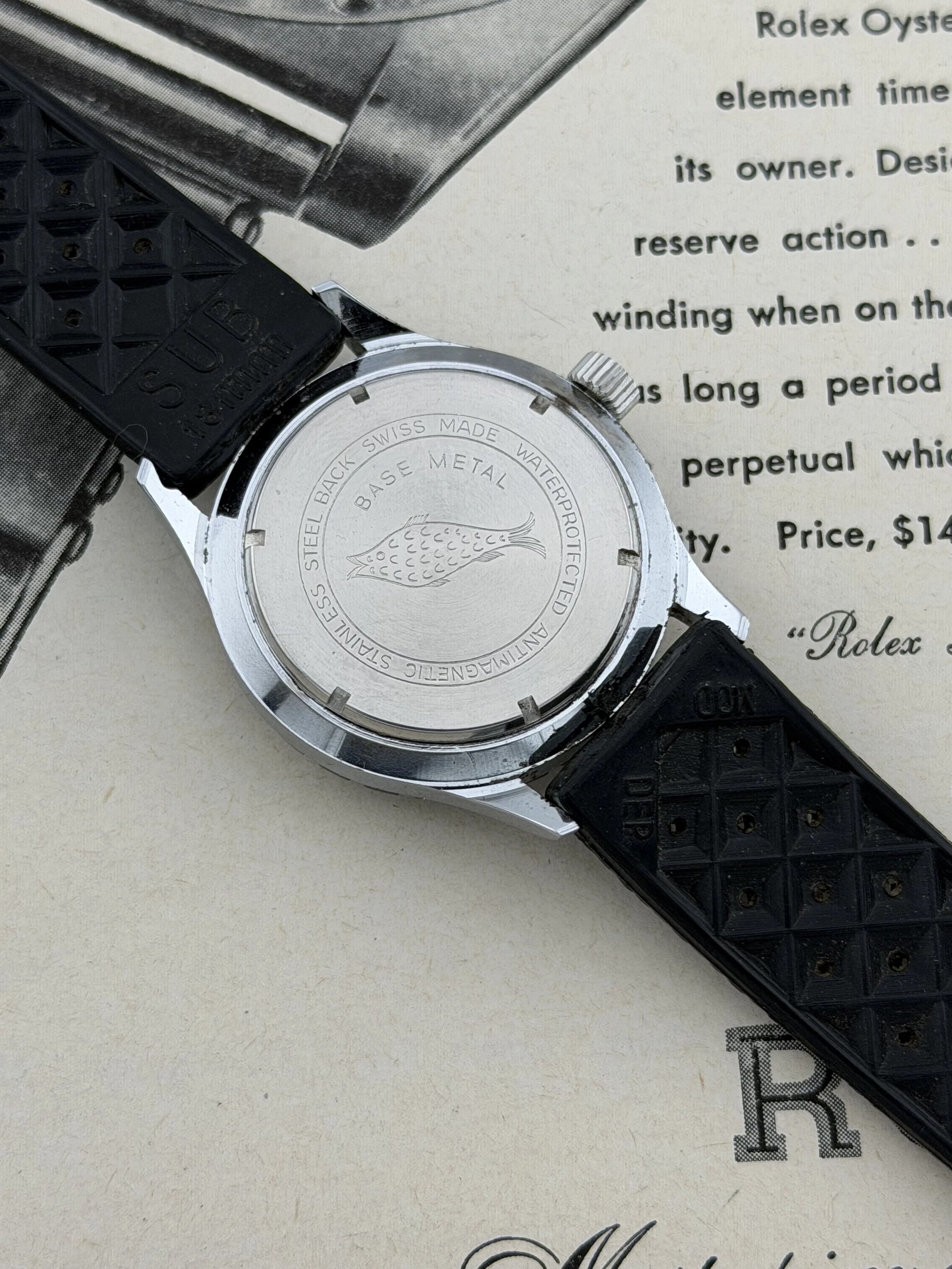
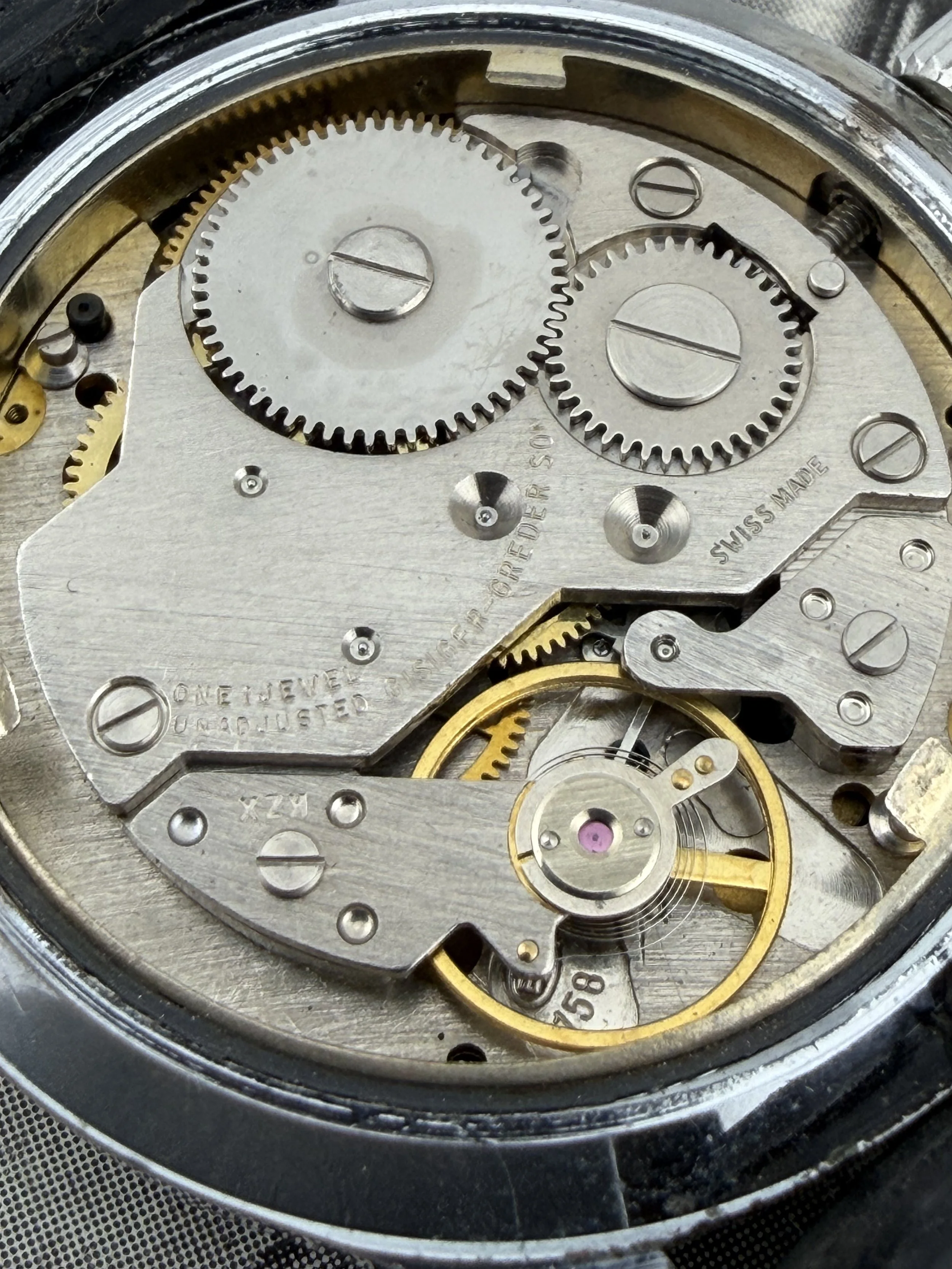
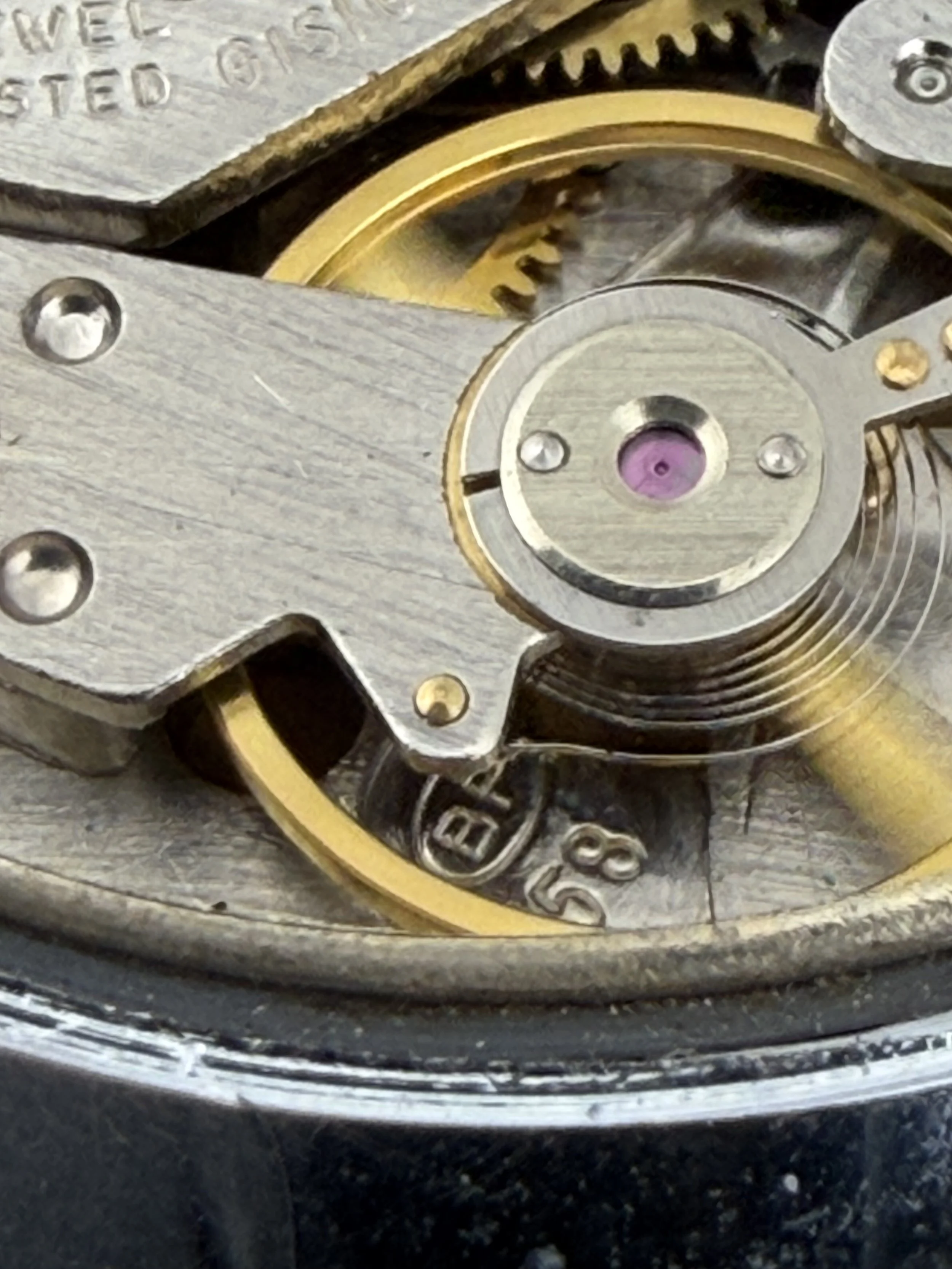
The movement here is particularly charmingly simple: one jewel, unadjusted, Swiss made. It isn't trying to be a high-end chronometer. It's a straightforward mechanical movement built to provide an inexpensive mechanical watch to the average buyer.
And that's really what makes this piece fun.
It isn't pretending to be a Rolex Submariner. It isn't a professional instrument. It's a 1960s–70s interpretation of what a cool dive watch looked like, made accessible to someone who simply wanted that adventurous style on their wrist.
For a vintage collector, that's part of the appeal: not every interesting watch has to be expensive or prestigious. Sometimes the quirky, obscure Swiss pieces tell the better story.
The skin diver is one of the most fun chapters in vintage watch history. In the 1950s and 60s, recreational scuba diving exploded in popularity, helped along by military diving, underwater exploration, Jacques Cousteau, and the growing popularity of diving as a leisure activity. Watches with the look of professional dive watches suddenly became enormously fashionable.
A skin diver was essentially the everyman's dive watch. Unlike the thick, purpose-built professional dive watches made for military and commercial use, skin divers were generally slimmer, simpler and more affordable. They typically featured a rotating timing bezel, strong luminous markers, a screw-down or otherwise water-resistant case, and a sporty design intended for recreational diving and swimming.
And then there was the inevitable next step: watches that looked like skin divers without necessarily being capable of diving at all.
That's where this Lucerne gets interesting.
This watch captures the visual language of the skin diver perfectly. You've got the broad luminous hands, oversized luminous hour markers, bold Arabic numerals, a date window and, most importantly, that fantastic cool gray diver-style bezel. But the bezel on this particular watch is fixed rather than rotating, so it shouldn't be treated as a functional dive timer. It's a diver-inspired watch rather than a true dive watch.
That distinction is actually part of the charm. During the 1960s and 70s, the skin-diver aesthetic spread far beyond dedicated dive-watch manufacturers. Smaller Swiss companies and private-label brands could offer customers the adventurous appearance of a dive watch at a much lower price. You could get the look without buying an expensive professional instrument.
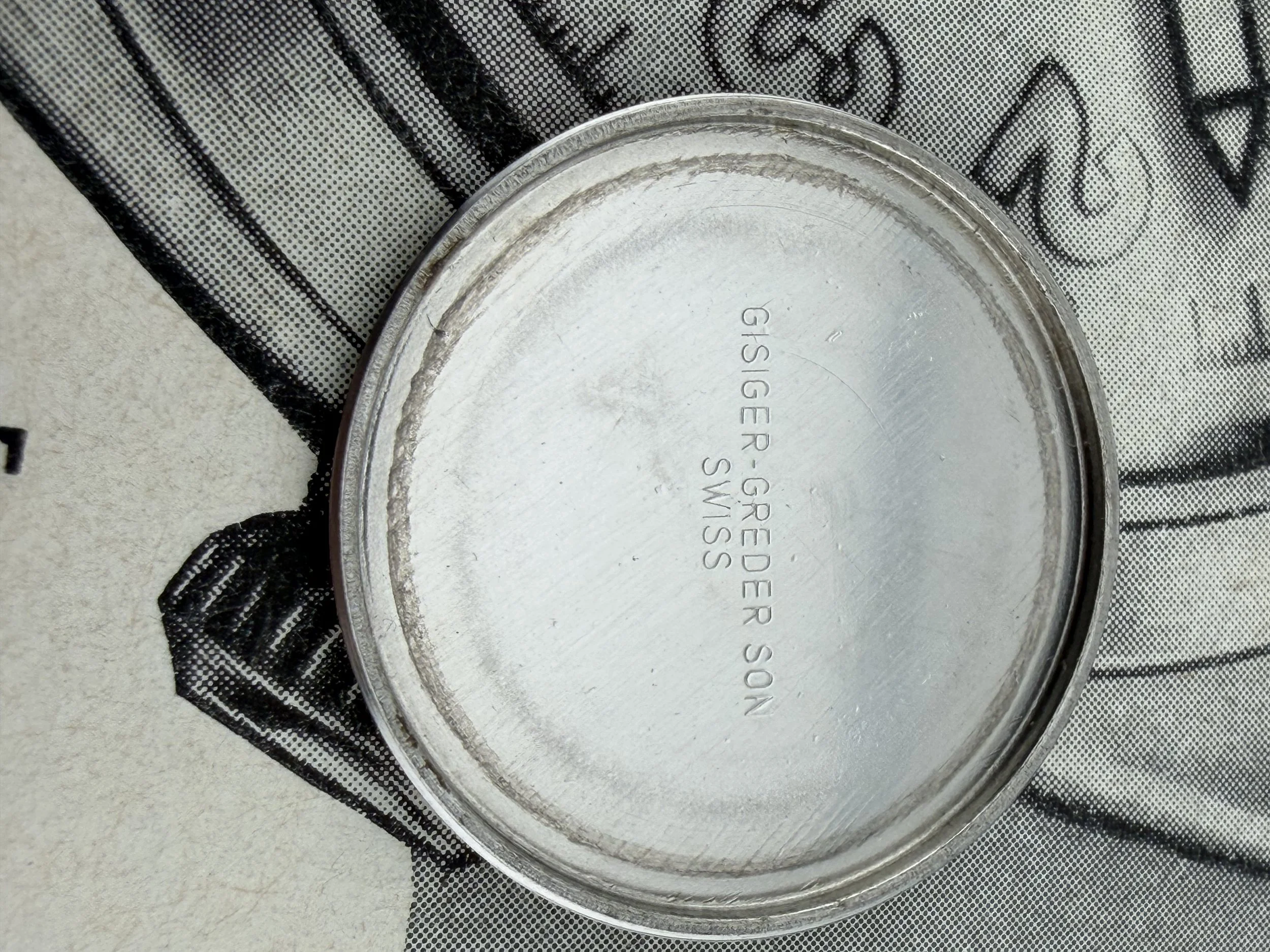
Lucerne is one of those names you'll encounter frequently when digging into affordable vintage Swiss watches. Rather than being a major manufacture on the level of Omega, Longines or Tissot, Lucerne watches were part of the enormous ecosystem of smaller Swiss brands and retailers producing and selling watches during the mid-century period.
That's one reason watches like this are interesting: they're a snapshot of the massive Swiss watch industry beneath the famous names. Hundreds of smaller brands put Swiss-made movements into watches that were sold around the world, often through jewelry stores, department stores and importers.
The movement here is particularly charmingly simple: one jewel, unadjusted, Swiss made. It isn't trying to be a high-end chronometer. It's a straightforward mechanical movement built to provide an inexpensive mechanical watch to the average buyer.
And that's really what makes this piece fun.
It isn't pretending to be a Rolex Submariner. It isn't a professional instrument. It's a 1960s–70s interpretation of what a cool dive watch looked like, made accessible to someone who simply wanted that adventurous style on their wrist.
For a vintage collector, that's part of the appeal: not every interesting watch has to be expensive or prestigious. Sometimes the quirky, obscure Swiss pieces tell the better story.