

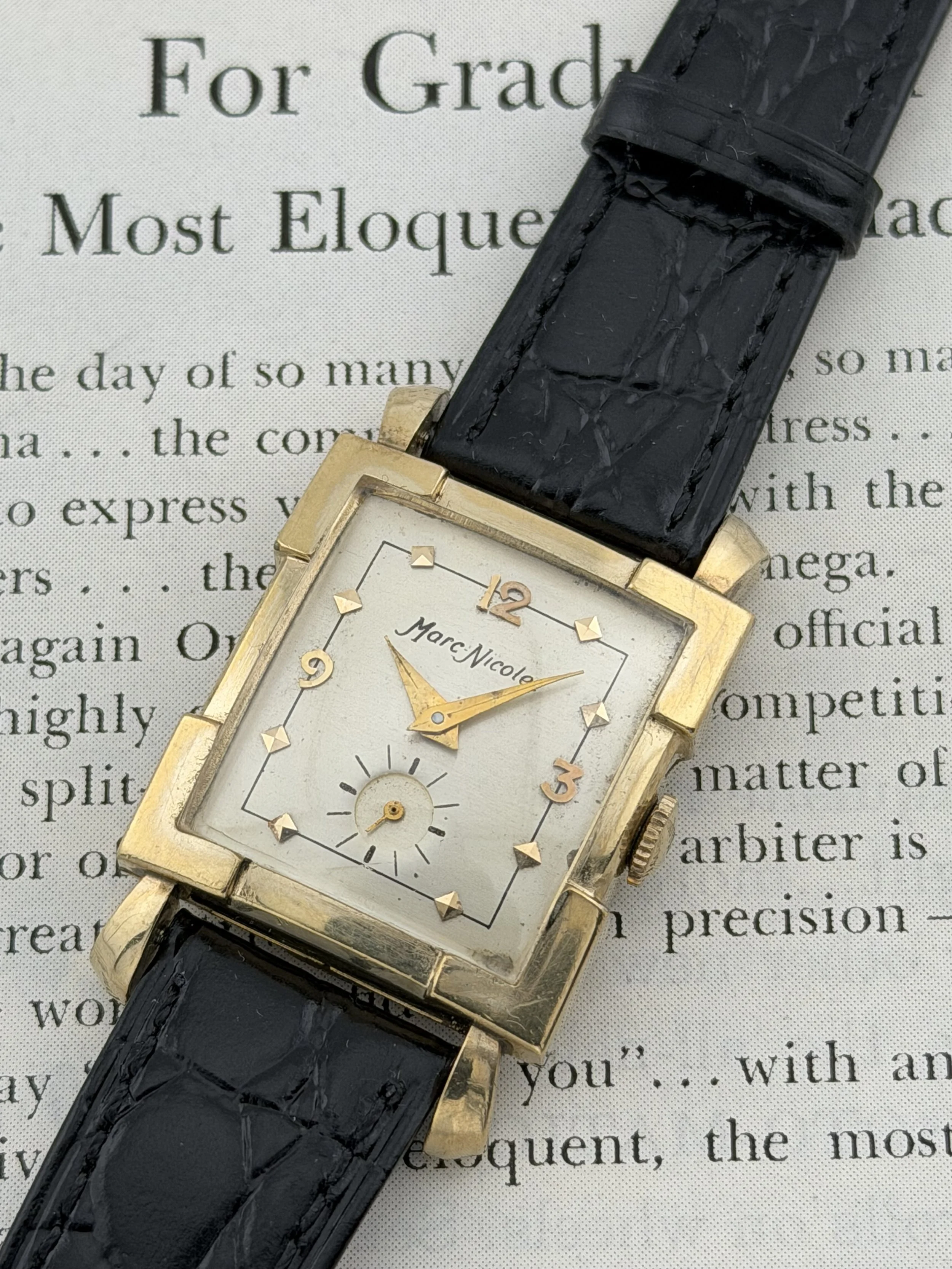
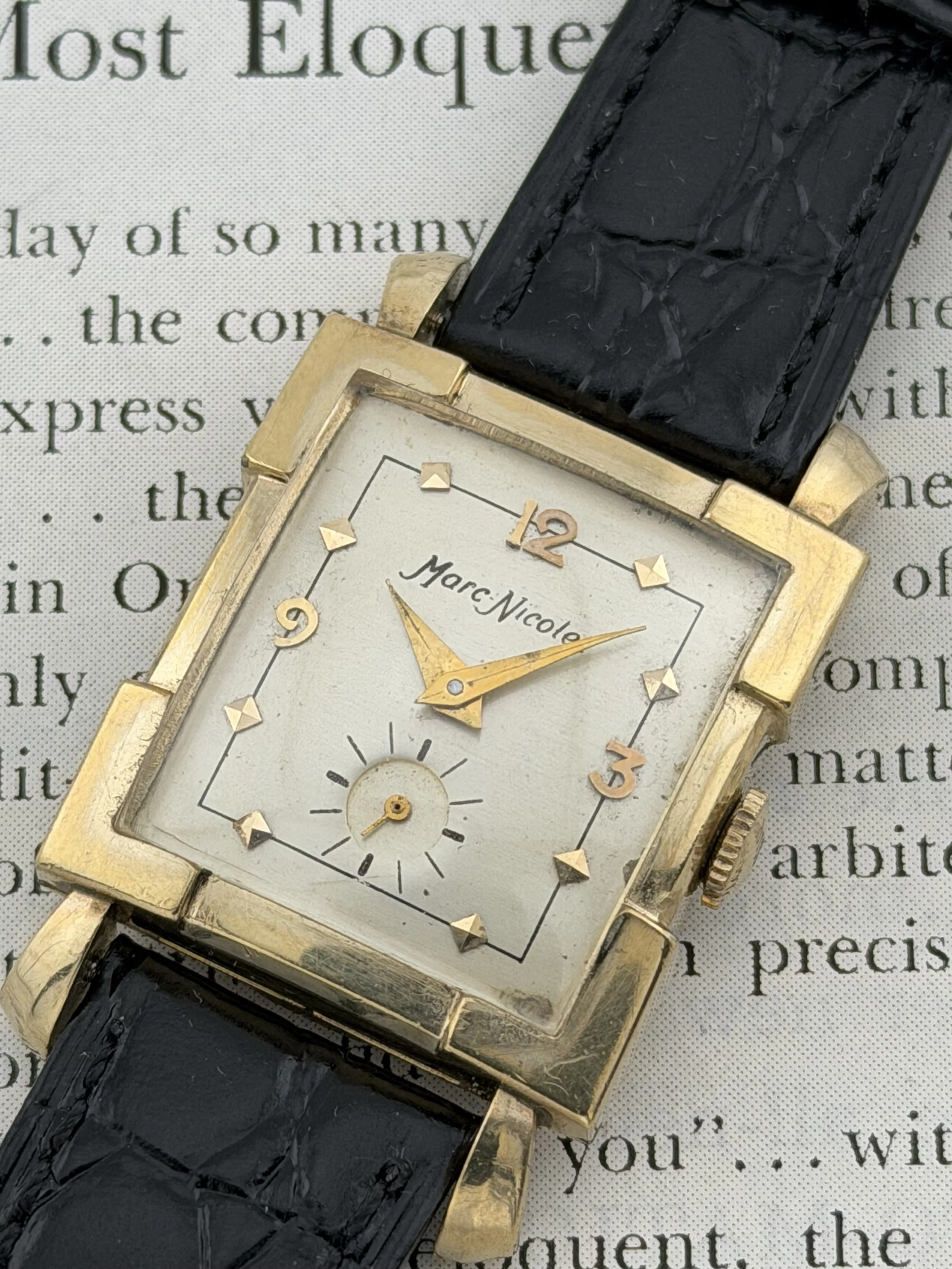
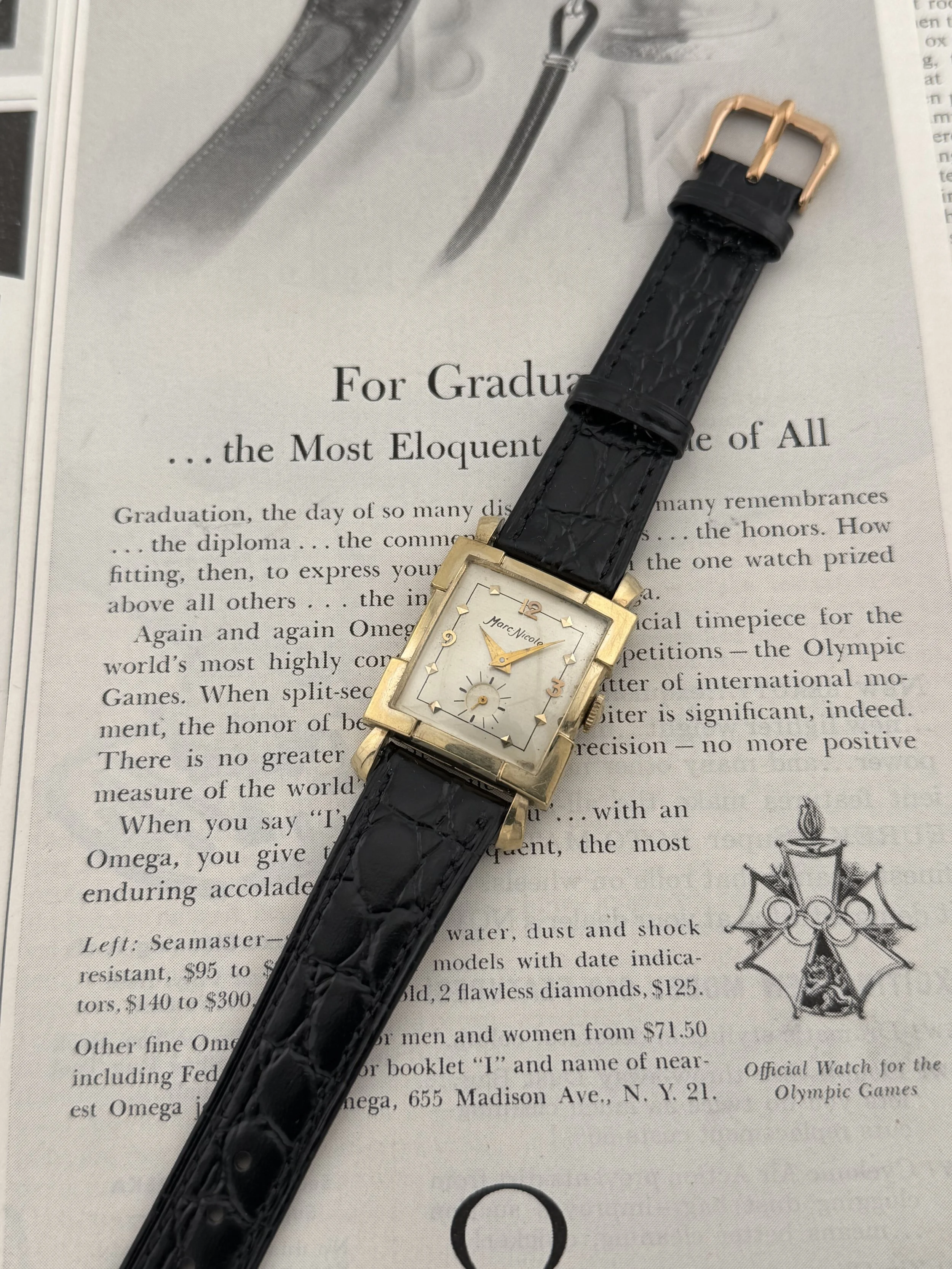
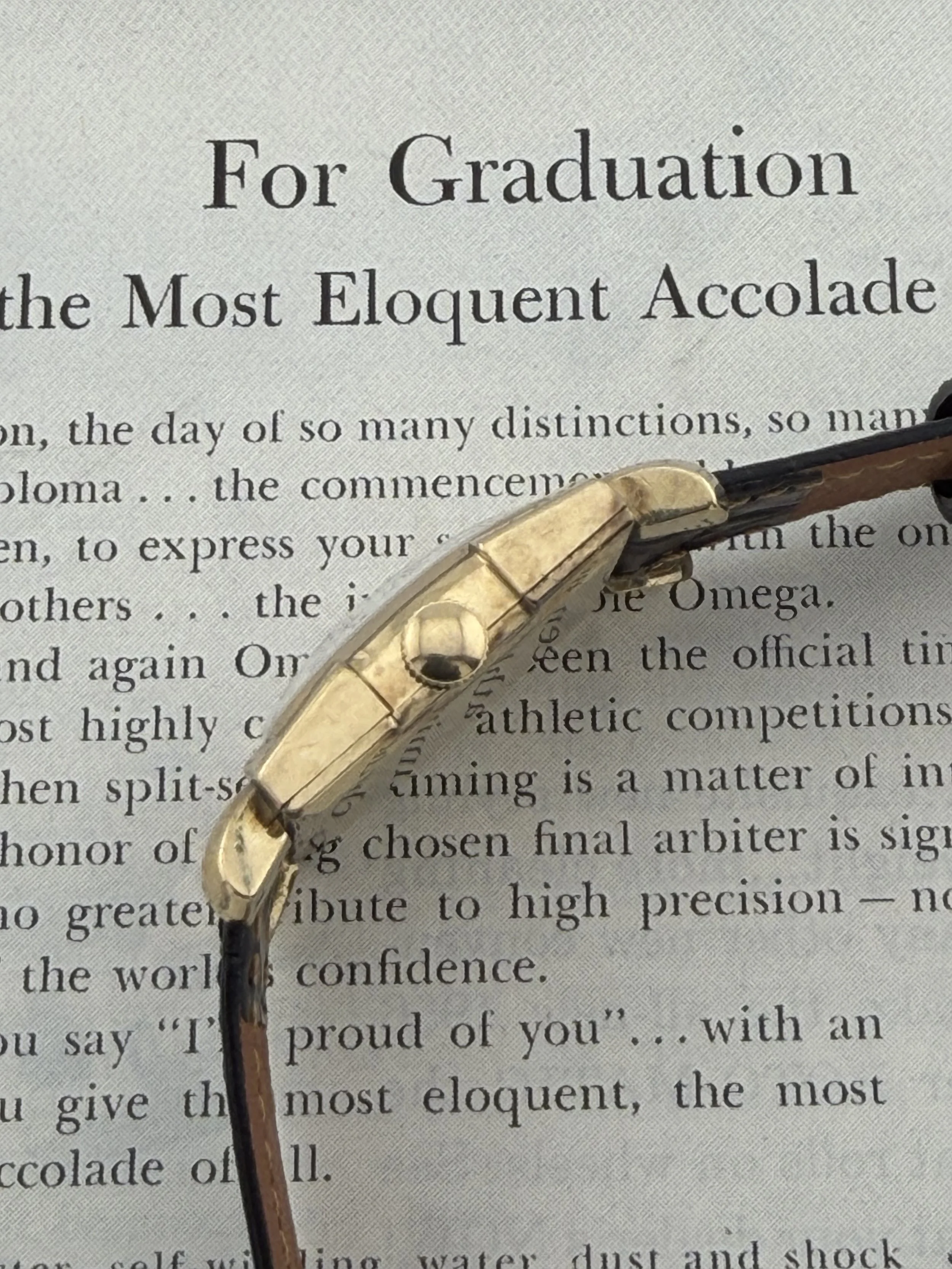
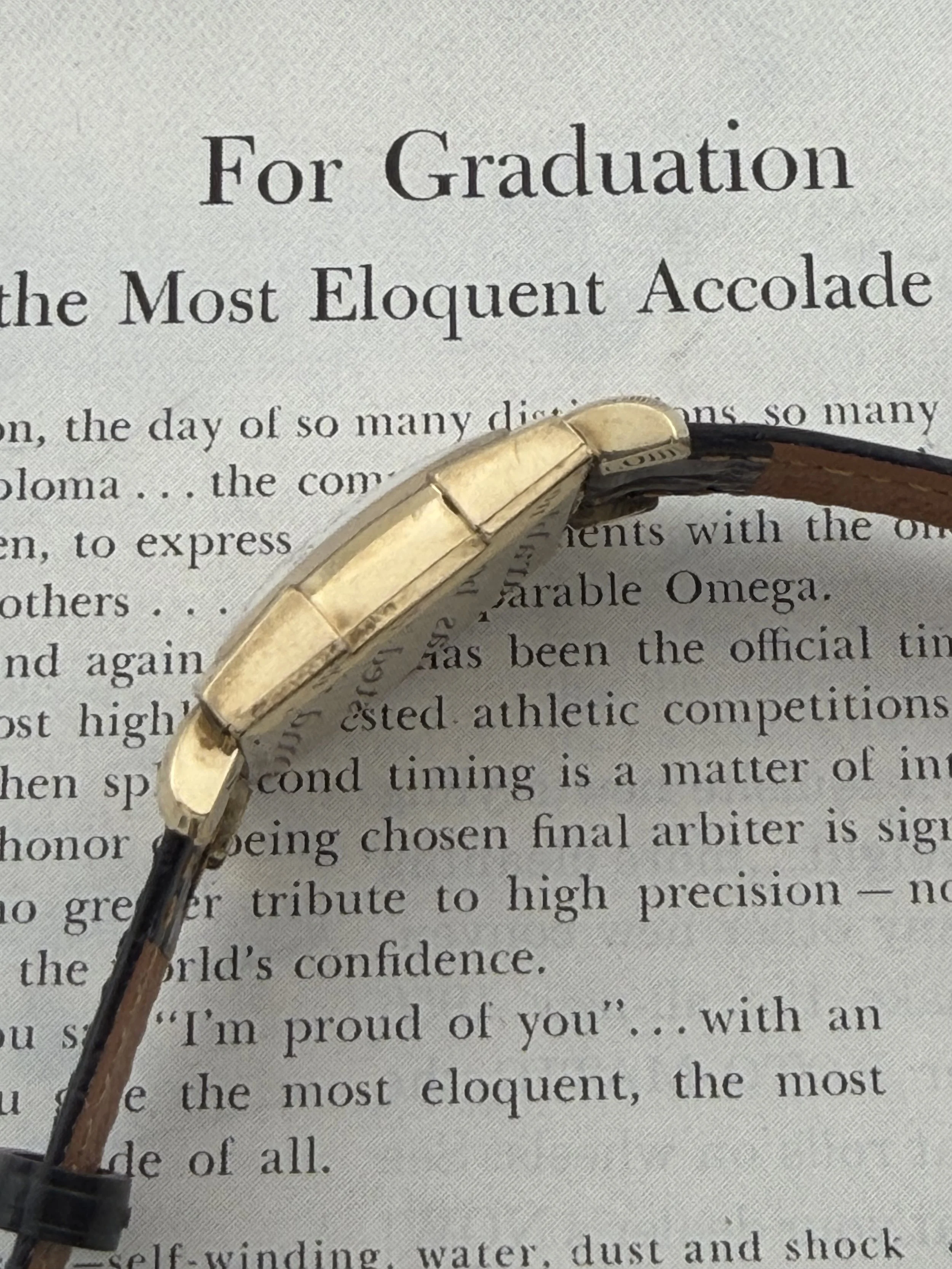
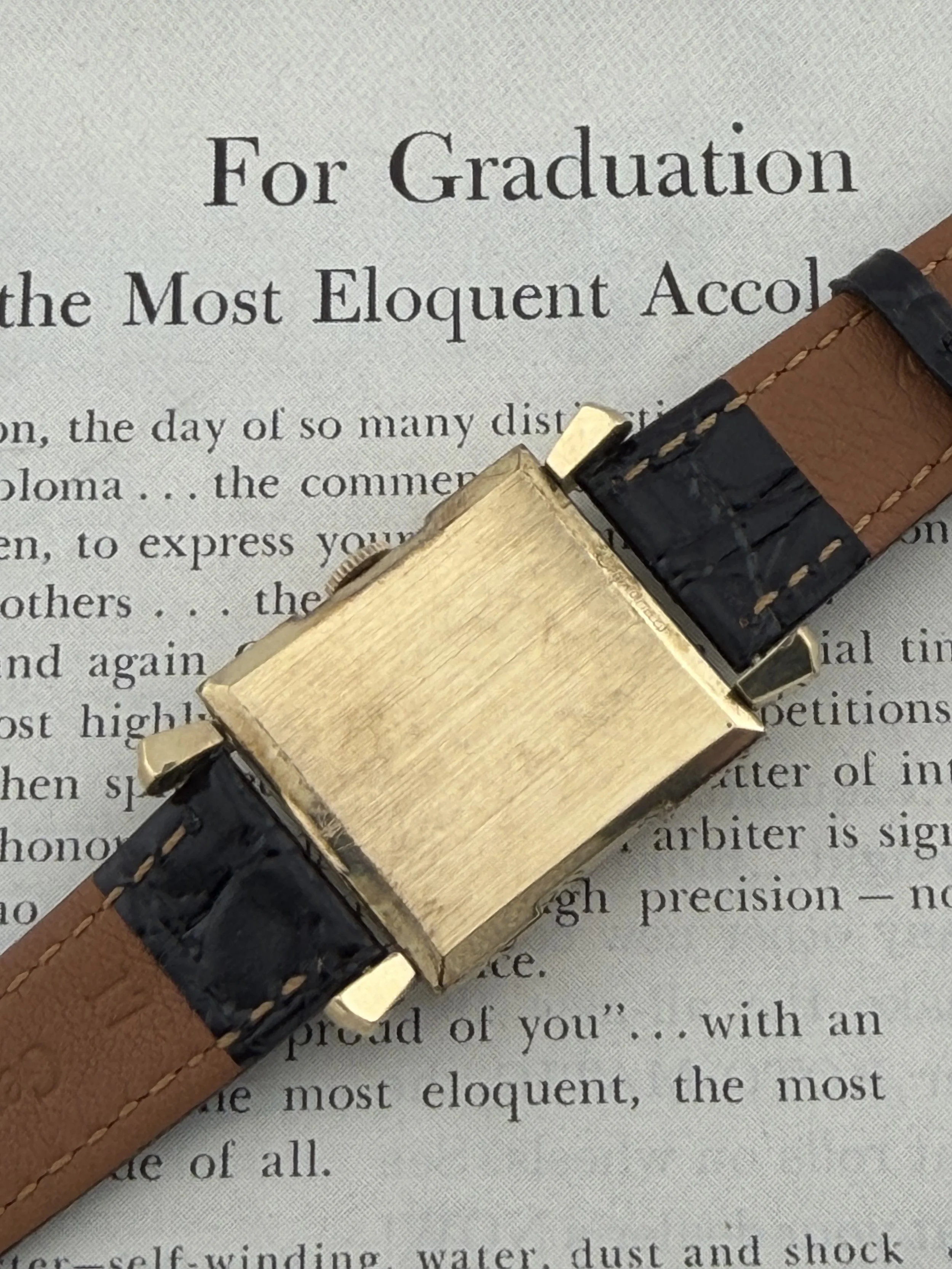
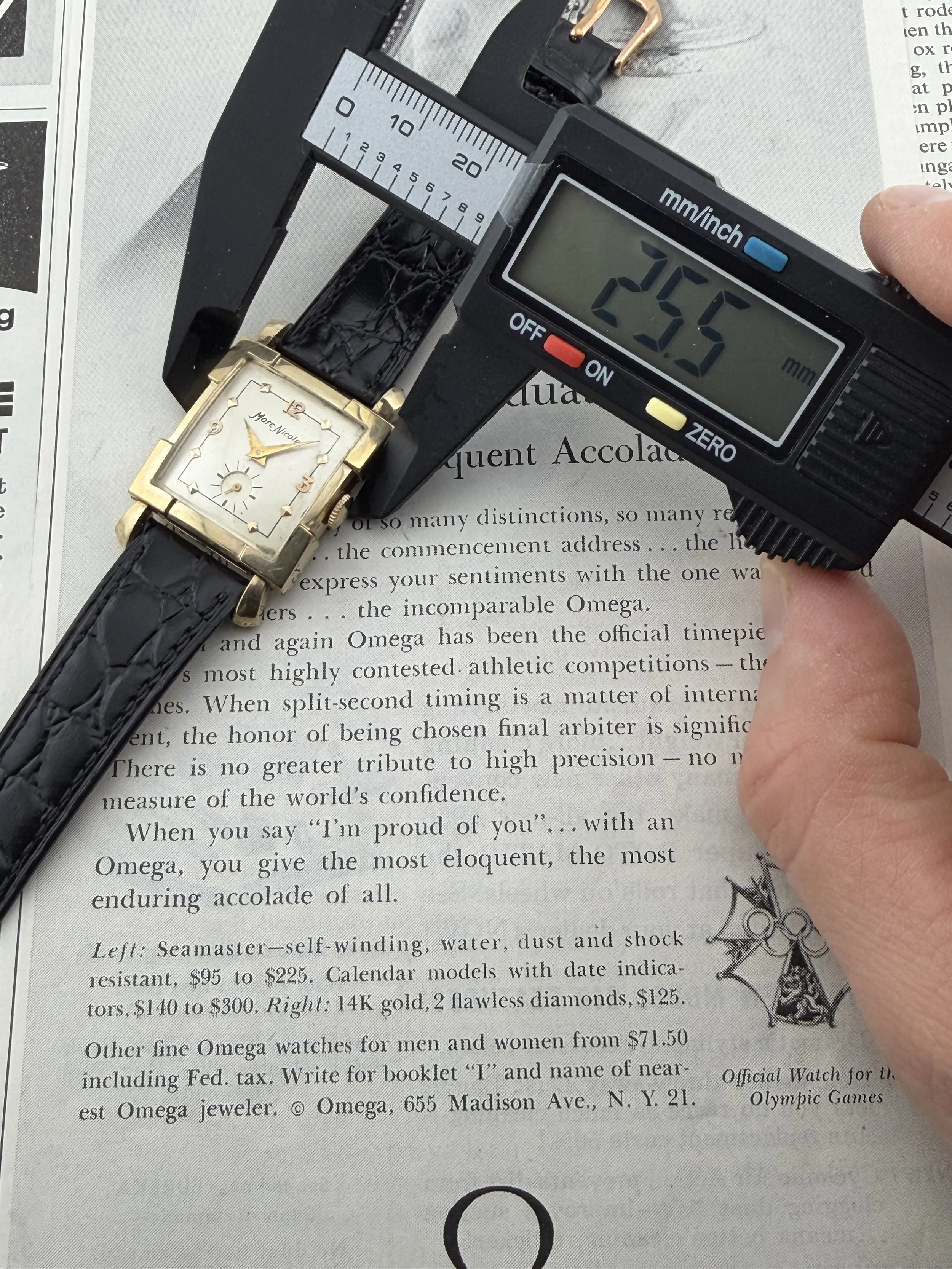
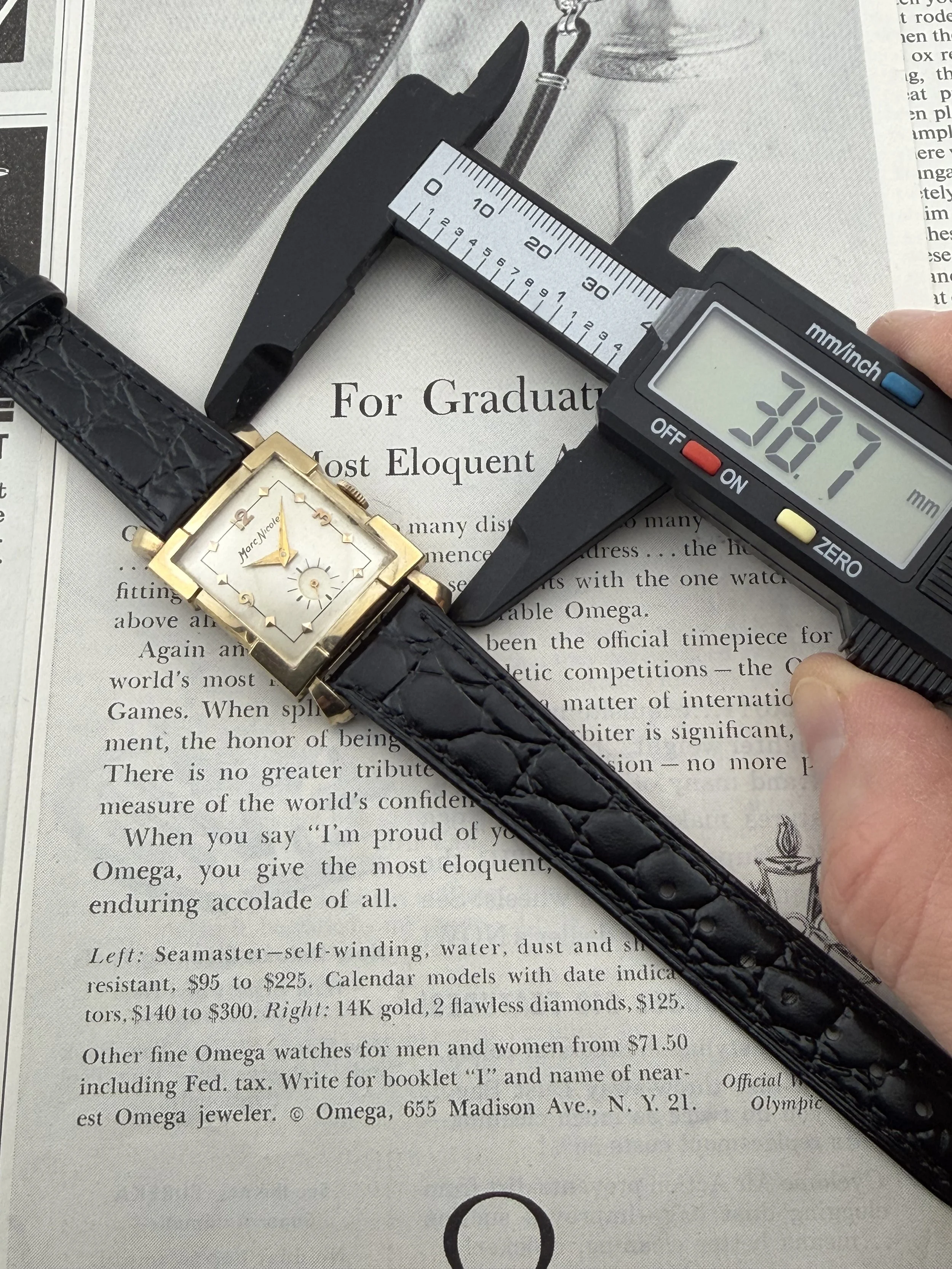
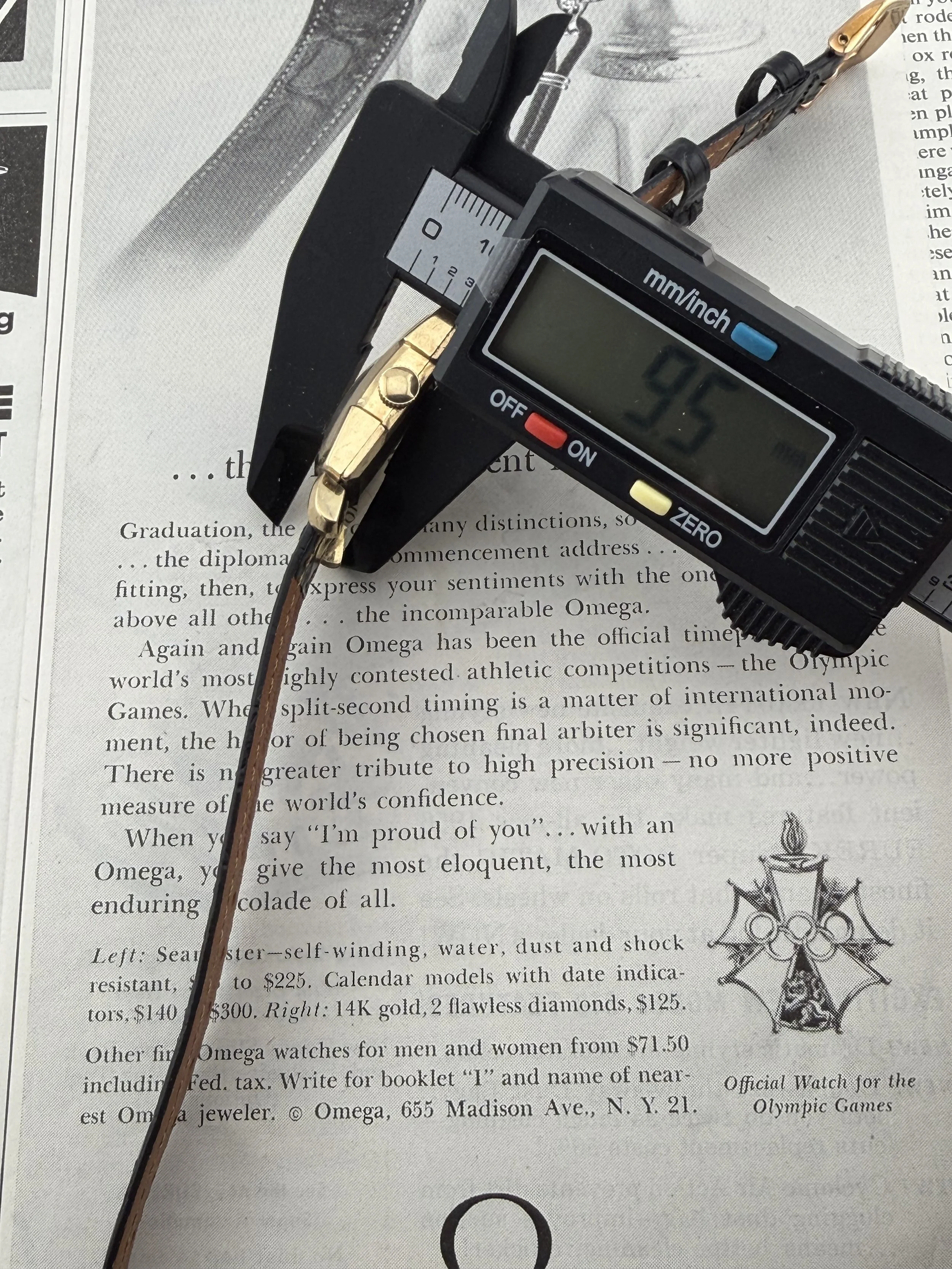
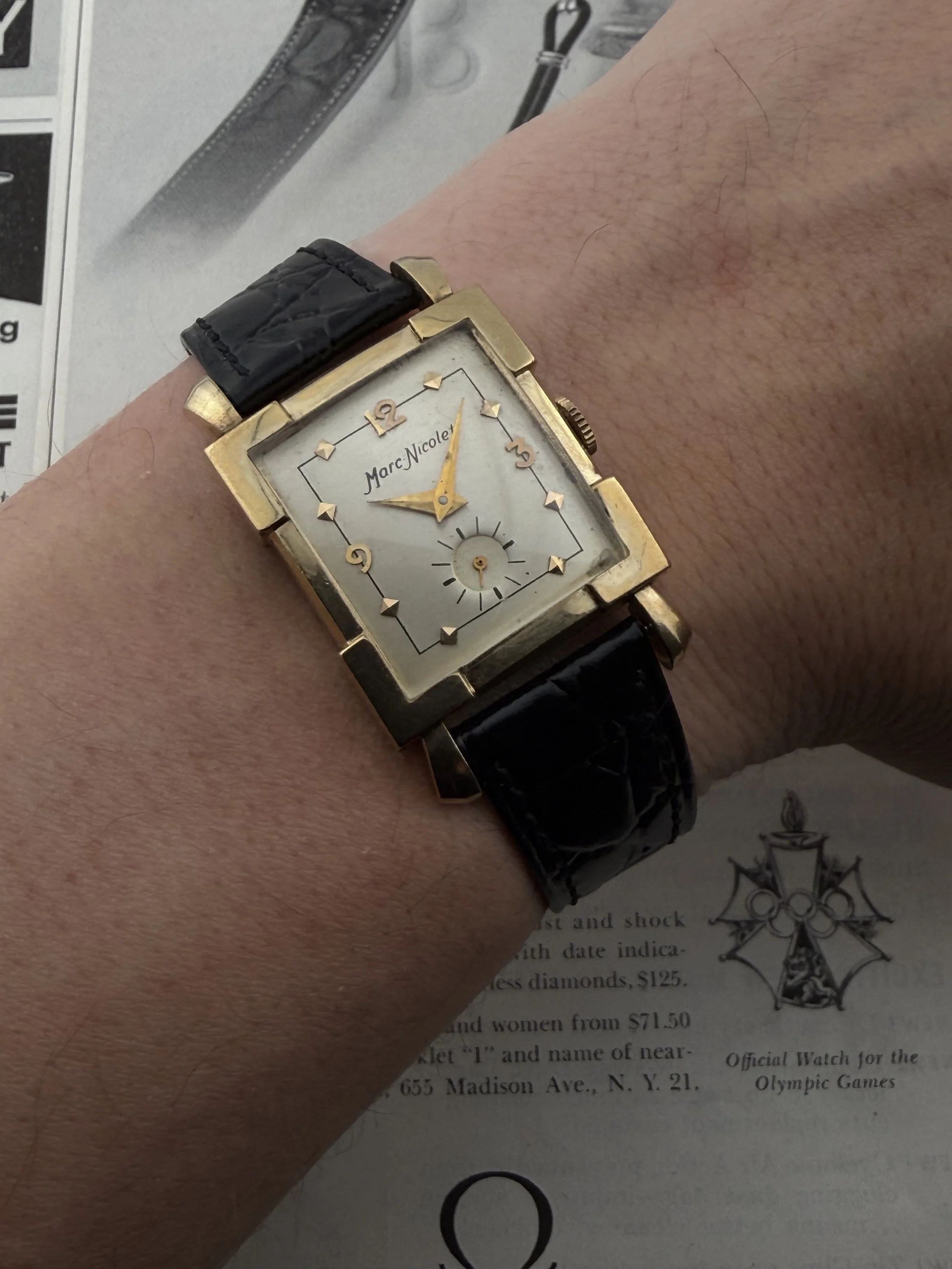
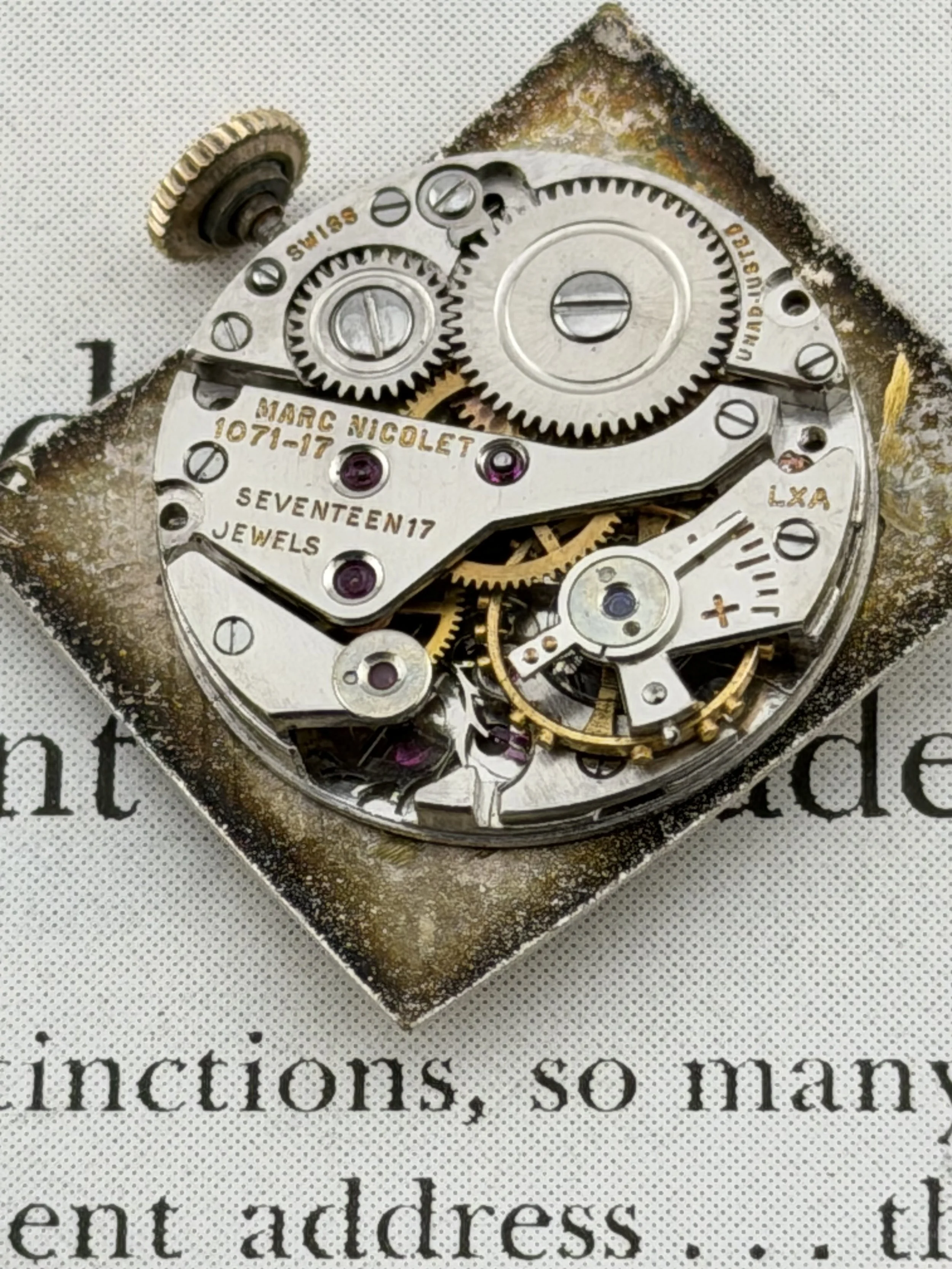
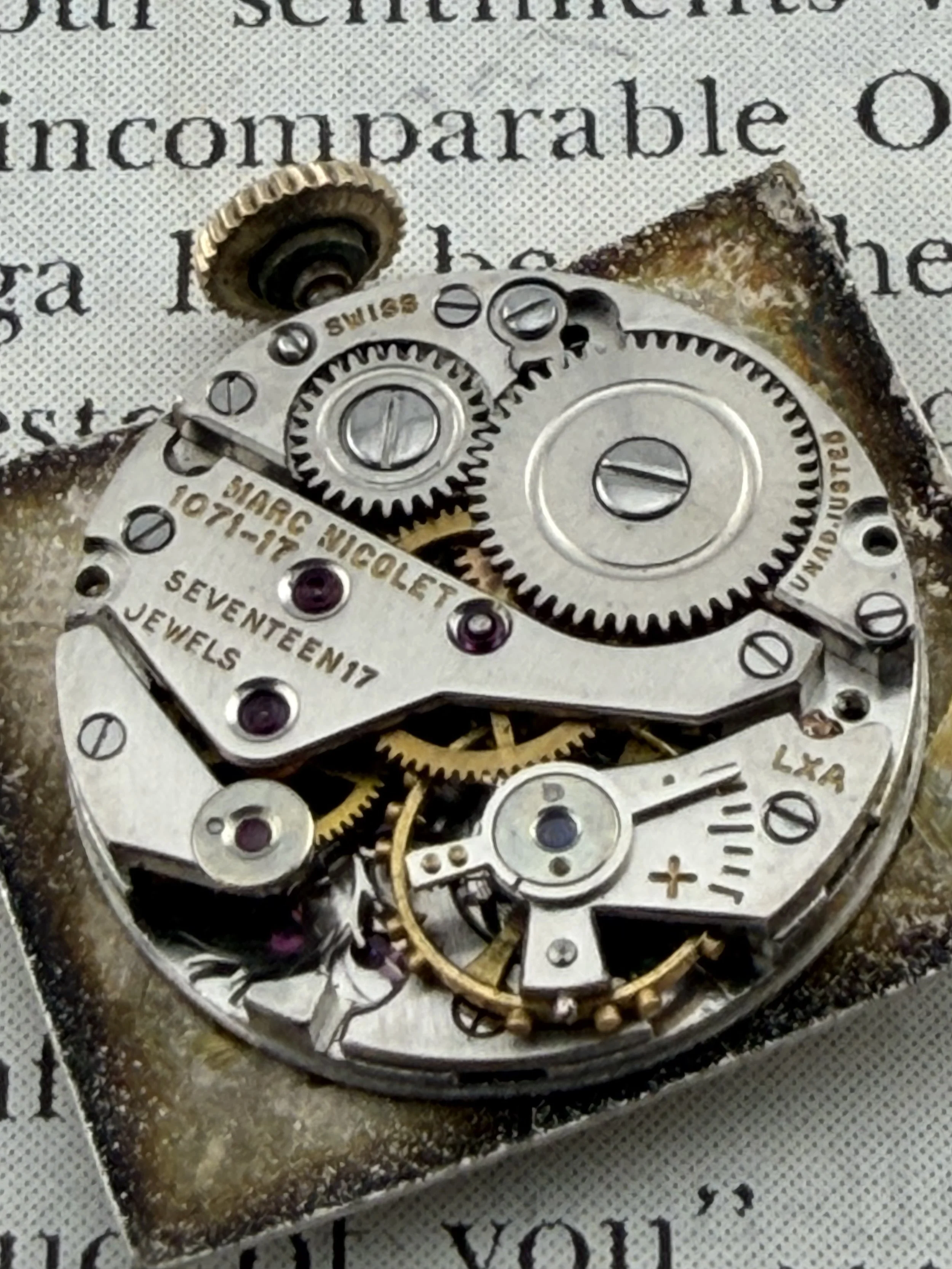
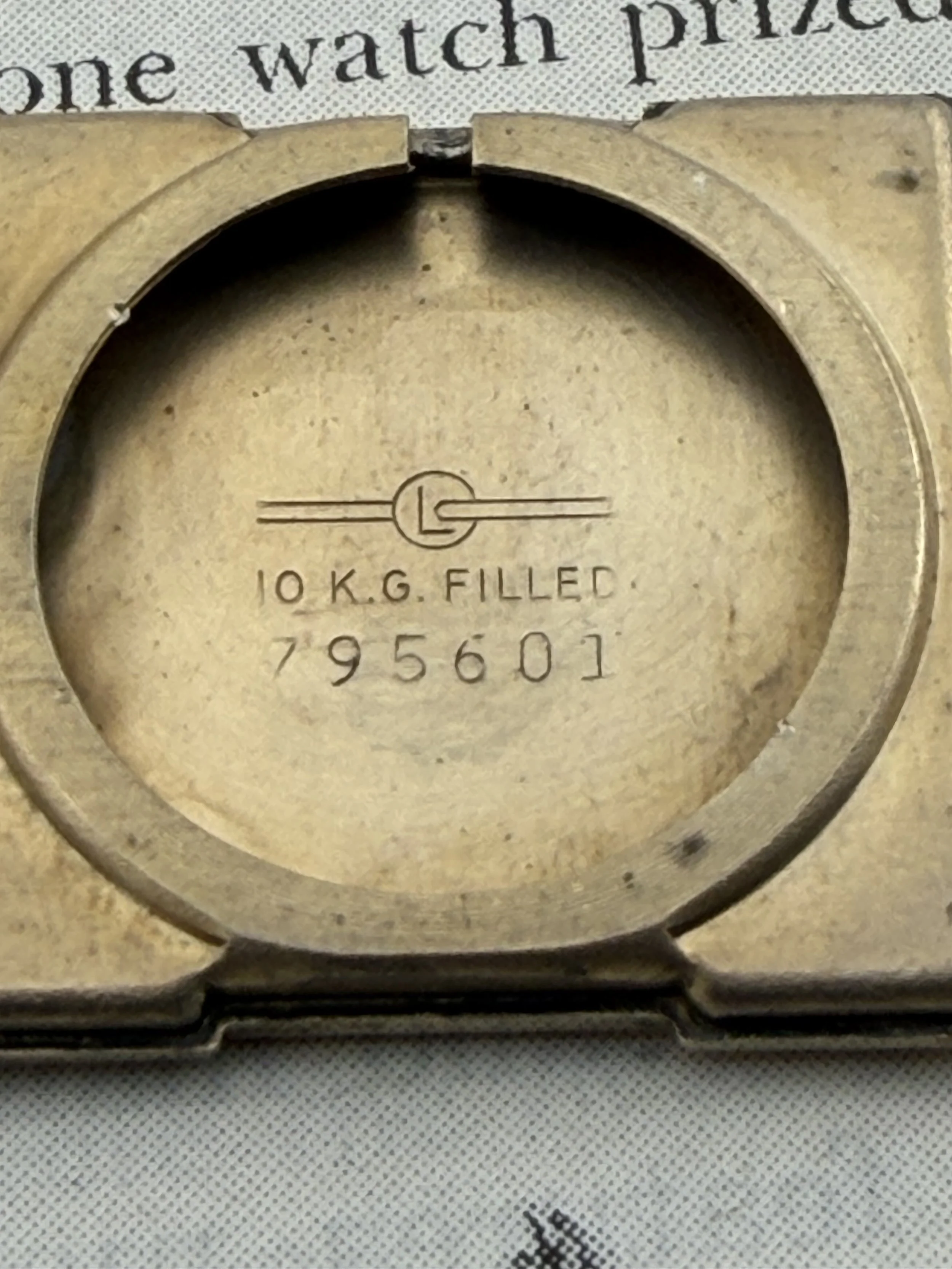
This vintage Marc Nicolet watch is powered by a 17-jewel Swiss movement stamped 1071-17 along with an LXA maker’s mark. Movements with numeric caliber stamps like this were commonly produced using high-quality Swiss ébauches (base movements) and then finished or adjusted for the final brand. The 17-jewel configuration means synthetic ruby bearings are used throughout key friction points in the gear train and escapement, improving longevity, efficiency, and timekeeping stability.
The LXA marking is consistent with movement finishing or distribution channels used by Swiss assemblers working with larger ébauche suppliers. Many mid-century watches used this system, where specialized companies focused on movement production while brands focused on casing, finishing, and distribution.
A very likely base for calibers in this family comes from suppliers such as A. Schild, one of the most important Swiss movement makers of the 20th century. A. Schild supplied reliable, mass-produced mechanical movements that powered countless Swiss watches from the 1940s through the 1970s, making quality mechanical watches accessible at many price levels.
Regarding Waltham, the brand began as one of the most important American watch manufacturers of the 19th and early 20th centuries, pioneering interchangeable parts and industrialized watch production. By the mid-20th century, as American movement production declined, many later Waltham-signed watches transitioned to using Swiss movements or outsourced production — similar to how many mid-century brands operated in the global watch industry.
Overall, a 17-jewel Swiss movement like the 1071-17 represents solid, serviceable mechanical engineering from the golden era of affordable Swiss watchmaking — reliable, straightforward to maintain, and built for everyday use.
This vintage Marc Nicolet watch is powered by a 17-jewel Swiss movement stamped 1071-17 along with an LXA maker’s mark. Movements with numeric caliber stamps like this were commonly produced using high-quality Swiss ébauches (base movements) and then finished or adjusted for the final brand. The 17-jewel configuration means synthetic ruby bearings are used throughout key friction points in the gear train and escapement, improving longevity, efficiency, and timekeeping stability.
The LXA marking is consistent with movement finishing or distribution channels used by Swiss assemblers working with larger ébauche suppliers. Many mid-century watches used this system, where specialized companies focused on movement production while brands focused on casing, finishing, and distribution.
A very likely base for calibers in this family comes from suppliers such as A. Schild, one of the most important Swiss movement makers of the 20th century. A. Schild supplied reliable, mass-produced mechanical movements that powered countless Swiss watches from the 1940s through the 1970s, making quality mechanical watches accessible at many price levels.
Regarding Waltham, the brand began as one of the most important American watch manufacturers of the 19th and early 20th centuries, pioneering interchangeable parts and industrialized watch production. By the mid-20th century, as American movement production declined, many later Waltham-signed watches transitioned to using Swiss movements or outsourced production — similar to how many mid-century brands operated in the global watch industry.
Overall, a 17-jewel Swiss movement like the 1071-17 represents solid, serviceable mechanical engineering from the golden era of affordable Swiss watchmaking — reliable, straightforward to maintain, and built for everyday use.