

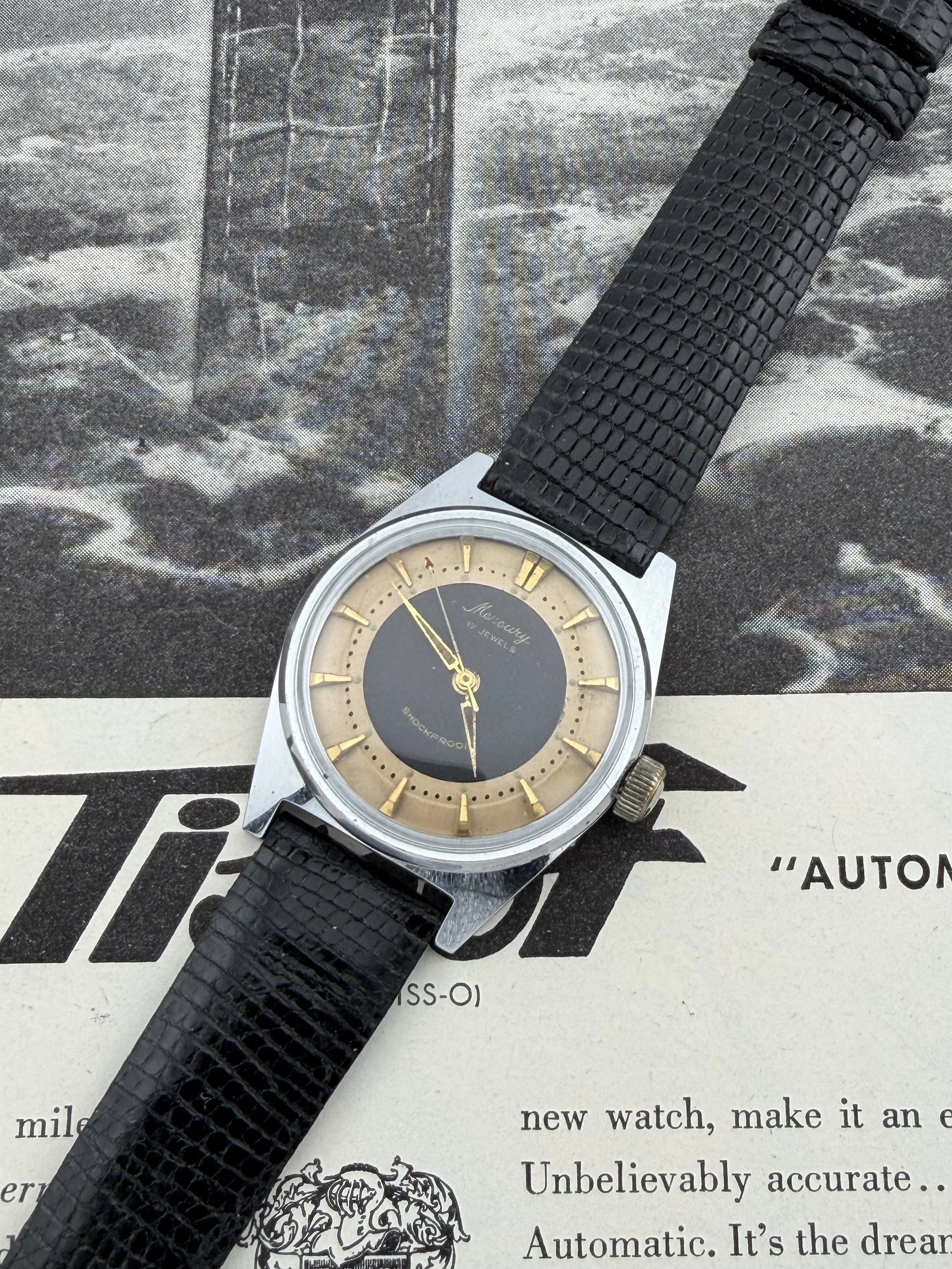
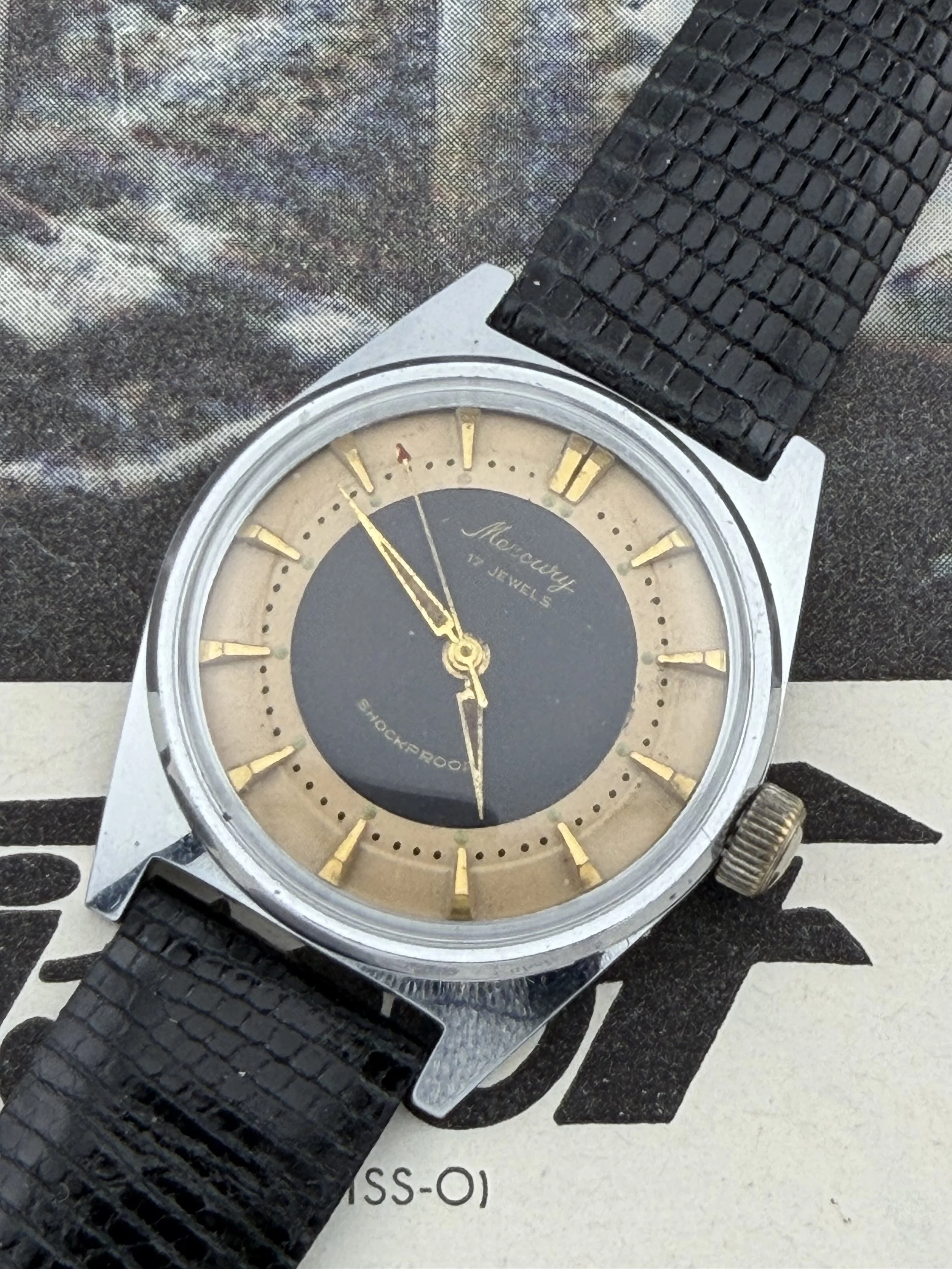
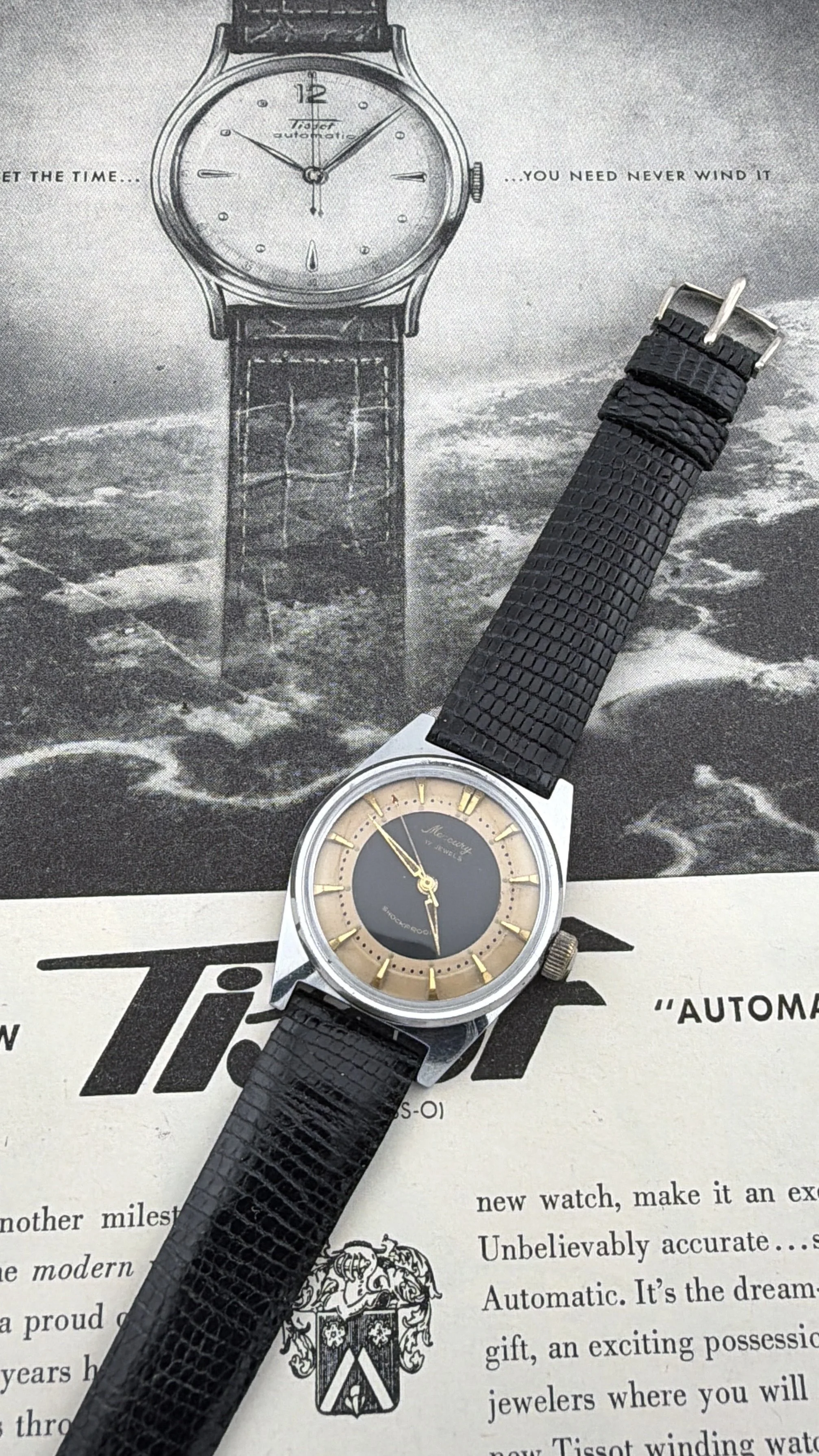
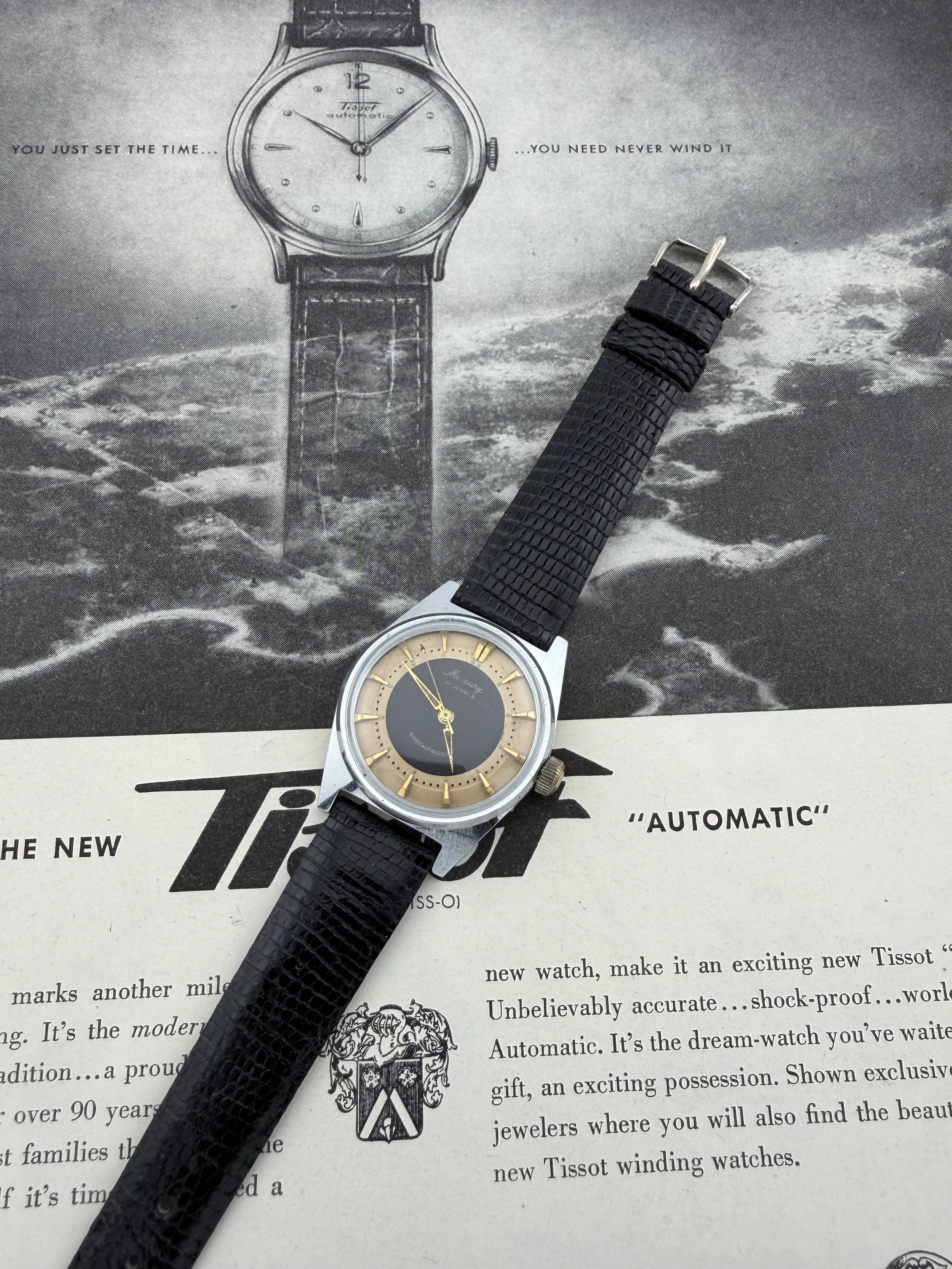
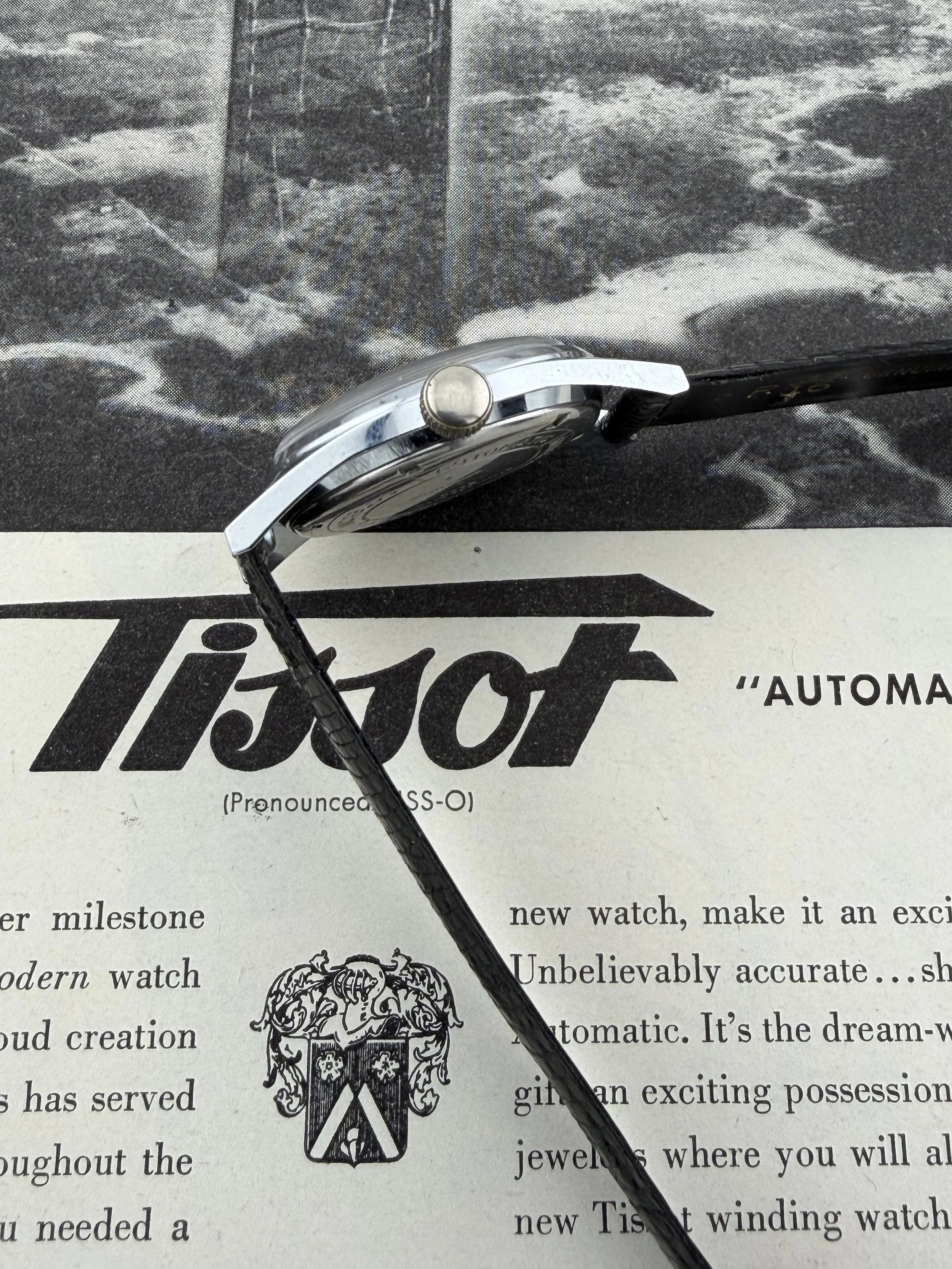
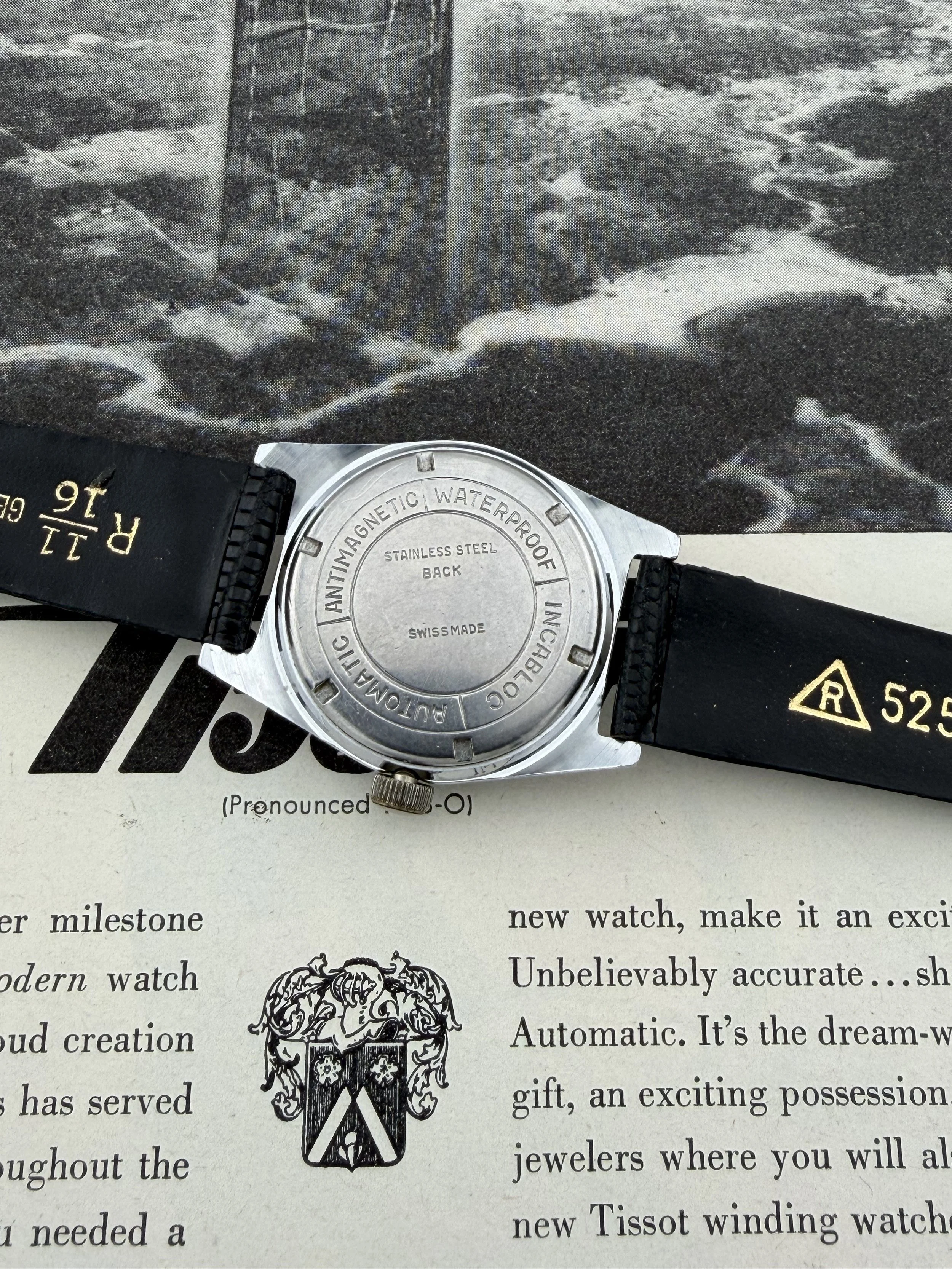
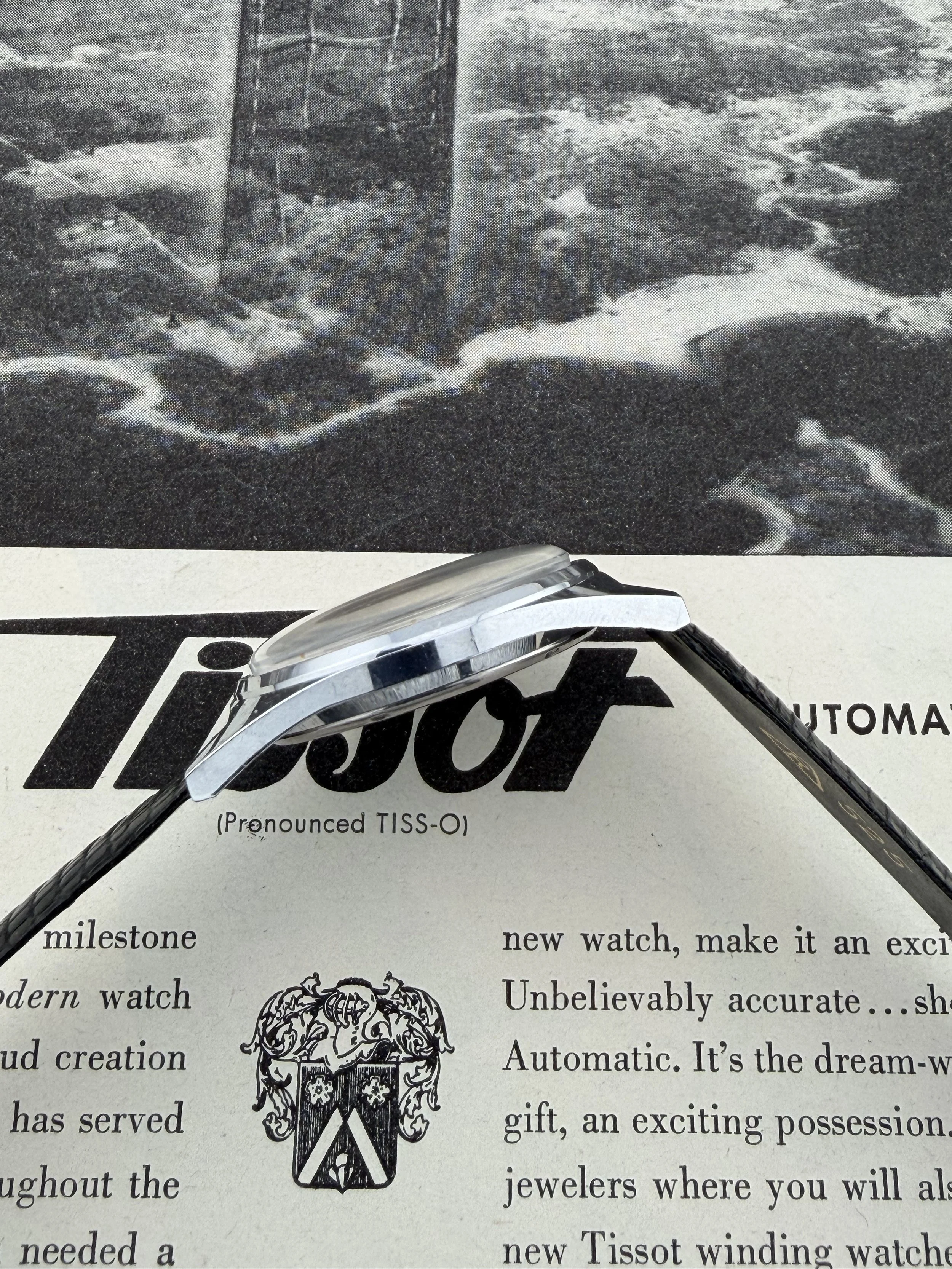
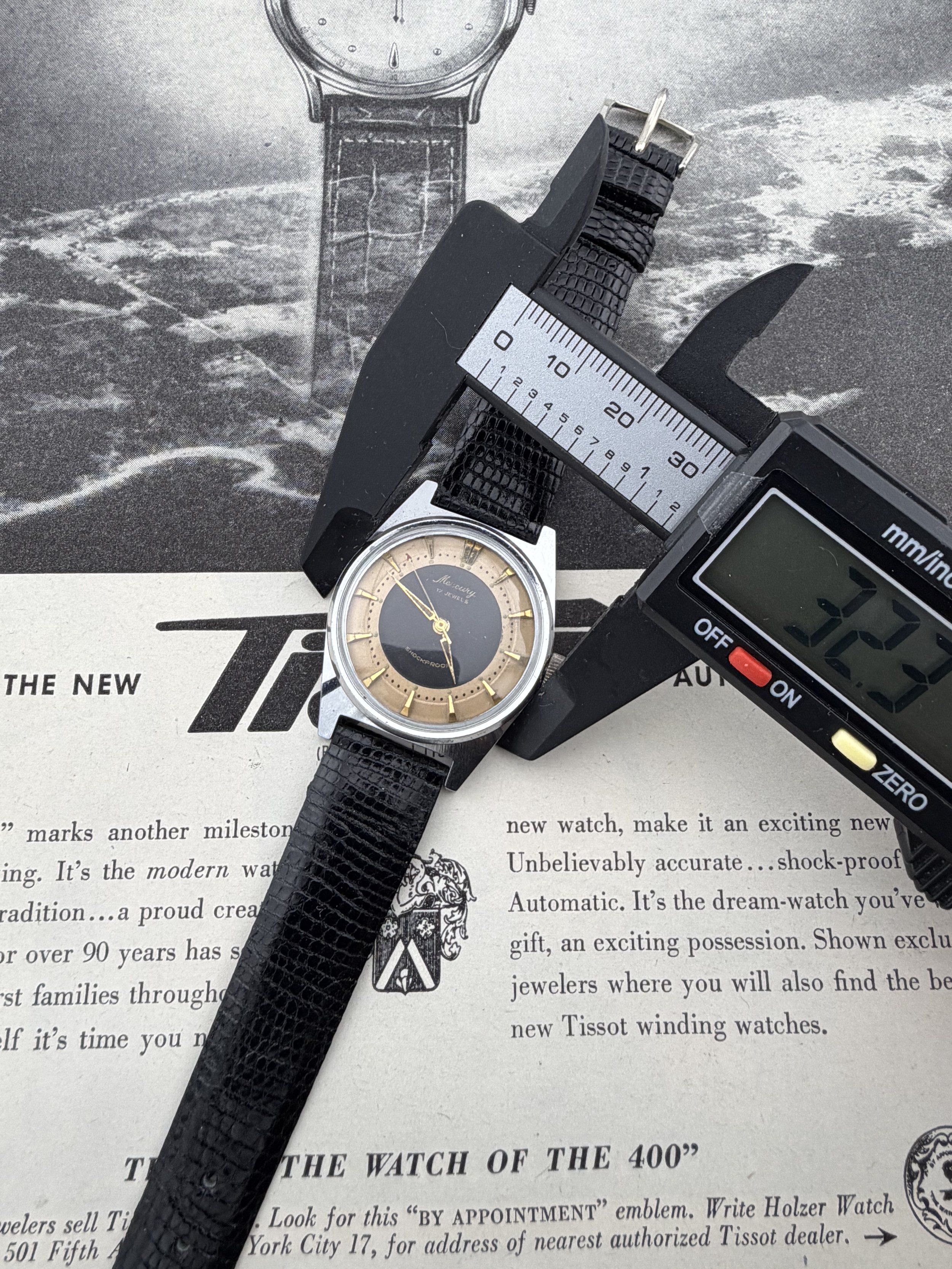
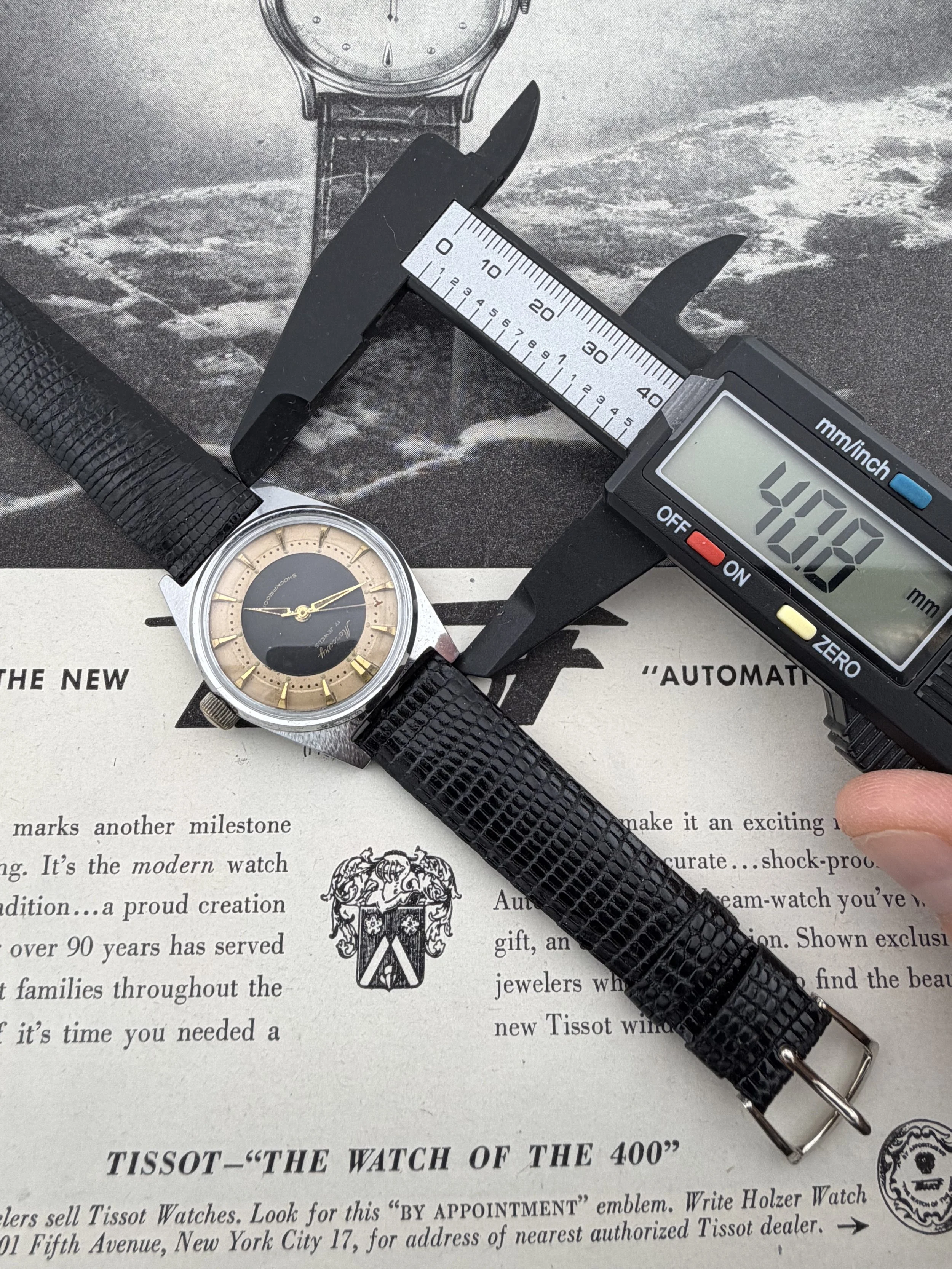
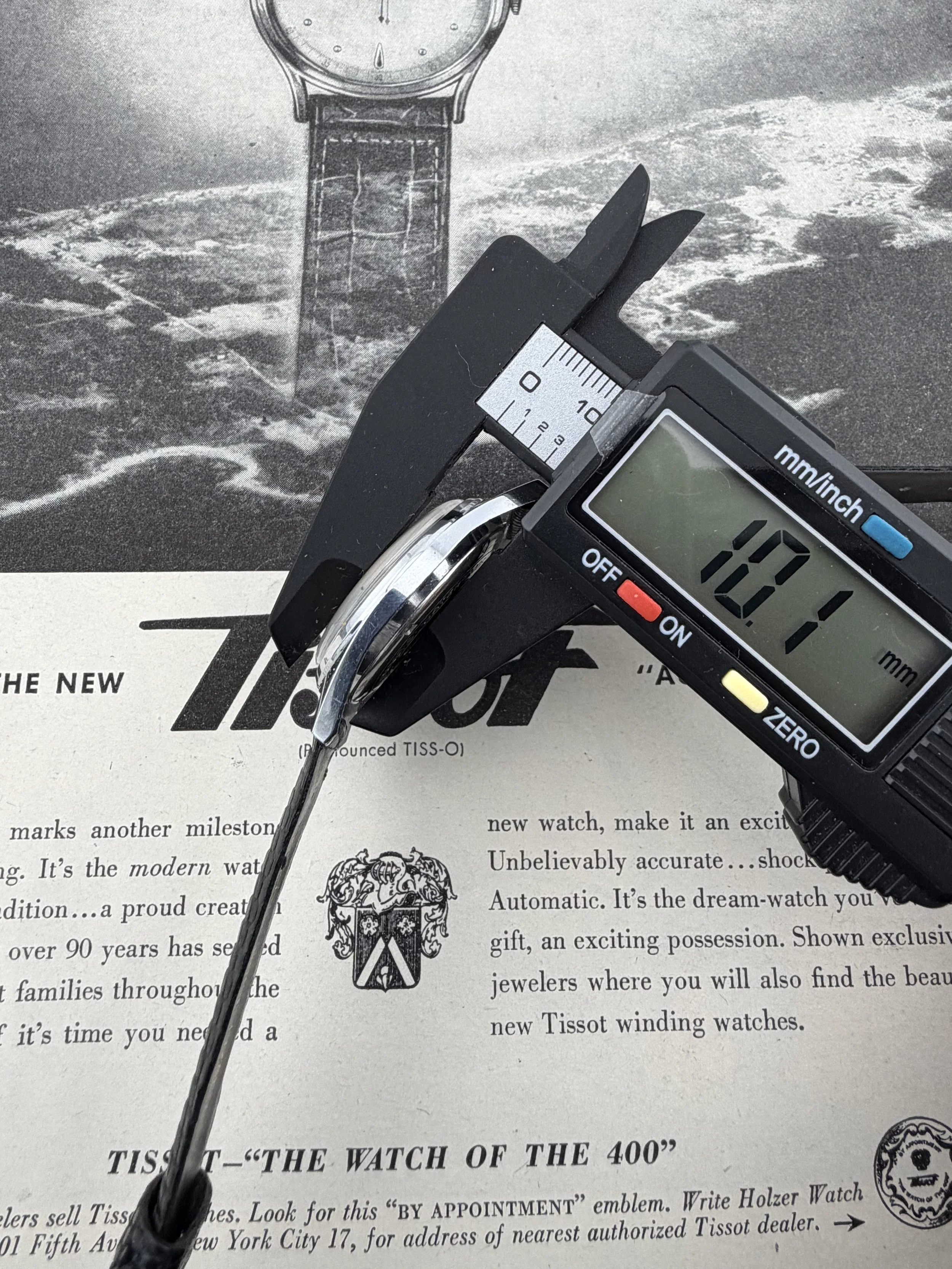
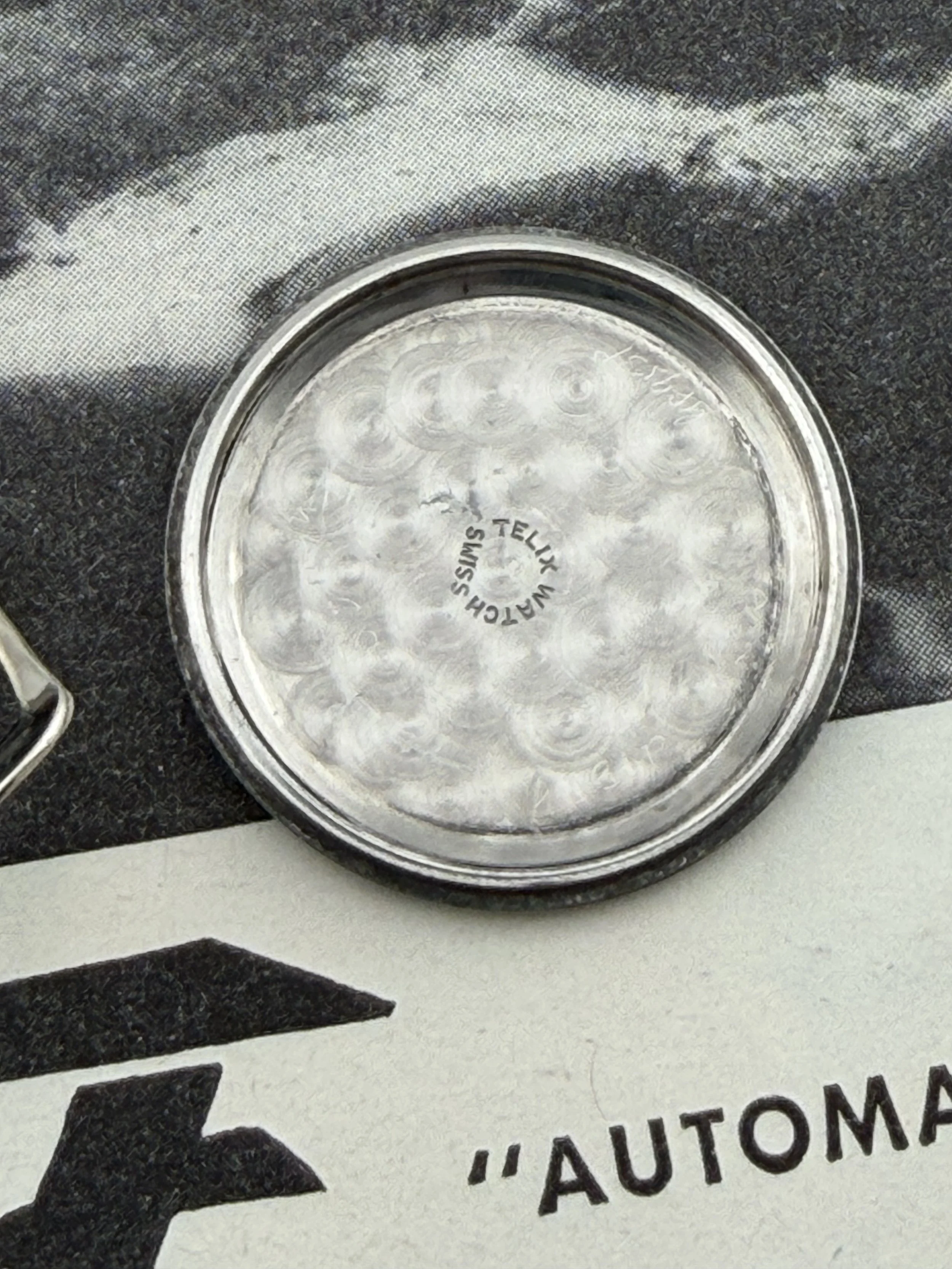
This striking vintage Mercury is a wonderful example of the creativity and individuality found in mid-century mechanical watch design. Featuring a dramatic tuxedo dial, sculptural applied gold indices, elegant gold hands, and a distinctive red-tipped seconds hand, it is a watch with an unusually strong visual personality.
The dial is the immediate star of the watch. Its tuxedo-style design creates a bold contrast between the central dial surface and the darker outer section, giving the watch a sense of depth and visual drama. Rather than relying on elaborate decoration, the design uses contrast, geometry, and carefully applied details to create a look that is both elegant and distinctly mid-century.
The applied gold indices are particularly striking. Their dimensional construction catches the light beautifully, giving the dial a sculptural quality that flat printed markers simply cannot replicate. Paired with the gold hour and minute hands, they create a warm, cohesive design that feels both refined and wonderfully expressive.
The red-tipped seconds hand provides the perfect finishing touch. A small but highly effective detail, the splash of red draws the eye around the dial and adds a touch of sporty character to an otherwise sophisticated dress watch. It is exactly the kind of unexpected design choice that makes vintage watches so much fun to collect.
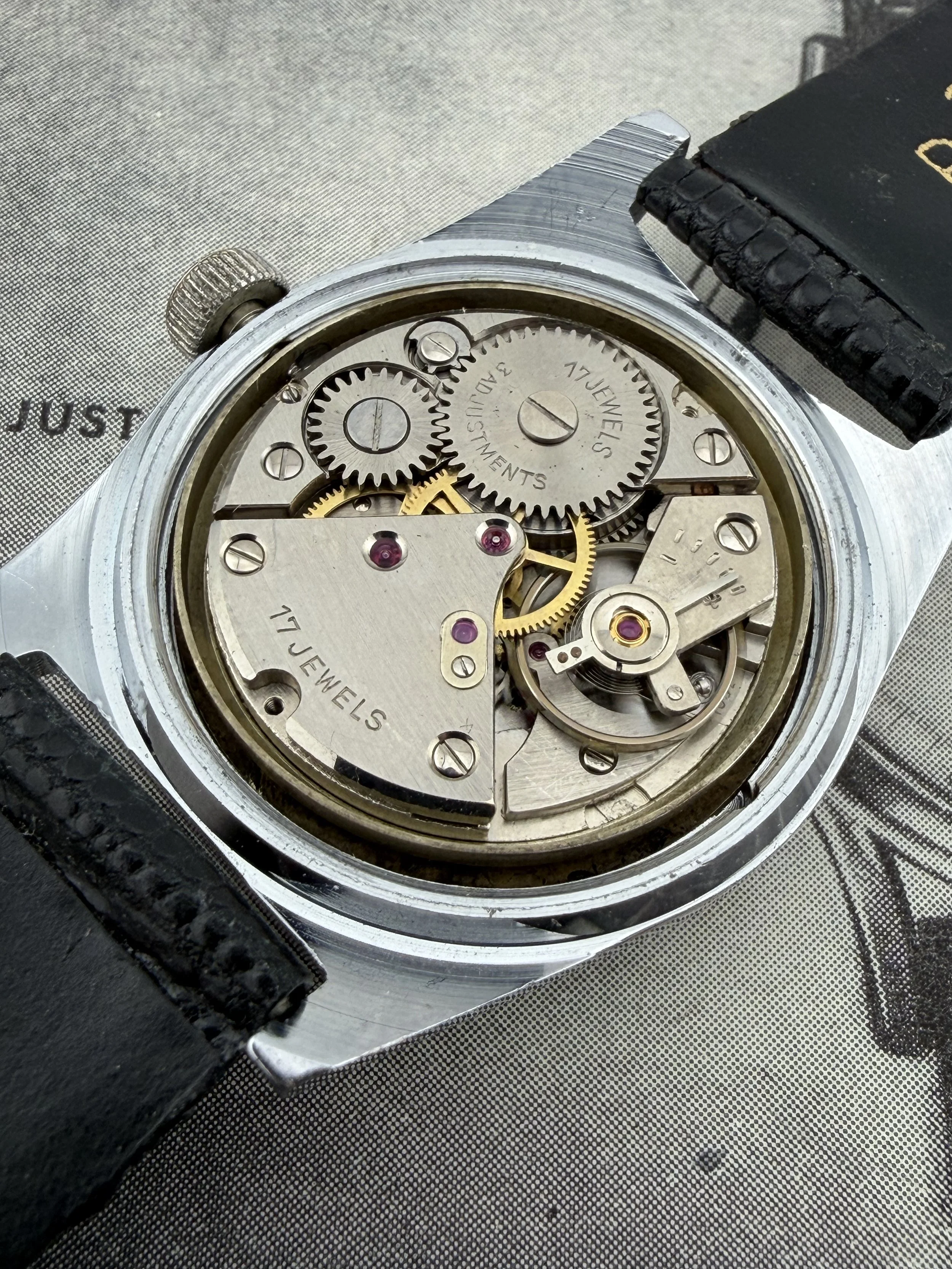
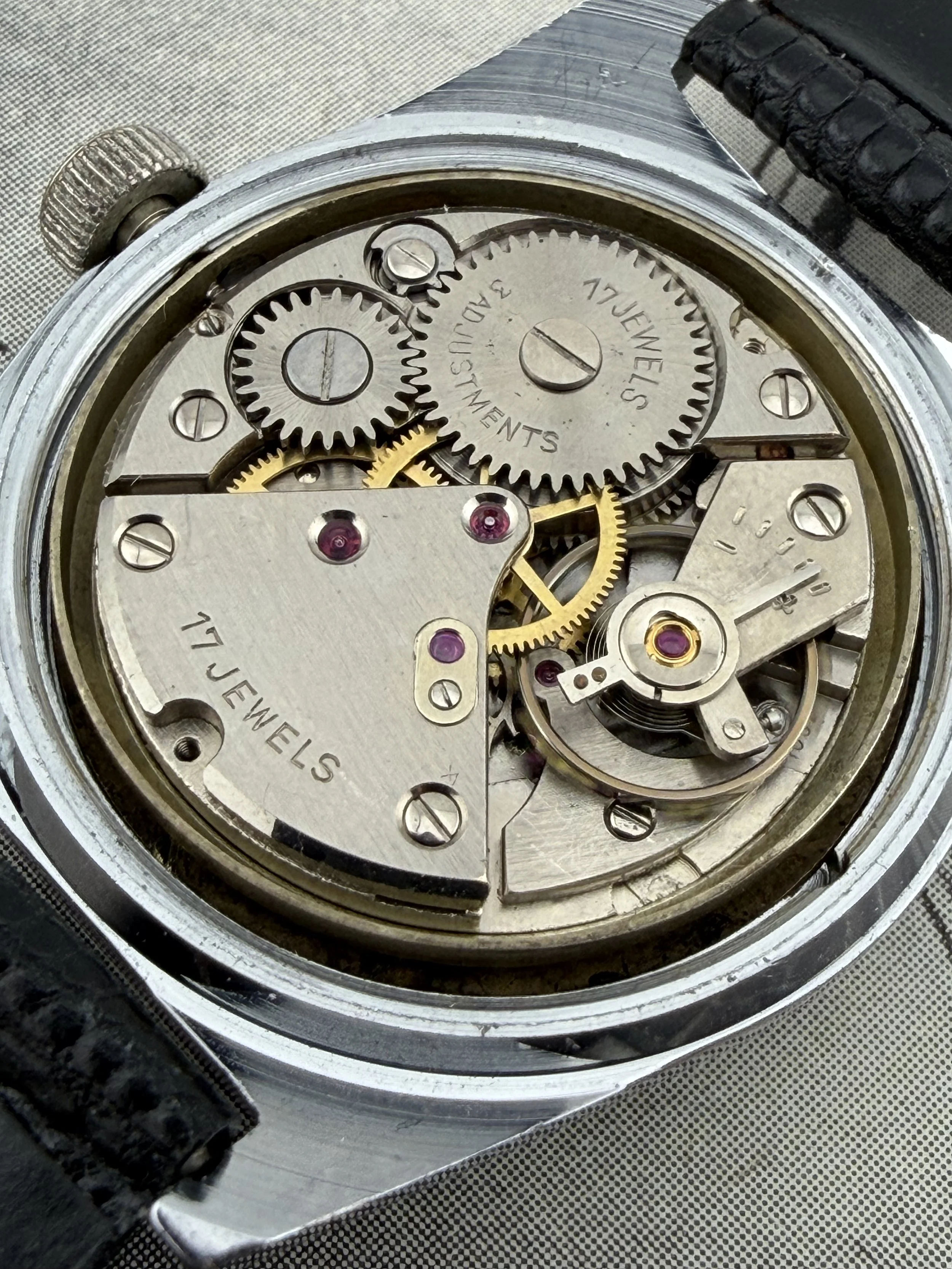
Inside is the Durowe Calibre 1032, a 17-jewel manually wound mechanical movement. Durowe—short for Deutsche Uhren-Rohwerke—was an important German movement manufacturer that supplied mechanical calibres to watch companies throughout the twentieth century. Rather than being a traditional consumer-facing watch brand, Durowe was primarily known for producing reliable ébauches and complete movements used by a wide range of manufacturers.
The Calibre 1032 reflects the practical engineering philosophy of German watchmaking. It is a straightforward, serviceable mechanical movement designed to provide dependable everyday timekeeping. The 17-jewel configuration uses jewelled bearings at key points within the mechanism to reduce friction and wear, helping improve the movement's durability and long-term performance.
The presence of a Durowe movement adds another fascinating layer to this Mercury. During the post-war period, the European watch industry was deeply interconnected, with brands often sourcing movements from specialist manufacturers and pairing them with their own cases, dials, and designs. The result was a diverse watch market filled with distinctive combinations of components and styles.
The case, dial, and movement together create a wonderful example of mid-century watchmaking outside the usual names that dominate the collecting world. This is not simply a watch defined by a famous logo. Its appeal comes from the combination of design, mechanical character, and the unusual details that make the individual piece memorable.
The overall aesthetic is quintessentially 1950s: elegant enough for formal wear, but with enough visual drama to avoid becoming conservative or anonymous. The tuxedo dial gives it a sophisticated evening-watch quality, while the red-tipped seconds hand introduces just enough contrast to keep the design lively.
What makes this Mercury particularly appealing is its balance of restraint and personality. The case and overall silhouette remain classic, but the dial refuses to disappear into the background. The applied gold indices, contrasting tuxedo design, gold hands, and red seconds tip all work together to create a watch that rewards closer inspection.
For collectors who appreciate unusual mid-century designs, German mechanical movements, and vintage watches with strong visual character, this Mercury is a wonderfully distinctive example. A dramatic tuxedo dial, a reliable 17-jewel Durowe Calibre 1032, and a handful of beautifully considered details combine to create a watch that is elegant, unusual, and full of personality.
This striking vintage Mercury is a wonderful example of the creativity and individuality found in mid-century mechanical watch design. Featuring a dramatic tuxedo dial, sculptural applied gold indices, elegant gold hands, and a distinctive red-tipped seconds hand, it is a watch with an unusually strong visual personality.
The dial is the immediate star of the watch. Its tuxedo-style design creates a bold contrast between the central dial surface and the darker outer section, giving the watch a sense of depth and visual drama. Rather than relying on elaborate decoration, the design uses contrast, geometry, and carefully applied details to create a look that is both elegant and distinctly mid-century.
The applied gold indices are particularly striking. Their dimensional construction catches the light beautifully, giving the dial a sculptural quality that flat printed markers simply cannot replicate. Paired with the gold hour and minute hands, they create a warm, cohesive design that feels both refined and wonderfully expressive.
The red-tipped seconds hand provides the perfect finishing touch. A small but highly effective detail, the splash of red draws the eye around the dial and adds a touch of sporty character to an otherwise sophisticated dress watch. It is exactly the kind of unexpected design choice that makes vintage watches so much fun to collect.
Inside is the Durowe Calibre 1032, a 17-jewel manually wound mechanical movement. Durowe—short for Deutsche Uhren-Rohwerke—was an important German movement manufacturer that supplied mechanical calibres to watch companies throughout the twentieth century. Rather than being a traditional consumer-facing watch brand, Durowe was primarily known for producing reliable ébauches and complete movements used by a wide range of manufacturers.
The Calibre 1032 reflects the practical engineering philosophy of German watchmaking. It is a straightforward, serviceable mechanical movement designed to provide dependable everyday timekeeping. The 17-jewel configuration uses jewelled bearings at key points within the mechanism to reduce friction and wear, helping improve the movement's durability and long-term performance.
The presence of a Durowe movement adds another fascinating layer to this Mercury. During the post-war period, the European watch industry was deeply interconnected, with brands often sourcing movements from specialist manufacturers and pairing them with their own cases, dials, and designs. The result was a diverse watch market filled with distinctive combinations of components and styles.
The case, dial, and movement together create a wonderful example of mid-century watchmaking outside the usual names that dominate the collecting world. This is not simply a watch defined by a famous logo. Its appeal comes from the combination of design, mechanical character, and the unusual details that make the individual piece memorable.
The overall aesthetic is quintessentially 1950s: elegant enough for formal wear, but with enough visual drama to avoid becoming conservative or anonymous. The tuxedo dial gives it a sophisticated evening-watch quality, while the red-tipped seconds hand introduces just enough contrast to keep the design lively.
What makes this Mercury particularly appealing is its balance of restraint and personality. The case and overall silhouette remain classic, but the dial refuses to disappear into the background. The applied gold indices, contrasting tuxedo design, gold hands, and red seconds tip all work together to create a watch that rewards closer inspection.
For collectors who appreciate unusual mid-century designs, German mechanical movements, and vintage watches with strong visual character, this Mercury is a wonderfully distinctive example. A dramatic tuxedo dial, a reliable 17-jewel Durowe Calibre 1032, and a handful of beautifully considered details combine to create a watch that is elegant, unusual, and full of personality.