

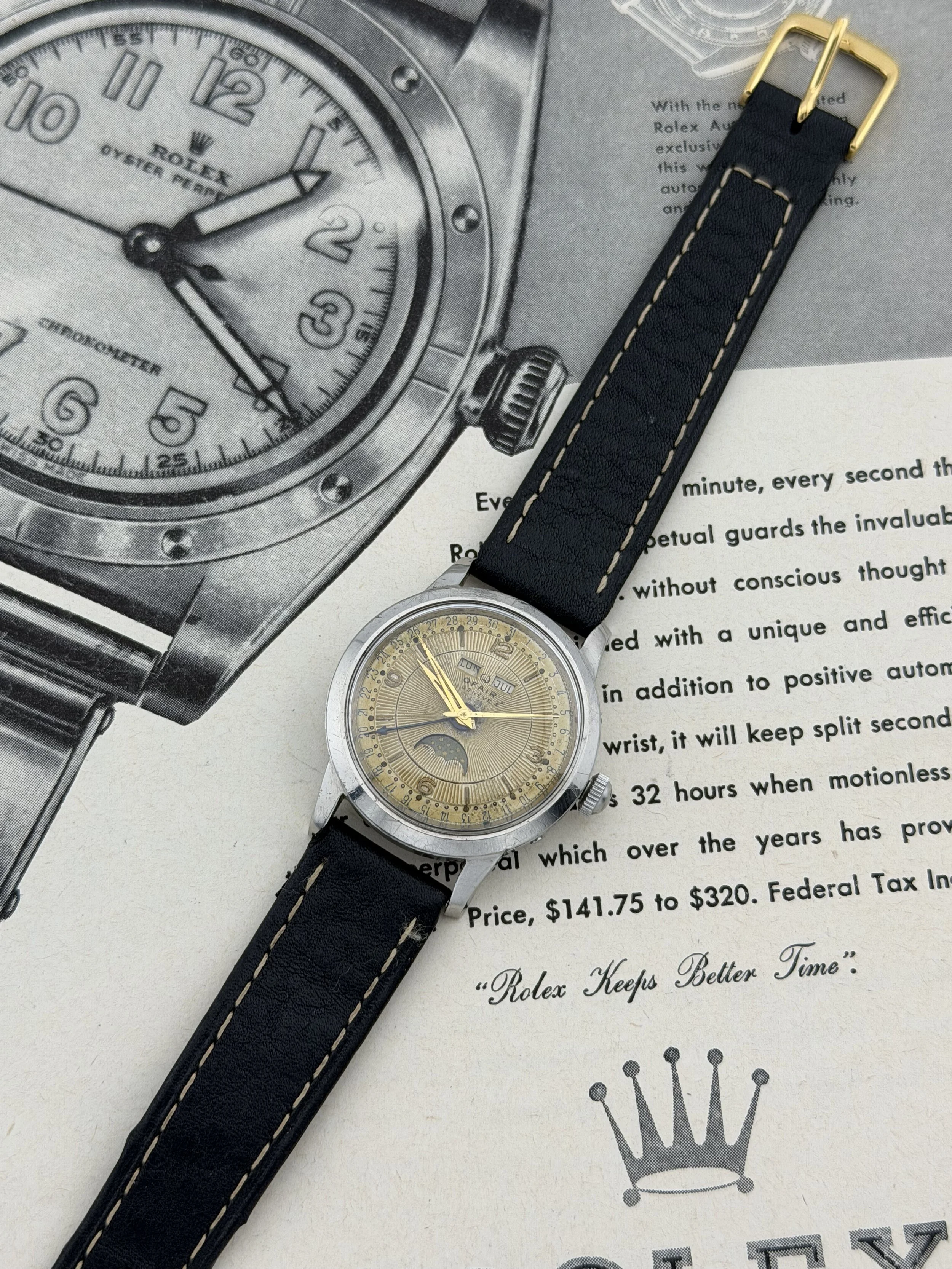
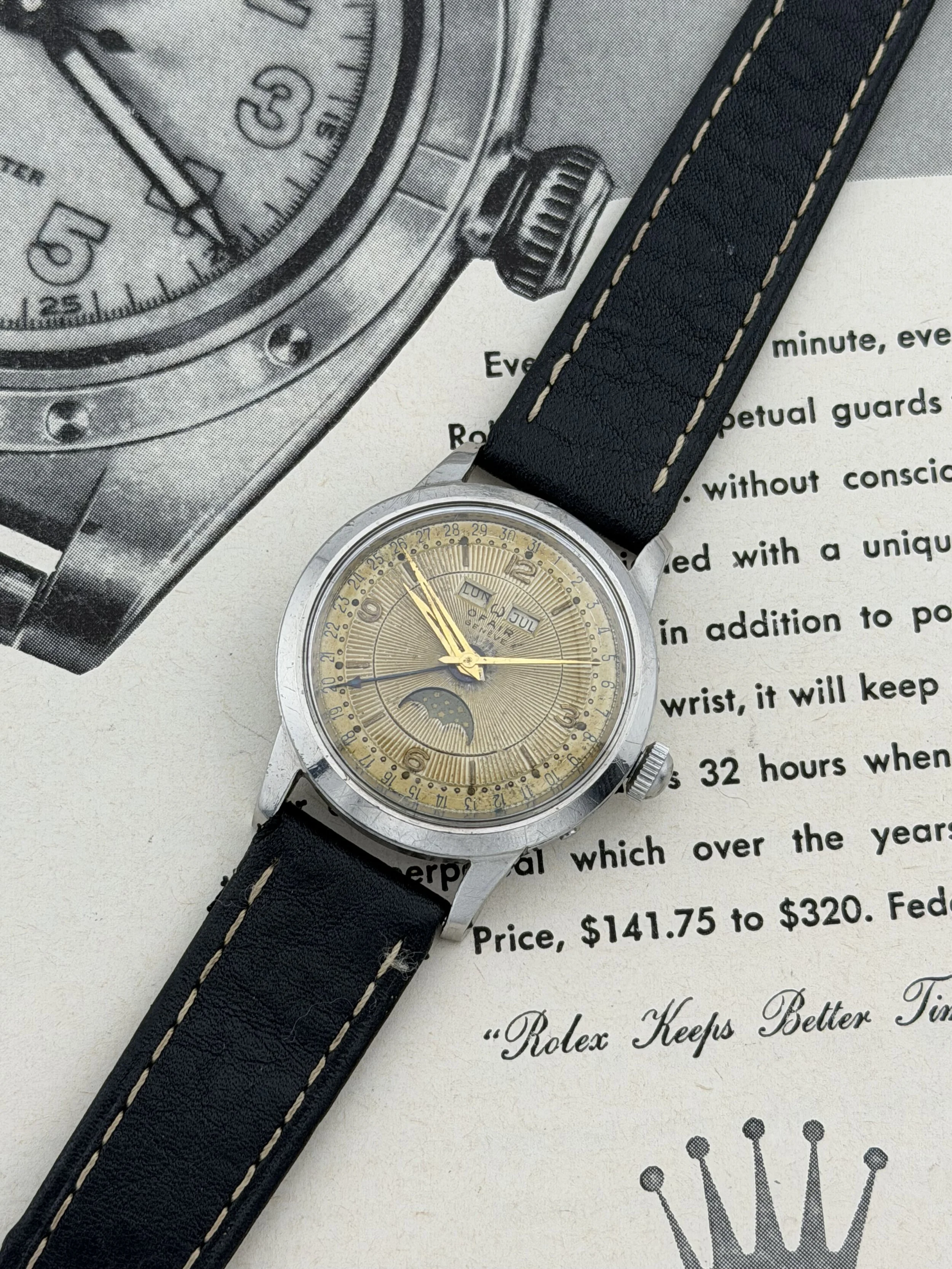
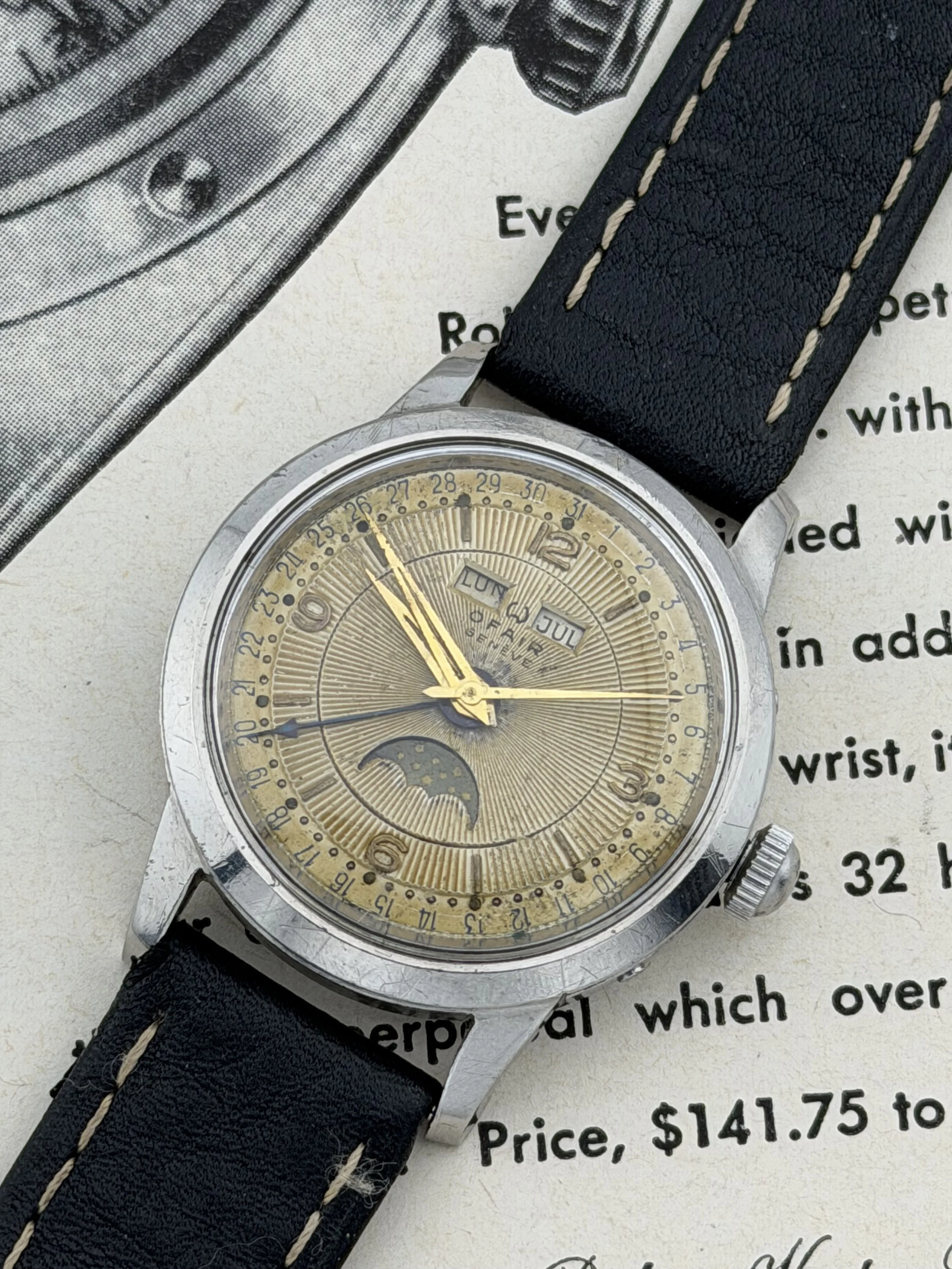
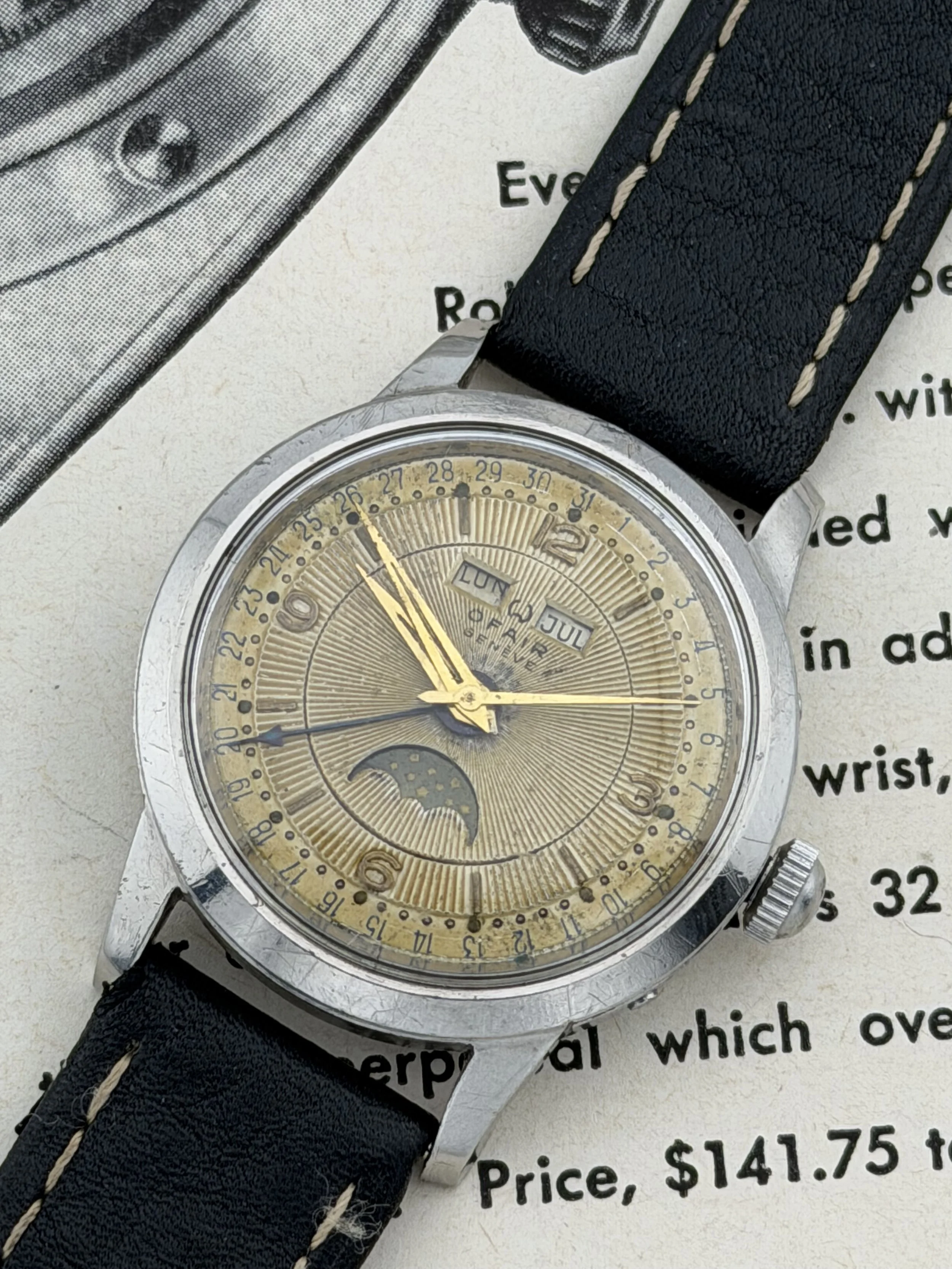

OFAIR | Triple Calendar Moonphase | 17 Jewels | Antimagnetic | Steel Case | Patinated Textured Dial | Circa 1940s–1950s
This extraordinary OFAIR is exactly the kind of vintage watch that makes collecting so much fun. Packed with complications yet beautifully balanced in its design, it combines a triple-calendar display, pointer date, moonphase indication, Swiss mechanical movement, and a wonderfully aged textured dial into one remarkably characterful timepiece.
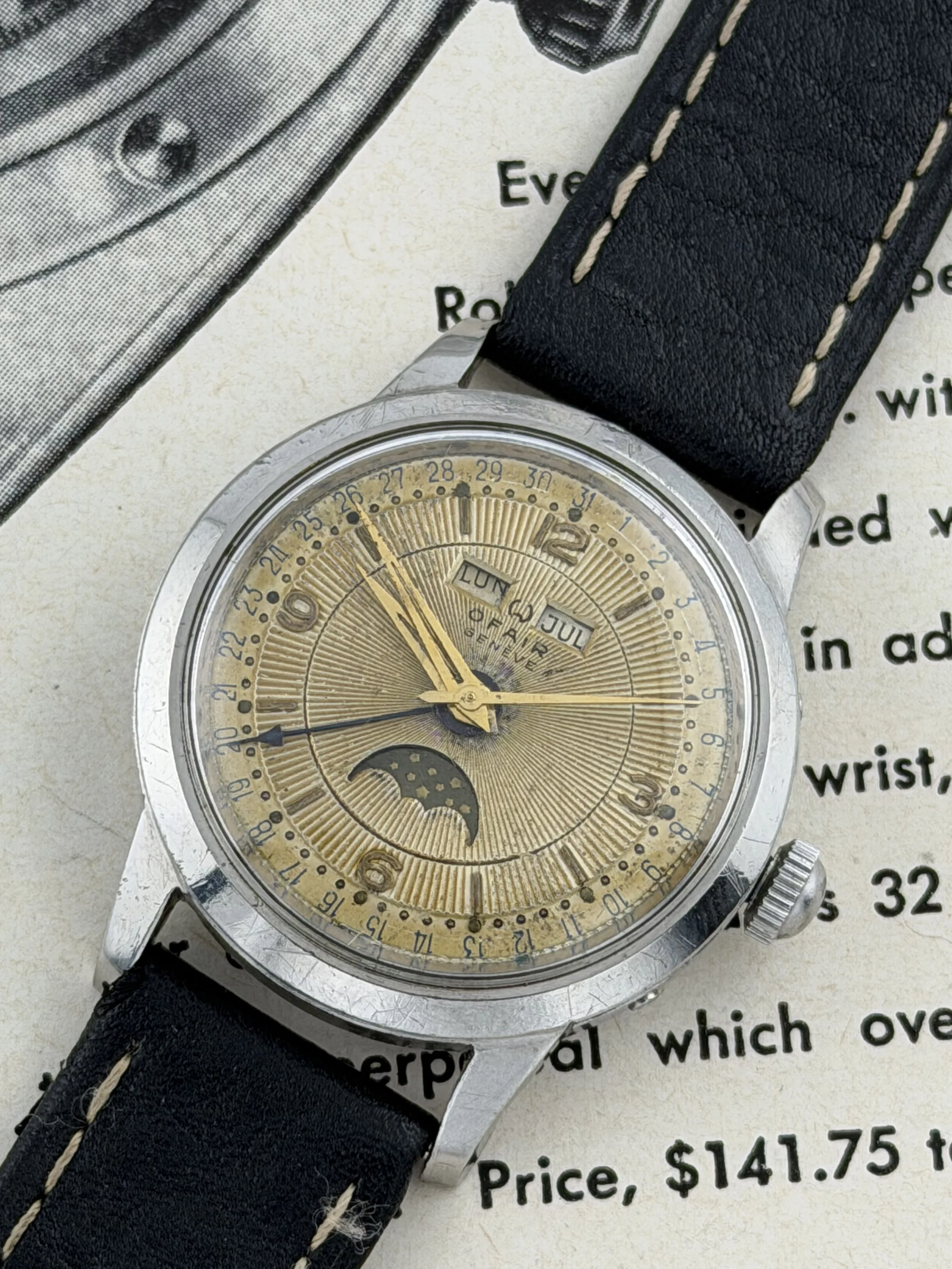
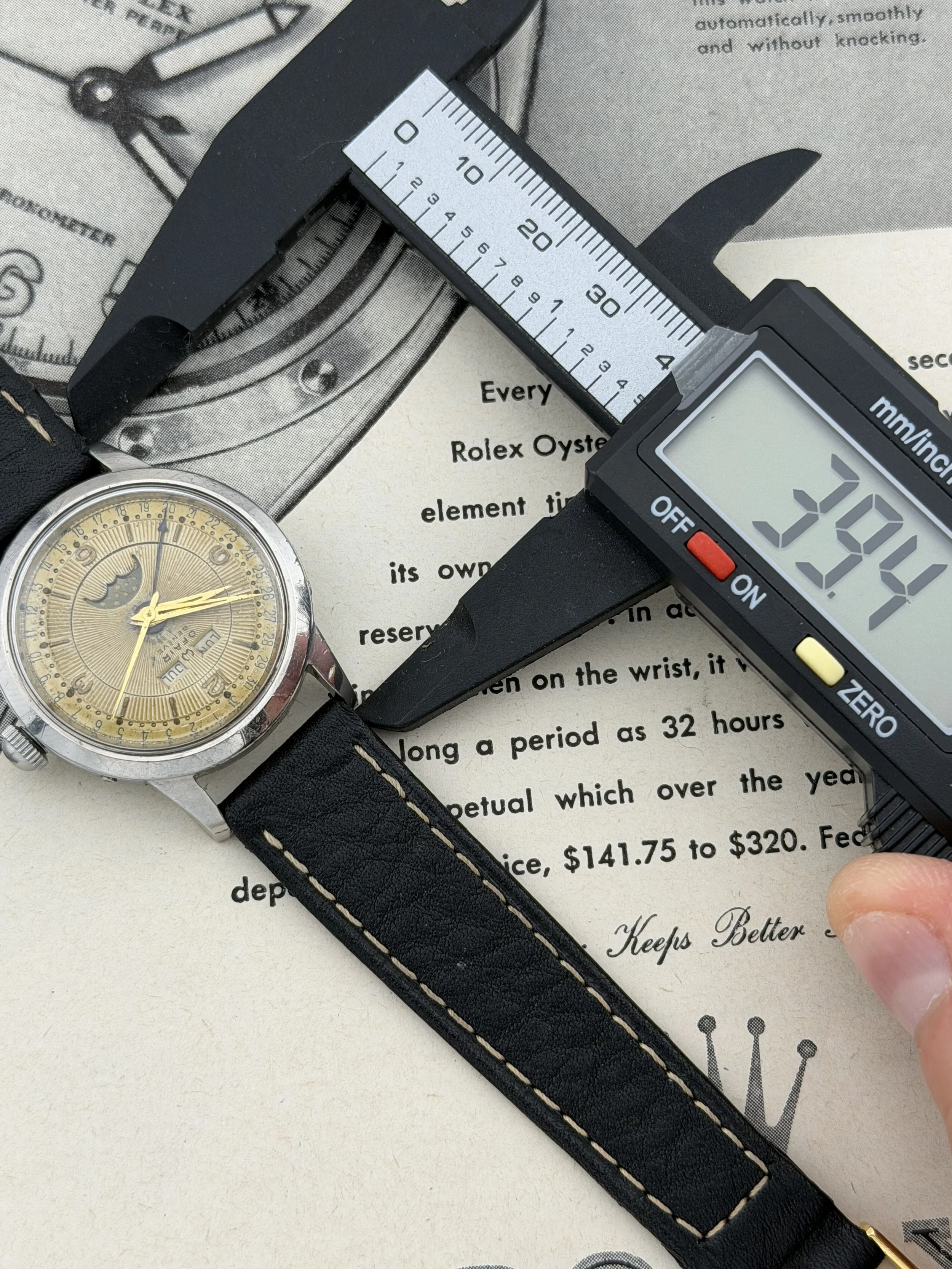
The dial is the immediate star. Its soft beige tone has developed a rich, natural patina over the decades, while the textured surface gives it an almost tactile quality. Rather than looking simply aged, the dial has developed a warmth and personality that makes this particular watch completely unique. No two naturally patinated dials age in quite the same way, and this one has developed an especially beautiful vintage character.
Adding to that character are the applied gold hands and markers. Their warm metallic tone works beautifully against the aged beige dial, giving the watch a subtle sense of luxury without overpowering its unusual design. The result is an incredibly rich combination of texture, patina, and polished detail.
And then there are the complications.
This is far more than a simple three-hand watch. The calendar provides day, month, and date indications, while the date is displayed through a pointer-style arrangement rather than simply placing a numerical window on the dial. A moonphase display adds another layer of visual interest, tracking the changing phases of the moon through a beautifully mechanical indication.
The combination is remarkable. At a glance, the watch tells you the time; look closer and it begins to reveal an entire calendar system. Day, month, date, and moonphase are all brought together within a single mechanical wristwatch—a wonderful demonstration of how much information could be packed into a relatively small dial before the age of electronic displays.
The pointer-date complication is particularly elegant. Rather than interrupting the main dial with a large date window, a hand sweeps around the dial to indicate the numerical date. This allows the beautiful textured dial to remain largely uninterrupted while still providing a useful calendar function.
The moonphase is perhaps the most romantic of the complications. Long before digital calendars and smartphones, mechanical watches could track the lunar cycle through a miniature astronomical display. It is a complication that serves little practical purpose in modern life, yet remains one of the most captivating expressions of traditional watchmaking.
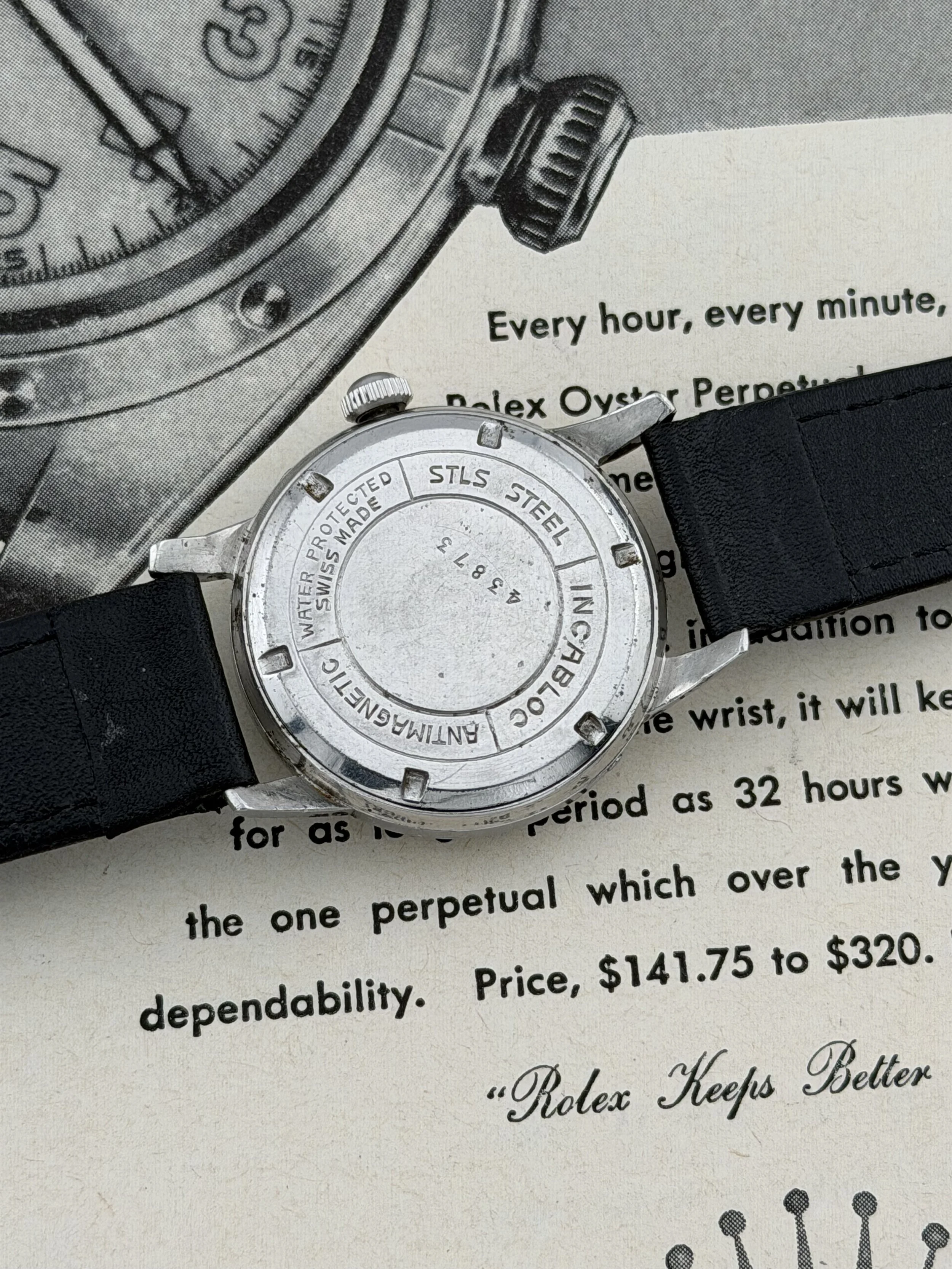
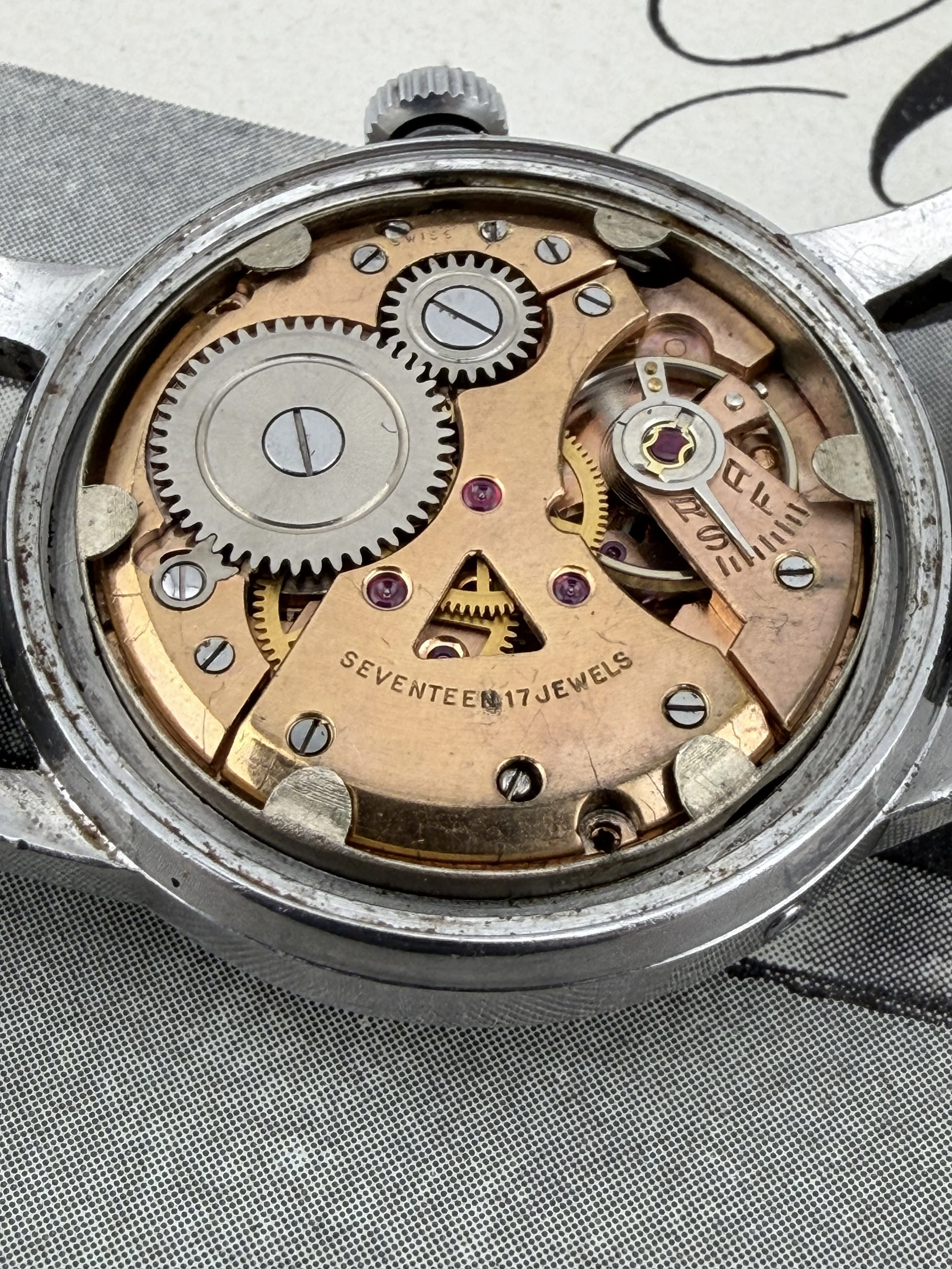
Inside is a Swiss-made, 17-jewel manually wound mechanical movement, marked for its antimagnetic construction. The movement visible in the photograph has the unmistakable appearance of a traditional mid-century Swiss mechanical calibre, with a warm gilt finish and carefully arranged bridges surrounding the gear train.
The 17-jewel configuration uses jeweled bearings at key points throughout the movement to reduce friction and wear. The antimagnetic designation is another reflection of the engineering priorities of the era, when mechanical watches were being designed to withstand the increasingly electrical and technological world around them.
What makes the movement particularly fascinating is just how much mechanical information is being generated beneath the dial. Every indication on the front of the watch ultimately comes from a network of gears, levers, springs, and wheels working together mechanically. There is no battery, no electronic display, and no digital processor—just traditional horological engineering doing an extraordinary amount of work.
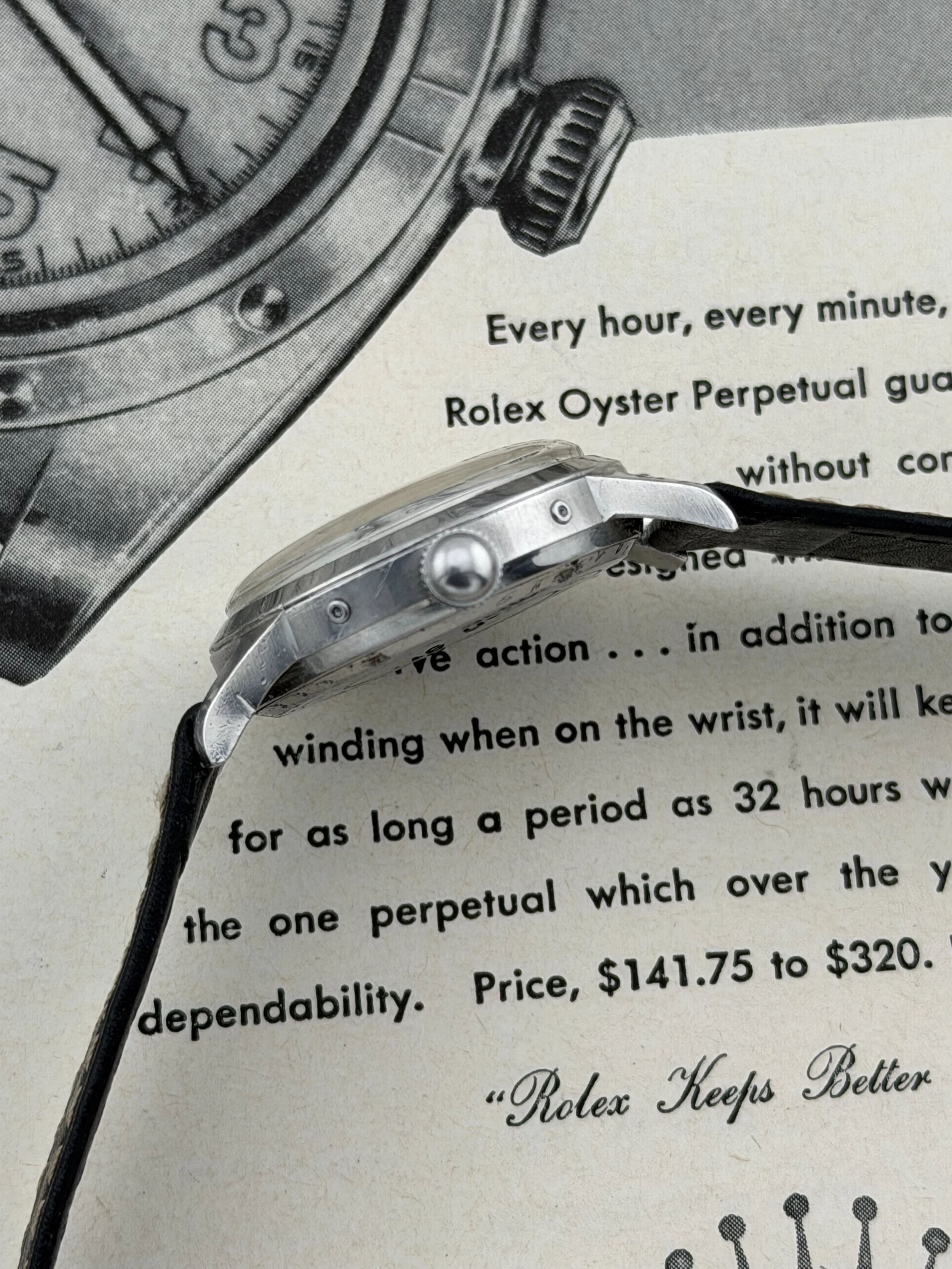
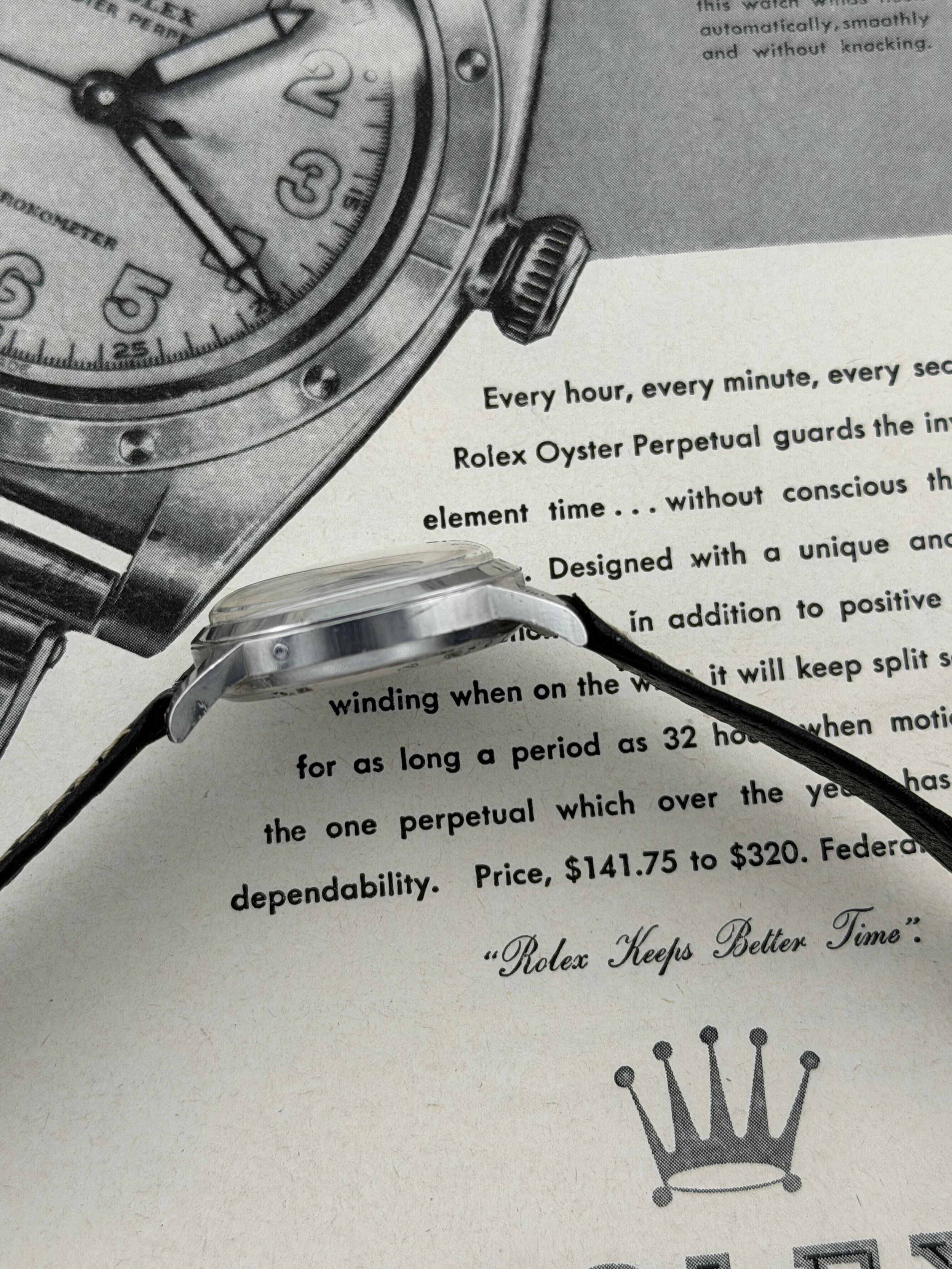
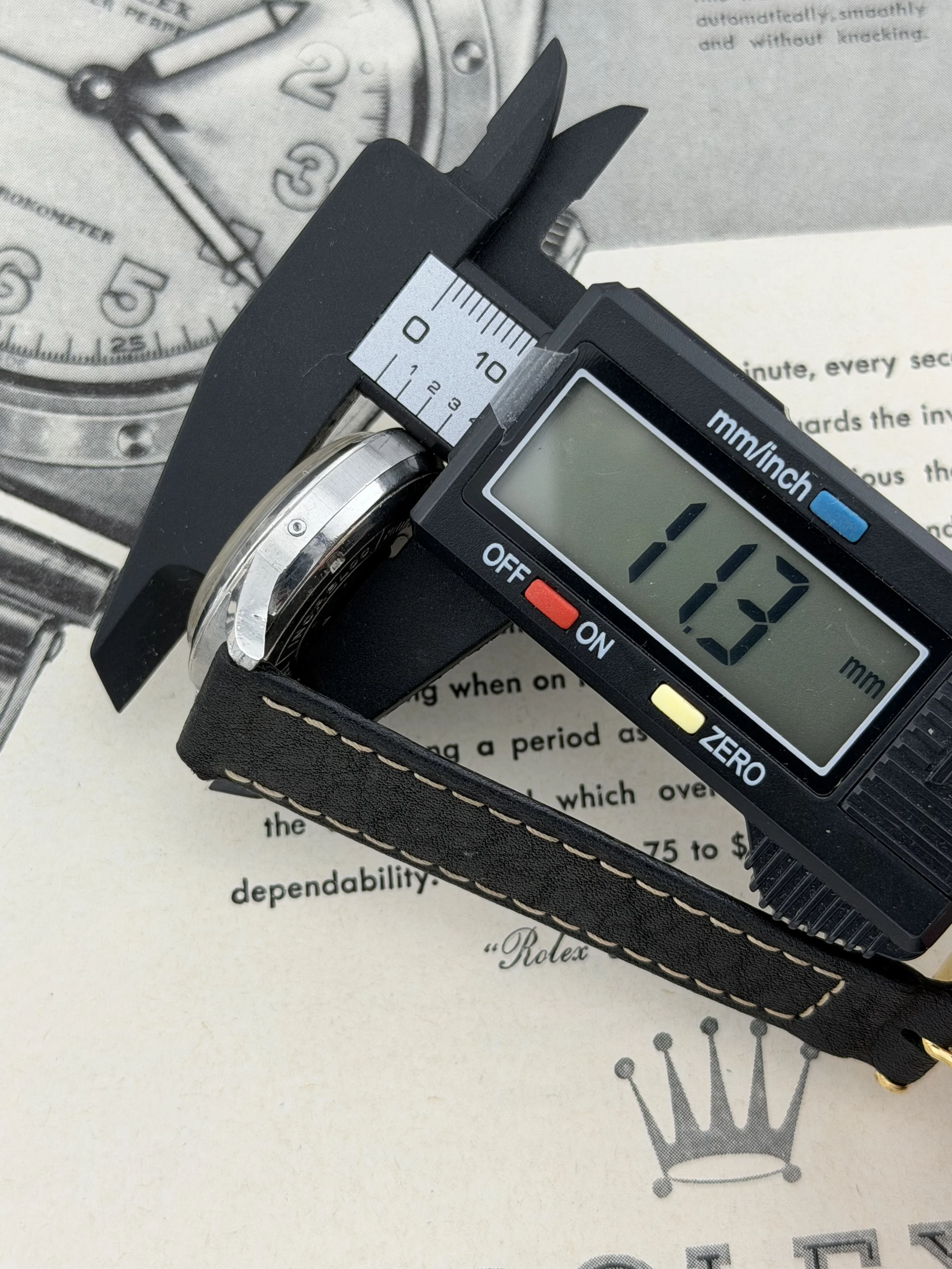
The steel case provides a wonderful contrast to the warm tones of the dial and movement. Its practical construction gives the watch an understated toughness, while the complicated dial makes it feel considerably more sophisticated than a conventional steel dress watch.
OFAIR is representative of the many smaller Swiss names that produced fascinating mechanical watches during the golden age of Swiss horology. These lesser-known brands are increasingly interesting to collectors because they often experimented with unusual combinations of complications and design elements, creating watches that can feel far more distinctive than their better-known counterparts.
The era in which this watch was produced was one of tremendous mechanical creativity. Calendar watches were among the most desirable complications available to ordinary buyers, offering useful information alongside the romance of traditional mechanical watchmaking. Combining a full calendar with a moonphase made a watch even more elaborate and visually captivating.
What makes this OFAIR particularly special is the way all of these elements come together. The aged beige textured dial gives it warmth, the applied gold hands provide refinement, the pointer calendar adds elegance, and the moonphase brings a touch of old-world astronomical fascination. Underneath it all is a Swiss 17-jewel mechanical movement quietly powering the entire display.
This is not a watch that disappears on the wrist. It invites conversation and rewards inspection. The more closely you look, the more you discover.
For collectors who love unusual complications, naturally aged dials, and the fascinating mechanical ingenuity of vintage Swiss watchmaking, this OFAIR is a wonderful find. Day, month, pointer date, moonphase, antimagnetic construction, 17 jewels, a steel case, and one exceptionally beautiful patinated dial—it is an incredible amount of horology in one watch.
A true vintage calendar watch with personality, complexity, and the kind of honest aging that simply cannot be manufactured.
This extraordinary OFAIR is exactly the kind of vintage watch that makes collecting so much fun. Packed with complications yet beautifully balanced in its design, it combines a triple-calendar display, pointer date, moonphase indication, Swiss mechanical movement, and a wonderfully aged textured dial into one remarkably characterful timepiece.
The dial is the immediate star. Its soft beige tone has developed a rich, natural patina over the decades, while the textured surface gives it an almost tactile quality. Rather than looking simply aged, the dial has developed a warmth and personality that makes this particular watch completely unique. No two naturally patinated dials age in quite the same way, and this one has developed an especially beautiful vintage character.
Adding to that character are the applied gold hands and markers. Their warm metallic tone works beautifully against the aged beige dial, giving the watch a subtle sense of luxury without overpowering its unusual design. The result is an incredibly rich combination of texture, patina, and polished detail.
And then there are the complications.
This is far more than a simple three-hand watch. The calendar provides day, month, and date indications, while the date is displayed through a pointer-style arrangement rather than simply placing a numerical window on the dial. A moonphase display adds another layer of visual interest, tracking the changing phases of the moon through a beautifully mechanical indication.
The combination is remarkable. At a glance, the watch tells you the time; look closer and it begins to reveal an entire calendar system. Day, month, date, and moonphase are all brought together within a single mechanical wristwatch—a wonderful demonstration of how much information could be packed into a relatively small dial before the age of electronic displays.
The pointer-date complication is particularly elegant. Rather than interrupting the main dial with a large date window, a hand sweeps around the dial to indicate the numerical date. This allows the beautiful textured dial to remain largely uninterrupted while still providing a useful calendar function.
The moonphase is perhaps the most romantic of the complications. Long before digital calendars and smartphones, mechanical watches could track the lunar cycle through a miniature astronomical display. It is a complication that serves little practical purpose in modern life, yet remains one of the most captivating expressions of traditional watchmaking.
Inside is a Swiss-made, 17-jewel manually wound mechanical movement, marked for its antimagnetic construction. The movement visible in the photograph has the unmistakable appearance of a traditional mid-century Swiss mechanical calibre, with a warm gilt finish and carefully arranged bridges surrounding the gear train.
The 17-jewel configuration uses jeweled bearings at key points throughout the movement to reduce friction and wear. The antimagnetic designation is another reflection of the engineering priorities of the era, when mechanical watches were being designed to withstand the increasingly electrical and technological world around them.
What makes the movement particularly fascinating is just how much mechanical information is being generated beneath the dial. Every indication on the front of the watch ultimately comes from a network of gears, levers, springs, and wheels working together mechanically. There is no battery, no electronic display, and no digital processor—just traditional horological engineering doing an extraordinary amount of work.
The steel case provides a wonderful contrast to the warm tones of the dial and movement. Its practical construction gives the watch an understated toughness, while the complicated dial makes it feel considerably more sophisticated than a conventional steel dress watch.
OFAIR is representative of the many smaller Swiss names that produced fascinating mechanical watches during the golden age of Swiss horology. These lesser-known brands are increasingly interesting to collectors because they often experimented with unusual combinations of complications and design elements, creating watches that can feel far more distinctive than their better-known counterparts.
The era in which this watch was produced was one of tremendous mechanical creativity. Calendar watches were among the most desirable complications available to ordinary buyers, offering useful information alongside the romance of traditional mechanical watchmaking. Combining a full calendar with a moonphase made a watch even more elaborate and visually captivating.
What makes this OFAIR particularly special is the way all of these elements come together. The aged beige textured dial gives it warmth, the applied gold hands provide refinement, the pointer calendar adds elegance, and the moonphase brings a touch of old-world astronomical fascination. Underneath it all is a Swiss 17-jewel mechanical movement quietly powering the entire display.
This is not a watch that disappears on the wrist. It invites conversation and rewards inspection. The more closely you look, the more you discover.
For collectors who love unusual complications, naturally aged dials, and the fascinating mechanical ingenuity of vintage Swiss watchmaking, this OFAIR is a wonderful find. Day, month, pointer date, moonphase, antimagnetic construction, 17 jewels, a steel case, and one exceptionally beautiful patinated dial—it is an incredible amount of horology in one watch.
A true vintage calendar watch with personality, complexity, and the kind of honest aging that simply cannot be manufactured.