

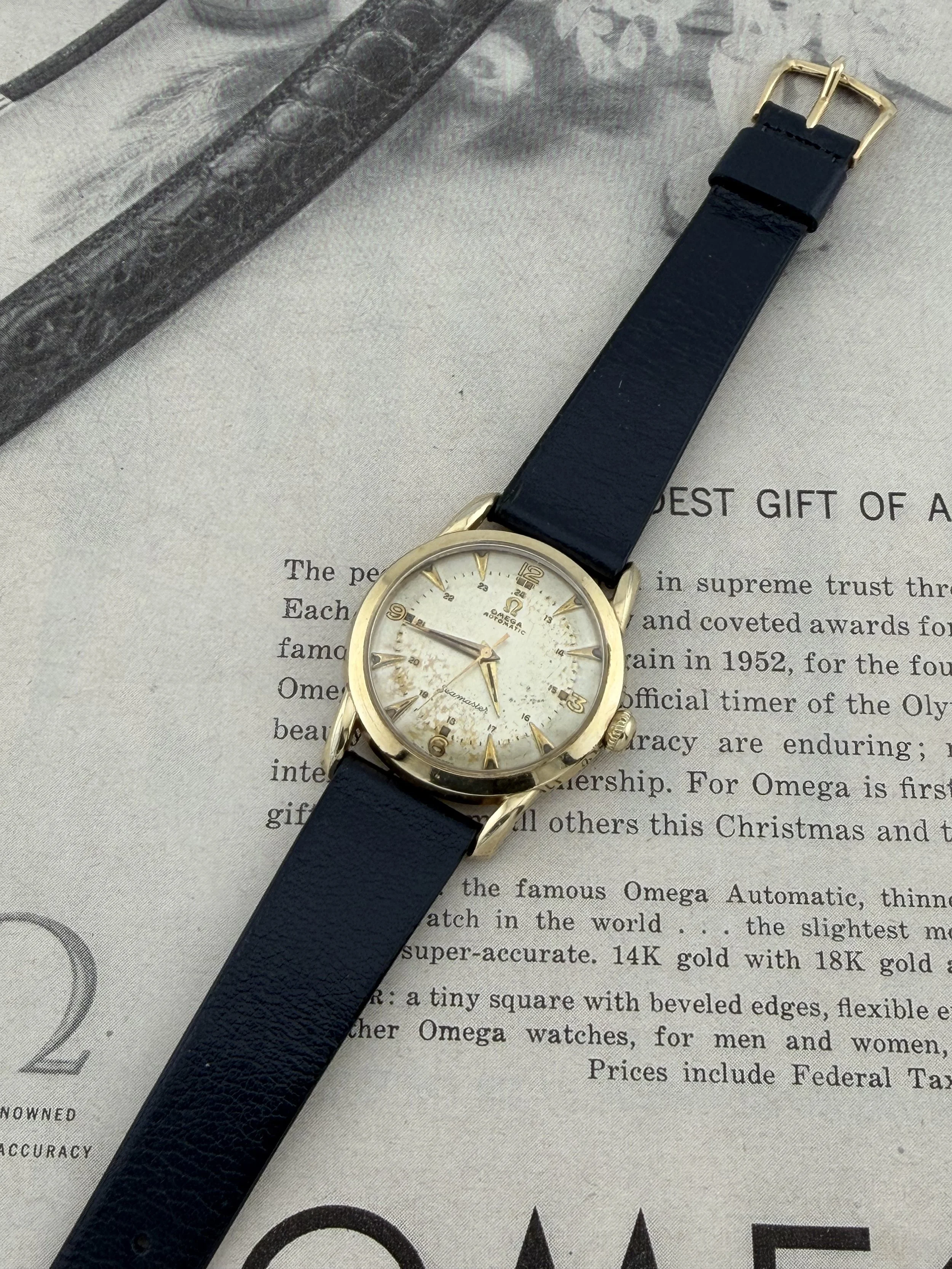
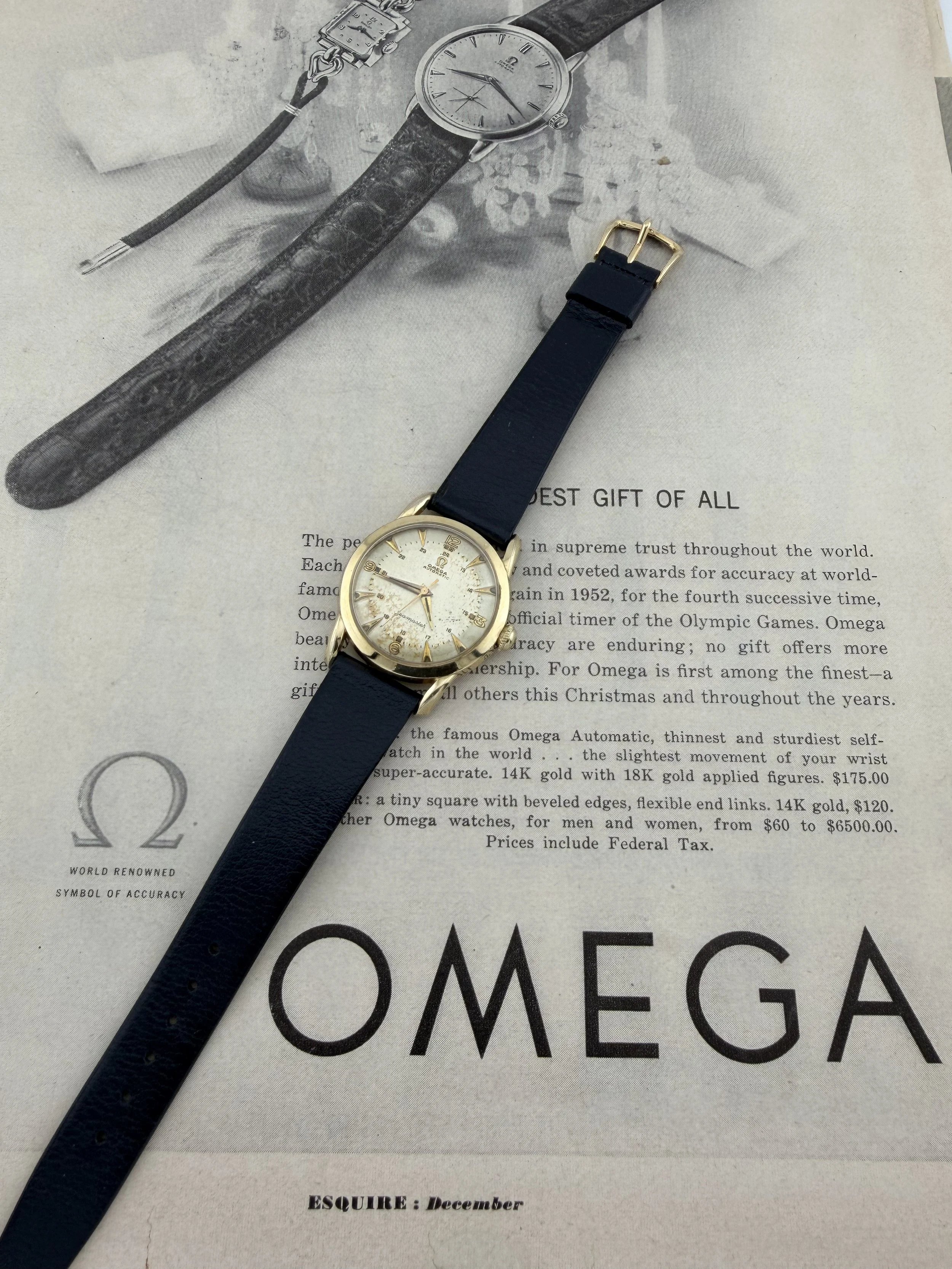
This early Omega Seamaster represents one of the most important periods in Omega's history, showcasing the company's pioneering work in automatic wristwatch technology during the years immediately following World War II. Produced around 1951 and powered by the celebrated Omega Caliber 351, this watch belongs to the first generation of Seamaster models that helped establish Omega as one of the world's leading manufacturers of automatic timepieces.
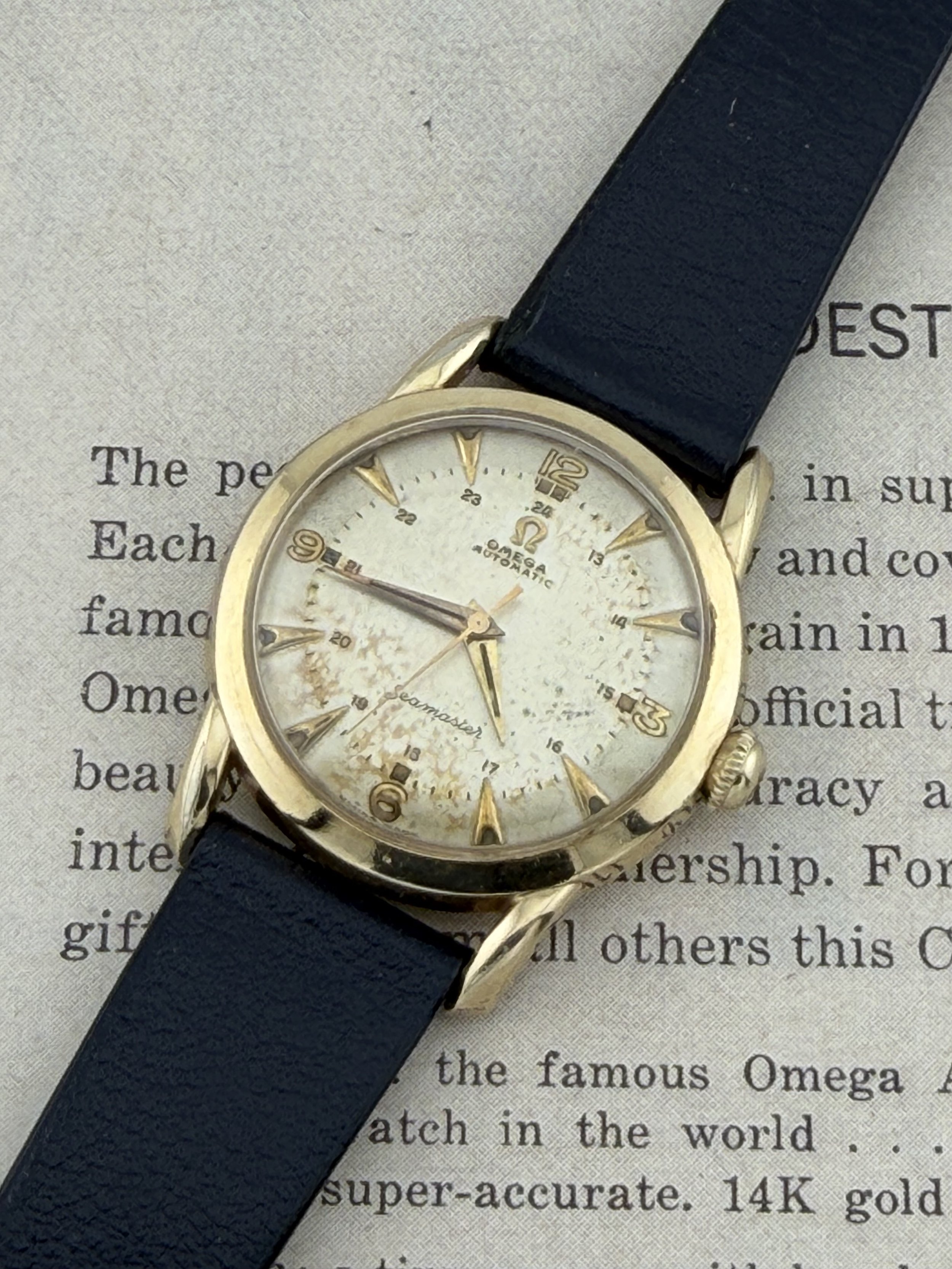
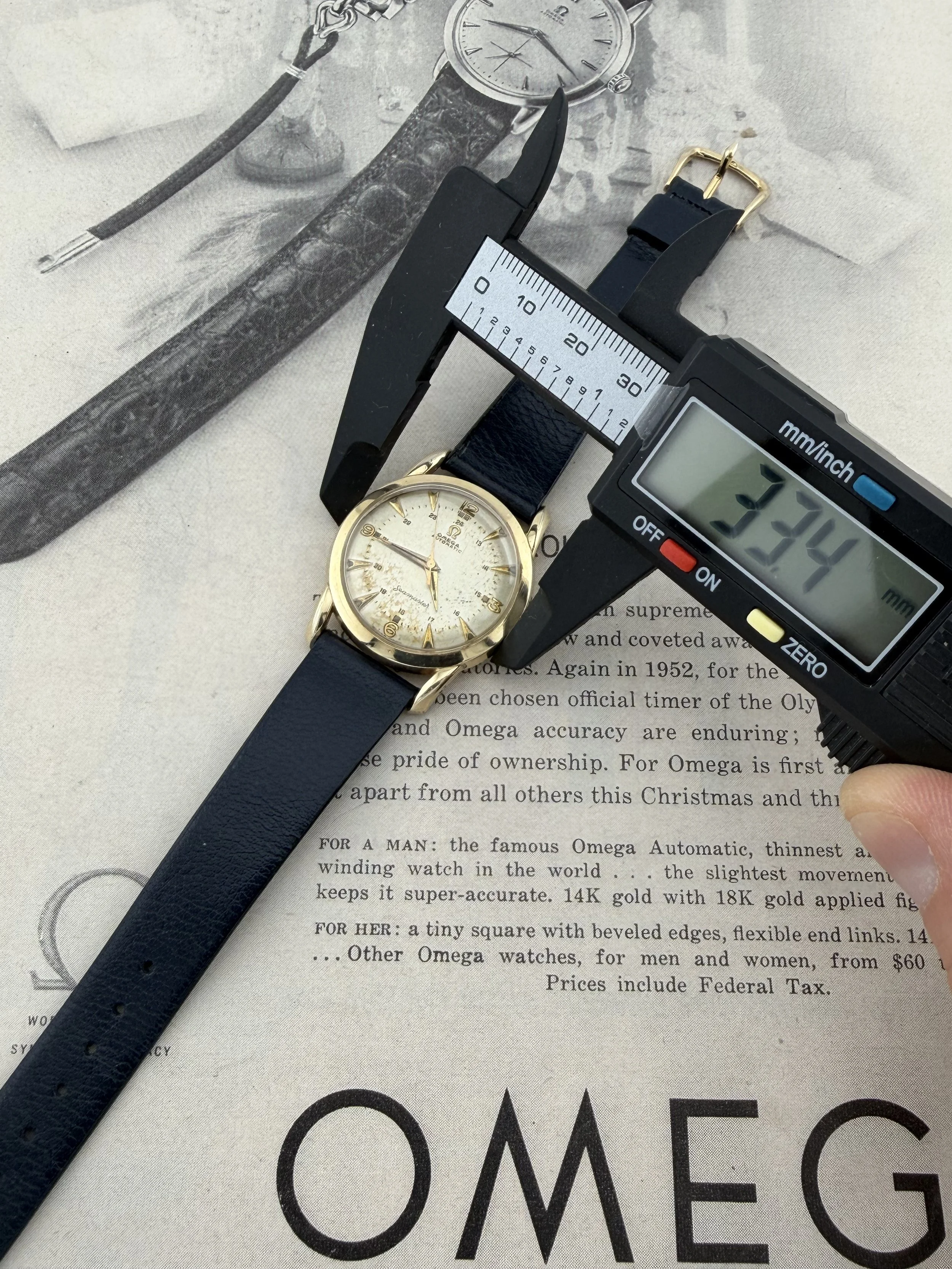
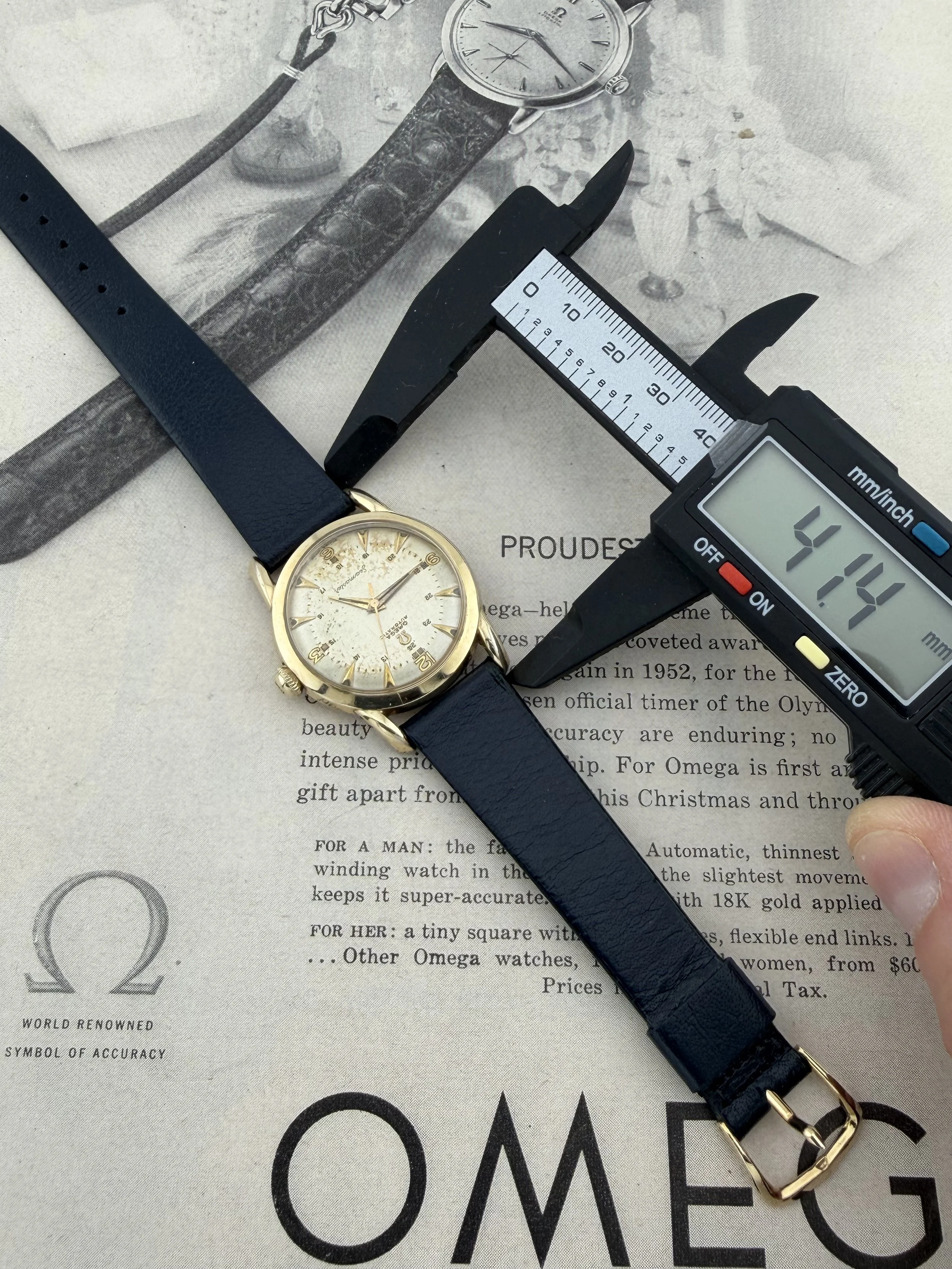
The dial displays the classic styling that defines early Seamaster watches, featuring applied Arabic numerals at the cardinal positions, distinctive arrowhead hour markers, and elegant central seconds. The original dial has developed significant patina and spotting over the decades, creating a unique appearance that many collectors appreciate as evidence of originality and an authentic life well lived. The iconic Seamaster script remains visible above 6 o'clock, reinforcing its place within one of Omega's most enduring collections.
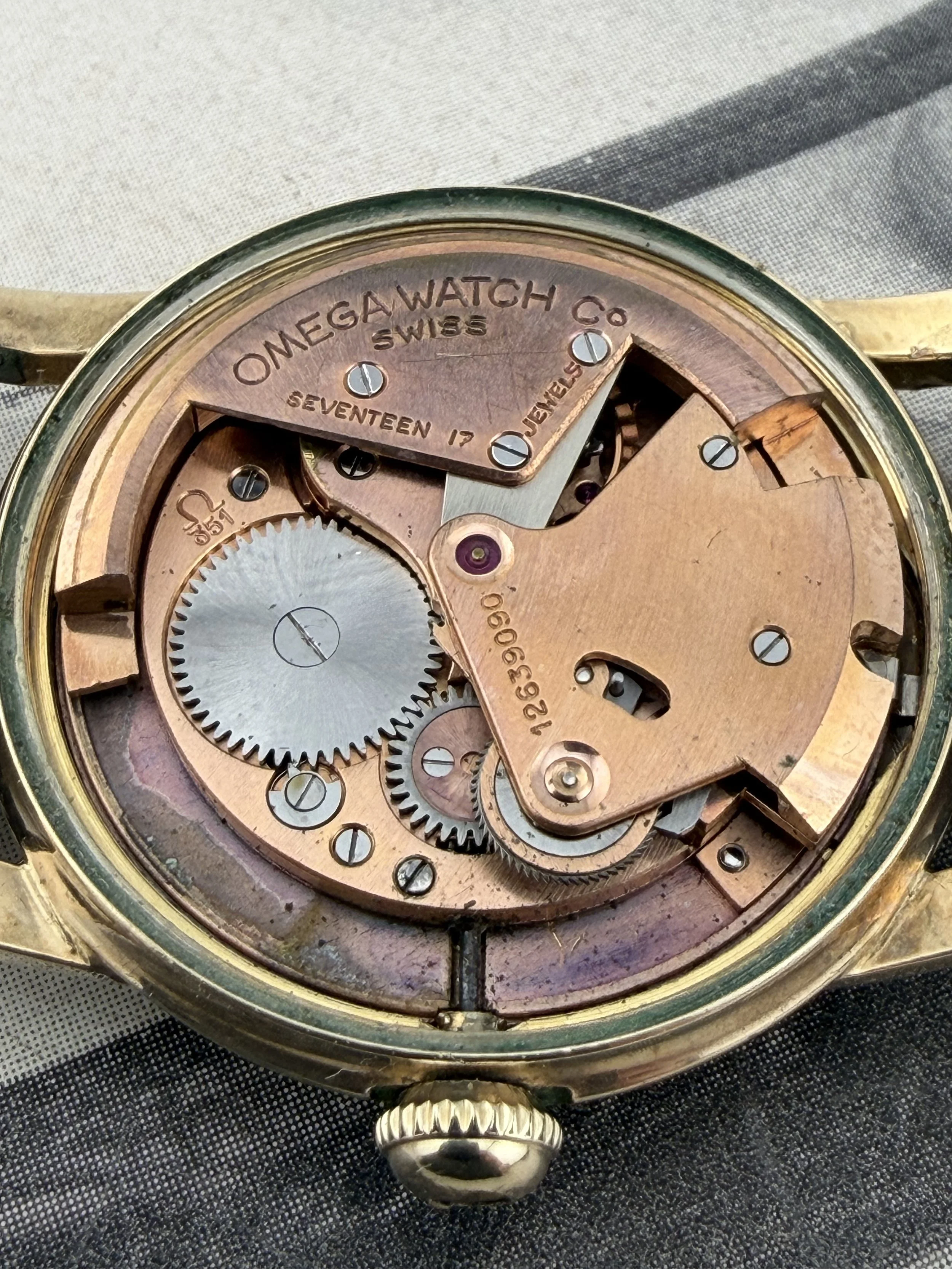
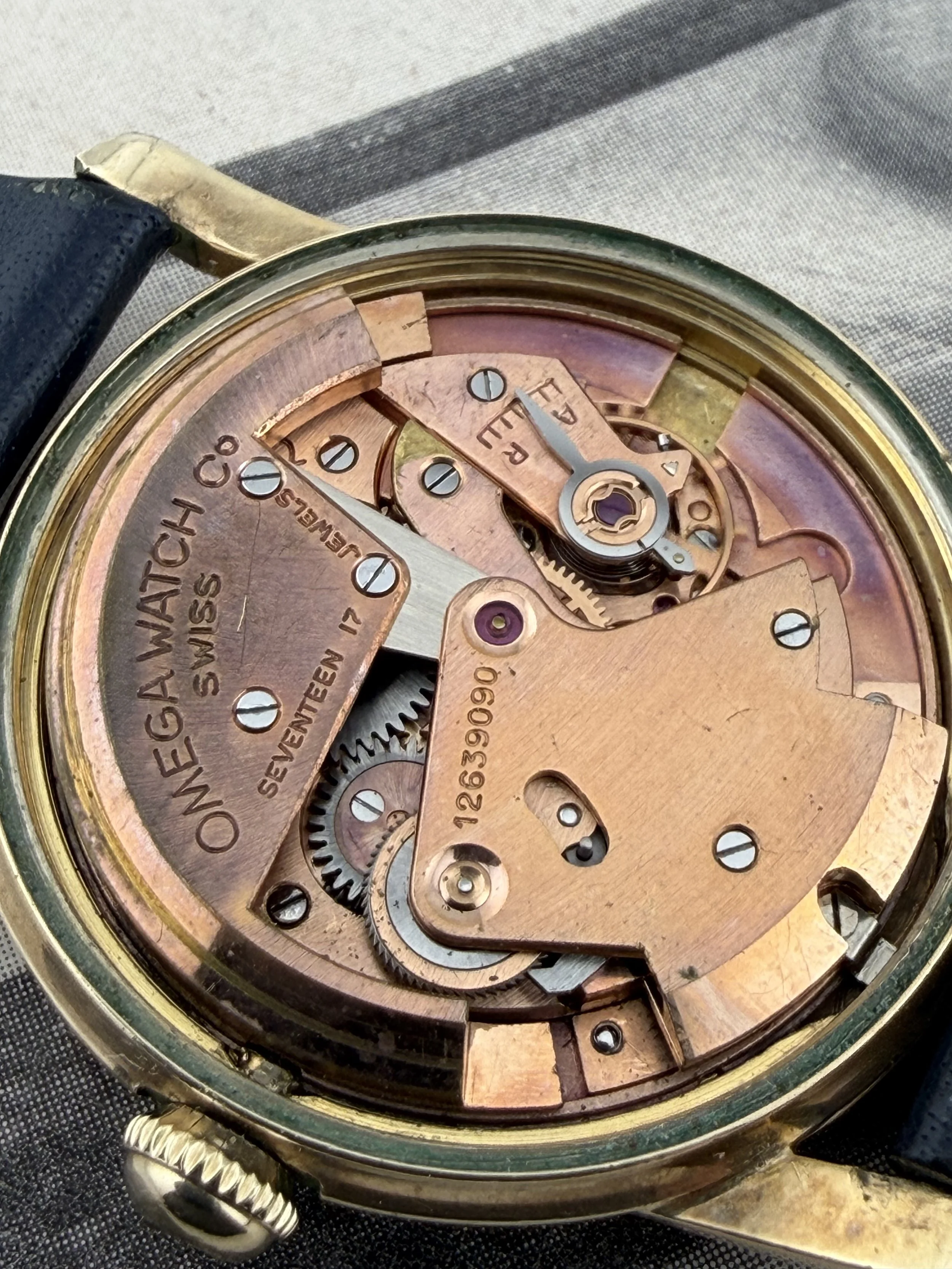
At the heart of the watch is Omega's Caliber 351 automatic movement, a highly respected bumper automatic movement containing 17 jewels and finished with the distinctive copper-colored bridges characteristic of Omega's early automatics. The movement serial number, falling within the 12.6 million range, dates production to approximately 1951.
The Caliber 351 belongs to Omega's renowned 340-series bumper automatics, a fascinating transitional technology that bridges the gap between manual-wind watches and the fully rotating automatic movements that followed. Unlike modern automatic watches, the weighted rotor inside a bumper movement travels through a limited arc before gently contacting spring buffers at either end of its travel. This creates the distinctive sensation collectors often describe as a subtle "bump" on the wrist, providing a direct connection to the mechanical operation occurring inside the watch.
Omega's bumper automatic movements were among the most reliable and technically advanced self-winding systems of their era. Offering approximately 42 hours of power reserve and excellent durability, these movements helped solidify Omega's reputation for precision and innovation during the 1950s. Today, they remain highly collectible due to their historical significance, distinctive operation, and robust construction.
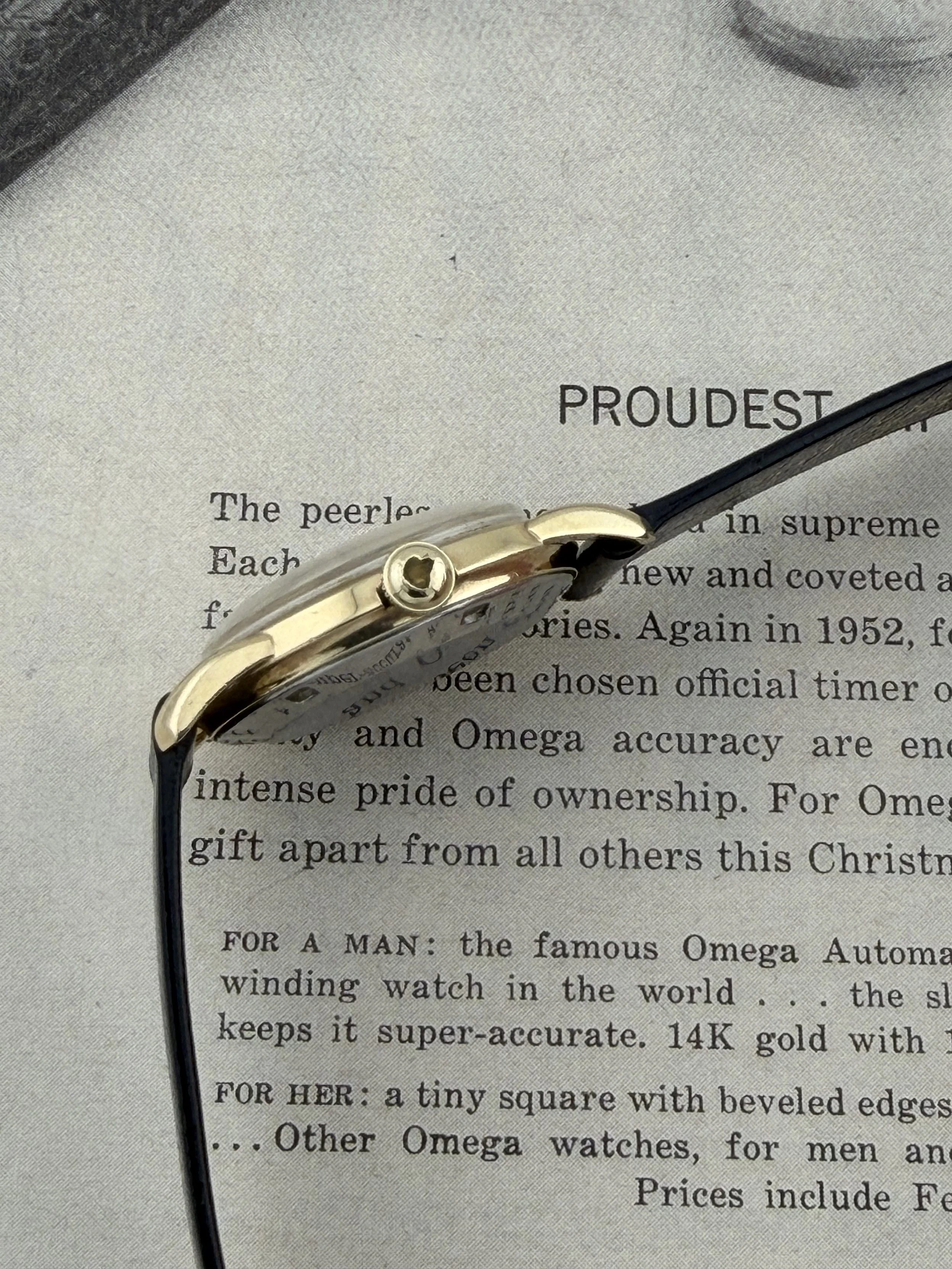
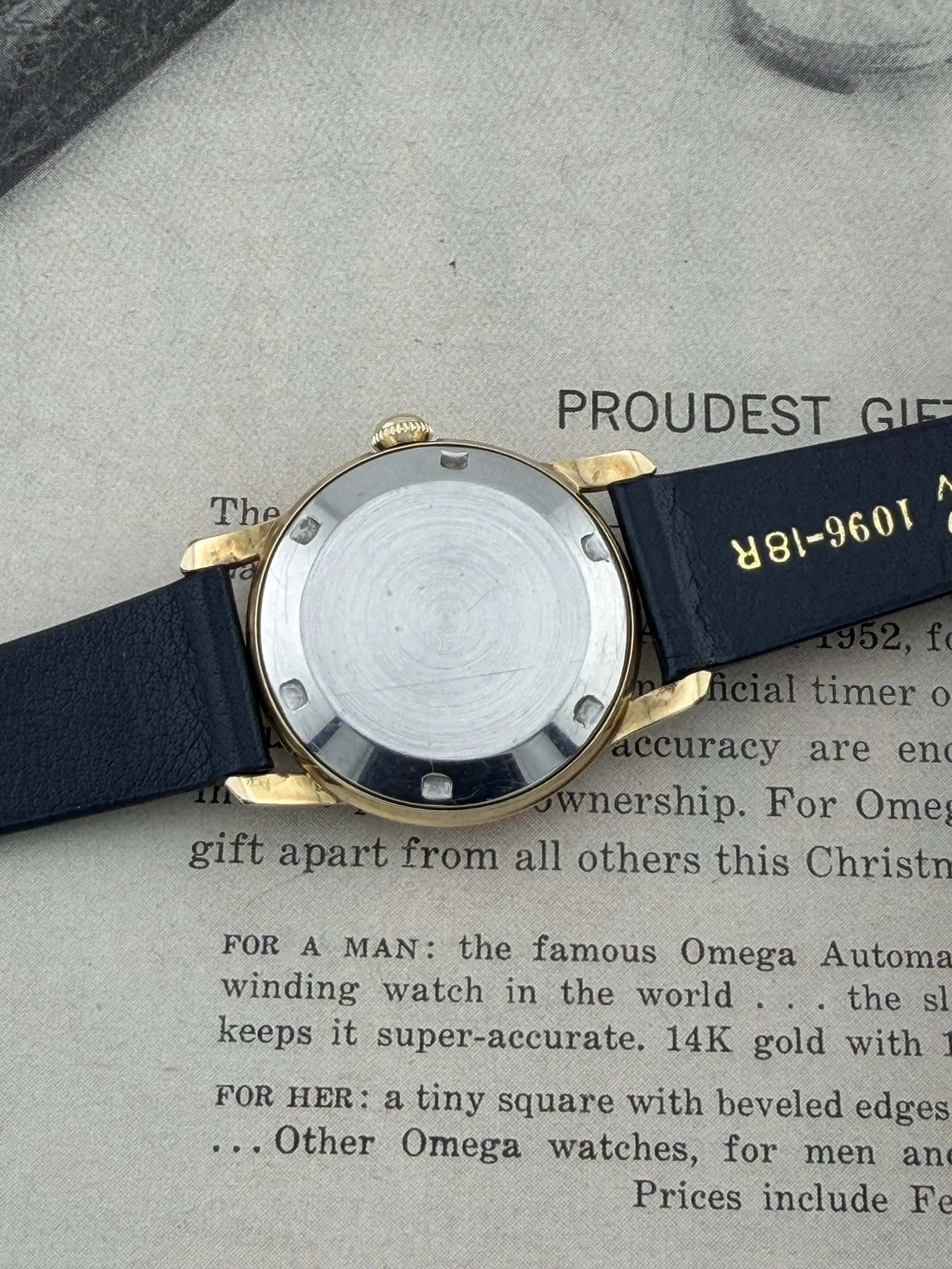
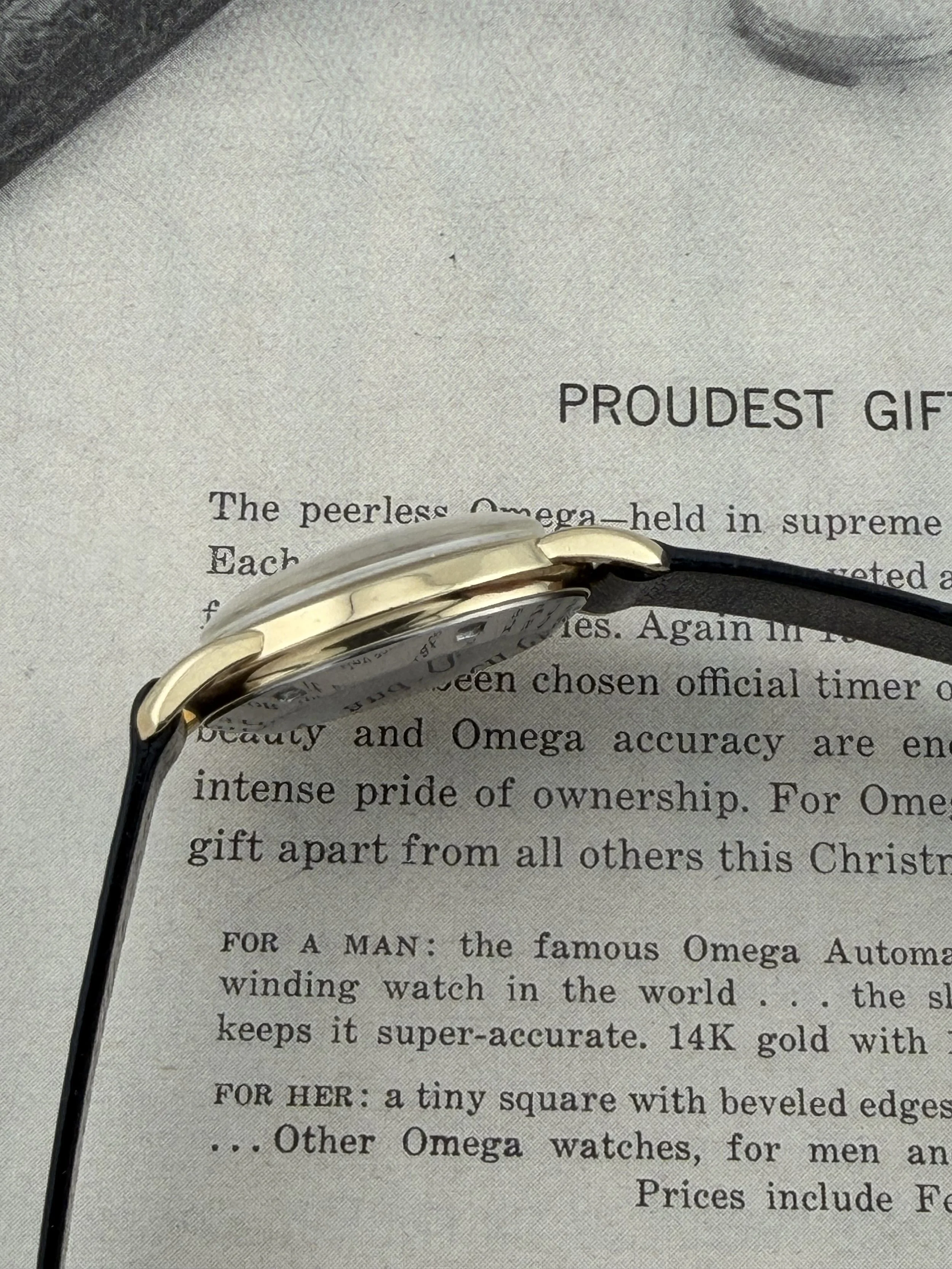
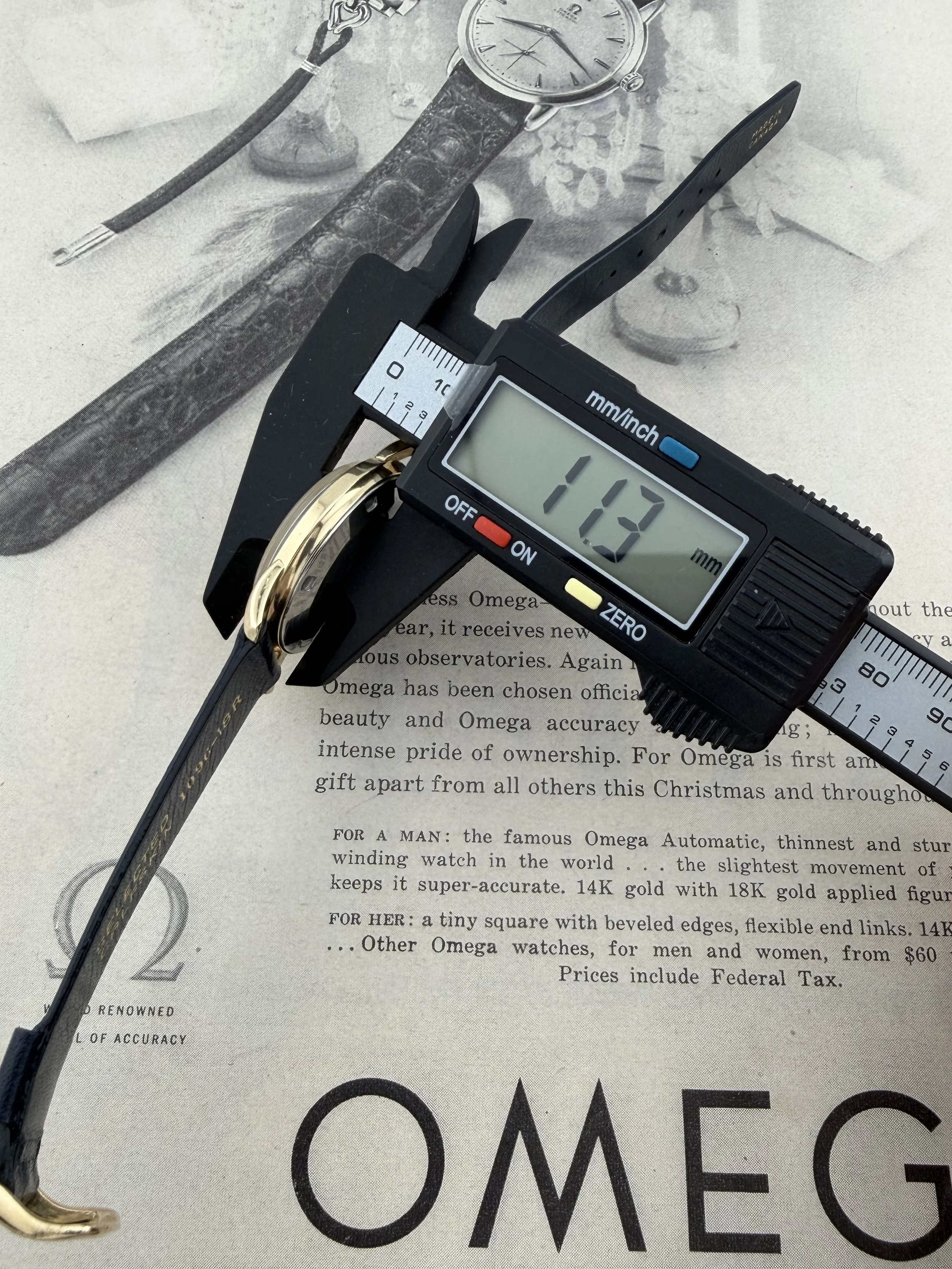
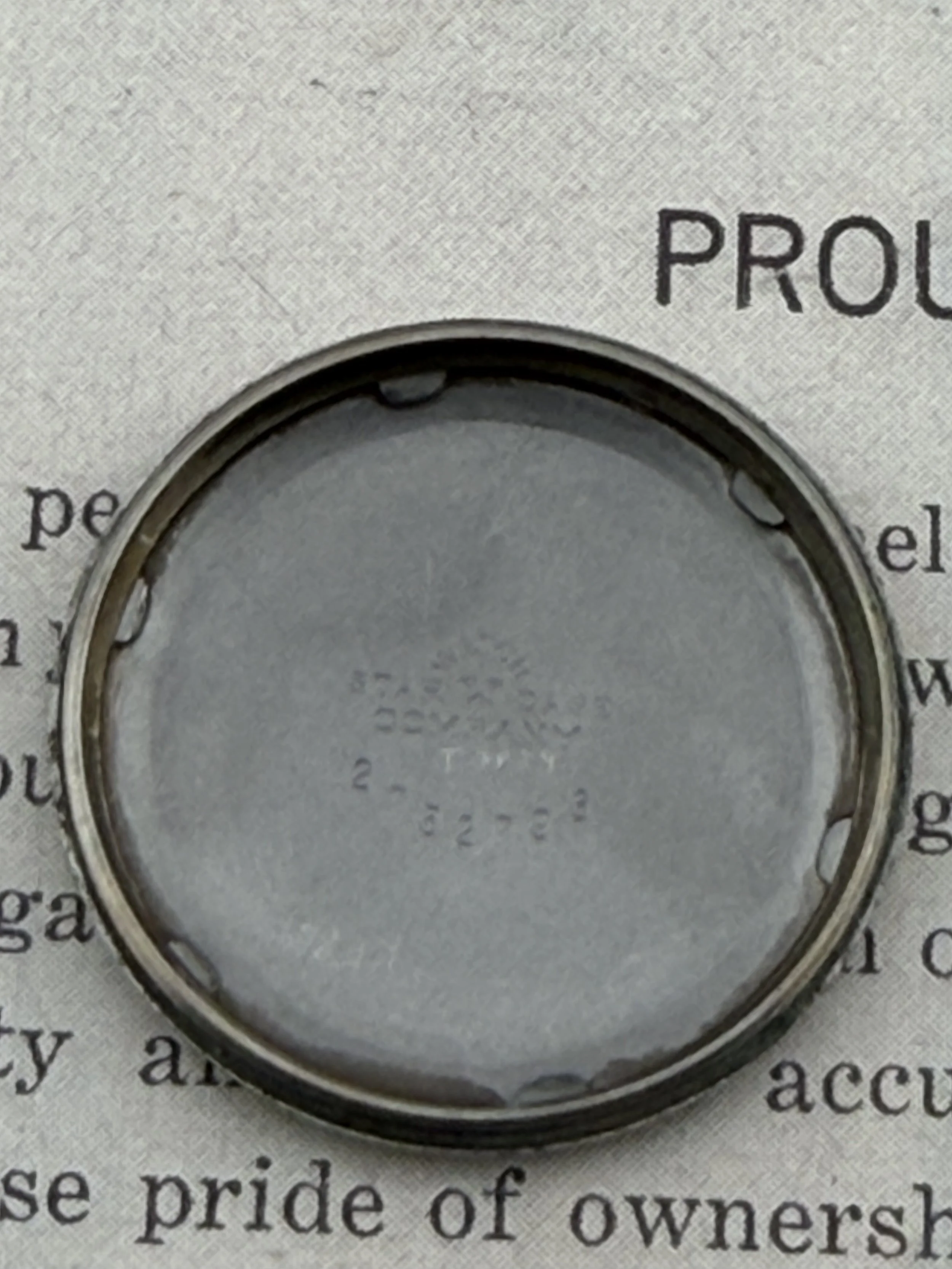
The watch is housed in an attractive 14K gold Filled case measuring approximately 34–35mm in diameter, a classic size for the period. The case exhibits the elegant proportions, thicker bezel, and shorter lugs commonly associated with early Seamaster models. Honest wear throughout reflects decades of careful use while preserving the character expected from a seventy-year-old timepiece.
Introduced in 1948 to celebrate Omega's centennial anniversary, the Seamaster quickly became one of the company's most successful collections. Early examples such as this helped define the postwar era of Swiss watchmaking and laid the foundation for the Seamaster's continued success over the following decades.
Combining a genuine Omega manufacture movement, early automatic technology, and the timeless appeal of a first-generation Seamaster, this 1951 example offers collectors an opportunity to own a significant piece of Omega history. Its original dial, desirable bumper automatic movement, and solid gold Filled case make it a compelling representation of one of the most influential periods in twentieth-century watchmaking.
This early Omega Seamaster represents one of the most important periods in Omega's history, showcasing the company's pioneering work in automatic wristwatch technology during the years immediately following World War II. Produced around 1951 and powered by the celebrated Omega Caliber 351, this watch belongs to the first generation of Seamaster models that helped establish Omega as one of the world's leading manufacturers of automatic timepieces.
The dial displays the classic styling that defines early Seamaster watches, featuring applied Arabic numerals at the cardinal positions, distinctive arrowhead hour markers, and elegant central seconds. The original dial has developed significant patina and spotting over the decades, creating a unique appearance that many collectors appreciate as evidence of originality and an authentic life well lived. The iconic Seamaster script remains visible above 6 o'clock, reinforcing its place within one of Omega's most enduring collections.
At the heart of the watch is Omega's Caliber 351 automatic movement, a highly respected bumper automatic movement containing 17 jewels and finished with the distinctive copper-colored bridges characteristic of Omega's early automatics. The movement serial number, falling within the 12.6 million range, dates production to approximately 1951.
The Caliber 351 belongs to Omega's renowned 340-series bumper automatics, a fascinating transitional technology that bridges the gap between manual-wind watches and the fully rotating automatic movements that followed. Unlike modern automatic watches, the weighted rotor inside a bumper movement travels through a limited arc before gently contacting spring buffers at either end of its travel. This creates the distinctive sensation collectors often describe as a subtle "bump" on the wrist, providing a direct connection to the mechanical operation occurring inside the watch.
Omega's bumper automatic movements were among the most reliable and technically advanced self-winding systems of their era. Offering approximately 42 hours of power reserve and excellent durability, these movements helped solidify Omega's reputation for precision and innovation during the 1950s. Today, they remain highly collectible due to their historical significance, distinctive operation, and robust construction.
The watch is housed in an attractive 14K gold Filled case measuring approximately 34–35mm in diameter, a classic size for the period. The case exhibits the elegant proportions, thicker bezel, and shorter lugs commonly associated with early Seamaster models. Honest wear throughout reflects decades of careful use while preserving the character expected from a seventy-year-old timepiece.
Introduced in 1948 to celebrate Omega's centennial anniversary, the Seamaster quickly became one of the company's most successful collections. Early examples such as this helped define the postwar era of Swiss watchmaking and laid the foundation for the Seamaster's continued success over the following decades.
Combining a genuine Omega manufacture movement, early automatic technology, and the timeless appeal of a first-generation Seamaster, this 1951 example offers collectors an opportunity to own a significant piece of Omega history. Its original dial, desirable bumper automatic movement, and solid gold Filled case make it a compelling representation of one of the most influential periods in twentieth-century watchmaking.