

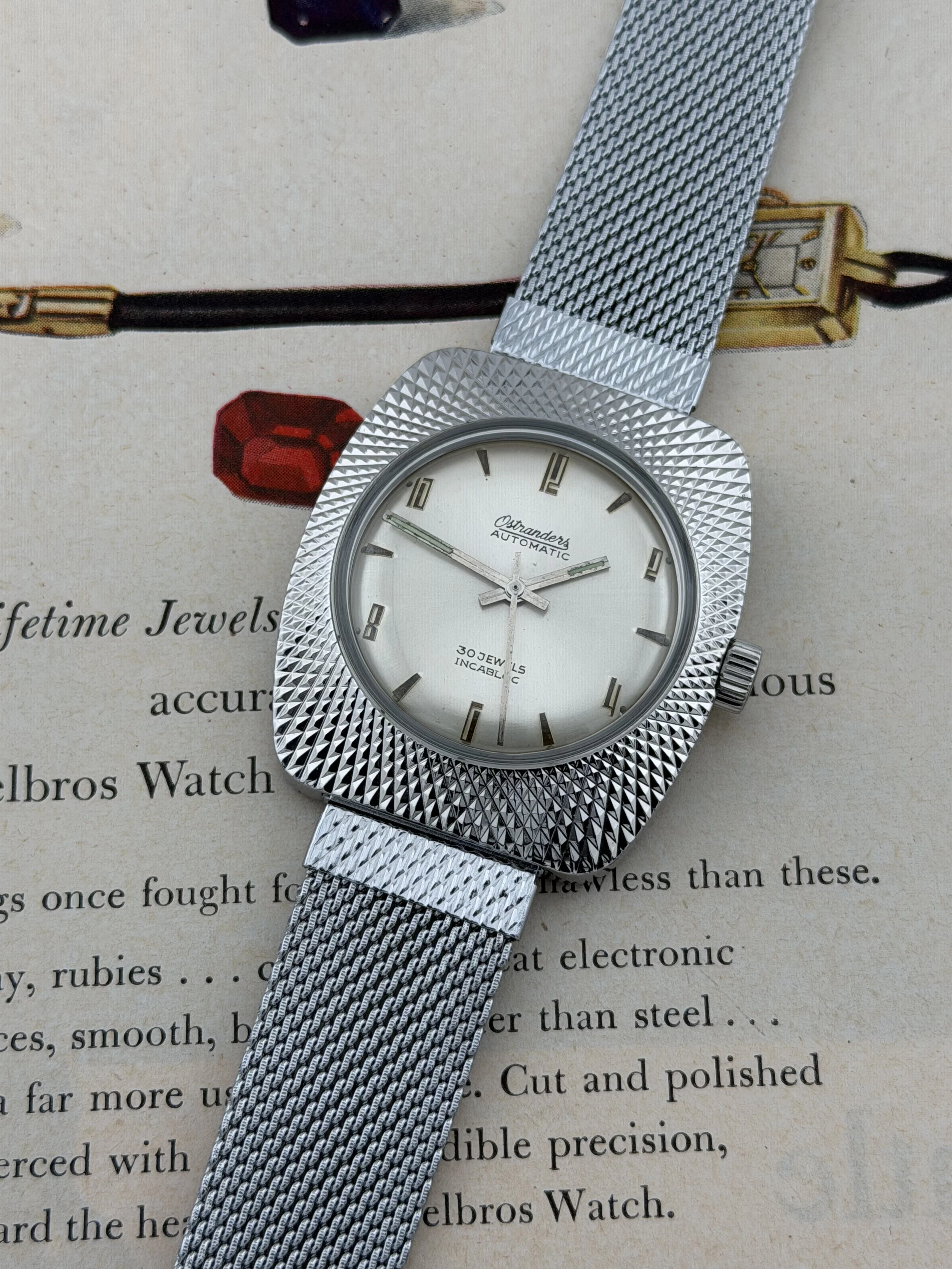
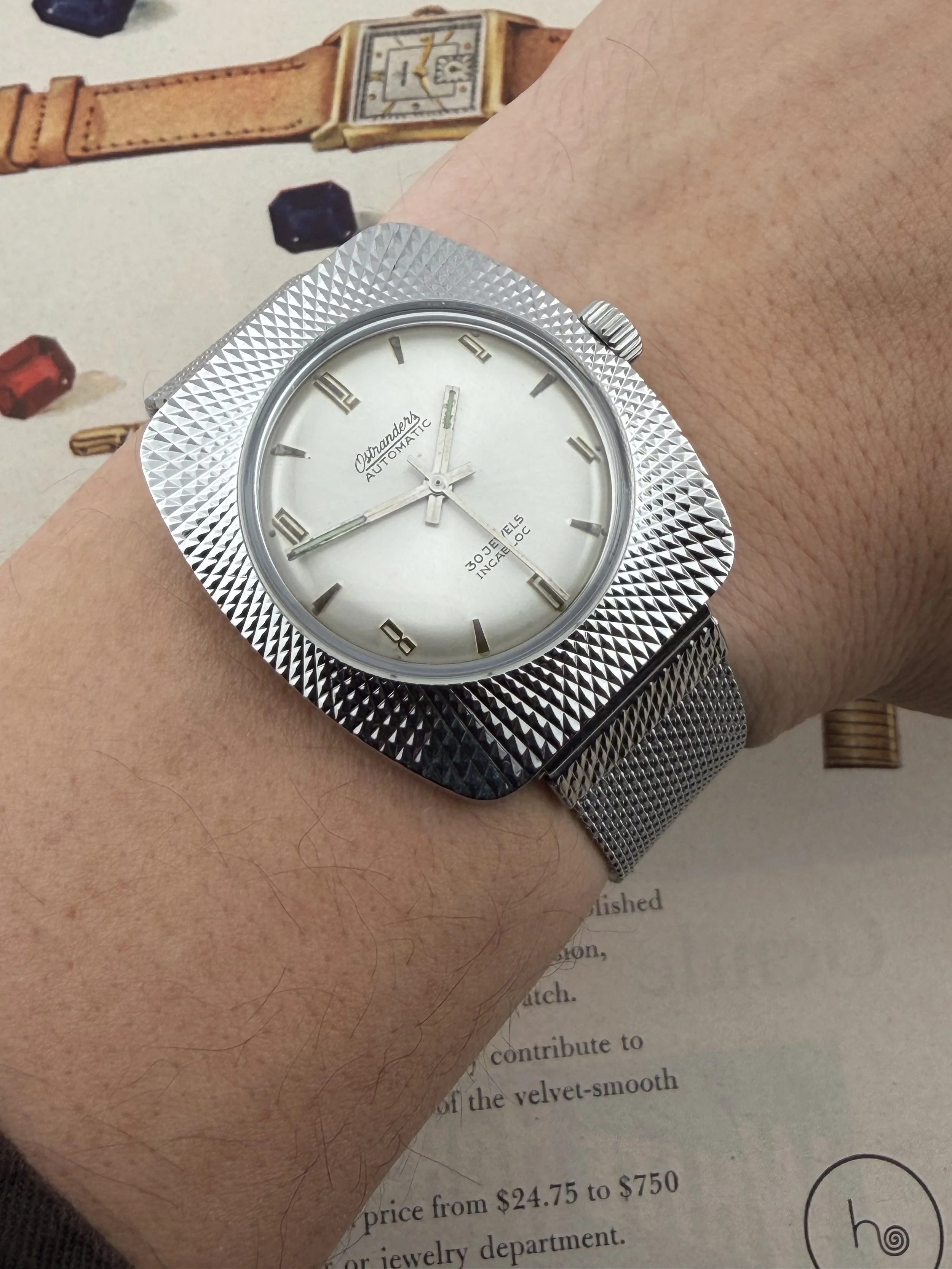
This is a fantastic example of the more unusual side of 1960s Swiss watch design. Outrander’s appears to have been a private-label name, with the watch itself built around a Swiss automatic movement and a wonderfully distinctive faceted case.
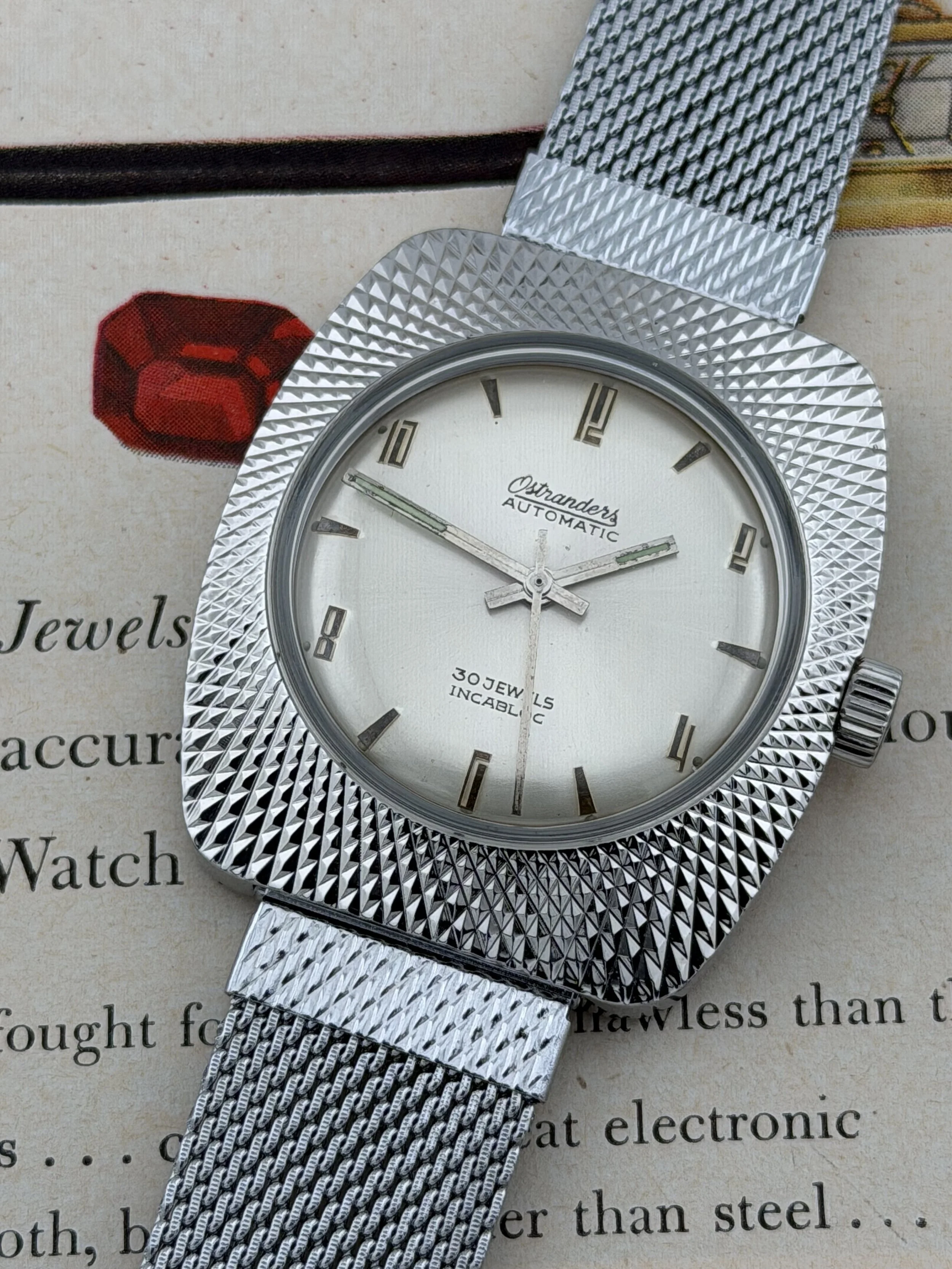
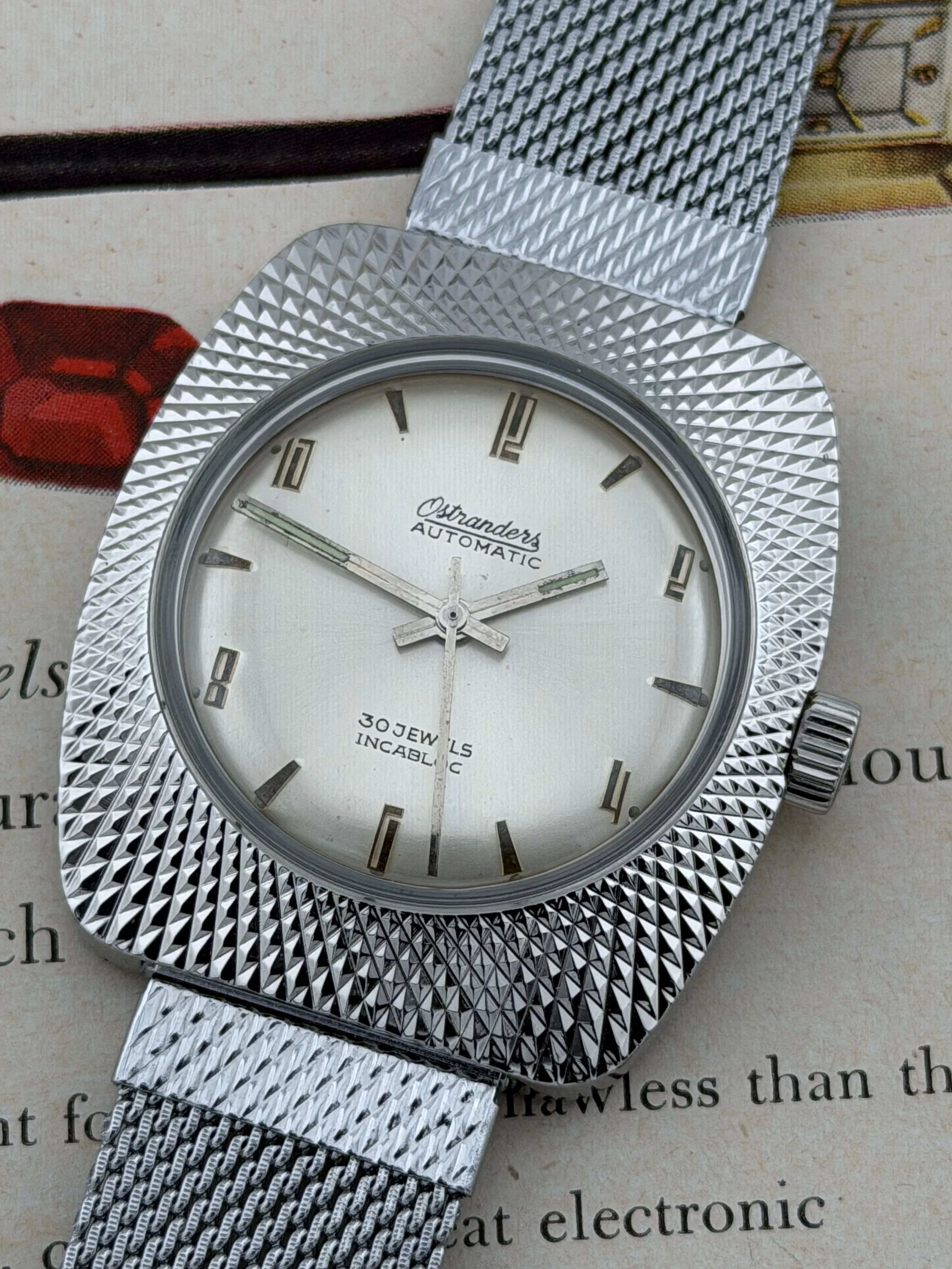
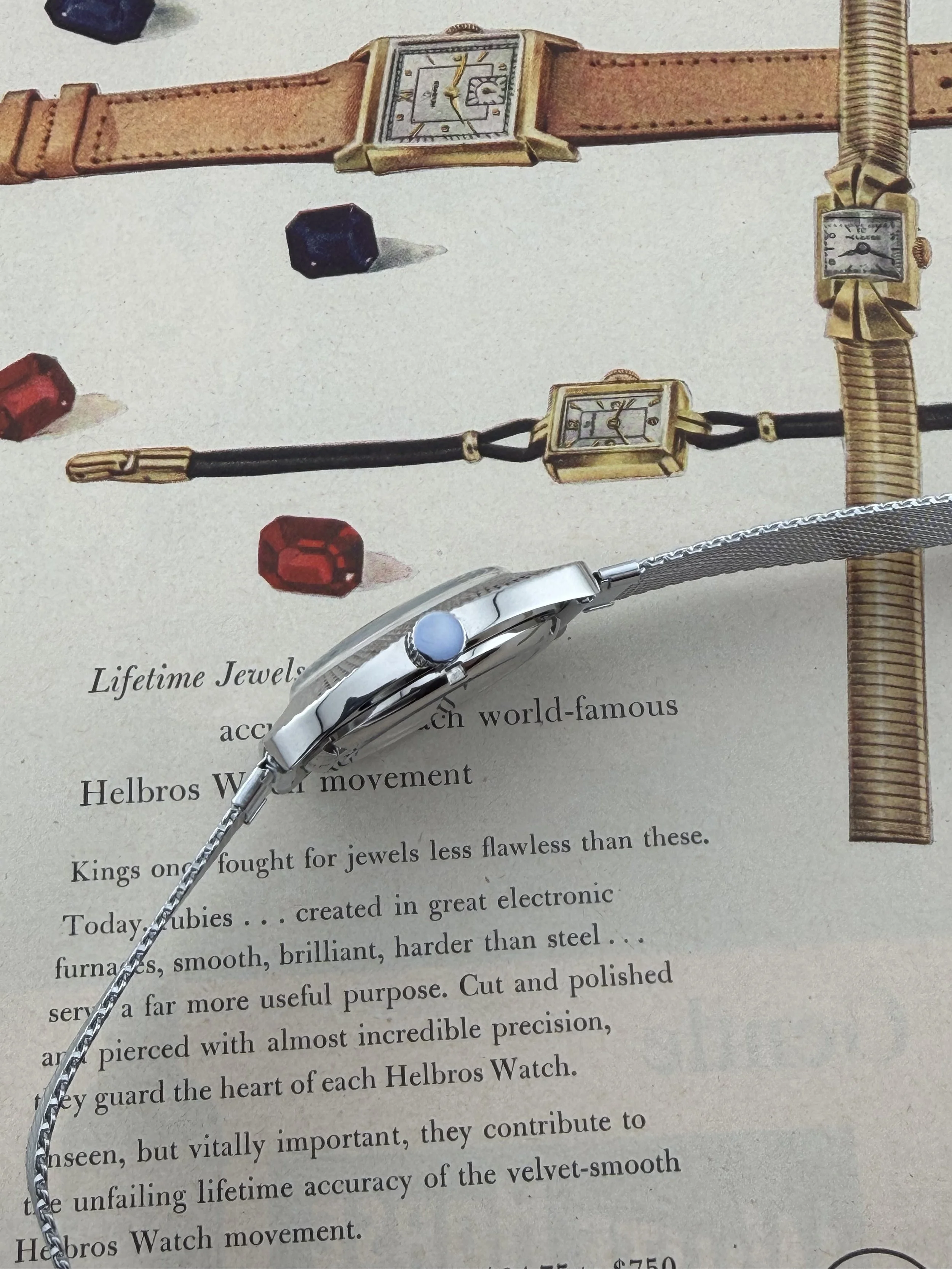
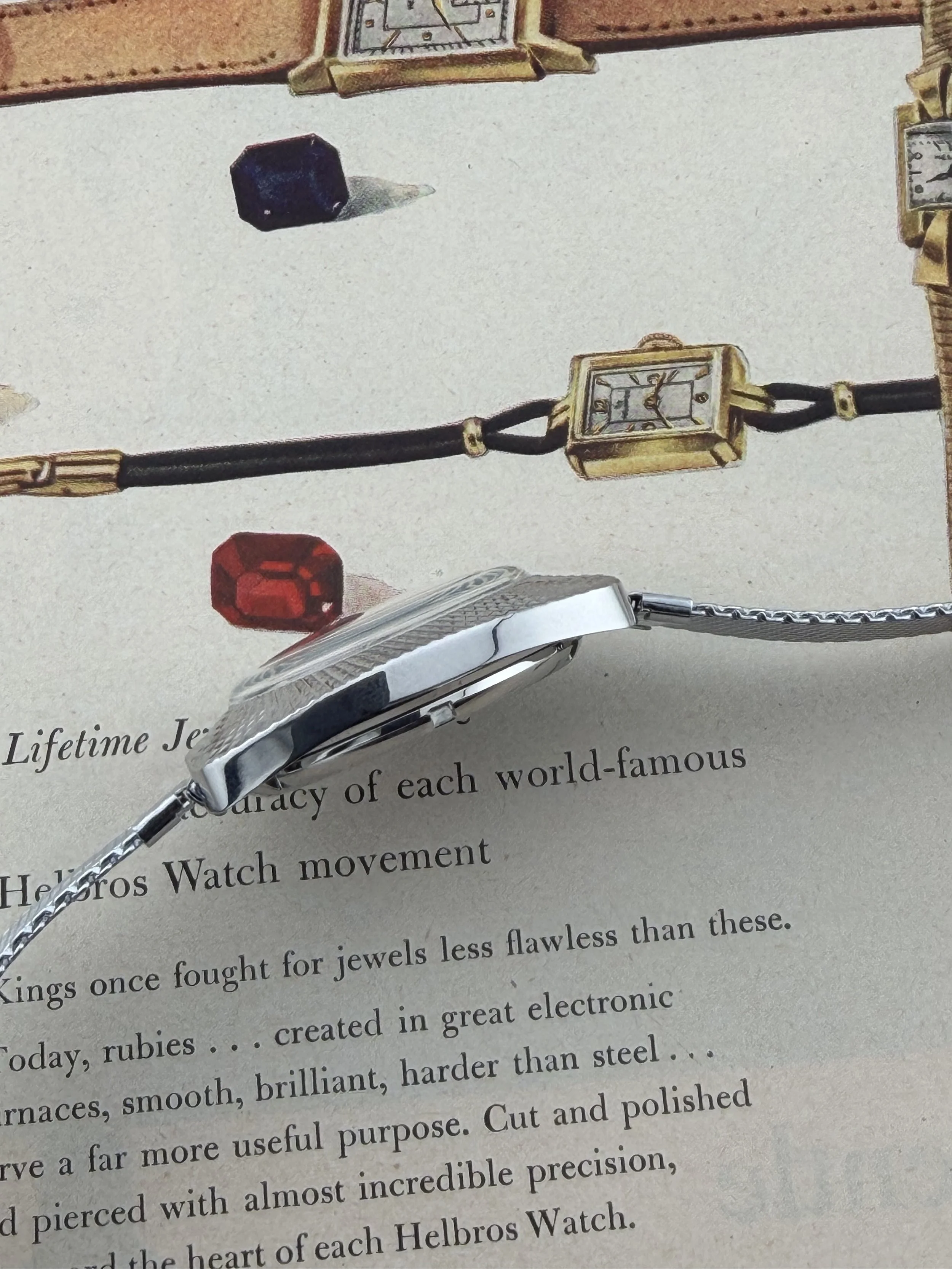
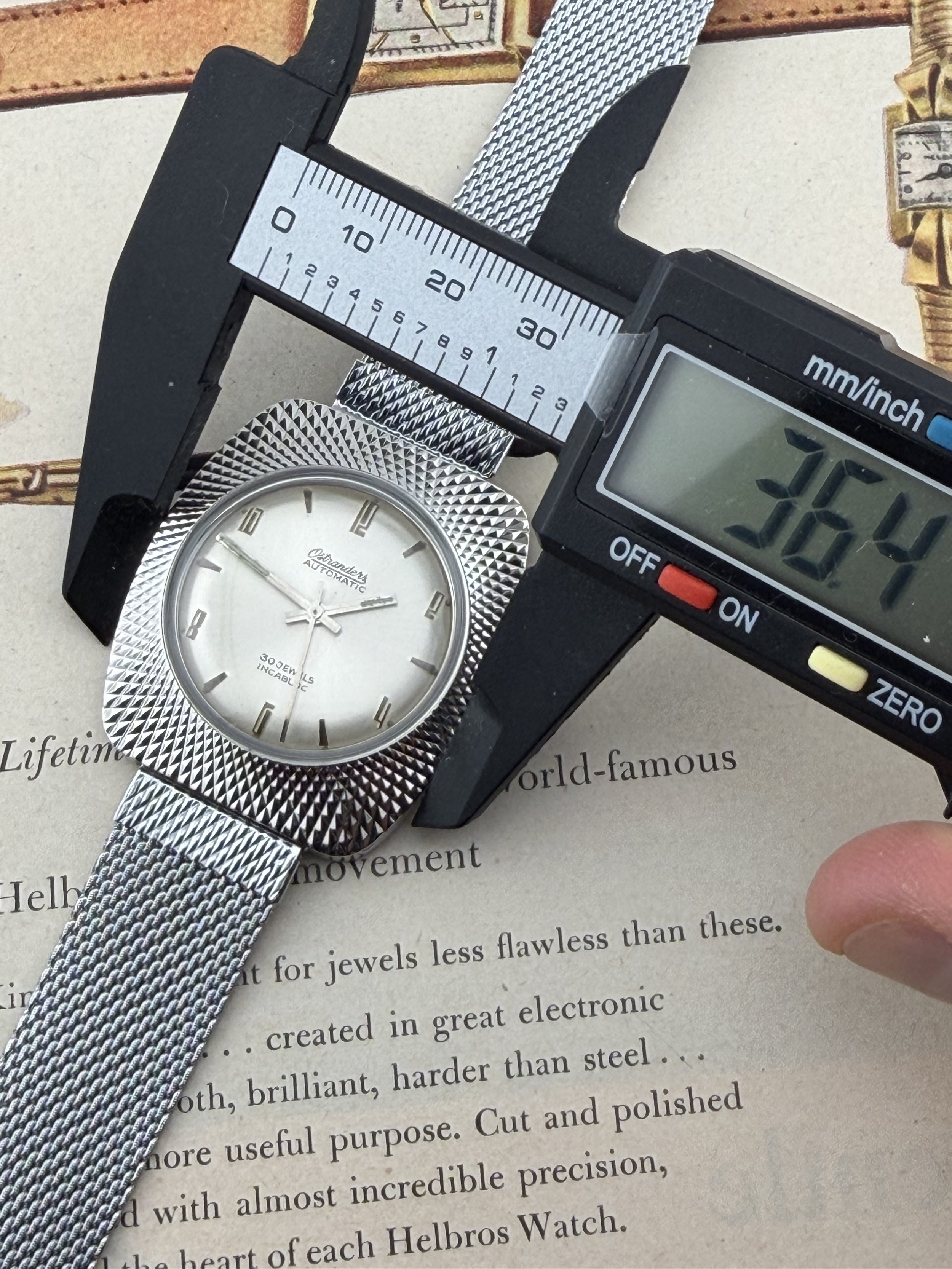
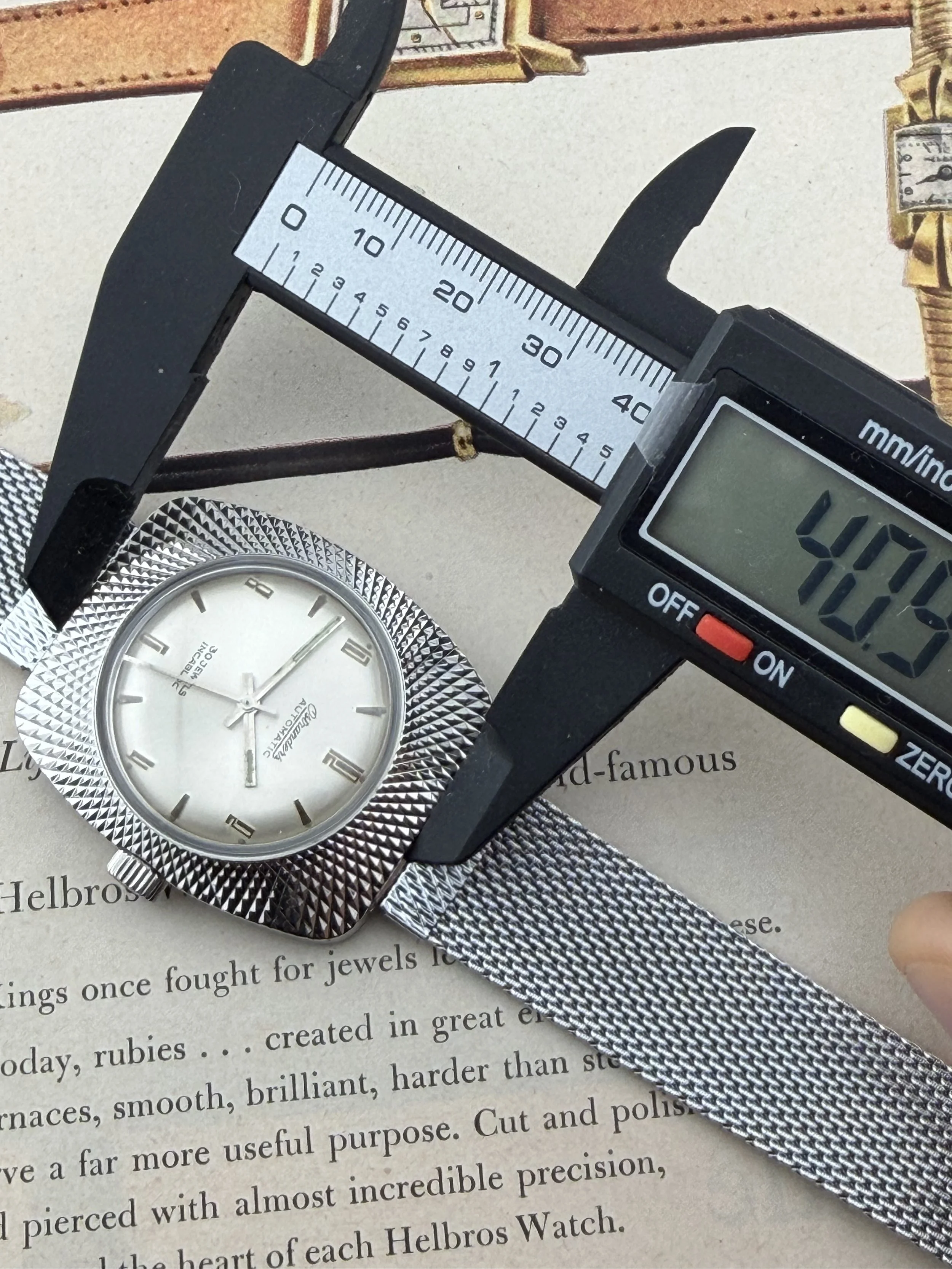
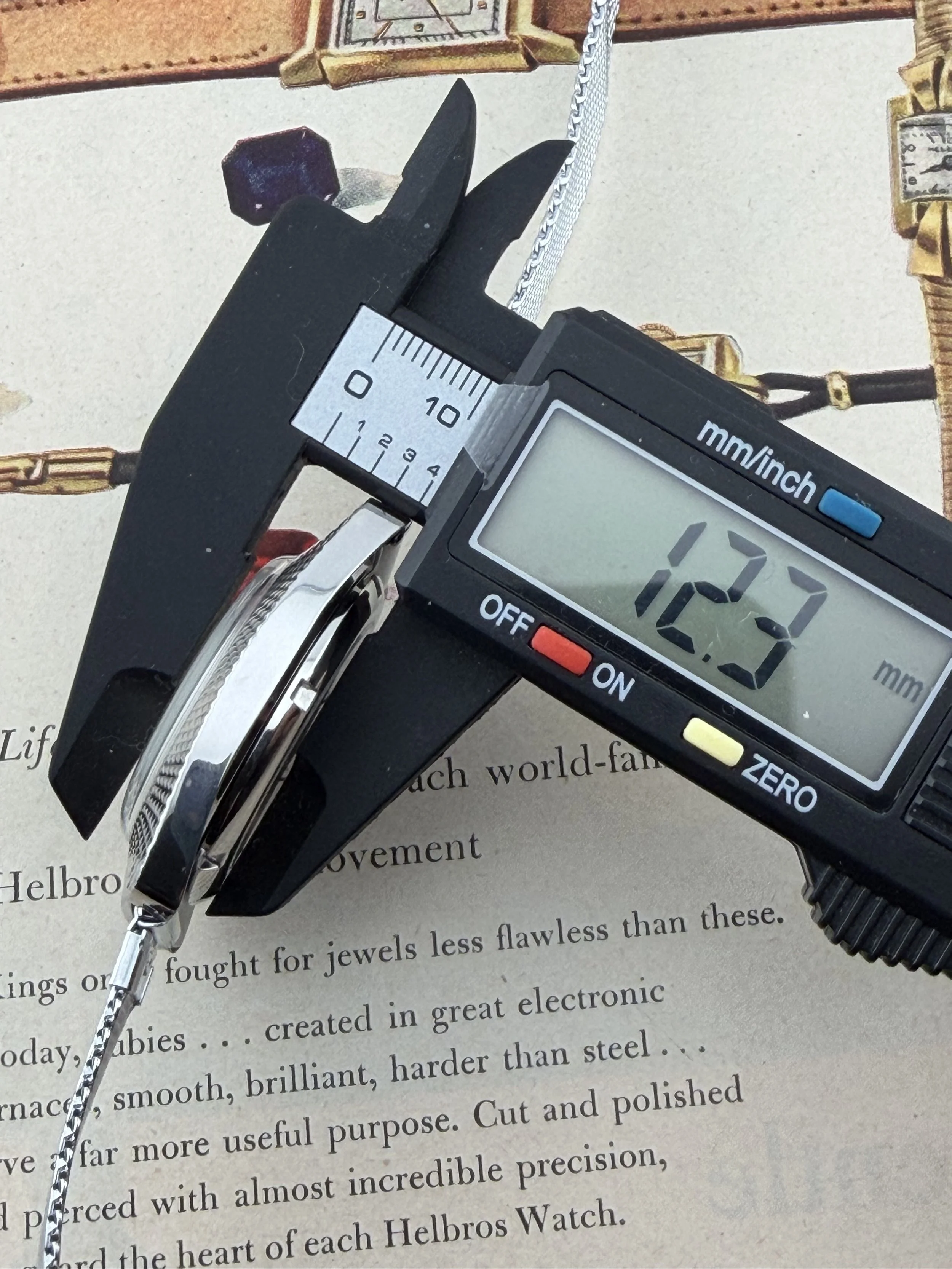
Measuring 36.4mm across and approximately 12.3mm thick, the case has a strong presence on the wrist. Its geometric, highly faceted profile gives the watch a jewellery-like quality that feels very characteristic of the early-to-mid 1960s, while still retaining the proportions of a traditional men's watch.
The silver-cream dial is equally interesting, combining applied geometric markers with stylized Arabic numerals, a finely textured surface, dauphine-style hands and a clean central sweep seconds. There is just enough patina and age to give the dial character without overwhelming its original design.
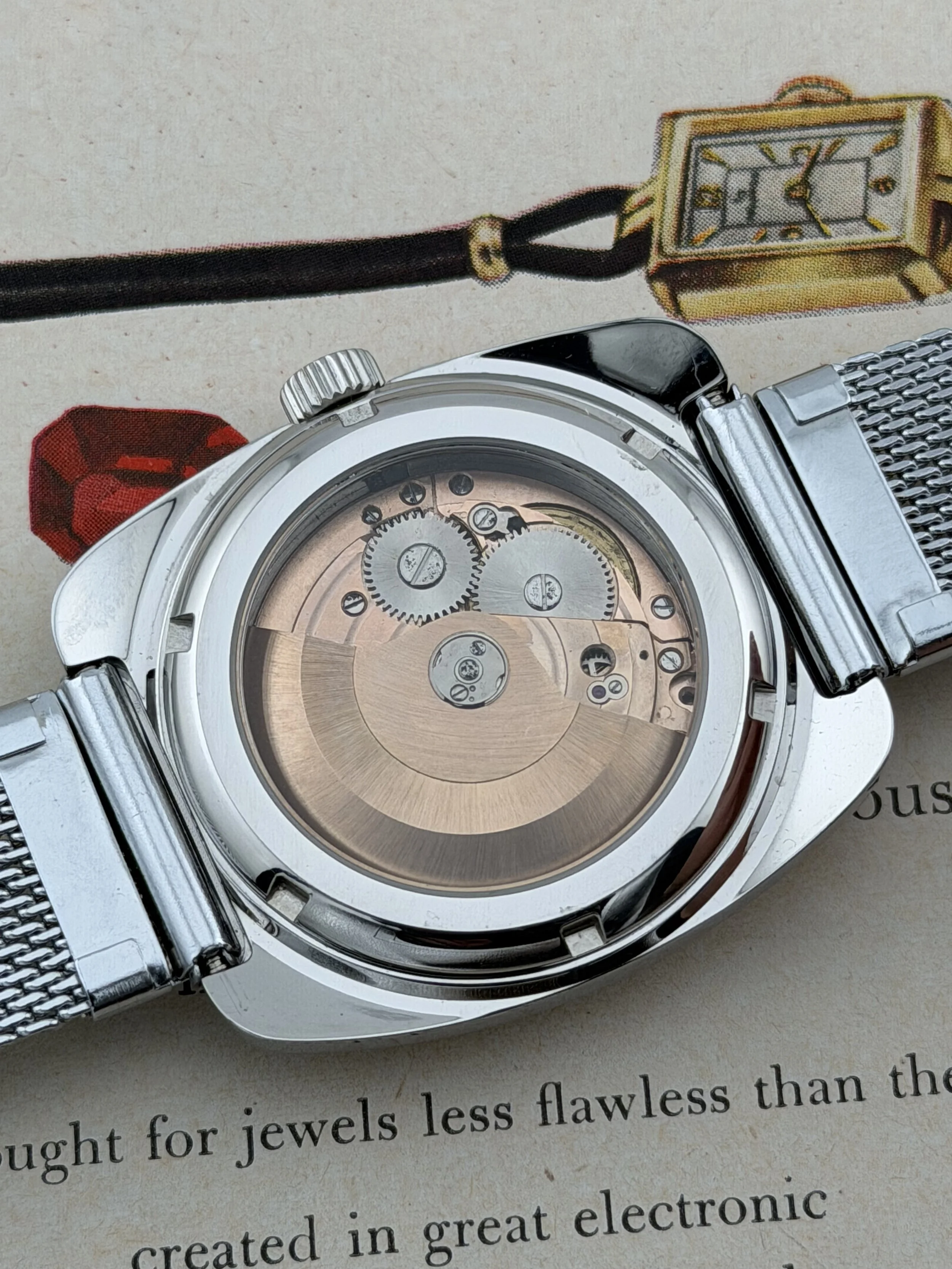
Inside is a 30-jewel Swiss automatic movement with Incabloc shock protection. The 30-jewel configuration is particularly interesting and is consistent with several higher-jewel-count Swiss automatics of the period, including movements from the Felsa family. Without a clear caliber marking, however, we would leave the exact movement identification open rather than speculate.
Outrander’s itself appears to have been a private-label/trade name, rather than a major Swiss manufacture, which was extremely common during this period. Retailers and importers could source Swiss movements and cases and sell them under their own names, creating some wonderfully obscure watches that have largely disappeared from the modern market.
With its unusual case, 30-jewel automatic movement and excellent 36mm proportions, this is a particularly cool example of the space-age, jewellery-inspired side of 1960s Swiss watchmaking—an affordable vintage watch with considerably more personality than its understated dial initially suggests.
This is a fantastic example of the more unusual side of 1960s Swiss watch design. Outrander’s appears to have been a private-label name, with the watch itself built around a Swiss automatic movement and a wonderfully distinctive faceted case.
Measuring 36.4mm across and approximately 12.3mm thick, the case has a strong presence on the wrist. Its geometric, highly faceted profile gives the watch a jewellery-like quality that feels very characteristic of the early-to-mid 1960s, while still retaining the proportions of a traditional men's watch.
The silver-cream dial is equally interesting, combining applied geometric markers with stylized Arabic numerals, a finely textured surface, dauphine-style hands and a clean central sweep seconds. There is just enough patina and age to give the dial character without overwhelming its original design.
Inside is a 30-jewel Swiss automatic movement with Incabloc shock protection. The 30-jewel configuration is particularly interesting and is consistent with several higher-jewel-count Swiss automatics of the period, including movements from the Felsa family. Without a clear caliber marking, however, we would leave the exact movement identification open rather than speculate.
Outrander’s itself appears to have been a private-label/trade name, rather than a major Swiss manufacture, which was extremely common during this period. Retailers and importers could source Swiss movements and cases and sell them under their own names, creating some wonderfully obscure watches that have largely disappeared from the modern market.
With its unusual case, 30-jewel automatic movement and excellent 36mm proportions, this is a particularly cool example of the space-age, jewellery-inspired side of 1960s Swiss watchmaking—an affordable vintage watch with considerably more personality than its understated dial initially suggests.