

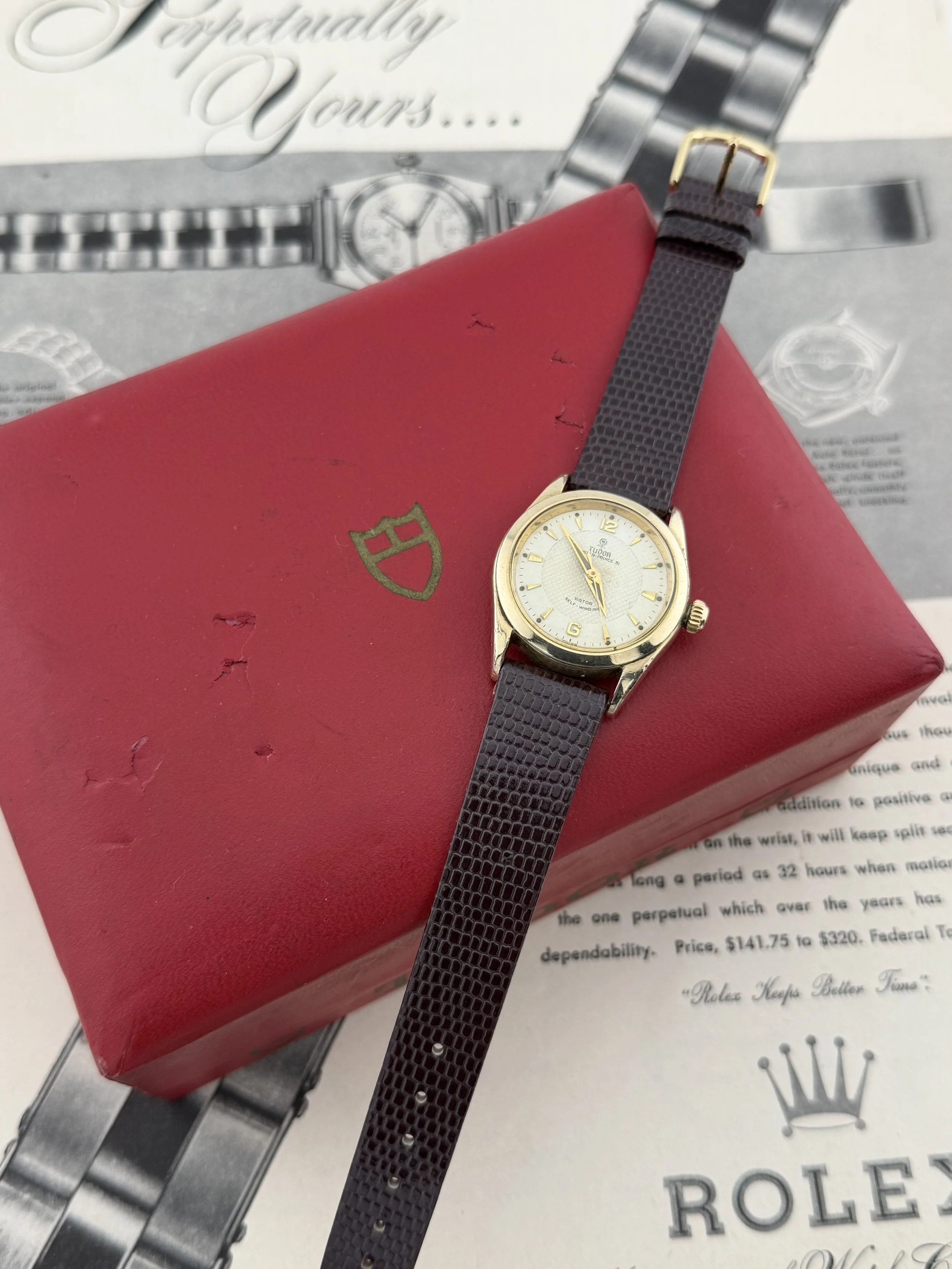
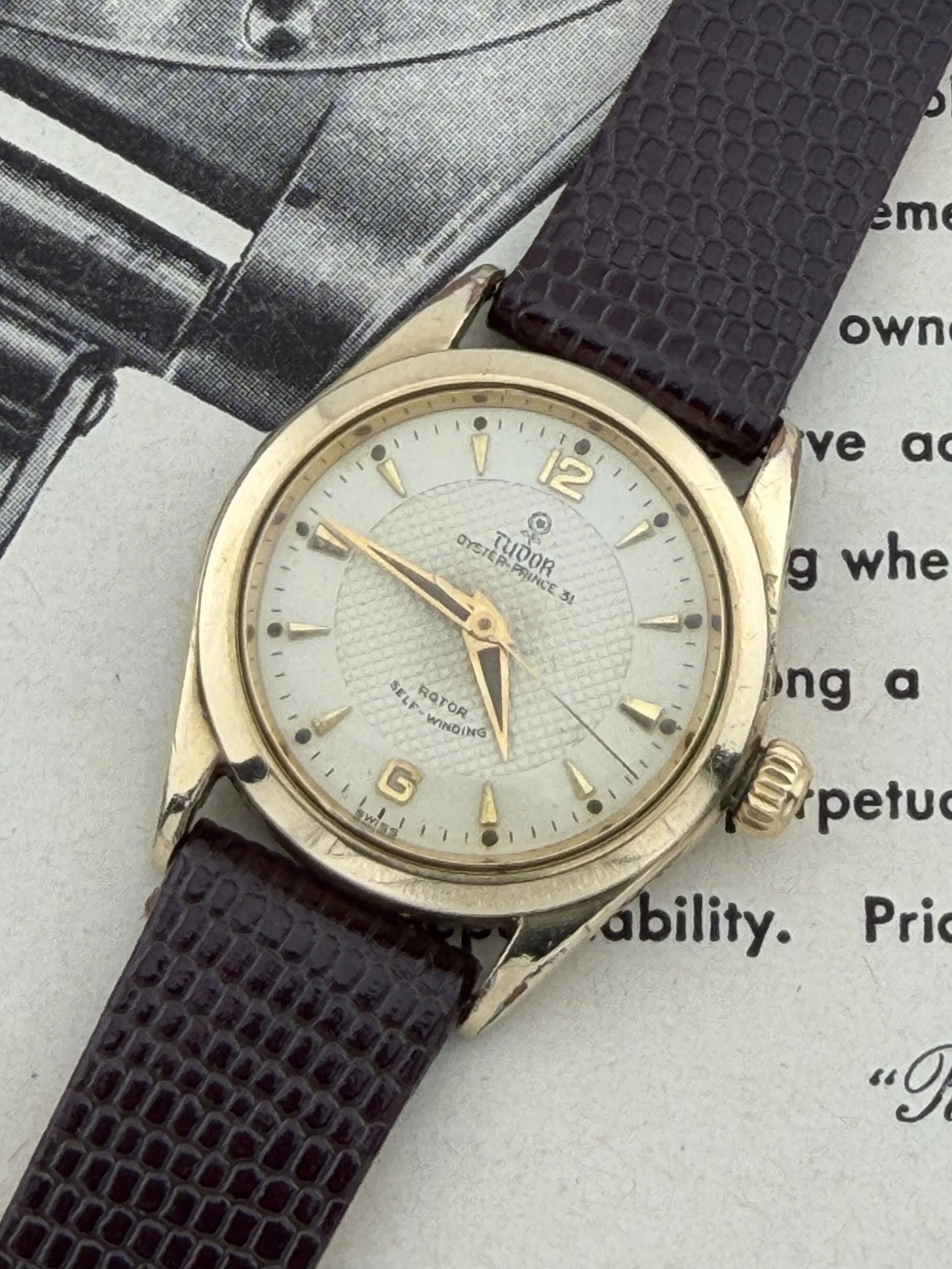
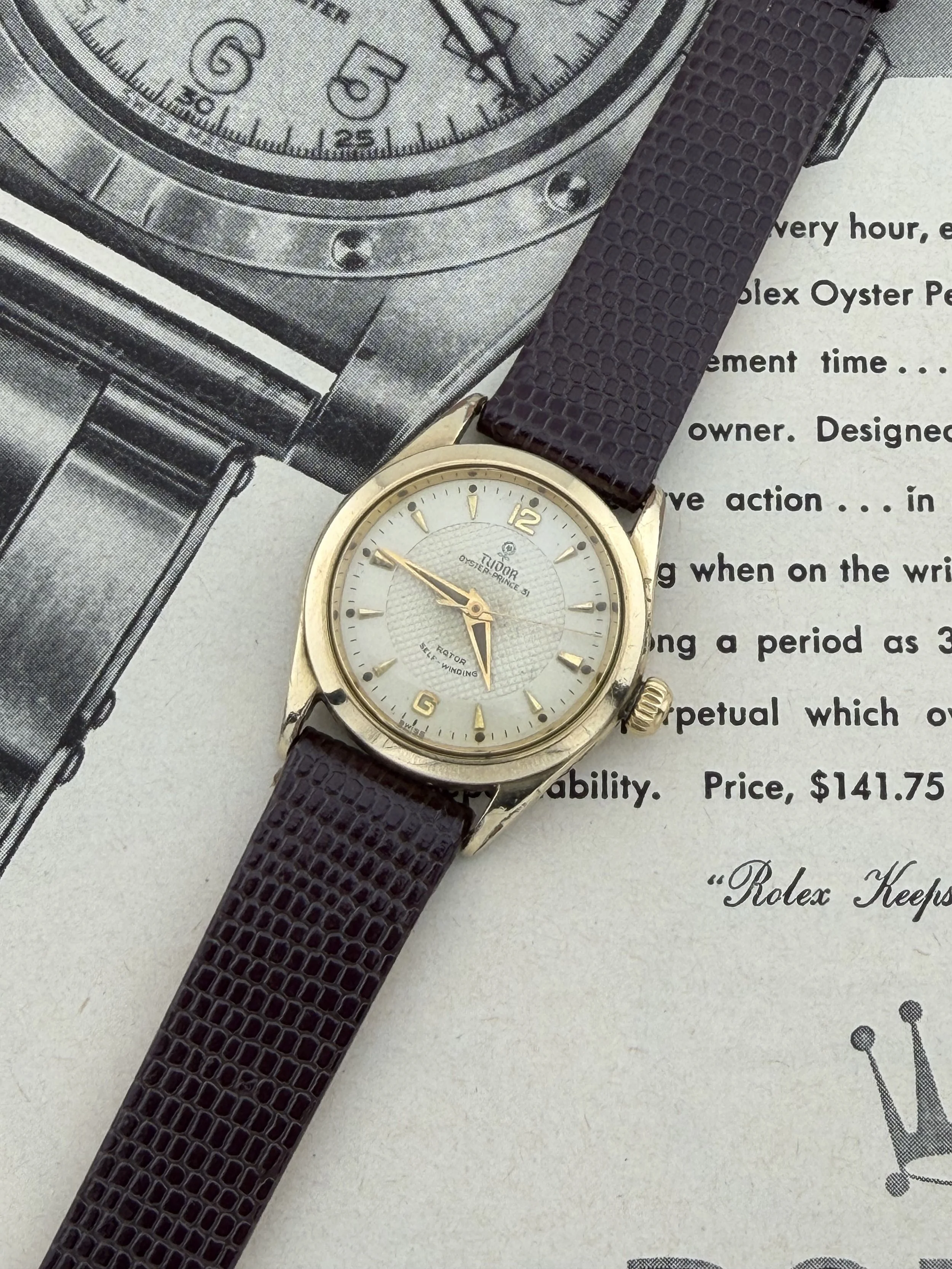
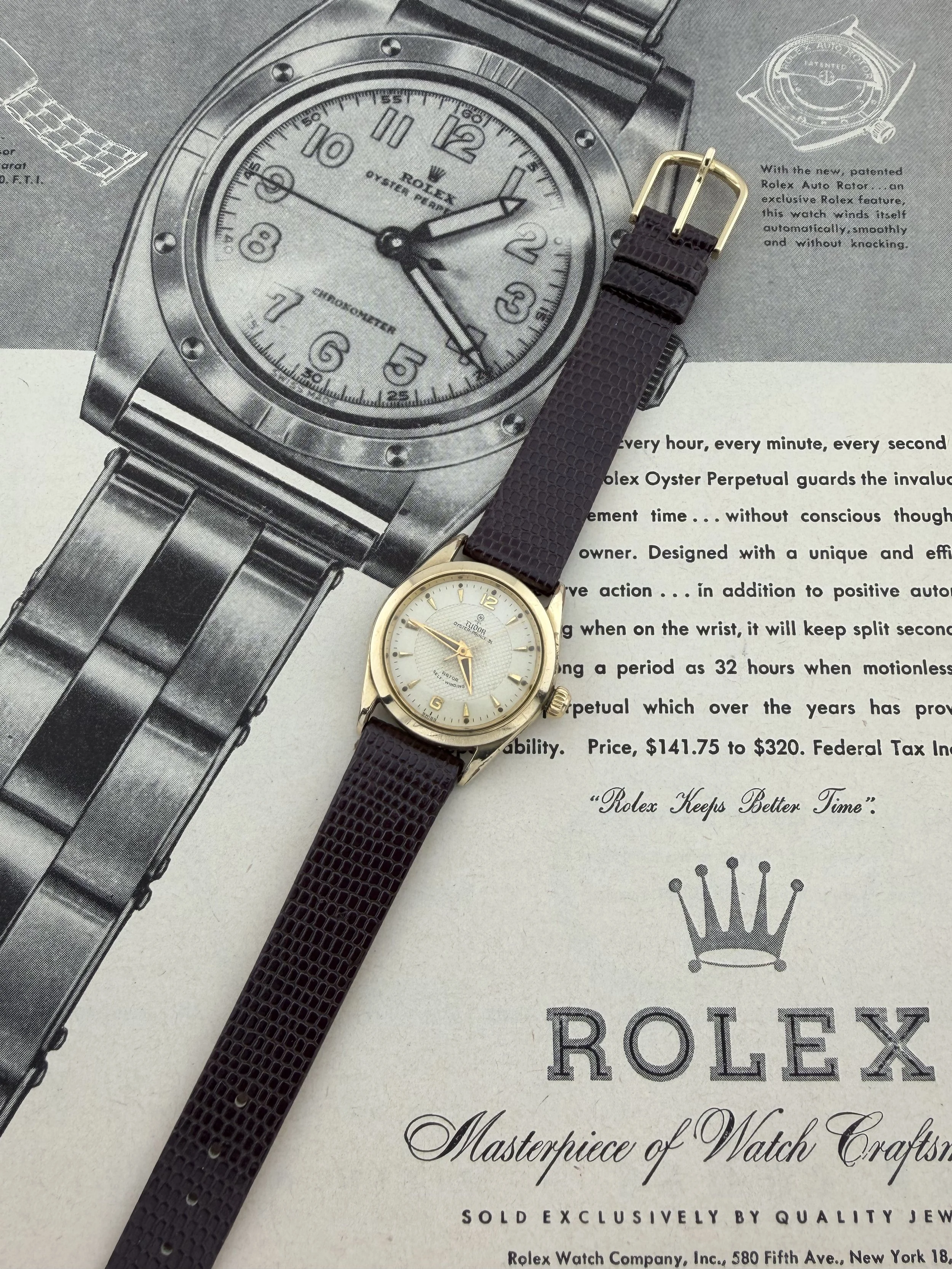
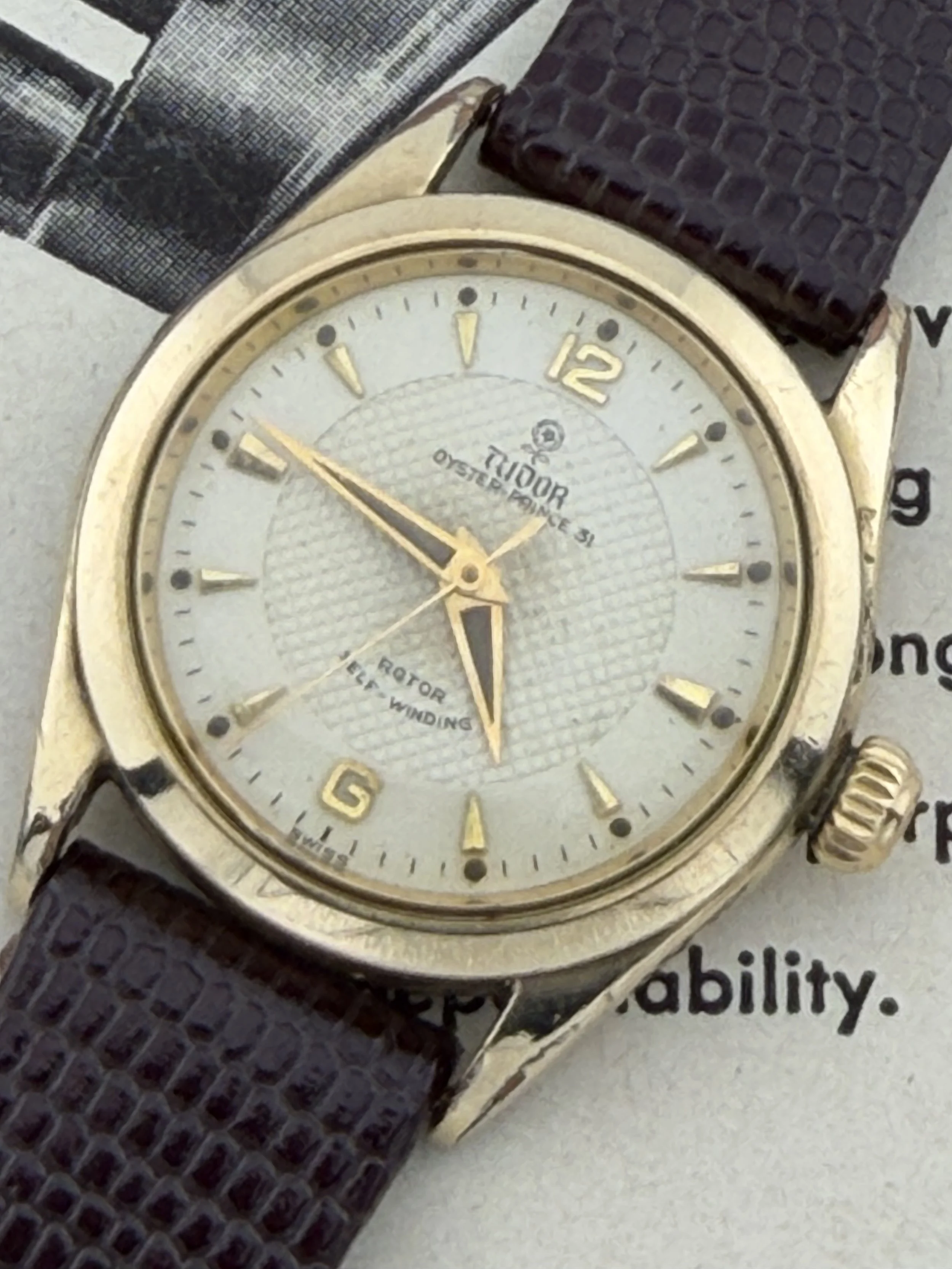
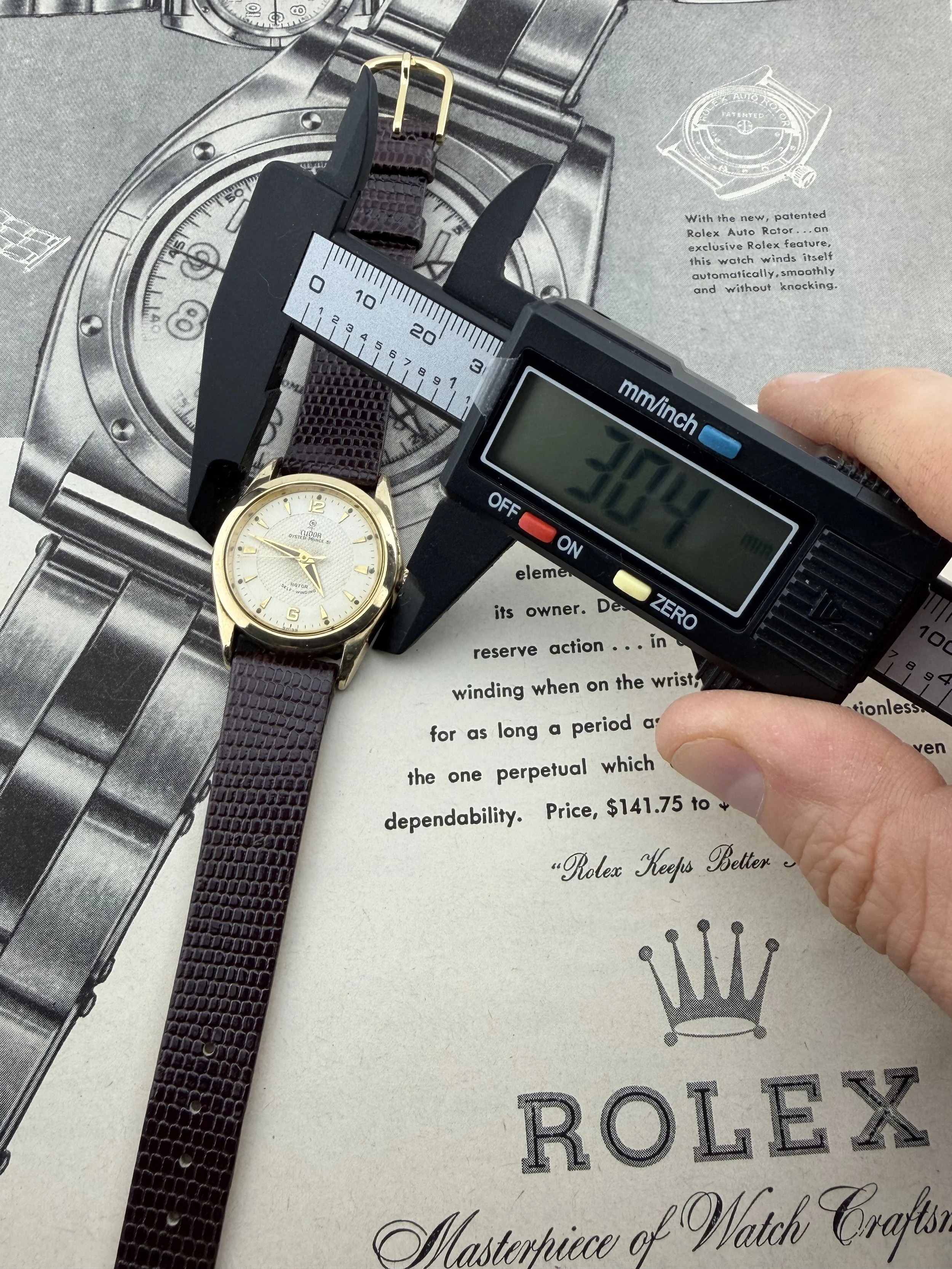
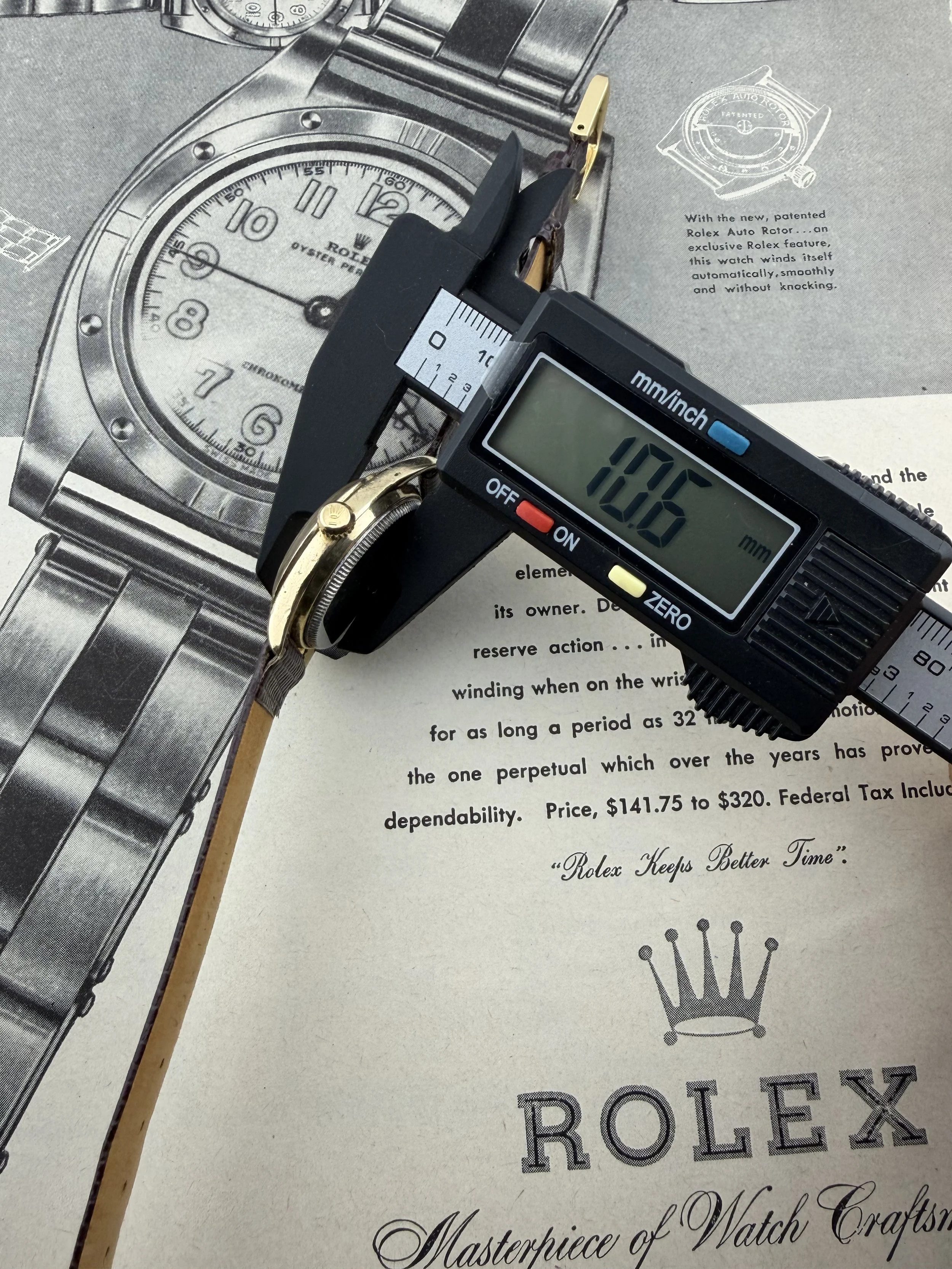
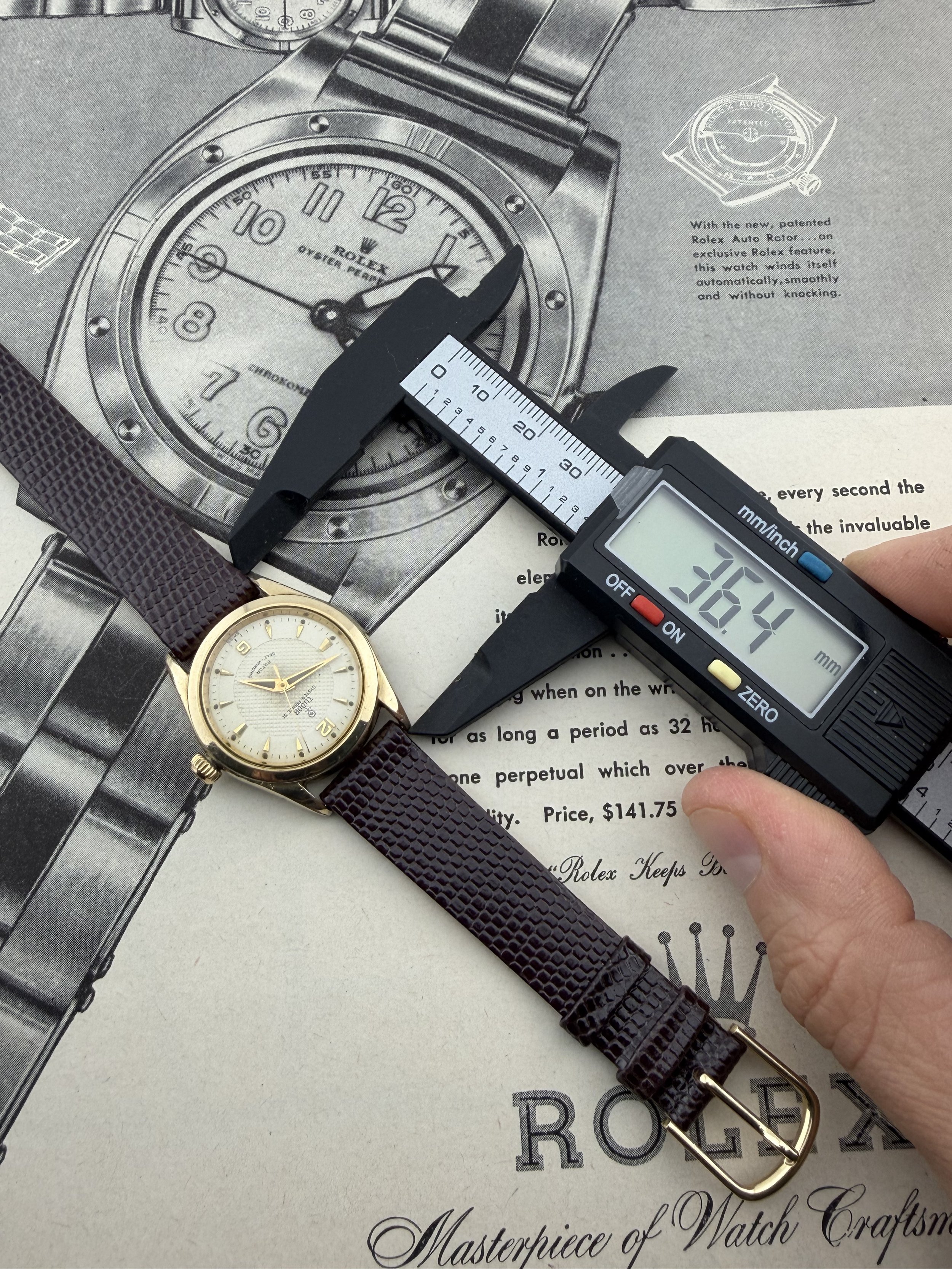
This remarkable Tudor Oyster Prince 31 is a wonderful piece of the early Tudor and Rolex story. Combining the elegance of a gold-filled Oyster case, the practicality of an automatic movement, and the unmistakable presence of a Rolex-signed crown, it represents one of the most fascinating chapters in the history of vintage Swiss watchmaking.
The Tudor Oyster Prince was created during the period when Tudor was closely connected to Rolex. While this is not a Rolex watch, it is very much part of the wider Rolex family history. Tudor watches were designed to offer many of the qualities associated with Rolex—particularly the famous Oyster case concept and water-resistant construction—while offering a more accessible alternative.
The 31 mm case is beautifully proportioned by mid-century standards. While modest in size compared with many modern watches, its smaller dimensions give it an elegant and refined presence on the wrist. This is a classic vintage proportion: discreet, comfortable, and perfectly suited to the dressier styles of the period.
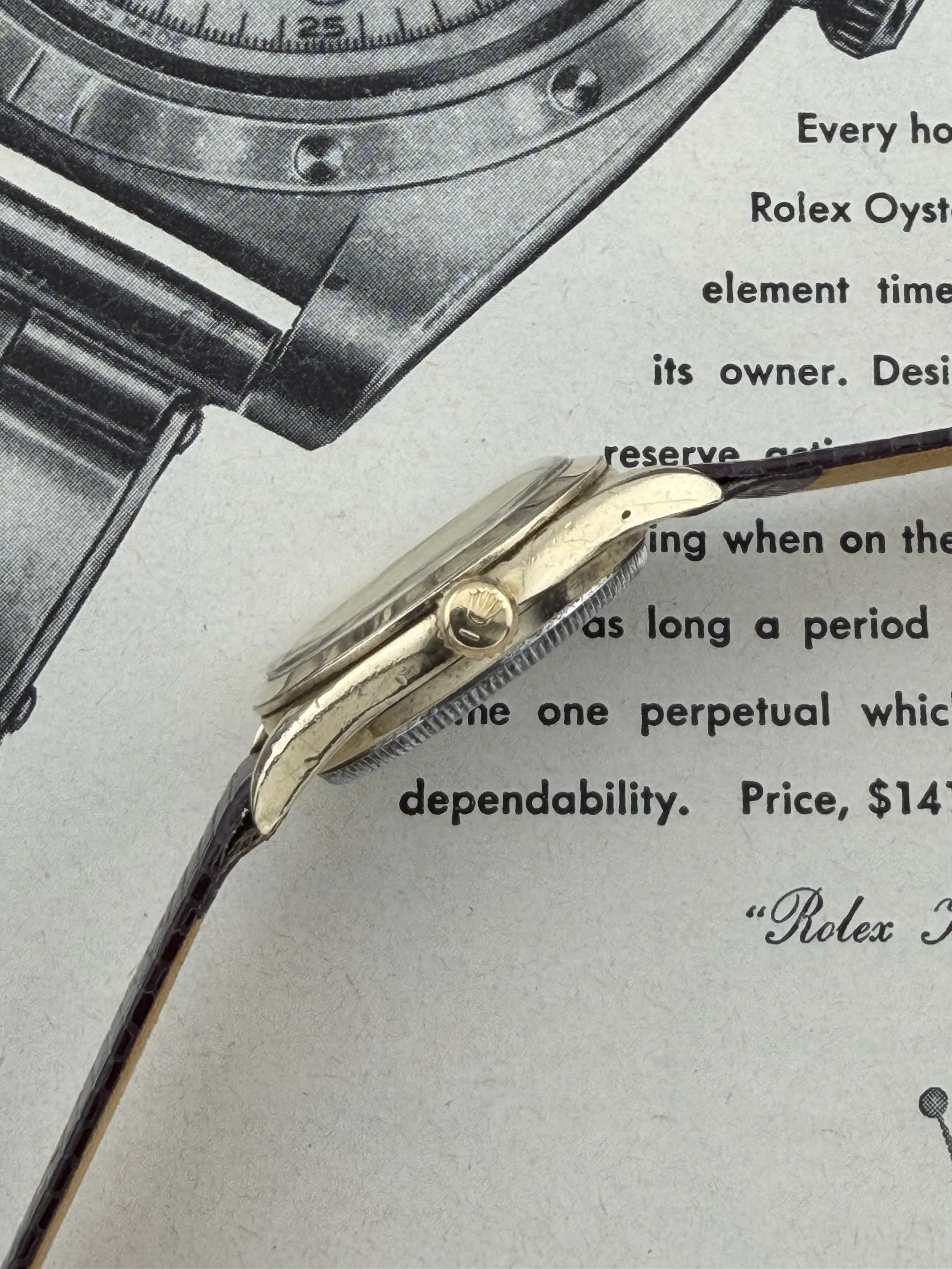
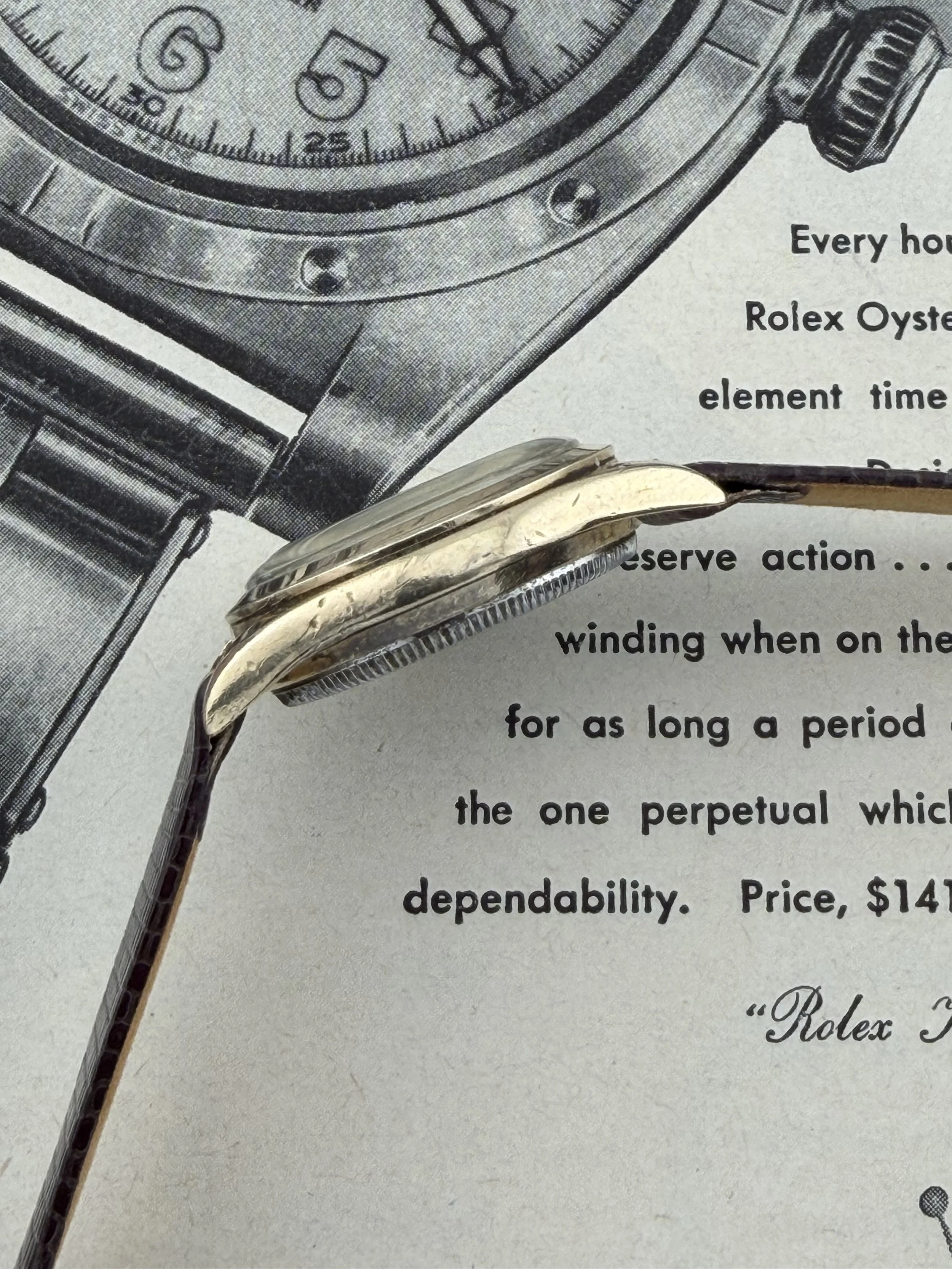
The gold-filled case adds warmth and visual richness. Unlike solid gold, gold-filled construction uses a substantial layer of gold bonded over a base-metal core, allowing the watch to achieve the appearance of a precious-metal case while remaining more practical and affordable. The condition of that gold layer is therefore an important part of the watch's appeal, and the case has a wonderfully authentic vintage presence.
One of the most interesting details is the Rolex-signed winding crown. The presence of the Rolex coronet is completely correct for many vintage Tudor Oyster Prince watches and reflects the close relationship between the two brands. Tudor's Oyster watches used Rolex-associated case technology and components, making the Rolex crown a particularly meaningful detail for collectors.
The Oyster Prince name itself is historically significant. “Oyster” refers to the waterproof case concept developed and famously associated with Rolex, while “Prince” was used for Tudor's self-winding watches. Together, the name perfectly captures the original Tudor philosophy: a reliable automatic watch built around the principles of the Oyster case.
Inside, the watch is powered by a Swiss self-winding mechanical movement. Tudor generally used reliable Swiss movements rather than Rolex-manufactured calibres, which was part of the original concept behind the brand. Hans Wilsdorf's vision for Tudor was to create a watch that could benefit from Rolex's expertise in case construction and waterproofing while offering a more accessible mechanical alternative.
That combination is what makes early Tudor watches so interesting. They were never simply inexpensive Rolex watches. Rather, they had their own identity, combining Rolex-associated Oyster technology with Tudor branding and Swiss mechanical movements. The result was a watch with a fascinating position within the history of both brands.
The Tudor Oyster Prince 31 also represents an important period in the development of the modern wristwatch. During the post-war years, automatic watches were becoming increasingly popular, and manufacturers were refining self-winding technology into practical everyday movements. A watch like this offered the convenience of automatic winding within a compact, elegant case designed for daily wear.
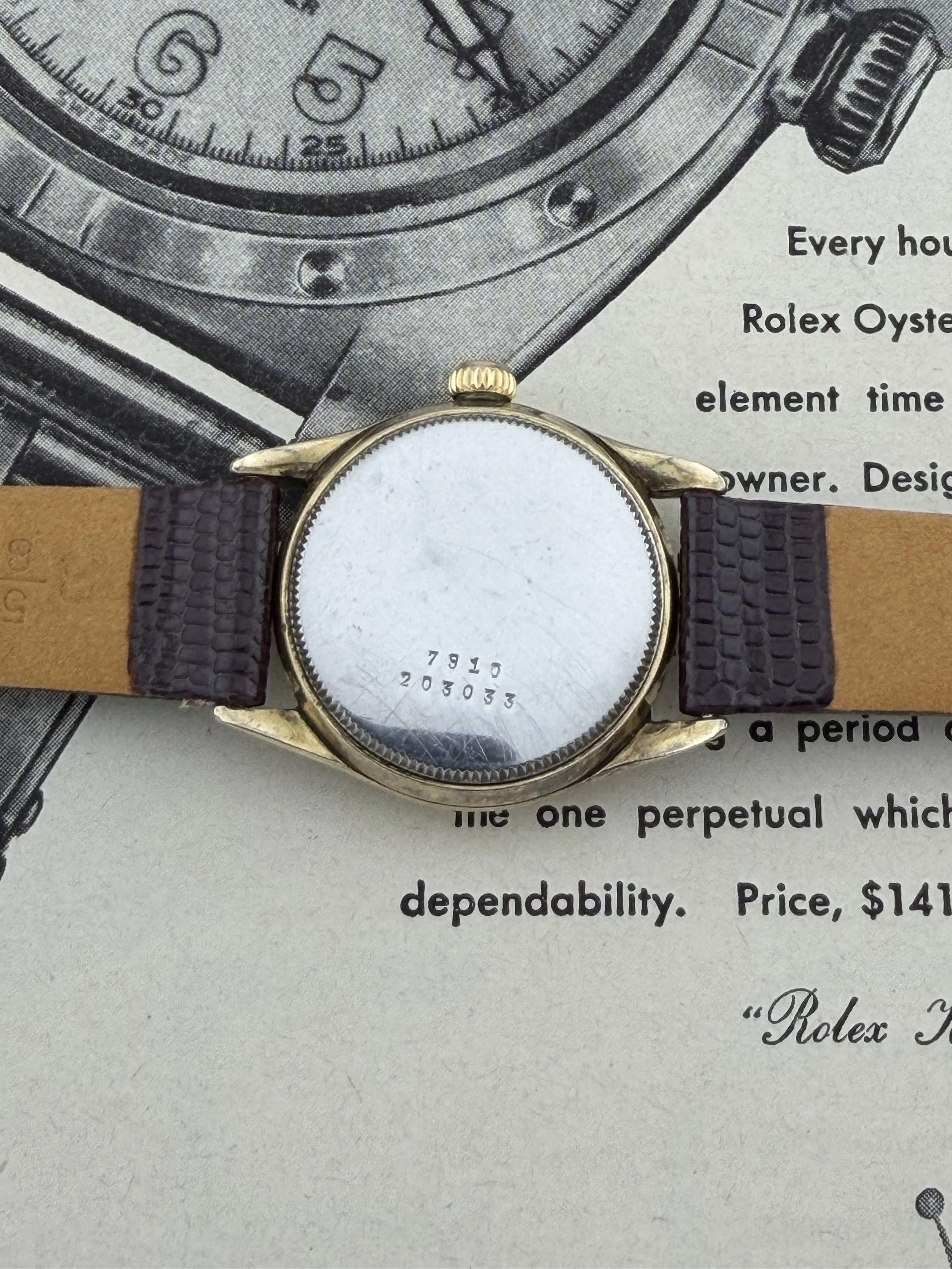
The exact reference and production date would depend on the markings found inside the caseback, as several vintage Tudor Oyster Prince references share similar 31 mm proportions. The reference number, movement, serial number, and case markings would allow the watch to be dated and identified with greater precision.
What makes this watch particularly appealing is the way it brings together several important elements of vintage watch history: the Tudor name, the Rolex Oyster connection, a Rolex-signed crown, a gold-filled case, and an automatic Swiss mechanical movement.
For collectors interested in the history of Tudor, Rolex, and the development of the post-war automatic wristwatch, this Oyster Prince 31 is a wonderful example of the original Tudor philosophy. Elegant, historically significant, and full of period character, it is a genuine piece of the Rolex-Tudor story with an identity all its own.
**** Box not included, it is a prop for pictures only!
This remarkable Tudor Oyster Prince 31 is a wonderful piece of the early Tudor and Rolex story. Combining the elegance of a gold-filled Oyster case, the practicality of an automatic movement, and the unmistakable presence of a Rolex-signed crown, it represents one of the most fascinating chapters in the history of vintage Swiss watchmaking.
The Tudor Oyster Prince was created during the period when Tudor was closely connected to Rolex. While this is not a Rolex watch, it is very much part of the wider Rolex family history. Tudor watches were designed to offer many of the qualities associated with Rolex—particularly the famous Oyster case concept and water-resistant construction—while offering a more accessible alternative.
The 31 mm case is beautifully proportioned by mid-century standards. While modest in size compared with many modern watches, its smaller dimensions give it an elegant and refined presence on the wrist. This is a classic vintage proportion: discreet, comfortable, and perfectly suited to the dressier styles of the period.
The gold-filled case adds warmth and visual richness. Unlike solid gold, gold-filled construction uses a substantial layer of gold bonded over a base-metal core, allowing the watch to achieve the appearance of a precious-metal case while remaining more practical and affordable. The condition of that gold layer is therefore an important part of the watch's appeal, and the case has a wonderfully authentic vintage presence.
One of the most interesting details is the Rolex-signed winding crown. The presence of the Rolex coronet is completely correct for many vintage Tudor Oyster Prince watches and reflects the close relationship between the two brands. Tudor's Oyster watches used Rolex-associated case technology and components, making the Rolex crown a particularly meaningful detail for collectors.
The Oyster Prince name itself is historically significant. “Oyster” refers to the waterproof case concept developed and famously associated with Rolex, while “Prince” was used for Tudor's self-winding watches. Together, the name perfectly captures the original Tudor philosophy: a reliable automatic watch built around the principles of the Oyster case.
Inside, the watch is powered by a Swiss self-winding mechanical movement. Tudor generally used reliable Swiss movements rather than Rolex-manufactured calibres, which was part of the original concept behind the brand. Hans Wilsdorf's vision for Tudor was to create a watch that could benefit from Rolex's expertise in case construction and waterproofing while offering a more accessible mechanical alternative.
That combination is what makes early Tudor watches so interesting. They were never simply inexpensive Rolex watches. Rather, they had their own identity, combining Rolex-associated Oyster technology with Tudor branding and Swiss mechanical movements. The result was a watch with a fascinating position within the history of both brands.
The Tudor Oyster Prince 31 also represents an important period in the development of the modern wristwatch. During the post-war years, automatic watches were becoming increasingly popular, and manufacturers were refining self-winding technology into practical everyday movements. A watch like this offered the convenience of automatic winding within a compact, elegant case designed for daily wear.
The exact reference and production date would depend on the markings found inside the caseback, as several vintage Tudor Oyster Prince references share similar 31 mm proportions. The reference number, movement, serial number, and case markings would allow the watch to be dated and identified with greater precision.
What makes this watch particularly appealing is the way it brings together several important elements of vintage watch history: the Tudor name, the Rolex Oyster connection, a Rolex-signed crown, a gold-filled case, and an automatic Swiss mechanical movement.
For collectors interested in the history of Tudor, Rolex, and the development of the post-war automatic wristwatch, this Oyster Prince 31 is a wonderful example of the original Tudor philosophy. Elegant, historically significant, and full of period character, it is a genuine piece of the Rolex-Tudor story with an identity all its own.
**** Box not included, it is a prop for pictures only!