

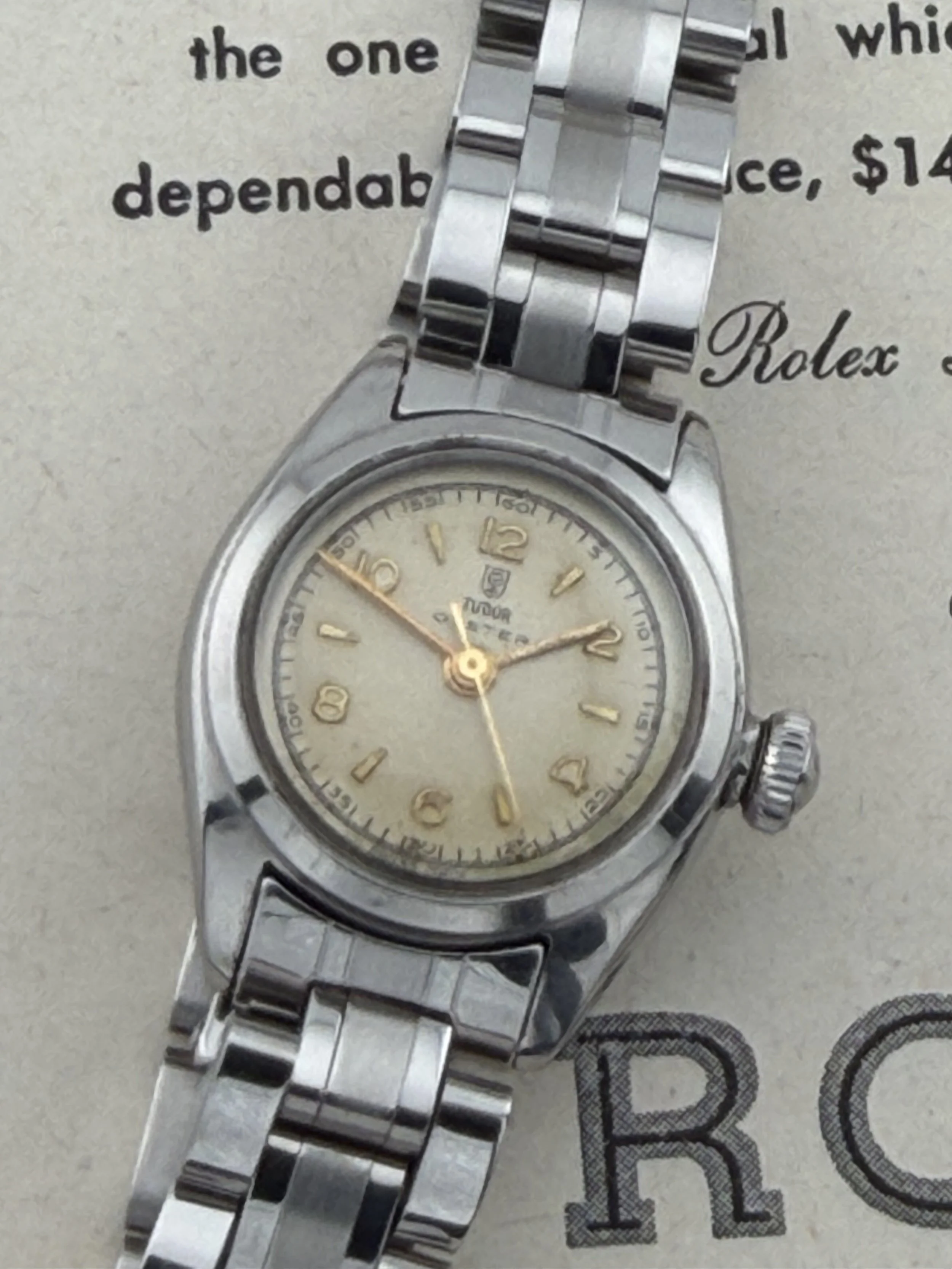
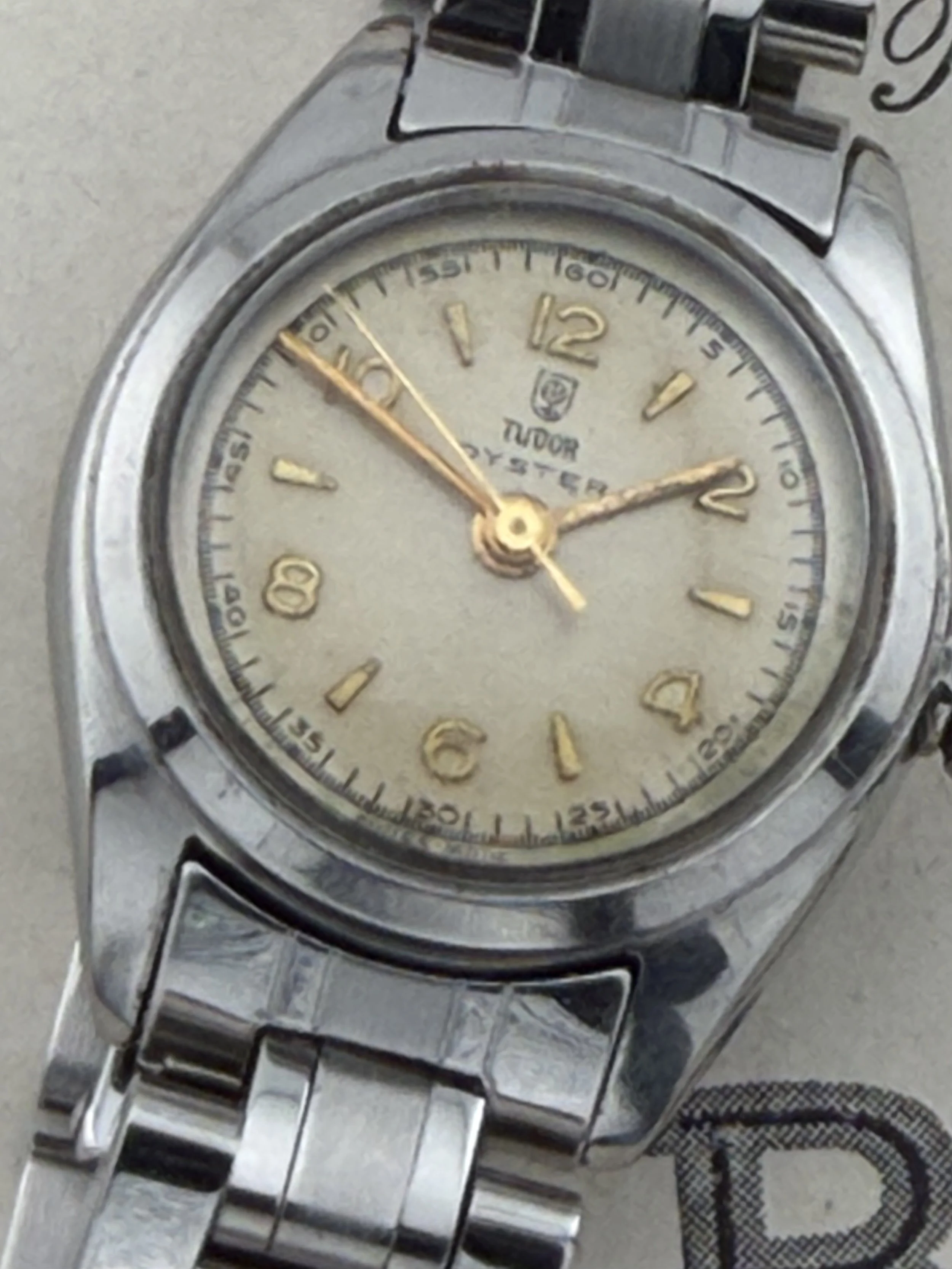
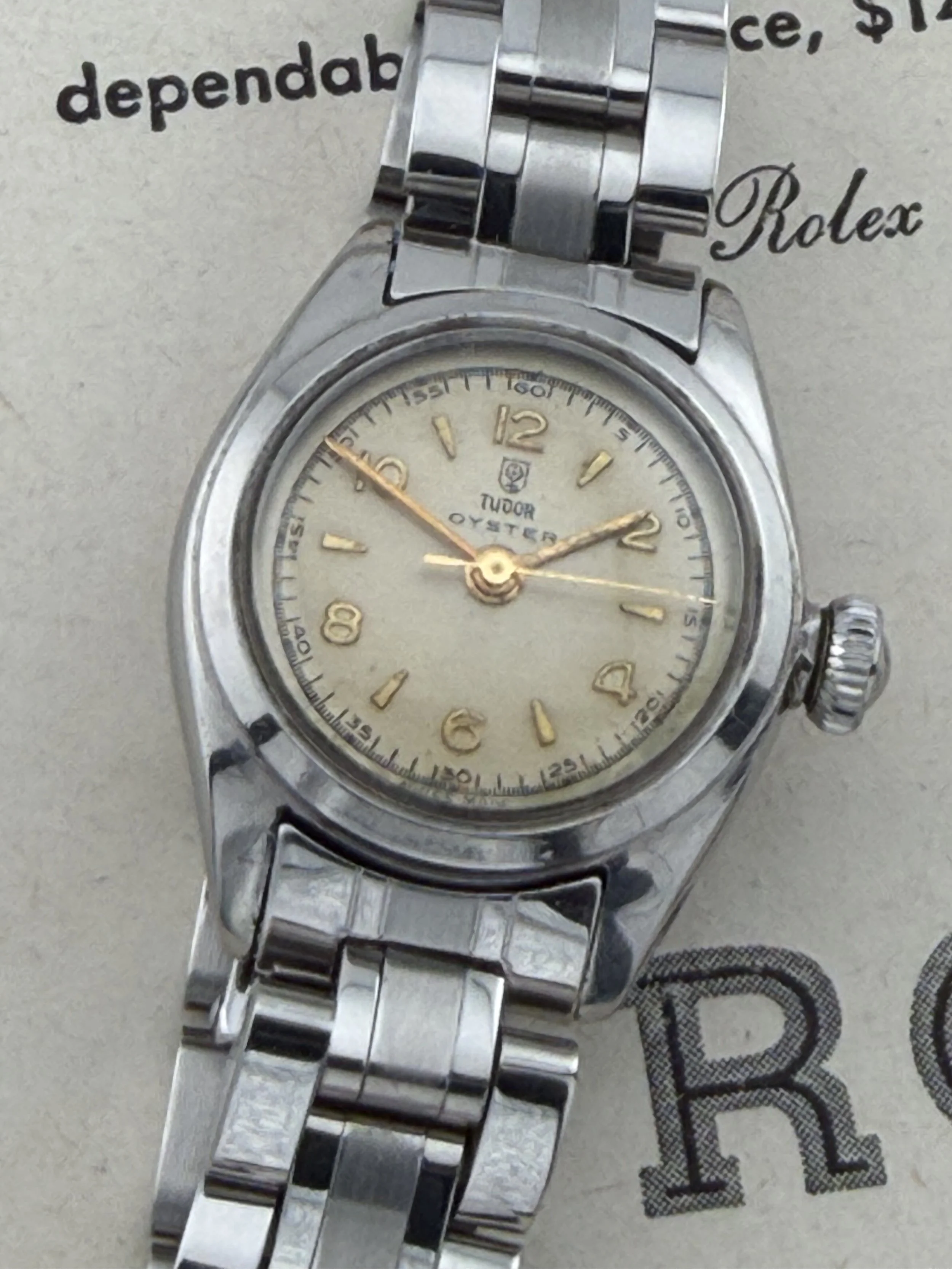
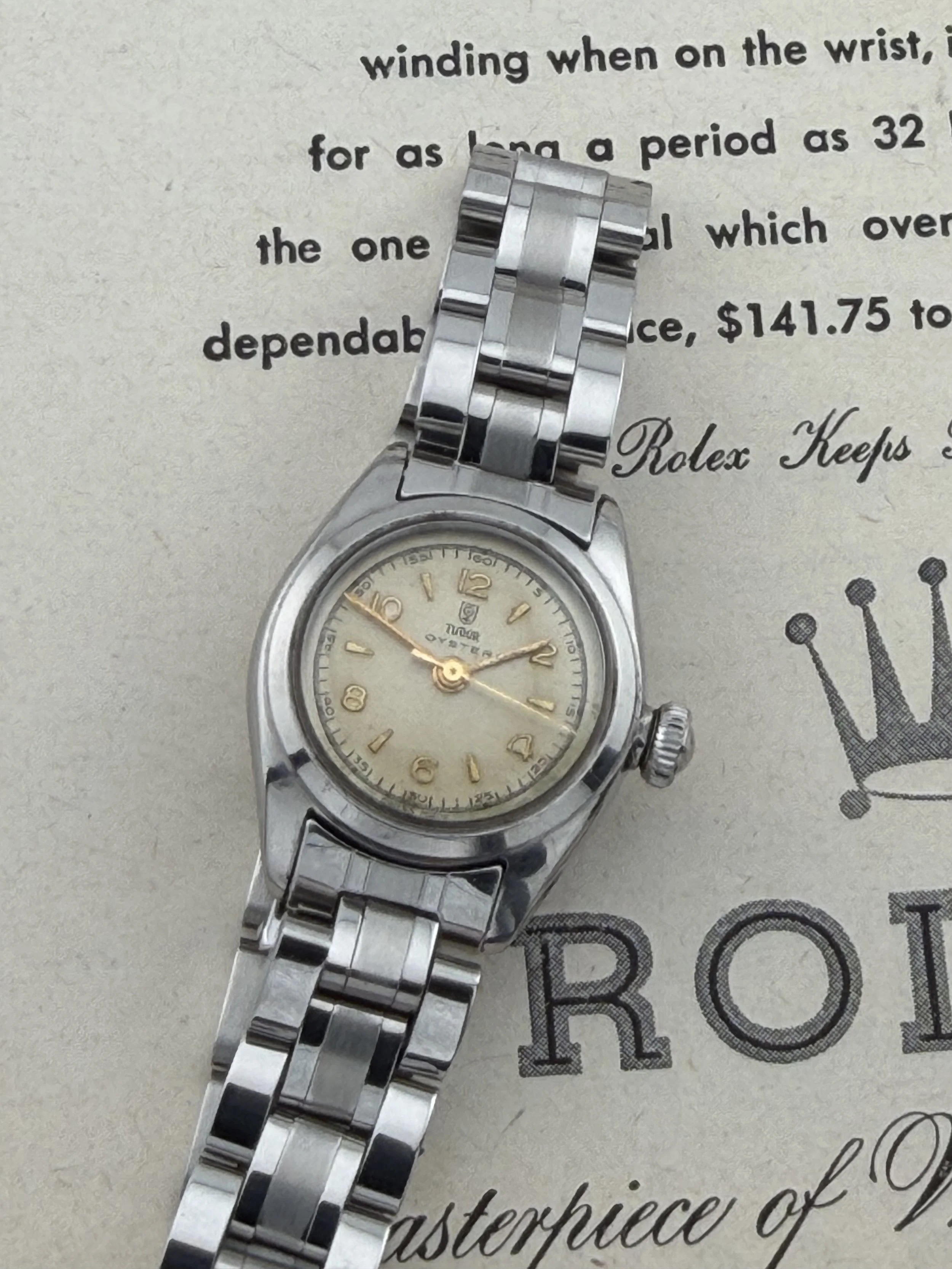
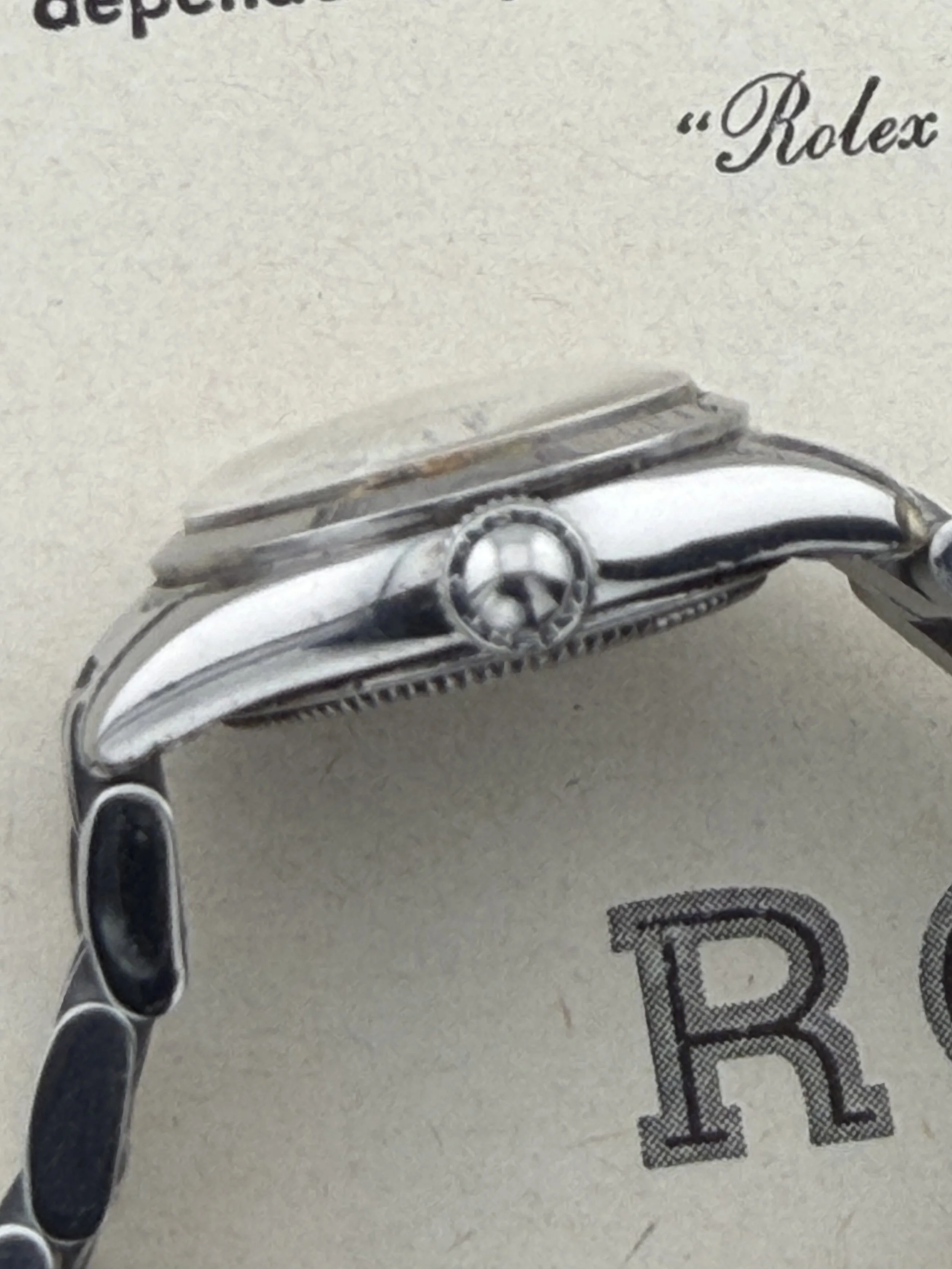
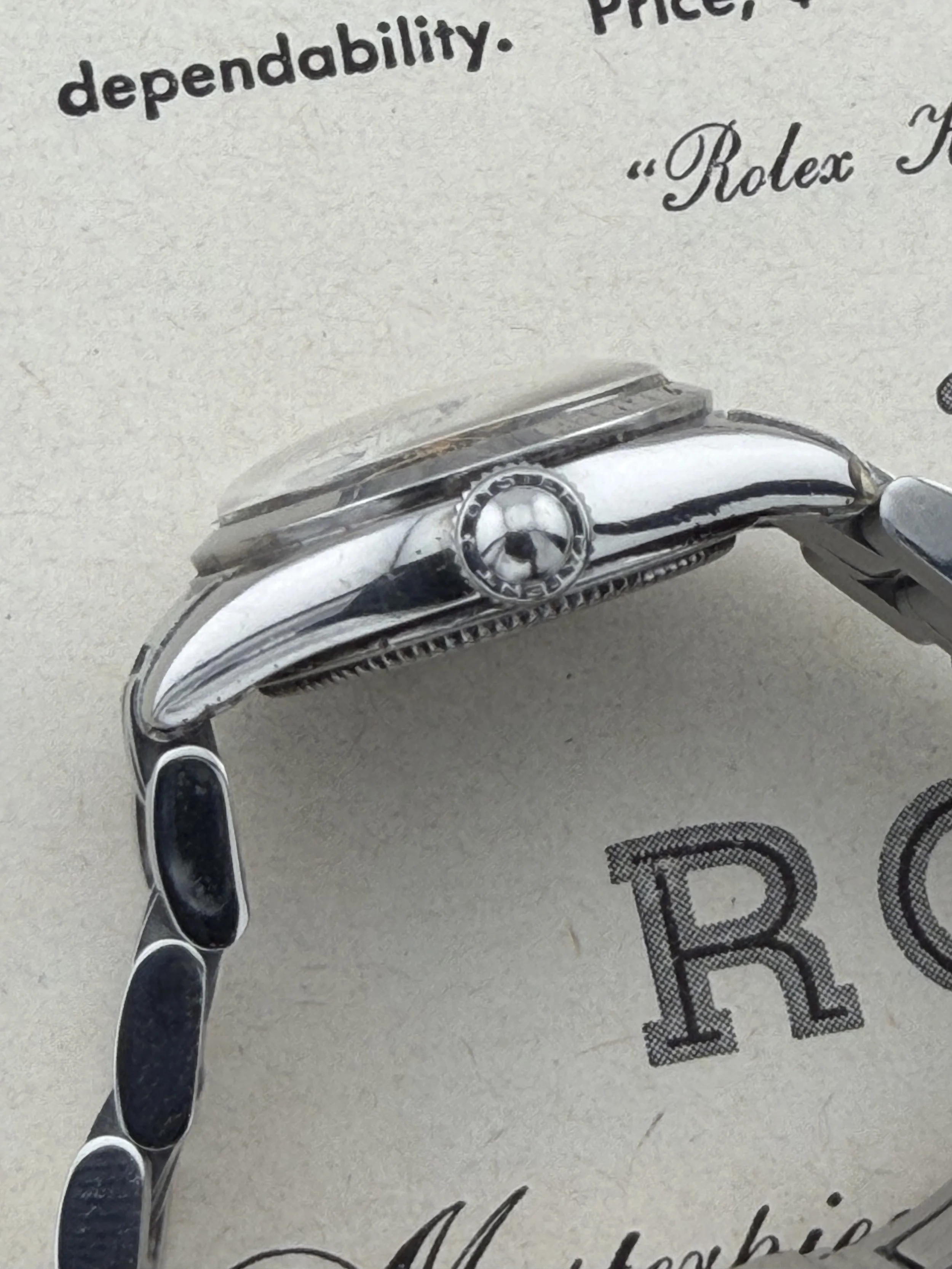
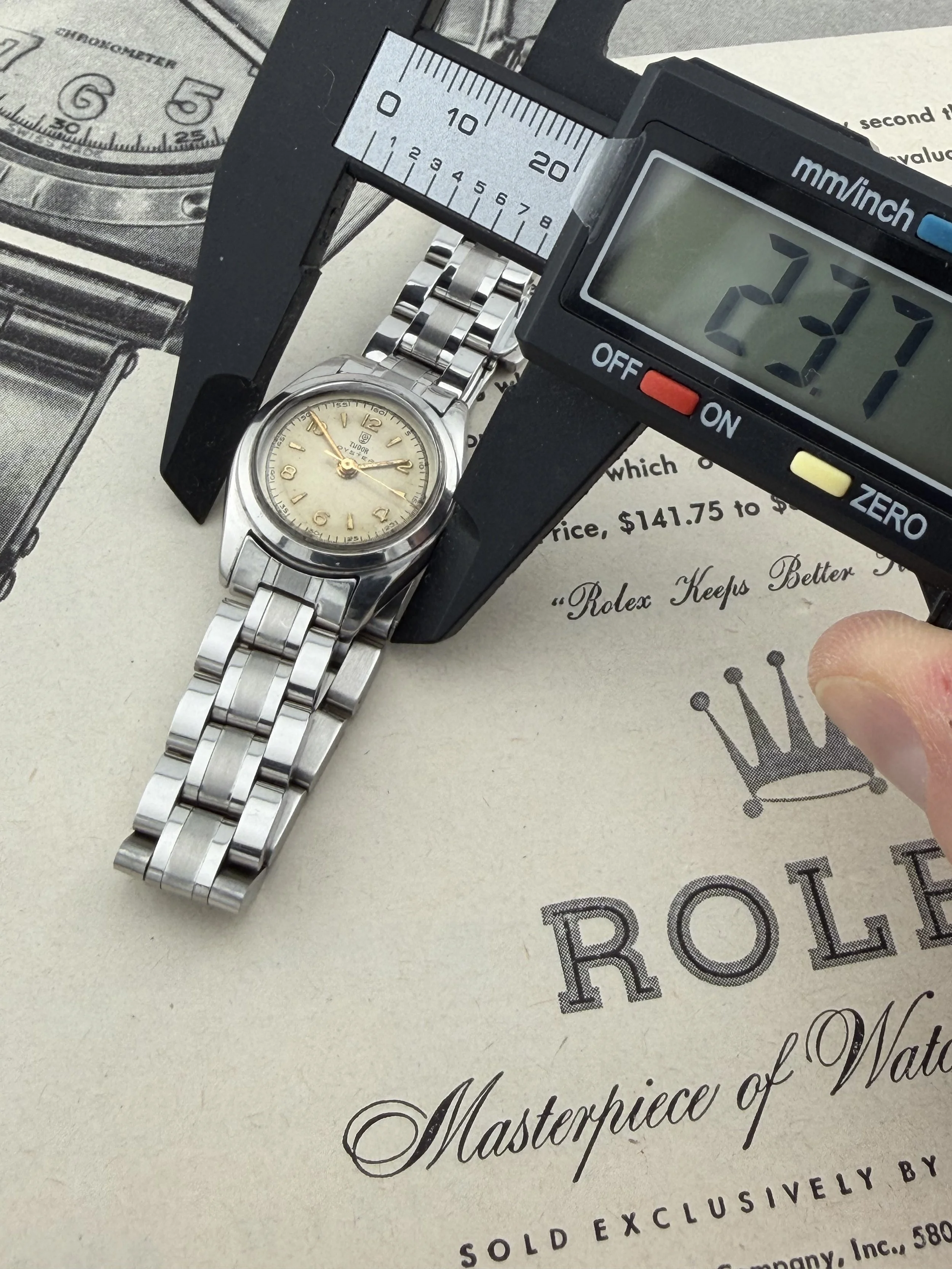

This is a wonderfully early Tudor Oyster dating to the 1950s, with the character and design language of Tudor’s formative years. Long before the modern Tudor shield became standard, early Tudor watches often carried the iconic Tudor Rose, and this example features the rose nested within a small shield on the dial, a particularly charming detail from the brand’s mid-century period.
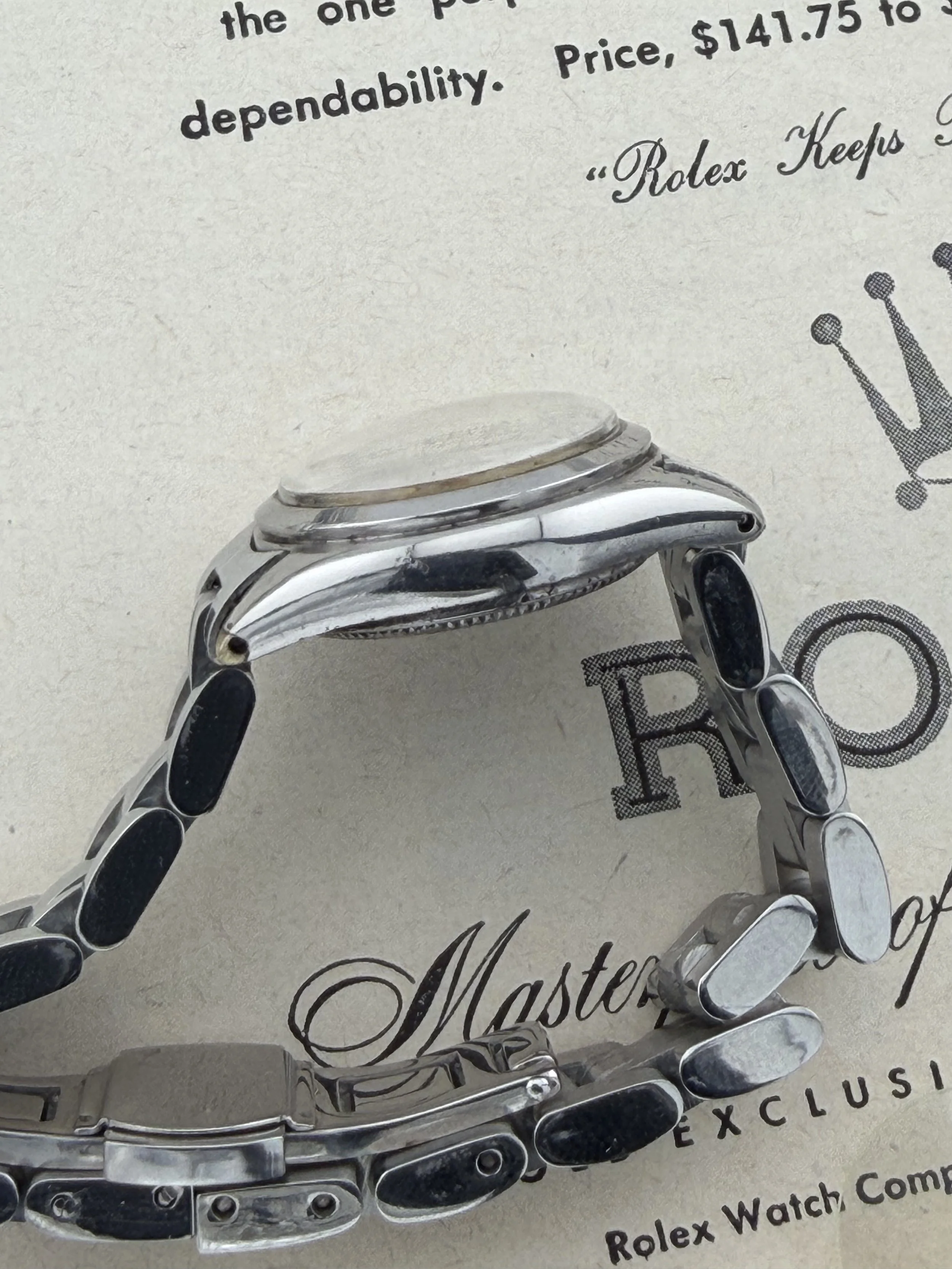
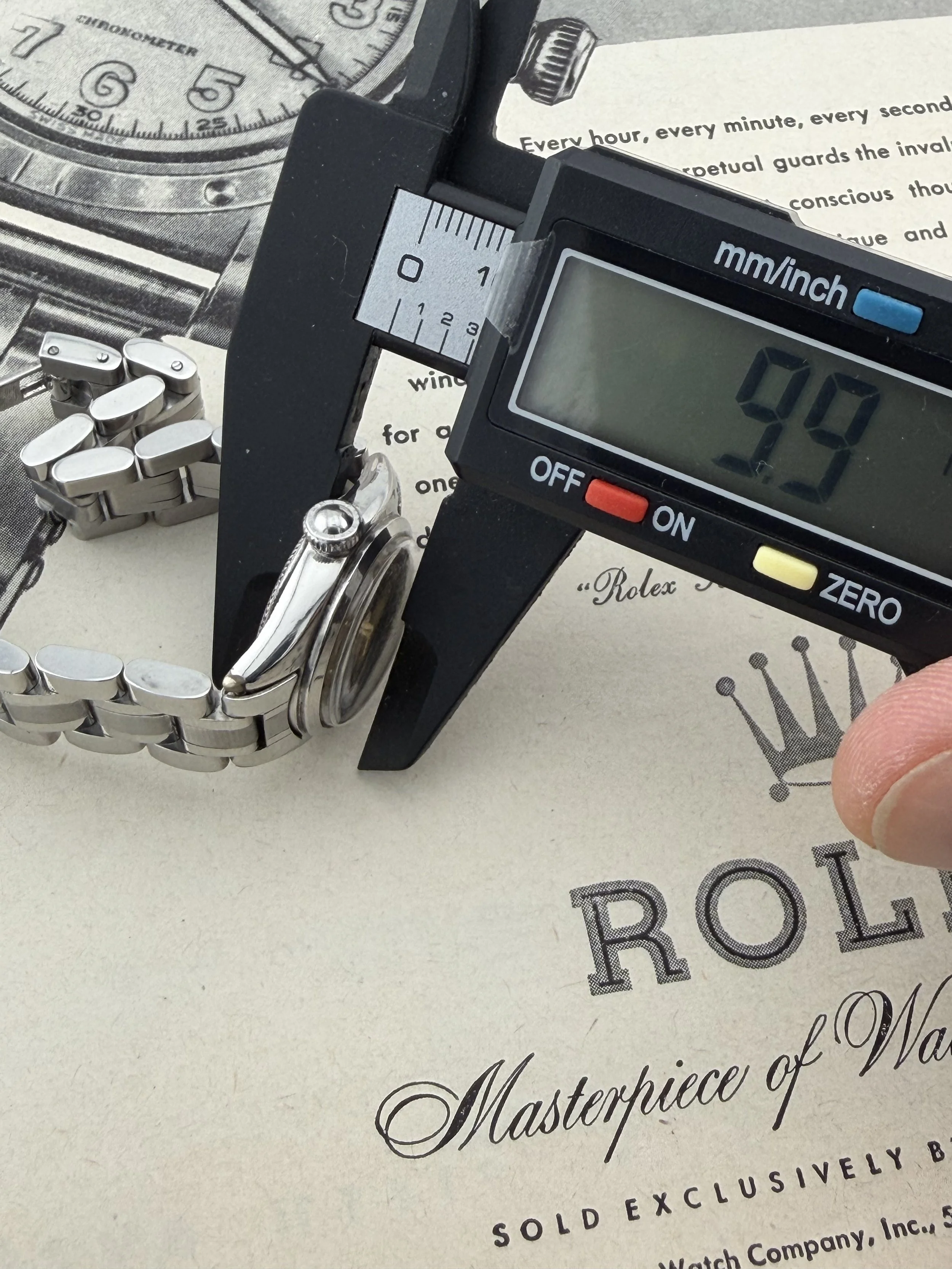
Measuring approximately 23.7mm across and 29.8mm lug-to-lug, the compact case has classic Oyster proportions while retaining plenty of presence on the wrist. The steel case shows the softened edges and gentle wear expected from decades of use, while the overall form remains strong and distinctly vintage.
The cream-coloured dial has developed a beautiful, even warm patina, complemented by gold-tone hands and markers. Particularly appealing are the unusual Explorer-style Arabic numerals at 12, 2, 4, 6, 8 and 10, separated by applied arrow markers. Combined with the Tudor Rose shield, this gives the dial a distinctly early-Tudor character that is quite different from the later Tudor designs.
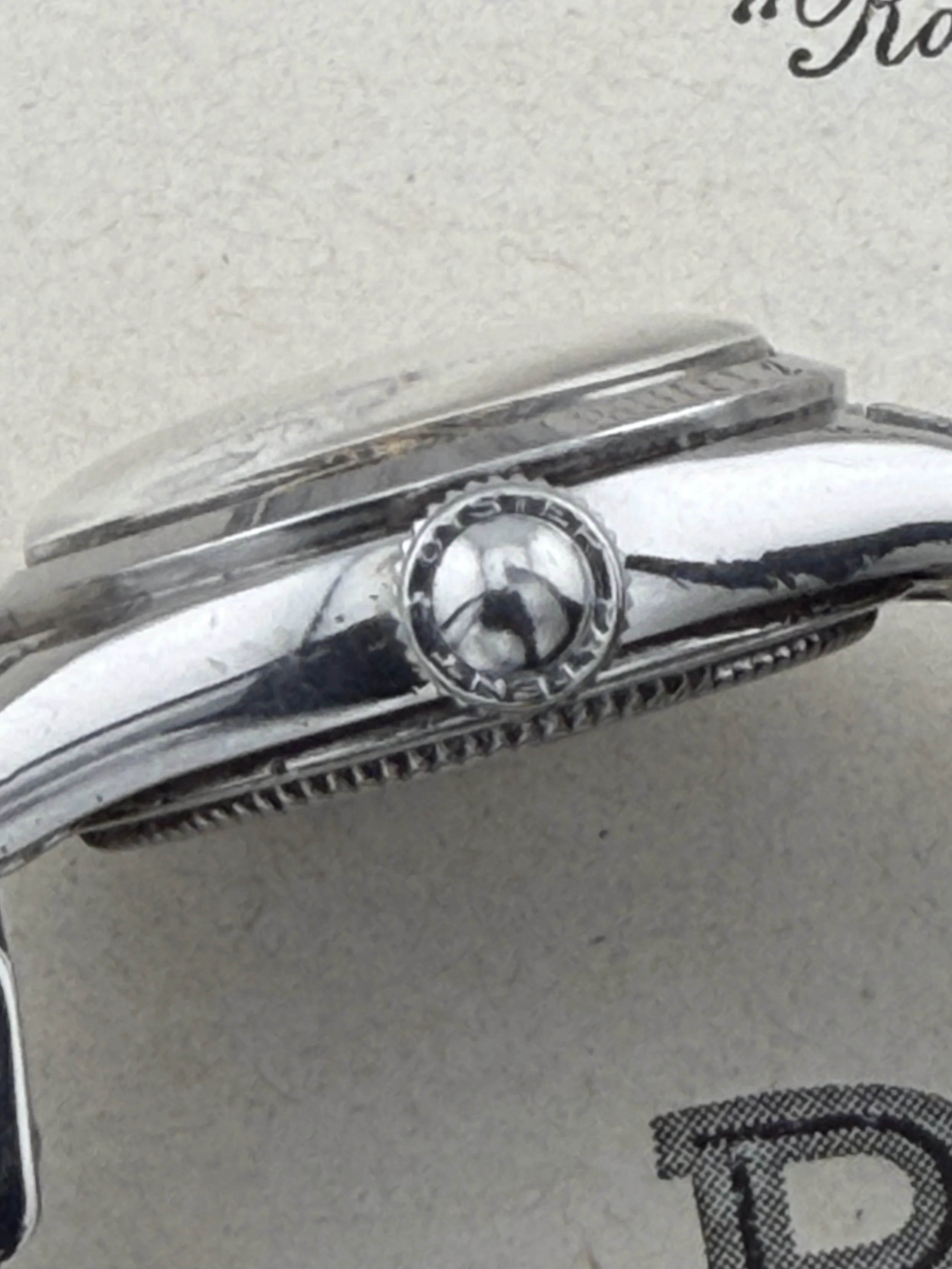
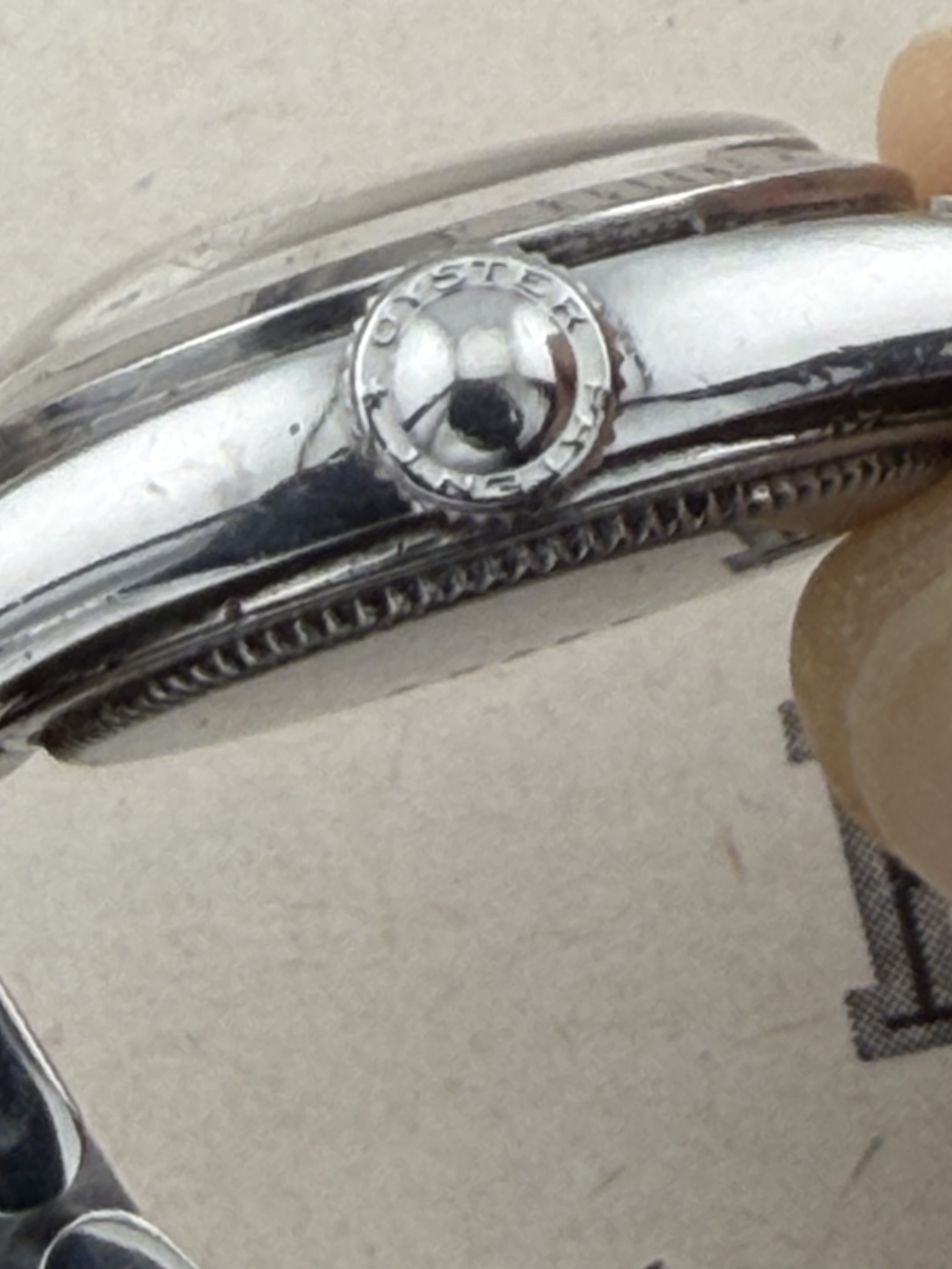
The crown is another standout feature. Rather than the later Rolex coronet-signed crown, this example retains the period “OYSTER PATENT” crown with its cross emblem, a historically appropriate detail associated with early Rolex and Tudor Oyster watches of the 1940s and 1950s.
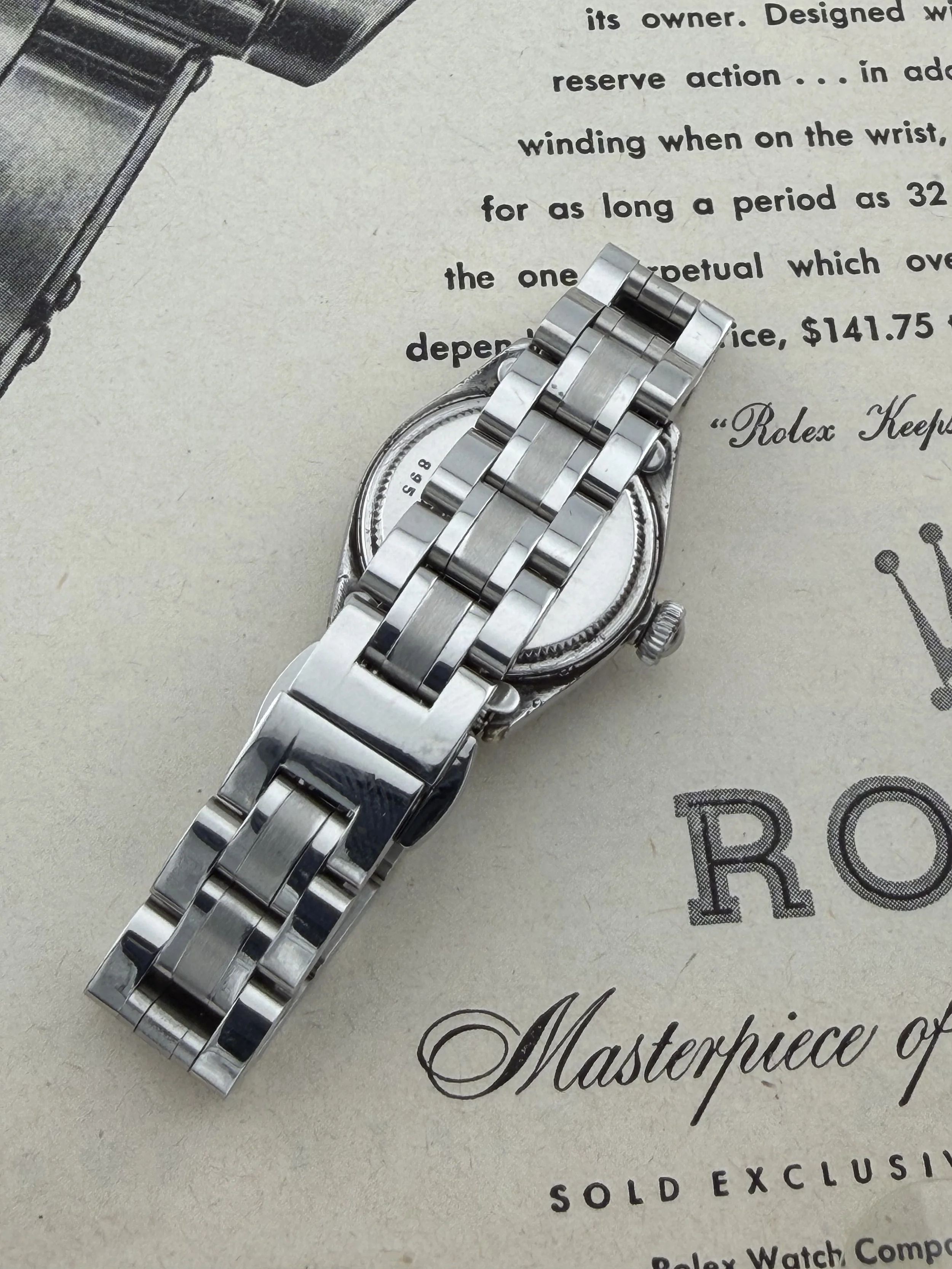
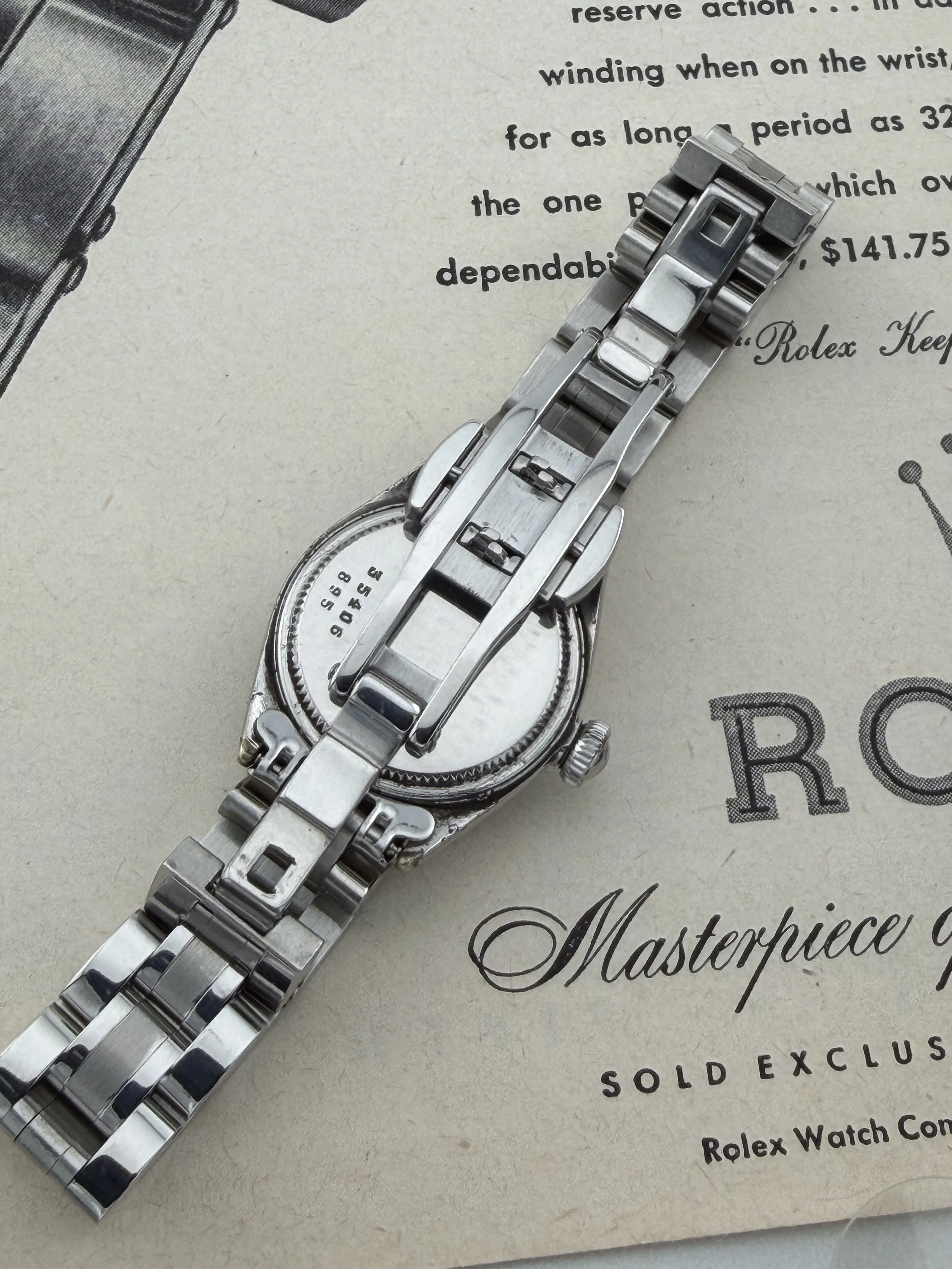
The watch is fitted with an aftermarket stainless-steel five-link Jubilee-style bracelet with straight end links, stamped 895 / 35406. While not original to the watch, it suits the period styling nicely and gives the small Oyster a particularly attractive mid-century appearance.
For collectors, this is the kind of Tudor that stands apart from the more familiar later Oyster and Oysterdate models. The early Tudor Rose, rare Oyster Patent crown, Explorer-style numeral layout and naturally aged cream dial combine to make this a wonderfully characterful example of Tudor’s early Oyster era.