

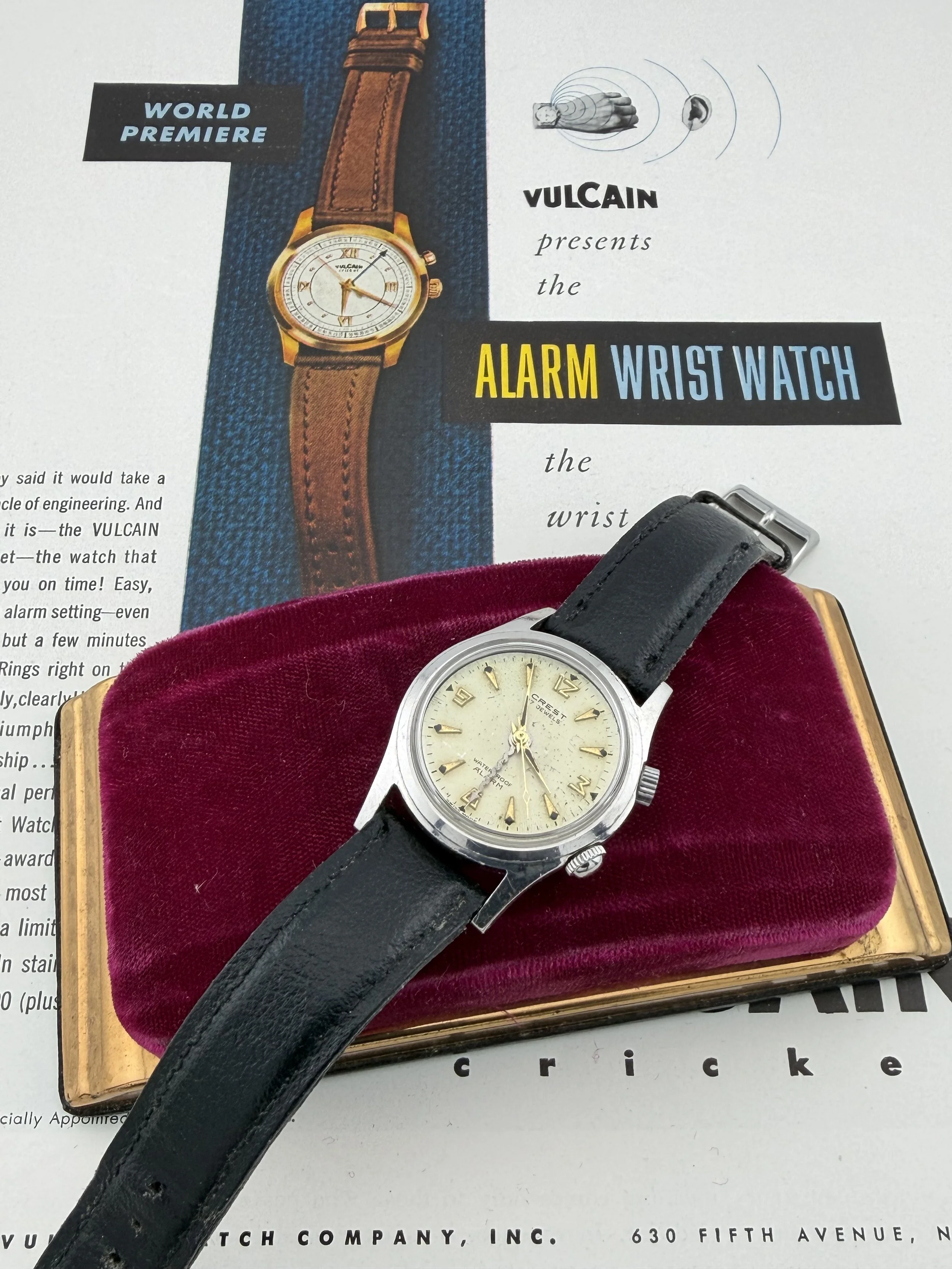
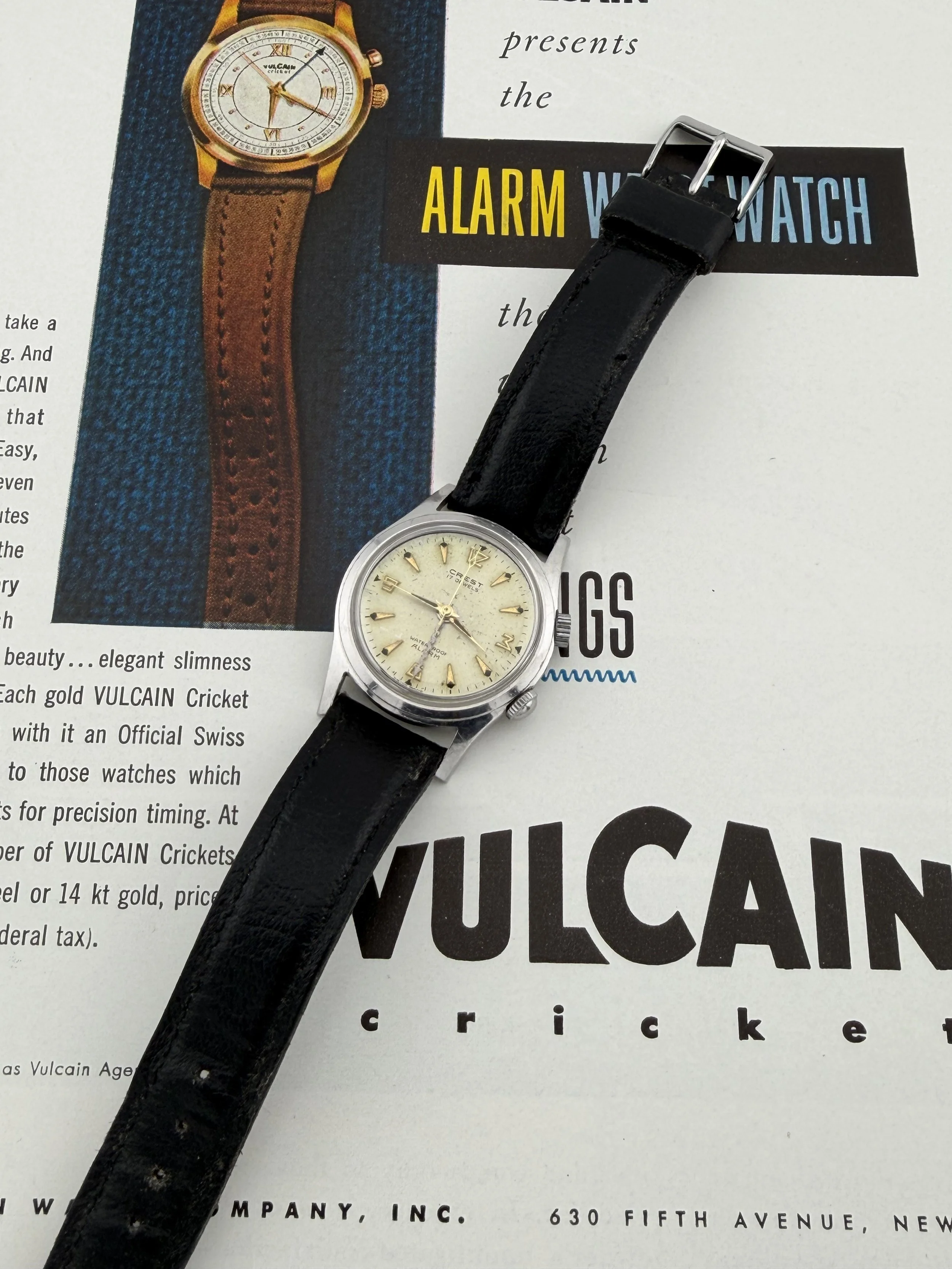
This vintage Crest Alarm is a fascinating example of mid-century Canadian watch retail history, combining a locally branded timepiece with a sophisticated Swiss mechanical complication. Unlike major Swiss manufacturers, Crest was a Canadian distributor and importer based in Toronto, sourcing quality Swiss movements and selling them under its own name to the Canadian market. This was a common practice during the mid-20th century, allowing local companies to offer reliable Swiss watchmaking at a more accessible price point.
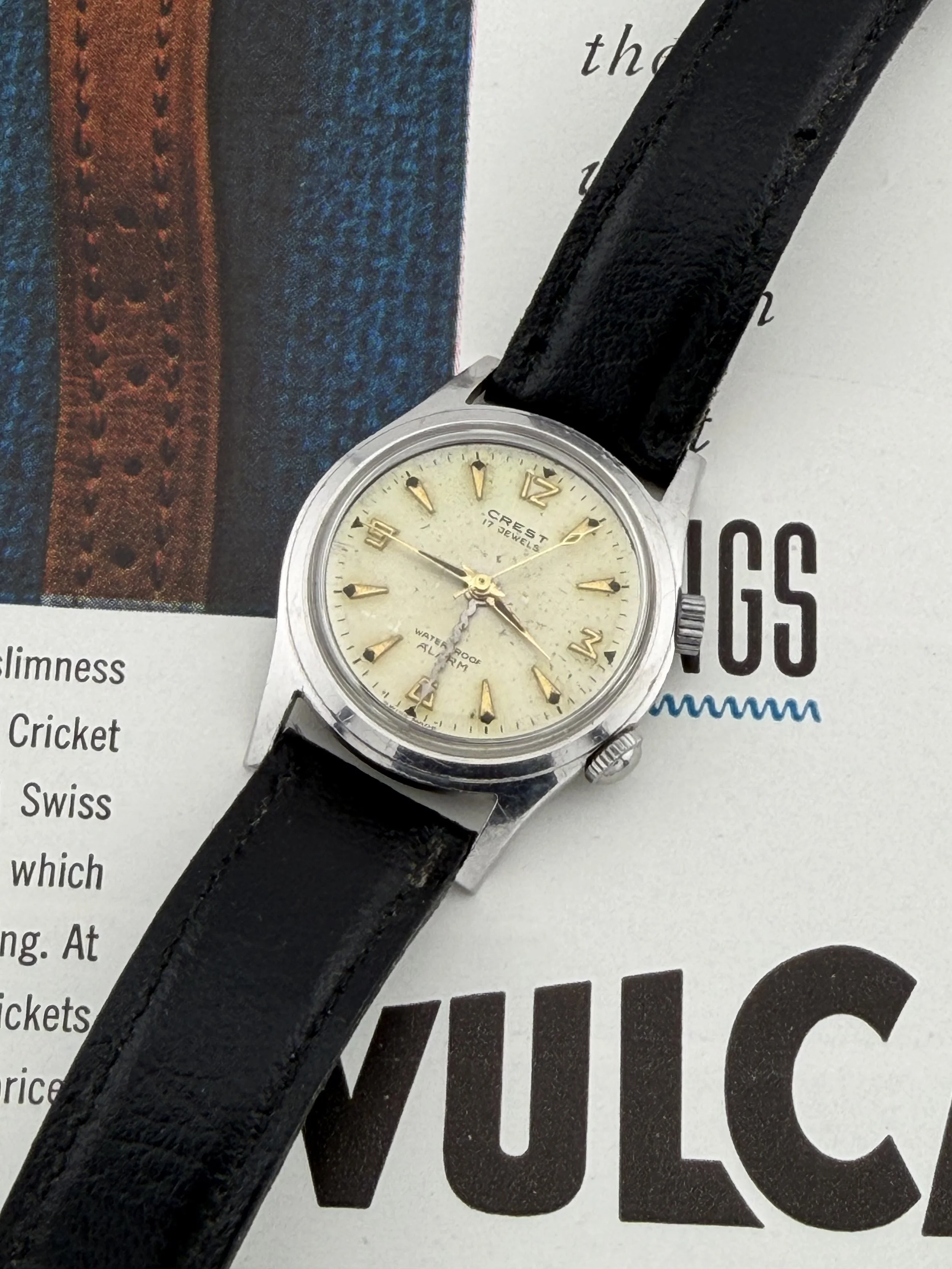
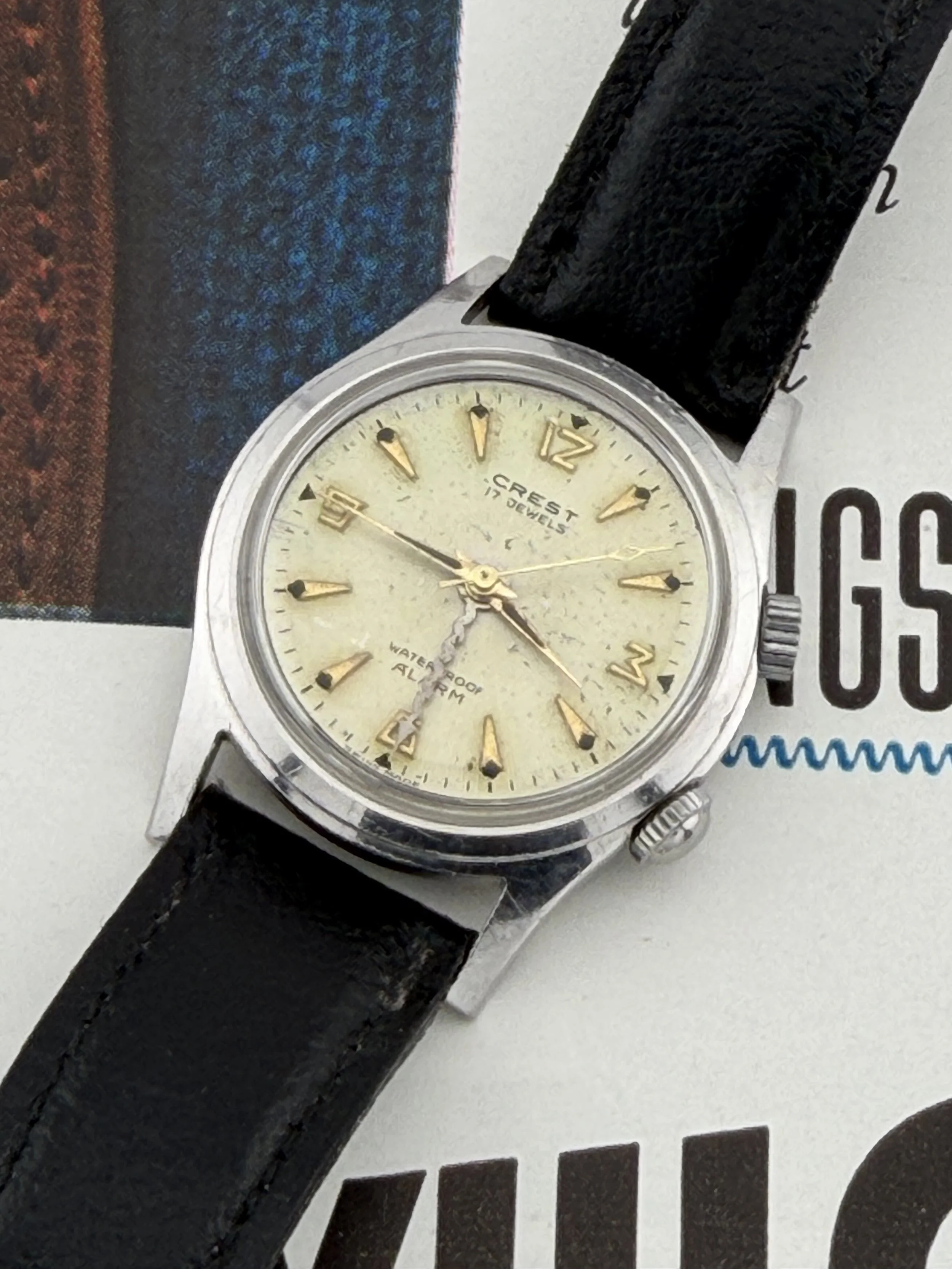
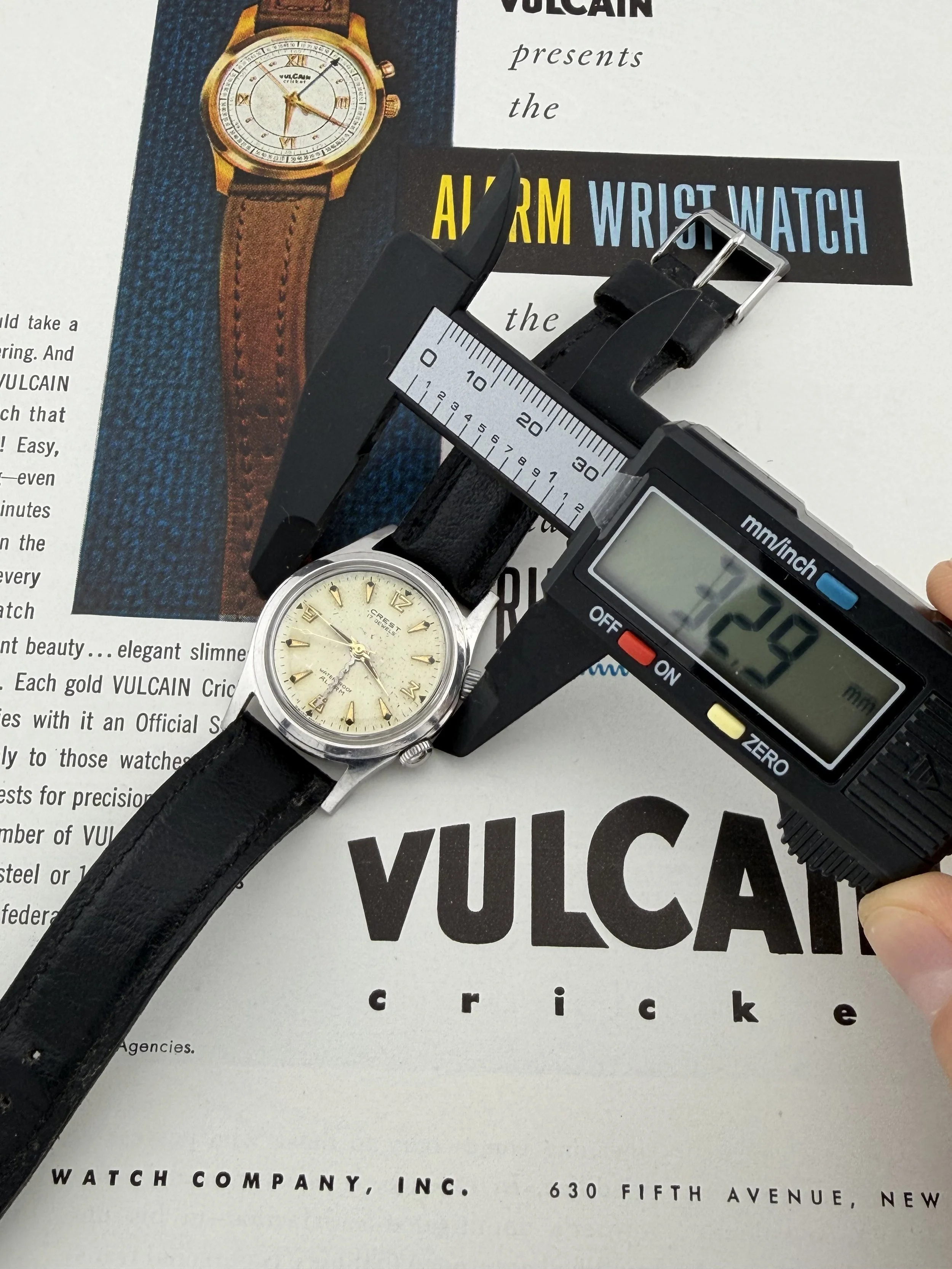
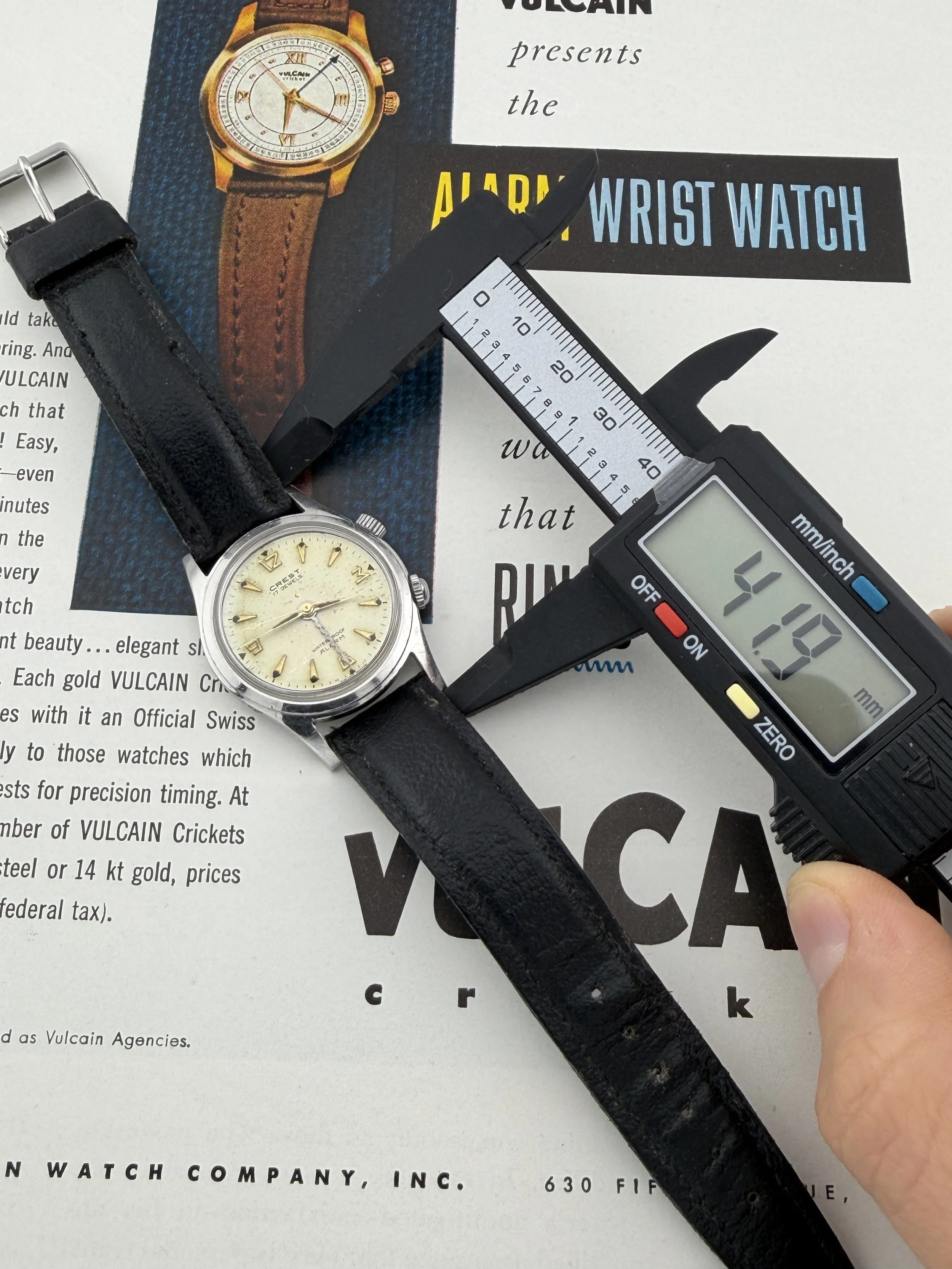
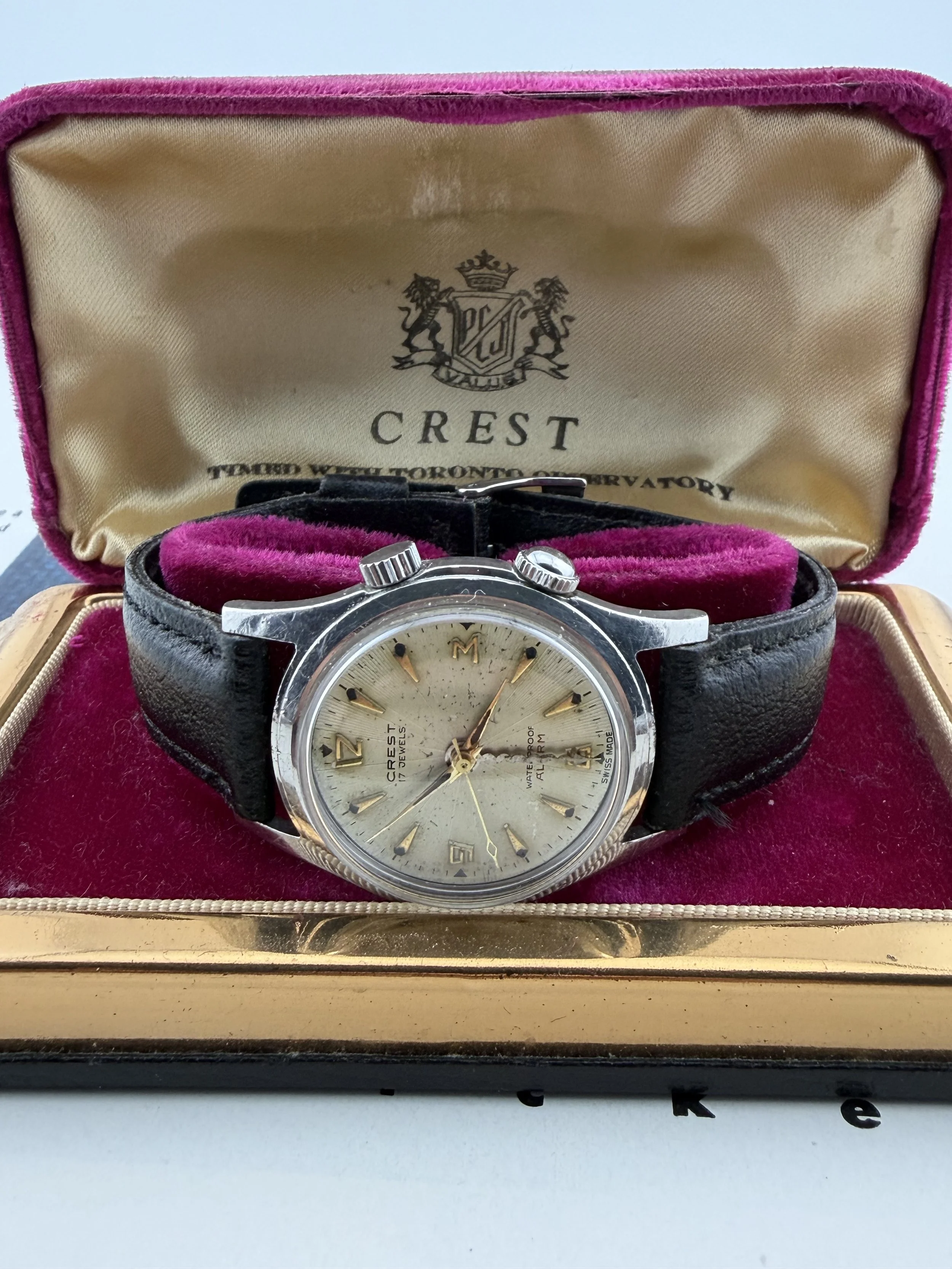
The dial is a classic representation of 1950s–1960s styling, featuring the Crest name, 17 Jewels designation, and the markings “Waterproof” and “Alarm,” proudly advertising its advanced features. The clean dial design, applied hour markers, and balanced layout give it the understated elegance expected of a mid-century dress watch, while the alarm function makes it significantly more complex and uncommon than a standard three-hand model.
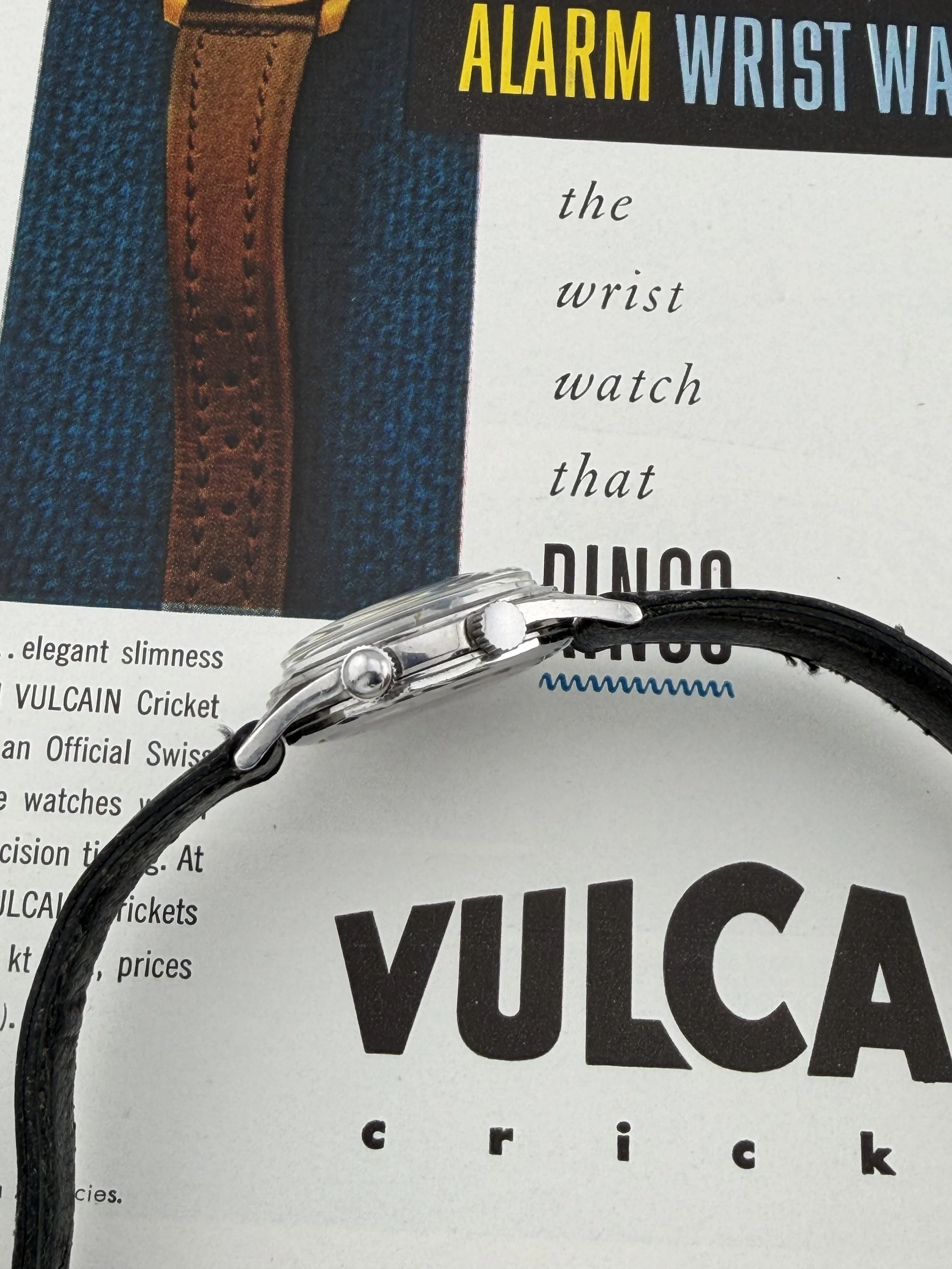
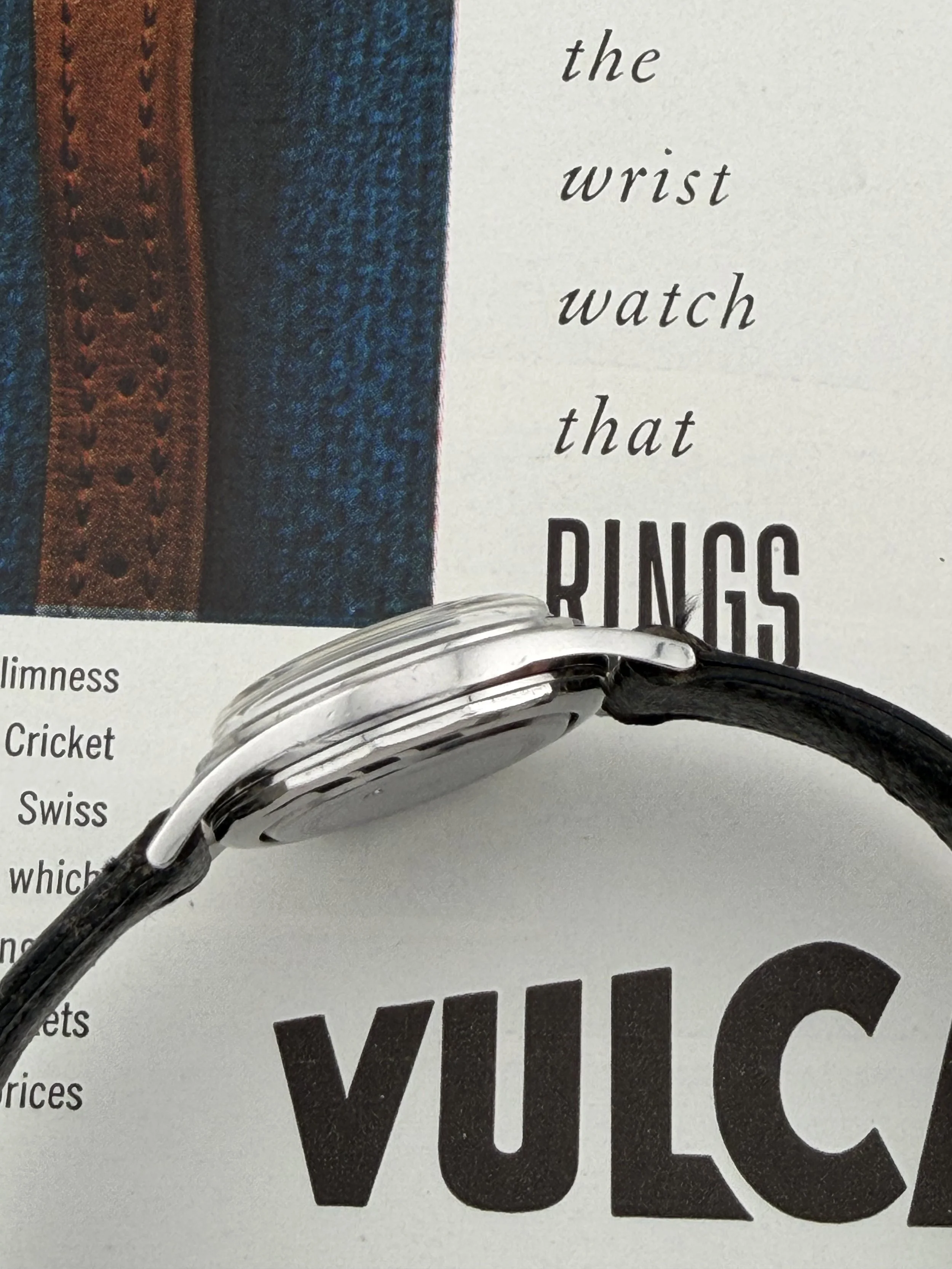
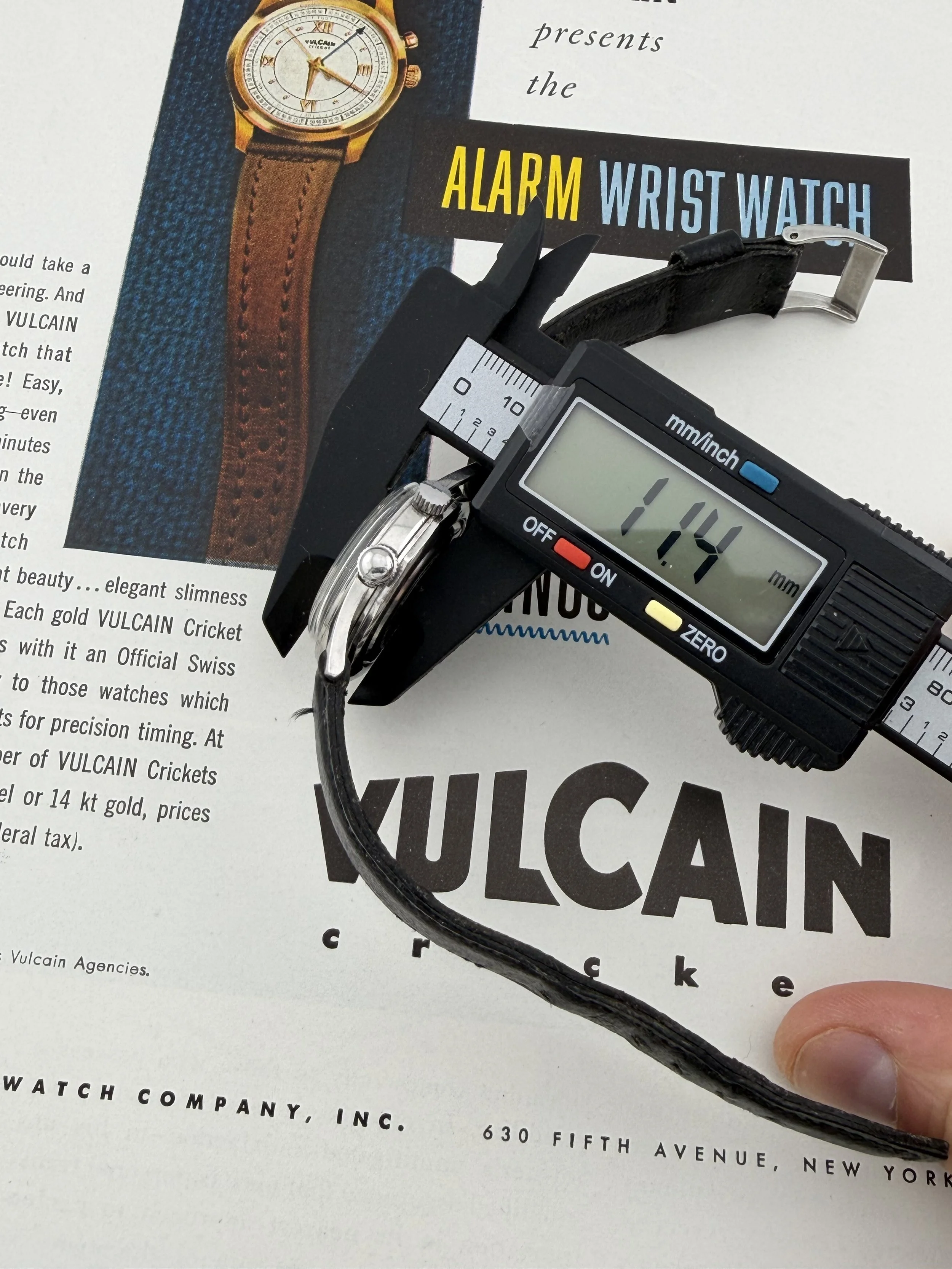
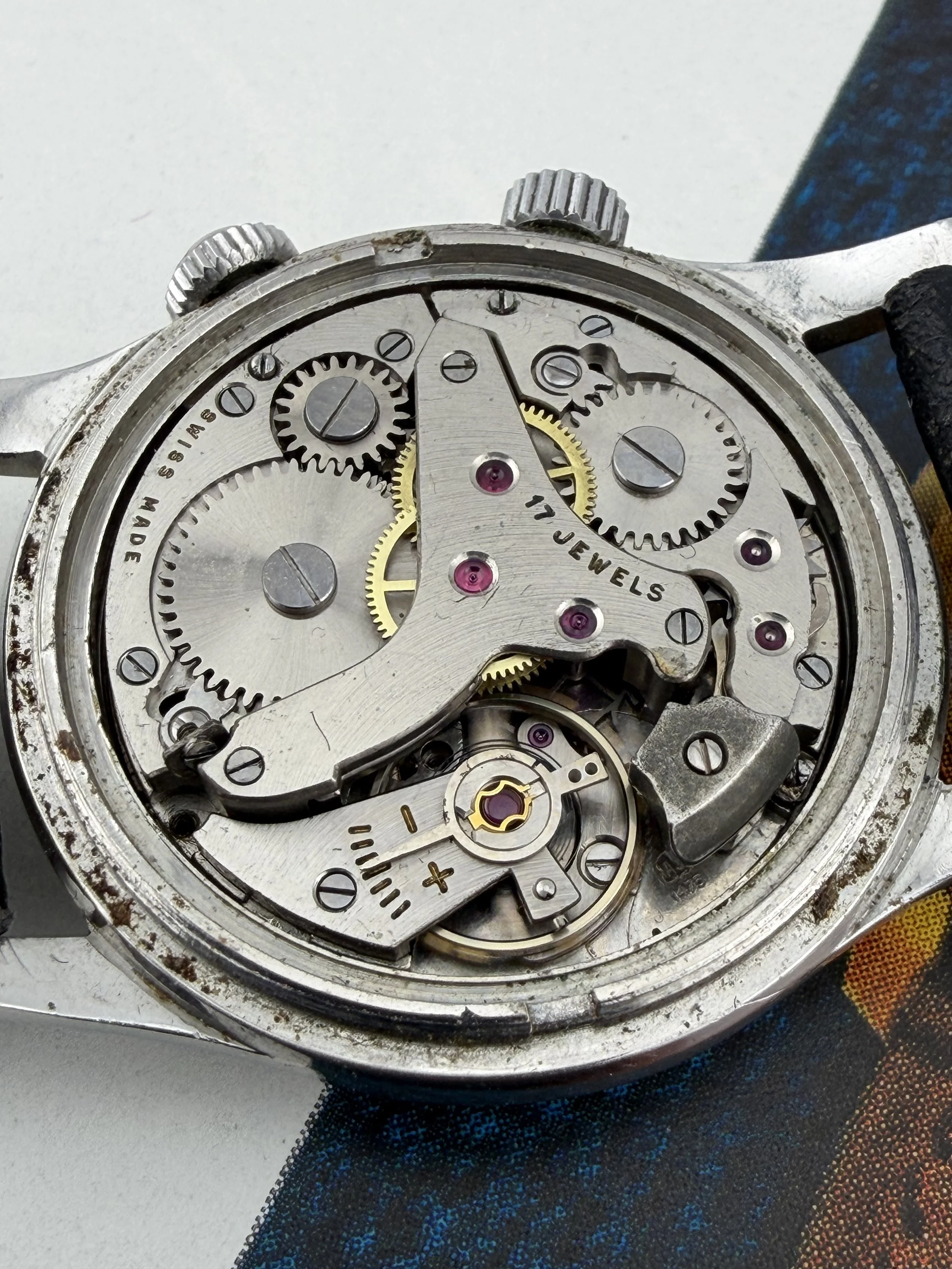
What makes this watch especially interesting is its mechanical alarm complication. The two-crown design reveals the complexity hidden inside the case: one crown is used to wind and set the timekeeping movement, while the second crown winds and adjusts a separate mainspring dedicated to the alarm system. When the preset alarm time is reached, a small hammer rapidly strikes a resonating component inside the case, producing the distinctive buzzing sound that made mechanical alarm watches a practical feature before the era of electronic alarms.
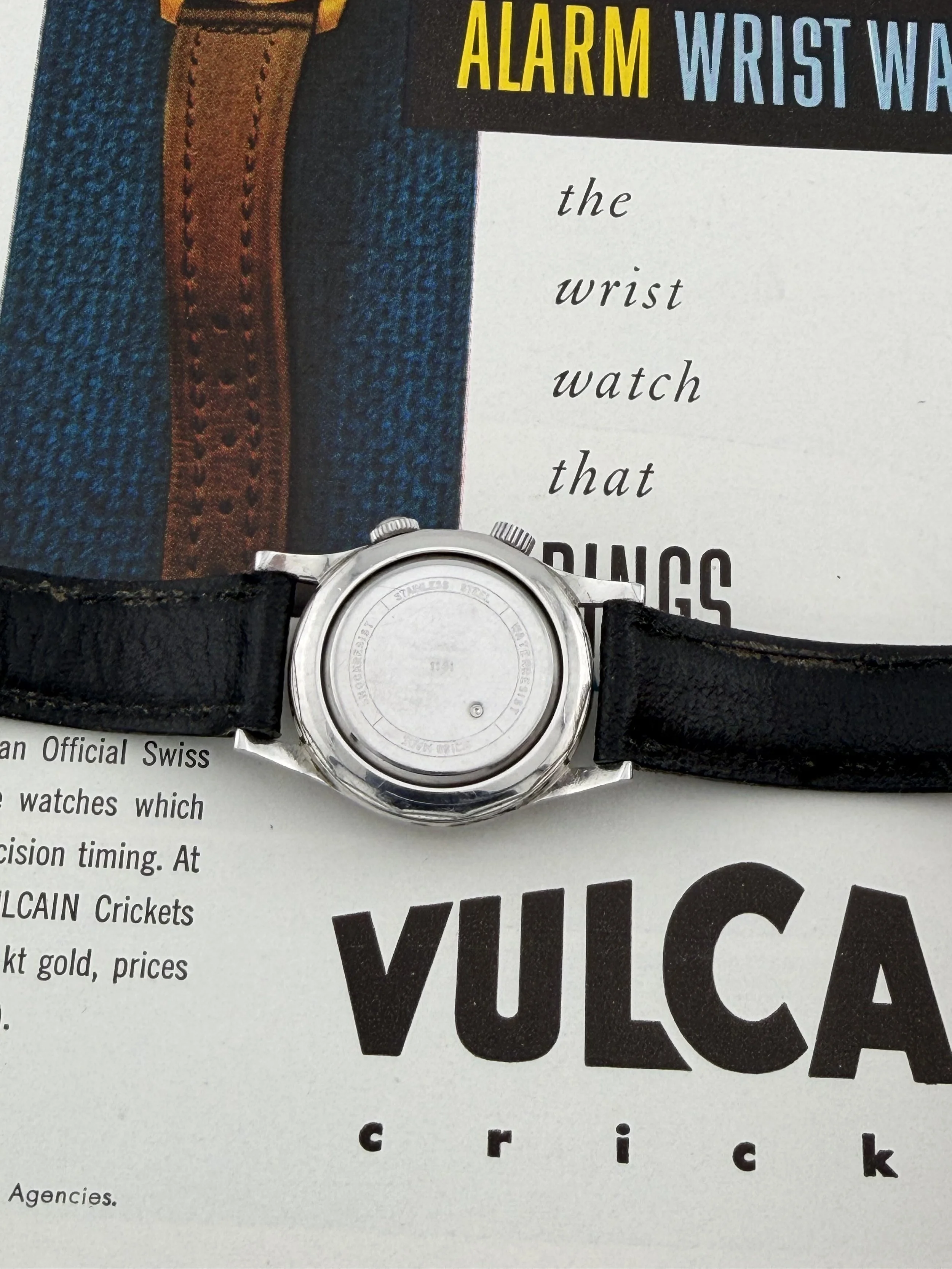
Inside is a Swiss-made 17-jewel manual-wind movement, representing a significant step above basic pin-lever watches of the period. While the movement is not signed by a famous manufacturer, Swiss alarm movements of this era were often produced by respected ébauche makers and supplied to distributor brands such as Crest. The additional alarm mechanism adds considerable engineering complexity, requiring extra gears, springs, levers, and a separate power source.
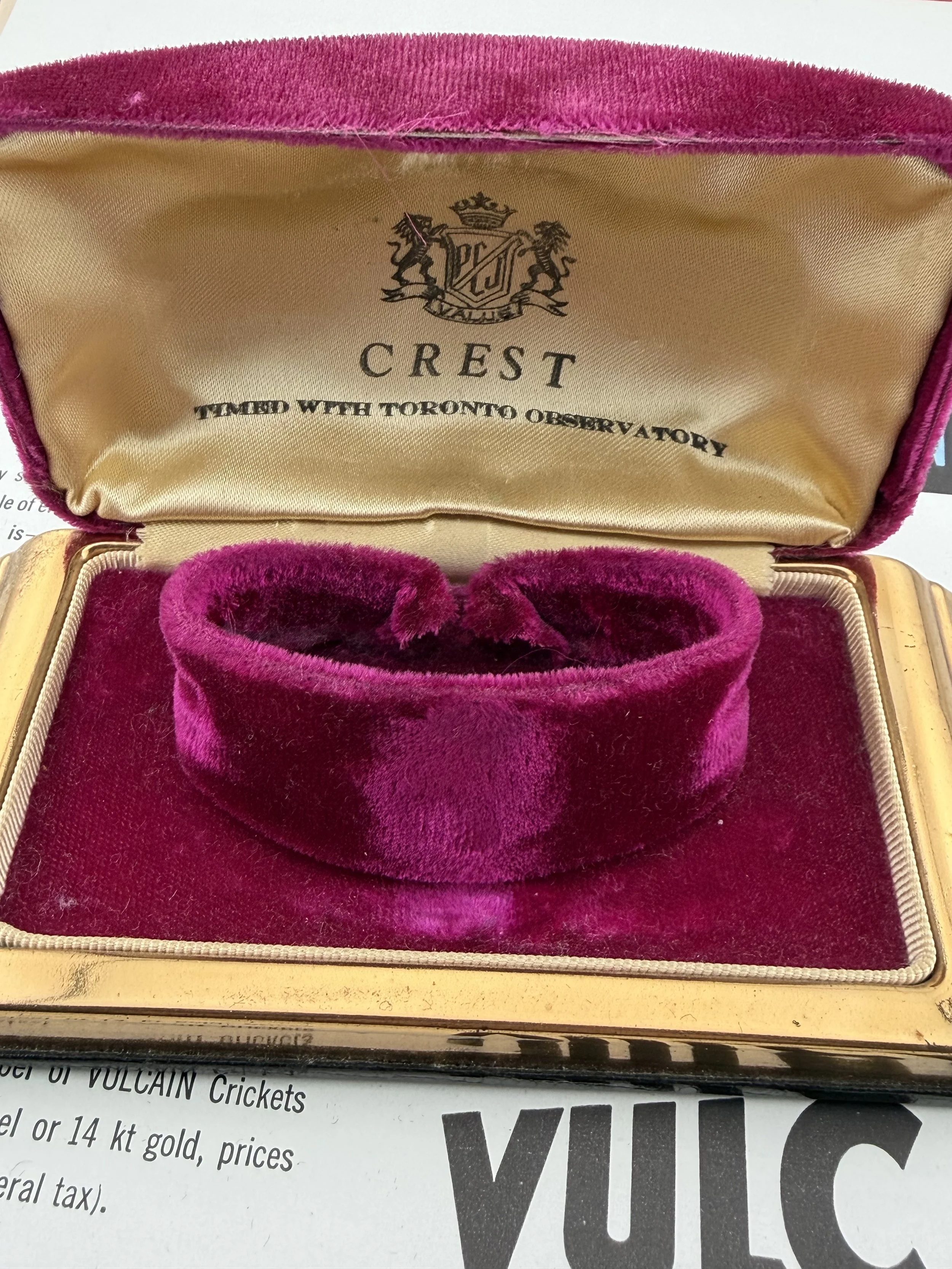
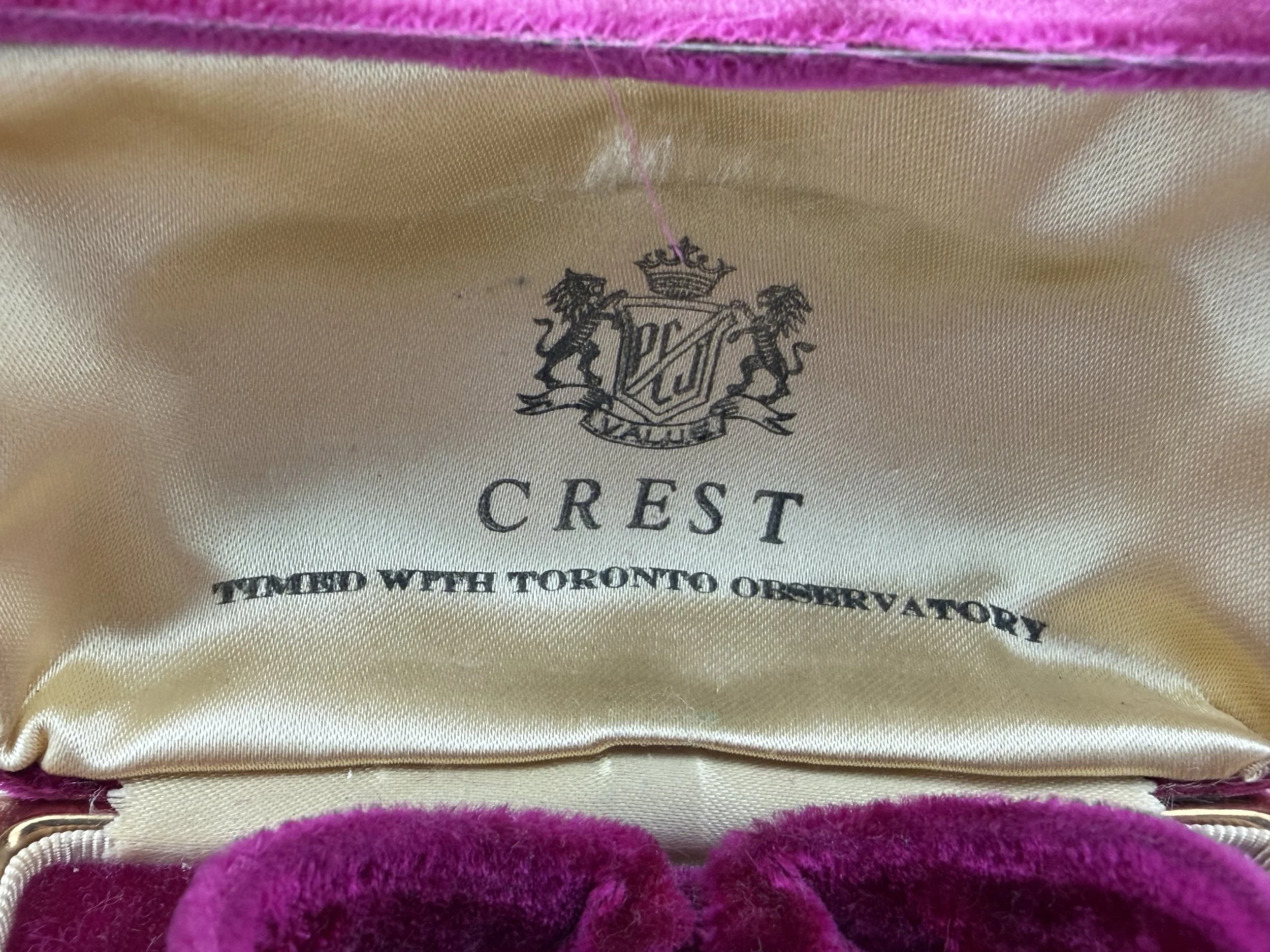
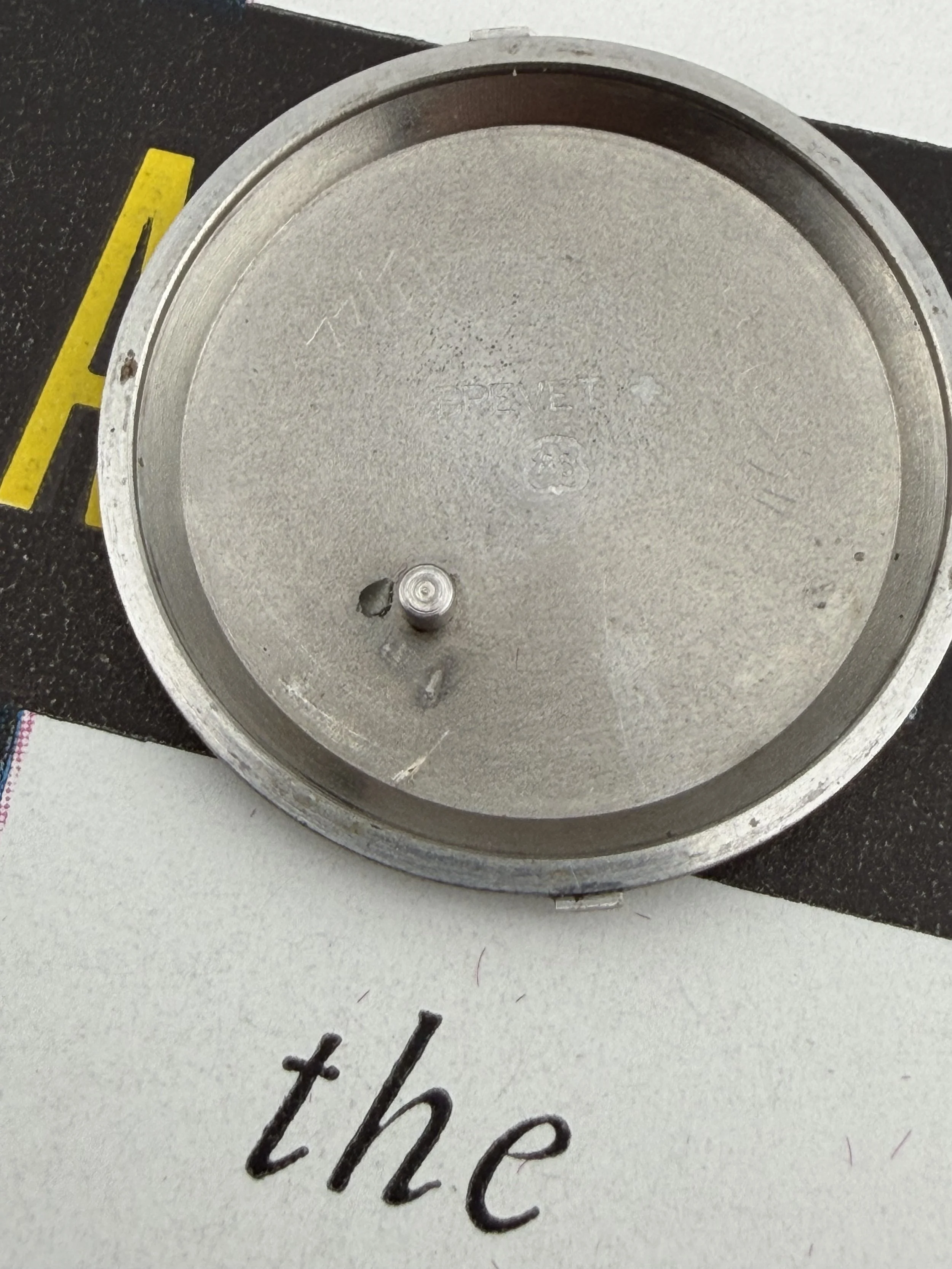
A particularly charming detail is the inscription found inside the case and presentation materials: “Timed with Toronto Observatory.” This phrase was used as a marketing statement to indicate the watch had been regulated using an accurate observatory time signal or precision reference. It should not be confused with an official observatory chronometer certification, but it reflects the importance that manufacturers and retailers placed on accuracy during the period.
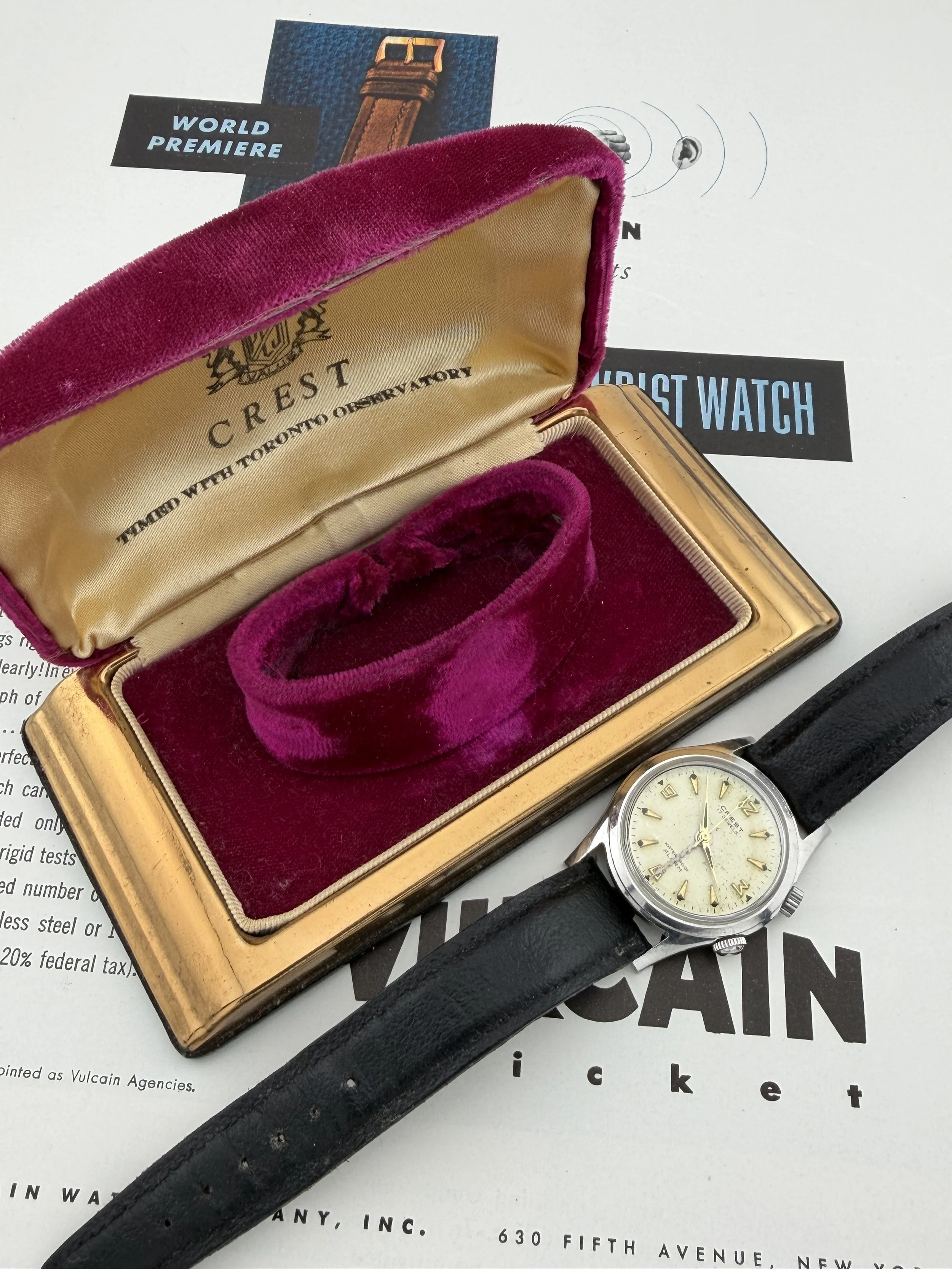
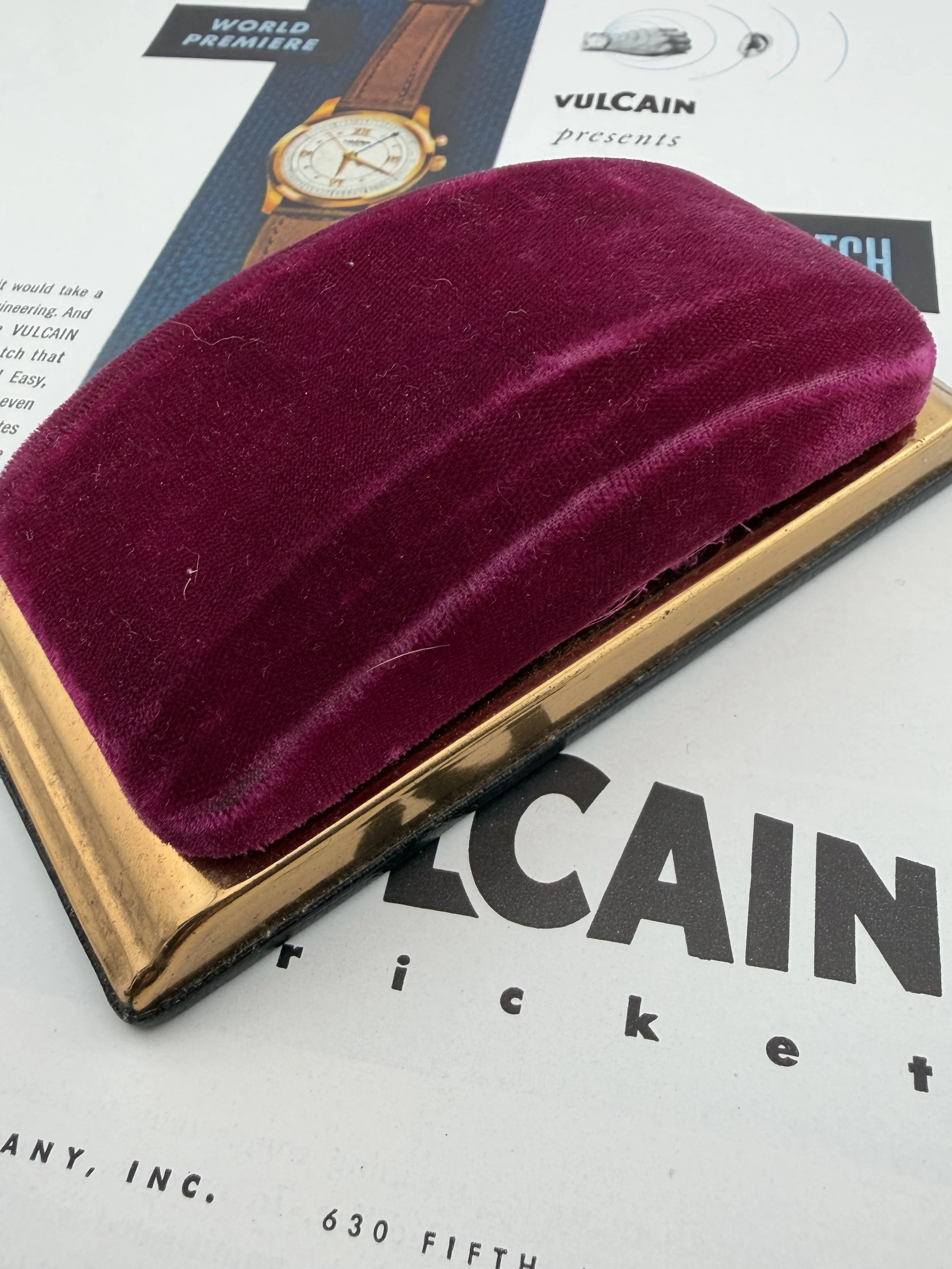
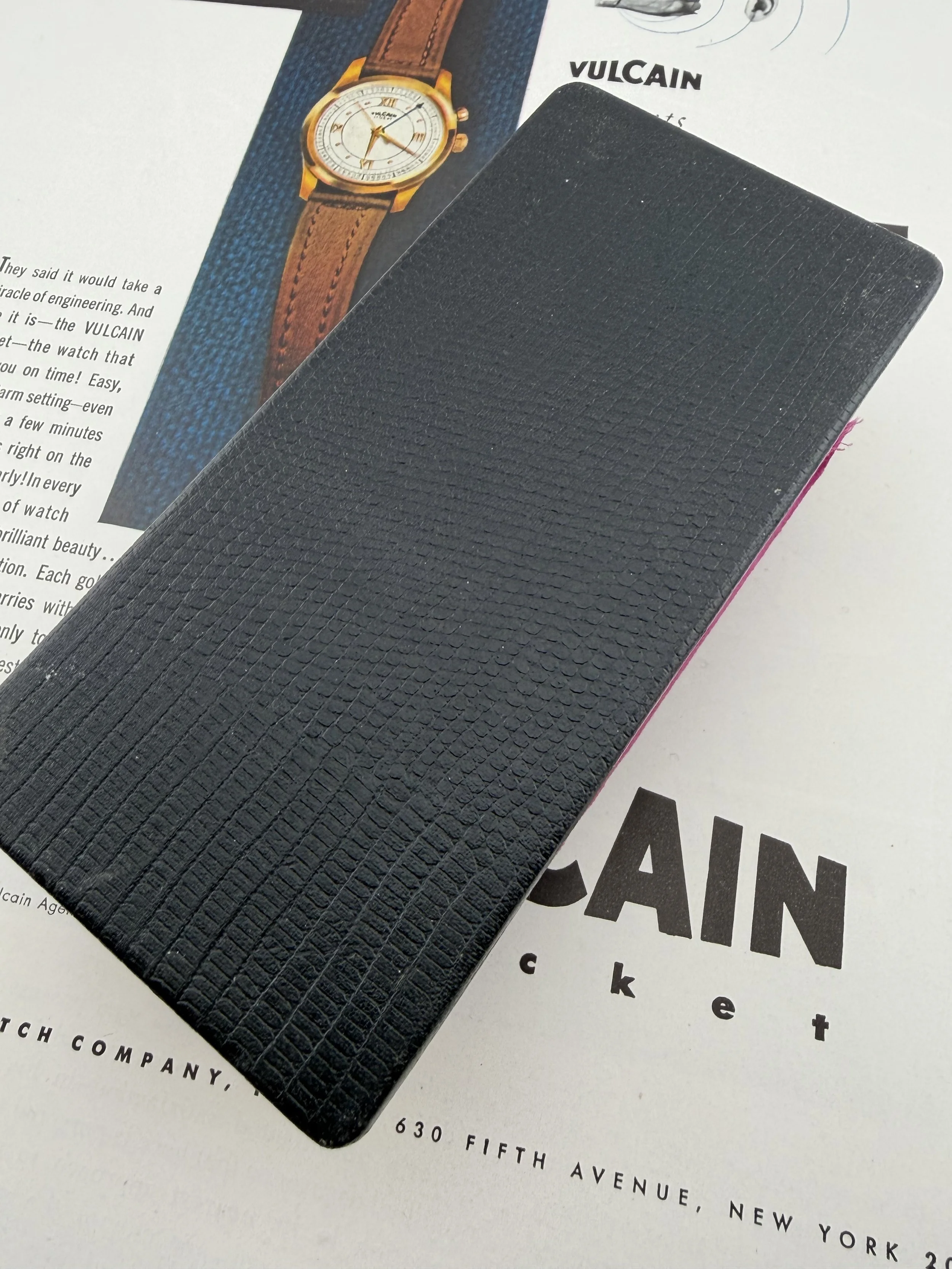
The watch is further enhanced by retaining its original Crest presentation box, a rare surviving accessory that strengthens its historical connection to the Canadian market. Original boxes from smaller regional brands are often lost over time, making complete examples especially appealing to collectors.
Although Crest lacks the international recognition of Swiss luxury brands, watches like this represent an important chapter in North American horological history. By pairing locally marketed names with dependable Swiss movements, companies such as Crest helped bring mechanical complications and Swiss craftsmanship to everyday consumers.
With its Swiss 17-jewel alarm movement, uncommon two-crown construction, Toronto Observatory connection, and original presentation box, this Crest is far more interesting than a typical private-label dress watch. It is a distinctive piece of Canadian watch history that captures the ingenuity and charm of the golden age of mechanical wristwatches.
This vintage Crest Alarm is a fascinating example of mid-century Canadian watch retail history, combining a locally branded timepiece with a sophisticated Swiss mechanical complication. Unlike major Swiss manufacturers, Crest was a Canadian distributor and importer based in Toronto, sourcing quality Swiss movements and selling them under its own name to the Canadian market. This was a common practice during the mid-20th century, allowing local companies to offer reliable Swiss watchmaking at a more accessible price point.
The dial is a classic representation of 1950s–1960s styling, featuring the Crest name, 17 Jewels designation, and the markings “Waterproof” and “Alarm,” proudly advertising its advanced features. The clean dial design, applied hour markers, and balanced layout give it the understated elegance expected of a mid-century dress watch, while the alarm function makes it significantly more complex and uncommon than a standard three-hand model.
What makes this watch especially interesting is its mechanical alarm complication. The two-crown design reveals the complexity hidden inside the case: one crown is used to wind and set the timekeeping movement, while the second crown winds and adjusts a separate mainspring dedicated to the alarm system. When the preset alarm time is reached, a small hammer rapidly strikes a resonating component inside the case, producing the distinctive buzzing sound that made mechanical alarm watches a practical feature before the era of electronic alarms.
Inside is a Swiss-made 17-jewel manual-wind movement, representing a significant step above basic pin-lever watches of the period. While the movement is not signed by a famous manufacturer, Swiss alarm movements of this era were often produced by respected ébauche makers and supplied to distributor brands such as Crest. The additional alarm mechanism adds considerable engineering complexity, requiring extra gears, springs, levers, and a separate power source.
A particularly charming detail is the inscription found inside the case and presentation materials: “Timed with Toronto Observatory.” This phrase was used as a marketing statement to indicate the watch had been regulated using an accurate observatory time signal or precision reference. It should not be confused with an official observatory chronometer certification, but it reflects the importance that manufacturers and retailers placed on accuracy during the period.
The watch is further enhanced by retaining its original Crest presentation box, a rare surviving accessory that strengthens its historical connection to the Canadian market. Original boxes from smaller regional brands are often lost over time, making complete examples especially appealing to collectors.
Although Crest lacks the international recognition of Swiss luxury brands, watches like this represent an important chapter in North American horological history. By pairing locally marketed names with dependable Swiss movements, companies such as Crest helped bring mechanical complications and Swiss craftsmanship to everyday consumers.
With its Swiss 17-jewel alarm movement, uncommon two-crown construction, Toronto Observatory connection, and original presentation box, this Crest is far more interesting than a typical private-label dress watch. It is a distinctive piece of Canadian watch history that captures the ingenuity and charm of the golden age of mechanical wristwatches.