

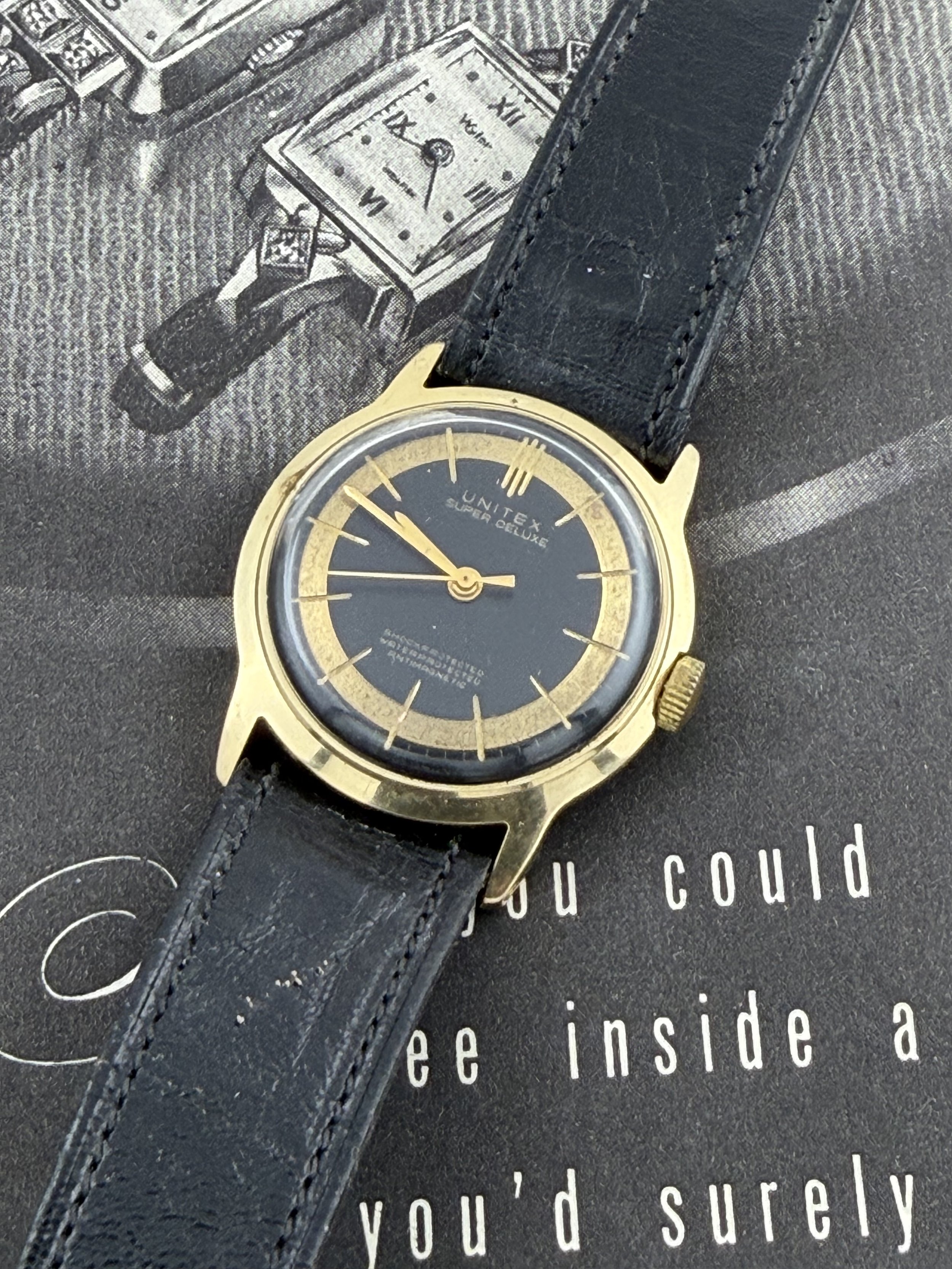
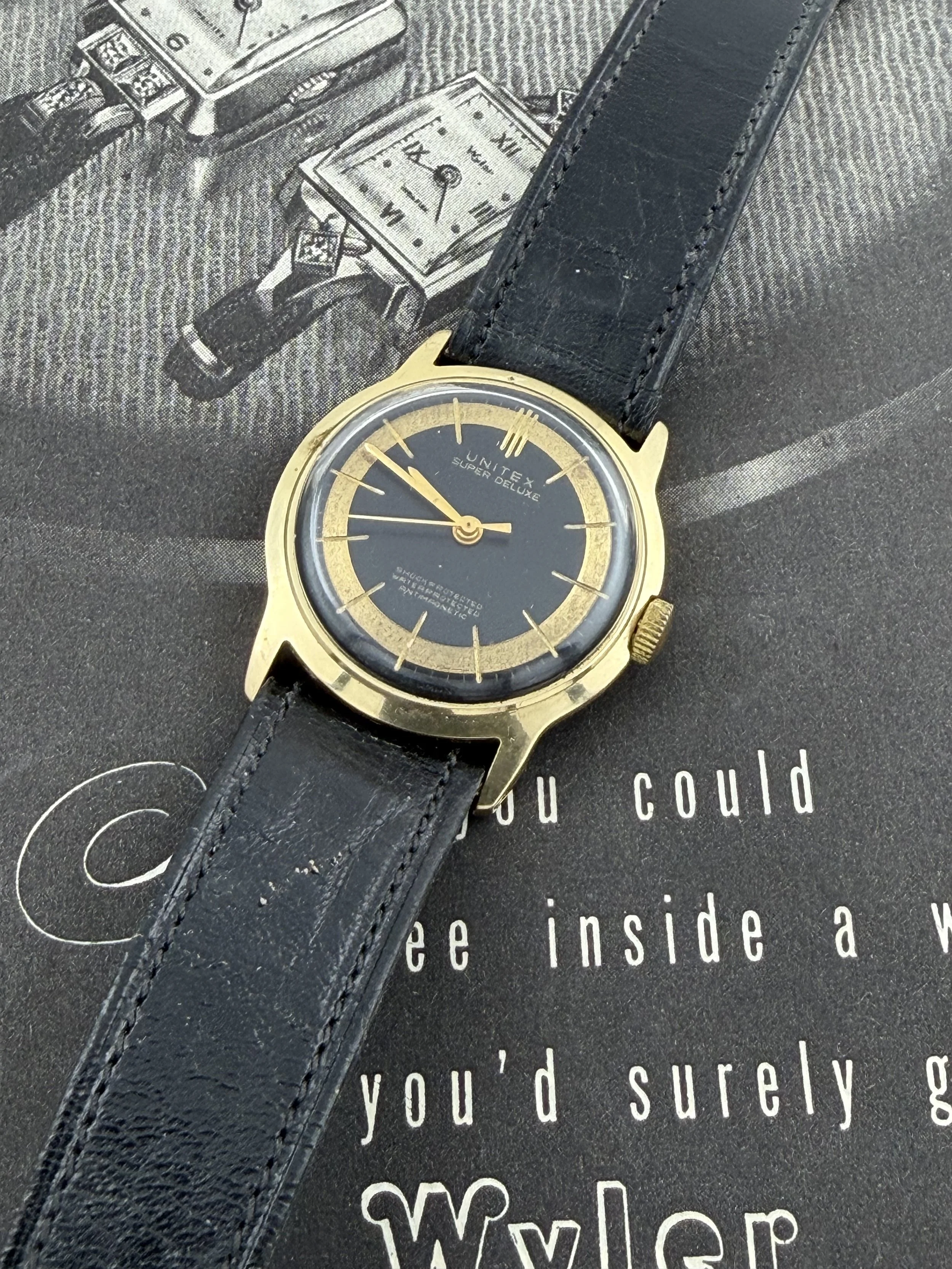
UNITEX | UMF Ruhla | Super Deluxe Shockproof Wristwatch | Gold-Filled Case | Black Dial | Circa 1970s
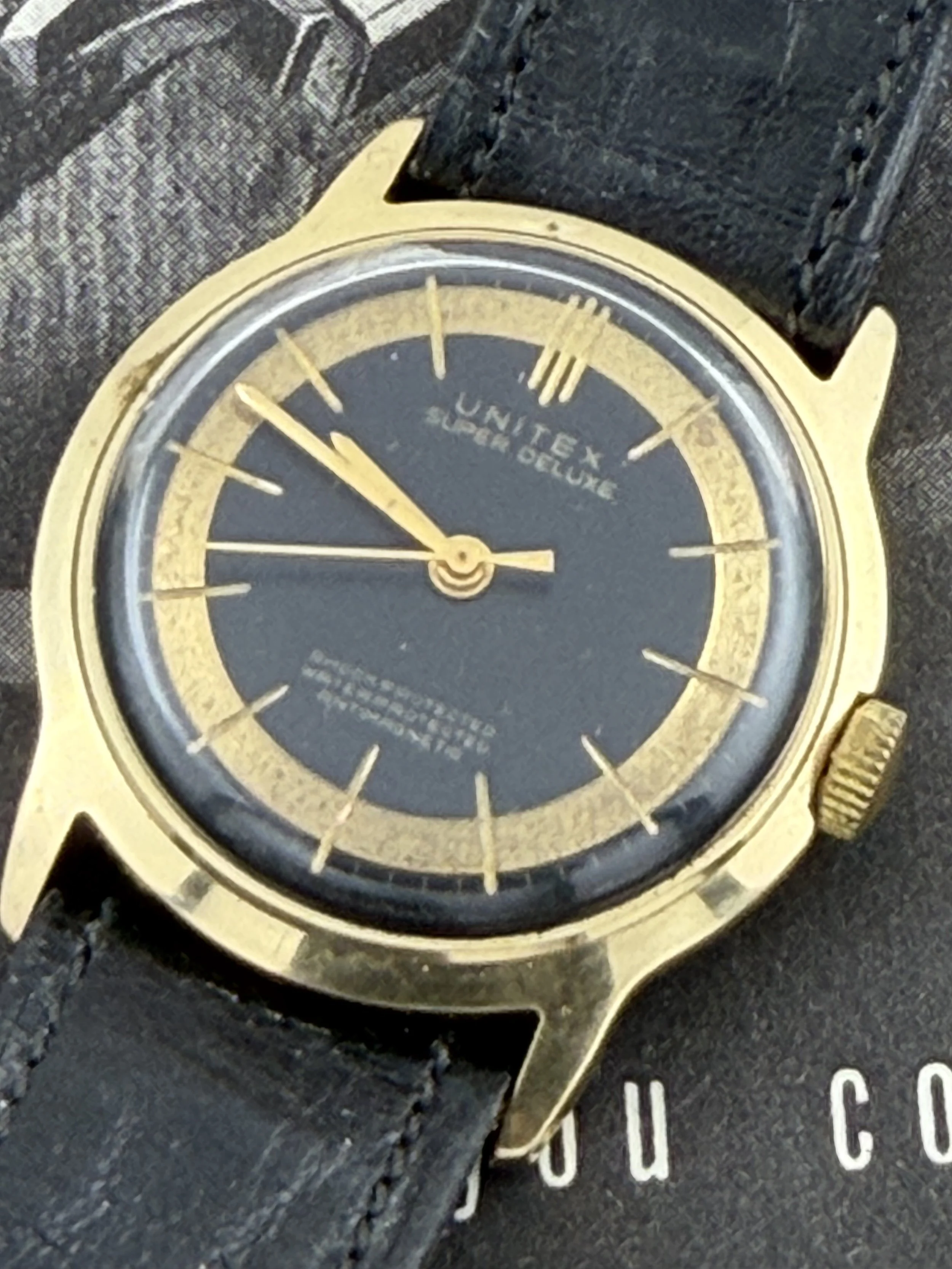
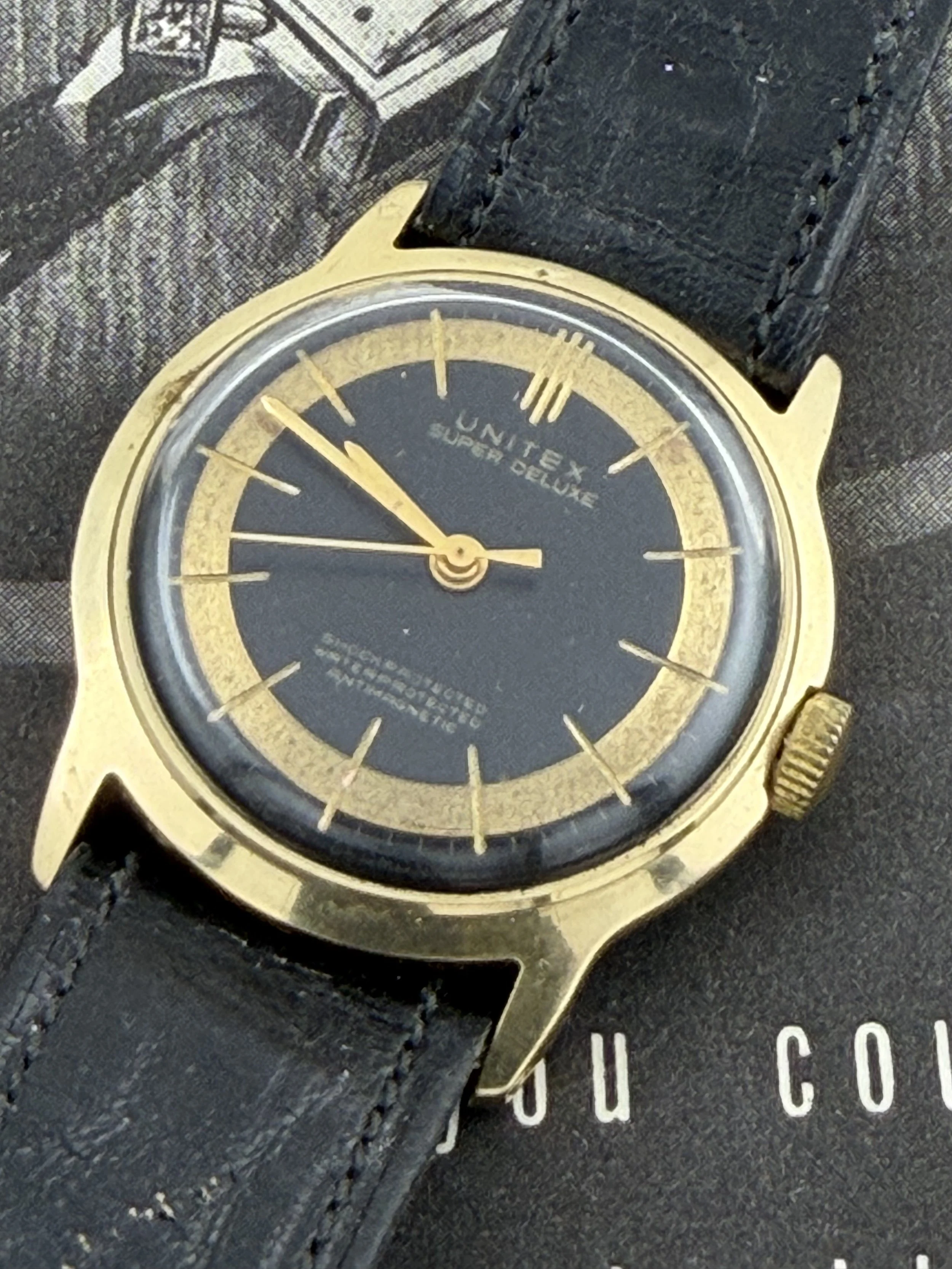
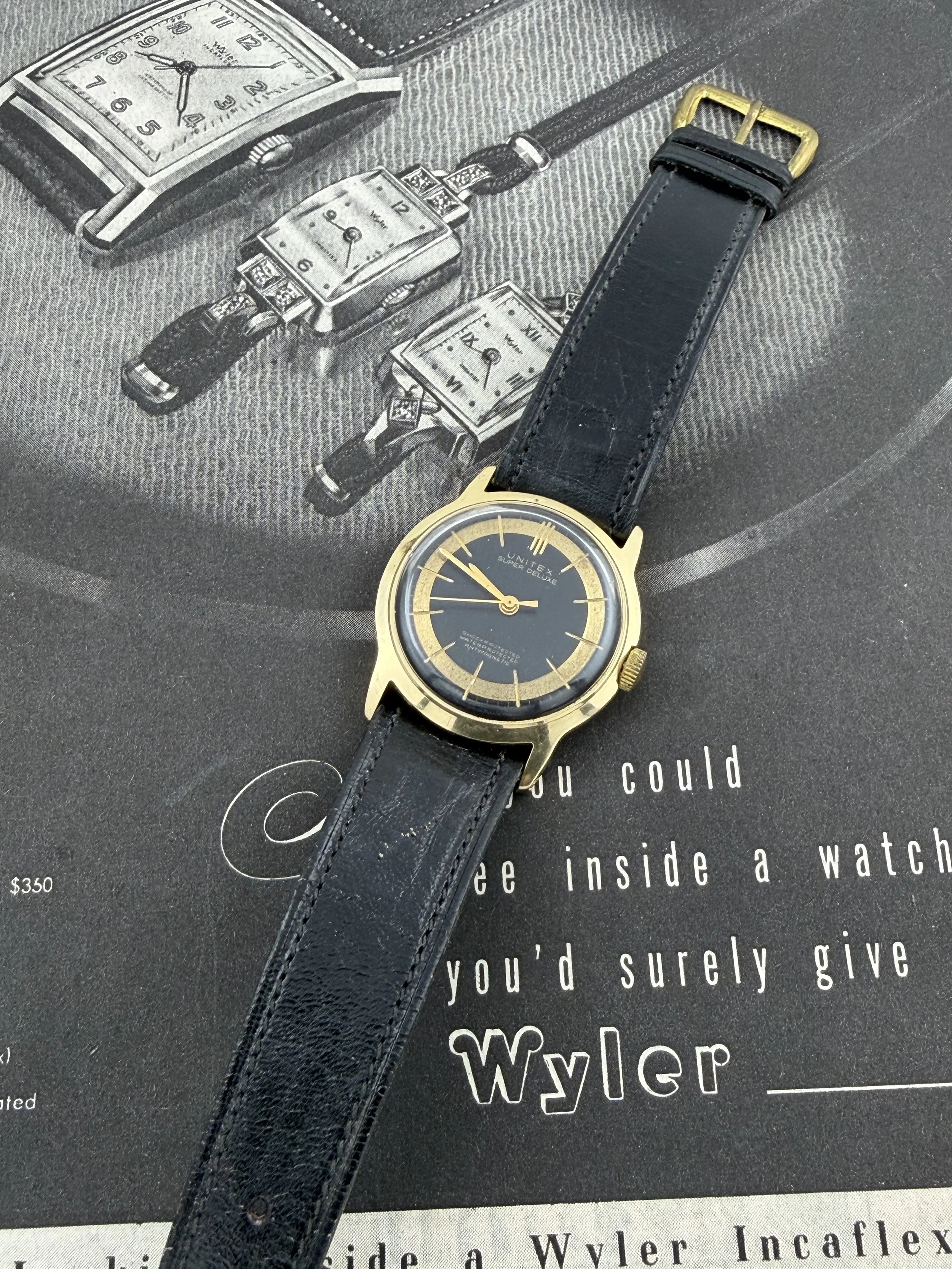
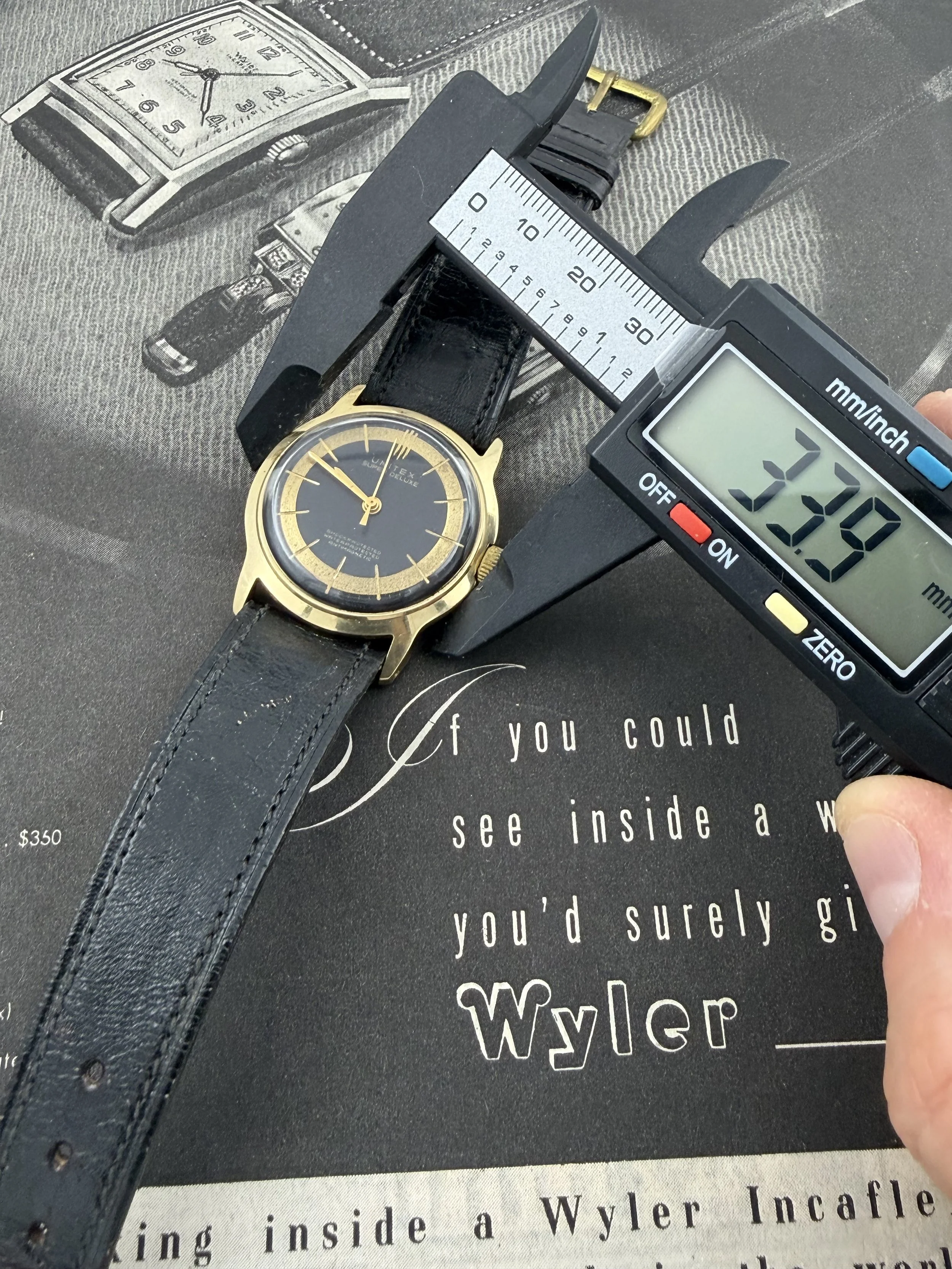
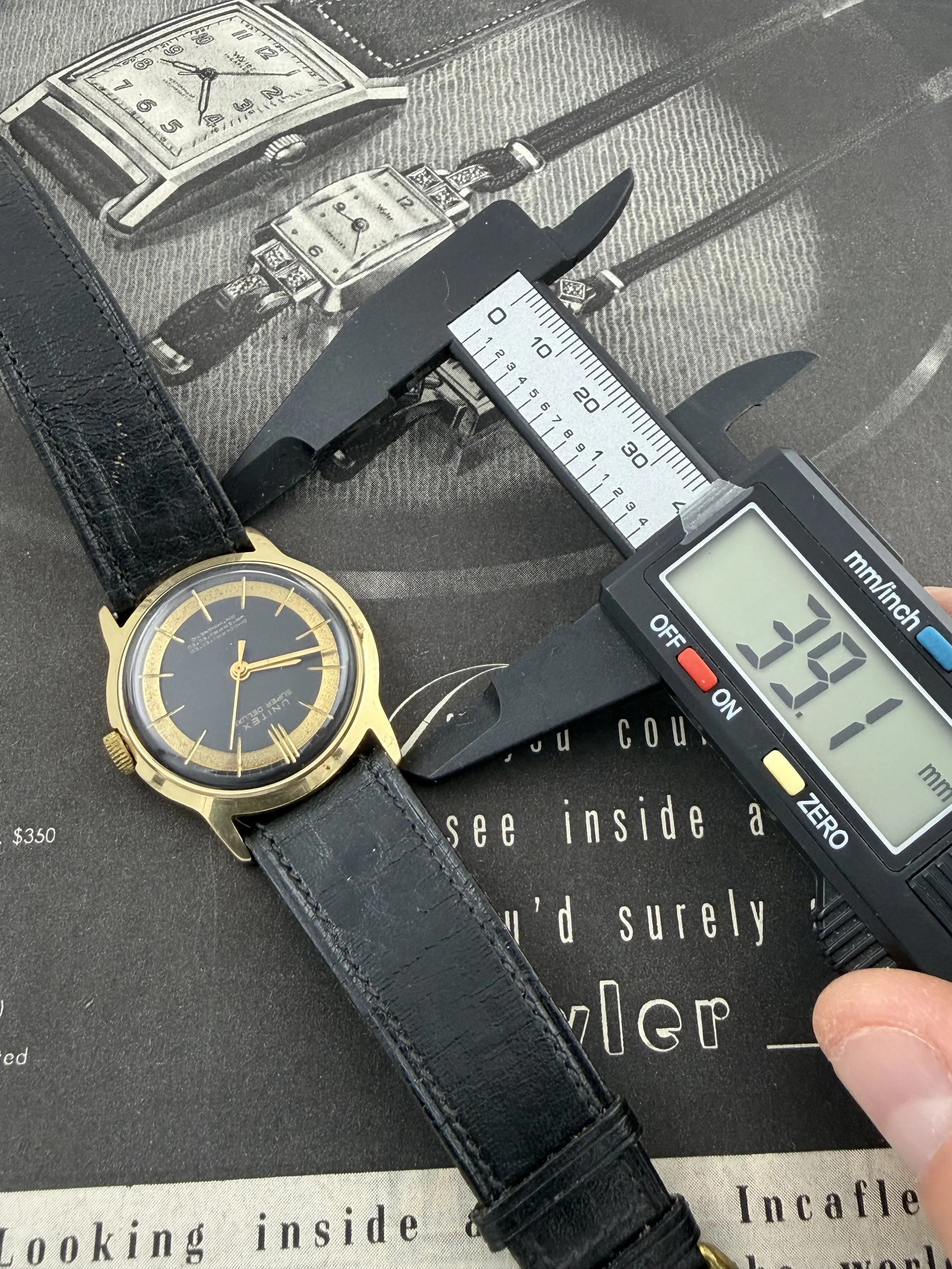
This remarkable vintage UMF wristwatch is a wonderfully distinctive example of the bold, modernist watch design that emerged during the 1960s and 1970s. Featuring a gold-filled case, black dial, applied gold indices, and a highly reflective outer gold chapter ring, it has an unmistakable presence on the wrist. There is a strong Polerouter-era influence in the overall visual language, but this watch has a personality all its own—more industrial, more graphic, and with an unmistakably East German character.
The design is immediately striking. The deep black dial creates a dramatic backdrop for the applied gold hour markers, while the outer reflective ring catches the light with every movement of the wrist. The combination gives the watch a sense of depth and visual complexity that is far more interesting than the simple, utilitarian designs often associated with affordable vintage watches of this period.
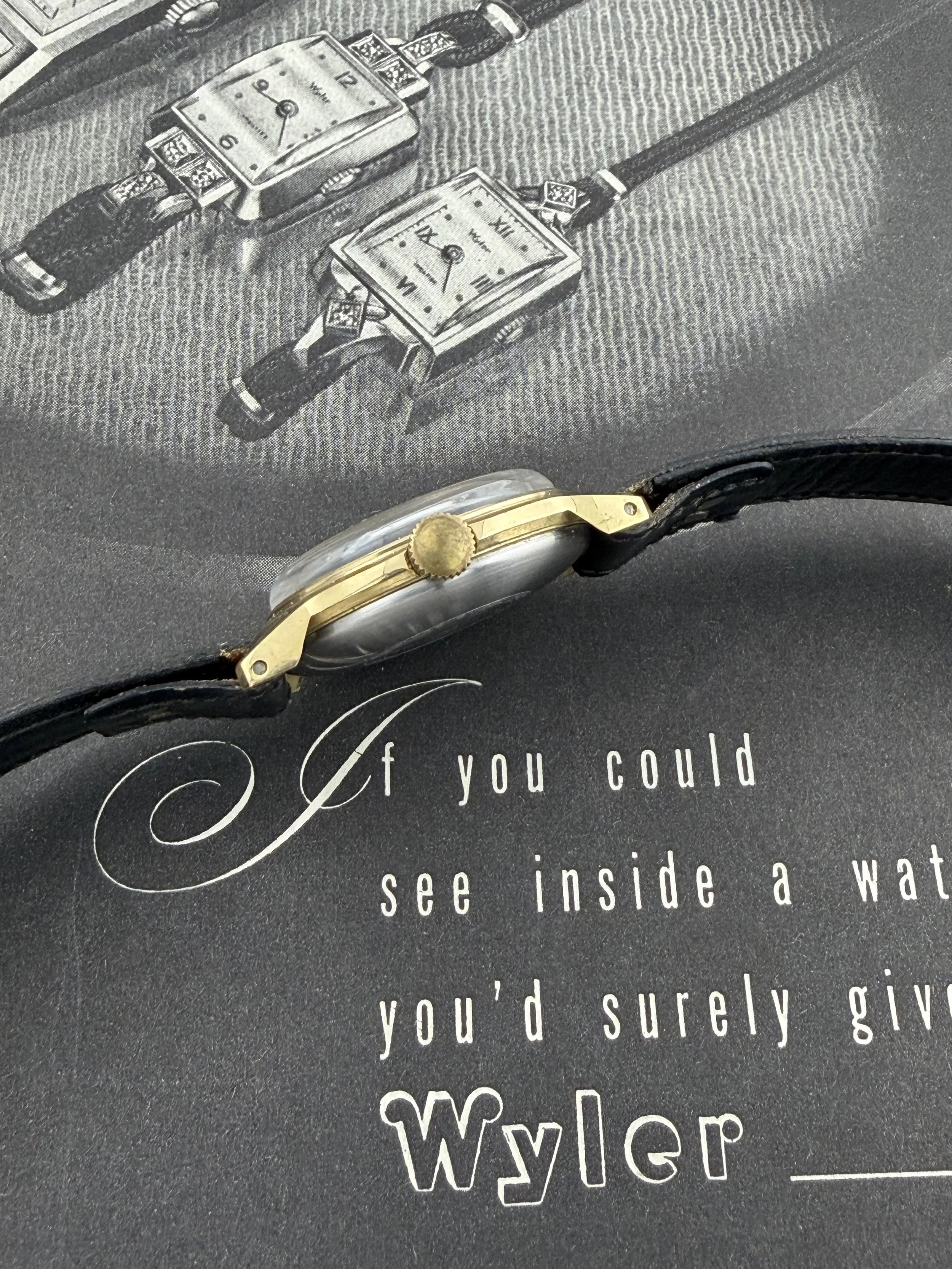
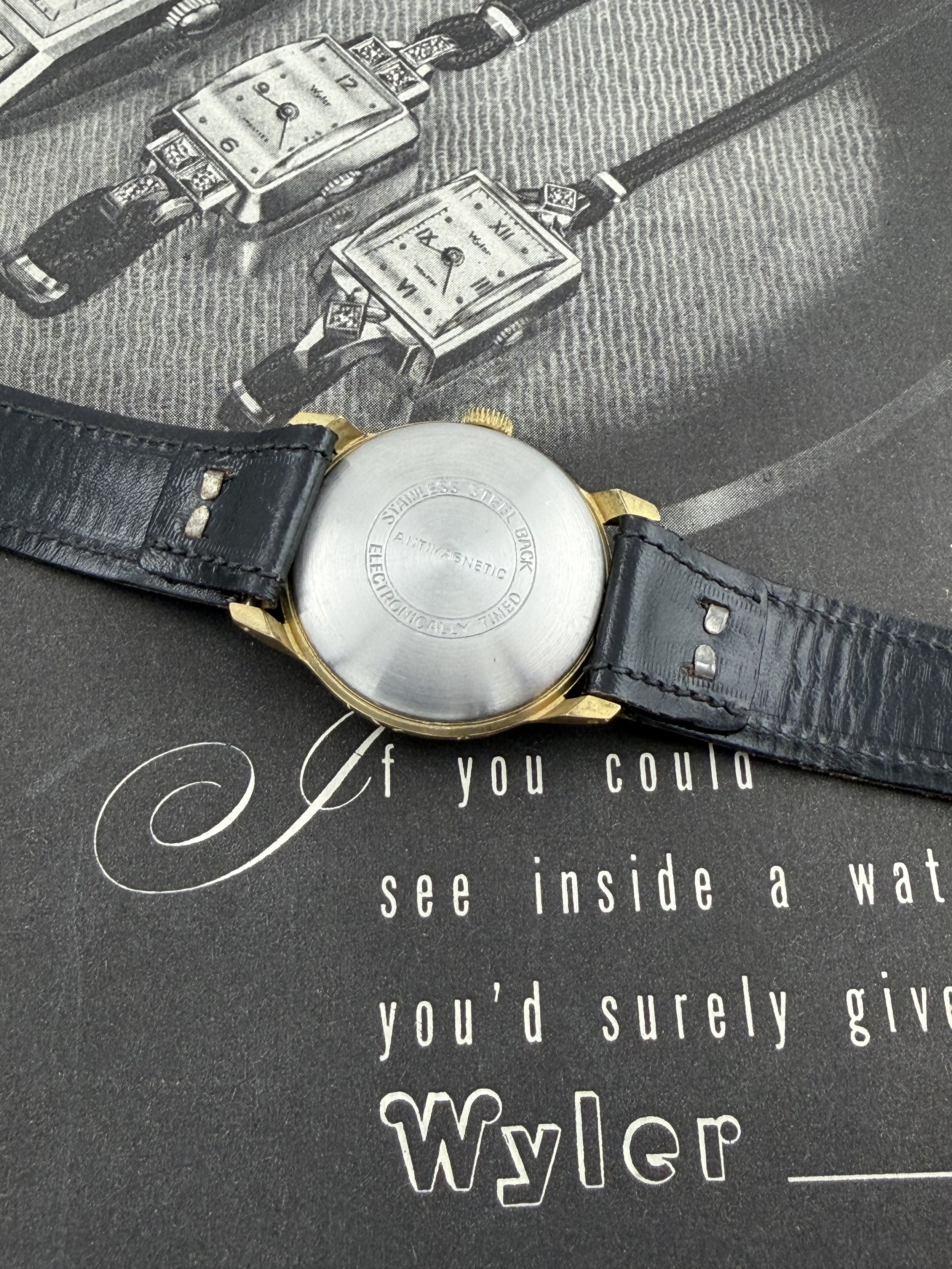
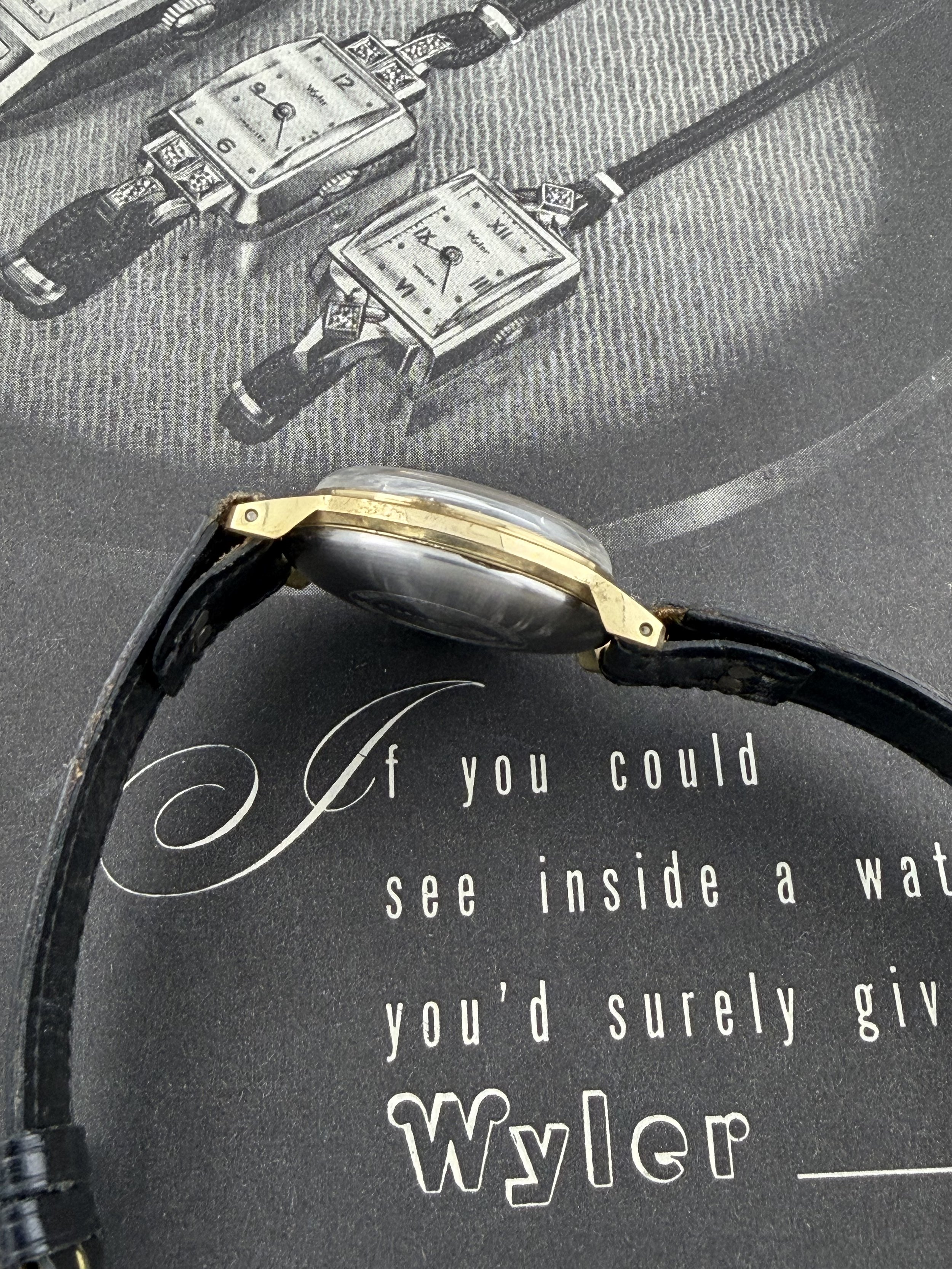
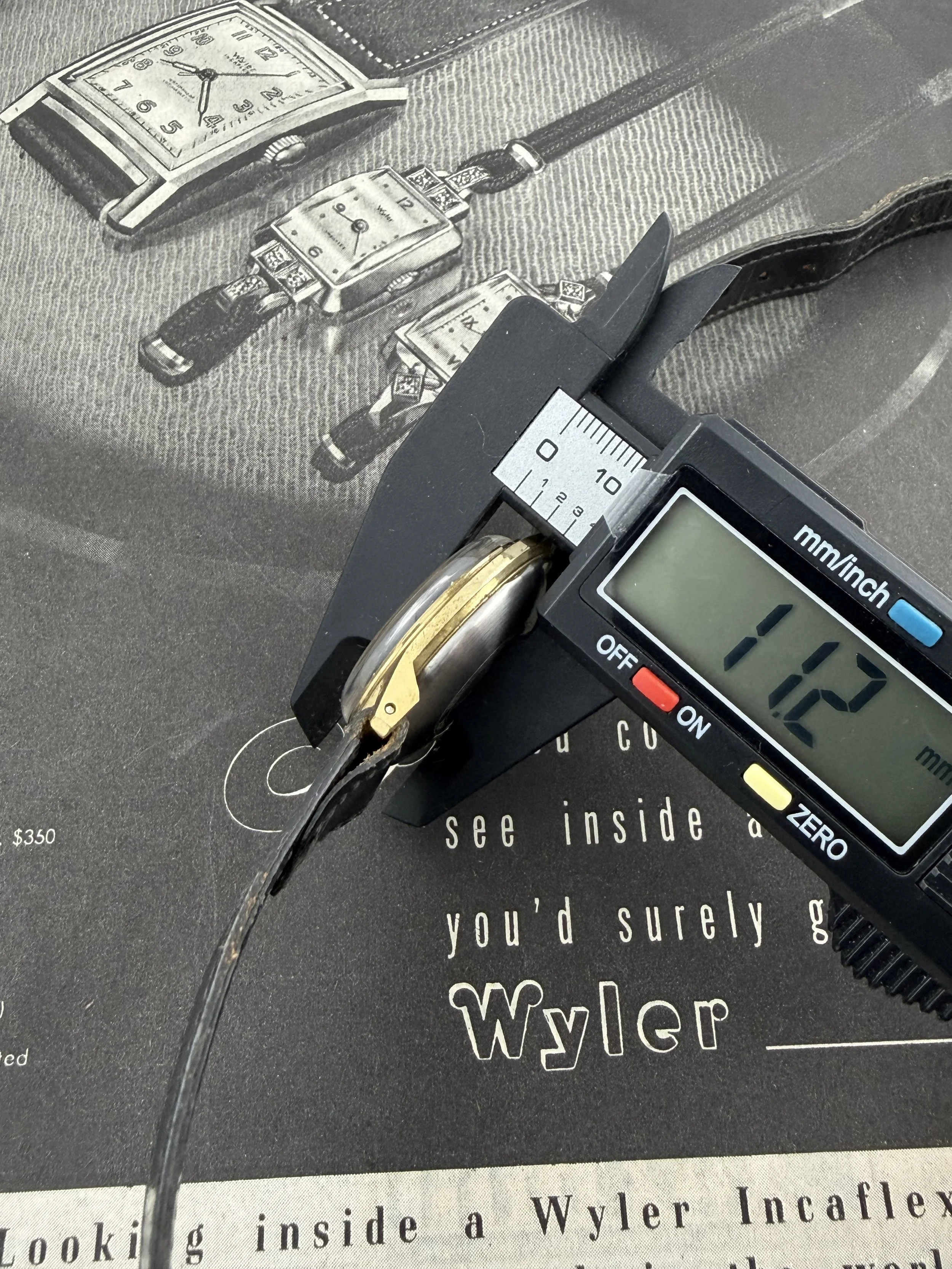
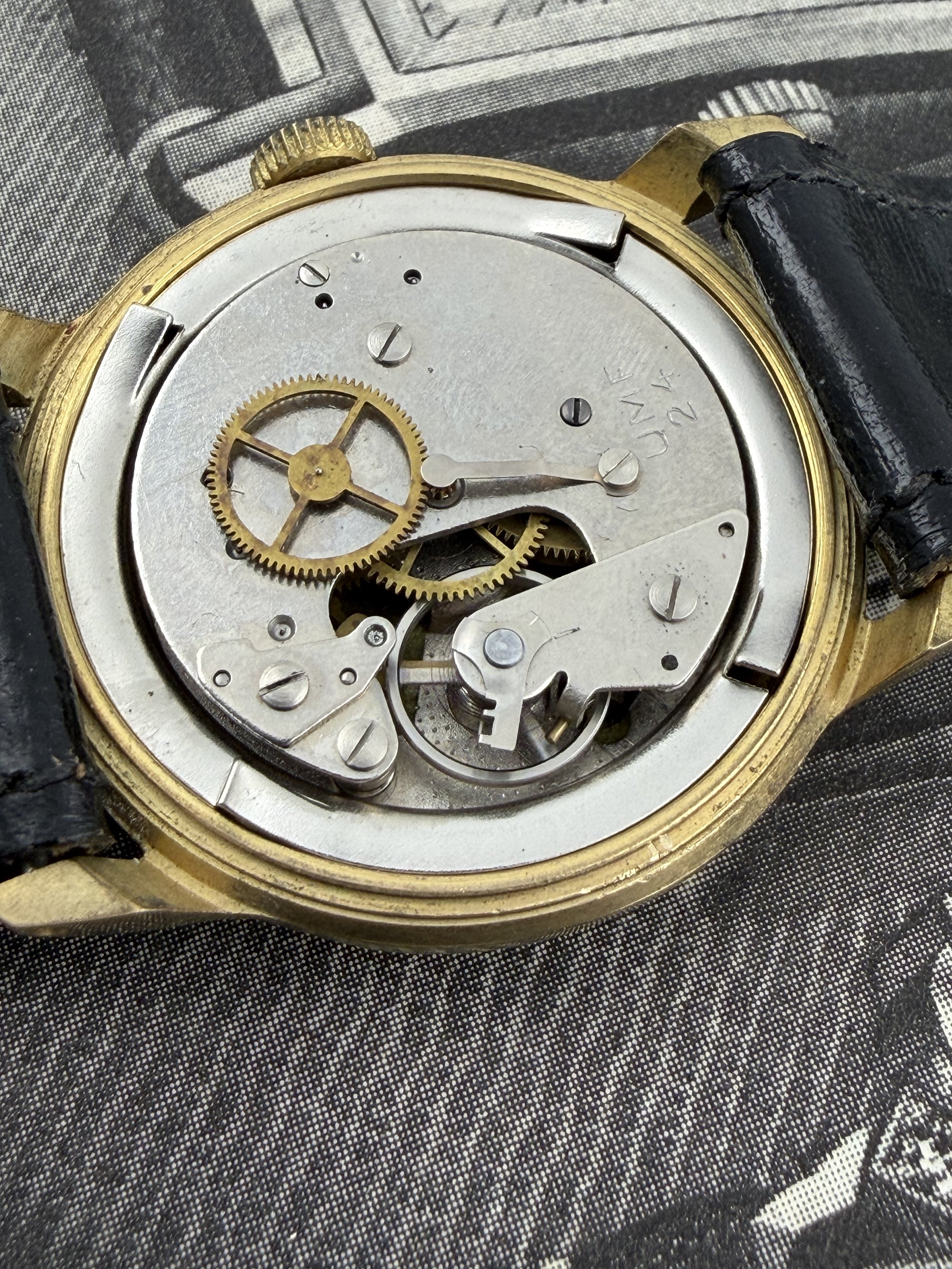
The gold-filled case adds warmth and substance without sacrificing the practical nature of the watch. Paired with the steel caseback, it represents a classic construction of the period: a watch designed to look elegant and luxurious from the front while retaining the durability and practicality expected of an everyday timepiece.
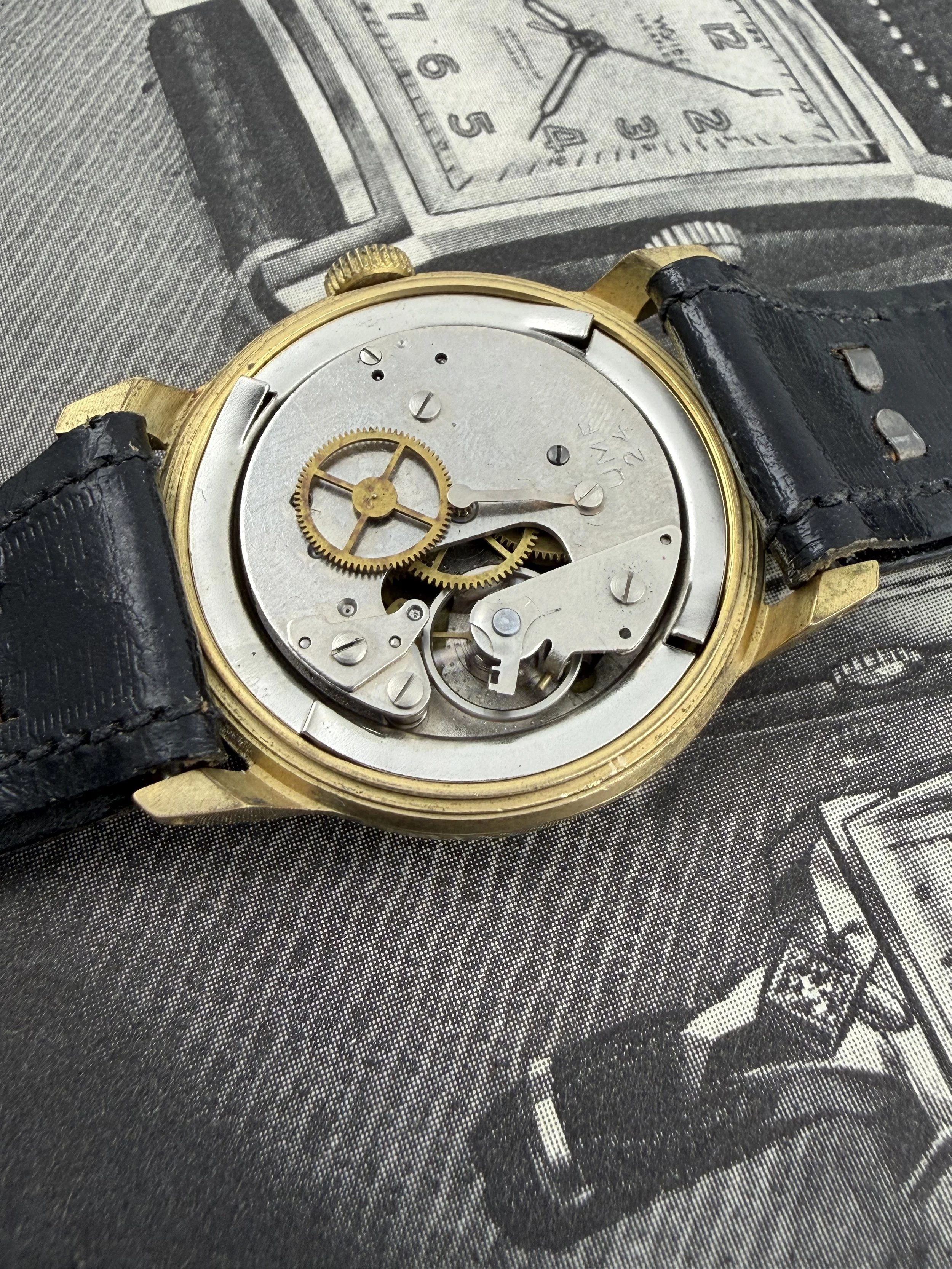
Inside is the UMF 24 movement, produced by the Uhren und Maschinenfabrik Ruhla in East Germany. The UMF 24 family was introduced in the 1960s and became one of the most widely produced mechanical watch movements of the era. Over its production life, the movement family was manufactured in enormous numbers, with different versions offering variations including small seconds, central seconds, dates, and other configurations.
The UMF 24 was not designed as a high-end Swiss luxury calibre. Its appeal lies elsewhere. It was a robust, simple, mass-produced mechanical movement engineered to be practical, serviceable, and capable of surviving everyday use. The movement used a pin-lever escapement and a straightforward construction that reflected the industrial philosophy of Ruhla's watchmaking tradition. In many ways, it is a mechanical expression of the era in which it was made: efficient, durable, and designed to be produced on a massive scale.
The history behind the movement is particularly fascinating. The Uhren und Maschinenfabrik Ruhla was part of the East German watchmaking industry, and the UMF 24 represented the company's effort to create a modern, highly automated mechanical movement for the post-war era. Production of the calibre began in the 1960s, and the wider family continued through the late twentieth century. At its height, the UMF 24 became one of the most prolific mechanical movements ever produced, with estimates of well over one hundred million examples across the family.
This particular watch is especially appealing because the design is considerably more stylish than the movement's utilitarian reputation might suggest. The black and gold colour combination, applied markers, reflective outer ring, and substantial case give it a visual presence that feels surprisingly sophisticated. It occupies an interesting space between mid-century modernism, 1970s design, and the futuristic aesthetic of the space age.
There is also something particularly charming about the way this watch echoes the design language of more famous Swiss watches of the period. The dramatic dial architecture and use of a reflective outer ring immediately recall the visual experimentation of the era, including the broader design world surrounding watches such as the Universal Genève Polerouter. Yet this UMF is not simply imitating that style. Its proportions, construction, and East German mechanical heart give it a distinctly different character.
The markings “Super Delux,” “Shockproof,” “Waterprotected,” and “Antimagnetic” speak to the language of vintage watch marketing, when mechanical watches were proudly advertised not only as instruments of precision but as durable pieces of everyday technology. These claims were part of a broader mid-century fascination with making watches tougher, more resistant, and better suited to modern life.
What makes this watch particularly compelling is the contrast between its appearance and its origins. From a distance, the gold-filled case and dramatic black dial suggest something far more luxurious. Look closer, however, and you find a practical East German movement produced by a state-era industrial watchmaking enterprise. That contrast is exactly what makes watches like this so interesting.
This is not simply another vintage dress watch. It is a beautifully styled example of the mechanical watch as industrial object—part design statement, part engineering experiment, and part historical artifact. The gold-filled case, black dial, applied gold indices, and reflective outer ring give it a look that remains genuinely distinctive decades after it was made.
For collectors who appreciate watches outside the usual Swiss luxury canon, this UMF is a particularly rewarding piece. It combines strong design, an important and remarkably prolific movement, Cold War-era industrial history, and a visual personality that is difficult to replicate. A wonderfully unusual vintage watch with serious character and a design that deserves far more attention than its modest origins might suggest.
This remarkable vintage UMF wristwatch is a wonderfully distinctive example of the bold, modernist watch design that emerged during the 1960s and 1970s. Featuring a gold-filled case, black dial, applied gold indices, and a highly reflective outer gold chapter ring, it has an unmistakable presence on the wrist. There is a strong Polerouter-era influence in the overall visual language, but this watch has a personality all its own—more industrial, more graphic, and with an unmistakably East German character.
The design is immediately striking. The deep black dial creates a dramatic backdrop for the applied gold hour markers, while the outer reflective ring catches the light with every movement of the wrist. The combination gives the watch a sense of depth and visual complexity that is far more interesting than the simple, utilitarian designs often associated with affordable vintage watches of this period.
The gold-filled case adds warmth and substance without sacrificing the practical nature of the watch. Paired with the steel caseback, it represents a classic construction of the period: a watch designed to look elegant and luxurious from the front while retaining the durability and practicality expected of an everyday timepiece.
Inside is the UMF 24 movement, produced by the Uhren und Maschinenfabrik Ruhla in East Germany. The UMF 24 family was introduced in the 1960s and became one of the most widely produced mechanical watch movements of the era. Over its production life, the movement family was manufactured in enormous numbers, with different versions offering variations including small seconds, central seconds, dates, and other configurations.
The UMF 24 was not designed as a high-end Swiss luxury calibre. Its appeal lies elsewhere. It was a robust, simple, mass-produced mechanical movement engineered to be practical, serviceable, and capable of surviving everyday use. The movement used a pin-lever escapement and a straightforward construction that reflected the industrial philosophy of Ruhla's watchmaking tradition. In many ways, it is a mechanical expression of the era in which it was made: efficient, durable, and designed to be produced on a massive scale.
The history behind the movement is particularly fascinating. The Uhren und Maschinenfabrik Ruhla was part of the East German watchmaking industry, and the UMF 24 represented the company's effort to create a modern, highly automated mechanical movement for the post-war era. Production of the calibre began in the 1960s, and the wider family continued through the late twentieth century. At its height, the UMF 24 became one of the most prolific mechanical movements ever produced, with estimates of well over one hundred million examples across the family.
This particular watch is especially appealing because the design is considerably more stylish than the movement's utilitarian reputation might suggest. The black and gold colour combination, applied markers, reflective outer ring, and substantial case give it a visual presence that feels surprisingly sophisticated. It occupies an interesting space between mid-century modernism, 1970s design, and the futuristic aesthetic of the space age.
There is also something particularly charming about the way this watch echoes the design language of more famous Swiss watches of the period. The dramatic dial architecture and use of a reflective outer ring immediately recall the visual experimentation of the era, including the broader design world surrounding watches such as the Universal Genève Polerouter. Yet this UMF is not simply imitating that style. Its proportions, construction, and East German mechanical heart give it a distinctly different character.
The markings “Super Delux,” “Shockproof,” “Waterprotected,” and “Antimagnetic” speak to the language of vintage watch marketing, when mechanical watches were proudly advertised not only as instruments of precision but as durable pieces of everyday technology. These claims were part of a broader mid-century fascination with making watches tougher, more resistant, and better suited to modern life.
What makes this watch particularly compelling is the contrast between its appearance and its origins. From a distance, the gold-filled case and dramatic black dial suggest something far more luxurious. Look closer, however, and you find a practical East German movement produced by a state-era industrial watchmaking enterprise. That contrast is exactly what makes watches like this so interesting.
This is not simply another vintage dress watch. It is a beautifully styled example of the mechanical watch as industrial object—part design statement, part engineering experiment, and part historical artifact. The gold-filled case, black dial, applied gold indices, and reflective outer ring give it a look that remains genuinely distinctive decades after it was made.
For collectors who appreciate watches outside the usual Swiss luxury canon, this UMF is a particularly rewarding piece. It combines strong design, an important and remarkably prolific movement, Cold War-era industrial history, and a visual personality that is difficult to replicate. A wonderfully unusual vintage watch with serious character and a design that deserves far more attention than its modest origins might suggest.