

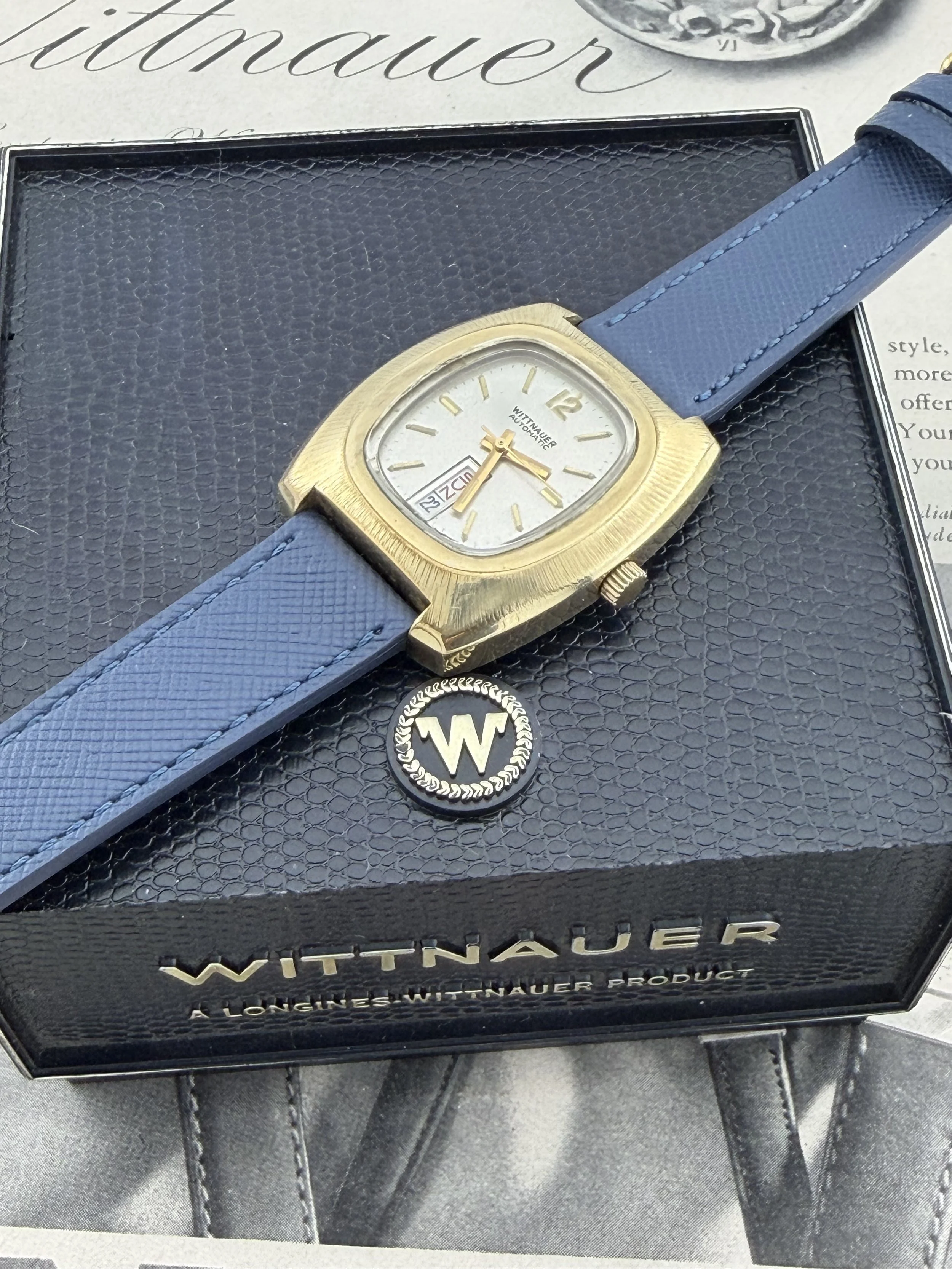
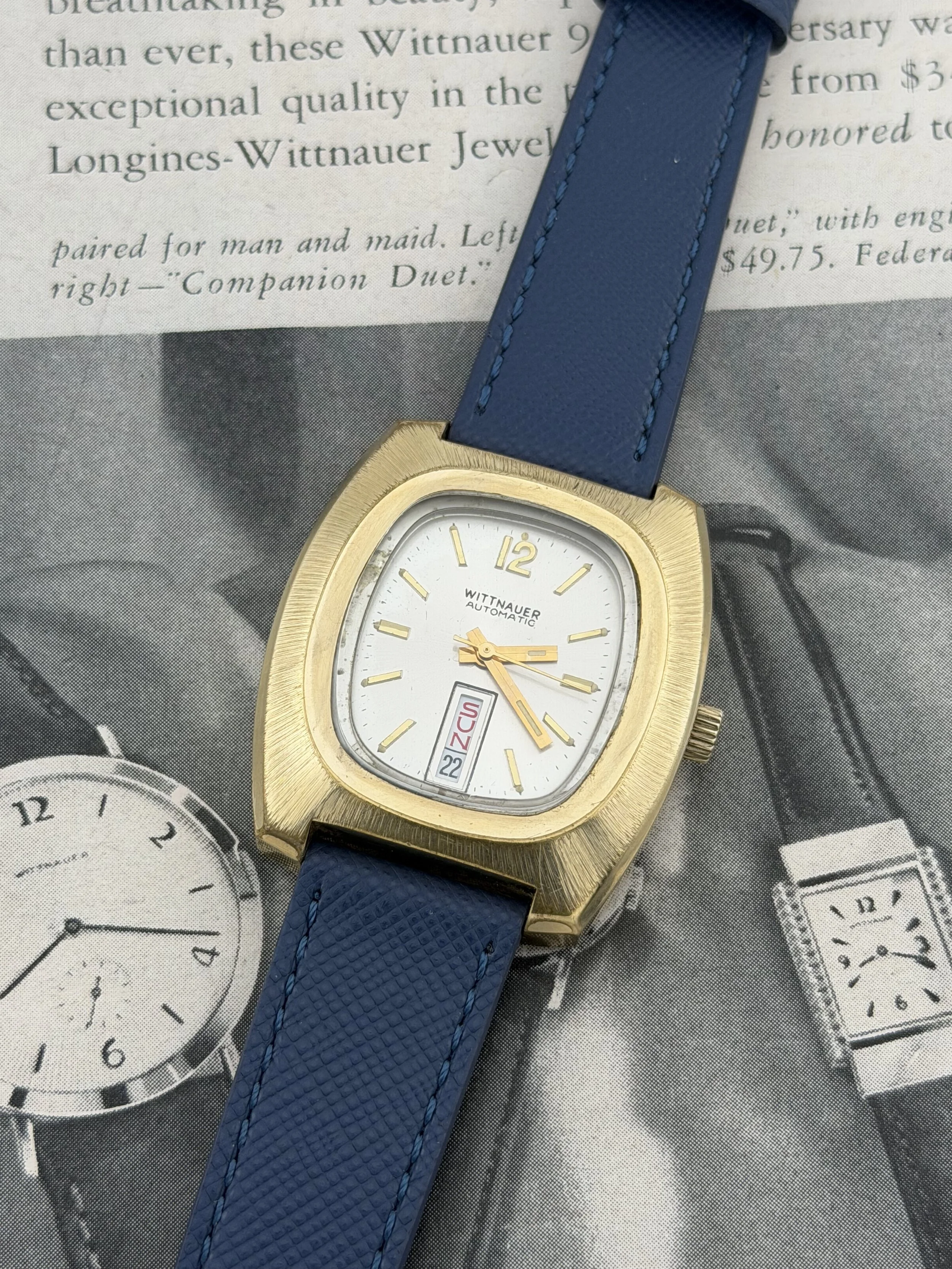
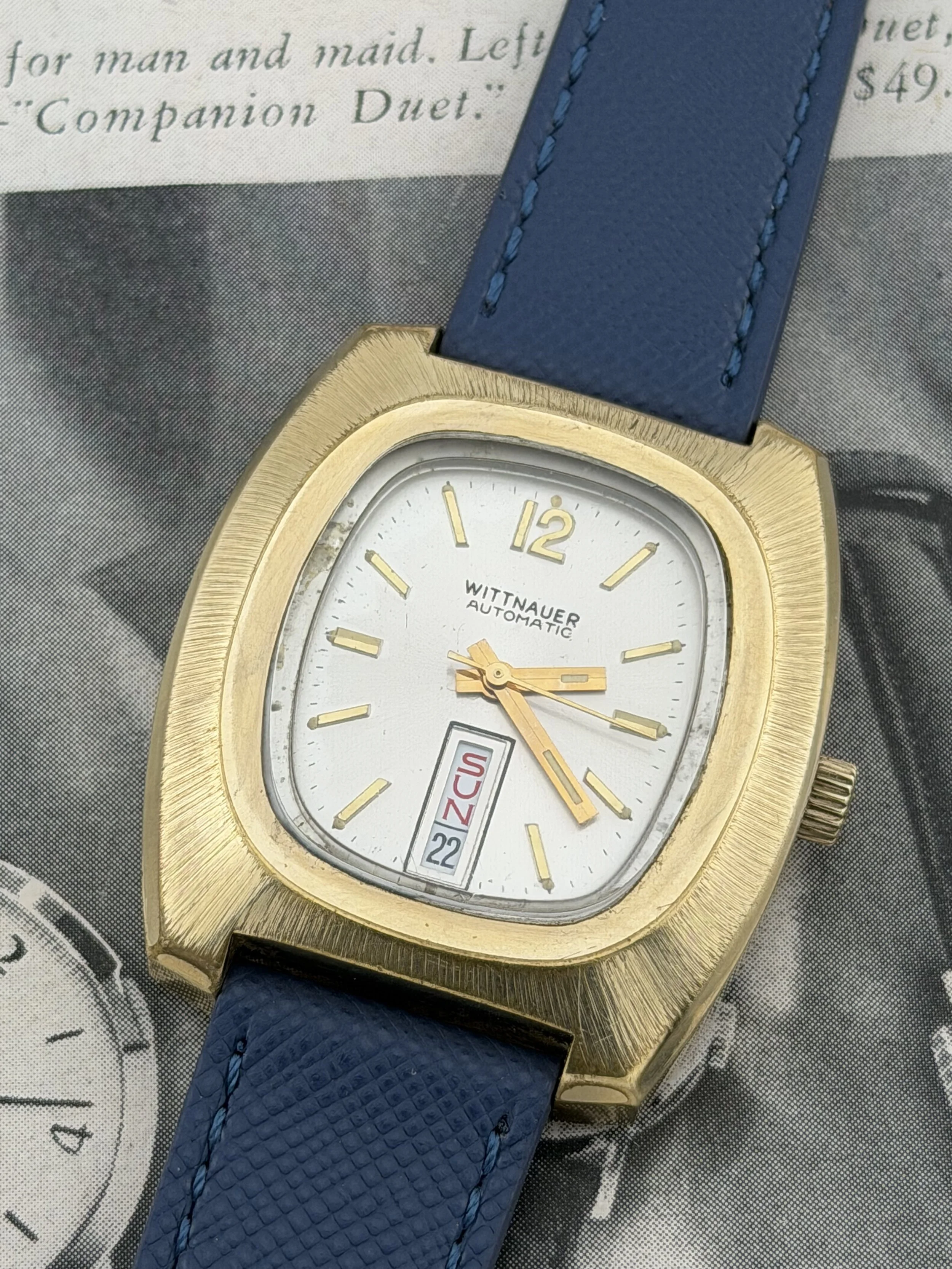
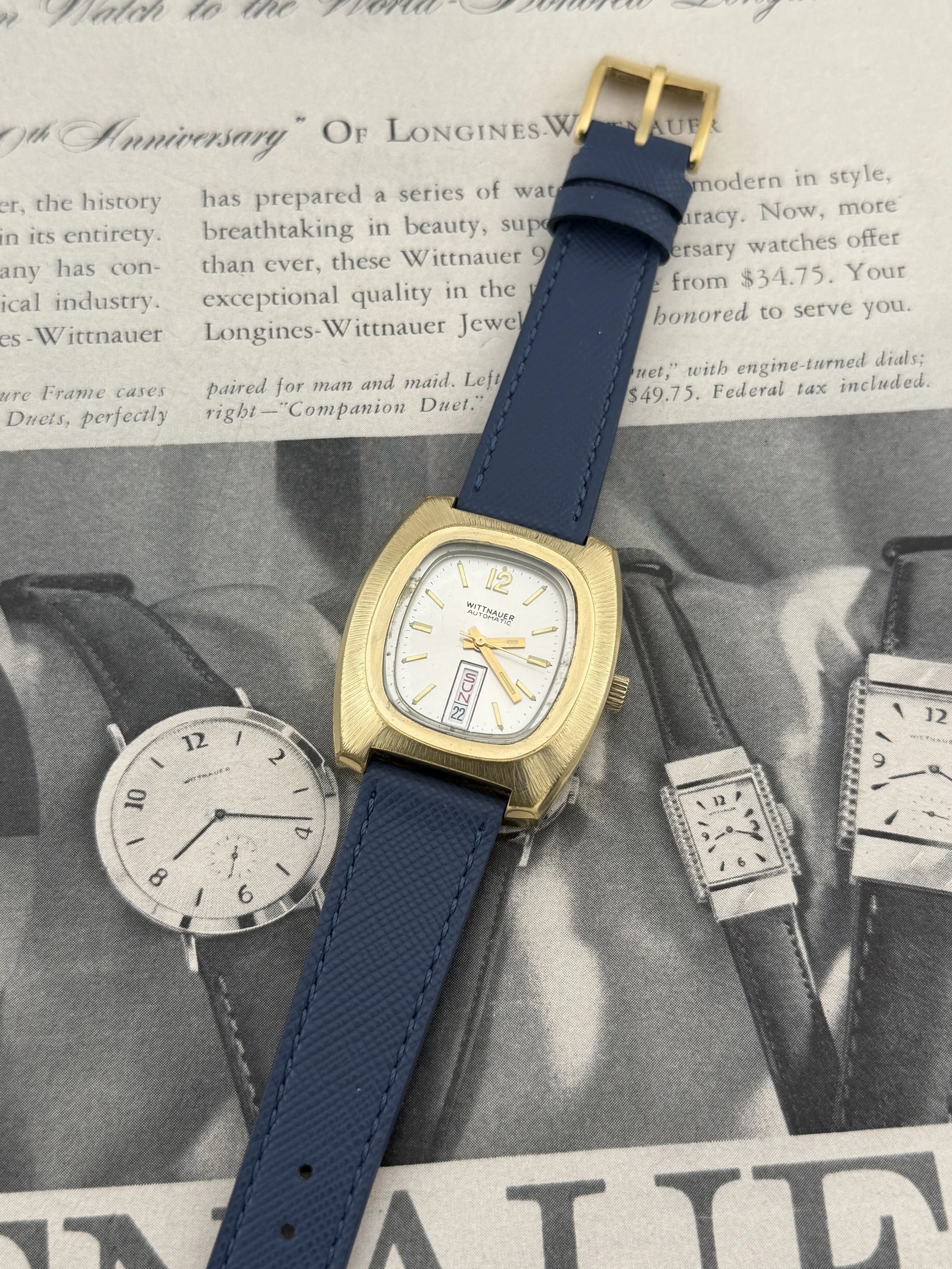
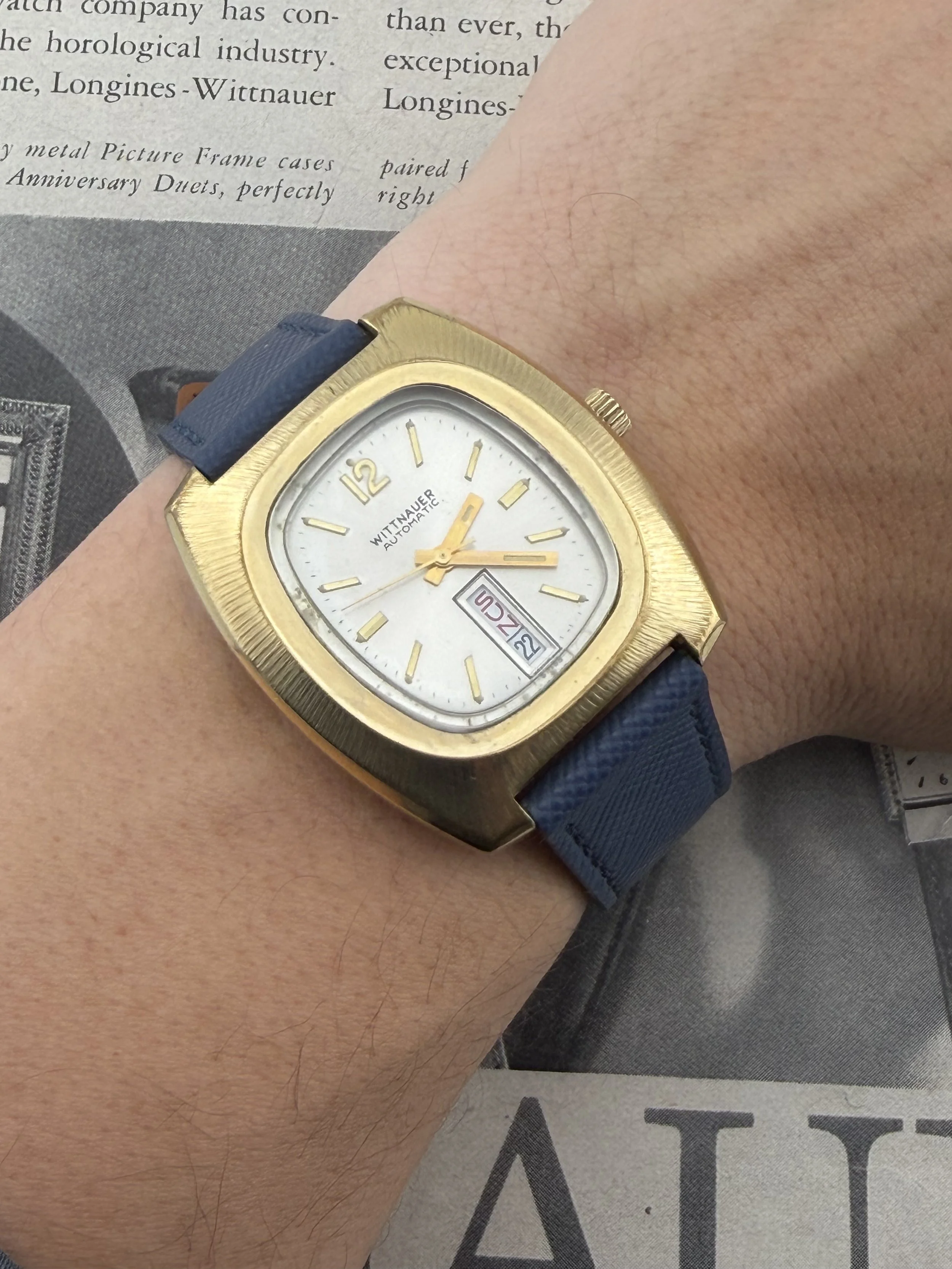
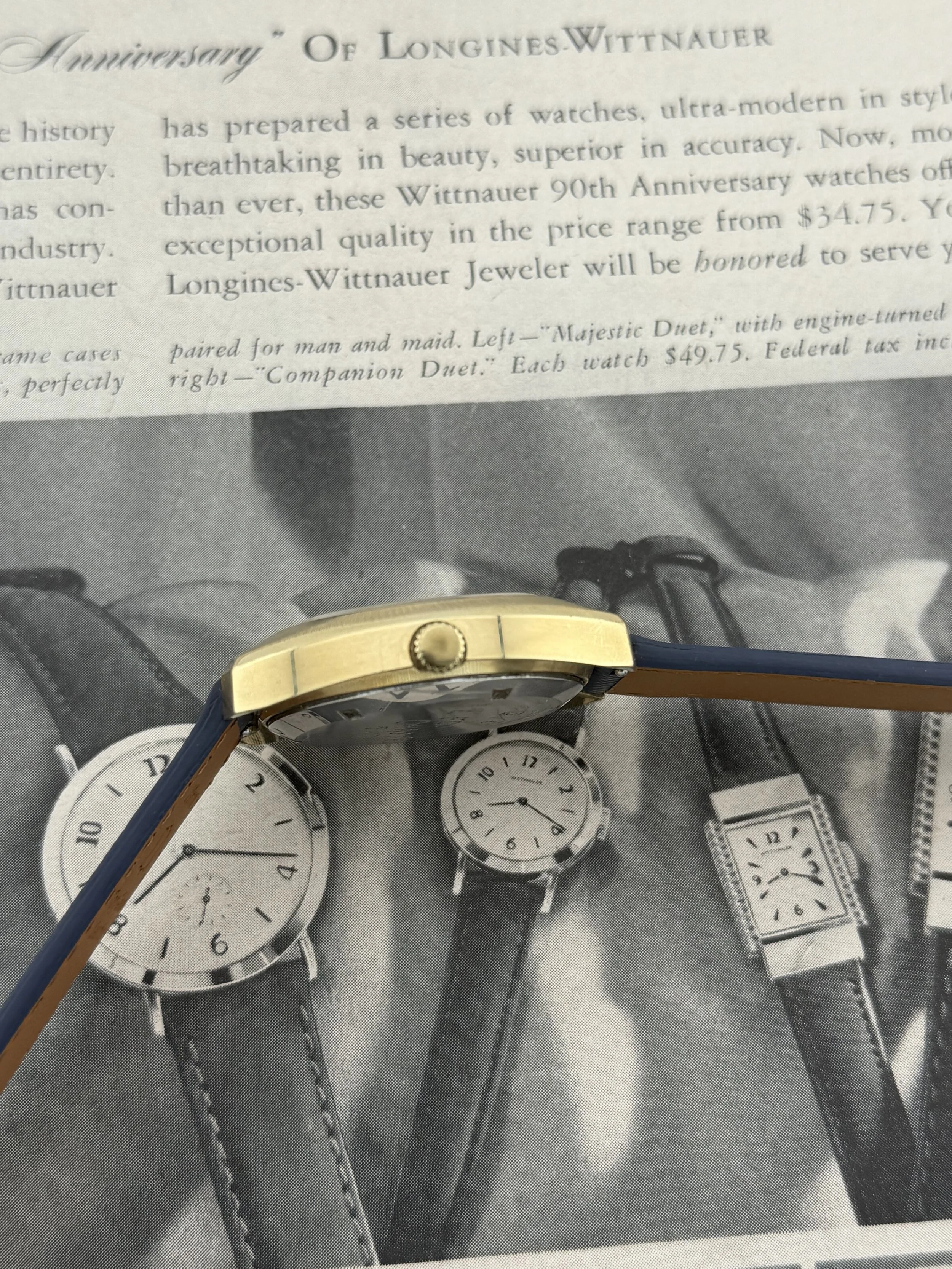
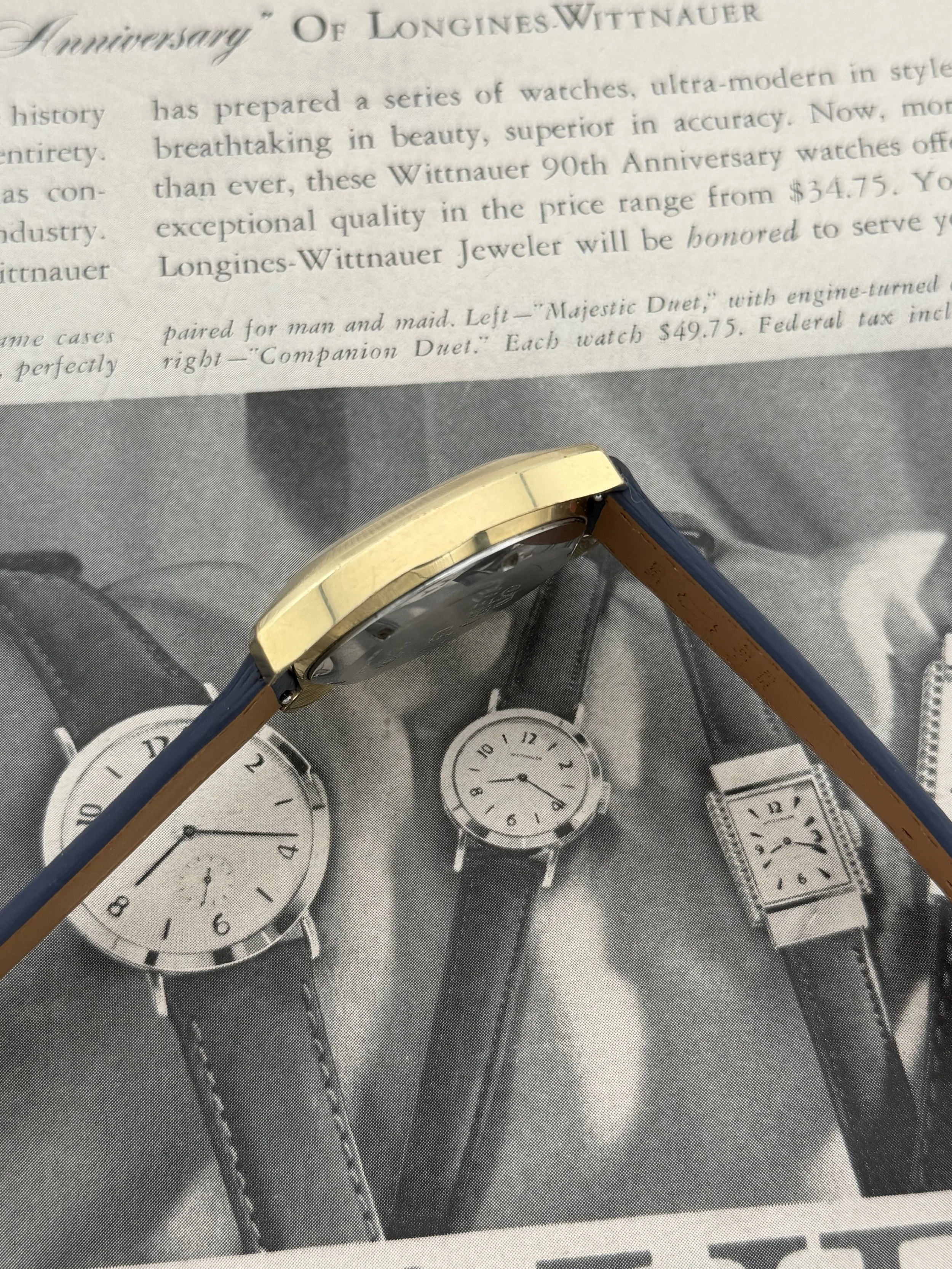
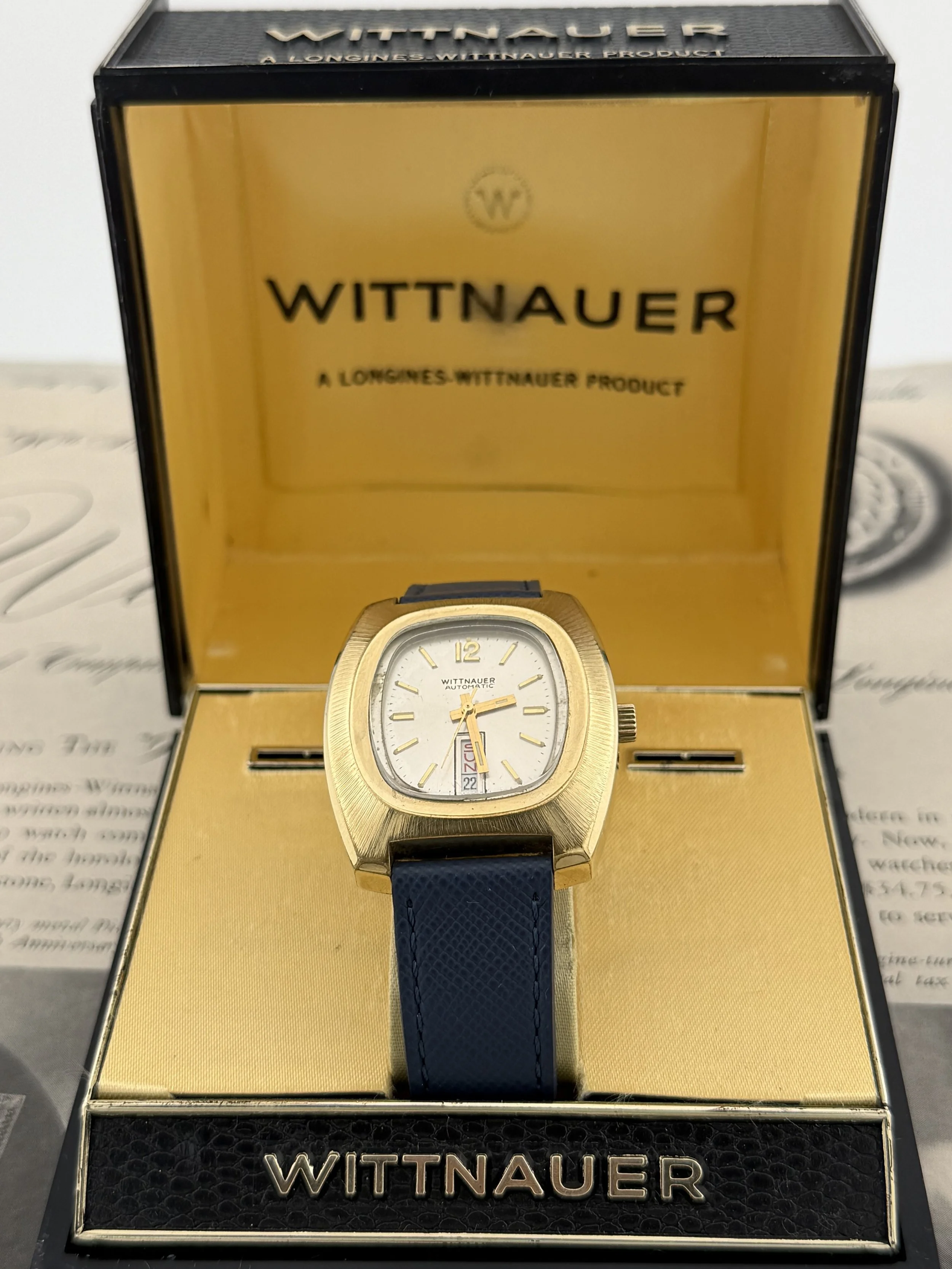
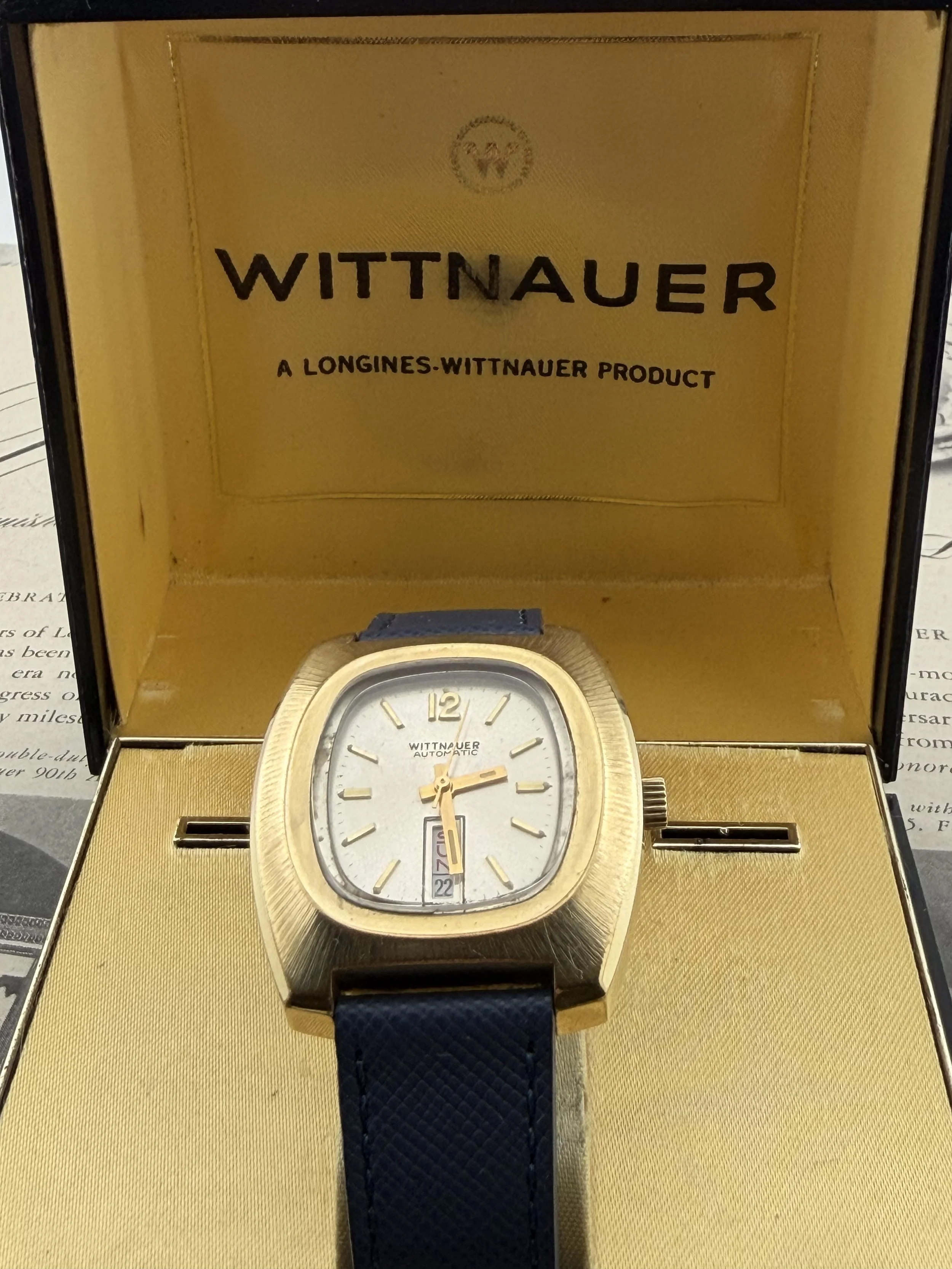
This is a fantastic example of 1970s Wittnauer design, combining a sculpted cushion-shaped case with one of the era's more unusual day-date layouts. The gold-tone case features a distinctive vertically brushed finish, giving the watch a bold architectural quality that is very characteristic of the period.
The silver-white sunburst dial is beautifully contrasted by chunky, faceted gold-tone hour markers. The real standout, however, is the vertical day-date display at 6 o'clock, with the day shown above the numerical date. It's an unusual configuration that gives the dial a wonderfully distinctive appearance.
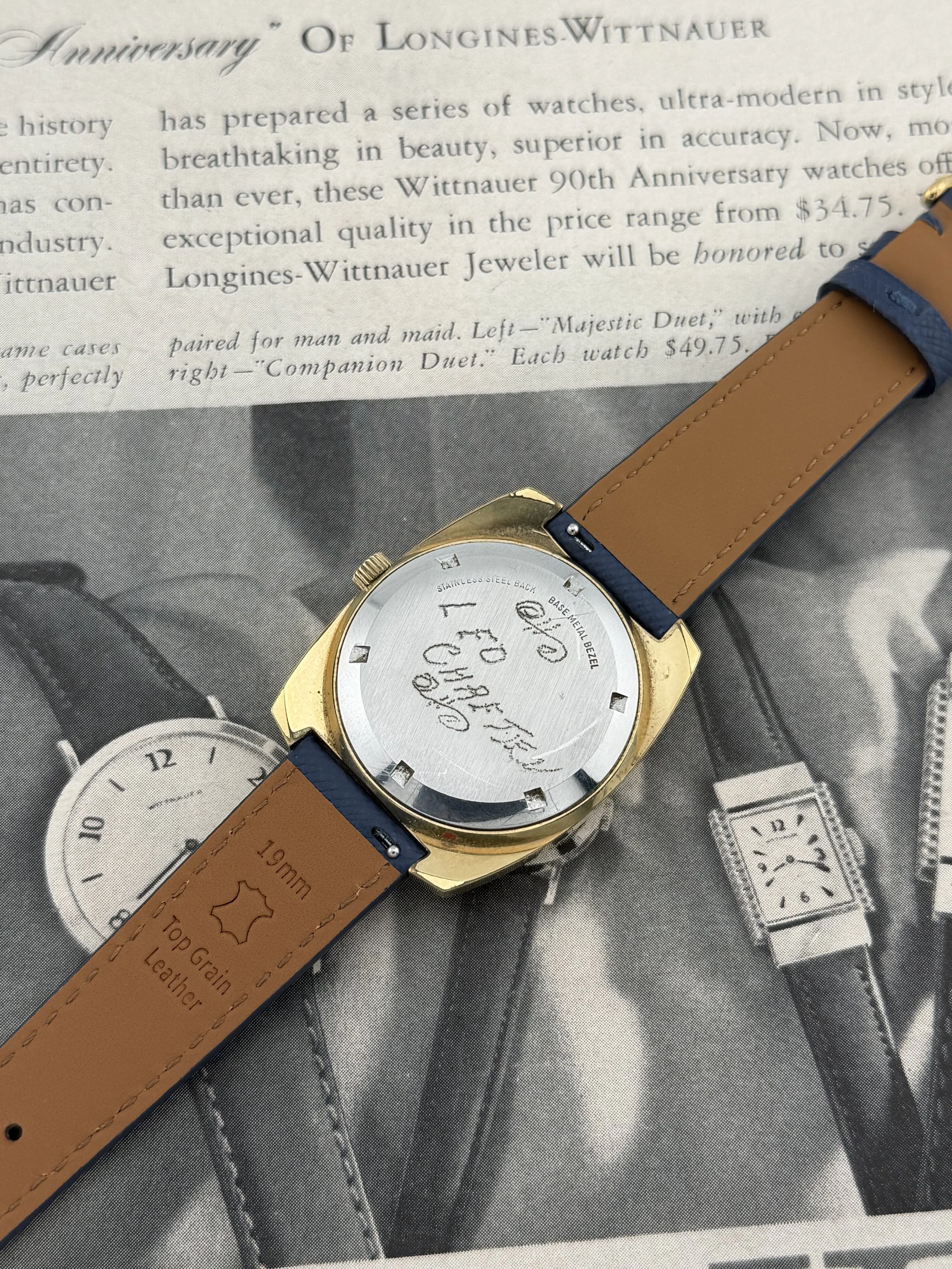
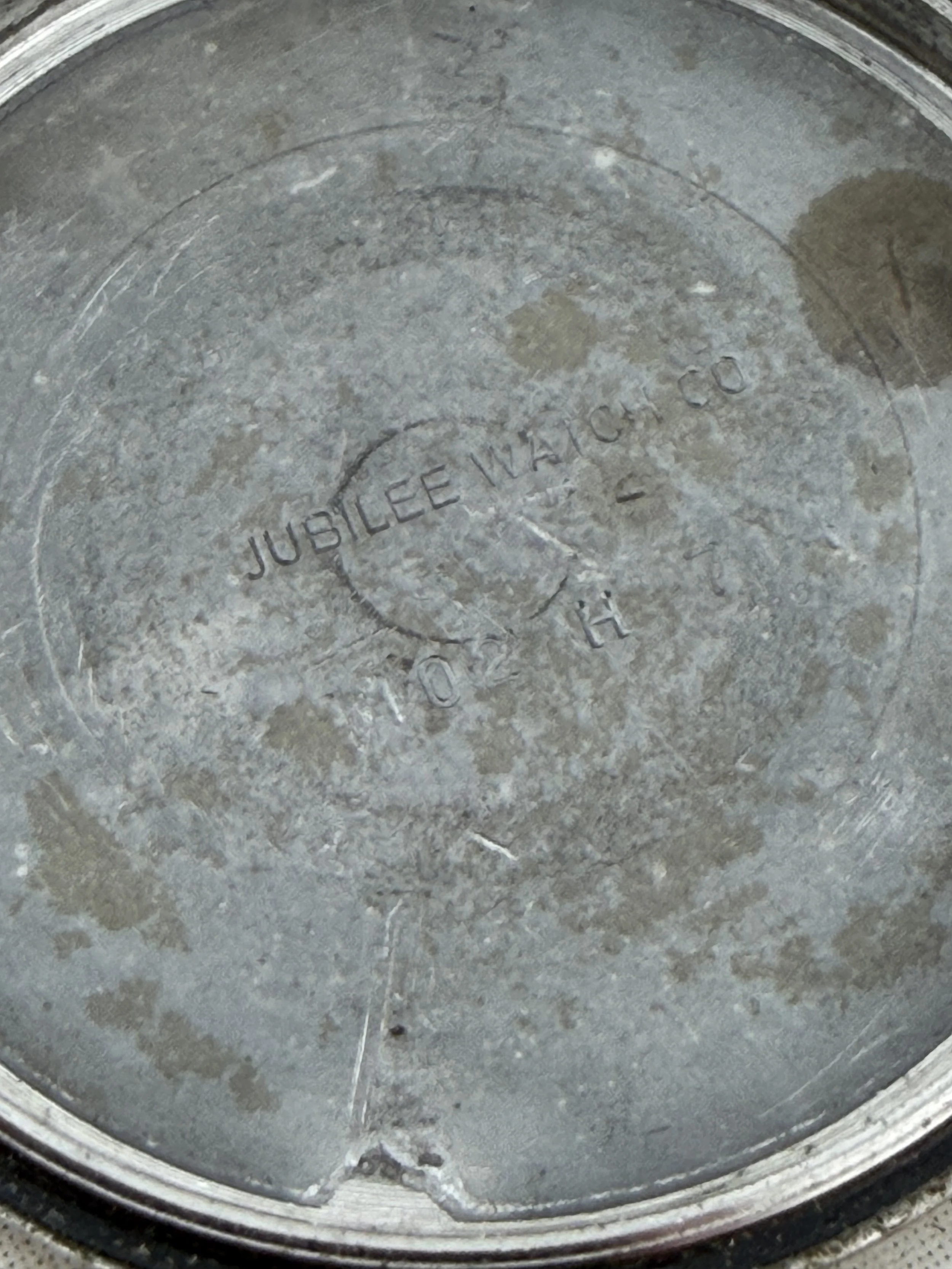
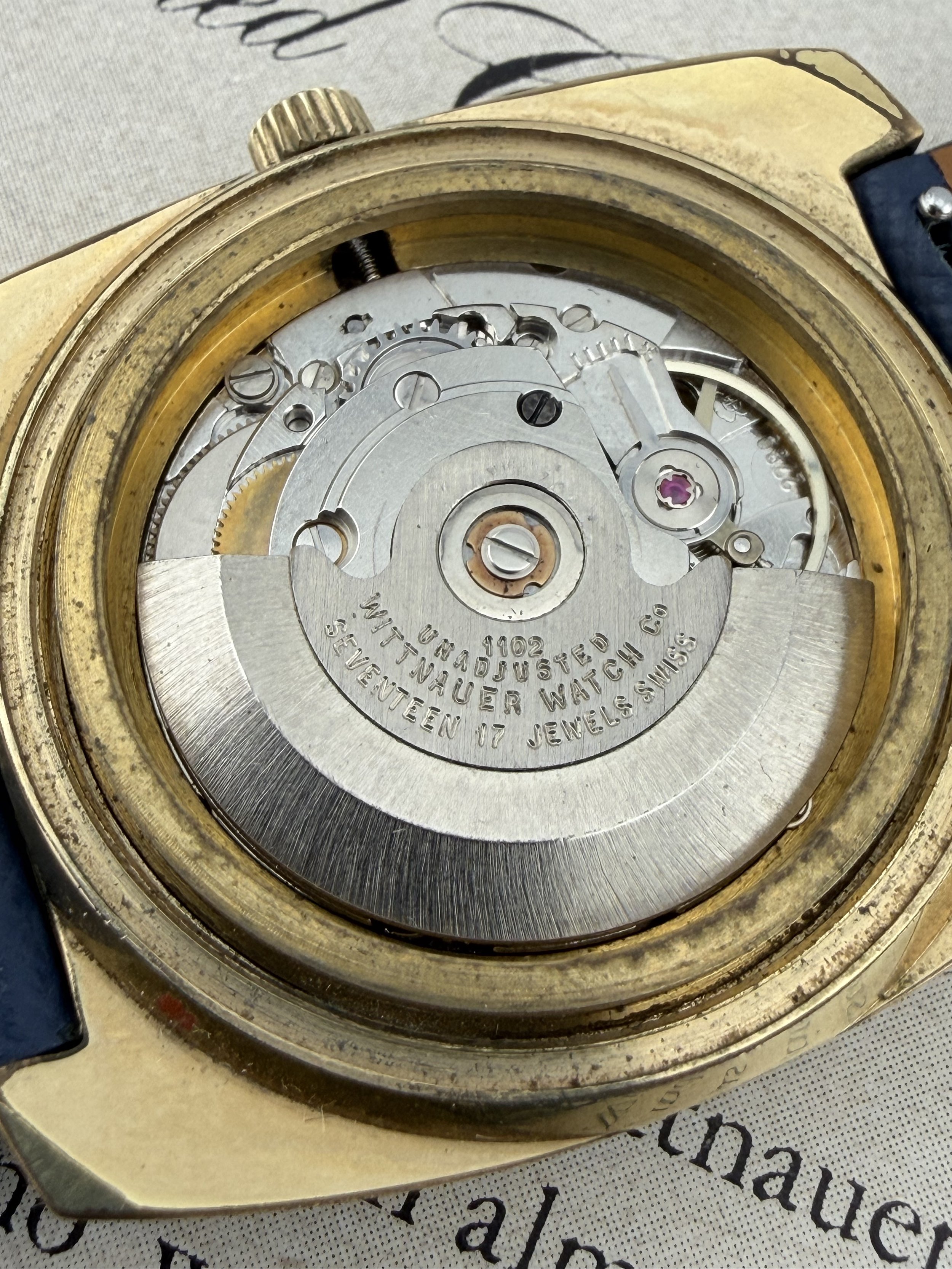
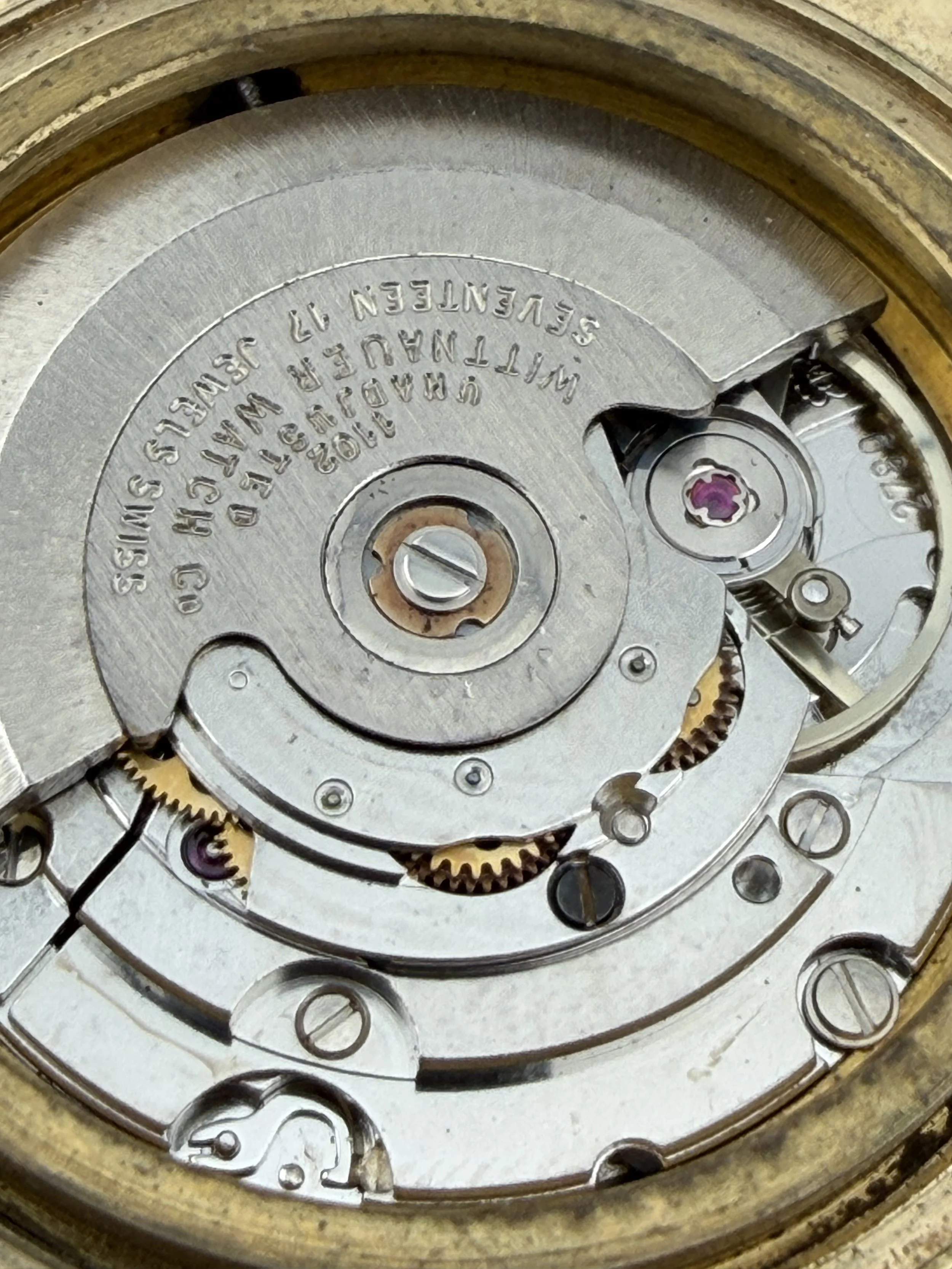
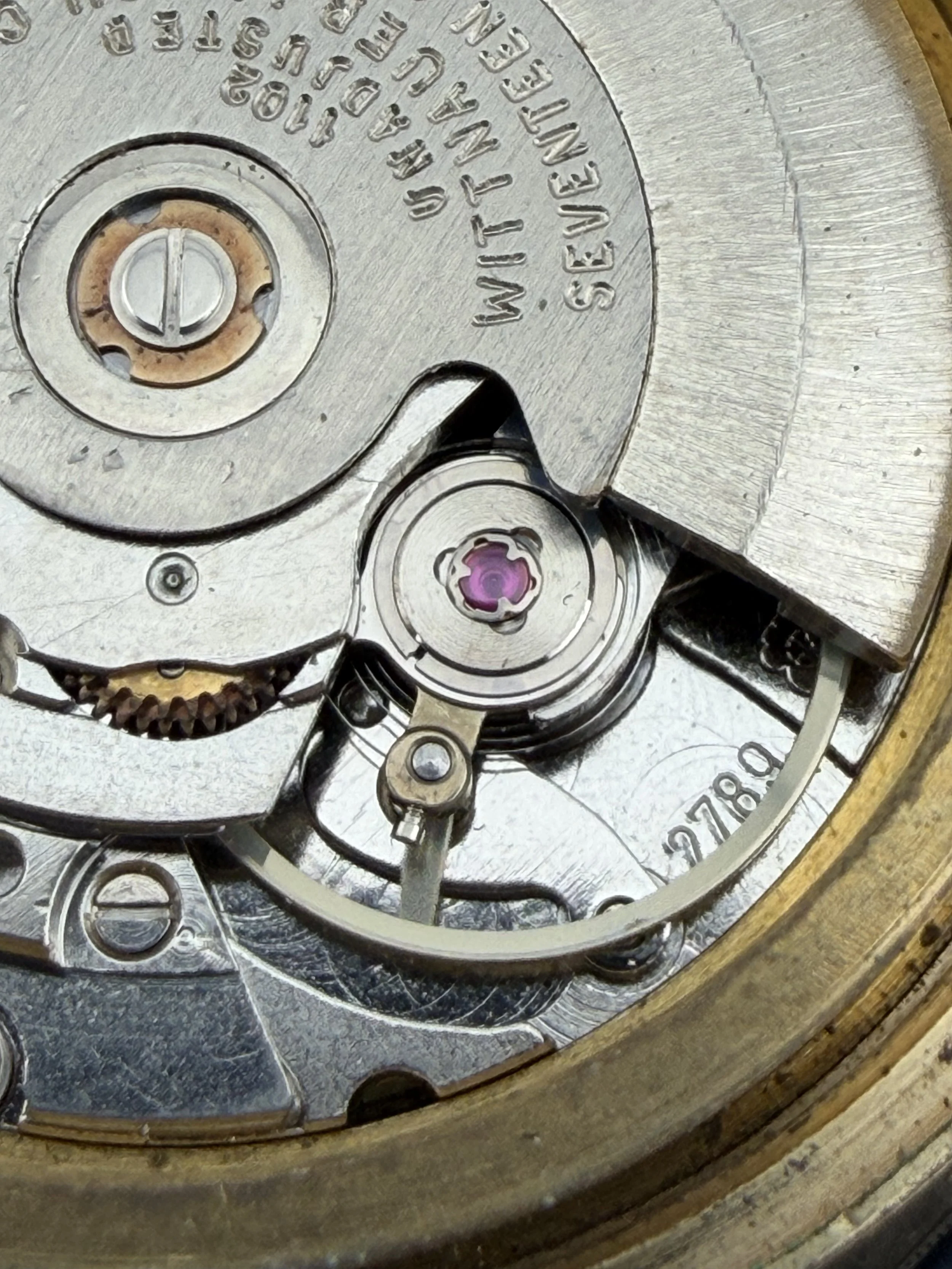
Inside is the Swiss-made ETA Cal. 2789, a 17-jewel automatic movement introduced around the beginning of the 1970s. The 2789 is part of ETA's well-known family of automatic day-date movements and operates at 21,600 vibrations per hour. The movement is marked 1102, corresponding with Wittnauer's model designation, while the caseback is marked Jubilee Watch Co. with reference 1102 H.
Wittnauer has an especially interesting place in North American watch history. Founded in New York in the 19th century, the company developed a strong relationship with Swiss manufacturers and became an important importer and distributor of Swiss watches in the American market. Its long association with Longines eventually became one of the most significant chapters in the company's history, making the vintage Longines-Wittnauer advertising behind this watch particularly fitting.
With its sculpted 1970s case, unusual vertical day-date display and dependable Swiss automatic movement, this is a wonderful example of the bold and often overlooked design language of the 1970s—a watch that feels unmistakably of its era while remaining extremely wearable today.
This is a fantastic example of 1970s Wittnauer design, combining a sculpted cushion-shaped case with one of the era's more unusual day-date layouts. The gold-tone case features a distinctive vertically brushed finish, giving the watch a bold architectural quality that is very characteristic of the period.
The silver-white sunburst dial is beautifully contrasted by chunky, faceted gold-tone hour markers. The real standout, however, is the vertical day-date display at 6 o'clock, with the day shown above the numerical date. It's an unusual configuration that gives the dial a wonderfully distinctive appearance.
Inside is the Swiss-made ETA Cal. 2789, a 17-jewel automatic movement introduced around the beginning of the 1970s. The 2789 is part of ETA's well-known family of automatic day-date movements and operates at 21,600 vibrations per hour. The movement is marked 1102, corresponding with Wittnauer's model designation, while the caseback is marked Jubilee Watch Co. with reference 1102 H.
Wittnauer has an especially interesting place in North American watch history. Founded in New York in the 19th century, the company developed a strong relationship with Swiss manufacturers and became an important importer and distributor of Swiss watches in the American market. Its long association with Longines eventually became one of the most significant chapters in the company's history, making the vintage Longines-Wittnauer advertising behind this watch particularly fitting.
With its sculpted 1970s case, unusual vertical day-date display and dependable Swiss automatic movement, this is a wonderful example of the bold and often overlooked design language of the 1970s—a watch that feels unmistakably of its era while remaining extremely wearable today.