

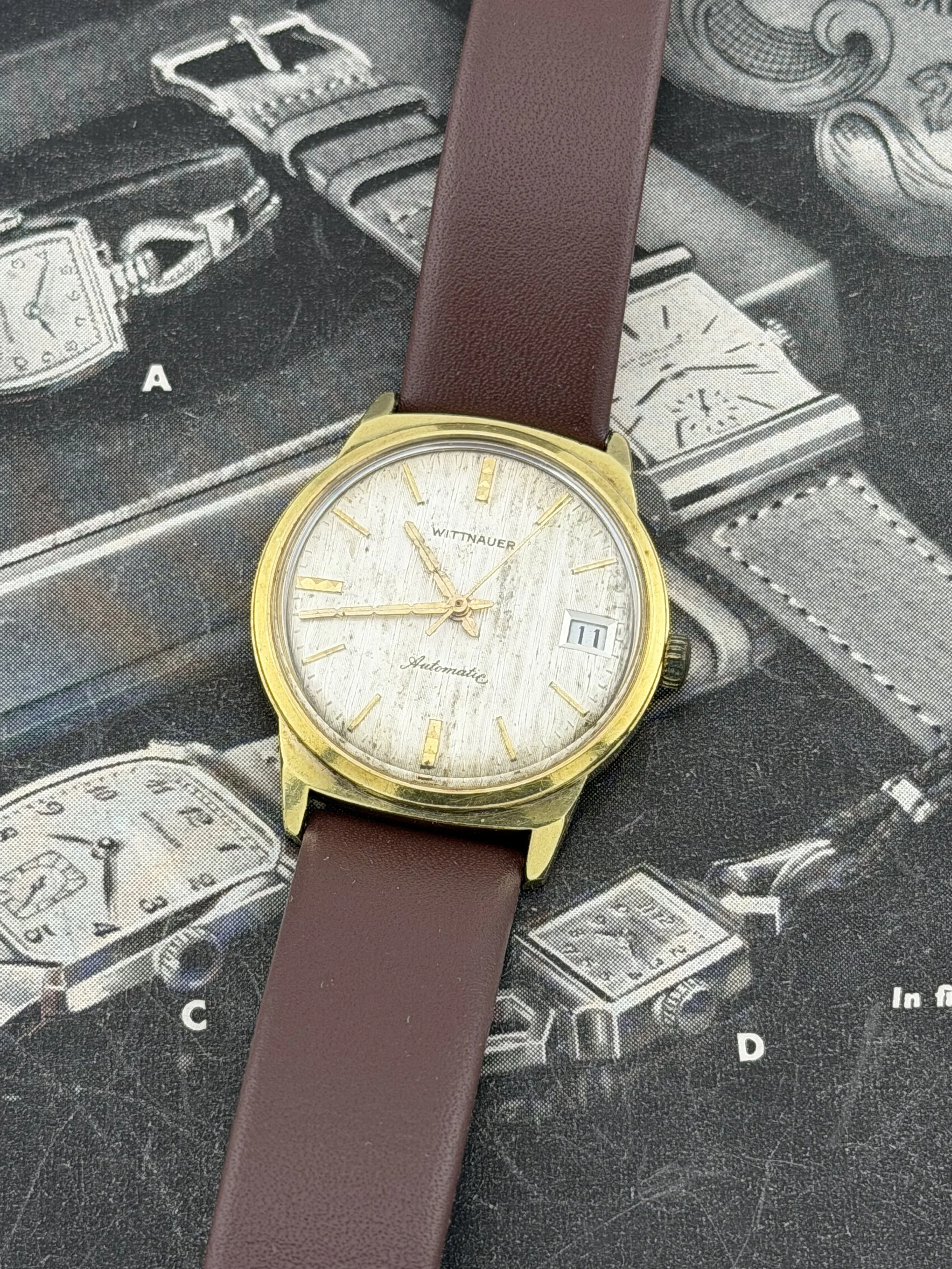
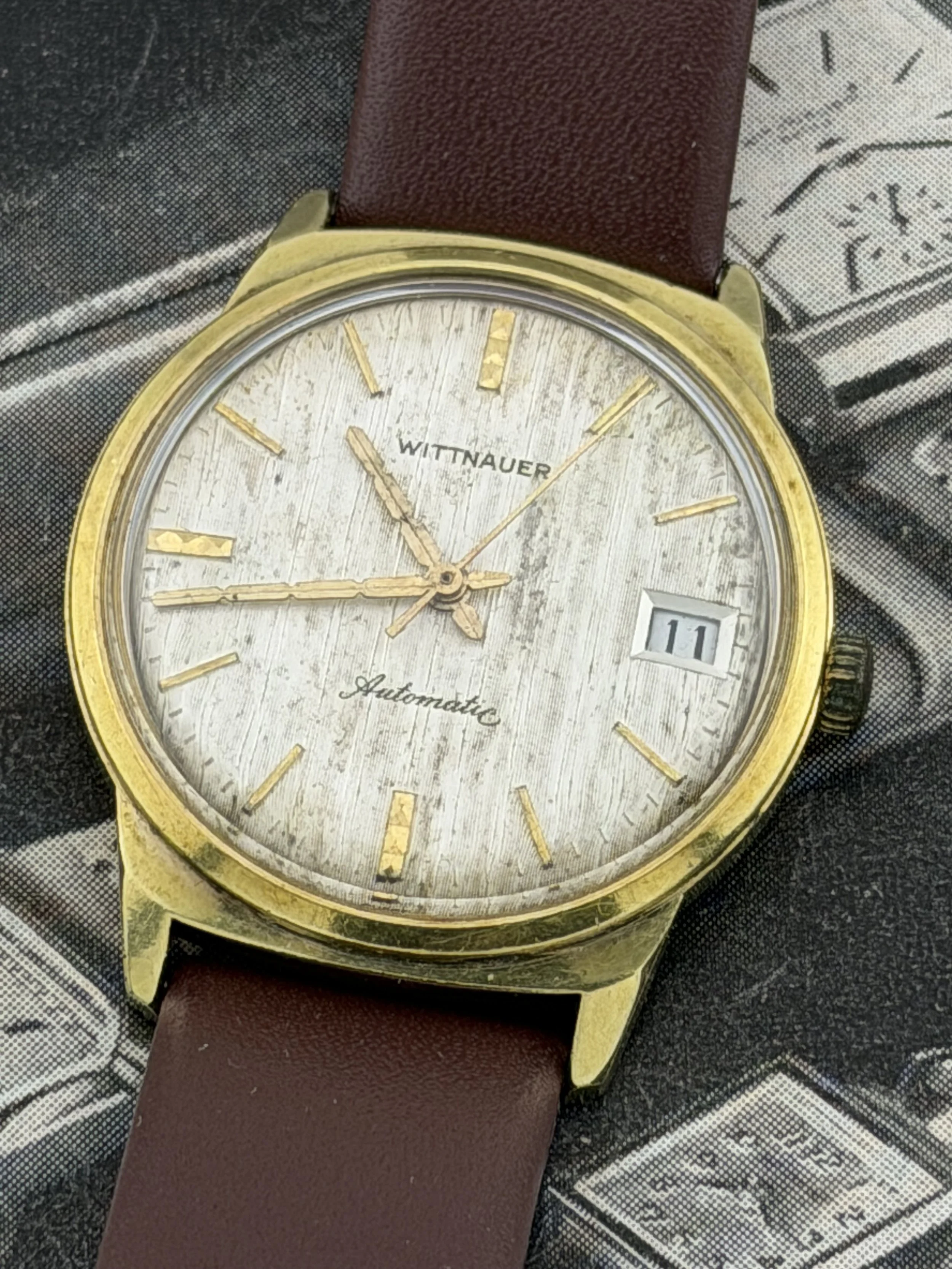
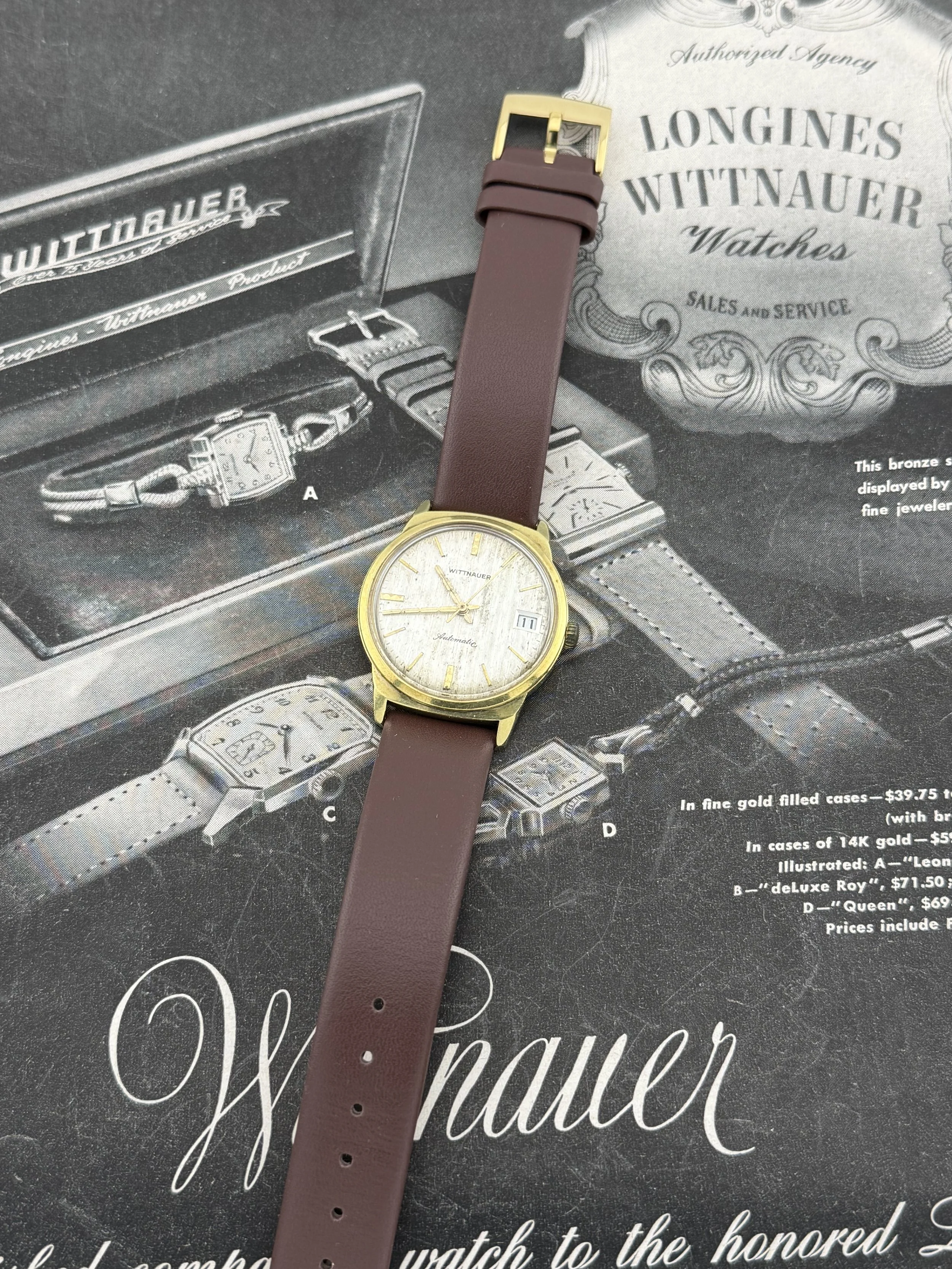
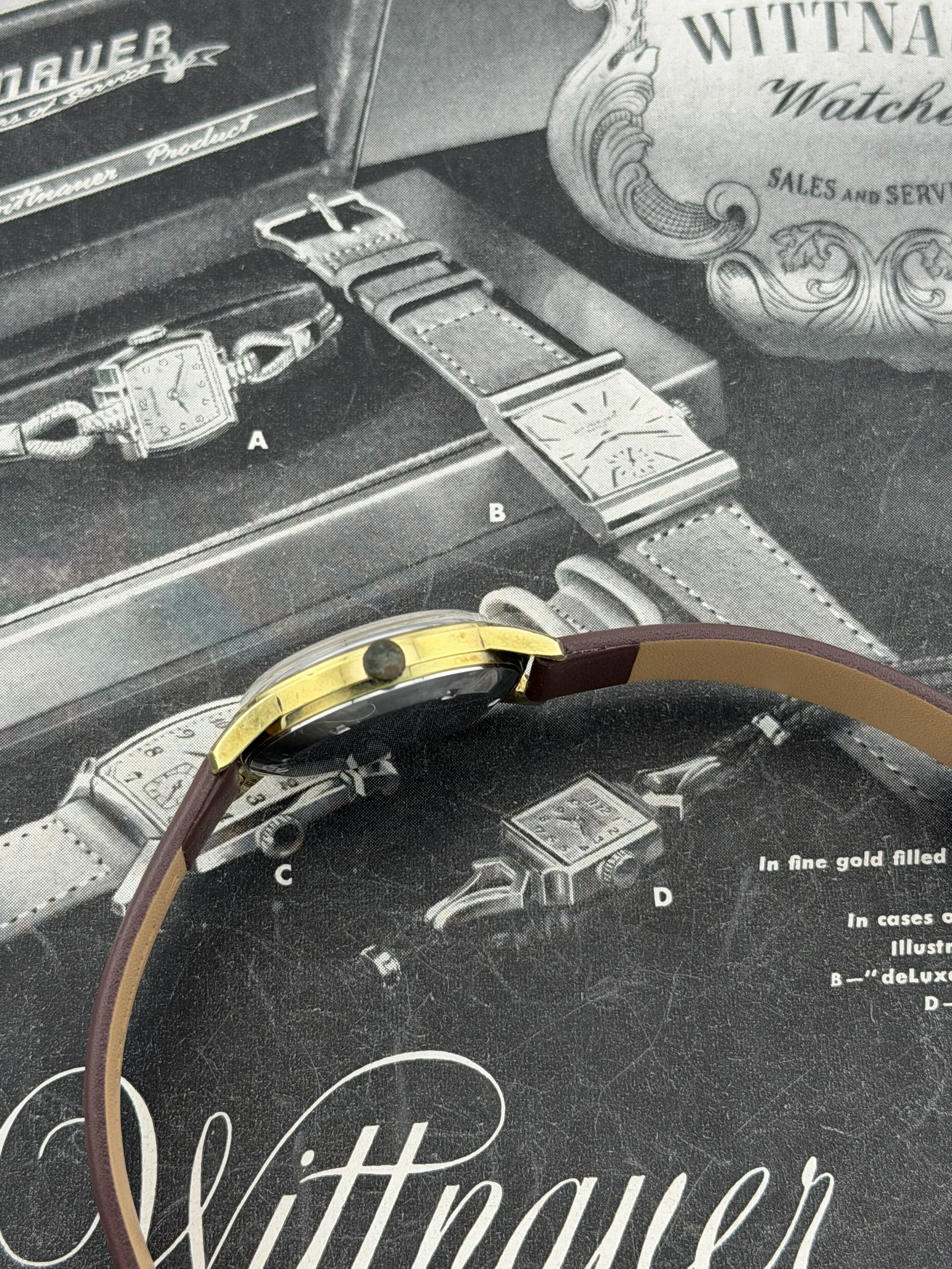
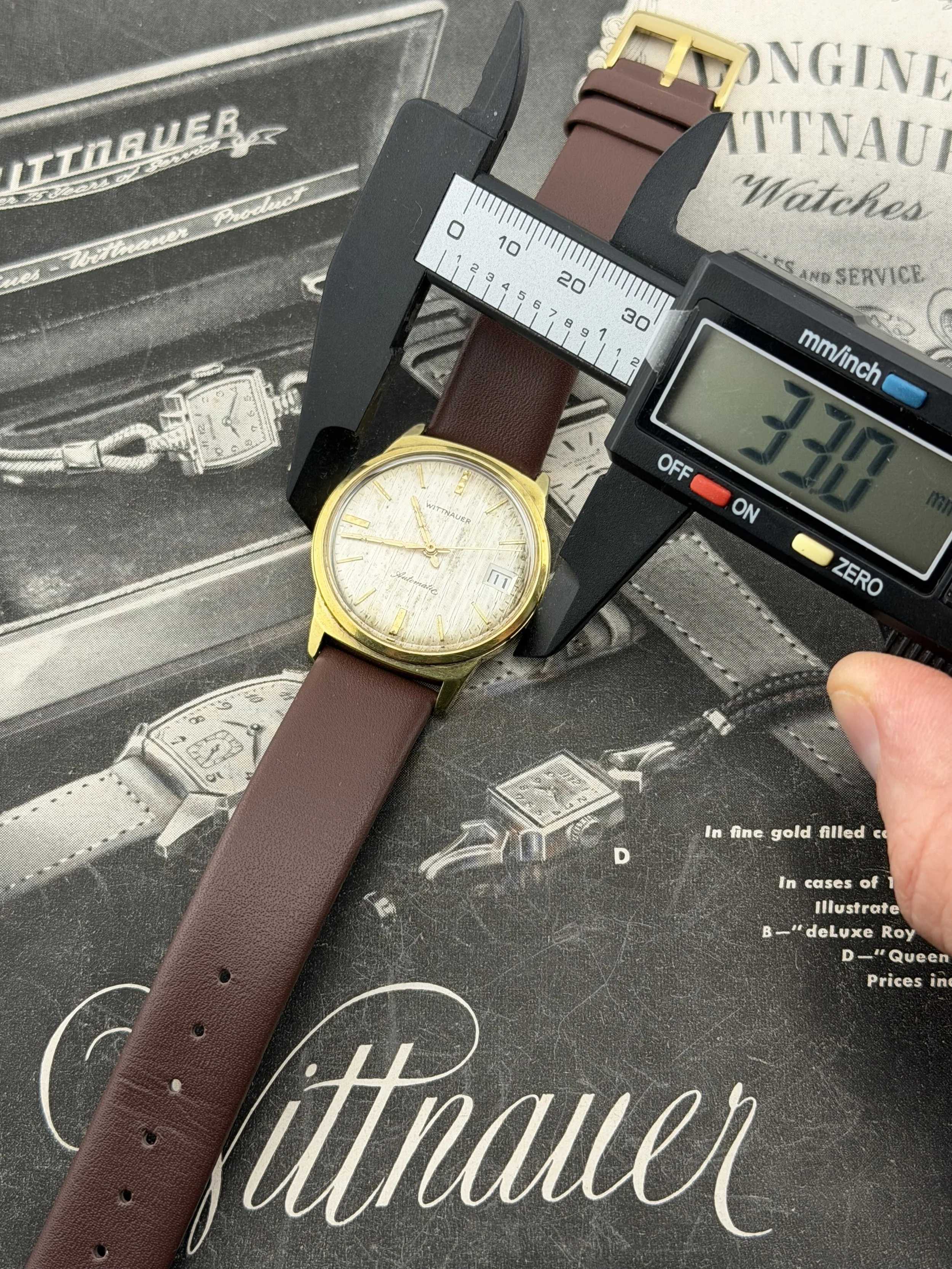
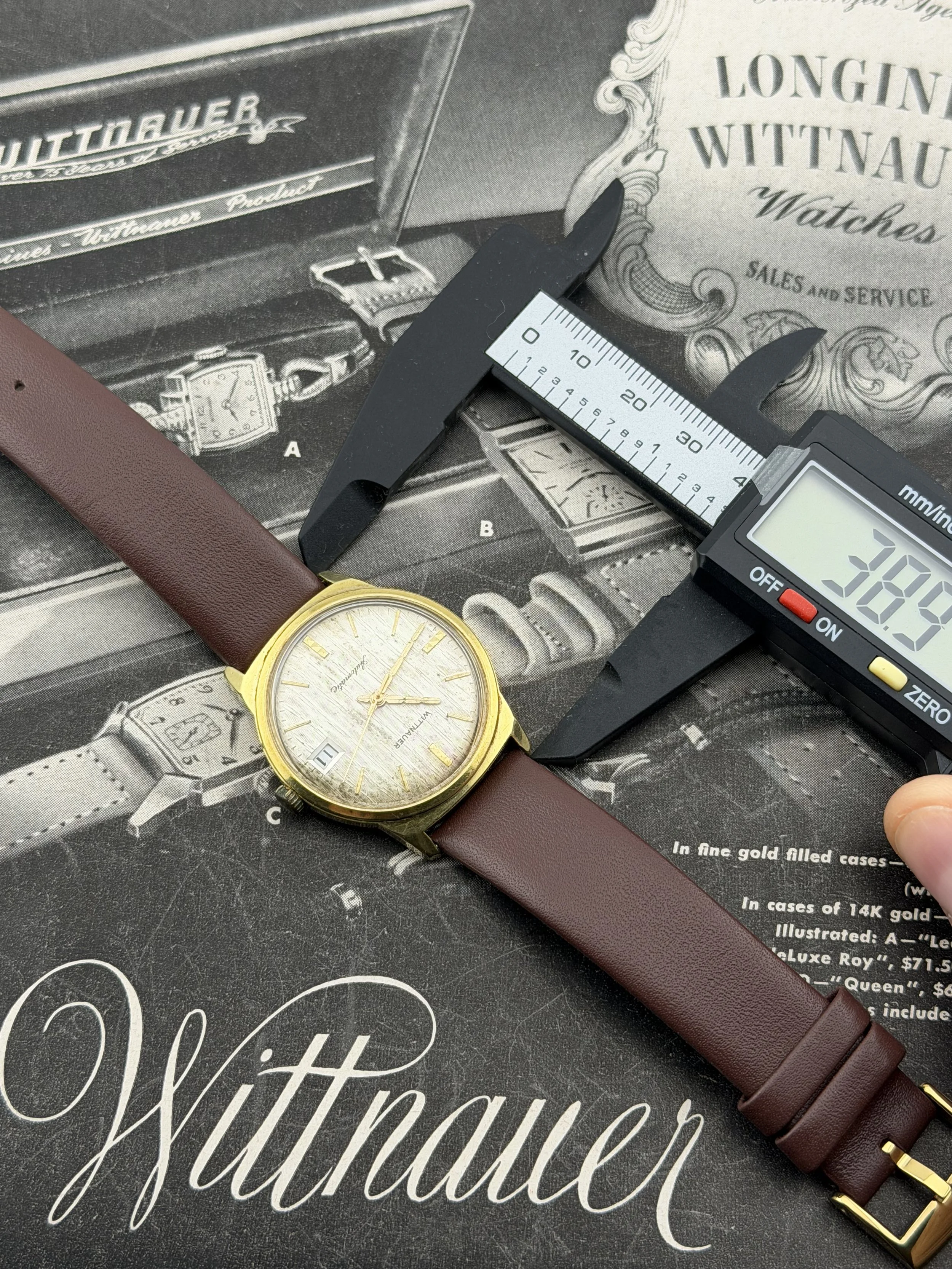
This is a particularly interesting vintage Wittnauer automatic from the late 1960s, with a dial that has developed an exceptionally unusual form of natural patina. Rather than simply aging darker or developing conventional spotting, the silver/champagne dial has taken on a berch-bark-like texture and coloration, creating a distinctive organic appearance that makes this example stand apart from the typical Wittnauer dials of the period.
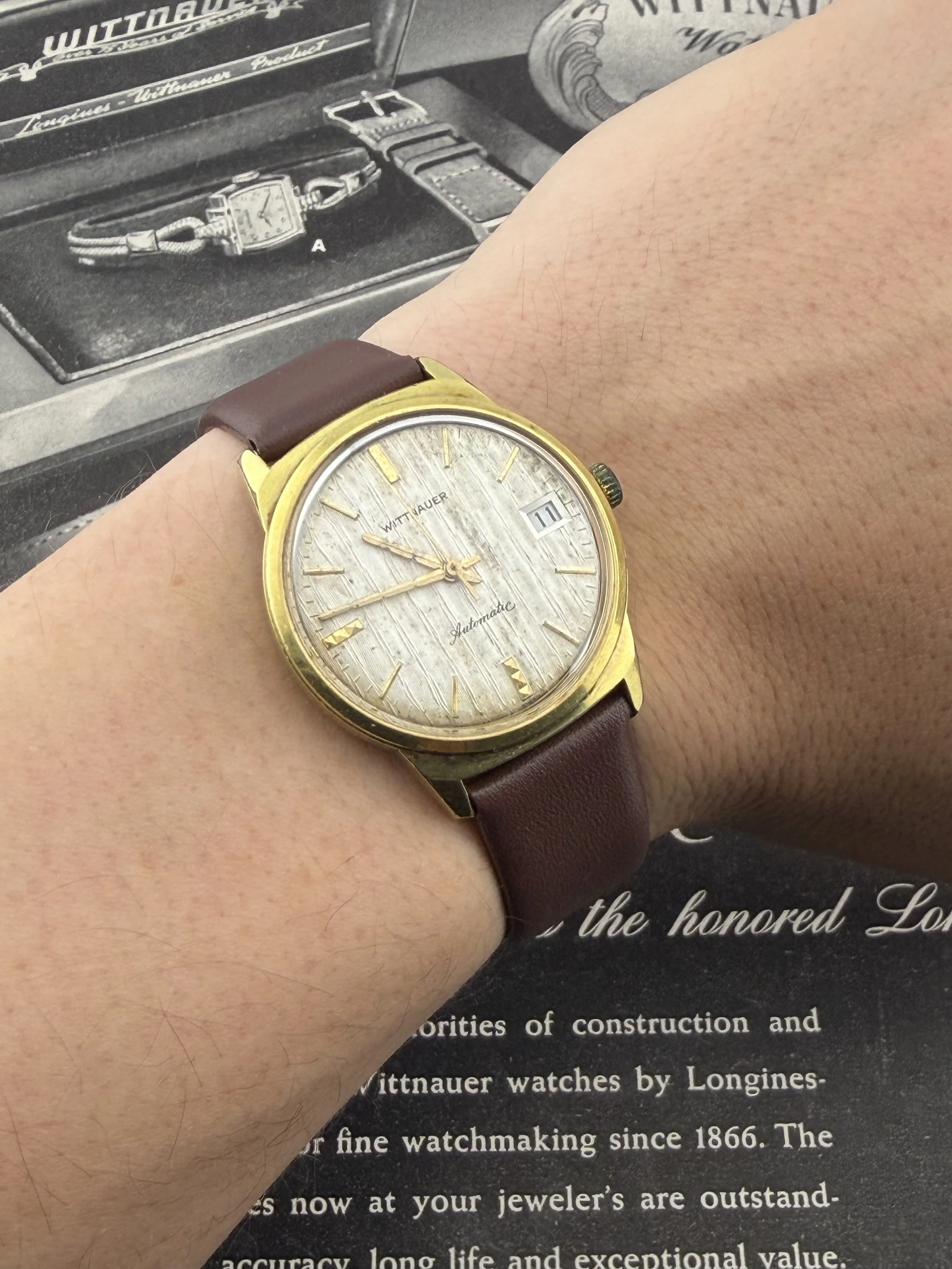
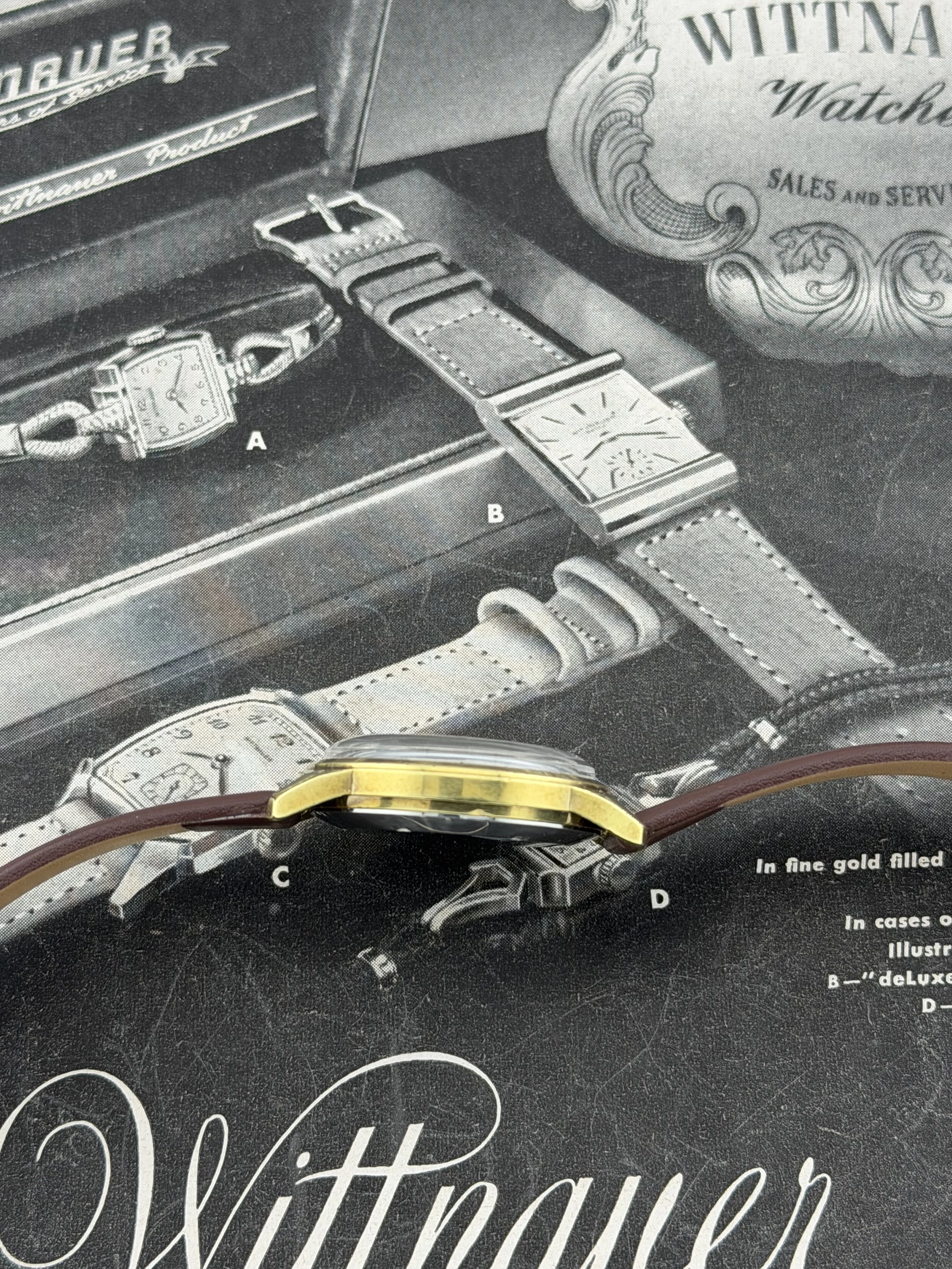
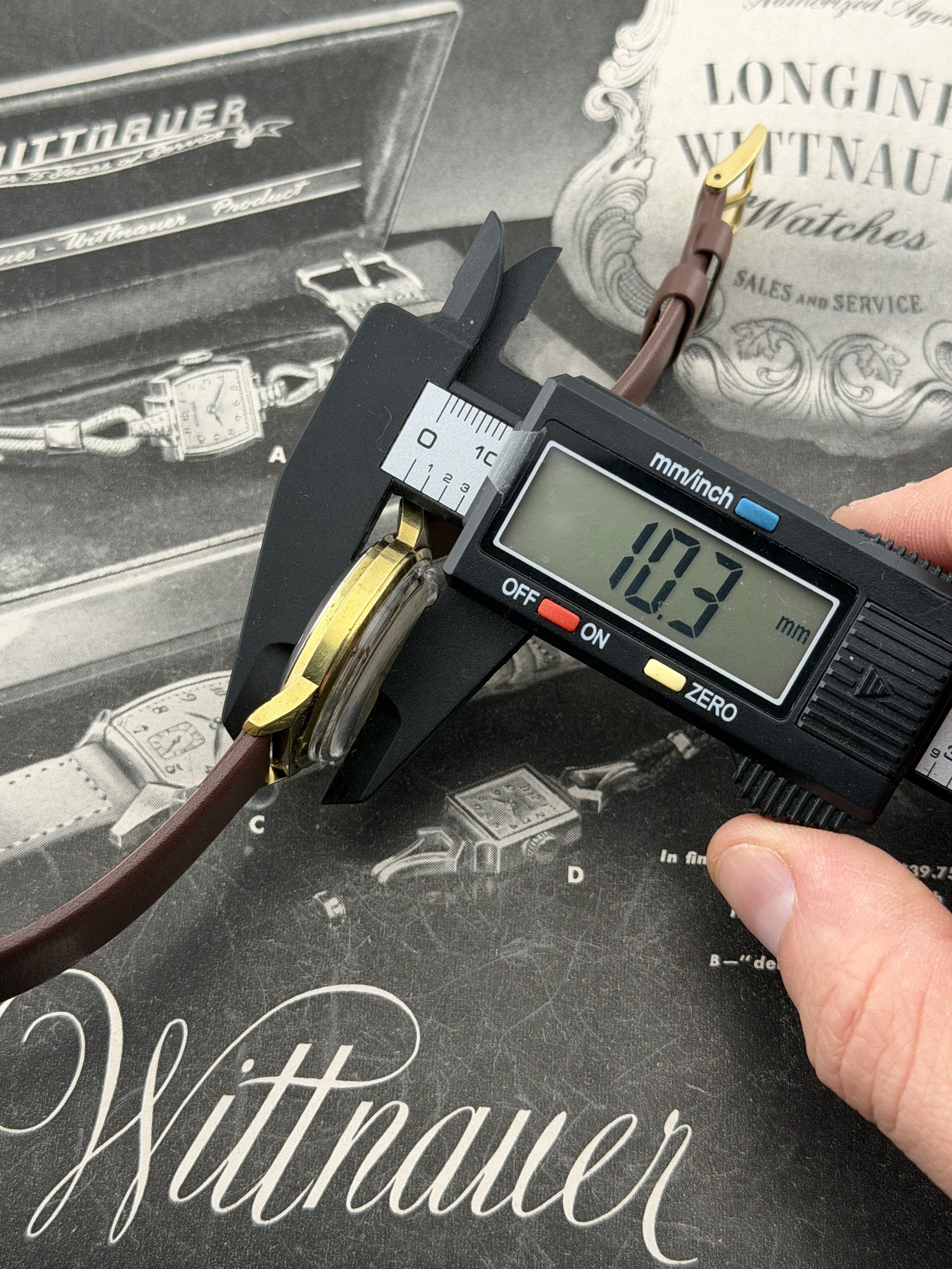
Measuring approximately 33.0mm across, 38.9mm lug-to-lug and 10.3mm thick, the watch has classic late-1960s proportions. The case combines a gold-tone upper section with a stainless-steel case back, giving the watch a refined dress-watch appearance while remaining relatively understated.
The dial is the real star. Originally featuring a vertically textured or linen-style surface, decades of aging have transformed it into what looks almost like birch bark, with irregular variations across the surface that catch the light differently depending on the angle. The gold-tone hour markers and matching baton hands work beautifully against this unusual patina, while the date window at 3 o'clock provides a practical touch.
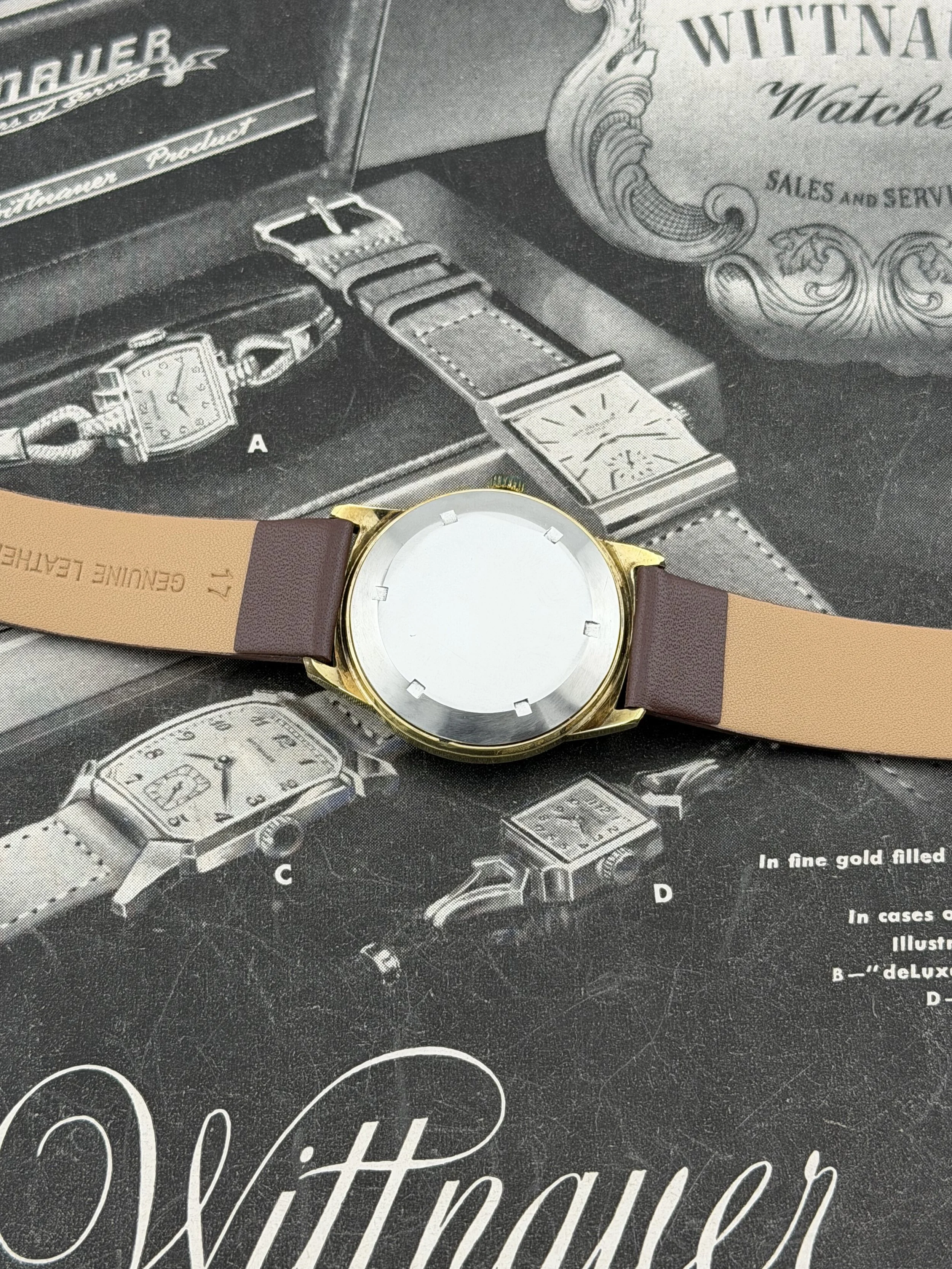
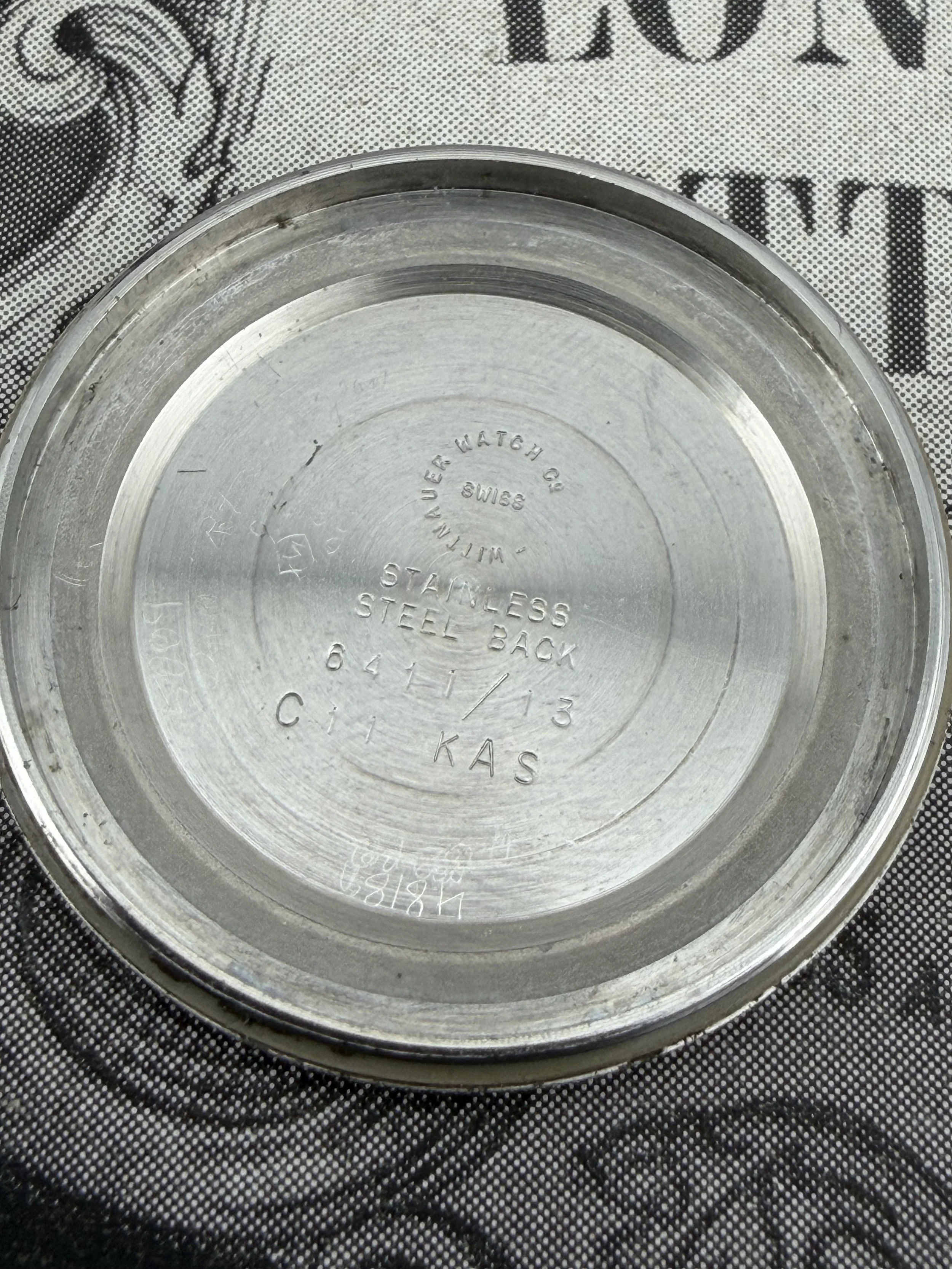
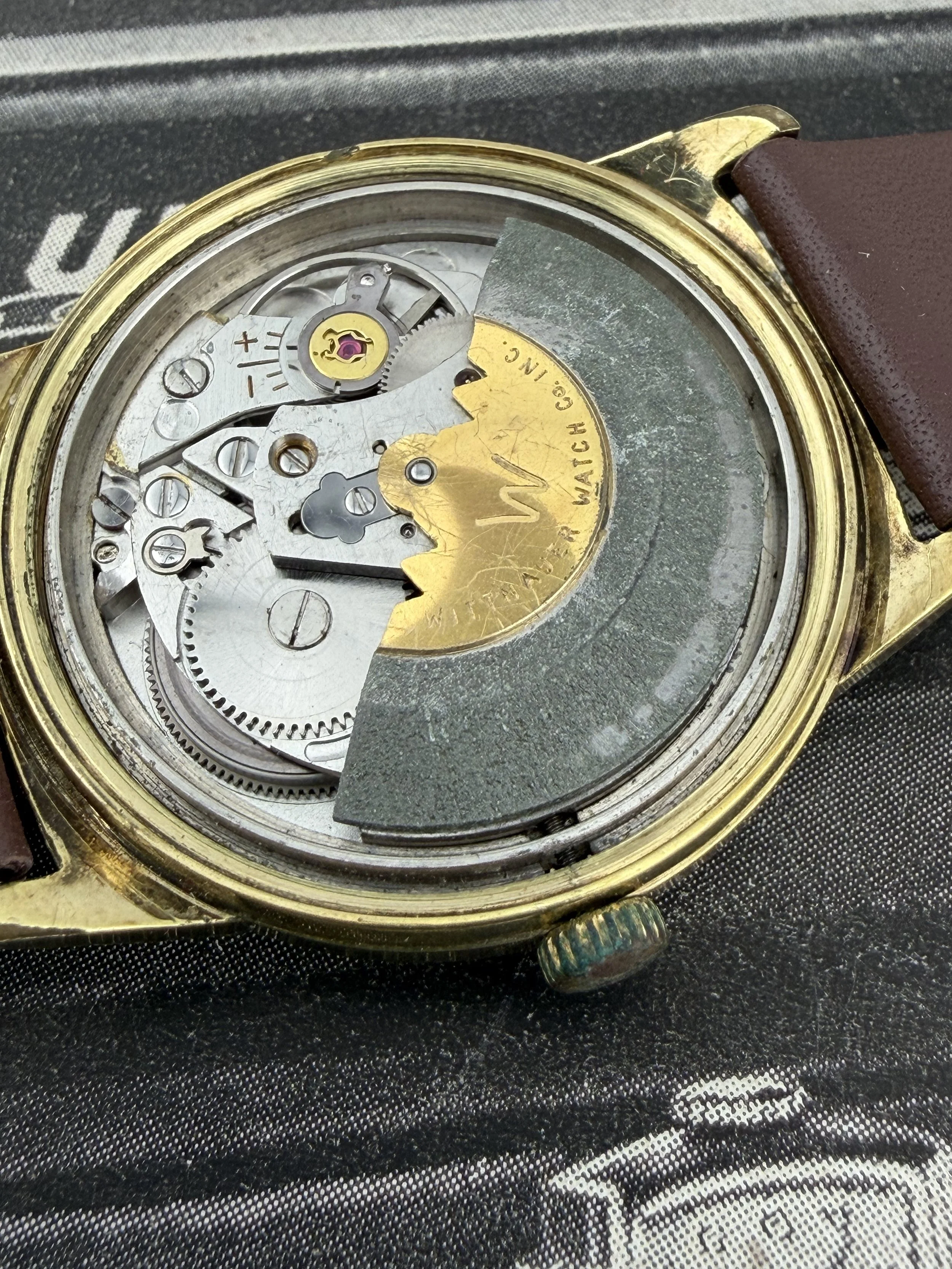
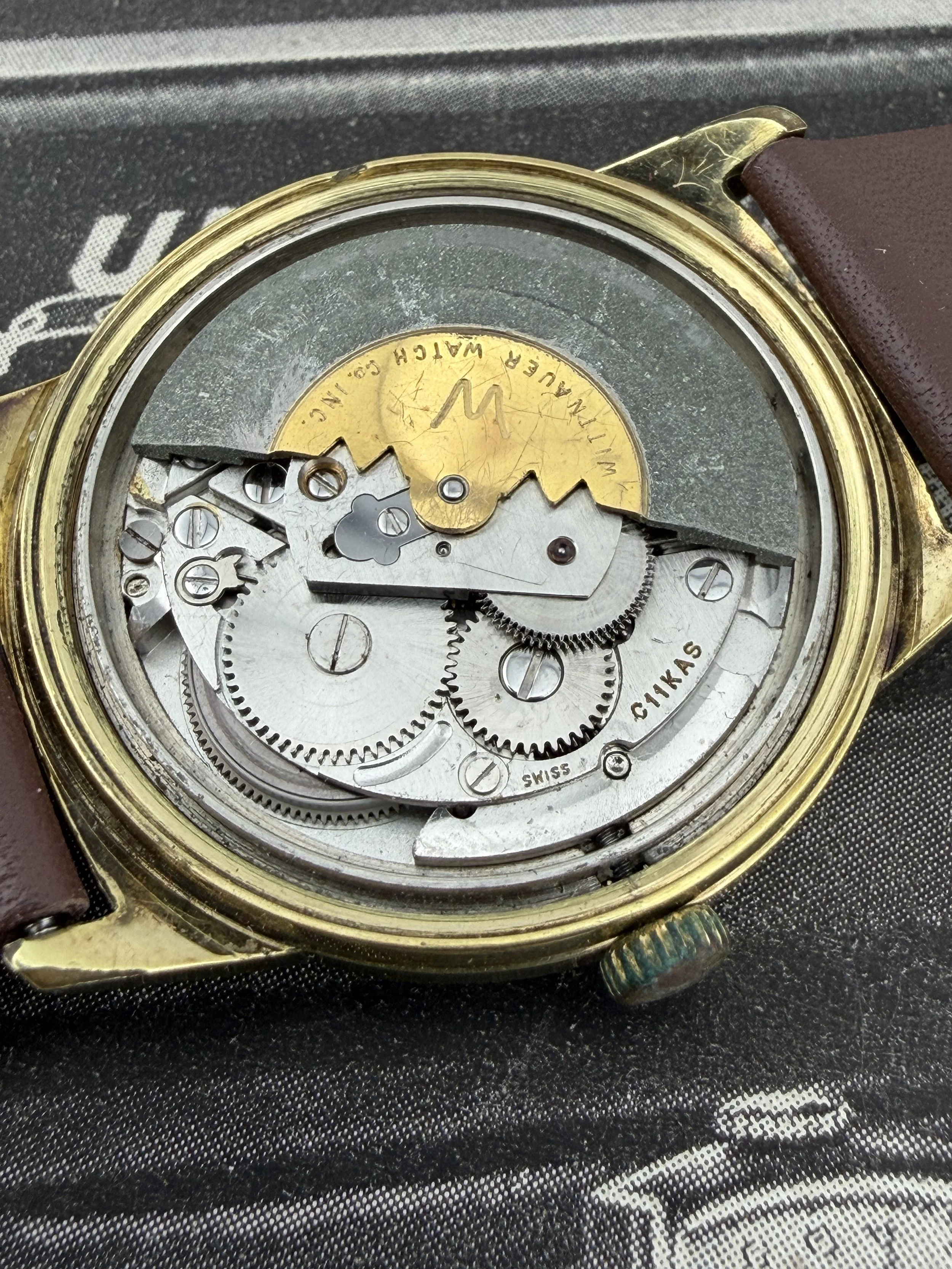
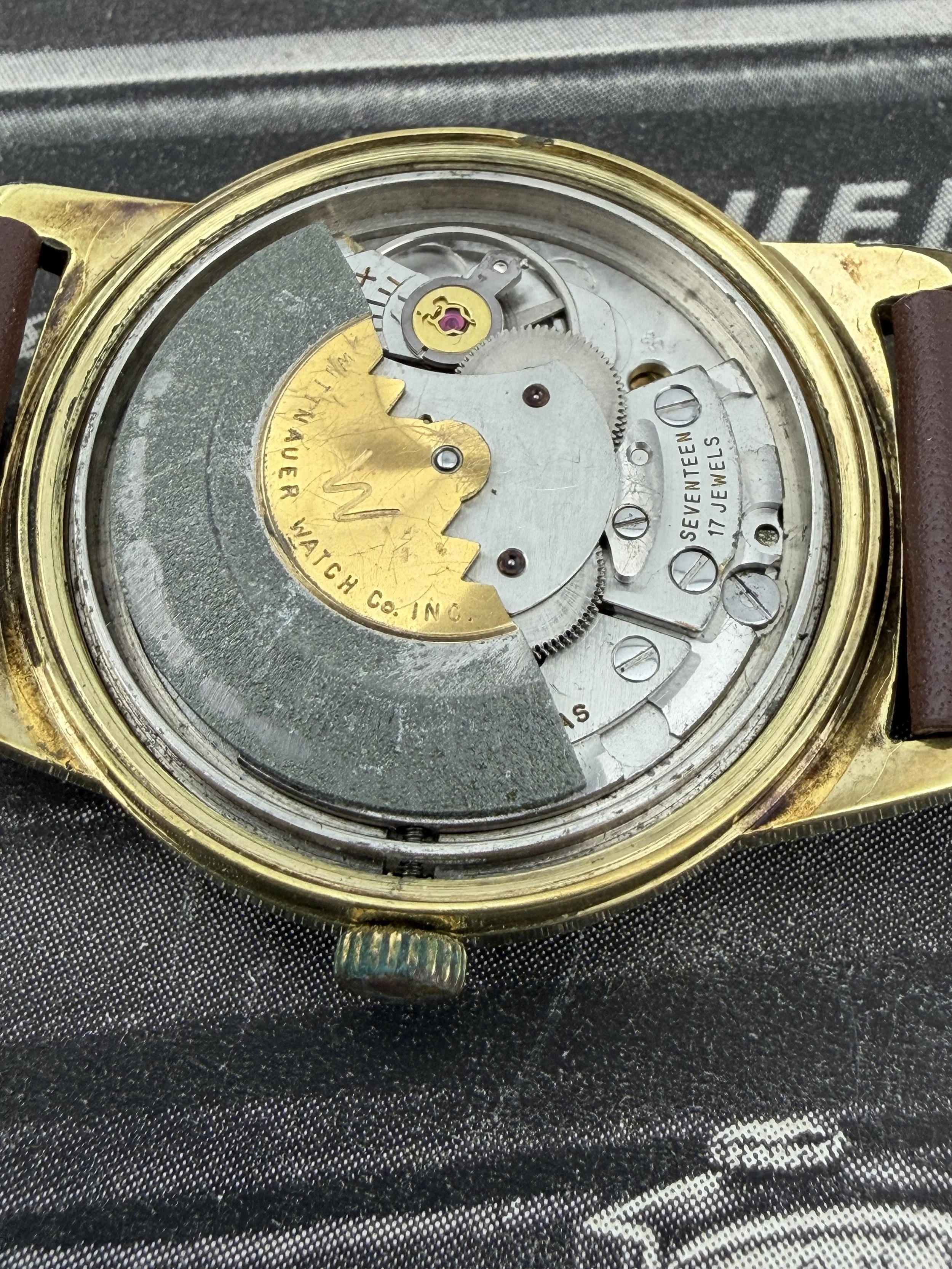
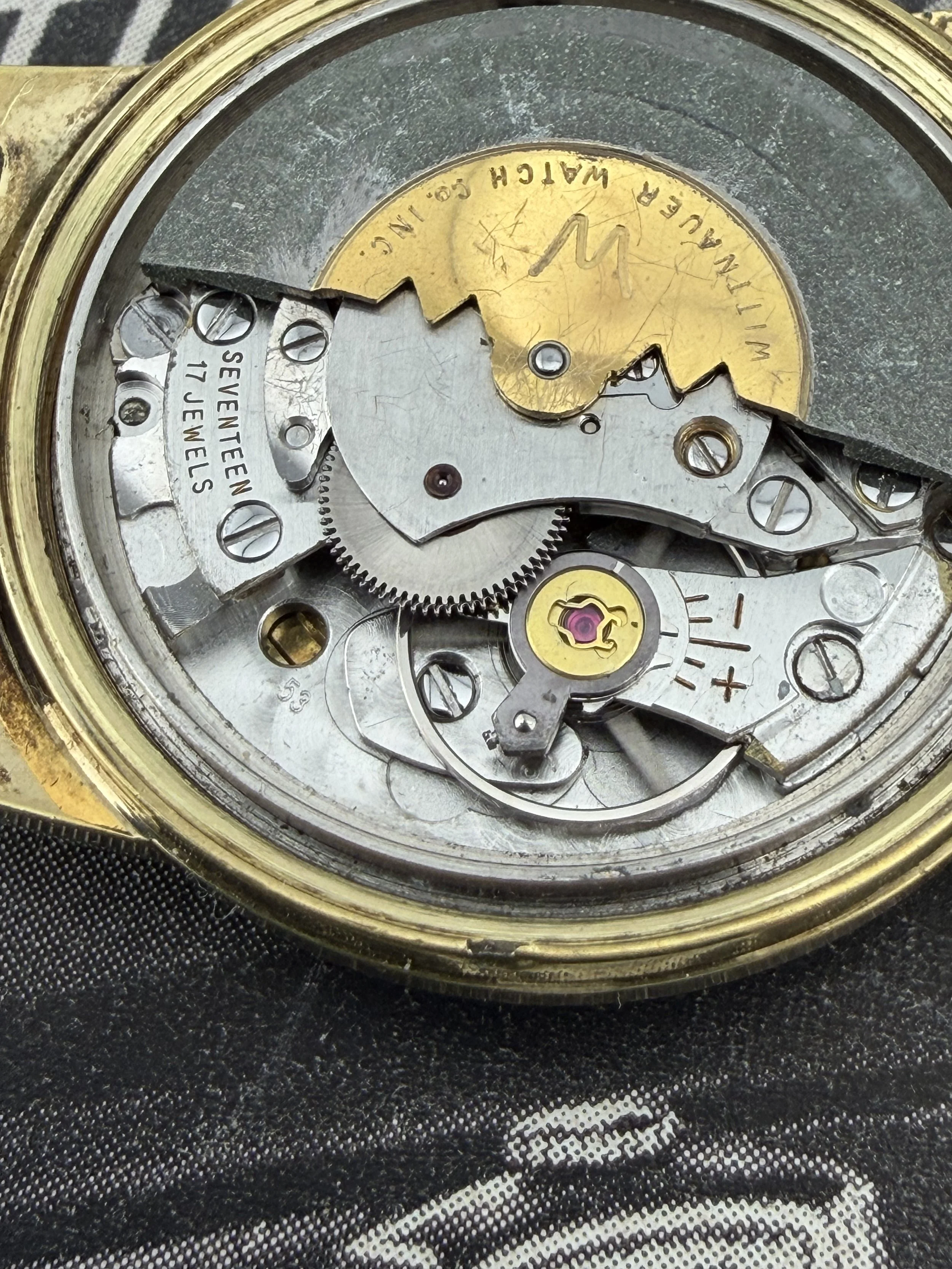
Inside is the 17-jewel Wittnauer C11KAS automatic movement, operating at approximately 19,800 beats per hour with a power reserve of roughly 44 hours. The movement belongs to a fascinating family of Swiss automatic calibres associated with the Record/Longines lineage, and this particular movement is identified beneath the Wittnauer rotor. The case back is marked Wittnauer Watch Co. Swiss, with reference 6411 / 13 and the C11KAS designation.
Wittnauer was closely connected to Longines during this period, making these late-1960s watches an interesting part of the company's history as it transitioned further into the Longines-Wittnauer era. The combination of Swiss automatic engineering and distinctly American-market design gives Wittnauer watches from this period a character all their own.
But ultimately, it is the dial that makes this particular example special. The birch-bark-like patina is highly unusual and gives the watch an almost natural, textured appearance that you simply cannot reproduce with a modern refinished dial.
A wonderfully distinctive late-1960s Wittnauer, combining a 17-jewel Swiss automatic movement with one of the most unusual naturally patinated dials we've come across.