

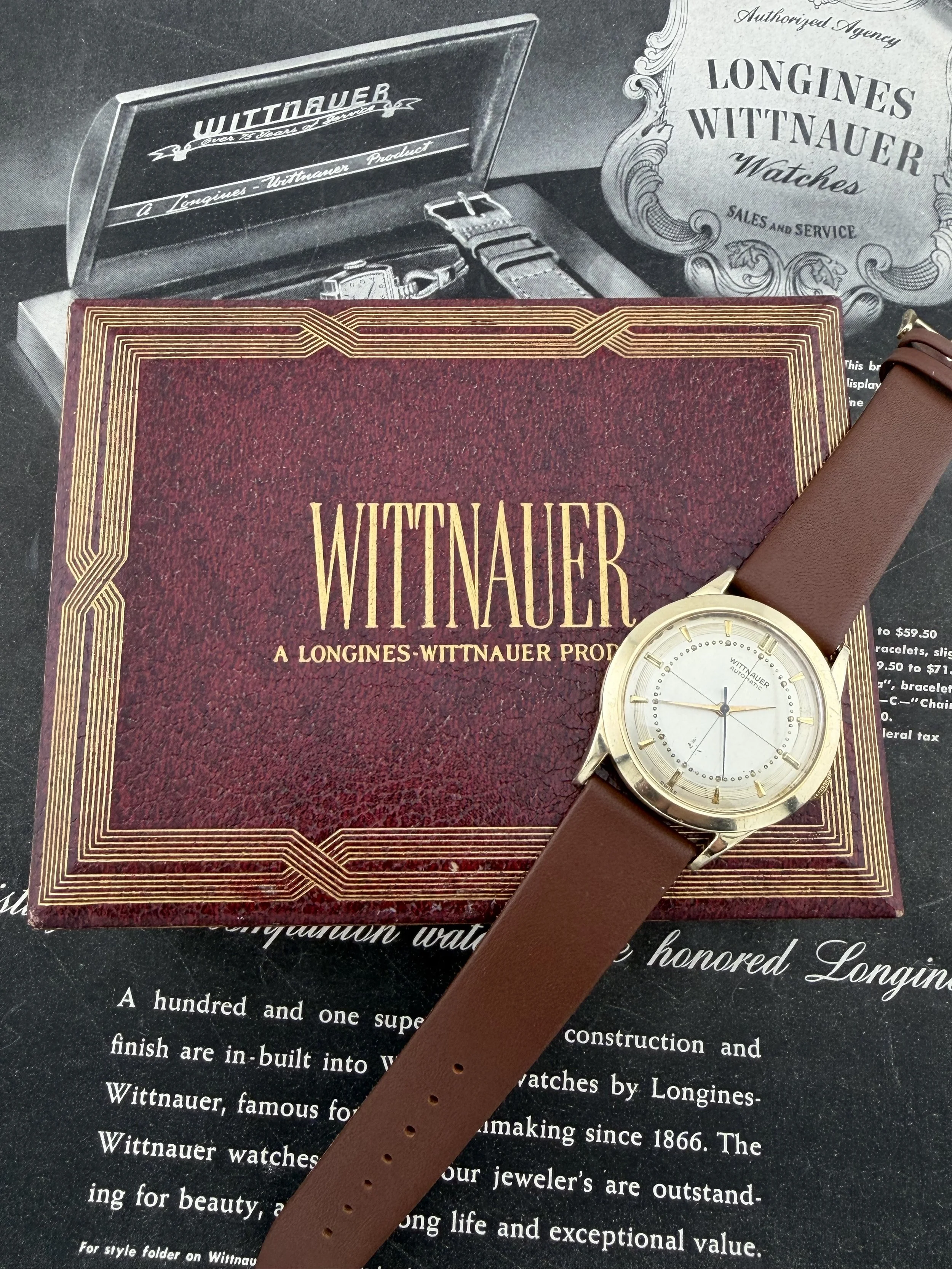
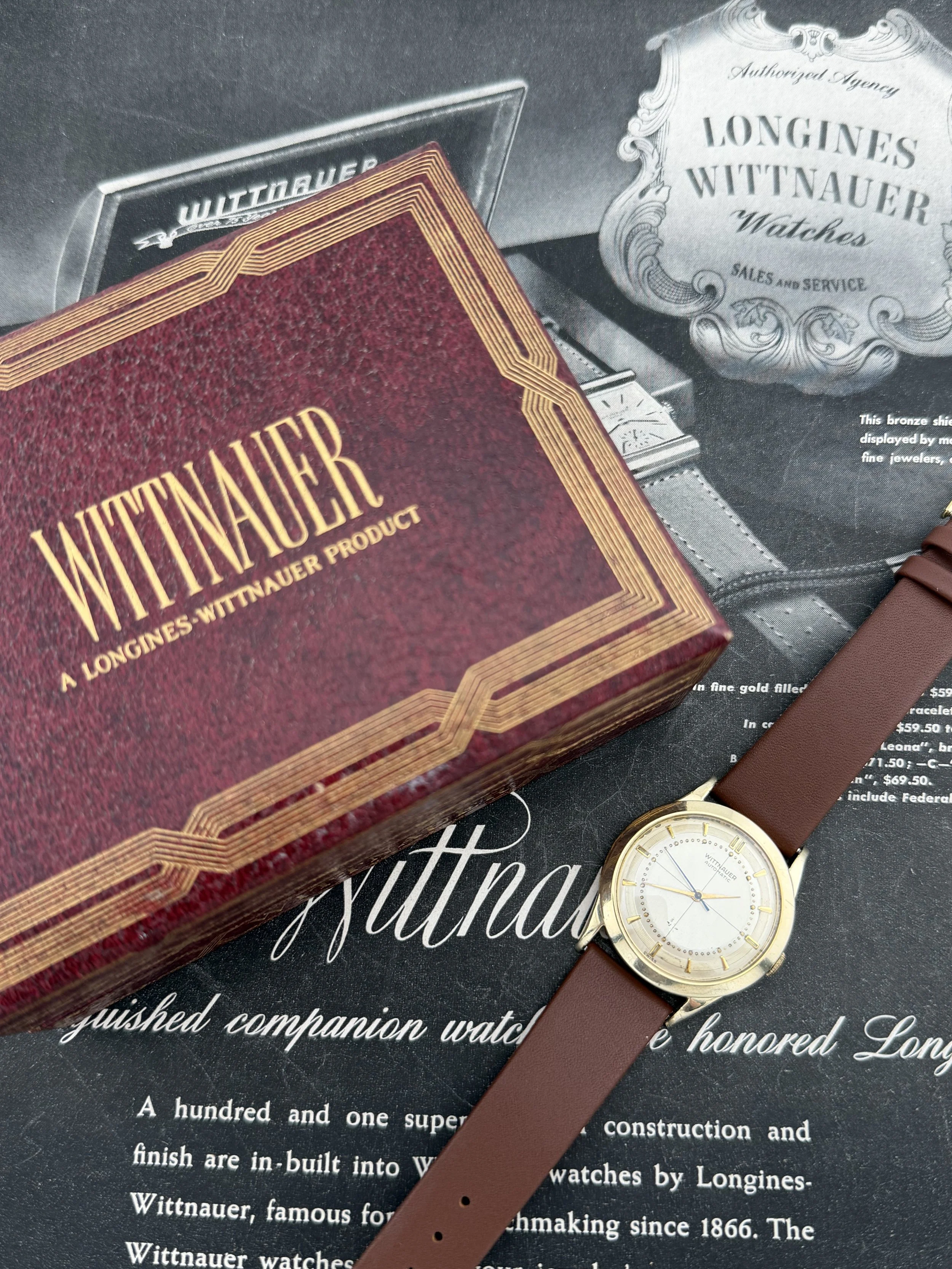
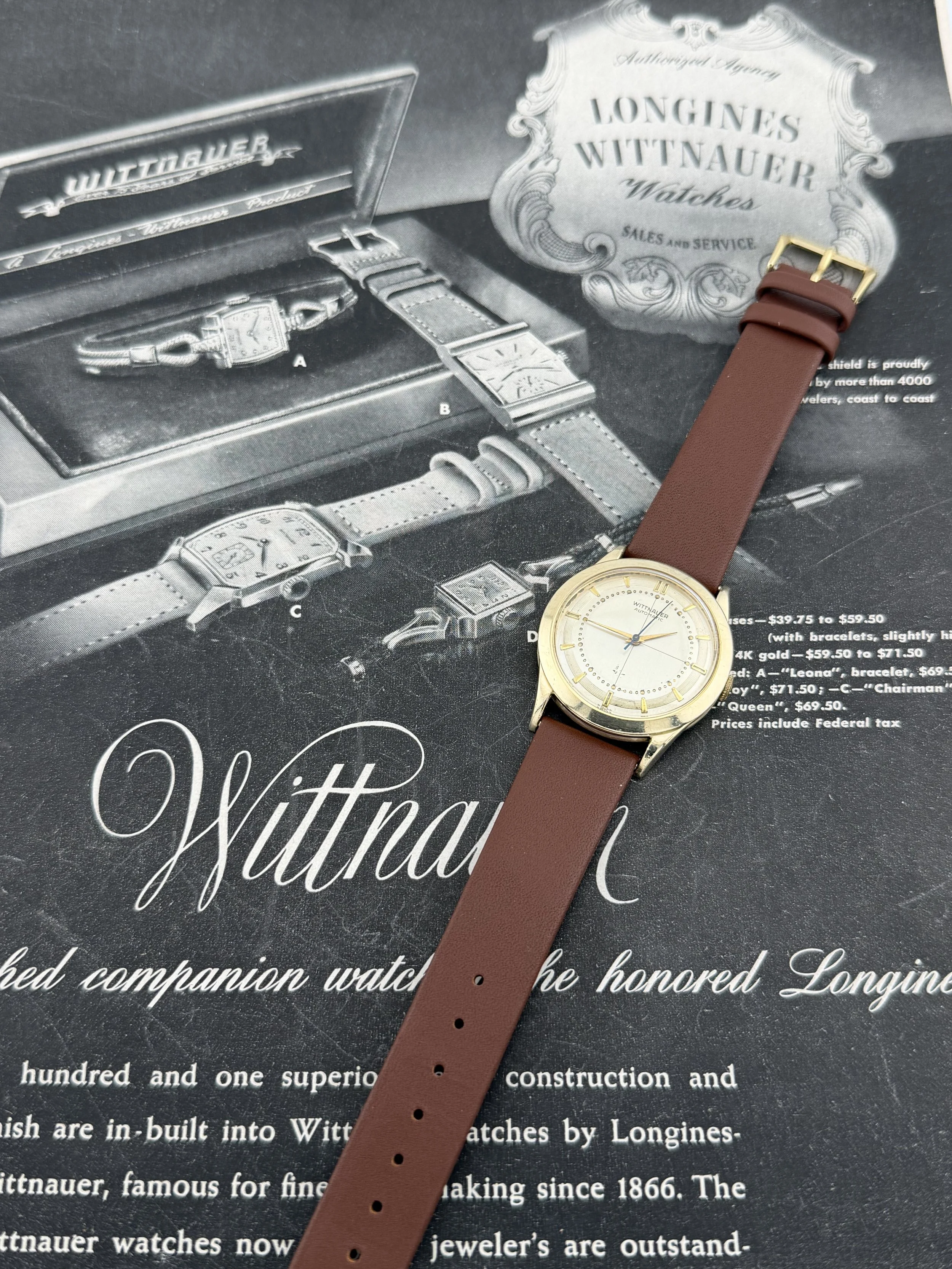
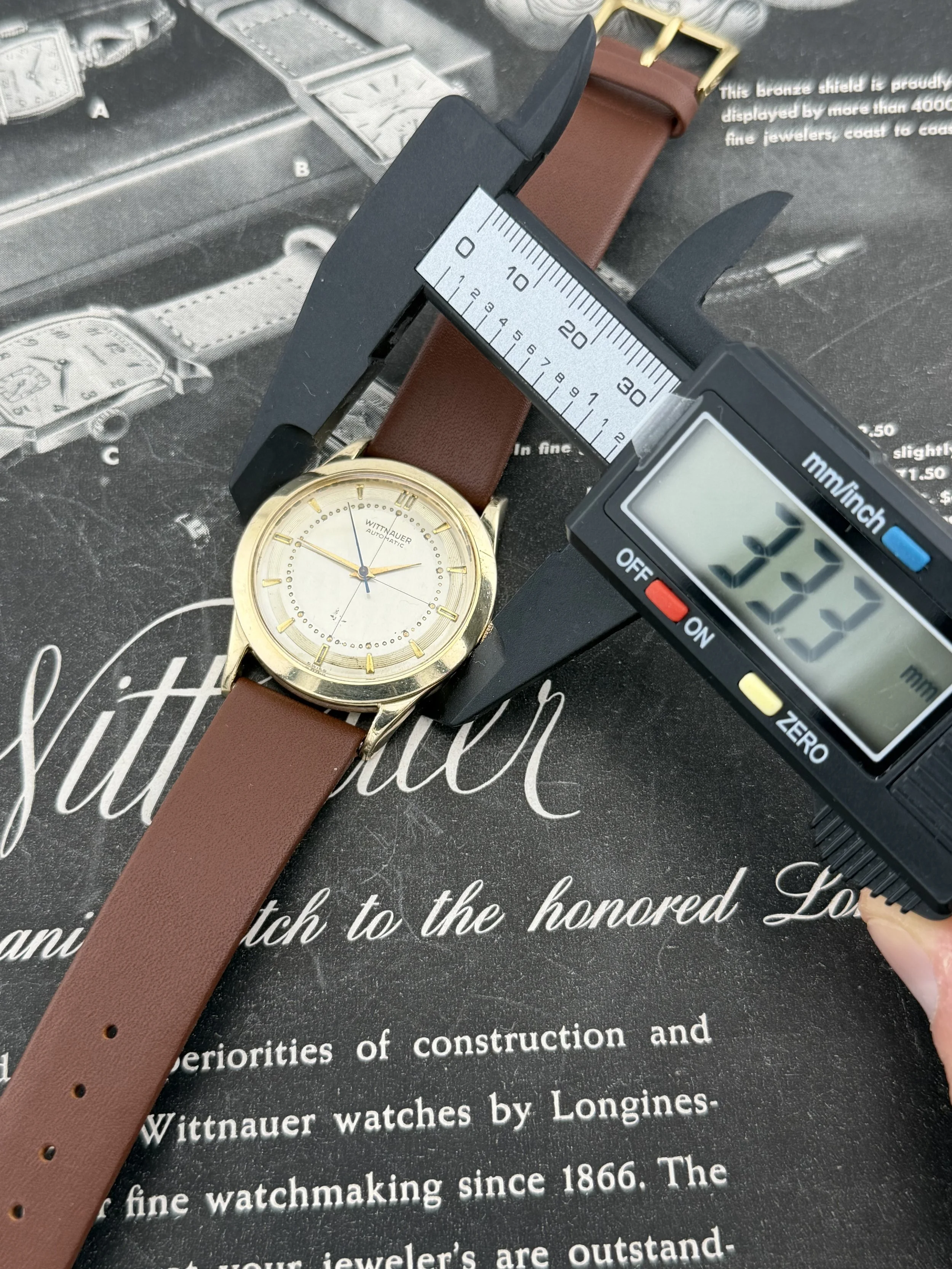
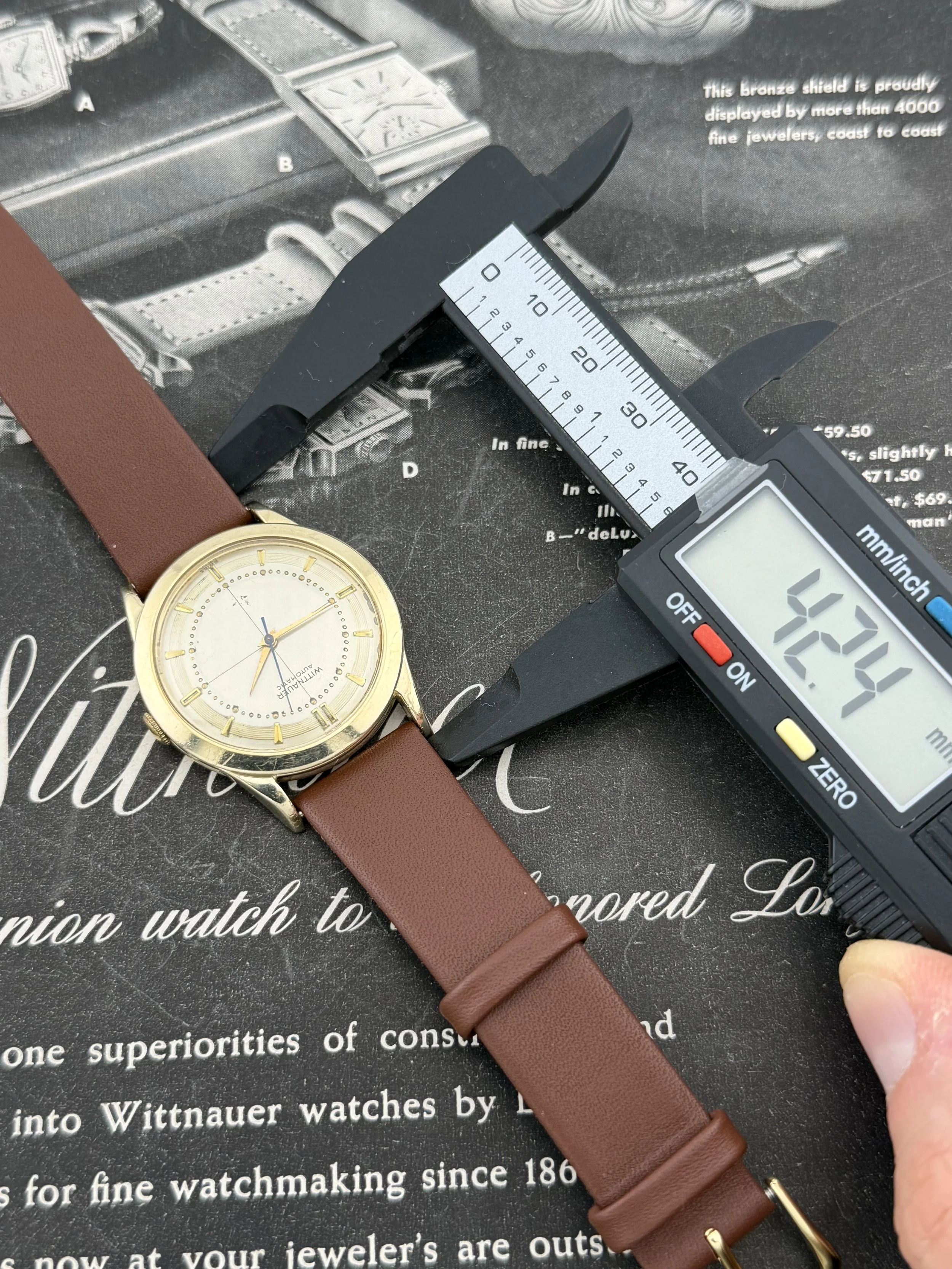
This vintage Wittnauer Automatic is an elegant example of postwar American-market Swiss watchmaking, combining refined mid-century styling with a reliable Swiss automatic movement. As the dial and original presentation box indicate, this watch was sold under Wittnauer, a Longines-Wittnauer product, reflecting the close relationship between Wittnauer and the prestigious Swiss manufacturer Longines. For decades, Wittnauer served as Longines’ American partner and importer, offering well-made Swiss watches that delivered much of the quality and heritage of Longines at a more accessible price point.
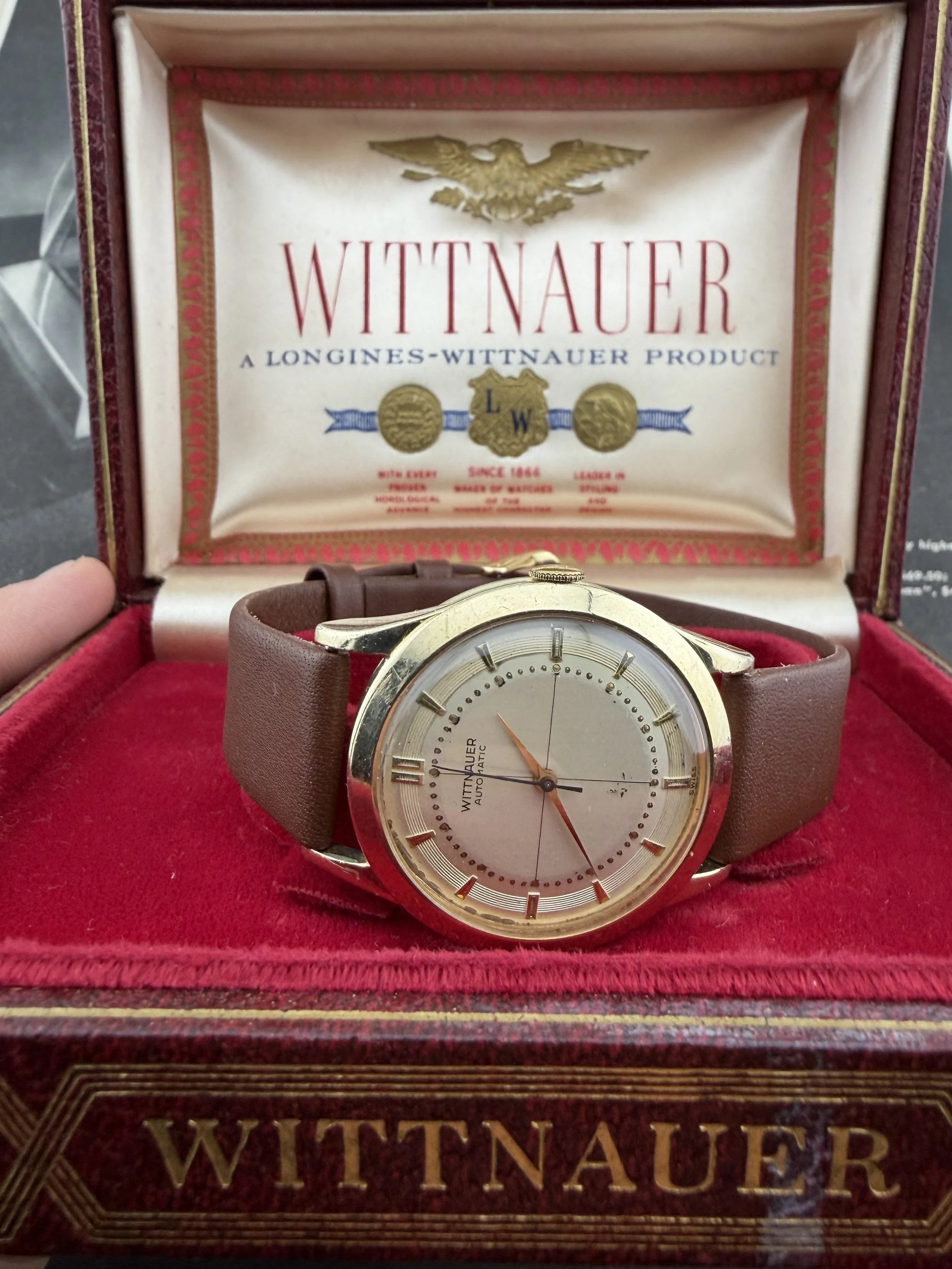
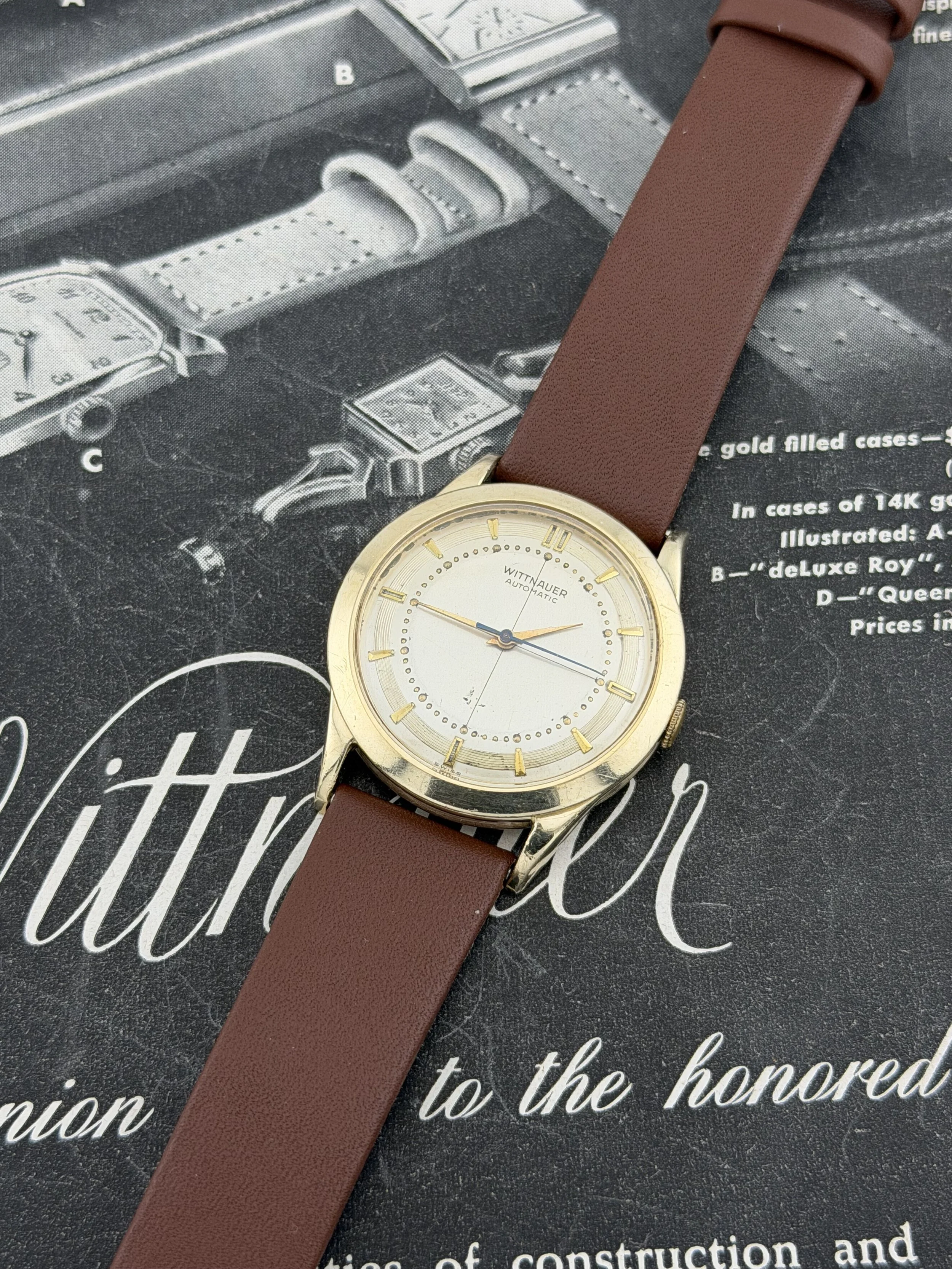
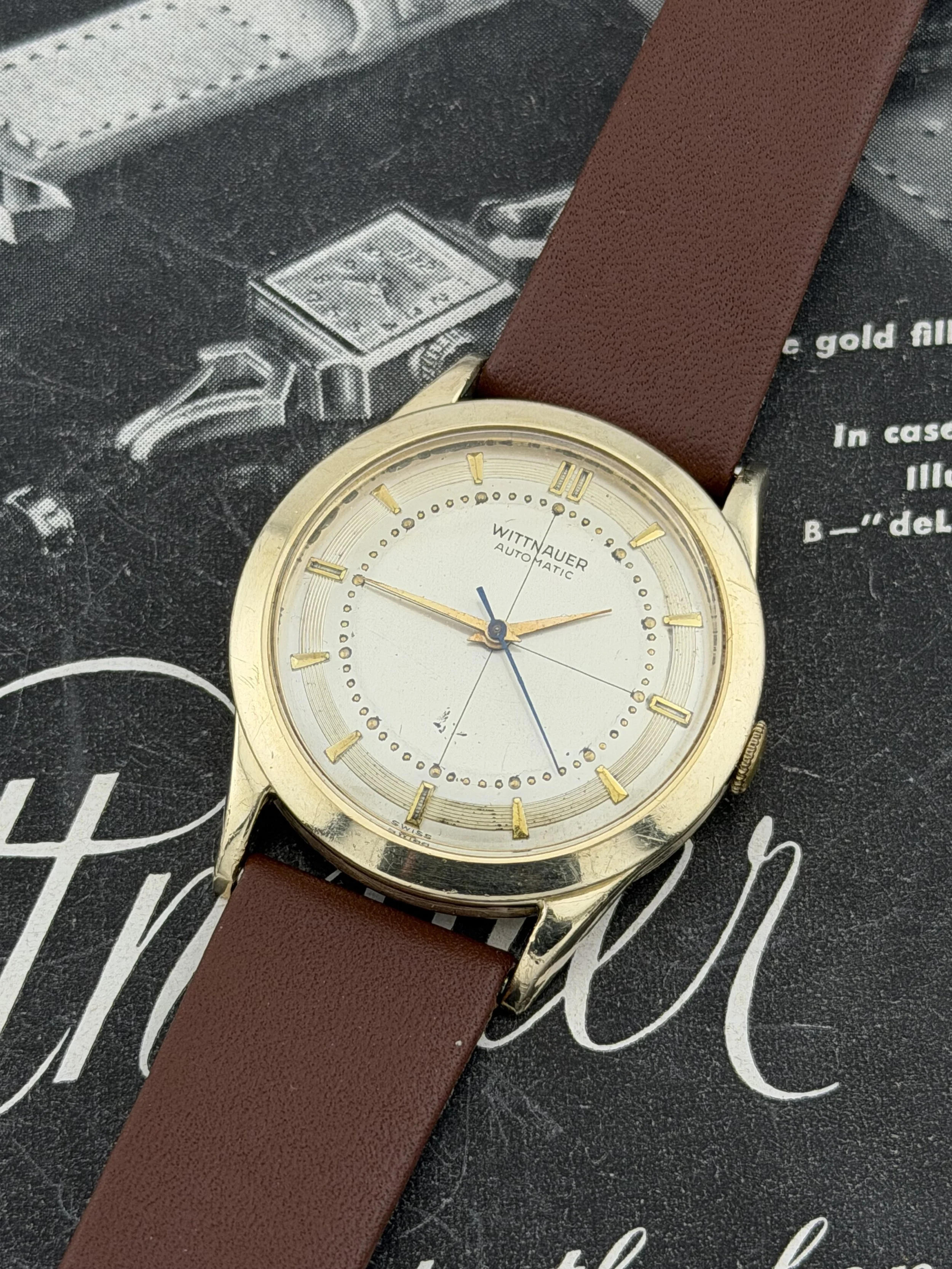
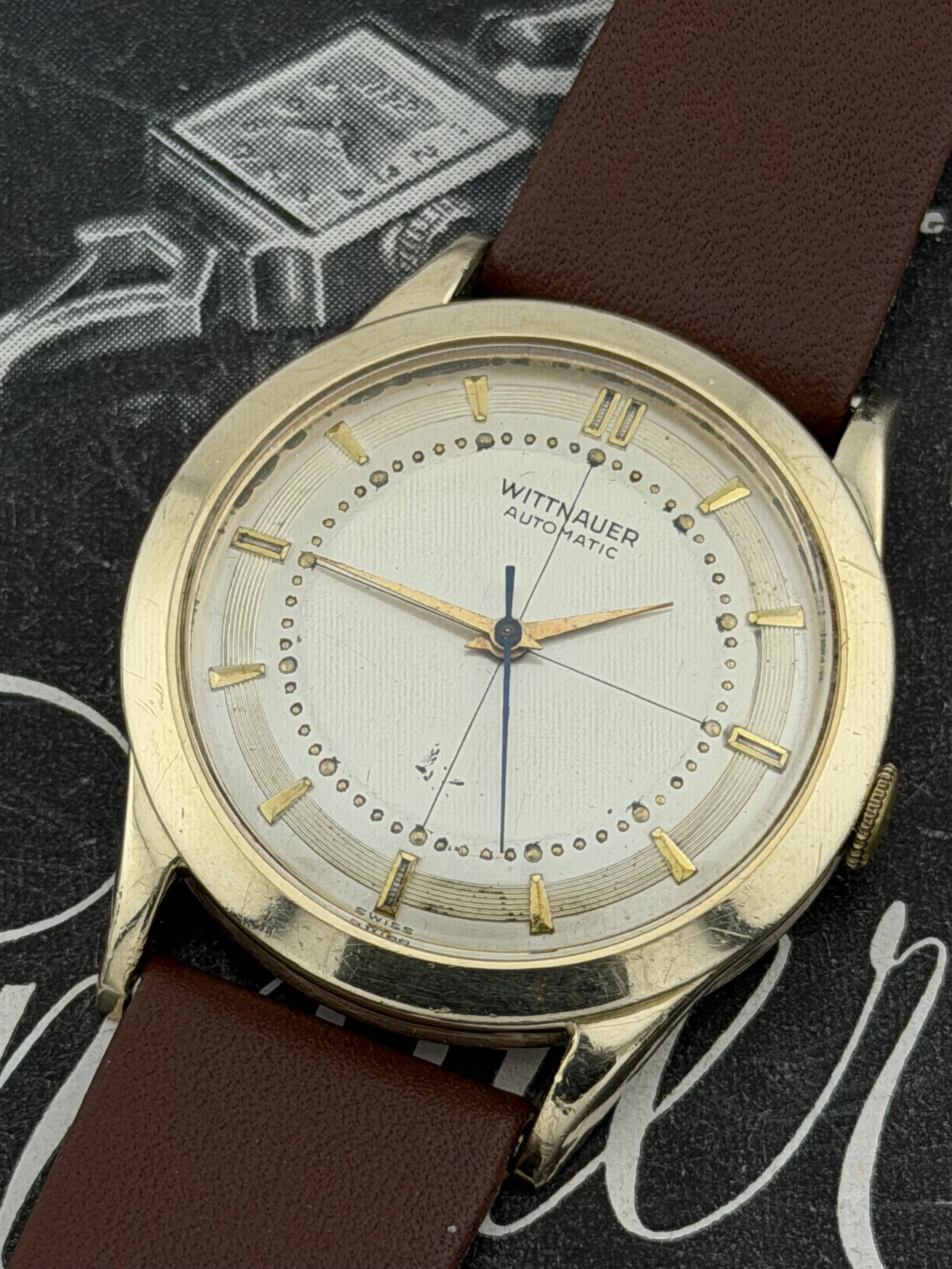
The dial is one of this watch’s most attractive features. It showcases a classic crosshair design, a highly collectible detail associated with many fine watches of the 1940s. A beautifully textured ring surrounding the applied gold-tone hour markers adds depth and visual interest, giving the dial a subtle sector-style appearance. The watch is further enhanced by elegant dauphine hands and a striking heat-blued central seconds hand, which provides a refined contrast against the warm dial tones. The original dial shows only light signs of aging, preserving much of its sophisticated vintage character.
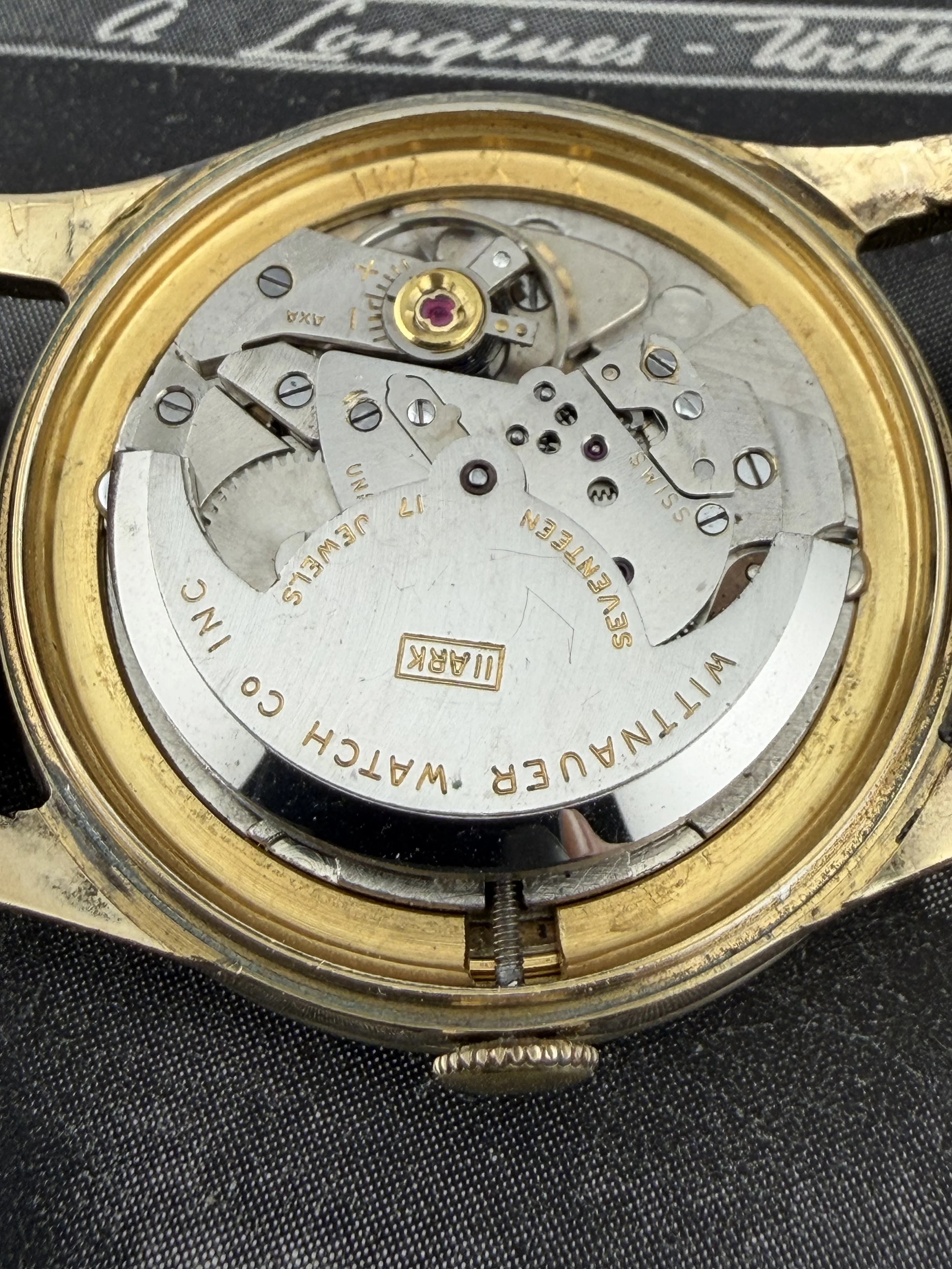
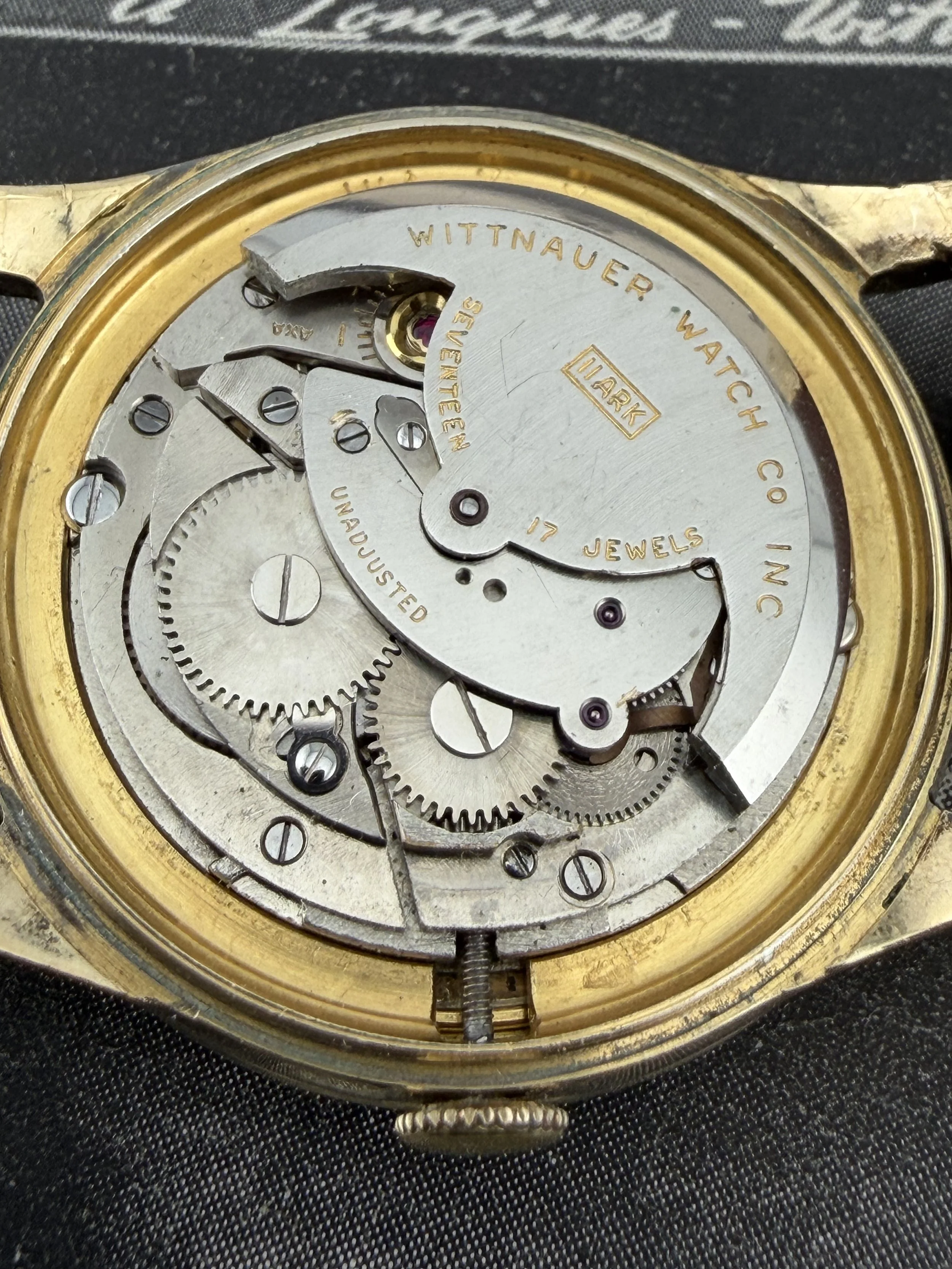
Powering the watch is a Swiss-made automatic movement signed “Wittnauer Watch Co. Inc.” and marked “Seventeen 17 Jewels” and “Unadjusted.” The movement uses a full-rotor automatic winding system rather than an earlier bumper mechanism, representing the transition toward the more efficient automatic designs that would dominate the second half of the twentieth century. While not an in-house Longines caliber, it is a quality Swiss ebauche sourced from respected suppliers such as ETA or A. Schild and finished for Wittnauer.
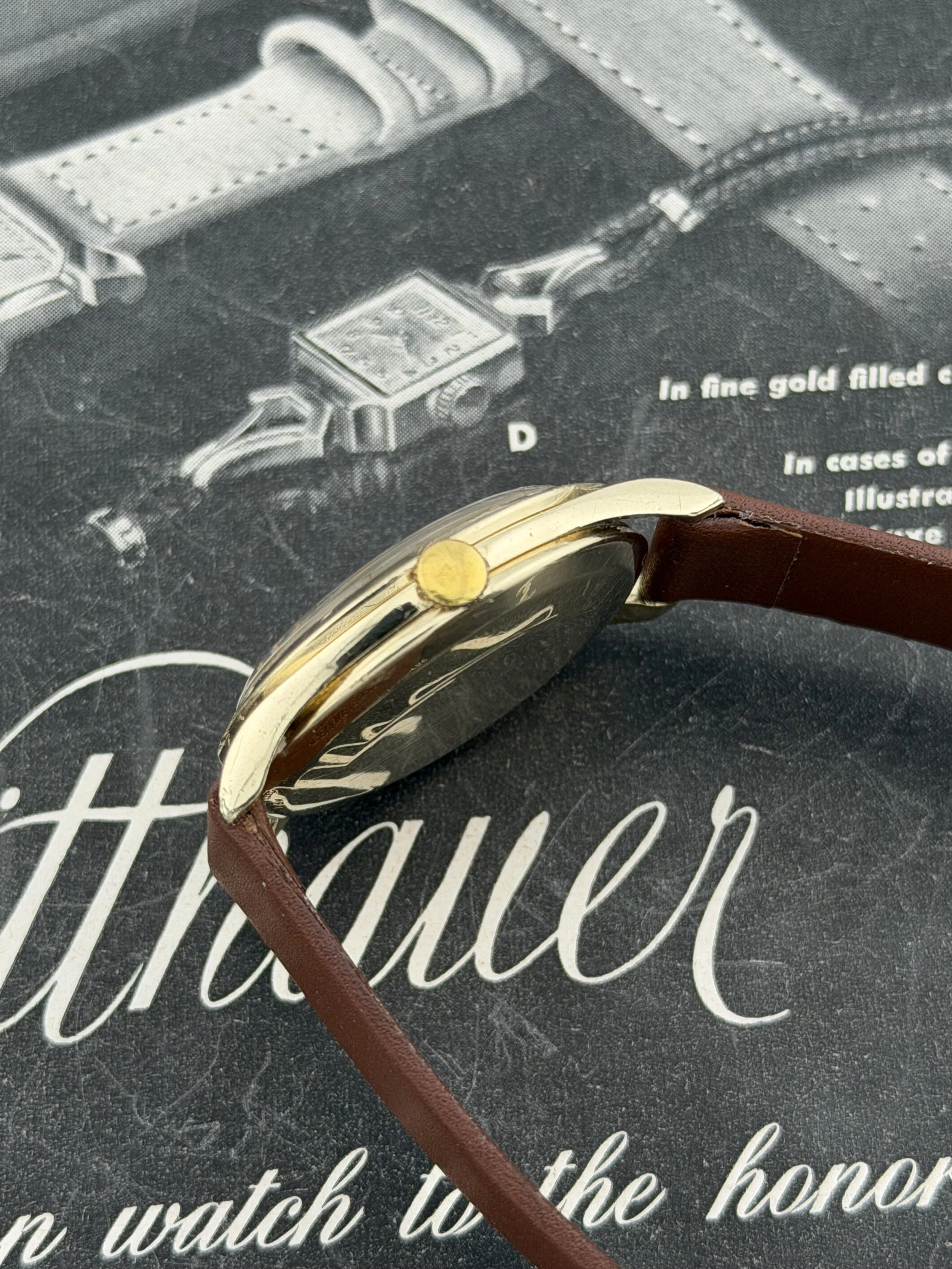
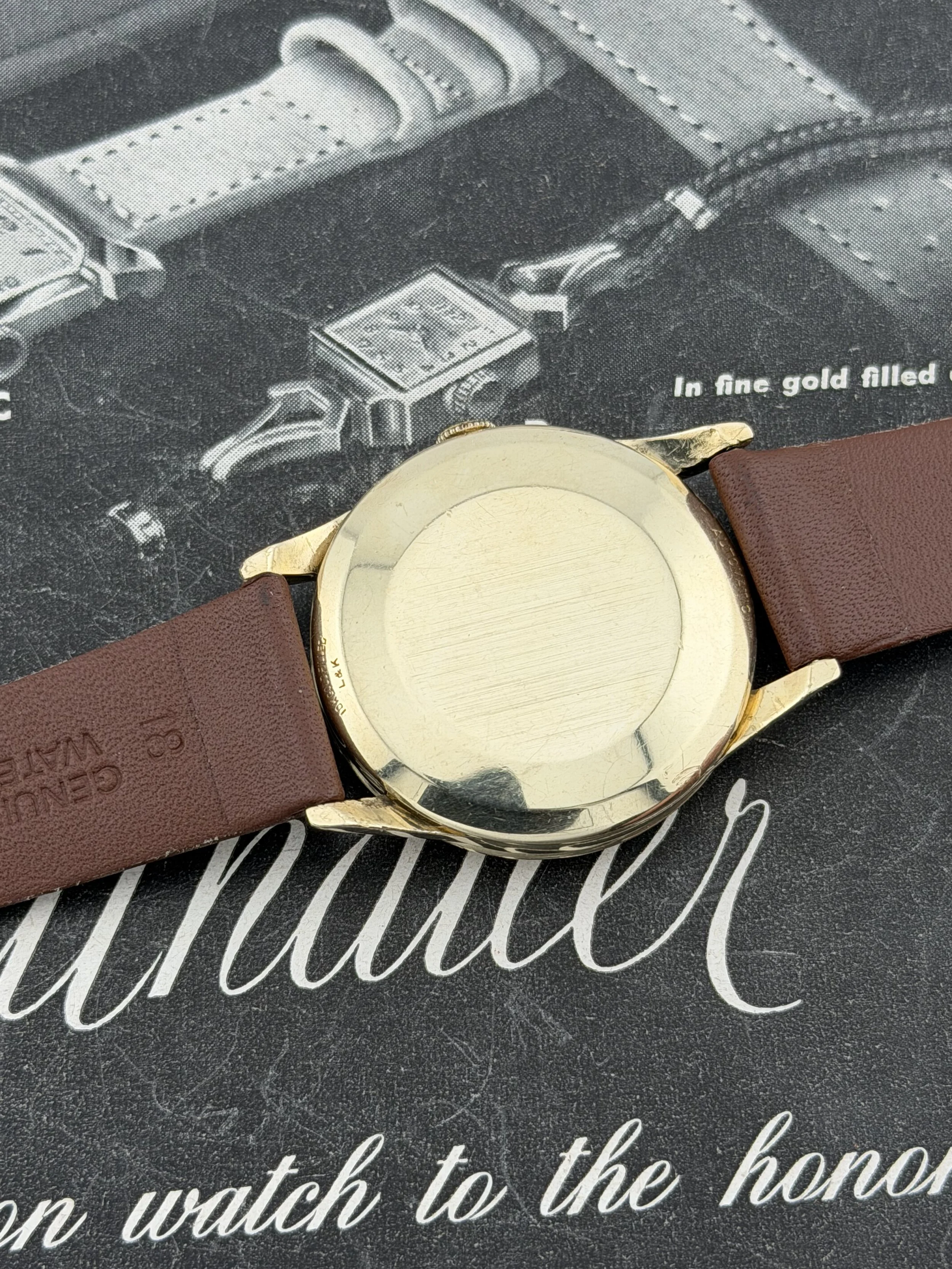
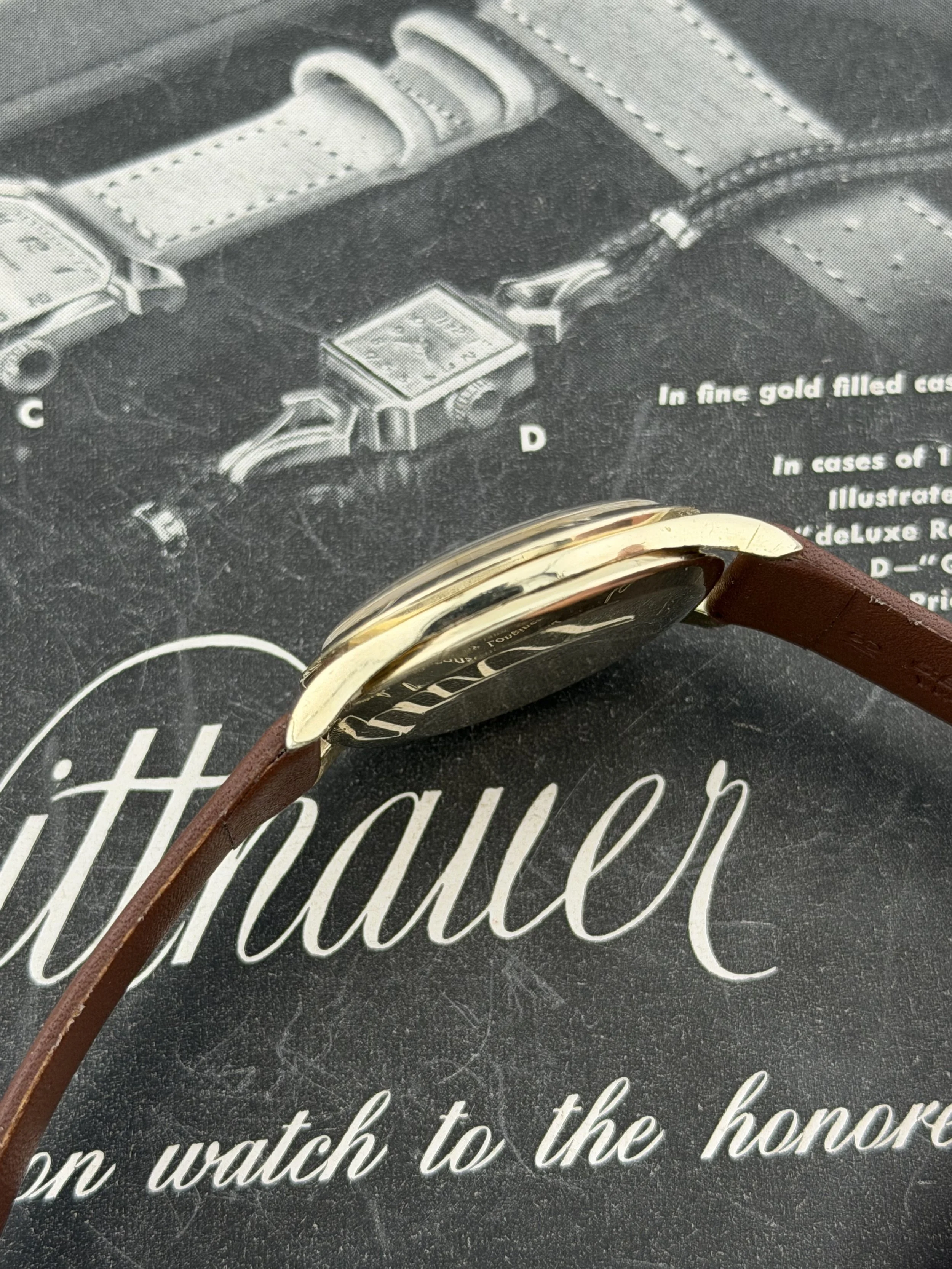
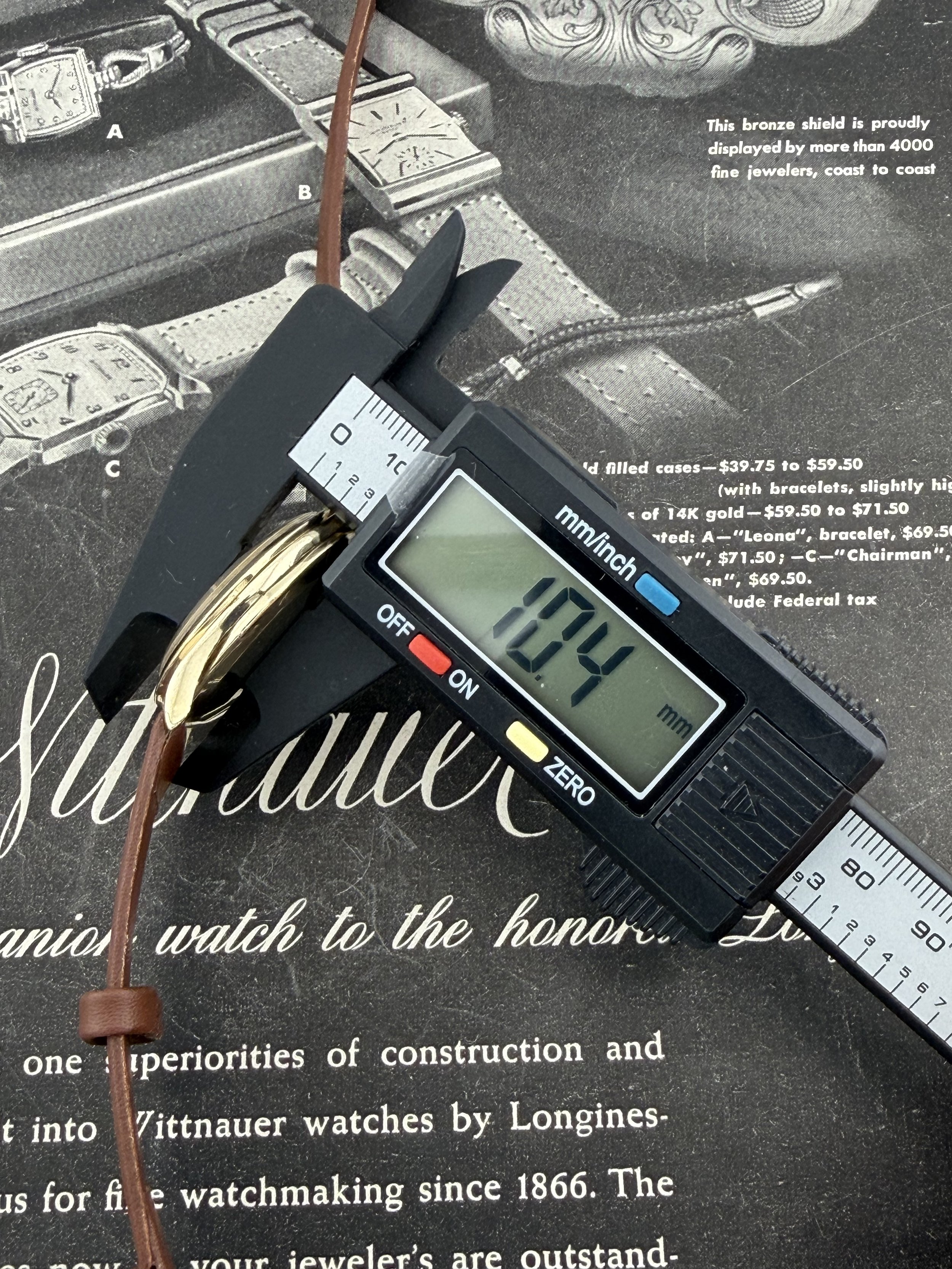
The 10K gold-filled case is typical of higher-quality North American market watches of the period. Unlike thin gold plating, gold-filled construction uses a significantly thicker bonded layer of gold over a base metal core, providing better durability and a richer appearance. The case retains the elegant proportions expected of a 1940s–early 1950s dress watch, with graceful lugs and a warm gold tone that complements the dial.
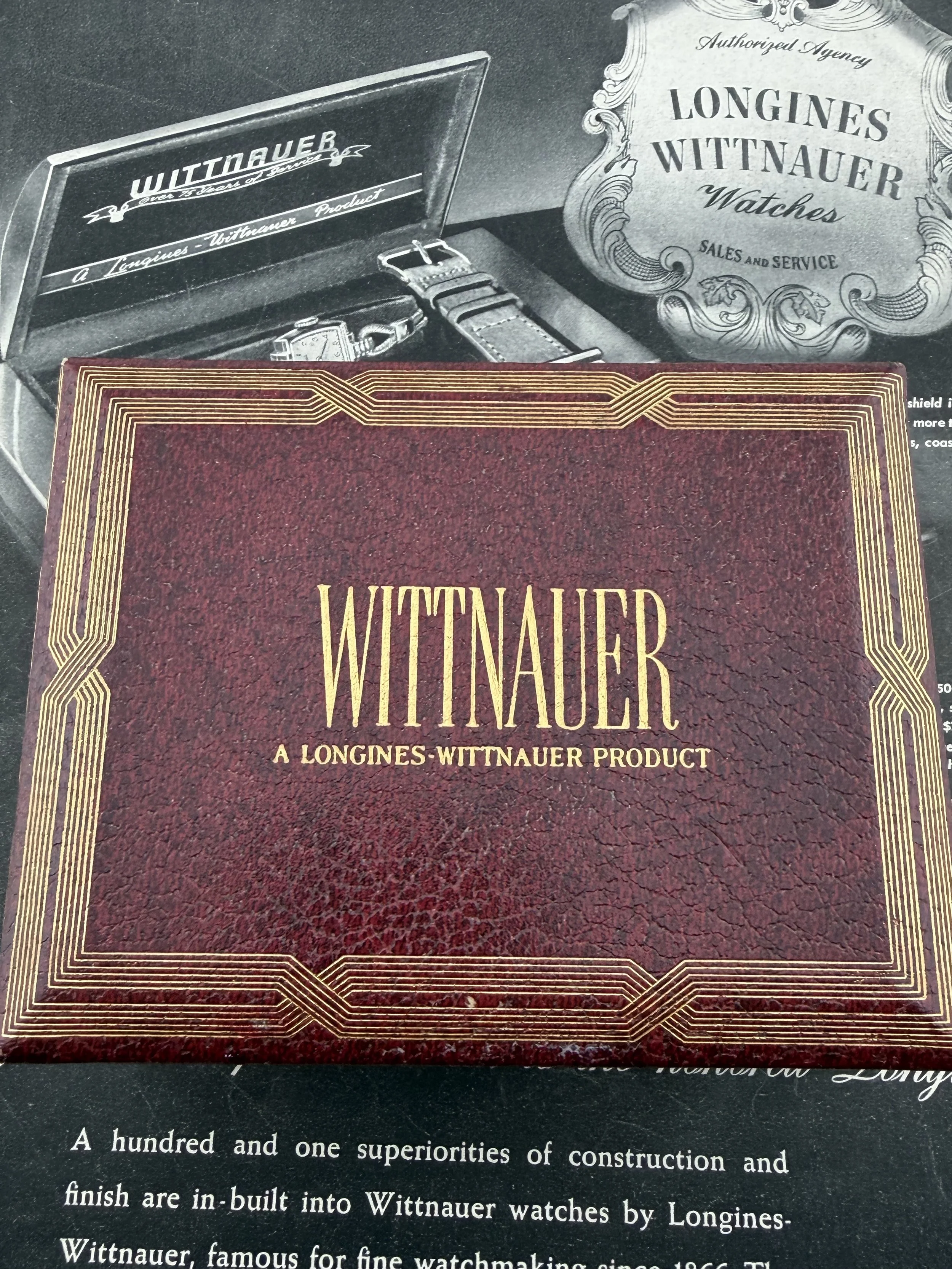
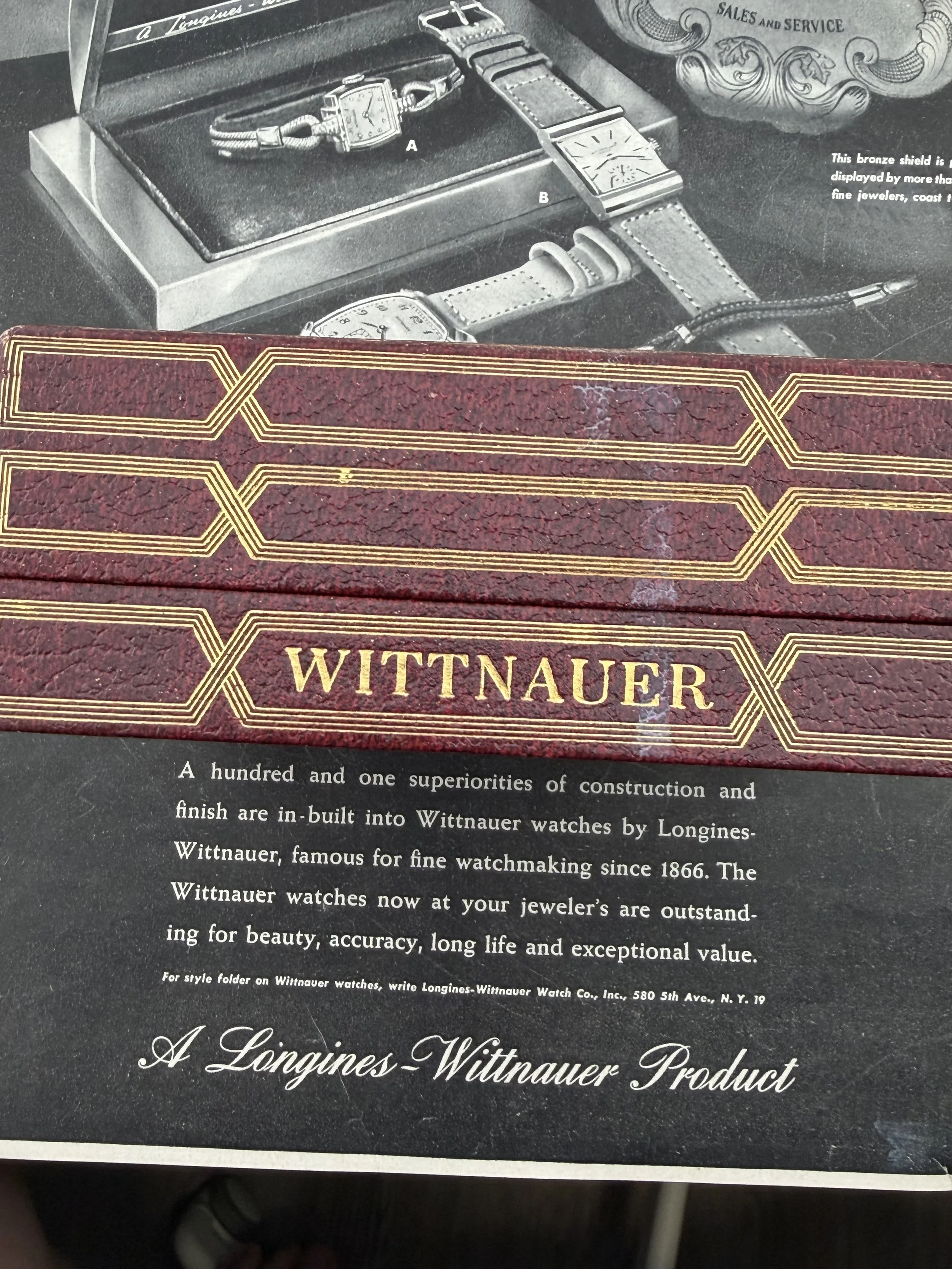
A particularly appealing addition is the original Wittnauer presentation box, prominently marked “Wittnauer – A Longines-Wittnauer Product.” Original boxes are often lost over the decades, so having the correct period presentation case adds both historical interest and collector appeal.
Wittnauer occupied an important place in North American horological history. Through its relationship with Longines, the company helped bring quality Swiss watches to American consumers and became known for producing reliable, well-designed timepieces that balanced prestige and affordability.
With its crosshair dial, textured chapter ring, heat-blued seconds hand, 10K gold-filled case, original Longines-Wittnauer box, and Swiss automatic movement, this watch represents a beautiful example of the elegant transition from the late Art Deco era into the refined mid-century design language that defined the golden age of mechanical wristwatches.
This vintage Wittnauer Automatic is an elegant example of postwar American-market Swiss watchmaking, combining refined mid-century styling with a reliable Swiss automatic movement. As the dial and original presentation box indicate, this watch was sold under Wittnauer, a Longines-Wittnauer product, reflecting the close relationship between Wittnauer and the prestigious Swiss manufacturer Longines. For decades, Wittnauer served as Longines’ American partner and importer, offering well-made Swiss watches that delivered much of the quality and heritage of Longines at a more accessible price point.
The dial is one of this watch’s most attractive features. It showcases a classic crosshair design, a highly collectible detail associated with many fine watches of the 1940s. A beautifully textured ring surrounding the applied gold-tone hour markers adds depth and visual interest, giving the dial a subtle sector-style appearance. The watch is further enhanced by elegant dauphine hands and a striking heat-blued central seconds hand, which provides a refined contrast against the warm dial tones. The original dial shows only light signs of aging, preserving much of its sophisticated vintage character.
Powering the watch is a Swiss-made automatic movement signed “Wittnauer Watch Co. Inc.” and marked “Seventeen 17 Jewels” and “Unadjusted.” The movement uses a full-rotor automatic winding system rather than an earlier bumper mechanism, representing the transition toward the more efficient automatic designs that would dominate the second half of the twentieth century. While not an in-house Longines caliber, it is a quality Swiss ebauche sourced from respected suppliers such as ETA or A. Schild and finished for Wittnauer.
The 10K gold-filled case is typical of higher-quality North American market watches of the period. Unlike thin gold plating, gold-filled construction uses a significantly thicker bonded layer of gold over a base metal core, providing better durability and a richer appearance. The case retains the elegant proportions expected of a 1940s–early 1950s dress watch, with graceful lugs and a warm gold tone that complements the dial.
A particularly appealing addition is the original Wittnauer presentation box, prominently marked “Wittnauer – A Longines-Wittnauer Product.” Original boxes are often lost over the decades, so having the correct period presentation case adds both historical interest and collector appeal.
Wittnauer occupied an important place in North American horological history. Through its relationship with Longines, the company helped bring quality Swiss watches to American consumers and became known for producing reliable, well-designed timepieces that balanced prestige and affordability.
With its crosshair dial, textured chapter ring, heat-blued seconds hand, 10K gold-filled case, original Longines-Wittnauer box, and Swiss automatic movement, this watch represents a beautiful example of the elegant transition from the late Art Deco era into the refined mid-century design language that defined the golden age of mechanical wristwatches.