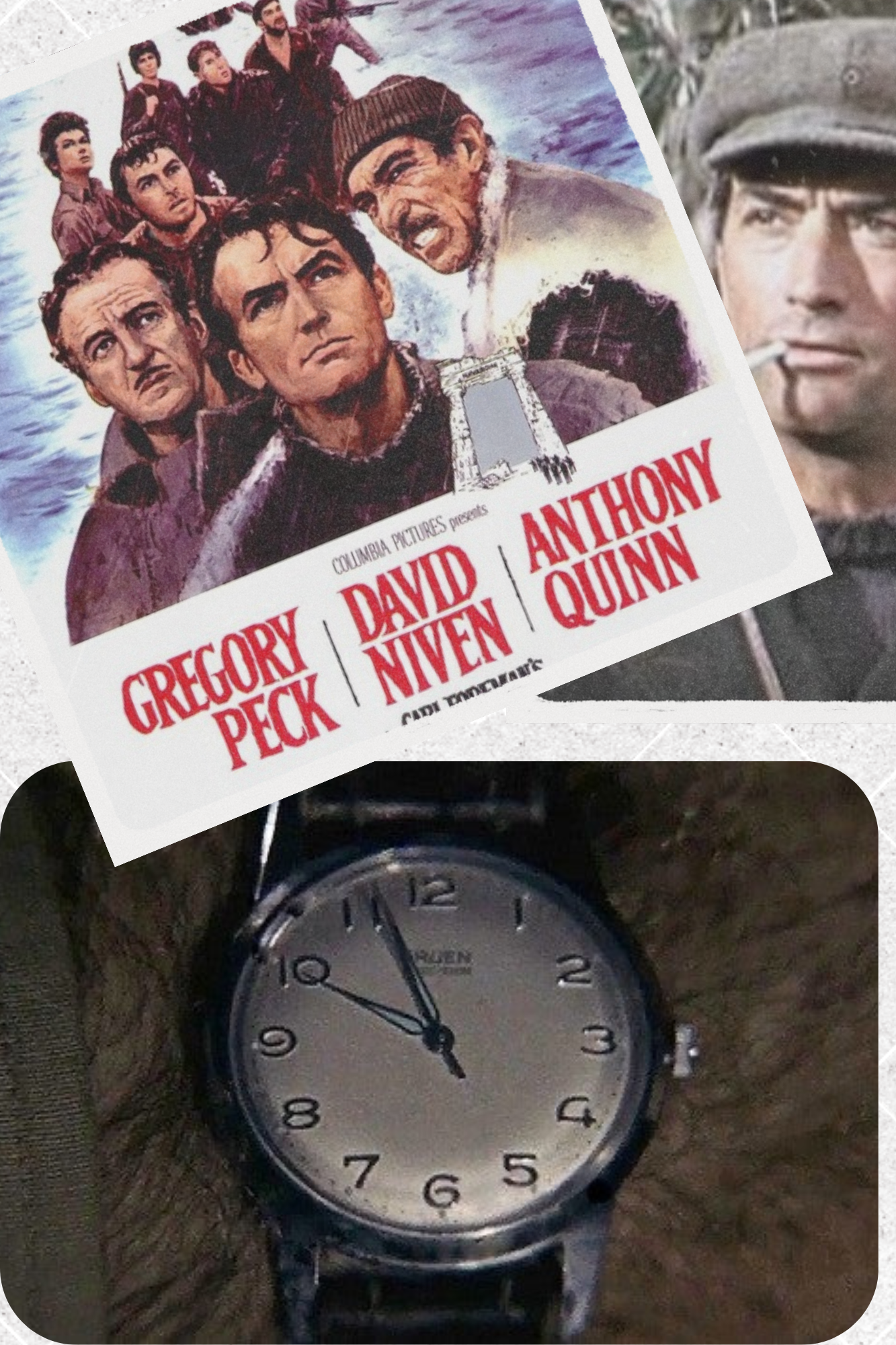
When people talk about watches in classic cinema, the conversation usually drifts toward spies, race car drivers, or the occasional deep sea explorer. But one of the most quietly compelling watch appearances in film history belongs to a very different kind of hero. It appears on the wrist of Gregory Peck in the 1961 war classic The Guns of Navarone.
Throughout the film, Peck’s character wears a simple and practical watch made by Gruen. There are no gadgets and no oversized case. Just a dependable mechanical watch worn by a man tasked with an impossible mission.
A Watch Built for the Mission
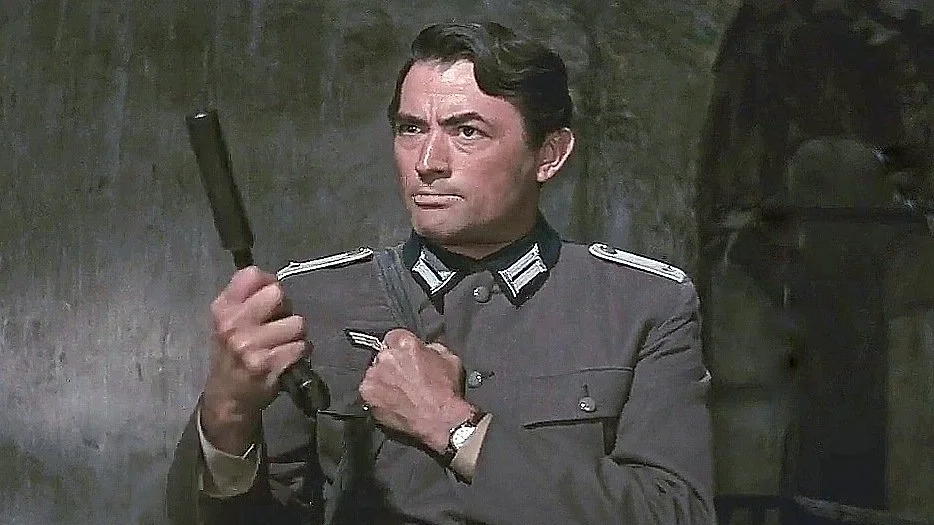
In The Guns of Navarone, Gregory Peck plays Captain Keith Mallory, the reluctant leader of a commando team sent to destroy two massive German artillery guns guarding a strategic passage in the Aegean Sea during the Second World War.
The film itself is tense, deliberate, and grounded. The watch on Mallory’s wrist reflects those same qualities.
The Gruen he wears is not flashy. It is a straightforward mid century watch with clean lines and clear legibility. In many ways it mirrors the character himself. Mallory is disciplined, understated, and entirely focused on the task at hand.
Unlike modern films where watches often appear through carefully arranged brand partnerships, the Gruen in Navarone feels completely natural. It simply looks like the sort of reliable watch a professional might wear while coordinating a mission where timing could mean the difference between success and disaster.
The Watch Itself
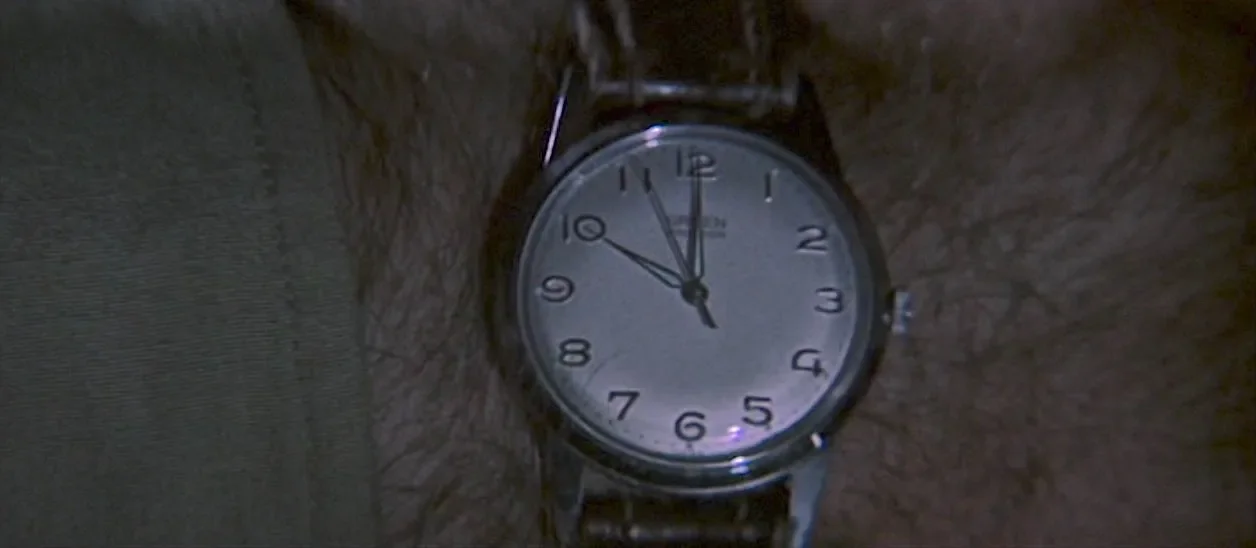
The watch worn by Gregory Peck appears to be a Gruen Precision with a 17 jewel movement housed in a stainless steel case. It is a model that perfectly reflects the quiet practicality of the character.
The Precision line was one of the core pillars of the Gruen catalogue during the 1940s and 1950s. While the company became famous for more adventurous designs such as the Curvex, the Precision models focused on something simpler. Reliable and accurate timekeeping presented in a clean and elegant package.
A typical Precision from the era featured a 17 jewel Swiss mechanical movement, the industry standard for dependable accuracy. The cases were usually stainless steel, making them durable enough for everyday wear. The dials were clean and readable, often with applied markers or Arabic numerals, and the case size was usually around 34 to 35 millimeters. At the time this was considered perfectly proportioned.
The reference to 17 jewels describes the small synthetic ruby bearings used inside the movement. These jewels reduce friction between moving parts and allow the mechanism to run more smoothly over time. For a watch intended to be worn daily, that kind of durability mattered.
It was not extravagant and it was not designed to attract attention.
It was simply a well made tool that a professional could trust.
Steel Over Gold
One detail that stands out is the steel case.
During the mid twentieth century many dress watches were made in gold or gold plate. Steel carried a different personality. It felt tougher, more practical, and less concerned with appearances.
For Captain Mallory, that choice makes perfect sense. A steel watch feels more like equipment than jewelry. It is something worn for function rather than decoration.
In a film built around discipline, teamwork, and survival behind enemy lines, the watch fits naturally into the story.
Gruen in Its Prime
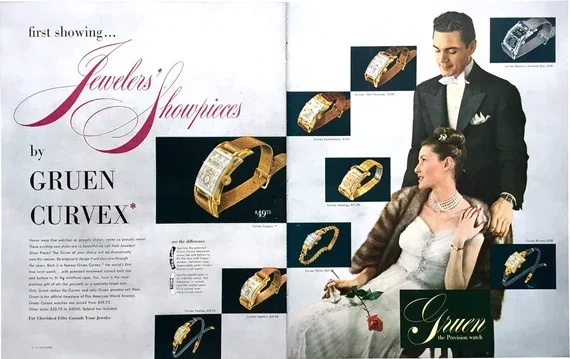
During the middle of the twentieth century, Gruen was everywhere. Known for elegant dress watches and innovative designs such as the Curvex and Veri Thin, the company blended American design with Swiss manufacturing to create watches that were both stylish and dependable.
By the time The Guns of Navarone reached theaters in 1961, Gruen had already spent decades building a reputation for precision and thoughtful design. Their watches were widely sold across North America and were popular with professionals, servicemen, and anyone who wanted a reliable mechanical watch without unnecessary excess.
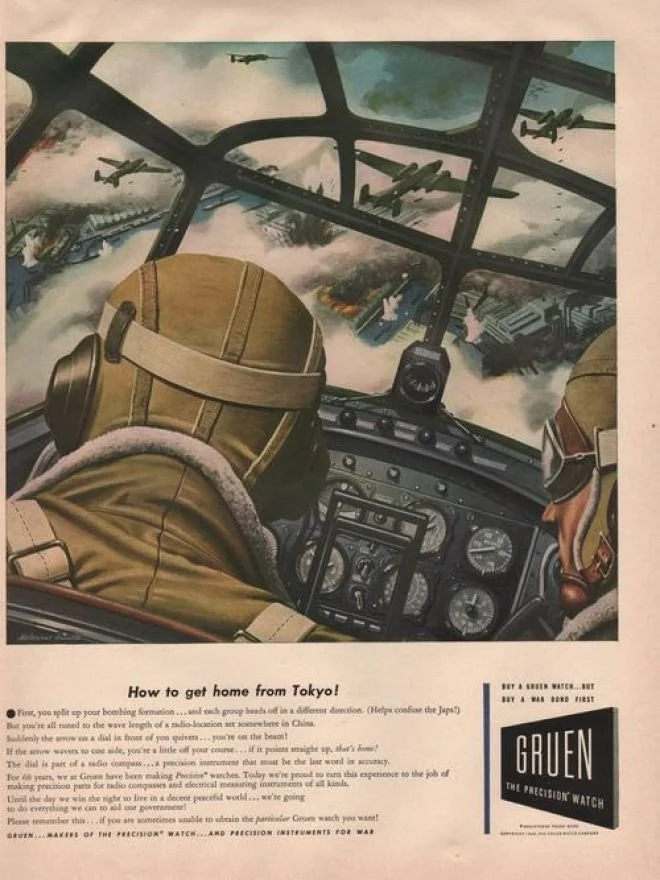
Gruen designed its watches in the United States while manufacturing movements in Switzerland, combining American styling with traditional Swiss craftsmanship. The company also pushed design forward. Curvex models used curved movements that allowed the watch to follow the shape of the wrist, while Veri Thin models showed just how slim mechanical watches could become.
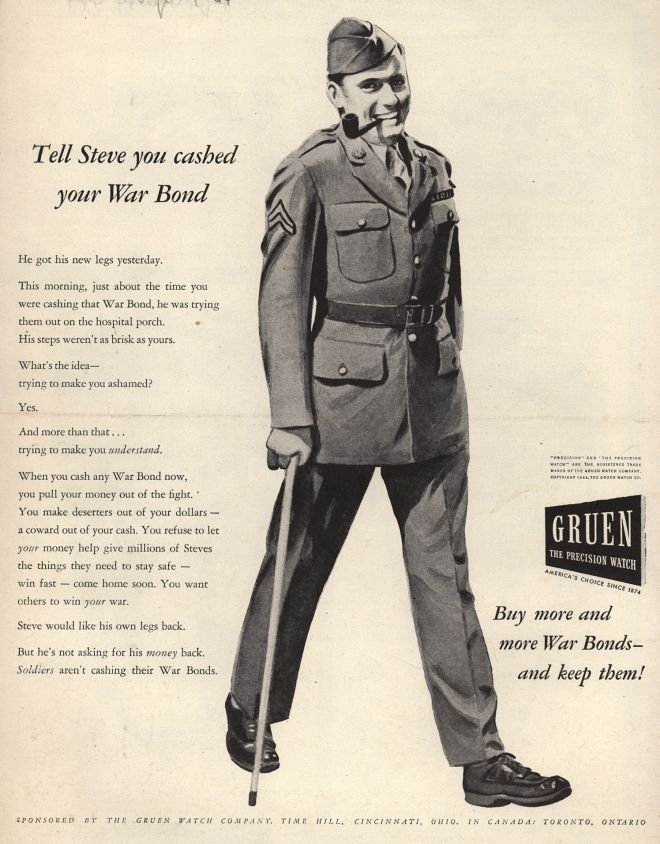
In short, Gruen was not a niche brand.
It was a major player.
A Watch from the Golden Age of Mechanical Time
When The Guns of Navarone premiered in 1961, mechanical watchmaking was still at its peak. Quartz watches were still years away from transforming the industry, and companies like Gruen were producing traditional hand wound movements designed to last for decades.
The watch seen on Gregory Peck’s wrist represents more than just a prop from a war film. It captures a moment from the final golden age of mechanical watches, when precision engineering, practical design, and everyday reliability defined the industry.
And like the character wearing it, the watch does not demand attention.
It simply does its job quietly and well.