The Hidden History of the 1954 Universal Genève “Polarouter”: The Bumper That Started It All
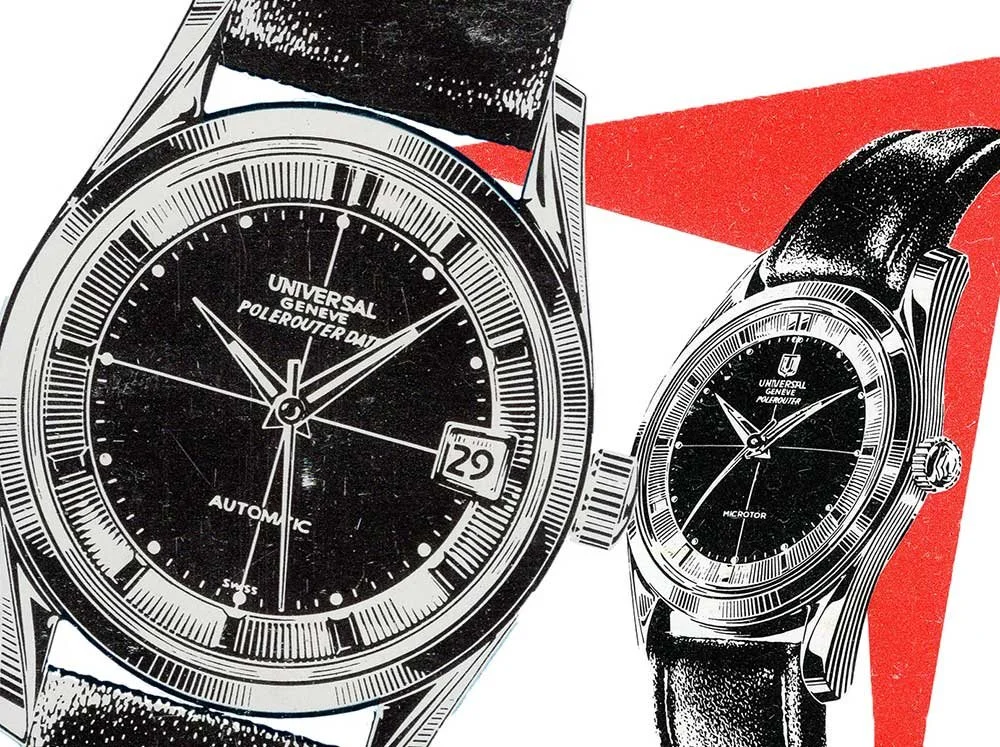
Most collectors immediately think of the Polerouter and its famous micro-rotor movement, sleek, thin, and an engineering marvel of the 1950s. But the story of this legendary watch actually begins one year earlier, with the 1954 Polarouter, powered by a humble, yet brilliant, 138SS bumper movement.
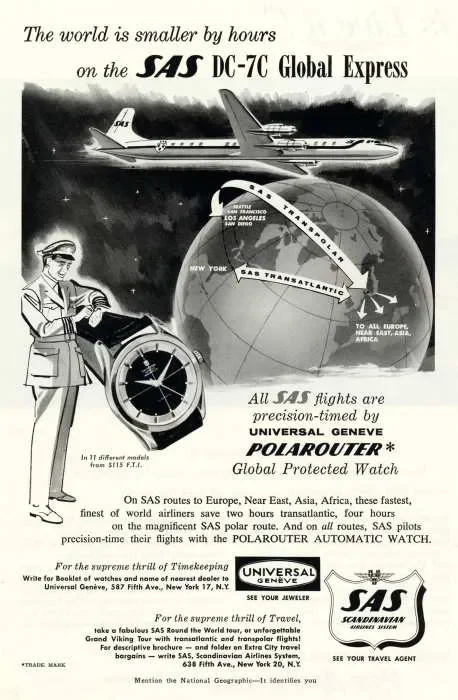
This early Polarouter was designed for pilots of the newly-formed Scandinavian Airlines System polar flights, soaring over the North Pole where temperatures could swing wildly in just hours. Universal Genève needed a watch that could handle these extremes and still tell accurate time. Enter the Polarouter.
No story of the Polarouter is complete without mentioning a young Gérald Genta, who was just 23 years old when he was commissioned by Universal Genève to design the watch. It’s remarkable to think that one of the most influential watch designers of all time began his career with this very project.
Genta’s design for the Polarouter was deceptively simple but deeply thoughtful. The clean symmetry of the dial, the balanced crosshair layout, and the elegant twisted lugs gave the watch a sense of quiet confidence. It wasn’t flashy, but it didn’t need to be. It was purposeful, refined, and perfectly suited to its role as a tool watch for polar aviation.
That DNA carried forward when the Polarouter became the Polerouter in 1955. Even as the movement evolved into the groundbreaking micro-rotor, Genta’s original design language remained intact, a testament to how strong the initial concept truly was.
What makes this even more fascinating is what came next. Genta would go on to design some of the most iconic watches in history, including the Audemars Piguet Royal Oak in 1972 and the Patek Philippe Nautilus in 1976. Both would redefine the idea of the luxury sports watch, cementing his legacy as a true visionary.
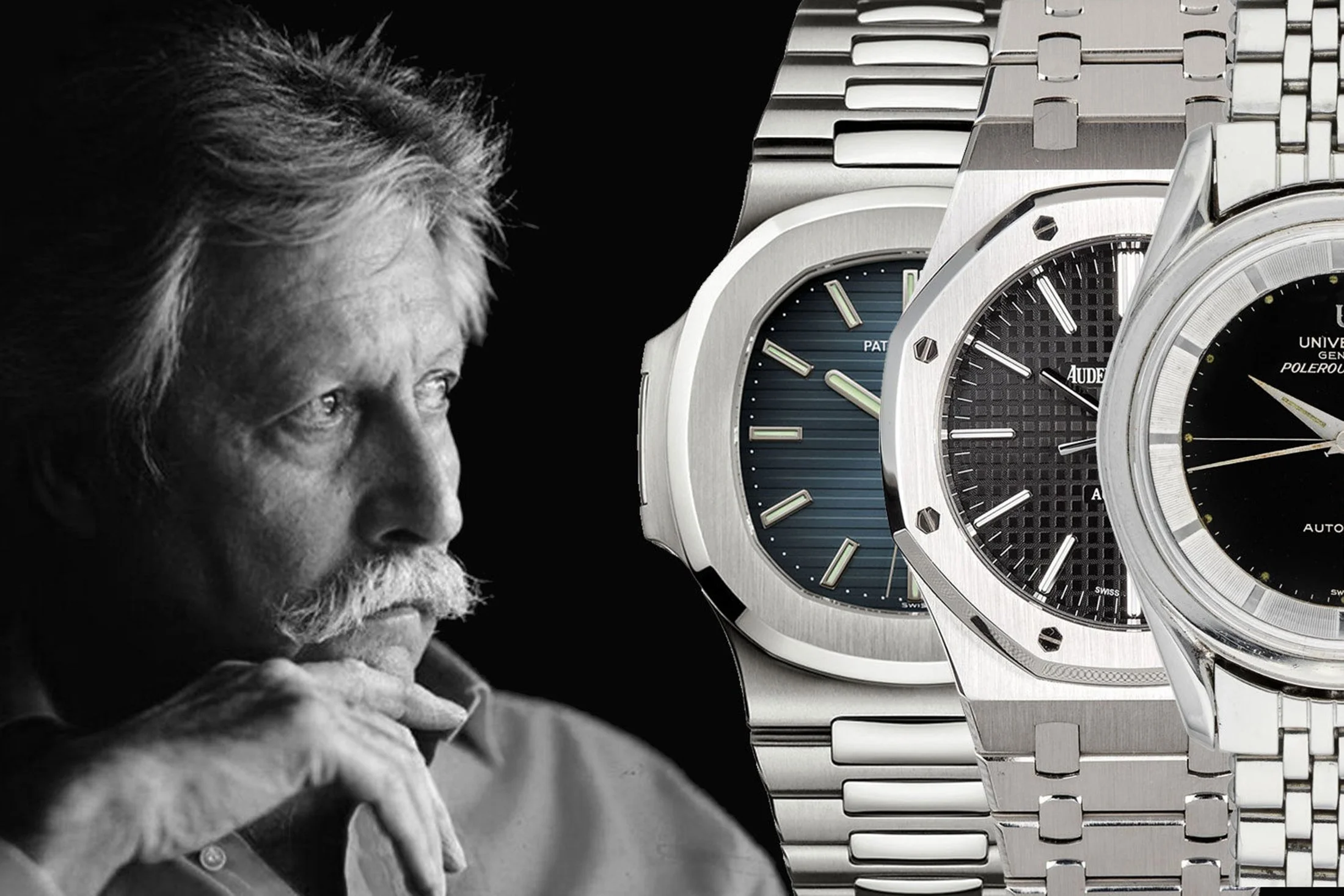
Seen in that light, the Polarouter isn’t just the origin story of the Polerouter, it’s the starting point of Genta’s entire design legacy. The same eye for proportion, restraint, and innovation that would later shake the watch world was already present here, quietly taking shape in a tool watch built for the extremes.
The name might have changed to Polerouter in 1955, but the early watches carried unique quirks that make them stand out to the eagle-eyed collector. The original Polarouter case had plexiglass fitted from the outside, tensioned by an inner marker ring, and pressed into place by the dial and movement itself. This made for a snug, tight fit that could withstand the rigors of polar aviation. A year later, the Polerouter case design was modernized with a press-fitted plexiglass held by a screw-in metal ring, a subtle tweak that made the watch slimmer and easier to produce.
The early Polarouters housed the caliber 138SS bumper movement, a clever system where the rotor swings back and forth to wind the watch. It’s charmingly mechanical and visually mesmerizing, a heartbeat you can almost feel when you move your wrist. The micro-rotor Polerouter that followed in 1955 stole the spotlight with a full 360-degree rotor fully integrated into the movement, thin as a pancake and marvelously efficient. But without the humble bumper, that genius design might never have existed.
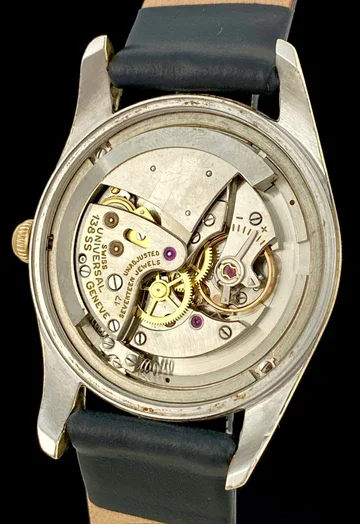
Polarouters came in a handful of early references like 20217-1, 20214-1, and 20217-3. Collectors break them into first and second executions based on serial numbers and dial details. First execution watches had a crosshair that cut through all the dial text including Universal Genève and Automatic.
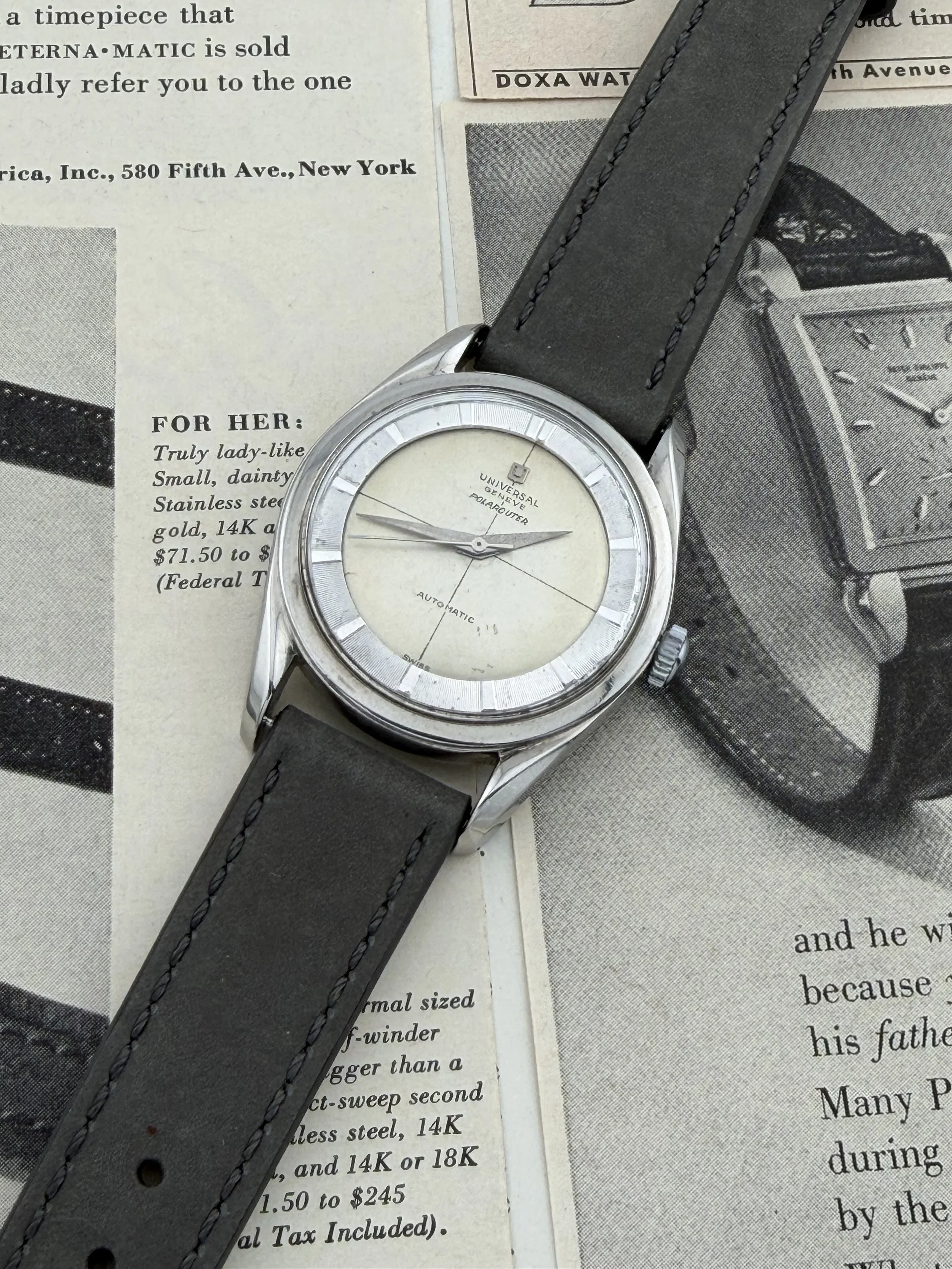
It’s fascinating to see how few of these watches survive. The serial ranges suggest tiny production numbers, making every surviving Polarouter a rare little marvel from horological history.
Let’s pause to compare the bumper and micro-rotor. The bumper oscillates back and forth like a little mechanical heartbeat. The micro-rotor spins freely around a full circle, making the watch thinner and more elegant. The Polarouter bumper is thicker, sturdier, and arguably quirkier. The micro-rotor Polerouter is slick, iconic, and highly collectible.
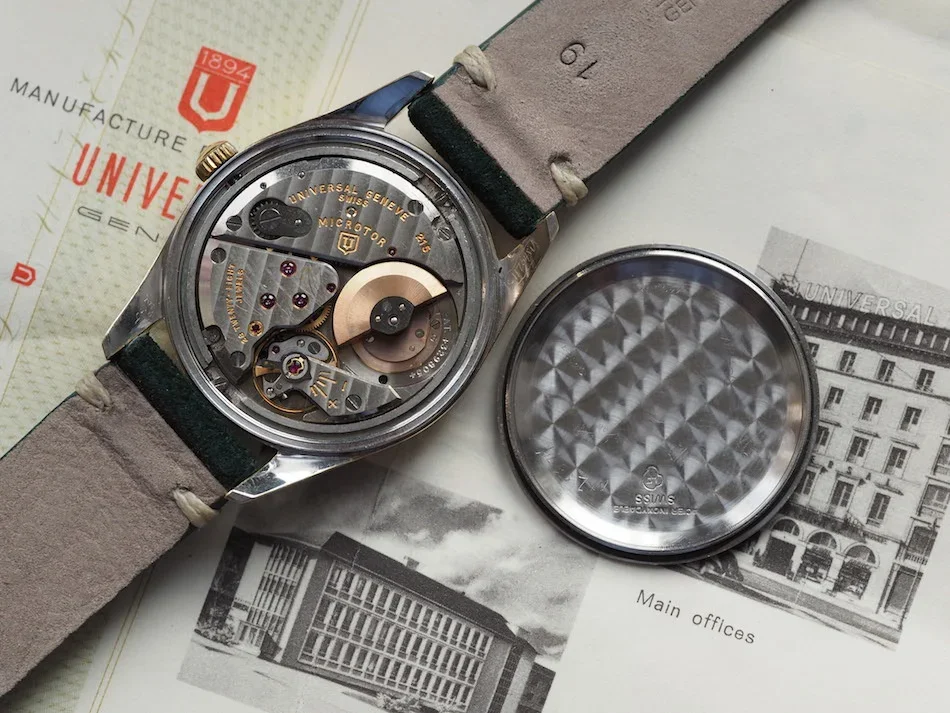
The bumper models are like the secret origin story of the Polerouter. They quietly laid the foundation for one of Universal Genève’s most celebrated designs while surviving in tiny numbers, each carrying the legacy of polar pilots and the early days of automatic innovation.
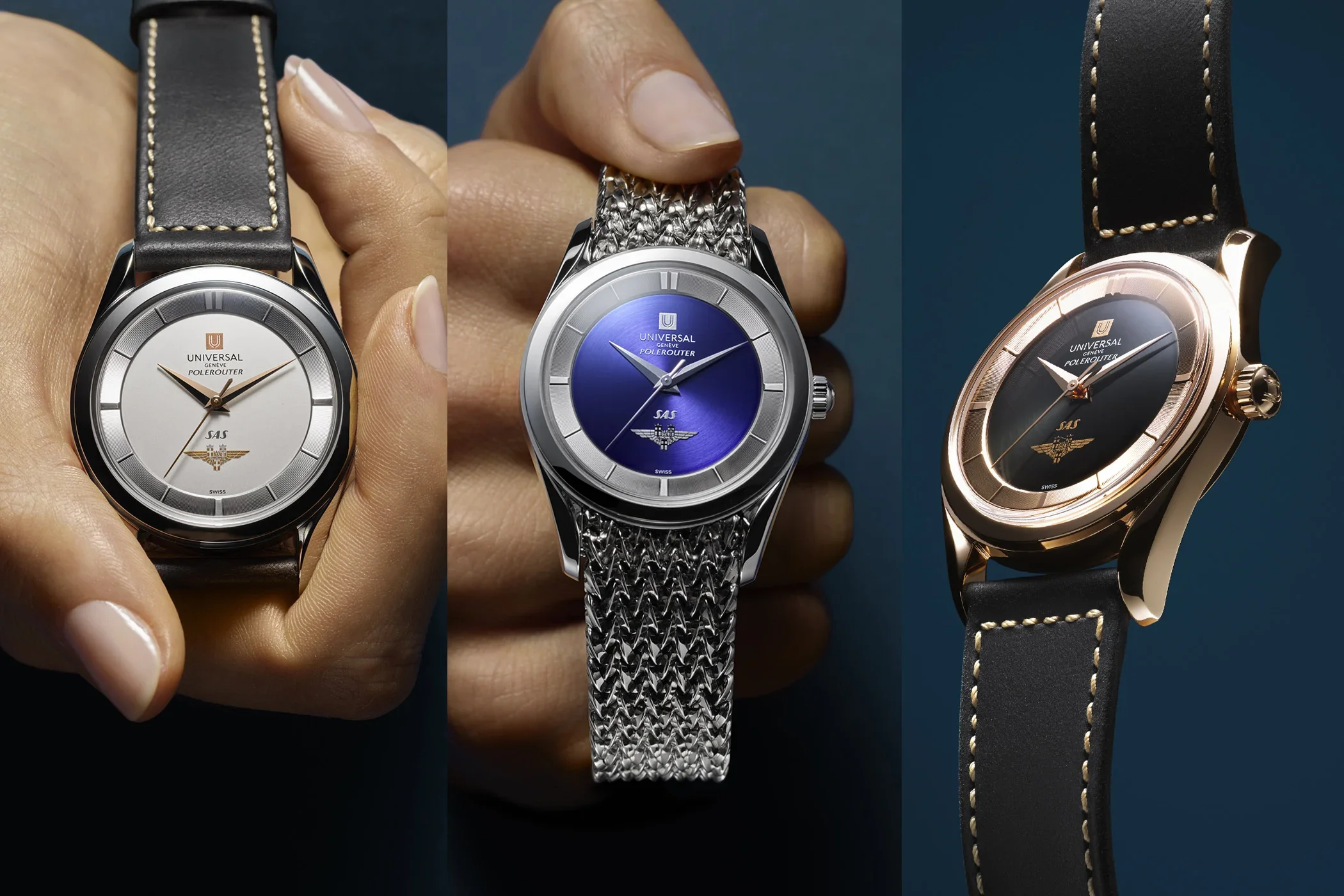
With Universal Geneve relaunching the Polerouter under Bretling, it makes this history more relivant than ever.